THE WAR ROOM CHALLENGE - JANUARY '24 : ANCIENT WARS
Talk 75 Books Challenge for 2024
Join LibraryThing to post.

2PaulCranswick
GREEKS, ROMANS, PERSIANS, SPARTA & THE TROJANS, EGYPT, CARTHAGE, ALEXANDER
Plenty to go at in January.
Fiction or Non-Fiction doesn't matter a whit.
Plenty to go at in January.
Fiction or Non-Fiction doesn't matter a whit.
3PaulCranswick
WHAT I WILL BE READING:
PAX ROMANA : WAR, PEACE AND CONQUEST IN THE ROMAN WORLD by Adrian Goldsworthy
PERSIAN FIRE by Tom Holland
THE JEWISH WAR by Flavius Josephus
THE HISTORY OF THE PELOPONNESIAN WAR by Thucydides
CARTHAGE MUST BE DESTROYED by Richard Miles
THE LANTERN BEARERS by Rosemary Sutcliff
THE LAST OF THE WINE by Mary Renault
PAX ROMANA : WAR, PEACE AND CONQUEST IN THE ROMAN WORLD by Adrian Goldsworthy
PERSIAN FIRE by Tom Holland
THE JEWISH WAR by Flavius Josephus
THE HISTORY OF THE PELOPONNESIAN WAR by Thucydides
CARTHAGE MUST BE DESTROYED by Richard Miles
THE LANTERN BEARERS by Rosemary Sutcliff
THE LAST OF THE WINE by Mary Renault
4amanda4242
Excellent timing! I just picked up Mary Renault's The Lion in the Gateway from the library. Time permiting, I also hope to read The Last of the Wine and maybe a Rosemary Sutcliff book.
5benitastrnad
>3 PaulCranswick:
I read Last of the Wine by Mary Renault a couple of years ago and found it hard reading. It was worth it, but I had to do lots of research just to know the background of what was going on and why it was important to the story.
The book was published in 1956 and I think there was an assumption that most readers of historical fiction would know the ancient Greek history behind the story. That worked in 1956 but I am not sure that it works in the world of today - at least in the U.S. I found it hard to believe that the people of the ancient world traveled as much as they did. Who would think that the Greeks would fight a major war in Syracuse? That is in Sicily, a very long distance from Greece. I have been reading the Marcus Didius Falco series by Lindsey Davis and still find the fact that people traveled great distances during the Pax Romana very interesting. I have also read nonfiction travel accounts about Greek and Roman travelers and still find it amazing. It wasn't so long ago that people traveling 30 miles was a great distance.
I read the Eagle of the Ninth trilogy a couple of years ago and loved them. Sutcliff was an extraordinary writer. I never saw the movie version of Eagle of the Ninth but I heard it was decent. It stared the Alabama born actor Channing Tatum, so I was interested in the movie version, but have never had the chance to see it.
I read Last of the Wine by Mary Renault a couple of years ago and found it hard reading. It was worth it, but I had to do lots of research just to know the background of what was going on and why it was important to the story.
The book was published in 1956 and I think there was an assumption that most readers of historical fiction would know the ancient Greek history behind the story. That worked in 1956 but I am not sure that it works in the world of today - at least in the U.S. I found it hard to believe that the people of the ancient world traveled as much as they did. Who would think that the Greeks would fight a major war in Syracuse? That is in Sicily, a very long distance from Greece. I have been reading the Marcus Didius Falco series by Lindsey Davis and still find the fact that people traveled great distances during the Pax Romana very interesting. I have also read nonfiction travel accounts about Greek and Roman travelers and still find it amazing. It wasn't so long ago that people traveling 30 miles was a great distance.
I read the Eagle of the Ninth trilogy a couple of years ago and loved them. Sutcliff was an extraordinary writer. I never saw the movie version of Eagle of the Ninth but I heard it was decent. It stared the Alabama born actor Channing Tatum, so I was interested in the movie version, but have never had the chance to see it.
6PaulCranswick
>4 amanda4242: I am surprised you haven't read a dozen books in both challenges already, Amanda!
>5 benitastrnad: I think you are right to an extent Benita in that people clearly studied "the Classics" more a few generations ago. I know we have a few classicists in the group who would have a great deal of knowledge especially of the Greek and Latin texts but I hark back to a fairly decent grounding in my school classes where my history teacher did a wonderful job enthusing us all with tales of Greeks, Trojans, Romans, Hannibal and Alexander.
>5 benitastrnad: I think you are right to an extent Benita in that people clearly studied "the Classics" more a few generations ago. I know we have a few classicists in the group who would have a great deal of knowledge especially of the Greek and Latin texts but I hark back to a fairly decent grounding in my school classes where my history teacher did a wonderful job enthusing us all with tales of Greeks, Trojans, Romans, Hannibal and Alexander.
7amanda4242
>5 benitastrnad: I never saw the movie version of Eagle of the Ninth but I heard it was decent.
"Decent" is a generous description. "Mediocre" would be more accurate, although it does boast lovely scenery and a decent score. There's a mini-series from the 70s available on YouTube that I thought was much better, although it clearly had a very limited budget.
https://www.youtube.com/playlist?list=PLEjWO5ZEvW0ebuCjJv2C3ql_S-zkjUGlN
"Decent" is a generous description. "Mediocre" would be more accurate, although it does boast lovely scenery and a decent score. There's a mini-series from the 70s available on YouTube that I thought was much better, although it clearly had a very limited budget.
https://www.youtube.com/playlist?list=PLEjWO5ZEvW0ebuCjJv2C3ql_S-zkjUGlN
8amanda4242
>6 PaulCranswick: I know, I'm falling down on the job. *hangs head in shame* In my defense I am getting a head start on May's theme and am about 200 pages into War and Peace.
9PaulCranswick
>7 amanda4242: Haven't seen either to be honest but five minutes of the BBC show and I reckon I could easily sit through it - low budget notwithstanding.
10PaulCranswick
>8 amanda4242: It is on my to do list for the year too, Amanda. How is it thus far?
11amanda4242
>10 PaulCranswick: Pretty good and not particularly difficult, although it's a bit hard to keep track of all the characters.
12alcottacre
My proposed reads for January:
A War Like No Other by Victor Davis Hanson
The Battle of Salamis by Barry Strauss
Persian Fire by Tom Holland
I want to try and read at least 2 books a month for this challenge. Most of my reading - but not all - will be of the nonfiction variety, I believe.
A War Like No Other by Victor Davis Hanson
The Battle of Salamis by Barry Strauss
Persian Fire by Tom Holland
I want to try and read at least 2 books a month for this challenge. Most of my reading - but not all - will be of the nonfiction variety, I believe.
14PaulCranswick
>12 alcottacre: I know we have the Holland lined up as a shared read, Stasia. xx
15alcottacre
>14 PaulCranswick: Yep, for after I am back, right?
17alcottacre
>16 PaulCranswick: I am just starting A War Like No Other tonight. I have read Victor Davis Hanson's work before and liked it, so I am hopeful that this one is the same.
18ChrisG1
Ah yes, I was just thinking...."didn't Paul say something about a new challenge...?" and here it is - thanks! I just put a hold on The Last of the Wine - I enjoyed The King Must Die & would like to try another Renault.
19SandDune
>5 benitastrnad: Who would think that the Greeks would fight a major war in Syracuse? I think these days we have a much more restricted idea of Greece than the ancient Greeks did. Syracuse was a Greek city for hundreds of years. We visited about 2004 and the cathedral still incorporates the columns from the Ancient Greek temple built in 480BC. The building has been a Greek temple, a Roman temple, a church, a mosque, and then back to being a church again.
20DianaNL
Classicist is present. This was a good reason to read Caesar's Commentarii De Bello Gallico again.
21booksaplenty1949
About halfway through Carthage Must Be Destroyed. Well-written, with a lot more cultural context given to the accounts of the battles than I have found in Runciman’s History of the Crusades. Haven’t found much reason to care what happens to Carthage, but haven’t gotten to Hannibal yet.
Think I will also dust off my long-owned but still unread copy of The Landmark Thucydides.
As for fiction, Rosemary Sutcliff, like all the authors I studied in high school English with the exception of Shakespeare and Dickens, is dead to me. Any other fiction suggestions?
Think I will also dust off my long-owned but still unread copy of The Landmark Thucydides.
As for fiction, Rosemary Sutcliff, like all the authors I studied in high school English with the exception of Shakespeare and Dickens, is dead to me. Any other fiction suggestions?
22booksaplenty1949
BTW, apparently there is, or was, considerable scholarly debate about Hannibal’s route over the alps. Trunk Road for Hannibal is an account of the attempt of a group of young Brits to validate the claims of one possibility with the help of an elephant they borrowed from the Turin zoo for a twelve-day expedition. Author John Hoyte also includes the story in his later memoir Persistence of Light.
23PaulCranswick
Nice to see so many visitors and a very interesting and diverse set of reads.
>21 booksaplenty1949: Mmm fiction I suppose we have the newer greek mythology stuff which seems to be all the rage right now. Natalie Haynes, Madeleine Miller, Pat Barker's recent books. Barry Unsworth wrote a well regarded book on Troy.
Ross Leckie's Hannibal/Scipio trilogy is excellent and Allan Massie has written on Rome and its Caesars too. Naguib Mafouz wrote a very readable few novels on Ancient Egyptian conflicts.
Christian Jacq, Valerio Massimo Manfredi, Conn Iggulden, Ben Kane, Robert Harris, Stephen Pressfield and Colleen McCullough have all written books on the ancient empires.
>21 booksaplenty1949: Mmm fiction I suppose we have the newer greek mythology stuff which seems to be all the rage right now. Natalie Haynes, Madeleine Miller, Pat Barker's recent books. Barry Unsworth wrote a well regarded book on Troy.
Ross Leckie's Hannibal/Scipio trilogy is excellent and Allan Massie has written on Rome and its Caesars too. Naguib Mafouz wrote a very readable few novels on Ancient Egyptian conflicts.
Christian Jacq, Valerio Massimo Manfredi, Conn Iggulden, Ben Kane, Robert Harris, Stephen Pressfield and Colleen McCullough have all written books on the ancient empires.
24drneutron
Two things:
- I've added this thread (and will add subsequent months) to the group wiki.
- I'm planning to read The Amazons: Lives and Legends of Warrior Women across the Ancient World this month for the nonfiction challenge, and it'll do double duty here! Quite a lot of the book is about how the Greeks fought with Scythian women warriors that formed their myths of the Amazons. I think that'll be relevant to this month's topic.
- I've added this thread (and will add subsequent months) to the group wiki.
- I'm planning to read The Amazons: Lives and Legends of Warrior Women across the Ancient World this month for the nonfiction challenge, and it'll do double duty here! Quite a lot of the book is about how the Greeks fought with Scythian women warriors that formed their myths of the Amazons. I think that'll be relevant to this month's topic.
25ArlieS
Yesterday I finished The Bronze Lie: Shattering the Myth of Spartan Warrior Supremacy by Myke Cole.
Here's my mini-review, copied from my own thread:
This book is devoted to demonstrating that the Spartans were not super-warriors, and were also not especially prone to self-abnegation, prioritizing the interests of their polis ahead of their own personal interests. Instead, they were more or less ordinary on both of these dimensions, losing more battles than they won, fleeing and surrendering as readily as any other group, accepting bribes as readily as their neighbours, and often putting internal competition ahead of the needs of their polis. They were, perhaps, somewhat better than average at hoplite combat - phalanx vs phalanx, on nice open level ground - but made up for this by weaknesses in cavalry and ships.
The purpose of this exercise is not scoring academic points and perhaps gaining tenure, as I'd expected. Nope, it's to combat an ongoing myth seen as still motivating American political factions in modern times.
To me, this felt rather like tilting at windmills. Sure there's a Spartan myth, giving rise to names of sports teams, not to mention other trademarks. But there are lots of myths out there; few are seriously believed even by random well-read individuals, never mind by serious students of the relevant subjects. And if some right-wing Americans who currently express their desired improvements to US society in terms of Spartans were to cease to believe Spartans lived up to their myth, they'd just find or invent a new expression of their ideal society.
The book progresses through Spartan history, describing battles, and also every kind of dishonorable behaviour going. Wins and losses are tabulated, along with surrenders, routs, and more controlled retreats. Spartan behaviour is compared with their expressed ideals, and usually falls short. The result, unfortunately, is just a bit boring; the "laundry list" approach to history generally is.
The author also fails to account for Sparta's power, relative to large numbers of other polis. They spent a large part of their history as the head of a league with other polis as subordinate allies, mostly rather than the other way round. How did they manage that, if they were merely ordinarily capable? I can imagine explanations not rooted in military capability, let alone in selflessness - but the author essentially fails to address this criticism at all, while glorying in the later period when Sparta was forced to be a subordinate ally in someone else's league.
He also describes hoplite combat in ways seriously inconsistent with some of my other reading. I don't know who's correct, but he appears not to have heard of the alternate opinion.
That said, it's a decent book. The author uses footnotes and bibliography. He routinely points out "we aren't sure what happened here, and may never know", followed by "but her's the explanation that makes most sense to me".
It's just not a great book.
I rated it 3.
Here's my mini-review, copied from my own thread:
This book is devoted to demonstrating that the Spartans were not super-warriors, and were also not especially prone to self-abnegation, prioritizing the interests of their polis ahead of their own personal interests. Instead, they were more or less ordinary on both of these dimensions, losing more battles than they won, fleeing and surrendering as readily as any other group, accepting bribes as readily as their neighbours, and often putting internal competition ahead of the needs of their polis. They were, perhaps, somewhat better than average at hoplite combat - phalanx vs phalanx, on nice open level ground - but made up for this by weaknesses in cavalry and ships.
The purpose of this exercise is not scoring academic points and perhaps gaining tenure, as I'd expected. Nope, it's to combat an ongoing myth seen as still motivating American political factions in modern times.
To me, this felt rather like tilting at windmills. Sure there's a Spartan myth, giving rise to names of sports teams, not to mention other trademarks. But there are lots of myths out there; few are seriously believed even by random well-read individuals, never mind by serious students of the relevant subjects. And if some right-wing Americans who currently express their desired improvements to US society in terms of Spartans were to cease to believe Spartans lived up to their myth, they'd just find or invent a new expression of their ideal society.
The book progresses through Spartan history, describing battles, and also every kind of dishonorable behaviour going. Wins and losses are tabulated, along with surrenders, routs, and more controlled retreats. Spartan behaviour is compared with their expressed ideals, and usually falls short. The result, unfortunately, is just a bit boring; the "laundry list" approach to history generally is.
The author also fails to account for Sparta's power, relative to large numbers of other polis. They spent a large part of their history as the head of a league with other polis as subordinate allies, mostly rather than the other way round. How did they manage that, if they were merely ordinarily capable? I can imagine explanations not rooted in military capability, let alone in selflessness - but the author essentially fails to address this criticism at all, while glorying in the later period when Sparta was forced to be a subordinate ally in someone else's league.
He also describes hoplite combat in ways seriously inconsistent with some of my other reading. I don't know who's correct, but he appears not to have heard of the alternate opinion.
That said, it's a decent book. The author uses footnotes and bibliography. He routinely points out "we aren't sure what happened here, and may never know", followed by "but her's the explanation that makes most sense to me".
It's just not a great book.
I rated it 3.
26ArlieS
>24 drneutron: That sounds quite interesting; adding it to my extended list of books to read someday, subject to removal if your eventual review suggests it's not worth my time.
27hredwards
My book for January:
Rome's Greatest Defeat: Massacre In The Teutoburg Forest by Adrian Murdoch
I was searching for a book to answer Paul Cranswick's Reading Challenge this year. I had selected one, but my wife told me about a story she heard about this Battle and she said it was very interesting, so I ditched my first choice (maybe later) and searched out this book about the battle. In the time of Emperor Augustus, there were skirmishes along the border between Rome and Germany. A German who had been trained and fought for Rome led a revolt and trap for three legions, defeating Rome on the border and largly ending their forays into Germany.
This was interesting.
This book would have been better if the author had spent more time on the battle itself, the first part of the book sets up all the characters and history leading up to the event. I had trouble with all the latin names and keeping them straight. I've never been very good at military history in that way.
Then there is basically one chapter dealing with the battle itself, I felt a little shortchanged.
Next the author goes into the aftermath. A little Roman revenge and what happens to the different players and their descendants. My favorite part of the book was where he brings the battle into the German history showing how it was romanticized over the years even leading into the nationalism that played into the Nazi's and WWII. And then he describes the site today and the museum and archeological finds that are still being found and processed. Interesting read but a little dry.
But I did learn some things.
May read another if I have time, but have several other books going also.
28quondame
>25 ArlieS: I can see that those are major holes it the thesis. From what I've seen on the ground in Greece I'd guess Sparta had a larger population and agriculture base than several of the cities including Athens. If you're bigger, you don't have to be better and can still get away with saying you are. Modern Greece has been through multiple wringers since then so that those conditions wouldn't have prevailed.
>27 hredwards: It's not surprising that the book doesn't include much information about the actual battle, battles, or routs. There were Roman survivors, but the truth was probably not much welcomed back in the City even if the returnees knew more than fragments of what happened. And the German tribes weren't noted for their record keeping.
>27 hredwards: It's not surprising that the book doesn't include much information about the actual battle, battles, or routs. There were Roman survivors, but the truth was probably not much welcomed back in the City even if the returnees knew more than fragments of what happened. And the German tribes weren't noted for their record keeping.
29EllaTim
I found Pax Romana in my library. It looks good, but challenging and might take me more than one month. I really don’t know much of Greek and Roman history. Some snippets, Hannibal crossing the alps.
30ctpress
I have a very abridged Danish edition of Thucydides Peloponnesian War - this should be an easy short read for January.
If I look ahead I've had The Jewish War on my shelf for years in a good hardcover Danish edition. Don't think I will finish it in January, but maybe have a go at it.
If I look ahead I've had The Jewish War on my shelf for years in a good hardcover Danish edition. Don't think I will finish it in January, but maybe have a go at it.
31PaulCranswick
>29 EllaTim: I am enjoying it and almost done, Ella. It is well written and very informative but the detail is daunting. Goldsworthy is a very good writer.
32PaulCranswick
>30 ctpress: Those two are also on my radar, Carsten.
33Familyhistorian
I couldn't find anything related among my own books so borrowed Taken at the Flood: The Roman Conquest of Greece. Will see how that goes.
34PaulCranswick
>33 Familyhistorian: I read a decent biography of Kahil Gibran written by Robin Waterfield a number of years ago, Meg.
35annushka
I started The Silence of the Girls for this month's challenge. Only 7% into the book so it's hard to say how it'll go.
36benitastrnad
>35 annushka:
I loved Silence of the Girls when I read it for a real life book discussion group. In fact, the entire group liked this version of the Illiad. Our group has its sequel on our reading list for 2024. That one is Women of Troy.
I loved Silence of the Girls when I read it for a real life book discussion group. In fact, the entire group liked this version of the Illiad. Our group has its sequel on our reading list for 2024. That one is Women of Troy.
37annushka
>36 benitastrnad: That's good to know. I'll post my thoughts on the book once I finish reading it.
38Kristelh
I've finished Persian Fire. Lots of information. My review has been written but I can honestly say that I would need to read this several more times to really grasp it.
39SandDune
I’ve been considering what to read for this challenge and then I saw this review for Glorious Exploits by Ferdia Lennon in today’s Guardian.
https://www.theguardian.com/books/2024/jan/06/glorious-exploits-by-ferdia-lennon...
I really like the sound of this book, set in ancient Syracusa, so I will get it on Audible when it comes out in a week or so.
https://www.theguardian.com/books/2024/jan/06/glorious-exploits-by-ferdia-lennon...
I really like the sound of this book, set in ancient Syracusa, so I will get it on Audible when it comes out in a week or so.
40PaulCranswick
>35 annushka: >36 benitastrnad: & >37 annushka: Like Benita, I really enjoyed this novel. I hope you like it too.
>38 Kristelh: Stasia and myself have it lined up for the second half of the month.
Be good to compare notes. It is a history that I am not too familiar with actually.
>39 SandDune: That does look interesting, Rhian.
>38 Kristelh: Stasia and myself have it lined up for the second half of the month.
Be good to compare notes. It is a history that I am not too familiar with actually.
>39 SandDune: That does look interesting, Rhian.
41ArlieS
>38 Kristelh: >40 PaulCranswick: I have Persian Fire sitting waiting for me, so count me as another who will be commenting on it.
42Kristelh
>40 PaulCranswick:, >41 ArlieS:, Paul, Arlie, Stacia, I am so looking forward to your comments.
43Tess_W
Background: When I was working on my Master’s and PhD., I bought all the “suggested”, but not required readings. Of course, I never read them because I was too busy. Now I have two shelves of what I call “Academic Readings.” I purged over two shelves of them last year, reading some and tossing others. My goal, in 2024 is to read 5 of these books/journals etc. or pitch them.
Since I have one that fits Paul’s Greeks/Romans, I read this one: The Early Christian Fathers by Cyril C. Richardson There were many case studies, but I only read the ones dated about 110 CE to 160 ish CE. That took care of more than 50% of the book. The most interesting was Ignatius of Antioch’s Letter to the Romans and The Martyrdom of Polycarp. Ignatius is asking his fellow Roman believers to leave him alone and not be generous with their gifts or clamoring. He is afraid that these will draw people’s attention to him and away from God. He feels that by whatever means (fire, cross, wild beasts, wrenching of bones, etc.) that he is on the path to Jesus Christ and is eager to meet him. In 156 CE Polycarp, the leader of the Church in Smyrna was martyred. His followers wrote the article I read, and it is one of the earliest known writings about martyrdom. This article traces the account from hand to hand, who copied what, who carried to whom, etc. This were well edited and not a bad read. I would recommend only if you are interested in Church History or Christian martyrdom in the 1st-2nd Century CE.

Since I have one that fits Paul’s Greeks/Romans, I read this one: The Early Christian Fathers by Cyril C. Richardson There were many case studies, but I only read the ones dated about 110 CE to 160 ish CE. That took care of more than 50% of the book. The most interesting was Ignatius of Antioch’s Letter to the Romans and The Martyrdom of Polycarp. Ignatius is asking his fellow Roman believers to leave him alone and not be generous with their gifts or clamoring. He is afraid that these will draw people’s attention to him and away from God. He feels that by whatever means (fire, cross, wild beasts, wrenching of bones, etc.) that he is on the path to Jesus Christ and is eager to meet him. In 156 CE Polycarp, the leader of the Church in Smyrna was martyred. His followers wrote the article I read, and it is one of the earliest known writings about martyrdom. This article traces the account from hand to hand, who copied what, who carried to whom, etc. This were well edited and not a bad read. I would recommend only if you are interested in Church History or Christian martyrdom in the 1st-2nd Century CE.

44annushka
>40 PaulCranswick: I made more progress today (at 44%) and am enjoying the book. It is quite interesting to read about the daily lives of people during those times. Historical textbooks never cover it enough.
45booksaplenty1949
>43 Tess_W: The only “warfare” involved is of a spiritual nature, I assume.
46PaulCranswick
>44 annushka: It was one of my favourite reads from a couple of years ago so I am so pleased that you are enjoying it too.
47booksaplenty1949
More than halfway through Carthage Must Be Destroyed. The First Punic War is over. Am reminded once again that “indigeneity” is a myth. The travels of Aeneas and Hercules and other founders of the Mediterranean powers are of course made-up stories, but reflect the fact that human beings are constantly on the move and that no culture has existed “from time immemorial” on the same spot.
48Kristelh
>43 Tess_W:, very interesting Tess. I have some interest in early church history. Martyrdom was a form of early warfare against Christians, while maybe not an actual organized war.
49booksaplenty1949
>48 Kristelh: Repression is not the same as war. Not better or worse, just not the same.
50quondame
>49 booksaplenty1949: It is violence and the argument that it is a war against "others" seems valid to me, unless you are starting from a quite limited definition of war. The repressors may not feel they are at war, but be sure the repressed do.
51alcottacre
I am continuing my read of Victor Davis Hanson's A War Like No Other: "Given the atrocities and the toll of the plague, in the sense of who died and how, the term 'Peloponnesian War' appears to a misnomer. A far better name might be 'The Thirty Years Slaughter.' "
Wow.
Wow.
52PaulCranswick
I'm not going to officiate on what we want to classify as "war". There are, of course technical definitions but this is a challenge group meant to be fun and anybody wishing to join in is free to choose whatever book they like which they feels fits the theme to their satisfaction.
53Tess_W
>45 booksaplenty1949: For the most part, yes. Although I looked it more of the nature on warfare on religion with its crucifixions, circuses, etc. But traditional warfare, I can not recall any.
54EllaTim
>52 PaulCranswick: Yes, please Paul! I am really not that interested in war, per se. I am interested in causes, and circumstances and politics. Pax Romana seems to fit the bill.
55PaulCranswick
>54 EllaTim: It is very clearly about war and peace Ella. One of the reasons I like to read about war is to recount the steps to eventual peace.
56booksaplenty1949
>50 quondame: I think that for something to qualify as a war there must be combatants on either side. Violence against victims who cannot, or will not, fight back is something else. Forced sterilizations of those deemed “unfit” by eugenicists constitute violence, in my opinion, but I would not classify it as a war. The “Final Solution” was not a war against European Jews.
57quondame
>56 booksaplenty1949: There are rarely cases where there is no push back from victims. The were many violent episodes of Jews fighting against the Nazis and resistance to forced medical procedures. And losing does not mean that there was no fight, though it may mean there is no record of the fight. War on Drugs, War on Poverty, War on Terror are much less meaningful, for all that they were "declared"
58booksaplenty1949
>57 quondame: Certainly agree that “The War on Drugs” etc is an abuse of the word “war” for the reason I stated previously—-there’s only one combatant. Likewise, although there may be isolated incidents of resistance to a genocide, I would not regard, say, the Rwandan massacre of Tutsis by Hutus as a war.
59quondame
>58 booksaplenty1949: If war can be defined as the group use of violence against another defined group, which would be the one I'd choose, then yes, massacres are war, or at least part of a war. War isn't necessarily between two or more countries, since country is quite an artificial notion.
But there isn't a strict external definition for the purposes of this challenge, nor anyone to take exception to your choice of books with which to meet it.
As to Christian martyrs - I'm more of the opinion that the whole use and glorification of martyrs was, as it still is, a war strategy. It is, of course hard on the poor martyrs and those who care about them, but it sure is a good PR game.
But there isn't a strict external definition for the purposes of this challenge, nor anyone to take exception to your choice of books with which to meet it.
As to Christian martyrs - I'm more of the opinion that the whole use and glorification of martyrs was, as it still is, a war strategy. It is, of course hard on the poor martyrs and those who care about them, but it sure is a good PR game.
60booksaplenty1949
>59 quondame: Wars certainly don’t need to involve two countries; a “country” being, as you point out, impossible to define. But I will hold out for a definition involving (at least) two sides in combat rather than unilateral violence. However, this is a social reading activity we are undertaking for pleasure and intellectual stimulation, so a war of words is not on the menu. If someone wants to read Women Talking as a war story, that’s their call.
61booksaplenty1949
>59 quondame: How martyrs of any sort are exploited after the fact is an important moral issue, but it is separate from the reality of martyrdom.
62PocheFamily
I'm going to listen to Scipio Africanus, by B.H. Liddell Hart, to meet the challenge. I like the idea of this challenge particularly because my education is meager on military history.
63Storeetllr
Since I loved Goldsworthy’s Caesar, Life of a Colossus and also enjoyed his Augustus, First Emperor of Rome, I’m going to try to borrow Pax Romana and read it for this challenge. I’m really enjoying the discussions about what everyone’s reading.
64PaulCranswick
>62 PocheFamily: Great to see you joining in Leslie.
>63 Storeetllr: I have finished it over the weekend and I can recommend it, Mary
>63 Storeetllr: I have finished it over the weekend and I can recommend it, Mary
65AnneDC
For this month I am hoping to read (actually reread) Thucydides The Peloponnesian War. I'm also reading Julius Caesar, because somehow I never have.
66quondame
>61 booksaplenty1949: There are seekers after martyrdom in the present day, and this is no new thing, and usually has some societal component. Sometimes it is entirely individual, but it is also an infection involving the romanticizing of martyrdom even without the direct "you die for us, we see your family benefits" corruption. Of course there are cases where TPTB unilaterally collect and execute dissidents, removing elements of choice, but there are others where escape was possible, even encouraged, and not taken.
67Storeetllr
>64 PaulCranswick: I just finished The Anomaly so I’ll be starting Pax Romana tomorrow and can’t wait. I also borrowed The Punic Wars just in case I want more after I finish it and because I was recently thinking about the story of the Romans salting the ground after they destroyed the city.
68alcottacre
I finally finished my first book for this challenge, A War Like No Other by Victor Davis Hanson. I recommend this one if anyone cares to give it a go.
69Tess_W
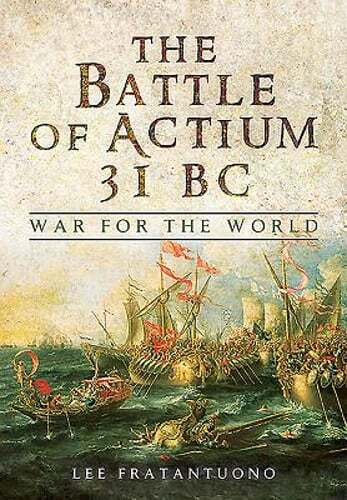
I finished The Battle of Actium 31 BC by Lee Fratantuono. The author tries to separate fact from fiction from myth. I agree with his assessment of Mark Antony--that he was a great statesman, but a not so great general; although he was wildly successful under Caesar. The author's thesis was that Antony (& Cleopatra) made a "wrong turn" when they decided in the pivotal moment to go on the defensive and wait for Octavian to attack their forces holed up in western Greece. I really liked this narrative and learned a lot about Marcus Agrippa and his leading of Octavian's navy. The downside is that Fratantuono reviewed what other historians had to say about Actium, and that interrupted the narrative flow, for me. At 224 pages, this was just the right length. 4 stars
My only other read this month could be Hannibal of Carthage (The World's Greatest Myths and Legends) which appears to be part of a series, by J.K. Jackson and others. Usually these are quick reads without a lot of documentation. I'm not sure if I want to read this or not! Anybody read it, know of the author or this series?
I am currently reading Helen of Troy by Margaret George, but I'm over halfway through 720+ pages and the are only rumors of war. I don't think I can really count it for this topic as it doesn't seem as if the war is a major part of the book; at least yet. That being said, it's a great read!
My only other read this month could be Hannibal of Carthage (The World's Greatest Myths and Legends) which appears to be part of a series, by J.K. Jackson and others. Usually these are quick reads without a lot of documentation. I'm not sure if I want to read this or not! Anybody read it, know of the author or this series?
I am currently reading Helen of Troy by Margaret George, but I'm over halfway through 720+ pages and the are only rumors of war. I don't think I can really count it for this topic as it doesn't seem as if the war is a major part of the book; at least yet. That being said, it's a great read!
70PaulCranswick
I am really impressed by the depth and breadth of the reading this month.
71benitastrnad
>70 PaulCranswick:
I think that selecting a work of nonfiction can be intimidating and having people write a bit about what they are reading and why they like it, encourages others to try nonfiction works. Often people think nonfiction is only for academics (or perhaps nerds who will geek out on that one subject) but often it is just that nobody has clear titles to go look at and think about tackling for themselves.
I think that selecting a work of nonfiction can be intimidating and having people write a bit about what they are reading and why they like it, encourages others to try nonfiction works. Often people think nonfiction is only for academics (or perhaps nerds who will geek out on that one subject) but often it is just that nobody has clear titles to go look at and think about tackling for themselves.
72booksaplenty1949
Finished Carthage Must Be Destroyed. Very well-written; brisk readable style apparently not at the expense of scholarly depth, judging by the 75 pages of notes and 30 page bibliography. I was aware, however, of a certain “so what” response as I read the book. Unlike a memoir or a work of fiction, there were no characters to get inside and not much of a human dimension to the events. A complete contrast to The Iliad, which I am reading aloud with my book group. The significance of Carthage in Rome’s self-concept is analysed at length in the last chapter, however, and I found this very interesting.
73booksaplenty1949
Now inspecting my copy of The Landmark Thucydides, unread on my shelf for many a long year.
74annushka
I finished The Silence of the Girls last night. The book is well written and does cover the side of the military conflicts which are rarely talked about.
75alcottacre
>73 booksaplenty1949: My copy is sitting on my shelf in the same condition and as much I would dearly love to get to it this month, it is just not going to happen. *sigh*
76EllaTim
I put aside Pax Romana for the moment, and started The Lantern Bearers. This is set in the time when the Romans have just left Britain, and it is being invaded by Saxon raiders. Lots of conflict and struggle. Very well written.
77booksaplenty1949
Have started The Landmark Thucydides. Heavy going, predictably. The editor notes that the 1874 translation he is using, with some modifications including American spelling, is faithful to Thucydides’ long and complex sentences, so I guess I’m grateful I’m not trying to read it in Ancient Greek.
78drneutron
Finished a reread of The Amazons: Lives and Legends of Warrior Women across the Ancient World today. For the purposes of the Nonfiction challenge, it won the Independent Publisher Book Awards (Silver – History - World – 2015). For the purposes of the War Room challenge, it talked a lot about the myths about Amazons created by the ancient Greeks, which centered mostly about war with the Amazons, individually and collectively.
Mayor does indeed talk a lot about the Greeks and their legends of warrior women and a women-only society centered in the barbarian east. But it's mostly about how those legends were sourced in Scythian and other steppe cultures of the areas north and east of the Black Sea all the way to China. So there's some description of archaeological finds related to women warriors, and even discussion of Caucasus cultures' mythology, to support the thesis that the Amazon myths were inspired by a steppe culture in which women were equals to men in war and leadership.
This thesis probably won't shock anyone, but when the book was published 10 years ago, this idea was relatively novel. I had the privilege of hearing Mayor talk about her work at the 2014 National Book Festival, where I picked up my copy. It's all in all a great book for looking at the ties between myth and reality as related to the role of women in Greek and "barbarian" cultures.
Mayor does indeed talk a lot about the Greeks and their legends of warrior women and a women-only society centered in the barbarian east. But it's mostly about how those legends were sourced in Scythian and other steppe cultures of the areas north and east of the Black Sea all the way to China. So there's some description of archaeological finds related to women warriors, and even discussion of Caucasus cultures' mythology, to support the thesis that the Amazon myths were inspired by a steppe culture in which women were equals to men in war and leadership.
This thesis probably won't shock anyone, but when the book was published 10 years ago, this idea was relatively novel. I had the privilege of hearing Mayor talk about her work at the 2014 National Book Festival, where I picked up my copy. It's all in all a great book for looking at the ties between myth and reality as related to the role of women in Greek and "barbarian" cultures.
79booksaplenty1949
Finished Book 1 (of 8) of The Landmark Thucydides. Peloponnesian War about to begin in earnest. Am also reading The Iliad with my read-aloud group which meets on Monday and can’t help observing the contrast between Homer’s account, fictional insofar as it describes the thoughts, feelings, and motivations of individual characters, not to mention those of the Olympian gods, and the rather dry efforts of a historian, even one more or less contemporary with the events. But I am sure I will feel a rich sense of accomplishment when I can say I have read A History of the Peloponnesian War.
80ArlieS
>78 drneutron: Oh! I've got that one sitting waiting for me; I hadn't known it would also qualify for the non-fiction challenge.
81Storeetllr
>76 EllaTim: I’m plowing through Pax Romana and am happy to report that the second half seems to be less of a slog than the first. Either that or I’m used the style now. I don’t remember Caesar, Life of a Colossus being so dry.
82drneutron
>80 ArlieS: It's an award winner, so for this month, yeah!
83Donna828
Finally finished Cleopatra: The Queen who challenged Rome and Conquered Eternity by Alberto Angela. I checked out both the print copy and the audio version. It was fun flipping back and forth between them. When the reading got heavy in the war parts, I did better with the actual book as far as keeping up with the action and multitude of characters.
There was a lot of information about the ancient world, and I enjoyed the author's fairly simple style of writing so that the average reader like me could understand all the twists and turns of this tumultuous time in history. It is classified as a Biography but with little specific knowledge about Cleopatra's private life there seemed to be quite a bit of speculation on the author's part. I tried to be concise here. There is so much information. Feel free to skim or skip down to the war descriptions.
Cleopatra and Julius Caesar
These two larger than life world leaders had both a political and romantic relationship. Caesar needed her wealth and Cleopatra needed his protection to remain Queen of Egypt. She was living in Rome with their son Caesarion when Caesar was assassinated in 44 BC.
Cleopatra and Mark Antony
Their relationship was intended to be a political alliance between the Egypt and Rome but Cleopatra dazzled Antony and the two fell madly in love. Like Caesar, Antony needed financial backing and Cleopatra depended on his protection and help to expand her power and to assure the rights of her oldest son, Caesar's heir. They had a complicated affair that resulted in three children over an 11-year span.
The Battle of Phllippi
There was a lot of hostility after the death of Caesar. It culminated at the Plain of Philippi in Greece when the republican armies of Brutus and Cassius confronted the forces of Mark Antony and Octavian, the young grand-nephew whom Caesar named as his successor. "Roman legions, like all armies throughout history terrorize civilians with their brutality. And now two armies with those same characteristics are about to confront each other." The psychological war of mostly threats and posturing soon elevated into a blood bath with over 40,000 fatalities. Caesar was avenged at a high cost.
As a sidenote, Cleopatra's help was requested and she made a valiant attempt to lead her fleets across the Mediterranean Sea but had to turn back because of the extreme turbulent waters. "A queen at the command of her own fleet has never been seen...and this illustrates the strength, initiative, and unqueeness of this woman." (209)
The Battle of Actium
After the Philippi battle which showed off Mark Antony's military skills, there is a big section about the love-life of MA and Cleopatra. I won't go into that again except to say that it caused a rift in Antony's and Octavian's relationship after MA proclaimed Cleopatra as the "queen of queens" and acknowledged her oldest son as Caeser's offspring. Lots of jealousy and turmoil lead to the Battle of Actium where Octavian's political genius ensured that he would be known as Caesar Augustus the Emperor of the Roman Empire and would rule for 41 years. We probably all know what happened to Mark Antony and Cleopatra.
There was a lot of information about the ancient world, and I enjoyed the author's fairly simple style of writing so that the average reader like me could understand all the twists and turns of this tumultuous time in history. It is classified as a Biography but with little specific knowledge about Cleopatra's private life there seemed to be quite a bit of speculation on the author's part. I tried to be concise here. There is so much information. Feel free to skim or skip down to the war descriptions.
Cleopatra and Julius Caesar
These two larger than life world leaders had both a political and romantic relationship. Caesar needed her wealth and Cleopatra needed his protection to remain Queen of Egypt. She was living in Rome with their son Caesarion when Caesar was assassinated in 44 BC.
Cleopatra and Mark Antony
Their relationship was intended to be a political alliance between the Egypt and Rome but Cleopatra dazzled Antony and the two fell madly in love. Like Caesar, Antony needed financial backing and Cleopatra depended on his protection and help to expand her power and to assure the rights of her oldest son, Caesar's heir. They had a complicated affair that resulted in three children over an 11-year span.
The Battle of Phllippi
There was a lot of hostility after the death of Caesar. It culminated at the Plain of Philippi in Greece when the republican armies of Brutus and Cassius confronted the forces of Mark Antony and Octavian, the young grand-nephew whom Caesar named as his successor. "Roman legions, like all armies throughout history terrorize civilians with their brutality. And now two armies with those same characteristics are about to confront each other." The psychological war of mostly threats and posturing soon elevated into a blood bath with over 40,000 fatalities. Caesar was avenged at a high cost.
As a sidenote, Cleopatra's help was requested and she made a valiant attempt to lead her fleets across the Mediterranean Sea but had to turn back because of the extreme turbulent waters. "A queen at the command of her own fleet has never been seen...and this illustrates the strength, initiative, and unqueeness of this woman." (209)
The Battle of Actium
After the Philippi battle which showed off Mark Antony's military skills, there is a big section about the love-life of MA and Cleopatra. I won't go into that again except to say that it caused a rift in Antony's and Octavian's relationship after MA proclaimed Cleopatra as the "queen of queens" and acknowledged her oldest son as Caeser's offspring. Lots of jealousy and turmoil lead to the Battle of Actium where Octavian's political genius ensured that he would be known as Caesar Augustus the Emperor of the Roman Empire and would rule for 41 years. We probably all know what happened to Mark Antony and Cleopatra.
84amanda4242
300 by Frank Miller
A lot of chest thumping dialogue and weirdly fetishistic art. I'd recommend it over the movie, but don't take that for a ringing endorsement.
The Lion in the Gateway by Mary Renault, illustrated by C. Walter Hodges
A pretty good children's book about the battles of Marathon, Salamis, and Thermopylae. Renault has an obvious bias for the Greeks, but she doesn't show them as a perfect people and she makes the point that many of their accomplishments were possible because they had slaves doing a lot of the labor.
Conquest: Julius Caesar's Gallic War by Tarek Ben Yakhlef, translated by Cecile Bohard & Andrew Benteau
Caesar trounces some Gauls. Lather, rinse, repeat.
Skip it and read an Asterix comic instead.
Received via Edelweiss.
A lot of chest thumping dialogue and weirdly fetishistic art. I'd recommend it over the movie, but don't take that for a ringing endorsement.
The Lion in the Gateway by Mary Renault, illustrated by C. Walter Hodges
A pretty good children's book about the battles of Marathon, Salamis, and Thermopylae. Renault has an obvious bias for the Greeks, but she doesn't show them as a perfect people and she makes the point that many of their accomplishments were possible because they had slaves doing a lot of the labor.
Conquest: Julius Caesar's Gallic War by Tarek Ben Yakhlef, translated by Cecile Bohard & Andrew Benteau
Caesar trounces some Gauls. Lather, rinse, repeat.
Skip it and read an Asterix comic instead.
Received via Edelweiss.
85Donna828
>69 Tess_W: Tess, you learned more about the Battle of Actium than I did. The book I read went into more detail about the previous Battle of Philippi. Those Romans sure liked to fight each other. Ha!
86PocheFamily
Finished Scipio Africanus, by B.H. Liddell Hart. Really interesting! The author ardently argues that Scipio is possibly the greatest general of all time, and I was impressed by the author's analysis in support of his thesis. This work is also excellent in comparative analysis of multiple sources by Scipio's biographers and ancient historians to ascertain points of fact in the battles (such as numbers of troops), or in determining the strategical thinking of its subject (why he moved camp, as an example). I'm left both with the desire to learn more about Scipio (although there may be no more to learn I would like to become more familiar with his work/times/background), and to read more by this author. Should be noted that this book was written in 1926 and has held up well over the past century.
Lots of different book review sites are rating it steadily over 4 out of 5, and in my mind it's dang close to 5. It's easy to recognize good historical research and writing even if one is ignorant on the subject! Glad I read this, and thanks to you, PaulCranswick, for mentioning his name above and for this thread!
Lots of different book review sites are rating it steadily over 4 out of 5, and in my mind it's dang close to 5. It's easy to recognize good historical research and writing even if one is ignorant on the subject! Glad I read this, and thanks to you, PaulCranswick, for mentioning his name above and for this thread!
87ChrisG1
My entry for January was The Last of the Wine by Mary Renault. It's a fine novel which uses the Peloponnesian wars to provide the backdrop for her main character's coming of age. It gave me a taste of what ancient Athens may have been like during Socrates' time.
88ArlieS
Yesterday I finished Persian fire : the first world empire and the battle for the West by Tom Holland
Here's a lightly edited version of the mini-review I posted in my own thread:
This is a non-fiction retelling of the history of Persian invasion of Ancient Greece, with some lead-up describing earlier Persian history. I'd hoped it would be a bit more Persian focussed than it turned out to be; books retelling that bit of classical history are common, and I've already read some.
I selected it from new Library Things recommendations in the history genre, which had received the tag "war" - the best formula I could find for finding books suitable for the War Room challenge that I had a decent chance of liking. (90% of everything is drek; reading random books that matched the challenge constraints seemed likely to result in more DNFs than enjoyment.)
I found this book "ok" but not great. I knew that hard data is scarce this early in history, with many authors long after the events they claim to report; historians disagree about just about everything. Yet this book just described what happened; any mention of disagreement was relegated to the footnotes.
Worse, perhaps, I read it shortly after another book with overlapping coverage: The Bronze Lie: Shattering the Myth of Spartan Warrior Supremacy. There were significant divergences between the two accounts, noticeable even with my elderly person's weakened memory for details; I imagine I'd have noticed a lot more if I'd read these two back to back as a 20 year old. And to put the icing on the inconsistency cake, I'm also regularly reading a blog called "A collection of mitigated pedantry," focussed on ancient era warfare, with emphasis on practical details.
The other thing I noticed, was that the author wrote as if he knew how lots of people actually felt. Much of the time, they felt what I presume the author would have felt, in like circumstances, given his modern upbringing. I'm not so sure Spartan youth really would have had the same feelings about the prospect of a relationship with an older man. (Other cases where he describes feelings, he may be getting them from ancient sources - which of course may themselves have been more inventive than accurate. I can't tell without more research than I want to do.)
On the other hand, I learned things I didn't previously know. I was particularly struck by the shortness of the period of Athenian democracy, particularly democracy in combination with significant power. And I'd like to know more about whether there were indeed _relatively recent_ changes in the treatment of respectable Athenian women, in the generation or two before and including these events.
Bottom line: you could do worse. But I would probably have done better to read any of the relevant ancient authors, even though I'd have to read them in translation.
Here's a lightly edited version of the mini-review I posted in my own thread:
This is a non-fiction retelling of the history of Persian invasion of Ancient Greece, with some lead-up describing earlier Persian history. I'd hoped it would be a bit more Persian focussed than it turned out to be; books retelling that bit of classical history are common, and I've already read some.
I selected it from new Library Things recommendations in the history genre, which had received the tag "war" - the best formula I could find for finding books suitable for the War Room challenge that I had a decent chance of liking. (90% of everything is drek; reading random books that matched the challenge constraints seemed likely to result in more DNFs than enjoyment.)
I found this book "ok" but not great. I knew that hard data is scarce this early in history, with many authors long after the events they claim to report; historians disagree about just about everything. Yet this book just described what happened; any mention of disagreement was relegated to the footnotes.
Worse, perhaps, I read it shortly after another book with overlapping coverage: The Bronze Lie: Shattering the Myth of Spartan Warrior Supremacy. There were significant divergences between the two accounts, noticeable even with my elderly person's weakened memory for details; I imagine I'd have noticed a lot more if I'd read these two back to back as a 20 year old. And to put the icing on the inconsistency cake, I'm also regularly reading a blog called "A collection of mitigated pedantry," focussed on ancient era warfare, with emphasis on practical details.
The other thing I noticed, was that the author wrote as if he knew how lots of people actually felt. Much of the time, they felt what I presume the author would have felt, in like circumstances, given his modern upbringing. I'm not so sure Spartan youth really would have had the same feelings about the prospect of a relationship with an older man. (Other cases where he describes feelings, he may be getting them from ancient sources - which of course may themselves have been more inventive than accurate. I can't tell without more research than I want to do.)
On the other hand, I learned things I didn't previously know. I was particularly struck by the shortness of the period of Athenian democracy, particularly democracy in combination with significant power. And I'd like to know more about whether there were indeed _relatively recent_ changes in the treatment of respectable Athenian women, in the generation or two before and including these events.
Bottom line: you could do worse. But I would probably have done better to read any of the relevant ancient authors, even though I'd have to read them in translation.
89Kristelh
>88 ArlieS: Thank you for your thoughtful review, Arlie.
90Kristelh
I am currently reading History of the Peloponnesian War. I am at book 3 and enjoying the coverage of The Mytilenian Debate between Cleon and Diodotus on the pros and cons of putting the Mytilenians to death.
91Kristelh
Some quotes from Book Three; History of the Peloponnesian War
. "I have had occasion often enough already to observe that a democracy is incapable of governing others,.."
"...a city is better off with bad laws, so long as they remain fixed, than with good laws that are constantly being altered...."
"As for compassion, it is proper to feel it in the case of people who are like ourselves and who will pity us in their turn, not in case of those who so far from having the same feelings towards us, must always and inevitably be our enemies."
Some quotes from General Cleon, a member of the commercial class.
. "I have had occasion often enough already to observe that a democracy is incapable of governing others,.."
"...a city is better off with bad laws, so long as they remain fixed, than with good laws that are constantly being altered...."
"As for compassion, it is proper to feel it in the case of people who are like ourselves and who will pity us in their turn, not in case of those who so far from having the same feelings towards us, must always and inevitably be our enemies."
Some quotes from General Cleon, a member of the commercial class.
92EllaTim
I finished The Lantern Bearer. Liked it a lot, very well written. It gives a good idea what the Pax Romana meant, and what happened after the Romans left. Invasion, division, fighting, unrest. Somewhere also a good description of a battle, making me suddenly understand how fighting can be attractive.
I am thinking about reading some more, for this month. As strictly speaking the time period of this book is after the Romans. There are lots of options, but maybe I’ll try and read the Ilias (try again).
I am thinking about reading some more, for this month. As strictly speaking the time period of this book is after the Romans. There are lots of options, but maybe I’ll try and read the Ilias (try again).
93Tess_W
I completed Rosemary Sutcliffe's The Lantern Bearers The action picks up when Rome decides to leave Great Britain. Without Roman "protection", Britain is ripe for invasion. The protagonist of the story, Aquila, a member of the Legion, deserts, and he and his family decide to stay behind. The remainder of the book tells of Aquila's trials and tribulations in repelling the Saxons. I found Aquila not to be a really likeable person, but that is neither here nor there as far as the story goes. "We are the Lantern Bearers, my friend; for us to keep something burning, to carry what light we can forward into the darkness and the wind" This is a book written for YA's. However, teaching YA's, I can tell you that in no way, at least for the current majority, would YA's have an interest in or be able to understand this book's place in history. I enjoyed this book and in the future, on one of my buying "sprees", will look for the other books in this series. 240 pages 3.5 stars

I have one book remaining that will fit this topic, a biography of Hannibal. Not sure I will have time to finish it as am currently reading Stonehenge by Bernard Cornwell for a prehistoric challenge and it is a doorstopper!

I have one book remaining that will fit this topic, a biography of Hannibal. Not sure I will have time to finish it as am currently reading Stonehenge by Bernard Cornwell for a prehistoric challenge and it is a doorstopper!
94SandDune
>92 EllaTim: >93 Tess_W: I loved The Lantern Bearers when I read it last year. We didn't read any Rosemary Sutcliff with my son when he was small, largely because she wasn't an author that I had read much myself. But in retrospect I think Jacob would have liked this one a lot. But then he was a child who started lecturing his teacher (at age 7 or 8) on the correct date of the end of the Roman Empire (she had given the date that the Roman legions left Britain) which depended (so he told her) on whether you were talking about the Eastern Roman Empire or the Western. He was a bit obsessed!
95booksaplenty1949
>90 Kristelh: I am at the same place in The Landmark Thucydides (an annotated version of the History of the Peloponnesian War). I find the speeches, such as the one you mention, by far the most interesting part of the book. Battle descriptions are lacklustre. Lots of place names, which I mostly can’t keep straight. Annotations in the Landmark edition are on the same page as the text, which is handy, but the footnote print is microscopic so I only look at the note if I am significantly confused. Every paragraph is also summarised in the margin—-would be a welcome feature if you were a student cramming for a test.
96Kristelh
>95 booksaplenty1949:, Books.. that sounds like a very nice edition to have. I have the Penguin Classics edition. Paragraphs are numbered. The end has Appendices, Bibliography, Maps, and Index. I find looking up characters and places in Wiki is helping me a bit otherwise I seem to zone out.
97quondame
>93 Tess_W: The Lantern Bearers was my favorite of that series.
>94 SandDune: Yay for your son. Western European scholarship really denatured the Roman from the Eastern Roman Empire.
>94 SandDune: Yay for your son. Western European scholarship really denatured the Roman from the Eastern Roman Empire.
98ArlieS
Heh Paul, I suggest you start the thread for February well before the end of January. I need to start thinking about what I'll read, and most likely putting holds on books, before the month starts, and would appreciate doing so in a social manner.
99Tess_W
I read Hannibal: Rome's Greatest Enemy by Philip Freeman. Freeman is well known in the historical world as the author of what is considered "the best" biography of Julius Caesar. (I have not read). In this book, the author begins at the beginning when Hannibal's, father, Hamilcar Barca, became General of the Carthage forces. Hannibal was aged around 8-10 at this time and swore to his father that he would never become a friend to Rome. After the death of his father and at the age of 26, Hannibal became the General of the Carthage forces. Some print was dedicated to the "story" of the war elephants, but this author said too much is made of that particular episode as it was not nearly as successful as people currently believe. Most of the book centered on the Battle of Cannae in 216 BCE and what Hannibal did and did not do. What he did was surround Rome and route the Roman legion. What he did not do was invade the city proper and raze it; for he could have. He has been hailed as both a hero and a coward for this decision. Hannibal thought it not a wise use of resources nor worth the loss of the tens of thousands of lives it would have cost for an invasion of the city proper.
I also liked this book because the 19 pages at the end listed several of the main scholarly writings from which the author obtained his information. Amongst them: Livy, Polybius, Pinder, and Plutarch. The author attempts to evaluate their bias.
I loved this book! This has been my most interesting read thus far this year. Thank you, Paul, for creating this Ancient Rome War Challenge and getting me out of my comfort zone.

I also liked this book because the 19 pages at the end listed several of the main scholarly writings from which the author obtained his information. Amongst them: Livy, Polybius, Pinder, and Plutarch. The author attempts to evaluate their bias.
I loved this book! This has been my most interesting read thus far this year. Thank you, Paul, for creating this Ancient Rome War Challenge and getting me out of my comfort zone.

100labfs39
My book club read The Song of Achilles this month. It was a reread for me, but still blown away. Loved it, again.
101Tess_W
>100 labfs39: I really liked that book, also!
102atozgrl
I read The Eagle of the Ninth for this month's challenge. I know a lot of folks here read it a year ago because all the discussion about it brought the book to my attention. After reading it for myself, I understand why it was so well loved. I really enjoyed the story, and I look forward to reading the remaining books in the trilogy.
103SandDune
I've started reading The Fall of the Roman Empire: A new history by Peter Heather. Not my original choice but one we had to hand. (Actually, we have quite a lot of Roman Empire books to hand). Enjoying it so far.
104ctpress
Finished History of the Peloponnesian War by Thucydides (413 BC).
The version I read was an abridged edition - 96 pages - old Danish translation that were used for high school. Interesting to read about men doing sports naked, about very detailed description of some sort of plague or epidemic - really horrible - that they couldn't find a cure for. But mostly it was long speeches of peace-negotiations or war declarations with moral arguments on why a city should be spared or everyone killed in it.
The version I read was an abridged edition - 96 pages - old Danish translation that were used for high school. Interesting to read about men doing sports naked, about very detailed description of some sort of plague or epidemic - really horrible - that they couldn't find a cure for. But mostly it was long speeches of peace-negotiations or war declarations with moral arguments on why a city should be spared or everyone killed in it.
105booksaplenty1949
>104 ctpress: Trust me, the speeches are the best part. I am up to Book 6—357 pages—-and finding it pretty repetitive, not to mention depressing. Only 200 more to go, however. Also reading Tinker, Tailor, Soldier, Spy to remind myself that we don’t seem to have learned much about international relations in the last 2500 years.
106ctpress
>105 booksaplenty1949: Exactly my thoughts when reading. We haven't learned much from previous wars. A seemingly civil discourse that results in a chilling conclusion to slaughter innocent children and other civilians.
107booksaplenty1949
>106 ctpress: The repetition of a phrase along the lines of “they slaughtered all the men and sold the women and children into slavery,” at the end of every battle starts to have a wearing effect.
108alcottacre
I just finished up Tom Holland's Persian Fire, a good solid read. I am starting Barry Strauss' The Battle of Salamis today and hope for the same from it.
109quondame
If I get to it I've want to include Soldier of the Mist. We'll see.
110ArlieS
I'm still reading several books suitable for the January installment of the War Room challenge, and not really expecting to finish any of them in the next 3 days. These include:
- Pax Romana by Adrian Goldsworthy
- Roman Warfare by Adrian Goldsworthy
- The Amazons: Lives and Legends of Warrior Women across the Ancient World by Adrienne Mayor
Also on hand:
- Carthage must be destroyed by Richard Miles
Finally, if I'm willing to really stretch a point. These bandes dessinées are set in Gaul during the Roman empire. I borrowed them primarily to practice my French, but one could argue they qualify as fiction featuring war (or at least small scale combat) in the Ancient world.
- Astérix et les Normands by René Goscinny
- Le fils d'Astérix by Albert Uderzo
- Pax Romana by Adrian Goldsworthy
- Roman Warfare by Adrian Goldsworthy
- The Amazons: Lives and Legends of Warrior Women across the Ancient World by Adrienne Mayor
Also on hand:
- Carthage must be destroyed by Richard Miles
Finally, if I'm willing to really stretch a point. These bandes dessinées are set in Gaul during the Roman empire. I borrowed them primarily to practice my French, but one could argue they qualify as fiction featuring war (or at least small scale combat) in the Ancient world.
- Astérix et les Normands by René Goscinny
- Le fils d'Astérix by Albert Uderzo
111PocheFamily
>110 ArlieS: Je pense que ces livres d'Asterix sont bons! (je suis desolee mais no international keyboard on this ole unit!)
112Tess_W
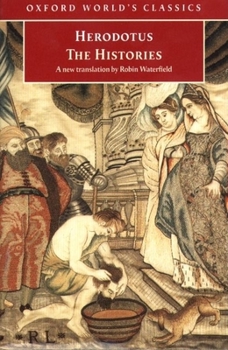
I cheated a bit and managed to sneak another piece of history into my reading this month, The Histories by Herodotus. I did not read the entire book, but focused on The Second Persian Invasion of Greece, since it was timely for this challenge. I read about 30+ pages.
This from the preface: Knowledge of the invasions is derived almost entirely from the account of Herodotus, who wrote about 20 years after the actual events. It is generally believed that his accounts of the Persian invasions to be somewhat accurate; with numbers being primarily in question.
My favorite part focused on the resistance of the Spartans during the second invasion, led by Persian King Xerxes. There is reported dialogue between King Xerxes and Spartan Demaratus. (I had to look him up, either a traitor or an ex-pat) Xerxes has asked how Sparta can stand up to the might of the Persians. This is where most historians say Herodotus makes a numerical error, stating the Persian army numbered 2,641,610 warriors. According to Marincola (editor), this was and astronomical and impossible number. The remainder of this “book” (section) is Herodotus’ account of the stand of the Spartans under their king, Leonidas at the mountain pass of Thermopylae.
Herodotus writes that the men were buried where they fell, along with those who had died before the departure of the men Leonidas had dismissed. There is an epitaph over the mass grave which said,: In this place, four thousand Peloponnesians fought four million men.” This was a Persian victory in 480 BCE.
I found this portion of The Histories to be fairly accurate given the above caveat. That being said, I know next to nothing about ancient history, so I have nothing to dispute!
This from the preface: Knowledge of the invasions is derived almost entirely from the account of Herodotus, who wrote about 20 years after the actual events. It is generally believed that his accounts of the Persian invasions to be somewhat accurate; with numbers being primarily in question.
My favorite part focused on the resistance of the Spartans during the second invasion, led by Persian King Xerxes. There is reported dialogue between King Xerxes and Spartan Demaratus. (I had to look him up, either a traitor or an ex-pat) Xerxes has asked how Sparta can stand up to the might of the Persians. This is where most historians say Herodotus makes a numerical error, stating the Persian army numbered 2,641,610 warriors. According to Marincola (editor), this was and astronomical and impossible number. The remainder of this “book” (section) is Herodotus’ account of the stand of the Spartans under their king, Leonidas at the mountain pass of Thermopylae.
Herodotus writes that the men were buried where they fell, along with those who had died before the departure of the men Leonidas had dismissed. There is an epitaph over the mass grave which said,: In this place, four thousand Peloponnesians fought four million men.” This was a Persian victory in 480 BCE.
I found this portion of The Histories to be fairly accurate given the above caveat. That being said, I know next to nothing about ancient history, so I have nothing to dispute!
113quondame
>112 Tess_W: Soldier of the Mist starts in 479BC after the Battle of Plataea, which I didn't bother to check out during previous reads.
114booksaplenty1949
Last day of January, so I am unlikely to complete the last hundred pages of The Landmark Thucydides before the month is over, let alone get to A War Like No Other or Josephus. But I plan to read lightly on the American Revolution, so hope to be caught up ready for a fresh start in March.
115hredwards
I have one more book I tried to finish for this month but not going to make it, will just add it late.
116avatiakh
I'm also lagging behind on my read of The campaigns of Alexander and will take it into February.
117alcottacre
I just finished Barry Strauss's The Battle of Salamis. Unless you are a die-hard, must read everything about ancient Greece or ancient Persia person, I think it can be safely avoided. I was really hoping for better. My final thoughts are on my thread if anyone is interested in them.
118Kristelh
I read History of the Peloponnesian War by Thucydides, translated by Rex Warner, published by Penguin Classics.
This was not an easy read. A lot of towns, names and all in all it was often a blur. I did enjoy some points made in debates and the discussions on oligarchy, democracy, and constitution. I think this might be a reference book but not something I would want to read cover to cover again. I also looked for overlaps with Persian Fire, at the end Darius is mentioned. This was a very long war.
This was not an easy read. A lot of towns, names and all in all it was often a blur. I did enjoy some points made in debates and the discussions on oligarchy, democracy, and constitution. I think this might be a reference book but not something I would want to read cover to cover again. I also looked for overlaps with Persian Fire, at the end Darius is mentioned. This was a very long war.
119ArlieS
I surprised myself by finishing Roman warfare by Adrian Keith Goldsworthy before the end of the month.
This is a decent book by a historian, about exactly what the title says: Roman warfare and the Roman military, as they developed and changed over time. It's part of a series about warfare in different times and places. I read it for the January installment of the War Room challenge.
I didn't like it as much as I liked the same author's How Rome fell: death of a superpower, which I read last May, or as much as I like his Pax Romana, which I'm two thirds of the way through now. That's pretty much because this book is just conveying the generally agreed upon facts, not expressing somewhat original - or at least contested - ideas. That fits with it being part of a series; it's not written for someone who's spent the past month reading several books with overlapping material, with others over the past decade(s). But for what it does, it's good.
This is a decent book by a historian, about exactly what the title says: Roman warfare and the Roman military, as they developed and changed over time. It's part of a series about warfare in different times and places. I read it for the January installment of the War Room challenge.
I didn't like it as much as I liked the same author's How Rome fell: death of a superpower, which I read last May, or as much as I like his Pax Romana, which I'm two thirds of the way through now. That's pretty much because this book is just conveying the generally agreed upon facts, not expressing somewhat original - or at least contested - ideas. That fits with it being part of a series; it's not written for someone who's spent the past month reading several books with overlapping material, with others over the past decade(s). But for what it does, it's good.
120Familyhistorian
I read Taken at the Flood: The Roman Conquest of Greece. It took centuries and involved so many players that, at times, it was hard to keep track. The kingdoms involved had been going at it for ages, waging war on each other but then the Romans decided to get involved. It took them a long time but they gradually gained power as the mightiest leaders died for one reason or another. Information about the Roman methods of manipulation and warfare on conquered peoples made me revise my opinion of them downward.
121booksaplenty1949
A day late and a dollar short, but I have finished The Landmark Thucydides. Looking forward to reading A War Like No Other to explain to me what was going on, but in the meantime moving on to the American Revolution.
122quondame
Soldier of the Mist 

Latro, as he is called by the people around him when he starts recording his daily memories on a scroll, forgets each day after a head injury in a battle near a temple at the battle Plataea (called Clay in the text). He sees gods and demi-gods not visible to his companions and is told that he must request forgiveness from the Great Mother if he is to be healed. We read what he has written, somewhat broken and intermittent, and it ends as his party attempts to escape the siege of Sestus on the Hellespont.


Latro, as he is called by the people around him when he starts recording his daily memories on a scroll, forgets each day after a head injury in a battle near a temple at the battle Plataea (called Clay in the text). He sees gods and demi-gods not visible to his companions and is told that he must request forgiveness from the Great Mother if he is to be healed. We read what he has written, somewhat broken and intermittent, and it ends as his party attempts to escape the siege of Sestus on the Hellespont.
123EllaTim
>122 quondame: Sounds very interesting!
124alcottacre
>122 quondame: I agree with Ella - it does sound interesting. I will have to see if my local library has a copy.
125quondame
>123 EllaTim: >124 alcottacre: Gene Wolfe is an amazing writer and one of my favorite authors. And the variety of what he's written is large enough to appeal to very different tastes.
126alcottacre
>125 quondame: Good to know. Thanks, Susan.
127alcottacre
Is there going to be a thread for February or should I just post my thoughts on Killing England here, Paul? Or did I just not find the February thread while looking for it?
128Kristelh
>127 alcottacre:. I don't think there is a thread yet, Stasia. And since you and Paul are both heading up the War Room, maybe you could post the February thread. Just a thought.
129alcottacre
>128 Kristelh: I do not know how to do all the fancy pictures and stuff, Kristel. If I post a thread it will be drab as all get out, lol.
130Kristelh
>129 alcottacre: yes, Stasia, there is that. I can do some pictures but I am pretty limited. Paul does such great pictures.
131PaulCranswick
Guys I am very sorry about the delay in getting the War Room February Challenge up.
It will be rectified very shortly.
In my defence, I have had one heck of a difficult time with work in the last two weeks and am pretty much running on empty at the moment.
It will be rectified very shortly.
In my defence, I have had one heck of a difficult time with work in the last two weeks and am pretty much running on empty at the moment.
132benitastrnad
>131 PaulCranswick:
It does take some time to set up a new thread. Even a rudimentary thread. Fancying it up takes even more time.
It does take some time to set up a new thread. Even a rudimentary thread. Fancying it up takes even more time.
133booksaplenty1949
>131 PaulCranswick: I would suggest that if LibraryThing starts to take precedence over work and family it’s time to revisit your priorities. LT is meant to be the sprig of holly on the pudding of reading and book collecting. Which in turn is the dessert course of life. We’re so lucky to have you.
135alcottacre
>131 PaulCranswick: Paul, please take care of yourself first. We are big kids and will just happily paddle in this pond for a bit longer. . .
136PaulCranswick
>135 alcottacre: Thanks for always being a wonderful friend, Stasia.
137PaulCranswick
Anyway here is the February War Room Thread. Thank you all for bearing with me a little bit this month.
https://www.librarything.com/topic/358097
https://www.librarything.com/topic/358097
138quondame
>129 alcottacre: >130 Kristelh: One issue with pictures is that too many large files really slows down load time. I used to pick the largest, clearest files for my book covers, so even though I displayed them with "height=200" the full size had to load. Now I try not to pick any images with reports a height dimension over 600.
As I haven't tried to load it as anyone else though, I can't be sure it is any faster, but I did notice that pages with lots of big images are the slowest.
As I haven't tried to load it as anyone else though, I can't be sure it is any faster, but I did notice that pages with lots of big images are the slowest.
139Kristelh
>138 quondame:, Susan, I've noticed that lots of pictures do slow down loading. I tend to not do pictures much because my results are inconsistent. I use book covers taken from LT and I use "inspect" to copy outerHTML.
140quondame
>139 Kristelh: LT has some covers that are huge and lots that are from Amazon and have a 500 height. I either use or load those.
141atozgrl
Hear, hear! I second what >133 booksaplenty1949: said.
142hredwards
Adding my second book for the January theme, I read most of it in January, but just finished it in February.
Troy: The Greek Myths Reimagined by Stephen Fry
This was very interesting and Fry's sense of humor made it a fun read. The epic story of Helen, Troy, and a big wooden horse. With a lot of other stuff thrown in.
Fun read but also educational.
Troy: The Greek Myths Reimagined by Stephen Fry
This was very interesting and Fry's sense of humor made it a fun read. The epic story of Helen, Troy, and a big wooden horse. With a lot of other stuff thrown in.
Fun read but also educational.
143benitastrnad
I never noticed the loading speeds when I was at work because we had the bestest fastest greatest of everything. That changed when I retired. Even in my neighborhood in a medium sized city has internet connectivity problems. That problem has only been exacerbated in moving to a small town in the boondocks. Now almost everything I do, I get messages saying "your internet speed is too slow," or after downloading something for 15 minutes just hitting the retry button and calling it quits. All of that is the main reason why I keep the threads I do very simple. The other reason is that I couldn't get the pictures to download at all and decided it wasn't worth doing it anyway.
144ArlieS
>137 PaulCranswick: Thank you. None of my inter-library loan requests have come in, so I also haven't picked up the relevant and potentially interesting books that are sitting on the shelf. Fortunately there's plenty of time left, even though February is the shortest month. I'm also still finishing up books about the Ancients at war.
145ArlieS
Carthage must be destroyed : the rise and fall of an ancient civilization by Richard Miles
This is a history of Carthage, consulting archaeology as well as ancient writings, and starting before Carthage's founding, not merely focussed on its doomed conflict with Rome. I borrowed it to read for the war room challenge in January, didn't get to it that month, and was thinking of returning it to the library unread. But when I picked it up to see what I would be missing, I liked it enough to decide to read it late.
From my point of view - already fairly familiar with ancient writings - the parts of the book informed by archaeology were the high points. The parts informed by ancient writings had less that was new to me. I also very much appreciated the combined approach.
This is a history of Carthage, consulting archaeology as well as ancient writings, and starting before Carthage's founding, not merely focussed on its doomed conflict with Rome. I borrowed it to read for the war room challenge in January, didn't get to it that month, and was thinking of returning it to the library unread. But when I picked it up to see what I would be missing, I liked it enough to decide to read it late.
From my point of view - already fairly familiar with ancient writings - the parts of the book informed by archaeology were the high points. The parts informed by ancient writings had less that was new to me. I also very much appreciated the combined approach.
146atozgrl
I have a couple of very belated books to add to this challenge. I have just finished Alexander the Great by Frank Lipsius, which I had pulled in January but was not in the mood to read then. (I read The Eagle of the Ninth by Rosemary Sutcliff instead.) This book is a very straightforward retelling of Alexander's life and military conquests, accompanied by many illustrations, including current photos of some of the places Alexander visited, pictures of many ancient artifacts, statues, and busts, etc. It's a good introduction to Alexander the Great.
I would also like to note here that I also read The Silver Branch by Rosemary Sutcliff in May, and it probably fits this challenge better than The Eagle of the Ninth as it has more battles. But both books are very good.
I would also like to note here that I also read The Silver Branch by Rosemary Sutcliff in May, and it probably fits this challenge better than The Eagle of the Ninth as it has more battles. But both books are very good.

