Rasdhar is a reader of this world
This topic was continued by Rasdhar is still a reader of this world (II).
Talk Club Read 2024
Join LibraryThing to post.
1rasdhar
This is the thread for all my reading in 2024. I'm Rasdhar, I work in academia, and I enjoy reading contemporary fiction and poetry from around the world. I have a weakness for mystery novels, and am part of a sporadic reading group that focuses on them in real life so some of those books should turn up here from time to time. I'm fortunate to have a job that requires a lot of reading, so I do what I love at work and at home.
I try and pick a country each year and read more books from that region: in the past, I've covered France, India, Russia, and Chile. I don't have a specific plan for reading in 2024, but I am trying to read more fiction in translation from Singapore, Malaysia, and Indonesia this year. Suggestions are welcome!
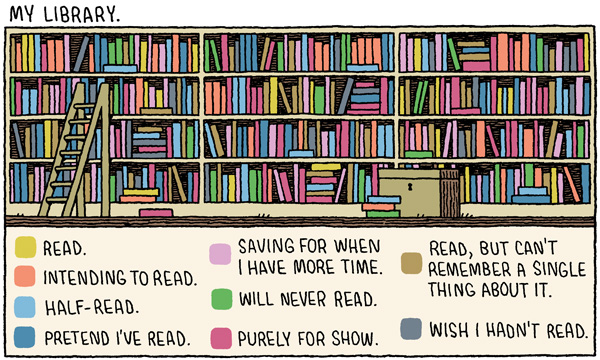
Tom Gauld does the best book comics. I recently picked up a bunch of his postcards, and have been sending them to all and sundry.
Happy reading in 2024.
Key to Posts
- Index of Books Read in 2024
- Interesting Books to Read (Published in 2024)
- Podcasts
- Other Media
Currently reading:
Now reading:


I try and pick a country each year and read more books from that region: in the past, I've covered France, India, Russia, and Chile. I don't have a specific plan for reading in 2024, but I am trying to read more fiction in translation from Singapore, Malaysia, and Indonesia this year. Suggestions are welcome!
Tom Gauld does the best book comics. I recently picked up a bunch of his postcards, and have been sending them to all and sundry.
Happy reading in 2024.
Key to Posts
- Index of Books Read in 2024
- Interesting Books to Read (Published in 2024)
- Podcasts
- Other Media
Currently reading:
Now reading:


2rasdhar
Index of Books Read in 2024:
January:
1. Patricia Highsmith - The Cry of the Owl
2. Ben Aaronovitch - Whispers Under Ground Review here .
3. Magdalena Zyzak - The Ballad of Barnabas Pierkiel Review here.
4. R. F. Kuang - Babel: Or the Necessity of Violence: An Arcane History of the Oxford Translators' Revolution Review here.
5. Christopher Moore - Noir and Razzmatazz Review here.
6. Emily Henry - Beach Read
7. Sebastian Sim - Let’s Give It Up For Gimme Lao! Review here.
8. Richard Osman - The Bullet that Missed Review here.
9. Kate Collins - A Good House for Children Review here.
10. Ronojoy Sen - House of the People: Parliament and the Making of Indian Democracy (reviewed on the book page).
11. Paul D. Halliday - Habeas Corpus: From England to Empire
12. Richard Osman - The Last Devil to Die Review here.
12. Eileen Chang - The Rouge of the North Review here.
February:
13. VV Ganeshanathan - Brotherless Night Review here
14. Black Coffee in a Coconut Shell (edited by Perumal Murugan) Review here
15. Chen Zijin - Bad Kids Review here
16. Anthony Berkeley - The Wintringham Mystery Review here
17. Cristina Campo - The Unforgivable, and other Writings Review here
18. Maryla Szymiczkowa - Mrs. Mohr Goes Missing Review here
19. The Penguin Book of Murder Mysteries (edited by Michael Sims) Review here
20. Supriya Gandhi- The Emperor Who Never Was Review here
21. José Maria de Eça de Queirós - The Tragedy of the Street of Flowers Review here
22. Isaac Asimov - Gold: The Final Science Fiction Collection Review here
23. The Forward Book of Poetry 2018 - by various poets Review here
24. Tiitu Takalo - Me, Mikko and Anikki (Minä, Mikko ja Annikki) Review here
March
25. W. H. Auden - A Certain World: A Commonplace Book (Faber and Faber, 1971) - reviewed here
26. Alex Michaelides - The Fury reviewed here
27 and 28. Keigo Higashino - Malice and Newcomer reviewed here
29. Sebastian Sim - The Riot Act reviewed here
30. Robert Thorogood - The Marlow Murder Club here
31. Silvia Moreno-Garcia - Velvet Was the Night reviewed reviewed here
32. Iris Yamashita - City under one Roof reviewed here
33. Elisa Shua Dusapin - Vladivostok Circus reviewed here
34. Yulia Yakovleva - Death of the Red Rider reviewed here
35. Laura Lippman - Sunburn
January:
1. Patricia Highsmith - The Cry of the Owl
2. Ben Aaronovitch - Whispers Under Ground Review here .
3. Magdalena Zyzak - The Ballad of Barnabas Pierkiel Review here.
4. R. F. Kuang - Babel: Or the Necessity of Violence: An Arcane History of the Oxford Translators' Revolution Review here.
5. Christopher Moore - Noir and Razzmatazz Review here.
6. Emily Henry - Beach Read
7. Sebastian Sim - Let’s Give It Up For Gimme Lao! Review here.
8. Richard Osman - The Bullet that Missed Review here.
9. Kate Collins - A Good House for Children Review here.
10. Ronojoy Sen - House of the People: Parliament and the Making of Indian Democracy (reviewed on the book page).
11. Paul D. Halliday - Habeas Corpus: From England to Empire
12. Richard Osman - The Last Devil to Die Review here.
12. Eileen Chang - The Rouge of the North Review here.
February:
13. VV Ganeshanathan - Brotherless Night Review here
14. Black Coffee in a Coconut Shell (edited by Perumal Murugan) Review here
15. Chen Zijin - Bad Kids Review here
16. Anthony Berkeley - The Wintringham Mystery Review here
17. Cristina Campo - The Unforgivable, and other Writings Review here
18. Maryla Szymiczkowa - Mrs. Mohr Goes Missing Review here
19. The Penguin Book of Murder Mysteries (edited by Michael Sims) Review here
20. Supriya Gandhi- The Emperor Who Never Was Review here
21. José Maria de Eça de Queirós - The Tragedy of the Street of Flowers Review here
22. Isaac Asimov - Gold: The Final Science Fiction Collection Review here
23. The Forward Book of Poetry 2018 - by various poets Review here
24. Tiitu Takalo - Me, Mikko and Anikki (Minä, Mikko ja Annikki) Review here
March
25. W. H. Auden - A Certain World: A Commonplace Book (Faber and Faber, 1971) - reviewed here
26. Alex Michaelides - The Fury reviewed here
27 and 28. Keigo Higashino - Malice and Newcomer reviewed here
29. Sebastian Sim - The Riot Act reviewed here
30. Robert Thorogood - The Marlow Murder Club here
31. Silvia Moreno-Garcia - Velvet Was the Night reviewed reviewed here
32. Iris Yamashita - City under one Roof reviewed here
33. Elisa Shua Dusapin - Vladivostok Circus reviewed here
34. Yulia Yakovleva - Death of the Red Rider reviewed here
35. Laura Lippman - Sunburn
3rasdhar
Audiodramas / Fiction Podcasts :


1. I have been listening to a fiction podcast called Modes of Thought in Anterran Literature. It's similar to the serialised stories you could hear on radio, before. The premise is that an ancient civilization has been discovered submerged, near China. Information about this ancient civilization is strictly controlled and limited. The protagonist, a professor at a fictional university, is teaching a seminar course on the literature of this civilization, and the story is told through his lectures, meetings, and notes. I've been listening during my evening walks. I am up to the third season (semester?) and so far, it's been rather well-written and entertaining. It's a small, amateur production and I'm enjoying it.
2. Wooden Overcoats: an audiodrama about two rival funeral homes, set in the fictional town of Piffling Vale. Review here.
3. The Magnus Archives: A horror anthology podcast about the Magnus Institute, and its head archivist, Jonathan Sims (also the main author of the accompanying book series), who are recording, cataloguing, and investigating tales of unexplained occurences, even as a larger plot unfolds in the background. Review here.
4. Old Gods of Appalachia: A beautifully written and narrated audiodrama set in Appalachia, drawing from myth, history, and folktales. Very Lovecraftian. Review here.
5. Victoriocity: A steampunk, Victorian, comedy-drama about a police inspector and a journalist who uncover a massive conspiracy. Review here


1. I have been listening to a fiction podcast called Modes of Thought in Anterran Literature. It's similar to the serialised stories you could hear on radio, before. The premise is that an ancient civilization has been discovered submerged, near China. Information about this ancient civilization is strictly controlled and limited. The protagonist, a professor at a fictional university, is teaching a seminar course on the literature of this civilization, and the story is told through his lectures, meetings, and notes. I've been listening during my evening walks. I am up to the third season (semester?) and so far, it's been rather well-written and entertaining. It's a small, amateur production and I'm enjoying it.
2. Wooden Overcoats: an audiodrama about two rival funeral homes, set in the fictional town of Piffling Vale. Review here.
3. The Magnus Archives: A horror anthology podcast about the Magnus Institute, and its head archivist, Jonathan Sims (also the main author of the accompanying book series), who are recording, cataloguing, and investigating tales of unexplained occurences, even as a larger plot unfolds in the background. Review here.
4. Old Gods of Appalachia: A beautifully written and narrated audiodrama set in Appalachia, drawing from myth, history, and folktales. Very Lovecraftian. Review here.
5. Victoriocity: A steampunk, Victorian, comedy-drama about a police inspector and a journalist who uncover a massive conspiracy. Review here
4rasdhar
January:
1. Patricia Highsmith - The Cry of the Owl I picked up this book while wandering around the library on January 2nd. Like most of her novels, it is terribly melancholy. The plot is nothing to speak of, but I found the account of disaffection and despair touching. Like so many contemporary American writers, she's terribly caught up with the horrors of suburban life.
2. Ben Aaronovitch - Whispers Under Ground: Read on recommendation from my book club. Entertaining enough, but a bit too childish for me. A police constable in London balances modern policing with magical investigation. Review here .
3. Magdalena Zyzak - The Ballad of Barnabas Pierkiel - a ribald, satirical story of a young man trying to woo a woman, in the imaginary European country of Scalvusia, as the threat of Nazism looms in the background. Review here.
4. R. F. Kuang - Babel: Or the Necessity of Violence: An Arcane History of the Oxford Translators' Revolution - Kuang's novel is a fantastical alternative history of Oxford, in which language and translation form the basis of the British Empire's exercise of wealth and colonial domination. It is fundamentally a heavy-handed critique of colonialism. Review here.
5. Christopher Moore - Noir and Razzmatazz - two books that take the hardboiled noir genre and turn it on its head, set in post-World War II San Francisco, featuring Sammy 'Two Toes' Tiffin and his girlfriend Stilton, known as 'The Cheese'. Review here.
6. Emily Henry - Beach Read - insufferable.
7. Sebastian Sim - Let’s Give It Up For Gimme Lao! - a sharp, satirical novel about a Singapore 'everyman' who achieves conformity and success at the cost of everything else. Review here.
8. Richard Osman - The Bullet that Missed - third in the Thursday Murder Club series, a well-constructed mystery about a missing TV broadcaster and four, retired people who investigate the crime. Review here.
9. Kate Collins - A Good House for Children - a dull, Gothic novel, with a predictable plot and an uninteresting cast of characters. Review here.
10. Ronojoy Sen - House of the People: Parliament and the Making of Indian Democracy (reviewed on the book page).
11. Paul D. Halliday - Habeas Corpus: From England to Empire
12. Richard Osman - The Last Devil to Die Review here.
12. Eileen Chang - The Rouge of the North Review here.
1. Patricia Highsmith - The Cry of the Owl I picked up this book while wandering around the library on January 2nd. Like most of her novels, it is terribly melancholy. The plot is nothing to speak of, but I found the account of disaffection and despair touching. Like so many contemporary American writers, she's terribly caught up with the horrors of suburban life.
2. Ben Aaronovitch - Whispers Under Ground: Read on recommendation from my book club. Entertaining enough, but a bit too childish for me. A police constable in London balances modern policing with magical investigation. Review here .
3. Magdalena Zyzak - The Ballad of Barnabas Pierkiel - a ribald, satirical story of a young man trying to woo a woman, in the imaginary European country of Scalvusia, as the threat of Nazism looms in the background. Review here.
4. R. F. Kuang - Babel: Or the Necessity of Violence: An Arcane History of the Oxford Translators' Revolution - Kuang's novel is a fantastical alternative history of Oxford, in which language and translation form the basis of the British Empire's exercise of wealth and colonial domination. It is fundamentally a heavy-handed critique of colonialism. Review here.
5. Christopher Moore - Noir and Razzmatazz - two books that take the hardboiled noir genre and turn it on its head, set in post-World War II San Francisco, featuring Sammy 'Two Toes' Tiffin and his girlfriend Stilton, known as 'The Cheese'. Review here.
6. Emily Henry - Beach Read - insufferable.
7. Sebastian Sim - Let’s Give It Up For Gimme Lao! - a sharp, satirical novel about a Singapore 'everyman' who achieves conformity and success at the cost of everything else. Review here.
8. Richard Osman - The Bullet that Missed - third in the Thursday Murder Club series, a well-constructed mystery about a missing TV broadcaster and four, retired people who investigate the crime. Review here.
9. Kate Collins - A Good House for Children - a dull, Gothic novel, with a predictable plot and an uninteresting cast of characters. Review here.
10. Ronojoy Sen - House of the People: Parliament and the Making of Indian Democracy (reviewed on the book page).
11. Paul D. Halliday - Habeas Corpus: From England to Empire
12. Richard Osman - The Last Devil to Die Review here.
12. Eileen Chang - The Rouge of the North Review here.
5dchaikin
Goodness, I hope I'm not taking March's place. Great opening. The books you're reading right now look fascinating. Gauld's comic makes me smile. Also you have me wondering if I might like Patricia Highsmith, and fascinated by that podcast. I'm interested in literature from Singapore, Malaysia, and Indonesia, although outside Tan Twan Eng, and a Peter Carey novel, I haven't read much.
7kjuliff
>6 dianeham: What about Strangers on a Train
8dianeham
>7 kjuliff: yes, that one too!
9arubabookwoman
It looks like you are doing some interesting reading. And though I've not gotten into podcasts, Modes of Thought in Anterran Literature intrigues me. I might have to check it out (if I can figure out how to get podcasts).
10ELiz_M
Happy to see another reader if translated fiction! For Singapore, Malaysia, and Indonesia books, google Gaudy Boy Press, they specialize in works from that area.
ETA: probably more accessible if you're in the US
ETA: probably more accessible if you're in the US
11labfs39
I'm not sure which you might have already read, but here are some suggestions:
Singapore
State of Emergency by Jeremy Tiang was excellent. Highly recommended.
How we disappeared by Jing-Jing Lee was okay.
Malaysia
Tan Twan Eng is an amazing author. If you haven't read anything by him, Gift of Rain was my favorite, but Garden of Evening Mists is excellent too.
The Night Tiger by Yangsze Choo was okay.
Indonesia
Song of survival : women interned was an interesting memoir of set during WWII.
I look forward to getting ideas from you in this area too.
Singapore
State of Emergency by Jeremy Tiang was excellent. Highly recommended.
How we disappeared by Jing-Jing Lee was okay.
Malaysia
Tan Twan Eng is an amazing author. If you haven't read anything by him, Gift of Rain was my favorite, but Garden of Evening Mists is excellent too.
The Night Tiger by Yangsze Choo was okay.
Indonesia
Song of survival : women interned was an interesting memoir of set during WWII.
I look forward to getting ideas from you in this area too.
12rasdhar
>5 dchaikin: March is a long way ahead, don't worry! If you're considering Highsmith, I wouldn't start with this one - either the Ripley novels, or perhaps The Price of Salt (which was adapted to the film 'Carol' starring Cate Blanchett). Now that I think about it, so many of her books have been adapted to films successfully.
>6 dianeham: I did read the Ripley books and enjoyed them - although I maintain the series peaked with the first book.
>9 arubabookwoman: I have only recently got into podcasts - if you have an Iphone, it has a built in app for podcasts - all you have to do is search for the name and subscribe. These days I find most offer free subscriptions, and additional bonus content for a fee, if one is willing. If you decide to get in to them, I can suggest another called A Way With Words. It has two people: a writer and a linguist, discussing the English language. They have a particular interest in regional American usage, and often take calls from listeners looking for the origin of a particular phrase or a saying common to their area. I quite like it. If you're on Android, then there are many good free apps for podcasts (I use an open source one called AntennaPod).
>10 ELiz_M: Thank you! I'm in Singapore, I fortunately have local access to most authors I want to read.
>11 labfs39: These are all great suggestions, thank you. I will try and type out my handwritten list of books to read and share it - I have been collecting recommendations from friends and colleagues here in Singapore for a few weeks already!
>6 dianeham: I did read the Ripley books and enjoyed them - although I maintain the series peaked with the first book.
>9 arubabookwoman: I have only recently got into podcasts - if you have an Iphone, it has a built in app for podcasts - all you have to do is search for the name and subscribe. These days I find most offer free subscriptions, and additional bonus content for a fee, if one is willing. If you decide to get in to them, I can suggest another called A Way With Words. It has two people: a writer and a linguist, discussing the English language. They have a particular interest in regional American usage, and often take calls from listeners looking for the origin of a particular phrase or a saying common to their area. I quite like it. If you're on Android, then there are many good free apps for podcasts (I use an open source one called AntennaPod).
>10 ELiz_M: Thank you! I'm in Singapore, I fortunately have local access to most authors I want to read.
>11 labfs39: These are all great suggestions, thank you. I will try and type out my handwritten list of books to read and share it - I have been collecting recommendations from friends and colleagues here in Singapore for a few weeks already!
13labfs39
>12 rasdhar: I have been collecting recommendations from friends and colleagues here in Singapore for a few weeks already!
I can't wait to see what the locals recommend. Tiang won the Singapore Literature Prize for State of Emergency and had another work shortlisted. I've wondered the prize list that might be a good source for books too.
I can't wait to see what the locals recommend. Tiang won the Singapore Literature Prize for State of Emergency and had another work shortlisted. I've wondered the prize list that might be a good source for books too.
14rasdhar
>13 labfs39: It certainly should! You know, the local public libraries here are excellent, and most branches have dedicated sections for Singaporean writing - both fiction, and non-fiction. I will take a photograph the next time I visit. Apart from my list, I plan to also just go and browse.
15rasdhar
Interesting Books to Read (Published in 2024)
Keeping a short list of books published in 2024 that I'd like to read, and hopefully, including links to reviews that provoked their inclusion here. Pasting in some that I highlighted on the lists thread.
- Vanessa Chan - The Storm We Made - this review in the Guardian caught my interest: a novel set in Malaysia in the 1930s and 40s.
- Salman Rushdie - Knife - a memoir about the recent incident in which he was attacked and stabbed. He said he wasn't going to write about it in an interview some time back, but he has changed his mind. There's an ongoing legal battle about the publication of this book while the trial of his attacker is ongoing.
- Gabriel Garcia Marquez - Until August - a lost manuscript, rediscovered and translated by Anne McLean
- Percival Everett - James - a retelling of Huckleberry Finn from the perspective of Jim
- Alvaro Enrigue - You Dreamed of Empires (translated by Natasha Wimmer) - a historical novel, about Monteczuma, Tenochtitlan, and the colonization of Mexico
- Linnea Axelsson - Aednan (translated by Saskia Vogel) - a Sámi family epic novel, beginning in 1910s and stretching to the present day.
- Gregory Pardlo - Spectral Evidence - Pardlo is a wonderful contemporary American poet, and this is his latest collection
- Witold Gombrowicz - The Possessed (translated by Antonia Lloyd-Jones) - one of Poland's big contemporary writers, a translation of one of his early works.
- Iman Mersal - Traces of Enayat (translated by Robin Moger) - a novella from one of Egypt's foremost poets, about the life of Egyptian author Enayat al-Zayyat
- Colm Toibin - Long Island (sequel to Brooklyn)
- Dino Buzzati - The Singularity (translated by Anne Milano Appel) - a famous work of Italian science fiction, now translated to English
- Armistead Maupin - Mona of the Manor (tenth in his Tales of the City books)
- Stuart Turton - The Last Murder at the End of the World - I know The Seven Deaths of Evelyn Hardcastle was well-liked here, so perhaps a new book from Turton may be of interest.
- Anita Desai - Rosarita - she hasn't published for adults in a long time, so I am looking forward to this new novel.
- Graeme Macrae Burnet - one of the more interesting crime/thriller writers, a new book from him is automatically on my list.
Keeping a short list of books published in 2024 that I'd like to read, and hopefully, including links to reviews that provoked their inclusion here. Pasting in some that I highlighted on the lists thread.
- Vanessa Chan - The Storm We Made - this review in the Guardian caught my interest: a novel set in Malaysia in the 1930s and 40s.
- Salman Rushdie - Knife - a memoir about the recent incident in which he was attacked and stabbed. He said he wasn't going to write about it in an interview some time back, but he has changed his mind. There's an ongoing legal battle about the publication of this book while the trial of his attacker is ongoing.
- Gabriel Garcia Marquez - Until August - a lost manuscript, rediscovered and translated by Anne McLean
- Percival Everett - James - a retelling of Huckleberry Finn from the perspective of Jim
- Alvaro Enrigue - You Dreamed of Empires (translated by Natasha Wimmer) - a historical novel, about Monteczuma, Tenochtitlan, and the colonization of Mexico
- Linnea Axelsson - Aednan (translated by Saskia Vogel) - a Sámi family epic novel, beginning in 1910s and stretching to the present day.
- Gregory Pardlo - Spectral Evidence - Pardlo is a wonderful contemporary American poet, and this is his latest collection
- Witold Gombrowicz - The Possessed (translated by Antonia Lloyd-Jones) - one of Poland's big contemporary writers, a translation of one of his early works.
- Iman Mersal - Traces of Enayat (translated by Robin Moger) - a novella from one of Egypt's foremost poets, about the life of Egyptian author Enayat al-Zayyat
- Colm Toibin - Long Island (sequel to Brooklyn)
- Dino Buzzati - The Singularity (translated by Anne Milano Appel) - a famous work of Italian science fiction, now translated to English
- Armistead Maupin - Mona of the Manor (tenth in his Tales of the City books)
- Stuart Turton - The Last Murder at the End of the World - I know The Seven Deaths of Evelyn Hardcastle was well-liked here, so perhaps a new book from Turton may be of interest.
- Anita Desai - Rosarita - she hasn't published for adults in a long time, so I am looking forward to this new novel.
- Graeme Macrae Burnet - one of the more interesting crime/thriller writers, a new book from him is automatically on my list.
16labfs39
>14 rasdhar: Taking a photo of the shelves is a great idea. I hope you share the photo!
17ursula
Last year was the first year I've done a project like yours, reading intentionally from one country. It was Japan for me last year; this year I guess I'm doing Germany.
18raton-liseur
Hello Rashdar, and belated happy new year!
It’s great to welcome another reader to CR, and I’m glad to see you like books in translation. I am preparing myslef to get lots of new titles from your thread…
Love your opening post. This looks a bit like my bookshelves, too. I would probably have less half-read and less wish I hadn’t read. These would be very few titles, and the few “wish I hadn’t read” books I can think of have been discarded (as I don’t want them to clutter my shelves!). And I don’t think I have books purely for show (or maybe those would be the one I inherited as I’ll never read them but just can’t discard them because of some sentimentality?), or that I pretend I’ve read.
Anyway, that’s too long for a welcome post, but I think you got the idea: I’m looking forward to seeing what you are reading this year!
It’s great to welcome another reader to CR, and I’m glad to see you like books in translation. I am preparing myslef to get lots of new titles from your thread…
Love your opening post. This looks a bit like my bookshelves, too. I would probably have less half-read and less wish I hadn’t read. These would be very few titles, and the few “wish I hadn’t read” books I can think of have been discarded (as I don’t want them to clutter my shelves!). And I don’t think I have books purely for show (or maybe those would be the one I inherited as I’ll never read them but just can’t discard them because of some sentimentality?), or that I pretend I’ve read.
Anyway, that’s too long for a welcome post, but I think you got the idea: I’m looking forward to seeing what you are reading this year!
19arubabookwoman
Thanks for the info and recommendations about podcasts. I'll be looking into them.
Oh you"re in Singapore--my family lived there for about 5 years in the late 1960's, early 1970's. They lived in Holland Heights near Holland Circle (not sure that's even there anymore). I was away at college in the US most of the time, but spent two long summers and a long Christmas/winter break there for a total of about 7 months. I got to do a bit of exploring of Malaysia too. I'm sure it's drastically changed from back then.
Oh you"re in Singapore--my family lived there for about 5 years in the late 1960's, early 1970's. They lived in Holland Heights near Holland Circle (not sure that's even there anymore). I was away at college in the US most of the time, but spent two long summers and a long Christmas/winter break there for a total of about 7 months. I got to do a bit of exploring of Malaysia too. I'm sure it's drastically changed from back then.
20rasdhar
#2 Ben Aaronovitch, Whispers Underground (Gollancz 2012)

I’m part of a book club that reads mystery novels, and one of the members recommended Ben Aaronovitch’s Rivers of London series to us last year. The books are set in a parallel London, one in which there are river folk and fae and magic is real. The stories are told through the view of the protagonist, Peter Grant, a newly-minted police constable who is recruited into a tiny, specialist police unit after he demonstrates some ability for magic. I was a bit hesitant, because I don’t read a lot of young adult/children’s literature; the target audience appears to be teenagers, and so I did, at times, find them a little boring and childish, but that is likely because I’m not, in fact, a teenager. I’m also increasingly less interested in fiction that uncritically and simplistically glorifies law enforcement; a perspective that I find jarring after having lived in multiple countries, and witnessed many police forces in action. I was loaned the first few books in the series, and I’ve been dipping into them off and on despite these apprehensions, chiefly because they were, like the mountain, there.
‘Whispers Underground’ is the third in a series featuring Peter Grant, who is a young man of mixed race, living in London. In Book 1, ‘Rivers of London’ he avoids a career in data entry for the police by displaying the ability to see ghosts; he is accordingly recruited into a special unit (‘The Folly’) consisting of one person, Inspector Thomas Nightingale, who is one of England’s last fully trained magic practitioners (the rest having failed to survive World War II). Unlike most books of this genre, Aaronovitch does not shy away from the tricky task of reconciling magical worlds with real ones: The Folly functions through a series of complex, unwritten, and shaky administrative arrangements with political and police authorities, and a significant amount of energy (and plot) is expended on paperwork, and anxieties about how to complete paperwork without admitting the existing of magic, which is a bit of an open secret. Moreso, Aaronovitch does subvert common tropes around magical fiction: Peter Grant has a spark of ability, but his progress to practicing magic is slow, and depends on hours of tedious and consistent training, rather than flashes of insight. Aaronovitch’s characters make frequent, mocking references to other works of fiction, reminding each other that their ‘real’ world is unlike Pratchett’s or Rowling's. Grant’s mixed race background, as well, plays a role in developing his character: he holds, and Nightingale quite agrees, that he should not refer to his mentor as ‘Master’ even though this is what tradition dictates. In Book 3, another police officer, Lesley May, who suffered a disfiguring magical attack, joins The Folly, as well, and her more practical, methodical, procedure-led approach contrasts with Peter's erratic, occasionally insightful, adventures. Aaronovitch does have a nice turn of phrase; he's often funny, but in a very knowing, nudge-nudge-wink-wink way which I personally too obvious a form of humour. He also clearly has a deep knowledge of London's history, and the information he gives you about past events, even when fictionalized to account for his worldbuilding, don't feel forced or like a lecture; in fact, it is rather well done.
The pace of the books has significantly slowed from the first one: I was told that Aaronovitch peaked there and then slid slowly downhill, which seems accurate, based on the three I’ve read. There’s not quite enough here to hold my attention, so now that I’ve completed the books that were at hand, I won’t be going out and seeking the rest. He’s doing just enough to set his books apart and attract young minds, but I’m perhaps a little too old and jaded for this sort of writing.

I’m part of a book club that reads mystery novels, and one of the members recommended Ben Aaronovitch’s Rivers of London series to us last year. The books are set in a parallel London, one in which there are river folk and fae and magic is real. The stories are told through the view of the protagonist, Peter Grant, a newly-minted police constable who is recruited into a tiny, specialist police unit after he demonstrates some ability for magic. I was a bit hesitant, because I don’t read a lot of young adult/children’s literature; the target audience appears to be teenagers, and so I did, at times, find them a little boring and childish, but that is likely because I’m not, in fact, a teenager. I’m also increasingly less interested in fiction that uncritically and simplistically glorifies law enforcement; a perspective that I find jarring after having lived in multiple countries, and witnessed many police forces in action. I was loaned the first few books in the series, and I’ve been dipping into them off and on despite these apprehensions, chiefly because they were, like the mountain, there.
‘Whispers Underground’ is the third in a series featuring Peter Grant, who is a young man of mixed race, living in London. In Book 1, ‘Rivers of London’ he avoids a career in data entry for the police by displaying the ability to see ghosts; he is accordingly recruited into a special unit (‘The Folly’) consisting of one person, Inspector Thomas Nightingale, who is one of England’s last fully trained magic practitioners (the rest having failed to survive World War II). Unlike most books of this genre, Aaronovitch does not shy away from the tricky task of reconciling magical worlds with real ones: The Folly functions through a series of complex, unwritten, and shaky administrative arrangements with political and police authorities, and a significant amount of energy (and plot) is expended on paperwork, and anxieties about how to complete paperwork without admitting the existing of magic, which is a bit of an open secret. Moreso, Aaronovitch does subvert common tropes around magical fiction: Peter Grant has a spark of ability, but his progress to practicing magic is slow, and depends on hours of tedious and consistent training, rather than flashes of insight. Aaronovitch’s characters make frequent, mocking references to other works of fiction, reminding each other that their ‘real’ world is unlike Pratchett’s or Rowling's. Grant’s mixed race background, as well, plays a role in developing his character: he holds, and Nightingale quite agrees, that he should not refer to his mentor as ‘Master’ even though this is what tradition dictates. In Book 3, another police officer, Lesley May, who suffered a disfiguring magical attack, joins The Folly, as well, and her more practical, methodical, procedure-led approach contrasts with Peter's erratic, occasionally insightful, adventures. Aaronovitch does have a nice turn of phrase; he's often funny, but in a very knowing, nudge-nudge-wink-wink way which I personally too obvious a form of humour. He also clearly has a deep knowledge of London's history, and the information he gives you about past events, even when fictionalized to account for his worldbuilding, don't feel forced or like a lecture; in fact, it is rather well done.
The pace of the books has significantly slowed from the first one: I was told that Aaronovitch peaked there and then slid slowly downhill, which seems accurate, based on the three I’ve read. There’s not quite enough here to hold my attention, so now that I’ve completed the books that were at hand, I won’t be going out and seeking the rest. He’s doing just enough to set his books apart and attract young minds, but I’m perhaps a little too old and jaded for this sort of writing.
21labfs39
>20 rasdhar: Nice review. I read some YA literature, but often a taste is enough. I was just thinking about the Wayward Children series. Have you read any of those?
22Julie_in_the_Library
>20 rasdhar: The Rivers of London books are not actually YA. They're written for an adult (or general, I suppose) audience.
Interesting review. I agree with you on Aarovitch's deep knowledge of London and its history, and his skillful integration of that knowledge into the books. It's one of my favorite things about the series, though I also enjoy a lot of the aspects that didn't work for you. I quite like the series, but I can definitely tell when I read them that they're not for everyone. I think that you're right not to pursue the rest of the series.
It's interesting to hear that a mystery book club gets into speculative mystery/genre crossover like this. Do you often read cross-genre works of this type in your group?
Interesting review. I agree with you on Aarovitch's deep knowledge of London and its history, and his skillful integration of that knowledge into the books. It's one of my favorite things about the series, though I also enjoy a lot of the aspects that didn't work for you. I quite like the series, but I can definitely tell when I read them that they're not for everyone. I think that you're right not to pursue the rest of the series.
It's interesting to hear that a mystery book club gets into speculative mystery/genre crossover like this. Do you often read cross-genre works of this type in your group?
23dchaikin
>20 rasdhar: i like reading about books I’ll probably never read. This was a great review, in that light. I enjoyed learning about the series. I wish you a better mystery book next.
24rasdhar
>21 labfs39: Thanks! I haven't read the Wayward Children series yet, but Every Heart a Doorway has been on my list for ages.
>22 Julie_in_the_Library: I'm surprised to hear that they're not YA. I do enjoy speculative fiction for adults and I read a fair amount of it. This didn't really fit the bill for me - I think for the same reason that I don't care for the humour in Marvel movies.
I have many thoughts about the way people talk about literary genres, but for now I'll just say that I often find the way people classify books an unnecessarily limiting and restrictive way of thinking of them. Fortunately, my book club feels the same way, and so we read books that are mystery/crime related even if they have elements of other genres, or vice versa. We don't spend much time asking ourselves questions like 'Is this technically a mystery, and if so, by whose definition of 'mystery'?' and so on on. I guess I could debate whether the Rivers of London are more fantasy than they are police procedural, or if they are fantasy books with elements of the police procedural genre, or police procedural novels with elements of fantasy, but to be honest, I have no horse in that race.
>23 dchaikin: Thanks! I would not have picked out this book for myself, either, but it was nice to step outside my usual scope for a change.
>22 Julie_in_the_Library: I'm surprised to hear that they're not YA. I do enjoy speculative fiction for adults and I read a fair amount of it. This didn't really fit the bill for me - I think for the same reason that I don't care for the humour in Marvel movies.
I have many thoughts about the way people talk about literary genres, but for now I'll just say that I often find the way people classify books an unnecessarily limiting and restrictive way of thinking of them. Fortunately, my book club feels the same way, and so we read books that are mystery/crime related even if they have elements of other genres, or vice versa. We don't spend much time asking ourselves questions like 'Is this technically a mystery, and if so, by whose definition of 'mystery'?' and so on on. I guess I could debate whether the Rivers of London are more fantasy than they are police procedural, or if they are fantasy books with elements of the police procedural genre, or police procedural novels with elements of fantasy, but to be honest, I have no horse in that race.
>23 dchaikin: Thanks! I would not have picked out this book for myself, either, but it was nice to step outside my usual scope for a change.
25Julie_in_the_Library
>24 rasdhar: I agree with your thoughts on genre, largely. Part of my surprise is that mystery is so huge a category I can't imagine how you narrow down and make choices, and part of it is that I have encountered a lot of readers who enjoy various types of mystery but draw the line at anything speculative.
26LolaWalser
Hello, Rasdhar, happy new year, interesting stream of reading that's shaping here. I was another unlikely reader of Aaronovitch's urban fantasy but lasted a few more books past your stop, as I simply had to know what would happen with Lesley (however, fate still undecided, if memory serves).
One small detail I particularly liked about the narrative was Peter's unrequited passion for architecture and the mini-rants/lectures/paeans he'd go on wandering around the city.
One small detail I particularly liked about the narrative was Peter's unrequited passion for architecture and the mini-rants/lectures/paeans he'd go on wandering around the city.
27rasdhar
3. Magdalena Zyzak, The Ballad of Barnabas Pierkiel (Macmillan, 2013)
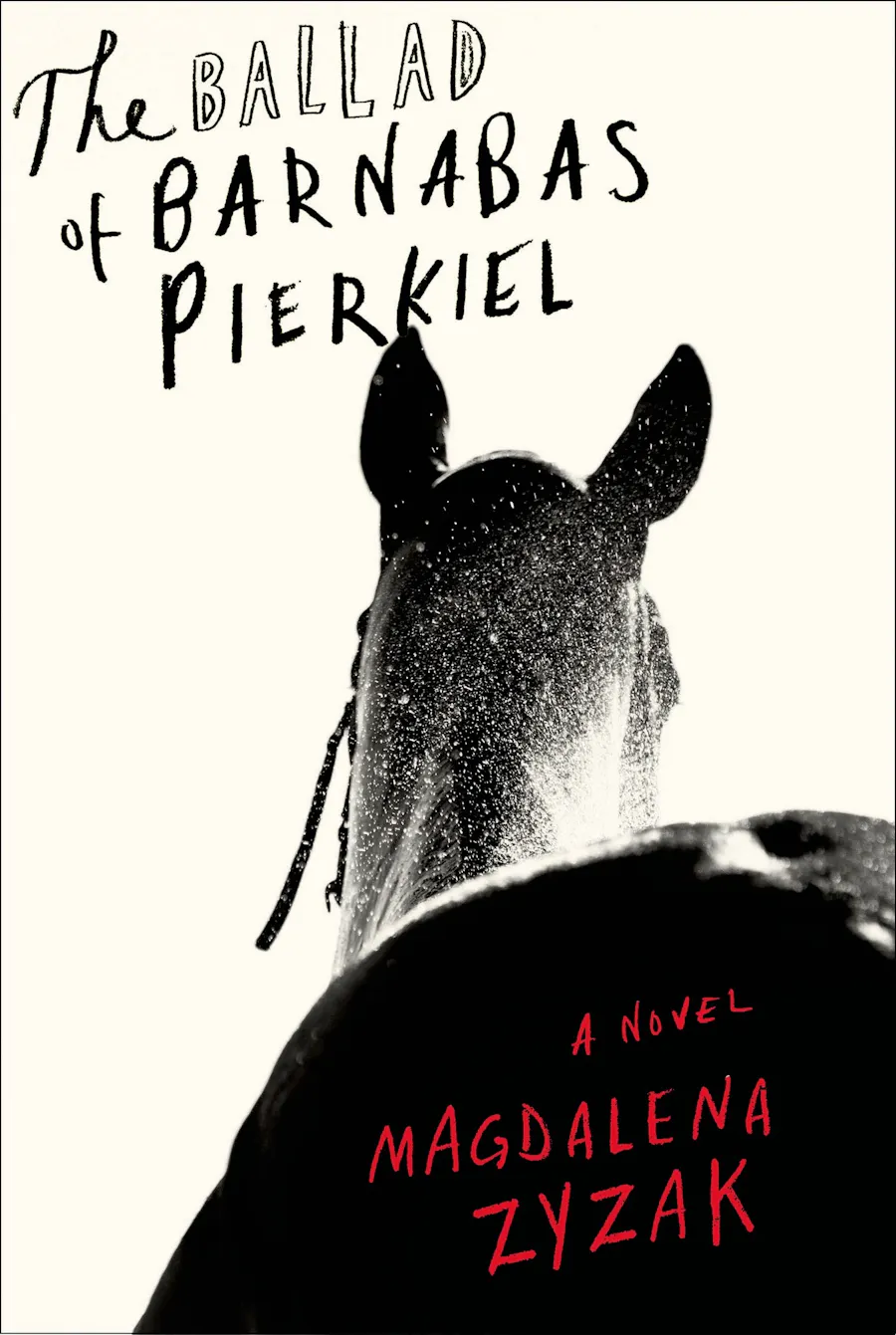
Magadela Zyzak is a Polish-born writer, now living in the US, and this novel was written in English. Set in the imaginary Slavic country of Scalvusia, in the 1930s, the book follows Barnabas Pierkiel, a young swineherd, very enamoured with his own beauty, and bent upon seducing Roosha, the mistress of another man. It's difficult to describe what this book is like: I've seen it called a picaresque, a folk tale, a satire, and an adventure. The truth is it is all of these at once and none of them. It's written in this mocking, absurdist style that will either annoy you or thoroughly entertain you (I found it funny in a slightly dark, terrifying way, but I can see how some might not). The book is often ribald, rife with references to Scalvusia's imaginary history, customs, and practices, and full of remarkable small asides that merit close and careful attention. Reading this book was like enjoying a really unusual meal, to me - I ate it slowly and found each bite interesting. Like very successful writers who write in their second-language, Zyzak takes the rules of English and twists them to produce something completely new.
Barnabas Pierkiel believes himself to be very beautiful: the first chapter is titled, "In which the hero self-admires". Indeed, you could spend a fair bit of time on the index alone, which has chapter titles like little gems: "In which Barnabas discovers an arboreal abomination"; "In which too much transpires to be summed up," and "In which Barnabas encounters Satan". Living in a small village called Odolechka, Barnabas tends his pigs, admires his own jawline reflected in a pan full of water, and clumsily tries to woo Roosha, a beautiful Romani (the author says 'gypsy') woman who is the mistress of a local wealthy businessman, his rival, von Grushka. Among the cast of this absurd set up are Barnabas' grim grandmother ("endowed with negligible imagination and no tolerance for daydreaming"), a priest, Kumashko, tormented by his own desires and driven insane by pondering on a fig tree, Apollonia, the athletic and miserable wife of the ineffective local police chief, Barnabas' murderous cousin, escaped from a local asylum, and Duchess Dorotka, Barnabas' prize pig. To win Roosha, the naive Barnabas performs a series of increasingly absurd quests: in the background, the slow infiltration of Nazis into their village turns the comedic tone to something darker, as Barnabas bumbles through.
Zyzak is leaning heavily on stereotypes of rural people, whom she describes as unintelligent, violent, and narrow-minded, but her portrayal is not without sympathy. The broader picture she's trying to draw is of the effect that the Soviet regime has had on the lives of these people, and of the looming threat of Nazism to come, as well as the social discrimination directed towards the Roma people. The plot is minimal, and I think the focus really should be not on what happens, so much as how it unfolds - slowly at first, and then with stunning rapidity. This was a very unusual book, and I'm still not sure if I really liked it or if I was just fascinated by how bizarre it is. I'll leave you with a little quote, to taste (it is both, violent and ribald, so be warned):
Do you see what I mean? It's very strange, and very dark. Zyzak is better known now as a film director, and this is her first novel. She will have a second book out this year, and I'm likely to read it too (and hopefully, I shan't 'perish of acute incomprehension'). I am very interested in seeing how she follows this up.
Magadela Zyzak is a Polish-born writer, now living in the US, and this novel was written in English. Set in the imaginary Slavic country of Scalvusia, in the 1930s, the book follows Barnabas Pierkiel, a young swineherd, very enamoured with his own beauty, and bent upon seducing Roosha, the mistress of another man. It's difficult to describe what this book is like: I've seen it called a picaresque, a folk tale, a satire, and an adventure. The truth is it is all of these at once and none of them. It's written in this mocking, absurdist style that will either annoy you or thoroughly entertain you (I found it funny in a slightly dark, terrifying way, but I can see how some might not). The book is often ribald, rife with references to Scalvusia's imaginary history, customs, and practices, and full of remarkable small asides that merit close and careful attention. Reading this book was like enjoying a really unusual meal, to me - I ate it slowly and found each bite interesting. Like very successful writers who write in their second-language, Zyzak takes the rules of English and twists them to produce something completely new.
Barnabas Pierkiel believes himself to be very beautiful: the first chapter is titled, "In which the hero self-admires". Indeed, you could spend a fair bit of time on the index alone, which has chapter titles like little gems: "In which Barnabas discovers an arboreal abomination"; "In which too much transpires to be summed up," and "In which Barnabas encounters Satan". Living in a small village called Odolechka, Barnabas tends his pigs, admires his own jawline reflected in a pan full of water, and clumsily tries to woo Roosha, a beautiful Romani (the author says 'gypsy') woman who is the mistress of a local wealthy businessman, his rival, von Grushka. Among the cast of this absurd set up are Barnabas' grim grandmother ("endowed with negligible imagination and no tolerance for daydreaming"), a priest, Kumashko, tormented by his own desires and driven insane by pondering on a fig tree, Apollonia, the athletic and miserable wife of the ineffective local police chief, Barnabas' murderous cousin, escaped from a local asylum, and Duchess Dorotka, Barnabas' prize pig. To win Roosha, the naive Barnabas performs a series of increasingly absurd quests: in the background, the slow infiltration of Nazis into their village turns the comedic tone to something darker, as Barnabas bumbles through.
Zyzak is leaning heavily on stereotypes of rural people, whom she describes as unintelligent, violent, and narrow-minded, but her portrayal is not without sympathy. The broader picture she's trying to draw is of the effect that the Soviet regime has had on the lives of these people, and of the looming threat of Nazism to come, as well as the social discrimination directed towards the Roma people. The plot is minimal, and I think the focus really should be not on what happens, so much as how it unfolds - slowly at first, and then with stunning rapidity. This was a very unusual book, and I'm still not sure if I really liked it or if I was just fascinated by how bizarre it is. I'll leave you with a little quote, to taste (it is both, violent and ribald, so be warned):
"One harvest afternoon, his mother (who, sadly, not long after that harvest, had perished, it was said, of acute incomprehension after being shown into the private back room of the tavern to identify the corpse of Barnabas' father, who had stripped nude with his drinking buddies to play what later were reported as "men's games," which, harmlessly enough began with Olek the carpenter drinking a liter of vodka from Boleswav Pierkiel's boot, but then escalated into Kazhimiezh the shepherd cutting off his big toe with Olek's hand-cranked spinning saw. At this point, the archived police report maintains, Boleswav, not to be bested, grabbed the still-spinning saw and shouting, "Watch this, then!" swung it at himself, to the detriment of the connection between head and neck. "It's funny," says the testimony of Kazhimiezh in the report, "when he was young, he once put on his sister's underclothes. But he died like a man.") had left the cottage door ajar, and Barnabas had crawled into the field." (p.9)
Do you see what I mean? It's very strange, and very dark. Zyzak is better known now as a film director, and this is her first novel. She will have a second book out this year, and I'm likely to read it too (and hopefully, I shan't 'perish of acute incomprehension'). I am very interested in seeing how she follows this up.
28rasdhar
>26 LolaWalser: Hi Lola! Yes, I did like that aspect as well. In the third book, particularly, I think Peter talks to a suspect at length about his foiled architectural ambitions. I did like the running gag about how everyone was surprised that you still needed drawing skills to be an architect despite the availability of computers.
29rasdhar
4. R. F. Kuang - Babel: Or the Necessity of Violence: An Arcane History of the Oxford Translators' Revolution

I have only a few small things to say about this. I started reading it 2023, put it down and picked it up again several times, and finally finished it in January. I'm aware it has a very dedicated fan community online, and I've seen some discussions on it, so I'll preface my remarks by saying that when I picked it up, I had high expectations. This is not least because I am Asian myself, was born in a country that was once colonized as part of the British Empire, and now live in another former colony. Like the protagonist, and the author, I have the experience of moving abroad to study, and experiencing firsthand racism, although not to the extent depicted in the book. I also have a fairly rigorous professional and personal knowledge of colonialism - from my work, and also, from my family history, which includes grandparents jailed for protesting British rule, an aunt who was, in fact, born while her mother (my grandmother) was in jail, and a family connection to several famous freedom fighters in my country.
Having said all of that, I did not care for this book. I suspect it is because I am not the intended audience for it. The lesson of this book is that colonialism was bad, and further that racism is also bad. It's not a lesson I needed to learn, as I know it, from personal experience. For those who are unaware of this, such as the very young or the very ill-informed, it is a sort of 'Colonialism 101', performed by the literary equivalent of beating you with a book over the head until the message is received. I did enjoy the world-building very much - I liked the Oxford that she created, and I loved the framing of her system of magic through language. I wish that it had been developed more. She chooses to center her critique of colonialism over the plot: for those who are already at grips with this subject, it is both, repetitive and unenlightening. The ability to 'show, not tell' is something that may come with more experience; until then, this is a literary billboard flashing a much needed but unsubtle sign for readers who need to grapple with a history that they may not know. I'm unfortunately, not such a reader. I appreciate what she's trying to do, and I look forward to seeing how she develops as a writer. I will definitely be reading anything she writes in the future (in fact, her next book, Yellowface is on my list).
I have only a few small things to say about this. I started reading it 2023, put it down and picked it up again several times, and finally finished it in January. I'm aware it has a very dedicated fan community online, and I've seen some discussions on it, so I'll preface my remarks by saying that when I picked it up, I had high expectations. This is not least because I am Asian myself, was born in a country that was once colonized as part of the British Empire, and now live in another former colony. Like the protagonist, and the author, I have the experience of moving abroad to study, and experiencing firsthand racism, although not to the extent depicted in the book. I also have a fairly rigorous professional and personal knowledge of colonialism - from my work, and also, from my family history, which includes grandparents jailed for protesting British rule, an aunt who was, in fact, born while her mother (my grandmother) was in jail, and a family connection to several famous freedom fighters in my country.
Having said all of that, I did not care for this book. I suspect it is because I am not the intended audience for it. The lesson of this book is that colonialism was bad, and further that racism is also bad. It's not a lesson I needed to learn, as I know it, from personal experience. For those who are unaware of this, such as the very young or the very ill-informed, it is a sort of 'Colonialism 101', performed by the literary equivalent of beating you with a book over the head until the message is received. I did enjoy the world-building very much - I liked the Oxford that she created, and I loved the framing of her system of magic through language. I wish that it had been developed more. She chooses to center her critique of colonialism over the plot: for those who are already at grips with this subject, it is both, repetitive and unenlightening. The ability to 'show, not tell' is something that may come with more experience; until then, this is a literary billboard flashing a much needed but unsubtle sign for readers who need to grapple with a history that they may not know. I'm unfortunately, not such a reader. I appreciate what she's trying to do, and I look forward to seeing how she develops as a writer. I will definitely be reading anything she writes in the future (in fact, her next book, Yellowface is on my list).
30rasdhar
Podcast Recommendation #2:
Wooden Overcoats

Wooden Overcoats is a charming little drama/comedy story, written by David K. Barnes and performed by a very talented cast of voice actors. The production is very well-done, and the story is wonderful to listen to, with great little musical interjections.
Wooden Overcoats centers on a pair of terminally miserable siblings, Rudyard and Antigone Funn, who run the Funn Funeral Home in the fictional town of Piffling Vale, set on the fictional Channel Islands. Their business is not particularly well-managed, and the funerals they arrange frequently run in to terrible mishaps, but they are the only funeral home in town, and so manage to stay afloat. Antisocial and reclusive Antigone is the actual mortician, assisted by their long-suffering employee, Georgie, while Rudyard, despite being abrasive, unpopular, confused, and wildly uninformed, handles the business and organisation of funerals. Their uneasy stability is threatened by the arrival of the mysterious and charming Eric Chapman, who sets up his own, rival funeral home across the street, managing to turn the heads of everyone in the community, while snapping up the Funns’ clientele with his tasteful, perfectly-organised memorial services. Yet, no one really knows who Chapman is, or where he came from, or how he picked up the wide assortment of skills he breaks out each time there’s a village crisis. What dark secrets is Chapman hiding? Can Antigone and Rudyard uncover them, and save their business? Why is all of this being narrated by a talking mouse?
Wooden Overcoats is exactly the light, fluffy sort of story that you can listen to at one go and enjoy without thinking too much. It’s the equivalent of a souffle, but there’s a surprisingly tender concern for the lonely, the friendless, and the unhappy in this telling. If you enjoy P.G. Wodehouse, or Terry Pratchett, you might find something for yourself in this story. The Mayor and the Revered of Piffling Vale are engaged in a slow burn, long lasting romance. Everyone, at some point, has had a crush on Eric Chapman. The local candy shop owner is an amateur detective. The local doctor once had to do a post-mortem on a poisoned bee. Rudyard Funn’s idea of advertising his business is to tell people he “puts the Funn in funerals.” You see?
Wooden Overcoats

Wooden Overcoats is a charming little drama/comedy story, written by David K. Barnes and performed by a very talented cast of voice actors. The production is very well-done, and the story is wonderful to listen to, with great little musical interjections.
Wooden Overcoats centers on a pair of terminally miserable siblings, Rudyard and Antigone Funn, who run the Funn Funeral Home in the fictional town of Piffling Vale, set on the fictional Channel Islands. Their business is not particularly well-managed, and the funerals they arrange frequently run in to terrible mishaps, but they are the only funeral home in town, and so manage to stay afloat. Antisocial and reclusive Antigone is the actual mortician, assisted by their long-suffering employee, Georgie, while Rudyard, despite being abrasive, unpopular, confused, and wildly uninformed, handles the business and organisation of funerals. Their uneasy stability is threatened by the arrival of the mysterious and charming Eric Chapman, who sets up his own, rival funeral home across the street, managing to turn the heads of everyone in the community, while snapping up the Funns’ clientele with his tasteful, perfectly-organised memorial services. Yet, no one really knows who Chapman is, or where he came from, or how he picked up the wide assortment of skills he breaks out each time there’s a village crisis. What dark secrets is Chapman hiding? Can Antigone and Rudyard uncover them, and save their business? Why is all of this being narrated by a talking mouse?
Wooden Overcoats is exactly the light, fluffy sort of story that you can listen to at one go and enjoy without thinking too much. It’s the equivalent of a souffle, but there’s a surprisingly tender concern for the lonely, the friendless, and the unhappy in this telling. If you enjoy P.G. Wodehouse, or Terry Pratchett, you might find something for yourself in this story. The Mayor and the Revered of Piffling Vale are engaged in a slow burn, long lasting romance. Everyone, at some point, has had a crush on Eric Chapman. The local candy shop owner is an amateur detective. The local doctor once had to do a post-mortem on a poisoned bee. Rudyard Funn’s idea of advertising his business is to tell people he “puts the Funn in funerals.” You see?
31Dilara86
>29 rasdhar: This sums up my own thoughts about this book perfectly (except I don't think I'll be reading anything else by her).
32labfs39
What great reviews! I am so glad you've joined Club Read, although I fear what you will do to my wishlist!
>27 rasdhar: The Ballad of Barnabas Pierkiel sounds like quirky fun and not unlike other Slavic humor I've read. I'll look for it when next in the mood for that type of satire.
>29 rasdhar: Despite my interest in translation, I'm going to give Babel a pass based on the reviews I've read (yours included).
>30 rasdhar: Wooden Overcoats sounds delightful. Another book bullet!
>27 rasdhar: The Ballad of Barnabas Pierkiel sounds like quirky fun and not unlike other Slavic humor I've read. I'll look for it when next in the mood for that type of satire.
>29 rasdhar: Despite my interest in translation, I'm going to give Babel a pass based on the reviews I've read (yours included).
>30 rasdhar: Wooden Overcoats sounds delightful. Another book bullet!
33kidzdoc
I enjoyed your insightful and useful commentary about Babel: Or the Necessity of Violence, Rashdar. I look forward to your thoughts about Yellowface, as I intend to read it this year.
Fabulous review of Wooden Overcoats; I truly laughed out loud when I read that joke!
I will join Lisa in saying that I'm happy that you've become a member of Club Read, as you will undoubtedly be a great addition to our group.
Fabulous review of Wooden Overcoats; I truly laughed out loud when I read that joke!
I will join Lisa in saying that I'm happy that you've become a member of Club Read, as you will undoubtedly be a great addition to our group.
34dchaikin
I’m also glad you’re here and really enjoyed your reviews. Not sure i’m up for the Zyzak. I’m thinking of picking up a copy of Yellowface. Noting that perhaps Kuang doesn’t do subtlety.
35rasdhar
>31 Dilara86: Thanks. I read another review that described the book as "being hit over the head by an anticolonialism two by four every few sentences," which seemed very apt to me.
>32 labfs39: Thank you, so kind of you to say. Now that you mention it, yes, Barnabas Pierkiel is very Slavic humour: dark and absurd.
>33 kidzdoc: Thank you, and I'm looking forward to your thoughts on Yellowface too. I am enjoying my time on Club Read!
>34 dchaikin: So kind of you to say, and thanks. She was particularly unsubtle in Babel, but is clearly a talented writer, so I look forward to reading Yellowface.
>32 labfs39: Thank you, so kind of you to say. Now that you mention it, yes, Barnabas Pierkiel is very Slavic humour: dark and absurd.
>33 kidzdoc: Thank you, and I'm looking forward to your thoughts on Yellowface too. I am enjoying my time on Club Read!
>34 dchaikin: So kind of you to say, and thanks. She was particularly unsubtle in Babel, but is clearly a talented writer, so I look forward to reading Yellowface.
36rasdhar
5. Christopher Moore - Noir and Razzmatazz
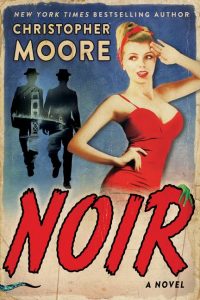
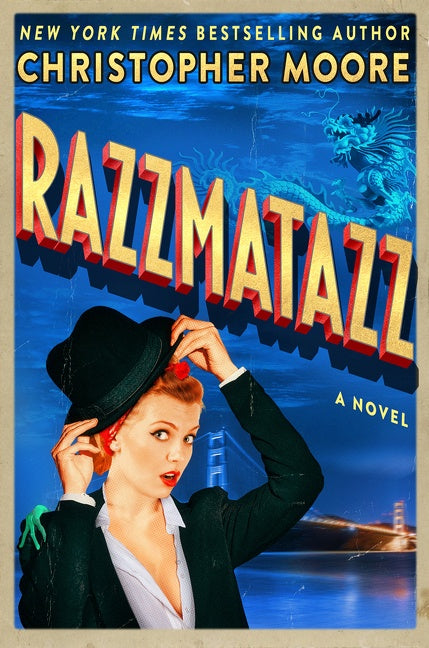
I started reading Noir last year, finished it early in January 2024, and followed it with the sequel, Razzmatazz. I know Moore is a well-established writer, but this is my first foray into his works. Noir and Razzmatazz are light, comedic, noir novels, set in post-World War II San Francisco. The protagonist, Sammy 'Two Toes' Tiffin (guess why he's called that) works as a bartender, in a saloon. One day, a beautiful broad walks in. Her name is Stilton, so he nicknames her, 'The Cheese'. Sammy is smitten, but in the meantime, his slimy boss has prevailed upon Sammy to provide certain services (read women) for a camping trip organised by a fancy Air Force general. Sammy wants none of it, and is more interested in a slightly absurd scheme with his friend Eddie, to procure snakes and sell them to Chinese medicine shops. In the meantime, the Cheese vanishes, a mysterious flying object is seen, events are unfolding in Roswell, New Mexico, and Sammy has to prevail on all his friends, in Chinatown, the Fillmore District, and amongst taxi drivers, veterans, and prostitutes, to dodge the mysterious men in black and find The Cheese. Razzmatazz picks up where Noir left off: a new police chief is cracking down on all manner of vice, but what secrets is he hiding? Who is offing people at a secret bar that caters mostly to lesbians and transmen? Sammy is investigating the death of one of his friends from this bar, while also trying to figure out where the Cheese has been disappearing to, and why it involves her war-time welding gear and her Rosie Riveter pals from the war. Sammy's latest hustle involves trying to open a driving school for women; meanwhile, Eddie Shu, his friend, has run into a problem involving a local gangleader, Squid Kid Tang, and an ancient jade dragon that could potentially destroy the entire city.
The two novels are part satire, part homage to the hard-boiled noir genre, but Moore, in the epilogue to Noir, writes that he wanted to dispel the doom and gloom of the genre by creating what he calls 'Perky Noir' - a more upbeat, cheerful version. He's also writing a version of noir that accounts for the period in which it was set, with the racial tensions that affected the Chinese community in San Francisco, as well as enduring segregation and discrimination faced by the Black residents of the city, the hidden, secret respites of LGBTQIA folk, and the misogyny that the Cheese and her pals overcome. Despite the weight of his material, Moore keeps a tone that is light, funny, and deft, and the way he weaves in history is very skillful. Having said that, the plots of these books are completely absurd, and should not be taken seriously. I've been thinking about the fact that there are books that are rich in texture (writing, detail, style) despite being thin on the substantive plotting, and these are a good example. If you enjoy the noir genre, you'll probably like what he's doing here, by inverting all your expectations, while clearly still remaining within swimming distance of its key elements. Light, quick reads.
There are a couple of more detailed reviews that are far better than mine. I'll leave links below.
Robert Allen Papinchak, 'Noir Turned on its Side' Los Angeles Review of Books (8 June 2018)
Molly E. Baxter, '‘Noir’ Starts Strong, Loses Steam' The Harvard Crimson (23 April 2018)
I started reading Noir last year, finished it early in January 2024, and followed it with the sequel, Razzmatazz. I know Moore is a well-established writer, but this is my first foray into his works. Noir and Razzmatazz are light, comedic, noir novels, set in post-World War II San Francisco. The protagonist, Sammy 'Two Toes' Tiffin (guess why he's called that) works as a bartender, in a saloon. One day, a beautiful broad walks in. Her name is Stilton, so he nicknames her, 'The Cheese'. Sammy is smitten, but in the meantime, his slimy boss has prevailed upon Sammy to provide certain services (read women) for a camping trip organised by a fancy Air Force general. Sammy wants none of it, and is more interested in a slightly absurd scheme with his friend Eddie, to procure snakes and sell them to Chinese medicine shops. In the meantime, the Cheese vanishes, a mysterious flying object is seen, events are unfolding in Roswell, New Mexico, and Sammy has to prevail on all his friends, in Chinatown, the Fillmore District, and amongst taxi drivers, veterans, and prostitutes, to dodge the mysterious men in black and find The Cheese. Razzmatazz picks up where Noir left off: a new police chief is cracking down on all manner of vice, but what secrets is he hiding? Who is offing people at a secret bar that caters mostly to lesbians and transmen? Sammy is investigating the death of one of his friends from this bar, while also trying to figure out where the Cheese has been disappearing to, and why it involves her war-time welding gear and her Rosie Riveter pals from the war. Sammy's latest hustle involves trying to open a driving school for women; meanwhile, Eddie Shu, his friend, has run into a problem involving a local gangleader, Squid Kid Tang, and an ancient jade dragon that could potentially destroy the entire city.
The two novels are part satire, part homage to the hard-boiled noir genre, but Moore, in the epilogue to Noir, writes that he wanted to dispel the doom and gloom of the genre by creating what he calls 'Perky Noir' - a more upbeat, cheerful version. He's also writing a version of noir that accounts for the period in which it was set, with the racial tensions that affected the Chinese community in San Francisco, as well as enduring segregation and discrimination faced by the Black residents of the city, the hidden, secret respites of LGBTQIA folk, and the misogyny that the Cheese and her pals overcome. Despite the weight of his material, Moore keeps a tone that is light, funny, and deft, and the way he weaves in history is very skillful. Having said that, the plots of these books are completely absurd, and should not be taken seriously. I've been thinking about the fact that there are books that are rich in texture (writing, detail, style) despite being thin on the substantive plotting, and these are a good example. If you enjoy the noir genre, you'll probably like what he's doing here, by inverting all your expectations, while clearly still remaining within swimming distance of its key elements. Light, quick reads.
There are a couple of more detailed reviews that are far better than mine. I'll leave links below.
Robert Allen Papinchak, 'Noir Turned on its Side' Los Angeles Review of Books (8 June 2018)
Molly E. Baxter, '‘Noir’ Starts Strong, Loses Steam' The Harvard Crimson (23 April 2018)
37dchaikin
>36 rasdhar: I’ve thought about reading Moore, but so far haven’t. I’ve become shy of this kind of humor, unfortunately. (But still read some Discworld). Enjoyed your two-book review.
38kidzdoc
Great reviews of Noir and Razzmatazz, Rashdar. They fall well outside of my normal reading tastes, but your comments about them make me want to read them, especially since San Francisco is one of my favorite cities to visit.

40kidzdoc
>39 rasdhar: 😂 LibraryThing should really allow negative star ratings.
42ursula
>39 rasdhar: To the point! Love it.
43WelshBookworm
>39 rasdhar: I've read one book by her. Didn't care for it at all. I'm not the audience for her books.
44baswood
Enjoying your reviews - especially the Magdalena Zyzak
45rasdhar
>40 kidzdoc: Haha, I wish. I don't really use the star ratings though.
>41 dchaikin: Thanks!
>42 ursula: Not much else to say!
>43 WelshBookworm: I agree, I'm not the audience either. I will say that I do like a good romance novel, but this was not a good romance novel.
>44 baswood: Thanks!
>41 dchaikin: Thanks!
>42 ursula: Not much else to say!
>43 WelshBookworm: I agree, I'm not the audience either. I will say that I do like a good romance novel, but this was not a good romance novel.
>44 baswood: Thanks!
46rasdhar
7. Sebastian Sim - Let's Give It Up For Gimme Lao! (Epigram Books, 2016)

This book wasn't on my list of Singapore and Malaysia books to read, but I ran across it in the library and it looked interesting. The book traces the life of young Lao Chee Hong (whose name translates to 'Grand Ambition') from his birth to death, amidst Singapore's rapid development and transformation. An English speaking neighbour, Elizabeth, gives him the western name of 'Sidney' (after Sidney Poitier) - unable to pronounce it, he's known forever more to friends and family by his version of the name, 'Gimme'. From his birth, to his death, Gimme is both, a representative, and a critique of the Singaporean dream - a 'man in white' who conforms to social expectations, follows the expected path to professional success and political power, and gains respect and standing at any cost - but is hampered eventually by his own conformity. The world is changing around Gimme but Gimme cannot, or will not, adapt - this is ultimately his downfall.
Gimme is born on the day Singapore becomes independent and splits from Malaysia, but because of a nurse who bears a grudge against his mother, he is not recognised for what he is: the first child born in the nation of Singapore. This is one of three secrets about his own life that Gimme doesn't know - the second relates to the circumstances of his parents' marriages (exiled from a rich family, disgraced because they're cousins), and the third is the unspeakable suicide of a young man, who is terribly affected after witnessing a humiliating, public punishment imposed on Gimme in primary school. Gimme follows the footsteps of his ambitious, but abrasive mother, who soon outstrips her lackadaisical, passive husband. When rebuked for her aggressive approach to professional success, she tells her husband, “I don’t aspire to be nice. I do what is necessary to get what I want." It's a principle that Gimme follows, but towards the end of the book, as he and his mother reflect on their choices, she asks, "...where did that lead us? Alone. You and me. With all our impeccable achievements to flaunt and no one dear to celebrate with us."
A key theme in the book is Gimme's (and by extension, Singapore society's) struggle to come to terms with homosexuality in society. Gimme himself is straight and homophobic, and when he encounters homosexuality within his own circle, homophobia causes him to lash out. The backdrop of the novel sees how queer people in Singapore lived hidden, but proud lives, and how they struggled to come to terms with social discrimination and harassment. Section 377A of Singapore's Penal Code, introduced under British rule, criminalises homosexuality between men: it has been repealed in 2023, after much struggle, but the book takes place against nascent movements arguing for its removal. Although the author was clearly critiquing social homophobia, the depictions of homophobia in the book were a difficult read, and often very distressing. At the core of the book is the enduring conflict of Singapore society: reconciling individual will and freedom with social pressures of conformity and obedience to law. The book is full of little local references that bring the book to life for anyone familiar with Singapore: thinly veiled allusions to actual political scandals, a depiction of the way Singapore handled the SARS outbreak, life in an HDB flat (government housing, which is still about 90% of housing in Singapore). Even for the non-Singaporean, Sim's wry, satirical tone keeps you engaged.
While this book is not perfect (and could have used some hefty editing), I found it an interesting, valuable - and for the most part, enjoyable read.
(edited for sentence structure, clarity)

This book wasn't on my list of Singapore and Malaysia books to read, but I ran across it in the library and it looked interesting. The book traces the life of young Lao Chee Hong (whose name translates to 'Grand Ambition') from his birth to death, amidst Singapore's rapid development and transformation. An English speaking neighbour, Elizabeth, gives him the western name of 'Sidney' (after Sidney Poitier) - unable to pronounce it, he's known forever more to friends and family by his version of the name, 'Gimme'. From his birth, to his death, Gimme is both, a representative, and a critique of the Singaporean dream - a 'man in white' who conforms to social expectations, follows the expected path to professional success and political power, and gains respect and standing at any cost - but is hampered eventually by his own conformity. The world is changing around Gimme but Gimme cannot, or will not, adapt - this is ultimately his downfall.
Gimme is born on the day Singapore becomes independent and splits from Malaysia, but because of a nurse who bears a grudge against his mother, he is not recognised for what he is: the first child born in the nation of Singapore. This is one of three secrets about his own life that Gimme doesn't know - the second relates to the circumstances of his parents' marriages (exiled from a rich family, disgraced because they're cousins), and the third is the unspeakable suicide of a young man, who is terribly affected after witnessing a humiliating, public punishment imposed on Gimme in primary school. Gimme follows the footsteps of his ambitious, but abrasive mother, who soon outstrips her lackadaisical, passive husband. When rebuked for her aggressive approach to professional success, she tells her husband, “I don’t aspire to be nice. I do what is necessary to get what I want." It's a principle that Gimme follows, but towards the end of the book, as he and his mother reflect on their choices, she asks, "...where did that lead us? Alone. You and me. With all our impeccable achievements to flaunt and no one dear to celebrate with us."
A key theme in the book is Gimme's (and by extension, Singapore society's) struggle to come to terms with homosexuality in society. Gimme himself is straight and homophobic, and when he encounters homosexuality within his own circle, homophobia causes him to lash out. The backdrop of the novel sees how queer people in Singapore lived hidden, but proud lives, and how they struggled to come to terms with social discrimination and harassment. Section 377A of Singapore's Penal Code, introduced under British rule, criminalises homosexuality between men: it has been repealed in 2023, after much struggle, but the book takes place against nascent movements arguing for its removal. Although the author was clearly critiquing social homophobia, the depictions of homophobia in the book were a difficult read, and often very distressing. At the core of the book is the enduring conflict of Singapore society: reconciling individual will and freedom with social pressures of conformity and obedience to law. The book is full of little local references that bring the book to life for anyone familiar with Singapore: thinly veiled allusions to actual political scandals, a depiction of the way Singapore handled the SARS outbreak, life in an HDB flat (government housing, which is still about 90% of housing in Singapore). Even for the non-Singaporean, Sim's wry, satirical tone keeps you engaged.
While this book is not perfect (and could have used some hefty editing), I found it an interesting, valuable - and for the most part, enjoyable read.
(edited for sentence structure, clarity)
47rasdhar
8. Richard Osman - The Bullet that Missed

This is the third in TV broadcaster-turned-writer Richard Osman's Thursday Murder Club series - a tender, funny, series of cosy mysteries set in an posh English retirement community in Kent. The Club consists of four members of the community - happy, cheerful, naive Joyce, with a gift for making friends; sharp, sarcastic Elizabeth, a retired spy; gentlemanly, intelligent Ibrahim, a retired psychiatrist, and tough, pugnacious Ron, a former union leader deposited in the community by his son. Together, they meet weekly to discuss unsolved criminal cases and solve them, using each of their specific skillsets and cultivating a large cast of friends, useful acquaintances, and politely inveigled associates. This particular book has them investigating the disappearance, and likely murder, of a local news broadcaster, and in the course, running into a former KGB head, a Swedish hacker, and various other friends from the previous volumes, as they solve the crime. Look, these books are like candy - each one is perfectly formed, you pop into your queue and eat it up and it's delicious. They have zero nutritional depth, but they don't need to. They are perfectly formed for their genre - and the little glimpses of humanity you see in each of the characters (Joyce's unsteady relationship with her daughter; Elizabeth struggling to come to terms with her husband's decline into dementia; Ron's rediscovery of love at a late stage and Ibrahim's even-keel, generous spirit) keep the book from being too facile. I enjoyed it thoroughly.

This is the third in TV broadcaster-turned-writer Richard Osman's Thursday Murder Club series - a tender, funny, series of cosy mysteries set in an posh English retirement community in Kent. The Club consists of four members of the community - happy, cheerful, naive Joyce, with a gift for making friends; sharp, sarcastic Elizabeth, a retired spy; gentlemanly, intelligent Ibrahim, a retired psychiatrist, and tough, pugnacious Ron, a former union leader deposited in the community by his son. Together, they meet weekly to discuss unsolved criminal cases and solve them, using each of their specific skillsets and cultivating a large cast of friends, useful acquaintances, and politely inveigled associates. This particular book has them investigating the disappearance, and likely murder, of a local news broadcaster, and in the course, running into a former KGB head, a Swedish hacker, and various other friends from the previous volumes, as they solve the crime. Look, these books are like candy - each one is perfectly formed, you pop into your queue and eat it up and it's delicious. They have zero nutritional depth, but they don't need to. They are perfectly formed for their genre - and the little glimpses of humanity you see in each of the characters (Joyce's unsteady relationship with her daughter; Elizabeth struggling to come to terms with her husband's decline into dementia; Ron's rediscovery of love at a late stage and Ibrahim's even-keel, generous spirit) keep the book from being too facile. I enjoyed it thoroughly.
48labfs39
>46 rasdhar: Fantastic review, Rasdhar. I hope you will consider posting it on the work page, as there are no reviews currently.
49dchaikin
These are terrific reviews. Enjoyed them. Gimme Lao captures my interest. I’m making a note of that one. Have you read other histories of Singapore, direct or fictional takes like this, that you recommend?
50LolaWalser
Enjoyed your reviews. I read the first Osman but decided I couldn't continue with them because--entirely a personal problem--I kept fretting about possible deaths (reading about deterioration in general is difficult for me). But I'm glad to hear about them soldiering on through sequels!
51rasdhar
>48 labfs39: Thanks - I cleaned it up a bit for the work page and posted it there.
>49 dchaikin: I did read a fair amount of nonfiction about Singapore's history when I first came here. Mark Frost and Yu-Mei Balasingamchow's Singapore: A Biography is an easy read, and useful to get a grasp of the subject, as was Mary Turnbull's A History of Modern Singapore 1819 – 2005. I'd also recommend Teo Tou Yenn's This is What Inequality Looks Like because it discusses poverty in Singapore: something that most celebratory accounts don't even acknowledge. A colleague had also suggested The Art of Charlie Chan Hock Chye which I really found interesting. An autobiography that I'm planning on reading soon is Tan Kok Seng's Son of Singapore. At some point I'll probably read Lee Kuan Yew's writings, too, but I'm not in a hurry. I'm also considering The Price of Peace which deals with the Japanese occupation of Singapore in WWII - there's also a television adaptation, I'm told. I'm not sure how interested you are, but some colleagues have recommended academic perspectives on Singapore's politics and history - I've been exploring them too. Let me know if you want the titles.
>50 LolaWalser: I understand entirely - and it's one of the hardest parts of the series.
>49 dchaikin: I did read a fair amount of nonfiction about Singapore's history when I first came here. Mark Frost and Yu-Mei Balasingamchow's Singapore: A Biography is an easy read, and useful to get a grasp of the subject, as was Mary Turnbull's A History of Modern Singapore 1819 – 2005. I'd also recommend Teo Tou Yenn's This is What Inequality Looks Like because it discusses poverty in Singapore: something that most celebratory accounts don't even acknowledge. A colleague had also suggested The Art of Charlie Chan Hock Chye which I really found interesting. An autobiography that I'm planning on reading soon is Tan Kok Seng's Son of Singapore. At some point I'll probably read Lee Kuan Yew's writings, too, but I'm not in a hurry. I'm also considering The Price of Peace which deals with the Japanese occupation of Singapore in WWII - there's also a television adaptation, I'm told. I'm not sure how interested you are, but some colleagues have recommended academic perspectives on Singapore's politics and history - I've been exploring them too. Let me know if you want the titles.
>50 LolaWalser: I understand entirely - and it's one of the hardest parts of the series.
52dchaikin
>51 rasdhar: I want the fun stuff :) Thanks for this post. Terrific list!.
53rasdhar
9. Kate Collins - A Good House for Children (Marliner Books, 2023)

I walk a lot everyday and I usually listen to a book while walking. I prefer something not too taxing; books that don't require my full attention. Over the past few weeks, I've been listening to Kristen Atherton's narration of A Good House for Children by Kate Collins for Harper Audio. I must say at the outset that Atherton is a very good narrator - I've simply returned books if I don't like the narrator's intonation or voice. To me, the best narrators are unobtrusive, and don't try to foreground their performance at the cost of the story. Atherton does this perfectly. Having said that, the book itself, marketed as gothic fiction, was incredibly dull and could not be rescued by her excellent voice work.
A Good House for Children goes back and forth between two equally stultifying narratives. In the present day, Orla moves into a large, isolated country house called The Reeve, along with her young, non-verbal son, Sam and infant daughter Bridie. Doctors have confirmed that Sam can speak, but is choosing not to, for undiagnosed reasons. Orla, an artist, isn't keen on the move, but goes to please her husband Nick, whose parents live nearby. Unsubtle hints tell us that this happens quite a lot:Nick gets his way, at Orla's cost, and often, her happiness. As Nick commutes to the city for work during the week, Orla is mostly alone in the big, empty house. She starts hearing strange sounds, and seeing strange things, and then her little son starts behaving oddly, too. Her husband doesn't take these concerns seriously. Meanwhile, back in the 1970s, Lydia is a nanny for Sara, a widow who is grieving her husband and working long hours to support her family. They move into The Reeve, away from the comforts of the city. Lydia looks after Sara's four children, including a pair of terrifying twins, a sweet, docile oldest son and an infant. Lydia starts hearing and seeing strange things, but Sara dismisses them. Even as no one gives credence to Lydia, or Orla, down in the local village, people talk about The Reeve, and how strange it is. I think the book was intended to demonstrate how women can be dismissed, or mistreated but it really just reads as an endless wash of undiluted misogyny.
I wish I could tell you that all this elaborate plotting and set up paid off to an interesting twist or conclusion, but it is completely predictable from beginning to end. It also isn't Gothic as much as it is Girl on the Train - the writing is pedestrian, the characters uninteresting, and if I weren't in motion as I listened, I'd be too bored to finish it. Would not recommend.

I walk a lot everyday and I usually listen to a book while walking. I prefer something not too taxing; books that don't require my full attention. Over the past few weeks, I've been listening to Kristen Atherton's narration of A Good House for Children by Kate Collins for Harper Audio. I must say at the outset that Atherton is a very good narrator - I've simply returned books if I don't like the narrator's intonation or voice. To me, the best narrators are unobtrusive, and don't try to foreground their performance at the cost of the story. Atherton does this perfectly. Having said that, the book itself, marketed as gothic fiction, was incredibly dull and could not be rescued by her excellent voice work.
A Good House for Children goes back and forth between two equally stultifying narratives. In the present day, Orla moves into a large, isolated country house called The Reeve, along with her young, non-verbal son, Sam and infant daughter Bridie. Doctors have confirmed that Sam can speak, but is choosing not to, for undiagnosed reasons. Orla, an artist, isn't keen on the move, but goes to please her husband Nick, whose parents live nearby. Unsubtle hints tell us that this happens quite a lot:Nick gets his way, at Orla's cost, and often, her happiness. As Nick commutes to the city for work during the week, Orla is mostly alone in the big, empty house. She starts hearing strange sounds, and seeing strange things, and then her little son starts behaving oddly, too. Her husband doesn't take these concerns seriously. Meanwhile, back in the 1970s, Lydia is a nanny for Sara, a widow who is grieving her husband and working long hours to support her family. They move into The Reeve, away from the comforts of the city. Lydia looks after Sara's four children, including a pair of terrifying twins, a sweet, docile oldest son and an infant. Lydia starts hearing and seeing strange things, but Sara dismisses them. Even as no one gives credence to Lydia, or Orla, down in the local village, people talk about The Reeve, and how strange it is. I think the book was intended to demonstrate how women can be dismissed, or mistreated but it really just reads as an endless wash of undiluted misogyny.
I wish I could tell you that all this elaborate plotting and set up paid off to an interesting twist or conclusion, but it is completely predictable from beginning to end. It also isn't Gothic as much as it is Girl on the Train - the writing is pedestrian, the characters uninteresting, and if I weren't in motion as I listened, I'd be too bored to finish it. Would not recommend.
54rasdhar
Some General Notes on January:
Bookshops, Libraries, and Reading Cultures
This weekend, I visited one of my favourite second-hand bookstores in Singapore. I don't have any pictures, I'm afraid, but I'll get some next time. I had a few errands to run nearby and couldn't go without stepping in and looking around. I rarely leave empty-handed, and this time, picked up a copy of Isaac Asimov's Gold - a collection of his (then) unpublished stories. I've unfortunately been there twice this month already, and have previously picked up a couple of Terry Pratchets for my father, who loves them, Tea Obreht's Inland, Helen Oyeyemi's Mr Fox, a Francis Fukuyama that is useful for work, and Ayobami Adebayo's Stay with Me. I really must stop because I have no room, either physically or in terms of my to-read list.
Another thing I did over the past few weeks is visit the newly-reopened Central Public Library in Singapore. I've been using other branches, which are dotted all over the city, but the Central one, which is the biggest, has been closed for the past year, for upgrades and renovations. I went in on a Sunday and it did my heart good to see how absolutely packed it was. There were dozens and dozens of people, especially families with children, browsing and reading and borrowing. There's a very strong reading culture here, no doubt facilitated by the very robust library system and good education overall. Libraries are free if you're a citizen, and are well used. The only complaint I have, if any, is that there aren't really any librarians. Everything is digitally managed (you can actually just scan a barcode on each book with your library app to borrow it, you don't even have to physically check it out). I appreciate the efficiency, but I miss the human contact. I'm yet to meet a librarian I didn't get along with, or enjoy speaking to, about books.
Commonplace Books
I read this nice essay by Robert Darnton in the NYRB on the history of commonplace books, and in particular, the commonplace books of Geoffrey Madan, a WWI veteran turned man about town. Commonplace books are a type of journal or scrapbook, meant to collect quotes, interesting sayings, or excerpts from things one reads. Darnton's essay nicely demonstrates how ubiquitous these were, and indeed, I found quite easily, John Locke's guide to keeping a well organised commonplace book online. William Byrd apparently had a nasty little commonplace book in which he collected fragments of misogyny; Thomas Jefferson kept one as a young man, as did Milton, John Donne, Virginia Woolf, and Auden. I picked up Auden's published commonplace book, A Certain World from the library today. I don't personally keep one myself, although I know I did as a young 'un - I had a little notebook in which I copied out poems and quotes I liked, without having heard of commonplace books before. What is this magpie impulse that compels us? I don't know. An interesting note: this article, like several others, suggests that Tumblr, and other social media, are the new commonplace books - and indeed, I've seen many who use media that way, to post their favourite quotes and excerpts and poems, and have them all in one digital archive. In any case, I've decided to restart my own physical commonplace book again. It shall never be published, I'm sure, but I will enjoy having it at hand.
Bookshops, Libraries, and Reading Cultures
This weekend, I visited one of my favourite second-hand bookstores in Singapore. I don't have any pictures, I'm afraid, but I'll get some next time. I had a few errands to run nearby and couldn't go without stepping in and looking around. I rarely leave empty-handed, and this time, picked up a copy of Isaac Asimov's Gold - a collection of his (then) unpublished stories. I've unfortunately been there twice this month already, and have previously picked up a couple of Terry Pratchets for my father, who loves them, Tea Obreht's Inland, Helen Oyeyemi's Mr Fox, a Francis Fukuyama that is useful for work, and Ayobami Adebayo's Stay with Me. I really must stop because I have no room, either physically or in terms of my to-read list.
Another thing I did over the past few weeks is visit the newly-reopened Central Public Library in Singapore. I've been using other branches, which are dotted all over the city, but the Central one, which is the biggest, has been closed for the past year, for upgrades and renovations. I went in on a Sunday and it did my heart good to see how absolutely packed it was. There were dozens and dozens of people, especially families with children, browsing and reading and borrowing. There's a very strong reading culture here, no doubt facilitated by the very robust library system and good education overall. Libraries are free if you're a citizen, and are well used. The only complaint I have, if any, is that there aren't really any librarians. Everything is digitally managed (you can actually just scan a barcode on each book with your library app to borrow it, you don't even have to physically check it out). I appreciate the efficiency, but I miss the human contact. I'm yet to meet a librarian I didn't get along with, or enjoy speaking to, about books.
Commonplace Books
I read this nice essay by Robert Darnton in the NYRB on the history of commonplace books, and in particular, the commonplace books of Geoffrey Madan, a WWI veteran turned man about town. Commonplace books are a type of journal or scrapbook, meant to collect quotes, interesting sayings, or excerpts from things one reads. Darnton's essay nicely demonstrates how ubiquitous these were, and indeed, I found quite easily, John Locke's guide to keeping a well organised commonplace book online. William Byrd apparently had a nasty little commonplace book in which he collected fragments of misogyny; Thomas Jefferson kept one as a young man, as did Milton, John Donne, Virginia Woolf, and Auden. I picked up Auden's published commonplace book, A Certain World from the library today. I don't personally keep one myself, although I know I did as a young 'un - I had a little notebook in which I copied out poems and quotes I liked, without having heard of commonplace books before. What is this magpie impulse that compels us? I don't know. An interesting note: this article, like several others, suggests that Tumblr, and other social media, are the new commonplace books - and indeed, I've seen many who use media that way, to post their favourite quotes and excerpts and poems, and have them all in one digital archive. In any case, I've decided to restart my own physical commonplace book again. It shall never be published, I'm sure, but I will enjoy having it at hand.
55ursula
>54 rasdhar: I have wanted to keep a commonplace book from time to time but mostly end up settling into art journaling/daily drawing books instead. One day, maybe!
56labfs39
>54 rasdhar: I love this post, thank you for sharing about reading culture in a place I will probably never get to visit.
57Julie_in_the_Library
>54 rasdhar: I've kept what I recently learned are essentially commonplace books from early childhood, as well. Thanks for sharing those links.
58dchaikin
>53 rasdhar: very entertaining review. I’ll pass
>54 rasdhar: yay for libraries. But not good for librarians. I do wish i was the type to maintain a commonplace book.
>54 rasdhar: yay for libraries. But not good for librarians. I do wish i was the type to maintain a commonplace book.
60kjuliff
>47 rasdhar: Sounds fantastic. Thanks for this amusing and interesting review.
61rasdhar
PODCAST: The Magnus Archives
The Magnus Archives is a horror fiction podcast. Written by Jonathan Sims and performed by a full cast of very talented actors, it centers around the fictional Magnus Institute, an archive in London that collects accounts of the arcane, the mystical, and the unexplained. Hired as an archivist, Jonathan Sims begins as a skeptic, working to catalogue the accounts in the archive, but doubting their content. Conditions of his employment, and circumstances of the archive, require him to record each account on audio, which forms the basis for each episode: a spooky story narrated by Sims, who has the perfect, slightly cynical tone to make the story terrifying, but at the same time, leave you wondering. At the end of the episode, he reflects on the account he's just read, or discusses it with his colleagues, which gives you a window into the working of the archive. As you go through five seasons of this, not only do you learn more about the characters and the institute, but also themes and patterns start emerging in the accounts that Sims is recording. A collection of dangerous books keep showing up in places they shouldn't: where are they, who wrote them, and what are they causing? Why are there tunnels under the archives, and where do they lead? What do we make of Martin Blackwood, the assistant hired by the Institute, who clearly has developed a passion for the evidently oblivious Sims?
I listened to TMA slowly over the course of last year, and was very impressed by the quality of writing, as well as the performance. Although horror is not my preferred genre of writing, I did enjoy this very much - it isn't extremely gory as much as it is designed to send a shiver down your spine (but I'm not going to lie to you: there are deaths, and shocking violence, all the more because of how infrequent it is). The podcast has become hugely successful, and Sims then published the story as a series of books titled The Magnus Archives, and the production company, Rusty Quill has also created a tabletop game to go with it. A sequel called The Magnus Protocol has just been launched, but I'm going to wait until they complete at least a season before I listen, because I get impatient with cliffhangers. More than anything, the success of this small indie podcast has allowed their production company, Rusty Quill, to provide a platform for a dozen other interesting little podcasts, and I'll review some of those as I go along this year. I do like to listen to things when I walk or workout, and the episodic format is absolutely perfect.
The Magnus Archives is a horror fiction podcast. Written by Jonathan Sims and performed by a full cast of very talented actors, it centers around the fictional Magnus Institute, an archive in London that collects accounts of the arcane, the mystical, and the unexplained. Hired as an archivist, Jonathan Sims begins as a skeptic, working to catalogue the accounts in the archive, but doubting their content. Conditions of his employment, and circumstances of the archive, require him to record each account on audio, which forms the basis for each episode: a spooky story narrated by Sims, who has the perfect, slightly cynical tone to make the story terrifying, but at the same time, leave you wondering. At the end of the episode, he reflects on the account he's just read, or discusses it with his colleagues, which gives you a window into the working of the archive. As you go through five seasons of this, not only do you learn more about the characters and the institute, but also themes and patterns start emerging in the accounts that Sims is recording. A collection of dangerous books keep showing up in places they shouldn't: where are they, who wrote them, and what are they causing? Why are there tunnels under the archives, and where do they lead? What do we make of Martin Blackwood, the assistant hired by the Institute, who clearly has developed a passion for the evidently oblivious Sims?
I listened to TMA slowly over the course of last year, and was very impressed by the quality of writing, as well as the performance. Although horror is not my preferred genre of writing, I did enjoy this very much - it isn't extremely gory as much as it is designed to send a shiver down your spine (but I'm not going to lie to you: there are deaths, and shocking violence, all the more because of how infrequent it is). The podcast has become hugely successful, and Sims then published the story as a series of books titled The Magnus Archives, and the production company, Rusty Quill has also created a tabletop game to go with it. A sequel called The Magnus Protocol has just been launched, but I'm going to wait until they complete at least a season before I listen, because I get impatient with cliffhangers. More than anything, the success of this small indie podcast has allowed their production company, Rusty Quill, to provide a platform for a dozen other interesting little podcasts, and I'll review some of those as I go along this year. I do like to listen to things when I walk or workout, and the episodic format is absolutely perfect.
62dchaikin
Terrific post. I don’t know that i want a horror podcast, but I’m so interested in how this has evolved.
63kidzdoc
So much goodness here. Your reviews are superb, and Let's Give It Up for Gimme Lao! is especially enticing; I'll be on the lookout for it.
64rasdhar
>55 ursula: There's no reason why it can't be both! I think quite a few people have drawn from Jefferson's commonplace book, and the annotations he made it in it, to draw insights about his life. In either case, I wish you happy journaling!
>56 labfs39: Thank you, and if you do ever make it here, you have a bookstore guide available.
>57 Julie_in_the_Library: How lovely! It must be wonderful to look back and see the person you were, and the person you've become.
>58 dchaikin: Not good for librarians, indeed. They do have library volunteers, mostly retired folk who are at hand to show you how to use the technology. I was physically checking out at an automated counter once, and a very sweet old lady who must have been twenty years older than me, sporting a library volunteer t-shirt, came by to tell me I could just do it on my phone. Then she had to show me how - which is a lesson that age and technological ineptitude don't necessarily go hand in hand.
>59 dianeham: With good reason! The reference library is wonderful, too. I particularly appreciate it because I've spent time in countries that have no public libraries to speak of (I'm specifically thinking of India).
>60 kjuliff: Thanks!
>62 dchaikin: Thank you - and yes, it's been interesting to see how it has caught popular imagination.
>63 kidzdoc: Thanks! If you do read it, I'd love to know what you think.
>56 labfs39: Thank you, and if you do ever make it here, you have a bookstore guide available.
>57 Julie_in_the_Library: How lovely! It must be wonderful to look back and see the person you were, and the person you've become.
>58 dchaikin: Not good for librarians, indeed. They do have library volunteers, mostly retired folk who are at hand to show you how to use the technology. I was physically checking out at an automated counter once, and a very sweet old lady who must have been twenty years older than me, sporting a library volunteer t-shirt, came by to tell me I could just do it on my phone. Then she had to show me how - which is a lesson that age and technological ineptitude don't necessarily go hand in hand.
>59 dianeham: With good reason! The reference library is wonderful, too. I particularly appreciate it because I've spent time in countries that have no public libraries to speak of (I'm specifically thinking of India).
>60 kjuliff: Thanks!
>62 dchaikin: Thank you - and yes, it's been interesting to see how it has caught popular imagination.
>63 kidzdoc: Thanks! If you do read it, I'd love to know what you think.
65arubabookwoman
>54 rasdhar: Interesting to read about such a thriving book culture in Singapore nowadays. When I was there in 1969 and 1970, there were no bookstores I was aware of, (Maybe I didn't't look hard enough). I could occasionally find tucked away in a store a selection of mass market romances or something similar which I was definitely not interested in. Despite that I loved Singapore.
66kjuliff
>47 rasdhar: I’ve just started reading The Bullet that Missed , so a big thank you. I would never have chosen it, but for your review!
67dianeham
>64 rasdhar: All the librarians must be in the reference department.
69rasdhar
>65 arubabookwoman: Oh, how interesting Singapore must have been in 1969 and 70, just a few years after it became an independent state! I'd imagine a lot of public attention was focused on nation-building. There's a strong reading culture now, and many second-hand and new book stores now. A very well known Japanese bookstore chain, called Books Kinokuniya, has several branches here, as does a Chinese bookstore chain called Popular. And there are several local, smaller ones that I like to support too.
>66 kjuliff: Wonderful, I look forward to your thoughts!
>67 dianeham: They must be, indeed!
>69 rasdhar: Thanks Jim! Nice to see you here.
>66 kjuliff: Wonderful, I look forward to your thoughts!
>67 dianeham: They must be, indeed!
>69 rasdhar: Thanks Jim! Nice to see you here.
70rasdhar
10. Ronojoy Sen - House of the People: Parliament and the Making of Indian Democracy (Oxford 2023) (reviewed on the book page).
11. Paul Halliday - Habeas Corpus: From England to Empire (Harvard University Press, 2012)
I do a lot of non-fiction reading for work, and so most of the books I mention here are fiction, or my non-work reading. Occasionally, however, I dip into non-fiction outside work, or read something that borders on the line between publicly accessible research and scholarly obscurity. I'm not posting those reviews here, because I doubt they'd be of interest, but they're on the respective book pages if anyone develops an interest!
11. Paul Halliday - Habeas Corpus: From England to Empire (Harvard University Press, 2012)
I do a lot of non-fiction reading for work, and so most of the books I mention here are fiction, or my non-work reading. Occasionally, however, I dip into non-fiction outside work, or read something that borders on the line between publicly accessible research and scholarly obscurity. I'm not posting those reviews here, because I doubt they'd be of interest, but they're on the respective book pages if anyone develops an interest!
71dianeham
>70 rasdhar: Is your work read about law?
72rasdhar
12. Richard Osman - The Last Devil to Die (Viking, 2023)
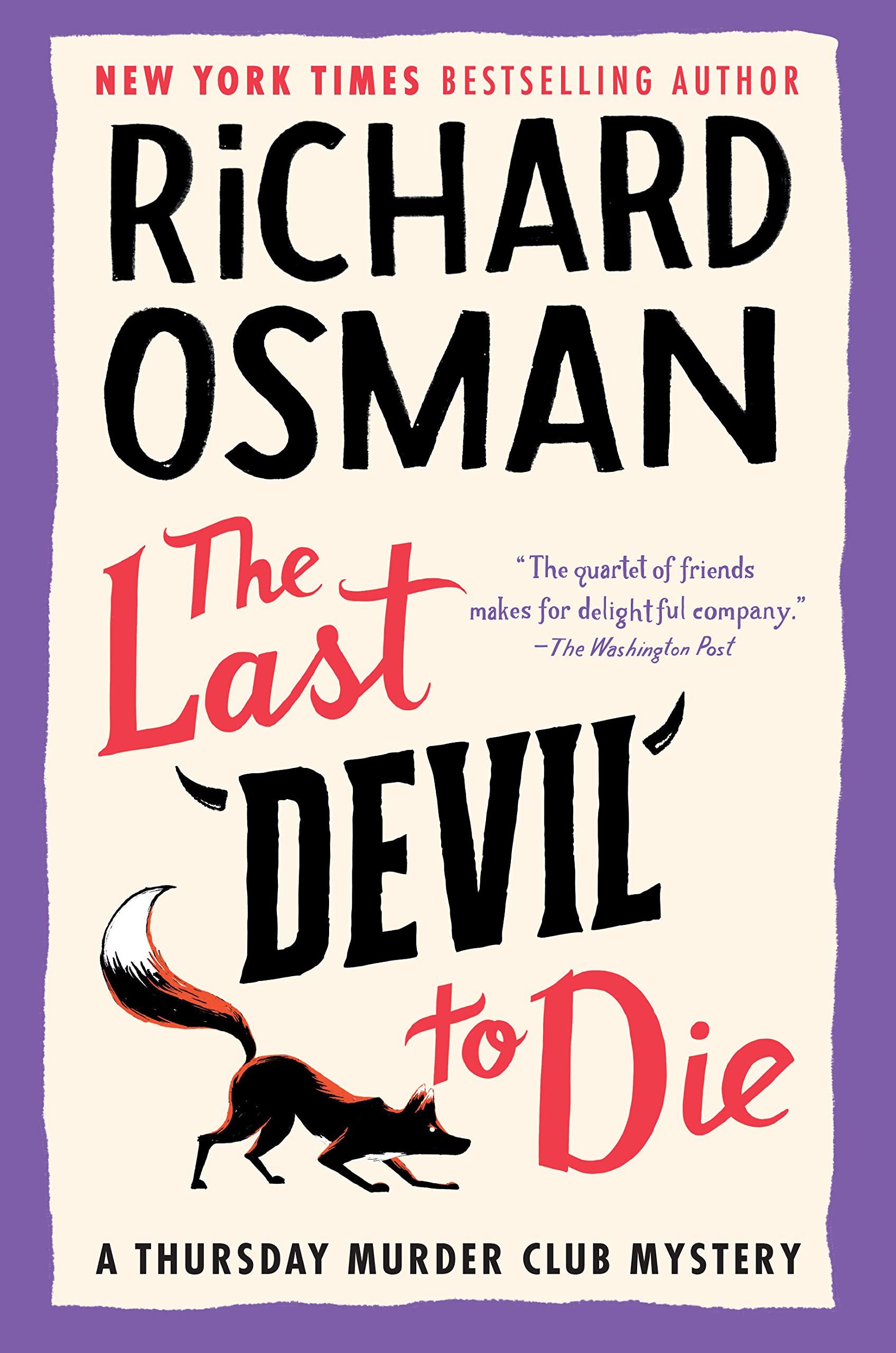
I finished the previous book in this series (the Thursday Murder Club) earlier this month, and when I saw that the library had book 4 available, I grabbed it. I've written above, while reviewing book 3 about how lovely this series has been: funny, entertaining, not too mysterious, but just enough to keep you reading all through. Perhaps I didn't make clear enough that this isn't just a mystery series, but also a very tender look at the process of aging and losing the people you love: to illness, dementia, Alzheimer's, or just age. This is a tricky topic for me: I spent years caring for a grandparent with dementia, and I shall probably spend some years caring for my aging parents too (although not quite yet). Although book 4 is still a murder mystery, this is very much also a book about love: having it, enjoying it, discovering it, but most of all, about losing it. I was not expecting my heart to be broken by a fast-talking fictional group of old age pensioners, but there I was indeed, sniffling during my lunch break while I read it over my tofu salad.
I can't say much more on this theme without spoilers, so let me tell you a bit about the story. I'll say up front that a beloved character does die during the course of the book, but no more on that. The Thursday Murder Club consists of four members of an upscale retirement community: Elizabeth, a former spy who is sharp, witty, and the de facto leader; Joyce, a former nurse, talkative, friendly and insightful, with a gift for making friends; Ibrahim, a former psychiatrist, whose only current patient is an jailed drug kingpin that he helped imprison, and Ron, a retired union leader who is pugnacious, loyal, and is, at a late stage, rediscovering love. This book begins with the murder of Kuldesh Sharma, an antiques dealer and friend of Stephen, Elizabeth's husband, who is slowly fading away from dementia. As Stephen is beloved to all of the club, they and their friends in the police force attempt to find out who killed Kuldesh, and why. What was he doing alone on a remote road in the middle of the night? Who was the strange man seen on CCTV entering his shop with a parcel? What does this have to do with the biggest heroin dealer in the UK? As the club investigates, they are also attempting to prevent Mervyn, a fellow member of the retirement community, from being scammed out of his life savings by a woman named Tatiana he met on the internet, and who is coming to meet if only he can wire her a few thousand pounds for her sick brother.
Like all of Osman's books, the mystery is none too deep, and easy to figure out, but you're not here to be mystified: you're here because the cast is charming, the dialogue funny, and at least, as far as this book, because he took an incredibly painful subject and handled with a surprising level of tact, grace, and kindness. Tears were shed. Tea was drunk. A worthwhile read, and a nice way to round off January.
I finished the previous book in this series (the Thursday Murder Club) earlier this month, and when I saw that the library had book 4 available, I grabbed it. I've written above, while reviewing book 3 about how lovely this series has been: funny, entertaining, not too mysterious, but just enough to keep you reading all through. Perhaps I didn't make clear enough that this isn't just a mystery series, but also a very tender look at the process of aging and losing the people you love: to illness, dementia, Alzheimer's, or just age. This is a tricky topic for me: I spent years caring for a grandparent with dementia, and I shall probably spend some years caring for my aging parents too (although not quite yet). Although book 4 is still a murder mystery, this is very much also a book about love: having it, enjoying it, discovering it, but most of all, about losing it. I was not expecting my heart to be broken by a fast-talking fictional group of old age pensioners, but there I was indeed, sniffling during my lunch break while I read it over my tofu salad.
I can't say much more on this theme without spoilers, so let me tell you a bit about the story. I'll say up front that a beloved character does die during the course of the book, but no more on that. The Thursday Murder Club consists of four members of an upscale retirement community: Elizabeth, a former spy who is sharp, witty, and the de facto leader; Joyce, a former nurse, talkative, friendly and insightful, with a gift for making friends; Ibrahim, a former psychiatrist, whose only current patient is an jailed drug kingpin that he helped imprison, and Ron, a retired union leader who is pugnacious, loyal, and is, at a late stage, rediscovering love. This book begins with the murder of Kuldesh Sharma, an antiques dealer and friend of Stephen, Elizabeth's husband, who is slowly fading away from dementia. As Stephen is beloved to all of the club, they and their friends in the police force attempt to find out who killed Kuldesh, and why. What was he doing alone on a remote road in the middle of the night? Who was the strange man seen on CCTV entering his shop with a parcel? What does this have to do with the biggest heroin dealer in the UK? As the club investigates, they are also attempting to prevent Mervyn, a fellow member of the retirement community, from being scammed out of his life savings by a woman named Tatiana he met on the internet, and who is coming to meet if only he can wire her a few thousand pounds for her sick brother.
Like all of Osman's books, the mystery is none too deep, and easy to figure out, but you're not here to be mystified: you're here because the cast is charming, the dialogue funny, and at least, as far as this book, because he took an incredibly painful subject and handled with a surprising level of tact, grace, and kindness. Tears were shed. Tea was drunk. A worthwhile read, and a nice way to round off January.
73rasdhar
13. Eileen Chang - The Rouge of the North

This is my last review for January, and a wonderful way to close the month. Eileen Chang's The Rouge of the North is actually the fourth iteration of a story that she wrote and re-wrote through her life. It was published first in 1943 in Chinese as The Golden Cangue; cangue being a sort of wooden pillory, used to penalise criminals in imperial China. The story had some success at the time; she subsequently translated into English and published it, and it can still be found (with difficulty) in anthologies of her stories. Much later, in 1967, not long after the death of her second husband and amid financial troubles, she substantially rewrote the same story in English as the The Rouge of the North, an expanded version of her well-received short story. It did not do well in English at the time, but a serialised Chinese version saw substantial success, sparking a brief revival of her career before a long, slow, lonely decline, both professionally and personally. I learned much about this process of writing and rewriting from a detailed introductory essay by David Der-Wei Wang in this Harvard University Press edition of the English version of The Rouge of the North, although looking back, I wish I had read the novel first and the essay after because it undoubtedly shaped my understanding of the book. With that said, I think for non-Chinese readers like myself, the essay is vital, because this is a story full of complex allusion and metaphor, and would have been much harder to appreciate without the context and explanations he provides. I was also lucky to have a colleague who recommended this book to me, having read the first version in Chinese when he was in school, whom I frequently bothered for explanations or clarifications.
The Rouge of the North traces the life of Yindi, a beautiful woman, born into an impoverished family. Living with her brother and sister-in-law, and their children, she sells sesame oil, and resists, enraged, the overtures of local men, who come by the shop to tease the 'Sesame Oil Beauty'. Although she harbours an interest in the quiet, reclusive pharmacist's assistant who works across the road, she recognises his utter lack of ambition does not match her own desires for a better, richer life. She accordingly accepts a proposal from a wealthy, aristocratic family to marry their second son, described to her as a blind man, but kind and gentle. On marriage, of course, she discovers that she has wedded an invalid, addicted to opium and in no way a suitable partner, and the life of wealth and comfort she had imagined is instead a cold, dispiriting prison from which she can't escape. A southerner in a northern family, a poor girl amidst rich people, her marriage is a series of humiliations, to which she reacts by becoming increasingly selfish, arrogant, and rebellious. Desperate for romantic love, which her husband cannot fulfil, she embarks on a doomed affair with one of her brothers-in-law; he in turn, ultimately rejects her. Through the story, we see her ire directed towards the matriarch of the house, her mother-in-law, who holds the keys to her fate. As the novel progresses, Yindi slowly becomes the woman she despises: the family's wealth crumbling, her unhappiness spiraling. Towards the end of the book, she is matriarch of a small household, respected but not loved, deferred to, but friendless, and defined by her strict adherence to the customs and traditions that she once strained against. Sitting on her bed, she drifts back into memories of being a young unmarried girl, fending off suitors at the sesame oil shop. "Everything she drew comfort from was gone, had never happened. Nothing much had happened to her yet."
In David Der-Wei Weng's preface to this story of Yindi's spiralling decline, he asks what we are to make of the way Chang wrote, and rewrote, and wrote again the same story, over and over, wrestling with ideas of female agency and victimization, of the way in which women sought to reach for power within constrained domestic spheres. It's too facile, he argues, to suggest that she is, through this story, reshaping and retelling her own life's story in different ways. Rather, he looks at the way she didn't just write and rewrite, but also how she moved between two languages, creating and recreating the same story (translation does not seem to be an appropriate word here) to create a more realistic account. Weng writes that the character of Yindi goes from the first version of the story to the last in progression, changing from "...a tragic monster into a desolate woman." As I have only read one of four versions, I can't confirm: but in The Rouge of the North, Chang writes almost dispassionately, recording Yindi's eventual ensnaring into the traditions she tried unsuccessfully to escape. As Weng put it, "She wants to find her own man and is rewarded by a living dead man; she is torn by adulterous desires in her younger days only to settle into her widowed life with formidable stoicism; she seeks to end her life in the middle of the novel, but outlives all the other major characters. Shuttling between the possibilities and impossibilities of her life, Yindi is never what she appears or wants to be; her transgressive desires continually throw her back into the closure of repetition."
Even though this is a short novel, really a novella, it is a challenging read because each sentence is carefully crafted, and I'm not surprised it took me most of the month to get through this carefully. For all that Yindi is increasingly unlikeable, it is difficult not to feel your heart break for her, or to be transported by Chang's very evocative account of her life.

This is my last review for January, and a wonderful way to close the month. Eileen Chang's The Rouge of the North is actually the fourth iteration of a story that she wrote and re-wrote through her life. It was published first in 1943 in Chinese as The Golden Cangue; cangue being a sort of wooden pillory, used to penalise criminals in imperial China. The story had some success at the time; she subsequently translated into English and published it, and it can still be found (with difficulty) in anthologies of her stories. Much later, in 1967, not long after the death of her second husband and amid financial troubles, she substantially rewrote the same story in English as the The Rouge of the North, an expanded version of her well-received short story. It did not do well in English at the time, but a serialised Chinese version saw substantial success, sparking a brief revival of her career before a long, slow, lonely decline, both professionally and personally. I learned much about this process of writing and rewriting from a detailed introductory essay by David Der-Wei Wang in this Harvard University Press edition of the English version of The Rouge of the North, although looking back, I wish I had read the novel first and the essay after because it undoubtedly shaped my understanding of the book. With that said, I think for non-Chinese readers like myself, the essay is vital, because this is a story full of complex allusion and metaphor, and would have been much harder to appreciate without the context and explanations he provides. I was also lucky to have a colleague who recommended this book to me, having read the first version in Chinese when he was in school, whom I frequently bothered for explanations or clarifications.
The Rouge of the North traces the life of Yindi, a beautiful woman, born into an impoverished family. Living with her brother and sister-in-law, and their children, she sells sesame oil, and resists, enraged, the overtures of local men, who come by the shop to tease the 'Sesame Oil Beauty'. Although she harbours an interest in the quiet, reclusive pharmacist's assistant who works across the road, she recognises his utter lack of ambition does not match her own desires for a better, richer life. She accordingly accepts a proposal from a wealthy, aristocratic family to marry their second son, described to her as a blind man, but kind and gentle. On marriage, of course, she discovers that she has wedded an invalid, addicted to opium and in no way a suitable partner, and the life of wealth and comfort she had imagined is instead a cold, dispiriting prison from which she can't escape. A southerner in a northern family, a poor girl amidst rich people, her marriage is a series of humiliations, to which she reacts by becoming increasingly selfish, arrogant, and rebellious. Desperate for romantic love, which her husband cannot fulfil, she embarks on a doomed affair with one of her brothers-in-law; he in turn, ultimately rejects her. Through the story, we see her ire directed towards the matriarch of the house, her mother-in-law, who holds the keys to her fate. As the novel progresses, Yindi slowly becomes the woman she despises: the family's wealth crumbling, her unhappiness spiraling. Towards the end of the book, she is matriarch of a small household, respected but not loved, deferred to, but friendless, and defined by her strict adherence to the customs and traditions that she once strained against. Sitting on her bed, she drifts back into memories of being a young unmarried girl, fending off suitors at the sesame oil shop. "Everything she drew comfort from was gone, had never happened. Nothing much had happened to her yet."
In David Der-Wei Weng's preface to this story of Yindi's spiralling decline, he asks what we are to make of the way Chang wrote, and rewrote, and wrote again the same story, over and over, wrestling with ideas of female agency and victimization, of the way in which women sought to reach for power within constrained domestic spheres. It's too facile, he argues, to suggest that she is, through this story, reshaping and retelling her own life's story in different ways. Rather, he looks at the way she didn't just write and rewrite, but also how she moved between two languages, creating and recreating the same story (translation does not seem to be an appropriate word here) to create a more realistic account. Weng writes that the character of Yindi goes from the first version of the story to the last in progression, changing from "...a tragic monster into a desolate woman." As I have only read one of four versions, I can't confirm: but in The Rouge of the North, Chang writes almost dispassionately, recording Yindi's eventual ensnaring into the traditions she tried unsuccessfully to escape. As Weng put it, "She wants to find her own man and is rewarded by a living dead man; she is torn by adulterous desires in her younger days only to settle into her widowed life with formidable stoicism; she seeks to end her life in the middle of the novel, but outlives all the other major characters. Shuttling between the possibilities and impossibilities of her life, Yindi is never what she appears or wants to be; her transgressive desires continually throw her back into the closure of repetition."
Even though this is a short novel, really a novella, it is a challenging read because each sentence is carefully crafted, and I'm not surprised it took me most of the month to get through this carefully. For all that Yindi is increasingly unlikeable, it is difficult not to feel your heart break for her, or to be transported by Chang's very evocative account of her life.
74kjuliff
>72 rasdhar: I’m still on Book 3. Thanks for the review.
75ELiz_M
>73 rasdhar: Huh, is one of the four retellings in Love in a Falling City? The sesame oil seller character is a part, but not the main focus, of it.
76kidzdoc
>73 rasdhar:, >75 ELiz_M: Fabulous review of The Rouge of the North, Rashdar. To answer your question, Liz, this story is contained within Love in a Fallen City, published by New York Review Books, which I own but have not read. Rashdar's review has pushed it much higher on my TBR list.
This is a link to the NYRB reading guide for Love in a Fallen City: https://cdn.shopify.com/s/files/1/0726/9203/files/love_in_a_fallen_city-rgg.pdf?...
This is a link to the NYRB reading guide for Love in a Fallen City: https://cdn.shopify.com/s/files/1/0726/9203/files/love_in_a_fallen_city-rgg.pdf?...
77dchaikin
Wow, lots of great stuff here. Quite a way to wrap up your month
>69 rasdhar: i have been to a Kinokuniya in KL and quite liked it. Google maps tells me there is one in the Houston area too (for anyone who knows the area, it’s in Katy). That’s a ways from me, but maybe i’ll run by there some time.
>70 rasdhar: I found both of these reviews interesting and well done. You got thumbs. 🙂
>73 rasdhar: wow. This Eileen Chang sounds terrific. Excellent review
(But my favorite line comes from >72 rasdhar: “ but there I was indeed, sniffling during my lunch break while I read it over my tofu salad.”)
>69 rasdhar: i have been to a Kinokuniya in KL and quite liked it. Google maps tells me there is one in the Houston area too (for anyone who knows the area, it’s in Katy). That’s a ways from me, but maybe i’ll run by there some time.
>70 rasdhar: I found both of these reviews interesting and well done. You got thumbs. 🙂
>73 rasdhar: wow. This Eileen Chang sounds terrific. Excellent review
(But my favorite line comes from >72 rasdhar: “ but there I was indeed, sniffling during my lunch break while I read it over my tofu salad.”)
78RidgewayGirl
>61 rasdhar: I'd seen this podcast on a list of recommendations and made note of it. You've convinced me to give it a go.
>69 rasdhar: My best friend's brother lives in Singapore and she visits him regularly. She likes Kinokuniya and passes on the books she picks up there after she's finished them. I recently read State of Emergency by Jeremy Tiang and I really liked it.
>72 rasdhar: This is on the list for my book club and I guess you'd agree with their consensus that I really do need to read the other books in the series first?
>69 rasdhar: My best friend's brother lives in Singapore and she visits him regularly. She likes Kinokuniya and passes on the books she picks up there after she's finished them. I recently read State of Emergency by Jeremy Tiang and I really liked it.
>72 rasdhar: This is on the list for my book club and I guess you'd agree with their consensus that I really do need to read the other books in the series first?
79baswood
Enjoyed your excellent review of Rouge of the North
80arubabookwoman
>69 rasdhar: There were still lots of kampongs and a lot of rural areas. Most of my eating, when not at home (which was in the Holland Circle area) was at street food stalls, often very delicious and cheap. Lee Kwan Yew was prime minister and he was "modernizing " all that kind of stuff. The government was very authoritarian. My brother had his passport confiscated because his hair was too long. They wouldn't give it back until he proved he had a decent hair length. Being my brother, he shaved his head completely and had no hair.
This was also at the height of the Vietnam war, and Singapore was a popular place for RnR, so there were lots of US and Aussie soldiers around sometimes. Lots of illegal drugs too. My family lived there about 5 years, but I was away at college and only spent summers.
This was also at the height of the Vietnam war, and Singapore was a popular place for RnR, so there were lots of US and Aussie soldiers around sometimes. Lots of illegal drugs too. My family lived there about 5 years, but I was away at college and only spent summers.
81raton-liseur
>72 rasdhar: A moving review. Mystery novels are not my cup of tea, usually, but you definitely got me interested.
>73 rasdhar: A really nice review again. Not sure it's a book for me, at least at the moment, but it enjoyed reading your thoughts and learning about this book and its author.
>73 rasdhar: A really nice review again. Not sure it's a book for me, at least at the moment, but it enjoyed reading your thoughts and learning about this book and its author.
82rasdhar
>74 kjuliff: I hope you enjoy it!
>75 ELiz_M: I think >76 kidzdoc: answered you, but yes. I found that anthology a little difficult to get hold of in the past; much easier here in Singapore, as most libraries have a substantial collection of Malaysian, Chinese, and Tamil writing (and translations for readers like me).
>77 dchaikin: Thanks. There's a wonderful, massive Kinokuniya in the heart of Singapore's swank shopping area, one could easily spend hours there.
>78 RidgewayGirl: Oh, do let me know what you think. It takes a little while for the writing to settle, and like any anthology-based podcast, the quality can vary a lot between episodes. State of Emergency is on my list too, and yes, I think you would probably get more from the series if you started at the beginning. I think the third book is probably the best, you could read it by itself, but you'd miss out on a lot of the well-established 'in jokes' and I think some characters don't get a good introduction in book 3 as the author is assuming you know who they are already.
>79 baswood: Thanks!
>80 arubabookwoman: How interesting! The only kampongs really left today are the ones preserved as tourist attractions. The long hair thing is something I've heard about before.
>81 raton-liseur: Thanks!
>75 ELiz_M: I think >76 kidzdoc: answered you, but yes. I found that anthology a little difficult to get hold of in the past; much easier here in Singapore, as most libraries have a substantial collection of Malaysian, Chinese, and Tamil writing (and translations for readers like me).
>77 dchaikin: Thanks. There's a wonderful, massive Kinokuniya in the heart of Singapore's swank shopping area, one could easily spend hours there.
>78 RidgewayGirl: Oh, do let me know what you think. It takes a little while for the writing to settle, and like any anthology-based podcast, the quality can vary a lot between episodes. State of Emergency is on my list too, and yes, I think you would probably get more from the series if you started at the beginning. I think the third book is probably the best, you could read it by itself, but you'd miss out on a lot of the well-established 'in jokes' and I think some characters don't get a good introduction in book 3 as the author is assuming you know who they are already.
>79 baswood: Thanks!
>80 arubabookwoman: How interesting! The only kampongs really left today are the ones preserved as tourist attractions. The long hair thing is something I've heard about before.
>81 raton-liseur: Thanks!
83rasdhar
FEBRUARY
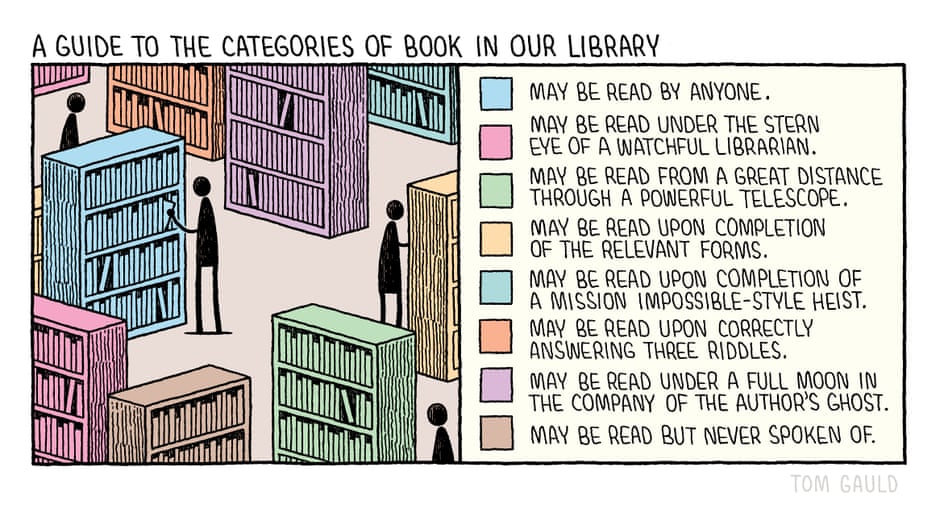
A new month, a new Tom Gauld cartoon in honour of the fact that I recently had to ask a librarian for help to find a book despite the fact that I spend all my time professionally and a good amount of my time personally, in libraries. I feel vindicated because it turned out to have been wrongly shelved, but I was not smug about it.
Keeping my list of February reads with one-sentence reviews here:
Books:
13. VV Ganeshananthan - Brotherless Night Review here - a heartbreaking, moving account of civil war in Sri Lanka
14. Chen Zijin - Bad Kids Review here - did not particularly care for this violent, gory suspense novel set in China
15. Anthony Berkeley - The Wintringham Mystery Review here - a somewhat dated, fluffy, mystery novel
17. Cristina Campo - The Unforgivable, and other Writings Review here - difficult but interesting essays on literature
18. Maryla Szymiczkowa - Mrs. Mohr Goes Missing Review here - thin on plot, thick on atmospher, a Polish murder mystery
19. The Penguin Book of Murder Mysteries (edited by Michael Sims) Review here - great, albeit dated, collection
20. Supriya Gandhi- The Emperor Who Never Was Review here - very interesting bio of Emperor Shah Jahan's son
21. José Maria de Eça de Queirós - The Tragedy of the Street of Flowers Review here - an Oedipal tale, not particularly good, but somewhat funny and satirical
22. Isaac Asimov - Gold: The Final Science Fiction Collection Review here - great stories, great essays
23. The Forward Book of Poetry 2018 - by various poets Review here - some gems, some old friends
24. Tiitu Takalo - Me, Mikko and Anikki (Minä, Mikko ja Annikki) Review here - a beautiful graphic novel about a gentrifying neighbourhood in Finland
Audiodramas/Fiction Podcasts:
1. Old Gods of Appalachia: A beautifully written and narrated audiodrama set in Appalachia, drawing from myth, history, and folktales. Very Lovecraftian. Review here.
A new month, a new Tom Gauld cartoon in honour of the fact that I recently had to ask a librarian for help to find a book despite the fact that I spend all my time professionally and a good amount of my time personally, in libraries. I feel vindicated because it turned out to have been wrongly shelved, but I was not smug about it.
Keeping my list of February reads with one-sentence reviews here:
Books:
13. VV Ganeshananthan - Brotherless Night Review here - a heartbreaking, moving account of civil war in Sri Lanka
14. Chen Zijin - Bad Kids Review here - did not particularly care for this violent, gory suspense novel set in China
15. Anthony Berkeley - The Wintringham Mystery Review here - a somewhat dated, fluffy, mystery novel
17. Cristina Campo - The Unforgivable, and other Writings Review here - difficult but interesting essays on literature
18. Maryla Szymiczkowa - Mrs. Mohr Goes Missing Review here - thin on plot, thick on atmospher, a Polish murder mystery
19. The Penguin Book of Murder Mysteries (edited by Michael Sims) Review here - great, albeit dated, collection
20. Supriya Gandhi- The Emperor Who Never Was Review here - very interesting bio of Emperor Shah Jahan's son
21. José Maria de Eça de Queirós - The Tragedy of the Street of Flowers Review here - an Oedipal tale, not particularly good, but somewhat funny and satirical
22. Isaac Asimov - Gold: The Final Science Fiction Collection Review here - great stories, great essays
23. The Forward Book of Poetry 2018 - by various poets Review here - some gems, some old friends
24. Tiitu Takalo - Me, Mikko and Anikki (Minä, Mikko ja Annikki) Review here - a beautiful graphic novel about a gentrifying neighbourhood in Finland
Audiodramas/Fiction Podcasts:
1. Old Gods of Appalachia: A beautifully written and narrated audiodrama set in Appalachia, drawing from myth, history, and folktales. Very Lovecraftian. Review here.
84rasdhar
AUDIODRAMA REVIEW: OLD GODS OF APPALACHIA
Old Gods of Appalachia is a fiction anthology podcast created by Steve Shell and Cam Collins and performed by a full cast of voice actors, with original music performed by local Appalachian artists. Beginning as an independent production, it was picked up by the Rusty Quill production house, which also produced The Magnus Archives, a podcast I reviewed further up this in this thread.
Old Gods of Appalachia is broadly a horror podcast, but the stories here range from retellings and recreations of folk tales, historical events, and family narratives, set in an alternate reality. It draws deeply from Appalachian culture, music, dialect, and history, and is set in the Appalachian hills. Of particular note is the prevalence of mining, slavery, and religion in this region, and how they had an impact on the largely rural communities that lived here. In Old Gods of Appalachia, mining brings wealth to the wealthy, but also runs the risk of awakening eldritch horrors that live deep within rock and stone. Amid the bogs, woods, hollows ('hollers') and hills, creatures lurk. The chief defence against them are a range of women, young and old, who practice hedge magic, a combination of herbs, heart, and courage, to stand up against evil. If you enjoy Lovecraft, but also Americana, this is the podcast for you. I particularly like how this podcast combines eldritch horror with real horror: mine collapses, the abuse of slaves, a monster in the mountains, all find their place and these stories are sensitively and respectfully told. For non-Americans like myself, it is a lens into a part of America that we don't normally see.
Although these common themes run through the episodes, this is an anthology audiodrama, so stories are either limited to one or two episodes, or follow a multi-episode arc. The Wolf Sisters, for instance, goes over three episodes, while a story like Bumper Crop can stand alone. Certain characters, as well, also recur: the terrifying Polly Barrow, tricky Jack Fields, and the redoubtable Boggs sisters. The stories are narrated by Steve Shell, who has a real gift for it, and sounds almost exactly like you're sitting on a porch, sipping a hot drink late at night, and listening to someone tell you a story. Their excellent website does have content warnings and episode descriptions for anyone who needs them. While Old Gods of Appalachia is free to listen to, they have additional content, including a full audiobook, which is available for a fee.
I think of all the fiction podcasts and audiodramas I've listened to so far, this one is probably the top of my list. I recommend it highly.
Old Gods of Appalachia is a fiction anthology podcast created by Steve Shell and Cam Collins and performed by a full cast of voice actors, with original music performed by local Appalachian artists. Beginning as an independent production, it was picked up by the Rusty Quill production house, which also produced The Magnus Archives, a podcast I reviewed further up this in this thread.
Old Gods of Appalachia is broadly a horror podcast, but the stories here range from retellings and recreations of folk tales, historical events, and family narratives, set in an alternate reality. It draws deeply from Appalachian culture, music, dialect, and history, and is set in the Appalachian hills. Of particular note is the prevalence of mining, slavery, and religion in this region, and how they had an impact on the largely rural communities that lived here. In Old Gods of Appalachia, mining brings wealth to the wealthy, but also runs the risk of awakening eldritch horrors that live deep within rock and stone. Amid the bogs, woods, hollows ('hollers') and hills, creatures lurk. The chief defence against them are a range of women, young and old, who practice hedge magic, a combination of herbs, heart, and courage, to stand up against evil. If you enjoy Lovecraft, but also Americana, this is the podcast for you. I particularly like how this podcast combines eldritch horror with real horror: mine collapses, the abuse of slaves, a monster in the mountains, all find their place and these stories are sensitively and respectfully told. For non-Americans like myself, it is a lens into a part of America that we don't normally see.
Although these common themes run through the episodes, this is an anthology audiodrama, so stories are either limited to one or two episodes, or follow a multi-episode arc. The Wolf Sisters, for instance, goes over three episodes, while a story like Bumper Crop can stand alone. Certain characters, as well, also recur: the terrifying Polly Barrow, tricky Jack Fields, and the redoubtable Boggs sisters. The stories are narrated by Steve Shell, who has a real gift for it, and sounds almost exactly like you're sitting on a porch, sipping a hot drink late at night, and listening to someone tell you a story. Their excellent website does have content warnings and episode descriptions for anyone who needs them. While Old Gods of Appalachia is free to listen to, they have additional content, including a full audiobook, which is available for a fee.
I think of all the fiction podcasts and audiodramas I've listened to so far, this one is probably the top of my list. I recommend it highly.
85dchaikin
>84 rasdhar: always interesting, Rasdhar.
86rasdhar
13. V. V. Ganeshananthan - Brotherless Night (Random House 2023)
TW for pretty much everything (violence, war, assault, religious conflict).
I can't be objective about this book; I'll say it at the outset. Although I'm not from Sri Lanka, so much of V. V. Ganeshananthan's account of ethnic violence, riots, and communal tension is easily translatable to South Asian experiences, including my own. This is a book about the Sri Lankan civil war, but it is not just a book about the Sri Lankan civil war. It is really a book about justice, indifference, and courage, amidst unspeakable violence. Early in the book, Ganeshananthan narrates how Sinhalese men went down the street, seeking out Tamil homes and businesses to burn, Tamil people to slaughter, in the middle of riots. They used electoral rolls to find and identify these people and places. In 1992, when Mumbai, India was gripped by riots, the Shiv Sena party did the exact same thing - using electoral rolls to find Muslim houses, drag out the men and beat them, drag out the women for worse. I know, because I was there, and because I belonged to a family that had Hindus, and Muslims, Christians and Jews, we had our front door marked in the middle of night by rioters who left posters identifiying us that said 'Garv se kaho hum Hindu hain' ('Say with pride we are Hindus'), and we had friends and families who tried to help us by printing signs to cover up these posters, which said 'Prem se kaho hum insaan hain' ('Say with love we are human'). In her late dementia, my grandmother, gripped with memories of those days, would wake up at night, saying 'They're coming, they're coming'. So, I didn't live through the civil war in Sri Lanka, and I can't speak for this experience, but my own lived experience is caught so acutely in her finely-crafted expression of this kind of violence that I wept, and so I cannot be objective about this book; only to say that I was gripped by it.
Early in the book, the local library where Sashi and her brothers study is burned down by Sinhalese policemen. As a young teenager, she insists on going to see the damage despite the risks; her brothers take her. As she says:
Towards the end of the book, as Sashi is without any of her brothers, without her friend K, without her mentor, without her family, she says, "I want you to understand: it does not matter if you cannot imagine the future. Still, relentless, it comes." This is how the book is written, directly addressed to the reader. It is a difficult approach to sustain, but Ganeshananthan does it, so that you turn page after page with Sashi, following her fight through her fear and loss and grief until it has honed her into a woman who is walking into a future she can't imagine, but with her spine held straight, no matter the cost. I can't even tell if you I liked this book or I hated it: only that I wept through it. If that's not a testimony to the skill of the writer, I don't know what is.
(edited to add the cover)
TW for pretty much everything (violence, war, assault, religious conflict).
I can't be objective about this book; I'll say it at the outset. Although I'm not from Sri Lanka, so much of V. V. Ganeshananthan's account of ethnic violence, riots, and communal tension is easily translatable to South Asian experiences, including my own. This is a book about the Sri Lankan civil war, but it is not just a book about the Sri Lankan civil war. It is really a book about justice, indifference, and courage, amidst unspeakable violence. Early in the book, Ganeshananthan narrates how Sinhalese men went down the street, seeking out Tamil homes and businesses to burn, Tamil people to slaughter, in the middle of riots. They used electoral rolls to find and identify these people and places. In 1992, when Mumbai, India was gripped by riots, the Shiv Sena party did the exact same thing - using electoral rolls to find Muslim houses, drag out the men and beat them, drag out the women for worse. I know, because I was there, and because I belonged to a family that had Hindus, and Muslims, Christians and Jews, we had our front door marked in the middle of night by rioters who left posters identifiying us that said 'Garv se kaho hum Hindu hain' ('Say with pride we are Hindus'), and we had friends and families who tried to help us by printing signs to cover up these posters, which said 'Prem se kaho hum insaan hain' ('Say with love we are human'). In her late dementia, my grandmother, gripped with memories of those days, would wake up at night, saying 'They're coming, they're coming'. So, I didn't live through the civil war in Sri Lanka, and I can't speak for this experience, but my own lived experience is caught so acutely in her finely-crafted expression of this kind of violence that I wept, and so I cannot be objective about this book; only to say that I was gripped by it.
We could not believe it - to begin to believe all this, we had to write it down. You must understand: I have to tell myself again, because even though I was there it seems impossible.I can, however, tell you what it is about: in Jaffna, 1981, Sashikala Kulenthiren, known as 'Sashi', grows up in a Tamil family that prizes education above all. Her four brothers are dedicated to their education: Niranjan, the eldest and gentlest, is almost qualified as a doctor; her next two brothers, Dayalan and Seelan are studying to be engineers, her youngest brother, Aran, is still in schoo, like her, and Sashi and her neighbour, a boy she calls K., are both hoping to get into medical college. As the Sri Lankan civil war begins, and signs of ethnic violence emerge, Sashi loses her brothers one by one: to violent death, to those that join in groups for reasons just and unjust, and ultimately, to those that escape the conflict altogether. The book follows Sashi's life; through medical school, through her family's travails, through until she is in New York, in 2009, making a futile bed to have the U.N. intervene in a bloody conflict that world ignored. Although this is a fictional account, it was built on two decades of research, Sashi's mentor in the books, Anjali Premachandran, is based on the real life doctor, human rights activist, Rajani Thiranagama, who was assassinated after publishing a book documenting the violence, torture, and rapes committed by both, the Indian Peacekeeping Forces and the Liberation Tigers of Tamil Eelam. Sashi's story may be fictional, but the extraordinary courage that she showed, in her profession as a doctor and her work, is based on the works of dozens of real people who put their lives on the line to document horrors that the world ignored. Ganeshananthan handles this complex, difficult, subject matter with a touch so deft that it never feels overwrought or exploited for sensational effect. There is emotion, but not melodrama.
Early in the book, the local library where Sashi and her brothers study is burned down by Sinhalese policemen. As a young teenager, she insists on going to see the damage despite the risks; her brothers take her. As she says:
They had torched the elegant palace of white rooms where Seelan and K and I had studied, its clean and well-lit shelves, the rare book section with the beautifully lettered palm leaf manuscripts. Dayalan had shown some to me when had first begun working there. Ninety thousand volumes gone, some of them original and single copies. Our past, but also - oh, the beautiful wooden tables where I had turned the pages of my textbooks and my brothers' textbooks! - the future. Imagine the places you grew up, the places you studied, places that belonged to your people, burned. But I should stop pretending that I know you. Perhaps you do not have to imagine. Perhaps your library, too, went up in smoke.
Towards the end of the book, as Sashi is without any of her brothers, without her friend K, without her mentor, without her family, she says, "I want you to understand: it does not matter if you cannot imagine the future. Still, relentless, it comes." This is how the book is written, directly addressed to the reader. It is a difficult approach to sustain, but Ganeshananthan does it, so that you turn page after page with Sashi, following her fight through her fear and loss and grief until it has honed her into a woman who is walking into a future she can't imagine, but with her spine held straight, no matter the cost. I can't even tell if you I liked this book or I hated it: only that I wept through it. If that's not a testimony to the skill of the writer, I don't know what is.
(edited to add the cover)
87labfs39
>86 rasdhar: That must have been a difficult review to write. Thank you for sharing not only about an important but difficult read, but about your own reactions and history. Although I have not shared the experiences that would make reading this book personal, I have read books like that and they are often difficult to write about because they cut too close to the bone. I often skip reviewing them. I think you are brave to tackle reading and writing about this one. Thank you.
88dchaikin
>86 rasdhar: terrific review and i’m glad you added your personal perspective upfront. I’m regretting selling Love Marriage, but this one i might want to pursue, especially after reading your explanation for the basis of the story. Two books on Sri Lanka, by Sri Lankan authors have made the Booker lists lately, including the 2022 winner, The Seven Moons Maali Almeida, and A Passage North. Both were terrific.
89kjuliff
>88 dchaikin: I wish Anuk Arudpragasam would write another book. I’ve read his novella A Brief Marriage and I thought it was brilliant.
90dchaikin
>89 kjuliff: noting!!
91edwinbcn
Nice and well-written long reviews and considerations. Quite a number of famour authors' common place books have appeared in print, but hard to find second-hand. I read a selection of George Madden's (OUP edition).
92baswood
Brotherless Night Very interesting review. It should bring it home to people just how hatred of other peoples religions or race can be stoked up to the extent of the horrors that are committed. People living in western Europe and the USA have not been involved or had to witness this, but the way the world is going it might be on our doorstep in the not too distant future. A sobering thought.
93kjuliff
>86 rasdhar: Thank you for this review. I’ve had it on my list for quite a while, and kept putting it off. I have been touched by other writings of the civil war in Sri Lanka, and so your review has prodded me to read Brotherless Night. Thank you.
94LolaWalser
>86 rasdhar:
I feel this deeply, intimately, having had the same... not yours, but the same... experience. Not sure what to do with that--it's no consolation, is it!
>92 baswood:
Without looking to argue, I find that a strange remark. Western Europe had a gazillion fratricidal wars, often led in the name of religion. The American civil war also saw many families riven by the division. Granted that these may appear remote compared to the fall of socialist Yugoslavia or what has been going on on the subcontinent, still there's the Holocaust.
I feel this deeply, intimately, having had the same... not yours, but the same... experience. Not sure what to do with that--it's no consolation, is it!
>92 baswood:
Without looking to argue, I find that a strange remark. Western Europe had a gazillion fratricidal wars, often led in the name of religion. The American civil war also saw many families riven by the division. Granted that these may appear remote compared to the fall of socialist Yugoslavia or what has been going on on the subcontinent, still there's the Holocaust.
95baswood
>94 LolaWalser: Ah - I forget to add "my generation" although there was of course Yugoslavia if that is considered West European.
96kjuliff
>95 baswood: And our generation didn’t consider Yugoslavia as part of our Western Europe. For people who turned 40 in th 1980s in the West, civil war was something that occurred somewhere else or in times long passed. Hence my own fear as I set glued to the television on 6th January 2021 when I first realised that it could happen here.
97LolaWalser
Ireland doesn't exist, I guess.
our generation didn’t consider Yugoslavia as part of our Western Europe.
I should hope not, wouldn't be caught dead in with that rabble. To be seen as similar, let alone belonging to that bunch of thinly disguised fascists, feudalists, and capitalist sellouts to the Yanks was actually part of the Soviet bloc propaganda against independent Yugoslavia. :)
our generation didn’t consider Yugoslavia as part of our Western Europe.
I should hope not, wouldn't be caught dead in with that rabble. To be seen as similar, let alone belonging to that bunch of thinly disguised fascists, feudalists, and capitalist sellouts to the Yanks was actually part of the Soviet bloc propaganda against independent Yugoslavia. :)
98kjuliff
>97 LolaWalser: Well I don’t want to get into my civil war is worse than your civil war sort of argument, but we should be able to talk about our own experience and world view when discussing one’s reaction to a novel.
I grew up in a relatively peaceful and politically stable time in Australia. I have since lived in England and the USA. I’ve just not lived in a war-zone, and I am sure that my reaction to V. Ganeshananthan’s Brotherless Night would be different to that of @rv1988 who has experienced intercultural violence in SE Asia.
I grew up in a relatively peaceful and politically stable time in Australia. I have since lived in England and the USA. I’ve just not lived in a war-zone, and I am sure that my reaction to V. Ganeshananthan’s Brotherless Night would be different to that of @rv1988 who has experienced intercultural violence in SE Asia.
99chlorine
Rasdhar I have just found your thread and enjoyed your thoughtful reviews immensely. I have added Brotherless night to my wishlist and as others have done I want to thank you for sharing your experience.
I am interested in reading literature from all around the world and am not familiar at all with literature from Indonesia, Malaysia and Singapore, so I will be following your thread with interest.
I am very intrigued by the idea of horror podcasts. On the one hand they are very tempting (I'd like to find horror books that really scare me and I think I don't manage to focus on the written text enough for that to happen and audio might be more immersive) but on the other hand I don't have a routine of listening to podcasts - except sometimes at breakfast or while brushing my teeth which does not seem compatible with horror and I doubt I'm fluent enough in English to easily understand audio fiction. I'll keep the idea in mind.
I am interested in reading literature from all around the world and am not familiar at all with literature from Indonesia, Malaysia and Singapore, so I will be following your thread with interest.
I am very intrigued by the idea of horror podcasts. On the one hand they are very tempting (I'd like to find horror books that really scare me and I think I don't manage to focus on the written text enough for that to happen and audio might be more immersive) but on the other hand I don't have a routine of listening to podcasts - except sometimes at breakfast or while brushing my teeth which does not seem compatible with horror and I doubt I'm fluent enough in English to easily understand audio fiction. I'll keep the idea in mind.
100labfs39
I started Wooden Overcoats today while running errands. What a hoot! I laughed so hard, I missed the road to my sister's house. It was just what I needed this week. Can't wait to continue listening. Thank you!
101kjuliff
>100 labfs39: I can’t find this on any audio resource. It looks really good. What media did you listen to it on?
102kjuliff
It’s OK. Found it! I read the previous post and realised it was a streaming podcast-like thing. Www.woodenovercoats.com
103labfs39
>101 kjuliff: I'm listening to it through Spotify, but as you found, it's also on their website.
104rasdhar
I took a short break away, and I'm sorry my replies are coming in so late. Thank you all for the kind comments.
>87 labfs39: I understand, and I really don't quite know how I feel, but hopefully the word soup I threw out there is useful to someone!
>88 dchaikin: >89 kjuliff: Great recommendations: I read a children's book by Shehan Karunatilaka to my nieces and nephews, but I haven't tried his adult fiction.
>91 edwinbcn: Thanks. I shall see if I can find Madden's!
>92 baswood: >98 kjuliff: Thank you, a very interesting conversation. It's a very visceral novel, but I'm too close to the subject matter to see how easily accessible this book is to readers outside the cultural context. I suspect it wouldn't hit as hard to someone else. Part of the reason why I was so ambivalent about it.
>94 LolaWalser: I think 'not sure what to do with it' is a good way of summing it up, and I'm sorry you're here in it too. If I could write, or paint, perhaps I might try to express it somehow, but since I can't, all there is to do is to live it.
>99 chlorine: I understand your hesitation! I listed an Appalachian podcast, and as a non-native speaker, I sometimes have to go back and rewind a bit to make sure I understood. I find the British ones, on the whole, easier (colonial hangover, probably).
>100 labfs39: I'm so glad you're enjoying it. It's really quite sweet and funny.
>87 labfs39: I understand, and I really don't quite know how I feel, but hopefully the word soup I threw out there is useful to someone!
>88 dchaikin: >89 kjuliff: Great recommendations: I read a children's book by Shehan Karunatilaka to my nieces and nephews, but I haven't tried his adult fiction.
>91 edwinbcn: Thanks. I shall see if I can find Madden's!
>92 baswood: >98 kjuliff: Thank you, a very interesting conversation. It's a very visceral novel, but I'm too close to the subject matter to see how easily accessible this book is to readers outside the cultural context. I suspect it wouldn't hit as hard to someone else. Part of the reason why I was so ambivalent about it.
>94 LolaWalser: I think 'not sure what to do with it' is a good way of summing it up, and I'm sorry you're here in it too. If I could write, or paint, perhaps I might try to express it somehow, but since I can't, all there is to do is to live it.
>99 chlorine: I understand your hesitation! I listed an Appalachian podcast, and as a non-native speaker, I sometimes have to go back and rewind a bit to make sure I understood. I find the British ones, on the whole, easier (colonial hangover, probably).
>100 labfs39: I'm so glad you're enjoying it. It's really quite sweet and funny.
105rasdhar
14. Black Coffee in a Coconut Shell: Caste as Lived Experience - ed. Perumal Murugan, translated from the Tamil by C. S. Lakshmi (Simon and Schuster 2023)

Just a brief review, because this isn't really accessible to people not familiar with the subject matter. So, although I highly recommend this book, I am probably not recommending it to most people on this group. This is neither the time nor the occasion to embark on an explanation of caste, or the discriminatory practice of ‘untouchability’ and claims of ‘spiritual contamination’ that go with it, so if you’re not familiar, I suggest, skip this note.
Perumal Murugan, the Indian novelist, who faced massive right wing backlash from 'upper' caste Hindus for his novels, which present fictionalized versions of local religious practices in his area of India, which they found unacceptable, was arrested, lost his job, forced to move, harassed, and attacked, and continues to face hate, but has persisted in publishing and writing nonetheless. This particular book, however, is non-fiction, not written by him, but edited by him, and translated by the redoubtable C.S. Lakshmi, who writes under the pen name Ambai and is one of my favourite writers. Ambai, in her translator’s note, explains the title, and the discriminatory practice behind it:
It is this lived experience of caste that Murugan has sought to capture, in a series of essays written by a range of people: students, writers, doctors, government servants, and just ordinary people, describing their own encounters with caste based discrimination. If you’re not familiar with the political context, it will be difficult, but if you’re a third generation Indian living in Cincinnati who likes to tell their colleagues the insidious lie that the caste system was caused by colonialism and no longer exists in the free paradise of India, perhaps you might benefit from reading this book. These essays, the product of an informal salon that Murugan hosted in his own home from 2005 onwards, which expanded eventually into a lecture series, and then this book. In his introduction, Murugan says that many were initially reluctant to talk about these things, let alone write of them – but that the step to write involved a courageous “exorcism of the fear of retribution” (particularly important in today’s climate). Murugan ends by saying that he hopes this book will be a “a useful documented source” on caste discrimination, as it is rare to find such explicit accounts of how caste continues to play out in public spheres. He’s right. I had to wait three months (well worth it) to get this book from the library and there was someone waiting for it even as I raced to finish. I hope many people continue to read it, and I'm glad it was translated to English.

Just a brief review, because this isn't really accessible to people not familiar with the subject matter. So, although I highly recommend this book, I am probably not recommending it to most people on this group. This is neither the time nor the occasion to embark on an explanation of caste, or the discriminatory practice of ‘untouchability’ and claims of ‘spiritual contamination’ that go with it, so if you’re not familiar, I suggest, skip this note.
Perumal Murugan, the Indian novelist, who faced massive right wing backlash from 'upper' caste Hindus for his novels, which present fictionalized versions of local religious practices in his area of India, which they found unacceptable, was arrested, lost his job, forced to move, harassed, and attacked, and continues to face hate, but has persisted in publishing and writing nonetheless. This particular book, however, is non-fiction, not written by him, but edited by him, and translated by the redoubtable C.S. Lakshmi, who writes under the pen name Ambai and is one of my favourite writers. Ambai, in her translator’s note, explains the title, and the discriminatory practice behind it:
There are times when you wonder what caste is all about. Like when you are lovingly given black coffee in a coconut shell when the lady who serves the coffee belongs to a household that has regular utensils and many cows, and no dearth of milk, or when your dream as a small boy is to sit in the swivelling chair in the salon and the salon owner tells you he cannot cut your hair or he will lose upper caste customers, or when the mother of a friend wonders whether to serve inside the house or outside or whether to serve you on a steel plate or a banana leaf. Caste enters schools, colleges, and universities and it gets into friendships in a way that can hurt.”
It is this lived experience of caste that Murugan has sought to capture, in a series of essays written by a range of people: students, writers, doctors, government servants, and just ordinary people, describing their own encounters with caste based discrimination. If you’re not familiar with the political context, it will be difficult, but if you’re a third generation Indian living in Cincinnati who likes to tell their colleagues the insidious lie that the caste system was caused by colonialism and no longer exists in the free paradise of India, perhaps you might benefit from reading this book. These essays, the product of an informal salon that Murugan hosted in his own home from 2005 onwards, which expanded eventually into a lecture series, and then this book. In his introduction, Murugan says that many were initially reluctant to talk about these things, let alone write of them – but that the step to write involved a courageous “exorcism of the fear of retribution” (particularly important in today’s climate). Murugan ends by saying that he hopes this book will be a “a useful documented source” on caste discrimination, as it is rare to find such explicit accounts of how caste continues to play out in public spheres. He’s right. I had to wait three months (well worth it) to get this book from the library and there was someone waiting for it even as I raced to finish. I hope many people continue to read it, and I'm glad it was translated to English.
106rasdhar
15. Bad Kids – by Chen Zijin, translated from the Chinese by Michelle Deeter (Pushkin Vertigo 2023)
This was altogether too dark for me (and that was my mistake, because it’s marketed as ‘dark, heart-stopping and violent’ and I still read it). Bad Kids is a Chinese thriller novel that gained a lot of attention last year, following an English translation – it was shortlisted for the CWA Dagger Prize in Translation. TW for the review include murder, assault, and violence involving children. This book scared me.
The book begins with Chaoyang, a diligent teenager with a passion for mathematics, wrapped up in adolescent concerns about his lack of height, and school bullying. His mother works long hours for low pay at a nearby national park, and Chaoyang is mostly left to his own devices. His father, divorced from his mother, has since remarried and devotes all his time and money to his new wife and daughter, completely rejecting Chaoyang. Chaoyang spends all his time training for maths competitions, nursing a grudge against his father, reading books on how to grow taller, and getting excellent grades when he isn’t being bullied at school. This is until two kids show up at his doorstep: Ding Hao, who used to live down the street from him, and Pupu, a friend of Ding Hao’s. Both Ding Hao and Pupu ran away from an orphanage where they faced abuse; both are also the kids of convicted murderers, and face social stigma. Chaoyang lets them stay for a few days, as they have nowhere else to go. He finally has friends.
One day, at the national park where Chaoyang’s mom works, the kids are goofing around and taking photos with an old camera that Chaoyang’s dad discarded. That day, in a terrible accident, an elderly couple fall off a high mountain wall while out hiking with their son-in-law, a brilliant mathematics teacher called Zhang Dongsheng. When Chaoyang and his friends look over the photos they took, they realise it might not have been an accident after all. They can’t go to the police, or Ding Hao and Pupu will be sent back to the orphanage. Instead, the three teenagers decide to blackmail Zhang Dongsheng to get enough money so the kids can stay in the city, and get fake papers. Zhang Dongsheng, initially trapped by the photos that the kids have, caves, but then asks himself: what can he do to ensure that he gets all his wife’s and in-laws’ money, and solve the problem of the bad kids at once? After all, he’s already a killer.
See, so far it’s just a thriller, but after this beginning, the bloodletting just goes on and on and gets progressively more horrifying. Investigating the whole lot of criminal goons in this cast is the author’s hero, featuring again in this novel after a debut in a previous book (The Untouched Crime). Professor Yan Liang is a former cop turned mathematics professor: Zhang Dongsheng was one of his favourite students, and married, in fact, to his own niece. So, he uses his police connections to poke around, and try and figure out where this considerable trail of bodies leads. I did like the character, but he really doesn’t figure in the story until after a lot of people are quite dead. The bad kids are very bad indeed, as is the big baddie, Zhang Dongsheng. I found the book too dark, although fans of the suspense/thriller/Girl on the Whatever genre might go for it.
This was altogether too dark for me (and that was my mistake, because it’s marketed as ‘dark, heart-stopping and violent’ and I still read it). Bad Kids is a Chinese thriller novel that gained a lot of attention last year, following an English translation – it was shortlisted for the CWA Dagger Prize in Translation. TW for the review include murder, assault, and violence involving children. This book scared me.
The book begins with Chaoyang, a diligent teenager with a passion for mathematics, wrapped up in adolescent concerns about his lack of height, and school bullying. His mother works long hours for low pay at a nearby national park, and Chaoyang is mostly left to his own devices. His father, divorced from his mother, has since remarried and devotes all his time and money to his new wife and daughter, completely rejecting Chaoyang. Chaoyang spends all his time training for maths competitions, nursing a grudge against his father, reading books on how to grow taller, and getting excellent grades when he isn’t being bullied at school. This is until two kids show up at his doorstep: Ding Hao, who used to live down the street from him, and Pupu, a friend of Ding Hao’s. Both Ding Hao and Pupu ran away from an orphanage where they faced abuse; both are also the kids of convicted murderers, and face social stigma. Chaoyang lets them stay for a few days, as they have nowhere else to go. He finally has friends.
One day, at the national park where Chaoyang’s mom works, the kids are goofing around and taking photos with an old camera that Chaoyang’s dad discarded. That day, in a terrible accident, an elderly couple fall off a high mountain wall while out hiking with their son-in-law, a brilliant mathematics teacher called Zhang Dongsheng. When Chaoyang and his friends look over the photos they took, they realise it might not have been an accident after all. They can’t go to the police, or Ding Hao and Pupu will be sent back to the orphanage. Instead, the three teenagers decide to blackmail Zhang Dongsheng to get enough money so the kids can stay in the city, and get fake papers. Zhang Dongsheng, initially trapped by the photos that the kids have, caves, but then asks himself: what can he do to ensure that he gets all his wife’s and in-laws’ money, and solve the problem of the bad kids at once? After all, he’s already a killer.
See, so far it’s just a thriller, but after this beginning, the bloodletting just goes on and on and gets progressively more horrifying. Investigating the whole lot of criminal goons in this cast is the author’s hero, featuring again in this novel after a debut in a previous book (The Untouched Crime). Professor Yan Liang is a former cop turned mathematics professor: Zhang Dongsheng was one of his favourite students, and married, in fact, to his own niece. So, he uses his police connections to poke around, and try and figure out where this considerable trail of bodies leads. I did like the character, but he really doesn’t figure in the story until after a lot of people are quite dead. The bad kids are very bad indeed, as is the big baddie, Zhang Dongsheng. I found the book too dark, although fans of the suspense/thriller/Girl on the Whatever genre might go for it.
107labfs39
>105 rasdhar: Could you recommend a good primer on the caste system?
>106 rasdhar: Shudder. Not for me.
>106 rasdhar: Shudder. Not for me.
108dchaikin
Two great reviews. I’m personally much more interested in learning about the caste system than reading the bloodbath novel, were I required to choose.
109kjuliff
>105 rasdhar: I would read this book if I could but I am restricted to audio books. I have a reasonable knowledge of India’s class system and it’s important that there’s a voice from the inside looking out.
110rasdhar
>107 labfs39: >108 dchaikin: There's a good beginner list on Lithub which has fiction and nonfiction, but there's also one of those Oxford Very Short Introductions to caste if you want just one book. A tough question. It may interest you to know that many Black writers and early anti-caste scholars were in correspondence during the civil rights movement. B. R. Ambedkar, a leading anti-caste scholar, writer, economist, and lawyer, who helped draft India's Constitution, studied at Columbia University in NY (they have a chair named after him, and a significant archive of his works). He met many civil rights activists in the US, and was in correspondence with W.E.B. Dubois. In contrast, a historian like C. Vann Woodward, who wrote one of the first books on Jim Crow, cited Ambedkar as one of his key influences. Another anti-caste activist from India, Jyotirao Phule, also dedicated his first book to American abolitionists, citing their example as inspiration.
>109 kjuliff: I'm very sorry that this book isn't accessible to you. Perhaps this might be interesting instead: an audio clip from 1965 of Martin Luther King talking about encountering caste in India, and comparing it to racial discrimination in the US.
>109 kjuliff: I'm very sorry that this book isn't accessible to you. Perhaps this might be interesting instead: an audio clip from 1965 of Martin Luther King talking about encountering caste in India, and comparing it to racial discrimination in the US.
111kjuliff
>110 rasdhar: I would be interested. Do you have a link?
113kjuliff
>112 labfs39: Thanks. I had not ever heard that speech.
114BLBera
I have been enjoying your comments very much, Rasdhar.
>54 rasdhar: I have kept a commonplace book for years. In fact, I have shelves of them. I find they help me to focus on my reading and what I find important in them.
Thanks for the podcast suggestions.
>54 rasdhar: I have kept a commonplace book for years. In fact, I have shelves of them. I find they help me to focus on my reading and what I find important in them.
Thanks for the podcast suggestions.
115rasdhar
>111 kjuliff: Sorry about that, and glad that you got the link via >112 labfs39:
>114 BLBera: Thank you, and it's wonderful to think you have such a personal archive to look back upon, whenever you like!
>114 BLBera: Thank you, and it's wonderful to think you have such a personal archive to look back upon, whenever you like!
116rasdhar
16. Anthony Berkeley - The Wintringham Mystery (Collins Crime Club, 2021)

Anthony Berkeley originally published this as a serialised story titled Cicely Disappears in the Daily Mail, under his pseudonym, A Monmouth Platts. It remained out of print for years, until it was reissued in 2021 by the Collins Crime Club. A classic, country house mystery, that typifies the Golden Age of Crime Writing in English, it nonetheless raises some uncomfortable questions for the reader about class and wealth, antisemitism, and other forms of implicit prejudices.
In The Wintringham Mystery, we begin with our protagonist, Stephen Munro, who, having returned from military service, squanders his fortune and consequently finds himself impoverished. The opening scene consists of Munro relating to Bridger, his valet (and former orderly, in the military) that he has to let him go as he can no longer afford to pay his salary. Instead, Munro has - horror of horrors - found himself a job, as a footman, in the house of Lady Susan Carey, an elderly, wealthy woman with a country estate. In a deeply uncomfortable scene that was clearly written to be funny, Munro repeatedly mocks Bridger for failing to react with adequate shock and astonishment to this fall in his employer's status; today, we know that Bridger's lack of response may not only be due to the emotional deficits that Munro attributes to him, but also to the fact that he is employed by Munro, and bound by conventions of class that will become more apparent as we go on. If I'm to be uncharitable, I could also say that Bridger isn't particularly shocked by the concept of working for a living, more generally. In a touching display of devotion (or lack of self esteem), Bridger refuses to take Munro's recommendation letter and find himself another valet position, and instead accompanies him to Lady Susan's house, where he takes, I imagine, a substantial paycut to work as under-gardener.
At Lady Susan's, Munro has difficulty adjusting to being a footman, after having been a gentleman of leisure. The hours are long, the butler, Mr. Martin, does not take a shine to him, and Lady Susan informs him that his name is now William ("We always call the footman 'William'). Lady Susan's upcoming weekend party entails a lot of work, and Munro is clearly unaccustomed to work. When the butler, Martin, lists out his duties, Munro marvels, "It seems to me that the footman's life is not an idle one." Oh, I wanted to smack him! His life is further complicated by the arrival of two people he knew from his former life: Freddie Venables, Lady Susan's nephew and Munro's former classmate from school, and Pauline Mainwaring, his former fiance. In response to Munro's fall from status, they respond differently. Freddie continues to awkwardly treat Munro as an old friend even as Munro serves him drinks, valeting, carries his luggage, getting in his way and drawing Lady Susan's ire, and Pauline Mainwaring cuts him dead. It turns out she is engaged again, this time to a wealthy financier, who is naturally, Sir Julius Hammerstein, and in accordance with Golden Age Mystery writers' tendencies towards anti-semitism, described unkindly and with reference to all the usual stereotypes. At the garden party are a cast of characters with all sorts of motives and intentions. It doesn't take long before Freddie Venables blurts out to the others that Stephen is one of them, albeit in footman's livery. Pauline unbends and chats with him normally. The others refuse to be valeted by one of their own class, unpacking their own clothes.
The plot get started with two key developments. The first, is that Cicely, Lady Susan's beloved niece, vanishes. Evidently distraught, she initially skips the party to go sailing with friends, but then changes her mind and returns. During an attempted seance (rich people goofing around), the lights are turned off, and when they come back on, she's gone. Meanwhile, the butler, increasingly resentful at the way Munro is treated with casual friendliness, unlike all the other servants complains to Lady Susan about him, as does Sir Julius Hammerstein, who doesn't like Pauline and Stephen resuming a friendship. Lady Susan decides to solve both problems with one stone: she fires Munro as a footman and rehires him as a detective. Munro moves out of servants quarters into a bedroom in the same house and proceeds to spend the rest of the book ineptly investigating Cicely's disappearance, and trying to decide how he can have his Pauline back, when he's unable to support her in the lifestyle within which she (and he) were raised. The resolution of the mystery is sufficiently twisty: when first published, the Mail offered prizes for anyone who could solve it before the last chapter was out, and among the unsuccessful applicants was Agatha Christie. While entertaining enough, it is difficult for the modern reader to get around the deep-rooted classism, resting on an implicit, unstated assumption about the intellectual and moral superiority of the rich (in case you were wondering, yes, (spoiler for the ending) a servant committed the various crimes in the book . When Pauline tells Munro that she won't mind being a poor man's wife, and cooking and cleaning, he disputes it, telling her that her enthusiasm will eventually wear off, and she'll grow to resent him and the domestic labor. I'd imagine the very stoic Bridger might have had something to say about that, atleast internally, but instead, he is her "servant for life," because she once greeted him politely and shook his hand. To sum up, the mystery is a nice puzzle, the rest of the book is just out of sync with today's times.

Anthony Berkeley originally published this as a serialised story titled Cicely Disappears in the Daily Mail, under his pseudonym, A Monmouth Platts. It remained out of print for years, until it was reissued in 2021 by the Collins Crime Club. A classic, country house mystery, that typifies the Golden Age of Crime Writing in English, it nonetheless raises some uncomfortable questions for the reader about class and wealth, antisemitism, and other forms of implicit prejudices.
In The Wintringham Mystery, we begin with our protagonist, Stephen Munro, who, having returned from military service, squanders his fortune and consequently finds himself impoverished. The opening scene consists of Munro relating to Bridger, his valet (and former orderly, in the military) that he has to let him go as he can no longer afford to pay his salary. Instead, Munro has - horror of horrors - found himself a job, as a footman, in the house of Lady Susan Carey, an elderly, wealthy woman with a country estate. In a deeply uncomfortable scene that was clearly written to be funny, Munro repeatedly mocks Bridger for failing to react with adequate shock and astonishment to this fall in his employer's status; today, we know that Bridger's lack of response may not only be due to the emotional deficits that Munro attributes to him, but also to the fact that he is employed by Munro, and bound by conventions of class that will become more apparent as we go on. If I'm to be uncharitable, I could also say that Bridger isn't particularly shocked by the concept of working for a living, more generally. In a touching display of devotion (or lack of self esteem), Bridger refuses to take Munro's recommendation letter and find himself another valet position, and instead accompanies him to Lady Susan's house, where he takes, I imagine, a substantial paycut to work as under-gardener.
At Lady Susan's, Munro has difficulty adjusting to being a footman, after having been a gentleman of leisure. The hours are long, the butler, Mr. Martin, does not take a shine to him, and Lady Susan informs him that his name is now William ("We always call the footman 'William'). Lady Susan's upcoming weekend party entails a lot of work, and Munro is clearly unaccustomed to work. When the butler, Martin, lists out his duties, Munro marvels, "It seems to me that the footman's life is not an idle one." Oh, I wanted to smack him! His life is further complicated by the arrival of two people he knew from his former life: Freddie Venables, Lady Susan's nephew and Munro's former classmate from school, and Pauline Mainwaring, his former fiance. In response to Munro's fall from status, they respond differently. Freddie continues to awkwardly treat Munro as an old friend even as Munro serves him drinks, valeting, carries his luggage, getting in his way and drawing Lady Susan's ire, and Pauline Mainwaring cuts him dead. It turns out she is engaged again, this time to a wealthy financier, who is naturally, Sir Julius Hammerstein, and in accordance with Golden Age Mystery writers' tendencies towards anti-semitism, described unkindly and with reference to all the usual stereotypes. At the garden party are a cast of characters with all sorts of motives and intentions. It doesn't take long before Freddie Venables blurts out to the others that Stephen is one of them, albeit in footman's livery. Pauline unbends and chats with him normally. The others refuse to be valeted by one of their own class, unpacking their own clothes.
The plot get started with two key developments. The first, is that Cicely, Lady Susan's beloved niece, vanishes. Evidently distraught, she initially skips the party to go sailing with friends, but then changes her mind and returns. During an attempted seance (rich people goofing around), the lights are turned off, and when they come back on, she's gone. Meanwhile, the butler, increasingly resentful at the way Munro is treated with casual friendliness, unlike all the other servants complains to Lady Susan about him, as does Sir Julius Hammerstein, who doesn't like Pauline and Stephen resuming a friendship. Lady Susan decides to solve both problems with one stone: she fires Munro as a footman and rehires him as a detective. Munro moves out of servants quarters into a bedroom in the same house and proceeds to spend the rest of the book ineptly investigating Cicely's disappearance, and trying to decide how he can have his Pauline back, when he's unable to support her in the lifestyle within which she (and he) were raised. The resolution of the mystery is sufficiently twisty: when first published, the Mail offered prizes for anyone who could solve it before the last chapter was out, and among the unsuccessful applicants was Agatha Christie. While entertaining enough, it is difficult for the modern reader to get around the deep-rooted classism, resting on an implicit, unstated assumption about the intellectual and moral superiority of the rich (in case you were wondering, yes, (spoiler for the ending)
117kjuliff
>116 rasdhar: Interesting review. Sounds very British! Garden parties, Lady Susan, footmen and such. It’s weird, sometimes I can get into such books, and at other time the Australian in me rebels. ;-)
118bragan
I've only just now caught up with this thread. Some really interesting reading and good reviews here! It's also always nice to see a fellow fan of The Magnus Archives. I just binged-listened to the whole thing fairly recently and was incredibly impressed with it. I think I may have to give Old Gods of Appalachia a shot at some point, too. Every time I've heard anyone mention it, it's been a strong recommendation.
119rasdhar
>117 kjuliff: It's sort of Christie meets Wodehouse, but he doesn't quite get there. I had high hopes for the butler (edit: I meant valet!), who has a strong opening chapter, and then disappears.
>118 bragan: Thanks! By the way, the Magnus Archives has a sequel that is just releasing episodes now. I think they have six episodes out already.
>118 bragan: Thanks! By the way, the Magnus Archives has a sequel that is just releasing episodes now. I think they have six episodes out already.
120bragan
>119 rasdhar: Yep, I've been listening to them! So far I'm not as hooked as I was on the original, but I am enjoying them and looking forward to seeing where it goes.
121rasdhar
I've been lazy about updating over the last two weeks, so a flood of reviews is incoming. You've been warned!
17. Cristina Campo - The Unforgivable, and other Writings (NYRB 2024)
Cristina Campo (1924-1977) translated extensively from English to Italian, but wrote only a small amount of original works - some scripts for radio, some poetry, a few stories and essays. These were collected and published in 1991, and this 2023 NYRB is the first English edition. The translator, Alex Andriesse, tells us that Campo, a highly competent translator from English, wrote in a style was almost deliberately inaccessible to non-Italian readers, distinguished by her particular use of 'Italian's nontransferable resources'. I don't read Italian myself, but it is impossible for me to tell whether the particularly labored, affected style is her own or Andriesse's. I found Campo hard going, in particular because I think she was writing for a small, select audience of which I was not an intended member. She drops references, and quotes in quotation marks, but does not attribute them: extensive endnotes from Campo herself and the translator are sometimes useful, sometimes not, and if you have not read what she has read, or been in her milieu, then a lot is likely to go over your head, as it did mine.
Having said that, there are some wonderfully incisive aspects to her non-fiction writing. Here are short essays on Donne, a neatly constructed account that goes from his life, to his influences, to those that influenced him, and particularly the way he balances romantic imagery with precise depiction ("...thhe enduring mystery of an art informed and illuminated to the end by a more or less arcane symbolism that walks along with him and follows him and is inseparable from him...") and on Simone Weil's Venice Saved ("Only such an undivided sense of reality has the power to create, in a work of poetry, a corresponding measure of truth..."). Included here also are some of her essays on the subject of fairy tales, which she was entirely enraptured by. She writes in an essay titled 'A Rose' about the fable of Beauty and the Beast, in which the Beast is depicted as a suffering martyr, every night subjecting himself, his intellect, and his appearance to ridicule and mockery. To Campo this is not a Sisyphean project, but a Persephonian (?) one. On the Beast, she says, "Girded in the age of horror and ridicule...he risked hatred and execration of what was dear to him; he descended into the Underworld and made her descend there too."
The title of this collection comes from Campo's best known essay, 'The Unforgivable', which is included in this book, but I found another translation and commentary by Andrea di Serego Alighieri and Nicola Masciandaro, available online here https://glossator.org/volumes/ as well. Campo draws from an Ezra Pound poem ("Come, my songs, let us speak of perfection -/We shall get ourselves rather disliked.") to make the case against criticism; and particularly, against the performative public life of the writer in society, instead lauding those like Djuna Barnes who live as recluses. To her, above all is style - which is culture, solitude, a 'heightened feeling for life'. Such writers, she argues, "have looked at beauty and not withdrawn from it," but are a fading group. She closes with advice: "Sit with your back to the wall, read Job and Jeremiah. Wait your turn. Every line read is a gain. Every line in the unforgivable book." While much of this is deeply moving, there are also the well-worn iterations familiar to anyone on facebook today - people don't read anymore, no one understands language, younger people are far too simplistic; at one point she questions whether her own generation is even capable of reading Proust anymore (reminder that Campo died in 1997, and fortunately never lived to be horrified by Booktok). I find that kind of thinking unimaginative, and indeed, a little lazy; Campo seems unaware that the same might be said of her beloved Proust by those that pre-dated him, or indeed of her own rather laborious and florid style.
All in all, this is a challenging, but worthwhile read. It was released this year, so hasn't been reviewed much apart from one essay in the TLS, which I leave below and is far more useful than my wittering.
https://www.the-tls.co.uk/articles/the-unforgivable-cristina-campo-book-review-a...
(edited to clean up a bit)
17. Cristina Campo - The Unforgivable, and other Writings (NYRB 2024)
Cristina Campo (1924-1977) translated extensively from English to Italian, but wrote only a small amount of original works - some scripts for radio, some poetry, a few stories and essays. These were collected and published in 1991, and this 2023 NYRB is the first English edition. The translator, Alex Andriesse, tells us that Campo, a highly competent translator from English, wrote in a style was almost deliberately inaccessible to non-Italian readers, distinguished by her particular use of 'Italian's nontransferable resources'. I don't read Italian myself, but it is impossible for me to tell whether the particularly labored, affected style is her own or Andriesse's. I found Campo hard going, in particular because I think she was writing for a small, select audience of which I was not an intended member. She drops references, and quotes in quotation marks, but does not attribute them: extensive endnotes from Campo herself and the translator are sometimes useful, sometimes not, and if you have not read what she has read, or been in her milieu, then a lot is likely to go over your head, as it did mine.
Having said that, there are some wonderfully incisive aspects to her non-fiction writing. Here are short essays on Donne, a neatly constructed account that goes from his life, to his influences, to those that influenced him, and particularly the way he balances romantic imagery with precise depiction ("...thhe enduring mystery of an art informed and illuminated to the end by a more or less arcane symbolism that walks along with him and follows him and is inseparable from him...") and on Simone Weil's Venice Saved ("Only such an undivided sense of reality has the power to create, in a work of poetry, a corresponding measure of truth..."). Included here also are some of her essays on the subject of fairy tales, which she was entirely enraptured by. She writes in an essay titled 'A Rose' about the fable of Beauty and the Beast, in which the Beast is depicted as a suffering martyr, every night subjecting himself, his intellect, and his appearance to ridicule and mockery. To Campo this is not a Sisyphean project, but a Persephonian (?) one. On the Beast, she says, "Girded in the age of horror and ridicule...he risked hatred and execration of what was dear to him; he descended into the Underworld and made her descend there too."
The title of this collection comes from Campo's best known essay, 'The Unforgivable', which is included in this book, but I found another translation and commentary by Andrea di Serego Alighieri and Nicola Masciandaro, available online here https://glossator.org/volumes/ as well. Campo draws from an Ezra Pound poem ("Come, my songs, let us speak of perfection -/We shall get ourselves rather disliked.") to make the case against criticism; and particularly, against the performative public life of the writer in society, instead lauding those like Djuna Barnes who live as recluses. To her, above all is style - which is culture, solitude, a 'heightened feeling for life'. Such writers, she argues, "have looked at beauty and not withdrawn from it," but are a fading group. She closes with advice: "Sit with your back to the wall, read Job and Jeremiah. Wait your turn. Every line read is a gain. Every line in the unforgivable book." While much of this is deeply moving, there are also the well-worn iterations familiar to anyone on facebook today - people don't read anymore, no one understands language, younger people are far too simplistic; at one point she questions whether her own generation is even capable of reading Proust anymore (reminder that Campo died in 1997, and fortunately never lived to be horrified by Booktok). I find that kind of thinking unimaginative, and indeed, a little lazy; Campo seems unaware that the same might be said of her beloved Proust by those that pre-dated him, or indeed of her own rather laborious and florid style.
All in all, this is a challenging, but worthwhile read. It was released this year, so hasn't been reviewed much apart from one essay in the TLS, which I leave below and is far more useful than my wittering.
https://www.the-tls.co.uk/articles/the-unforgivable-cristina-campo-book-review-a...
(edited to clean up a bit)
122rasdhar
18. Maryla Szymiczkowa - Mrs. Mohr Goes Missing (Mariner Books, 2020) translated from the Polish by Antonia Lloyd-Jones

In my attempt to read as many mysteries from as many places as I can, here is a Polish mystery novel, set in the 1890s in Kraków. The titular Mrs. Mohr is a pensioner, who goes missing from Helcel House, a large retirement house/nursing home/alms house for the rich and wealthy in the upper floors, and the indigent in dormitories below. Our detective is Zofia Turbotyńska, who nurtures her husband's career to the respectable rank of professor in the medical faculty at a prestigious university, and then dedicates herself with vicious singlemindedness to maintaining and advancing her status in Kraków's high society. Her own lack of high birth (although her origins are respectable) can be overcome by assidously engaging in charitable workers: while looking for a rich benefactor in the upper echelons, she comes across one, and then two, suspicious deaths. A prompt, efficient sort of woman, she goes about investigating them with success. Maryla Szymiczkowa is, by the way, a pen-name for two young men (Jacek Dehnel and Piotr Tarczynski); don't be mislead by the name.
While the plot is not particularly wonderful or well-constructed, I did like getting a peek into Kraków in this time period, and particularly, all the little domestic details. The unpleasant attitudes of the upper classes are well captured, with even our Mrs Zofia Turbotyńska's treatment of her domestic servants, the unsubtle hints of anti-Semitism from more than aristocrat, the terrible status of the poor. Yet, if you do enjoy Christie, who can be chided for the same issues, then you should probably find this enjoyable. I saw one review that described the book as a 'pastiche' which seems about right. The best bits to me are the sharp little jokes that drop in dialogue and and commentary, and keep the somewhat slow plot moving.

In my attempt to read as many mysteries from as many places as I can, here is a Polish mystery novel, set in the 1890s in Kraków. The titular Mrs. Mohr is a pensioner, who goes missing from Helcel House, a large retirement house/nursing home/alms house for the rich and wealthy in the upper floors, and the indigent in dormitories below. Our detective is Zofia Turbotyńska, who nurtures her husband's career to the respectable rank of professor in the medical faculty at a prestigious university, and then dedicates herself with vicious singlemindedness to maintaining and advancing her status in Kraków's high society. Her own lack of high birth (although her origins are respectable) can be overcome by assidously engaging in charitable workers: while looking for a rich benefactor in the upper echelons, she comes across one, and then two, suspicious deaths. A prompt, efficient sort of woman, she goes about investigating them with success. Maryla Szymiczkowa is, by the way, a pen-name for two young men (Jacek Dehnel and Piotr Tarczynski); don't be mislead by the name.
While the plot is not particularly wonderful or well-constructed, I did like getting a peek into Kraków in this time period, and particularly, all the little domestic details. The unpleasant attitudes of the upper classes are well captured, with even our Mrs Zofia Turbotyńska's treatment of her domestic servants, the unsubtle hints of anti-Semitism from more than aristocrat, the terrible status of the poor. Yet, if you do enjoy Christie, who can be chided for the same issues, then you should probably find this enjoyable. I saw one review that described the book as a 'pastiche' which seems about right. The best bits to me are the sharp little jokes that drop in dialogue and and commentary, and keep the somewhat slow plot moving.
123rasdhar
19. The Penguin Book of Murder Mysteries (edited by Michael Sims) (Penguin, 2023)
A nice little collection, including some authors that I had not previously read. I borrowed this as an audiobook, and noted that each story is narrated by a different person, which results in a varying quality: some had an absolutely stultifying lack of tone while others were quite well done. Each story is prefaced by an introductory note on the author, which was very useful in helping place them in context, as well as of interest, as I was unfamiliar with quite a few of them. The thirteen stories included are by Gerald Griffin, Thomas Waters, Charles Martel, James McLevy, Andrew Forrester, Jr, Mary Fortune, Richard Dowling, Charles W Chestnutt, CL Pirkis, Geraldine Bonner, Ellen Glasgow, Auguste Groner, and Anna Katherine Greene. I was pleased to see that there were a few women featured, and I'll be looking up the rest of their works too. Many of these are quite classic and somewhat outdated forms: the locked room, the usual varities of whodunnits (and you nearly always know who dun it within the first few pages), and so on, but there is a pleasure to revisiting this rather nostalgic style.
A nice little collection, including some authors that I had not previously read. I borrowed this as an audiobook, and noted that each story is narrated by a different person, which results in a varying quality: some had an absolutely stultifying lack of tone while others were quite well done. Each story is prefaced by an introductory note on the author, which was very useful in helping place them in context, as well as of interest, as I was unfamiliar with quite a few of them. The thirteen stories included are by Gerald Griffin, Thomas Waters, Charles Martel, James McLevy, Andrew Forrester, Jr, Mary Fortune, Richard Dowling, Charles W Chestnutt, CL Pirkis, Geraldine Bonner, Ellen Glasgow, Auguste Groner, and Anna Katherine Greene. I was pleased to see that there were a few women featured, and I'll be looking up the rest of their works too. Many of these are quite classic and somewhat outdated forms: the locked room, the usual varities of whodunnits (and you nearly always know who dun it within the first few pages), and so on, but there is a pleasure to revisiting this rather nostalgic style.
124rasdhar
20. Supriya Gandhi - The Emperor Who Never Was (Harvard University Press 2020)

Shah Jahan, the emperor of Mughal India, had appointed his eldest son, Dara Shukoh, as his successor, but tussles after his death resulted in his third son, Aurangzeb, succeeding to the throne. With Dara Shukoh dead, Aurangzeb imprisoned his father and took over reign. In his cell, Shah Jahan, the story goes, gazed across the river Yamuna at the Taj Mahal, the white tomb he constructed for his beloved wife Noor Jehan, until his death. Aurangzeb currently occupies public imagination in India as a villainous monster: Hindu nationalists direct their ire particularly at him, and often suggest that the spiritually inclined, scholarly Dara Shukoh might have made a better ruler had he not died young. Aurangzeb was the subject of a recent biography that debunked a lot of myths about him, while giving us a fair perspective of his work and life (Audrey Truschke's Aurangzeb: The Life and Legacy of India's Most Controversial King) and this account of Dara Shukoh now lets us into the life of his brother and rival.
There is a very good H-Net essay on the book which covers all I had to say about it, so I won't add much more https://networks.h-net.org/node/22055/reviews/6389349/nadri-gandhi-emperor-who-n.... I'll only add that the writing style is extremely accessible, even to non-historians or those unfamilar with the background, and that the most interesting point she makes is that given her account of Dara Shukoh's life, it is not by any means certain that he would have been very different from Aurangzeb as an emperor.

Shah Jahan, the emperor of Mughal India, had appointed his eldest son, Dara Shukoh, as his successor, but tussles after his death resulted in his third son, Aurangzeb, succeeding to the throne. With Dara Shukoh dead, Aurangzeb imprisoned his father and took over reign. In his cell, Shah Jahan, the story goes, gazed across the river Yamuna at the Taj Mahal, the white tomb he constructed for his beloved wife Noor Jehan, until his death. Aurangzeb currently occupies public imagination in India as a villainous monster: Hindu nationalists direct their ire particularly at him, and often suggest that the spiritually inclined, scholarly Dara Shukoh might have made a better ruler had he not died young. Aurangzeb was the subject of a recent biography that debunked a lot of myths about him, while giving us a fair perspective of his work and life (Audrey Truschke's Aurangzeb: The Life and Legacy of India's Most Controversial King) and this account of Dara Shukoh now lets us into the life of his brother and rival.
There is a very good H-Net essay on the book which covers all I had to say about it, so I won't add much more https://networks.h-net.org/node/22055/reviews/6389349/nadri-gandhi-emperor-who-n.... I'll only add that the writing style is extremely accessible, even to non-historians or those unfamilar with the background, and that the most interesting point she makes is that given her account of Dara Shukoh's life, it is not by any means certain that he would have been very different from Aurangzeb as an emperor.
125rasdhar
21. José Maria de Eça de Queirós - The Tragedy of the Street of Flowers (Dedalus, 2000) translated from the Portuguese by Margaret Jull Costa
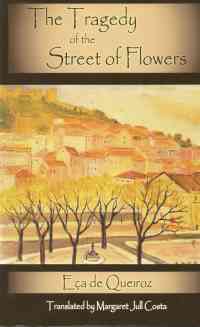
The Tragedy of the Street of Flowers was written by Portuguese novelist José Maria de Eça de Queirós between 1877 and 1878, while he served as Portuguese consul in England, and specifically, in Newcastle upon Tyne. It was not published during his lifetime, but discovered posthumously. Margaret Jull Costa, who also brings us Jose Saramago, Paulo Coelho, Fernando Pessoa and Javier Marias in English, translated this version for the centenary of the author's death. The plot is a Oedipal tragedy: Joaquina leaves her husband and son in Portugal and flees to Spain with her lover, returning many years later as a beautiful, mysterious stranger, and paid mistress to a wealthy man. She falls in love with a young Portuguese man, Vitor, and commits suicide after discovering the truth, letting the secret die with her to protect him.
The novel was meant as a sharp satire of Lisbon's high society: the love story itself is melodramatic and uninteresting, but the cutting commentary on the rich and wealthy makes it worth reading. I saw a review in the Guardian that described the son, Vitor as "a pill" which seems about accurate not just for him but about every man in this book. It is a tale reeking with misogyny and spite, each character comically unlikeable, dramatically villainous and cruel, and often simply just mean. I've seen commentary suggesting that this was in essence a rough draft for his two later, more polished novels, and I'll probably read those to follow, to see how it compares.
The Tragedy of the Street of Flowers was written by Portuguese novelist José Maria de Eça de Queirós between 1877 and 1878, while he served as Portuguese consul in England, and specifically, in Newcastle upon Tyne. It was not published during his lifetime, but discovered posthumously. Margaret Jull Costa, who also brings us Jose Saramago, Paulo Coelho, Fernando Pessoa and Javier Marias in English, translated this version for the centenary of the author's death. The plot is a Oedipal tragedy: Joaquina leaves her husband and son in Portugal and flees to Spain with her lover, returning many years later as a beautiful, mysterious stranger, and paid mistress to a wealthy man. She falls in love with a young Portuguese man, Vitor, and commits suicide after discovering the truth, letting the secret die with her to protect him.
The novel was meant as a sharp satire of Lisbon's high society: the love story itself is melodramatic and uninteresting, but the cutting commentary on the rich and wealthy makes it worth reading. I saw a review in the Guardian that described the son, Vitor as "a pill" which seems about accurate not just for him but about every man in this book. It is a tale reeking with misogyny and spite, each character comically unlikeable, dramatically villainous and cruel, and often simply just mean. I've seen commentary suggesting that this was in essence a rough draft for his two later, more polished novels, and I'll probably read those to follow, to see how it compares.
126rasdhar
22. Isaac Asimov - Gold: The Final Science Fiction Collection

Gold is a collection of stories and essays by Isaac Asimov, published in 1995. The first third of the book consist of 15 stories, including the titular story, 'Gold' which would go on to win a Hugo Award. These were stories unpublished at the time of his death, and while Gold, of course, is a great read, you can really see how unpolished the writing was in some of the earlier ones, such as 'Goodbye to Earth'. The remaining two-thirds of the book consist of essays and criticism: Part II are essays on science fiction, and Part III, on writing science fiction. The latter half consist of very practical instructions with titles such as "plotting" (to be accomplished by thinking and writing - Asimov says, "Fortunately, I both think and write very quickly with almost no dithering, so I can get a great deal done."), "Writing for Young People (He sees it as not very different from writing for adults, only 'less tortuous'); "Names" (he advises sticking to easily pronounceable ones: Elon Musk and Grimes will be unhappy) and so on.
It is really part II that I enjoyed far more: his essays on current science fiction writing. In a particularly interesting essay titled, 'Outsiders, Insiders' he warns against the danger of science fiction writers who might "close our ranks, unfairly and petty-mindedly, against outsiders", specifically mentioning how zines were upset with Michael Crichton's first foray into the field after publishing other works. Although he doesn't specifically speak of racial or gender diversity, he does say, "There are endless worlds of the mind and emotion to conquer, and we can advance more surely, if we support -not fight - each other." In light of all the recent Hugos drama, both this year and before, I thought we could all do with the reminder.

Gold is a collection of stories and essays by Isaac Asimov, published in 1995. The first third of the book consist of 15 stories, including the titular story, 'Gold' which would go on to win a Hugo Award. These were stories unpublished at the time of his death, and while Gold, of course, is a great read, you can really see how unpolished the writing was in some of the earlier ones, such as 'Goodbye to Earth'. The remaining two-thirds of the book consist of essays and criticism: Part II are essays on science fiction, and Part III, on writing science fiction. The latter half consist of very practical instructions with titles such as "plotting" (to be accomplished by thinking and writing - Asimov says, "Fortunately, I both think and write very quickly with almost no dithering, so I can get a great deal done."), "Writing for Young People (He sees it as not very different from writing for adults, only 'less tortuous'); "Names" (he advises sticking to easily pronounceable ones: Elon Musk and Grimes will be unhappy) and so on.
It is really part II that I enjoyed far more: his essays on current science fiction writing. In a particularly interesting essay titled, 'Outsiders, Insiders' he warns against the danger of science fiction writers who might "close our ranks, unfairly and petty-mindedly, against outsiders", specifically mentioning how zines were upset with Michael Crichton's first foray into the field after publishing other works. Although he doesn't specifically speak of racial or gender diversity, he does say, "There are endless worlds of the mind and emotion to conquer, and we can advance more surely, if we support -not fight - each other." In light of all the recent Hugos drama, both this year and before, I thought we could all do with the reminder.
127rasdhar
23. The Forward Book of Poetry 2018 - by various poets (Faber and Faber, 2018)

The Forward Prizes for Poetry are presented every year to poets, beginning 1992. Along with the awards, the Forward Press has been regularly publishing anthologies of poems selected from the poets shortlisted for the prize. I noticed our library had a stack of these anthologies so picked one at random - the 2018 volume. I was pleased to revisit so many old friends (Ishion Hutchinson, Emily Berry, Keki Daruwalla, Paul Muldoon) and find so many new ones, too. Here's a little one from James Sheard:
November
by James Sheard
Let me tell you how, in this long dark,
I list the ways in which the leaf of you
unfurled and furled around me.
It is a thought like woodsmoke
entering the blood - the chambers
of the heart can only clutch at it.

The Forward Prizes for Poetry are presented every year to poets, beginning 1992. Along with the awards, the Forward Press has been regularly publishing anthologies of poems selected from the poets shortlisted for the prize. I noticed our library had a stack of these anthologies so picked one at random - the 2018 volume. I was pleased to revisit so many old friends (Ishion Hutchinson, Emily Berry, Keki Daruwalla, Paul Muldoon) and find so many new ones, too. Here's a little one from James Sheard:
November
by James Sheard
Let me tell you how, in this long dark,
I list the ways in which the leaf of you
unfurled and furled around me.
It is a thought like woodsmoke
entering the blood - the chambers
of the heart can only clutch at it.
128rasdhar
24. Tiitu Takalo - Me, Mikko and Anikki (Minä, Mikko ja Annikki) (North Atlantic Ridge), translated from Finnish by Michael Demson and Helena Halmari

Me, Mikko, and Anikki is a charming, beautifully illustrated graphic novel, written in Finnish and translated to English by Demson and Halmari. Drawing from her own life, and from the real life efforts to preserve their local history, this both, a love story to her partner and to their home. Takalo writes in her introduction that the genesis of this book began amidst the transformation of their town, Tampere in Finland, from a little village to a big industrial centre. As this change occurs, their local neighbourhood gentrifies, and the beautiful, historic wooden houses are replaced with concrete and high-rises. She writes and illustrates, accordingly, about one block in Tampere, speaking with the locals, telling their stories, and documenting it before it is entirely gone. It is a bittersweet effort to preserve fleeting memories. I'm including some pictures below. Highly recommended!


Me, Mikko, and Anikki is a charming, beautifully illustrated graphic novel, written in Finnish and translated to English by Demson and Halmari. Drawing from her own life, and from the real life efforts to preserve their local history, this both, a love story to her partner and to their home. Takalo writes in her introduction that the genesis of this book began amidst the transformation of their town, Tampere in Finland, from a little village to a big industrial centre. As this change occurs, their local neighbourhood gentrifies, and the beautiful, historic wooden houses are replaced with concrete and high-rises. She writes and illustrates, accordingly, about one block in Tampere, speaking with the locals, telling their stories, and documenting it before it is entirely gone. It is a bittersweet effort to preserve fleeting memories. I'm including some pictures below. Highly recommended!


129rasdhar
Some General Notes on February:
This was a busy month, work-wise: I did a great deal of reading for my research, and not so much reading for pleasure, as you can tell by the shorter list of reviews. I also made no progress on setting up a commonplace book (I've been told Tumblr is the new commonplace book, but as an Old Person at heart if not in years, I found it way too difficult to navigate and all the discourse was very tedious and uninformed).
Letters and Rediscovery
On the brighter side, my ten year old nephew has discovered books, and I have successfully convinced him letter writing is cool. So we exchange letters and he sends me little reviews of every book he reads. This month I got a two-page, thrilled account of Neil Gaiman's Coraline and it is such a joy to see him discover books that I too, read and enjoyed when younger. I'm hoping he'll land upon Terry Pratchett, with some gentle urging on my side, next. I left a substantial book collection at home when I moved countries, and he has all of them if he wants to try them out. I suggested Going Postal as it seemed thematically appropriate. I sometimes think about how I would like to read a book again for the first time, if I could - seeing other people read them for the first time is the closest we can get, I think. I do love that so many people I know have returned to letter writing, or at least, to postcards. We will keep the post alive (and also, all those pretty stamps!).
Reading Intentionally
Lastly, I do want to say after two months on LT, that I'm paying more attention to what I read in my free time. I've realised that while my professional reading is very organised (it has to be!) my personal reading is entirely whim-based. That's not necessarily bad, nor is it something I particularly want to change, but I am thinking more about my choices, and being slightly intentional about them. This is also in part because I used to be a part of a mystery book reading group, which has largely become defunct - not intentionally, but we're all busy with other things, and the texting group is now 90% chat and 10% life updates. So I decided to slowly, and sporadically, work my way through the winners of the Edgar Awards' Best Novel Prize for mystery books. I was, of course, promptly defeated - the first winner, Beat not the Bones by Charlotte Jay, I cannot find anywhere, but I'll persist, probably not in order, though.
This was a busy month, work-wise: I did a great deal of reading for my research, and not so much reading for pleasure, as you can tell by the shorter list of reviews. I also made no progress on setting up a commonplace book (I've been told Tumblr is the new commonplace book, but as an Old Person at heart if not in years, I found it way too difficult to navigate and all the discourse was very tedious and uninformed).
Letters and Rediscovery
On the brighter side, my ten year old nephew has discovered books, and I have successfully convinced him letter writing is cool. So we exchange letters and he sends me little reviews of every book he reads. This month I got a two-page, thrilled account of Neil Gaiman's Coraline and it is such a joy to see him discover books that I too, read and enjoyed when younger. I'm hoping he'll land upon Terry Pratchett, with some gentle urging on my side, next. I left a substantial book collection at home when I moved countries, and he has all of them if he wants to try them out. I suggested Going Postal as it seemed thematically appropriate. I sometimes think about how I would like to read a book again for the first time, if I could - seeing other people read them for the first time is the closest we can get, I think. I do love that so many people I know have returned to letter writing, or at least, to postcards. We will keep the post alive (and also, all those pretty stamps!).
Reading Intentionally
Lastly, I do want to say after two months on LT, that I'm paying more attention to what I read in my free time. I've realised that while my professional reading is very organised (it has to be!) my personal reading is entirely whim-based. That's not necessarily bad, nor is it something I particularly want to change, but I am thinking more about my choices, and being slightly intentional about them. This is also in part because I used to be a part of a mystery book reading group, which has largely become defunct - not intentionally, but we're all busy with other things, and the texting group is now 90% chat and 10% life updates. So I decided to slowly, and sporadically, work my way through the winners of the Edgar Awards' Best Novel Prize for mystery books. I was, of course, promptly defeated - the first winner, Beat not the Bones by Charlotte Jay, I cannot find anywhere, but I'll persist, probably not in order, though.
130rasdhar
I promised >16 labfs39: in a comment above that I would post some photos of the books in the Singapore National Library's Singapore Fiction collection - here they are. I'm sorry if they're not very clear, but I hope you can zoom in and see the titles.


131ELiz_M
>122 rasdhar: In my attempt to read as many mysteries from as many places as I can...
If you need more ideas, I recommend Soho Crime https://sohopress.com/soho-crime/
and Europa Editions world noir https://www.europaeditions.com/worldnoir (If nothing else the colorful spine look fabulous on the bookshelf!)
If you need more ideas, I recommend Soho Crime https://sohopress.com/soho-crime/
and Europa Editions world noir https://www.europaeditions.com/worldnoir (If nothing else the colorful spine look fabulous on the bookshelf!)
132BLBera
You had a good month of reading. Several of the books are ones I would be interested in. How great that your nephew is reading. I have a ten-year-old granddaughter and love to read to her.
Great comments on the Campo essays, which interest me. Your Polish mystery also sounds good; I do like historical mysteries.
>130 rasdhar: Great photo.
Great comments on the Campo essays, which interest me. Your Polish mystery also sounds good; I do like historical mysteries.
>130 rasdhar: Great photo.
133LolaWalser
Loved hearing about the letter-writing nephew!
Re: commonplace book, have you considered the "classic", paper notebook option? Interactivity isn't great but it's always "on", always accessible, endlessly browsable.
Re: commonplace book, have you considered the "classic", paper notebook option? Interactivity isn't great but it's always "on", always accessible, endlessly browsable.
134labfs39
>129 rasdhar: I have a seven year old niece, and since I'm homeschooling her, I get to read with her every day. It's so fun to see her a)learn to read and b)get totally absorbed in her reading.
I too find that LT and Club Read inspire my reading and direct it to some extent. My wishlist grows almost daily. It's a wonderful problem to have.
>130 rasdhar: Speaking of wishlists, thank you for this! I am able to read titles, and I am bookmarking the post so I can refer to it in future.
I too find that LT and Club Read inspire my reading and direct it to some extent. My wishlist grows almost daily. It's a wonderful problem to have.
>130 rasdhar: Speaking of wishlists, thank you for this! I am able to read titles, and I am bookmarking the post so I can refer to it in future.
135Dilara86
>128 rasdhar: Thank you for the book bullet: I've placed a library hold on it.
136rasdhar
>131 ELiz_M: Thank you! I have been working my way through as many of the Soho Crime series as I can. I will try the Europa world noir series too.
>132 BLBera: So kind. My nephew has recently decided he would like to read rather than be read to: I'm glad that he's growing into an independent reader and getting his own joy, but I will always look back fondly on reading to him.
>133 LolaWalser: I vastly prefer the paper variety, but I was trying to keep with the times. It's back to a notebook for me.
>134 labfs39: How wonderful. It must be so challenging, but also rewarding for both of you. I'm glad you can read the titles: let me know if any are unclear.
>135 Dilara86: looking forward to your thoughts on it.
>132 BLBera: So kind. My nephew has recently decided he would like to read rather than be read to: I'm glad that he's growing into an independent reader and getting his own joy, but I will always look back fondly on reading to him.
>133 LolaWalser: I vastly prefer the paper variety, but I was trying to keep with the times. It's back to a notebook for me.
>134 labfs39: How wonderful. It must be so challenging, but also rewarding for both of you. I'm glad you can read the titles: let me know if any are unclear.
>135 Dilara86: looking forward to your thoughts on it.
137rasdhar
MARCH
A new month, a new Tom Gauld book cartoon.

Quick links to March reviews here:
24. W. H. Auden - A Certain World: A Commonplace Book (Faber and Faber, 1971) - reviewed here
25. Alex Michaelides - The Fury - a thriller, filled with generic misogyny and unlikable characters. reviewed here
27 and 28. Keigo Higashino - Malice and Newcomer reviewed here
29. Sebastian Sim - The Riot Act reviewed here
A new month, a new Tom Gauld book cartoon.

Quick links to March reviews here:
24. W. H. Auden - A Certain World: A Commonplace Book (Faber and Faber, 1971) - reviewed here
25. Alex Michaelides - The Fury - a thriller, filled with generic misogyny and unlikable characters. reviewed here
27 and 28. Keigo Higashino - Malice and Newcomer reviewed here
29. Sebastian Sim - The Riot Act reviewed here
138rasdhar
Audiodrama Recommendation
Victoriocity, written by Chris and Jen Sugden and performed by a full cast of voice actors, is a steampunk mystery series set in Victorian England. Detective Inspector Archibald Fleet and journalist Clara Entwhistle find themselves allied in an investigation of a murder in Even Greater London, 1887, and uncover a massive conspiracy. It's rather reminiscent of Terry Pratchett and Ben Aaronovitch - fast moving, funny, witty, and often a bit over the top, but in a charming way. Even Greater London now sprawls over half of Britain. Queen Victoria is a cyborg. Everything is powered by a mysterious tower in the heart of the city, and the Tower is guarded by a ferocious, evil corps of engineers. The voice acting is excellent (Inspector Fleet is played by Tom Crowley, who also played the dashing Eric Chapman in a podcast I reviewed earlier up, called Wooden Overcoats). Each episode is about 30 minutes. So far we've had two seasons, and two mysteries of sorts, and they just began a third series, with two episodes out already.
The podcast has acquired a bit of a cult following, and in 2022, the authors snapped up a book deal for two books with the sci-fi publisher, Gollancz. The first, High Vaultage will be out later this month. https://www.victoriocity.com/high-vaultage
This is a small, reader-funded, independent production, and is really well-written and performed. I'm happy to support them and even happier to recommend this podcast.
You can listen to episodes on their website (linked below) or on any podcast app (Itunes, Spotify, and so on). They have transcripts on their website as well for those who prefer to read.
https://www.victoriocity.com/listen
Victoriocity, written by Chris and Jen Sugden and performed by a full cast of voice actors, is a steampunk mystery series set in Victorian England. Detective Inspector Archibald Fleet and journalist Clara Entwhistle find themselves allied in an investigation of a murder in Even Greater London, 1887, and uncover a massive conspiracy. It's rather reminiscent of Terry Pratchett and Ben Aaronovitch - fast moving, funny, witty, and often a bit over the top, but in a charming way. Even Greater London now sprawls over half of Britain. Queen Victoria is a cyborg. Everything is powered by a mysterious tower in the heart of the city, and the Tower is guarded by a ferocious, evil corps of engineers. The voice acting is excellent (Inspector Fleet is played by Tom Crowley, who also played the dashing Eric Chapman in a podcast I reviewed earlier up, called Wooden Overcoats). Each episode is about 30 minutes. So far we've had two seasons, and two mysteries of sorts, and they just began a third series, with two episodes out already.
The podcast has acquired a bit of a cult following, and in 2022, the authors snapped up a book deal for two books with the sci-fi publisher, Gollancz. The first, High Vaultage will be out later this month. https://www.victoriocity.com/high-vaultage
This is a small, reader-funded, independent production, and is really well-written and performed. I'm happy to support them and even happier to recommend this podcast.
You can listen to episodes on their website (linked below) or on any podcast app (Itunes, Spotify, and so on). They have transcripts on their website as well for those who prefer to read.
https://www.victoriocity.com/listen
139labfs39
>138 rasdhar: Sounds fun! I'm still working my way through Wooden Overcoats. I'm part way through season 2 and still laugh out loud at times. I like Antigone, but I think my favorite is the agnostic reverend.
140dchaikin
>130 rasdhar: wow…
I’ve been slowly reading through your February reviews. The Emperor Who Never Was has most caught my imagination.
I’ve been slowly reading through your February reviews. The Emperor Who Never Was has most caught my imagination.
141rasdhar
(I posted a quote here when it was meant to go on a different thread. Updated it with a short review instead!)
25. W. H. Auden - A Certain World: A Commonplace Book (Faber and Faber, 1970)

In my January post, I mentioned commonplace books, i.e. notebooks filled with quotes, references, and excerpts. Although these are usually personal documents, the commonplace books of famous people sometimes are published, and so A Certain World is the poet W. H. Auden's commonplace book - his own collection of things that interested him, moved him, or otherwise caught his interest. According to his brief introduction, "...this compilation of quotes is a sort of autobiography," and he quotes G. K. Chesterton in support of the idea that everything a writer reads forms the landscape for his or her writing - the "map of (his) planet."
It is difficult to review a collection of quotations. I enjoyed reading through the things Auden liked or was interested enough by to note down, even understanding that this is not an exhaustive account of his intellectual journey (he writes particularly in the introduction that although he loves music, there are no quotes about it because "nothing can be said about music, except when it is bad; when it is good, one can only listen and be grateful." Organised by topics, the collection ranges from 'Bands, Brass' to 'Medicine' to 'Landscape, Basalt' versus 'Landscape, Cultivated' and of course, 'Weather, The'.
I ended up looting a few of his collected items for my own notebook, although I am usually I am a free-range quote collector, and prefer gathering them in the wild than in these domesticated gardens. I am on the lookout for more commonplace books in my library now.
25. W. H. Auden - A Certain World: A Commonplace Book (Faber and Faber, 1970)

In my January post, I mentioned commonplace books, i.e. notebooks filled with quotes, references, and excerpts. Although these are usually personal documents, the commonplace books of famous people sometimes are published, and so A Certain World is the poet W. H. Auden's commonplace book - his own collection of things that interested him, moved him, or otherwise caught his interest. According to his brief introduction, "...this compilation of quotes is a sort of autobiography," and he quotes G. K. Chesterton in support of the idea that everything a writer reads forms the landscape for his or her writing - the "map of (his) planet."
It is difficult to review a collection of quotations. I enjoyed reading through the things Auden liked or was interested enough by to note down, even understanding that this is not an exhaustive account of his intellectual journey (he writes particularly in the introduction that although he loves music, there are no quotes about it because "nothing can be said about music, except when it is bad; when it is good, one can only listen and be grateful." Organised by topics, the collection ranges from 'Bands, Brass' to 'Medicine' to 'Landscape, Basalt' versus 'Landscape, Cultivated' and of course, 'Weather, The'.
I ended up looting a few of his collected items for my own notebook, although I am usually I am a free-range quote collector, and prefer gathering them in the wild than in these domesticated gardens. I am on the lookout for more commonplace books in my library now.
142rasdhar
>140 dchaikin: Thanks! It is an interesting little book, and has been on the TBR since it came out. I was glad to get to it and it lived up to expectations.
>139 labfs39: That is a fun show. I really liked it. I was glad to see Wooden Overcoats cast members show up again in Victoriocity. I'll be honest, I liked Antigone the character, but I felt that the voice actor overdid it at times with all the groaning. It felt a bit hammy? Still, overall a great show and I love the reverend.
>139 labfs39: That is a fun show. I really liked it. I was glad to see Wooden Overcoats cast members show up again in Victoriocity. I'll be honest, I liked Antigone the character, but I felt that the voice actor overdid it at times with all the groaning. It felt a bit hammy? Still, overall a great show and I love the reverend.
143rocketjk
>137 rasdhar: Love the cartoon, with one small caveat. A long time ago I mentioned to a friend that I was going to be writing articles for a music magazine to make some extra money. My friend laughed and said, "There is no 'extra money.' There's additional money, but there's no extra money."
And so I say unto you now: There are no "extra books." Only additional books. :)
And so I say unto you now: There are no "extra books." Only additional books. :)
144rasdhar
26. Alex Michaelides - The Fury (Macmillan Audio, 2024) - narrated by Alex Jennings
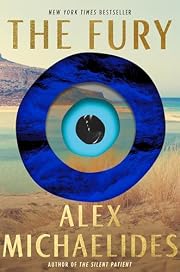
I usually pick up a light mystery or thriller to listen to when I walk or do chores. This one kept popping up as a recommended novel from 2023. I was a bit hesitant because I've read another of his books (The Silent Patient) and I did not care for it, but gave this a go nonetheless. I feel largely indifferent to this book. It isn't particularly good, nor is it particularly bad - in fact, it's rather dull, generic, bait.
The book is narrated to you, the reader, by Elliott Chase, a playwright who comes up from difficult circumstances to moderate fame. He has, over time, become close friends with Lana Farrar, a famous movie star, now living a retired life with her husband, Jason, a nasty, jealous man, and her spoiled teenage son Leo. Lana's closest friend, an actress named Kate, famous for being a bit wild, and also somewhat difficult, also spends a great deal of time with them, and loves and is jealous of Lana in equal turns, in part because she used to date Lana's husband. The story unfolds on a private Greek island owned by Lana, where all five of these characters, plus Agathi, a housekeeper/Leo's former nanny and a Nicola, a local resident, who manages the boat and has a passion for Lana. Early in the book, Elliott tells us that there has been a murder: with seven people on the island (one dead), and a deep wind (the eponymous 'Fury') preventing anyone from leaving or arriving, this is a spin on the classic 'And There Were None' story.
The chief problem with this book is that none of the characters are likable, or interesting, and so as a reader, you aren't particularly invested in who died, why they died, and who dunnit. It doesn't seem to matter that rich and miserable people torment each other privately, and no one else is harmed. There is a trend among thriller writers to write books with thoroughly unlikable, and unreliable narrators; usually the twist is that you eventually feel sympathy for someone you were led to hate, but here I feel no sympathy. If we could have an end to middle-aged men writing stories about how their personal misery entitles them to love from a specific woman that they've fixated on, it would be nice. It's a well-worn tale, and one that really has nothing more to offer the reader.
I usually pick up a light mystery or thriller to listen to when I walk or do chores. This one kept popping up as a recommended novel from 2023. I was a bit hesitant because I've read another of his books (The Silent Patient) and I did not care for it, but gave this a go nonetheless. I feel largely indifferent to this book. It isn't particularly good, nor is it particularly bad - in fact, it's rather dull, generic, bait.
The book is narrated to you, the reader, by Elliott Chase, a playwright who comes up from difficult circumstances to moderate fame. He has, over time, become close friends with Lana Farrar, a famous movie star, now living a retired life with her husband, Jason, a nasty, jealous man, and her spoiled teenage son Leo. Lana's closest friend, an actress named Kate, famous for being a bit wild, and also somewhat difficult, also spends a great deal of time with them, and loves and is jealous of Lana in equal turns, in part because she used to date Lana's husband. The story unfolds on a private Greek island owned by Lana, where all five of these characters, plus Agathi, a housekeeper/Leo's former nanny and a Nicola, a local resident, who manages the boat and has a passion for Lana. Early in the book, Elliott tells us that there has been a murder: with seven people on the island (one dead), and a deep wind (the eponymous 'Fury') preventing anyone from leaving or arriving, this is a spin on the classic 'And There Were None' story.
The chief problem with this book is that none of the characters are likable, or interesting, and so as a reader, you aren't particularly invested in who died, why they died, and who dunnit. It doesn't seem to matter that rich and miserable people torment each other privately, and no one else is harmed. There is a trend among thriller writers to write books with thoroughly unlikable, and unreliable narrators; usually the twist is that you eventually feel sympathy for someone you were led to hate, but here I feel no sympathy. If we could have an end to middle-aged men writing stories about how their personal misery entitles them to love from a specific woman that they've fixated on, it would be nice. It's a well-worn tale, and one that really has nothing more to offer the reader.
145rasdhar
>143 rocketjk: Very true! To additional books, then.
146labfs39
>144 rasdhar: If we could have an end to middle-aged men writing stories about how their personal misery entitles them to love from a specific woman that they've fixated on, it would be nice.
Yes, please. Nice review of a book I'm happy to skip.
Yes, please. Nice review of a book I'm happy to skip.
147rocketjk
>146 labfs39: Ha! Yes, that would be nice, indeed. And thank goodness I've aged out of being a middle-aged man.
148dchaikin
>141 rasdhar: lovely review of this “domesticated garden”
149FlorenceArt
>138 rasdhar: I’m not good at listening to audio, but the book sounds interesting! I will keep an eye out for it.
150RidgewayGirl
>144 rasdhar: I read an earlier novel by this author, having fallen for the "it's a literary thriller" marketing and my reaction to it was in line with what you're saying about this one. On the bright side, with so many great books to read, it feels nice to cross books and authors off that very long list.
151rasdhar
>146 labfs39: Good call; I read it so others don't have to.
>148 dchaikin: Thank you!
>149 FlorenceArt: Oh, I hope it's good too. It can be difficult to sustain the charm of a performance into the written word.
>150 RidgewayGirl: I agree entirely.
>148 dchaikin: Thank you!
>149 FlorenceArt: Oh, I hope it's good too. It can be difficult to sustain the charm of a performance into the written word.
>150 RidgewayGirl: I agree entirely.
152rasdhar
27 and 28. Keigo Higashino - Malice (Minotaur 2014, translated from the Japanese by Alexander O. Smith) and Newcomer (Minotaur 2018, translated from the Japanese by Giles Murray)


Malice and Newcomer are the first and second books in Keigo Higashino's Detective Kaga series. I picked them, chiefly because Malice was very highly recommended as a thriller/mystery with strong character building. To be completely honest, I read it inattentively, which is probably why I was not so taken with it. The story is narrated partly by Osama Nonoguchi and Kyochiro Kaga. Nonoguchi and Kaga used to be schoolteachers together: both have since changed professions, with Kaga joining the police, and now at the rank of Detective Inspector, and Nonoguchi as a fairly well-established author of children's books. Early in the book, Nonoguchi stops by a friend and fellow author's house; that author, Kunihiko Hidaka, is subsequently murdered, and Nonoguchi emerges as a suspect. A lot of this story revolves around the theme of the title (malice) and related emotions: resentment, anger, hate, and jealousy. The killer is caught early on in the book; the rest of the narrative focuses on why he dunnit, and not whodunnit. Kaga too, seems more preoccupied with understanding the actors and their motivation, as opposed to wrapping up the crime with the facts.
In Newcomer we see far more of Kaga's interest in human nature. The 'Newcomer' in this book is both, Kaga, who has been transferred to the Nihonbashi precinct in Tokyo, and the murder victim, Mineko Mitsui, who had just moved into the area before being killed in her apartment. No one seems to know her really well, or understand her motivations: the casually dressed Kaga, his tie untied and hair flopping around, is not trusted entirely by his new colleagues but earns their confidence as he unpicks the mysteries of her life. Here you really see Kaga as not just an efficient detective, but also as a sort of wise old man (not in years) - each witness or person he interviews has their life picked apart. He doles out gentle, nudged advice with assiduousness; he also as eagerly dodges credit for all the top-shelf investigative work he's doing. You can actually read Newcomer as a series of interconnected stories, each focusing on a character related to the crime: Mitsui's estranged son, the small-time actor; the woman in the shop who sells her pastries on the day she died; the assistant waiter who went to the same pastry shop regularly; the restaurant owner having an affair with a nightclub hostess, and so on. It was interesting, but I don't know if it was interesting enough for me to look up books 3 and 4 in the same series. I suspect Kaga's friendly uncle advisor schtick may rapidly get annoying if I read them all together.


Malice and Newcomer are the first and second books in Keigo Higashino's Detective Kaga series. I picked them, chiefly because Malice was very highly recommended as a thriller/mystery with strong character building. To be completely honest, I read it inattentively, which is probably why I was not so taken with it. The story is narrated partly by Osama Nonoguchi and Kyochiro Kaga. Nonoguchi and Kaga used to be schoolteachers together: both have since changed professions, with Kaga joining the police, and now at the rank of Detective Inspector, and Nonoguchi as a fairly well-established author of children's books. Early in the book, Nonoguchi stops by a friend and fellow author's house; that author, Kunihiko Hidaka, is subsequently murdered, and Nonoguchi emerges as a suspect. A lot of this story revolves around the theme of the title (malice) and related emotions: resentment, anger, hate, and jealousy. The killer is caught early on in the book; the rest of the narrative focuses on why he dunnit, and not whodunnit. Kaga too, seems more preoccupied with understanding the actors and their motivation, as opposed to wrapping up the crime with the facts.
In Newcomer we see far more of Kaga's interest in human nature. The 'Newcomer' in this book is both, Kaga, who has been transferred to the Nihonbashi precinct in Tokyo, and the murder victim, Mineko Mitsui, who had just moved into the area before being killed in her apartment. No one seems to know her really well, or understand her motivations: the casually dressed Kaga, his tie untied and hair flopping around, is not trusted entirely by his new colleagues but earns their confidence as he unpicks the mysteries of her life. Here you really see Kaga as not just an efficient detective, but also as a sort of wise old man (not in years) - each witness or person he interviews has their life picked apart. He doles out gentle, nudged advice with assiduousness; he also as eagerly dodges credit for all the top-shelf investigative work he's doing. You can actually read Newcomer as a series of interconnected stories, each focusing on a character related to the crime: Mitsui's estranged son, the small-time actor; the woman in the shop who sells her pastries on the day she died; the assistant waiter who went to the same pastry shop regularly; the restaurant owner having an affair with a nightclub hostess, and so on. It was interesting, but I don't know if it was interesting enough for me to look up books 3 and 4 in the same series. I suspect Kaga's friendly uncle advisor schtick may rapidly get annoying if I read them all together.
153rasdhar
29. Sebastian Sim - The Riot Act (Epigram, 2018)
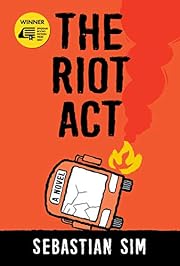
I read and reviewed Sim's other book Let's Give It Up for Gimme Lao! earlier this year. I quite enjoyed that book; it was a fun read, with sharp satire and humour. I was therefore looking forward to this book, but I feel rather let down. I don't think it lived up to the promise of its predecessor, and despite the fact that it won the Epigram Prize in 2018, I didn't think it was particularly good.
The Riot Act presents a fictionalised account of the 2013 Little India riot in Singapore, where migrant workers, primarily from India, attacked a bus after it fatally struck a migrant labourer. The event and its aftermath not only displayed the powerful control and censorship exercised by the Singapore government, but also the terrible plight of migrant workers, who build the city's infrastructure but are treated with disparate, exploitative, and often cruel regulations and behavior. The events that followed (a targeted alcohol ban, heavy fees to be paid by political bloggers, a public protest, scandals concerning the rich and powerful) are all well known in Singaporean politics, but Sim deals with these issues with a tone that isn't sharp, satirical,or even particularly funny. The tone instead is of a sniggering schoolboy who has yet to outgrow his fear of girls. The book is narrated from the perspective of three women, and while I don't think that men should not write from the perspective of women (or vice versa), this book is a great example of how some men are unable to write about women at all. Each woman in a book that focuses on women is depicted as malicious, manipulative, cowardly, and stupid; the only characters positively depicted are gay men or dead migrant labourers. It certainly says a great deal about the author; I don't think it says very much about the events he is claiming to portray. This is a mean-spirited, unpleasant little book and I did not care for it.
I read and reviewed Sim's other book Let's Give It Up for Gimme Lao! earlier this year. I quite enjoyed that book; it was a fun read, with sharp satire and humour. I was therefore looking forward to this book, but I feel rather let down. I don't think it lived up to the promise of its predecessor, and despite the fact that it won the Epigram Prize in 2018, I didn't think it was particularly good.
The Riot Act presents a fictionalised account of the 2013 Little India riot in Singapore, where migrant workers, primarily from India, attacked a bus after it fatally struck a migrant labourer. The event and its aftermath not only displayed the powerful control and censorship exercised by the Singapore government, but also the terrible plight of migrant workers, who build the city's infrastructure but are treated with disparate, exploitative, and often cruel regulations and behavior. The events that followed (a targeted alcohol ban, heavy fees to be paid by political bloggers, a public protest, scandals concerning the rich and powerful) are all well known in Singaporean politics, but Sim deals with these issues with a tone that isn't sharp, satirical,or even particularly funny. The tone instead is of a sniggering schoolboy who has yet to outgrow his fear of girls. The book is narrated from the perspective of three women, and while I don't think that men should not write from the perspective of women (or vice versa), this book is a great example of how some men are unable to write about women at all. Each woman in a book that focuses on women is depicted as malicious, manipulative, cowardly, and stupid; the only characters positively depicted are gay men or dead migrant labourers. It certainly says a great deal about the author; I don't think it says very much about the events he is claiming to portray. This is a mean-spirited, unpleasant little book and I did not care for it.
154kjuliff
>153 rasdhar: I think I’ll skip this one! Thanks for the review. I would have liked to find out more the 2013 riot.
155labfs39
>153 rasdhar: Like Kate, I was at first taken in by your review as it covers interesting issues. His treatment sounds abysmal, however, and it's another book I'll gladly forego.
156RidgewayGirl
>153 rasdhar: That's disappointing, but thanks for the review.
157rasdhar
>154 kjuliff: Yes, I'd recommend skipping this. There's a nonfiction book that collects eyewitness accounts of the riot on my list, but to be honest, I haven't had the wherewithal to face it given the heavy subject matter. The book is Riot Recollections if you're interested.
>155 labfs39: >156 RidgewayGirl: This one is best ignored, I think!
>155 labfs39: >156 RidgewayGirl: This one is best ignored, I think!
158dchaikin
>153 rasdhar: bummer. I guess that kind of satire doesn’t always work.
159rasdhar
30. Robert Thorogood - The Marlow Murder Club
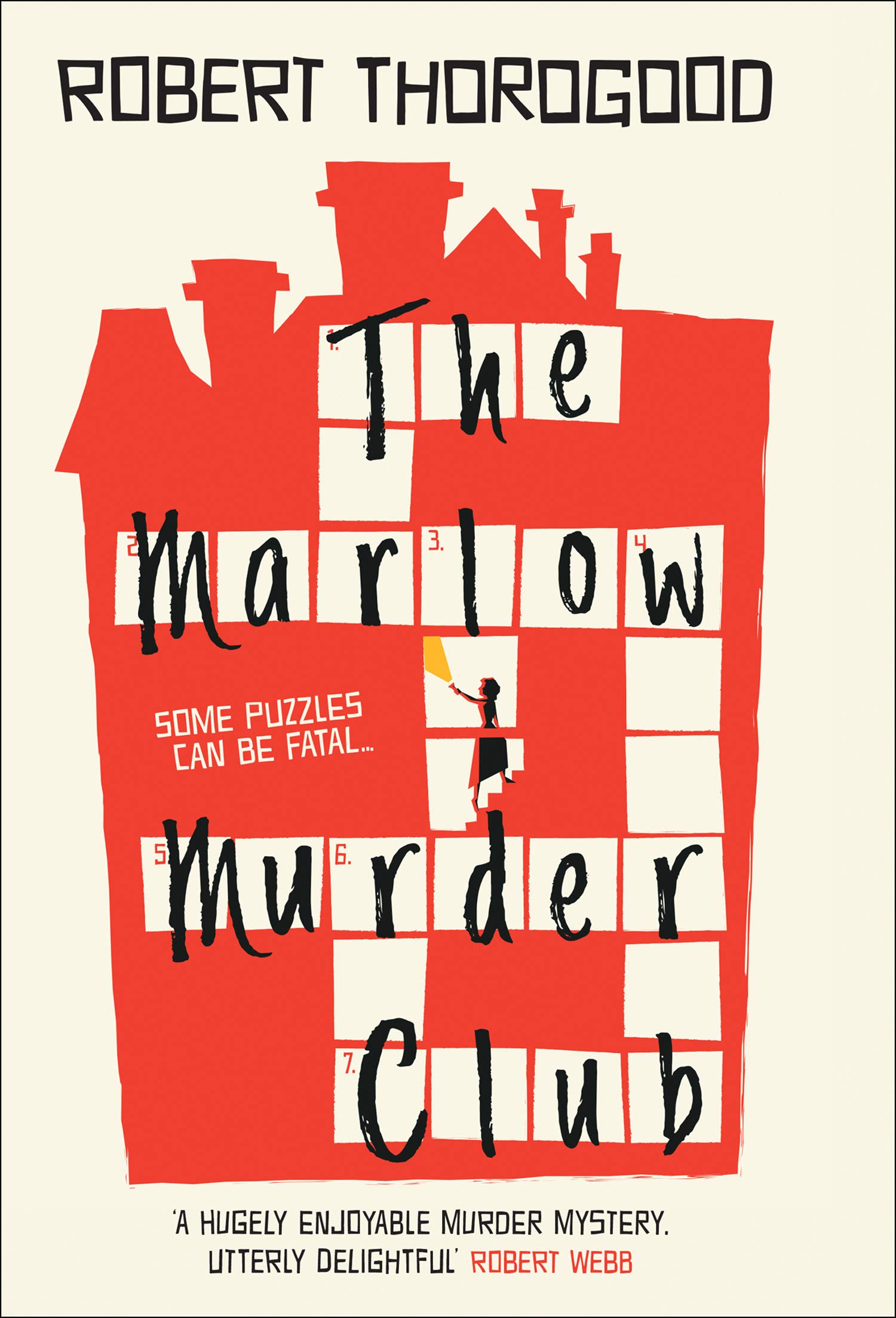
After Richard Osman's Thursday Murder Club was published and did well, I expected a series of similarly-themed books about old groups of people getting together and solving crime. I call it the 'Girl' phenomenon: over the last few years, once there were two or three successful thrillers titled 'The Girl....', a multitude of spin offs followed: girls at the window, on the train, with a dragon tattoo, and so on (here's a handy list https://crimereads.com/the-girl-in-the-title-of-the-crime-novel/). Generally, the law of diminishing returns applies - but Thorogood's book had good reviews and a TV spinoff, so I kept an open mind. Unfortunately.
Thorogood's premise follows the Osman premise. In this case it is three women living in a small town on the Thames, called Marlow. Judith Woods is a professional crossword puzzle maker, living in a crumbling old mansion that she inherited, and hiding a dark past. She's 77, swims naked in the Thames at night, drinks whiskey and never tidies up. Suzie Harris is a dog-walker, having successfully raised two daughters on her own with no help from an absent husband. Becks Starling is trying to be the perfect Vicar's wife: her house is spotless, her children well-behaved, but she secretly has a passion for real estate. Supporting cast include DS Tanika Malik, a local cop left in charge of quiet Marlow where no crime ever happens, while her boss is on vacation. Judith witnesses what she believes to be a murder, and inveigles the rest into helping her solve the crime (successfully, complete with dramatic denouement).
The problem I have with this book is that the writing is very dull. I can forgive the obvious ludicrousness of the plot, because that is the nature of the genre (Jessica Fletcher and Miss Marple present a statistically anomalous level of local crime, for e.g.). I cannot get past the level of obviousness in the writing, the ham-handed insistence on heavy crossword-puzzle themed metaphors, and so on. It really is a struggle to get through. At times it felt a bit like those English for adult language learners lessons, or an AI generated cosy mystery: Character A says, "I will meet you tomorrow by the tree." Character B says, "You mean the tree that we discussed earlier?" Character A replies, "Yes, the tree by the road that we previously discussed." Then they meet by the tree, and talk about how they previously discussed it. (Note: this is not an actual quote from the book, just an example of how it is written). I was bored.
After Richard Osman's Thursday Murder Club was published and did well, I expected a series of similarly-themed books about old groups of people getting together and solving crime. I call it the 'Girl' phenomenon: over the last few years, once there were two or three successful thrillers titled 'The Girl....', a multitude of spin offs followed: girls at the window, on the train, with a dragon tattoo, and so on (here's a handy list https://crimereads.com/the-girl-in-the-title-of-the-crime-novel/). Generally, the law of diminishing returns applies - but Thorogood's book had good reviews and a TV spinoff, so I kept an open mind. Unfortunately.
Thorogood's premise follows the Osman premise. In this case it is three women living in a small town on the Thames, called Marlow. Judith Woods is a professional crossword puzzle maker, living in a crumbling old mansion that she inherited, and hiding a dark past. She's 77, swims naked in the Thames at night, drinks whiskey and never tidies up. Suzie Harris is a dog-walker, having successfully raised two daughters on her own with no help from an absent husband. Becks Starling is trying to be the perfect Vicar's wife: her house is spotless, her children well-behaved, but she secretly has a passion for real estate. Supporting cast include DS Tanika Malik, a local cop left in charge of quiet Marlow where no crime ever happens, while her boss is on vacation. Judith witnesses what she believes to be a murder, and inveigles the rest into helping her solve the crime (successfully, complete with dramatic denouement).
The problem I have with this book is that the writing is very dull. I can forgive the obvious ludicrousness of the plot, because that is the nature of the genre (Jessica Fletcher and Miss Marple present a statistically anomalous level of local crime, for e.g.). I cannot get past the level of obviousness in the writing, the ham-handed insistence on heavy crossword-puzzle themed metaphors, and so on. It really is a struggle to get through. At times it felt a bit like those English for adult language learners lessons, or an AI generated cosy mystery: Character A says, "I will meet you tomorrow by the tree." Character B says, "You mean the tree that we discussed earlier?" Character A replies, "Yes, the tree by the road that we previously discussed." Then they meet by the tree, and talk about how they previously discussed it. (Note: this is not an actual quote from the book, just an example of how it is written). I was bored.
160labfs39
>159 rasdhar: Ugh. I would have abandoned ship. Do you ever DNF books or do you always finish?
162kjuliff
>159 rasdhar: “Dull” would do me in!
163rasdhar
>160 labfs39: I used *to DNF very rarely, but as I get older, it becomes easier to do so.
>161 dchaikin: Ah well, so it goes.
>162 kjuliff: Indeed!
>161 dchaikin: Ah well, so it goes.
>162 kjuliff: Indeed!
164rasdhar
31. Velvet Was the Night by Silvia Moreno-Garcia
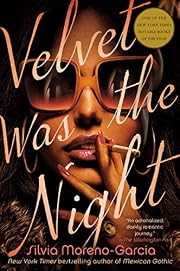
I read Mexican Gothic by Silvia Moreno-Garcia last year, and really luxuriated in all its tropey goodness. Since then, I've been meaning to look in to her other writing, and happened across this one at a recent trip to the library. It's a wonderful little book. She is known for magical realism, horror, and Gothic fiction, but this one is a gritty noir novel set in 1970s Mexico. The book opens with an account of El Halconazo (the hawk strike, also known as the Corpus Christi massacre), in which a paramilitary force trained by the American CIA attacked peaceful students protesting against the dictatorial government of the PRI, led by President Echeverría. Riot police reacted violently, resulting in the deaths of 120 people, including a fourteen year old child. If you've seen Alfonso Cuarón's film Roma, you'll be familiar, as it depicts this. El Halconazo was followed by a decade of the Dirty War (Guerra Sucia) in which the Mexican government abducted, tortured, and killed dozens of activists and guerilla fighters, many coming from groups that emerged in response to the massacre. It was also a time in which there was a crackdown on the arts and in particular, music, including the shutting down of bands and venues which had previously been allowed to play covers of popular western songs, in a bid to stifle dissent. Moreno-Garcia locates Velvet was the Night in this period of time, and in this context.
Her story begins with young Elvis, a member of the Hawks and a creature of contradictions. He's a professional thug who doesn't like violence; he's intelligent and likes to learn, memorizing a new word everyday, but flunked out of school for what is ambiguously described as possible dyslexia. He loves music (hence the moniker) and gravitates to eateries and bars where songs catch his fancy. After several romances that went nowhere, and a deep disconnect from his small town home and family, he's drifting in Mexico, a perfect candidate to be groomed into the CIA-trained faction whose existence is denied by the government. He's at the massacre, but finds himself stopping to save a fellow from his gang who was injured, rather than carry out his instructions to commit violence: a fact that subsequently displeases his boss, the suave, wealthy and brutal El Mago. "He didn't like beating people. El Elvis realised this was ironic, considering his line of work....Often, life doesn't make sense and if Elvis had a motto it was that: life's a mess. That's probably why he loved music and factoids. They helped him construct a more organised world."
At the other end of the city is Maite: a secretary in her thirties, who considers herself a spinster. Unlucky in love, accepting the barbs of complaint her mother provides and the unfavourable comparisons to her married, successful, sister, she spends too much money on frivolities and has a vast collection of records, as well as of pulpy romance comics with titles like Secret Romance and Lagrimas y Risas (Tears and Laughter). She fantasizes constantly about adventures with muscled heroes in the jungle, her only real life companion a pet parakeet, and lies to her colleagues about how she spends her time, inventing romances and dates. "Love, frail as gossamer, stitched together from a thousand songs and a thousand comic books, made of the dialogue spoken in films and the posters designed by ad agencies: love was what she lived for." Maite pays no attention to politics; she ignores her fellow secretaries discussing the events of El Halconazo in favour of reading her romances while hiding in the bathroom.
Maite and Elvis' worlds collide because they are both looking for the same woman. Leonora, a young woman, is involved in a student protest group and comes into possession of some incendiary photographs of the massacre. Elvis is dispatched by his boss to find Leonora, and the photographs. Meanwhile, Leonora ask her neighbour, Maite, to watch her cat for a few days while she's away - and then never returns. As Elvis and Maite draw closer, two lonely people drifting closer to each other's worlds, it becomes evident that there are more people, and more forces, in conflict here. Maite tracks down Leonora's rebel student group, but they're fighting amongst themselves about a mole, and no one can be trusted. There are Russians in the city, hanging out with the students and provoking political agitation. The government has sent enforcers out looking for those who are looking for Leonora. And Elvis' boss is up to something - members of their gang are vanishing, and Elvis is now worried about his own skin.
It's hard to describe how this book moves fast and slow at the same time. The plot is very complex, and moves along rapidly, but the characters, especially Elvis and Maite, live so internally, deep in their own loneliness. Like any other noir novel, there's real grit here: a shocking amount of brutal violence, and the despairing sense of melancholy that is so evocative of the genre. They're both flawed, imperfect, never quite in contact but hovering around each other, in orbit. I really enjoyed reading it.
I read Mexican Gothic by Silvia Moreno-Garcia last year, and really luxuriated in all its tropey goodness. Since then, I've been meaning to look in to her other writing, and happened across this one at a recent trip to the library. It's a wonderful little book. She is known for magical realism, horror, and Gothic fiction, but this one is a gritty noir novel set in 1970s Mexico. The book opens with an account of El Halconazo (the hawk strike, also known as the Corpus Christi massacre), in which a paramilitary force trained by the American CIA attacked peaceful students protesting against the dictatorial government of the PRI, led by President Echeverría. Riot police reacted violently, resulting in the deaths of 120 people, including a fourteen year old child. If you've seen Alfonso Cuarón's film Roma, you'll be familiar, as it depicts this. El Halconazo was followed by a decade of the Dirty War (Guerra Sucia) in which the Mexican government abducted, tortured, and killed dozens of activists and guerilla fighters, many coming from groups that emerged in response to the massacre. It was also a time in which there was a crackdown on the arts and in particular, music, including the shutting down of bands and venues which had previously been allowed to play covers of popular western songs, in a bid to stifle dissent. Moreno-Garcia locates Velvet was the Night in this period of time, and in this context.
Her story begins with young Elvis, a member of the Hawks and a creature of contradictions. He's a professional thug who doesn't like violence; he's intelligent and likes to learn, memorizing a new word everyday, but flunked out of school for what is ambiguously described as possible dyslexia. He loves music (hence the moniker) and gravitates to eateries and bars where songs catch his fancy. After several romances that went nowhere, and a deep disconnect from his small town home and family, he's drifting in Mexico, a perfect candidate to be groomed into the CIA-trained faction whose existence is denied by the government. He's at the massacre, but finds himself stopping to save a fellow from his gang who was injured, rather than carry out his instructions to commit violence: a fact that subsequently displeases his boss, the suave, wealthy and brutal El Mago. "He didn't like beating people. El Elvis realised this was ironic, considering his line of work....Often, life doesn't make sense and if Elvis had a motto it was that: life's a mess. That's probably why he loved music and factoids. They helped him construct a more organised world."
At the other end of the city is Maite: a secretary in her thirties, who considers herself a spinster. Unlucky in love, accepting the barbs of complaint her mother provides and the unfavourable comparisons to her married, successful, sister, she spends too much money on frivolities and has a vast collection of records, as well as of pulpy romance comics with titles like Secret Romance and Lagrimas y Risas (Tears and Laughter). She fantasizes constantly about adventures with muscled heroes in the jungle, her only real life companion a pet parakeet, and lies to her colleagues about how she spends her time, inventing romances and dates. "Love, frail as gossamer, stitched together from a thousand songs and a thousand comic books, made of the dialogue spoken in films and the posters designed by ad agencies: love was what she lived for." Maite pays no attention to politics; she ignores her fellow secretaries discussing the events of El Halconazo in favour of reading her romances while hiding in the bathroom.
Maite and Elvis' worlds collide because they are both looking for the same woman. Leonora, a young woman, is involved in a student protest group and comes into possession of some incendiary photographs of the massacre. Elvis is dispatched by his boss to find Leonora, and the photographs. Meanwhile, Leonora ask her neighbour, Maite, to watch her cat for a few days while she's away - and then never returns. As Elvis and Maite draw closer, two lonely people drifting closer to each other's worlds, it becomes evident that there are more people, and more forces, in conflict here. Maite tracks down Leonora's rebel student group, but they're fighting amongst themselves about a mole, and no one can be trusted. There are Russians in the city, hanging out with the students and provoking political agitation. The government has sent enforcers out looking for those who are looking for Leonora. And Elvis' boss is up to something - members of their gang are vanishing, and Elvis is now worried about his own skin.
It's hard to describe how this book moves fast and slow at the same time. The plot is very complex, and moves along rapidly, but the characters, especially Elvis and Maite, live so internally, deep in their own loneliness. Like any other noir novel, there's real grit here: a shocking amount of brutal violence, and the despairing sense of melancholy that is so evocative of the genre. They're both flawed, imperfect, never quite in contact but hovering around each other, in orbit. I really enjoyed reading it.
166rasdhar
32. Iris Yamashita - City Under One Roof
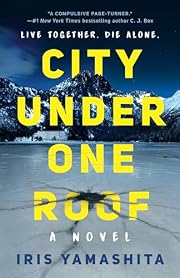
This is a book that made a lot of best-of lists last year, but unfortunately, the interesting premise did not pay off in good execution. The setting of the story is the fictional Alaskan town of Point Mettier, based on the actual town of Whittier. The reason that this city has the name of 'city under one roof' is that all the 250-odd residents quite literally live in one massive, interconnected apartment block. The city itself is only accessible via a tunnel, and in case of storms, access is cut off. So this is an excellent setting for a locked-room mystery, either traditional, or with a twist.
The book opens with a local teenager, Amy, discovering a dismembered hand and foot on the shore of a local lake (something like the real Salish foot mysteries). Quickly, a local mentally-ill woman, Lonnie, who keeps a pet moose and was formerly institutionalised, comes under suspicion. A detective from Anchorage, Cara, who is visiting to help with the investigation, has her own secrets and reasons for visiting the town. The story is told from each of their POVs, alternating back and forth. The author is a former Hollywood screenwriter: as might be expected, the dialogue is decent, but the rest of the story is very badly narrated, almost as though they were, in fact, relying on visuals to be added later.
The other thing I didn't care for, in this novel, was the almost-caricatured descriptions of local native populations, who are shown as crime-ridden and violent, and also, immune to law enforcement because of some unexplained 'native protection'. Add to that some unnecessary howlers (characters described as being in two places at the same time - editors should have caught that; mentions of elk tracks (another reviewer pointed out there aren't elk on mainland Alaska) and it felt, overall, badly written. Finally, all the cops in this book behave badly, but are presented as heroes. There's the 'good old boy' local sheriff, his naive but enthusiastic trainee, and the jaded visiting outsider, all of whom repeatedly break their own rules but are never held accountable or considered even slightly critically and are instead presented as heroes. In 2024, this just comes across as particularly deluded.
In sum, this is a made-for-Netflix bait book. Not for me.
This is a book that made a lot of best-of lists last year, but unfortunately, the interesting premise did not pay off in good execution. The setting of the story is the fictional Alaskan town of Point Mettier, based on the actual town of Whittier. The reason that this city has the name of 'city under one roof' is that all the 250-odd residents quite literally live in one massive, interconnected apartment block. The city itself is only accessible via a tunnel, and in case of storms, access is cut off. So this is an excellent setting for a locked-room mystery, either traditional, or with a twist.
The book opens with a local teenager, Amy, discovering a dismembered hand and foot on the shore of a local lake (something like the real Salish foot mysteries). Quickly, a local mentally-ill woman, Lonnie, who keeps a pet moose and was formerly institutionalised, comes under suspicion. A detective from Anchorage, Cara, who is visiting to help with the investigation, has her own secrets and reasons for visiting the town. The story is told from each of their POVs, alternating back and forth. The author is a former Hollywood screenwriter: as might be expected, the dialogue is decent, but the rest of the story is very badly narrated, almost as though they were, in fact, relying on visuals to be added later.
The other thing I didn't care for, in this novel, was the almost-caricatured descriptions of local native populations, who are shown as crime-ridden and violent, and also, immune to law enforcement because of some unexplained 'native protection'. Add to that some unnecessary howlers (characters described as being in two places at the same time - editors should have caught that; mentions of elk tracks (another reviewer pointed out there aren't elk on mainland Alaska) and it felt, overall, badly written. Finally, all the cops in this book behave badly, but are presented as heroes. There's the 'good old boy' local sheriff, his naive but enthusiastic trainee, and the jaded visiting outsider, all of whom repeatedly break their own rules but are never held accountable or considered even slightly critically and are instead presented as heroes. In 2024, this just comes across as particularly deluded.
In sum, this is a made-for-Netflix bait book. Not for me.
167rasdhar
>165 dchaikin: I hope you do! I quite liked. Not sure if I'd give it 5 stars, but it was a good read.
168dchaikin
>166 rasdhar: some good, some bad, i guess. I’ll pass on this.
169rasdhar
33. Élisa Shua Dusapin - Vladivostok Circus (translated from the Russian by Aneesa Abbas Higgins, Open Letter, 2024)

This is a gentle, intimate little book, not strong on plot, but deep on feeling and emotion. Nathalie, a newly-graduated fashion designer from Belgium, travels to Vladivostok to take on an assignment to design outfits for a circus act, before moving on to a new job in France. She lost her mother at a young age and has drifted apart from her father, a physicist who works in the US. Although she briefly lived in Vladivostok as a child, while her father worked there, she speaks no Russia. Her last romance ended. She's quite alone, and a anxious person, prone to awkwardness and nervous babble. At Vladivostok, she meets Leon, a Quebecois man who joined circus work via his ex-girlfriend, a trapeze artist who left him. The act he's managing, for which Nathalie is designing costumes, is a barre Russe performance - two people hold a flat performance bar, which they use to toss a 'flyer' in the air; the flyer performs leaps and turns and is caught by the barre, below. The two bar holders are Leon (German) and Anton (Russian); the flyer, Anna, is Ukrainian. Over the following months, the five of them work together, rubbing along sometimes well, sometimes with friction, to prepare the final act and its uniforms. They slowly open to each other, sharing secrets, hurt feelings, and weaknesses. With this emotional intimacy, there is also so much physical - but non-sexual - intimacy. The three performers constantly touch and lift and toss and hold each other; Nathalie measures and fits clothing, Leon works to manage all their administrative needs, they cook and eat together, and spend nearly all their time together. It's also a process of bridging - over coming multiple different language barriers, translating for each other. The secret, Leon tells Anna, is trust - but the risks are always pressing; their flyer before Anna fell, being injured horribly. As Anna prepares to do the most dangerous jump she has tried (four somersaults, I think, and touching only the barre between and not the ground) - they all reckon with this, and every little detail that might bear out that risk: the strength of the bar, the surety of the two catchers, Anna's strength as a flyer, the fit of the uniform, the music, the lights.
Although I liked how this book unfolded, it does wander around a bit. A patient, generous reader will be rewarded: an impatient reader might well dismiss it, and the first-person narrative, as too much high-strung complaining. I liked it, but I'm not sure everyone else will.

This is a gentle, intimate little book, not strong on plot, but deep on feeling and emotion. Nathalie, a newly-graduated fashion designer from Belgium, travels to Vladivostok to take on an assignment to design outfits for a circus act, before moving on to a new job in France. She lost her mother at a young age and has drifted apart from her father, a physicist who works in the US. Although she briefly lived in Vladivostok as a child, while her father worked there, she speaks no Russia. Her last romance ended. She's quite alone, and a anxious person, prone to awkwardness and nervous babble. At Vladivostok, she meets Leon, a Quebecois man who joined circus work via his ex-girlfriend, a trapeze artist who left him. The act he's managing, for which Nathalie is designing costumes, is a barre Russe performance - two people hold a flat performance bar, which they use to toss a 'flyer' in the air; the flyer performs leaps and turns and is caught by the barre, below. The two bar holders are Leon (German) and Anton (Russian); the flyer, Anna, is Ukrainian. Over the following months, the five of them work together, rubbing along sometimes well, sometimes with friction, to prepare the final act and its uniforms. They slowly open to each other, sharing secrets, hurt feelings, and weaknesses. With this emotional intimacy, there is also so much physical - but non-sexual - intimacy. The three performers constantly touch and lift and toss and hold each other; Nathalie measures and fits clothing, Leon works to manage all their administrative needs, they cook and eat together, and spend nearly all their time together. It's also a process of bridging - over coming multiple different language barriers, translating for each other. The secret, Leon tells Anna, is trust - but the risks are always pressing; their flyer before Anna fell, being injured horribly. As Anna prepares to do the most dangerous jump she has tried (four somersaults, I think, and touching only the barre between and not the ground) - they all reckon with this, and every little detail that might bear out that risk: the strength of the bar, the surety of the two catchers, Anna's strength as a flyer, the fit of the uniform, the music, the lights.
Although I liked how this book unfolded, it does wander around a bit. A patient, generous reader will be rewarded: an impatient reader might well dismiss it, and the first-person narrative, as too much high-strung complaining. I liked it, but I'm not sure everyone else will.
170RidgewayGirl
>169 rasdhar: You've intrigued me. I like a book that requires me to slow down.
172kjuliff
>86 rasdhar: At last this book came off hold and I’ve just started it. Thank you again for your review. I’ve known a Tamil Tiger (retired) so will read with interest.
173kjuliff
>86 rasdhar: I’ve just finished Brotherless Night Rasdhar. Thank you for putting me onto it. I will be reviewing it soon. It’s been an interesting read for me, as I have know ex Tamil Tiger supporters who fled to Australia in the 1980s. I’d always assumed the TT were the “right” side. Brotherless Night shows every side - and there’s at least four - in this tragedy that most of the West has been unaware of.
174lisapeet
Finally catching up on your thread, Rasdhar—what a lot of good reading and thoughtful reviews! I'm particularly encouraged to pick up Brotherless Night, which I've been on the fence about for some reason... maybe because I listen to the podcast V. V. Ganeshanathan cohosts (Fiction/Non/Fiction), and... I don't know, felt there might be some promotion in play that the book didn't necessarily warrant? Although it's a terrific podcast, so who knows why I thought so. Anyway, I'm definitely sold on it.
The Central Public Library is gorgeous! I've had my eye on reports about it for a while, because I always love a good library renovation. I wish I had the bandwidth to focus more on non-U.S. libraries in my work writing about them, but things here are such that I'm stretched thin as it is keeping track of how bad U.S. politics have seeped into the library world.
Glad to hear you're a letter writer too. I find pen-and-paper correspondence to be really enjoyable (I can hear everyone I owe a letter rolling their eyes right now)—and writing by hand relaxing to the point of being therapeutic. To that end, I keep an analog commonplace book—I love copying out pieces of writing that please me, and often learn a thing or two about what the writer was up to by writing it out myself. Particularly poetry. It's not searchable the way a digital commonplace book would be, which is I guess a drawback, but that also means I have to go back and read through it if I'm looking for something, and I always find a bit that I'd forgotten and am glad to have in there.
The Central Public Library is gorgeous! I've had my eye on reports about it for a while, because I always love a good library renovation. I wish I had the bandwidth to focus more on non-U.S. libraries in my work writing about them, but things here are such that I'm stretched thin as it is keeping track of how bad U.S. politics have seeped into the library world.
Glad to hear you're a letter writer too. I find pen-and-paper correspondence to be really enjoyable (I can hear everyone I owe a letter rolling their eyes right now)—and writing by hand relaxing to the point of being therapeutic. To that end, I keep an analog commonplace book—I love copying out pieces of writing that please me, and often learn a thing or two about what the writer was up to by writing it out myself. Particularly poetry. It's not searchable the way a digital commonplace book would be, which is I guess a drawback, but that also means I have to go back and read through it if I'm looking for something, and I always find a bit that I'd forgotten and am glad to have in there.
175kjuliff
>174 lisapeet: I encourage you to read Brotherless Night. I recently finished reading it and reviewed it on my thread. I found it absorbing and educational. Well worth reading for sure.
I didn’t know about V. V. Ganeshanathan co-hosting a podcast. Will have to subscribe!
I didn’t know about V. V. Ganeshanathan co-hosting a podcast. Will have to subscribe!
176rasdhar
>173 kjuliff: I read your review - it was wonderful. I didn't have the necessary distance to consider the book dispassionately, so it was good to see your perspective.
>174 lisapeet: Thanks Lisa! I hope you do pick it up. I haven't heard the podcast at all. Incidentally, I found a solution to my commonplace book conundrum. I have begun using index cards, which enables me to make notes of things I like, but also to arrange and rearrange thematically, and card through, as I choose. I was carrying them at work the other day, and a student asked me what they were. Turns out, he had never seen index cards before. I really do feel old now.
>174 lisapeet: Thanks Lisa! I hope you do pick it up. I haven't heard the podcast at all. Incidentally, I found a solution to my commonplace book conundrum. I have begun using index cards, which enables me to make notes of things I like, but also to arrange and rearrange thematically, and card through, as I choose. I was carrying them at work the other day, and a student asked me what they were. Turns out, he had never seen index cards before. I really do feel old now.
177rasdhar
I didn't manage to do a whole lot of non-work reading in March, but here's two more quick reviews.
34. Death of the Red Rider by Yulia Yakovleva (Pushkin Vertigo, 2023) - translated from the Russian by Ruth Ahmedzai Kemp

I read Yakovleva's first Leningrad Confidential book (Punishment of a Hunter) last year, and rather enjoyed it, but this sequel didn't match up. The book is a mystery novel, set in the early days of Communist Russia, and at the outset of the Red Terror: a period of purges, political repression, and executions. In this book, our protagonist, Detective Zaitsev, is investigating the death of a horse and a rider; the horse is a famous Russian Orlov trotter, the rider is a deeply disliked man with links to the Red Army's cavalry. Zaitsev is still reeling from his encounter with the Red Terror in the previous book: he was arrested, beaten, and then released, and consequently is no longer trusted by any of his coworkers, who suspect he is in cahoots with the political executive. His police department has been merged with the OGPU, the secret government agency responsible for arresting and repressing political dissidents, so Zaitsev, somewhat naively, mourns that now everything is political (as if crime is ever apolitical). Rather than join in on the purges his department is assigned, he walks a tightrope to keep himself involved in the investigation of the horse and rider. This takes him to southern Russia, and Novocherkassk, where the local Cossacks view the Russians with suspicion. He finds, despite propaganda, that the south is not full of teeming produce and loyal communists: instead, famine and starvation abounds, and resistance is rife. He is assigned an assistant, who has secrets of her own, and is likely reporting on him. It is a very charged novel, evoking the sense of constant surveillance, betrayal, and suspicion of this era. I only found it difficult because it is full of unexplained references, and despite a very smooth translation, the lack of footnotes or explanations makes it a little inaccessible to to the non-Russian reader.
35. Sunburn - Laura Lippman
I listened to this audiobook while walking to and from work. I usually pick something light and not very distracting. This was sufficient. It's not a particularly thrilling or well-constructed book: anyone can see the plot unfolding from a mile away, and by chapter 3 it was just background noise to me, sufficient to drown out external noises, which is all I wanted from the book.
34. Death of the Red Rider by Yulia Yakovleva (Pushkin Vertigo, 2023) - translated from the Russian by Ruth Ahmedzai Kemp

I read Yakovleva's first Leningrad Confidential book (Punishment of a Hunter) last year, and rather enjoyed it, but this sequel didn't match up. The book is a mystery novel, set in the early days of Communist Russia, and at the outset of the Red Terror: a period of purges, political repression, and executions. In this book, our protagonist, Detective Zaitsev, is investigating the death of a horse and a rider; the horse is a famous Russian Orlov trotter, the rider is a deeply disliked man with links to the Red Army's cavalry. Zaitsev is still reeling from his encounter with the Red Terror in the previous book: he was arrested, beaten, and then released, and consequently is no longer trusted by any of his coworkers, who suspect he is in cahoots with the political executive. His police department has been merged with the OGPU, the secret government agency responsible for arresting and repressing political dissidents, so Zaitsev, somewhat naively, mourns that now everything is political (as if crime is ever apolitical). Rather than join in on the purges his department is assigned, he walks a tightrope to keep himself involved in the investigation of the horse and rider. This takes him to southern Russia, and Novocherkassk, where the local Cossacks view the Russians with suspicion. He finds, despite propaganda, that the south is not full of teeming produce and loyal communists: instead, famine and starvation abounds, and resistance is rife. He is assigned an assistant, who has secrets of her own, and is likely reporting on him. It is a very charged novel, evoking the sense of constant surveillance, betrayal, and suspicion of this era. I only found it difficult because it is full of unexplained references, and despite a very smooth translation, the lack of footnotes or explanations makes it a little inaccessible to to the non-Russian reader.
35. Sunburn - Laura Lippman
I listened to this audiobook while walking to and from work. I usually pick something light and not very distracting. This was sufficient. It's not a particularly thrilling or well-constructed book: anyone can see the plot unfolding from a mile away, and by chapter 3 it was just background noise to me, sufficient to drown out external noises, which is all I wanted from the book.
178kjuliff
>177 rasdhar: I read Sunburn a while ago as a light read. I had to read my review to remember it. Yes I remember now the plot got pretty silly after a few chapters. I often need a light read but it’s hard to find a good one.
I now tend to go for short stories for lighter reads.. I just finished and reviewed Roman Stories by Jhumpa Lahiri . She’s a pretty good writer and an easy read. You might be interested as she writes a lot about the expat experience - usually India to America.
I now tend to go for short stories for lighter reads.. I just finished and reviewed Roman Stories by Jhumpa Lahiri . She’s a pretty good writer and an easy read. You might be interested as she writes a lot about the expat experience - usually India to America.
This topic was continued by Rasdhar is still a reader of this world (II).

