Rasdhar is still a reader of this world (II)
This is a continuation of the topic Rasdhar is a reader of this world .
This topic was continued by Rasdhar continues to be a reader of this world (III).
Talk Club Read 2024
Join LibraryThing to post.
2rasdhar
Books read in 2024 with links to reviews.
January:
1. Patricia Highsmith - The Cry of the Owl
2. Ben Aaronovitch - Whispers Under Ground Review here .
3. Magdalena Zyzak - The Ballad of Barnabas Pierkiel Review here.
4. R. F. Kuang - Babel: Or the Necessity of Violence: An Arcane History of the Oxford Translators' Revolution Review here.
5. Christopher Moore - Noir and Razzmatazz Review here.
6. Emily Henry - Beach Read
7. Sebastian Sim - Let’s Give It Up For Gimme Lao! Review here.
8. Richard Osman - The Bullet that Missed Review here.
9. Kate Collins - A Good House for Children Review here.
10. Ronojoy Sen - House of the People: Parliament and the Making of Indian Democracy (reviewed on the book page).
11. Paul D. Halliday - Habeas Corpus: From England to Empire
12. Richard Osman - The Last Devil to Die Review here.
12. Eileen Chang - The Rouge of the North Review here.
February:
13. VV Ganeshananthan - Brotherless Night Review here
14. Black Coffee in a Coconut Shell (edited by Perumal Murugan) Review here
15. Chen Zijin - Bad Kids Review here
16. Anthony Berkeley - The Wintringham Mystery Review here
17. Cristina Campo - The Unforgivable, and other Writings Review here
18. Maryla Szymiczkowa - Mrs. Mohr Goes Missing Review here
19. The Penguin Book of Murder Mysteries (edited by Michael Sims) Review here
20. Supriya Gandhi- The Emperor Who Never Was Review here
21. José Maria de Eça de Queirós - The Tragedy of the Street of Flowers Review here
22. Isaac Asimov - Gold: The Final Science Fiction Collection Review here
23. The Forward Book of Poetry 2018 - by various poets Review here
24. Tiitu Takalo - Me, Mikko and Anikki (Minä, Mikko ja Annikki) Review here
March
25. W. H. Auden - A Certain World: A Commonplace Book (Faber and Faber, 1971) - reviewed here
26. Alex Michaelides - The Fury reviewed here
27 and 28. Keigo Higashino - Malice and Newcomer reviewed here
29. Sebastian Sim - The Riot Act reviewed here
30. Robert Thorogood - The Marlow Murder Club here
31. Silvia Moreno-Garcia - Velvet Was the Night reviewed reviewed here
32. Iris Yamashita - City under one Roof reviewed here
33. Elisa Shua Dusapin - Vladivostok Circus reviewed here
34. Yulia Yakovleva - Death of the Red Rider reviewed here
35. Laura Lippman - Sunburn
April:
36. Emily Henry - Book Lovers (Berkley, 2022) reviewed here
37. Lyudmila Petrushevskaya - The New Adventures of Helen (Deep Vellum, 2022) translated from the Russian by Jane Bugaeva reviewed here
38. Tana French - The Hunter (Viking 2024) reviewed here
39. Karrie Fransman - The House that Groaned (Square Peg 2014) reviewed here
40. Terry Pratchett - Making Money (Doubleday 2007) reviewed here
41. Marina Tsvetaeva - Earthly Signs: Moscow Diaries, 1917–1922 (Yale University Press, 2002), translated from the Russian by Jamey Gambrell reviewed here
42. Mary Roberts Rineheart - Miss Pinkerton (American Mystery Classics, 2019) reviewed here
43. Agatha Christie - Murder on the Orient Express (narrated by Dan Stevens)
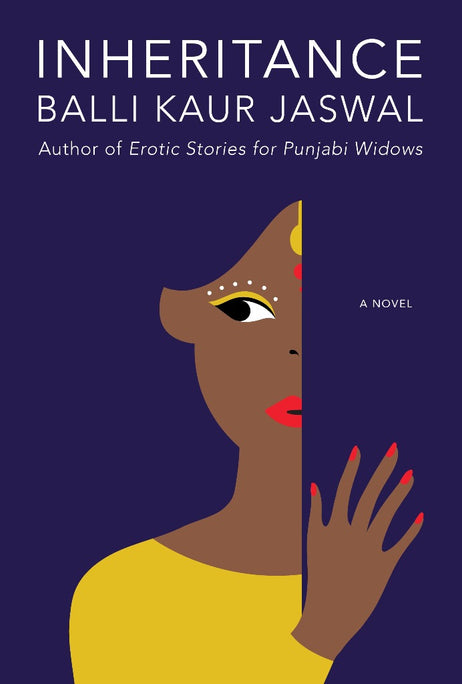
44. Balli Kaur Jaswal - Inheritance (Sleepers Publishing, 2013) reviewed here
45. Ann Leckie - Ancillary Justice (Orbit 2013) reviewed here
46. Butter by Asako Yuzuki (Ecco Books, 2024, translated by Polly Barton) reviewed here
47. Graeme Macrae Burnet - Case Study (Saraband 2022) here
48. Percival Everett - The Trees (Graywolf Press, 2021) reviewed here
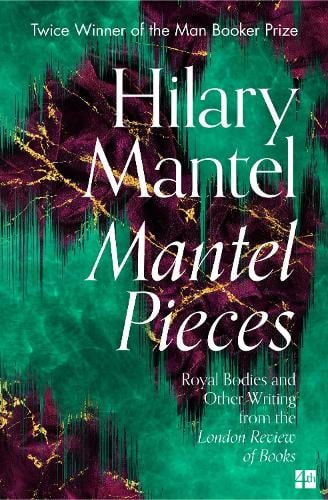
49. Hilary Mantel - Mantel Pieces (London Review of Books/Fourth Estate, 2020) reviewed here
50. Susan Casey - The Underworld: Journeys to the Depths of the Ocean (Vintage, 2024) reviewed here
51. Kalpana Mohan - An English made in India
MAY
52. Starve Acre by Andrew Michael Hurley (John Murray 2019) reviewed here
53. A Man Lay Dead by Ngaio Marsh (1934)reviewed here
54. Ministry of Moral Panic by Amanda Lee Koe (Epigram Books, 2013)reviewed here
55. Get the Picture: A Mind-Bending Journey among the Inspired Artists and Obsessive Art Fiends Who Taught Me How to See - Bianca Bosker (Viking 2024)reviewed here
56. Jeremy Tiang - State of Emergency (Epigram Books, 2017) reviewed here
57. Joanne Harris - Broken Light reviewed here
58. Ambedkar in London (Hurst and Co, 2022) edited by William Gould, Christophe Jaffrelot, and Santosh Dassreviewed here
59. Elena Ferrante - Frantumaglia reviewed here
60. Magda Szabo - The Door reviewed here
61. John Scalzi - The Kaiju Preservation Society reviewed here
62. Shubhangi Swarup - Latitudes of Longing reviewed here
JUNE
63. Silvia Moreno-Garcia - Silver Nitrate (Del Rey 2023) reviewed here
64. Ana María Matute - The Island (Penguin Classics, 2020, translated from the Spanish by Laura Lonsdale)reviewed here
65. Sharlene Teo - Ponti (Picador, 2018) reviewed here
66. Martha Wells - All Systems Red (2017) reviewed here
67. Donatella di Pietrantonio - A Girl Returned (Europa Editions 2019, translated by Ann Goldstein) reviewed here
68. Mari Ahokoivu - Oksi (Levine Querido, 2021, translated from the Finnish by Silja-Maaria Aronpuro) reviewed here
69. Reine Arcache Melvin - The Betrayed (Europa Editions, 2018) reviewed here
70. John Banville - Snow reviewed here
71. Doreen Cunningham - Soundings: Journeys in the Company of Whales: A Memoir (Scribner 2022) reviewed here
72. Fabulous Machinery for the Curious: The Garden of Urdu Classical Literature - edited by Musharraf Ali Farooqui (World Literature in Translation) reviewed here
January:
1. Patricia Highsmith - The Cry of the Owl
2. Ben Aaronovitch - Whispers Under Ground Review here .
3. Magdalena Zyzak - The Ballad of Barnabas Pierkiel Review here.
4. R. F. Kuang - Babel: Or the Necessity of Violence: An Arcane History of the Oxford Translators' Revolution Review here.
5. Christopher Moore - Noir and Razzmatazz Review here.
6. Emily Henry - Beach Read
7. Sebastian Sim - Let’s Give It Up For Gimme Lao! Review here.
8. Richard Osman - The Bullet that Missed Review here.
9. Kate Collins - A Good House for Children Review here.
10. Ronojoy Sen - House of the People: Parliament and the Making of Indian Democracy (reviewed on the book page).
11. Paul D. Halliday - Habeas Corpus: From England to Empire
12. Richard Osman - The Last Devil to Die Review here.
12. Eileen Chang - The Rouge of the North Review here.
February:
13. VV Ganeshananthan - Brotherless Night Review here
14. Black Coffee in a Coconut Shell (edited by Perumal Murugan) Review here
15. Chen Zijin - Bad Kids Review here
16. Anthony Berkeley - The Wintringham Mystery Review here
17. Cristina Campo - The Unforgivable, and other Writings Review here
18. Maryla Szymiczkowa - Mrs. Mohr Goes Missing Review here
19. The Penguin Book of Murder Mysteries (edited by Michael Sims) Review here
20. Supriya Gandhi- The Emperor Who Never Was Review here
21. José Maria de Eça de Queirós - The Tragedy of the Street of Flowers Review here
22. Isaac Asimov - Gold: The Final Science Fiction Collection Review here
23. The Forward Book of Poetry 2018 - by various poets Review here
24. Tiitu Takalo - Me, Mikko and Anikki (Minä, Mikko ja Annikki) Review here
March
25. W. H. Auden - A Certain World: A Commonplace Book (Faber and Faber, 1971) - reviewed here
26. Alex Michaelides - The Fury reviewed here
27 and 28. Keigo Higashino - Malice and Newcomer reviewed here
29. Sebastian Sim - The Riot Act reviewed here
30. Robert Thorogood - The Marlow Murder Club here
31. Silvia Moreno-Garcia - Velvet Was the Night reviewed reviewed here
32. Iris Yamashita - City under one Roof reviewed here
33. Elisa Shua Dusapin - Vladivostok Circus reviewed here
34. Yulia Yakovleva - Death of the Red Rider reviewed here
35. Laura Lippman - Sunburn
April:
36. Emily Henry - Book Lovers (Berkley, 2022) reviewed here
37. Lyudmila Petrushevskaya - The New Adventures of Helen (Deep Vellum, 2022) translated from the Russian by Jane Bugaeva reviewed here
38. Tana French - The Hunter (Viking 2024) reviewed here
39. Karrie Fransman - The House that Groaned (Square Peg 2014) reviewed here
40. Terry Pratchett - Making Money (Doubleday 2007) reviewed here
41. Marina Tsvetaeva - Earthly Signs: Moscow Diaries, 1917–1922 (Yale University Press, 2002), translated from the Russian by Jamey Gambrell reviewed here
42. Mary Roberts Rineheart - Miss Pinkerton (American Mystery Classics, 2019) reviewed here
43. Agatha Christie - Murder on the Orient Express (narrated by Dan Stevens)
44. Balli Kaur Jaswal - Inheritance (Sleepers Publishing, 2013) reviewed here
45. Ann Leckie - Ancillary Justice (Orbit 2013) reviewed here
46. Butter by Asako Yuzuki (Ecco Books, 2024, translated by Polly Barton) reviewed here
47. Graeme Macrae Burnet - Case Study (Saraband 2022) here
48. Percival Everett - The Trees (Graywolf Press, 2021) reviewed here
49. Hilary Mantel - Mantel Pieces (London Review of Books/Fourth Estate, 2020) reviewed here
50. Susan Casey - The Underworld: Journeys to the Depths of the Ocean (Vintage, 2024) reviewed here
51. Kalpana Mohan - An English made in India
MAY
52. Starve Acre by Andrew Michael Hurley (John Murray 2019) reviewed here
53. A Man Lay Dead by Ngaio Marsh (1934)reviewed here
54. Ministry of Moral Panic by Amanda Lee Koe (Epigram Books, 2013)reviewed here
55. Get the Picture: A Mind-Bending Journey among the Inspired Artists and Obsessive Art Fiends Who Taught Me How to See - Bianca Bosker (Viking 2024)reviewed here
56. Jeremy Tiang - State of Emergency (Epigram Books, 2017) reviewed here
57. Joanne Harris - Broken Light reviewed here
58. Ambedkar in London (Hurst and Co, 2022) edited by William Gould, Christophe Jaffrelot, and Santosh Dassreviewed here
59. Elena Ferrante - Frantumaglia reviewed here
60. Magda Szabo - The Door reviewed here
61. John Scalzi - The Kaiju Preservation Society reviewed here
62. Shubhangi Swarup - Latitudes of Longing reviewed here
JUNE
63. Silvia Moreno-Garcia - Silver Nitrate (Del Rey 2023) reviewed here
64. Ana María Matute - The Island (Penguin Classics, 2020, translated from the Spanish by Laura Lonsdale)reviewed here
65. Sharlene Teo - Ponti (Picador, 2018) reviewed here
66. Martha Wells - All Systems Red (2017) reviewed here
67. Donatella di Pietrantonio - A Girl Returned (Europa Editions 2019, translated by Ann Goldstein) reviewed here
68. Mari Ahokoivu - Oksi (Levine Querido, 2021, translated from the Finnish by Silja-Maaria Aronpuro) reviewed here
69. Reine Arcache Melvin - The Betrayed (Europa Editions, 2018) reviewed here
70. John Banville - Snow reviewed here
71. Doreen Cunningham - Soundings: Journeys in the Company of Whales: A Memoir (Scribner 2022) reviewed here
72. Fabulous Machinery for the Curious: The Garden of Urdu Classical Literature - edited by Musharraf Ali Farooqui (World Literature in Translation) reviewed here
3rasdhar
APRIL
A new month, a new Tom Gauld cartoon, this one from the Guardian:
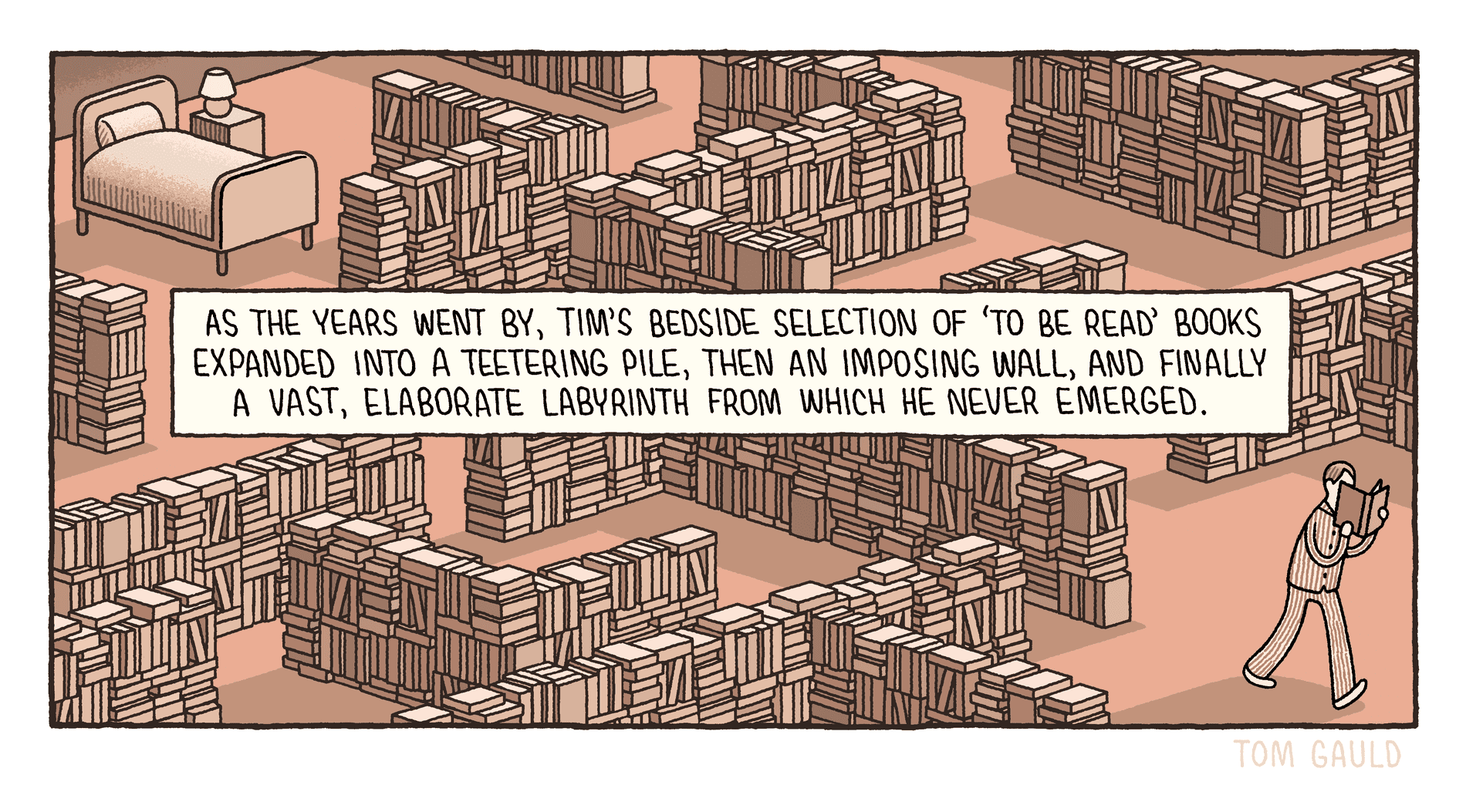
I did very little reading for pleasure in March, because I was so caught up with work, the last few classes of the year before exam period, and all the paperwork that goes with that. I'm glad that I'm no longer a student. Small mercies. For April, I have the following current reads lined up:







A new month, a new Tom Gauld cartoon, this one from the Guardian:
I did very little reading for pleasure in March, because I was so caught up with work, the last few classes of the year before exam period, and all the paperwork that goes with that. I'm glad that I'm no longer a student. Small mercies. For April, I have the following current reads lined up:


4labfs39
I love the Tom Gauld. Interesting selections lined up for the near future. I'm so happy you joined us in Club Read.
5kjuliff
>3 rasdhar: for some reason I thought I had bought The Trees but can’t find it. So I’ve put it on my tbr - it’s a long wait on hold at my library. I’m thinking I must have seen the film - certainly I know what it’s about and read many articles about the lynching of Emmett Till.
I’ve borrowed Mantell’s the pieces as I’m into short stories now after finishing Roman Stories by Lahiri. I hadn’t realised there was a Mantel I hadn’t read. .
I’m also of course interest in the other books you have listed as current reads.
I’m sure you did well in your exams. I still remember that “no longer being a student feeling”!
I’ve borrowed Mantell’s the pieces as I’m into short stories now after finishing Roman Stories by Lahiri. I hadn’t realised there was a Mantel I hadn’t read. .
I’m also of course interest in the other books you have listed as current reads.
I’m sure you did well in your exams. I still remember that “no longer being a student feeling”!
6rasdhar
>4 labfs39: I'm so glad I joined. This has been such a wonderful community. It really makes my day.
>5 kjuliff: It is quite interesting to be on the other side of the classroom: setting papers instead of writing answers, evaluating instead of cramming. I'm sure it will get old over time but right now I'm young enough to enjoy the novelty and not be bored by teaching.
>5 kjuliff: It is quite interesting to be on the other side of the classroom: setting papers instead of writing answers, evaluating instead of cramming. I'm sure it will get old over time but right now I'm young enough to enjoy the novelty and not be bored by teaching.
7Jim53
>6 rasdhar: Count me as another who's glad you're here. Best wishes for your April reading!
8rasdhar
Some fun stats for the first quarter of reading. I was glad to see a broad gender balance, and unsurprised to see that I've been comfort-reading (mystery books) through a difficult few months. I suspect that the fiction/nonfiction classification is actually the opposite, because I read so much nonfiction for my work, and I don't chart it here. I'll be trying to balance out the US/UK prevalence in my reading better.
I've never done this sort of tracking before. It's very revealing!

I've never done this sort of tracking before. It's very revealing!

9BLBera
I wonder when Tom Gauld saw my bedside pile of books? Happy new thread. Good luck with your April reading; you have planned some good ones.
10dchaikin
Happy new thread … and stats. You’ve had a great reading year (on top of teaching! That’s tough) I’m grateful you’re here and enjoying being part of this. I certainly enjoy having you here!
11rasdhar
>9 BLBera: He's obviously been looking into windows, because that is my bedside pile too! Thanks.
>10 dchaikin: How kind of you to say. I'm really enjoying being a part of this community. I love reading everyone's threads (yours particularly) and talking about books. It feeds a need I didn't know I had.
>10 dchaikin: How kind of you to say. I'm really enjoying being a part of this community. I love reading everyone's threads (yours particularly) and talking about books. It feeds a need I didn't know I had.
12rasdhar
36. Emily Henry - Book Lovers (Berkley, 2022)
I rarely leave the house without a book in my bag, but recently found myself stranded at a friend's house for several hours, petsitting, with no reading material of my own. I pulled this off her shelves, despite having read (and disliked) Henry's other book (Beach Read) early this year. Call it morbid curiosity. This was not quite as bad, with some fun dialogue, but her characters remain absolutely insufferable as usual - they are largely one-dimensional (her heroines all have anxiety and complain a lot, her heroes have no personality but nice voices and nice eyes and many muscles). Look, I understand that the function of books like this is to let the reader project their own fantasies onto the minimally-developed characters, but having read good romance, I have a very low tolerance for bad romance. However, I have no one but myself to thank for subjecting myself to this, and cannot in all fairness, accuse her books of excessive whining (whinery?) if I am here whining about them too.
I do think that she did try to tackle the typical 'city girl goes to small town, falls in love with local carpenter, abandons evil career, discovers love and babies' trope, but the problem is that she keeps telling you how she's about to subvert it, and then she barely manages to. It would be really interesting to see the trope actually subverted by an author who understood that you can show without telling. C'est la vie. I went home and put two emergency books back into my handbag so this never happens again.
I rarely leave the house without a book in my bag, but recently found myself stranded at a friend's house for several hours, petsitting, with no reading material of my own. I pulled this off her shelves, despite having read (and disliked) Henry's other book (Beach Read) early this year. Call it morbid curiosity. This was not quite as bad, with some fun dialogue, but her characters remain absolutely insufferable as usual - they are largely one-dimensional (her heroines all have anxiety and complain a lot, her heroes have no personality but nice voices and nice eyes and many muscles). Look, I understand that the function of books like this is to let the reader project their own fantasies onto the minimally-developed characters, but having read good romance, I have a very low tolerance for bad romance. However, I have no one but myself to thank for subjecting myself to this, and cannot in all fairness, accuse her books of excessive whining (whinery?) if I am here whining about them too.
I do think that she did try to tackle the typical 'city girl goes to small town, falls in love with local carpenter, abandons evil career, discovers love and babies' trope, but the problem is that she keeps telling you how she's about to subvert it, and then she barely manages to. It would be really interesting to see the trope actually subverted by an author who understood that you can show without telling. C'est la vie. I went home and put two emergency books back into my handbag so this never happens again.
13kjuliff
>12 rasdhar: Emergency books, ha. Great idea. One problem with reading good books is that it’s almost impossible to read a bad one.
14rasdhar
37. Lyudmila Petrushevskaya - The New Adventures of Helen (Deep Vellum, 2022) translated from the Russian by Jane Bugaeva
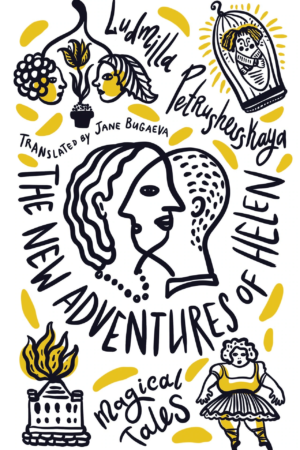
Some years ago I focused on Russia and read a great deal of contemporary Russian fiction. I remember really enjoying Lyudmila Petrushevskaya's strange, dark fairy tales. She published three collections with remarkable titles: There Once Lived a Woman Who Tried to Kill Her Neighbour's Baby: Scary Fairy Tales ; There Once Lived a Girl Who Seduced Her Sister's Husband, and He Hanged Himself: Love Stories and There Once Lived a Mother Who Loved her Children Until They Moved Back In. She writes fairy tales for adults: odd little fables with twists, sometimes nasty, sometimes horrific, sometimes sweet. If you liked Angela Carter's stories, these will probably appeal to you.
When our local library acquired her last collection from 2022, The New Adventures of Helen, I immediately borrowed it, but I found myself less enchanted and more disturbed than when I read her previous collections. Each of the seven stories begins with 'Once upon a time' like a classic fairy tale, and indeed, there are magic flowers, talking animals, beautiful dresses and princesses, but there are also divorces, poverty, heartbreak and unemployment. A happy ending isn't guaranteed, by any means: even for the deposed prince who regains his family but loses his kingdom, ending up in an apartment in the suburbs. Her protagonists are often, but not always, women, who are resourceful, courageous, sometimes a bit evil, but always in action, moving and changing. I think the key difference is that these stories don't have the edge of humour that she did in her previous works, which makes a big difference.
Looking her up, I see that Petrushevskaya has said she is giving up writing after the war in Ukraine. She made a fairly powerful (and dramatic) statement in a country not known for tolerating dissent: https://www.themoscowtimes.com/2023/08/01/war-made-lyudmila-petrushevskaya-put-d...
“I’ve always written about my people. About the people who live in Russia. I felt sorry for them, the drunks and wretches… But now I don’t feel sorry for my people — invaders, thieves and rapists, murderers of children and destroyers of other people’s lives — or their hateful families, their wives and mothers. I will never write about them or for them.”
Perhaps this consciousness, and her growing disenchantment with her world, has changed her writing, or maybe it's just age. She's still very good to read.
Some years ago I focused on Russia and read a great deal of contemporary Russian fiction. I remember really enjoying Lyudmila Petrushevskaya's strange, dark fairy tales. She published three collections with remarkable titles: There Once Lived a Woman Who Tried to Kill Her Neighbour's Baby: Scary Fairy Tales ; There Once Lived a Girl Who Seduced Her Sister's Husband, and He Hanged Himself: Love Stories and There Once Lived a Mother Who Loved her Children Until They Moved Back In. She writes fairy tales for adults: odd little fables with twists, sometimes nasty, sometimes horrific, sometimes sweet. If you liked Angela Carter's stories, these will probably appeal to you.
When our local library acquired her last collection from 2022, The New Adventures of Helen, I immediately borrowed it, but I found myself less enchanted and more disturbed than when I read her previous collections. Each of the seven stories begins with 'Once upon a time' like a classic fairy tale, and indeed, there are magic flowers, talking animals, beautiful dresses and princesses, but there are also divorces, poverty, heartbreak and unemployment. A happy ending isn't guaranteed, by any means: even for the deposed prince who regains his family but loses his kingdom, ending up in an apartment in the suburbs. Her protagonists are often, but not always, women, who are resourceful, courageous, sometimes a bit evil, but always in action, moving and changing. I think the key difference is that these stories don't have the edge of humour that she did in her previous works, which makes a big difference.
Looking her up, I see that Petrushevskaya has said she is giving up writing after the war in Ukraine. She made a fairly powerful (and dramatic) statement in a country not known for tolerating dissent: https://www.themoscowtimes.com/2023/08/01/war-made-lyudmila-petrushevskaya-put-d...
“I’ve always written about my people. About the people who live in Russia. I felt sorry for them, the drunks and wretches… But now I don’t feel sorry for my people — invaders, thieves and rapists, murderers of children and destroyers of other people’s lives — or their hateful families, their wives and mothers. I will never write about them or for them.”
Perhaps this consciousness, and her growing disenchantment with her world, has changed her writing, or maybe it's just age. She's still very good to read.
15rasdhar
38. Tana French - The Hunter (Viking 2024)

This is book #2 in French's Cal Hooper series, about a retired detective who moves to a small Irish town. In Book 1 The Searcher, Cal Hooper leaves the US after his retirement and divorce, leaving behind his ex-wife and adult daughter. He buys a house in a small Irish village called Ardnakelty, and fixes it up. He has a fair amount of skill with carpentry, and begins taking up odd jobs. He pretty soon starts an affair with his nearest neighbour, Lena, and starts mentoring a local kid, Teresa (Trey) whose father ran out on their family. He teaches Trey carpentry, and spends time with Lena. Yet, it seems pretty clear that the village is insular in a way that seems almost menacing: they tolerate him, but he's not one of them, by any means. The Searcher focuses on Cal helping Trey hunt for her brother, Brendan, who has disappeared, even as the locals, who know something, resist Cal's efforts to get involved. By the end, Cal knows what happened to Brendan, but can't do much about it: Trey is still dealing with the whole situation.
In In The Hunter, Trey and Brendan's father comes home, to Ardnakelty, stirring up trouble and threatening the little peace that they've managed to establish. It threatens, particularly, the relationship between Trey and Cal. Trey clearly sees Cal as a de facto parent: Cal, in turn, is attempting to teach her to be 'mannerly' and encouraging her to finish her schooling. Amidst this, comes Jonny, Trey's no-good father, with a get-rich-quick plan that might end up with half the village being scammed. Trey, Cal, and Lena are all individually working to try and keep each other safe, but a lot will depend on how far the village accepts Cal as one of their own.
The plot in this book is significantly sillier than most of French's, as others who read this book have already pointed out. It gets increasingly more unbelievable as you go on. The book is still worth reading, though, because her prose is excellent, and I remained invested in the characters, the setting, and the story even as I rolled my eyes at the progress of the story. I hope she writes another of these: I'm enjoying them.

This is book #2 in French's Cal Hooper series, about a retired detective who moves to a small Irish town. In Book 1 The Searcher, Cal Hooper leaves the US after his retirement and divorce, leaving behind his ex-wife and adult daughter. He buys a house in a small Irish village called Ardnakelty, and fixes it up. He has a fair amount of skill with carpentry, and begins taking up odd jobs. He pretty soon starts an affair with his nearest neighbour, Lena, and starts mentoring a local kid, Teresa (Trey) whose father ran out on their family. He teaches Trey carpentry, and spends time with Lena. Yet, it seems pretty clear that the village is insular in a way that seems almost menacing: they tolerate him, but he's not one of them, by any means. The Searcher focuses on Cal helping Trey hunt for her brother, Brendan, who has disappeared, even as the locals, who know something, resist Cal's efforts to get involved. By the end, Cal knows what happened to Brendan, but can't do much about it: Trey is still dealing with the whole situation.
In In The Hunter, Trey and Brendan's father comes home, to Ardnakelty, stirring up trouble and threatening the little peace that they've managed to establish. It threatens, particularly, the relationship between Trey and Cal. Trey clearly sees Cal as a de facto parent: Cal, in turn, is attempting to teach her to be 'mannerly' and encouraging her to finish her schooling. Amidst this, comes Jonny, Trey's no-good father, with a get-rich-quick plan that might end up with half the village being scammed. Trey, Cal, and Lena are all individually working to try and keep each other safe, but a lot will depend on how far the village accepts Cal as one of their own.
The plot in this book is significantly sillier than most of French's, as others who read this book have already pointed out. It gets increasingly more unbelievable as you go on. The book is still worth reading, though, because her prose is excellent, and I remained invested in the characters, the setting, and the story even as I rolled my eyes at the progress of the story. I hope she writes another of these: I'm enjoying them.
16FlorenceArt
>14 rasdhar: Petrushevskaya sounds interesting, and also you reminded me that I should read Angela Carter, some day.
>15 rasdhar: I’ve been reading reviews of these two books and The Searcher at least sounds interesting. I tried to read a book by Tana French, In The Woods, some time ago, but was discouraged by the writing, it felt too lyrical for me, and frankly the first sentence just annoyed me and I think that made me disposed to dislike the book. I never finished it, not even the first chapter if I remember correctly.
>15 rasdhar: I’ve been reading reviews of these two books and The Searcher at least sounds interesting. I tried to read a book by Tana French, In The Woods, some time ago, but was discouraged by the writing, it felt too lyrical for me, and frankly the first sentence just annoyed me and I think that made me disposed to dislike the book. I never finished it, not even the first chapter if I remember correctly.
17baswood
>14 rasdhar: Petrushevskaya New to me, very interesting review.
18kjuliff
>14 rasdhar: I read the Moscow Times article Petrushevskaya seems such an interesting woman. Great informative review!
19kjuliff
>15 rasdhar: It gets increasingly more unbelievable as you go on. I’ve been in two minds about reading this and now I think I probably won’t. I realise that Tania French is a good writer but as soon as plots get silly I get completely turned off. Glad I read your review of this one.
20kjuliff
>6 rasdhar: I taught for many years. As long as the students are listening it stays interesting, though the admin people can be infuriating.
21kidzdoc
>12 rasdhar: I rarely leave the house without a book in my bag, but recently found myself stranded at a friend's house for several hours, petsitting, with no reading material of my own.
*faints*
*faints*
22labfs39
>21 kidzdoc: LOL, I always have my phone with me and can manage to read books on it when necessary. That said, when I packed my overnight bag yesterday, I put in two print books and my Kindle, "just in case".
>14 rasdhar: Her stance makes me want to buy her books to support her, even though I don't enjoy this type of story.
>14 rasdhar: Her stance makes me want to buy her books to support her, even though I don't enjoy this type of story.
23rasdhar
>16 FlorenceArt: >19 kjuliff: I remember being absolutely absorbed by French's earlier books, but I think she struggles with good plotting. Either the build up leads to a weak or unsatisfying payout, or the plot gets more and more ridiculous as you go. It's a shame because her prose is very good and pleasant to read. Perhaps she should try another genre, rather than the murder mystery/crime procedural.
>17 baswood: Thanks! I don't know how I came across her, but she's certainly worth a look.
>18 kjuliff: Thanks!
>20 kjuliff: I agree entirely. So far admin has been fine, but I know it won't always be the case.
>21 kidzdoc: I know!
>22 labfs39: I'm only now realising I could have borrowed a book on Libby and read it on my phone. I already have the app, even! But I think I wanted to see if Henry was as bad as I remembered.
>17 baswood: Thanks! I don't know how I came across her, but she's certainly worth a look.
>18 kjuliff: Thanks!
>20 kjuliff: I agree entirely. So far admin has been fine, but I know it won't always be the case.
>21 kidzdoc: I know!
>22 labfs39: I'm only now realising I could have borrowed a book on Libby and read it on my phone. I already have the app, even! But I think I wanted to see if Henry was as bad as I remembered.
24rasdhar
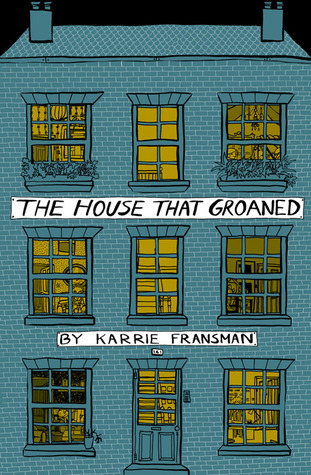
39. Karrie Fransman - The House that Groaned (Square Peg 2014)

This is a strange little book:a graphic novel, told in beautiful drawings, and coloured entirely in shades of blue-gray-green. It tells the story of the inhabitants of a Victorian tenement building in London, each one of whom is absolutely odd. The story begins when Barbara, a make-up artist, moves into the building and is kept awake at night by the clattering and clunking of pipes and the voices of her neighbours. Across the hall is Matt, a man who retouches photographs of models at home for a living, and cannot touch another person in real life without wearing gloves. Downstairs is Janet, who lost her husband and child, and then a lot of weight, and manages a weight loss group. She is tormented by anonymous phone calls telling her to eat more. Upstairs are Marion, a hedonist who runs orgies and eats a lot (and is making the phone calls to Janet) and Brian, who is obsessed with women who are sick, dying, ill, or obese. Finally, at the top of the building is the owner, Mrs. Durbach, who is so faded away and lonely that Barbara initially can't spot her among the furniture. She slowly fades into the chair as they talk. The humour is very dark, and often explicit in a way that made me cringe, a little. All of the people in the house are lonely, fantasizing futures and realities that don't exist - and in some cases, this becomes an unhealthy obsession. I loved the art, but the story itself felt nasty, and unpleasant. I wanted to shower after I read it. I suppose that such a visceral response is an indicator of the author's talent.

This is a strange little book:a graphic novel, told in beautiful drawings, and coloured entirely in shades of blue-gray-green. It tells the story of the inhabitants of a Victorian tenement building in London, each one of whom is absolutely odd. The story begins when Barbara, a make-up artist, moves into the building and is kept awake at night by the clattering and clunking of pipes and the voices of her neighbours. Across the hall is Matt, a man who retouches photographs of models at home for a living, and cannot touch another person in real life without wearing gloves. Downstairs is Janet, who lost her husband and child, and then a lot of weight, and manages a weight loss group. She is tormented by anonymous phone calls telling her to eat more. Upstairs are Marion, a hedonist who runs orgies and eats a lot (and is making the phone calls to Janet) and Brian, who is obsessed with women who are sick, dying, ill, or obese. Finally, at the top of the building is the owner, Mrs. Durbach, who is so faded away and lonely that Barbara initially can't spot her among the furniture. She slowly fades into the chair as they talk. The humour is very dark, and often explicit in a way that made me cringe, a little. All of the people in the house are lonely, fantasizing futures and realities that don't exist - and in some cases, this becomes an unhealthy obsession. I loved the art, but the story itself felt nasty, and unpleasant. I wanted to shower after I read it. I suppose that such a visceral response is an indicator of the author's talent.
25rasdhar
40. Terry Pratchett - Making Money (Doubleday 2007)
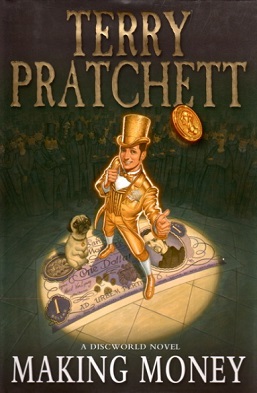
This was a re-read. I've been wondering if my nephew is old enough for these books, and while I really enjoyed this the first time and this time again, I think he might be a bit young. Moist von Lipwig, former forger, thief, and general con, is given a reprieve from the death penalty by the Patrician of Ankh-Morpork, Lord Vetinari. Vetinari lets him go on the condition that he revives Ankh-Morpork's defunct postal system, which is described in the events of Going Postal. In Making Money, Lipwig is bored. The post office is running well and at a profit. The golem assigned to monitor him and prevent his escape has moved on to other pursuits. His fiance, Adora Belle Dearhart (known affectionately as 'Spike') runs a Golem Trust, locating and freeing buried golems, and is off doing her own work. He's breaking into his own office at midnight for fun, buying lockpicks he hardly uses, and generally being reckless, when Vetinari summons him again. Through a series of unsubtle machinations, Vetinari puts him in charge of Ankh-Morpork's Central Bank, and we get to see Lipwig invent paper money, discard (mostly) the gold standard, and generally make fun of economists, bankers, and the idea of mutually assured destruction/disarmament and everything else in between. In a small sub-plot, a scion of the banking family is increasingly obsessed with Vetinari and progressively believes he is becoming the Patrician.
I haven't read Pratchett in a while and I was reminded how very talented he is at taking complex ideas and making them not only palatable, but also so entertaining. He has a touch of phrase that I haven't seen anywhere else. I giggled all the way through this book like a kid. However, having said that, I think my nephew might have to wait a bit - I had forgotten about the dog finding a basement room full of bondage gear or the the ghost of the ancient professor who was insorcelled into a chair in a strip club as a reward for helping them communicate with the golems . I'd prefer not to explain what a strip club is to a ten year old, thank you.
Toward the end of the book, Vetinari tells his clerk that when Lipwig gets bored with the bank, he's going to set him on the tax system. Unfortunately, we never got that book, but we did get Raising Steam, in which he raises, in fact, steam, heralding Ankh-Morpork's introduction to steam engines. Anyhow, I'm saving this quote for my office whiteboard:
and this one just because it's funny. Lord Vetinari, the tyrant of Ankh-Morpork, reflecting on democracy:
This was a re-read. I've been wondering if my nephew is old enough for these books, and while I really enjoyed this the first time and this time again, I think he might be a bit young. Moist von Lipwig, former forger, thief, and general con, is given a reprieve from the death penalty by the Patrician of Ankh-Morpork, Lord Vetinari. Vetinari lets him go on the condition that he revives Ankh-Morpork's defunct postal system, which is described in the events of Going Postal. In Making Money, Lipwig is bored. The post office is running well and at a profit. The golem assigned to monitor him and prevent his escape has moved on to other pursuits. His fiance, Adora Belle Dearhart (known affectionately as 'Spike') runs a Golem Trust, locating and freeing buried golems, and is off doing her own work. He's breaking into his own office at midnight for fun, buying lockpicks he hardly uses, and generally being reckless, when Vetinari summons him again. Through a series of unsubtle machinations, Vetinari puts him in charge of Ankh-Morpork's Central Bank, and we get to see Lipwig invent paper money, discard (mostly) the gold standard, and generally make fun of economists, bankers, and the idea of mutually assured destruction/disarmament and everything else in between. In a small sub-plot, a scion of the banking family is increasingly obsessed with Vetinari and progressively believes he is becoming the Patrician.
I haven't read Pratchett in a while and I was reminded how very talented he is at taking complex ideas and making them not only palatable, but also so entertaining. He has a touch of phrase that I haven't seen anywhere else. I giggled all the way through this book like a kid. However, having said that, I think my nephew might have to wait a bit - I had forgotten about
Toward the end of the book, Vetinari tells his clerk that when Lipwig gets bored with the bank, he's going to set him on the tax system. Unfortunately, we never got that book, but we did get Raising Steam, in which he raises, in fact, steam, heralding Ankh-Morpork's introduction to steam engines. Anyhow, I'm saving this quote for my office whiteboard:
“Students, eh? Love 'em or hate 'em, you can't hit them with a shovel!”
and this one just because it's funny. Lord Vetinari, the tyrant of Ankh-Morpork, reflecting on democracy:
He was a great believer in letting a thousand voices be heard, because this meant that all he actually needed to do was listen only to the ones that had anything useful to say, “useful” in this case being defined in the classic civil-service way as “inclining to my point of view.” In his experience, it was a number generally smaller than ten. The people who wanted a thousand, etc., really meant that they wanted their own voice to be heard while the other nine hundred and ninety-nine were ignored, and for this purpose the gods had invented the committee. Vetinari was very good at committees, especially when Drumknott took the minutes. What the iron maiden was to stupid tyrants, the committee was to Lord Vetinari; it was only slightly more expensive,* far less messy, considerably more efficient, and, best of all, you had to force people to climb inside the iron maiden.
* The only real expense was tea and biscuits halfway through, which seldom happened with the iron maiden.
26rasdhar
Robert A Caro - The Power Broker parts 1 and 2
I've been reading this book along with the 99% Invisible podcast online book club: they had Robert Caro, Conan o'Brien and others in to discuss the early chapters. https://99percentinvisible.org/club/
I thought I'd drop in some thoughts on part I and II, which is what I've read so far, in this massive 1000+ page biography. Technically, it is a biography of Robert Moses, a civil servant and administrator who did many great things for New York, including building parks, public works, bridges, and infrastructure, but also progressively amassed great unaccounted power and wealth and didn't always deploy them to the public good. In reality, it's a history of civic administration, and how a city was built. If that seems dry, I assure you it is not - Caro's prose is excellent, if a little florid at times, and he's clearly far too deep into his research to be very objective, but he neither loves nor hates Moses, and is meticulous about the facts, so it balances out.
I think one small thing that shocked me so much was how closely allied the New York Republican party was to the Klan, even given the time period of this book. Caro writes, for instance:
The book is also a masterclass in politics and how skilfully it was conducted. Caro references Belle Moskowitz, a trusted advisor to Governor Al Smith, who amassed and wielded power behind the scenes: "The Bureau made recommendations. Mrs Moskowitz made laws."
Finally, it is disheartening to see how the same fights fought in the 1920s are still up for debate today. This argument on labour laws tells it all, and could be equally applied to the conditions of gig workers today.
I've been reading this book along with the 99% Invisible podcast online book club: they had Robert Caro, Conan o'Brien and others in to discuss the early chapters. https://99percentinvisible.org/club/
I thought I'd drop in some thoughts on part I and II, which is what I've read so far, in this massive 1000+ page biography. Technically, it is a biography of Robert Moses, a civil servant and administrator who did many great things for New York, including building parks, public works, bridges, and infrastructure, but also progressively amassed great unaccounted power and wealth and didn't always deploy them to the public good. In reality, it's a history of civic administration, and how a city was built. If that seems dry, I assure you it is not - Caro's prose is excellent, if a little florid at times, and he's clearly far too deep into his research to be very objective, but he neither loves nor hates Moses, and is meticulous about the facts, so it balances out.
I think one small thing that shocked me so much was how closely allied the New York Republican party was to the Klan, even given the time period of this book. Caro writes, for instance:
Three successive chairmen of Suffolk's Republican party had been members of the Klan, and anyone who needed an additional symbol of its power had only to look at the flagpole in front of the Islip Town Hall: the pole, read the inscription on an attached plaque, had been donated by the Islip branch of the Ladies of the Klan and gratefully accepted by the Town Board. (In 1928, when Al Smith ran for President, fiery crosses would blaze on the hills of Alabama and Mississippi - and, by the orders of the county GOP organisation, on the hills of Suffolk.)and, when Robert Moses began to acquire property for parks on Long Island, this debate in the Senate:
"People on Long Island are afraid to go to bed at night for fear that when they wake up in the morning they would find their property seized by Robert Moses," another Republican senator shouted. Jumping out of his seat, a Democrat replied, "Is it not true that if they don't go to bed on Long Island, it is because the bedsheets may be in use elsewhere? - a reference to the Ku Klux Klan.
The book is also a masterclass in politics and how skilfully it was conducted. Caro references Belle Moskowitz, a trusted advisor to Governor Al Smith, who amassed and wielded power behind the scenes: "The Bureau made recommendations. Mrs Moskowitz made laws."
Finally, it is disheartening to see how the same fights fought in the 1920s are still up for debate today. This argument on labour laws tells it all, and could be equally applied to the conditions of gig workers today.
"During a debate on a bill that would required 'one day's rest in seven' for women and children, Republican senators beholden to cannery interests pleaded exemptions for canneries. Smith waited until every Republican had finished. Then he rose and walked between their desks down to the well of the chamber. Whirling to face them, he said quietly, "I have read carefully the commandment, 'Remember the Sabbath Day to keep it holy.' I am unable to find any language in it that says 'except in the canneries.'"
27rasdhar
41. Marina Tsvetaeva -Earthly Signs: Moscow Diaries, 1917–1922 (Yale University Press, 2002), translated from the Russian by Jamey Gambrell

I knew of Marina Tsvetaeva's poetry but this is the first of her prose that I've read. It is a collection of essays, written while she lived in Moscow, during the famine of 1919, until her departure from Russia. It was a time of great personal creativity as well as deep privation - Tsvetaeva describes scrounging for food, digging for potatoes, exchanging belongings for scraps to eat. Just twenty-five years old, with her husband missing after he joined the White Army to fight against the Bolsheviks, and barely enough to eat, she placed both her young daughters in an orphanage in 1919, hoping that this would atleast ensure that they received enough food to survive, but her youngest was to die of malnutrition in 2020. This is also the period during which she wrote her two major pro-imperial, anti-communist works: Lebedinyi stan (The Encampment of the Swans), a verse poem about the civil war, and Tsar-devitsa (Tsar Maiden), a poem about the imperial family.
In this collection, she draws from her diaries to put together essays on life in these difficult times. They are impressionistic accounts, collecting small incidents, sights, bits of conversation. 'Free Passage' for instance describes her attempt to barter belongings for food on a train journey; she discovers her treasures have no value. Another essay describes her brief time working in a municipal office, with the tedium of the work overcome only by a frantic rush to collect an allotment of potatoes. In one particularly startling moment, she describes living in an attic with her daughters, with no food, no water, no clothes, and no hope. At one point a thief breaks in, but seeing their state of squalor, offers her money instead.
Gambrell has an excellent introduction in which she talks about the challenges of translating Tsvetaeva, who is notoriously difficult to render into any other language. She is compared at one point to Hopkins, and I can imagine, even without knowing Russian, how difficult challenging that sort of unique rhythm must be. This is a terribly bleak, sad book, and I suspect it will stay with me for a while.

I knew of Marina Tsvetaeva's poetry but this is the first of her prose that I've read. It is a collection of essays, written while she lived in Moscow, during the famine of 1919, until her departure from Russia. It was a time of great personal creativity as well as deep privation - Tsvetaeva describes scrounging for food, digging for potatoes, exchanging belongings for scraps to eat. Just twenty-five years old, with her husband missing after he joined the White Army to fight against the Bolsheviks, and barely enough to eat, she placed both her young daughters in an orphanage in 1919, hoping that this would atleast ensure that they received enough food to survive, but her youngest was to die of malnutrition in 2020. This is also the period during which she wrote her two major pro-imperial, anti-communist works: Lebedinyi stan (The Encampment of the Swans), a verse poem about the civil war, and Tsar-devitsa (Tsar Maiden), a poem about the imperial family.
In this collection, she draws from her diaries to put together essays on life in these difficult times. They are impressionistic accounts, collecting small incidents, sights, bits of conversation. 'Free Passage' for instance describes her attempt to barter belongings for food on a train journey; she discovers her treasures have no value. Another essay describes her brief time working in a municipal office, with the tedium of the work overcome only by a frantic rush to collect an allotment of potatoes. In one particularly startling moment, she describes living in an attic with her daughters, with no food, no water, no clothes, and no hope. At one point a thief breaks in, but seeing their state of squalor, offers her money instead.
Gambrell has an excellent introduction in which she talks about the challenges of translating Tsvetaeva, who is notoriously difficult to render into any other language. She is compared at one point to Hopkins, and I can imagine, even without knowing Russian, how difficult challenging that sort of unique rhythm must be. This is a terribly bleak, sad book, and I suspect it will stay with me for a while.
28kidzdoc
The Power Broker was already high on the list of tomes I want to read in the not too distant future, along with Caro's series about LBJ, but your comments pushed it even higher. I had no idea that he, and the New York Republican Party, was closely aligned with the KKK!
29arubabookwoman
My husband loved The Power Broker, but he's from New York. It somehow never interested me, but I loved Caro's multi-volume LBJ biography, so perhaps I should pick it up.
30rasdhar
>28 kidzdoc: Oh, I should clarify - the book does not say Moses had anything to do with the KKK, just the Republican party. The quotes I have are background to what Moses was up to.
32Julie_in_the_Library
>15 rasdhar: French's prose is one of the things I loved the most in her Dublin murder squad books. I haven't read any of her other works yet, but I probably will one of these days.
34rasdhar
42. Mary Roberts Rinehart - Miss Pinkerton (originally published as 'The Double Alibi' in 1932, republished in 2019 by American Mystery Classics)

Mary Roberts Rinehart was an American mystery novelist. She wrote primarily stand-alone novels, but did a small run of novels and stories starring her character Hilda Adams, a nurse who assists the police in investigations during the course of her duties. There's a very pleasant, will-they won't-they edge to her interactions with Inspector Patton of the police, who affectionately calls her 'Miss Pinkerton' for her work. In this book, Herbert Wynne, the lazy, unemployed, spendthrift nephew of a rich old invalid, Miss Juliet Mitchell, is shot to death one night. Initially, the prosecutor claims that Herbert shot himself by accident, but to Inspector Patton, things don't add up, and he's particularly suspicious of the fact that the prosecutor is close to the family. It's no secret that Miss Mitchell disliked her nephew, and was planning to cut him off. Inspector Patton sends in Hilda, ostensibly to look after Miss Mitchell, but in reality, to poke around. The book is the archetype of the 'Had I But Known' trope: Hilda, through the narrative, drops hints to the reader indicating that things aren't quite as they seem.
Although the writing is extremely old-fashioned, and certainly slow by today's standards, I enjoyed the gentle (and genteel) pace of this book. I like that Hilda is torn by her distaste for betraying the confidence of people she cares for, and her moral obligation to tell the truth and help resolve the crime. I like that Patton stands up for Hilda in a very courteous way, insisting that she's as good as any of his detectives when others dismiss her as 'just a nurse'. I know that there's a movie adaptation as well, starring Joan Blondell as Hilda and George Brent as Patton: I'm going to try and get ahold of that, if I can.
It's a shame that these lovely, well-produced reissue editions still bear the name of that horrid Otto Penzler. I'm content borrowing them from the library; I would not want them on my shelf. I'm keeping a lookout for the original edition, if I can find it.

Mary Roberts Rinehart was an American mystery novelist. She wrote primarily stand-alone novels, but did a small run of novels and stories starring her character Hilda Adams, a nurse who assists the police in investigations during the course of her duties. There's a very pleasant, will-they won't-they edge to her interactions with Inspector Patton of the police, who affectionately calls her 'Miss Pinkerton' for her work. In this book, Herbert Wynne, the lazy, unemployed, spendthrift nephew of a rich old invalid, Miss Juliet Mitchell, is shot to death one night. Initially, the prosecutor claims that Herbert shot himself by accident, but to Inspector Patton, things don't add up, and he's particularly suspicious of the fact that the prosecutor is close to the family. It's no secret that Miss Mitchell disliked her nephew, and was planning to cut him off. Inspector Patton sends in Hilda, ostensibly to look after Miss Mitchell, but in reality, to poke around. The book is the archetype of the 'Had I But Known' trope: Hilda, through the narrative, drops hints to the reader indicating that things aren't quite as they seem.
Although the writing is extremely old-fashioned, and certainly slow by today's standards, I enjoyed the gentle (and genteel) pace of this book. I like that Hilda is torn by her distaste for betraying the confidence of people she cares for, and her moral obligation to tell the truth and help resolve the crime. I like that Patton stands up for Hilda in a very courteous way, insisting that she's as good as any of his detectives when others dismiss her as 'just a nurse'. I know that there's a movie adaptation as well, starring Joan Blondell as Hilda and George Brent as Patton: I'm going to try and get ahold of that, if I can.
It's a shame that these lovely, well-produced reissue editions still bear the name of that horrid Otto Penzler. I'm content borrowing them from the library; I would not want them on my shelf. I'm keeping a lookout for the original edition, if I can find it.
35FlorenceArt
>34 rasdhar: I only read two books by Rinehart, but I enjoyed them, especially K. The other one was The Circular Staircase.
What’s wrong with Otto Penzler?
What’s wrong with Otto Penzler?
36kjuliff
>34 rasdhar: I enjoyed this review and noted Mary Roberts Rinehart. Miss Pinkerton is not available on audio but a number of her books are and I’ve put a couple on my wish list. I like that slowness that is evident in earlier novels. Such novels can be a welcome relief and they can still hold the reader’s attention. I’m looking forward to The Circular Staircase .
37lisapeet
As a New Yorker and amateur NY history buff, I've wanted to read The Power Broker for ages... it's such a commitment, though. But your review may push me over the edge, because it just sounds so interesting. I didn't realize 99% Invisible had a book club, either—that's cool.
38rasdhar
>35 FlorenceArt: >36 kjuliff: The Circular Staircase is on my list. It's usually touted as the archetype of the 'Had I But Told You' trope.
Also, re Penzler, he spent years moaning about how the PC police are forcing publishers to publish books by (gasp) women! Black people! Brown people! and eventually everyone got tired of it. Rinehart is a rare exception - he's said before about women writers, "They may be fun, they may have their charm, but they are not serious literature and don’t deserve an Edgar." (by the way, he includes Agatha Christie in this). He's also very much a racist. Googling "Otto Penzler controversy" will give you a day of miserable reading about all the nasty little things he says.
>37 lisapeet: It's definitely a commitment, but I'm enjoying it. It helps that Caro's prose is very readable and fast-paced.
Also, re Penzler, he spent years moaning about how the PC police are forcing publishers to publish books by (gasp) women! Black people! Brown people! and eventually everyone got tired of it. Rinehart is a rare exception - he's said before about women writers, "They may be fun, they may have their charm, but they are not serious literature and don’t deserve an Edgar." (by the way, he includes Agatha Christie in this). He's also very much a racist. Googling "Otto Penzler controversy" will give you a day of miserable reading about all the nasty little things he says.
>37 lisapeet: It's definitely a commitment, but I'm enjoying it. It helps that Caro's prose is very readable and fast-paced.
39rasdhar
43. Agatha Christie - Murder on the Orient Express
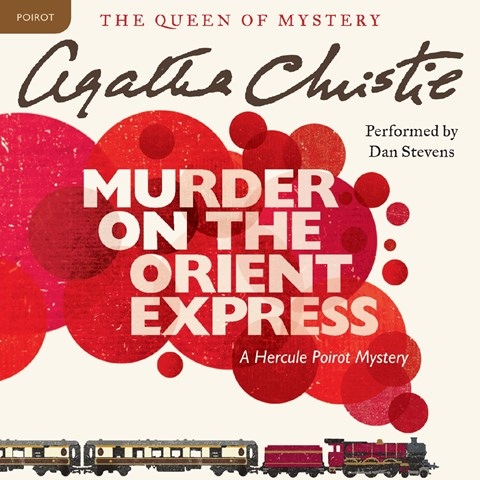
This is a re-read, or rather, a re-listen. I heard the audiobook narrated by Dan Stevens (you might remember him as Matthew Crawley from the show, Downton Abbey). He's a very good actor, and an excellent narrator. I loved his Poirot, which reminded me a lot of David Suchet's depiction. He's fairly good at accents generally, and somehow managed to sound convincingly like an old Russian countess while being a middle-aged British man. I enjoyed the narration very much. It made my walks home very pleasant.
This is a re-read, or rather, a re-listen. I heard the audiobook narrated by Dan Stevens (you might remember him as Matthew Crawley from the show, Downton Abbey). He's a very good actor, and an excellent narrator. I loved his Poirot, which reminded me a lot of David Suchet's depiction. He's fairly good at accents generally, and somehow managed to sound convincingly like an old Russian countess while being a middle-aged British man. I enjoyed the narration very much. It made my walks home very pleasant.
40kjuliff
>39 rasdhar: That’s an old favorite of mine, so much so that I was sorely tempted to read the Australian take in Everyone On This Train Is A Suspect.
“When the Australian Mystery Writers' Society invited me to their crime-writing festival aboard the Ghan, the famous train between Darwin and Adelaide, I was hoping for some inspiration for my second book. ” - Benjamin Stevenson.
“When the Australian Mystery Writers' Society invited me to their crime-writing festival aboard the Ghan, the famous train between Darwin and Adelaide, I was hoping for some inspiration for my second book. ” - Benjamin Stevenson.
41rasdhar
>40 kjuliff: I read Benjamin Stevenson's other book (Everyone in My Family Has Killed Someone) and found it over-stylized and a bit annoying. It was very consciously literary, if that's a thing. I am tempted to try Everyone On this Train is a Suspect because I've heard it's much better.
42FlorenceArt
>38 rasdhar: Urgh, now I get why you wouldn’t want to buy books published by him. I’m torn myself. Rinehart is in the public domain I think, so I can easily find a mediocre edition on Kobo for free or next to nothing, but I would much rather like a good quality edition. Although unfortunately the price is never a guarantee that I will get that.
43rasdhar
44. Balli Kaur Jaswal - Inheritance (Sleepers Publishing, 2013)
I had planned to read more fiction from Singapore and Malaysia this year, and I've slacked off a bit in the last month. Balli Kaur Jaswal is an author with Singaporean roots, now living in Australia. This book won the Sydney Morning Herald’s Best Young Australian Novelist Award in 2014. It traces the evolution of a family, originally from India, living in Singapore from the 1970s to the 1990s. Jaswal writes particularly about the Sikh diaspora, their religious and social cultures, and the struggle to adapt to modernity, particularly outside India and the Punjab region.
Inheritance is about two generations of a family, living with Singapore and struggling with reconciling their identities amidst a rapidly changing social and economic environment. Harbeer Singh moves to Singapore with his young wife, Dalveer. While he embraces Singapore’s competitive, rigid social environment, she struggles to adapt. They have three children, and she dies in childbirth, never knowing her youngest. The book is divided into three sections, each with a chapter focusing one of the four remaining members of the family. Each family member faces their own, specific peculiar challenges. While Harbeer assimilates into Singapore’s tight, conformist society, he finds that his children do not, and he is trailed constantly by the ghost of his dead wife. The oldest, Gurdev, is most like him but cannot understand his own three daughters, who have different ideas of success and freedom, nor his wife, who hates how society gossips about the rest of his family. Narain, his second son, is gay: homosexuality is illegal in Singapore and Harbeer cannot comprehend nor comes to terms with this: Narain, in turn, can't fit in and struggles to maintain covert relationships. The youngest, Amrit, has mental health issues, struggles to keep a job, has problems with alcohol, and is not diagnosed until late in adulthood: all anathema to the conservative Sikh diaspora, which is quick to condemn them.
The title, ‘Inheritance’ refers not only to the property and money that Harbeer thinks his younger children ought not to inherit, for their many ‘sins’ but also to the genetic links: a family history of mental health issues, so visible in his daughter, possibly emerging in his grand-daughter, and in himself. It refers as well, to their culture and upbringing, and how they carry it from country to country, struggling to adapt and evolve. This was a very well-written, but sad book. It did end on a note of hope, but as a South Asian living in a diaspora, it was painfully familiar in the story it told. I’ll definitely be reading her other books.
I had planned to read more fiction from Singapore and Malaysia this year, and I've slacked off a bit in the last month. Balli Kaur Jaswal is an author with Singaporean roots, now living in Australia. This book won the Sydney Morning Herald’s Best Young Australian Novelist Award in 2014. It traces the evolution of a family, originally from India, living in Singapore from the 1970s to the 1990s. Jaswal writes particularly about the Sikh diaspora, their religious and social cultures, and the struggle to adapt to modernity, particularly outside India and the Punjab region.
Inheritance is about two generations of a family, living with Singapore and struggling with reconciling their identities amidst a rapidly changing social and economic environment. Harbeer Singh moves to Singapore with his young wife, Dalveer. While he embraces Singapore’s competitive, rigid social environment, she struggles to adapt. They have three children, and she dies in childbirth, never knowing her youngest. The book is divided into three sections, each with a chapter focusing one of the four remaining members of the family. Each family member faces their own, specific peculiar challenges. While Harbeer assimilates into Singapore’s tight, conformist society, he finds that his children do not, and he is trailed constantly by the ghost of his dead wife. The oldest, Gurdev, is most like him but cannot understand his own three daughters, who have different ideas of success and freedom, nor his wife, who hates how society gossips about the rest of his family. Narain, his second son, is gay: homosexuality is illegal in Singapore and Harbeer cannot comprehend nor comes to terms with this: Narain, in turn, can't fit in and struggles to maintain covert relationships. The youngest, Amrit, has mental health issues, struggles to keep a job, has problems with alcohol, and is not diagnosed until late in adulthood: all anathema to the conservative Sikh diaspora, which is quick to condemn them.
The title, ‘Inheritance’ refers not only to the property and money that Harbeer thinks his younger children ought not to inherit, for their many ‘sins’ but also to the genetic links: a family history of mental health issues, so visible in his daughter, possibly emerging in his grand-daughter, and in himself. It refers as well, to their culture and upbringing, and how they carry it from country to country, struggling to adapt and evolve. This was a very well-written, but sad book. It did end on a note of hope, but as a South Asian living in a diaspora, it was painfully familiar in the story it told. I’ll definitely be reading her other books.
44BLBera
I love the Russians as well although I am not as well read in the modern ones as I would like.
I look forward to the new Tana French novel. I think I'm # 10 on the library's wait list.
>24 rasdhar: I love this cover.
>27 rasdhar: This sounds good; I haven't read anything by her.
I look forward to the new Tana French novel. I think I'm # 10 on the library's wait list.
>24 rasdhar: I love this cover.
>27 rasdhar: This sounds good; I haven't read anything by her.
45kjuliff
>43 rasdhar: Great and comprehensive review as usual. I am very interested in the history of this region, having been exposed at school to many Chinese girls whose families had left what was then “Malaya”, before Singapore became a separate country. I’ve also visited Malaysia as a traveler not a tourist. Are the pro-Malay regulations on non ethnic Malays not being able to own businesses is still in effect?
I should read more but lately for some reason I can’t read at all. I suppose this will pass but it’s never happened before.
I should read more but lately for some reason I can’t read at all. I suppose this will pass but it’s never happened before.
46rasdhar
>44 BLBera: Thanks! I read a lot of modern Russian lit some years ago - I'm now poking around South East Asia. If you're starting with Tsvetaeva, I suggest the poetry first, and not the prose. She's a better poet than a writer.
>45 kjuliff: I'm not Malaysian, nor have I lived there, so I'm probably not the best informed on this, but from what I do know, living next door - Malaysia does still have strong (and controversial) bumiputera (son of soil) policies to protect indigenous Malays. These were originally affirmative action to counteract British colonialism, under which Chinese merchants amassed a lot of wealth and political power, often at the expense of indigenous Malays. In practice, its very controversial still because there are arguments that the policies are vague, contradictory, and tend to benefit only the already privileged. The idea that you have to be Malay to open a business is a common misconception: anyone can open and own a business, but certain government contracts are restricted to majority bumiputra (ethnically Malay) companies only.
>45 kjuliff: I'm not Malaysian, nor have I lived there, so I'm probably not the best informed on this, but from what I do know, living next door - Malaysia does still have strong (and controversial) bumiputera (son of soil) policies to protect indigenous Malays. These were originally affirmative action to counteract British colonialism, under which Chinese merchants amassed a lot of wealth and political power, often at the expense of indigenous Malays. In practice, its very controversial still because there are arguments that the policies are vague, contradictory, and tend to benefit only the already privileged. The idea that you have to be Malay to open a business is a common misconception: anyone can open and own a business, but certain government contracts are restricted to majority bumiputra (ethnically Malay) companies only.
47LolaWalser
Such intriguing reads, and so many of them!
>27 rasdhar:
Tsvetaeva is one of my heart's favourites, which are the hardest to talk about... so, mostly, I don't. :)
I'm very curious about An English made in India and whether/what it has to say about writers like G. V. Desani or Nirad Chaudhuri. Both of whom, I think, out-English the English, the former in the cause of satire, the latter in pure conquest.
>27 rasdhar:
Tsvetaeva is one of my heart's favourites, which are the hardest to talk about... so, mostly, I don't. :)
I'm very curious about An English made in India and whether/what it has to say about writers like G. V. Desani or Nirad Chaudhuri. Both of whom, I think, out-English the English, the former in the cause of satire, the latter in pure conquest.
48rasdhar
45. Ann Leckie - Ancillary Justice (Orbit 2013)
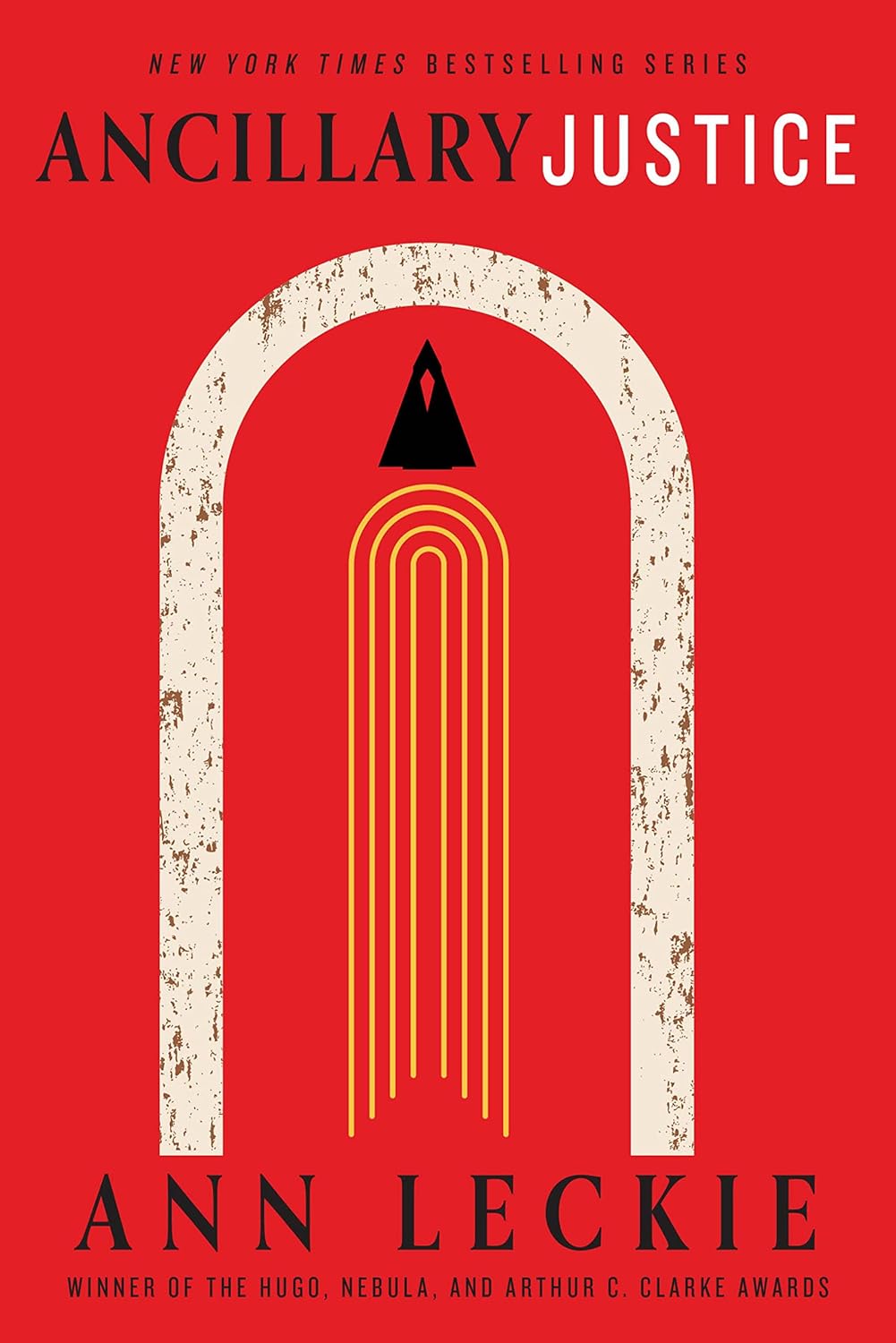
I have been utterly behind on all the books I've left halfway read - instead of finishing them, I began and completed Ann Leckie's great space opera, Ancillary Justice. I understand why this book gets praise and criticism in equal measure. It's a perfect encapsulation of the genre, but it does play it safe, not trying anything new, and has the hallmarks of a certain type of sci-fi - complex worldbuilding, weird alien names that are 80% vowels, and so on. Nonetheless, it's a good read and I enjoyed it.
Ancillary Justice concerns the expanding Radch Empire, which is ruled by Anaander Miaanai. We are not entirely sure what or who Anaander is - a human or an AI, but certainly, a consciousness spread across multiple bodies, who has been ruling for thousands of years. The Empire's expansion is enabled by the use of 'ancillaries' - human bodies that are co-opted and controlled by AIs. Usually, these bodies are taken from the planets that the Radch Empire conquers. On one such planet, Shis’urna, the annexation is proceeding somewhat peacefully (I personally enjoyed the extended discussion on fishing rights, although I don't know if everyone would). A Radch ship with AI, the Justice of Toren, has a group of ancillaries and is lead by the human Lieutenant Awn, and they are managing the annexation. In the course of doing so, they discover a plot of corruption and betrayal that reaches the very highest echelons of Radch society - Anaander Miaanai gets personally involved, and there's brutal bloodshed that takes lives, including that of Lieutenant Awn. In the present, we follow a person named Breq, and learn that Breq is actually one of the ancillaries from the Justice of Toren. Having managed to escape the ship, and imbued with the AI's consciousness, Breq is plotting revenge for Awn, having obtained a completely new identity. Breq comes across another former military officer, Seivarden, on a distant planet. Seivarden is drug addicted and lost, having gone AWOL since the slaughter described above. Breq rescues Seivarden, and utilizes this to return to one of Anaander Miaanai's palaces - ostensibly to sort out Seivarden's legal issues, but in reality, to exact revenge.
There are several things that I found so interesting about this book. The first, and most discussed, is the default use of female pronouns - Radch society does not differentiate between genders, and a lot of Breq/Justice of Toren's internal musings are about their difficulty in distinguishing gender in cultures where it is differentiated. Now, this is not new - Ursula K Le Guin did it first (and arguably, better) but it is well done. The second thing is the characterisation of AI as endowed with emotion. In the book, this is attributed to instrumental reasons: entirely 'logical' AIs get trapped in decision-making, exploring all the infinite options. Emotions, programmed in, allow it to overcome that. In practice, this means AIs become 'fond' of certain persons - as Justice of Toren become of Lieutentant Awn. Yet, you can see that the AI is still not human and is, even after breaking out, just mimicking, to an extent, human behaviour. Finally, the construction of Radch society is really interesting. It is built on a system of oligarchy and patronage. Lieutenant Awn's comparatively humble origins are impossible to ignore, as are Seivarden's comparatively higher ones: Breq/Justice of Toren is acutely aware of this, and even asks an officer, when they return to Anaander's palace, if someone with a lower birth than Seivarden would have been treated as kindly.
Ancillary Justice is the first of a trilogy. I really *must* complete all my pending books, but once I'm done, I will be plunging back in. I really want to find out what happens to Breq!
I have been utterly behind on all the books I've left halfway read - instead of finishing them, I began and completed Ann Leckie's great space opera, Ancillary Justice. I understand why this book gets praise and criticism in equal measure. It's a perfect encapsulation of the genre, but it does play it safe, not trying anything new, and has the hallmarks of a certain type of sci-fi - complex worldbuilding, weird alien names that are 80% vowels, and so on. Nonetheless, it's a good read and I enjoyed it.
Ancillary Justice concerns the expanding Radch Empire, which is ruled by Anaander Miaanai. We are not entirely sure what or who Anaander is - a human or an AI, but certainly, a consciousness spread across multiple bodies, who has been ruling for thousands of years. The Empire's expansion is enabled by the use of 'ancillaries' - human bodies that are co-opted and controlled by AIs. Usually, these bodies are taken from the planets that the Radch Empire conquers. On one such planet, Shis’urna, the annexation is proceeding somewhat peacefully (I personally enjoyed the extended discussion on fishing rights, although I don't know if everyone would). A Radch ship with AI, the Justice of Toren, has a group of ancillaries and is lead by the human Lieutenant Awn, and they are managing the annexation. In the course of doing so, they discover a plot of corruption and betrayal that reaches the very highest echelons of Radch society - Anaander Miaanai gets personally involved, and there's brutal bloodshed that takes lives, including that of Lieutenant Awn. In the present, we follow a person named Breq, and learn that Breq is actually one of the ancillaries from the Justice of Toren. Having managed to escape the ship, and imbued with the AI's consciousness, Breq is plotting revenge for Awn, having obtained a completely new identity. Breq comes across another former military officer, Seivarden, on a distant planet. Seivarden is drug addicted and lost, having gone AWOL since the slaughter described above. Breq rescues Seivarden, and utilizes this to return to one of Anaander Miaanai's palaces - ostensibly to sort out Seivarden's legal issues, but in reality, to exact revenge.
There are several things that I found so interesting about this book. The first, and most discussed, is the default use of female pronouns - Radch society does not differentiate between genders, and a lot of Breq/Justice of Toren's internal musings are about their difficulty in distinguishing gender in cultures where it is differentiated. Now, this is not new - Ursula K Le Guin did it first (and arguably, better) but it is well done. The second thing is the characterisation of AI as endowed with emotion. In the book, this is attributed to instrumental reasons: entirely 'logical' AIs get trapped in decision-making, exploring all the infinite options. Emotions, programmed in, allow it to overcome that. In practice, this means AIs become 'fond' of certain persons - as Justice of Toren become of Lieutentant Awn. Yet, you can see that the AI is still not human and is, even after breaking out, just mimicking, to an extent, human behaviour. Finally, the construction of Radch society is really interesting. It is built on a system of oligarchy and patronage. Lieutenant Awn's comparatively humble origins are impossible to ignore, as are Seivarden's comparatively higher ones: Breq/Justice of Toren is acutely aware of this, and even asks an officer, when they return to Anaander's palace, if someone with a lower birth than Seivarden would have been treated as kindly.
Ancillary Justice is the first of a trilogy. I really *must* complete all my pending books, but once I'm done, I will be plunging back in. I really want to find out what happens to Breq!
49kjuliff
>48 rasdhar: I’m definitely interested in thins book, because I’m really interested in AI and how it will fit in with the world. You mentioned that in the book, “emotions are programmed in” so it can become “fond” of certain people. My fear is that nothing is being programmed in AI any more. It’s programming itself.
It’s “launched by developers who have set up a simulation of the brain and then it’s fine tuned depending upon its responses. It was well-described by one worried AI developer: it as if we have dials - such as when we tried to find AM radio stations. We gradually twiddle the dials till we get responses that seem good or correct. That is, the developers don’t know how AI arrives at a conclusion, just that it does. Scary.
It’s “launched by developers who have set up a simulation of the brain and then it’s fine tuned depending upon its responses. It was well-described by one worried AI developer: it as if we have dials - such as when we tried to find AM radio stations. We gradually twiddle the dials till we get responses that seem good or correct. That is, the developers don’t know how AI arrives at a conclusion, just that it does. Scary.
50rasdhar
>49 kjuliff: The book has a good audio version, as well, read by Adjoa Andoh, who is a fantastic British voice actress. One of the quirks of the Justice of Toren AI is that it likes to learn music and songs and will keep humming/singing to itself. Andoh sings a few fragments here and there, in the narration, which really adds to it. I sampled a chapter, but read the rest in print.
51rasdhar
Robert A Caro - The Power Broker - Chapters 11-20

I'm reading this book along with the 99% Invisible online book club. Notes on part I and II can be found further up: https://www.librarything.com/topic/359708#8498962
Chapters 10-20
To quickly recap: the book is about Robert Moses, a New York politician and administrator who made tremendous and longlasting changes to the city, primarily through building parks, bridges and infrastructure, but progressed into corruption through his career. It's as much a biography of New York city as it is of Moses. Parts I and II detailed his early career, Part III is about his rise to power.
Moses, in 1924, had become close to Governor Al Smith, who appointed him President of the Long Island Park Commission. At that time, Long Island was owned primarily by robber barons, who had huge estates. They made sure that people could not disturb their peace, or access any public beaches, by ensuring that all public roads were kept unusable. At that time, New York had very few areas for public recreation or access. Moses' vision, as detailed in the earlier parts of the book, was to build beautiful public spaces that anyone could use. These chapters detail how he used clever legal drafting to isolate power within himself, got Governor Smith to sign off on whatever he wanted, and then bullied, cajoled, and harassed people into ceding control of the land he wanted. Some quick notes:
- He built some of the Northern State Parkway and Ocean Parkway by buying land from small farmers: where they refused to sell, he would simply move in, take it, and let them exhaust themselves trying to get their lands back. He built the rest through the estates of wealthy robber barons. But, he would take money from them (donations for the parks) to avoid bits of their estates, and run roughshod over small landholdings with no concern. He went from idealist to corrupt so fast!
- Some of the robber barons went to Al Smith to protest the building of parks, saying it would result in the area becoming "overrun with rabble from the city". Smith, a former dockworker himself, told them, "Rabble? Why, that's me."
- Moses finally discovers that control of the press is important. Headlines about rich golfers blocking public parks win Al Smith votes, and let Moses go on, unstopped. It is at this point that Moses fully embraces the principle that ends justify the means ("The important thing is to get things done." - he doesn't care how).
- Moses personally supervised the development of Jones Beach's art deco facilities, down to which bricks, and what designs. Having conquered Jones Beach, Moses sets his sights on Niagara Falls, brutally ousts the elderly philanthropists running it, and takes over. It's not even in New York City!
- He tries and fails to reform how boxing tickets are sold – earning him the epithet, the 'Curator of Cauliflowers'.
- His lifelong feud with Roosevelt begins. Moses has a particular contempt for Roosevelt's disability. When Al Smith is no longer Governor, and replaced by Roosevelt, this makes it slightly harder for Moses, but he has entrenched enough power to carry on.
- This is also when Moses becomes more vocally racist. Moses was actively discouraging Black people from using the parks he built. He considered Black people 'dirty'. When civic groups complained, Roosevelt ordered an investigation, found proof of Moses' racist practices, and then did nothing about it, because Moses threatened to resign in protest. Wow, just wow.
- Moses also now starts leaning Republican. When LaGuardia becomes Mayor, he convinces him to unify the parks departments of all the boroughs, and takes charge of it, becoming Park Commissioner, and including in his power the Triborough bridge project. He has workers working triple shifts, day and night, to redo Central Park to make it usable, he builds the zoo to keep Al Smith (who had a menagerie when he was governor) happy and does 1700 renovation projects in one year!
Additional fun facts: the online book club discussion had Rep Alexandria Ocasio-Cortez in to talk about chapters 16-20. They had Jamelle Bouie in for the previous chapters, but that was disappointing - he had not read the book and did not have anything useful to say.
https://99percentinvisible.org/episode/the-power-broker-04-rep-alexandria-ocasio...

I'm reading this book along with the 99% Invisible online book club. Notes on part I and II can be found further up: https://www.librarything.com/topic/359708#8498962
Chapters 10-20
To quickly recap: the book is about Robert Moses, a New York politician and administrator who made tremendous and longlasting changes to the city, primarily through building parks, bridges and infrastructure, but progressed into corruption through his career. It's as much a biography of New York city as it is of Moses. Parts I and II detailed his early career, Part III is about his rise to power.
Moses, in 1924, had become close to Governor Al Smith, who appointed him President of the Long Island Park Commission. At that time, Long Island was owned primarily by robber barons, who had huge estates. They made sure that people could not disturb their peace, or access any public beaches, by ensuring that all public roads were kept unusable. At that time, New York had very few areas for public recreation or access. Moses' vision, as detailed in the earlier parts of the book, was to build beautiful public spaces that anyone could use. These chapters detail how he used clever legal drafting to isolate power within himself, got Governor Smith to sign off on whatever he wanted, and then bullied, cajoled, and harassed people into ceding control of the land he wanted. Some quick notes:
- He built some of the Northern State Parkway and Ocean Parkway by buying land from small farmers: where they refused to sell, he would simply move in, take it, and let them exhaust themselves trying to get their lands back. He built the rest through the estates of wealthy robber barons. But, he would take money from them (donations for the parks) to avoid bits of their estates, and run roughshod over small landholdings with no concern. He went from idealist to corrupt so fast!
- Some of the robber barons went to Al Smith to protest the building of parks, saying it would result in the area becoming "overrun with rabble from the city". Smith, a former dockworker himself, told them, "Rabble? Why, that's me."
- Moses finally discovers that control of the press is important. Headlines about rich golfers blocking public parks win Al Smith votes, and let Moses go on, unstopped. It is at this point that Moses fully embraces the principle that ends justify the means ("The important thing is to get things done." - he doesn't care how).
- Moses personally supervised the development of Jones Beach's art deco facilities, down to which bricks, and what designs. Having conquered Jones Beach, Moses sets his sights on Niagara Falls, brutally ousts the elderly philanthropists running it, and takes over. It's not even in New York City!
- He tries and fails to reform how boxing tickets are sold – earning him the epithet, the 'Curator of Cauliflowers'.
- His lifelong feud with Roosevelt begins. Moses has a particular contempt for Roosevelt's disability. When Al Smith is no longer Governor, and replaced by Roosevelt, this makes it slightly harder for Moses, but he has entrenched enough power to carry on.
- This is also when Moses becomes more vocally racist. Moses was actively discouraging Black people from using the parks he built. He considered Black people 'dirty'. When civic groups complained, Roosevelt ordered an investigation, found proof of Moses' racist practices, and then did nothing about it, because Moses threatened to resign in protest. Wow, just wow.
- Moses also now starts leaning Republican. When LaGuardia becomes Mayor, he convinces him to unify the parks departments of all the boroughs, and takes charge of it, becoming Park Commissioner, and including in his power the Triborough bridge project. He has workers working triple shifts, day and night, to redo Central Park to make it usable, he builds the zoo to keep Al Smith (who had a menagerie when he was governor) happy and does 1700 renovation projects in one year!
Additional fun facts: the online book club discussion had Rep Alexandria Ocasio-Cortez in to talk about chapters 16-20. They had Jamelle Bouie in for the previous chapters, but that was disappointing - he had not read the book and did not have anything useful to say.
https://99percentinvisible.org/episode/the-power-broker-04-rep-alexandria-ocasio...
52valkyrdeath
I've somehow only just found your thread. Far too many interesting books to comment on individually at this point, but I've enjoyed catching up!
53Dilara86
>43 rasdhar: Inheritance and >47 LolaWalser: An English made in India have made it to my wishlist. Great thread!
I love Ann Leckie's Imperial Radch series. It's expanded beyond the original trilogy now, so there's a lot more to explore if you are so inclined. I met her once at a book signing and she was very gracious, too.
I love Ann Leckie's Imperial Radch series. It's expanded beyond the original trilogy now, so there's a lot more to explore if you are so inclined. I met her once at a book signing and she was very gracious, too.
54Ameise1
>48 rasdhar: I'm not a big fan of SF, but you've made me curious with your review.
55rasdhar
>52 valkyrdeath: Thanks for stopping by!
>53 Dilara86: Oh, that's great to hear. I'm very excited for Book 2 - currently on the waitlist at the library.
>54 Ameise1: Give it a try! I haven't read much contemporary SF (I did the usual Asimov etc when younger) and have been pleasantly surprised by this one.
>53 Dilara86: Oh, that's great to hear. I'm very excited for Book 2 - currently on the waitlist at the library.
>54 Ameise1: Give it a try! I haven't read much contemporary SF (I did the usual Asimov etc when younger) and have been pleasantly surprised by this one.
56rocketjk
>51 rasdhar: I don't know if it's covered in The Power Broker, but according to a documentary I saw about the Brooklyn Dodgers move to L.A. that I saw a while back, Moses was responsible to a large extent in pushing them out. The Dodgers had their own ballpark design for a stadium they wanted to build that would have been in Brooklyn but, as I remember it, would have provided easier access via car from the suburbs, where the Dodgers' fan base were moving in large numbers. But Moses had already selected the piece of land in Flushing for a new stadium (which eventually became Shea Stadium, where the Mets played). Moses offered to build the Dodgers a new stadium there, but the Dodgers didn't want to move to Queens. They were the Brooklyn Dodgers. Moses refused to budge, and so the team became the Los Angeles Dodgers. (Or perhaps they used that as an excuse to make the move they really wanted to make all along anyway. I'm not sure which it is.)
I think I've mentioned this on other threads, but you may be interested in the history, When Tenants Claimed the City: the Struggle for Citizenship in New York Housing by Roberta Gold. (Full disclosure: Roberta is my sister-in-law, the brilliant sister of my brilliant wife.) There is much discussion of the renters' groups protests against Moses' projects, many of which displaced whole neighborhoods, usually of low income, minority populations.
I think I've mentioned this on other threads, but you may be interested in the history, When Tenants Claimed the City: the Struggle for Citizenship in New York Housing by Roberta Gold. (Full disclosure: Roberta is my sister-in-law, the brilliant sister of my brilliant wife.) There is much discussion of the renters' groups protests against Moses' projects, many of which displaced whole neighborhoods, usually of low income, minority populations.
57rasdhar
>56 rocketjk: I think the move from Brooklyn to Los Angeles happened in the 1950s, and I'm still only around 1924 in terms of the story - I suspect it will be covered, but I'll update you when I get there. I'm entirely unsurprised. He gets progressively more venal, and more stubborn and self-involved, as he acquires more power.
I did see you mentioned the book on the lists thread - it sounds fascinating. How fortunate you are to be able to talk with the author, too! Fortunately my university library has a copy, and I'll look it up as soon as I'm done with Caro's book. Thank you for suggesting it to me!
I did see you mentioned the book on the lists thread - it sounds fascinating. How fortunate you are to be able to talk with the author, too! Fortunately my university library has a copy, and I'll look it up as soon as I'm done with Caro's book. Thank you for suggesting it to me!
58rasdhar
46. Butter by Asako Yuzuki (Ecco Books, 2024, translated by Polly Barton)

Every now and then our public library highlights some new books, and if I see something interesting, I pick it up. There are hits and misses, of course. I'm not sure which one this is.
Asako Yuzuki's novel, Butter, is based on the real life story of Kanae Kijima, a talented amateur chef who seduced, financially exploited, and killed three men, for which crimes she was convicted in Japan. The media frenzy that followed this trial was a misogynistic orgy, spreading beyond Kijima's crimes to affect any woman in its periphery, including the cooking school she had once attended. I did not know this before I read the book, and knowing it now, I can't shake off the feeling that the novel is a bit exploitative of the real circumstances: too close to the facts to be fiction, too far from the facts to be truthful.
Having said that, in Yuzuki's fictionalized retelling, a journalist, Rika Machida, reaches out to the fictionalized killer, Manako Kajii. Where others have failed to secure interviews, Rika succeeds - by asking her for the recipe for a dish she made for one of her victims, shortly before killing him. In a series of interviews, Rika is mesmerised, falling under Kajii's spell, only to snap out of it - almost too late. The book is filled with descriptions of food, mostly related by Kajii, who notes, contemptuously, that there are two things she cannot stand: "feminists and margarine". At Kajii's prodding, Rika, who conforms to Japan's obssession with thin women, eats butter - and other things, putting on weight.
The book is a serious exploration of misogyny and the double standards around physical appearances in Japan. It examines how women are pressured to maintain a certain look, and how harshly society treats people who don't conform. It also demonstrates how difficult it is for women to overcome the burden of domestic expectations. Kajii insists that a woman's role is to conform to male fantasies: to cook, to attend, to comfort. Rika, on the verge of professional success in a male dominated field, is the opposite: a stark contrast.
The book is very long and the plot moves quite slowly, but I found it easy to read and interesting enough to hold my attention. I'm a bit ambivalent about how I feel regarding the subject matter, though - so perhaps I'll revisit this review later on, once I've had a chance to think about it.

Every now and then our public library highlights some new books, and if I see something interesting, I pick it up. There are hits and misses, of course. I'm not sure which one this is.
Asako Yuzuki's novel, Butter, is based on the real life story of Kanae Kijima, a talented amateur chef who seduced, financially exploited, and killed three men, for which crimes she was convicted in Japan. The media frenzy that followed this trial was a misogynistic orgy, spreading beyond Kijima's crimes to affect any woman in its periphery, including the cooking school she had once attended. I did not know this before I read the book, and knowing it now, I can't shake off the feeling that the novel is a bit exploitative of the real circumstances: too close to the facts to be fiction, too far from the facts to be truthful.
Having said that, in Yuzuki's fictionalized retelling, a journalist, Rika Machida, reaches out to the fictionalized killer, Manako Kajii. Where others have failed to secure interviews, Rika succeeds - by asking her for the recipe for a dish she made for one of her victims, shortly before killing him. In a series of interviews, Rika is mesmerised, falling under Kajii's spell, only to snap out of it - almost too late. The book is filled with descriptions of food, mostly related by Kajii, who notes, contemptuously, that there are two things she cannot stand: "feminists and margarine". At Kajii's prodding, Rika, who conforms to Japan's obssession with thin women, eats butter - and other things, putting on weight.
The book is a serious exploration of misogyny and the double standards around physical appearances in Japan. It examines how women are pressured to maintain a certain look, and how harshly society treats people who don't conform. It also demonstrates how difficult it is for women to overcome the burden of domestic expectations. Kajii insists that a woman's role is to conform to male fantasies: to cook, to attend, to comfort. Rika, on the verge of professional success in a male dominated field, is the opposite: a stark contrast.
The book is very long and the plot moves quite slowly, but I found it easy to read and interesting enough to hold my attention. I'm a bit ambivalent about how I feel regarding the subject matter, though - so perhaps I'll revisit this review later on, once I've had a chance to think about it.
59RidgewayGirl
>58 rasdhar: Very interesting review. I have this book on my stack to read soon and you've made me more eager to read it. I have noticed that there's fat phobia in many Japanese novels.
60kjuliff
>58 rasdhar: This book sounds so interesting. I have a question though; I understand the book makes readers hungry for Japanese food, but does it inspire you to make it? Does the detail help you to imagine recipes?
On a general level I find Japanese culture fascinating. Probably because I can’t imagine it. I used to watch Kurosawa‘s films and have read a few Japanese novels, but I don’t ever think I can understand the culture. I don’t have the same feeling with the cultures of India and Africa. But Japanese culture seems more foreign in the literal sense.
It interests me too that the French in the late 19th century were so taken with that culture. And now Japanese food featuring butter! So French.
On a general level I find Japanese culture fascinating. Probably because I can’t imagine it. I used to watch Kurosawa‘s films and have read a few Japanese novels, but I don’t ever think I can understand the culture. I don’t have the same feeling with the cultures of India and Africa. But Japanese culture seems more foreign in the literal sense.
It interests me too that the French in the late 19th century were so taken with that culture. And now Japanese food featuring butter! So French.
61Ameise1
>58 rasdhar: Sounds interesting. My local library has a copy of it. I've put it on my list
62rasdhar
>59 RidgewayGirl: Yes, I've noticed the same. This novel really digs deep into that culture of shaming people for their weight, and tries to counter it.
>60 kjuliff: Butter was introduced to Japan not by the French, but the British, in the 19th century. Unlike the French, it's used primarily as a seasoning, and not to cook with. It's probably because traditional Japanese cuisine does not use a lot of dairy. I did not cook any of the dishes - I'm actually on a strict diet right now for health reasons. I enjoyed the book but I really do regret the timing. I had the worst craving for beef stew after reading it.
>61 Ameise1: Looking forward to your thoughts!
>60 kjuliff: Butter was introduced to Japan not by the French, but the British, in the 19th century. Unlike the French, it's used primarily as a seasoning, and not to cook with. It's probably because traditional Japanese cuisine does not use a lot of dairy. I did not cook any of the dishes - I'm actually on a strict diet right now for health reasons. I enjoyed the book but I really do regret the timing. I had the worst craving for beef stew after reading it.
>61 Ameise1: Looking forward to your thoughts!
63rasdhar
47. Graeme Macrae Burnet - Case Study (Saraband 2022)

(This review mentions suicide)
Graeme Macrae Burnet writes some of the most interesting mystery/crime novels today. His Bloody Project won a whole bunch of prizes, but I also enjoyed The Disappearance of Adele Beadeau last year. His particular schtick is the fictional book within the book, and Case Study follows this format.
In Case Study, our protagonist, known by his initials (GMB) is a writer with some interest in the development of psychiatry as a field. One day, he receives a parcel of diaries from a "Mr. Martin Grey" who tells him that they belong to a female relative of his, who was treated by the enfant terrible of the 1960s anti-psychiatry movement, a man called Collins Braithwaite. Mr. Grey tells GMB that the diaries contain some shocking allegations about Braithwaite, and hopes that GMB will find something to write about within the diaries. The rest of the book alternates between pages from the diaries and GMB's investigation of their contents.
Although Braithwaite is a person that Graeme Macrae Burnet has invented, the story is told as though he were real, and peppered with references to actual people who were a part of the anti-pyschiatry movement, notably the real life psychiatrist and writer, RD Laing, who is set up as Braithwaite's mentor. Later Braithwaite turns against him, as he does against everyone. The son of an ironmonger, showing academic aptitude, Braithwaite studies at Cambridge, where he is a very certain kind of magnetic, overbearing, jerk who holds private salons in which he bullies other scholars for their thoughts. He publishes a few books, which, though academically thin, become bestsellers in 1960s counterculture; earning him, for a brief time, fame, notoriety, and famous clients. But he's also incapable of holding down employment, routinely abrasive, and incredibly egoistic. Most of all, he treats women terribly, cannot hold down relationships, and ultimately has to face a slight accounting for this, which results in what we might call today, 'being cancelled' (deservedly).
The diaries are written by a young woman who adopts the name Rebecca Smythe, and goes to consult Braithwaite, around the time he falls from grace. He previously treated her sister, Veronica, a brilliant scholar, who completed suicide moments after walking out of a session with Braithwaite. Rebecca is convinced that Braithwaite has something to do with her sister's death, and pretends to be a patient to uncover the truth. Although Braithwaite does not know who she is, he can tell at once that she's faking something - he tells her, at some point that under all her layers of fakery is nothing at all. Rebecca in turn, a quiet, repressed, shy person, lets her Rebecca Smythe personality do all the things she wouldn't - flirt with a strange man, get drunk in a bar, spar wits with Braithwaite. The situation is not sustainable for either Rebecca or Braithwaite, and the rest of the novel documents this spiral.
Like all of Burnet's books, he balances his dark subjects with very real humour. You're never quite sure if Braithwaite is a sinister manipulator or a self-important buffoon, and so he keeps you guessing, and turning up the tension. Rebecca is unlikeable in many ways, deeply self-absorbed, even selfish, often spiteful, but also very sympathetic, because of how desperately she's trying to find not only the cause of her sister's death, but to also realise herself in the world. I liked the book very much. It's a short (200 pages) but dense read.
(edit: on re-reading my review I realised I had confused some of the characters' names; went back and fixed it).

(This review mentions suicide)
Graeme Macrae Burnet writes some of the most interesting mystery/crime novels today. His Bloody Project won a whole bunch of prizes, but I also enjoyed The Disappearance of Adele Beadeau last year. His particular schtick is the fictional book within the book, and Case Study follows this format.
In Case Study, our protagonist, known by his initials (GMB) is a writer with some interest in the development of psychiatry as a field. One day, he receives a parcel of diaries from a "Mr. Martin Grey" who tells him that they belong to a female relative of his, who was treated by the enfant terrible of the 1960s anti-psychiatry movement, a man called Collins Braithwaite. Mr. Grey tells GMB that the diaries contain some shocking allegations about Braithwaite, and hopes that GMB will find something to write about within the diaries. The rest of the book alternates between pages from the diaries and GMB's investigation of their contents.
Although Braithwaite is a person that Graeme Macrae Burnet has invented, the story is told as though he were real, and peppered with references to actual people who were a part of the anti-pyschiatry movement, notably the real life psychiatrist and writer, RD Laing, who is set up as Braithwaite's mentor. Later Braithwaite turns against him, as he does against everyone. The son of an ironmonger, showing academic aptitude, Braithwaite studies at Cambridge, where he is a very certain kind of magnetic, overbearing, jerk who holds private salons in which he bullies other scholars for their thoughts. He publishes a few books, which, though academically thin, become bestsellers in 1960s counterculture; earning him, for a brief time, fame, notoriety, and famous clients. But he's also incapable of holding down employment, routinely abrasive, and incredibly egoistic. Most of all, he treats women terribly, cannot hold down relationships, and ultimately has to face a slight accounting for this, which results in what we might call today, 'being cancelled' (deservedly).
The diaries are written by a young woman who adopts the name Rebecca Smythe, and goes to consult Braithwaite, around the time he falls from grace. He previously treated her sister, Veronica, a brilliant scholar, who completed suicide moments after walking out of a session with Braithwaite. Rebecca is convinced that Braithwaite has something to do with her sister's death, and pretends to be a patient to uncover the truth. Although Braithwaite does not know who she is, he can tell at once that she's faking something - he tells her, at some point that under all her layers of fakery is nothing at all. Rebecca in turn, a quiet, repressed, shy person, lets her Rebecca Smythe personality do all the things she wouldn't - flirt with a strange man, get drunk in a bar, spar wits with Braithwaite. The situation is not sustainable for either Rebecca or Braithwaite, and the rest of the novel documents this spiral.
Like all of Burnet's books, he balances his dark subjects with very real humour. You're never quite sure if Braithwaite is a sinister manipulator or a self-important buffoon, and so he keeps you guessing, and turning up the tension. Rebecca is unlikeable in many ways, deeply self-absorbed, even selfish, often spiteful, but also very sympathetic, because of how desperately she's trying to find not only the cause of her sister's death, but to also realise herself in the world. I liked the book very much. It's a short (200 pages) but dense read.
(edit: on re-reading my review I realised I had confused some of the characters' names; went back and fixed it).
64kjuliff
>63 rasdhar: Interesting and comprehensive review Rasdhar. For some reason I thought I had this book in my library but now I see I must have been thinking of a different book. Weird as I recognize the cover. I will definitely be reading this.
65rasdhar
>64 kjuliff: I hope you enjoy it!
66rasdhar
48. Percival Everett - The Trees (Graywolf Press, 2021)
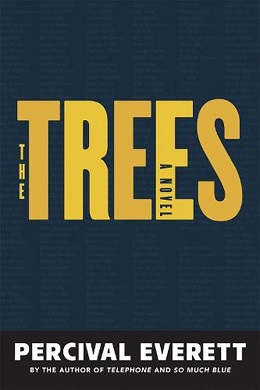
There have been enough people reviewing this book, that I don't need or want to add any more to the noise. I only wanted to say that it is probably one of my top reads of the year (and yes, I know we're still in April). This is the first book by Everett that I've read, and I was absolutely captivated, I could not put it down. Equal parts tears and laughter.
I'm linking the Reading Guide to the book that the Booker Prize people put together. It has some good resources, including links to a lot of background information on Emmett Till, and so on for the non-Americans like me. https://thebookerprizes.com/the-booker-library/features/reading-guide-the-trees-...
There have been enough people reviewing this book, that I don't need or want to add any more to the noise. I only wanted to say that it is probably one of my top reads of the year (and yes, I know we're still in April). This is the first book by Everett that I've read, and I was absolutely captivated, I could not put it down. Equal parts tears and laughter.
I'm linking the Reading Guide to the book that the Booker Prize people put together. It has some good resources, including links to a lot of background information on Emmett Till, and so on for the non-Americans like me. https://thebookerprizes.com/the-booker-library/features/reading-guide-the-trees-...
67lisapeet
>63 rasdhar: Burnet has a new one coming out this fall, A Case of Matricide. Not sure if I want to pick it up, since right off the bat the blurb mentions that a dog dies (yeah, there's "matricide" in the title, but that doesn't bother me as much as the dog... I know, I know). But I'm interested in reading his earlier stuff, because I've heard good things about His Bloody Project and Case Study
68rasdhar
>67 lisapeet: Oh no...I do like Burnet, but we recently lost our beloved dog, so perhaps I'll defer reading this one..
69rasdhar
49. Hilary Mantel - Mantel Pieces (London Review of Books/Fourth Estate, 2020)

Mantel Pieces is a collection of essays and book reviews, published by Hilary Mantel over the course of her career. In the introduction, she explains how she began as a writer for the London Review of Books in 1987, doubting her own ability to write essays. She goes on to explain that as time goes, she values kindness, insight, and generosity in a review, more than than memorably acerbic cruelty, which was the trend at the time. You can trace this growth in the book itself. In an essay on John Osborne's memoirs, she bemoans his petty, narrow-minded spitefulness; not much later in an essay on Madonna, she sneers at the performer, hypothesizing her standing on stage "with her navel exposed": a small-minded remark that does not fit well with the views we know her for, now. The generosity, however, expands as we go along. Her study on on Mary Rubin's book on the Virgin Mary leads her to conclude that, "We may wish she would write other books," praising this one for doing "what it sets out to do" in a manner that is "elegant, mysterious and touching," while acknowledging the book's shortcomings as well. In a review of John Demos' book on Eunice Williams, who chose to live with the Mohawk tribe rather than her own people, she notes that despite the sparsity of material, Demos has filled the gaps with "scrupulous scholarship and imaginative sympathy". I think it was very brave, and wise, to select an essays that demonstrate not only her skills, but her personal growth as a writer and essayist.
She is at her best, in my opinion, when she writes either of her personal life (such as the essay, 'Meeting my Stepfather', or on her late diagnosis and treatment for endometriosis) or about her area of specialized work, i.e. history. In an incredible essay reviewing four books on female saints in the Christian tradition, she writes about 'holy anorexia', comparing the historical practice of assertive self-flagellation to modern self-hatred (recognising both as harmful, I should say, as I don't want to create the wrong impression). In a review of Malcolm Gaskill's book, Hellish Nell: Last of Britain’s Witches - she writes generously, and tenderly, of Helen Duncan, the many humiliations she stoically endured, placing it in the context of mediums through history to the present day. "The dead are all around us," she says, "...What is the use of the dead talking, if no one has the skill to listen?" She has an extraordinary ability to place characters, and people, in empathetic context.
I read this book slowly, over the month. It has a lot to offer and merits careful consideration. I also ended up with a long list of books that I now want to read, after her comments on them. A wonderful experience.

Mantel Pieces is a collection of essays and book reviews, published by Hilary Mantel over the course of her career. In the introduction, she explains how she began as a writer for the London Review of Books in 1987, doubting her own ability to write essays. She goes on to explain that as time goes, she values kindness, insight, and generosity in a review, more than than memorably acerbic cruelty, which was the trend at the time. You can trace this growth in the book itself. In an essay on John Osborne's memoirs, she bemoans his petty, narrow-minded spitefulness; not much later in an essay on Madonna, she sneers at the performer, hypothesizing her standing on stage "with her navel exposed": a small-minded remark that does not fit well with the views we know her for, now. The generosity, however, expands as we go along. Her study on on Mary Rubin's book on the Virgin Mary leads her to conclude that, "We may wish she would write other books," praising this one for doing "what it sets out to do" in a manner that is "elegant, mysterious and touching," while acknowledging the book's shortcomings as well. In a review of John Demos' book on Eunice Williams, who chose to live with the Mohawk tribe rather than her own people, she notes that despite the sparsity of material, Demos has filled the gaps with "scrupulous scholarship and imaginative sympathy". I think it was very brave, and wise, to select an essays that demonstrate not only her skills, but her personal growth as a writer and essayist.
She is at her best, in my opinion, when she writes either of her personal life (such as the essay, 'Meeting my Stepfather', or on her late diagnosis and treatment for endometriosis) or about her area of specialized work, i.e. history. In an incredible essay reviewing four books on female saints in the Christian tradition, she writes about 'holy anorexia', comparing the historical practice of assertive self-flagellation to modern self-hatred (recognising both as harmful, I should say, as I don't want to create the wrong impression). In a review of Malcolm Gaskill's book, Hellish Nell: Last of Britain’s Witches - she writes generously, and tenderly, of Helen Duncan, the many humiliations she stoically endured, placing it in the context of mediums through history to the present day. "The dead are all around us," she says, "...What is the use of the dead talking, if no one has the skill to listen?" She has an extraordinary ability to place characters, and people, in empathetic context.
I read this book slowly, over the month. It has a lot to offer and merits careful consideration. I also ended up with a long list of books that I now want to read, after her comments on them. A wonderful experience.
70rasdhar
Quick list of interesting books mentioned in Hilary Mantel's Mantel Pieces, with links to reviews:
1) Théroigne de Méricourt: A Melancholic Woman during the French Revolution by Elisabeth Roudinesco, translated by Martin Thom
2) Women and the Limits of Citizenship in the French Revolution by Olwen Hufton
(Both reviewed here: reviewed here https://www.lrb.co.uk/the-paper/v14/n10/hilary-mantel/rescued-by-marat)
3) The Unredeemed Captive: A Family Story from Early America by John Demos reviewed https://www.lrb.co.uk/the-paper/v16/n20/hilary-mantel/eunice-s-story
4) Queen of Fashion: What Marie Antoinette Wore to the Revolution by Caroline Weber
5) A Scented Palace: The Secret History of Marie Antoinette's Perfumer by Elisabeth de Feydeau, translated from the French by Jane Lizop
both reviewed here: https://www.nybooks.com/articles/2007/01/11/the-perils-of-antoinette/
6) Hellish Nell: Last of Britain’s Witches by Malcolm Gaskill reviewed here https://www.lrb.co.uk/the-paper/v23/n09/hilary-mantel/the-dead-are-all-around-us
7) The Voices of Gemma Galgani: The Life and Afterlife of a Modern Saint by by Rudolph Bell and Cristina Mazzoni.
8) Saint Thérèse of Lisieux by Kathryn Harrison.
9) The Disease of Virgins: Green Sickness, Chlorosis and the Problems of Puberty by Helen King.
10) A Wonderful Little Girl: The True Story of Sarah Jacob, the Welsh Fasting Girl by by Siân Busby.
All four reviewed here https://www.lrb.co.uk/the-paper/v26/n05/hilary-mantel/some-girls-want-out
11) Charles Brandon: Henry VIII’s Closest Friend by Steven Gunn reviewed here https://www.lrb.co.uk/the-paper/v38/n06/hilary-mantel/how-to-be-tudor.
1) Théroigne de Méricourt: A Melancholic Woman during the French Revolution by Elisabeth Roudinesco, translated by Martin Thom
2) Women and the Limits of Citizenship in the French Revolution by Olwen Hufton
(Both reviewed here: reviewed here https://www.lrb.co.uk/the-paper/v14/n10/hilary-mantel/rescued-by-marat)
3) The Unredeemed Captive: A Family Story from Early America by John Demos reviewed https://www.lrb.co.uk/the-paper/v16/n20/hilary-mantel/eunice-s-story
4) Queen of Fashion: What Marie Antoinette Wore to the Revolution by Caroline Weber
5) A Scented Palace: The Secret History of Marie Antoinette's Perfumer by Elisabeth de Feydeau, translated from the French by Jane Lizop
both reviewed here: https://www.nybooks.com/articles/2007/01/11/the-perils-of-antoinette/
6) Hellish Nell: Last of Britain’s Witches by Malcolm Gaskill reviewed here https://www.lrb.co.uk/the-paper/v23/n09/hilary-mantel/the-dead-are-all-around-us
7) The Voices of Gemma Galgani: The Life and Afterlife of a Modern Saint by by Rudolph Bell and Cristina Mazzoni.
8) Saint Thérèse of Lisieux by Kathryn Harrison.
9) The Disease of Virgins: Green Sickness, Chlorosis and the Problems of Puberty by Helen King.
10) A Wonderful Little Girl: The True Story of Sarah Jacob, the Welsh Fasting Girl by by Siân Busby.
All four reviewed here https://www.lrb.co.uk/the-paper/v26/n05/hilary-mantel/some-girls-want-out
11) Charles Brandon: Henry VIII’s Closest Friend by Steven Gunn reviewed here https://www.lrb.co.uk/the-paper/v38/n06/hilary-mantel/how-to-be-tudor.
71kjuliff
>69 rasdhar: What a wonderful and comprehensive review. I just knew you would appreciate Mantel Pieces. And what a good way to read this book, slowly over time. I feel I rushed through it; I will need to read it again to appreciate it as it so deserves.
72lisapeet
>68 rasdhar: I'm so sorry about your dog. We went through that a bit over four years ago... it's a hard one. Got a new dog last September, but it took that long to be OK with the thought.
Also, great review of Mantel Pieces—makes me want to pick it up.
Also, great review of Mantel Pieces—makes me want to pick it up.
73rasdhar
50. Susan Casey - The Underworld: Journeys to the Depths of the Ocean (Vintage, 2024)

Susan Casey's The Underworld, a book about deep sea exploration, has received rave reviews, but I found myself underwhelmed. Substantively, her book contains very little information that isn't already online: this is not new information, but old material, presented newly. Unfortunately, this leads to two major shortcomings.
First, the chief value she adds to existing information is a series of in-depth interviews with people engaged in exploring and studying the deep sea. Her interviews, however, border on hagiographic - in fact, she goes out of her way to dismiss and defend some of them against serious concerns about the colonial nature of their endeavours, instead of taking these arguments seriously, as they ought to be. It feels as though she uncritically accepts and believes anything she's told: her scepticism is reserved only for a museum docent who mansplains, she says, and has nothing to do with the subject material of the book. I'm not the only one to feel this way: in the Scientific American, a review notes that "Although Casey pays lip service to Vescovo's critics, The Underworld would have benefited from a more thorough examination of ocean exploration's politics and power dynamics. In the 21st century, must our most celebrated adventurers remain impossibly rich white guys?" https://www.scientificamerican.com/article/todays-deep-sea-explorers-are-mineral... It is particularly acute when you realise that Vescovo, a rich hobbyist explorer who receives fulsome praise from Casey, is also known for doing reckless solo dives and freewheeling on safety precautions. After the Triton sub incident, and the vast amount of public funds expended on attempting to rescue the rich and reckless, can we afford to be so flippant about the subject?
Second, when you have no new research to contribute, but you write an essay, the expectation is that you write in a manner that presents the information lucidly, in a way that is engaging to the reader, and a pleasure to read. Otherwise, you're writing a high school science report. I found her writing passable at best, and often amateurish, bordering on egregious. Debris around the wreck of the Titanic is described as a "piñata of tragedy". When she's not being flippantly funny, she's buried deep in the purplest of prose, as though she had never come across an adjective or a cliche she didn't immediately want to insert in her book. Perhaps I'm being a little harsh - it's clear that she's passionate about the ocean, cares deeply about conservation, and loves the water. Still, when the quality of nature writing is set to a high bar by authors like Helen MacDonald, Robin Wall Kimmerer, or Camille Dungy, it's hard to accept this level of glib, uncritical pedestrian prose. I'm sure Booktok will enjoy it.

Susan Casey's The Underworld, a book about deep sea exploration, has received rave reviews, but I found myself underwhelmed. Substantively, her book contains very little information that isn't already online: this is not new information, but old material, presented newly. Unfortunately, this leads to two major shortcomings.
First, the chief value she adds to existing information is a series of in-depth interviews with people engaged in exploring and studying the deep sea. Her interviews, however, border on hagiographic - in fact, she goes out of her way to dismiss and defend some of them against serious concerns about the colonial nature of their endeavours, instead of taking these arguments seriously, as they ought to be. It feels as though she uncritically accepts and believes anything she's told: her scepticism is reserved only for a museum docent who mansplains, she says, and has nothing to do with the subject material of the book. I'm not the only one to feel this way: in the Scientific American, a review notes that "Although Casey pays lip service to Vescovo's critics, The Underworld would have benefited from a more thorough examination of ocean exploration's politics and power dynamics. In the 21st century, must our most celebrated adventurers remain impossibly rich white guys?" https://www.scientificamerican.com/article/todays-deep-sea-explorers-are-mineral... It is particularly acute when you realise that Vescovo, a rich hobbyist explorer who receives fulsome praise from Casey, is also known for doing reckless solo dives and freewheeling on safety precautions. After the Triton sub incident, and the vast amount of public funds expended on attempting to rescue the rich and reckless, can we afford to be so flippant about the subject?
Second, when you have no new research to contribute, but you write an essay, the expectation is that you write in a manner that presents the information lucidly, in a way that is engaging to the reader, and a pleasure to read. Otherwise, you're writing a high school science report. I found her writing passable at best, and often amateurish, bordering on egregious. Debris around the wreck of the Titanic is described as a "piñata of tragedy". When she's not being flippantly funny, she's buried deep in the purplest of prose, as though she had never come across an adjective or a cliche she didn't immediately want to insert in her book. Perhaps I'm being a little harsh - it's clear that she's passionate about the ocean, cares deeply about conservation, and loves the water. Still, when the quality of nature writing is set to a high bar by authors like Helen MacDonald, Robin Wall Kimmerer, or Camille Dungy, it's hard to accept this level of glib, uncritical pedestrian prose. I'm sure Booktok will enjoy it.
74rasdhar
>71 kjuliff: I was just thinking that it is a book I wouldn't mind going back to, and re-reading. I'm sure it would be rewarding.
>72 lisapeet: When I say "just" I mean a year ago, but I'm still not over it. She was a foul-tempered, antisocial, contrary beast and I adored her. Our other dog is the friendliest, cuddliest thing. I hope you enjoy Mantel Pieces!
>72 lisapeet: When I say "just" I mean a year ago, but I'm still not over it. She was a foul-tempered, antisocial, contrary beast and I adored her. Our other dog is the friendliest, cuddliest thing. I hope you enjoy Mantel Pieces!
75kjuliff
>65 rasdhar: I’m reading and enjoying Case Study now. I’m so pleased to have “re-discovered” it.
76rasdhar
Leaving a placeholder here for 51. An English made in India by Kalpana Mohan which I really enjoyed, but don't have the bandwidth to review right now. I'll update it when I do.


77rasdhar
Quick Reflections on April:
It's been a good reading month - some clunkers, but lots of really worthwhile books that I was happy to recommend and write about. I have come to the conclusion that my eyes are not as young as they used to be. Today's big task is to go buy a standing lamp for my reading chair - for now I have a desk lamp that is too short, but balances precariously on a stack of books and will occasionally fall off with a petrifying thunk. I also had to get new spectacles, and took the opportunity to get a really vintage cats-eye style. I do look like a parody of a librarian, and I'm fine with that.
I'm looking forward to May - not only because everything will be quieter in the university, with all the students off on holiday, but also because I will go back to India for a week to meet family, and get to raid the multiple bookshelves at home. I only carry books for the flight: there's more than enough to keep me going there. My father and I have been exchanging notes on what we read and he has made a nice little stack on his desk for me, of books he read and recommended. I feel immensely grateful to be surrounded by fellow readers, and to have had parents that read to me when I was a child.
I feel, since joining Club Read, like I'm reading the way I used to when I was younger. Joyfully. It's been so nice to be here.
It's been a good reading month - some clunkers, but lots of really worthwhile books that I was happy to recommend and write about. I have come to the conclusion that my eyes are not as young as they used to be. Today's big task is to go buy a standing lamp for my reading chair - for now I have a desk lamp that is too short, but balances precariously on a stack of books and will occasionally fall off with a petrifying thunk. I also had to get new spectacles, and took the opportunity to get a really vintage cats-eye style. I do look like a parody of a librarian, and I'm fine with that.
I'm looking forward to May - not only because everything will be quieter in the university, with all the students off on holiday, but also because I will go back to India for a week to meet family, and get to raid the multiple bookshelves at home. I only carry books for the flight: there's more than enough to keep me going there. My father and I have been exchanging notes on what we read and he has made a nice little stack on his desk for me, of books he read and recommended. I feel immensely grateful to be surrounded by fellow readers, and to have had parents that read to me when I was a child.
I feel, since joining Club Read, like I'm reading the way I used to when I was younger. Joyfully. It's been so nice to be here.
78rasdhar
MAY
I'm hoping to get a good amount of reading done this month, especially since I will be taking a week off to travel to India to see some of my family, who live there. Here's this month's cartoon, by Indian cartoonist R. K. Laxman. He was best known for his series of political cartoons, all featuring 'The Common Man', but here he gently mocks his brother, the beloved Indian novelist, R. K. Narayan. Narayan was one of India's most well-known English language authors; he was championed abroad by Graham Greene, among others. Laxman illustrated several editions of Narayan's books. In this comic, waiting outside Narayan's door are the many characters from his novels, all demanding attention even as he writes.

For May, I have some readings listed out already, including Elena Ferrante's Frantumaglia which I picked up months ago and still haven't finished. It's not a complete list - I will celebrate the new month by going to the library and coming back with a pile of new books.


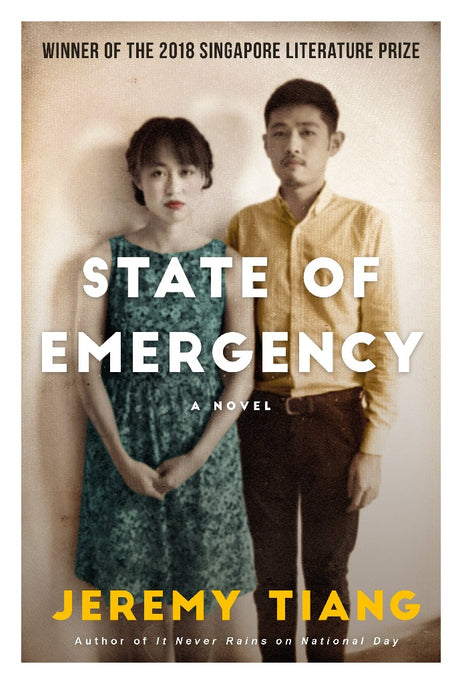


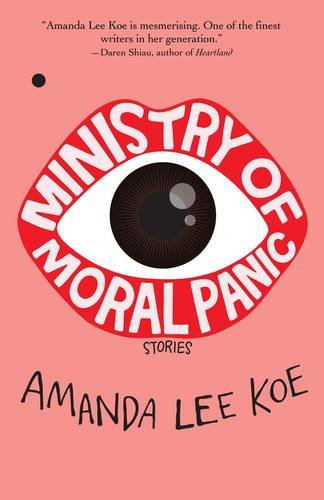


For easier reference, the books are:
Elena Ferrante - Frantumaglia
William Gould, Santosh Dass and Christophe Jaffrelot (eds) - Ambedkar in London
Jeremy Tiang - State of Emergency
John Scalzi - The Kaiju Preservation Society
Joanne Harris - Broken Light
Magda Szabo - The Door
Shubhangi Swarup - Latitudes of Longing
Amanda Lee Koe - The Ministry of Moral Panic
Writers At Work - The Paris Review Interviews, series 1
Andrew Michael Hurley - Starve Acre
I'm hoping to get a good amount of reading done this month, especially since I will be taking a week off to travel to India to see some of my family, who live there. Here's this month's cartoon, by Indian cartoonist R. K. Laxman. He was best known for his series of political cartoons, all featuring 'The Common Man', but here he gently mocks his brother, the beloved Indian novelist, R. K. Narayan. Narayan was one of India's most well-known English language authors; he was championed abroad by Graham Greene, among others. Laxman illustrated several editions of Narayan's books. In this comic, waiting outside Narayan's door are the many characters from his novels, all demanding attention even as he writes.
For May, I have some readings listed out already, including Elena Ferrante's Frantumaglia which I picked up months ago and still haven't finished. It's not a complete list - I will celebrate the new month by going to the library and coming back with a pile of new books.


For easier reference, the books are:
Elena Ferrante - Frantumaglia
William Gould, Santosh Dass and Christophe Jaffrelot (eds) - Ambedkar in London
Jeremy Tiang - State of Emergency
John Scalzi - The Kaiju Preservation Society
Joanne Harris - Broken Light
Magda Szabo - The Door
Shubhangi Swarup - Latitudes of Longing
Amanda Lee Koe - The Ministry of Moral Panic
Writers At Work - The Paris Review Interviews, series 1
Andrew Michael Hurley - Starve Acre
79FlorenceArt
>78 rasdhar: Love the cover of Latitudes of Longing the book sounds interesting.
80rasdhar
>79 FlorenceArt: It's had rave reviews from my friends in India. It's also a debut novel. So I am looking forward to hopefully discovering a new author to love.
81kjuliff
I love the R. K. Narayan cartoon. Say hello to India for me!
82labfs39
>58 rasdhar: So many great books and accompanying reviews. Your thread is dangerous to my wishlist! The only book in the Mantel list that I've read is the Demos. As for your May plans, I look forward to your thoughts on State of Emergency. I keep running into reminders that I have some of Szabó's books on my shelves, including The Door. I really should get to them.
83kjuliff
>65 rasdhar: I did enjoy it - Case Study and am reviewing it now. Thanks for putting me back onto it.
84valkyrdeath
>69 rasdhar: Interesting to see the mention of Hellish Nell in here, since I got it out from the library a couple of weeks ago and will probably be starting it tomorrow! I need to read something by Hilary Mantel at some point too.
85kidzdoc
So many great reviews here! I'll have to pay closer attention to your thread, and Club Read in general, Rasdhar.
86rasdhar
>81 kjuliff: Will do!
>82 labfs39: I find that Club Read, in general, has just expanded my reading list wildly.
>83 kjuliff: I really enjoyed your nuanced review.
>84 valkyrdeath: Wonderful! I hope to get to Hellish Nell this year, too.
>85 kidzdoc: Thanks for stopping by! I've fallen behind on so many threads as well - there's just too much good stuff here.
>82 labfs39: I find that Club Read, in general, has just expanded my reading list wildly.
>83 kjuliff: I really enjoyed your nuanced review.
>84 valkyrdeath: Wonderful! I hope to get to Hellish Nell this year, too.
>85 kidzdoc: Thanks for stopping by! I've fallen behind on so many threads as well - there's just too much good stuff here.
87rasdhar
52. Starve Acre by Andrew Michael Hurley (John Murray 2019)
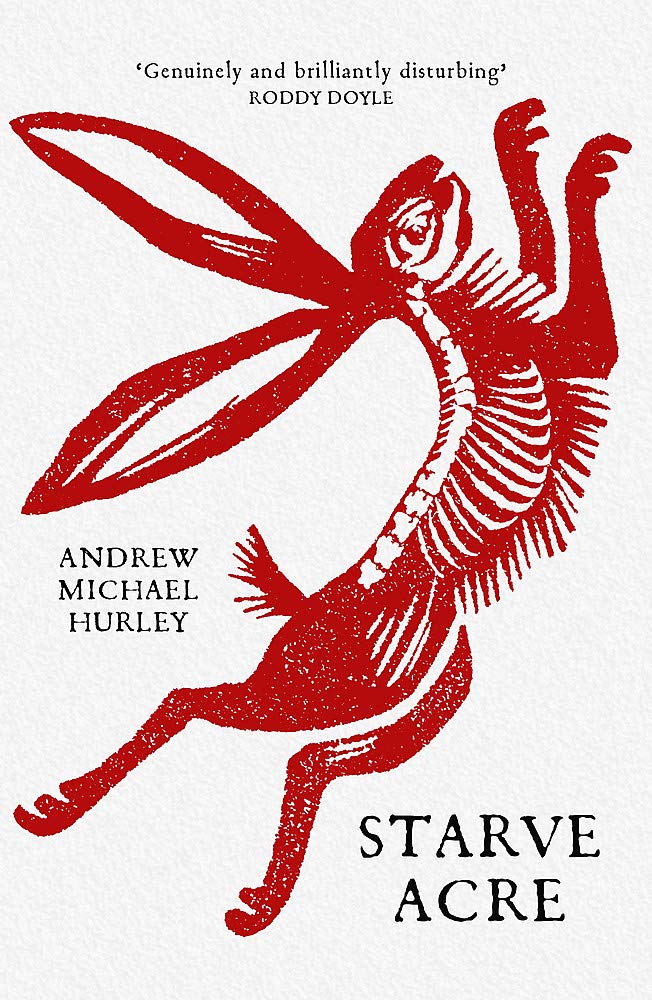
Warning: this review discusses the death of a child, supernatural stuff, body horror, and so on. It's horror fiction: those sensitive should avoid.
I'm not entirely sure how I ended up reading this book. It was on one of my list, and I think the cover caught my eye at the library, because I don't usually read a lot of horror fiction. I had noted in my list that this draws on English folk tales, which is probably how it ended on the list. I was not particularly impressed or horrified.
Starve Acre, the setting of the book, is a remote country house owned by the Willoughby family, and now the residence of Richard Willoughby, and his wife, Juliette. Richard's father used to live there, until his mental decline required him to be institutionalized. It's out on the moors in Dartmouth, and villagers talk about how nothing grows there. Legend is that at the end of their field (the 'acre'), there was a hanging tree. Richard and Juliette lived there with their young son, Ewan, until Ewan died of complications from a heart problem, at home. It becomes quickly clear that neither Juliette nor Richard are coping well with their grief. Juliette insists she can still talk to Ewan, and is running the whole gamut of that aspect of belief: mirrors, video recordings, bringing a medium to the house and so on. Richard is skeptical, and is turning his grief instead to obsessively looking through his (deceased) father's library and collections. Looking through his father's books, Richard finds out that several local young men were hung after demonstrating a pattern of erratic and disturbing behaviour. The tree has since been cut down but Richard is now obsessed with trying to find the site of the tree, and it's roots, in Starve Acre.
Hurley does a mostly good job of slowly ramping up the fear and horror through the book. It takes a while before we actually learn that before his death, Ewan had become obsessed with the field where the hanging tree stood, going out there alone at night, and insisting that he was being called there. You're nearly halfway through the book before you know that Ewan was also starting to behave increasingly erratic. The presence of Juliette's sister, very skeptical about all the supernatural stuff, and immensely practical about things like meals, and so on, is a good counterweight as well, because skeptical Richard descends into full-fledged folk horror beliefs at somewhat unbelievable speed. The ending is completely unsurprising but he does have a fairly well constructed narrative about the nature of grief, and specifically, parental grief.
The root of the book is a local legend about a hare named Jack Grey, who leads young men down a path of destruction. I was most interested in that aspect, and found this nice blog by an artist in Dartmoor who has collected a lot of background material on folktales concerning hares and rabbits. I honestly enjoyed the blog posts more than the book. I suspect the genre is not for me. https://www.terriwindling.com/blog/2015/10/mythic-hares.html
Warning: this review discusses the death of a child, supernatural stuff, body horror, and so on. It's horror fiction: those sensitive should avoid.
I'm not entirely sure how I ended up reading this book. It was on one of my list, and I think the cover caught my eye at the library, because I don't usually read a lot of horror fiction. I had noted in my list that this draws on English folk tales, which is probably how it ended on the list. I was not particularly impressed or horrified.
Starve Acre, the setting of the book, is a remote country house owned by the Willoughby family, and now the residence of Richard Willoughby, and his wife, Juliette. Richard's father used to live there, until his mental decline required him to be institutionalized. It's out on the moors in Dartmouth, and villagers talk about how nothing grows there. Legend is that at the end of their field (the 'acre'), there was a hanging tree. Richard and Juliette lived there with their young son, Ewan, until Ewan died of complications from a heart problem, at home. It becomes quickly clear that neither Juliette nor Richard are coping well with their grief. Juliette insists she can still talk to Ewan, and is running the whole gamut of that aspect of belief: mirrors, video recordings, bringing a medium to the house and so on. Richard is skeptical, and is turning his grief instead to obsessively looking through his (deceased) father's library and collections. Looking through his father's books, Richard finds out that several local young men were hung after demonstrating a pattern of erratic and disturbing behaviour. The tree has since been cut down but Richard is now obsessed with trying to find the site of the tree, and it's roots, in Starve Acre.
Hurley does a mostly good job of slowly ramping up the fear and horror through the book. It takes a while before we actually learn that before his death, Ewan had become obsessed with the field where the hanging tree stood, going out there alone at night, and insisting that he was being called there. You're nearly halfway through the book before you know that Ewan was also starting to behave increasingly erratic. The presence of Juliette's sister, very skeptical about all the supernatural stuff, and immensely practical about things like meals, and so on, is a good counterweight as well, because skeptical Richard descends into full-fledged folk horror beliefs at somewhat unbelievable speed. The ending is completely unsurprising but he does have a fairly well constructed narrative about the nature of grief, and specifically, parental grief.
The root of the book is a local legend about a hare named Jack Grey, who leads young men down a path of destruction. I was most interested in that aspect, and found this nice blog by an artist in Dartmoor who has collected a lot of background material on folktales concerning hares and rabbits. I honestly enjoyed the blog posts more than the book. I suspect the genre is not for me. https://www.terriwindling.com/blog/2015/10/mythic-hares.html
88rasdhar
53. A Man Lay Dead by Ngaio Marsh (1934)

Content warning: racial slurs
I've been meaning to read more Golden Age Detective Fiction, having not ventured beyond Agatha Christie. This week for my walking audiobook, I listened to the narration of A Man Lay Dead by Ngaio Marsh, performed by James Saxon. It's available for free on Youtube here (but you may want to check local copyright, I'm not sure about that) https://www.youtube.com/watch?v=Erx7vxfs638 . There's also a narration by Philip Franks on Audible.
A Man Lay Dead, published in 1934, was the first of Ngaio Marsh's Inspector Roderick Alleyn books, featuring the highly-educated, diplomat-turned-cop Roderick Alleyn. It's also her first novel (evident from the writing, as she was to later say herself). It features the 'Murder Game', a common parlor entertainment at the time, in which guests pretend to enact a murder, and then uncover the killer. The protagonist, a society journalist, Nigel Bathgate, attends a weekend at the house of Sir Hubert Handesley, known for his elaborate such weekend parties. He's there with his cousin, a rich cad and womanizer, Charles Rankin. Nigel learns early, and to his disappointment, that Charles is carrying on an affair with a married woman. Other tensions prevail: a Russian doctor, in attendance at the party, is incensed because Charles possesses a supposedly cursed dagger belonging a secret Russian society, and thinks Charles should return it to its rightful owners. Sir Hubert's niece, a no-nonsense, firm woman named Angela, is running everything while he dabbles around in his hobbies. The married couple that Charles is betraying are arguing about being heavily debt. Midway through the murder game, Charles is murdered, by means of his cursed dagger. Everyone's a suspect, including Nigel, his only heir.
You can see how rough and unformed the plot is, and how amateurish the writing but honestly, what took me aback was the use of racial slurs in the book to describe Black people. I know the book was written in 1934, but this narration was recorded in 2011. I think I've just reached a point - or been in company such that - actually hearing the slurs out loud said, so firmly and in such a demeaning fashion, is a shock to the system. It isn't even a major part of the book: a Black man happens to come across some evidence and is promptly described, and dismissed, but it is so upsetting to hear. It genuinely put me off and I don't know if I'll listen to the rest of the series. I understand that this is something that all Golden Age detective fiction (and how uneasily that name sits, in this context) suffers from: Agatha Christie's anti-semitism, for example, but I am just not in the mood right now.

Content warning: racial slurs
I've been meaning to read more Golden Age Detective Fiction, having not ventured beyond Agatha Christie. This week for my walking audiobook, I listened to the narration of A Man Lay Dead by Ngaio Marsh, performed by James Saxon. It's available for free on Youtube here (but you may want to check local copyright, I'm not sure about that) https://www.youtube.com/watch?v=Erx7vxfs638 . There's also a narration by Philip Franks on Audible.
A Man Lay Dead, published in 1934, was the first of Ngaio Marsh's Inspector Roderick Alleyn books, featuring the highly-educated, diplomat-turned-cop Roderick Alleyn. It's also her first novel (evident from the writing, as she was to later say herself). It features the 'Murder Game', a common parlor entertainment at the time, in which guests pretend to enact a murder, and then uncover the killer. The protagonist, a society journalist, Nigel Bathgate, attends a weekend at the house of Sir Hubert Handesley, known for his elaborate such weekend parties. He's there with his cousin, a rich cad and womanizer, Charles Rankin. Nigel learns early, and to his disappointment, that Charles is carrying on an affair with a married woman. Other tensions prevail: a Russian doctor, in attendance at the party, is incensed because Charles possesses a supposedly cursed dagger belonging a secret Russian society, and thinks Charles should return it to its rightful owners. Sir Hubert's niece, a no-nonsense, firm woman named Angela, is running everything while he dabbles around in his hobbies. The married couple that Charles is betraying are arguing about being heavily debt. Midway through the murder game, Charles is murdered, by means of his cursed dagger. Everyone's a suspect, including Nigel, his only heir.
You can see how rough and unformed the plot is, and how amateurish the writing but honestly, what took me aback was the use of racial slurs in the book to describe Black people. I know the book was written in 1934, but this narration was recorded in 2011. I think I've just reached a point - or been in company such that - actually hearing the slurs out loud said, so firmly and in such a demeaning fashion, is a shock to the system. It isn't even a major part of the book: a Black man happens to come across some evidence and is promptly described, and dismissed, but it is so upsetting to hear. It genuinely put me off and I don't know if I'll listen to the rest of the series. I understand that this is something that all Golden Age detective fiction (and how uneasily that name sits, in this context) suffers from: Agatha Christie's anti-semitism, for example, but I am just not in the mood right now.
89kjuliff
>88 rasdhar: I think I've just reached a point - or been in company such that - actually hearing the slurs out loud said, so firmly and in such a demeaning fashion, is a shock to the system.
Yes it is a shock to read, and as you point out to *hear* is even worse. I can’t listen to that sort of thing.
I remember being put off House of Doors When the word “Chinaman” was used. It wasn’t used as a slur, but was inappropriate and unnecessary in a book set in what was then Malaya, where Chinese and Indians were to face discrimination.
A lot of “non-slur” but archaic expressions such as Negro make me cringe, and I feel they are signs of ignorance, and ignorance breeds hatred.
I know that we should take into account when a book was written. I recently read The Heart of the Matter which the word “boy” was used to describe the servants in mid 20th century Africa. It turned me off the book especially as the MC was tying himself in knots over a moral issue involving adultery and confessions in the church.
Actual slurs are just not on, and I can’t see any justification in sluring any other human being for their skin color, their gender, their sexual preference, their religion, or their nationality.
That’s not to say the conditions of these people should not be described, or even that moral stands have to be taken. There were plenty of writers of the same vintages who managed to write novels that do not contain bigoted slurs. Just as there are many politicians in this century have no problem in using them.
— Edited for a spelling error.
Yes it is a shock to read, and as you point out to *hear* is even worse. I can’t listen to that sort of thing.
I remember being put off House of Doors When the word “Chinaman” was used. It wasn’t used as a slur, but was inappropriate and unnecessary in a book set in what was then Malaya, where Chinese and Indians were to face discrimination.
A lot of “non-slur” but archaic expressions such as Negro make me cringe, and I feel they are signs of ignorance, and ignorance breeds hatred.
I know that we should take into account when a book was written. I recently read The Heart of the Matter which the word “boy” was used to describe the servants in mid 20th century Africa. It turned me off the book especially as the MC was tying himself in knots over a moral issue involving adultery and confessions in the church.
Actual slurs are just not on, and I can’t see any justification in sluring any other human being for their skin color, their gender, their sexual preference, their religion, or their nationality.
That’s not to say the conditions of these people should not be described, or even that moral stands have to be taken. There were plenty of writers of the same vintages who managed to write novels that do not contain bigoted slurs. Just as there are many politicians in this century have no problem in using them.
— Edited for a spelling error.
90kidzdoc
Nice reviews of two books that I have absolutely no interest in reading, Rasdhar. I've seen too many children die in the hospital during my 20+ decade career, and there is way too much anti-Black racism in the United States now for me to want to read more insensitive books about me and my people.
91rasdhar
>90 kidzdoc: Both books had very heavy and serious topics, and didn't deal with them well. Best skipped, I agree! I'm hoping for something lighter, next.
92rasdhar
54. Ministry of Moral Panic by Amanda Lee Koe (Epigram Books, 2013)
Warnings: abuse, assault
This is a wonderful little collection of stories, written by a Singaporean author (now living in New York). The book itself won a slew of accolades (Best Fiction, Singapore Book Awards 2016; Singapore Literature Prize 2014, shortlisted for the Haus der Kulturen der Welt's Internationaler Literaturpreis & the Frankfurt Book Fair's LiBeraturpreis; longlisted for the Frank O’Connor International Short Story Award 2014 and so on). In my opinion, it does live up to the hype. Singapore's deeply constrained society, bound by strict cultural and social expectations, and a famously undemocratic, rule-bound state, leaves little room for the strange, the different, and the atypical people within its confines. For the author, who came out as a lesbian and faced great difficulties, this must have been especially apparent. In one interview, she said, "Singapore is run like a corporation, and I have never expected to be protected by bureaucracy..." https://www.asialiteraryreview.com/interview-amanda-lee-koe
In these stories, we see people who are filled with love but bound in so many ways from expressing it - sometimes, they engage in transgressive behaviour, and at other times, they fold under the pressure. In the 'King of Caldecott Hill', a young waitress who survives physical abuse as a child, grows up pretending a mid-level TV actor is actually her father - a kind, gentle loving man, unlike her reality. When he walks into her restaurant one evening, her imagination and reality collide. The meeting is fraught: years later, she'll visit him as he lies insensate in a nursing home. When the nurse asks her relation to him, she cannot explain. "He was a good guy. He was *the* good guy." In "Every Park on the Island," a young girl who doesn't conform to Singapore's job-marry-children-cycle is let down by the American exchange student she was seeing. "I don't believe in marriage," he says, and she tells him that she doesn't either - she'll only get married if its with a 99 cent thrift store ring. They're on the same page, until they aren't - "I don't know how to say this, but I think I can only do it with white girls," he tells her, before asking if she'll introduce him to another beautiful, well-made up, Asian woman that he sees. Indonesian Heikel is beaten up by friends of the Chinese girl he adores; she, unknowingly, marries one of them and he goes on to marry within his own community. Years later, they meet in a nursing home. Struck by Alzheimer's, she recognises him, and tells him she wants to run away. There's so much regret, so much to rue, as he returns to his own wife, but the tenderness with which he stays by her while he was in the home, recovering from illness, speaks to a love that endured.
Koe is not afraid to experiment with format and style. Each of these stories is interesting, has a tender undercurrent of love, and a keen understanding of what it is to not fit within the moral bounds of a society. I liked this collection very much.
Warnings: abuse, assault
This is a wonderful little collection of stories, written by a Singaporean author (now living in New York). The book itself won a slew of accolades (Best Fiction, Singapore Book Awards 2016; Singapore Literature Prize 2014, shortlisted for the Haus der Kulturen der Welt's Internationaler Literaturpreis & the Frankfurt Book Fair's LiBeraturpreis; longlisted for the Frank O’Connor International Short Story Award 2014 and so on). In my opinion, it does live up to the hype. Singapore's deeply constrained society, bound by strict cultural and social expectations, and a famously undemocratic, rule-bound state, leaves little room for the strange, the different, and the atypical people within its confines. For the author, who came out as a lesbian and faced great difficulties, this must have been especially apparent. In one interview, she said, "Singapore is run like a corporation, and I have never expected to be protected by bureaucracy..." https://www.asialiteraryreview.com/interview-amanda-lee-koe
In these stories, we see people who are filled with love but bound in so many ways from expressing it - sometimes, they engage in transgressive behaviour, and at other times, they fold under the pressure. In the 'King of Caldecott Hill', a young waitress who survives physical abuse as a child, grows up pretending a mid-level TV actor is actually her father - a kind, gentle loving man, unlike her reality. When he walks into her restaurant one evening, her imagination and reality collide. The meeting is fraught: years later, she'll visit him as he lies insensate in a nursing home. When the nurse asks her relation to him, she cannot explain. "He was a good guy. He was *the* good guy." In "Every Park on the Island," a young girl who doesn't conform to Singapore's job-marry-children-cycle is let down by the American exchange student she was seeing. "I don't believe in marriage," he says, and she tells him that she doesn't either - she'll only get married if its with a 99 cent thrift store ring. They're on the same page, until they aren't - "I don't know how to say this, but I think I can only do it with white girls," he tells her, before asking if she'll introduce him to another beautiful, well-made up, Asian woman that he sees. Indonesian Heikel is beaten up by friends of the Chinese girl he adores; she, unknowingly, marries one of them and he goes on to marry within his own community. Years later, they meet in a nursing home. Struck by Alzheimer's, she recognises him, and tells him she wants to run away. There's so much regret, so much to rue, as he returns to his own wife, but the tenderness with which he stays by her while he was in the home, recovering from illness, speaks to a love that endured.
Koe is not afraid to experiment with format and style. Each of these stories is interesting, has a tender undercurrent of love, and a keen understanding of what it is to not fit within the moral bounds of a society. I liked this collection very much.
93rasdhar
55. Get the Picture: A Mind-Bending Journey among the Inspired Artists and Obsessive Art Fiends Who Taught Me How to See - Bianca Bosker (Viking 2024)

When I had hit chapter 7 of this book, I went back to the front page to check the title. The author calls her book a "mind-bending journey", but halfway through the book, my mind was not only unbent, but actively bored. A full half of this book is dedicated to chronicling the author allowing herself to be ritually humiliated in new and inventive ways by a young, spoiled, insufferable, trust-fund brat who runs a gallery, doesn't want the average "schmoe" to have access to the art world, talks about everything around art except the art itself, and will spend entire hours criticising her appearance, writing, ethics, clothing, and marriage. I don't know what she gained from this experience; fortunately, she doesn't either - and it hardly needs to be said, it tells neither the author nor the reader anything about understanding art. There's a pervasive internet myth that all of art (not some of it, but all of it) is an elitist conspiracy to launder money, prevalent among people who have access to an unprecedented amount of information on art at their fingertips without any inclination to ever exercise that access. Bianca Bosker's book is for them. It is not for me.
Here are the insights that bent her mind, apparently. There many rich white male people in the art world. Some of them are sexist and racist. Money determines a great deal of things. Elitism is not uncommon. Bullying is not uncommon. I defy you to find anyone who spent five minutes on the subject and did not figure this out for themselves without having to turn one lousy internship into seven chapters of excruciatingly dull complaining. All of this true. None of it is surprising, and it is not at all mind-bending. If she wanted a famous artist to sit on her face for the experience, she could have done so without trying to convince the rest of us we'd get our minds bent by the experience too. Towards the end of the book, having failed the 'mind-bending' bit of the title, she finally turns her attention to the 'learning how to see' art aspect. It turns out you have to look at it. She learns this by working as a security guard in a museum. It's an insight that apparently could not have been gained by simply going to the museum and looking at art. Some pop science detours later, she concludes that the meaning lies in what you draw from it. This is a very roundabout way of saying, "I don't know anything about art but I know what I like." Yawn.

When I had hit chapter 7 of this book, I went back to the front page to check the title. The author calls her book a "mind-bending journey", but halfway through the book, my mind was not only unbent, but actively bored. A full half of this book is dedicated to chronicling the author allowing herself to be ritually humiliated in new and inventive ways by a young, spoiled, insufferable, trust-fund brat who runs a gallery, doesn't want the average "schmoe" to have access to the art world, talks about everything around art except the art itself, and will spend entire hours criticising her appearance, writing, ethics, clothing, and marriage. I don't know what she gained from this experience; fortunately, she doesn't either - and it hardly needs to be said, it tells neither the author nor the reader anything about understanding art. There's a pervasive internet myth that all of art (not some of it, but all of it) is an elitist conspiracy to launder money, prevalent among people who have access to an unprecedented amount of information on art at their fingertips without any inclination to ever exercise that access. Bianca Bosker's book is for them. It is not for me.
Here are the insights that bent her mind, apparently. There many rich white male people in the art world. Some of them are sexist and racist. Money determines a great deal of things. Elitism is not uncommon. Bullying is not uncommon. I defy you to find anyone who spent five minutes on the subject and did not figure this out for themselves without having to turn one lousy internship into seven chapters of excruciatingly dull complaining. All of this true. None of it is surprising, and it is not at all mind-bending. If she wanted a famous artist to sit on her face for the experience, she could have done so without trying to convince the rest of us we'd get our minds bent by the experience too. Towards the end of the book, having failed the 'mind-bending' bit of the title, she finally turns her attention to the 'learning how to see' art aspect. It turns out you have to look at it. She learns this by working as a security guard in a museum. It's an insight that apparently could not have been gained by simply going to the museum and looking at art. Some pop science detours later, she concludes that the meaning lies in what you draw from it. This is a very roundabout way of saying, "I don't know anything about art but I know what I like." Yawn.
94FlorenceArt
>93 rasdhar: Great review, it made me laugh! So at least one good thing came out of you reading this.
>92 rasdhar: sounds very interesting. I wishlisted it although it’s apparently not (yet?) available as an ebook.
>92 rasdhar: sounds very interesting. I wishlisted it although it’s apparently not (yet?) available as an ebook.
95rasdhar
>94 FlorenceArt: I don't think it is available as an ebook yet, although Epigram Books seem to be slowly digitizing their back catalogue, so let's hope it will be soon. I came across it in print. Singapore's Central Public Library has an excellent separate section for local authors.
96FlorenceArt
>95 rasdhar: I learned recently how unreliable the Kobo store search can be, so now I make an internet wide search before giving up. One site shows the book as coming soon in ePub format, so there is hope I guess.
97labfs39
>92 rasdhar: Although I am not the most ardent reader of short stories, this collection sounds intriguing. Onto the list it goes.
>93 rasdhar: LOL Thanks for taking the hit on this one. The book may have been lousy, but your review was great.
>93 rasdhar: LOL Thanks for taking the hit on this one. The book may have been lousy, but your review was great.
98lisapeet
>93 rasdhar: Welp, I have a galley of this but sounds like I'm going to just skip it. Life is too short for clichéd art commentary... mine is, anyway.
99kjuliff
>92 rasdhar: I like the sound of this collection, and am developing an interest in Japanese culture and literature, so will be reading this one if it becomes available in audio. Thanks for letting us know about this writer.
100kjuliff
>98 lisapeet: I’m with @lisapeet on this one. Great review though.
101RidgewayGirl
>92 rasdhar: Thanks for the review, this sounds like a book I would enjoy, so I've added it to my wishlist.
>95 rasdhar: Epigram Books are hard to find in the US, and usually make it over as used books that someone's selling. I do keep an eye out for them and I do have a friend who occasionally goes to Singapore to visit family.
>95 rasdhar: Epigram Books are hard to find in the US, and usually make it over as used books that someone's selling. I do keep an eye out for them and I do have a friend who occasionally goes to Singapore to visit family.
102rasdhar
>96 FlorenceArt: >99 kjuliff: >101 RidgewayGirl: I hope that a copy becomes available to you. I enjoyed reading it.
>98 lisapeet: I might have missed something. The book has uniformly glowing reviews: Washington Post, WSJ, and so on. I kept reading it and thinking, 'what am I missing'? If you do end up reading it, let me know!
>98 lisapeet: I might have missed something. The book has uniformly glowing reviews: Washington Post, WSJ, and so on. I kept reading it and thinking, 'what am I missing'? If you do end up reading it, let me know!
103valkyrdeath
>92 rasdhar: I love a good short story collection and your review of this one has got me interested. Definitely going to try and find a copy.
104rasdhar
>103 valkyrdeath: I hope you enjoy it!
105rasdhar
56. Jeremy Tiang - State of Emergency (Epigram Books, 2017)
This book has already been reviewed (and so well) by several members of this group, so I won't add much. It is a very impressive debut novel, tracing one family's experiences over a sweep of time that covers Singapore's independence, the Malayan Emergency, and political detentions and conflict in these two states. This is a side of Singapore that many modern readers outside the region may not know: the long detentions without arrest or trial, the powerful political and social machinery of repression and control. I think the author did a very good job of balancing this broader context with a very personal story of individuals and their experiences of the situation. A wonderful read, and definitely a recommendation for the Singapore/Malaysia reading list I'm currently building.
This book has already been reviewed (and so well) by several members of this group, so I won't add much. It is a very impressive debut novel, tracing one family's experiences over a sweep of time that covers Singapore's independence, the Malayan Emergency, and political detentions and conflict in these two states. This is a side of Singapore that many modern readers outside the region may not know: the long detentions without arrest or trial, the powerful political and social machinery of repression and control. I think the author did a very good job of balancing this broader context with a very personal story of individuals and their experiences of the situation. A wonderful read, and definitely a recommendation for the Singapore/Malaysia reading list I'm currently building.
106rasdhar
57. Joanne Harris - Broken Light

This is a thriller novel that I picked up at the airport, mostly because I've read and enjoyed some of her other work, especially the short story collection, Gentlemen and Players (you may know her from her novel Chocolat, which was adapted into a film starring Juliette Binoche some years ago). Both, the short stories, and her earlier novels are marked by a particularly nice writing style; she has a gift with phrasing and the ability to evoke strong sensory landscapes, especially taste and smell, and particularly with magic realism.This book reflects some of her more modern novels, which are strictly thriller type action novels. I found I didn't enjoy it as much as her earlier works.
The protagonist of this novel, Bernie Moon, is a misfit from an early age: overweight and shy. Her one childhood friend, Katie, far more popular and socially adept, grows distant from her. As a child she attends a magic show and is particularly touched by the magician's female assistant, who, in her words, 'made them look'. The book alternates between Bernie's and Katie's POVs, narrating the story of their lives. As a child, Bernie discovers she has the power to suggest - or implant - ideas in people, but the force of this power, and the effects it can happen, end up terrifying her, especially when she makes a mistake. As an adult, married to a man who does not value her, and whose conservative politics diverge significantly from hers, she rediscovers this power and decides to use it, specifically to tackle misogyny. This book directly grapples with things like the Me Too movement, the rise of right-wing influencers and so on. I think that I disliked the subject matter (how depressing and true it all is) so much that I couldn't really get to grips with the writing - what little I noted seemed to be of the extremely obvious variety, more in the vein of a Twitter rant or Facebook post. I would write this off as well-intentioned but poorly-executed.
This is a thriller novel that I picked up at the airport, mostly because I've read and enjoyed some of her other work, especially the short story collection, Gentlemen and Players (you may know her from her novel Chocolat, which was adapted into a film starring Juliette Binoche some years ago). Both, the short stories, and her earlier novels are marked by a particularly nice writing style; she has a gift with phrasing and the ability to evoke strong sensory landscapes, especially taste and smell, and particularly with magic realism.This book reflects some of her more modern novels, which are strictly thriller type action novels. I found I didn't enjoy it as much as her earlier works.
The protagonist of this novel, Bernie Moon, is a misfit from an early age: overweight and shy. Her one childhood friend, Katie, far more popular and socially adept, grows distant from her. As a child she attends a magic show and is particularly touched by the magician's female assistant, who, in her words, 'made them look'. The book alternates between Bernie's and Katie's POVs, narrating the story of their lives. As a child, Bernie discovers she has the power to suggest - or implant - ideas in people, but the force of this power, and the effects it can happen, end up terrifying her, especially when she makes a mistake. As an adult, married to a man who does not value her, and whose conservative politics diverge significantly from hers, she rediscovers this power and decides to use it, specifically to tackle misogyny. This book directly grapples with things like the Me Too movement, the rise of right-wing influencers and so on. I think that I disliked the subject matter (how depressing and true it all is) so much that I couldn't really get to grips with the writing - what little I noted seemed to be of the extremely obvious variety, more in the vein of a Twitter rant or Facebook post. I would write this off as well-intentioned but poorly-executed.
107RidgewayGirl
>105 rasdhar: I'm glad to hear that this novel holds up with a reader who has some understanding of that region's history.
108kjuliff
>106 rasdhar:
This is a thriller novel that I picked up at the airport
{{middle of review}}
I couldn't really get to grips with the writing - what little I noted seemed to be of the extremely obvious variety, more in the vein of a Twitter rant or Facebook post.
I loved this review, Rasdhar. From a nod to airport fiction, culminating in the ultimate put-down. Excellent.
This is a thriller novel that I picked up at the airport
{{middle of review}}
I couldn't really get to grips with the writing - what little I noted seemed to be of the extremely obvious variety, more in the vein of a Twitter rant or Facebook post.
I loved this review, Rasdhar. From a nod to airport fiction, culminating in the ultimate put-down. Excellent.
109Dilara86
>105 rasdhar: And that's another book bullet for me!
110rasdhar
>107 RidgewayGirl: I really did enjoy it.
>108 kjuliff: I was disappointed, because I like the author and I had the book on my list for this month anyway, as a digital copy. I ended up buying it while waiting for my flight, as I prefer reading in hard copy when I can. A waste...
>109 Dilara86: Looking forward to your thoughts when you get around to reading it.
>108 kjuliff: I was disappointed, because I like the author and I had the book on my list for this month anyway, as a digital copy. I ended up buying it while waiting for my flight, as I prefer reading in hard copy when I can. A waste...
>109 Dilara86: Looking forward to your thoughts when you get around to reading it.
111labfs39
>105 rasdhar: I'm glad you enjoyed State of Emergency, sorry your next book wasn't as interesting.
112rasdhar
58. Ambedkar in London (Hurst and Co, 2022) edited by William Gould, Christophe Jaffrelot, and Santosh Dass
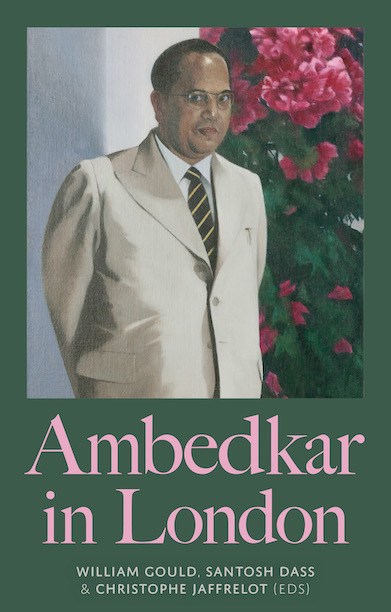
Ambedkar is one of India's most significant legal and political scholars, and an icon of social transformation. A member of the historically oppressed Dalit castes, at the bottom of the caste hierarchy, he surmounted incredible challenges to achieve education, then higher education, and then political power. He is best known for the vital role he played in drafting India's Constitution (as a qualified lawyer, and also a well-regarded economist). Many know of Gandhi; not as many know of Ambedkar outside in India, and particularly of Ambedkar's criticism of Gandhi for his failure to tackle caste discrimination coherently. To many belonging to the oppressed castes, he is known affectionately as 'Baba Sahib' - a term of respect and endearment. Columbia University in the US has a significant Ambedkar archive, because he studied there, and was a student of John Dewey, who influenced him greatly. His work in the US, therefore, is comparatively better documented, including his correspondence with civil rights activists there, and their common understanding of the situation of oppressed castes and Black people across nations. But, he also studied in London, at the London School of Economics, later joining the Bar, and building support for his activism. This book fills a vital gap in the Ambedkar canon by examining his time in London, his work as a lawyer, and the society he lived in. It's an edited volume, consisting of chapters by various scholars.
The last few years have seen a resurgence of Ambedkar scholarship. I made a list of ten books recently released that I wanted to read, and this is the first one. I think it's a great collection. The first three chapters study his time at LSE: the curriculum he covered, his contemporaries and friends, and his legal education at Gray's Inn. The next two cover his involvement in political efforts towards independence in the 1920s, engaging in the round table debates that brought India partial franchise at this time, under colonial rule and his particular advocacy for representation for the Dalits. Jaffrelot's chapter in particular, is really good: he examines how Ambedkar went from seeking reform in the Hindu religion to rejecting it altogether on the basis of caste. Ambedkar later converted to Buddhism, and even today it is not uncommon for Dalits to engage in conversion en masse, in response to ongoing caste violence. The second half of the book is really new material, documenting his engagement with international activists.
There's a nice review here by Scott Stroud, who also just released a book on Ambedkar and Dewey, which is on my list. https://blogs.lse.ac.uk/lsereviewofbooks/2023/02/27/book-review-ambedkar-in-lond...
And for those unfamiliar, I recommend Ambedkar's unpublished autobiography, Waiting for A Visa, which is available online here, digitized by Columbia University. http://www.columbia.edu/itc/mealac/pritchett/00ambedkar/txt_ambedkar_waiting.htm...
Ambedkar is one of India's most significant legal and political scholars, and an icon of social transformation. A member of the historically oppressed Dalit castes, at the bottom of the caste hierarchy, he surmounted incredible challenges to achieve education, then higher education, and then political power. He is best known for the vital role he played in drafting India's Constitution (as a qualified lawyer, and also a well-regarded economist). Many know of Gandhi; not as many know of Ambedkar outside in India, and particularly of Ambedkar's criticism of Gandhi for his failure to tackle caste discrimination coherently. To many belonging to the oppressed castes, he is known affectionately as 'Baba Sahib' - a term of respect and endearment. Columbia University in the US has a significant Ambedkar archive, because he studied there, and was a student of John Dewey, who influenced him greatly. His work in the US, therefore, is comparatively better documented, including his correspondence with civil rights activists there, and their common understanding of the situation of oppressed castes and Black people across nations. But, he also studied in London, at the London School of Economics, later joining the Bar, and building support for his activism. This book fills a vital gap in the Ambedkar canon by examining his time in London, his work as a lawyer, and the society he lived in. It's an edited volume, consisting of chapters by various scholars.
The last few years have seen a resurgence of Ambedkar scholarship. I made a list of ten books recently released that I wanted to read, and this is the first one. I think it's a great collection. The first three chapters study his time at LSE: the curriculum he covered, his contemporaries and friends, and his legal education at Gray's Inn. The next two cover his involvement in political efforts towards independence in the 1920s, engaging in the round table debates that brought India partial franchise at this time, under colonial rule and his particular advocacy for representation for the Dalits. Jaffrelot's chapter in particular, is really good: he examines how Ambedkar went from seeking reform in the Hindu religion to rejecting it altogether on the basis of caste. Ambedkar later converted to Buddhism, and even today it is not uncommon for Dalits to engage in conversion en masse, in response to ongoing caste violence. The second half of the book is really new material, documenting his engagement with international activists.
There's a nice review here by Scott Stroud, who also just released a book on Ambedkar and Dewey, which is on my list. https://blogs.lse.ac.uk/lsereviewofbooks/2023/02/27/book-review-ambedkar-in-lond...
And for those unfamiliar, I recommend Ambedkar's unpublished autobiography, Waiting for A Visa, which is available online here, digitized by Columbia University. http://www.columbia.edu/itc/mealac/pritchett/00ambedkar/txt_ambedkar_waiting.htm...
113rasdhar
59. Elena Ferrante - Frantumaglia

This is probably one of my top reads of the year. It's a very difficult book to read, and even harder to review, because it is both fragmented and dense. Frantumaglia is a collection of interviews, letters, and essays by the author Elena Ferrante. In it, she reflects on her writing, literature, politics, gender, and society. I enjoyed, in particular, her writing on the authors that influenced here: Elsa Morante, Madame de Lafayette, and so on. She also tackles, frequently, and with varying levels of patience, the repeated questions about why she chooses not to disclose her identity, and the relationship between the author and their works.
It's a book that merits slow and careful reading. So much so, that when I returned this borrowed copy to the library, I decided to buy one for myself. I'll only include this excerpt, in which she explains what 'frantumaglia' (the title, and the title of the essay that the book is named for) means:
"My mother left me a word in her dialect that she used to describe how she felt when she was racked by contradictory sensations that were tearing her apart. She said that inside her she had a frantumaglia, a jumble of fragments. The frantumaglia (she pronounced it frantummaglia) depressed her. Sometimes it made her dizzy, sometimes it made her mouth taste like iron. It was the word for a disquiet not otherwise definable, it referred to a miscellaneous crowd of things in her head, debris in a muddy water of the brain. The frantumaglia was mysterious, it provoked mysterious actions, it was the source of all suffering not traceable to a single obvious cause. When she was no longer young, the frantumaglia woke her in the middle of the night, let her to talk to her self and then feel ashamed, suggested some indecipherable tune to sing under he breath that soon faded into a sigh, drove her suddenly out of the house, leaving the stove on, the sauce burning the pot. It made her weep, and since childhood the word has stayed in my mind to describe, in particular, a sudden fit of weeping for no evident reason: frantumaglia tears."
This is probably one of my top reads of the year. It's a very difficult book to read, and even harder to review, because it is both fragmented and dense. Frantumaglia is a collection of interviews, letters, and essays by the author Elena Ferrante. In it, she reflects on her writing, literature, politics, gender, and society. I enjoyed, in particular, her writing on the authors that influenced here: Elsa Morante, Madame de Lafayette, and so on. She also tackles, frequently, and with varying levels of patience, the repeated questions about why she chooses not to disclose her identity, and the relationship between the author and their works.
It's a book that merits slow and careful reading. So much so, that when I returned this borrowed copy to the library, I decided to buy one for myself. I'll only include this excerpt, in which she explains what 'frantumaglia' (the title, and the title of the essay that the book is named for) means:
"My mother left me a word in her dialect that she used to describe how she felt when she was racked by contradictory sensations that were tearing her apart. She said that inside her she had a frantumaglia, a jumble of fragments. The frantumaglia (she pronounced it frantummaglia) depressed her. Sometimes it made her dizzy, sometimes it made her mouth taste like iron. It was the word for a disquiet not otherwise definable, it referred to a miscellaneous crowd of things in her head, debris in a muddy water of the brain. The frantumaglia was mysterious, it provoked mysterious actions, it was the source of all suffering not traceable to a single obvious cause. When she was no longer young, the frantumaglia woke her in the middle of the night, let her to talk to her self and then feel ashamed, suggested some indecipherable tune to sing under he breath that soon faded into a sigh, drove her suddenly out of the house, leaving the stove on, the sauce burning the pot. It made her weep, and since childhood the word has stayed in my mind to describe, in particular, a sudden fit of weeping for no evident reason: frantumaglia tears."
117rasdhar
JUNE

This week's comic is about the merits of shopping at a haunted bookshop, by the great Tom Gauld.
Here's what I have lined up for this month. I'm still working my way through Robert Caro's The Power Broker for the book club, and Sharlene Teo's Ponti is part of my Singapore/Malaysia reading project, but the rest are mostly random picks. A text list is below for easier reading.


Sharlene Teo - Ponti
Ana Maria Matute - The Island
Mari Ahokoivu - Oksi
Doreen Cunningham - Soundings: Journeys in the Company of Whales
Reine Arcache Melvin - The Betrayed
Fabulous Machinery for the Curious: The Garden of Urdu Classical Literature (edited & translated by Musharraf Ali Farooqi)
Yashaswini Chandra - The Tale of the Horse: A History of India on Horseback
Silvia Moreno-Garcia - Silver Nitrate

This week's comic is about the merits of shopping at a haunted bookshop, by the great Tom Gauld.
Here's what I have lined up for this month. I'm still working my way through Robert Caro's The Power Broker for the book club, and Sharlene Teo's Ponti is part of my Singapore/Malaysia reading project, but the rest are mostly random picks. A text list is below for easier reading.


Sharlene Teo - Ponti
Ana Maria Matute - The Island
Mari Ahokoivu - Oksi
Doreen Cunningham - Soundings: Journeys in the Company of Whales
Reine Arcache Melvin - The Betrayed
Fabulous Machinery for the Curious: The Garden of Urdu Classical Literature (edited & translated by Musharraf Ali Farooqi)
Yashaswini Chandra - The Tale of the Horse: A History of India on Horseback
Silvia Moreno-Garcia - Silver Nitrate
118kjuliff
>112 rasdhar: I checked what was available on audio. Have you read Ambedkar and Buddhism, Annihilation of Caste and if so would you recommend it?
119rasdhar
>118 kjuliff: I haven't read this particular book - it seems to be commentary and not Ambedkar's own book which is also titled Annihilation of Caste. Let me do some research and see what's on audio!
120Dilara86
>117 rasdhar: Fabulous Machinery for the Curious: The Garden of Urdu Classical Literature sounds great - I've just added it to my wishlist without waiting for your review...
Ana María Matute is fantastic. I haven't read The Island but I'm sure it's good...
Thank you for the link to Ambedkar's autobiography. I've been meaning to read more about him and from him - I am slightly ashamed that I've not gone any further than a graphic work (very well made but still...): Bhimayana. Looking forward to reading about your 10-book deep dive :-)
Ana María Matute is fantastic. I haven't read The Island but I'm sure it's good...
Thank you for the link to Ambedkar's autobiography. I've been meaning to read more about him and from him - I am slightly ashamed that I've not gone any further than a graphic work (very well made but still...): Bhimayana. Looking forward to reading about your 10-book deep dive :-)
121kidzdoc
Great review of Ambedkar in London, Rasdhar. I couldn't access Waiting for a Visa using the link you posted, but it was available on this one: https://franpritchett.com/00ambedkar/txt_ambedkar_waiting.html
>117 rasdhar: LOL. We need a quality haunted bookshop like that in Philadelphia!
>117 rasdhar: LOL. We need a quality haunted bookshop like that in Philadelphia!
122kjuliff
>119 rasdhar: I can get The Untouchables
Or Ambedkar's India which has the better narrator, actor Mishal Varma (in terms of accent) for a non-Indian reader.
Or Ambedkar's India which has the better narrator, actor Mishal Varma (in terms of accent) for a non-Indian reader.
123rasdhar
>122 kjuliff: Ooh! Looks good. If you do end up listening to them, let me know what you think.
>121 kidzdoc: Thanks! You know the more I read, the more I discover these fascinating dialogues between anti-caste and anti-racist activists in India and the USA and UK, especially in the 1920s-1940s. It's very heartening to see this transnational solidarity.
>120 Dilara86: Bhimayana is beautiful! I love the art. The publishers of that book, Navayana, publish a lot of Dalit literature, memoirs, and poetry. I have a lot of their books.
>121 kidzdoc: Thanks! You know the more I read, the more I discover these fascinating dialogues between anti-caste and anti-racist activists in India and the USA and UK, especially in the 1920s-1940s. It's very heartening to see this transnational solidarity.
>120 Dilara86: Bhimayana is beautiful! I love the art. The publishers of that book, Navayana, publish a lot of Dalit literature, memoirs, and poetry. I have a lot of their books.
124kidzdoc
>123 rasdhar: That's an interesting comparison, Rasdhar. I know far less about the anti-caste movement in India than I do about the Civil Rights Movement; are there any books or other sources you would recommend?
125rasdhar
>124 kidzdoc: There's actually a book on this coming out this month! It's based on the author's doctoral work, which studied how anti-caste scholars corresponded with anti-racism advocates in the US between the 1890s and 1950s. I will be reading it for sure. https://www.cambridge.org/core/books/clash-of-color/936AC1B2F90ED256592BAD6682CF...
It might also interest you to know that Ambedkar also corresponded with WEB Du Bois. There's an article here with some scans of the letters. https://www.saada.org/tides/article/ambedkar-du-bois
From the article:
"As other commentators have pointed out, Du Bois had long been fascinated with India’s role as a harbinger of anticolonialism.1 He had befriended Indian "Home Rule League" nationalist Lajpat Rai, during the latter’s exile in the U.S. between 1914 and 1919. Du Bois' interest in India turned up in editorials of the N.A.A.C.P.-issued magazine The Crisis over the decades, as well as the novel Dark Princess published in 1928. For Du Bois, the cause for Indian independence was one facet of a larger movement to undo the color line that belted the world."
It might also interest you to know that Ambedkar also corresponded with WEB Du Bois. There's an article here with some scans of the letters. https://www.saada.org/tides/article/ambedkar-du-bois
From the article:
"As other commentators have pointed out, Du Bois had long been fascinated with India’s role as a harbinger of anticolonialism.1 He had befriended Indian "Home Rule League" nationalist Lajpat Rai, during the latter’s exile in the U.S. between 1914 and 1919. Du Bois' interest in India turned up in editorials of the N.A.A.C.P.-issued magazine The Crisis over the decades, as well as the novel Dark Princess published in 1928. For Du Bois, the cause for Indian independence was one facet of a larger movement to undo the color line that belted the world."
126Dilara86
>123 rasdhar: Thanks, I took a look at Navayana's website: very interesting :-)
>125 rasdhar: That's fascinating!
>125 rasdhar: That's fascinating!
127LolaWalser
Following the Ambedkar discussion with interest. I lost a hefty Indian edition of his selected works to a rare moment of loaning weakness.
128kidzdoc
>125 rasdhar: Thanks, Rasdhar! I'm hopeful that A Clash of Color will be published in the US at some point, since its author is a professor at Carnegie Mellon University in Pittsburgh.
Thanks also for the article about the correspondence between W.E.B. Du Bois and B.R. Ambedkar.
Thanks also for the article about the correspondence between W.E.B. Du Bois and B.R. Ambedkar.
129rasdhar
63. Silvia Moreno-Garcia - Silver Nitrate (Del Rey 2023)

I've been on a slight Moreno-Garcia kick - this year I read Velvet Was the Night which was wonderful and last year, Mexican Gothic, which I also liked very much. Silver Nitrate is the lightest so far, a fun, pulpy adventure involving horror movies, the supernatural, vanquished Nazis, and a sweet little romance in the background. The story moves along slowly, and there are no real surprises here, nor sudden twists, but it unfolds very pleasantly. All in all, this is a fun read, if not particularly memorable. If you like movies, and especially horror movies, this will be more fun, as there are many subtle nods to common tropes, cinema history, and so on - but even if you don't, it's still enjoyable.
Montserrat, an audio engineer, is the only woman in a company that manages sound for TV, film, and audio productions, and is trying to make a success of her career despite the boys' club that is her workplace. She has, for years, been in love with her childhood best friend, Tristán. Tristán, a former TV soap actor, has seen his career slide into decline after a horrific accident that killed his wealthy, well-connected actress girlfriend - even though she was driving, he ended up taking the blame. In present day Mexico, Tristán moves into a new apartment building, where he discovers his new neighbour happens to be Abel Urueta, a once-legendary horror movie director whose works Montserrat particularly adored. Urueta tells Tristán and Montserrat about his last film, “Beyond the Yellow Door,” which was never completed. Co-written with William Ewers, a magnetic, Nazi occultist who fled Germany in WWII, Ewers insisted to Urueta that the use of silver nitrate stock, common in the 1950s, would allow them to preserve the actors in immortality within the film. Despite this, disaster struck the production, and it was never completed. Initially sceptical, Tristán and Montserrat agree to help Urueta complete the film, using the only surviving silver nitrate film that he has saved in his fridge. With Tristán taking the role of the now-dead William Ewers, they finish the film, setting in motion a series of consequences that none of them foresaw. Tristán gets an unexpected phone call, giving him a role that would restore his nearly-dead career - but his dead ex-girlfriend also reappears in his bathroom. Montserrat's sister, who has been diagnosed with cancer, suddenly goes into remission - but a dark spectre is now following Montserrat. An aging actress who worked on the film has reached out to both of them, asking them to destroy the film - but her niece, who comes to meet them, bears an uncanny resemblance to her aunt, almost too uncanny. And Urueta, who is going to be the subject of a very high profile retrospective of his works, is in sudden, terrifying danger.
Moreno-Garcia skillfully weaves in a great deal of references to film and horror history, both American and Mexican. More than that, she incorporates a very sharp critique of Mexican upper society, and in particular, how Nazis fleeing Europe after WWI found an ideological and physical home amongst those in Latin America who idealized their European (Aryan) roots over the indigenous peoples of the continent. Amidst this, as well, the unfolding of Tristán and Montserrat's relationship, which is really quite clear from the beginning, is cleverly done, incorporating their long histories with each other, as well as the sense of rediscovery and seeing someone you always knew, through new eyes. I enjoyed the book a great deal.

I've been on a slight Moreno-Garcia kick - this year I read Velvet Was the Night which was wonderful and last year, Mexican Gothic, which I also liked very much. Silver Nitrate is the lightest so far, a fun, pulpy adventure involving horror movies, the supernatural, vanquished Nazis, and a sweet little romance in the background. The story moves along slowly, and there are no real surprises here, nor sudden twists, but it unfolds very pleasantly. All in all, this is a fun read, if not particularly memorable. If you like movies, and especially horror movies, this will be more fun, as there are many subtle nods to common tropes, cinema history, and so on - but even if you don't, it's still enjoyable.
Montserrat, an audio engineer, is the only woman in a company that manages sound for TV, film, and audio productions, and is trying to make a success of her career despite the boys' club that is her workplace. She has, for years, been in love with her childhood best friend, Tristán. Tristán, a former TV soap actor, has seen his career slide into decline after a horrific accident that killed his wealthy, well-connected actress girlfriend - even though she was driving, he ended up taking the blame. In present day Mexico, Tristán moves into a new apartment building, where he discovers his new neighbour happens to be Abel Urueta, a once-legendary horror movie director whose works Montserrat particularly adored. Urueta tells Tristán and Montserrat about his last film, “Beyond the Yellow Door,” which was never completed. Co-written with William Ewers, a magnetic, Nazi occultist who fled Germany in WWII, Ewers insisted to Urueta that the use of silver nitrate stock, common in the 1950s, would allow them to preserve the actors in immortality within the film. Despite this, disaster struck the production, and it was never completed. Initially sceptical, Tristán and Montserrat agree to help Urueta complete the film, using the only surviving silver nitrate film that he has saved in his fridge. With Tristán taking the role of the now-dead William Ewers, they finish the film, setting in motion a series of consequences that none of them foresaw. Tristán gets an unexpected phone call, giving him a role that would restore his nearly-dead career - but his dead ex-girlfriend also reappears in his bathroom. Montserrat's sister, who has been diagnosed with cancer, suddenly goes into remission - but a dark spectre is now following Montserrat. An aging actress who worked on the film has reached out to both of them, asking them to destroy the film - but her niece, who comes to meet them, bears an uncanny resemblance to her aunt, almost too uncanny. And Urueta, who is going to be the subject of a very high profile retrospective of his works, is in sudden, terrifying danger.
Moreno-Garcia skillfully weaves in a great deal of references to film and horror history, both American and Mexican. More than that, she incorporates a very sharp critique of Mexican upper society, and in particular, how Nazis fleeing Europe after WWI found an ideological and physical home amongst those in Latin America who idealized their European (Aryan) roots over the indigenous peoples of the continent. Amidst this, as well, the unfolding of Tristán and Montserrat's relationship, which is really quite clear from the beginning, is cleverly done, incorporating their long histories with each other, as well as the sense of rediscovery and seeing someone you always knew, through new eyes. I enjoyed the book a great deal.
130rasdhar
64. Ana María Matute - The Island (Penguin Classics, 2020, translated from the Spanish by Laura Lonsdale)
Ana María Matute is one of Spain's best known writers, and has won the Premio Nadal as well as the Cervantes Prize, two of Spain's highest literary honours. I had not read any of her works, and thought it was about time. The Island is a short, bitter novel, part of a semi-autobiographical trilogy of books first published in the 1950s-70s. The original title in Spanish is Primera memoria and it was initially published in English translation as Awakening. In an introductory essay, Laura Lonsdale speaks of the derogatory terms in which the persons in the book referred to Jewish people, but I noticed as I read that they also use a slur for one of the (Spanish) characters ('Chink'- translated apparently from El Chino in Spanish). I found it odd - and I've seen other reviews as well note this as well - that she didn't acknowledge the use of this slur, and the way it was translated, as she did the others, which received a great deal of attention.
In The Island, Matia, a rebellious teenage girl, is sent to live on a small island in Mallorca with her grandmother. A proud, unyielding, strict woman, Matia's grandmother rules over not only their large, crumbling mansion, but also the island in general. Matia's uncle is away fighting in the Spanish Civil War; the war, in turn, although distant, looms large over their lives on the remote island. Also present on the island is Matia's aunt, a distracted, soft-hearted woman prone to drink, whom Matia holds in contempt because she is overweight, and Matia's cousin Borja, a manipulative, nasty, ill-tempered boy. Their housekeeper, Antonia, bears the brunt of Matia's rage at her situation, while Borja directs his ire at their tutor, Antonia's son Lauro, who is the aforementioned 'El Chino', a term of contempt. Borja and Matia run wild over the island, exploring beaches, quarreling with each other, engaging in little spiteful exchanges, and thoroughly ignoring their tutor. Borja in front of his grandmother is obsequious and deferential, and consequently, her favourite - Matia, who is polite to no one, is the subject of much disgrace, more so because her own father joined the side of the republicans, while her grandmother, uncle and all the rest support the nationalists. Over the course of the novel, Matia befriends Manuel, the oldest son of the island's only Jewish family. As Manuel's family are increasingly subject to ritualistic humiliation and torments (his mother's head is publicly shaved, their dog killed and thrown into their well, poisoning their water), Manuel's father is killed. Matia must keep her friendship with him a secret; although Borja has found out, and Borja, who has never done anything except for his own benefit, will undoubtedly use this knowledge for his own use.
Matute combines the incredibly difficult and dense subject matter of this novel with a narrative style that is almost feverish: told through Matia's eyes, events pass almost like fleeting images, leaving impressions on her, her huge adolescent emotions and rages colouring them. Amidst the great overarching horror of war and anti-semitism, Matute also weaves in innumerable smaller horrors: The tutor, Lauro, is heavily implied to have attempted to behave improperly with Borja, and Borja in turn, is using this information to blackmail Lauro into letting him do whatever he wants. Borja continually uses Matia's friendship with Manuel to accuse her of promiscuity, an accusation he doubles with any male she comes in contact with. Every aspect of this novel is utterly joyless: even moments of pleasure and happiness are quickly revealed as tainted, or attached to a price too big to bear. Although Matia's internal pain and to some extent, Borja's, are in the foreground, Matute demonstrates that all around the two self-involved teenagers, tragedies are unfolding at a scale they cannot imagine, involving people that they neither notice, nor care about.
I walked away with a feeling of great disgust and disquiet, which is to the credit of the author, who clearly intended to provoke this reaction and did so, with excellence. It is a very skillful novel, but not one that I would ever read again.
Ana María Matute is one of Spain's best known writers, and has won the Premio Nadal as well as the Cervantes Prize, two of Spain's highest literary honours. I had not read any of her works, and thought it was about time. The Island is a short, bitter novel, part of a semi-autobiographical trilogy of books first published in the 1950s-70s. The original title in Spanish is Primera memoria and it was initially published in English translation as Awakening. In an introductory essay, Laura Lonsdale speaks of the derogatory terms in which the persons in the book referred to Jewish people, but I noticed as I read that they also use a slur for one of the (Spanish) characters ('Chink'- translated apparently from El Chino in Spanish). I found it odd - and I've seen other reviews as well note this as well - that she didn't acknowledge the use of this slur, and the way it was translated, as she did the others, which received a great deal of attention.
In The Island, Matia, a rebellious teenage girl, is sent to live on a small island in Mallorca with her grandmother. A proud, unyielding, strict woman, Matia's grandmother rules over not only their large, crumbling mansion, but also the island in general. Matia's uncle is away fighting in the Spanish Civil War; the war, in turn, although distant, looms large over their lives on the remote island. Also present on the island is Matia's aunt, a distracted, soft-hearted woman prone to drink, whom Matia holds in contempt because she is overweight, and Matia's cousin Borja, a manipulative, nasty, ill-tempered boy. Their housekeeper, Antonia, bears the brunt of Matia's rage at her situation, while Borja directs his ire at their tutor, Antonia's son Lauro, who is the aforementioned 'El Chino', a term of contempt. Borja and Matia run wild over the island, exploring beaches, quarreling with each other, engaging in little spiteful exchanges, and thoroughly ignoring their tutor. Borja in front of his grandmother is obsequious and deferential, and consequently, her favourite - Matia, who is polite to no one, is the subject of much disgrace, more so because her own father joined the side of the republicans, while her grandmother, uncle and all the rest support the nationalists. Over the course of the novel, Matia befriends Manuel, the oldest son of the island's only Jewish family. As Manuel's family are increasingly subject to ritualistic humiliation and torments (his mother's head is publicly shaved, their dog killed and thrown into their well, poisoning their water), Manuel's father is killed. Matia must keep her friendship with him a secret; although Borja has found out, and Borja, who has never done anything except for his own benefit, will undoubtedly use this knowledge for his own use.
Matute combines the incredibly difficult and dense subject matter of this novel with a narrative style that is almost feverish: told through Matia's eyes, events pass almost like fleeting images, leaving impressions on her, her huge adolescent emotions and rages colouring them. Amidst the great overarching horror of war and anti-semitism, Matute also weaves in innumerable smaller horrors: The tutor, Lauro, is heavily implied to have attempted to behave improperly with Borja, and Borja in turn, is using this information to blackmail Lauro into letting him do whatever he wants. Borja continually uses Matia's friendship with Manuel to accuse her of promiscuity, an accusation he doubles with any male she comes in contact with. Every aspect of this novel is utterly joyless: even moments of pleasure and happiness are quickly revealed as tainted, or attached to a price too big to bear. Although Matia's internal pain and to some extent, Borja's, are in the foreground, Matute demonstrates that all around the two self-involved teenagers, tragedies are unfolding at a scale they cannot imagine, involving people that they neither notice, nor care about.
I walked away with a feeling of great disgust and disquiet, which is to the credit of the author, who clearly intended to provoke this reaction and did so, with excellence. It is a very skillful novel, but not one that I would ever read again.
131labfs39
>130 rasdhar: I'm torn on this one. On the one hand it's about a time and place of which I know little. On the other hand it sounds dismal. Great review of a difficult book.
132rasdhar
65. Sharlene Teo - Ponti (Picador, 2018)

I was pleasantly surprised by this lovely little novel about two generations of female friendship in Singapore. I've been trying to read more local fiction since I moved here, and this has been on my list, if only because it received high praise (the edition I borrowed from the public library has a pullquote on the cover from Ian McEwan who apparently thought the book was 'remarkable').
The titular Ponti comes from Pontianak, a creature from Malay folklore that takes the form of a beautiful woman who kills men, sometimes in a vampiric fashion. In the book, it refers to a low budget cult horror film featuring a pontianak, played by a young woman named Amisa. The narrative flips back and forth between Amisa's life, and her friendship with her neighbour, a spirit medium called Yunxi, and later, Amisa's daughter Szu, and her school friend Circe. Amisa is beautiful while her daughter Szu is plain; Amisa is endlessly cold and cruel, while Szu feels everything with intensity. Amisa is beautiful to the point of shock, strangers flocking to her; Szu tries desperately to dodge bullies in school and is largely friendless. These differences seem both, inexplicable and insurmountable: as Szu says, early on in the book, 'There is the same unforgeable alchemy to being dislikeable as to being universally loved." Yunxi, kind but distracted, anchors both Amisa and Szu's lives and is a good friend to Amisa; Circe, in contrast, is more like Amisa than Amisa's own daughter, and is frequently cold and cruel. The book traces these four women as their lives intersect over time. It's frequently a sad story, but at the end you are left with a feeling of great possibility, of the tenderness of friendship and forgiveness, and the careful joy of motherhood.
The writing is indeed a little rough, as may be expected in a debut novel, but if you can look past the slightly florid descriptiveness of the first chapter, it gets progressively better and better. I really enjoyed reading this, pretty much at one go over Sunday. I hope Teo will write more books.

I was pleasantly surprised by this lovely little novel about two generations of female friendship in Singapore. I've been trying to read more local fiction since I moved here, and this has been on my list, if only because it received high praise (the edition I borrowed from the public library has a pullquote on the cover from Ian McEwan who apparently thought the book was 'remarkable').
The titular Ponti comes from Pontianak, a creature from Malay folklore that takes the form of a beautiful woman who kills men, sometimes in a vampiric fashion. In the book, it refers to a low budget cult horror film featuring a pontianak, played by a young woman named Amisa. The narrative flips back and forth between Amisa's life, and her friendship with her neighbour, a spirit medium called Yunxi, and later, Amisa's daughter Szu, and her school friend Circe. Amisa is beautiful while her daughter Szu is plain; Amisa is endlessly cold and cruel, while Szu feels everything with intensity. Amisa is beautiful to the point of shock, strangers flocking to her; Szu tries desperately to dodge bullies in school and is largely friendless. These differences seem both, inexplicable and insurmountable: as Szu says, early on in the book, 'There is the same unforgeable alchemy to being dislikeable as to being universally loved." Yunxi, kind but distracted, anchors both Amisa and Szu's lives and is a good friend to Amisa; Circe, in contrast, is more like Amisa than Amisa's own daughter, and is frequently cold and cruel. The book traces these four women as their lives intersect over time. It's frequently a sad story, but at the end you are left with a feeling of great possibility, of the tenderness of friendship and forgiveness, and the careful joy of motherhood.
The writing is indeed a little rough, as may be expected in a debut novel, but if you can look past the slightly florid descriptiveness of the first chapter, it gets progressively better and better. I really enjoyed reading this, pretty much at one go over Sunday. I hope Teo will write more books.
133rasdhar
66. Martha Wells - All Systems Red (2017, Recorded Books Inc, narrated by Kevin R Free)

This has already been reviewed widely, by CR members, so I won't go into any detail. I'll only say that I thoroughly enjoyed the book (even though I didn't love the narrator of the audiobook). I will go on with the series, but perhaps in text instead of audio.

This has already been reviewed widely, by CR members, so I won't go into any detail. I'll only say that I thoroughly enjoyed the book (even though I didn't love the narrator of the audiobook). I will go on with the series, but perhaps in text instead of audio.
134labfs39
>133 rasdhar: Hooray! Another MB fan. The next one, Artificial Conditions was my least favorite, but there are some great ones after that.
135chlorine
I'm way behind on your thread and catching up slowly. Your reviews are terrific and as always, I'm inspired by the variety of books you read. Thank your for bringing some books which would not have come to my attention otherwise. I just added Inheritance to my ever growing wishlist
>48 rasdhar: Sorry if this question has been asked already as I have not read your whole thread. In which book did Le Guin do something similar to Ancillary Justice concerning gender unawareness? I'd be really interested in reading that.
>133 rasdhar: So glad you enjoyed Murderbot! :) You're in for a treat as the character keeps developing in subsequent books and its evolution is fascinating to discover.
>48 rasdhar: Sorry if this question has been asked already as I have not read your whole thread. In which book did Le Guin do something similar to Ancillary Justice concerning gender unawareness? I'd be really interested in reading that.
>133 rasdhar: So glad you enjoyed Murderbot! :) You're in for a treat as the character keeps developing in subsequent books and its evolution is fascinating to discover.
136rasdhar
>135 chlorine: I was thinking of The Left Hand of Darkness - although the plot is not at all like Ancillary Justice, I think it had a far more interesting approach to a world in which gender is not an immutable binary. Thanks for stopping by!
137FlorenceArt
>136 rasdhar: Thank you for the reference. I’ve been meaning to read Le Guin. I read The Dispossessed as a teenager but that’s probably all, and I don’t remember much about it.
138lisapeet
I feel like I'm overdue for some Le Guin rereads—I read a lot of her novels in high school and loved them, and now don't remember much about them—but I'm seeing a lot about her work in terms of craft, so it would be an interesting adult lens to view them through. I'm not much of a rereader, though, so who knows...
139chlorine
>136 rasdhar: Oh I see what you mean about her approach to gender. I read The left hand of darkness a while back and am sad that I'm in the minority who did not really care for it. :/
140rasdhar
67. Donatella di Pietrantonio - A Girl Returned (Europa Editions 2019, translated by Ann Goldstein)
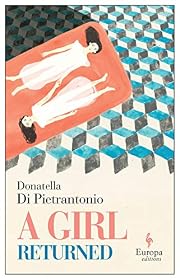
A Girl Returned is titled L'Arminuta in the original Italian: a derogatory name that is given to the unnamed narrator. Raised in a middle class family, amidst all comforts and with love, she is suddenly and abruptly returned to her impoverished biological parents as a teenager, with no explanation or reason. The novel opens with her standing at the doorway, surrounded by siblings in a filthy flat that where her mother, a stranger, sits, indifferent. The transition is shocking, not only because of her change in material circumstances, but because she cannot understand why the man and woman who raised her would suddenly turn their backs on her. Bookish, shy, and intelligent, she does well at school long after her siblings have abandoned education, and so is able to rise above the desperate poverty, but her only source of affection comes from two of her siblings. Her older brother, scarred and prone to hanging out with 'gypsies' (the term the translator uses, although I understand Roma is the preferred term) becomes the subject of an unfulfilled crush; despite their biological connection, he is mostly a stranger to her and she is confused. More than that, Adriana, her younger sister, becomes her guide, then friend and companion as she navigates her new reality.
This is a novel without much of a plot: events pass and the narrator records her experiences, looking back over time. It's quite sensitively written, and di Pietrantonio carefully and slowly places hints that allow you to discover, with the narrator, why exactly she was 'returned'. An interesting read.
A Girl Returned is titled L'Arminuta in the original Italian: a derogatory name that is given to the unnamed narrator. Raised in a middle class family, amidst all comforts and with love, she is suddenly and abruptly returned to her impoverished biological parents as a teenager, with no explanation or reason. The novel opens with her standing at the doorway, surrounded by siblings in a filthy flat that where her mother, a stranger, sits, indifferent. The transition is shocking, not only because of her change in material circumstances, but because she cannot understand why the man and woman who raised her would suddenly turn their backs on her. Bookish, shy, and intelligent, she does well at school long after her siblings have abandoned education, and so is able to rise above the desperate poverty, but her only source of affection comes from two of her siblings. Her older brother, scarred and prone to hanging out with 'gypsies' (the term the translator uses, although I understand Roma is the preferred term) becomes the subject of an unfulfilled crush; despite their biological connection, he is mostly a stranger to her and she is confused. More than that, Adriana, her younger sister, becomes her guide, then friend and companion as she navigates her new reality.
This is a novel without much of a plot: events pass and the narrator records her experiences, looking back over time. It's quite sensitively written, and di Pietrantonio carefully and slowly places hints that allow you to discover, with the narrator, why exactly she was 'returned'. An interesting read.
141labfs39
>140 rasdhar: I'm intrigued by your review. The first part of your review reminded me of Fanny Price in Mansfield Park.
142FlorenceArt
>140 rasdhar: >141 labfs39: What Lisa said! I thought of Jane Austen too.
143kjuliff
>140 rasdhar: Great and telling review. I’m beginning to appreciate novellas now, and this one sounds like a book I’d enjoy. I see it’s on Audible as are a number of Donatella Di Pietrantonio’s books. Unfortunately they are all in Italian only. Hopefully more of her work will be translated into English and “audio-ed”- she seems to be quite prolific.
144rasdhar
>143 kjuliff: I hope so too. This one in particular seems a likely candidate for audio narration, since it won multiple prizes and is quite well known. I read one review that suggests it is inspired by her own life.
145rasdhar
68. Mari Ahokoivu - Oksi (Levine Querido, 2021, translated from the Finnish by Silja-Maaria Aronpuro)
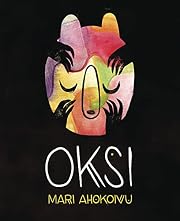
Mari Ahokoivu is a Finnish artist and illustrator; her graphic novel, Oksi (which means bear in Finnish) was published in 2021. It draws from Finnish folklore, to the tell the story of a little shadow creature, known as the 'Poorling'. The Poorling appears inside a bear cave, where mother bear Umi looks after her three cubs. Umi raises the Poorling as one of her own, but she's not a bear, she's a little shadow creature, with huge eyes, and her brothers remind her of this often, even as the Poorling tries very hard to be a bear. Umi warns the Poorling and her brothers never to wander off, because they are hiding in the forest from Umi's mother Emuu, a godlike creature. With the guidance of Scaup, a harbringer/bird, the Poorling learns that she has certain powers, including the ability to light fires. But when the Poorling uses her powers against her own brothers, she is rejected by mother bear Umi. As Emuu and Umi fight, the Poorling goes on a journey to try and understand who she is, and where she came from.
The art in this book is so beautiful. Ahokoivu has a spare, elegant style, with these violent strokes and lines that show so much movement. The drawings are mostly black and white, with some colour added carefully in, to great and beautiful effect. I am including a photo that I took below, but this is a lovely book that I really enjoyed. I spent a long time looking at each page carefully.

Mari Ahokoivu is a Finnish artist and illustrator; her graphic novel, Oksi (which means bear in Finnish) was published in 2021. It draws from Finnish folklore, to the tell the story of a little shadow creature, known as the 'Poorling'. The Poorling appears inside a bear cave, where mother bear Umi looks after her three cubs. Umi raises the Poorling as one of her own, but she's not a bear, she's a little shadow creature, with huge eyes, and her brothers remind her of this often, even as the Poorling tries very hard to be a bear. Umi warns the Poorling and her brothers never to wander off, because they are hiding in the forest from Umi's mother Emuu, a godlike creature. With the guidance of Scaup, a harbringer/bird, the Poorling learns that she has certain powers, including the ability to light fires. But when the Poorling uses her powers against her own brothers, she is rejected by mother bear Umi. As Emuu and Umi fight, the Poorling goes on a journey to try and understand who she is, and where she came from.
The art in this book is so beautiful. Ahokoivu has a spare, elegant style, with these violent strokes and lines that show so much movement. The drawings are mostly black and white, with some colour added carefully in, to great and beautiful effect. I am including a photo that I took below, but this is a lovely book that I really enjoyed. I spent a long time looking at each page carefully.

146rasdhar
69. Reine Arcache Melvin - The Betrayed (Europa Editions, 2018)
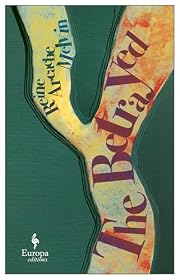
Reine Arcache Melvin has an interesting background. Her father, an Irish immigrant to the USA, married her mother, a Filipina woman studying in the US, and then followed her back to Manila, where they lived in Philippine high society and raised their children, including the author. In the 1980s the Phillipines was a turbulent place to be, to put it mildly - Marcos was overthrown in 1986, ending a dictatorship formally, but many things about the way society and government functioned did not change: corruption, violence, and repression were rampant. The Betrayed is set in this context, and in keeping with the real election of Marcos' son to presidency in 2022, underlying this novel is the theme that sometimes, great political movements are transitory, symbolic events that rarely shake the underlying patterns of power and influence, especially among a country's rich, elite, and aristocratic.
In The Betrayed, Lali and Pilar are the daughters of a revolutionary fighter against an unnamed Dictator; they flee to the US after he is released from a long jail sentence, and stay there until he dies of illness, in hospital. Lali, the practical, hardheaded sister, marries the Dictator's godson, Arturo, taking her family back to Manila where they now live in luxury, thanks to her husband's family's skill in positioning themselves on the right side of every conflict. She does recognise that her marriage also helps Arturo legitimise his own political claims; with the Dictator overthrown, he can capitalize on his dead father-in-law's legacy as a martyr to the revolution, and so whitewash his own family's complicity in the dictatorship. Idealistic, shy Pilar is outraged, refusing to play along, until her own attraction to Arturo sets up a conflict between the two sisters, as well as an internal battle. As Lali becomes pregnant, and Arturo starts to lose interest in her, the bargains and arrangements they arrive at in their private lives start to resemble more closely the constant political machinations around them; the shifting allegiances, and of course, the betrayals.
A lot of the novel is focused on documenting in specific and brutal detail the impact of political violence on the lives of ordinary people, and the disconnect of the wealthy and elite with the average person. For Lali, this means constantly coming to terms with the reality of what her husband does. In a particularly poignant moment, a ship owned by his company sinks due to negligence, killing hundreds (probably a reference to the actual Dona Paz sinking, which is still one of the worst marine disasters). As Arturo sits in his air conditioned office, refusing to engage, Lali, unable to endure the situation, walks into a crowd of furious protesting families to apologize to them. For all her hard-headedness, she is also her father's daughter, as much as Pilar as is.
It was a very difficult book to read, and I stuck with it mostly because I wanted to read Melvin's excellent writing when it came to the political and social context. I have to confess I could find it in myself to care at all about the love triangle that is the centerpiece of the book. It seemed to me to be a particularly puerile way to frame such serious and complex issues.
Reine Arcache Melvin has an interesting background. Her father, an Irish immigrant to the USA, married her mother, a Filipina woman studying in the US, and then followed her back to Manila, where they lived in Philippine high society and raised their children, including the author. In the 1980s the Phillipines was a turbulent place to be, to put it mildly - Marcos was overthrown in 1986, ending a dictatorship formally, but many things about the way society and government functioned did not change: corruption, violence, and repression were rampant. The Betrayed is set in this context, and in keeping with the real election of Marcos' son to presidency in 2022, underlying this novel is the theme that sometimes, great political movements are transitory, symbolic events that rarely shake the underlying patterns of power and influence, especially among a country's rich, elite, and aristocratic.
In The Betrayed, Lali and Pilar are the daughters of a revolutionary fighter against an unnamed Dictator; they flee to the US after he is released from a long jail sentence, and stay there until he dies of illness, in hospital. Lali, the practical, hardheaded sister, marries the Dictator's godson, Arturo, taking her family back to Manila where they now live in luxury, thanks to her husband's family's skill in positioning themselves on the right side of every conflict. She does recognise that her marriage also helps Arturo legitimise his own political claims; with the Dictator overthrown, he can capitalize on his dead father-in-law's legacy as a martyr to the revolution, and so whitewash his own family's complicity in the dictatorship. Idealistic, shy Pilar is outraged, refusing to play along, until her own attraction to Arturo sets up a conflict between the two sisters, as well as an internal battle. As Lali becomes pregnant, and Arturo starts to lose interest in her, the bargains and arrangements they arrive at in their private lives start to resemble more closely the constant political machinations around them; the shifting allegiances, and of course, the betrayals.
A lot of the novel is focused on documenting in specific and brutal detail the impact of political violence on the lives of ordinary people, and the disconnect of the wealthy and elite with the average person. For Lali, this means constantly coming to terms with the reality of what her husband does. In a particularly poignant moment, a ship owned by his company sinks due to negligence, killing hundreds (probably a reference to the actual Dona Paz sinking, which is still one of the worst marine disasters). As Arturo sits in his air conditioned office, refusing to engage, Lali, unable to endure the situation, walks into a crowd of furious protesting families to apologize to them. For all her hard-headedness, she is also her father's daughter, as much as Pilar as is.
It was a very difficult book to read, and I stuck with it mostly because I wanted to read Melvin's excellent writing when it came to the political and social context. I have to confess I could find it in myself to care at all about the love triangle that is the centerpiece of the book. It seemed to me to be a particularly puerile way to frame such serious and complex issues.
147rasdhar
70. John Banville - Snow
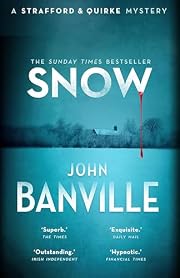
content warning: child sexual abuse
I didn't realise that this was actually the second book in the series, so I should probably go back and read The Secret Guests. I have read other fiction by John Banville, but none of his forays into detective/mystery fiction, either under his own name, or under his pen name, Benjamin Black. I understand that he has a long-running series of novels featuring a pathologist named Quirke in 1950s Dublin, and occasionally, a cop named St John Strafford shows up in the same books. Snow is a novel focusing on Strafford. While vacationing with family in County Wexford, he is called in to investigate the murder of a local priest. It's not difficult to see where this is going, especially after the priest's 'close' friendships with various young men are discovered. The book was not very well plotted, and a long chapter written from the priest's point of view, rationalizing his own acts of abuse, was really uncomfortable to read. I don't know if I'd go ahead and read the next one in this series. It seems to have none of the redeeming qualities of his non-mystery fiction, and I don't really care for fiction that utilizes the abuse of children for shock value.
content warning: child sexual abuse
I didn't realise that this was actually the second book in the series, so I should probably go back and read The Secret Guests. I have read other fiction by John Banville, but none of his forays into detective/mystery fiction, either under his own name, or under his pen name, Benjamin Black. I understand that he has a long-running series of novels featuring a pathologist named Quirke in 1950s Dublin, and occasionally, a cop named St John Strafford shows up in the same books. Snow is a novel focusing on Strafford. While vacationing with family in County Wexford, he is called in to investigate the murder of a local priest. It's not difficult to see where this is going, especially after the priest's 'close' friendships with various young men are discovered. The book was not very well plotted, and a long chapter written from the priest's point of view, rationalizing his own acts of abuse, was really uncomfortable to read. I don't know if I'd go ahead and read the next one in this series. It seems to have none of the redeeming qualities of his non-mystery fiction, and I don't really care for fiction that utilizes the abuse of children for shock value.
148kjuliff
>147 rasdhar: I am not a fan of Banville’s non-detective novels. He himself realizes they are airport fiction and that’s why he used the pen name of
Benjamin Black for his airport fiction. Well, he used to, lately he appears to be writing all under his real name, e.g. April in Spain . So beware!
Benjamin Black for his airport fiction. Well, he used to, lately he appears to be writing all under his real name, e.g. April in Spain . So beware!
149rasdhar
71. Doreen Cunningham - Soundings: Journeys in the Company of Whales: A Memoir (Scribner 2022)
This was on my reading list from 2022, not sure what caught my eye then, but it was a pleasant enough read. Cunningham has over two decades in journalism and broadcasting at the BBC, but this memoir is about the very early days of her career, when she was a struggling, penniless single mother. She and her young son Max travel from Mexico to the Arctic, following the journey of whales, scrounging for money to fund the trip. The memoir is only partly about whales, and a great deal focuses on her personal pain and grief. There are some ham-handed metaphors there, but the writing is easy and smooth. The narrative does jump around a bit; she's switching back and forth between a solo trip she made previously, and one she makes later with her son, and that's a little difficult because she doesn't manage it well. I enjoyed the descriptions, I didn't buy the bigger narrative about resilience.
This was on my reading list from 2022, not sure what caught my eye then, but it was a pleasant enough read. Cunningham has over two decades in journalism and broadcasting at the BBC, but this memoir is about the very early days of her career, when she was a struggling, penniless single mother. She and her young son Max travel from Mexico to the Arctic, following the journey of whales, scrounging for money to fund the trip. The memoir is only partly about whales, and a great deal focuses on her personal pain and grief. There are some ham-handed metaphors there, but the writing is easy and smooth. The narrative does jump around a bit; she's switching back and forth between a solo trip she made previously, and one she makes later with her son, and that's a little difficult because she doesn't manage it well. I enjoyed the descriptions, I didn't buy the bigger narrative about resilience.
150rasdhar
>148 kjuliff: Yes, I don't think I'll be reading any more of these!
151rasdhar
72. Fabulous Machinery for the Curious: The Garden of Urdu Classical Literature - edited by Musharraf Ali Farooqui (World Literature in Translation)
Farooqui is a Pakistani writer and translator, now living in Canada. This book collects several stories in the qissa genre of writing, which is common to Persian, Arabic, and related languages, like Urdu. For those of you who are unfamiliar, Urdu is mainly spoken in India and Pakistan: it is the official language in Pakistan, and one of several official languages in India. Urdu and Hindi share a common linguistic ancestry, drawing from Persian, Arabic, Sanskrit, and other older languages of the region. I can speak a little Urdu but I can't read Nastaliq (the Arabic script at all), so it was lovely to have access to this translation. Qissa stories derive from oral storytelling: they combine elements of fable, fantasy, parables, and song, usually performed live (think One Thousand and One Nights). This collection has six qissas, and a detailed introductory and biographical note for the narrators and authors. A great and magical collection, I thoroughly enjoyed it.
Farooqui is a Pakistani writer and translator, now living in Canada. This book collects several stories in the qissa genre of writing, which is common to Persian, Arabic, and related languages, like Urdu. For those of you who are unfamiliar, Urdu is mainly spoken in India and Pakistan: it is the official language in Pakistan, and one of several official languages in India. Urdu and Hindi share a common linguistic ancestry, drawing from Persian, Arabic, Sanskrit, and other older languages of the region. I can speak a little Urdu but I can't read Nastaliq (the Arabic script at all), so it was lovely to have access to this translation. Qissa stories derive from oral storytelling: they combine elements of fable, fantasy, parables, and song, usually performed live (think One Thousand and One Nights). This collection has six qissas, and a detailed introductory and biographical note for the narrators and authors. A great and magical collection, I thoroughly enjoyed it.
This topic was continued by Rasdhar continues to be a reader of this world (III).

