Kate Keeps on
This is a continuation of the topic Kate Keeps on Keeping on Jumping.
This topic was continued by Kate Keeps on part 2.
Talk Club Read 2024
Join LibraryThing to post.
1kjuliff
June’s Books
Homeland - Fernando Aramburu - Reviewed
Transatlantic - Coleman McCann Rating 2
The End of the Affair - Graham Greene Rating 3.5
Estuary - Perumal Murugan - Reviewed
My Father’s Brain - Sandeep Jauhar - Rating 4
Hunger - Knut Hamsun - Rating 3.5
May Books
Case Study by Graeme Macrae Burnet - Reviewd
The Spider House - Paul Bowles - rating 4
The Woman from Uruguay - Pedro Mairal - Reviewed
A Long Long Way - Sebastian Barry - Reviewed
The Pastor - Hanne Orstavik - 3.5
Sputnik Sweetheart -Haruki Murakami
All the Lovers in the Night -Mieko Kawakami
-Reviewed
The Pastor - Hanne Orstavik - Reviewed
Abigail - Magda Szabo - Reviewed
Homeland - Fernando Aramburu - Reviewed
Transatlantic - Coleman McCann Rating 2
The End of the Affair - Graham Greene Rating 3.5
Estuary - Perumal Murugan - Reviewed
My Father’s Brain - Sandeep Jauhar - Rating 4
Hunger - Knut Hamsun - Rating 3.5
May Books
Case Study by Graeme Macrae Burnet - Reviewd
The Spider House - Paul Bowles - rating 4
The Woman from Uruguay - Pedro Mairal - Reviewed
A Long Long Way - Sebastian Barry - Reviewed
The Pastor - Hanne Orstavik - 3.5
Sputnik Sweetheart -Haruki Murakami
All the Lovers in the Night -Mieko Kawakami
-Reviewed
The Pastor - Hanne Orstavik - Reviewed
Abigail - Magda Szabo - Reviewed
2kjuliff
April Books
Madhouse at the End of the Earth: The Belgica's Journey into the Dark Antarctic Night -Julian Sancton - Reviewed
Mantel Pieces - Hilary Mantel - Reviewed
Waiting for the Mahatma - R. K. Naryan - Reviewed
My Heavenly Favorite - Lucas Rijneveld - in progress
The Assassination of Margaret Thatcher - Hilary Mantel - Reviewed
The Trees - Percival Everett - Reviewed
We Die Alone - David Howarth - Reviewed
Kitchem - Banana Yoshimoto - Reviewed
Found in the Street - Patricia Highsmith 3.5
The Tremor of Forgery - Patricia Highsmith - Reviewed
Hope and Other Dangerous Pursuits -Leila Lamani - 3.5
The Other Americans - Laila Lamali - Reviewed
The Heart of the Matter by Graham Green - Reviewed
March Borks
Too Much Happiness: Stories - Alice Munro - Reviewed
The Push - Ashley Audrain - Reviewed
Pyre - Reviewed
One Part Woman - Reviewed
Small Pleasures - Reviewed
Summer - Reviewed
Eastbound - Reviewed
The Heart - Reviewed
Shuggie Bain - Reviewd
Brotherless Night - Reviewed
Roman Stories - Reviewed
February Books
Minor Detail - Reviwed
Vera - Reviewed
Death is Hard Work - Reviwed
The Years - Reviewd
Elizabeth and her German Garden - Rviewed
The Mother's Recompense - Reviewed
The Discomfort of Evening - Reviewed
Mysteries - Reviewed
Convenience store woman - Reviewed
Earthlings - Reviewed
Homegoing - Reviewed
Before the Fall - Reviewd
Love and Summer - Reviewed
Death in Summer - Reviewed
January Books
Stasiland - Reviewed
The Vanishing Act of Esme Lennox - Reviewed
The Best Minds: A Story of Friendship, Madness, and the Tragedy of Good Intentions - Reviewd
Everyone Knows Your Mother is a Witch - Reviewd
Vengeance Is Mine - Reviwed
Breaking Point - Reviewed
The Return of Martin Guerre - Reviewed
At Night All Blood is Black - Reviewed
Suite Française - Reviewed
Learning to Talk - Reviewed
The Undertaking - Reviewed
Mouth to Mouth - Reviewed
Martian Time-Slip - Reviedd
The Enchanted April - Reviewed
Madhouse at the End of the Earth: The Belgica's Journey into the Dark Antarctic Night -Julian Sancton - Reviewed
Mantel Pieces - Hilary Mantel - Reviewed
Waiting for the Mahatma - R. K. Naryan - Reviewed
My Heavenly Favorite - Lucas Rijneveld - in progress
The Assassination of Margaret Thatcher - Hilary Mantel - Reviewed
The Trees - Percival Everett - Reviewed
We Die Alone - David Howarth - Reviewed
Kitchem - Banana Yoshimoto - Reviewed
Found in the Street - Patricia Highsmith 3.5
The Tremor of Forgery - Patricia Highsmith - Reviewed
Hope and Other Dangerous Pursuits -Leila Lamani - 3.5
The Other Americans - Laila Lamali - Reviewed
The Heart of the Matter by Graham Green - Reviewed
March Borks
Too Much Happiness: Stories - Alice Munro - Reviewed
The Push - Ashley Audrain - Reviewed
Pyre - Reviewed
One Part Woman - Reviewed
Small Pleasures - Reviewed
Summer - Reviewed
Eastbound - Reviewed
The Heart - Reviewed
Shuggie Bain - Reviewd
Brotherless Night - Reviewed
Roman Stories - Reviewed
February Books
Minor Detail - Reviwed
Vera - Reviewed
Death is Hard Work - Reviwed
The Years - Reviewd
Elizabeth and her German Garden - Rviewed
The Mother's Recompense - Reviewed
The Discomfort of Evening - Reviewed
Mysteries - Reviewed
Convenience store woman - Reviewed
Earthlings - Reviewed
Homegoing - Reviewed
Before the Fall - Reviewd
Love and Summer - Reviewed
Death in Summer - Reviewed
January Books
Stasiland - Reviewed
The Vanishing Act of Esme Lennox - Reviewed
The Best Minds: A Story of Friendship, Madness, and the Tragedy of Good Intentions - Reviewd
Everyone Knows Your Mother is a Witch - Reviewd
Vengeance Is Mine - Reviwed
Breaking Point - Reviewed
The Return of Martin Guerre - Reviewed
At Night All Blood is Black - Reviewed
Suite Française - Reviewed
Learning to Talk - Reviewed
The Undertaking - Reviewed
Mouth to Mouth - Reviewed
Martian Time-Slip - Reviedd
The Enchanted April - Reviewed
3kjuliff
Sad news to start this new month. R.I.P. Paul Auster
Paul Auster, American author of The New York Trilogy, dies aged 77
Paul Auster, American author of The New York Trilogy, dies aged 77
4RidgewayGirl
>3 kjuliff: Yes, I saw that news this morning.
5labfs39
>3 kjuliff: A distinct and inventive voice now silent.
6kjuliff
I had the Sisyphus dream again - the one I wrote about in my last thread here took place in a kitchen.
This time I was in charge of a large company and every department needed re-organizing. Not only that, but the department names had to be changed, though not the associated employees or the spaces that held them. So Customer Service turned into Engineering, Human Resources to Marketing, IT to Finance, Finance to Customer Service, Engineering to Finance and so on. This meant that everyone had to learn a different skill-set, but even worse, as well as the physical areas the individuals occupied remaining the same, the tools and other resources remained in situ.
I was feeling sick to the stomach, but worse was to come. The tools the employees had to work with were not exactly the same as the ones in the original location. They were the tools that would have been used a century earlier. So Engineering, now staffed with Finance personnel had hand-lathes and slide-rules to work with. IT had abacuses and shoe-shine stalls, Marketing had wracks for torture and wells for dunking witches.
All this called for ingenuity far beyond my ability, especially as I am getting old and not as quick and adaptive as I once was. As well my short-term memory is not the best and I kept getting confused as to which department hand changed into what.
The odd thing was that the staff were most obliging and took all changes in their stride. The last thing I remember before waking was a young Romanian computer programmer asking me how to use a lathe.
I’m about to sleep now, and wonder what horror lies in wait tonight.
The End
This time I was in charge of a large company and every department needed re-organizing. Not only that, but the department names had to be changed, though not the associated employees or the spaces that held them. So Customer Service turned into Engineering, Human Resources to Marketing, IT to Finance, Finance to Customer Service, Engineering to Finance and so on. This meant that everyone had to learn a different skill-set, but even worse, as well as the physical areas the individuals occupied remaining the same, the tools and other resources remained in situ.
I was feeling sick to the stomach, but worse was to come. The tools the employees had to work with were not exactly the same as the ones in the original location. They were the tools that would have been used a century earlier. So Engineering, now staffed with Finance personnel had hand-lathes and slide-rules to work with. IT had abacuses and shoe-shine stalls, Marketing had wracks for torture and wells for dunking witches.
All this called for ingenuity far beyond my ability, especially as I am getting old and not as quick and adaptive as I once was. As well my short-term memory is not the best and I kept getting confused as to which department hand changed into what.
The odd thing was that the staff were most obliging and took all changes in their stride. The last thing I remember before waking was a young Romanian computer programmer asking me how to use a lathe.
I’m about to sleep now, and wonder what horror lies in wait tonight.
The End
7kjuliff
For Helen Garner enthusiasts: There has been a new development in the legal case and subsequent conviction that her excellent book - This House of Grief was based upon. The man accused of killing his three sons which Garner wrote about in that novel, may have his case retried.
See Robert Farquharson, convicted of murdering his three sons, set to launch a fresh appeal to overturn his conviction
Also of interest SARAH WEINMAN ON HELEN GARNER AND THE ONGOING CONVERSATIONS OF TRUE CRIME
See Robert Farquharson, convicted of murdering his three sons, set to launch a fresh appeal to overturn his conviction
Also of interest SARAH WEINMAN ON HELEN GARNER AND THE ONGOING CONVERSATIONS OF TRUE CRIME
8labfs39
>6 kjuliff: Wow, what a creative mind you must have, Kate. You should write short stories. Have you ever tried dictating your writing so that you don't need to type?
9kjuliff
>8 labfs39: Lisa, I can’t dictate unfortunately. I can only create stories by writing or typing them. Dictating doesn’t work. It’s v frustrating. Oh, and thanks for the compliment !
10labfs39
>9 kjuliff: Too bad, I was hoping that might be an option for you going forward.
11kjuliff
Compuert Dream
Or Sisyphus returns
The large computer needed assembling and the chips from China had arrived. They were late, the shipment having been delayed due to the bridge collapse in Baltimore. So it was very important that we all worked very fast in order to meet the deadline.
There was one possibly insurmountable problem remaining. The chips were “in Chinese” and I had been kicked out of Chinese school decades ago. Each chip had to be translated to American English and then to binary before they could be seated in place, and obviously this was a mammoth task. Herculean to put it bluntly, my co-worker told me.
My co-worker was my old friend Patrick originally from Shanghai. I asked him why so many Chinese people chose names that had an “r’ sound in them, for their Western names, and he laughed as if I were an ignorant whity. I needed his help as there were few staff left who could translate the chips.
I was having trouble even conceptualizing the chip-seating process. Patrick said it was better done in one step, Mandarin to binary, leaving out the English altogether. All right for you, I said, you think in Mandarin. At that precise moment Patrick disappeared from the dream and was replaced by another Patrick, my first love who is a polyglot who knows seven languages, all of them Western, and to make it worse he hasn’t a clue about binary.
The chips were being unloaded from large crates one by one. The idea was to translate them as they passed by, assembly-line fashion, in order that they be seated in position in the computer efficiently, without pause.
As each passed by me I tied really hard to read it straight into my head so that I could “think” it. I could feel my already compromised retinas shattering into tiny pieces. I reached out to one chip hoping that I could translate by touch when a voice told me to wake.
The End
Note: I don’t think I’ll post any more Sisyphus dreams as they can be quite disturbing when relived.
— Edited for typos
Or Sisyphus returns
The large computer needed assembling and the chips from China had arrived. They were late, the shipment having been delayed due to the bridge collapse in Baltimore. So it was very important that we all worked very fast in order to meet the deadline.
There was one possibly insurmountable problem remaining. The chips were “in Chinese” and I had been kicked out of Chinese school decades ago. Each chip had to be translated to American English and then to binary before they could be seated in place, and obviously this was a mammoth task. Herculean to put it bluntly, my co-worker told me.
My co-worker was my old friend Patrick originally from Shanghai. I asked him why so many Chinese people chose names that had an “r’ sound in them, for their Western names, and he laughed as if I were an ignorant whity. I needed his help as there were few staff left who could translate the chips.
I was having trouble even conceptualizing the chip-seating process. Patrick said it was better done in one step, Mandarin to binary, leaving out the English altogether. All right for you, I said, you think in Mandarin. At that precise moment Patrick disappeared from the dream and was replaced by another Patrick, my first love who is a polyglot who knows seven languages, all of them Western, and to make it worse he hasn’t a clue about binary.
The chips were being unloaded from large crates one by one. The idea was to translate them as they passed by, assembly-line fashion, in order that they be seated in position in the computer efficiently, without pause.
As each passed by me I tied really hard to read it straight into my head so that I could “think” it. I could feel my already compromised retinas shattering into tiny pieces. I reached out to one chip hoping that I could translate by touch when a voice told me to wake.
The End
Note: I don’t think I’ll post any more Sisyphus dreams as they can be quite disturbing when relived.
— Edited for typos
12kjuliff
After I wrote down last night’s dream, its meanings became so obvious. Strange, because on waking this one made no sense.
13dianeham
>11 kjuliff: stunning!
14kjuliff
Divided Memories
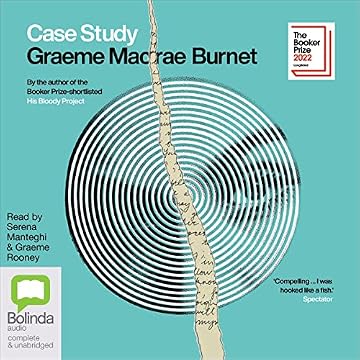
Case Study
By Graeme Macrae Burnet
Read by: Caroline Hewett
Length: 9hours 10 minutes
Rating: 3.5+
Mind Parasites, The Divided Self, sanity and madness in the sexual sixties, oh it all came roaring back to me as I read Graeme Macrae Burnet’s Case Study. The idea that craziness was in the eye of the beholder, that psychiatrists were the mad ones, that the nuclear family was dangerous - all this was layered onto the slowly growing acceptance that woman have sexual feelings too.
I found Case Study a difficult and patchy read. This may have been because of the structure of the book, which is divided into alternating chapters between diary notebooks and third person descriptions of an unqualified pop-psychologist - both the notebooks and the psych being fictional.
The diaries are those of a disturbed young woman who is journaling her quest to discover if the self-educated psychologist Collins Braithwaite is responsible for her sister’s death. She tricks Braithwaite into taking her on as a patient, using the fake name of Rebecca Smyth. All this is with the background of Swinging Sixties London.
Are the notebooks genuine or not? The fictional writer of the novel is unsure. The notebooks have no provenance. The writer of the notebooks presents herself to the reader as demure, introverted sexually-ignorant, much like de Maurier’s nameless character in her novel Rebecca. Both de Maurier’s and Macrae Burner’s Rebecca’s are sexually provocative and flirtatious. Case Study is full of fiction upon fiction. At times I think it’s just too clever for its own good.
There’s a lot of darkness and a lot of humour. It’s both funny and sad as we see the sexually-provocative Rebecca gradually take control of the demure sexually repressed young woman who has invented her. The scene where Rebecca seduces a young man in a snug in a London bar and the two personalities start talking to each other is a brilliant piece of comedy noire.
I had to read the novel in half-hour chunks, as the writings of R.D. Laing and his ilk contributed to the breakup of my first marriage. In retrospect at the anti-psychiatry movement of the ‘60s and ‘70s was probably necessary for the development of theories of mental illness. But back then, along with other social upheavals, it took a heavy toll.
Graeme Macrae captures the times so well, and even though some readers have nitpicked at minor details such as placing a Lyons teashop in the wrong (by a few meters) place, as he points out in his Postscript to the Second Edition, these are minor and have no bearing on the story.
Having lived and worked in London 1969 through 1971 I can vouch for the authenticity of Graeme Macrae’s description of London as it pertains to the novel.
I will certainly be reading more from this writer, and though I found it difficult to read, I feel this was more because of my own experiences revolving around the subject matter.
The sex scene in the snug will go down in my memory along with Flaubert’s Emma and Leon in the coach at Lyon, and the car-wash scene in Julian Barnes’s Before She Met Me.
Case Study
By Graeme Macrae Burnet
Read by: Caroline Hewett
Length: 9hours 10 minutes
Rating: 3.5+
Mind Parasites, The Divided Self, sanity and madness in the sexual sixties, oh it all came roaring back to me as I read Graeme Macrae Burnet’s Case Study. The idea that craziness was in the eye of the beholder, that psychiatrists were the mad ones, that the nuclear family was dangerous - all this was layered onto the slowly growing acceptance that woman have sexual feelings too.
I found Case Study a difficult and patchy read. This may have been because of the structure of the book, which is divided into alternating chapters between diary notebooks and third person descriptions of an unqualified pop-psychologist - both the notebooks and the psych being fictional.
The diaries are those of a disturbed young woman who is journaling her quest to discover if the self-educated psychologist Collins Braithwaite is responsible for her sister’s death. She tricks Braithwaite into taking her on as a patient, using the fake name of Rebecca Smyth. All this is with the background of Swinging Sixties London.
Are the notebooks genuine or not? The fictional writer of the novel is unsure. The notebooks have no provenance. The writer of the notebooks presents herself to the reader as demure, introverted sexually-ignorant, much like de Maurier’s nameless character in her novel Rebecca. Both de Maurier’s and Macrae Burner’s Rebecca’s are sexually provocative and flirtatious. Case Study is full of fiction upon fiction. At times I think it’s just too clever for its own good.
There’s a lot of darkness and a lot of humour. It’s both funny and sad as we see the sexually-provocative Rebecca gradually take control of the demure sexually repressed young woman who has invented her. The scene where Rebecca seduces a young man in a snug in a London bar and the two personalities start talking to each other is a brilliant piece of comedy noire.
I had to read the novel in half-hour chunks, as the writings of R.D. Laing and his ilk contributed to the breakup of my first marriage. In retrospect at the anti-psychiatry movement of the ‘60s and ‘70s was probably necessary for the development of theories of mental illness. But back then, along with other social upheavals, it took a heavy toll.
Graeme Macrae captures the times so well, and even though some readers have nitpicked at minor details such as placing a Lyons teashop in the wrong (by a few meters) place, as he points out in his Postscript to the Second Edition, these are minor and have no bearing on the story.
Having lived and worked in London 1969 through 1971 I can vouch for the authenticity of Graeme Macrae’s description of London as it pertains to the novel.
I will certainly be reading more from this writer, and though I found it difficult to read, I feel this was more because of my own experiences revolving around the subject matter.
The sex scene in the snug will go down in my memory along with Flaubert’s Emma and Leon in the coach at Lyon, and the car-wash scene in Julian Barnes’s Before She Met Me.
15labfs39
>14 kjuliff: Great review, Kate. I've been on the fence about this one.
16kjuliff
>15 labfs39: I must have missed your review Lisa. Can you post or message me a link?
17JoeB1934
Have you read his first book, His Bloody Project? It is of a similar vein, but far more interesting to me. Being of Scottish heritage it really made a big impression on me.
Also, Dan read this book about the same time I did but I can't remember if he has a review. I imagine that he does.
Also, Dan read this book about the same time I did but I can't remember if he has a review. I imagine that he does.
18kjuliff
>17 JoeB1934: Thanks, yes I read Dan’s review here. He gave it a slightly higher rating than me, but wasn’t overwhelmed. I have borrowed His Bloody Project and have a feeling it will be a bit better.
19labfs39
>16 kjuliff: Oh, sorry, Kate. I meant I have been on the fence about whether to read this one.
20kjuliff
>19 labfs39: Oh I see. I recommend it. I see @Dan rated it a 4 and I a 3.5+ and @Rasdhar liked it. I am going to see how I go with His Bloody Project before deciding if I’m going to read more of Graeme Macrae Burnet.
21rasdhar
>14 kjuliff: This is a wonderful, nuanced review. Looking back to yours I realised mine had mixed up the names (I kept calling the protagonist Veronica instead of her sister). He does have a wonderful touch for dark humour.
22kjuliff
>21 rasdhar: Mistaking the name of the protagonist in Case Study is understandable, because she’s not given any name. Like de Maurier’s protagonist in Rebecca she is nameless. That confused me early on as well, and I kept going back to the beginning to work out the relationship between the nameless protagonist, Rebecca, and Veronica. I wonder if Macrae Burnet did it on purpose as de Maurier’s main character is demure and repressed.
I think the book is in part exploring the concept of self. We have R. D. Laing’s Divided Self and Braithwaite’s confusion over his own identity. But the book is covering so many themes and concepts it’s hard to unravel at what the writer’s main object is.
I think the book is in part exploring the concept of self. We have R. D. Laing’s Divided Self and Braithwaite’s confusion over his own identity. But the book is covering so many themes and concepts it’s hard to unravel at what the writer’s main object is.
23SassyLassy
>14 kjuliff: Certainly echoes of His Bloody Project here in format at least. I found the different streams worked well in that novel (reviewed). Interesting that he has moved the setting to London in this one. Your review makes Case Study sound like a worthwhile read, so I'll check out the library.
24kjuliff
>23 SassyLassy: Thanks for your comments. Yes I think you would like this book. It’s cleverly executed and the Rebecca parts especially are enticing.
25kjuliff
I’m currently reading Paul Bowles The Spider’s House. Although I thought I’d read all Bowle’s books years ago, I must have missed this one. I doubt I could have forgotten it.
It’s set in Fez, where Bowles, a New Yorker lived for much of his life. This book is set during the time Morocco was gaining independence from the French. I find it interesting and refreshing to read about an independence movement unfolding, from the point of view of an outsider, albeit one very familiar with the colonized culture.
I love New York, Morocco and it was Bowles who introduced me to the idea of living life as an expat.
It’s set in Fez, where Bowles, a New Yorker lived for much of his life. This book is set during the time Morocco was gaining independence from the French. I find it interesting and refreshing to read about an independence movement unfolding, from the point of view of an outsider, albeit one very familiar with the colonized culture.
I love New York, Morocco and it was Bowles who introduced me to the idea of living life as an expat.
26labfs39
>25 kjuliff: An author I've never read. Do you have a favorite?
27kjuliff
>26 labfs39: Yes, without doubt, The Sheltering Sky. From the Encyclopedia Britanica,
Paul Bowles (born December 30, 1910, New York, New York, U.S.—died November 18, 1999, Tangier, Morocco) was an American-born composer, translator, and author of novels and short stories in which violent events and psychological collapse are recounted in a detached and elegant style. His protagonists are often Europeans or Americans who are maimed by their contact with powerful traditional cultures.
I highly recommend his writings.
Paul Bowles (born December 30, 1910, New York, New York, U.S.—died November 18, 1999, Tangier, Morocco) was an American-born composer, translator, and author of novels and short stories in which violent events and psychological collapse are recounted in a detached and elegant style. His protagonists are often Europeans or Americans who are maimed by their contact with powerful traditional cultures.
I highly recommend his writings.
28labfs39
>27 kjuliff: I'll look for it. Thanks.
29kjuliff
>28 labfs39: on second thoughts I think the one I am reading now, The Spider’s House would be of more interest to you. The prose is just as good but the content would be of more interest, and after that if you like that one, The Sheltering Sky
30kjuliff
Mad Englishmen in the Sun
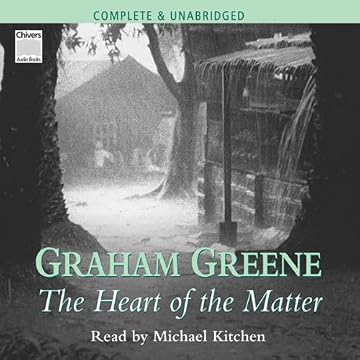
The Heart of the Matter
By Graham Greene
Read by: Michael Kitchen
Length: 10 hrs and 7 mins
This is the first Grahame Greene novel I’ve read. I finished it a few weeks ago, and though I normally review books fairly soon after reading them, in this case I just didn’t know what to say. There was nothing of particular interest to me, The Heart of the Matter being a straight-out story told in chronological order by a writer adept at his craft. There was of course the plot, which revolves around a love triangle and subsequent guilt, but this subject is not particularly new.
The story’s setting is colonial Africa, though the actual country seems to be un-named — as if it were of no importance. Certainly the main characters seemed to think so. It was just Africa to them. A place with “boys” to wait on them, and a heap of moral values, brought with them from their home country to shelter and swelter under.
Despite the possibility of reflections on the morality of the existence of colonialism in the mid 20th century, and of the exploitation of those who served their self-appointed masters, the morality that played a part in the story was that of Catholic guilt, preserving marriage at all costs, and the sin of taking communion in a state of sin.
I suppose it was because I don’t understand the concept of transubstantiation except at a theoretical level, that I found the underlying point of the novel perplexing.
Taken as a simple story of adultery in a loveless marriage at a time when this was condemned by society, it’s an interesting enough read. The story is well written, and my interest was maintained. Will Henry stay with his staid wife Louise, or go off with his mistress who was initially delightful but who is gradually morphing into his wife? Which mistresses tend to do …
The Catholic church’s morality lays heavily on Henry, and if I were a page-skipper I would have skipped the pages that dealt with it. But the story written well enough for me to stay tuned. I just had to know then ending.
I gave this book a 4. It’s well written and holds interest, and I guess for those with a knowledge of Catholicism beyond Reformation 101, it could represent moral conflict and the contradictions inherent in the absolution of a sin we didn’t ask for.
The Heart of the Matter
By Graham Greene
Read by: Michael Kitchen
Length: 10 hrs and 7 mins
This is the first Grahame Greene novel I’ve read. I finished it a few weeks ago, and though I normally review books fairly soon after reading them, in this case I just didn’t know what to say. There was nothing of particular interest to me, The Heart of the Matter being a straight-out story told in chronological order by a writer adept at his craft. There was of course the plot, which revolves around a love triangle and subsequent guilt, but this subject is not particularly new.
The story’s setting is colonial Africa, though the actual country seems to be un-named — as if it were of no importance. Certainly the main characters seemed to think so. It was just Africa to them. A place with “boys” to wait on them, and a heap of moral values, brought with them from their home country to shelter and swelter under.
Despite the possibility of reflections on the morality of the existence of colonialism in the mid 20th century, and of the exploitation of those who served their self-appointed masters, the morality that played a part in the story was that of Catholic guilt, preserving marriage at all costs, and the sin of taking communion in a state of sin.
I suppose it was because I don’t understand the concept of transubstantiation except at a theoretical level, that I found the underlying point of the novel perplexing.
Taken as a simple story of adultery in a loveless marriage at a time when this was condemned by society, it’s an interesting enough read. The story is well written, and my interest was maintained. Will Henry stay with his staid wife Louise, or go off with his mistress who was initially delightful but who is gradually morphing into his wife? Which mistresses tend to do …
The Catholic church’s morality lays heavily on Henry, and if I were a page-skipper I would have skipped the pages that dealt with it. But the story written well enough for me to stay tuned. I just had to know then ending.
I gave this book a 4. It’s well written and holds interest, and I guess for those with a knowledge of Catholicism beyond Reformation 101, it could represent moral conflict and the contradictions inherent in the absolution of a sin we didn’t ask for.
31kidzdoc
Great review of Case Study, Kate; I'll have to move it higher on my TBR list, based on comments from you and Rasdhar in particular.
32lisapeet
>31 kidzdoc: Ditto.
33kjuliff
>31 kidzdoc: >32 lisapeet: Have you read any RD Laing. I’m wondering if he’s still in vogue in any areas? Also I’ve been thinking of rereading The Mind Parasites which I liked at the time, though I can’t remember why. I’d completely forgotten it till it came up in Case Study
34kjuliff
I just finished rereading A Spider’s House and really must write a review of it. It’s a brilliantly written novel by the incredible Paul Bowles set during the uprising of the Moroccans war against the colonizing French. Now I have that book hang-over thing that I get when I finish a special book.
35labfs39
>34 kjuliff: Now I have that book hang-over thing that I get when I finish a special book.
I know exactly what you mean. I began wondering if there is a word for that emotion. My internet search led me to the Sydney Morning Herald (go Aussies!), which introduced me to the word "looseleft." According to the Dictionary of Obscure Sorrows it means:
looseleft
adj. feeling a sense of loss upon finishing a good book, sensing the weight of the back cover locking away the lives of characters you’ve gotten to know so well.
From looseleaf, a removable sheet of paper + left, departed.
And now we know!
I know exactly what you mean. I began wondering if there is a word for that emotion. My internet search led me to the Sydney Morning Herald (go Aussies!), which introduced me to the word "looseleft." According to the Dictionary of Obscure Sorrows it means:
looseleft
adj. feeling a sense of loss upon finishing a good book, sensing the weight of the back cover locking away the lives of characters you’ve gotten to know so well.
From looseleaf, a removable sheet of paper + left, departed.
And now we know!
36kjuliff
>35 labfs39: Thanks Laura. I got the term “book hang-over” from another LT member but I’ve forgotten who. But it’s interesting that there is a word for the feeling. I’ll have to look into The Dictionary of Obscure Sorrows because I’m feeling rather sorrowful today and although it’s a general feeling, I might be able to narrow it down.
37AlisonY
Great reviews and interesting chat. I read a book by Bowles' partner, whose name now escapes me, but I've never got to him yet. Noting this one.
I've only read one Graham Greene book, but it didn't push me to another. It was quite bleak - I'm not sure if that's his style.
I've only read one Graham Greene book, but it didn't push me to another. It was quite bleak - I'm not sure if that's his style.
38kjuliff
>37 AlisonY: Thanks Alison. I don’t know Graham Greene’s style either. I was interested in reading something by him as he’s a popular and well-regarded writer. But in this book his Catholicism got in the way, plus he showed little awareness of the immorality of colonialism compared to other writers of his vintage.
39kjuliff
War and Peace in Montevideo

The Woman from Uruguay
By Pedro Mairal
Translated by Jennifer Croft
Read by David Desantos
Length:~4 hours
Up until the last 10 pages I thought I’d found a perfect gem of a book, but even though the ending seemed rushed, I will always remember it fondly.
It’s essentially a comedy of a man’s errors as he, a married middle-aged writer called Lucas tries to satisfy his lust for a girl called Guerra. Lucas has just one day to accomplish this act that he has dreamed of for six months.
Guerra is bold and beautiful. Lucas has arranged to meet her for lunch during his one day trip from Buenos Aires to Uruguay where Guerra lives. I liked Guerra from the moment she said, on realizing Lucas’s sole intention was to bed her, she tells I’m that “men will fck anything that moves, and the only reason they don’t have sex with their sisters is that their sisters won’t let them. And even perhaps their mothers…” though Lucas, horrified cuts her short on this.
From the moment Guerra turns up at the restaurant we realize things will not run smoothly for Lucas. Guerra brings a borrowed pit bull to their lunch meeting.
Years and years of genetic manipulation had edged it toward what it was today: a jaw of a dog, rough, tough, a canine cudgel of lethal chomps, a Tasmanian devil with a huge square head.
They go shopping, get high on beer and marijuana, visit a tattoo parlor . Lucas who has never had a tattoo in his life has a one inked onto a shoulder. Stoned, he chooses a Celtic symbol for war to remember Guerra, and considers having Paz tattooed on his other shoulder but Guerra tells him his wife may find it suspicious.
We follow Lucas’s trip and trips from his home to Uruguay and back . We meet his fellow travelers who annoy him, as he only wants to think of Guerra and how on earth he’s going to explain his tattoo to his wife.
Toward the middle of the bus across the way a guy answered his cellphone and started screeching into it. He was eplaining something to his secretary coordinating shifts. He was a doctor. He was imposing his bellowing upon the sleep and daydreams of all the other passengers, his scheduling issues, his abuse of that woman who was just trying to put his messy commitments in order. “You can put off the medical group thing until October. For the love of god Isabel don’t plug everything into the same week. Give it just a tiny bit of thought.” I’ve never liked male doctors.
As Lucas lurches from one comedic disaster to another we realise he is writing the novella as a confession to his wife.
There are plenty of side events as Lucas’s conquest becomes increasingly unlikely, and the main disaster which I can’t mention here for spoiler reasons keeps the reader engrossed.
But toward the end, Pedro Mairal appears to lose interest and rushes through the denouement and its aftermath. A pity as the book is as funny as hell and it’s disappointing that the ending disappoints.
Still it’s all worth it. I recommend this novella. A short but smart read.
— Edited to fix misspelling

The Woman from Uruguay
By Pedro Mairal
Translated by Jennifer Croft
Read by David Desantos
Length:~4 hours
Up until the last 10 pages I thought I’d found a perfect gem of a book, but even though the ending seemed rushed, I will always remember it fondly.
It’s essentially a comedy of a man’s errors as he, a married middle-aged writer called Lucas tries to satisfy his lust for a girl called Guerra. Lucas has just one day to accomplish this act that he has dreamed of for six months.
Guerra is bold and beautiful. Lucas has arranged to meet her for lunch during his one day trip from Buenos Aires to Uruguay where Guerra lives. I liked Guerra from the moment she said, on realizing Lucas’s sole intention was to bed her, she tells I’m that “men will fck anything that moves, and the only reason they don’t have sex with their sisters is that their sisters won’t let them. And even perhaps their mothers…” though Lucas, horrified cuts her short on this.
From the moment Guerra turns up at the restaurant we realize things will not run smoothly for Lucas. Guerra brings a borrowed pit bull to their lunch meeting.
Years and years of genetic manipulation had edged it toward what it was today: a jaw of a dog, rough, tough, a canine cudgel of lethal chomps, a Tasmanian devil with a huge square head.
They go shopping, get high on beer and marijuana, visit a tattoo parlor . Lucas who has never had a tattoo in his life has a one inked onto a shoulder. Stoned, he chooses a Celtic symbol for war to remember Guerra, and considers having Paz tattooed on his other shoulder but Guerra tells him his wife may find it suspicious.
We follow Lucas’s trip and trips from his home to Uruguay and back . We meet his fellow travelers who annoy him, as he only wants to think of Guerra and how on earth he’s going to explain his tattoo to his wife.
Toward the middle of the bus across the way a guy answered his cellphone and started screeching into it. He was eplaining something to his secretary coordinating shifts. He was a doctor. He was imposing his bellowing upon the sleep and daydreams of all the other passengers, his scheduling issues, his abuse of that woman who was just trying to put his messy commitments in order. “You can put off the medical group thing until October. For the love of god Isabel don’t plug everything into the same week. Give it just a tiny bit of thought.” I’ve never liked male doctors.
As Lucas lurches from one comedic disaster to another we realise he is writing the novella as a confession to his wife.
There are plenty of side events as Lucas’s conquest becomes increasingly unlikely, and the main disaster which I can’t mention here for spoiler reasons keeps the reader engrossed.
But toward the end, Pedro Mairal appears to lose interest and rushes through the denouement and its aftermath. A pity as the book is as funny as hell and it’s disappointing that the ending disappoints.
Still it’s all worth it. I recommend this novella. A short but smart read.
— Edited to fix misspelling
40kidzdoc
Great review of The Woman from Uruguay, Kate. I'll see if I can borrow it from the local library systems I belong to.
41lisapeet
>39 kjuliff: That sounds like something I'd like, and my library has it.
42labfs39
>39 kjuliff: Interesting, and I have not read much from this part of the world. Wishlisting.
43dianeham
>42 labfs39: I have it checked out but got distracted by another book.
44kjuliff
>43 dianeham: It was you who put me on to it Diane and I’ve you to thank for this gem.
>40 kidzdoc: >41 lisapeet: >42 labfs39: it’s an amazing book and was apparently a big hit in Latin America and Spain. Interestingly I read that
… it's a book that can be taken in different ways by different readers The blurb tells me that it's an unforgettably poignant story of two would-be lovers. Colm Tóibin says it's a picaresque comedy and a penetrating study of a man on the verge of middle age. Sigrid Nunez says it's a searing tale of seduction and betrayal, both wryly comic and deeply serious. Me? I think it's black comedy at its best. from LT member @anzlitlovers
>40 kidzdoc: >41 lisapeet: >42 labfs39: it’s an amazing book and was apparently a big hit in Latin America and Spain. Interestingly I read that
… it's a book that can be taken in different ways by different readers The blurb tells me that it's an unforgettably poignant story of two would-be lovers. Colm Tóibin says it's a picaresque comedy and a penetrating study of a man on the verge of middle age. Sigrid Nunez says it's a searing tale of seduction and betrayal, both wryly comic and deeply serious. Me? I think it's black comedy at its best. from LT member @anzlitlovers
45dianelouise100
>39 kjuliff: My library also has this book and it’s just what I need to relax my tired mind after The Iliad. Once again, Kate, thanks for the great review. (My TBR is so indebted to your reviews)
46kjuliff
>45 dianelouise100: Thank you Diane. It’s a very short read. I read it in two sessions, and would have kept going and completed it in one go, but saw the time - 1:00 am so reluctantly had to put it aside for the next day. It’s the perfect length for an enlivening read. I was in the middle of A Long Long Way when The Woman from Uruguay came available from hold and put the WWI Sebastian Barry aside for it.
47kjuliff
Long Enough
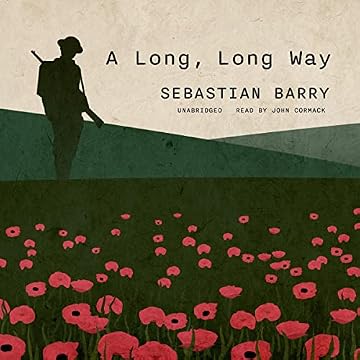
A Long Long Way
By Sebastian Barry
Read by: John Cormack
Length: 9 hrs and 17 mins
Rating: 3
I never thought I would not enjoy a book written by Sebastian Barry. But it’s wise words that advise “never say never”.
There are so many excellent WWI books out there now, and the time has come that a new slant is needed for a book that solely revolves around WWI trench warfare to hold the readers’ interest. The plot and events in the book are now banal with their overuse and progressive manicuring. Nothing we haven’t read or seen in books and films in the last 120 years. Of course Barry has the gift of perfect pitch prosee, but even Pavarotti couldn’t do much with Achy Breaky Heart.
There’s little apart from the surfeit of metaphors and similes to set A Long Long Way apart from other WWI novels. There is to be fair, the introduction of the Home Rule conflict, that caused some Irish soldiers in the British army to turn against Irish civilians. But even there I’m not so sure if the incidents as described are true, as there are many factual errors in the book - the repeated mention of mustard gas being employed long before it was manufactured, and its effects being just one example.
The over-wordiness has the effect of immunizing the reader against the horrors foot solders were exposed to, for example as they had to stumble in retreat, over the bodies of the dead.
Death was a muddle of sorts, things thrown in their way to make them stumble and fall. It was hard and hard again to make any path through the humbled souls. The quick rats maybe had had their way with eyes and lips; the sightless sockets peered at the living soldiers, the lipless teeth all seemed to have just cracked mighty jokes. And it doesn’t stop there but goes on and on with graphic descriptions illustrating not the horror, but instead Barry’s word-craft.
Are we meant to dwell on the prose or feel the horror of the soldiers? I kept reading in the hope something would happen to gain my interest or expand my comprehension of the horror of war. But there were just too many words and it took a long long time to reach the end. I was not even mentally exhausted, I was mentally lulled.
Another Barry fan may get more from A Long Long Way than I did, but for me it was a long long way from deserving my recommendation.
A Long Long Way
By Sebastian Barry
Read by: John Cormack
Length: 9 hrs and 17 mins
Rating: 3
I never thought I would not enjoy a book written by Sebastian Barry. But it’s wise words that advise “never say never”.
There are so many excellent WWI books out there now, and the time has come that a new slant is needed for a book that solely revolves around WWI trench warfare to hold the readers’ interest. The plot and events in the book are now banal with their overuse and progressive manicuring. Nothing we haven’t read or seen in books and films in the last 120 years. Of course Barry has the gift of perfect pitch prosee, but even Pavarotti couldn’t do much with Achy Breaky Heart.
There’s little apart from the surfeit of metaphors and similes to set A Long Long Way apart from other WWI novels. There is to be fair, the introduction of the Home Rule conflict, that caused some Irish soldiers in the British army to turn against Irish civilians. But even there I’m not so sure if the incidents as described are true, as there are many factual errors in the book - the repeated mention of mustard gas being employed long before it was manufactured, and its effects being just one example.
The over-wordiness has the effect of immunizing the reader against the horrors foot solders were exposed to, for example as they had to stumble in retreat, over the bodies of the dead.
Death was a muddle of sorts, things thrown in their way to make them stumble and fall. It was hard and hard again to make any path through the humbled souls. The quick rats maybe had had their way with eyes and lips; the sightless sockets peered at the living soldiers, the lipless teeth all seemed to have just cracked mighty jokes. And it doesn’t stop there but goes on and on with graphic descriptions illustrating not the horror, but instead Barry’s word-craft.
Are we meant to dwell on the prose or feel the horror of the soldiers? I kept reading in the hope something would happen to gain my interest or expand my comprehension of the horror of war. But there were just too many words and it took a long long time to reach the end. I was not even mentally exhausted, I was mentally lulled.
Another Barry fan may get more from A Long Long Way than I did, but for me it was a long long way from deserving my recommendation.
48labfs39
>47 kjuliff: Huh, I have long been wanting to read Barry and was drawn to this title, but it sounds like its not the place to start. What would you recommend?
49kjuliff
>48 labfs39: Gods Old Time and Days Without End are the two that spring to mind. He’s such a good writer that I was most surprised when A Long Long Way didn’t grab me, that I began to doubt myself. But on looking up reviews on LT I found I was not alone in my disappointment.
Those who did like it were those who love Barry’s prose. But for those who didn’t it was that there was nothing new and it’s all been said before.
@lauralkeet summed it up with -
This is a well-written book, recommended if you're new to war literature or interested specifically in the Irish war experience.
Those who did like it were those who love Barry’s prose. But for those who didn’t it was that there was nothing new and it’s all been said before.
@lauralkeet summed it up with -
This is a well-written book, recommended if you're new to war literature or interested specifically in the Irish war experience.
50labfs39
>49 kjuliff: Thanks for the suggestions, Kate. I don't want to start off with a dud.
51JoeB1934
>49 kjuliff: I read A Long Long Way, and my reaction is quite different from yours. I am one who was especially appreciative of the prose, and the fact that it was war literature didn't matter to me. It was the personal insights into these men at war and how they coped with these experiences. The historical points about the connection to Ireland was new to me, but it was the emotional elements which I remember the most. It should also be mentioned that it was a Booker nominee at some time.
These differences are not a measure of the book as not very many readers have the same reaction to a book. The two books you did recommend are also among my favorites of Barry's so @labfs39 can't go wrong by following your advice.
These differences are not a measure of the book as not very many readers have the same reaction to a book. The two books you did recommend are also among my favorites of Barry's so @labfs39 can't go wrong by following your advice.
53kjuliff
>51 JoeB1934: Thanks for your comments Joe. Yes Barry does write some very wonderful prose. Have you read any Pat Barker novels from her Regeneration Trilogy? Her books deal largely with the aftermath of WWI - how soldiers coped emotionally. I think you would like them. It’s some years since I read this series and I’ve forgotten most of the details, but I do remember my emotional reaction to the books and how I so easily became engaged with them.
54labfs39
>53 kjuliff: I loved the Regeneration trilogy as well, especially the first one. Top notch historical fiction.
Edited to fix number
Edited to fix number
55JoeB1934
>53 kjuliff: I will certainly look at the Regeneration Trilogy as they do sound good for me.
56kjuliff
Speaking of trilogies got me remembering Olivia Manning’s The Balkan Trilogy - which I’ve been meaning to read for sometime. From memory I think it covers both WWI and WWII.
Meanwhile I’m enjoying my Japanese All the Lovers in the Night by Mieko Kawakami.
Meanwhile I’m enjoying my Japanese All the Lovers in the Night by Mieko Kawakami.
58kjuliff
>57 dianeham: No, but intend to. I was looking for a book by Mieko Kawakami and Heaven would have meant a two week wait on hold.
59dianeham
>58 kjuliff: despite the extreme bullying depicted, I absolutely loved that book.
60kjuliff
>59 dianeham: I think I can get a copy of Heaven from the Talking Books library. I’m also interested in her new book, Ms Ice Sandwich. I just finished All the Lovers in the Night. She’s such a good writer. About 2/3 of the way through I couldn’t put it down.
61dianeham
I think Ms Ice Sandwich is older but I haven’t read it either. I think I started Breasts and Eggs but I don’t know what happened.
62kjuliff
>61 dianeham: I just started Heaven now. I’m a bit worried as to how I’ll cope with the bullying but I’ll keep going.
I checked out her books in order and found the following. But I think these are US publication dates.
Breasts and Eggs (2016)
Ms Ice Sandwich (2017)
Heaven (2021)
All The Lovers In The Night (2022)
I checked out her books in order and found the following. But I think these are US publication dates.
Breasts and Eggs (2016)
Ms Ice Sandwich (2017)
Heaven (2021)
All The Lovers In The Night (2022)
64kjuliff
>63 dianeham: Does the bullying run through the whole book?
66kjuliff
>65 dianeham: OK. Maybe I will try something else right now as my health aide has gone home sick and now I’m in a bit of a state as my backup one is busy.
67kjuliff
Tokyo Triste

All the Lovers in the Night
By Mieko Kawakami
Read by Mirei
Length: 7 hrs and 44 mins
Mitsutsuka and I glowed with the same color every time he waved goodbye in the same way then vanished around the corner up the stairs. There was always something I wished I could have said, something else I wanted to share with him but before I could find the words and send them through the air he was around the corner and gone.
I tried and tried to think of a word to sum up how I felt about All the Lovers in the Night and in the end I found it. The word is Japanese.
Fuyoko is 37 and like Lucy Jordan in Marianne Faithfull‘s ballad, has realised that she'd never ride
Through Paris in a sports car
With the warm wind in her hair
She’s a proof-reader and her adult life has consisted of work and home. She has no close friends, doesn’t go out, and has until the story starts to open, never expected more.
One day after noticing how drab she looks when passing a mirror, she starts to worry about her solitary life. She decides to change and does so in her quiet way. Kyoko is painfully shy, but she manages to make friends with a man in his late fifties.
Mitsutsuka is also quiet and socially passive, though not as introverted as Kyoko. For some reason I kept thinking of an old British film with David Niven and Deborah Kerr called “Separate Tables”.
Two socially awkward people, they meet once, then twice a week at a small café halfway between their two subway stations. Mitsutsuka presents himself as a school teacher, and most of their conversations revolve around Kyoko asking basic questions such as “why is the sky blue?” and Mitsutsuka giving the scientific answer and explaining the quantum physics behind the phenomenon.
Mitsutsuka is hardly a man of the world despite his apparent knowledge of physics. We know little about him. We do know he’s not married and that he seems fond, though not sexually attracted to the younger Kyoko. Meanwhile Kyoko is beginning to have a sexual awakening ignited by her unexpressed love for Mitsutsuka.
We realize how Mitsutsuka has also lived a narrow life. When Kyoto decides to take him out to a restaurant for his birthday, she’s diligent in her research. She finds a card left in one of some chic clothes that her sole friend, work friend Noriko has give her -it’s a sophisticated up-market restaurant with a French name. “What a strange name,” Mitsutsuka remarks, not even realizing it’s French. And while Kyoko manages to order wine and cope with the trendy deconstructed food, Mitsutsuka finds it all most odd.
To tell more would give away the ending, and that would spoil the last third of the book. I couldn’t put it down. Such a simple story, told so brilliantly. Kawakami’s use of color compels us into the story-scape so thoroughly that the book lingered in my mind for days.
—- Edited to add missing “and” in first line.
All the Lovers in the Night
By Mieko Kawakami
Read by Mirei
Length: 7 hrs and 44 mins
Mitsutsuka and I glowed with the same color every time he waved goodbye in the same way then vanished around the corner up the stairs. There was always something I wished I could have said, something else I wanted to share with him but before I could find the words and send them through the air he was around the corner and gone.
I tried and tried to think of a word to sum up how I felt about All the Lovers in the Night and in the end I found it. The word is Japanese.
Fuyoko is 37 and like Lucy Jordan in Marianne Faithfull‘s ballad, has realised that she'd never ride
Through Paris in a sports car
With the warm wind in her hair
She’s a proof-reader and her adult life has consisted of work and home. She has no close friends, doesn’t go out, and has until the story starts to open, never expected more.
One day after noticing how drab she looks when passing a mirror, she starts to worry about her solitary life. She decides to change and does so in her quiet way. Kyoko is painfully shy, but she manages to make friends with a man in his late fifties.
Mitsutsuka is also quiet and socially passive, though not as introverted as Kyoko. For some reason I kept thinking of an old British film with David Niven and Deborah Kerr called “Separate Tables”.
Two socially awkward people, they meet once, then twice a week at a small café halfway between their two subway stations. Mitsutsuka presents himself as a school teacher, and most of their conversations revolve around Kyoko asking basic questions such as “why is the sky blue?” and Mitsutsuka giving the scientific answer and explaining the quantum physics behind the phenomenon.
Mitsutsuka is hardly a man of the world despite his apparent knowledge of physics. We know little about him. We do know he’s not married and that he seems fond, though not sexually attracted to the younger Kyoko. Meanwhile Kyoko is beginning to have a sexual awakening ignited by her unexpressed love for Mitsutsuka.
We realize how Mitsutsuka has also lived a narrow life. When Kyoto decides to take him out to a restaurant for his birthday, she’s diligent in her research. She finds a card left in one of some chic clothes that her sole friend, work friend Noriko has give her -it’s a sophisticated up-market restaurant with a French name. “What a strange name,” Mitsutsuka remarks, not even realizing it’s French. And while Kyoko manages to order wine and cope with the trendy deconstructed food, Mitsutsuka finds it all most odd.
To tell more would give away the ending, and that would spoil the last third of the book. I couldn’t put it down. Such a simple story, told so brilliantly. Kawakami’s use of color compels us into the story-scape so thoroughly that the book lingered in my mind for days.
—- Edited to add missing “and” in first line.
68labfs39
>67 kjuliff: Your review hooked me, I'll look for this one.
69kidzdoc
>67 kjuliff: Great review of All the Lovers in the Night, Kate.
70lisapeet
>67 kjuliff: Nice! Sounds like something I'd like.
71kjuliff
>68 labfs39: >69 kidzdoc: >70 lisapeet: yes the further in time since I finished All the Lovers in the Night the more it lingers. I only hope more of Mieko Kawakami’s books will be translated and made vilable in audio.
72kjuliff
Ich Bin Norwegian

The Pastor
By Hanne Orstavik
Translated from Norwegian by Madeleine Dauer
Read by Madeleine Dauer
Length: 7 hrs and 34 mins
Rating: 3.5
I stared into the darkness outside the car. So dense it was when there were no reflections of the electric lighting the sky. No stars, no moon. Seen from the moon-glow from my rented German room the sky never got dark at all. Sometimes when sitting up all night I’d go out on the balcony that ran along the front of the building. I’d stand there and listen to the wind in the trees.
I never really knew where I was in this book, and I don’t mean page number. Being alive in 2024 I am quite aware of time and place shifts in a piece of film or fiction. I like to think it’s part of our expanding creativity, but secretly suspect (and occasionally hope) it’s a literary fad.
Liv, the pastor lives in a small fishing village in far north Norway where she has relocated after losing her best friend Kristiane’s untimely death in Berlin. There, in Norway Liv faces and has ro deal with the trials and tribulations of her congregation.
That’s the plot, though it’s made more complicated by the reader never being quite sure of where she is. Within the course of one short paragraph we may be in Berlin or in Norway. Of course it’s fairly easy to work out, there being no fjords in Berlin, and we usually can see if they are around as Liv is prone to look out windows. But I’m being mean.
The Pastor is actually a fine novel. It’s beautifully written and the Nordic landscape is so delicately described with nuance. I felt that I was in a movie or poem, never a travelog. And though there’s little in the way of suspense, I was compelled to keep reading; in the end not bothering if I was in Berlin or a fishing village. Both places have teenagers with piercings and pastel-colored hair. Early on I thought the facial piercings were a clue as to location, but it seems, like time and place shifts, and so much else in this brave new world, that these too have become global.
I really enjoyed this book.
The Pastor
By Hanne Orstavik
Translated from Norwegian by Madeleine Dauer
Read by Madeleine Dauer
Length: 7 hrs and 34 mins
Rating: 3.5
I stared into the darkness outside the car. So dense it was when there were no reflections of the electric lighting the sky. No stars, no moon. Seen from the moon-glow from my rented German room the sky never got dark at all. Sometimes when sitting up all night I’d go out on the balcony that ran along the front of the building. I’d stand there and listen to the wind in the trees.
I never really knew where I was in this book, and I don’t mean page number. Being alive in 2024 I am quite aware of time and place shifts in a piece of film or fiction. I like to think it’s part of our expanding creativity, but secretly suspect (and occasionally hope) it’s a literary fad.
Liv, the pastor lives in a small fishing village in far north Norway where she has relocated after losing her best friend Kristiane’s untimely death in Berlin. There, in Norway Liv faces and has ro deal with the trials and tribulations of her congregation.
That’s the plot, though it’s made more complicated by the reader never being quite sure of where she is. Within the course of one short paragraph we may be in Berlin or in Norway. Of course it’s fairly easy to work out, there being no fjords in Berlin, and we usually can see if they are around as Liv is prone to look out windows. But I’m being mean.
The Pastor is actually a fine novel. It’s beautifully written and the Nordic landscape is so delicately described with nuance. I felt that I was in a movie or poem, never a travelog. And though there’s little in the way of suspense, I was compelled to keep reading; in the end not bothering if I was in Berlin or a fishing village. Both places have teenagers with piercings and pastel-colored hair. Early on I thought the facial piercings were a clue as to location, but it seems, like time and place shifts, and so much else in this brave new world, that these too have become global.
I really enjoyed this book.
73japaul22
I’m glad you enjoyed it! I agree with a lot of your comments about timeline, though with this novel I felt it was more of an exploration of memory and thought than an attempt at dual timeline. Disorienting though, for sure.
74kjuliff
>73 japaul22: Yes you are right, it wasn’t really a dual timeline, but two stories being told by one person remembering a past story while experiencing new ones. But the way it jumped around within single paragraphs was disconcerting. I think this was more so in audio. Still in the end it ceased to matter, the beauty of the prose was overwhelming. And I am currently fascinated by Norway.
— So much so that I decided to read Abigail by Norwegian writer Magda Szabo. I loved her The Door, but I did a stupid thing and clicked on the spoiler alert in a review. Usually I find these are noting much - just warnings about sex or violence which is often obvious from the synopsis. But this time essential parts of the story were explained - the mysteries that keep the reader wanting to keep reading.
I was so disappointed with myself so am seeking comfort in R.K.Narayan, which I do in times of stress. This time it’s The Painter of Signs which is gentle and amusing as are all his books. I’ve read them all before but each time I discover more about his eccentric characters.
Edited to fix spacing
— So much so that I decided to read Abigail by Norwegian writer Magda Szabo. I loved her The Door, but I did a stupid thing and clicked on the spoiler alert in a review. Usually I find these are noting much - just warnings about sex or violence which is often obvious from the synopsis. But this time essential parts of the story were explained - the mysteries that keep the reader wanting to keep reading.
I was so disappointed with myself so am seeking comfort in R.K.Narayan, which I do in times of stress. This time it’s The Painter of Signs which is gentle and amusing as are all his books. I’ve read them all before but each time I discover more about his eccentric characters.
Edited to fix spacing
75Dilara86
>72 kjuliff: It sounds like I might enjoy The Pastor but I see I've already wishlisted 2 other books by Hanne Ørstavik which I haven't read yet - too many interesting authors, not enough time!
>74 kjuliff: I hope you enjoy Abigail - I liked it a lot, but then I'm a big fan of Magda Szabó (who's Hungarian, BTW).
I should read more Narayan! Hoping things are less stressful for you now...
>74 kjuliff: I hope you enjoy Abigail - I liked it a lot, but then I'm a big fan of Magda Szabó (who's Hungarian, BTW).
I should read more Narayan! Hoping things are less stressful for you now...
76kjuliff
>75 Dilara86: I am still reading The Painter of Signs which remains as delightful as I remembered it after initially reading it 25 years ago. I’m interspersing reading sessions with watching old episodes of Curb Your Enthusiasm. Strangely the Painter of Signs, Raman, has some very Larry David-ish moments. I’ll have to write a review.
77kjuliff
I’ve put aside The Painter of Signs as Is Mother Dead has come off hold. Actually nearly all my holds have become available recently, even though two months ago they varied significantly in estimated hold times.
I’ve had a number of personal issues emanating from Australia today, including a group email from a very ill friend with the subject line of “Hello and Goodbye”. I’ll sleep on how to answer. Another hit a roo while driving and totaled her car. Meanwhile … oh I can’t go there now, it’s too late.
To be continued.
I’ve had a number of personal issues emanating from Australia today, including a group email from a very ill friend with the subject line of “Hello and Goodbye”. I’ll sleep on how to answer. Another hit a roo while driving and totaled her car. Meanwhile … oh I can’t go there now, it’s too late.
To be continued.
78labfs39
Interesting review of The Pastor, Kate. Isn't it weird how holds always seem to come in at the same time?
79kjuliff
>78 labfs39: I’m beginning to think the algorithm behind the calculation is faulty.
80kjuliff
I’m back in my book-hangover stage. Can’t seem to settle on a book. I gave up on Abigail because of the amount of bullying described in the book. It was an essential part of the novel, but reading about bullying makes me feel physically sick. I also spoiled it by clicking on a spoiler alert and discovering the mystery.
Bad news from Australia continues, so I thought I’d brighten up my thread with a cartoon.

Bad news from Australia continues, so I thought I’d brighten up my thread with a cartoon.

82Dilara86
Sorry about the news from Australia.
Looking forward to your review of The Painter of Signs: I'm intrigued by the Larry David parallels...
Looking forward to your review of The Painter of Signs: I'm intrigued by the Larry David parallels...
83cindydavid4
I havent heard the news yet, do I want to?
84kjuliff
>83 cindydavid4: it’s all under control now. Hitting a roo is a big deal but no one was hurt. Car totaled but cars are replaceable. The other news concerned a friend diagnosed with cancer, but he’s in good hands. Just a bit of a shock hearing both news at 4am same day.
It’s all in >77 kjuliff:. No updates.
It’s all in >77 kjuliff:. No updates.
85kjuliff
I’ve set myself a huge task. I have Homeland - English audio on my iPad and the Spanish version of the same audio book Patria in the original Spanish on my iPhone. I’m alternating between the two, a chapter at a time.
Now my Spanish is not very good at all, so I read the English chapter first and then go back to the same chapter and re-read in Spanish.
The main problem I’m having is that the Spanish version is Spain Spanish, and I’ve picked up my Spanish in America. Also there are some conversations in Basque.
Wish me luck!
Now my Spanish is not very good at all, so I read the English chapter first and then go back to the same chapter and re-read in Spanish.
The main problem I’m having is that the Spanish version is Spain Spanish, and I’ve picked up my Spanish in America. Also there are some conversations in Basque.
Wish me luck!
86labfs39
>85 kjuliff: Good luck! I admire multilingual readers.
87rasdhar
>30 kjuliff: If you're planning on continuing with Graham Greene, I'll recommend Colin Firth's narration of The End of the Affair. It's a very melancholy novel and in my view, not one of his best, but the narration is so good!
>39 kjuliff: This sounds like fun, despite the disappointing ending. I enjoyed the excerpts you shared.
>47 kjuliff: I'm sorry that this wasn't a good read. I keep meaning to read Barry - I won't start with this one! I particularly liked how you put this: "The over-wordiness has the effect of immunizing the reader against the horrors foot solders were exposed to..." A good editor should have fixed that!
> 67 and >72 kjuliff: A lovely review of both, and I'm going to look them up.
I'm sorry about the bad news from Australia. Hang in there.
>39 kjuliff: This sounds like fun, despite the disappointing ending. I enjoyed the excerpts you shared.
>47 kjuliff: I'm sorry that this wasn't a good read. I keep meaning to read Barry - I won't start with this one! I particularly liked how you put this: "The over-wordiness has the effect of immunizing the reader against the horrors foot solders were exposed to..." A good editor should have fixed that!
> 67 and >72 kjuliff: A lovely review of both, and I'm going to look them up.
I'm sorry about the bad news from Australia. Hang in there.
88kjuliff
>87 rasdhar: Thanks for your Greene. Ignoring audio quality, which Graham Greene novel would you recommend?
I think I was a bit harsh in my review of The Woman from Uruguay. The last 10% seemed a bit sloppy to me but others might not find it so. And in any case it’s such a fun read. It’s probably the funniest book I’ve read in years. If there are others, I’ve forgotten them.
Good to see you are back R! You were missed.
I think I was a bit harsh in my review of The Woman from Uruguay. The last 10% seemed a bit sloppy to me but others might not find it so. And in any case it’s such a fun read. It’s probably the funniest book I’ve read in years. If there are others, I’ve forgotten them.
Good to see you are back R! You were missed.
89kjuliff
This is no St. Trinian's

Abigail
By Magda Szabó
Translated from Hungarian by Len Richard
Read by Samantha Desz
Rating 3
I actually attended an all-girls’ school. We were an academic and diverse bunch, with many of the girls being first-generation immigrants (we used the awful term “New Australians” back then). Most of the girls were Jewish or Chinese, the Jewish girls coming from Central Europe. Looking back I wonder was our kindness to each other due to the fact that our school friends’ families had all fled persecution. Many of the Polish girls’ parents were Holocaust survivors.
It was a strict secular school with many of the girls going on to political office, and careers in medicine, and the law.
There was no bullying. We were all too busy learning. Our school anthem was in Latin, “Potens Sui”, a motto diligently followed by most. The worst thing a girl ever did was to sneak a crappy romance novel into school assembly. I can remember the now well-respected Renata Singer defiantly walking up to the platform where the teacher, thinking to shame her, only succeeded in making her into our hero. A true rebel.
I digress, but my telling of this is important, as my experience of an all-girls school probably led to my inability to identify with any of the characters in Abigail.
The book is set in a Catholic school in provincial Hungary during the Second World War. Most of the story resolves around Gina, who has come to the school as a fifth grader. Her family is bourgeois, comfortable, and Gina is used to trips to museums, galleries, and attending baller and classical music productions. She’s no snob, but considers the other girls’ adolescent games infantile, and is loathe to join in. Unfortunately for Gina, she gives away the nature of one of the games to a teacher. Unknowingly she has committed the ultimate sin of betrayal.
Gina becomes an outcast and is bullied daily. Her life is pure misery. She pleads with her father to take her home to civilization in Budapest. But he can’t. He’s a top general and cannot betray his conscience or politics. He needs to keep her safe from possible enemies.
Gina understands and copes with daily humiliations. The other girls are plain nasty. It all seemed (to me) unbelievable that girls in a supervised setting, could be so relentlessly cruel. Not one offers her any kindness.
There is help available - here the story gets a Harry Potter vibe, in a stone statue in the school grounds. It’s a statue of a saintly-looking woman who the girls have for generations, called Abigail. It is believed that she will grant secret wishes if a girl can get them to her in writing.
The interest that keeps the reader reading, is in trying to work out how Gina manages to survive. Surely someone is secretly helping her. Is it the handsome Teuton, the bumbling physics teacher, the school porte? None of the candidates make sense, but someone in power manages to cover up her jams and divert attention from her to mitigate the bullying.
I didn’t enjoy the book. I had chosen it as I really liked Magda Szabó’s The Door. I couldn’t stand the bullying - it made me physically ill and took up much of the book. None of the characters were believable. I also had a problem in understanding the different administrative roles that had names such as “prefect” that meant something entirely different in the Australian school system.
I know bullying goes on. But I just didn’t get it in the book’s context, in a school which was in fact chosen by Gina’s father because of its strict adult supervision.
For those who enjoy school girl stories with a bit of a mystery, it’s probably an enjoyable read. But it wasn’t for me and I intend to try to forget it. No potens sui needed.
— Edited to fix touchstones.
Abigail
By Magda Szabó
Translated from Hungarian by Len Richard
Read by Samantha Desz
Rating 3
I actually attended an all-girls’ school. We were an academic and diverse bunch, with many of the girls being first-generation immigrants (we used the awful term “New Australians” back then). Most of the girls were Jewish or Chinese, the Jewish girls coming from Central Europe. Looking back I wonder was our kindness to each other due to the fact that our school friends’ families had all fled persecution. Many of the Polish girls’ parents were Holocaust survivors.
It was a strict secular school with many of the girls going on to political office, and careers in medicine, and the law.
There was no bullying. We were all too busy learning. Our school anthem was in Latin, “Potens Sui”, a motto diligently followed by most. The worst thing a girl ever did was to sneak a crappy romance novel into school assembly. I can remember the now well-respected Renata Singer defiantly walking up to the platform where the teacher, thinking to shame her, only succeeded in making her into our hero. A true rebel.
I digress, but my telling of this is important, as my experience of an all-girls school probably led to my inability to identify with any of the characters in Abigail.
The book is set in a Catholic school in provincial Hungary during the Second World War. Most of the story resolves around Gina, who has come to the school as a fifth grader. Her family is bourgeois, comfortable, and Gina is used to trips to museums, galleries, and attending baller and classical music productions. She’s no snob, but considers the other girls’ adolescent games infantile, and is loathe to join in. Unfortunately for Gina, she gives away the nature of one of the games to a teacher. Unknowingly she has committed the ultimate sin of betrayal.
Gina becomes an outcast and is bullied daily. Her life is pure misery. She pleads with her father to take her home to civilization in Budapest. But he can’t. He’s a top general and cannot betray his conscience or politics. He needs to keep her safe from possible enemies.
Gina understands and copes with daily humiliations. The other girls are plain nasty. It all seemed (to me) unbelievable that girls in a supervised setting, could be so relentlessly cruel. Not one offers her any kindness.
There is help available - here the story gets a Harry Potter vibe, in a stone statue in the school grounds. It’s a statue of a saintly-looking woman who the girls have for generations, called Abigail. It is believed that she will grant secret wishes if a girl can get them to her in writing.
The interest that keeps the reader reading, is in trying to work out how Gina manages to survive. Surely someone is secretly helping her. Is it the handsome Teuton, the bumbling physics teacher, the school porte? None of the candidates make sense, but someone in power manages to cover up her jams and divert attention from her to mitigate the bullying.
I didn’t enjoy the book. I had chosen it as I really liked Magda Szabó’s The Door. I couldn’t stand the bullying - it made me physically ill and took up much of the book. None of the characters were believable. I also had a problem in understanding the different administrative roles that had names such as “prefect” that meant something entirely different in the Australian school system.
I know bullying goes on. But I just didn’t get it in the book’s context, in a school which was in fact chosen by Gina’s father because of its strict adult supervision.
For those who enjoy school girl stories with a bit of a mystery, it’s probably an enjoyable read. But it wasn’t for me and I intend to try to forget it. No potens sui needed.
— Edited to fix touchstones.
90kjuliff
Finished Homeland which I recommend and will write a review when able. Now struggling with A Place of Greater Safety. See comment on Dan’s thread here.
91RidgewayGirl
>89 kjuliff: Regarding your school having no bullying, I would have said the same about my elementary school and yet my good friend told me years later that she had been subject to racist comments, uttered quietly behind her and that is her dominant memory of those years. If we aren't the targets or the perpetrators, it's very easy to miss, especially for children.
92cindydavid4
I was bullied all through elem and hs. Adults did nothing, implied I somehow caused it, or that I should just ignore it. I became a teacher and swore Id be there for similar kids.What I found was that things hadnt changed that much in the ways schools deal with the issues. Its in every school takes dealing with both sets of parents teachers and admin to work together to protect victim and instruct bully.
On FB reunion page found out that I had a silent friend who said nothing to meat the time, but was trying to get them to leave me alone. We talked for awhile what was going on in the background. Interestingly and sadly she has a child with special needs and found out what thats like first hand unfortunatley. She was a good advocate for her tho
On FB reunion page found out that I had a silent friend who said nothing to meat the time, but was trying to get them to leave me alone. We talked for awhile what was going on in the background. Interestingly and sadly she has a child with special needs and found out what thats like first hand unfortunatley. She was a good advocate for her tho
93kjuliff
>91 RidgewayGirl: True. It could be, but I’m convinced there was no systemic bullying there. This was a senior high school - kids 14-17. I was a quiet serious student. My three best friends were Jewish, Chinese, and 4th gen Australian.
I had been specifically educated by my parents about bullying. They both made a big deal about it. I’m still in touch with some from that school. I think we would have noticed. I did see bullying in previous schools I attended.
I think it was a special school. The “feeder” area was about 40% Central European. Families, like mine, would move there just because of the school. Then there was selective entry on top of that. Then there was the period. I was there 1963-1966. A large proportion of the girls were from immigrant families and the politics of the countries their families they fled from were discussed in the school magazine.
I came from a working class single-parent atheist family. We had no car or phone. My high school was a socially diverse. Perhaps it was this, the quality of the staff, school policies, and the post-WWII traumas that contributed to the no bullying.
I think it was the fact that I never experienced or perceived bullying in my teenage years, that has led me to feel physically ill when reading about it. I just don’t get it. Or maybe my inability to stomach bullying in books is just that both my parents went on and on about it so much.
I had been specifically educated by my parents about bullying. They both made a big deal about it. I’m still in touch with some from that school. I think we would have noticed. I did see bullying in previous schools I attended.
I think it was a special school. The “feeder” area was about 40% Central European. Families, like mine, would move there just because of the school. Then there was selective entry on top of that. Then there was the period. I was there 1963-1966. A large proportion of the girls were from immigrant families and the politics of the countries their families they fled from were discussed in the school magazine.
I came from a working class single-parent atheist family. We had no car or phone. My high school was a socially diverse. Perhaps it was this, the quality of the staff, school policies, and the post-WWII traumas that contributed to the no bullying.
I think it was the fact that I never experienced or perceived bullying in my teenage years, that has led me to feel physically ill when reading about it. I just don’t get it. Or maybe my inability to stomach bullying in books is just that both my parents went on and on about it so much.
94kjuliff
>92 cindydavid4: How dreadful. Were your parents aware or were you to afraid of the bullies to tell them? Or did they react like the other adults you mention?
I’ve read that some victims of bullies become bullies in later life, while others like you take on roles as adults that can help prevent it. It’s hard to imagine that bullied people would become bullies. I’ve also read that bullying is rife in English boys schools, and that prefects are often bullies.
I believe that some bullies use bully tactics to advance their political career; that some aspects of being a bully are advantageous in politics. My first husband was bullied at school. He used to tell the story about how the then Minister of Finance (Treasurer) of the Australian government had bullied him in secondary school.
I’ve read that some victims of bullies become bullies in later life, while others like you take on roles as adults that can help prevent it. It’s hard to imagine that bullied people would become bullies. I’ve also read that bullying is rife in English boys schools, and that prefects are often bullies.
I believe that some bullies use bully tactics to advance their political career; that some aspects of being a bully are advantageous in politics. My first husband was bullied at school. He used to tell the story about how the then Minister of Finance (Treasurer) of the Australian government had bullied him in secondary school.
95cindydavid4
They knew. I told them, mom told me to ignore it. Dad didn't seem to know what to do, but he used to spend extra time with me, take me to book shops and sales and we got close. In 5th grade it got so bad that my parents considered sending me to the private hebrew k-12 school in town k. they thought the bulling was antisemetic and thought I should be around other jewish kids but I knew it wasn. they met with the prinicipal and when they asked me I said no. I didnt tell them it was because I didn't speak hebrew. If I had i imagine they would have laughed and said its not like that. and my life would have been rather different, but I didn't know. Mid year they put me in another classroom which didn't really solve the problem cause it was kids in all five classes involve.
I think I know the reasons; thats the year I got mumps and lost hearing in one ear, severally affecting my ability to communicate, and which lead to speech issues....
anyway keep an eye out for kids who are rejected, alone, having trouble socially. let their parents or teachers know. maybe it will be better for them
I think I know the reasons; thats the year I got mumps and lost hearing in one ear, severally affecting my ability to communicate, and which lead to speech issues....
anyway keep an eye out for kids who are rejected, alone, having trouble socially. let their parents or teachers know. maybe it will be better for them
96Jim53
>39 kjuliff: I'm catching up after an absence. This sounds like it could be fun, and my library has it, so I'll give it a try, maybe as soon as June.
97kjuliff
>96 Jim53: I’m sure you’ll enjoy it. For me I needed a story like this - one I could laugh at and with. Watch out for Lucas’s trip down the spiral staircase. One of the funniest passages ever.
98kjuliff
>95 cindydavid4: Looking back, do you that antisemitism played any part in the bullying? Or do you think it was all to do with the speech impediment? Surely the teachers should have picked up on it if was the latter.
99cindydavid4
maybe, except I was far from the only Jewish kid at school And then there's the socioeconomical possibillity - both of my parents worked (the owned a deli) so I didn't have the all the cute clothes they all had. I did see a speech teacher and it helped. But still, that deaf ear caused me lots of problems not understanding what people were saying, not being able to tell where sound is coming from (common with a unilateral hearing loss) and havng trouble understanding speech in loud places. and my parents didn;t think I was deaf, I just wasnt paying attention. wasnt till I got to HS that I was sent to an audiologist for evaluation. still at that time there was no hearing aid that could help with a totally deaf ear. Now I have a cros aid, that directs the sound on my bad ear to the hearing aid on my good ear, which is a godsend.
and im also uncomfortable reading bullying scenes; I tend to glaze by them and ignoring the details
and im also uncomfortable reading bullying scenes; I tend to glaze by them and ignoring the details
100kjuliff
>99 cindydavid4: Cindy, yes, I skip over bullying in stories too, but in Abigail it went on for pages - as it was essential to the plot. So I would not advise you reading Abigail; you’d have to skip so much you’d probably finish the book in an hour!
Interesting about your hearing problem. Did it affect. your balance? I ask because I too for a while had a hearing problem as a child - due to infection I think. Maybe mine was in both ears, I can’t remember, I only remember it also affected my balance.
Interesting about your hearing problem. Did it affect. your balance? I ask because I too for a while had a hearing problem as a child - due to infection I think. Maybe mine was in both ears, I can’t remember, I only remember it also affected my balance.
101cindydavid4
yes balance was affected, still does* which made any attempt at sports difficult if not impossible...whats funny is that I dont lose my balance dancing, which is why I continue to do it
*I saw a neurological physical therapist whose paitients include those who suffer from CP and other neurological issues, made all the difference in the world. wish I known about her sooner, but 60 years old is better than nothing. falls have signifacntly decreased
*I saw a neurological physical therapist whose paitients include those who suffer from CP and other neurological issues, made all the difference in the world. wish I known about her sooner, but 60 years old is better than nothing. falls have signifacntly decreased
102AlisonY
>95 cindydavid4: That's interesting (but sad) - my dad lost also lost his hearing in one ear with mumps when he was in his 20s. He didn't realise until he went to put the phone to his ear and couldn't hear anything at all. The nerve was completely destroyed.
103cindydavid4
Its one of those things that people dont know about, and we have a vaccine for it. Lots of people are not getting their kids vaccinated; I worry that decision may come back to bite them (or the kids) some day
104cindydavid4
btw kate I dont want to tie up your thread with my stuff, so I can stop if youd like. Thanks for asking tho
105kjuliff
>104 cindydavid4: It’s fine Cindy. My thread is open for anyone/any topic that turns up as we discuss books. It’s part of the fun of “Talk”. I agree about the problem of people deciding their children’s future by allowing them to be infected - and to infect others - by not letting them have proven vaccines for what were once common childhood illnesses.
I remember seeing the effects of polio which by now *should* be eradicated. Indeed the title of my thread comes from I can Jump Puddles. Mumps and other childhood illnesses should have been eradicated by now, but some people think they know better than scientists and still have “mumps parties” to inoculate their children naturally.
My brother though not badly bullied, was called “four eyes” by children in the early years of elementary school. Even teachers put him apart from other kids when the class photos were taken when he had to wear a patch over one eye (he had what was then called, a “lazy eye”. He was put at the end of the line as the teacher didn’t want him where his height would have placed him in the middle.
Tim was tough though, when he was back to glasses at the age of 7, a barber greeted him with “Hello four-eyes” and my brother replied, “I’m good thanks, baldy”.
I remember seeing the effects of polio which by now *should* be eradicated. Indeed the title of my thread comes from I can Jump Puddles. Mumps and other childhood illnesses should have been eradicated by now, but some people think they know better than scientists and still have “mumps parties” to inoculate their children naturally.
My brother though not badly bullied, was called “four eyes” by children in the early years of elementary school. Even teachers put him apart from other kids when the class photos were taken when he had to wear a patch over one eye (he had what was then called, a “lazy eye”. He was put at the end of the line as the teacher didn’t want him where his height would have placed him in the middle.
Tim was tough though, when he was back to glasses at the age of 7, a barber greeted him with “Hello four-eyes” and my brother replied, “I’m good thanks, baldy”.
106rasdhar
>88 kjuliff: Thank you, how nice of you to say. I'd say The End of the Affair is a good one, but also The Power and the Glory.
>89 kjuliff: A great review. This definitely sounds a bit upsetting.
>89 kjuliff: A great review. This definitely sounds a bit upsetting.
107kjuliff
Just a quick note for those who may have noticed my absense - I am unable to read. It’s not that I haven’t any book that interests me. And I’ve been an avid reader my whole life. But I feel I have lost interest. That’s the reason I’ve been so quiet on LT. I do hope my desire to read comes back.
108japaul22
Have you considered rereading a favorite? I tend to do that when I’m not inspired to read anything else.
109kjuliff
>108 japaul22: Thanks, I’ve done that in the past, but this. Is a new feeling. I don’t even feel like reading a book. ☹️
110labfs39
Be kind to yourself. It's okay to take a break from reading. I do hope you continue to hang out on the threads though. Not only are you a presence, but you've got friends here.
P.S. In 2020 I only read 10 books all year.
P.S. In 2020 I only read 10 books all year.
112RidgewayGirl
>107 kjuliff: Like Lisa said, I hope you continue to visit our threads and make comments on what we are all reading in the meantime, Kate.
113cindydavid4
{{{Kate}}} what >111 Jim53: said
114JoeB1934
I am very sympathetic with your situation Kate, and I want to express my thanks for your prior reading thoughts. They have inspired me to be more diverse in my reading. Please hang in there.
I have missed your very lucid comments about the books I have read as I try to describe my thoughts on the books.
I have missed your very lucid comments about the books I have read as I try to describe my thoughts on the books.
115AlisonY
I hope your reading mojo returns soon, Kate - I enjoy your choices and reviews.
Do you think it's the transition to audio books that's taking the love out of it for you?
You mentioned recently that you'd been dealing with some bad news from Australia, so perhaps that's been the straw that broke the camel's back. Some people disappear into books when life hits bumps in the road - I must admit I go the other way and can't tolerate reading if I'm not feeling myself.
Either way, I hope you still hang out in LT.
Do you think it's the transition to audio books that's taking the love out of it for you?
You mentioned recently that you'd been dealing with some bad news from Australia, so perhaps that's been the straw that broke the camel's back. Some people disappear into books when life hits bumps in the road - I must admit I go the other way and can't tolerate reading if I'm not feeling myself.
Either way, I hope you still hang out in LT.
116kjuliff
Update and a big thanks to
>110 labfs39: >111 Jim53: >112 RidgewayGirl:, >113 cindydavid4: >114 JoeB1934: >115 AlisonY: and to all those who have DMed me. I’m till unable to read but hope to soon. There’s no way of knowing when.
>110 labfs39: >111 Jim53: >112 RidgewayGirl:, >113 cindydavid4: >114 JoeB1934: >115 AlisonY: and to all those who have DMed me. I’m till unable to read but hope to soon. There’s no way of knowing when.
118rasdhar
>107 kjuliff: Echoing others to say, I hope you are finding happiness in other things and that we will still see you around!
120kjuliff
I read Perumal Murugan’s Estuary which is brilliant. I’m surprised more of his books have not been translated into English. I will review it if I get better. But I do encourage others to read this book.
>118 rasdhar: I am now reading your suggestion of the Firth performance of The End of the Affair. Just a few minutes into it. But Estuary is going to be a hard act to follow.
Edited to add a link to an article that explains the controversy that forced Murugan to pause writing and a review of Estuary. Helpful for those unfamiliar with his work.
Review: Estuary by Perumal Murugan
>118 rasdhar: I am now reading your suggestion of the Firth performance of The End of the Affair. Just a few minutes into it. But Estuary is going to be a hard act to follow.
Edited to add a link to an article that explains the controversy that forced Murugan to pause writing and a review of Estuary. Helpful for those unfamiliar with his work.
Review: Estuary by Perumal Murugan
121cindydavid4
thankyou for that article very interesting
122rasdhar
>120 kjuliff: I'm so glad you're enjoying his works. I know One Part Woman was the one that sparked off the controversy, but in my opinion, his subsequent writing has been far more powerful.
123kjuliff
>122 rasdhar: Estuary is a book that will stay with me forever. His portrait - for it is really that - of the MC Kumarasurar is so well-drawn, so believable, I could imagine the man as if he were a real person. I am surprised that Estuary, his latest work (?) has not yet been e awarded any major international literary prizes. But maybe it will as it was only recently translated into English.
Yes it’s a much better work than One Part Woman and will have a wider appeal. The description of Kumarasurar‘s phone conversations with his son will strike a cord with many parents.
Yes it’s a much better work than One Part Woman and will have a wider appeal. The description of Kumarasurar‘s phone conversations with his son will strike a cord with many parents.
124kjuliff
Well I’m reading again, but not up to reviewing which is a pity, as I’ve finished three books in June and had wanted to review Homeland which I finished in May.
Both Homeland and Estuary haven’t received a lot of attention on LT and they are both exceptional books that I really hope I can review soon. Estuary especially - an outstanding work of fiction that I’m sure will gather more media attention in the English speaking world now it is translated into English. It’s also available in audio where it’s excellently performed by Suki.
You can see my June books in my >1 kjuliff: post. Note some books were started in May. I’ve listed their ratings as I’ve not reviewed any books completed in June.
Thank you to all my LT friends who encouraged me in what has been a very trying time. And also to Perumal Murugan for making it all worthwhile.
Both Homeland and Estuary haven’t received a lot of attention on LT and they are both exceptional books that I really hope I can review soon. Estuary especially - an outstanding work of fiction that I’m sure will gather more media attention in the English speaking world now it is translated into English. It’s also available in audio where it’s excellently performed by Suki.
You can see my June books in my >1 kjuliff: post. Note some books were started in May. I’ve listed their ratings as I’ve not reviewed any books completed in June.
Thank you to all my LT friends who encouraged me in what has been a very trying time. And also to Perumal Murugan for making it all worthwhile.
125cindydavid4
oh so glad you are reading again, and found such excellent books! thanks for your book lists above, Ill need to check those out
126kjuliff
>125 cindydavid4: if you want something amusing plus page-turning, try The Woman from Uruguay.
127cindydavid4
oh that looks like just the thing, thanks
128kjuliff
R.I.P. Donald Sutherland (1935 - 2024) who deserves a place in literary history for his excellent portrayal of Mr Bennet in the 2005 film production of Pride and Prejudice. I always liked his performances - his part in Invasion of the Body Snatchers was also played to perfection.
129kjuliff
My personal woes continue. My dental office just called. My dentist of 15 years who modeled himself on Larry David, has just had a liver transplant. He’s 70, so will be out of action for some time. I’ll be seeing his son for my Monday appointment. There’s no way he’ll be half as funny as his dad. :-(
130kjuliff
The Mothers’ Tales
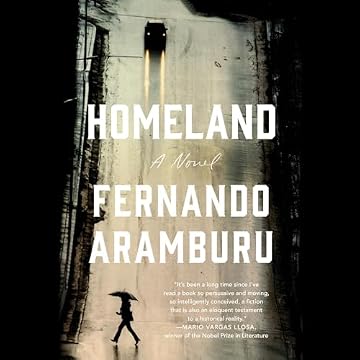

Homeland
By Fernando Aramburu
Translated by Alfred MacAdam
Read by David Pittu
Length: 20 hrs and 2 mins
I wrote against crimes committed with a political excuse, in the name of a homeland where a handful of armed people, with the shameful support of a section of society, determine who belongs to that homeland and who should leave or disappear. I wrote without hatred against the language of hatred and against the oblivion propagated by those who try to invent a history with which to justify their project and their totalitarian beliefs - Fernando Aramburu
So wrote the author of this excellent novel of how terrorism affects us all. These words could be written of so many conflicts we are experiencing on earth today. The conflict of Homeland is the Basque conflict that ended in 2011.
I knew little of the Basque conflict before reading Homeland, but it didn’t really matter. It came hard on me reading Brotherless Night - which I’m pleased to see won the Women’s’ Prize for Fiction this year - which tells a similar story.
Like the Tamil conflict and so many others, the Basque conflict was about land, and the more violent factions that indulged in terrorism.
I tried reading Homeland in its original Spanish, but there was a lot of Basque evident in the characters’ names and in some of their conversations. I gave up and finished Homeland in the English translation.
What is wonderful about Homeland is the way the story of the two families is told by the two mothers talking. They talk not to other people, but to an imagined husband in one case, and in the other to a statue of a saint.
Both families are Basque. One is aligned to the terrorist organization - ETA and the other wants peace, while retaining cultural identity.
Bittori and Miren were once close friends. Both Basque and mothers of extended families, their lives are torn apart when Bittori’s husband is murdered by the terrorist ETA, and Miren’s oldest son Joxe Mari is suspect.
Miren is religious and stands firmly behind her son, whether innocent or not. She goes to church daily where she talks to a statue of San Sebastián as if he were a close friend. Through these one-way conversations we learn not only about Miren, but about the rest of her family, particularly her children, and the Basque villagers.
Bittori is not a believer. She visits her husband’s grave daily and tells him about how she is feeling, about what is going on in their Basque families, their children and their village. She knows he can’t hear her but she needs to talk to someone. Talking at her husband’s graveside is a form of therapy.
Though Homeland is largely told through the two women there’s a lot more to the book than the families and village life. There’s the exposure of the non-cultural - that is, political and economic causes of the conflict, and side stories that lend moral twists.
But it’s the two women talking intimately to non-beings that puts the humanity into the book. Miren takes Saint Sebastian to task. She talks to the statue as if it were a living breathing entity. When things don’t go her way she is annoyed at the saint. If you can’t get Joxe Mari out of prison she sneers at the statue, at least cure his hemorrhoids.
The story of two families torn apart by terrorism is thus gently told. I highly recommend this wonder of a novel.
— edited to correct typos.

Homeland
By Fernando Aramburu
Translated by Alfred MacAdam
Read by David Pittu
Length: 20 hrs and 2 mins
I wrote against crimes committed with a political excuse, in the name of a homeland where a handful of armed people, with the shameful support of a section of society, determine who belongs to that homeland and who should leave or disappear. I wrote without hatred against the language of hatred and against the oblivion propagated by those who try to invent a history with which to justify their project and their totalitarian beliefs - Fernando Aramburu
So wrote the author of this excellent novel of how terrorism affects us all. These words could be written of so many conflicts we are experiencing on earth today. The conflict of Homeland is the Basque conflict that ended in 2011.
I knew little of the Basque conflict before reading Homeland, but it didn’t really matter. It came hard on me reading Brotherless Night - which I’m pleased to see won the Women’s’ Prize for Fiction this year - which tells a similar story.
Like the Tamil conflict and so many others, the Basque conflict was about land, and the more violent factions that indulged in terrorism.
I tried reading Homeland in its original Spanish, but there was a lot of Basque evident in the characters’ names and in some of their conversations. I gave up and finished Homeland in the English translation.
What is wonderful about Homeland is the way the story of the two families is told by the two mothers talking. They talk not to other people, but to an imagined husband in one case, and in the other to a statue of a saint.
Both families are Basque. One is aligned to the terrorist organization - ETA and the other wants peace, while retaining cultural identity.
Bittori and Miren were once close friends. Both Basque and mothers of extended families, their lives are torn apart when Bittori’s husband is murdered by the terrorist ETA, and Miren’s oldest son Joxe Mari is suspect.
Miren is religious and stands firmly behind her son, whether innocent or not. She goes to church daily where she talks to a statue of San Sebastián as if he were a close friend. Through these one-way conversations we learn not only about Miren, but about the rest of her family, particularly her children, and the Basque villagers.
Bittori is not a believer. She visits her husband’s grave daily and tells him about how she is feeling, about what is going on in their Basque families, their children and their village. She knows he can’t hear her but she needs to talk to someone. Talking at her husband’s graveside is a form of therapy.
Though Homeland is largely told through the two women there’s a lot more to the book than the families and village life. There’s the exposure of the non-cultural - that is, political and economic causes of the conflict, and side stories that lend moral twists.
But it’s the two women talking intimately to non-beings that puts the humanity into the book. Miren takes Saint Sebastian to task. She talks to the statue as if it were a living breathing entity. When things don’t go her way she is annoyed at the saint. If you can’t get Joxe Mari out of prison she sneers at the statue, at least cure his hemorrhoids.
The story of two families torn apart by terrorism is thus gently told. I highly recommend this wonder of a novel.
— edited to correct typos.
131AlisonY
Great review, Kate. Glad to see you back reading, posting and reviewing.
And hey - maybe the dentist's son will prove to be a wonderful new addition to your life!
And hey - maybe the dentist's son will prove to be a wonderful new addition to your life!
132kjuliff
>131 AlisonY: Thanks Alison. The dentists son is very young. He looks about 12!
133RidgewayGirl
One think I discovered when my dentist retired is that new dentists have a lot of skills and knowledge that older dentists don't. Although they are quicker to push cosmetic procedures, as my father discovered last week, but he said he has the ultimate rebuttal which is, "I'm 86."
134kjuliff
>133 RidgewayGirl: I agree. The younger dentists just have to be more aware of newer technologies. But my old one was so sweet with his Larry David personality.
He never used to have a fish tank in his waiting room and got tired of ppl asking why. Eventually he asked the dentist in the next practice in the building, could he pay him $10 a week for his patients to look at his fish.
The competitor obliged and so whenever a patient commented on the lack of fish he told them to just duck around the corner and they could look at Dr Steinberg’s fish.
He never used to have a fish tank in his waiting room and got tired of ppl asking why. Eventually he asked the dentist in the next practice in the building, could he pay him $10 a week for his patients to look at his fish.
The competitor obliged and so whenever a patient commented on the lack of fish he told them to just duck around the corner and they could look at Dr Steinberg’s fish.
135cindydavid4
HAHaha!!!!! my dentist of 40 years just retired and his hand picked replacement looks like he is 12. he wont have to worry about fish, the old one didnt have any. but that sure is funny
136labfs39
>129 kjuliff: I hate it when one of doctors/dentist retire or when I move away from them. It's so hard finding and getting used to someone new. I am in the process of trying to find an orthopedic specialist now, and no one will live up to Dr. Bruckner back in Seattle. He is amazing.
>130 kjuliff: Fantastic review, Kate. A conflict about which I know little.
>134 kjuliff: I love it!
>130 kjuliff: Fantastic review, Kate. A conflict about which I know little.
>134 kjuliff: I love it!
137kjuliff
>136 labfs39: I knew very little of the Basque conflict but it isn’t necessary to know in order to understand the book. I think you’d like it Lisa - so if it comes your way, think about it. BTW it’s been made into a film. I watched it after I had read the book. The film is fairly faithful to the book. It’s Spanish with subtitles.
The Spanish title is Patria and that’s the name of the film.
The Spanish title is Patria and that’s the name of the film.
138kjuliff
I’m trying to rake up the energy to review Estuary by Perumal Murugan. It’s such a wonderful book that it deserves a thoughtful review. I’m pretty sure it’s going to go down as my favorite book of 2024. I was so taken by Estuary I thought of writing to the writer to thank him. I’ve only felt like this a couple of other times.
I’m now reading Hunger which I’m not liking as much as I thought I would, though I recognize it’s ahead of its time in style.
The funniest book I’ve read so far this year is The Woman from Uruguay .
And now I know not what to read next. Blue Flower doesn’t grab me. Other books that recently came off hold made me wonder why I put them on hold in the first place, I might try Staying on so I can get angry with the Brits.
I’m now reading Hunger which I’m not liking as much as I thought I would, though I recognize it’s ahead of its time in style.
The funniest book I’ve read so far this year is The Woman from Uruguay .
And now I know not what to read next. Blue Flower doesn’t grab me. Other books that recently came off hold made me wonder why I put them on hold in the first place, I might try Staying on so I can get angry with the Brits.
139cindydavid4
>138 kjuliff: just read the review of estuaryj oh that does look good
140kjuliff
Where the River Meets the Sea

Estuary
By Perumal Murugan
Translated by Nandini Krishnan
Read by: Suki
Length: 7 hrs and 55 mins
Kumarasurar is a government servant who upholds a higher moral standard possibly because he was “assigned to a department with no scope for bribery.” He belongs to a generation of men derisively called Boomer uncles for their resistance to change. He believes in making safe, standard choices because “the last person to finish a task never got into trouble.” This made him a tech Luddite. - Saudamini Jain, Hindustan Times.
Estuary is about the life crisis of a middle-aged middle-class bureaucrat. Unlike Murugan‘s other books Estuary has an urban setting. It takes place in mythical Asurapur, a place not much different than now. The people and the institutions are exaggerated versions of our own. But rarely does the book feel dystopian. It’s a hair’s breadth of being believable.
An example: colleges have cut-off points for entry. They start with a cut-off score of whatever is the highest score. So that if the first batch of entrants produces highest scores of 99%, then 99% becomes the cut-off. And so on, with the cut-off gradually lowering till the quota is filled and the college administrators boast their cut-off of whatever.
Kumarasurar works for the government Department of Statistics. He has nothing to do and when a computer arrives he puts it in a closet and forgets about it.
His wife Mangasuri is a traditionalist, wanting only for the success of their only child, a son Meghas.
Kumarasurar‘s life crisis is brought about by his son asking for an expensive smartphone. Kumarasurar cannot understand why such a thing is necessary, but with Meghas now claiming to need it for success at college, and with Mangasuri always siding with his son, Kumarasurar, a born worrier finds his inner-life thrown into turmoil.
Kumarasurar is no dullard. His sarcasm is as smart as it comes. And although his premises are off, his logic is impeccable. He’s unintentionally witty and no one in his sphere understands his humor. By the end of the novel I loved the man.
There are some endearing scenes - scenes which we can see coming. Such as when Meghas who has left for college dressed traditionally, arrives home in Western teenage-type clothes, his hair cropped. Kumarasurar can only stare in horror.
I can’t do justice to this novel, so I’ll stop now. All I can say is “read it!”
— edited to change title of the review to one more befitting for the book.

Estuary
By Perumal Murugan
Translated by Nandini Krishnan
Read by: Suki
Length: 7 hrs and 55 mins
Kumarasurar is a government servant who upholds a higher moral standard possibly because he was “assigned to a department with no scope for bribery.” He belongs to a generation of men derisively called Boomer uncles for their resistance to change. He believes in making safe, standard choices because “the last person to finish a task never got into trouble.” This made him a tech Luddite. - Saudamini Jain, Hindustan Times.
Estuary is about the life crisis of a middle-aged middle-class bureaucrat. Unlike Murugan‘s other books Estuary has an urban setting. It takes place in mythical Asurapur, a place not much different than now. The people and the institutions are exaggerated versions of our own. But rarely does the book feel dystopian. It’s a hair’s breadth of being believable.
An example: colleges have cut-off points for entry. They start with a cut-off score of whatever is the highest score. So that if the first batch of entrants produces highest scores of 99%, then 99% becomes the cut-off. And so on, with the cut-off gradually lowering till the quota is filled and the college administrators boast their cut-off of whatever.
Kumarasurar works for the government Department of Statistics. He has nothing to do and when a computer arrives he puts it in a closet and forgets about it.
His wife Mangasuri is a traditionalist, wanting only for the success of their only child, a son Meghas.
Kumarasurar‘s life crisis is brought about by his son asking for an expensive smartphone. Kumarasurar cannot understand why such a thing is necessary, but with Meghas now claiming to need it for success at college, and with Mangasuri always siding with his son, Kumarasurar, a born worrier finds his inner-life thrown into turmoil.
Kumarasurar is no dullard. His sarcasm is as smart as it comes. And although his premises are off, his logic is impeccable. He’s unintentionally witty and no one in his sphere understands his humor. By the end of the novel I loved the man.
There are some endearing scenes - scenes which we can see coming. Such as when Meghas who has left for college dressed traditionally, arrives home in Western teenage-type clothes, his hair cropped. Kumarasurar can only stare in horror.
I can’t do justice to this novel, so I’ll stop now. All I can say is “read it!”
— edited to change title of the review to one more befitting for the book.
141labfs39
>140 kjuliff: I'm intrigued. Onto the list it goes!
142kjuliff
>141 labfs39: my review doesn’t do the book justice. I write better reviews when I write soon after finishing the book. But I just had to review Estuary. I see there are only two other reviews of it on LT. I don’t understand why it hasn’t received the publicity that other International Booker shortlisted writers have.
Although it was translated some years ago, I’m hoping that it will win the 2024 International Booker.Remember this post folks.
Although it was translated some years ago, I’m hoping that it will win the 2024 International Booker.Remember this post folks.
143cindydavid4
your review was good enough for me to want to read it!
144kjuliff
>143 cindydavid4: Thanks Cindy. You are a kind person. Note - it’s free for Audible subscribers now. The narrator is excellent too.
145rasdhar
>129 kjuliff: Oh dear, well if he's a good dentist then that at least is a comfort. A little coincidence: my dentist, too, is the son of the dentist I used to see before. Sometimes, Dentist Sr will stop by the clinic and observe Dentist Jr at work. It always seems to make Dentist Jr nervous.
>130 kjuliff: A great review, and I'm very intrigued by this book.
>140 kjuliff: I was waiting for your review of Estuary. I love Murugan so I would have read this anyway, but this is further enticement. Beautifully written!
>130 kjuliff: A great review, and I'm very intrigued by this book.
>140 kjuliff: I was waiting for your review of Estuary. I love Murugan so I would have read this anyway, but this is further enticement. Beautifully written!
146kjuliff
>145 rasdhar: well I saw dentist jnr today and he’s a very pleasant young man. Dentist snr is calling daily - zooming actually - and going over the day’s work. Haha, I can imagine. Now he’s out of ICU he’s doing so well he’s expecting to return asap. Meanwhile dentist jnr is reorganizing the whole office claiming it’s badly organized.
It was a competent professional visit but I missed the rabbi jokes and the eclectic music selection.
Dentist jnr does have a sense of humor though. When he asked about dentist snr’s plan and I replied “he’s kicking the can down the road”, he laughed.
It was a competent professional visit but I missed the rabbi jokes and the eclectic music selection.
Dentist jnr does have a sense of humor though. When he asked about dentist snr’s plan and I replied “he’s kicking the can down the road”, he laughed.
147labfs39
>146 kjuliff: I'm glad your visit turned out better than expected and that dentist sr is recovering well.
148kjuliff
I’m back to having problems reading. I recently finished The Underground Railroad which I found disappointing. I won’t be reviewing it as I was so disappointed I have nothing to say about it.
There is heavy construction work going on in the outer walls of my apartment building. Local Law 11 requires that every five years the outside walls of NYC buildings > six stories be inspected and fixed if necessary, brick by brick. It’s called brick pointing.
There has been jackhammer work being done literally 2 meters from my bed all day, these last few days. I’m too ill to leave the apartment atm. This plus the debate last night has had serious effects on my mental well-being.
Listening to the The Underground Railroad through headphones broken only by watching the horror show at 9pm last night has done me in my friends.
There is heavy construction work going on in the outer walls of my apartment building. Local Law 11 requires that every five years the outside walls of NYC buildings > six stories be inspected and fixed if necessary, brick by brick. It’s called brick pointing.
There has been jackhammer work being done literally 2 meters from my bed all day, these last few days. I’m too ill to leave the apartment atm. This plus the debate last night has had serious effects on my mental well-being.
Listening to the The Underground Railroad through headphones broken only by watching the horror show at 9pm last night has done me in my friends.
149cindydavid4
Oh no! and I feel the same way about the debate. At least I dont have to listen to a jackhammer. hang in there
150labfs39
>148 kjuliff: I'm sorry The Underground Railroad didn't work for you. I read it in close conjunction with Homegoing, which made for an interesting pairing.
The jackhammering would send me over the edge. I hope they can finish up quickly. Are you able to wear ear plugs or noise-cancelling headphones? I find ear plugs indispensable.
I'm worried that the debate is the beginning of a long period of emotional hell for me.
The jackhammering would send me over the edge. I hope they can finish up quickly. Are you able to wear ear plugs or noise-cancelling headphones? I find ear plugs indispensable.
I'm worried that the debate is the beginning of a long period of emotional hell for me.
151kjuliff
>150 labfs39: - Interesting about Homegoing that I was also disappointed with. I reviewed it here.
-Yes I have noise-cancelling headphones but I think I’d need industrial quality ones with the jackhammers only a yard or so from me. Still, they are gradually moving to lower floors.
And yes - the term “emotional hell” is appropriate. I was getting texts from Australia and the UK as the debate aired. Many people are very worried .
In the meantime I’ve tried a few books but can’t seem to find one that holds my interest. I’ll probably have a go with The Slaughterman’s Daughter as at least it’s set in another country and another time. Plus it sounds interesting.
-Yes I have noise-cancelling headphones but I think I’d need industrial quality ones with the jackhammers only a yard or so from me. Still, they are gradually moving to lower floors.
And yes - the term “emotional hell” is appropriate. I was getting texts from Australia and the UK as the debate aired. Many people are very worried .
In the meantime I’ve tried a few books but can’t seem to find one that holds my interest. I’ll probably have a go with The Slaughterman’s Daughter as at least it’s set in another country and another time. Plus it sounds interesting.
152JoeB1934
>151 kjuliff: That sounds like an interesting book to me also. Adding it to my overloaded TBR. Real good that you are up and about.
153RidgewayGirl
>148 kjuliff: The jackhammering sounds hellish. At least after they are finally done, you'll have five years of peace? I hope this spell of not enjoying reading lasts for a shorter amount of time than the last bout.
154kjuliff
>153 RidgewayGirl: I’m not sure about when they start counting the 5 years. It’s going to take two years to complete this round. It’s like a nightmare.
Have you noticed there’s always scaffolding in photos of NYC streets? Of course I understand it’s necessary as having loose bricks fall from high rise buildings is very dangerous. And with the winds from the sea traversing the island, mortar becomes loose.
Maybe my next read will help rid my mind of the noise, being set so far away in place and time,
Have you noticed there’s always scaffolding in photos of NYC streets? Of course I understand it’s necessary as having loose bricks fall from high rise buildings is very dangerous. And with the winds from the sea traversing the island, mortar becomes loose.
Maybe my next read will help rid my mind of the noise, being set so far away in place and time,
155labfs39
My MIL lived next door to the Morgan Library and when they were doing the reconstruction there it nearly drove her crazy, as it was in addition to the perpetual building work. I was telling someone yesterday that noise is the hardest thing for me when I visit NYC.
I hope the book is carrying you away.
I hope the book is carrying you away.
156JoeB1934
I realize that it is extremely dangerous to recommend a book to anyone else, but I am thinking there is a chance that a book I am reading All the Colors of the Dark by Chris Whitaker might be something for you in audio. Unfortunately, it is fairly long.
I'm not very qualified to judge but I think the writing is exceptional and the plot line unlike anything I've ever heard. I haven't written my personal reaction to the book, but it will end up being in my top tier of literary mysteries.
I'm not very qualified to judge but I think the writing is exceptional and the plot line unlike anything I've ever heard. I haven't written my personal reaction to the book, but it will end up being in my top tier of literary mysteries.
157Jim53
>140 kjuliff: this sounds as if it could be fun. I'm currently reading another bullet I took from you, The Woman from Uruguay. It's going a bit slowly but that's because I'm doing everything a bit slowly these days.
I hope they finish with the brick pointing soon!
I hope they finish with the brick pointing soon!
158kjuliff
>157 Jim53: The Woman from Uruguay should speed up for you once you are a third the way through. Have Lucas and Guerra had the lunch yet?
>156 JoeB1934: Thanks Joe. I’ll check out All the Colors of the Dark. You touchstone is pointing to a different book, not the Whitaker one.
I’m still not feeling too good. Taking things very slowly.
>155 labfs39: Yes it can be fairly unnerving outdoors in NYC. But inside my apartment is usually very quiet as it face a private park. I can’t hear. Traffic at all except for ambulance or police sirens and even these are muffled. I have double or triple-glazed windows. But the last few weekdays have been too much for me and my nerves are still shattered.
The Slaughterman’s Daughter is an amazing novel. It’s one of those books that is hard to describe. I think it might be a little confusing for readers who have no knowledge of Yiddish and Jewish culture and dark humor. I was struggling a bit in the beginning but it’s worth the effort even for the most goyish of goys 😉. Larry David fans will appreciate.
>156 JoeB1934: Thanks Joe. I’ll check out All the Colors of the Dark. You touchstone is pointing to a different book, not the Whitaker one.
I’m still not feeling too good. Taking things very slowly.
>155 labfs39: Yes it can be fairly unnerving outdoors in NYC. But inside my apartment is usually very quiet as it face a private park. I can’t hear. Traffic at all except for ambulance or police sirens and even these are muffled. I have double or triple-glazed windows. But the last few weekdays have been too much for me and my nerves are still shattered.
The Slaughterman’s Daughter is an amazing novel. It’s one of those books that is hard to describe. I think it might be a little confusing for readers who have no knowledge of Yiddish and Jewish culture and dark humor. I was struggling a bit in the beginning but it’s worth the effort even for the most goyish of goys 😉. Larry David fans will appreciate.
159kjuliff
I’ve had a rough June, and then at the very end of the month, my best friend died. I can’t imagine my life without her. It hit me hard, the first of my close friends to die. She battled cancer for forty years. She was a strong woman.
So I’m behind in my correspondence, reviews and reading. We knew each other since Melbourne Uni days.
So I’m behind in my correspondence, reviews and reading. We knew each other since Melbourne Uni days.
160JoeB1934
>159 kjuliff: I am so sorry to hear that and will be hoping that you can gradually work your way ahead.
161cindydavid4
oh im so sorry to hear that, I cant imangine how painful that must be. Know that she loved you dearly as you did her. May memories bring you peace comfort and strength
162RidgewayGirl
>159 kjuliff: Kate, I'm so sorry. That's really hard.
163WelshBookworm
Hugs and prayers to you, Kate. It's so hard to lose those close to us.
164rasdhar
>159 kjuliff: I'm so sorry for your loss.
165Jim53
>159 kjuliff: I'm very sorry to see this. Friends have become very precious to me as I have gotten older. I'm holding you in the light.
167AnnieMod
>159 kjuliff: :( That just sucks. Let’s hope for a better July. Hugs
168kjuliff
With the loss of my closest friend, I feel like part of me has gone. The funeral and wake is on Thursday. Though I can’t go, I’m thinking I’ll start to recover a little after that.
169lisapeet
Ah Kate, I'm so sorry. Losing those lodestar friends is so destabilizing. I wish you some measure of peace, however you can get there.
And I'll keep an eye out for Estuary. I don't see it in print or e at NYPL, but there are other ways of procuring books...
And I'll keep an eye out for Estuary. I don't see it in print or e at NYPL, but there are other ways of procuring books...
170kjuliff
>169 lisapeet: Estuary is currently free on Audible.
171lisapeet
>170 kjuliff: Audiobooks and I don't get along, though, so that's not an option. It'll turn up somewhere...
172kjuliff
>171 lisapeet: Looks like it’s not available in the US now, other than by Audible.
I can only access books in audio format so I don’t have a choice. I bought Kevin Barry’s The Heart in Winter today. It’s narrated by Barry and I find his voice really annoying. Hope I can get through it, as the reviews are good.
I can only access books in audio format so I don’t have a choice. I bought Kevin Barry’s The Heart in Winter today. It’s narrated by Barry and I find his voice really annoying. Hope I can get through it, as the reviews are good.
This topic was continued by Kate Keeps on part 2.

