Sirfurboy's (Stephen's) 75 book challenge for 2025
This topic was continued by Sirfurboy's (Stephen's) 75 book challenge for 2025 part 2.
Talk 75 Books Challenge for 2025
Join LibraryThing to post.
1sirfurboy
For the last 3 years I only managed 50 books each year, but I was busy with a Creative Writing MA (part time, 2 years). I graduate on 14 January, and will do so with distinction. A result I am clearly pleased with. I still have a book to finish, but hopefully I can up my reading by 50% too. So welcome to my 75 book challenge.
I am Stephen, or Sir Furboy. I live in Aberystwyth, on the west coast of Mid Wales. My hobbies include walking, cycling, kayaking and surfing (obviously), although these days I mostly just surf in my kayak. I also like languages and reading (of course), and thus also reading in other languages.
Although I am an avid reader, and have been since I was eight years old, I did not in fact learn to read until I was seven-and-a-half, going on eight. This, it turns out, is because I am dyspraxic, a specific learning difficulty that was largely unrecognised in school. I was in remedial education until age of 8, but once I learned to read, and read well, they stopped the interventions. This was unfortunate because it was not just my reading that was affected. It also affected my performance in a range of other subjects but it was only in 2022 that I finally got a diagnosis that put everything in context, and left me flabbergasted that there were so many dots, and that no-one ever joined them! In any case, by the age of 8 I was actually reading with a reading age a couple of years above my chronological age, having added 5 years to it in 6 months!
Oh yes, some of my favourite genres are Young Adult, Sci Fi, Coming of Age, Fantasy and Historical. I also try to read some classics each year, as well as some non fiction and other works out of those genres. I am currently writing a fantasy novel - which I claim was by accident!
Anyway, I hope you will star my thread and stop by every now and again. Coffee is available (not necessarily from me! But it's definitely available) and the sofa is comfy. Except where I have been jumping on it.
I am Stephen, or Sir Furboy. I live in Aberystwyth, on the west coast of Mid Wales. My hobbies include walking, cycling, kayaking and surfing (obviously), although these days I mostly just surf in my kayak. I also like languages and reading (of course), and thus also reading in other languages.
Although I am an avid reader, and have been since I was eight years old, I did not in fact learn to read until I was seven-and-a-half, going on eight. This, it turns out, is because I am dyspraxic, a specific learning difficulty that was largely unrecognised in school. I was in remedial education until age of 8, but once I learned to read, and read well, they stopped the interventions. This was unfortunate because it was not just my reading that was affected. It also affected my performance in a range of other subjects but it was only in 2022 that I finally got a diagnosis that put everything in context, and left me flabbergasted that there were so many dots, and that no-one ever joined them! In any case, by the age of 8 I was actually reading with a reading age a couple of years above my chronological age, having added 5 years to it in 6 months!
Oh yes, some of my favourite genres are Young Adult, Sci Fi, Coming of Age, Fantasy and Historical. I also try to read some classics each year, as well as some non fiction and other works out of those genres. I am currently writing a fantasy novel - which I claim was by accident!
Anyway, I hope you will star my thread and stop by every now and again. Coffee is available (not necessarily from me! But it's definitely available) and the sofa is comfy. Except where I have been jumping on it.
3richardderus
Let's resolve to do this more.


5PaulCranswick
Happy 2025, Sir F
6EllaTim
Happy new year, Stephen. And congratulations on graduating. Well done.
I’ll be following your reading.
I’ll be following your reading.
8sirfurboy
1. L'Enfant qui venait d'un livre: Romanga - , Fabrice Nakira, Patrice Serres (Manga), Soÿ (Art)
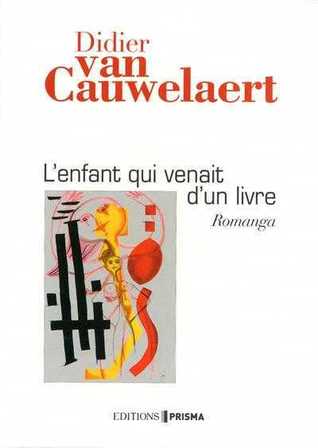
I bought this book on a reduced to clear shelf for £1 which was a real bargain as the list price was nearly £30! The reason for that is it is not just a novel, but includes a manga graphic novel too, as well as illustrations from a well known artist. It opens in some kind of boxed set format, with the novel attached to the front hardback cover and the manga attached to the back cover. The drawings are interspersed throughout the work. It is an unusual and quite attractive design, although actually a touch unwieldy to read. The publishers call it a new genre: Romanga (Roman being French for a novel).
The story is about a boy who appears from nowhere, looking just like a character in a manga comic book. Is he the son of the author? Did he materialize from the comic book world? Is he just making it all up? But he is on a mission to save a girl he claims is his half sister who is in a wheelchair with dystonia. It is a charming and unusual story, written with a message: to raise awareness of dystonia.
The book was sold to raise money for treatment of children with this disease, and for that reason I actually now feel rather bad that I only paid £1 for it. But it was probably not worth the full list price unless you were ready to donate to the cause anyway. But then again, it is an interesting work from three different intertwined perspectives, so maybe it *is* worth it.
I bought this book on a reduced to clear shelf for £1 which was a real bargain as the list price was nearly £30! The reason for that is it is not just a novel, but includes a manga graphic novel too, as well as illustrations from a well known artist. It opens in some kind of boxed set format, with the novel attached to the front hardback cover and the manga attached to the back cover. The drawings are interspersed throughout the work. It is an unusual and quite attractive design, although actually a touch unwieldy to read. The publishers call it a new genre: Romanga (Roman being French for a novel).
The story is about a boy who appears from nowhere, looking just like a character in a manga comic book. Is he the son of the author? Did he materialize from the comic book world? Is he just making it all up? But he is on a mission to save a girl he claims is his half sister who is in a wheelchair with dystonia. It is a charming and unusual story, written with a message: to raise awareness of dystonia.
The book was sold to raise money for treatment of children with this disease, and for that reason I actually now feel rather bad that I only paid £1 for it. But it was probably not worth the full list price unless you were ready to donate to the cause anyway. But then again, it is an interesting work from three different intertwined perspectives, so maybe it *is* worth it.
9thornton37814
Enjoy your 2025 reads!
10SirThomas
Happy New Year and Happy New Thread, Stephen, I look forward to many good books with you.
And congratulations on graduation!
And congratulations on graduation!
11sirfurboy
2. La vie secrète des jeunes II - Riad Sattouf
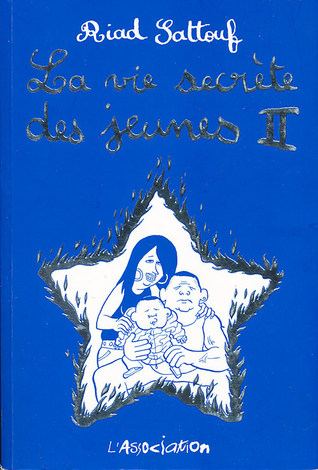
A second volume of this comic strip from Charlie Hebdo that I bought at the same bargain book stand as I got the first volume. Had I read the first book first, I wouldn't have bought this one. Still, I gave it a go to see if I could find the humour that had eluded me in the first book. I didn't.
There is a plus. This offers a wry look at human life by recounting actually observed incidents in a variety of situations. The author is clearly observing real events and conversations and documenting them in comic book form. But the overall impression is more depressing than humorous. Indeed, some of the events appear quite disturbing.
The format didn't work for me. Your mileage may vary.
A second volume of this comic strip from Charlie Hebdo that I bought at the same bargain book stand as I got the first volume. Had I read the first book first, I wouldn't have bought this one. Still, I gave it a go to see if I could find the humour that had eluded me in the first book. I didn't.
There is a plus. This offers a wry look at human life by recounting actually observed incidents in a variety of situations. The author is clearly observing real events and conversations and documenting them in comic book form. But the overall impression is more depressing than humorous. Indeed, some of the events appear quite disturbing.
The format didn't work for me. Your mileage may vary.
12sirfurboy
>10 SirThomas: and >9 thornton37814: Thanks both. Good to see you.
13richardderus
>11 sirfurboy: The topicality of the humor in Charlie Hebdo led to my abandonment of it...started following them online after The Attack...because it doesn't hit my funnybone from across the Atlantic. YMMV is always the case with humor, I think.
Merry January's reads.
Merry January's reads.
14sirfurboy
3. De Reis van Yarim - Hans Hagen
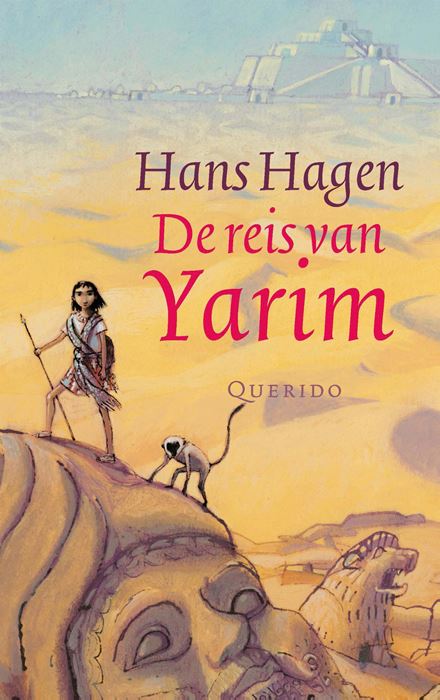
To be honest, I am being a little generous if I say that I liked this book. I liked aspects of it. The protagonist is likeable, and suffers an injury early on that leaves him disabled, which added an interesting twist. His family falls on hard times, and Yarim is sent to Kish where he is to be a debt slave for a few years, but adventures befall him and he finds friends and allies, as well as people who are against him. However those adventures lack a coherent thread. He moves from one adventure to another, but the plot has definite problems there, and it became increasingly tedious. It is meant for children, but most children would lose interest in this work long before it is over.
That is a pity though. There is a great deal of historical research that went into this story, and the author has mined that rich history for a series of stories and adventures that are educational and introduce the reader to the world of Kish thousands of years ago. This, perhaps is why the book won a Dutch children's book award or two. It cant have been for the plot.
To be honest, I am being a little generous if I say that I liked this book. I liked aspects of it. The protagonist is likeable, and suffers an injury early on that leaves him disabled, which added an interesting twist. His family falls on hard times, and Yarim is sent to Kish where he is to be a debt slave for a few years, but adventures befall him and he finds friends and allies, as well as people who are against him. However those adventures lack a coherent thread. He moves from one adventure to another, but the plot has definite problems there, and it became increasingly tedious. It is meant for children, but most children would lose interest in this work long before it is over.
That is a pity though. There is a great deal of historical research that went into this story, and the author has mined that rich history for a series of stories and adventures that are educational and introduce the reader to the world of Kish thousands of years ago. This, perhaps is why the book won a Dutch children's book award or two. It cant have been for the plot.
15sirfurboy
4. Astérix Au Musée De Cluny
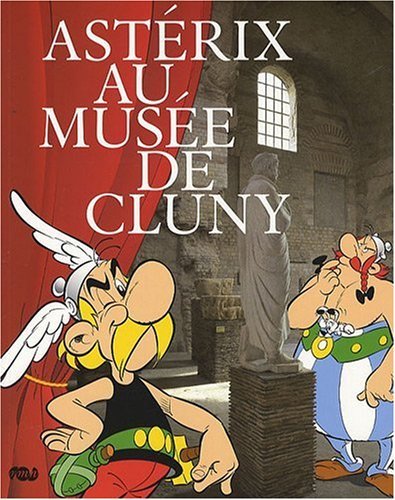
This is not an Astérix story, but rather a book largely about Albert Uderzo and his art. It has plenty of interesting information about that, and reads like an accompaniment to an exhibition. Which, it turns out, is exactly what this is. It was published for the exhibition, Astérix at the Musée de Cluny, which was presented on January 3, 2010 at the Musée National du Moyen Age in Paris.
Along with other French books I have read recently, I found this on a bargain "reduced to clear" bookshelf in Waterstones, Piccadilly. Although it has a few cartoon panels, it is only one for Astérix completists.
This is not an Astérix story, but rather a book largely about Albert Uderzo and his art. It has plenty of interesting information about that, and reads like an accompaniment to an exhibition. Which, it turns out, is exactly what this is. It was published for the exhibition, Astérix at the Musée de Cluny, which was presented on January 3, 2010 at the Musée National du Moyen Age in Paris.
Along with other French books I have read recently, I found this on a bargain "reduced to clear" bookshelf in Waterstones, Piccadilly. Although it has a few cartoon panels, it is only one for Astérix completists.
16SirThomas
>15 sirfurboy: ...another BB, sigh.
And thank you again for your review of Tress of the Emerald Sea last year.
It was a stunning read.
Have a wonderful weekend!
And thank you again for your review of Tress of the Emerald Sea last year.
It was a stunning read.
Have a wonderful weekend!
17sirfurboy
>16 SirThomas: I am really pleased you liked it. Thanks for letting me know.
18sirfurboy
5. Calling Bullshit: The Art of Skepticism in a Data-Driven World - Carl T. Bergstrom

There are quite a few books about critical thinking, and how to apply statistical reasoning in our lives, and on that score this is a solid entry in the field, and without a doubt a book that repays the reader. I think where it finds a niche for itself, however, is in that it is not a book just about one kind of sloppy thinking. Rather, it is more of an instruction manual on how to recognise when you are being misled. Some of the examples are bag up to date, and all are spot on.
The last chapter looks at how we should not just recognise people misleading us, but shows we have a duty to call it out. It then goes into detail of how to do that and how not to. I was particularly pleased with the how not to, because there are plenty of people in the online world who fall short on that score. The advice is challenging and good.
Definitely worth reading, and the advice is worth following too.

There are quite a few books about critical thinking, and how to apply statistical reasoning in our lives, and on that score this is a solid entry in the field, and without a doubt a book that repays the reader. I think where it finds a niche for itself, however, is in that it is not a book just about one kind of sloppy thinking. Rather, it is more of an instruction manual on how to recognise when you are being misled. Some of the examples are bag up to date, and all are spot on.
The last chapter looks at how we should not just recognise people misleading us, but shows we have a duty to call it out. It then goes into detail of how to do that and how not to. I was particularly pleased with the how not to, because there are plenty of people in the online world who fall short on that score. The advice is challenging and good.
Definitely worth reading, and the advice is worth following too.
19richardderus
>18 sirfurboy: Up there with On Tyranny in my book...people need a solid set of examples of what constitutes manipulation.
Good lookin' out, Search! You found a good'un.
Good lookin' out, Search! You found a good'un.
20sirfurboy
6. De dagen van de bluegrassliefde - Edward van de Vendel

I don't recall how this got on my TBR as it has been there for so long. It takes me a long time to get through non English books. This one is essentially a love story but als a coming of age story of a college age who goes off to America to work on a summer camp, finds love there (with another camp helper, a boy from Sweden), gets sent home from the camp because of this (and because the distarction causes him to make mistakes) and then battles prejudice and the hardships of an international relationship.
It's not really what I want from a story, so I am not sure why I added it. But it is sensitively written, and confronts issues of prejudice in a way that is likely to be helpful to young adult readers with similar struggles. So a good story that was substantially ahead of its time I think.

I don't recall how this got on my TBR as it has been there for so long. It takes me a long time to get through non English books. This one is essentially a love story but als a coming of age story of a college age who goes off to America to work on a summer camp, finds love there (with another camp helper, a boy from Sweden), gets sent home from the camp because of this (and because the distarction causes him to make mistakes) and then battles prejudice and the hardships of an international relationship.
It's not really what I want from a story, so I am not sure why I added it. But it is sensitively written, and confronts issues of prejudice in a way that is likely to be helpful to young adult readers with similar struggles. So a good story that was substantially ahead of its time I think.
21sirfurboy
7. Pity the Reader - Suzanne McConnell, Kurt Vonnegut

The description of this book says this is by Vonnegut but it is really by Suzanne McConnell, although she quotes from Vonnegut very liberally, so we have very many of his words here. This is a book about Vonnegut and about his approach to writing. It is full of valuable insight, but also with a wealth of biographical material too, which is written with care and love for the subject.
Vonnegut was such an excellent writer, and in this book we see into his philosophy of the subject and how the writer was born. The Dresden episode is clearly important and mentioned throughout the book, and yet we hear later in the work that Vonnegut gave it less heed than perhaps others did. Or at least, that is what he said.
Some of the writing lessons are the author's rather than Vonnegut's, but mostly she lets Vonnegut speak. Whether her collation of his material also suited her own thoughts, or truly reflects the whole of his philosophy on writing, I cannot say. But it is a very informative and useful work, and I found parts of it poignant too. I loved Vonnegut's words to his daughter, about how adults are just a tiny bit older, and don't know much more than their kids.
Not a writing manual as such, but plenty of excellent lessons to the aspiring writer.

The description of this book says this is by Vonnegut but it is really by Suzanne McConnell, although she quotes from Vonnegut very liberally, so we have very many of his words here. This is a book about Vonnegut and about his approach to writing. It is full of valuable insight, but also with a wealth of biographical material too, which is written with care and love for the subject.
Vonnegut was such an excellent writer, and in this book we see into his philosophy of the subject and how the writer was born. The Dresden episode is clearly important and mentioned throughout the book, and yet we hear later in the work that Vonnegut gave it less heed than perhaps others did. Or at least, that is what he said.
Some of the writing lessons are the author's rather than Vonnegut's, but mostly she lets Vonnegut speak. Whether her collation of his material also suited her own thoughts, or truly reflects the whole of his philosophy on writing, I cannot say. But it is a very informative and useful work, and I found parts of it poignant too. I loved Vonnegut's words to his daughter, about how adults are just a tiny bit older, and don't know much more than their kids.
Not a writing manual as such, but plenty of excellent lessons to the aspiring writer.
23EllaTim
Hi Stephen!
>14 sirfurboy: Sometimes a writer just wants to educate too much.
>20 sirfurboy: Applause for reading the book in dutch. It takes a long time and lots of patience to be able to read a book in a new language. I haven’t heard of this one, maybe from Anita’s thread? She did a lot of reading books for children and young adults.
>18 sirfurboy: Seems worth reading. It’s really hard to call out nonsense! I do try (on Twitter) and sometimes people do listen to a different opinion.
Happy reading, Stephen!
>14 sirfurboy: Sometimes a writer just wants to educate too much.
>20 sirfurboy: Applause for reading the book in dutch. It takes a long time and lots of patience to be able to read a book in a new language. I haven’t heard of this one, maybe from Anita’s thread? She did a lot of reading books for children and young adults.
>18 sirfurboy: Seems worth reading. It’s really hard to call out nonsense! I do try (on Twitter) and sometimes people do listen to a different opinion.
Happy reading, Stephen!
25sirfurboy
>23 EllaTim: I think it must have been from Anita, yes. But it was on my TBR so long that I confess I forget how it got there!
Great to hear from you.
>24 SirThomas: And now happy weekend to you too!
Great to hear from you.
>24 SirThomas: And now happy weekend to you too!
26sirfurboy
8. And They Came to Elim Volume 2 - Maldwyn Jones
The second volume of the history of the Elim church - and a much needed history too, as there was so much of this history that was not previously covered anywhere else. The timeline has moved on from after the split of the founder, George Jeffreys, showing how the movement responded to this massive challenge, and then leading up to the terrible events of the 1978 Vumba massacre. The author supplements his excellent research with personal knowledge from his own years of ministry as an Elim pastor. He does not, however, hold back from criticism and analysis based on any loyalty to the movement, and so this is a very useful and well referenced piece of historical research.
A third volume is planned, taking us up to the present day, but already this series has added a tremendous amount of detail and drawn together some key events that had only been covered in isolated form in previous works (e.g. a Ph.D, thesis about the split).
It is a niche subject for many. The history of one Pentecostal denomination will hardly be required reading in any school, for instance. But its relevance is very clear to those who are in any way involved in those churches. This volume, however, has wider application. For instance, the well reasoned analysis around the issues of church government raised by the split are definitely worth consideration by anyone debating such matters in other churches, or other organisations generally. And I think the book also shows quite clearly how British Pentecostalism, although close to its American cousin, was always quite distinctive too.
The second volume of the history of the Elim church - and a much needed history too, as there was so much of this history that was not previously covered anywhere else. The timeline has moved on from after the split of the founder, George Jeffreys, showing how the movement responded to this massive challenge, and then leading up to the terrible events of the 1978 Vumba massacre. The author supplements his excellent research with personal knowledge from his own years of ministry as an Elim pastor. He does not, however, hold back from criticism and analysis based on any loyalty to the movement, and so this is a very useful and well referenced piece of historical research.
A third volume is planned, taking us up to the present day, but already this series has added a tremendous amount of detail and drawn together some key events that had only been covered in isolated form in previous works (e.g. a Ph.D, thesis about the split).
It is a niche subject for many. The history of one Pentecostal denomination will hardly be required reading in any school, for instance. But its relevance is very clear to those who are in any way involved in those churches. This volume, however, has wider application. For instance, the well reasoned analysis around the issues of church government raised by the split are definitely worth consideration by anyone debating such matters in other churches, or other organisations generally. And I think the book also shows quite clearly how British Pentecostalism, although close to its American cousin, was always quite distinctive too.
27richardderus
>26 sirfurboy: *shudder*
28sirfurboy
>27 richardderus: Haha, yeah, I didn't think it was one you would be reading! It's pretty niche in any case. I doubt it will find its way onto anyone's TBR.
29richardderus
>28 sirfurboy: I *should* read it because "know your enemy" is always wise practice, but I just can't.
30sirfurboy
9. Unmasking Lucy Letby - Jonathan Coffey, Judith Moritz
Lucy Letby is a former nurse, convicted in the UK of killing eight babies and the attempted murder of two others. This book is written with a great deal of research by two journalists who sat through her very long trial and appeal and spoke at length to a great many experts after the fact, before presenting her story. They also produced the BBC documentary on Letby, but this book goes beyond that. Not only does it describe the sequence of events that led to her falling under suspicion and conviction, this book also takes seriously some very serious doubts as to whether Letby was given a fair trial, and whether her conviction is as safe as some would have us believe.
Letby's story is not unique. The case of the former nurse in the Netherlands, Lucia de Berk, is now a case study in the misuse of statistics and other errors that led to that country's most notorious miscarriage of justice. The similarities between Letby's story and de Berk's are striking, and just last week there was news of an application to the Criminal Cases Review Commission by Letby's new defence team.
Writing this book must therefore have been no mean feat. Since reporting restrictions were lifted in the UK, many experts have stood up to say they are concerned about the strength of Letby's conviction, but on the other hand, there is no doubt that babies died, and these are harrowing events, that are terrible to recount. Views are often polarised, but what is the truth?
The book has two authors (LibraryThing is only showing Jonathan Coffey but the other is Judith Moritz) and reading the book, it seemed to me that there was a difference between Moritz and Coffey that was acknowledged in the last chapter. Whilst Moritz believes Letby is guilty, Coffey cannot discount the possibility that she is innocent. But despite their differences on that, both authors diligently present the evidence as they have seen it, both for and against Letby's guilt. There is no shying away from the very pertinent questions as to how the case against Letby was put together, how the statistics could have been manipulated or misconstrued, alternative explanations for the deaths, how the expert witness for the prosecution adapted his earlier opinions, and various other doubts. At the same time, both authors are equally firm about aspects of Letby's own behaviour and defence that remain troubling.
The authors delve into speculation of motive too -something no one tried to establish in the prosecution. They come up with a plausible argument for one motive, but here the book maybe over-reaches. Despite their caution, the motive they present feels especially plausible when they describe it - but this is down to their own presentation of the material in all the previous chapters. Indeed, I did not need the last chapter to tell me what they thought Letby's motive was. I knew what they thought already. And that speaks to the danger of any book such as this. Ultimately the narrative is more in the control of the authors than we might appreciate. Being aware of that is a useful caution.
All the same, I thought the authors did do a good job of presenting a balanced point of view. On at least one point it is already outdated, as the prosecution's expert witness has retracted another piece of evidence, and another unexplained injury has found a plausible alternate explanation. But what the authors do show is that there is a valid question as to whether there were any murders at all. And another valid question as to whether Letby was the right person in the frame even if there were murders. Equally they show there are other questions that Letby's supporters need to be aware of.
As Coffey says, quoting another, ultimately we cannot say whether Letby is guilty or innocent. But if, one day, she is standing in front of the cameras after many years of wrongful imprisonment, would we want to be among those who put her there?
Anyway, not a happy book to read. A very informative and thoroughly researched one. One that raises questions, some of which may never be answered, and whatever the rights or wrongs here, that is a terrible shame.
Lucy Letby is a former nurse, convicted in the UK of killing eight babies and the attempted murder of two others. This book is written with a great deal of research by two journalists who sat through her very long trial and appeal and spoke at length to a great many experts after the fact, before presenting her story. They also produced the BBC documentary on Letby, but this book goes beyond that. Not only does it describe the sequence of events that led to her falling under suspicion and conviction, this book also takes seriously some very serious doubts as to whether Letby was given a fair trial, and whether her conviction is as safe as some would have us believe.
Letby's story is not unique. The case of the former nurse in the Netherlands, Lucia de Berk, is now a case study in the misuse of statistics and other errors that led to that country's most notorious miscarriage of justice. The similarities between Letby's story and de Berk's are striking, and just last week there was news of an application to the Criminal Cases Review Commission by Letby's new defence team.
Writing this book must therefore have been no mean feat. Since reporting restrictions were lifted in the UK, many experts have stood up to say they are concerned about the strength of Letby's conviction, but on the other hand, there is no doubt that babies died, and these are harrowing events, that are terrible to recount. Views are often polarised, but what is the truth?
The book has two authors (LibraryThing is only showing Jonathan Coffey but the other is Judith Moritz) and reading the book, it seemed to me that there was a difference between Moritz and Coffey that was acknowledged in the last chapter. Whilst Moritz believes Letby is guilty, Coffey cannot discount the possibility that she is innocent. But despite their differences on that, both authors diligently present the evidence as they have seen it, both for and against Letby's guilt. There is no shying away from the very pertinent questions as to how the case against Letby was put together, how the statistics could have been manipulated or misconstrued, alternative explanations for the deaths, how the expert witness for the prosecution adapted his earlier opinions, and various other doubts. At the same time, both authors are equally firm about aspects of Letby's own behaviour and defence that remain troubling.
The authors delve into speculation of motive too -something no one tried to establish in the prosecution. They come up with a plausible argument for one motive, but here the book maybe over-reaches. Despite their caution, the motive they present feels especially plausible when they describe it - but this is down to their own presentation of the material in all the previous chapters. Indeed, I did not need the last chapter to tell me what they thought Letby's motive was. I knew what they thought already. And that speaks to the danger of any book such as this. Ultimately the narrative is more in the control of the authors than we might appreciate. Being aware of that is a useful caution.
All the same, I thought the authors did do a good job of presenting a balanced point of view. On at least one point it is already outdated, as the prosecution's expert witness has retracted another piece of evidence, and another unexplained injury has found a plausible alternate explanation. But what the authors do show is that there is a valid question as to whether there were any murders at all. And another valid question as to whether Letby was the right person in the frame even if there were murders. Equally they show there are other questions that Letby's supporters need to be aware of.
As Coffey says, quoting another, ultimately we cannot say whether Letby is guilty or innocent. But if, one day, she is standing in front of the cameras after many years of wrongful imprisonment, would we want to be among those who put her there?
Anyway, not a happy book to read. A very informative and thoroughly researched one. One that raises questions, some of which may never be answered, and whatever the rights or wrongs here, that is a terrible shame.
31richardderus
>30 sirfurboy: The horror that it needed to be written is the tragedy; the case, well, what does imprisoning her do for the grief caused? Not saying "let her free" but what is this meant to help?
No answers from me, but as always more questions.
No answers from me, but as always more questions.
32sirfurboy
>31 richardderus: Indeed. Thanks.
33sirfurboy
10. The Door in the Wall - Margerite De Angeli

It's the 14th century and the plague is raging through England. A young boy falls sick with a different malady - one that parlayses his legs. Polio perhaps? And he finds himself alone. His father is fighting the Scots, his mother attending the Queen. He is found, however, by a kindly friar, and comes to learn new skills, find friends and fall into adventure.
This is a Newbery medal winning book from 1949. It was written at a time when Polio remained a serious problem, and the struggles portrayed in this likeable hero would no doubt have spoken to many readers. There were a few issues I had with it. The story is straightforward - not such a bad thing, but it makes it very much a children's book, and not a young adult crossover. Also the language of the book is very old fashioned - a deliberate affection by the author, portraying the medieval setting. However, the language is more Shakespearean English than Middle English. A deliberate choice, of course, because the readers would not get very far if this were written in middle English. But I don't really think it adds to the feel of the story to have the stuffy language. It just makes the book itself feel a bit old fashioned.
Ultimately a feel good story, with some care to the historical detail, but lacking any greater analysis of the detail (which would not really be appropriate). I particularly liked the choice to have the crippled protagonist, coming to terms with his situation.

It's the 14th century and the plague is raging through England. A young boy falls sick with a different malady - one that parlayses his legs. Polio perhaps? And he finds himself alone. His father is fighting the Scots, his mother attending the Queen. He is found, however, by a kindly friar, and comes to learn new skills, find friends and fall into adventure.
This is a Newbery medal winning book from 1949. It was written at a time when Polio remained a serious problem, and the struggles portrayed in this likeable hero would no doubt have spoken to many readers. There were a few issues I had with it. The story is straightforward - not such a bad thing, but it makes it very much a children's book, and not a young adult crossover. Also the language of the book is very old fashioned - a deliberate affection by the author, portraying the medieval setting. However, the language is more Shakespearean English than Middle English. A deliberate choice, of course, because the readers would not get very far if this were written in middle English. But I don't really think it adds to the feel of the story to have the stuffy language. It just makes the book itself feel a bit old fashioned.
Ultimately a feel good story, with some care to the historical detail, but lacking any greater analysis of the detail (which would not really be appropriate). I particularly liked the choice to have the crippled protagonist, coming to terms with his situation.
34sirfurboy
11. The Phantom Tollbooth - Norton Juster

This is a children's fantasy tale that was published in 1961 and seems to have become a classic since. And for any classic, there are clearly reasons why that would be. But I was a bit surprised when I started reading to find that this was not quite the fantasy I had supposed. It has a nonsense feel to it that reminded me of Alice in Wonderland - another classic. That should be a huge endorsement, but I found Alice in Wonderland a touch too nonsensical as a child. I appreciate it more now for understanding it better, and appreciating the metaphors, but I did not find those in this book, so it was ultimately a journey, undertaken without any clear reason, where the protagonist moves from place to place and eventually arrives at an end.
As a story, therefore, it lacked any over-arching plot. There was little conflict, just a meandering through a fantastical world. But a story such as this could be saved by its characters, and this one tried, with the lovely Watch Dog and others. Lovely, but not exactly a Tin Man or Cowardly Lion. The Wizard of Oz, another journey through a land filled with fantastical elements, had better characters and more conflict. So I wasn't exactly hooked by this.
Pluses would be the word play and puns. And that probably saves it, and makes it a good book for its intended age group. I can see how this would become a much loved nostalgic piece too. But the age group is children up to mid grade, and it is not a crossover work. If you are an adult and haven't already fallen in love with this as a child, I suspect you will thing "meh". But check out other reviews, because I could well be wrong on that. For me, I could enjoy it for what it was, and I'd recommend it for, say, 9 or 10 year olds.

This is a children's fantasy tale that was published in 1961 and seems to have become a classic since. And for any classic, there are clearly reasons why that would be. But I was a bit surprised when I started reading to find that this was not quite the fantasy I had supposed. It has a nonsense feel to it that reminded me of Alice in Wonderland - another classic. That should be a huge endorsement, but I found Alice in Wonderland a touch too nonsensical as a child. I appreciate it more now for understanding it better, and appreciating the metaphors, but I did not find those in this book, so it was ultimately a journey, undertaken without any clear reason, where the protagonist moves from place to place and eventually arrives at an end.
As a story, therefore, it lacked any over-arching plot. There was little conflict, just a meandering through a fantastical world. But a story such as this could be saved by its characters, and this one tried, with the lovely Watch Dog and others. Lovely, but not exactly a Tin Man or Cowardly Lion. The Wizard of Oz, another journey through a land filled with fantastical elements, had better characters and more conflict. So I wasn't exactly hooked by this.
Pluses would be the word play and puns. And that probably saves it, and makes it a good book for its intended age group. I can see how this would become a much loved nostalgic piece too. But the age group is children up to mid grade, and it is not a crossover work. If you are an adult and haven't already fallen in love with this as a child, I suspect you will thing "meh". But check out other reviews, because I could well be wrong on that. For me, I could enjoy it for what it was, and I'd recommend it for, say, 9 or 10 year olds.
35sirfurboy
12. The Stars did Wander Darkling - Colin Meloy

A middle grade book marketed as perfect for people who like Stranger Things. Which is just marketing hype, as it turns out. There are similarities, but there are similarities to a bunch of B movies too. Set in the 1980s, there were some clear cultural references that the author had carefully placed in there, but the nostalgic element didn't capture me (and anyway would be lost of mid grade readers I presume). The writing was good enough, with a clever turn of phrase here or there. Perspective was limited third person, and here was my first gripe: I thought the author could have leaned into the limited third person a little more to aid the characterisation. Because really, characterisation was a bit of a flaw here. The characters were a little samey, and considering there were a number of them to keep track of, it would have greatly added to the enjoyment if they had just had a bit more character. Also the characters didn't quite gel at the end.
The story had plenty of classic elements, but I really couldn't find anything that makes it stand out. It is marketed at middle grade so younger readers might enjoy it more than I did, but I think there are better books out there.

A middle grade book marketed as perfect for people who like Stranger Things. Which is just marketing hype, as it turns out. There are similarities, but there are similarities to a bunch of B movies too. Set in the 1980s, there were some clear cultural references that the author had carefully placed in there, but the nostalgic element didn't capture me (and anyway would be lost of mid grade readers I presume). The writing was good enough, with a clever turn of phrase here or there. Perspective was limited third person, and here was my first gripe: I thought the author could have leaned into the limited third person a little more to aid the characterisation. Because really, characterisation was a bit of a flaw here. The characters were a little samey, and considering there were a number of them to keep track of, it would have greatly added to the enjoyment if they had just had a bit more character. Also the characters didn't quite gel at the end.
The story had plenty of classic elements, but I really couldn't find anything that makes it stand out. It is marketed at middle grade so younger readers might enjoy it more than I did, but I think there are better books out there.
36richardderus
>35 sirfurboy: You sound as querulous as I sounded when I bitch-slapped Lesser Ruins just now, only you're a polite Brit and I'm a not-polite Texan.
37sirfurboy
13. Wikipedia and the Representation of Reality - Zachary J. McDowell
A well researched and completely free and open access book in the spirit of Wikipedia itself. The book looks at what Wikipedia is, its strengths and weaknesses. It describes some of the important policies that have developed, and how they confounded some of the early criticisms of the very concept of the encyclopaedia. It speaks warmly of the last good place on the Internet (which has been said elsewhere too). It also looks at how the policies also don't always live up to expectations, and the issues of systematic bias and other such problems that are very evident in Wikipedia.
All in all this is a well researched piece. It describes how Wikipedia itself has become a cultural phenomenon and thus influences the representation of reality. There are benefits and drawbacks, but the writers are, on the whole, positive about the project.
There is discussion of some of the policies, like the "be bold" policy, which the authors see as gendered. They feel that the policy benefits Western white males. A criticism I would have of their analysis is that, while I can see how policies might benefit people based on levels of educational access, literacy, etc., I don't think they really demonstrated how the policy disadvantages non western white males in a project which values the anonymity of its editors, and where it is usually unknown what race or sex another editor is. I am not saying they are wrong. I expect they think it is to do with culture and expectations or something... but that is not well explained.
Anyway you can't really go wrong with free books, and this one is thorough in what it describes.
A well researched and completely free and open access book in the spirit of Wikipedia itself. The book looks at what Wikipedia is, its strengths and weaknesses. It describes some of the important policies that have developed, and how they confounded some of the early criticisms of the very concept of the encyclopaedia. It speaks warmly of the last good place on the Internet (which has been said elsewhere too). It also looks at how the policies also don't always live up to expectations, and the issues of systematic bias and other such problems that are very evident in Wikipedia.
All in all this is a well researched piece. It describes how Wikipedia itself has become a cultural phenomenon and thus influences the representation of reality. There are benefits and drawbacks, but the writers are, on the whole, positive about the project.
There is discussion of some of the policies, like the "be bold" policy, which the authors see as gendered. They feel that the policy benefits Western white males. A criticism I would have of their analysis is that, while I can see how policies might benefit people based on levels of educational access, literacy, etc., I don't think they really demonstrated how the policy disadvantages non western white males in a project which values the anonymity of its editors, and where it is usually unknown what race or sex another editor is. I am not saying they are wrong. I expect they think it is to do with culture and expectations or something... but that is not well explained.
Anyway you can't really go wrong with free books, and this one is thorough in what it describes.
38sirfurboy
>36 richardderus: Ha ha. Well you had me rushing over to read your review of Lesser Ruins! And yeah, I think I'll give that one a miss, but nicely written review.
Yep, The Stars did Wander Darkling was definitely a disappointment.
Yep, The Stars did Wander Darkling was definitely a disappointment.
39sirfurboy
14. The Magic Casement - Dave Duncan

Dave Duncan is one of my favourite fantasy writers, who has written some remarkable stories. A great storyteller and writer, what I really liked in two of his other series' that I have read through was how he wrote fantasy that eschewed so many fantasy tropes and did something quite different. His Seventh Sword series is a very clever high fantasy that has very little magic, no elves or other magical peoples, and does something really very clever. But that is not this series.
This story is about a princess, a stable boy, magic and spells, the occasional god, and has elves and fawns and goblins and dragons (albeit the magical races are not obviously that dissimilar from each other). It seems to just start with a checklist of tropes and include them all. So on that score, I was a touch disappointed. Yet Duncan is never constrained by those tropes, and the story is as imaginative as ever and as well written.
There is a certain lack of nuance to many of the characters. They are good or they are bad. But there are some exceptions. I enjoyed Little Chicken, for instance, and Duncan wrote all his characters well.
The book sets up a series and so the resolution of the first book is not a closure. This is a problem in so many series that it would be wrong to see it as a fault. There are some interesting answers to some of the book's mysteries and the resolution of one conflict, so all in all it was a satisfying end point. I love Duncan's writing, but I don't think this is his finest series. A good story nevertheless, and an enjoyable one.

Dave Duncan is one of my favourite fantasy writers, who has written some remarkable stories. A great storyteller and writer, what I really liked in two of his other series' that I have read through was how he wrote fantasy that eschewed so many fantasy tropes and did something quite different. His Seventh Sword series is a very clever high fantasy that has very little magic, no elves or other magical peoples, and does something really very clever. But that is not this series.
This story is about a princess, a stable boy, magic and spells, the occasional god, and has elves and fawns and goblins and dragons (albeit the magical races are not obviously that dissimilar from each other). It seems to just start with a checklist of tropes and include them all. So on that score, I was a touch disappointed. Yet Duncan is never constrained by those tropes, and the story is as imaginative as ever and as well written.
There is a certain lack of nuance to many of the characters. They are good or they are bad. But there are some exceptions. I enjoyed Little Chicken, for instance, and Duncan wrote all his characters well.
The book sets up a series and so the resolution of the first book is not a closure. This is a problem in so many series that it would be wrong to see it as a fault. There are some interesting answers to some of the book's mysteries and the resolution of one conflict, so all in all it was a satisfying end point. I love Duncan's writing, but I don't think this is his finest series. A good story nevertheless, and an enjoyable one.
40sirfurboy
15. The Forgotten Maze (Crookhaven, #2) - J.J. Arcanjo
Second part of this great mid-grade series about a school for thieves. In a grand tradition of such stories, it finds a new angle with the thief school (rather than a camp for gods or school for wizards or just a standard school). The protagonist is a proficient and good hearted pick pocket whose real talent is for seeing the good in others and building a crew that trust one another. Some good humour, nice adventure. Nothing especially innovative in this story, and there are areas of slight willing suspension of disbelief (but it is for mid grade children after all). All in all an enjoyable tale. Recommended for mid grade children and readers of mid-grade literature.
Second part of this great mid-grade series about a school for thieves. In a grand tradition of such stories, it finds a new angle with the thief school (rather than a camp for gods or school for wizards or just a standard school). The protagonist is a proficient and good hearted pick pocket whose real talent is for seeing the good in others and building a crew that trust one another. Some good humour, nice adventure. Nothing especially innovative in this story, and there are areas of slight willing suspension of disbelief (but it is for mid grade children after all). All in all an enjoyable tale. Recommended for mid grade children and readers of mid-grade literature.
41sirfurboy
16. Shadow of the Red Moon - Walter Dean Myers
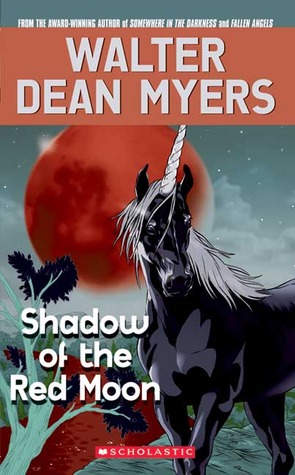
This book was hard to find and sat on my TBR a long time, but I finally got to it, having forgotten why I added it! Thus I came to it with no background and found a children's story about a post apocalyptic future where humans have formed into enemy tribes, and most adults have died, leaving one group of children to venture out from their safe city into dangerous lands in search of a future. They discover that the ingrained enmities are learned but that the Okalians and Fens and others are just people. There are also discoveries about the allure of comfort and so on. There is plenty going on in this simplistic tale, which makes a great children's work.
The writing was simple and the story, too, was not very deep. I think it is a type of children's book that is not in vogue these days, but an interesting read and capable of making a big impression on a younger audience. I doubt it would appeal above mid grade and is probably aimed a touch younger.
This book was hard to find and sat on my TBR a long time, but I finally got to it, having forgotten why I added it! Thus I came to it with no background and found a children's story about a post apocalyptic future where humans have formed into enemy tribes, and most adults have died, leaving one group of children to venture out from their safe city into dangerous lands in search of a future. They discover that the ingrained enmities are learned but that the Okalians and Fens and others are just people. There are also discoveries about the allure of comfort and so on. There is plenty going on in this simplistic tale, which makes a great children's work.
The writing was simple and the story, too, was not very deep. I think it is a type of children's book that is not in vogue these days, but an interesting read and capable of making a big impression on a younger audience. I doubt it would appeal above mid grade and is probably aimed a touch younger.
42richardderus
>41 sirfurboy: I remember this one as a solid read from back in the day. Why I read it has vanished into the mists of the past...not my natural stompin' grounds, really. Maybe because he was somehow Flavor of the Month in the 90s...? Any road, glad it didn't disappoint even if it failed to ignite passion.
43sirfurboy
>42 richardderus: I think the writer was certainly well respected - so yes, perhaps flavour of the month is right. Thanks for your thoughts on it too.
44sirfurboy
17. How not to get Eaten by Ewoks - Christian Blauvelt
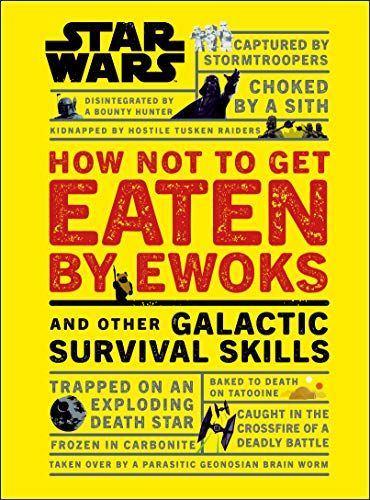
Fun little Star Wars fact book written in a jocular style. A how to survival guide for the Star Wars galaxy. Given as a gift. The kind of book I lapped up as a ten or eleven year old.
Fun little Star Wars fact book written in a jocular style. A how to survival guide for the Star Wars galaxy. Given as a gift. The kind of book I lapped up as a ten or eleven year old.
45sirfurboy
18. La Porte Étroite / Strait is the Gate - André Gide
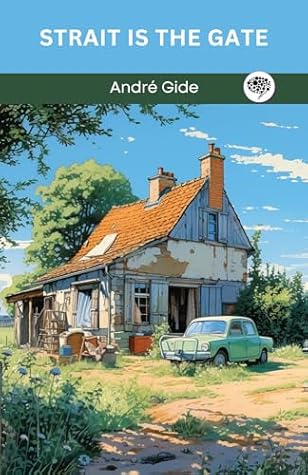
A poignant story, which I started in French but switched to English to finish it off. It follows French cousins through life. Written as a mix of epistolary and journal entries, it explores their unrequited love, and their other choices. The story asks some deep questions, but mostly I felt the characters just missed the point somewhere along the line.
A poignant story, which I started in French but switched to English to finish it off. It follows French cousins through life. Written as a mix of epistolary and journal entries, it explores their unrequited love, and their other choices. The story asks some deep questions, but mostly I felt the characters just missed the point somewhere along the line.
46sirfurboy
19. The Good German - Joseph Kanon

I liked this a lot less than I expected. On the plus side was the excellent historical setting in post World War II Berlin. The research was very good, and this was used to create a number of sub plots and to build a realistic setting for the story. The setting was also sufficiently unusual that this all added interest. Writing was good, the dialogue strong (if a little overwritten perhaps).
My problem with the work (and it's not a major problem - but certainly a frustration) was that it was very slow starting. By the end of the book we have a classic thriller that brings the story through to a satisfying conclusion, but it took a long time to get there!
Also, there are aspects of the story that I didn't like. I think others have noted the misogyny in the protagonist. In a sense that could be taken as a product of the time, and a good characterisation, but there were places where this could have been explored more carefully, and some of the characters thus were not as well developed or explored as they could have been - which seems odd, seeing as the book is so slow.
Read it to the end and there is a good story here. And again, the setting is excellent in itself. Plenty of positives in this work, but it could have been better.

I liked this a lot less than I expected. On the plus side was the excellent historical setting in post World War II Berlin. The research was very good, and this was used to create a number of sub plots and to build a realistic setting for the story. The setting was also sufficiently unusual that this all added interest. Writing was good, the dialogue strong (if a little overwritten perhaps).
My problem with the work (and it's not a major problem - but certainly a frustration) was that it was very slow starting. By the end of the book we have a classic thriller that brings the story through to a satisfying conclusion, but it took a long time to get there!
Also, there are aspects of the story that I didn't like. I think others have noted the misogyny in the protagonist. In a sense that could be taken as a product of the time, and a good characterisation, but there were places where this could have been explored more carefully, and some of the characters thus were not as well developed or explored as they could have been - which seems odd, seeing as the book is so slow.
Read it to the end and there is a good story here. And again, the setting is excellent in itself. Plenty of positives in this work, but it could have been better.
47richardderus
>46 sirfurboy: I think you liked it about as much as I did, Stephen. My cavils were, as one would expect, different from yours. I don't think I'd seek out more Joseph Kanon to read, TBH.
48sirfurboy
>47 richardderus: Yep, likewise. Oh well.
49sirfurboy
20. The Stories We Tell - Mike Cosper

Mike Cosper looks at stories, focusing primarily on films/movies and TV, and examines their themes, finding parallels with biblical narratives. In some cases, of course, the writers of these stories fully intended these parallels. In others, he does a good job of finding biblical themes in such stories. Of course this doesn't necessarily show what one might think it does. There are stories that people find appealing, and story themes that recur again and again in stories, and there has been much analysis of these. If we note that some such themes are found both in modern stories and the Bible, is this because the Bible writers compiled the stories that met the definition of a good story? It could be that and it could be what Cosper suggests - that the Bible stories resonate into culture - but there will be no resolution to that question here.
So what Cosper does well is that he analyses modern stories, and draws out the elements that appeal to us on a human level, and also shows how the Bible stories do the same. Do the modern stories help interpret the Bible stories? On that I'm not so sure. But this book does help us to appreciate that the Bible stories are themselves a work of literature.
A fuller work in that subject would be The Bible As Literature: An Introduction (Gabel et al.)
To note, this is probably not recommended to Richard Derus. :) The book was given to me as a gift.

Mike Cosper looks at stories, focusing primarily on films/movies and TV, and examines their themes, finding parallels with biblical narratives. In some cases, of course, the writers of these stories fully intended these parallels. In others, he does a good job of finding biblical themes in such stories. Of course this doesn't necessarily show what one might think it does. There are stories that people find appealing, and story themes that recur again and again in stories, and there has been much analysis of these. If we note that some such themes are found both in modern stories and the Bible, is this because the Bible writers compiled the stories that met the definition of a good story? It could be that and it could be what Cosper suggests - that the Bible stories resonate into culture - but there will be no resolution to that question here.
So what Cosper does well is that he analyses modern stories, and draws out the elements that appeal to us on a human level, and also shows how the Bible stories do the same. Do the modern stories help interpret the Bible stories? On that I'm not so sure. But this book does help us to appreciate that the Bible stories are themselves a work of literature.
A fuller work in that subject would be The Bible As Literature: An Introduction (Gabel et al.)
To note, this is probably not recommended to Richard Derus. :) The book was given to me as a gift.
50richardderus
>49 sirfurboy: Au contraire, Mon Ami. He might not draw a conclusion from the discovery of common themes in The Bible℠ but I do...the "good" book is a compendium of effective plots dressed in god rags. As moral guidance, far worse than worthless.
51sirfurboy
>50 richardderus: :) Well - I still suspect you will not be adding that one to your TBR!
52sirfurboy
21. Fifty Fifty - S L Powell
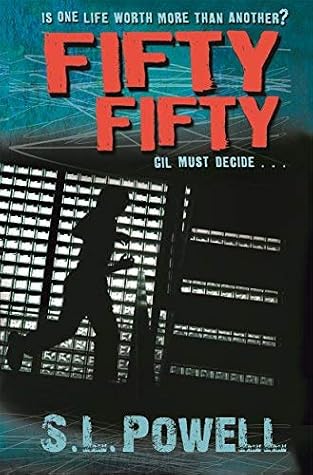
Gil is an only child. His dad is a scientist, although Gil isn't to sure about what he studies. His parents are over-protective and he is railing against the restrictions. He meets a man protesting in a park about the loss of trees, and gets sucked into a world of eco-warriors and animal rights. But he will need to make a choice between his new eco-friend and his family.
This book is a simple enough story, aimed at mid-grade. Gil is 13, so the intended audience is likely no more than 11, and the story is about right for that age group. Reading it, it felt a little didactic. Like a piece that had been written to elicit classroom discussion. Just a touch heavy handed in its approach, but nevertheless well meaning and with a careful and reasonably non partisan approach to exploring the issues around vegetarianism, animal rights and animal experimentation. The ending was reasonably satisfying, and despite perceived shortcomings as I read this, I decided I did quite like it.
I picked this up in a second hand bookstore. It is an ex school library copy that still has the loans page in it, showing it was loaned out exactly once, in late 2013. Not particularly popular then, and it doesn't seem to have much impact elsewhere. Perhaps a pity. The author put a lot of work in and came up with a good enough tale, but the story was all rather predictable.
Gil is an only child. His dad is a scientist, although Gil isn't to sure about what he studies. His parents are over-protective and he is railing against the restrictions. He meets a man protesting in a park about the loss of trees, and gets sucked into a world of eco-warriors and animal rights. But he will need to make a choice between his new eco-friend and his family.
This book is a simple enough story, aimed at mid-grade. Gil is 13, so the intended audience is likely no more than 11, and the story is about right for that age group. Reading it, it felt a little didactic. Like a piece that had been written to elicit classroom discussion. Just a touch heavy handed in its approach, but nevertheless well meaning and with a careful and reasonably non partisan approach to exploring the issues around vegetarianism, animal rights and animal experimentation. The ending was reasonably satisfying, and despite perceived shortcomings as I read this, I decided I did quite like it.
I picked this up in a second hand bookstore. It is an ex school library copy that still has the loans page in it, showing it was loaned out exactly once, in late 2013. Not particularly popular then, and it doesn't seem to have much impact elsewhere. Perhaps a pity. The author put a lot of work in and came up with a good enough tale, but the story was all rather predictable.
53sirfurboy
22. Play - Luke Palmer
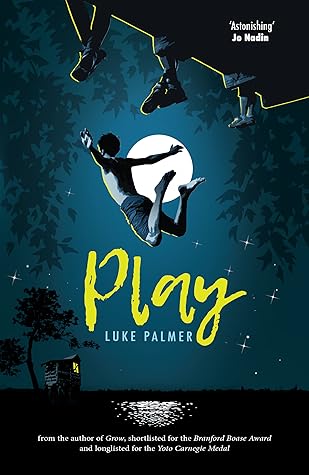
This book is not an easy read, but it is well written, realistic and covers important topic areas. It's a young adult book that follows four boys through their teenage years, and manages to deal with multiple strong themes. In a world of content warnings, it would need many, but that is just because it deals with a toxic male culture among boys who have poor supervision or role models and are navigating their way through difficult issues. As such it is a good book as a discussion starter, but it seems to me that, in the YA market, it might be harder to get those who would benefit most from the reading to read it in the first place. But I hope I am wrong on that.
The book tells the story from four different first person perspectives. This is not a unique approach. Indeed, it is more common amongst YA books, but it is unusual, and for me it was a touch disconcerting early in the story, before I had worked out what was going on, to find the first person narration jumping around. And yet it's not so different from a close limited third person point of view, which I would usually find very natural. I don't think it's a fault of the book, but an unusual choice.
The book also runs very quickly through the teenage years, and I was again disconcerted early on by finding that a whole year had suddenly slipped by. This is a consequence of what the author was doing with the work, showing the "descent" into manhood. Again a valid choice but unusual, and as a consequence, early on in the work, I was thinking I don't like this much. That feeling intensified with some of the themes (particularly the drugs running), but again, that was important to what the author was doing.
I see on other reviews that people have praised the ending. I think the ending was both clever and a little contrived. Hard to explain why without spoilers. I had to let some of my literalist tendencies slide to really appreciate the ending, and, in fact, there is a hint of a famous Ambrose Bierce short story about the ending. Once I did that, I could put down the book and decide that despite some failures to really resolve some matters, I had liked it after all. Mostly I liked it for the bravery of the author, and for the themes it explores, and some clear strengths in the writing.
This book is not an easy read, but it is well written, realistic and covers important topic areas. It's a young adult book that follows four boys through their teenage years, and manages to deal with multiple strong themes. In a world of content warnings, it would need many, but that is just because it deals with a toxic male culture among boys who have poor supervision or role models and are navigating their way through difficult issues. As such it is a good book as a discussion starter, but it seems to me that, in the YA market, it might be harder to get those who would benefit most from the reading to read it in the first place. But I hope I am wrong on that.
The book tells the story from four different first person perspectives. This is not a unique approach. Indeed, it is more common amongst YA books, but it is unusual, and for me it was a touch disconcerting early in the story, before I had worked out what was going on, to find the first person narration jumping around. And yet it's not so different from a close limited third person point of view, which I would usually find very natural. I don't think it's a fault of the book, but an unusual choice.
The book also runs very quickly through the teenage years, and I was again disconcerted early on by finding that a whole year had suddenly slipped by. This is a consequence of what the author was doing with the work, showing the "descent" into manhood. Again a valid choice but unusual, and as a consequence, early on in the work, I was thinking I don't like this much. That feeling intensified with some of the themes (particularly the drugs running), but again, that was important to what the author was doing.
I see on other reviews that people have praised the ending. I think the ending was both clever and a little contrived. Hard to explain why without spoilers. I had to let some of my literalist tendencies slide to really appreciate the ending, and, in fact, there is a hint of a famous Ambrose Bierce short story about the ending. Once I did that, I could put down the book and decide that despite some failures to really resolve some matters, I had liked it after all. Mostly I liked it for the bravery of the author, and for the themes it explores, and some clear strengths in the writing.
54PaulCranswick
>53 sirfurboy: What an excellent review, Sir F. I hadn't heard of that one but I will certainly look out for it.
Have a great weekend.
Have a great weekend.
56sirfurboy
23. Is Maths Real? - Eugenia Cheng
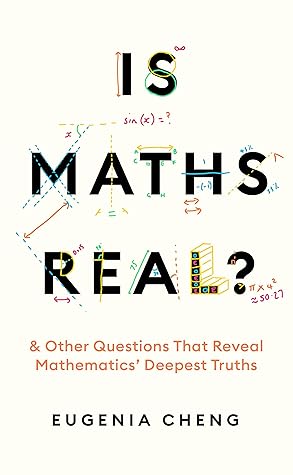
This book was a disappointment. Mathematics is a great subject, and if you think I am mad for saying so, this book should have been for you. A book that is not for mathematics geeks, but for those who have big questions about what it is, why we have it, and the weird assumptions it makes. It asks some very pertinent questions and challenges basic assumptions. 1+1=2, but why? And when doesn't it?
Good questions, and the promise of the book is that it will answer all the questions people think are too stupid to ask, and in the answering will show that they are not syupid questions at all. It promises to look at mathematics afresh and shake up how we teach it.
The promise is good. The execution less so. It is slow going, and at points it just descends into a mathematics primer. The 1+1 doesn't always =2 discussion was okay, but having thrown in some logic truth tables, it didn't really explain those. But the most irritating thing for me was all the political comment. I didn't necessarily disagree with the comment, and I am not sure that there is never a place for such comments in a work on another subject, but in this case we had a book that was trying to open up a subject to everyone, but was presumably just going to irritate some readers unnecessarily with its right-on and overt political messaging. It wasted space, and was a distraction that will alienate some of those for whom it might be a useful work.
I'll stick with Matt Parker as the go to for making mathematics accessible.
This book was a disappointment. Mathematics is a great subject, and if you think I am mad for saying so, this book should have been for you. A book that is not for mathematics geeks, but for those who have big questions about what it is, why we have it, and the weird assumptions it makes. It asks some very pertinent questions and challenges basic assumptions. 1+1=2, but why? And when doesn't it?
Good questions, and the promise of the book is that it will answer all the questions people think are too stupid to ask, and in the answering will show that they are not syupid questions at all. It promises to look at mathematics afresh and shake up how we teach it.
The promise is good. The execution less so. It is slow going, and at points it just descends into a mathematics primer. The 1+1 doesn't always =2 discussion was okay, but having thrown in some logic truth tables, it didn't really explain those. But the most irritating thing for me was all the political comment. I didn't necessarily disagree with the comment, and I am not sure that there is never a place for such comments in a work on another subject, but in this case we had a book that was trying to open up a subject to everyone, but was presumably just going to irritate some readers unnecessarily with its right-on and overt political messaging. It wasted space, and was a distraction that will alienate some of those for whom it might be a useful work.
I'll stick with Matt Parker as the go to for making mathematics accessible.
57richardderus
>56 sirfurboy: Matt Parker is far and away the most effective spokesgeek for math in all its appalling dullness. Even *I* think he's interesting.
Spend a good weekend of reading, Stephen.
Spend a good weekend of reading, Stephen.
58sirfurboy
>57 richardderus: Yep, Matt Parker is great. Thanks. You too.
59sirfurboy
24. Jed Greenleaf - Kieran Larwood
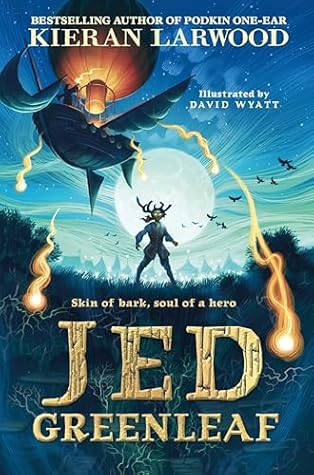
This is an excellent adventurous tale for children, set in an alternative 18th century in which there are magical guilds, a great annual contest, and some nasty skulduggery. Larwood's tale has a timeless charm to it. The characters are well done, the tension is real, the plot nicely thought through. The author has followed well trodden paths to a great tale, but made something that is simultaneously fresh and exciting.
The age group for this one is a touch younger than I usually go. It is good up to mid grade, but the author has, I think, pitched it at the lower end of that. There is not a lot of nuance to the characters, who are either all good or all bad (with one small exception). But that is not a fault of the book, but rather shows studied awareness of the readership. Jed is charming, and his dryad adds some lovely humour too. Basically this is a fine example of what a children's book should look like. Very enjoyable.
This is an excellent adventurous tale for children, set in an alternative 18th century in which there are magical guilds, a great annual contest, and some nasty skulduggery. Larwood's tale has a timeless charm to it. The characters are well done, the tension is real, the plot nicely thought through. The author has followed well trodden paths to a great tale, but made something that is simultaneously fresh and exciting.
The age group for this one is a touch younger than I usually go. It is good up to mid grade, but the author has, I think, pitched it at the lower end of that. There is not a lot of nuance to the characters, who are either all good or all bad (with one small exception). But that is not a fault of the book, but rather shows studied awareness of the readership. Jed is charming, and his dryad adds some lovely humour too. Basically this is a fine example of what a children's book should look like. Very enjoyable.
60sirfurboy
25. Shadow Town - Richard Lambert
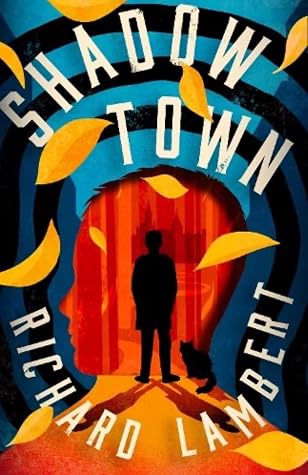
I watched a discussion between some authors in which this author took part. I was intrigued by his work and got hold of this one right away. The book is, I think, more mid-grade than young adult. The protagonist, Toby, is 13, but intended readers are more likely around the 11 mark.
Toby is a well put together character. He longs for his dad's regard, but his dad is too wrapped up himself to bother himself with his son. He absorbs attitudes and ways of interacting that make him rude and unpopular. But then he is flung into an adventure in another world, witnesses a murder, and then struggles to find his way home.
Many classic story elements from a writer who knows how to construct a story. There is some humour, plenty of adventure and plenty that the intended audience will enjoy. Some nuance in the characters, but it's a children's story. All the same, there is character transformation for Toby, and something very interesting going on with the nasty little shadow that kicks off the story.
This won't be one of my all time favourites, but it was good enough for me to read something else from this author.
I watched a discussion between some authors in which this author took part. I was intrigued by his work and got hold of this one right away. The book is, I think, more mid-grade than young adult. The protagonist, Toby, is 13, but intended readers are more likely around the 11 mark.
Toby is a well put together character. He longs for his dad's regard, but his dad is too wrapped up himself to bother himself with his son. He absorbs attitudes and ways of interacting that make him rude and unpopular. But then he is flung into an adventure in another world, witnesses a murder, and then struggles to find his way home.
Many classic story elements from a writer who knows how to construct a story. There is some humour, plenty of adventure and plenty that the intended audience will enjoy. Some nuance in the characters, but it's a children's story. All the same, there is character transformation for Toby, and something very interesting going on with the nasty little shadow that kicks off the story.
This won't be one of my all time favourites, but it was good enough for me to read something else from this author.
61sirfurboy
26. The Hunt for the Golden Scarab
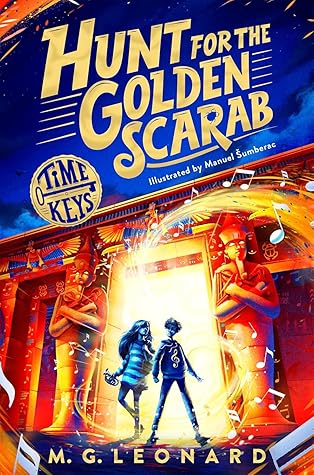
I seem to be on a run of mid-grade books at the moment, and here's another one. It's a great adventure story about Sim and his enigmatic mother who he suspects of being a criminal or a spy, as they seem to live on the run and his mother trains him to fight. The truth turns out to me much more complicated and unusual, and involves the ability to travel in time. This leads to a hunt for Nefertiti's magical golden scarab, chased by villains.
Its a good adventure, and the characters are great. Well written for the age group, with good characterisations, and some great plot. Nefertiti and Tutankhamen are goto characters in such a tale. This one is not obviously derivative of anything else, but it still was not totally fresh and innovative either. A few plot elements don't bare too strong scrutiny, as with many time travel adventures. But it is still a good fun read, and recommended to the age group.
I seem to be on a run of mid-grade books at the moment, and here's another one. It's a great adventure story about Sim and his enigmatic mother who he suspects of being a criminal or a spy, as they seem to live on the run and his mother trains him to fight. The truth turns out to me much more complicated and unusual, and involves the ability to travel in time. This leads to a hunt for Nefertiti's magical golden scarab, chased by villains.
Its a good adventure, and the characters are great. Well written for the age group, with good characterisations, and some great plot. Nefertiti and Tutankhamen are goto characters in such a tale. This one is not obviously derivative of anything else, but it still was not totally fresh and innovative either. A few plot elements don't bare too strong scrutiny, as with many time travel adventures. But it is still a good fun read, and recommended to the age group.
62richardderus
I've read each review and, by exercising great restraint...most uncharacteristic...and reminding myself how awful I feel when being thwacked about the head with A Lesson, not bought these books. It was far and away the hardest with >61 sirfurboy: because of my pharaoh fetish.
You're dangerous, Stephen.
You're dangerous, Stephen.
63sirfurboy
27. Killing the Demons - Jay Ashton
Picked this up in a second hand bookshop. It did not help that the blurb on the back cover was about a totally different book by the same author, which I didn't notice. So I thought I was getting that one. Instead I got a story about disability, youthful misadventure, anger, guilt and dealing with the past. All good themes, but there was little really to this story beyond a bunch of events. I felt the author made a mistake in having the protagonist blurt out the reason for her guilt very early on. The characters were all very predictable and the climax was not so much. It was okay, but I am not entirely sure how it got published. It is, however, better than the majority of kindle unlimited self published stuff.
Picked this up in a second hand bookshop. It did not help that the blurb on the back cover was about a totally different book by the same author, which I didn't notice. So I thought I was getting that one. Instead I got a story about disability, youthful misadventure, anger, guilt and dealing with the past. All good themes, but there was little really to this story beyond a bunch of events. I felt the author made a mistake in having the protagonist blurt out the reason for her guilt very early on. The characters were all very predictable and the climax was not so much. It was okay, but I am not entirely sure how it got published. It is, however, better than the majority of kindle unlimited self published stuff.
64sirfurboy
>62 richardderus: Oh yes, you had mentioned the pharoah fetish before! But yes, they are all children's books, and skewing younger too. Well done on the restraint.
65sirfurboy
>57 richardderus: Speaking of Matt Parker, he has released another brilliant video which looks at the Trump government's own formula for calculating tariffs, and shows how the Trump government therefore predicts 10.25% inflation in America for all US imports as a result of the American Fool's Day tariffs.
https://www.youtube.com/watch?v=j04IAbWCszg
https://www.youtube.com/watch?v=j04IAbWCszg
66richardderus
>65 sirfurboy: The world's catching on to the Felonious Yam's real purpose. Immiserating millions and creating chaos is in service of making the billionaires immune from taxation and redistribution efforts. I think they miscalculated, and are creating their downfall.
I hope, anyway.
I hope, anyway.
67sirfurboy
>66 richardderus: Hoping so too.
68sirfurboy
28. Spark - Mitch Johnson
What did you do in COVID? Mitch Johnson's answer would be "I wrote a post-apocalyptic children's story". Maybe it was the times! But it was certainly a good use of his time, as he has produced a good tale of an orphan boy, Ash, outcast in his village, Last Village, who meets a girl from elsewhere, and when the water runs dry and the other villagers vanish, he sets off with her to find the legendary kingdom in the North.
The tale is a good one for mid-grade readers, with some helpers and some double crossing and dangerous times on the way. Ash's faith in the "Four Fathers" will be challenged as he wrestles with the mystery of his father.
I initially rated this 3 stars on Goodreads, because I liked it but can't say I *really* liked it. I have decided to up that to four stars, on the basis that mid-graders probably will really like it. What it lacked for me, an adult reader of such books, were a few things:
1. The story is a good one but not wholly original. Young readers won't notice that as they will not have read as many books in this sub-genre.
2. The resolution, which I will avoid providing spoilers for, was written kind of cinematically - in that I could see the scene as if I were watching it on TV, but there were aspects of it that I was confused by, either because they were not too clearly described, or else because detail was glossed over to cover for the implausibility. We can forgive some implausibility in a children's book, but this one did seem to be like one of those ridiculous movie scenes were something utterly impossible is shown and made believable through special effects.
So yes, for me, I liked it. One for actual mid-grade readers, and perhaps not quite so much for us more mature mid-graders!
What did you do in COVID? Mitch Johnson's answer would be "I wrote a post-apocalyptic children's story". Maybe it was the times! But it was certainly a good use of his time, as he has produced a good tale of an orphan boy, Ash, outcast in his village, Last Village, who meets a girl from elsewhere, and when the water runs dry and the other villagers vanish, he sets off with her to find the legendary kingdom in the North.
The tale is a good one for mid-grade readers, with some helpers and some double crossing and dangerous times on the way. Ash's faith in the "Four Fathers" will be challenged as he wrestles with the mystery of his father.
I initially rated this 3 stars on Goodreads, because I liked it but can't say I *really* liked it. I have decided to up that to four stars, on the basis that mid-graders probably will really like it. What it lacked for me, an adult reader of such books, were a few things:
1. The story is a good one but not wholly original. Young readers won't notice that as they will not have read as many books in this sub-genre.
2. The resolution, which I will avoid providing spoilers for, was written kind of cinematically - in that I could see the scene as if I were watching it on TV, but there were aspects of it that I was confused by, either because they were not too clearly described, or else because detail was glossed over to cover for the implausibility. We can forgive some implausibility in a children's book, but this one did seem to be like one of those ridiculous movie scenes were something utterly impossible is shown and made believable through special effects.
So yes, for me, I liked it. One for actual mid-grade readers, and perhaps not quite so much for us more mature mid-graders!
69sirfurboy
29. Erik of het klein Insectenboek - Godfried Bomans

This book was written in 1941 and has become a classic of Dutch children's literature. Erik Pinksterblom is nine and worried about school where he must answer a test about insects. Reading under the covers at night, he is disturbed and becomes aware that his grandfather, in a painting, is leaning out and cleaning the frame. Indeed all the paintings come alive, and he meets various ancestors before entering a painting himself - a painting of a meadow filled with insects. And so he goes on a series of adventures, meeting insects and interacting with them. These adventures contain a series of misadventures that add to the amusement of the story, and all the interactions have a brilliant satirical level, that makes this very enjoyable for adults too.
I shelved this in January 2020 after Anita read it. Took me a while, but worth it!

This book was written in 1941 and has become a classic of Dutch children's literature. Erik Pinksterblom is nine and worried about school where he must answer a test about insects. Reading under the covers at night, he is disturbed and becomes aware that his grandfather, in a painting, is leaning out and cleaning the frame. Indeed all the paintings come alive, and he meets various ancestors before entering a painting himself - a painting of a meadow filled with insects. And so he goes on a series of adventures, meeting insects and interacting with them. These adventures contain a series of misadventures that add to the amusement of the story, and all the interactions have a brilliant satirical level, that makes this very enjoyable for adults too.
I shelved this in January 2020 after Anita read it. Took me a while, but worth it!
70EllaTim
>69 sirfurboy: Great choice! I remember I enjoyed this one a lot too. But I must have read it years ago. You make me want to pick it up again. Read in dutch? If so, well done.
71sirfurboy
>70 EllaTim: Yep, read it in Dutch which explains why it took me 5 years to get it finished :) I may have missed some of the meaning too, but I think I picked up on some wordplays that really work best in Dutch. Thanks.
72EllaTim
>71 sirfurboy: Well done, and wordplay in a different language is hard to pick up and understand. We have a lot of English series on TV, but the comedies are hardest to understand for a non-native speaker.
73sirfurboy
30. Wolf Road - Richard Lambert
A very decent young adult tale with a touch of magical realism from an author I have come to enjoy. This is the tale of a lad who is orphaned in a car crash in Somerset, caused by a wolf on the road. So then he is taken to live with his grandmother in Cumbria. His grandmother is an interesting character. Maternally flawed, reserved, estranged from her deceased daughter. But it is the only family Lucas now has. Add to that Lucas' struggles with grief and the wolf who has followed him and is now killing Cumbrian sheep, and some good characterisations of people in his school, and there is plenty to keep the reader reading.
There is also the adept prose of the author, which makes this a good read. The wolf is a natural phenomenon, not magic, but the way he intertwines the narrative, pulling it together and acting as a metaphor too, make this a clever work, without being pretentious.
A very decent young adult tale with a touch of magical realism from an author I have come to enjoy. This is the tale of a lad who is orphaned in a car crash in Somerset, caused by a wolf on the road. So then he is taken to live with his grandmother in Cumbria. His grandmother is an interesting character. Maternally flawed, reserved, estranged from her deceased daughter. But it is the only family Lucas now has. Add to that Lucas' struggles with grief and the wolf who has followed him and is now killing Cumbrian sheep, and some good characterisations of people in his school, and there is plenty to keep the reader reading.
There is also the adept prose of the author, which makes this a good read. The wolf is a natural phenomenon, not magic, but the way he intertwines the narrative, pulling it together and acting as a metaphor too, make this a clever work, without being pretentious.
74elorin
>73 sirfurboy: You got me with a book bullet. Onto the wishlist.
75sirfurboy
>74 elorin: Thanks for stopping by, and I'll have to watch for how you get on with that one.
76sirfurboy
31. Rift - Beverley Birch
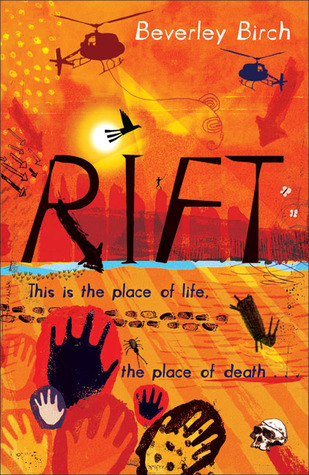
Rift is a young adult thriller. A story about the mysterious disappearance of a group of young people in Africa, when one of them turns up with amnesia in a place that should be impossible, and with no signs of the ravages of the African sun. It is the story of a girl who goes looking for her missing sister, and of the people who work to piece together what has happened, and all the people and obstacles in their path. It is very well written, and a very intelligent piece.
Real strengths of this story come from the descriptions of the African setting, which are very well done. Also of the characterisations, which are clever. Ella is no Mary Sue. The writer cleverly made believable characters that worked together. Not just Ella but others too. Some great character study went into this, and the story is engrossing.
I notice that the young adult readership nevertheless finds some frustration with this story. The conclusion of the story is, I think, satisfying - but it is also fast, and fails to tie up all the loose ends. Many stories, actually, get written this way - especially now. Life doesn't always tie up loose ends, and leaving some threads hanging for reader speculation is a well tried technique - but it can indeed be a frustrating one. The author is brave to do this in a young adult tale, where readership tends to be more used to the finished tale, and it is not surprising that this challenge to the notion of a story does not go unremarked. It is also, I think, a character tale, despite being moulded as a thriller. For those reasons it won't be universally liked, but you can't deny it is a clever tale.
Rift is a young adult thriller. A story about the mysterious disappearance of a group of young people in Africa, when one of them turns up with amnesia in a place that should be impossible, and with no signs of the ravages of the African sun. It is the story of a girl who goes looking for her missing sister, and of the people who work to piece together what has happened, and all the people and obstacles in their path. It is very well written, and a very intelligent piece.
Real strengths of this story come from the descriptions of the African setting, which are very well done. Also of the characterisations, which are clever. Ella is no Mary Sue. The writer cleverly made believable characters that worked together. Not just Ella but others too. Some great character study went into this, and the story is engrossing.
I notice that the young adult readership nevertheless finds some frustration with this story. The conclusion of the story is, I think, satisfying - but it is also fast, and fails to tie up all the loose ends. Many stories, actually, get written this way - especially now. Life doesn't always tie up loose ends, and leaving some threads hanging for reader speculation is a well tried technique - but it can indeed be a frustrating one. The author is brave to do this in a young adult tale, where readership tends to be more used to the finished tale, and it is not surprising that this challenge to the notion of a story does not go unremarked. It is also, I think, a character tale, despite being moulded as a thriller. For those reasons it won't be universally liked, but you can't deny it is a clever tale.
78richardderus
>76 sirfurboy: There's less and less separating YA from "new adult" stories. Thematically the lines blur more and more. I'm all for it. Nice one, son.
79sirfurboy
>78 richardderus: Yes indeed. Some lines need blurring. Thanks.
80sirfurboy
32. The Comet and the Thief
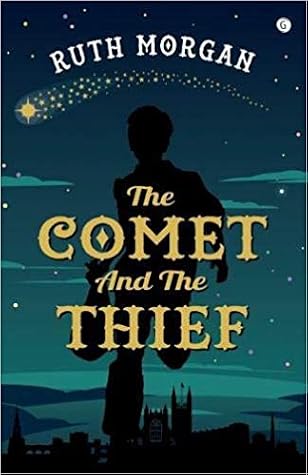
This was an enjoyable time travel children's adventure with a nice twist that the time travel is between the 18th and 15th centuries, allowing the author to have a wealth of historical detail in the work. The plot was well done, with a villainous antagonist chasing after a good hearted boy who tries to save 14th century villagers magically trapped in time. Resolution was good enough, and the adventures were suitably exciting.
I liked the book, but had a few issues with it that stopped me rating it more highly. As with many children's works, however, younger readers might look past these things and enjoy it more. But perhaps they'd still have issues too.
The first issue I had was with use of language. But here there were positives and negatives. I thought the addition of some Italian words (and reference to the Italian origins of Punch and Judy), and also use of some Welsh in the book added colour to the whole and would not be distracting. The use of English, however, ran into a thorny issue over dialect. It was again a good thing that the author drew attention to the changes in English over 3 centuries, so some marker of more obviously Middle English was certainly worth having. But by having the "modern" 18th century dialogue also written quite authentically, some of that difference might be lost on the readers, and all of the dialogue had an old fashioned and stilted feel.
Is that a bad thing? I don't know. It showed good research on the part of the author, and it was quite educational. But it was an unusual choice, and perhaps forms a barrier between the reader and the protagonist. Perhaps. I won't say for sure. Your mileage may vary.
My next problem, however, is over the intended audience age. I can't see where the intended age is stated, and I didn't buy in a store, so I am not sure which shelf this would be found on. My feeling is that it is mid-grade. The characters lack the nuance of an older work. The antagonist is all bad, and the protagonist is only a thief by force of circumstance and clearly a good hearted boy throughout. The plot, too, seemed mid-grade. But if that is so, the fact that Kit, the protagonist, was an older teen was a touch unusual. The story read like he was younger. Indeed, he gets referred to throughout as a boy.
I suspect the older character was chosen to slip in the theme of his lover, Gabriel, at the start. That, and the acceptance of his love for Gabriel by his friends, is meant as a positive theme, but Gabriel's role in the book, beyond that polemic, was entirely superfluous. Perhaps with younger characters, and less self awareness about their love for each other, this theme could have been incorporated, without feeling the need to age up the characters.
Finally, in the resolution, there was an attempt to absolve Kit of responsibility of something. Can't say more, to avoid spoilers. I don't think the resolution succeeded in that. I don't know that it needed to try.
It is still an enjoyable work.
This was an enjoyable time travel children's adventure with a nice twist that the time travel is between the 18th and 15th centuries, allowing the author to have a wealth of historical detail in the work. The plot was well done, with a villainous antagonist chasing after a good hearted boy who tries to save 14th century villagers magically trapped in time. Resolution was good enough, and the adventures were suitably exciting.
I liked the book, but had a few issues with it that stopped me rating it more highly. As with many children's works, however, younger readers might look past these things and enjoy it more. But perhaps they'd still have issues too.
The first issue I had was with use of language. But here there were positives and negatives. I thought the addition of some Italian words (and reference to the Italian origins of Punch and Judy), and also use of some Welsh in the book added colour to the whole and would not be distracting. The use of English, however, ran into a thorny issue over dialect. It was again a good thing that the author drew attention to the changes in English over 3 centuries, so some marker of more obviously Middle English was certainly worth having. But by having the "modern" 18th century dialogue also written quite authentically, some of that difference might be lost on the readers, and all of the dialogue had an old fashioned and stilted feel.
Is that a bad thing? I don't know. It showed good research on the part of the author, and it was quite educational. But it was an unusual choice, and perhaps forms a barrier between the reader and the protagonist. Perhaps. I won't say for sure. Your mileage may vary.
My next problem, however, is over the intended audience age. I can't see where the intended age is stated, and I didn't buy in a store, so I am not sure which shelf this would be found on. My feeling is that it is mid-grade. The characters lack the nuance of an older work. The antagonist is all bad, and the protagonist is only a thief by force of circumstance and clearly a good hearted boy throughout. The plot, too, seemed mid-grade. But if that is so, the fact that Kit, the protagonist, was an older teen was a touch unusual. The story read like he was younger. Indeed, he gets referred to throughout as a boy.
I suspect the older character was chosen to slip in the theme of his lover, Gabriel, at the start. That, and the acceptance of his love for Gabriel by his friends, is meant as a positive theme, but Gabriel's role in the book, beyond that polemic, was entirely superfluous. Perhaps with younger characters, and less self awareness about their love for each other, this theme could have been incorporated, without feeling the need to age up the characters.
Finally, in the resolution, there was an attempt to absolve Kit of responsibility of something. Can't say more, to avoid spoilers. I don't think the resolution succeeded in that. I don't know that it needed to try.
It is still an enjoyable work.
81sirfurboy
33. Semicolon: The Past, Present, and Future of a Misunderstood Mark - Cecelia Watson

An interesting and informative look at semicolons. Yep, just semicolons. Well, mostly. It also looks at some other punctuation and matters of writing, but it is true to its intended subject. There is history, usage, anecdote and more in this work, which never seemed to lag. It took aim at grammar pedants, and made the case for treating punctuation almost as musical scoring. An English teacher told me, when I approached him with a semicolon question, that punctuation is sometimes more art than science. I found I liked that idea, and I suspect Watson would approve.
A long time ago, another English teacher told my class never to use semi-colons. They were not for the likes of us. Watson wouldn't agree with that, although she might have had a little sympathy for the desire to avoid the ire of pedants.
So ultimately this was an enjoyable book that contained good advice, even though it was never a writing manual or style guide; it went beyond that. And I only wrote that last sentence to squeeze in a semi-colon.

An interesting and informative look at semicolons. Yep, just semicolons. Well, mostly. It also looks at some other punctuation and matters of writing, but it is true to its intended subject. There is history, usage, anecdote and more in this work, which never seemed to lag. It took aim at grammar pedants, and made the case for treating punctuation almost as musical scoring. An English teacher told me, when I approached him with a semicolon question, that punctuation is sometimes more art than science. I found I liked that idea, and I suspect Watson would approve.
A long time ago, another English teacher told my class never to use semi-colons. They were not for the likes of us. Watson wouldn't agree with that, although she might have had a little sympathy for the desire to avoid the ire of pedants.
So ultimately this was an enjoyable book that contained good advice, even though it was never a writing manual or style guide; it went beyond that. And I only wrote that last sentence to squeeze in a semi-colon.
82richardderus
>81 sirfurboy: Well, you got me with that one. Punctuation's uses fascinates me; this book's take is explanatory, not prescriptive; therefore I am powerless to resist its appeal.
83sirfurboy
>82 richardderus: Hah! Nice one. I hope you enjoy it.
84sirfurboy
34. Dominion: How the Christian Revolution Remade the World - Tom Holland

Tom Holland's work is a history of the West in particular, but the world in general, since the death of Christ. In fact, he goes back a touch earlier than that even, but mostly so as to describe and understand the punishment of crucifxion. Setting this in its historic context, he then charts the rise of Christendom, the establishment of orthodoxy and how it came to dominate the first the Roman empire and then the western world. He goes on to show how it affected culture, philosophy and thought, and how its assumptions are firmly embedded in that culture even now.
It is not an evangelical book. Holland does not set out to convert anyone, and some Christians would object to many of his interpretations and conclusions on matters such as authorship of some books of the Bible and so on. It is not a Christian book in that sense. Rather, it is a history of Christianity by a historian.
A book that encompasses 2000+ years of history is clearly not going to cover everything (despite being a very large tome). I have heard another historian discuss how it was that Trinitarian Christianity became predominant, and the development of Orthodoxy is just a light run over the issue compared to J N D Kelly's "Early Christian Doctrines". But that's all okay. This book is not meant to cover everything in such depth - how could it? But it does encyclopaedically span the period and makes a very good case for understanding modern doctrines, even secular ones, like the concept of human rights, as having developed through a pervasive Christian world view, grounded in the history of Christian thought.
I thought it was a thoroughly good thesis.

Tom Holland's work is a history of the West in particular, but the world in general, since the death of Christ. In fact, he goes back a touch earlier than that even, but mostly so as to describe and understand the punishment of crucifxion. Setting this in its historic context, he then charts the rise of Christendom, the establishment of orthodoxy and how it came to dominate the first the Roman empire and then the western world. He goes on to show how it affected culture, philosophy and thought, and how its assumptions are firmly embedded in that culture even now.
It is not an evangelical book. Holland does not set out to convert anyone, and some Christians would object to many of his interpretations and conclusions on matters such as authorship of some books of the Bible and so on. It is not a Christian book in that sense. Rather, it is a history of Christianity by a historian.
A book that encompasses 2000+ years of history is clearly not going to cover everything (despite being a very large tome). I have heard another historian discuss how it was that Trinitarian Christianity became predominant, and the development of Orthodoxy is just a light run over the issue compared to J N D Kelly's "Early Christian Doctrines". But that's all okay. This book is not meant to cover everything in such depth - how could it? But it does encyclopaedically span the period and makes a very good case for understanding modern doctrines, even secular ones, like the concept of human rights, as having developed through a pervasive Christian world view, grounded in the history of Christian thought.
I thought it was a thoroughly good thesis.
85sirfurboy
35. Nero - Conn Iggulden
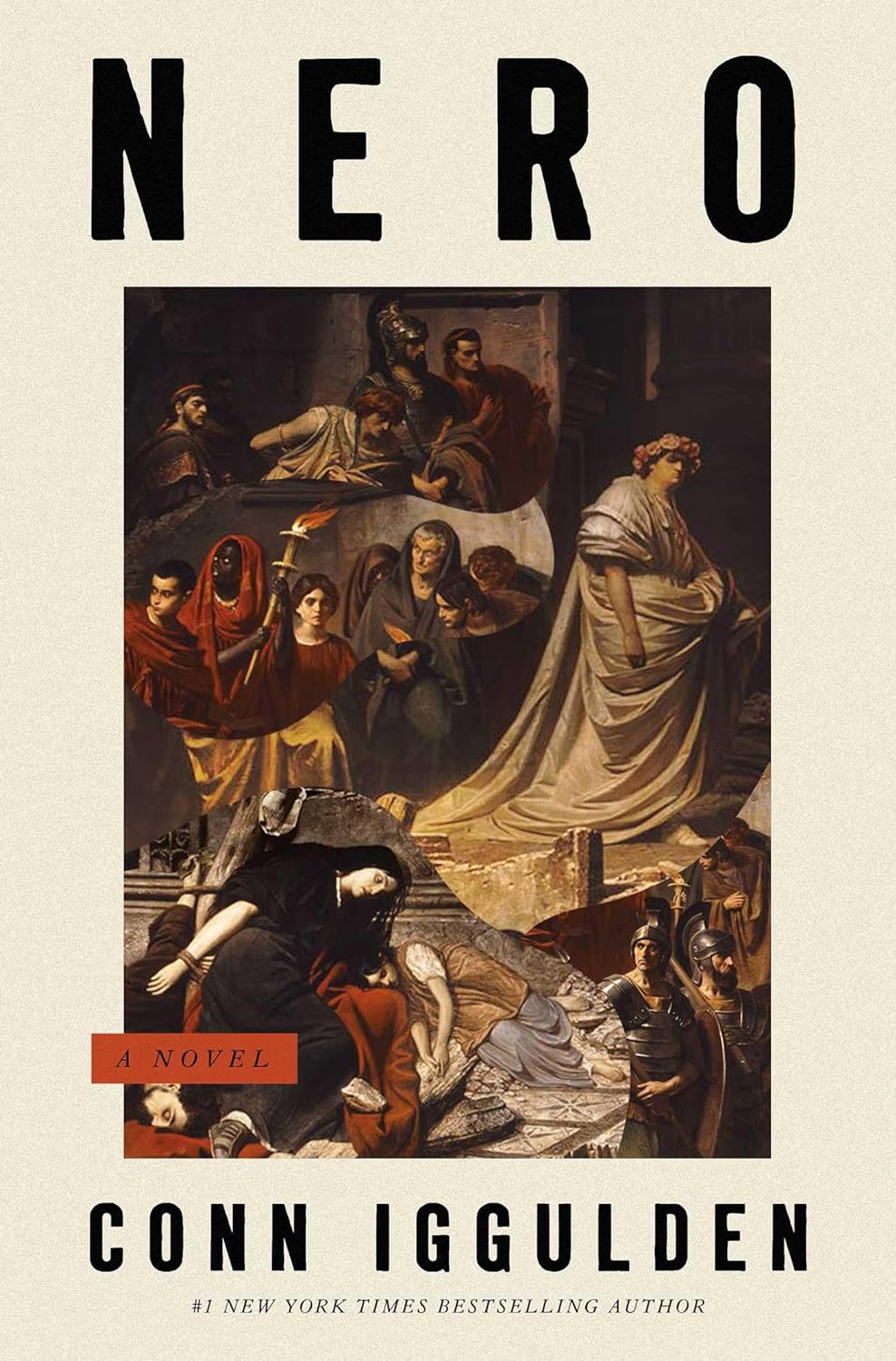
Conn Iggulden has a great talent for writing interesting stories set in Rome. Here, he turns to a well known emperor, although in this book the emperor is essentially a minor character, and the story instead revolves around Agrippina, his mother. The volume could have been called that, but she is not nearly as well known as her son, so the titling is clearly something of a marketing choice.
Agrippina, of course, is an excellent character to study. Her relationship with Nero is going to be key to later volumes, and this book also, therefore, manages to set his reign in the context of the principiate period. The book starts in the last days of Tiberius, takes us through the brief reign of Gaius (Caligula) and leads into Claudius and his invasion of Britannia. There is plenty of action and intrigue making for an enjoyable work.
I am torn how to rate this one though. I enjoy all Iggulden's work, and the writing here is good as ever. For me, the book perhaps dragged a little because I knew exactly what was going on with these earlier intrigues. Some were well enough written that my interest was certainly held (especially as Iggulden added his usual splash of artistic interpretation of the material), but there was also a touch of a feeling that perhaps we could have moved along at a slightly faster clip to get to the series subject. On the other hand, I am not sure that his decision to start where he did can be faulted. I did definitely enjoy it though, as I have enjoyed every single book by this writer, and I'll certainly be reading the next one.
Conn Iggulden has a great talent for writing interesting stories set in Rome. Here, he turns to a well known emperor, although in this book the emperor is essentially a minor character, and the story instead revolves around Agrippina, his mother. The volume could have been called that, but she is not nearly as well known as her son, so the titling is clearly something of a marketing choice.
Agrippina, of course, is an excellent character to study. Her relationship with Nero is going to be key to later volumes, and this book also, therefore, manages to set his reign in the context of the principiate period. The book starts in the last days of Tiberius, takes us through the brief reign of Gaius (Caligula) and leads into Claudius and his invasion of Britannia. There is plenty of action and intrigue making for an enjoyable work.
I am torn how to rate this one though. I enjoy all Iggulden's work, and the writing here is good as ever. For me, the book perhaps dragged a little because I knew exactly what was going on with these earlier intrigues. Some were well enough written that my interest was certainly held (especially as Iggulden added his usual splash of artistic interpretation of the material), but there was also a touch of a feeling that perhaps we could have moved along at a slightly faster clip to get to the series subject. On the other hand, I am not sure that his decision to start where he did can be faulted. I did definitely enjoy it though, as I have enjoyed every single book by this writer, and I'll certainly be reading the next one.
86richardderus
>84 sirfurboy: My extreme prejudice against that religion prevents me from even pretending to myself I'll ever pick that one up. It's an impressive feat, nonetheless.
87sirfurboy
36. We Do Not Welcome Our Ten-Year-Old Overlord - Garth Nix

This is another great work from a master of story telling for children and young adults. Kim is 12, but in the shadow of his more intelligent younger sister. They live with parents who will not allow a TV or reading after dark. And then something happens to his sister, when an alien globe seems to take her over, although she insists she is still in control.
This story is full of classic children's story elements and it works on many levels. It is set in an alternative past Canberra - but not very alternative. There is a nostalgic element to this too. The story zips along to a satisfying conclusion. Great for the intended audience.
It won't be one of Nix's classics, but it is just another exemplar of what a good story teller he is. The intended audience (mid grade) will enjoy this.

This is another great work from a master of story telling for children and young adults. Kim is 12, but in the shadow of his more intelligent younger sister. They live with parents who will not allow a TV or reading after dark. And then something happens to his sister, when an alien globe seems to take her over, although she insists she is still in control.
This story is full of classic children's story elements and it works on many levels. It is set in an alternative past Canberra - but not very alternative. There is a nostalgic element to this too. The story zips along to a satisfying conclusion. Great for the intended audience.
It won't be one of Nix's classics, but it is just another exemplar of what a good story teller he is. The intended audience (mid grade) will enjoy this.
88sirfurboy
>86 richardderus: Yep, I didn't think it was one you would go for. I do stress it is a history work and not an evangelical work, but yeah, give that one a miss! Thanks.
89richardderus
>88 sirfurboy: As a feat of historiography, I'm impressed by it. Still...no.
>87 sirfurboy: Garth Nix is Australian? I don't think I knew that before. His son is Tom Nix, amusing to me as an old-film buff since it sounds like Tom Mix, the cowboy star!
>87 sirfurboy: Garth Nix is Australian? I don't think I knew that before. His son is Tom Nix, amusing to me as an old-film buff since it sounds like Tom Mix, the cowboy star!
90sirfurboy
37. The Boy Who Was - Grace Taber Hallock
I added this book to my TBR when someone on LibraryThing reviewed it. I forget who now! It was very hard to find the book, until I thought to check out OpenLibrary. It's not a long work, but it packs a lot of history into a small space. The boy of the story is Nino, who is blessed by the Sirens with eternal youth and lives simply throughout as a goat boy in Amalfi. Each chapter is then a chapter of Italian history, a short story that tells us of things like the eruption of Vesuvius and the Children's crusade, but also lesser treated subjects, like the coming of the Normans.
The book is dated - copyrighted 1928. It was awarded a Newbery honour in 1929 (not the medal). Any criticism of the story would have to be understood in the light of the huge changes in the world of children's literature in the last century. All the same, it does have some issues. The story is clearly meant to be educational, and it is. But Nino is little more than a device for linking together the short stories. There is no character development, and no depth to him. Moreover, in recounting so much history in such a short space, any other sense of involvement or threat or anything else is set aside somewhat. I don't think a modern attempt at this idea would look anything like this.
Again, that is a product of its time. Despite its flaws, it is a quick and interesting read. I'm glad I finally found it.
I added this book to my TBR when someone on LibraryThing reviewed it. I forget who now! It was very hard to find the book, until I thought to check out OpenLibrary. It's not a long work, but it packs a lot of history into a small space. The boy of the story is Nino, who is blessed by the Sirens with eternal youth and lives simply throughout as a goat boy in Amalfi. Each chapter is then a chapter of Italian history, a short story that tells us of things like the eruption of Vesuvius and the Children's crusade, but also lesser treated subjects, like the coming of the Normans.
The book is dated - copyrighted 1928. It was awarded a Newbery honour in 1929 (not the medal). Any criticism of the story would have to be understood in the light of the huge changes in the world of children's literature in the last century. All the same, it does have some issues. The story is clearly meant to be educational, and it is. But Nino is little more than a device for linking together the short stories. There is no character development, and no depth to him. Moreover, in recounting so much history in such a short space, any other sense of involvement or threat or anything else is set aside somewhat. I don't think a modern attempt at this idea would look anything like this.
Again, that is a product of its time. Despite its flaws, it is a quick and interesting read. I'm glad I finally found it.
91sirfurboy
>89 richardderus: Yes, I think I was surprised to find Nix was Australian when I first discovered that. But here he was clearly writing on familiar ground. Amusing similarity to Tom Mix. I think I assumed Nix was a pseudonym when I first saw it, but at some point I read an interview with the author confirming Garth Nix was his real name, and quite handy for the type of books he wrote!
92sirfurboy
38. Writing Treatments That Sell: How to Create and Market Your Story Ideas to the Motion Picture and TV Industry - Kenneth Atchity
A very practical book for anyone wanting to write into the screenwriting market. Plenty of example treatments and lots of information on how to structure stories for these markets too. In some ways it may be a touch dated, because the Netflix style market now exists, which changes things a little - but I expect not too much.
I was interested, but as an outsider looking in. I am not looking to write any screenplay, and a lot of the advice was too specific for me. Yet the concept of writing a treatment is still a good one for the structuring of stories, so there was still information of interest in here.
For anyone wanting to write into that market, I'd say this would be exactly what you should read. Otherwise it is interesting, but not essential.
A very practical book for anyone wanting to write into the screenwriting market. Plenty of example treatments and lots of information on how to structure stories for these markets too. In some ways it may be a touch dated, because the Netflix style market now exists, which changes things a little - but I expect not too much.
I was interested, but as an outsider looking in. I am not looking to write any screenplay, and a lot of the advice was too specific for me. Yet the concept of writing a treatment is still a good one for the structuring of stories, so there was still information of interest in here.
For anyone wanting to write into that market, I'd say this would be exactly what you should read. Otherwise it is interesting, but not essential.
93sirfurboy
39. Greek and Roman slavery - Thomas Wiedemann
A very useful collection of source material, arranged thematically. I thought the information about the lesser known first servile war was particularly interesting. It's a bit unfair to try to rate this book as it is source material. I liked it, but it is never going to be enjoyable the way a novel or any kind of narrative is.
A very useful collection of source material, arranged thematically. I thought the information about the lesser known first servile war was particularly interesting. It's a bit unfair to try to rate this book as it is source material. I liked it, but it is never going to be enjoyable the way a novel or any kind of narrative is.
94sirfurboy
40 Journey's End R C Sherriff

The best known work of this author, this play is set in the trenches of the First World War. Based on the experience of the author, it is both an excellent account of what life was like, but also a great story about a young new officer who manages to pull strings to join the company of a former school friend he idolises. He finds his friend much changed from spending too long in command.
The story works really well, with some comic relief, principally from private Mason, but also dealing with mental health, cowardice and bravery, questions about the futility of it all and so much more. It is rightly famous, and remains fresh and enjoyable to this day.

The best known work of this author, this play is set in the trenches of the First World War. Based on the experience of the author, it is both an excellent account of what life was like, but also a great story about a young new officer who manages to pull strings to join the company of a former school friend he idolises. He finds his friend much changed from spending too long in command.
The story works really well, with some comic relief, principally from private Mason, but also dealing with mental health, cowardice and bravery, questions about the futility of it all and so much more. It is rightly famous, and remains fresh and enjoyable to this day.
95SirThomas
>94 sirfurboy: Thank you, Stephen - This one goes on my wish list.
96sirfurboy
>95 SirThomas: Excellent. I hope you enjoy it.
97sirfurboy
41. The Island Heist (Crookhaven, #3) - J J Arcanjo
Third in this enjoyable series about a school for aspiring thieves, in which the good hearted Gabriel and his crew take on the Nameless, and go in search of a missing person. The story is well written, with a clever little plot, great characters and some good themes. The author knows how to spin a fine tale.
It is clearly a tale for mid grade readers, but the characters still manage some nuance - one or two especially. Gabriel is perhaps a little too adept, and yet the author knows how to rein him in, so he is not a Mary Sue. I really quite like these books. They won't be a re-read but if you know what genre you are reading, they are a great example of it. If you want something very sophisticated and adult, this is not it - but it is clever and engaging nonetheless. The intended audience will often, I expect, rate it even more highly.
Third in this enjoyable series about a school for aspiring thieves, in which the good hearted Gabriel and his crew take on the Nameless, and go in search of a missing person. The story is well written, with a clever little plot, great characters and some good themes. The author knows how to spin a fine tale.
It is clearly a tale for mid grade readers, but the characters still manage some nuance - one or two especially. Gabriel is perhaps a little too adept, and yet the author knows how to rein him in, so he is not a Mary Sue. I really quite like these books. They won't be a re-read but if you know what genre you are reading, they are a great example of it. If you want something very sophisticated and adult, this is not it - but it is clever and engaging nonetheless. The intended audience will often, I expect, rate it even more highly.
98sirfurboy
42. Blote Handen - Bart Moeyaert.
Billed as a children's story, I can't imagine many children enjoying this dark tale. The senseless murder of a dog will be upsetting, and the story is dark and oppressive throughout, lacking a hopeful dénouement. It's a short tale, and a strength of it is the writing. The use of language is excellent, and the writer knows how to write. But this one perhaps would be better reworked as an adult short story, and could use more character development if so.
Billed as a children's story, I can't imagine many children enjoying this dark tale. The senseless murder of a dog will be upsetting, and the story is dark and oppressive throughout, lacking a hopeful dénouement. It's a short tale, and a strength of it is the writing. The use of language is excellent, and the writer knows how to write. But this one perhaps would be better reworked as an adult short story, and could use more character development if so.
99sirfurboy
43. Y Dyn Gwyrdd - Gareth F Williams
Reasonably engaging story about evil developers wanting to destroy an ancient forest, and about a family who live there, including young Derwyn, who see some supernatural goings on as the Green Man awakens to defend his realm. Nothing especially original about the story, and the writing could have been tightened up a touch, but it could be a good enough read for mid grade readers. For me it was just okay. I doubt that younger readers would think it was the best story they ever read, but they'd enjoy it a little more.
Reasonably engaging story about evil developers wanting to destroy an ancient forest, and about a family who live there, including young Derwyn, who see some supernatural goings on as the Green Man awakens to defend his realm. Nothing especially original about the story, and the writing could have been tightened up a touch, but it could be a good enough read for mid grade readers. For me it was just okay. I doubt that younger readers would think it was the best story they ever read, but they'd enjoy it a little more.
100richardderus
>98 sirfurboy: Oh dear...pass.
>99 sirfurboy: I'm a fan of Green Man stories, so would probably read it if it was available in English. I'm grateful it's not...this June is *overstuffed* with reads.
Happy week-ahead's reads, Stephen.
>99 sirfurboy: I'm a fan of Green Man stories, so would probably read it if it was available in English. I'm grateful it's not...this June is *overstuffed* with reads.
Happy week-ahead's reads, Stephen.
101sirfurboy
>100 richardderus: I didn't know you were a fan of Green Man stories specifically. I'll keep an ey out for some more. But yeah, that one is probably not going to get a translation.
Have a good weekend.
Have a good weekend.
102sirfurboy
44. La Troisième Vengeance de Robert Poutifard - Jean-Claude Mourlevat

My second book by this author, and another enjoyable tale with a touch of Roald Dahl about it. Robert Poutifard is a teacher who has just retired from teaching. He listens to the epithets at his retirement, but disagrees with it all. He is glad to be done with teaching, and hates children, and thinks they are little monsters. Indeed, he plans three grand acts of revenge against the three worst offenders who humiliated him over the years.
The book is filled with humour, although not quite wholly tongue in cheek. The three terrible acts by the children were not just imagined it seems. The first was almost farcical in its description, in a way young readers will love. The various acts of revenge are also funny, although in the end there is (as one might hope) a strong message of hope and forgiveness, which rescues the story from dwelling on buried grievance.
Written in French, I picked up quite a lot of the language humour but may have missed some. All the same it was a great book that children will love. English speaking children learning French, however, would probably find it too much work unless they are already quite fluent, and they would need help with spotting the puns and such.

My second book by this author, and another enjoyable tale with a touch of Roald Dahl about it. Robert Poutifard is a teacher who has just retired from teaching. He listens to the epithets at his retirement, but disagrees with it all. He is glad to be done with teaching, and hates children, and thinks they are little monsters. Indeed, he plans three grand acts of revenge against the three worst offenders who humiliated him over the years.
The book is filled with humour, although not quite wholly tongue in cheek. The three terrible acts by the children were not just imagined it seems. The first was almost farcical in its description, in a way young readers will love. The various acts of revenge are also funny, although in the end there is (as one might hope) a strong message of hope and forgiveness, which rescues the story from dwelling on buried grievance.
Written in French, I picked up quite a lot of the language humour but may have missed some. All the same it was a great book that children will love. English speaking children learning French, however, would probably find it too much work unless they are already quite fluent, and they would need help with spotting the puns and such.
103richardderus
>102 sirfurboy: Sounds like one for the 10-12 subset of readers. I like the plot!
>101 sirfurboy: I was bitterly disappointed by that typographical Sportspalast by Max Porter a while back because I was really hoping to see some sort of connection to the idea of the Green Man but it was way too far up its own bum to get anything out except more dross.
>101 sirfurboy: I was bitterly disappointed by that typographical Sportspalast by Max Porter a while back because I was really hoping to see some sort of connection to the idea of the Green Man but it was way too far up its own bum to get anything out except more dross.
104sirfurboy
>103 richardderus: A pity, but yes, books that are up their own bum are rarely enjoyable!
And yes, 10-12 would no doubt love La Troisième Vengeance de Robert Poutifard.
And yes, 10-12 would no doubt love La Troisième Vengeance de Robert Poutifard.
105sirfurboy
45. Delicatus S. P. Somtow
Kindle unlimited warning on this one, although the author is a professionally published one whose reputation, according to Wikipedia, is a good one with various awards, honours and epithets. And perhaps this shows through in the writing of this story, which seems well constructed and without the kind of faults found in a lot of self published works. The writer knows what he is doing.
Characterisation of Sporus is good, as is the character of Gaius Petronius Arbiter. Somtow's placing of Sporus in Petronius' household is no doubt ahistorical, but served a story purpose here, as anyone familiar with the Satyricon would appreciate the idea that Giton in that work is based on Sporus. A touch contrived, but reasonable in a work of fiction. And this is how Somtow stretches out the story of the historical Sporus over three volumes. Don't read this as a work of history. Somtow is clearly familiar with Roman history but does violence to the interpretation of it.
Somtow's Nero is every bit as bad as he was later painted, and clearly much worse than we know he actually was. The depravities of Rome are also much more in your face than would actually have been the case. We have Pontius Pilatus showing up, but this is a version of Pilate who manages to recont two tales of his part in the Bible story without noticing that it was the same person he was talking about in each. Then, when Sporus is later freed, this again is ahistorical and apparently in ignorance of the actual Roman manumission laws (perhaps deliberate ignorance, to further the story?)
Ultimately I found it a touch slow, not particularly historical, but a competent story. I think I have been spoiled by the much better histories of Harry Sidebottom, or the more careful stories of Conn Iggulden. This story is not up to those standards.
One thing that really let this book down was the use of AI to make images dotted throughout the work. These images were clearly AI generated and all had errors. Being AI, they did not even look like each other. The use of AI was unnecessary, there was no need for the images, and they really drew attention to its self published nature. It would have been far better to omit these.
Kindle unlimited warning on this one, although the author is a professionally published one whose reputation, according to Wikipedia, is a good one with various awards, honours and epithets. And perhaps this shows through in the writing of this story, which seems well constructed and without the kind of faults found in a lot of self published works. The writer knows what he is doing.
Characterisation of Sporus is good, as is the character of Gaius Petronius Arbiter. Somtow's placing of Sporus in Petronius' household is no doubt ahistorical, but served a story purpose here, as anyone familiar with the Satyricon would appreciate the idea that Giton in that work is based on Sporus. A touch contrived, but reasonable in a work of fiction. And this is how Somtow stretches out the story of the historical Sporus over three volumes. Don't read this as a work of history. Somtow is clearly familiar with Roman history but does violence to the interpretation of it.
Somtow's Nero is every bit as bad as he was later painted, and clearly much worse than we know he actually was. The depravities of Rome are also much more in your face than would actually have been the case. We have Pontius Pilatus showing up, but this is a version of Pilate who manages to recont two tales of his part in the Bible story without noticing that it was the same person he was talking about in each. Then, when Sporus is later freed, this again is ahistorical and apparently in ignorance of the actual Roman manumission laws (perhaps deliberate ignorance, to further the story?)
Ultimately I found it a touch slow, not particularly historical, but a competent story. I think I have been spoiled by the much better histories of Harry Sidebottom, or the more careful stories of Conn Iggulden. This story is not up to those standards.
One thing that really let this book down was the use of AI to make images dotted throughout the work. These images were clearly AI generated and all had errors. Being AI, they did not even look like each other. The use of AI was unnecessary, there was no need for the images, and they really drew attention to its self published nature. It would have been far better to omit these.
106richardderus
>104 sirfurboy: They are for me, anyway...
>105 sirfurboy: AI enshittification = big no from me. More especially the fact they're meant as enhancements not expansions of narrative function. Just as a matter of resistance to this cultural turn I hate so much.
>105 sirfurboy: AI enshittification = big no from me. More especially the fact they're meant as enhancements not expansions of narrative function. Just as a matter of resistance to this cultural turn I hate so much.
107sirfurboy
>106 richardderus: Yep, AI certainly messed up impressions of that work. It does have some gay themes to it, but I'm not sure you'd appreciate the work just for those - especially as these themes exist within a Roman power dynamic.
108sirfurboy
46. Lettres d'amour de 0 à 10 - Susie Morgenstern
The story of 10 year old Ernest whose mother has died and whose father is gone, but he does not know why. He loves with his grandmother and there is a mysterious letter from his grandfather, sent shortly before he died in the war. He does, however, meet an implausibly large family, who take a liking to him, and over the course of the story the mysteries resolve themselves and Ernest learns about himself and his family. An enjoyable enough story, sensitively written.
The story of 10 year old Ernest whose mother has died and whose father is gone, but he does not know why. He loves with his grandmother and there is a mysterious letter from his grandfather, sent shortly before he died in the war. He does, however, meet an implausibly large family, who take a liking to him, and over the course of the story the mysteries resolve themselves and Ernest learns about himself and his family. An enjoyable enough story, sensitively written.
109richardderus
>107 sirfurboy: Sucharitkul is very much a pederast. I avoid his works because I'm not. So it's no big sacrifice to skip past it.
110sirfurboy
>109 richardderus: Ah yes, well that makes sense with this story. I suspect I shall be dropping the others of his works from my TBR if that is his normal mode. No big loss as they were free kindle unlimited works and I only have it free for a month.
111richardderus
>110 sirfurboy: For free, take; for buy, waste time.
112sirfurboy
>111 richardderus: Fair summary, thanks.
113sirfurboy
47. Arx: City of Broken Minds - Edmund Hurst
This is an unusual and very clever work of grimdark fantasy that refuses to be constrained by expectations of the genre. Strongly character led, it follows several POV characters in close third person, and creates a very clear character voice for each. The language, too, is unconstrained by fantasy language tropes, using a vernacular that eschews medieval speech, and is downright modern at times. But again, language varies between character voice. The writing, too, is very clever. This is a writer who knows a lot about writing, in a tale that is sweeping and innovative, in a rich setting.
The basic premise is also very good. That the cost of magic must be paid with the memories of the magic user is a great idea, and allows a great piece of reflection at about the 80% mark, when one of the POV characters reflects on who he is. Very good stuff.
All that being said, I am annoyed with myself that I didn't like this more. I did like the story. I enjoyed it for all the ways it showed how a different kind of fantasy tale could be told. But I was not as engrossed in the characters as I should have been. It lagged a little, and some of the innovation around use of language perhaps indicated for me why we have those fantasy tropes. When people read into genre fiction, the writer can use the assumptions of the genre to guide the reader. Here, the use language left me a little disconnected. The lack of memories thing added to the disconnection. And somehow this prevented me connecting with the POV characters as deeply as I should have.
Maybe a more patient reader than me might adore this book. For me, it was definitely one I was glad to have read, but it was not something I would re-read.
This is an unusual and very clever work of grimdark fantasy that refuses to be constrained by expectations of the genre. Strongly character led, it follows several POV characters in close third person, and creates a very clear character voice for each. The language, too, is unconstrained by fantasy language tropes, using a vernacular that eschews medieval speech, and is downright modern at times. But again, language varies between character voice. The writing, too, is very clever. This is a writer who knows a lot about writing, in a tale that is sweeping and innovative, in a rich setting.
The basic premise is also very good. That the cost of magic must be paid with the memories of the magic user is a great idea, and allows a great piece of reflection at about the 80% mark, when one of the POV characters reflects on who he is. Very good stuff.
All that being said, I am annoyed with myself that I didn't like this more. I did like the story. I enjoyed it for all the ways it showed how a different kind of fantasy tale could be told. But I was not as engrossed in the characters as I should have been. It lagged a little, and some of the innovation around use of language perhaps indicated for me why we have those fantasy tropes. When people read into genre fiction, the writer can use the assumptions of the genre to guide the reader. Here, the use language left me a little disconnected. The lack of memories thing added to the disconnection. And somehow this prevented me connecting with the POV characters as deeply as I should have.
Maybe a more patient reader than me might adore this book. For me, it was definitely one I was glad to have read, but it was not something I would re-read.
114richardderus
>113 sirfurboy: It's always frustrating to find yourself not loving something that is clearly not bad. *sigh*
115sirfurboy
>114 richardderus: Yep. I rated it 4 stars on Goodreads just because I wanted to like it that much. It was a 3 star read for me in truth. But then, the way a lot of people inflate their ratings, I can be unrepentant about that. :)
116sirfurboy
48. Devil in the Details: Scenes from an Obsessive Girlhood - Jennifer Traig
This is a memoir of Traig's childhood struggles with OCD, which she terms scrupulosity, and which largely (but not entirely) worked itself out in her extreme orthodox Jewish religious practice. The book is not about her religion, though. It is definitely about the OCD, and she manages to explain how this was for her, and includes information about what OCD is and is not.
On the greater subject of OCD, this work is a little light. This is primarily a personal story, a testimony of how OCD impacted her own life. It is honest and reflective, and Traig's writing ability and her humour rescue it from wallowing in introspection. Instead, there are amusing and relatable episodes, and many things that will be entirely unrelatable to anyone without experience of OCD, but are valuable here in showing just how impactful the condition will be on someone's life.
Definitely worth reading by anyone who wants to understand this issue.
This is a memoir of Traig's childhood struggles with OCD, which she terms scrupulosity, and which largely (but not entirely) worked itself out in her extreme orthodox Jewish religious practice. The book is not about her religion, though. It is definitely about the OCD, and she manages to explain how this was for her, and includes information about what OCD is and is not.
On the greater subject of OCD, this work is a little light. This is primarily a personal story, a testimony of how OCD impacted her own life. It is honest and reflective, and Traig's writing ability and her humour rescue it from wallowing in introspection. Instead, there are amusing and relatable episodes, and many things that will be entirely unrelatable to anyone without experience of OCD, but are valuable here in showing just how impactful the condition will be on someone's life.
Definitely worth reading by anyone who wants to understand this issue.
117richardderus
>116 sirfurboy: Therapy and drugs would serve society better than another Deadly Certain She's Right religious nut.
118sirfurboy
49. The Blue Book of Nebo - Manon Steffan Ros

This is a great example of dystopian/post apocalyptic fiction. When The End came, Dylan was six and his mother worked in a hairdresser's shop in the small North Wales village of Nebo. When the forst bomb dropped, she hired a van and bought supplies for her remote home in the hills. A week later the power went out and the world fell apart.
The book is written in an epistolary format. Dylan starts the Blue Book of Nebo as a journal of their life (his mother raided the library and Dylan is a reader, aware of various Welsh colour books of history and legend, such as the Black Book of Carmarthen). He persuades his mother to write entries too, and they have a pact not to read each others as long as they are both there. So we get these two strong character voices telling of their lonely life.
There is a disaster nearby, and some other things happen. I've read a good few post apocalyptic stories, and this one avoids some of the dark excesses of some of them. All the same, it is a story with sadness and grief, but the characters take it beyond that. Some very touching moments, a few stronger themes sensitively handled, and ultimately a book that has hope, but really reflects on teh characters themselves. Very nicely done.

This is a great example of dystopian/post apocalyptic fiction. When The End came, Dylan was six and his mother worked in a hairdresser's shop in the small North Wales village of Nebo. When the forst bomb dropped, she hired a van and bought supplies for her remote home in the hills. A week later the power went out and the world fell apart.
The book is written in an epistolary format. Dylan starts the Blue Book of Nebo as a journal of their life (his mother raided the library and Dylan is a reader, aware of various Welsh colour books of history and legend, such as the Black Book of Carmarthen). He persuades his mother to write entries too, and they have a pact not to read each others as long as they are both there. So we get these two strong character voices telling of their lonely life.
There is a disaster nearby, and some other things happen. I've read a good few post apocalyptic stories, and this one avoids some of the dark excesses of some of them. All the same, it is a story with sadness and grief, but the characters take it beyond that. Some very touching moments, a few stronger themes sensitively handled, and ultimately a book that has hope, but really reflects on teh characters themselves. Very nicely done.
119richardderus
>118 sirfurboy: I lost steam at the halfway point...I'm just too jaded a reader, maybe, not to ask inappropriate-for-YA questions (she stole books from the library and Atropos has not severed her thread? *tsk*), but maybe I'll take another run at it now.
Happy weekend-ahead's reads.
Happy weekend-ahead's reads.
120sirfurboy
>119 richardderus: "she stole books from the library and Atropos has not severed her thread? *tsk*" - LOL.
121richardderus
>120 sirfurboy: Well, really relevant, don't you think? She *stole*library*books* meant for everyone! Death should come swiftly after committing this crime, no?
122PaulCranswick
>118 sirfurboy: Not familiar with that one, Sir F, but onto my hitlist it goes.
123sirfurboy
>121 richardderus: Indeed, it seems quite unforgiveable ;)
>122 PaulCranswick: Thanks Paul, and good to see you here.
>122 PaulCranswick: Thanks Paul, and good to see you here.
124sirfurboy
50 Friend or Foe - Michael Morpurgo

A lovely story for children set in the Second World War and following two evacuees who find themselves living with a kindly farmer and wife in Devon. Trouble finds them when a German bomber crash lands on the moor near the farm, and their notions of who is the enemy are challenged.
The book is good up to mid-grade, and is often used in primary schools I think, when children study the Second World War. Morpurgo, of course, was the children's laureate in the UK, and rightly so. A great little book by a great children's writer.

A lovely story for children set in the Second World War and following two evacuees who find themselves living with a kindly farmer and wife in Devon. Trouble finds them when a German bomber crash lands on the moor near the farm, and their notions of who is the enemy are challenged.
The book is good up to mid-grade, and is often used in primary schools I think, when children study the Second World War. Morpurgo, of course, was the children's laureate in the UK, and rightly so. A great little book by a great children's writer.
125sirfurboy
51. Why I Care - Ed davey
Ed Davey is the leader of the Liberal Democrats in the UK, but he is also a father and carer for his son, John. He also, as a child, was a young carer for his mother, who passed away after a long battle with cancer. In this account there is his very personal story, both of his childhood and of his journey with John. His love and passion come shining through, and he very ably shows the frustrations and pitfalls of caring.
The book also includes some other stories, so that the caring story becomes well rounded, and looks across the breadth of issues. Sensitively told, he draws out lessons, needs and things he is determined to change.
One part political biography, this is five or six parts personal stories. It doesn't feel party political - it feels like it is written by a man who is desperate for change, because change is what is desperately needed.
Written for the British market, this book focuses on the British situation, although there would still be much to take from this book in any place.
Not everyone will care about caring, but if everyone read this book, they would surely care a little more.
Ed Davey is the leader of the Liberal Democrats in the UK, but he is also a father and carer for his son, John. He also, as a child, was a young carer for his mother, who passed away after a long battle with cancer. In this account there is his very personal story, both of his childhood and of his journey with John. His love and passion come shining through, and he very ably shows the frustrations and pitfalls of caring.
The book also includes some other stories, so that the caring story becomes well rounded, and looks across the breadth of issues. Sensitively told, he draws out lessons, needs and things he is determined to change.
One part political biography, this is five or six parts personal stories. It doesn't feel party political - it feels like it is written by a man who is desperate for change, because change is what is desperately needed.
Written for the British market, this book focuses on the British situation, although there would still be much to take from this book in any place.
Not everyone will care about caring, but if everyone read this book, they would surely care a little more.
126EllaTim
>125 sirfurboy: “they would surely care a little more”, that’s real praise.
Hi Steven! Wishing you a nice weekend, reading.
Hi Steven! Wishing you a nice weekend, reading.
128sirfurboy
>128 sirfurboy: Thanks Ella, and now it is heading towards next weekend, so a happy weekend to you too!
>127 richardderus: Indeed! Thanks.
>127 richardderus: Indeed! Thanks.
129sirfurboy
52. Crookhaven 4: The Impossible Fortress - J.J. Arcanjo
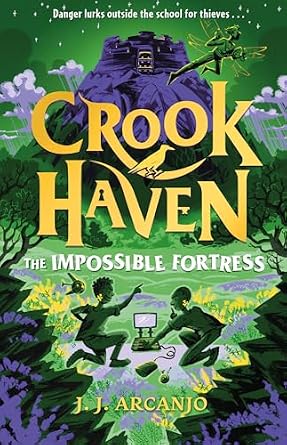
I'm continuing to enjoy this series, which is well written and well put together. It is in a new genre of books that follow students through their school years, one book per year. Harry Potter started this off, and there are many other examples. I do wonder, however, whether this spins the grand plot out a bit too much. Everything used to be trilogies, but now stories have to come in fives. But whether that is a bad thing or not, I'll continue to enjoy these mid-grade stories.
I'm continuing to enjoy this series, which is well written and well put together. It is in a new genre of books that follow students through their school years, one book per year. Harry Potter started this off, and there are many other examples. I do wonder, however, whether this spins the grand plot out a bit too much. Everything used to be trilogies, but now stories have to come in fives. But whether that is a bad thing or not, I'll continue to enjoy these mid-grade stories.
130m.belljackson
>129 sirfurboy: Harry's Birthday today?!
131sirfurboy
>130 m.belljackson: Indeed! Happy birthday Harry!
132sirfurboy
53. Shadow Thieves - Peter Burns
Amazon titles this "Shadow Thieves: the biggest blockbuster blah blah blah..." which would normally be an instant "no" from me. That is some stunningly clumsy marketing, which I fortunately missed by finding the paper form of the book in Waterstones. It's a good thing I missed it, because I did, in fact like this book. I am unsure whether it is a like or a really like. I think realistically it is 3 Goodreads stars from me (I liked it), but I am giving it 4 because I think mid grade children will really like it, as they will be less aware of the derivative elements, and will just enjoy it for being a very good story.
And it is a good story. I was unsure at first, coming off the back of reading my way through the Crookhaven books, I thought that here was just another story about a school for thieves, complete with "legacy" students, and other such elements. But the book managed to create something suitably different and fresh by placing everything in an alternative world where there we workhouses and airships, and layers of corruption, rivalries and intrigue.
The story was a good one and the telling was spot on. It is a grand adventure in an increasingly crowded tradition. But despite there being many others in this tradition, it managed something fresh and satisfying. I think mid grade children will love it. A blockbuster it is not, but adult readers will note a number of classic children's story elements.
Amazon titles this "Shadow Thieves: the biggest blockbuster blah blah blah..." which would normally be an instant "no" from me. That is some stunningly clumsy marketing, which I fortunately missed by finding the paper form of the book in Waterstones. It's a good thing I missed it, because I did, in fact like this book. I am unsure whether it is a like or a really like. I think realistically it is 3 Goodreads stars from me (I liked it), but I am giving it 4 because I think mid grade children will really like it, as they will be less aware of the derivative elements, and will just enjoy it for being a very good story.
And it is a good story. I was unsure at first, coming off the back of reading my way through the Crookhaven books, I thought that here was just another story about a school for thieves, complete with "legacy" students, and other such elements. But the book managed to create something suitably different and fresh by placing everything in an alternative world where there we workhouses and airships, and layers of corruption, rivalries and intrigue.
The story was a good one and the telling was spot on. It is a grand adventure in an increasingly crowded tradition. But despite there being many others in this tradition, it managed something fresh and satisfying. I think mid grade children will love it. A blockbuster it is not, but adult readers will note a number of classic children's story elements.
133sirfurboy
54. Crookhaven 5: The Thieves' Revenge - J. J. Arcanjo
And so the author brings this excellent story to a satisfying close. I'll avoid spoilers, but there were plenty of classic elements here, and it was skilfully done by a great author. The central conflict is resolved, and there is plenty of action and more of the adventure we have grown used to in this series. And speaking of growing - the characters have grown throughout, and here again, the story is satisfyingly progressive, with a lovely, if not wholly unexpected, twist.
It is all good stuff, and deserves its success. I will, however, venture a small comment. Since the publication of Harry Potter, stories following characters through school age have become popular, and we have a whole genre of such stories now. The default is to go with five books over five years. Natural as that may seem, I don't think it is really better than trilogies as we used to see. There is no right or wrong number of books for any story, and this was never a bad story. Yet I just got a touch tired of the scenario by this one. Would it have made a better trilogy? Who can say for sure.
And so the author brings this excellent story to a satisfying close. I'll avoid spoilers, but there were plenty of classic elements here, and it was skilfully done by a great author. The central conflict is resolved, and there is plenty of action and more of the adventure we have grown used to in this series. And speaking of growing - the characters have grown throughout, and here again, the story is satisfyingly progressive, with a lovely, if not wholly unexpected, twist.
It is all good stuff, and deserves its success. I will, however, venture a small comment. Since the publication of Harry Potter, stories following characters through school age have become popular, and we have a whole genre of such stories now. The default is to go with five books over five years. Natural as that may seem, I don't think it is really better than trilogies as we used to see. There is no right or wrong number of books for any story, and this was never a bad story. Yet I just got a touch tired of the scenario by this one. Would it have made a better trilogy? Who can say for sure.
134sirfurboy
55. Unwind - Neal Shusterman

Neil Shusterman has a gift for imagining unthinkable scenarios, and in writing about them, making them seem at least plausible, and exploring all the issues they raise. This is perhaps one of the great strengths of the young adult genre - that you can write this kind of story and produce something that is timeless, considerate and thought provoking. Shusterman is not alone in doing this, but he is very accomplished at it.
So in the Unwind series the unthinkable premise is that a compromise has been reached to settle warring factions over the abortion debate. A set of laws are devised that make it illegal to abort a child but there is a state protected means of abandoning children and foisting them on others, and also children can be "aborted" once they reach 13. At that age, up until they are 18, they can be unwound - harvested for parts, with almost 100% of their bodies re-used in others.
To be honest, that scenario slowed me way down in reading this. I loved the Scythe series (despite its equally unthinkable premise) but this one was just a touch icky, and it took all Shusterman's skill to get past that. It is also, I think, flawed in that it doesn't really deal with the main argument of the pro-choice side of the debate - the mother being required to carry the child to term. So willing suspension of disbelief is required. I decided to just accept the preposterous scenario and run with it.
Once we get into the story, we find ourselves following three very different "unwinds". The troublemaker, Connor, the unwanted ward of state, Risa, and the willing tithe, Lev. Through these characters, Shusterman explores many questions and draws a reasonably compelling tale. There is no strong didactic element to the storytelling. Instead, Shusterman cleverly just exposes human questions for the reader to consider and respond to.
In the end, I can't say I enjoyed this as much as the Scythe tales or other similarly preposterous yet clever young adult tales such as the Hunger Games, or the Divergent series. POV drifted in some sections, and although that was perhaps deliberate, it showed an issue in that we don't quite get into any one character, and although Connor is probably the protagonist, I say that only because we met him first. There isn't a single protagonist. That and the fact that there was perhaps more willing suspension of disbelief than usual here, made this enjoyable but not brilliant. Yet it is still a good read, with challenging ideas.

Neil Shusterman has a gift for imagining unthinkable scenarios, and in writing about them, making them seem at least plausible, and exploring all the issues they raise. This is perhaps one of the great strengths of the young adult genre - that you can write this kind of story and produce something that is timeless, considerate and thought provoking. Shusterman is not alone in doing this, but he is very accomplished at it.
So in the Unwind series the unthinkable premise is that a compromise has been reached to settle warring factions over the abortion debate. A set of laws are devised that make it illegal to abort a child but there is a state protected means of abandoning children and foisting them on others, and also children can be "aborted" once they reach 13. At that age, up until they are 18, they can be unwound - harvested for parts, with almost 100% of their bodies re-used in others.
To be honest, that scenario slowed me way down in reading this. I loved the Scythe series (despite its equally unthinkable premise) but this one was just a touch icky, and it took all Shusterman's skill to get past that. It is also, I think, flawed in that it doesn't really deal with the main argument of the pro-choice side of the debate - the mother being required to carry the child to term. So willing suspension of disbelief is required. I decided to just accept the preposterous scenario and run with it.
Once we get into the story, we find ourselves following three very different "unwinds". The troublemaker, Connor, the unwanted ward of state, Risa, and the willing tithe, Lev. Through these characters, Shusterman explores many questions and draws a reasonably compelling tale. There is no strong didactic element to the storytelling. Instead, Shusterman cleverly just exposes human questions for the reader to consider and respond to.
In the end, I can't say I enjoyed this as much as the Scythe tales or other similarly preposterous yet clever young adult tales such as the Hunger Games, or the Divergent series. POV drifted in some sections, and although that was perhaps deliberate, it showed an issue in that we don't quite get into any one character, and although Connor is probably the protagonist, I say that only because we met him first. There isn't a single protagonist. That and the fact that there was perhaps more willing suspension of disbelief than usual here, made this enjoyable but not brilliant. Yet it is still a good read, with challenging ideas.
135richardderus
>134 sirfurboy: What an eerie premise! Nightmare fodder for sure, at least for me it is.
Stay well and happy, Stephen.
Stay well and happy, Stephen.
136avatiakh
Just been catching up on your thread and now need to check out the Crookhaven books.
I read Unwind some years back but never read the rest of the series, it sounds quite creepy now. I haven't read the Scythe books though I have a couple in my tbr pile. I went back and checked that the last Shusterman book I read was Challenger Deep in 2015, so it's been a while.
I read & liked The Blue Book of Nebo as I'm making my way slowly through the Carnegie (UK) Medal winners. Also enjoyed Nix's We Do Not Welcome Our Ten-Year-Old Overlord.
Taking note of Wolf Road & The Comet and the Thief though they seem hard to come by and aren't in my library's catalogue.
I read Unwind some years back but never read the rest of the series, it sounds quite creepy now. I haven't read the Scythe books though I have a couple in my tbr pile. I went back and checked that the last Shusterman book I read was Challenger Deep in 2015, so it's been a while.
I read & liked The Blue Book of Nebo as I'm making my way slowly through the Carnegie (UK) Medal winners. Also enjoyed Nix's We Do Not Welcome Our Ten-Year-Old Overlord.
Taking note of Wolf Road & The Comet and the Thief though they seem hard to come by and aren't in my library's catalogue.
137sirfurboy
>135 richardderus: Yep, definitely an author who can run with eerie ideas.
>136 avatiakh: Oh good to see you again. I read my way through Carnegie winners some years ago and found some real gems. Glad you liked those works too, and I hope you also enjoy those book bullets. As for Challenger Deep - I should read that.
Take care both.
>136 avatiakh: Oh good to see you again. I read my way through Carnegie winners some years ago and found some real gems. Glad you liked those works too, and I hope you also enjoy those book bullets. As for Challenger Deep - I should read that.
Take care both.
138sirfurboy
56. Tyrant - Conn Iggulden
Conn Iggulden writes great historical novels, and I think I have maybe read them all to date! He is a fine writer whose work I always enjoy. His foray into fantasy is equally enjoyable. All the same, in this latest volume about Nero, I failed to get into this as deeply as I have with other works by this author. Have I just read too much of it? Or is the subject and story of Nero too well known, so that this story lacked surprise for me?
I did enjoy the story, well told as always. The rise of the young Nero here includes some of his infamous acts, and Nero is so well known because those acts make for quite a story. Neither can I fault much in Iggulden's telling - although one niggle: there is an amusing story that Nero has with the younger son of Claudius, Britannicus, that gains him a nickname. But the story and the nickname are lifted straight from Iggulden's earlier work, Dunstan. Self plagiarisation may not be morally wrong, but for anyone who has read Dunstan, the effect of that is going to fall pretty flat. Of course, if you never read Dunstan and never will then it will work well.
That was a small thing though, and I can't put my finger on why I didn't more strongly enjoy this work. Yet I did enjoy it and I will happily keep reading this series and continue to recommend this author. Good stuff from an accomplished writer.
Conn Iggulden writes great historical novels, and I think I have maybe read them all to date! He is a fine writer whose work I always enjoy. His foray into fantasy is equally enjoyable. All the same, in this latest volume about Nero, I failed to get into this as deeply as I have with other works by this author. Have I just read too much of it? Or is the subject and story of Nero too well known, so that this story lacked surprise for me?
I did enjoy the story, well told as always. The rise of the young Nero here includes some of his infamous acts, and Nero is so well known because those acts make for quite a story. Neither can I fault much in Iggulden's telling - although one niggle: there is an amusing story that Nero has with the younger son of Claudius, Britannicus, that gains him a nickname. But the story and the nickname are lifted straight from Iggulden's earlier work, Dunstan. Self plagiarisation may not be morally wrong, but for anyone who has read Dunstan, the effect of that is going to fall pretty flat. Of course, if you never read Dunstan and never will then it will work well.
That was a small thing though, and I can't put my finger on why I didn't more strongly enjoy this work. Yet I did enjoy it and I will happily keep reading this series and continue to recommend this author. Good stuff from an accomplished writer.
139richardderus
>138 sirfurboy: I've read some of his work but long enough ago that I wasn't keeping notes or writing reviews. Honestly, I'm so tired of Nero I would not pick up a book about him again. I'm not surprised Iggulden did a good job with the material...he has a storyteller's eye.
Happy weekend-ahead's reads1
Happy weekend-ahead's reads1
140sirfurboy
Yep, I suppose I am rather tired of Nero's story too. Perhaps this is why I didn't enjoy it as much as his other works. Thanks.
141avatiakh
>138 sirfurboy: I'll probably start reading more Neal Susterman and get back to another Carnegie book. Maybe I should start on Conn Iggulden too.
142sirfurboy
57. Step by Wicked Step - Anne Fine
Four children find themselves stuck for the night in an old house on a dark and stormy night. They find an old diary about a boy who went through difficult family circumstances, and so they get talking, realising they all have one thing in common: having two home addresses. They share their stories and grow through the telling.
Essentially, therefore, a set of short stories, this is a book that is interesting and clearly written to be helpful for children in similar situations, or for helping children understand those who are.
Anne Fine (who also goes by other pseudonyms) has written a stunning number of excellent and frequently hilarious children's books, always touching on important subjects, and doing so sensitively. This is in that tradition. It is a good book, but it won't be my favourite from her. She has written funnier and more emotionally resonant tales, but this one is still a great addition to her canon.
Four children find themselves stuck for the night in an old house on a dark and stormy night. They find an old diary about a boy who went through difficult family circumstances, and so they get talking, realising they all have one thing in common: having two home addresses. They share their stories and grow through the telling.
Essentially, therefore, a set of short stories, this is a book that is interesting and clearly written to be helpful for children in similar situations, or for helping children understand those who are.
Anne Fine (who also goes by other pseudonyms) has written a stunning number of excellent and frequently hilarious children's books, always touching on important subjects, and doing so sensitively. This is in that tradition. It is a good book, but it won't be my favourite from her. She has written funnier and more emotionally resonant tales, but this one is still a great addition to her canon.
143sirfurboy
58. The Memoir Project: A Thoroughly Non-Standardized Text for Writing & Life - Marion Roach Smith
Memoir is not autobiography, and writing a memoir is apparently the number one thing Baby Boomers now want to to do. Two things that this book will tell you. But more than that, it will concisely but expertly guide the aspiring memoir writer in understanding the importance of perspective, point of view and technique to find and present something that is worthy of the name.
Plenty of excellent advice in this book, and some great discussion.
Memoir is not autobiography, and writing a memoir is apparently the number one thing Baby Boomers now want to to do. Two things that this book will tell you. But more than that, it will concisely but expertly guide the aspiring memoir writer in understanding the importance of perspective, point of view and technique to find and present something that is worthy of the name.
Plenty of excellent advice in this book, and some great discussion.
144PaulCranswick
Hope all is well Sir F.
145sirfurboy
>144 PaulCranswick: Thanks Paul. Yep. All is good. How are you?
146sirfurboy
59. Get Started in Writing Young Adult Fiction - Juliet Mushens
Another good guide for writers, this one specifically targeted to writers of YA, although a lot of the advice can be generalised (and is also thus similar advice to that found in other guides). Strengths of this work are:
1. that the author is an experienced agent, giving insight into that side of the process, and about what works - both in attracting and agent and selling a book. The author, nevertheless does not skimp on advice to potential self publishers.
2. For writers of YA literature, the advice is given in the context of the genre (if YA is a genre... discuss! Anyway that's my word, not hers). We have good examples and also where there are specific things YA writers need to keep in mind.
I didn't highlight much in this book, as so much of it is just general good advice I have already read elsewhere. I did, however, make some highlights. It fills the niche it sets for itself.
Another good guide for writers, this one specifically targeted to writers of YA, although a lot of the advice can be generalised (and is also thus similar advice to that found in other guides). Strengths of this work are:
1. that the author is an experienced agent, giving insight into that side of the process, and about what works - both in attracting and agent and selling a book. The author, nevertheless does not skimp on advice to potential self publishers.
2. For writers of YA literature, the advice is given in the context of the genre (if YA is a genre... discuss! Anyway that's my word, not hers). We have good examples and also where there are specific things YA writers need to keep in mind.
I didn't highlight much in this book, as so much of it is just general good advice I have already read elsewhere. I did, however, make some highlights. It fills the niche it sets for itself.
147richardderus
>146 sirfurboy: Very generous of her to offer multipurpose advice that won't necessarily benefit her. It's less and less common to see people doing that in the publishing industry. (Or any industry, really.)
Enjoy your week-ahead's reads, Stephen.
Enjoy your week-ahead's reads, Stephen.
149sirfurboy
60. The Labyrinth of Lost and Found (Whisperwicks 1) - Jordan Lees
This is a lovely, imaginative and enjoyable middle grade adventure, with good humour, bad villains and the triumph of hope over adversity. A perfect tale for the age group.
Benjamin Creek is not the kind of person to believe in magic. He loves science, reading, and knowledge, like his mother. His father is more into fiction and fantasy. And, unfortunately, his parents are in the middle of a marriage breakdown. Benjamin is staying with his grandmother when a mysterious doll arrives, and things start to happen.
Soon he is plunged into a fantasy world and must come to terms with the very magical nature of what is happening, and also show his mettle in tracking down a missing boy, the son of a man who saves Benjamin from a stick situation.
The adventure unfolds alongside growth in character, unfolding revelations and some well imagined adventures. All very good stuff for anyone who enjoys middle grade stories.
This is a lovely, imaginative and enjoyable middle grade adventure, with good humour, bad villains and the triumph of hope over adversity. A perfect tale for the age group.
Benjamin Creek is not the kind of person to believe in magic. He loves science, reading, and knowledge, like his mother. His father is more into fiction and fantasy. And, unfortunately, his parents are in the middle of a marriage breakdown. Benjamin is staying with his grandmother when a mysterious doll arrives, and things start to happen.
Soon he is plunged into a fantasy world and must come to terms with the very magical nature of what is happening, and also show his mettle in tracking down a missing boy, the son of a man who saves Benjamin from a stick situation.
The adventure unfolds alongside growth in character, unfolding revelations and some well imagined adventures. All very good stuff for anyone who enjoys middle grade stories.
150sirfurboy
61. The Whispering Mountain - Joan Aiken
This is a classic tale set in an alternative Britain (and this one, an alternative Wales) in the early 19th century. The world that Aiken creates here is extended through other books she has written, and I've read a couple of those (out of order). Her works are standalone tales, even though the world is shared by many of them, and this is a complete and enjoyable story about young Owen who goes to live with his crotchety (or downright mean) grandfather. His grandfather keeps a museum which has come into possession of an item, the harp of Teirtu. However there are people who want the harp, and when it is stolen, Owen is kidnapped to pin the blame on him.
The ensuing adventures are cleverly written, with many enjoyable characters, and a great deal of various dialects (which I also recall reading in other works by this author). Plenty of Welsh words, and the legend of the Tylwyth Teg is integrated into the story, with quite an interesting twist.
It is rightly a classic. Whether the dialect is a bit overdone will be a matter of taste. The tale is a good one, and the book is readable and enjoyable.
This is a classic tale set in an alternative Britain (and this one, an alternative Wales) in the early 19th century. The world that Aiken creates here is extended through other books she has written, and I've read a couple of those (out of order). Her works are standalone tales, even though the world is shared by many of them, and this is a complete and enjoyable story about young Owen who goes to live with his crotchety (or downright mean) grandfather. His grandfather keeps a museum which has come into possession of an item, the harp of Teirtu. However there are people who want the harp, and when it is stolen, Owen is kidnapped to pin the blame on him.
The ensuing adventures are cleverly written, with many enjoyable characters, and a great deal of various dialects (which I also recall reading in other works by this author). Plenty of Welsh words, and the legend of the Tylwyth Teg is integrated into the story, with quite an interesting twist.
It is rightly a classic. Whether the dialect is a bit overdone will be a matter of taste. The tale is a good one, and the book is readable and enjoyable.
151richardderus
I remember Joan Aiken from my kidhood reading with fondness.
Enjoy your weekend-ahead's reads, Stephen!
Enjoy your weekend-ahead's reads, Stephen!
This topic was continued by Sirfurboy's (Stephen's) 75 book challenge for 2025 part 2.

