Sirfurboy's (Stephen's) 75 book challenge for 2025 part 2
This is a continuation of the topic Sirfurboy's (Stephen's) 75 book challenge for 2025.
Talk 75 Books Challenge for 2025
Join LibraryThing to post.
1sirfurboy
Time for a new thread.
Copied from my old one:
For the last 3 years I only managed 50 books each year, but I was busy with a Creative Writing MA (part time, 2 years). I graduate on 14 January, and will do so with distinction. A result I am clearly pleased with. I still have a book to finish, but hopefully I can up my reading by 50% too. So welcome to my 75 book challenge.
I am Stephen, or Sir Furboy. I live in Aberystwyth, on the west coast of Mid Wales. My hobbies include walking, cycling, kayaking and surfing (obviously), although these days I mostly just surf in my kayak. I also like languages and reading (of course), and thus also reading in other languages.
Although I am an avid reader, and have been since I was eight years old, I did not in fact learn to read until I was seven-and-a-half, going on eight. This, it turns out, is because I am dyspraxic, a specific learning difficulty that was largely unrecognised in school. I was in remedial education until age of 8, but once I learned to read, and read well, they stopped the interventions. This was unfortunate because it was not just my reading that was affected. It also affected my performance in a range of other subjects but it was only in 2022 that I finally got a diagnosis that put everything in context, and left me flabbergasted that there were so many dots, and that no-one ever joined them! In any case, by the age of 8 I was actually reading with a reading age a couple of years above my chronological age, having added 5 years to it in 6 months!
Oh yes, some of my favourite genres are Young Adult, Sci Fi, Coming of Age, Fantasy and Historical. I also try to read some classics each year, as well as some non fiction and other works out of those genres. I am currently writing a fantasy novel - which I claim was by accident!
Anyway, I hope you will star my thread and stop by every now and again. Coffee is available (not necessarily from me! But it's definitely available) and the sofa is comfy. Except where I have been jumping on it.For the last 3 years I only managed 50 books each year, but I was busy with a Creative Writing MA (part time, 2 years). I graduate on 14 January, and will do so with distinction. A result I am clearly pleased with. I still have a book to finish, but hopefully I can up my reading by 50% too. So welcome to my 75 book challenge.
Copied from my old one:
For the last 3 years I only managed 50 books each year, but I was busy with a Creative Writing MA (part time, 2 years). I graduate on 14 January, and will do so with distinction. A result I am clearly pleased with. I still have a book to finish, but hopefully I can up my reading by 50% too. So welcome to my 75 book challenge.
I am Stephen, or Sir Furboy. I live in Aberystwyth, on the west coast of Mid Wales. My hobbies include walking, cycling, kayaking and surfing (obviously), although these days I mostly just surf in my kayak. I also like languages and reading (of course), and thus also reading in other languages.
Although I am an avid reader, and have been since I was eight years old, I did not in fact learn to read until I was seven-and-a-half, going on eight. This, it turns out, is because I am dyspraxic, a specific learning difficulty that was largely unrecognised in school. I was in remedial education until age of 8, but once I learned to read, and read well, they stopped the interventions. This was unfortunate because it was not just my reading that was affected. It also affected my performance in a range of other subjects but it was only in 2022 that I finally got a diagnosis that put everything in context, and left me flabbergasted that there were so many dots, and that no-one ever joined them! In any case, by the age of 8 I was actually reading with a reading age a couple of years above my chronological age, having added 5 years to it in 6 months!
Oh yes, some of my favourite genres are Young Adult, Sci Fi, Coming of Age, Fantasy and Historical. I also try to read some classics each year, as well as some non fiction and other works out of those genres. I am currently writing a fantasy novel - which I claim was by accident!
Anyway, I hope you will star my thread and stop by every now and again. Coffee is available (not necessarily from me! But it's definitely available) and the sofa is comfy. Except where I have been jumping on it.For the last 3 years I only managed 50 books each year, but I was busy with a Creative Writing MA (part time, 2 years). I graduate on 14 January, and will do so with distinction. A result I am clearly pleased with. I still have a book to finish, but hopefully I can up my reading by 50% too. So welcome to my 75 book challenge.
2sirfurboy
62. The Final Year - Matt Goodfellow

This book is rightly an award winner, being a thoroughly good story for mid grade readers about a boy from a challenging background who is in his final year of primary school, and must navigate pertinent issues like a fracture in his oldest friendship, some class enmities and issues caused by his family background. The story is told entirely through the protagonist's writings, which are a series of free verse poems. The voice is captured very well, and this also has the very great advantage of allowing a reader to move through this book at pace. Targeted at middle graders, there is a lot to be said for keeping the narrative tight and moving at a clip.
There is a key event in this book, and it was brilliantly done, creating emotional depth that you would think was impossible to capture in a book of free form 11 year old verse. It's very clever. Also the writer is clearly (and admits to being) a fan of David Almond, and that is a good sign. The interworking of Almond's Skellig into this is clever.
Thoroughly recommended to the intended audience. The major themes of the book have been done before, of course, but this is a fresh and original take on those themes.

This book is rightly an award winner, being a thoroughly good story for mid grade readers about a boy from a challenging background who is in his final year of primary school, and must navigate pertinent issues like a fracture in his oldest friendship, some class enmities and issues caused by his family background. The story is told entirely through the protagonist's writings, which are a series of free verse poems. The voice is captured very well, and this also has the very great advantage of allowing a reader to move through this book at pace. Targeted at middle graders, there is a lot to be said for keeping the narrative tight and moving at a clip.
There is a key event in this book, and it was brilliantly done, creating emotional depth that you would think was impossible to capture in a book of free form 11 year old verse. It's very clever. Also the writer is clearly (and admits to being) a fan of David Almond, and that is a good sign. The interworking of Almond's Skellig into this is clever.
Thoroughly recommended to the intended audience. The major themes of the book have been done before, of course, but this is a fresh and original take on those themes.
3richardderus
>2 sirfurboy: New thread orisons, Stephen! I won't pretend my nose didn't wrinkle on discovering this title foists *ptooptoo* poetry on innocent children, but I'm glad it's at least not the heinous stuff They teach in schools.
5sirfurboy
>3 richardderus: Yeah, it sounds like a turn off, but it is free verse. None of that rhyming stuff! Just think of it as very short journal writing with some spacing if you prefer :)
6sirfurboy
>4 SirThomas: Thanks. Have a good weekend.
7PaulCranswick
Happy new thread, Stephen.
8PaulCranswick
Double posted so I will add my best wishes for you getting to 75 books this year. A baker's dozen to go!
11avatiakh
Happy new thread.
>2 sirfurboy: I love the sound of that book. I like reading verse novels and am a fan of David Almond's books so have already requested The Final Year from my library.
I've just read a YA verse novel, The Ghosts of Rose Hill which was quite lengthy for this type of writing. I didn't come across verse novels as a child, so I do wonder as Richard comments whether children like them. The first one I remember reading is Love that dog.
>2 sirfurboy: I love the sound of that book. I like reading verse novels and am a fan of David Almond's books so have already requested The Final Year from my library.
I've just read a YA verse novel, The Ghosts of Rose Hill which was quite lengthy for this type of writing. I didn't come across verse novels as a child, so I do wonder as Richard comments whether children like them. The first one I remember reading is Love that dog.
12sirfurboy
>7 PaulCranswick: and >8 PaulCranswick: Thanks Paul.
>9 elorin: Thanks, and oops. It's my keyboard. For some reason my keyboard double pastes when I hit command-c very often! I'll fix it.
>10 drneutron: Thanks.
>11 avatiakh: Yes, I wonder sometimes too. Do more adult readers like mid-grade and YA than the actual intended audience? It's a question for many books, but perhaps especially verse ones. But again, this one was not a rhyming verse. It was cleverly done. (Hopefully not too clever).
>9 elorin: Thanks, and oops. It's my keyboard. For some reason my keyboard double pastes when I hit command-c very often! I'll fix it.
>10 drneutron: Thanks.
>11 avatiakh: Yes, I wonder sometimes too. Do more adult readers like mid-grade and YA than the actual intended audience? It's a question for many books, but perhaps especially verse ones. But again, this one was not a rhyming verse. It was cleverly done. (Hopefully not too clever).
13sirfurboy
63. The Lost Whale - Hannah Gold

This is a lovely mid-grade story about an 11 year old boy, Rio, who is sent to the US to stay with his grandmother when his mother is undergoing treatment for a mental health issue. His mother and grandmother don't get on and Rio is resentful and uninterested in anything but going home. However, he discovers his mother's love of whales, and gains the same love himself. He finds a friend, whose father owns a boat and is involved in whale surveys, and through this new interest, he also meets a particular whale, white beak, that his mother knew and loved.
This is a great story for the intended age group. It instills a love of nature, has action and compassion, and deals sensitively with the mental health issues. There is love, friendship and reconciliation, and the emotional content is well controlled and delivered. I think the sensitive way that the author brings out Rio's struggles and the difficulties he went through when his mother was ill and he was trying to deal with it alone lift this story beyond just a save the whales story. Not that there is anything wrong with saving whales - but the story is better for the sub-plot.
I liked it. Maybe I really liked it. I think many 9-11 year olds will love it.

This is a lovely mid-grade story about an 11 year old boy, Rio, who is sent to the US to stay with his grandmother when his mother is undergoing treatment for a mental health issue. His mother and grandmother don't get on and Rio is resentful and uninterested in anything but going home. However, he discovers his mother's love of whales, and gains the same love himself. He finds a friend, whose father owns a boat and is involved in whale surveys, and through this new interest, he also meets a particular whale, white beak, that his mother knew and loved.
This is a great story for the intended age group. It instills a love of nature, has action and compassion, and deals sensitively with the mental health issues. There is love, friendship and reconciliation, and the emotional content is well controlled and delivered. I think the sensitive way that the author brings out Rio's struggles and the difficulties he went through when his mother was ill and he was trying to deal with it alone lift this story beyond just a save the whales story. Not that there is anything wrong with saving whales - but the story is better for the sub-plot.
I liked it. Maybe I really liked it. I think many 9-11 year olds will love it.
14sirfurboy
64. A Crisis of Civility - Robert G. Boatright

This book is a timely examination of the deterioration of public and political discourse in American politics, which, from an outsider's point of view, appears to be tribal and entrenched and wholly unedifying. This has been particularly evident since 2016, but really the issues were there for a long time before.
Nevertheless one chapter takes a long hard look at the heated rhetoric of the 2016 presidential election. Controversies over free speech and protest on university campuses get another chapter, the trolling comedy of the likes of Sam Hyde, filled with dog whistles, is discussed elsewhere, along with the role of social media in amplifying polarisation.
The book also discusses shifts in public debate in digital fora and examines how mediated communication, such as online news, shapes discourse. All in all, it is a thoroughly analytical look at the decline in civil discourse in American democracy (and those elsewhere should not gleefully point fingers, as much of what is covered can be seen in other countries too, especially those that share first past the post two party systems - but really, anywhere there is discourse). There are some remedies, but perhaps what this book is best for is demonstrating the extent and breadth of the issues. Recognising a problem is the first step (but only one step) towards resolving it.

This book is a timely examination of the deterioration of public and political discourse in American politics, which, from an outsider's point of view, appears to be tribal and entrenched and wholly unedifying. This has been particularly evident since 2016, but really the issues were there for a long time before.
Nevertheless one chapter takes a long hard look at the heated rhetoric of the 2016 presidential election. Controversies over free speech and protest on university campuses get another chapter, the trolling comedy of the likes of Sam Hyde, filled with dog whistles, is discussed elsewhere, along with the role of social media in amplifying polarisation.
The book also discusses shifts in public debate in digital fora and examines how mediated communication, such as online news, shapes discourse. All in all, it is a thoroughly analytical look at the decline in civil discourse in American democracy (and those elsewhere should not gleefully point fingers, as much of what is covered can be seen in other countries too, especially those that share first past the post two party systems - but really, anywhere there is discourse). There are some remedies, but perhaps what this book is best for is demonstrating the extent and breadth of the issues. Recognising a problem is the first step (but only one step) towards resolving it.
15sirfurboy
65. Glyndŵr's First Victory: The Battle of Hyddgen, 1401 - Ian Fleming

The Battle of Mynydd Hyddgen is known to us by only one historical source, which says:
The next summer after that, Owain rose up with six score wicked men and thieves, and he brought them as to war into the uplands of Ceredigion. And fifteen hundred men from the lowland of Ceredigion and Rhos and Pembroke assembled there and they came to the mountain to try to capture Owain. And on Hyddgant Mountain was the encounter between them, and as soon as the English host turned their backs to flee, two hundred of them were killed. And then great praise came to Owain, and there rose up with him a great part of the youth and the wicked men from every region of Wales until there was a great host with him.
That is all. There are no supporting muster roles nor dispatches, nor reports of ransom or casualties. Some historians have wondered if it even happened, although the general consensus is that it did (owing to its explanatory power for later responses from Henry IV).
All the same, on such meagre information, it would be hard to write a whole book about this battle. Yet Fleming has a good go at it. He reviews a wide range of (rather old) secondary sources, and incorporates apparent oral traditions. Various opinions have been expressed about the babttle (such as the number of Welsh men at arms would, one Victorian antiquarian points out, have been supplemented by archers). Such detail is well researched and incorporated, and inasmuch as Fleming has diligently searched this out and presented it with attribution, it is all good. But then he launches into his own theory, that has the Welsh surprised in thier own domain, forced into a siege, and eventually breaking out of that siege. That is all just speculation. It doesn't follow from the secondary sources, and clearly isn't in the primary one. It's just an idea he likes.
For a much better theory, written by an actual military historian, one might prefer to read Michael Livingston's article in the Journal of Medieval Military History: Volume XIII, or this article he wrote in Medieval Warfare: https://www.jstor.org/stable/pdf/48578881.pdf .
Nevertheless, read critically, Fleming's book has its place as he does find a lot of what has been said about this battle. If it ever happened.

The Battle of Mynydd Hyddgen is known to us by only one historical source, which says:
The next summer after that, Owain rose up with six score wicked men and thieves, and he brought them as to war into the uplands of Ceredigion. And fifteen hundred men from the lowland of Ceredigion and Rhos and Pembroke assembled there and they came to the mountain to try to capture Owain. And on Hyddgant Mountain was the encounter between them, and as soon as the English host turned their backs to flee, two hundred of them were killed. And then great praise came to Owain, and there rose up with him a great part of the youth and the wicked men from every region of Wales until there was a great host with him.
That is all. There are no supporting muster roles nor dispatches, nor reports of ransom or casualties. Some historians have wondered if it even happened, although the general consensus is that it did (owing to its explanatory power for later responses from Henry IV).
All the same, on such meagre information, it would be hard to write a whole book about this battle. Yet Fleming has a good go at it. He reviews a wide range of (rather old) secondary sources, and incorporates apparent oral traditions. Various opinions have been expressed about the babttle (such as the number of Welsh men at arms would, one Victorian antiquarian points out, have been supplemented by archers). Such detail is well researched and incorporated, and inasmuch as Fleming has diligently searched this out and presented it with attribution, it is all good. But then he launches into his own theory, that has the Welsh surprised in thier own domain, forced into a siege, and eventually breaking out of that siege. That is all just speculation. It doesn't follow from the secondary sources, and clearly isn't in the primary one. It's just an idea he likes.
For a much better theory, written by an actual military historian, one might prefer to read Michael Livingston's article in the Journal of Medieval Military History: Volume XIII, or this article he wrote in Medieval Warfare: https://www.jstor.org/stable/pdf/48578881.pdf .
Nevertheless, read critically, Fleming's book has its place as he does find a lot of what has been said about this battle. If it ever happened.
16richardderus
>15 sirfurboy: Can't really fault him for carefully setting out sources, then launching into his fantasy D&D campaign. Why not make it into a novel, with the book's text as the endnotes? Still, he was honest so I give him points.
Weekend orisons, Stephen.
Weekend orisons, Stephen.
17sirfurboy
>16 richardderus: Oh yes, it would make a great novel. A pity he didn't do that, in fact. Have a great weekend.
18sirfurboy
66. Little Boy - John Smith

This book has received a great deal of praise for its innovative central metaphor. The Little Boy of the book is not really a boy at all, but the deposit of uranium that would be transformed into the eponymous World War II atomic bomb. I went into the reading of the book knowing this, and it is not a big spoiler (which is why I allowed myself to repeat it). The boy is written as metaphor throughout, but it is obvious from the opening pages, where the boy is found in a mine, buried and spread all over, that we are clearly dealing with metaphor and not an actual boy.
That's probably a good thing, because as the story progresses, and the boy is transported to America and subjected to tests and procedures, there is nothing very real about any of it. Some have likened this story to Animal Farm, but somehow I found the animals of Animal Farm more believable than this metaphor (in the sense of "willing suspension of disbelief"), but I see the similarity. Bith books are quite obvious in what the metaphor refers to.
And so, reading all the passages of the boy as uranium, it became a reasonably interesting discourse on the Manhattan Project, with a side dish of exploration of the negative effects of the exploitation of science to create weapons of mass destruction.
It was good enough, but I was far from blown away (forgive me!) by this book. It is well written, and well researched, but for me, the choice of metaphor, or else its execution, was clumsy.

This book has received a great deal of praise for its innovative central metaphor. The Little Boy of the book is not really a boy at all, but the deposit of uranium that would be transformed into the eponymous World War II atomic bomb. I went into the reading of the book knowing this, and it is not a big spoiler (which is why I allowed myself to repeat it). The boy is written as metaphor throughout, but it is obvious from the opening pages, where the boy is found in a mine, buried and spread all over, that we are clearly dealing with metaphor and not an actual boy.
That's probably a good thing, because as the story progresses, and the boy is transported to America and subjected to tests and procedures, there is nothing very real about any of it. Some have likened this story to Animal Farm, but somehow I found the animals of Animal Farm more believable than this metaphor (in the sense of "willing suspension of disbelief"), but I see the similarity. Bith books are quite obvious in what the metaphor refers to.
And so, reading all the passages of the boy as uranium, it became a reasonably interesting discourse on the Manhattan Project, with a side dish of exploration of the negative effects of the exploitation of science to create weapons of mass destruction.
It was good enough, but I was far from blown away (forgive me!) by this book. It is well written, and well researched, but for me, the choice of metaphor, or else its execution, was clumsy.
19sirfurboy
67. Broadway Revival - Laura Frankos
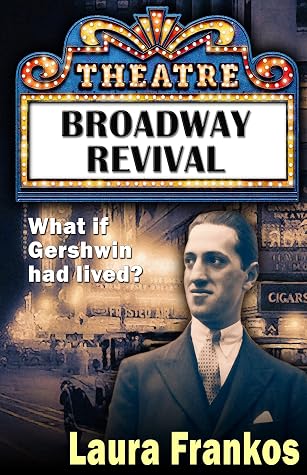
This is a passionate alternate‑history novel that reads like a valentine to the golden age of the American musical whilst interrogating the cost of trying to repair the past. It's strengths will be most appreciated by those who know their musicals and composers, but in addition to the wealth of detail, there is a strong story about a grieving man trying to turn fandom into salvation.
The book’s greatest strength is its musical and theatrical history: Frankos layers in real shows, real creators, and convincingly imagined fictional productions in a way that demonstrates the research but is not bogged down in it. The protagonist nudges key careers, rescues doomed talents, and re‑routes famous flops, and the altered Broadway canon that emerges is convincing, enjoyable, and well done. There is plenty of scope here for trivia spotting.
As a non expert and very much part time aficionado of the Broadway genre, the density that makes the novel so good for insiders was also a somewhat demanding. Not that a book that is demanding is necessarily a bad thing. Books need to stretch readers. However, greater familiarity with the subject matter would no doubt have rewarded me. There was also just a nagging sense that the SF bread and butter stuff (the future frame and the drug‑addiction backstory) were something of an almost ran.
For readers who share its obsession or are willing to learn as they go, it's a clever piece. The fantasy of getting to rewrite an entire cultural landscape is a captivating one. I enjoyed this. Perhaps I *really* liked it. I'll give it the benefit of the doubt and say I did.
This is a passionate alternate‑history novel that reads like a valentine to the golden age of the American musical whilst interrogating the cost of trying to repair the past. It's strengths will be most appreciated by those who know their musicals and composers, but in addition to the wealth of detail, there is a strong story about a grieving man trying to turn fandom into salvation.
The book’s greatest strength is its musical and theatrical history: Frankos layers in real shows, real creators, and convincingly imagined fictional productions in a way that demonstrates the research but is not bogged down in it. The protagonist nudges key careers, rescues doomed talents, and re‑routes famous flops, and the altered Broadway canon that emerges is convincing, enjoyable, and well done. There is plenty of scope here for trivia spotting.
As a non expert and very much part time aficionado of the Broadway genre, the density that makes the novel so good for insiders was also a somewhat demanding. Not that a book that is demanding is necessarily a bad thing. Books need to stretch readers. However, greater familiarity with the subject matter would no doubt have rewarded me. There was also just a nagging sense that the SF bread and butter stuff (the future frame and the drug‑addiction backstory) were something of an almost ran.
For readers who share its obsession or are willing to learn as they go, it's a clever piece. The fantasy of getting to rewrite an entire cultural landscape is a captivating one. I enjoyed this. Perhaps I *really* liked it. I'll give it the benefit of the doubt and say I did.
20sirfurboy
68. The Castles of Edward I in Wales 1277–1307 - Christopher Gravett
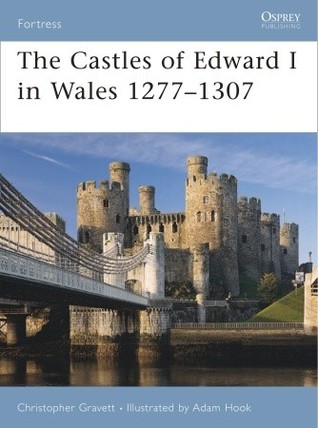
A good and solid history of Welsh castles, with diagrams and illustrations. Plenty of good information that can be dipped in and out of as needed.
A good and solid history of Welsh castles, with diagrams and illustrations. Plenty of good information that can be dipped in and out of as needed.
23sirfurboy
69. The Secret of the Twelfth Continent - Antonia Michaelis
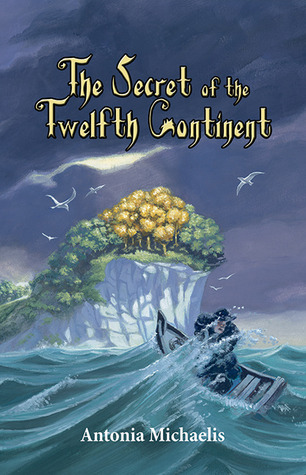
I saw this book in Foyles in London, and sadly didn't immediately buy it. Sad because it is hard to come by in English. I tracked down a German version, got some way into that, but only belatedly found an English version that allowed me to finish it off.
The book really should be easier to find in English as it's a great and fanciful children's story. I think aimed a little lower than my usual preference, but it will be fine up to mid-grade. Karl, the protagonist, is a wonderful flawed character, shaped by his time in a children's home, and eventually expelled from school. But he grows through a wonderful adventure on a tiny ship, where he meets new (tiny) friends and discovers other lands and, of course, the secret of the Twelfth Continent.
Lost bicycles, rock falls, rusks that change your size, monsters and mysteries abound in this imaginative children's adventure. There's a lovely heartwarming end too.
I saw this book in Foyles in London, and sadly didn't immediately buy it. Sad because it is hard to come by in English. I tracked down a German version, got some way into that, but only belatedly found an English version that allowed me to finish it off.
The book really should be easier to find in English as it's a great and fanciful children's story. I think aimed a little lower than my usual preference, but it will be fine up to mid-grade. Karl, the protagonist, is a wonderful flawed character, shaped by his time in a children's home, and eventually expelled from school. But he grows through a wonderful adventure on a tiny ship, where he meets new (tiny) friends and discovers other lands and, of course, the secret of the Twelfth Continent.
Lost bicycles, rock falls, rusks that change your size, monsters and mysteries abound in this imaginative children's adventure. There's a lovely heartwarming end too.
24SirThomas
I wish you a peaceful Christmas season with your family and friends and a good start to 2026 with lots of good books.
25richardderus
Dear Stephen, as you and yours celebrate don't forget:


26sirfurboy
70. Dog Detective: A Kid's Guide to Understanding Dogs - Paul Green

This short work is designed to help kids understand dog behaviour. The author shows a great knowledge of dog behaviour (his expertise), but also writes the book in an engaging style that will make it readable by his intended audience, wrapped up in the concept of becoming a dog detective - someone who can read a dog's mood using all the clues provided. Recommended for the intended audience (children up to mid-grade).

This short work is designed to help kids understand dog behaviour. The author shows a great knowledge of dog behaviour (his expertise), but also writes the book in an engaging style that will make it readable by his intended audience, wrapped up in the concept of becoming a dog detective - someone who can read a dog's mood using all the clues provided. Recommended for the intended audience (children up to mid-grade).
27sirfurboy
>25 richardderus: Thanks Richard, I hope you had a great break too. I'm not sure about the science of the calories thing, but I'll take it! ;)
28sirfurboy
71. My Family and Other Animals - Gerald Durrell

A re-read of this wonderful and engaging classic. The story of Gerald Durrell who moved to Corfu with his family at the age of 10, and whose love for animals provides as much entertainment as his slightly oddball but beautifully written family. I forget how old I was when I first read this, but I enjoyed it then, and perhaps I appreciate some of the humour more now.
Stylistically, I noticed quite a lot of adverbs ending in "-ly" in the narrative. I suppose that Durrell was not aware of the advice about excising those, or else he was just more focused on amusing anecdotes - and undoubtedly the book is better for those than any work that cuts out the adverbs and forgets to be interesting.

A re-read of this wonderful and engaging classic. The story of Gerald Durrell who moved to Corfu with his family at the age of 10, and whose love for animals provides as much entertainment as his slightly oddball but beautifully written family. I forget how old I was when I first read this, but I enjoyed it then, and perhaps I appreciate some of the humour more now.
Stylistically, I noticed quite a lot of adverbs ending in "-ly" in the narrative. I suppose that Durrell was not aware of the advice about excising those, or else he was just more focused on amusing anecdotes - and undoubtedly the book is better for those than any work that cuts out the adverbs and forgets to be interesting.
29EllaTim
Hi Stephen! Wishing you a happy new year to come. And lots of interesting reading.
>28 sirfurboy: Gerald Durrell’s writing is engaging and fun, never mind the language police.
>28 sirfurboy: Gerald Durrell’s writing is engaging and fun, never mind the language police.
30sirfurboy
>29 EllaTim: Happy new year to you too. I'll be sure to star your thread when I get round to making my 2026 thread too.
31sirfurboy
72. The Untold Story of the Gusii of Kenya: Survival Techniques and Resistance to the Establishment of British Colonial Rule - John Akama

Akama has written several histories of the Abagusii (that is, the Gusii people) of Kenya. This is the shortest, so I finished it first, but my reading of the others is concurrent. There is overlap between the volumes, but this one is written particularly to contextualise and explain the resistance of the Gusii people to colonial rule when they came in contact with the British in 1907. Written as a corrective, it is unashamedly focused on the Gusii people and their side of the conflict.
Akam is an academic, but he is not a historian. The book has a reasonably full bibliography, but this is rather inconsistently cited in-text, with a few Harvard style paranthetical references, particularly in the origins section, but a lot of speculation that is perhaps original to the author. Nevertheless, that it is referenced at all, and that it includes the bibliography makes this better than a lot of popular histories.
It is not just about resistance to British rule. The whole structure of Gusii society is discussed in the context of being a linguistically Bantu people, surrounded by non Bantu tribes, who were often antagonistic. So there is information about the rise of the warrior structure, how cattle were hidden, how population pressure moved them to the Kenyan highlands etc. This is then the context for the resistance, and perhaps a lament to what was lost too.
It is an interesting read, but as an academic one, it is frustrating. It is entirely unclear how partisan the book is. Akama is from the Gusii land, and these are his people, and he speaks with authority, yet how critical is he of the information he brings to bear? How much of what he says might be contested by historians? Is it really a corrective to euro-centric histories? It asks the right questions, but I am not sure it has all the answers. Perhaps more time with the bibliography is in order.

Akama has written several histories of the Abagusii (that is, the Gusii people) of Kenya. This is the shortest, so I finished it first, but my reading of the others is concurrent. There is overlap between the volumes, but this one is written particularly to contextualise and explain the resistance of the Gusii people to colonial rule when they came in contact with the British in 1907. Written as a corrective, it is unashamedly focused on the Gusii people and their side of the conflict.
Akam is an academic, but he is not a historian. The book has a reasonably full bibliography, but this is rather inconsistently cited in-text, with a few Harvard style paranthetical references, particularly in the origins section, but a lot of speculation that is perhaps original to the author. Nevertheless, that it is referenced at all, and that it includes the bibliography makes this better than a lot of popular histories.
It is not just about resistance to British rule. The whole structure of Gusii society is discussed in the context of being a linguistically Bantu people, surrounded by non Bantu tribes, who were often antagonistic. So there is information about the rise of the warrior structure, how cattle were hidden, how population pressure moved them to the Kenyan highlands etc. This is then the context for the resistance, and perhaps a lament to what was lost too.
It is an interesting read, but as an academic one, it is frustrating. It is entirely unclear how partisan the book is. Akama is from the Gusii land, and these are his people, and he speaks with authority, yet how critical is he of the information he brings to bear? How much of what he says might be contested by historians? Is it really a corrective to euro-centric histories? It asks the right questions, but I am not sure it has all the answers. Perhaps more time with the bibliography is in order.
32sirfurboy
73. Stuff Brits Like - Fraser McAlpine

A book that does a good job of explaining lots of British customs and quirks in a very large number of short entries. The shortness of the entries keeps it readable, the writing is suitably entertaining, and the research seems to be reasonably solid. It is not, however, rigorous. The entries are too short to really get into the debate about origins. There are things that are missing, and plenty of things that are not unique to the British, mostly because they are found in commonwealth countries throughout the world (e.g. Boxing Day). However it is still a good and informative read.

A book that does a good job of explaining lots of British customs and quirks in a very large number of short entries. The shortness of the entries keeps it readable, the writing is suitably entertaining, and the research seems to be reasonably solid. It is not, however, rigorous. The entries are too short to really get into the debate about origins. There are things that are missing, and plenty of things that are not unique to the British, mostly because they are found in commonwealth countries throughout the world (e.g. Boxing Day). However it is still a good and informative read.
33sirfurboy
74. The First Epistle to the Corinthians - C K Barrett
One of the best commentaries written for the book of 1 Corinthians. Barrett, as for all the authors of commentaries in this series, prepared his own translation of the book for this commentary, and his text is included. His facility with the Greek language is one of the main reasons for using this work. Many commentaries are simply expository, but Barrett gets to grips with textual criticism and translation issues, and there are definitely surprises on that score in 1 Corinthians.
Another reason this is a great work is that Barrett, whilst taking a view on the text, will happily discuss and consider other views. The reader is not being told how to interpret 1 Corinthians. Readers are given the information and the context, and then can arrive at their own view. Again, this is typical of this whole series of commentaries, of which this one is a fine example.
1 Corinthians is a very interesting letter, but also much misunderstood. Using this commentary can help achieve better understanding, although Gordon Fee's commentary may be even better on that score.
One of the best commentaries written for the book of 1 Corinthians. Barrett, as for all the authors of commentaries in this series, prepared his own translation of the book for this commentary, and his text is included. His facility with the Greek language is one of the main reasons for using this work. Many commentaries are simply expository, but Barrett gets to grips with textual criticism and translation issues, and there are definitely surprises on that score in 1 Corinthians.
Another reason this is a great work is that Barrett, whilst taking a view on the text, will happily discuss and consider other views. The reader is not being told how to interpret 1 Corinthians. Readers are given the information and the context, and then can arrive at their own view. Again, this is typical of this whole series of commentaries, of which this one is a fine example.
1 Corinthians is a very interesting letter, but also much misunderstood. Using this commentary can help achieve better understanding, although Gordon Fee's commentary may be even better on that score.
34sirfurboy
75. Programming Language Explorations - Ray Toai
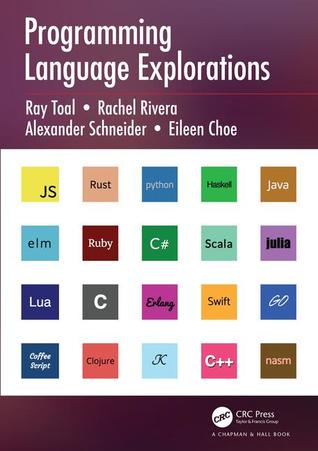
This book provides a comparative look at a lot of programming languages in a lot of different classes. Example code is given for each language, beginning with the classic "Hello World" (which sounds lane, but does immediately show the structure of the language) and then looking at code that describes language features too.
There is good discussion of the strengths and weaknesses of each language, and languages are also grouped by use, which will make this a handy reference tool. There was not quite as much depth on each language as I would like. As an example, garbage collection was discussed as being present or absent from languages, and there was some discussion of whether this was good or not (e.g., in the section on Rust, the lack of garbage collection was pointed out as avoiding execution pauses - quite right). But there is more that could have been said - albeit perhaps not in a work covering so many languages. Arguments are made, for instance, that lack of garbage collection makes execution faster - but that is not wholly true. Could it have been discussed here? I'd have liked to see it, but then, how much other detail would be needed for other such issues? So maybe it was the correct choice and the correct level.
What I did like, however, was how this book was just about perfect for getting a very quick feel for language structure. By pointing out what is unique in a language (and, by implication, what is common), I was very easily able to see how languages were similar to others, and I think it would allow me to skip significant sections of instruction manuals for a language for things I already implicitly understand. As such, I think this reference goes beyond mere interest and crosses into a category of downright useful books.
This book provides a comparative look at a lot of programming languages in a lot of different classes. Example code is given for each language, beginning with the classic "Hello World" (which sounds lane, but does immediately show the structure of the language) and then looking at code that describes language features too.
There is good discussion of the strengths and weaknesses of each language, and languages are also grouped by use, which will make this a handy reference tool. There was not quite as much depth on each language as I would like. As an example, garbage collection was discussed as being present or absent from languages, and there was some discussion of whether this was good or not (e.g., in the section on Rust, the lack of garbage collection was pointed out as avoiding execution pauses - quite right). But there is more that could have been said - albeit perhaps not in a work covering so many languages. Arguments are made, for instance, that lack of garbage collection makes execution faster - but that is not wholly true. Could it have been discussed here? I'd have liked to see it, but then, how much other detail would be needed for other such issues? So maybe it was the correct choice and the correct level.
What I did like, however, was how this book was just about perfect for getting a very quick feel for language structure. By pointing out what is unique in a language (and, by implication, what is common), I was very easily able to see how languages were similar to others, and I think it would allow me to skip significant sections of instruction manuals for a language for things I already implicitly understand. As such, I think this reference goes beyond mere interest and crosses into a category of downright useful books.
36avatiakh
Happy New Year, Stephen. you've done some diverse reading in the last few posts. Will look for your thread in the 2026 group.
37PaulCranswick

New Year greetings from Kuala Lumpur. My project is at least physically completed and an addition to the city scape.
Look forward to keeping up with you in 2026
38sirfurboy
>35 elorin: >36 avatiakh: >37 PaulCranswick:
Thanks all, and happy new year. See you in the 2026 group.
Thanks all, and happy new year. See you in the 2026 group.
39vancouverdeb
>38 sirfurboy: Thanks for dropping a star in my 2026 thread, Sir F. I shall drop a star as soon as I see your thread in 2026.
40sirfurboy
Thanks. The new thread is here: Sirfurboy's (Stephen's) 75 book challenge for 2026. Looking forward to seeing what you read this year.

