Sirfurboy's (Stephen's) 75 book challenge for 2026
Talk 75 Books Challenge for 2026
Join LibraryThing to post.
1sirfurboy
I am Stephen, or Sir Furboy. I live in Aberystwyth, on the west coast of Mid Wales. My hobbies include walking, cycling, kayaking and surfing (obviously), although these days I mostly just surf in my kayak. I also like languages and reading (of course), and thus also reading in other languages.
Last year I managed 75 books. At one point I looked like I would get closer to 100, but then I slowed down and had to manage reading carefully in December to finish off the challenge, so 75 looks like a good target to go for once again.
Although I am an avid reader, and have been since I was eight years old, I did not in fact learn to read until I was seven-and-a-half, going on eight. This, it turns out, is because I am dyspraxic, a specific learning difficulty that was largely unrecognised in school. I was in remedial education until age of 8, but once I learned to read, and read well, they stopped the interventions. This was unfortunate because it was not just my reading that was affected. It also affected my performance in a range of other subjects but it was only in 2022 that I finally got a diagnosis that put everything in context, and left me flabbergasted that there were so many dots, and that no-one ever joined them! In any case, by the age of 8 I was actually reading with a reading age a couple of years above my chronological age, having added 5 years to it in 6 months!
Oh yes, some of my favourite genres are Young Adult, Sci Fi, Coming of Age, Fantasy and Historical. I also try to read some classics each year, as well as some non fiction and other works out of those genres. I have an MA in creative writing, and have had some short stories published, but I am still allegedly writing a fantasy novel (and I need to be more disciplined about that this year). I claim the choice to write fantasy was by accident! Some have suggested they never doubted it!
Anyway, I hope you will star my thread and stop by every now and again. Coffee is available (not necessarily from me! But it's definitely available) and the sofa is comfy. Except where I have been jumping on it.
Last year I managed 75 books. At one point I looked like I would get closer to 100, but then I slowed down and had to manage reading carefully in December to finish off the challenge, so 75 looks like a good target to go for once again.
Although I am an avid reader, and have been since I was eight years old, I did not in fact learn to read until I was seven-and-a-half, going on eight. This, it turns out, is because I am dyspraxic, a specific learning difficulty that was largely unrecognised in school. I was in remedial education until age of 8, but once I learned to read, and read well, they stopped the interventions. This was unfortunate because it was not just my reading that was affected. It also affected my performance in a range of other subjects but it was only in 2022 that I finally got a diagnosis that put everything in context, and left me flabbergasted that there were so many dots, and that no-one ever joined them! In any case, by the age of 8 I was actually reading with a reading age a couple of years above my chronological age, having added 5 years to it in 6 months!
Oh yes, some of my favourite genres are Young Adult, Sci Fi, Coming of Age, Fantasy and Historical. I also try to read some classics each year, as well as some non fiction and other works out of those genres. I have an MA in creative writing, and have had some short stories published, but I am still allegedly writing a fantasy novel (and I need to be more disciplined about that this year). I claim the choice to write fantasy was by accident! Some have suggested they never doubted it!
Anyway, I hope you will star my thread and stop by every now and again. Coffee is available (not necessarily from me! But it's definitely available) and the sofa is comfy. Except where I have been jumping on it.
2paulstalder
Hej Stephen, flying bye to say hello. Wish you a good reading (and writing) year
3PaulCranswick

New Year greetings from Kuala Lumpur. My project is at least physically completed and an addition to the city scape.
Look forward to keeping up with you in 2026, Stephen.
4richardderus
>1 sirfurboy: New Year orisons, Stephen, glad to see you're back. Yay for hitting your goal last year, and may it be a repeat this year!

10SirThomas
Happy new Year, Stephen - may your year be full of happines health and joy - and of course - books.

13sirfurboy
1. The Rose Field - Philip Pullman
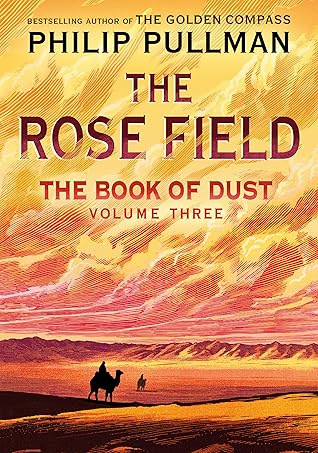
Philip Pullman is such an incredibly good writer, and I have enjoyed so much of his work, that it feels like a betrayal to get to the end of this, the last book of his magnus opus, and just arrive at the position of "it was ok". But sadly that is where I find myself.
The signs started during the reading. I eagerly began this as soon as it came out. It's a big book, but that's okay. I can read big books, and they allow so much exploration and character development and enjoyable prose that they will usually keep me reading through quickly. But somehow I took 2 months to finish this one, which is slow going. The reason was that I did not feel compelled to continue, as I might have for other works by Pullman.
The first in this series, La Belle Sauvage, was a beautifully written book that left me in awe of Pullman's skills. It contains a compelling story and masterful prose. Here the prose stood out less for me, but was always good. But the compulsion deserted the story, which meandeerd towards a long overdue arrival at the quest goal, only to be presented with what can only be called a clumsy resolution.
I didn't hate the resolution. But it did remind me I was reading a children's book (which was not always evident in the prose, and, I'd argue, was not even true of the earlier books).
Plenty of threads in this story seem to have been dropped, and many possibilities left unexplored. That can happen, but you might then wonder if this children's book could have benefited from some serious editing.
Indeed, Pullman says that he write another ending for this story and decided that would not do, so he rewrote it and found this ending. I wonder, however, whether he really found the ending at all, or whether this story just kind of ground to a halt.
Pullman is still a fine writer. Nothing can take that away. He is also usually a great storyteller, but I'm underwhelmed by this example. I don't hate it. Meh, it was okay.
Philip Pullman is such an incredibly good writer, and I have enjoyed so much of his work, that it feels like a betrayal to get to the end of this, the last book of his magnus opus, and just arrive at the position of "it was ok". But sadly that is where I find myself.
The signs started during the reading. I eagerly began this as soon as it came out. It's a big book, but that's okay. I can read big books, and they allow so much exploration and character development and enjoyable prose that they will usually keep me reading through quickly. But somehow I took 2 months to finish this one, which is slow going. The reason was that I did not feel compelled to continue, as I might have for other works by Pullman.
The first in this series, La Belle Sauvage, was a beautifully written book that left me in awe of Pullman's skills. It contains a compelling story and masterful prose. Here the prose stood out less for me, but was always good. But the compulsion deserted the story, which meandeerd towards a long overdue arrival at the quest goal, only to be presented with what can only be called a clumsy resolution.
I didn't hate the resolution. But it did remind me I was reading a children's book (which was not always evident in the prose, and, I'd argue, was not even true of the earlier books).
Plenty of threads in this story seem to have been dropped, and many possibilities left unexplored. That can happen, but you might then wonder if this children's book could have benefited from some serious editing.
Indeed, Pullman says that he write another ending for this story and decided that would not do, so he rewrote it and found this ending. I wonder, however, whether he really found the ending at all, or whether this story just kind of ground to a halt.
Pullman is still a fine writer. Nothing can take that away. He is also usually a great storyteller, but I'm underwhelmed by this example. I don't hate it. Meh, it was okay.
14PaulCranswick
>13 sirfurboy: I haven't come across that one yet, Stephen, but what a lovely cover!
15The_Hibernator
I'll have to look up dyspraxia. D has dysgraphia (though, besides spelling and hand-writing, she's doing much better in the writing. She's in high school.) IL has language difficulties which affect speech, communication, and reading. He's way behind. Last night he wanted to read a book he loves that is way above his reading level. He can hardly read at all. How's your reading now? For some reason I thought you were in college.
16sirfurboy
>15 The_Hibernator: I think Dyspraxia is called DCD in the US. I'm glad IL wants to read the stories, and enjoys stories - motivation is so important there.
Regarding my reading: It's clearly fine these days! I read a lot, but, in fact, I am still not the fastest reader ever. I read books on speed reading in the past and upped my reading speed, but it lowered my comprehension and retention. At my slower reading speed, I have excellent retention, but that all goes away with speed reading.
In any case, audiobooks can be part of the mix. With audiobooks, IL can enjoy the stories without the struggles (although clearly some struggle is needed too, to catch up with traditional reading. So they are an addition and not a replacement). I like listening to audiobooks in the car or while walking.
Anyway thanks for dropping by.
Regarding my reading: It's clearly fine these days! I read a lot, but, in fact, I am still not the fastest reader ever. I read books on speed reading in the past and upped my reading speed, but it lowered my comprehension and retention. At my slower reading speed, I have excellent retention, but that all goes away with speed reading.
In any case, audiobooks can be part of the mix. With audiobooks, IL can enjoy the stories without the struggles (although clearly some struggle is needed too, to catch up with traditional reading. So they are an addition and not a replacement). I like listening to audiobooks in the car or while walking.
Anyway thanks for dropping by.
17sirfurboy
2. The Moonlighters - Lee Newbery

An enjoyable story for children up to mid-grade, about 10 year old Theo who gets in trouble when on a trip to the Natural History Museum, where he accidentally destroys an exhibit. He's recently moved home against his will and fallen in with the wrong crowd in school. Running away from the situation he has a magical encounter with a mysterious character who inducts him into a secret group of children, called the Moonlighters, searching for magical artefacts.
However there are good guys and bad guys, and someone has some very evil designs. Ultimately it will be up to Theo and his new friends to defend the world from these.
This is an enjoyable book that is really for its intended audience primarily and is aimed at too young a readership to include much nuance. All the same, it is a fine example of a children's story that should have enduring appeal, and rehearses the age old conflicts found in the genre. Lee Newbery is a fine writer of such tales.
Note that the title links to "The Moonlight Hotel" on LibraryThing, so I guess that is the US title.

An enjoyable story for children up to mid-grade, about 10 year old Theo who gets in trouble when on a trip to the Natural History Museum, where he accidentally destroys an exhibit. He's recently moved home against his will and fallen in with the wrong crowd in school. Running away from the situation he has a magical encounter with a mysterious character who inducts him into a secret group of children, called the Moonlighters, searching for magical artefacts.
However there are good guys and bad guys, and someone has some very evil designs. Ultimately it will be up to Theo and his new friends to defend the world from these.
This is an enjoyable book that is really for its intended audience primarily and is aimed at too young a readership to include much nuance. All the same, it is a fine example of a children's story that should have enduring appeal, and rehearses the age old conflicts found in the genre. Lee Newbery is a fine writer of such tales.
Note that the title links to "The Moonlight Hotel" on LibraryThing, so I guess that is the US title.
18PaulCranswick
>17 sirfurboy: I am biased perhaps Stephen but I do think that the British title is a better choice.
19sirfurboy
>18 PaulCranswick: I agree.
20sirfurboy
3. A Short History of Fantasy - Farah Mendelsohn and Edward James

A thorough examination of the development of fantasy fiction up to the point this book was published. Hit stops a decade and a half ago though, so perhaps could do with an update.
I think it has valuable information in understanding the sub genres of fantasy, where they have come from and how trends have emerged and passed away over time. There is discussion of a great number of stories, many of which I have read, and many more I haven't. That may help direct my reading, and I've already taken a few recommendations away.
Ultimately, however, the utility of this may be more as a text book than anything else. It covers so much that you don't get a lot of depth on much of it. Three authors (Pratchett, Rowling and Pullman) get a chapter of their own. Others get a reasonable bit of depth (like Lewis and Tolkien) but many are just mentions. I am not sure if a narrower but deeper coverage would have been better. All the same, an interesting read.

A thorough examination of the development of fantasy fiction up to the point this book was published. Hit stops a decade and a half ago though, so perhaps could do with an update.
I think it has valuable information in understanding the sub genres of fantasy, where they have come from and how trends have emerged and passed away over time. There is discussion of a great number of stories, many of which I have read, and many more I haven't. That may help direct my reading, and I've already taken a few recommendations away.
Ultimately, however, the utility of this may be more as a text book than anything else. It covers so much that you don't get a lot of depth on much of it. Three authors (Pratchett, Rowling and Pullman) get a chapter of their own. Others get a reasonable bit of depth (like Lewis and Tolkien) but many are just mentions. I am not sure if a narrower but deeper coverage would have been better. All the same, an interesting read.
21sirfurboy
4. A Skinful of Shadows - Frances Hardinge

This is a very clever novel with a wonderful central idea: that there are people who have an inherited ability to take on the souls of ghosts, who will live on within them. Makepeace, the child of a single mother in a puritan stronghold in the midst of the English civil war, is one such person, but she doesn't know it. Life is hard, and gets harder when her mother is killed, but that brings her to a slow understanding of who she is.
The author has created a wonderful semi-historical novel set in the turbulent 17th century. There is intrigue and ingenuity here and Hardinge is a very good writer. The novel is an award winner, and these are not the only awards Hardinge has achieved.
But clever, well written, award winning and historical are all very well. I definitely enjoyed this for all those reasons, but it was a touch hard to get into, and if it were not for Bear, I think I would not have enjoyed it nearly so much. For a children's book it lacks danger and it contains a lot of unrelieved foreboding. That could be a strength too.
One thing it does have going for it is the strong female lead. That's actually not so unusual these days, but there was a time that would be a rare thing, and it is still good to see.
Anyway, yes, an enjoyable book with a lot of merit.

This is a very clever novel with a wonderful central idea: that there are people who have an inherited ability to take on the souls of ghosts, who will live on within them. Makepeace, the child of a single mother in a puritan stronghold in the midst of the English civil war, is one such person, but she doesn't know it. Life is hard, and gets harder when her mother is killed, but that brings her to a slow understanding of who she is.
The author has created a wonderful semi-historical novel set in the turbulent 17th century. There is intrigue and ingenuity here and Hardinge is a very good writer. The novel is an award winner, and these are not the only awards Hardinge has achieved.
But clever, well written, award winning and historical are all very well. I definitely enjoyed this for all those reasons, but it was a touch hard to get into, and if it were not for Bear, I think I would not have enjoyed it nearly so much. For a children's book it lacks danger and it contains a lot of unrelieved foreboding. That could be a strength too.
One thing it does have going for it is the strong female lead. That's actually not so unusual these days, but there was a time that would be a rare thing, and it is still good to see.
Anyway, yes, an enjoyable book with a lot of merit.
22SandDune
>21 sirfurboy: I’ve read this one but I don’t remember much about it. I didn’t rate it as highly as Cuckoo Song or The Lie Tree
23EllaTim
>21 sirfurboy: This sounds good. A sub-genre of fantasy that’s new to me: historical fantasy. Her other books look interesting as well.
24Whisper1
>21 sirfurboy: This book sounds great. I'm adding it to my TBR list.
25sirfurboy
>22 SandDune: Two more I should be looking for then! :)
>23 EllaTim: Yes indeed.
>24 Whisper1: I hope you enjoy it.
>23 EllaTim: Yes indeed.
>24 Whisper1: I hope you enjoy it.
26sirfurboy
5. The First Epistle to the Corinthians - Gordon Fee

Gordon Fee's contribution to the study of 1 Corinthians is enormous, and this commentary is one of the best to be found on the book. Fee was himself a fan of C K Barrett's first rate commentary on the letter, but he goes beyond it with his work. Published in the 1980s, it remains a timeless work.
There are commentaries and commentaries, as Fee himself pointed out. This is not a daily devotional. This is a serious academic study of the occasion of the letter, the theological background, and Paul's own understanding of his message. It is then a careful exegesis that takes seriously other scholarship, and presents it for the reader. Easily on a par with the likes of the Black's New Testament commentaries.

Gordon Fee's contribution to the study of 1 Corinthians is enormous, and this commentary is one of the best to be found on the book. Fee was himself a fan of C K Barrett's first rate commentary on the letter, but he goes beyond it with his work. Published in the 1980s, it remains a timeless work.
There are commentaries and commentaries, as Fee himself pointed out. This is not a daily devotional. This is a serious academic study of the occasion of the letter, the theological background, and Paul's own understanding of his message. It is then a careful exegesis that takes seriously other scholarship, and presents it for the reader. Easily on a par with the likes of the Black's New Testament commentaries.
27richardderus
>26 sirfurboy: Sounds like something I'd pay money *not* to have cross my path, but valuable for those who engage with the topic.
Good week-ahead's reads!
Good week-ahead's reads!
28sirfurboy
>27 richardderus: Yep, I expect you are right. But again, it's not a devotional commentary. There is plenty of historical academic interest in there too. In any case, I am sure I'll soon be back to something more up your street!
29richardderus
>28 sirfurboy: *popcorn bowl* I await your pleasure, kind sir.
30PaulCranswick
Just dropping by to wish you well in West Wales, Stephen.
31sirfurboy
>30 PaulCranswick: Thanks Paul
>29 richardderus: I'll need to get reading more mind... I'm falling behind.
>29 richardderus: I'll need to get reading more mind... I'm falling behind.
32sirfurboy
6. Carrie - Stephen King
A modern classic, apparently. Meh. I don't really know why, but maybe I don't get horror so much.
I read this as it was on a reading list I was working through, supposedly about fantasy fiction. King is an imaginative writer who has written plenty of excellent works, and this was well written and well imagined too. But a modern classic? Why? What am I missing here?
Carrie White is the misunderstood outsider in school. There are some not very nice people in the school, and they get their comeuppance in a gory finale. King does well to write some good characters who have bad things happen to them. It's definitely a good story, even if I don't see why it would be a classic one.
A modern classic, apparently. Meh. I don't really know why, but maybe I don't get horror so much.
I read this as it was on a reading list I was working through, supposedly about fantasy fiction. King is an imaginative writer who has written plenty of excellent works, and this was well written and well imagined too. But a modern classic? Why? What am I missing here?
Carrie White is the misunderstood outsider in school. There are some not very nice people in the school, and they get their comeuppance in a gory finale. King does well to write some good characters who have bad things happen to them. It's definitely a good story, even if I don't see why it would be a classic one.
33richardderus
>32 sirfurboy: I am totally with you on this "modern classic" of horror. Yuck.
Happy weekend-ahead's reads.
Happy weekend-ahead's reads.
34sirfurboy
>33 richardderus: Thanks. My next one is from the same reading list. I think I may have to abandon this reading list!
35sirfurboy
7. Tender Morsels - Margo Lanagan

A recommended read on a reading list I was working through, I'm afraid I didn't really get on with this dark retelling of a brothers Grimm fairy tale. The story concerns Liga, who survives terrible abuse and is taken to a private heaven, protected from the world with her daughters, until the world intrudes.
The storytelling is a strength of the work, especially in finding a nuanced tale that uses metaphor to create a subtle polemic, exploring the danger of hiding away from a broken world rather than re-engaging with it. That's clever and clearly why the book is well reputed.
What broke it for me was the very dark start, where the abuse was described, not graphically, but still dar enough to make it a disturbing read. Add to that quite a wide ranging cast, making it a little hard to follow in places, and I was just a little at sea with this one.
To be fair, though, this is not a book I would have picked up on my own. It may just be subtly off my preferred genres, so that it felt a bit more like an effort to read it than a pleasure. Not that I could ever imagine the first 100 pages would be that pleasurable to read.
So your mileage may vary. It does contain a beautifully written and intelligent tale, and I expect many people would enjoy this much more than me.

A recommended read on a reading list I was working through, I'm afraid I didn't really get on with this dark retelling of a brothers Grimm fairy tale. The story concerns Liga, who survives terrible abuse and is taken to a private heaven, protected from the world with her daughters, until the world intrudes.
The storytelling is a strength of the work, especially in finding a nuanced tale that uses metaphor to create a subtle polemic, exploring the danger of hiding away from a broken world rather than re-engaging with it. That's clever and clearly why the book is well reputed.
What broke it for me was the very dark start, where the abuse was described, not graphically, but still dar enough to make it a disturbing read. Add to that quite a wide ranging cast, making it a little hard to follow in places, and I was just a little at sea with this one.
To be fair, though, this is not a book I would have picked up on my own. It may just be subtly off my preferred genres, so that it felt a bit more like an effort to read it than a pleasure. Not that I could ever imagine the first 100 pages would be that pleasurable to read.
So your mileage may vary. It does contain a beautifully written and intelligent tale, and I expect many people would enjoy this much more than me.
36SirThomas
Too bad it didn't work out for you, but I think there are a few alternatives...
All the best to you, Stephen!
All the best to you, Stephen!
37sirfurboy
>36 SirThomas: Thanks. Yes. I hope all is well with you.
38sirfurboy
8. The Little Liar - Mitch Albom

This is a book that surprised me. I've read plenty of books about the holocaust, and the subject is clearly going to involve much darkness, and strong emotions. But it would be hard to come up with a story in that setting that is strongly original. I think, however, that Albom has cracked it. It starts off with a Greek boy who never lies, and at that point I was thinking this is a bit like John Boyne's famous *The Boy in the Striped Pyjamas*, but this book was never going to be derivative of Boyne's even if some of the locations are very much the same.
This is ultimately a very clever book with some very profound things to say. That war takes captives long after the shooting finishes is said, but also powerfully shown. There are heartbreaking moments, and moments of hope and resilience. Ultimately this is a fine addition to a body of literature about one of the darkest moments in human history.

This is a book that surprised me. I've read plenty of books about the holocaust, and the subject is clearly going to involve much darkness, and strong emotions. But it would be hard to come up with a story in that setting that is strongly original. I think, however, that Albom has cracked it. It starts off with a Greek boy who never lies, and at that point I was thinking this is a bit like John Boyne's famous *The Boy in the Striped Pyjamas*, but this book was never going to be derivative of Boyne's even if some of the locations are very much the same.
This is ultimately a very clever book with some very profound things to say. That war takes captives long after the shooting finishes is said, but also powerfully shown. There are heartbreaking moments, and moments of hope and resilience. Ultimately this is a fine addition to a body of literature about one of the darkest moments in human history.
39Whisper1
>38 sirfurboy: I checked my reviews because I thought I read The Little Liar. Here is the review I wrote. Thanks for jogging my memory regarding this very well crafted book:
Another well written story by the author. The setting begins in Salonika, Greece where the Nazis invade. There are a series of characters, each one experiencing the horror of the Holocaust in heart-wrenching ways. The Little Liar is based on the character of Nico Krispis, who in his eleven years of life, has never told a lie. Yet, when he does tell a lie, there are heart-wrenching consequences for all that he loves as each one is sent to the horrific concentration camp known as Auschwitz.
His older brother Sebastian, is bent on getting revenge against him. Fannie, is a girl who has to choose between the two brothers, and experiences the hell of prison camp, and last, but not a minor character is Udo Graf, who becomes a Nazi officer who also changed their lives with a series of lies.
The entire book is the story of these people and how their lives intersect. At times confusing, but yet always riveting, this highly-recommended book is one that will stay with you for a long time.
A slow read that continually keeps the reader guessing what the outcome will be.
The author paints a very realistic portrait of life in the concentration camp. His stark writing caused me to want to look away at the hellish man that was Adolf Hitler.. Difficult to read, but yet hard to put down, I highly recommend this book.
----------------------------------------------------------------------
Thanks for your wonderful review. This year I've read a lot about the Holocaust. Most recently, I've read stories of those who did attempt to fight back, including a book about youngsters who gained the strength to rebel.
Another well written story by the author. The setting begins in Salonika, Greece where the Nazis invade. There are a series of characters, each one experiencing the horror of the Holocaust in heart-wrenching ways. The Little Liar is based on the character of Nico Krispis, who in his eleven years of life, has never told a lie. Yet, when he does tell a lie, there are heart-wrenching consequences for all that he loves as each one is sent to the horrific concentration camp known as Auschwitz.
His older brother Sebastian, is bent on getting revenge against him. Fannie, is a girl who has to choose between the two brothers, and experiences the hell of prison camp, and last, but not a minor character is Udo Graf, who becomes a Nazi officer who also changed their lives with a series of lies.
The entire book is the story of these people and how their lives intersect. At times confusing, but yet always riveting, this highly-recommended book is one that will stay with you for a long time.
A slow read that continually keeps the reader guessing what the outcome will be.
The author paints a very realistic portrait of life in the concentration camp. His stark writing caused me to want to look away at the hellish man that was Adolf Hitler.. Difficult to read, but yet hard to put down, I highly recommend this book.
----------------------------------------------------------------------
Thanks for your wonderful review. This year I've read a lot about the Holocaust. Most recently, I've read stories of those who did attempt to fight back, including a book about youngsters who gained the strength to rebel.
40sirfurboy
>39 Whisper1: I like that review. Thanks. Glad you enjoyed it too.
41sirfurboy
9. Evangelicalism in Modern Britain: A History from the 1730s to the 1980s

Richard, look away now. ;) There's going to be a run of this kind of book now as I make headway on my Ph.D. reading. I'll try to intersperse them with fiction reads still.
Review:
This is an academic history, perhaps *the* academic history of British evangelicalism. The book that contains the famous (to historians, at least) Bebbington quadrilateral, defining evangelicalism in terms of its four distinctives (not all unique to evangelicalism, but the four together define it). These are conversionism, biblicism, crucicentrism, and activism. He then goes on to show how evangelicalism arose out of both the reformed tradition, but also the enlightenment. He shows where it has been innovative and demonstrates that, against the assertions of evangelicals themselves, this innovation and change has been characteristic throughout the life of the movement.
The thesis is carefully constructed, and delivered expertly. It is hard to fault the analysis, and this book deserves its place amongst the classics of academic church history. It would also be a good read for anyone in evangelical circles, as I expect it would be eye opening.
My favourite line: fundamentalism is evangelicalism with an inferiority complex.
An excellent work. This was my first reading, but I'll be referring to it again.

Richard, look away now. ;) There's going to be a run of this kind of book now as I make headway on my Ph.D. reading. I'll try to intersperse them with fiction reads still.
Review:
This is an academic history, perhaps *the* academic history of British evangelicalism. The book that contains the famous (to historians, at least) Bebbington quadrilateral, defining evangelicalism in terms of its four distinctives (not all unique to evangelicalism, but the four together define it). These are conversionism, biblicism, crucicentrism, and activism. He then goes on to show how evangelicalism arose out of both the reformed tradition, but also the enlightenment. He shows where it has been innovative and demonstrates that, against the assertions of evangelicals themselves, this innovation and change has been characteristic throughout the life of the movement.
The thesis is carefully constructed, and delivered expertly. It is hard to fault the analysis, and this book deserves its place amongst the classics of academic church history. It would also be a good read for anyone in evangelical circles, as I expect it would be eye opening.
My favourite line: fundamentalism is evangelicalism with an inferiority complex.
An excellent work. This was my first reading, but I'll be referring to it again.
43sirfurboy
10. The Whale Watchers - Dougie Poynter

An enjoyable and educational story about two boys on a long holiday to Scotland, a local girl, a dog and a whale. Nothing especially original, but a classic children's adventure. Meant for slightly younger children than books I normally read. It would be good up to mid-grade, and is an easy read.

An enjoyable and educational story about two boys on a long holiday to Scotland, a local girl, a dog and a whale. Nothing especially original, but a classic children's adventure. Meant for slightly younger children than books I normally read. It would be good up to mid-grade, and is an easy read.
44sirfurboy
>42 Whisper1: Thanks :)
45sirfurboy
11. Steering the Craft - Ursula Le Guin

This is a concise work on writing, originally coming from one of the masters of the fantasy genre (although it now has other contributions too). It is filled with good advice and exercises, and is another great addition to the literature on writing fiction.
Probably the proof of how useful I think it is comes from the fact that in the week since I have read it I have already quoted it twice in two different venues and persuaded someone else to buy it.
Much of the advice can be found elsewhere but it is still a great book.

This is a concise work on writing, originally coming from one of the masters of the fantasy genre (although it now has other contributions too). It is filled with good advice and exercises, and is another great addition to the literature on writing fiction.
Probably the proof of how useful I think it is comes from the fact that in the week since I have read it I have already quoted it twice in two different venues and persuaded someone else to buy it.
Much of the advice can be found elsewhere but it is still a great book.
46sirfurboy
12. England, Ireland, Scotland, Wales: The Christian Church 1900-2000 - Keith Robbins
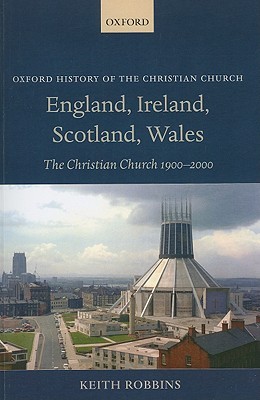
Keith Robbins book looks at the Church in the British Isles on its own terms, and pulls together a great range of sources to set out in seven key periods and synthesising material to produce a readable and well reasoned thesis that shows how that church has developed, responded to challenges and changed. It is a dense work, filled with a huge amount of source material. It feels exhaustive, but that is perhaps illusory. The magnitude of the task here prevents it from being so. Yet it has every right to call itself comprehensive.
I felt that on one aspect, Robbins perhaps chose to follow a numbers game. Catholic and Anglican churches get a huge amount of coverage and the Methodists plenty too. And for much of the century, that would be right, as they were the largest churches in the UK and Ireland, and their history and involvement in the state were such that there is a lot to be said about them, and they add greatly to the synthesis. But the broadness of the work leaves plenty of lacunae. Local matters, smaller churches and the like feel secondary to the larger interpretive sweep.
For me, the largest missing link would be what he says about Pentecostalism. He is not silent on the subject, but neither does he give it much attention. He treats it as part of the broader narrative of religious change, and that is fine insofar as it goes. However, as Pentecostal denominations have bucked the falling trend in church membership, it seems to me that this aspect remains under considered. And it is not the only such case where the broad sweep of this work is both weakness as well as strength.
But that is not a problem in itself. The book is a fine work for what it does. Robbins is well placed to write it, being an authority on both British church responses to twentieth-century crises and also the differing national identities within the UK, which he understands are intertwined but not the same.
Keith Robbins book looks at the Church in the British Isles on its own terms, and pulls together a great range of sources to set out in seven key periods and synthesising material to produce a readable and well reasoned thesis that shows how that church has developed, responded to challenges and changed. It is a dense work, filled with a huge amount of source material. It feels exhaustive, but that is perhaps illusory. The magnitude of the task here prevents it from being so. Yet it has every right to call itself comprehensive.
I felt that on one aspect, Robbins perhaps chose to follow a numbers game. Catholic and Anglican churches get a huge amount of coverage and the Methodists plenty too. And for much of the century, that would be right, as they were the largest churches in the UK and Ireland, and their history and involvement in the state were such that there is a lot to be said about them, and they add greatly to the synthesis. But the broadness of the work leaves plenty of lacunae. Local matters, smaller churches and the like feel secondary to the larger interpretive sweep.
For me, the largest missing link would be what he says about Pentecostalism. He is not silent on the subject, but neither does he give it much attention. He treats it as part of the broader narrative of religious change, and that is fine insofar as it goes. However, as Pentecostal denominations have bucked the falling trend in church membership, it seems to me that this aspect remains under considered. And it is not the only such case where the broad sweep of this work is both weakness as well as strength.
But that is not a problem in itself. The book is a fine work for what it does. Robbins is well placed to write it, being an authority on both British church responses to twentieth-century crises and also the differing national identities within the UK, which he understands are intertwined but not the same.
47richardderus
>45 sirfurboy: I really enjoyed this read because I like how she synthesized lots of readily available advice into a narrative that only she could've written.
Hoping you're well and happily busy.
Hoping you're well and happily busy.
48sirfurboy
13. The Star Man's Son 2250 A.D. - Andre Norton

Andre Norton is a great Sci Fi writer, and anything she has written is worth reading in my opinion. All the same, this is not one of her best, and the story is definitely showing its age.
Fors, the mutant son of a Star Man sets out on a journey that brings him to a place where he will face danger and forge new allies before making something bold and new. There's been a nuclear war (the Great Blow-up) and there are savage mutant beast-things, and dangerous blasted lands, and all mutants are outcasts (so very Chrysalids and Planet of the Apes). Also this white haired night-seeing mutant looks a bit like an elf at times! But it's a solid story, and very much a product of its time. It has a good polemic and it is worth reading. But if you are not already an Andre Norton fan, I wouldn't start with this one.

Andre Norton is a great Sci Fi writer, and anything she has written is worth reading in my opinion. All the same, this is not one of her best, and the story is definitely showing its age.
Fors, the mutant son of a Star Man sets out on a journey that brings him to a place where he will face danger and forge new allies before making something bold and new. There's been a nuclear war (the Great Blow-up) and there are savage mutant beast-things, and dangerous blasted lands, and all mutants are outcasts (so very Chrysalids and Planet of the Apes). Also this white haired night-seeing mutant looks a bit like an elf at times! But it's a solid story, and very much a product of its time. It has a good polemic and it is worth reading. But if you are not already an Andre Norton fan, I wouldn't start with this one.
50richardderus
>49 sirfurboy: I shall try my best to do that very thing.
>48 sirfurboy: I read the book in the very late 1960s, so my memory of it is hazy. I recall nothing important about the story, only a vague sense that Dark Piper, the next book I read by her, was *infinitely* better. After that I was off to the races with her Ross Murdock series of Time Traders.
>48 sirfurboy: I read the book in the very late 1960s, so my memory of it is hazy. I recall nothing important about the story, only a vague sense that Dark Piper, the next book I read by her, was *infinitely* better. After that I was off to the races with her Ross Murdock series of Time Traders.
51SandDune
>48 sirfurboy: I used to really love Andre Norton novels back in the day!
52sirfurboy
>50 richardderus: I'm glad your memory is in line of my feelings about the book. It wasn't bad, but she has written much better.
>51 SandDune: Me too. I haven't read a new one in a while. (When I say new, I mean, of course, new to me!)
>51 SandDune: Me too. I haven't read a new one in a while. (When I say new, I mean, of course, new to me!)
53sirfurboy
14. The Disruption of Evangelicalism: The Age of Torrey, Mott, McPherson and Hammond - Geoffrey R. Treloar

This work is a historical treaties that seeks to reframe the period of evangelical history from 1900–1940 as a period of rapid adaptation, rather than decline of evangelicalism. The author begins with Bebbington's quadrilateral in framing and understanding evangelicalism, and looks at figures like Torrey and McPherson, per the title, as drivers of change.
Treloar counters narratives of reversal by showing pre-1914 activism disrupted by the first world war, which he spends a great deal of time on. Indeed, he argues that there has been insufficient attention given to the role of the war in this, and he addresses that with his own synthesis. He looks both at doctrinal fidelity and the rise of Pentecostalism (concentrating on the colourful Aimee Semple McPherson). He seems to innovate on Bebbington, tracing biblicist-crucicentric vs. conversionist-activist tensions amid modernism, with an analysis of missions and the rise of radio programming.
I found myself just a bit confused about the author's focus. Traditional narratives of 20th century evangelicalism concentrate heavily on the US. Despite the choice of some key American leaders in this work, it felt that the focus was more on the British church, although then Australia got quite a lot of attention, and this at the expense of some American movements - there wasn't much on fundamentalism, although there was, perhaps, enough. Similarly, the racist strain of (primarily) American evangelical history was not dealt with as strongly as it perhaps should have been.
All in all, this work ably fills a historiographical gap in interwar evangelicalism, complementing Bebbington. Any lacunae would perhaps be filled by other works in the series, or could perhaps be forgiven for the fact that its focus on the impact on WWI could account for the skew in coverage towards the relative actors in that contest, and thus the influence it had on them.

This work is a historical treaties that seeks to reframe the period of evangelical history from 1900–1940 as a period of rapid adaptation, rather than decline of evangelicalism. The author begins with Bebbington's quadrilateral in framing and understanding evangelicalism, and looks at figures like Torrey and McPherson, per the title, as drivers of change.
Treloar counters narratives of reversal by showing pre-1914 activism disrupted by the first world war, which he spends a great deal of time on. Indeed, he argues that there has been insufficient attention given to the role of the war in this, and he addresses that with his own synthesis. He looks both at doctrinal fidelity and the rise of Pentecostalism (concentrating on the colourful Aimee Semple McPherson). He seems to innovate on Bebbington, tracing biblicist-crucicentric vs. conversionist-activist tensions amid modernism, with an analysis of missions and the rise of radio programming.
I found myself just a bit confused about the author's focus. Traditional narratives of 20th century evangelicalism concentrate heavily on the US. Despite the choice of some key American leaders in this work, it felt that the focus was more on the British church, although then Australia got quite a lot of attention, and this at the expense of some American movements - there wasn't much on fundamentalism, although there was, perhaps, enough. Similarly, the racist strain of (primarily) American evangelical history was not dealt with as strongly as it perhaps should have been.
All in all, this work ably fills a historiographical gap in interwar evangelicalism, complementing Bebbington. Any lacunae would perhaps be filled by other works in the series, or could perhaps be forgiven for the fact that its focus on the impact on WWI could account for the skew in coverage towards the relative actors in that contest, and thus the influence it had on them.
54richardderus
>52 sirfurboy: I had a lurch of eagerness for a minute, thinking maybe someone had found a new Norton manuscript or you got Stephen King's Kindle from UR or something exciting like that.
55sirfurboy
>54 richardderus: Haha, brilliant!
56sirfurboy
15. The Secret Passage - Nina Bowden

John, Mary and Ben Mallory are sent to live with their aunt after the death of their mother in Africa. The aunt seems austere but the guests at her guest house suggest otherwise. There's a mystery about the house next door, a secret passage (obviously) and a rich assortment of characters.
Nina Bawden was a fine children's writer, and her books are always wonderful stories with good characters, and heart warming tales. This fits firmly in the genre. Her language can be a little dated, and the omniscient third person point of view adds to that old world feel to the story, but it remains perfectly enjoyable, largely because of her characterisations.
The ending had one aspect of it that seemed so familiar, I almost wondered if I'd read this book before. I don't think I have, but it pretty much went where it obviously should have gone - although other aspects were not quite so obvious.
A good solid read, very enjoyable if not profound.

John, Mary and Ben Mallory are sent to live with their aunt after the death of their mother in Africa. The aunt seems austere but the guests at her guest house suggest otherwise. There's a mystery about the house next door, a secret passage (obviously) and a rich assortment of characters.
Nina Bawden was a fine children's writer, and her books are always wonderful stories with good characters, and heart warming tales. This fits firmly in the genre. Her language can be a little dated, and the omniscient third person point of view adds to that old world feel to the story, but it remains perfectly enjoyable, largely because of her characterisations.
The ending had one aspect of it that seemed so familiar, I almost wondered if I'd read this book before. I don't think I have, but it pretty much went where it obviously should have gone - although other aspects were not quite so obvious.
A good solid read, very enjoyable if not profound.
57sirfurboy
16. Invisible Romans - Robert Knapp

This is an excellent history of the Roman world, making use of a wide variety of sources to examine and attempt to uncover the lives of those who are invisible to the historical record owing to their position in society. It is said that history is written by the victors, and in Roman times the winners were the elites, the rich or at least the free. Almost absent from the historical record is any writing by slaves, or former slaves about their slavery, or outlaws or women. But that doesn't mean nothing can be said about them.
Now obviously the Satyricon is going to get discussed here, and fictional works are a trove of information for the careful historian, aware of their limits. There are also obviously funerary monuments. I was surprised how much the author leaned on Bible accounts too, but I shouldn't have been. It was clear that these writings were excellent sources too. All in all, Knapp has done an excellent job in marshalling primary and secondary sources to produce a book that does exactly what it says: it highlights the lives of the people that history forgot. In so doing, it makes the Rmoan world much more real and understandable. Excellent stuff.

This is an excellent history of the Roman world, making use of a wide variety of sources to examine and attempt to uncover the lives of those who are invisible to the historical record owing to their position in society. It is said that history is written by the victors, and in Roman times the winners were the elites, the rich or at least the free. Almost absent from the historical record is any writing by slaves, or former slaves about their slavery, or outlaws or women. But that doesn't mean nothing can be said about them.
Now obviously the Satyricon is going to get discussed here, and fictional works are a trove of information for the careful historian, aware of their limits. There are also obviously funerary monuments. I was surprised how much the author leaned on Bible accounts too, but I shouldn't have been. It was clear that these writings were excellent sources too. All in all, Knapp has done an excellent job in marshalling primary and secondary sources to produce a book that does exactly what it says: it highlights the lives of the people that history forgot. In so doing, it makes the Rmoan world much more real and understandable. Excellent stuff.
58sirfurboy
17. The Death of Christian Britain - Callum Brown

Brown's central thesis of this work is that the established idea of the secularisation of Britain as long and gradual does not fit the data, and is based on an erroneous model. Instead, he posits a notion of a cultural and pervasive discursive Christianity that dominated in Britain until the end of the 1950s and then rapidly collapsed in the 1960s.
Brown explicitly sets discursive Christianity apart from Christianity in its institutional, intellectual, functional, and diffusive forms. His argument is that sociologists and historians fixate on measurable data: church attendance, baptism rates, census figures, missing the deeper way Christianity functioned as a cultural identity.
That the rapid collapse in the 1960s accounts for the data, such as we have it, is evident in his analysis. That this allows him to posit a different cause to the established one is where this book shines. Christianity, says Brown, supplied the cultural vocabulary, moral grammar, and identity frameworks of everyday life, independent of what people actually believed in a formal theological sense. It is this divorce of belief from discursive Christianity that is, perhaps, explanatory, but also begs the question whether the 60s was the real collapse at all. All the same, that is the visible collapse, and he addresses it.
For Brown, women were the primary carriers of this discursive framework for over 150 years, sustaining both the moral tone and the institutional life of churches through their domestic and devotional roles. When young women in the 1960s rejected the habits, narratives, and thought-forms of their mothers, they simultaneously dismantled the Christian discourse that had governed British cultural identity. That is the thesis, but there is a lot of good evidence going into that. Definitely worth reading.
An excellent book. People have been arguing about it ever since this was published, but in teh argument we see the enduring power of the thesis, even if it is not accepted by all.

Brown's central thesis of this work is that the established idea of the secularisation of Britain as long and gradual does not fit the data, and is based on an erroneous model. Instead, he posits a notion of a cultural and pervasive discursive Christianity that dominated in Britain until the end of the 1950s and then rapidly collapsed in the 1960s.
Brown explicitly sets discursive Christianity apart from Christianity in its institutional, intellectual, functional, and diffusive forms. His argument is that sociologists and historians fixate on measurable data: church attendance, baptism rates, census figures, missing the deeper way Christianity functioned as a cultural identity.
That the rapid collapse in the 1960s accounts for the data, such as we have it, is evident in his analysis. That this allows him to posit a different cause to the established one is where this book shines. Christianity, says Brown, supplied the cultural vocabulary, moral grammar, and identity frameworks of everyday life, independent of what people actually believed in a formal theological sense. It is this divorce of belief from discursive Christianity that is, perhaps, explanatory, but also begs the question whether the 60s was the real collapse at all. All the same, that is the visible collapse, and he addresses it.
For Brown, women were the primary carriers of this discursive framework for over 150 years, sustaining both the moral tone and the institutional life of churches through their domestic and devotional roles. When young women in the 1960s rejected the habits, narratives, and thought-forms of their mothers, they simultaneously dismantled the Christian discourse that had governed British cultural identity. That is the thesis, but there is a lot of good evidence going into that. Definitely worth reading.
An excellent book. People have been arguing about it ever since this was published, but in teh argument we see the enduring power of the thesis, even if it is not accepted by all.
59sirfurboy
18. The Potter's Boy - Tony Mitton
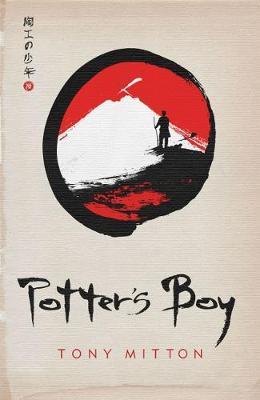
A book that's been on my TBR list long enough that I forget why it is there. This story has a touch of Karate Kid, and a touch of various other stories about medieval Japanese society, but is essentially the story of a boy who follows his dreams, and learns some lessons on the way. A coming of age story perhaps. It is quite a sequential account, but works well enough as a story. Without getting into spoilers, there's a certain circularity to the story, but might leave a feeling that although the internal struggle is resolved, there was still something missing here.
A book that's been on my TBR list long enough that I forget why it is there. This story has a touch of Karate Kid, and a touch of various other stories about medieval Japanese society, but is essentially the story of a boy who follows his dreams, and learns some lessons on the way. A coming of age story perhaps. It is quite a sequential account, but works well enough as a story. Without getting into spoilers, there's a certain circularity to the story, but might leave a feeling that although the internal struggle is resolved, there was still something missing here.
60richardderus
>59 sirfurboy: It feels to me as though most books, even the ones I get from the review-DRC aggregators, are on my Kindle for reasons I no longer remember. Not a story I'm likely to pick up despite my curiosity about medieval Japan.
61sirfurboy
>60 richardderus: LOL, yep, I know how you feel.
62sirfurboy
19. Unroman Britain: Exposing the Great Myth of Britannia - Russell
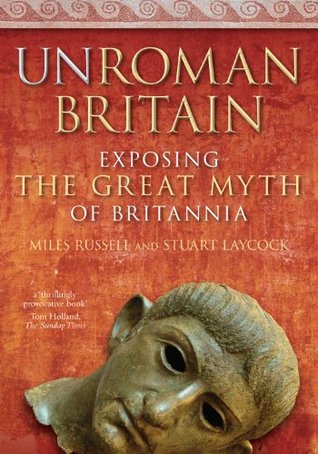
I spent way too long getting to the end of this excellent work that examines Britain under Roman rule and makes the very convincing case that it was not under such rule long enough to ever be fully Romanised. A great analysis of the source material.
I knew or had heard much of this, but the author puts together a coherent, if tentative thesis regarding the post-Roman arrival of the Saxons that synthesises material I was already familiar with, that shows that the old perception of the Saxons being invaders, crushing and driving out all before them, needs some revision based on DNA and archaeological evidence.
Those who criticise the alternative theory of a gradual and largely cultural spread of the Saxons rightly point to a couple of key linguistic arguments - that the insular Celtic language, Brythonic, that survived in the West, vanished almost without a trace on English, and that the few words that did survive suggest Britons being seen as low status in Saxon society.
Russell, however, has a thesis based on some archaeological and linguistic evidence that tentatively suggests the Saxons could themselves have been romanised, and that their presence in Britain was actually a matter of a kind of Romanised continuity. Belt buckle evidence, he suggests, shows that theses groups could have been a Romanised soldier elite. The replacement of the language, he posits, could be because of the process of latinisation of the Britons. Where their language was being replaced by Latin - and would have been fully replaced had the Romans remained longer, as in Gaul - there was no string affinity to either Latin or to Brythonic, at least in the Romanised East. The amount of Latin Vocabulary in modern Welsh would certainly attest to some of that.
There are also, elsewhere, papers suggesting that Celtic languages did, in fact, influence Old English, particularly in some particularly Brythonic constructions.
Also, Russell shows how the Saxon styles in, e.g., housing were modified in Britain in a way that suggests a local population adopted what was practical and better than what they had, whilst ignoring elements they had no use for.
So all in all, this book makes a great case for the cultural spread of the Saxons with only limited cases of expansion by conquest.
It's not the last word on the subject but it is an excellent read on the subject, and much of the thesis rests upon foundations found in the earlier chapters.
I spent way too long getting to the end of this excellent work that examines Britain under Roman rule and makes the very convincing case that it was not under such rule long enough to ever be fully Romanised. A great analysis of the source material.
I knew or had heard much of this, but the author puts together a coherent, if tentative thesis regarding the post-Roman arrival of the Saxons that synthesises material I was already familiar with, that shows that the old perception of the Saxons being invaders, crushing and driving out all before them, needs some revision based on DNA and archaeological evidence.
Those who criticise the alternative theory of a gradual and largely cultural spread of the Saxons rightly point to a couple of key linguistic arguments - that the insular Celtic language, Brythonic, that survived in the West, vanished almost without a trace on English, and that the few words that did survive suggest Britons being seen as low status in Saxon society.
Russell, however, has a thesis based on some archaeological and linguistic evidence that tentatively suggests the Saxons could themselves have been romanised, and that their presence in Britain was actually a matter of a kind of Romanised continuity. Belt buckle evidence, he suggests, shows that theses groups could have been a Romanised soldier elite. The replacement of the language, he posits, could be because of the process of latinisation of the Britons. Where their language was being replaced by Latin - and would have been fully replaced had the Romans remained longer, as in Gaul - there was no string affinity to either Latin or to Brythonic, at least in the Romanised East. The amount of Latin Vocabulary in modern Welsh would certainly attest to some of that.
There are also, elsewhere, papers suggesting that Celtic languages did, in fact, influence Old English, particularly in some particularly Brythonic constructions.
Also, Russell shows how the Saxon styles in, e.g., housing were modified in Britain in a way that suggests a local population adopted what was practical and better than what they had, whilst ignoring elements they had no use for.
So all in all, this book makes a great case for the cultural spread of the Saxons with only limited cases of expansion by conquest.
It's not the last word on the subject but it is an excellent read on the subject, and much of the thesis rests upon foundations found in the earlier chapters.
63sirfurboy
20. The Battle for Christian Britain: Sex, Humanists and Secularisation, 1945–1980 - Callum Brown

This book contains the most comprehensive look at the work of the Public Morality Council (PMC) that exists, and places it at the heart fo a battle for an idea of a Christian Britain that was pervasive in British culture until the 1960s before suddenly collapsing. The book is not just about the PMC, but about a battle for a Christian culture that the author argues (moreso elsewhere) has now gone for good.
It is necessary ti understand that what Brown is talking about here is what he describes as "discursive Christianity". It is a culture that would allow a church based body to have control of what is on television, when shops may open, and such like.
Brown argues that postwar Britain was shaped by a struggle over sexual morality and public culture, with conservative Christians trying to preserve a Christian moral order through institutions like licensing bodies, censorship, and the BBC, while secular humanists and other progressive forces gradually undermined that order. Brown presents the 1950s as the high point of religious moral vigilance, but says that by the late 1960s and 1970s shifting sexual norms and broader secular liberalisation had decisively weakened conservative Christian authority.
To what extent was this discursive Christianity merely culture though? Much of this control was not really representative of the growing trends in Christianity at the time. The Anglican PMC, and its later Catholic takeover are illustrative. It was not just about Christian authority, but the authority of the establishment Christianity (undermined in Wales and Scotland by disestablishment of the churches). Was the establishment Christianity battling for relevance at the same time it was being replaced by something else? Brown doesn't look at that question in detail, but he points towards it.
In any case, this is an excellent work of history that documents an under-studied matter, and brings to light the extent to which many modern historical narratives ignore or play down the way that established churches were wound into the apparatus of state, suppressing non conformist voices as much as the secular humanist ones.

This book contains the most comprehensive look at the work of the Public Morality Council (PMC) that exists, and places it at the heart fo a battle for an idea of a Christian Britain that was pervasive in British culture until the 1960s before suddenly collapsing. The book is not just about the PMC, but about a battle for a Christian culture that the author argues (moreso elsewhere) has now gone for good.
It is necessary ti understand that what Brown is talking about here is what he describes as "discursive Christianity". It is a culture that would allow a church based body to have control of what is on television, when shops may open, and such like.
Brown argues that postwar Britain was shaped by a struggle over sexual morality and public culture, with conservative Christians trying to preserve a Christian moral order through institutions like licensing bodies, censorship, and the BBC, while secular humanists and other progressive forces gradually undermined that order. Brown presents the 1950s as the high point of religious moral vigilance, but says that by the late 1960s and 1970s shifting sexual norms and broader secular liberalisation had decisively weakened conservative Christian authority.
To what extent was this discursive Christianity merely culture though? Much of this control was not really representative of the growing trends in Christianity at the time. The Anglican PMC, and its later Catholic takeover are illustrative. It was not just about Christian authority, but the authority of the establishment Christianity (undermined in Wales and Scotland by disestablishment of the churches). Was the establishment Christianity battling for relevance at the same time it was being replaced by something else? Brown doesn't look at that question in detail, but he points towards it.
In any case, this is an excellent work of history that documents an under-studied matter, and brings to light the extent to which many modern historical narratives ignore or play down the way that established churches were wound into the apparatus of state, suppressing non conformist voices as much as the secular humanist ones.
64sirfurboy
21. Bluelock Vol. 1
(Touchstone takes you to volume 4, but volume 1 doesn't seem to be on LT).

I bought this in a French superstore. French books, and especially graphic novels, tend to be pretty expensive, but this one was pretty cheap, and the allure of having an easy French read sucked me in. I should have thought about it a bit more, as it is actually translated from Japanese to French, and it is about football, a game I don't have a great deal of interest in. Thus my feelings (that this was just OK) may not be representative of someone who loves manga and football, and is probably much younger than me.
One oddity, the book was read from back to front. I am not sure if this is usual for manga, or perhaps just for French manga, or what, because this is not something I usually read! But it caught me off guard when I supposed the cover was printed backwards in error and tried starting the story on the last page!
The story itself is both preposterous, but also with interesting possibilities. The Japanese must find a new world class striker by a Battle Royale competition where individuals must ruthlessly eliminate one another from a very large pool.
Now I said I'm not a big football fan. I understand that FIFA is often considered pretty corrupt and the forthcoming world cup is mostly just a celebration of how to remove money from people for no reason at all, but... surely the idea of football is that it is a beautiful game of two teams. So this concept seems fundamentally flawed in that it selects against the trait that would make the football team work.
It's part of a series, and I won't read on, but if I were writing this, I'd have someone become the superstar striker and then have Japan drummed out of the World Cup in the qualifiers - perhaps heavy handed, but a cautionary tale. I'm not writing it though, and the Battle Royale idea always excites, and placing it in a football context is an interesting departure. This could be enjoyable to some people, but sadly, I'm not one of them.
(Touchstone takes you to volume 4, but volume 1 doesn't seem to be on LT).
I bought this in a French superstore. French books, and especially graphic novels, tend to be pretty expensive, but this one was pretty cheap, and the allure of having an easy French read sucked me in. I should have thought about it a bit more, as it is actually translated from Japanese to French, and it is about football, a game I don't have a great deal of interest in. Thus my feelings (that this was just OK) may not be representative of someone who loves manga and football, and is probably much younger than me.
One oddity, the book was read from back to front. I am not sure if this is usual for manga, or perhaps just for French manga, or what, because this is not something I usually read! But it caught me off guard when I supposed the cover was printed backwards in error and tried starting the story on the last page!
The story itself is both preposterous, but also with interesting possibilities. The Japanese must find a new world class striker by a Battle Royale competition where individuals must ruthlessly eliminate one another from a very large pool.
Now I said I'm not a big football fan. I understand that FIFA is often considered pretty corrupt and the forthcoming world cup is mostly just a celebration of how to remove money from people for no reason at all, but... surely the idea of football is that it is a beautiful game of two teams. So this concept seems fundamentally flawed in that it selects against the trait that would make the football team work.
It's part of a series, and I won't read on, but if I were writing this, I'd have someone become the superstar striker and then have Japan drummed out of the World Cup in the qualifiers - perhaps heavy handed, but a cautionary tale. I'm not writing it though, and the Battle Royale idea always excites, and placing it in a football context is an interesting departure. This could be enjoyable to some people, but sadly, I'm not one of them.
65Whisper1
While going through your thread, I am so impressed both by the number of books your read, and also your incredible selection!
66sirfurboy
>65 Whisper1: Thanks, and thanks too for stopping by. Happy reading. :)
67sirfurboy
22. King of Swords - Dave Duncan

Dave Duncan has written some of the most memorable books I have read (I really think the Seventh Sword series is undersung). However this book was not, unfortunately, in the same realm. It was fine. A good story starting in the real world and then running through an elvish (called starfolk) fantasy world too. Some humour, some action (as the protagonist has a magical unbeatable sword) and a fair bit of intrigue. The best thing about the book was the exploration of ideas around prejudice and race (in this case human and starfolk races). But it dragged... a lot. It was OK, but it was far from Duncan's best work.

Dave Duncan has written some of the most memorable books I have read (I really think the Seventh Sword series is undersung). However this book was not, unfortunately, in the same realm. It was fine. A good story starting in the real world and then running through an elvish (called starfolk) fantasy world too. Some humour, some action (as the protagonist has a magical unbeatable sword) and a fair bit of intrigue. The best thing about the book was the exploration of ideas around prejudice and race (in this case human and starfolk races). But it dragged... a lot. It was OK, but it was far from Duncan's best work.
68richardderus
>67 sirfurboy: An example (to my eyes) of how much authorship matters in reading...you'd be a lot more forgiving if it had been a debut novel instead of a late-career work by a monadnock in the field. I do this with famous writers all the time and only recently caught myself at it.
69sirfurboy
>68 richardderus: I expect you are right. I might have given it three stars in that case. As you know, I gave it two on Goodreads, but I had to make myself complete it. Thanks.
70sirfurboy
23. Religion and Society in Twentieth-Century Britain - Callum Brown
I've recently read Callum Brown’s The Death of Christian Britain, and there is a fair bit of crossover between the two, with a repetition of sources and analysis. This, however is the broader, more synthetic book: it surveys religion across the whole century, emphasising how a kind of Puritanism and respectability shaped society before the 1950s, then tracing the dramatic changes of the 1960s and later religious militancy. That is the exact topic of the other book, of course, but that one is the more explicitly argumentative, offering Brown’s signature thesis about the “death” of Christian discourse and reframing secularisation as a much later than previously supposed, with a sharper cultural rupture in the 1960s.
This book differentiates itself by reading as a survey of religious history in modern Britain, designed to map religion’s place in culture, politics, and everyday life over a long century. It is complementary to the other book, rather than redundant, and the survey is broader and not so focussed on arguing Brown's thesis.
In any case it is an excellent work, and achieves exactly what the author set out to do: to show how religion and society were intertwined in twentieth century Britain.
I've recently read Callum Brown’s The Death of Christian Britain, and there is a fair bit of crossover between the two, with a repetition of sources and analysis. This, however is the broader, more synthetic book: it surveys religion across the whole century, emphasising how a kind of Puritanism and respectability shaped society before the 1950s, then tracing the dramatic changes of the 1960s and later religious militancy. That is the exact topic of the other book, of course, but that one is the more explicitly argumentative, offering Brown’s signature thesis about the “death” of Christian discourse and reframing secularisation as a much later than previously supposed, with a sharper cultural rupture in the 1960s.
This book differentiates itself by reading as a survey of religious history in modern Britain, designed to map religion’s place in culture, politics, and everyday life over a long century. It is complementary to the other book, rather than redundant, and the survey is broader and not so focussed on arguing Brown's thesis.
In any case it is an excellent work, and achieves exactly what the author set out to do: to show how religion and society were intertwined in twentieth century Britain.
71sirfurboy
24. The Blunders of Our Governments - Anthony King

This book looks at some pretty terrible and often extremely costly blunders made by a succession of UK governments over the last 40 years or so. The focus is the UK, and it only really analyses other governments when trying to understand if they blunder as much (often not), and why they don't. There's some repetition, because the latter part of the book provides analysis, seeking to understand if there are systemic issues, what those are and how things might be different if the national UK government did things differently.
I recall pretty much all these blunders, but this is a very useful collation of them. I think the analysis is right too. You cannot eliminate all blunders in government, but the UK governments of all persuasions are especially blunder prone, and those who make the blunders rarely face the consequences of them. Things need to change. But actually making the change without messing everything up? Seems doubtful the UK government could do that without blundering.

This book looks at some pretty terrible and often extremely costly blunders made by a succession of UK governments over the last 40 years or so. The focus is the UK, and it only really analyses other governments when trying to understand if they blunder as much (often not), and why they don't. There's some repetition, because the latter part of the book provides analysis, seeking to understand if there are systemic issues, what those are and how things might be different if the national UK government did things differently.
I recall pretty much all these blunders, but this is a very useful collation of them. I think the analysis is right too. You cannot eliminate all blunders in government, but the UK governments of all persuasions are especially blunder prone, and those who make the blunders rarely face the consequences of them. Things need to change. But actually making the change without messing everything up? Seems doubtful the UK government could do that without blundering.
73sirfurboy
>72 Whisper1: Thanks. :)
74sirfurboy
25. The Ghost Warriors - Bill Tippins

An enjoyable children's story of two boys in a prehistoric setting who must set out on an adventure to save their friend. Confronted with dangers, and with one of them carrying a disability, they must use resourcefulness and intelligence to overcome.
It's not too deep. The disability was a nice touch, and the intended readership will probably not notice that the stone age culture lacks a bit for historical depth. It is, in any case, well imagined. It is quite sequential, but again, that should be fine for the readership.
An enjoyable children's story of two boys in a prehistoric setting who must set out on an adventure to save their friend. Confronted with dangers, and with one of them carrying a disability, they must use resourcefulness and intelligence to overcome.
It's not too deep. The disability was a nice touch, and the intended readership will probably not notice that the stone age culture lacks a bit for historical depth. It is, in any case, well imagined. It is quite sequential, but again, that should be fine for the readership.
75sirfurboy
26. Blood of the Celts - Jean Manco
This book has sat for far too long on my TBR (5 years+) and unfortunately, in the fast moving world of the study of ancient DNA, it has become somewhat outdated. Nevertheless it was a very thorough study of the ancestral story of the Celts as things stood in 2015, when this was published. It doesn't just look at genetics, but also linguistic and archaeological evidence, attempting to provide a thorough recounting of the ancestral story of Celtic peoples.
The problem with the DNA story is that it relies very heavily on studies of Y-DNA. This allows some analysis of patrilineal descent and is quite interesting, but these days all the progress in understanding DNA comes from autosomal DNA - an analysis of much more than just the Y-Chromosome (or else the mtDNA for matrilineal descent). I'd have liked to read more about what this tells us.
It is no fault of the author, however, to have simply written the book too soon! An update would be welcome, and I think the author would do it well. But as it stands, this book provided me little I didn't know - although if you have not read other books on the Celts, this one would still be a great one to start with. Just bear in mind we know more about what the DNA tells us now.
This book has sat for far too long on my TBR (5 years+) and unfortunately, in the fast moving world of the study of ancient DNA, it has become somewhat outdated. Nevertheless it was a very thorough study of the ancestral story of the Celts as things stood in 2015, when this was published. It doesn't just look at genetics, but also linguistic and archaeological evidence, attempting to provide a thorough recounting of the ancestral story of Celtic peoples.
The problem with the DNA story is that it relies very heavily on studies of Y-DNA. This allows some analysis of patrilineal descent and is quite interesting, but these days all the progress in understanding DNA comes from autosomal DNA - an analysis of much more than just the Y-Chromosome (or else the mtDNA for matrilineal descent). I'd have liked to read more about what this tells us.
It is no fault of the author, however, to have simply written the book too soon! An update would be welcome, and I think the author would do it well. But as it stands, this book provided me little I didn't know - although if you have not read other books on the Celts, this one would still be a great one to start with. Just bear in mind we know more about what the DNA tells us now.
76sirfurboy
27. The Novel: A Biography - Michael Schmidt
This book is a sweeping history of the novel in English, looking at its development over centuries, with many many case studies. Instead of offering a rigid theory or a neat canon, Schmidt moves loosely and largely chronologically through seven centuries of fiction, weaving together letters, diaries, essays, and, of course, the novels themselves to show how writers talk back to one another across time. The result is that I came away with a vivid sense of the novel as a living organism, full of arguments, affinities, and surprising lineages, reinventing itself over time. Schmidt’s own voice helps make the thousand-plus pages feel more companionable than dutiful.
That being said, it's a long work, and the selection criteria for novels, while necessary, was such that I was more engaged in some chapters than other. Schmidt is omnivorous but sometimes eccentric in his emphases, omissions, or judgments (especially, in my view, on certain 19th- and 20th-century writers, where the daunting scale of the work makes it, perhaps, impossible to be anything else). This may frustrate anyone looking for a more balanced reference history, although whether it does so, probably depends where you are coming from.
The sheer bulk of the book and its digressive, dip-in-and-out structure mean it works better as a long-term companion. I expect I will refer back to it, but it was not plain sailing reading this through. Still, for readers who enjoy big, opinionated literary histories and who like to discover new writers by way of unexpected connections, this book is a great tour of what the novel has been and might yet be.
This book is a sweeping history of the novel in English, looking at its development over centuries, with many many case studies. Instead of offering a rigid theory or a neat canon, Schmidt moves loosely and largely chronologically through seven centuries of fiction, weaving together letters, diaries, essays, and, of course, the novels themselves to show how writers talk back to one another across time. The result is that I came away with a vivid sense of the novel as a living organism, full of arguments, affinities, and surprising lineages, reinventing itself over time. Schmidt’s own voice helps make the thousand-plus pages feel more companionable than dutiful.
That being said, it's a long work, and the selection criteria for novels, while necessary, was such that I was more engaged in some chapters than other. Schmidt is omnivorous but sometimes eccentric in his emphases, omissions, or judgments (especially, in my view, on certain 19th- and 20th-century writers, where the daunting scale of the work makes it, perhaps, impossible to be anything else). This may frustrate anyone looking for a more balanced reference history, although whether it does so, probably depends where you are coming from.
The sheer bulk of the book and its digressive, dip-in-and-out structure mean it works better as a long-term companion. I expect I will refer back to it, but it was not plain sailing reading this through. Still, for readers who enjoy big, opinionated literary histories and who like to discover new writers by way of unexpected connections, this book is a great tour of what the novel has been and might yet be.
77sirfurboy
28. The Gusii of Kenya: Social, Economic, Cultural, Political & Judicial Perspectives - John Akama
The author of this work about the Gusii people of Kenya (a Bantu speaking tribe in the highlands of Western Kenya, surrounded by non Bantu speaking people) is an academic but neither a histrian, nor anthropologist, nor a sociologist. But despite that, he goes to great lengths to document the history, customs and practice of the Gusii people for posterity. The text is heavily referenced, and although there is, in fact, a paucity of sources being referred to, this reflects the nature of the subject matter, which is not well studied. The book is therefore a valuable addition to the corpus of works on Gusii culture.
To be honest, it's a bit of a tough read. Akama deals with various customs in excruciating detail. That he does so is important, but the book will be better dipped into than read straight through. I was definitely flagging by the end. I am still going to say I really liked it though. Not because it is a book I enjoyed in the traditional sense, but because of what it represents: an exploration of a subject about customs, people and culture that are invisible to most outside the culture, and that might be lost without works such as these.
Kindle unlimited warning, but this is a good example of what kindle unlimited can bring.
The author of this work about the Gusii people of Kenya (a Bantu speaking tribe in the highlands of Western Kenya, surrounded by non Bantu speaking people) is an academic but neither a histrian, nor anthropologist, nor a sociologist. But despite that, he goes to great lengths to document the history, customs and practice of the Gusii people for posterity. The text is heavily referenced, and although there is, in fact, a paucity of sources being referred to, this reflects the nature of the subject matter, which is not well studied. The book is therefore a valuable addition to the corpus of works on Gusii culture.
To be honest, it's a bit of a tough read. Akama deals with various customs in excruciating detail. That he does so is important, but the book will be better dipped into than read straight through. I was definitely flagging by the end. I am still going to say I really liked it though. Not because it is a book I enjoyed in the traditional sense, but because of what it represents: an exploration of a subject about customs, people and culture that are invisible to most outside the culture, and that might be lost without works such as these.
Kindle unlimited warning, but this is a good example of what kindle unlimited can bring.
78sirfurboy
29. Evangelicalism: A Very Short Introduction - John G. Stackhouse

A clear compact, and often provocative primer on Evangelicalism, written by an insider. It succeeds as an entry point to the subject, covering much of the history appropriately. It is not an academic history in the manner of some of my other recent reading, and I expect some evangelicals and certainly historians will find parts of it contestable.
Inevitably Stackhouse must define his subject and does so in what they share, which seems fair, but is one of the areas of contestability. He pushes back at some simplistic representations, although pushing too hard runs the risk of looking like opinion or polemic. It is not the work for a major thesis. All the same there is an attempt to keep his coverage balanced and although certainly not the last word on the subject, it is not a terrible place to start, especially because it is short. And that is what it is intended to be.

A clear compact, and often provocative primer on Evangelicalism, written by an insider. It succeeds as an entry point to the subject, covering much of the history appropriately. It is not an academic history in the manner of some of my other recent reading, and I expect some evangelicals and certainly historians will find parts of it contestable.
Inevitably Stackhouse must define his subject and does so in what they share, which seems fair, but is one of the areas of contestability. He pushes back at some simplistic representations, although pushing too hard runs the risk of looking like opinion or polemic. It is not the work for a major thesis. All the same there is an attempt to keep his coverage balanced and although certainly not the last word on the subject, it is not a terrible place to start, especially because it is short. And that is what it is intended to be.
79sirfurboy
30. The Global Diffusion of Evangelicalism: The Age of Billy Graham and John Stott - Brian Stanley

This book is a concise, authoritative survey of evangelicalism from 1945 to 2000, framed around the ministries of Billy Graham and John Stott. Stanley traces how evangelicalism moved from a transatlantic, Anglo‑American project to a genuinely global movement, with a new centre of gravity in the global South.
The author weaves together missions, scholarship, revivalism, Pentecostal/charismatic renewal, and social engagement, deftly. The judgments seem balanced, and his engagement with non‑Western Christianity is especially valuable, making this an excellent starting point for understanding late twentieth‑century evangelicalism.

This book is a concise, authoritative survey of evangelicalism from 1945 to 2000, framed around the ministries of Billy Graham and John Stott. Stanley traces how evangelicalism moved from a transatlantic, Anglo‑American project to a genuinely global movement, with a new centre of gravity in the global South.
The author weaves together missions, scholarship, revivalism, Pentecostal/charismatic renewal, and social engagement, deftly. The judgments seem balanced, and his engagement with non‑Western Christianity is especially valuable, making this an excellent starting point for understanding late twentieth‑century evangelicalism.
80sirfurboy
31. God is Dead: Secularization in the West - Steve Bruce

This book is well written and an empirically rich defence of the secularisation thesis, arguing that modernisation erodes religion’s social power in Western Europe. It is written from the point of view of a sociologist and stands against Callum Brown's historical work and counter thesis. Bruce synthesises classic theory with demographic and institutional data, and engages with the criticism of secularisation. Yet I felt that the the argument is tightly anchored in the British and wider European experience, underplaying U.S. and global‑South cases that complicate his narrative of linear decline. Some of what he codes as decline could be interpreted as transformation and diversification. His treatment of "re‑sacralisation" and new spiritualities seems brusque.
Despite that, the book is a provocative benchmark in the debate, and it is quite interesting to see how the disciplines of sociology and history line up, somewhat overlap, but differentiate themselves here.

This book is well written and an empirically rich defence of the secularisation thesis, arguing that modernisation erodes religion’s social power in Western Europe. It is written from the point of view of a sociologist and stands against Callum Brown's historical work and counter thesis. Bruce synthesises classic theory with demographic and institutional data, and engages with the criticism of secularisation. Yet I felt that the the argument is tightly anchored in the British and wider European experience, underplaying U.S. and global‑South cases that complicate his narrative of linear decline. Some of what he codes as decline could be interpreted as transformation and diversification. His treatment of "re‑sacralisation" and new spiritualities seems brusque.
Despite that, the book is a provocative benchmark in the debate, and it is quite interesting to see how the disciplines of sociology and history line up, somewhat overlap, but differentiate themselves here.
81sirfurboy
32. Ben Archer and the Star Rider - Rae Knightly

This books showed up in a kindle unlimited trial. Self published but with a good looking cover. I gave it a go without realising at first that it was the fifth in a series. That probably affected my enjoyment, as it dropped me straight into an ongoing story with little to tell me the context. Ben is in a TV studio, telling people he can talk to animals, but for some reason they don't take him too seriously. But soon he is kidnapped and finds himself taken out of the country.
The story was written with enough love by the author that it was still fine as a story. However, there were plenty of reasons why this would need to be self published. The story itself, in the whole book, doesn't have a clear structured end. Rather, it drifts into the next book. I'd have liked to see more dialogue in a mid grade book like this, and the dialogue that was there could have been doing more. There were a lot of places an editor would have picked up on things (not grammar - that was all pretty well done). I marked out one page where every other paragraph started with the same name (10 to 12 times in all). The Point of View was never head hopping - it marked off changes with section breaks - but it did still jump around a lot. It lacked for engaging sub-plots and the polemic of the book was just a touch heavy handed.
But despite all these things, it could well be enjoyed by a younger audience. It claims to be a teen read but also mid grade. I'd say it was clearly children's - mid-grade. Targeting the story there, adding a professional edit and perhaps joining some of the books in the sequence so they become a single coherent three act story would all pay dividends, and I think this could then be an engaging tale for the audience. And even without that, your mileage may vary and younger readers will probably like this more than I did.

This books showed up in a kindle unlimited trial. Self published but with a good looking cover. I gave it a go without realising at first that it was the fifth in a series. That probably affected my enjoyment, as it dropped me straight into an ongoing story with little to tell me the context. Ben is in a TV studio, telling people he can talk to animals, but for some reason they don't take him too seriously. But soon he is kidnapped and finds himself taken out of the country.
The story was written with enough love by the author that it was still fine as a story. However, there were plenty of reasons why this would need to be self published. The story itself, in the whole book, doesn't have a clear structured end. Rather, it drifts into the next book. I'd have liked to see more dialogue in a mid grade book like this, and the dialogue that was there could have been doing more. There were a lot of places an editor would have picked up on things (not grammar - that was all pretty well done). I marked out one page where every other paragraph started with the same name (10 to 12 times in all). The Point of View was never head hopping - it marked off changes with section breaks - but it did still jump around a lot. It lacked for engaging sub-plots and the polemic of the book was just a touch heavy handed.
But despite all these things, it could well be enjoyed by a younger audience. It claims to be a teen read but also mid grade. I'd say it was clearly children's - mid-grade. Targeting the story there, adding a professional edit and perhaps joining some of the books in the sequence so they become a single coherent three act story would all pay dividends, and I think this could then be an engaging tale for the audience. And even without that, your mileage may vary and younger readers will probably like this more than I did.
82richardderus
>81 sirfurboy: Its cover says mid-grade. It sounds dire to me, but it would since I'm enough beyond mid-grade years to have had mine authored by Boethius and printed by Gutenberg.
83sirfurboy
>82 richardderus: Haha... brilliant.
Yep, nothing in that title changed my perception that Kindle Unlimited is a warning.
Yep, nothing in that title changed my perception that Kindle Unlimited is a warning.
84richardderus
>83 sirfurboy: Readers like thee and me ain't so well-served by their...selections, shall we be polite and say.
85Whisper1
Stephen, You read a lot of very in-depth, interesting books. Your reviews are very well written and insightful. I'm glad you are a member of this group!
86sirfurboy
>85 Whisper1: Thanks Whisper1. Yes, I am reading historical context for my history PhD. It is certainly keeping me busy too. Still trying to work through my other TBR books as I go, though.
87sirfurboy
33. The Emergence of Evangelicalism - Michael Haykin and Kenneth J. Stewart (Eds.)

Conceived as a Festschrift, but perhaps rather polemical, this book is a response to Bebbington's seminal 'Evangelicalism in Modern Britain'. Each author acknowledges the immense contribution of Bebbington to this field of study, but most of the authors take issue with him on a number of points, and the result are some very good essays on the subject. Beeke is a stand out, being tightly focussed on his expertise. But much of the polemic seems to come from a particular quarter, and appears to be more theological than historical. Bebbington picks up on this in his closing response, but it was really very noticeable as a reader.
In one essay a reformed theologian spells out the problem: if evangelicalism began with the Methodists and not (as he contends) with the Puritans, then Wesley's Arminianism becomes a foundational stream and not an aberration. But perversely this seems to show the genius of Bebbington's definition. Because the Bebbington quadrilateral is an inclusive definition of evangelicalism that describes what is, and not what we might think should be. When pastors and theologians have tried to define evangelicalism, too often they want to exclude elements, and so their definition doesn't really capture the reality on the ground.
Bebbington's response to the essays is masterful. In broad strokes he manages to pick out the most salient objections, whilst largely re-affirming his thesis. And on one point he does shift his position: his argument regarding the doctrine of assurance enabling the activism of evangelicalism is, he agrees, overstated. He doesn't retract the claim altogether, but graciously acknowledges the evidence brought to bear by those who have critiqued his work.
So this is an interesting work, but I do wonder a little about the selection criteria for those who were included here. Not that one can take issue with anyone included, but the result perhaps shows primarily where the opposition to Bebbington is drawn from.

Conceived as a Festschrift, but perhaps rather polemical, this book is a response to Bebbington's seminal 'Evangelicalism in Modern Britain'. Each author acknowledges the immense contribution of Bebbington to this field of study, but most of the authors take issue with him on a number of points, and the result are some very good essays on the subject. Beeke is a stand out, being tightly focussed on his expertise. But much of the polemic seems to come from a particular quarter, and appears to be more theological than historical. Bebbington picks up on this in his closing response, but it was really very noticeable as a reader.
In one essay a reformed theologian spells out the problem: if evangelicalism began with the Methodists and not (as he contends) with the Puritans, then Wesley's Arminianism becomes a foundational stream and not an aberration. But perversely this seems to show the genius of Bebbington's definition. Because the Bebbington quadrilateral is an inclusive definition of evangelicalism that describes what is, and not what we might think should be. When pastors and theologians have tried to define evangelicalism, too often they want to exclude elements, and so their definition doesn't really capture the reality on the ground.
Bebbington's response to the essays is masterful. In broad strokes he manages to pick out the most salient objections, whilst largely re-affirming his thesis. And on one point he does shift his position: his argument regarding the doctrine of assurance enabling the activism of evangelicalism is, he agrees, overstated. He doesn't retract the claim altogether, but graciously acknowledges the evidence brought to bear by those who have critiqued his work.
So this is an interesting work, but I do wonder a little about the selection criteria for those who were included here. Not that one can take issue with anyone included, but the result perhaps shows primarily where the opposition to Bebbington is drawn from.
88sirfurboy
34 Israelism in Modern Britain - Aidan Cottrell-Boyce
This book looks at the British Israel movement - or rather, an strand of thought perhaps? Something that was once quite pervasive but now is definitely on the fringes of Christian thought - yet perhaps not so much so as it should be! The book's strength lies in its refusal to treat British-Israelism as a mere curiosity; instead, it convincingly presents the movement as a minor but revealing strand of twentieth‑century British culture, with adherents at the highest levels of society, including members of the royal family and political elites. Chapters on Ireland, the British Empire, the State of Israel, Russia and the European Union neatly demonstrate how British-Israelist ideas adapted to the geopolitics of the day, whilst maintaining the view that the lost tribes of Israel had moved northwards into Europe and spread to America and the British Empire.
The book is a genuinely original study of a movement that has long sat at the fringes of both British religious history and nationalism studies. Drawing on rich archival work, Cottrell-Boyce reconstructs the institutional world of British-Israelism and shows how a marginal theology intersected with more mainstream discourses of empire, race and national destiny. In the modern world, like so many theologies, some of the provenance has been forgotten, yet it persists in the Christian Identity movement and, I think, in American Christian Nationalism.
For scholars of minority religions, nationalism, and Christian heterodoxy, this will be an indispensable reference work. The subject is not as niche as it looks, but at the price, you'll want to get a library copy!
This book looks at the British Israel movement - or rather, an strand of thought perhaps? Something that was once quite pervasive but now is definitely on the fringes of Christian thought - yet perhaps not so much so as it should be! The book's strength lies in its refusal to treat British-Israelism as a mere curiosity; instead, it convincingly presents the movement as a minor but revealing strand of twentieth‑century British culture, with adherents at the highest levels of society, including members of the royal family and political elites. Chapters on Ireland, the British Empire, the State of Israel, Russia and the European Union neatly demonstrate how British-Israelist ideas adapted to the geopolitics of the day, whilst maintaining the view that the lost tribes of Israel had moved northwards into Europe and spread to America and the British Empire.
The book is a genuinely original study of a movement that has long sat at the fringes of both British religious history and nationalism studies. Drawing on rich archival work, Cottrell-Boyce reconstructs the institutional world of British-Israelism and shows how a marginal theology intersected with more mainstream discourses of empire, race and national destiny. In the modern world, like so many theologies, some of the provenance has been forgotten, yet it persists in the Christian Identity movement and, I think, in American Christian Nationalism.
For scholars of minority religions, nationalism, and Christian heterodoxy, this will be an indispensable reference work. The subject is not as niche as it looks, but at the price, you'll want to get a library copy!
89sirfurboy
35. Religion in Britain: A Persistent Paradox - Grace Davie

This is a readable overview of how religion continues to matter in a country that is steadily becoming more secular. Secularisation is viewed through a sociological lens, and the book's central thesis is that British religion is not disappearing so much as changing shape, with declining church attendance seen alongside growing visibility in public debate. Nevertheless it is part of the secularisation narrative from a sociological viewpoint, as opposed to the thesis of the historian Callum Brown.
Davie is not unaware of the context, and addresses that head on. A strength is in her placing of today's religious landscape in historical context. She moves beyond simple narratives of decline to show how Christian heritage, immigration, public controversies, and the rise of "vicarious religion" all help explain Britain’s contradictory religious life.
The book is a thoughtful and fair introduction and reference. A wide range of religious developments in Britain are considered, including some account of the rise of Pentecostalism, although the book could have gone further on this. All in all another interesting contribution to the secularisation narrartive.

This is a readable overview of how religion continues to matter in a country that is steadily becoming more secular. Secularisation is viewed through a sociological lens, and the book's central thesis is that British religion is not disappearing so much as changing shape, with declining church attendance seen alongside growing visibility in public debate. Nevertheless it is part of the secularisation narrative from a sociological viewpoint, as opposed to the thesis of the historian Callum Brown.
Davie is not unaware of the context, and addresses that head on. A strength is in her placing of today's religious landscape in historical context. She moves beyond simple narratives of decline to show how Christian heritage, immigration, public controversies, and the rise of "vicarious religion" all help explain Britain’s contradictory religious life.
The book is a thoughtful and fair introduction and reference. A wide range of religious developments in Britain are considered, including some account of the rise of Pentecostalism, although the book could have gone further on this. All in all another interesting contribution to the secularisation narrartive.
90sirfurboy
36. A Short History of Global Evangelicalism - Mark Hutchinson
This book traces evangelicalism from its eighteenth‑century North Atlantic origins through to its twenty‑first‑century global diffusion, with sustained attention to developments in Africa, Asia, Latin America, and Oceania. Framing their narrative through David Bebbington’s quadrilateral, the author adopts his definition explicitly in the opening chapter, using it to resolve definitional debates and to organise the account of evangelicalism’s diverse regional expressions. The result is an accessible yet authoritative synthesis.
The book's significance is not strictly groundbreaking, but it offers one of the first single-volume, genuinely global surveys of evangelicalism from the eighteenth century to the present, moving beyond Anglocentric or US‑centric narratives to trace how the movement became multicentred and indigenised in the Global South.
This book traces evangelicalism from its eighteenth‑century North Atlantic origins through to its twenty‑first‑century global diffusion, with sustained attention to developments in Africa, Asia, Latin America, and Oceania. Framing their narrative through David Bebbington’s quadrilateral, the author adopts his definition explicitly in the opening chapter, using it to resolve definitional debates and to organise the account of evangelicalism’s diverse regional expressions. The result is an accessible yet authoritative synthesis.
The book's significance is not strictly groundbreaking, but it offers one of the first single-volume, genuinely global surveys of evangelicalism from the eighteenth century to the present, moving beyond Anglocentric or US‑centric narratives to trace how the movement became multicentred and indigenised in the Global South.
91sirfurboy
37. Paper Boat Paper Bird - David Almond, illustrated by Kirsti Beautyman.

I have never read a David Almond book I disliked, and that hasn't changed here. This book is beautifully written and beautifully illustrated. Mina, one of Almond's enduring characters, returns here in a tale set in Japan, and in the afterword he explains why it is Mina and why Japan. The afterword adds a lot.
The book is aimed at younger readers up to mid-grade. It is illustrated throughout and the text is short, allowing a good sense of progress. That is a real plus. The story is more slice of life than anything, but with a message about connection too.
For me, I prefer Almonds longer stories that are a bit more involved. For younger readers, I expect they will enjoy this for what it is, and for their ability to progress quickly through it.

I have never read a David Almond book I disliked, and that hasn't changed here. This book is beautifully written and beautifully illustrated. Mina, one of Almond's enduring characters, returns here in a tale set in Japan, and in the afterword he explains why it is Mina and why Japan. The afterword adds a lot.
The book is aimed at younger readers up to mid-grade. It is illustrated throughout and the text is short, allowing a good sense of progress. That is a real plus. The story is more slice of life than anything, but with a message about connection too.
For me, I prefer Almonds longer stories that are a bit more involved. For younger readers, I expect they will enjoy this for what it is, and for their ability to progress quickly through it.
92PaulCranswick
>89 sirfurboy: That looks an important read, Stephen.
93sirfurboy
>92 PaulCranswick: Yep. I'm reading another of her works now. It is perceptive and well researched and thought through.
94sirfurboy
38 A History of English Christianity 1920-2000 - Adrian Hastings

This book is a huge and wide-ranging survey of twentieth century Christianity, which remains highly useful for understanding the religious history of modern England, but only to a much lesser extent, Wales, Scotland or Ireland. It's a standard text, and is well balanced and perhaps encyclopaedic in coverage. The breadth of the work is a real strength. Hastings covers Anglicanism, Free Churches, and Roman Catholicism, and talks at length about the efforts towards ecumenism, and the crossing into politics. Wider cultural change is discussed, of course, in a time that saw huge such changes, and the book is somewhat interpretive on that.
The work reflects the author’s Roman Catholic standpoint, so it tends to give Catholicism a more prominent role than readers might expect for English Christianity. But there may be an element of this being a useful corrective. Nevertheless, this is at the expense of non-conformity and especially the story of Pentecostal and charismatic expansion, which is mentioned but where the work shows why there is more research to be done on those. Even so, the book’s measured tone and serious engagement with decline, institutional change, and church life make it a valuable account of twentieth-century English Christianity.

This book is a huge and wide-ranging survey of twentieth century Christianity, which remains highly useful for understanding the religious history of modern England, but only to a much lesser extent, Wales, Scotland or Ireland. It's a standard text, and is well balanced and perhaps encyclopaedic in coverage. The breadth of the work is a real strength. Hastings covers Anglicanism, Free Churches, and Roman Catholicism, and talks at length about the efforts towards ecumenism, and the crossing into politics. Wider cultural change is discussed, of course, in a time that saw huge such changes, and the book is somewhat interpretive on that.
The work reflects the author’s Roman Catholic standpoint, so it tends to give Catholicism a more prominent role than readers might expect for English Christianity. But there may be an element of this being a useful corrective. Nevertheless, this is at the expense of non-conformity and especially the story of Pentecostal and charismatic expansion, which is mentioned but where the work shows why there is more research to be done on those. Even so, the book’s measured tone and serious engagement with decline, institutional change, and church life make it a valuable account of twentieth-century English Christianity.
95sirfurboy
39. The Religious Crisis of the 1960s - Hugh McLeod
This book offers a nuanced, empirically dense reconstruction of Christian decline and religious innovation across the "long 1960s," (engaging with the unobvious debate over when the 1960s really began and ended). This book has become a standard point of entry into the historiography of post‑war secularisation, engaging with the debate between sociologists and revisionist historians such as Callum Brown.
Mcleod positions himself between the sociological long‑run-secularism accounts and Callum Brown’s thesis of an abrupt 1960s rupture of "discursive Christianity". He endorses elements of Brown’s timing, which challenge the accounts that find the causes of secularism in industrialisation or rationalisation, but rejects Brown's single‑cause narrative too. McLeod astutely pinpoints the problem with both ends of this spectrum: he rejects single master-factor explanations, and, I think wisely, concludes that the religious crisis resulted from a conjunction of multiple long and short‑term factors (family change, marriage and relationships, student protest, affluence, legal secularisation, erosion of "Christian nation" identity, etc.)
This book is a consciously synthetic work. McLeod addresses Brown at the outset, but also analyses the arguments of sociologists like Bruce and Davie. Indeed he gives much thought to Grace Davie's "Believing without Belonging" thesis, and draws together a huge amount of data and a very impressive bibliography. It is a much needed contribution that accepts what Brown has demonstrated but moves beyond Brown, and engages carefully with the response to Brown from sociologists too.
This book offers a nuanced, empirically dense reconstruction of Christian decline and religious innovation across the "long 1960s," (engaging with the unobvious debate over when the 1960s really began and ended). This book has become a standard point of entry into the historiography of post‑war secularisation, engaging with the debate between sociologists and revisionist historians such as Callum Brown.
Mcleod positions himself between the sociological long‑run-secularism accounts and Callum Brown’s thesis of an abrupt 1960s rupture of "discursive Christianity". He endorses elements of Brown’s timing, which challenge the accounts that find the causes of secularism in industrialisation or rationalisation, but rejects Brown's single‑cause narrative too. McLeod astutely pinpoints the problem with both ends of this spectrum: he rejects single master-factor explanations, and, I think wisely, concludes that the religious crisis resulted from a conjunction of multiple long and short‑term factors (family change, marriage and relationships, student protest, affluence, legal secularisation, erosion of "Christian nation" identity, etc.)
This book is a consciously synthetic work. McLeod addresses Brown at the outset, but also analyses the arguments of sociologists like Bruce and Davie. Indeed he gives much thought to Grace Davie's "Believing without Belonging" thesis, and draws together a huge amount of data and a very impressive bibliography. It is a much needed contribution that accepts what Brown has demonstrated but moves beyond Brown, and engages carefully with the response to Brown from sociologists too.
96sirfurboy
40. Religion in Britain Since 1945: Believing Without Belonging - Grace Davie

In this book, Davie frames what is the now-classic “believing without belonging” thesis. Her core claim is that post-war Britain has seen declining institutional Christian participation (falling church attendance, membership and vocations) alongside a more persistent, but diffuse layer of religious belief, identity and practice that remains culturally and morally significant even when not mediated through regular congregational life.
Davie couples this with a nuanced engagement with secularisation theory, arguing that Britain exemplifies a distinctive European pattern in which religious institutions lose social power while religion maintains a residual presence in public ritual, media, as well as privately held belief.
The book frames some conceptual vocabulary, talking about "unattached" or "vicarious", and it also synthesises data to make its points. It is a sociological work that takes the data seriously and attempts to follow where the data leads but avoids the temptation to find causation where there is only correlation.
At the same time, both the book and the "believing without belonging" formula have attracted criticism and subsequent revision, I believe. Quantitatively, some have argued that Davie underestimates the long-term decline of both belief and belonging, pointing to later survey evidence for the growth of self-described non-religion and “no belief” positions that make "believing" itself look more fragile than her formulation implies.
Others suggest the thesis over-privileges Christianity and the historic churches, giving less attention to non-Christian faiths and to forms of spirituality and secularity that do not fit a residual Christian cultural frame. Davie herself has modified and supplemented the idea with the notion of "vicarious religion," emphasising that an active religious minority can perform rituals and sustain moral frameworks on behalf of a much larger, more ambivalent public, and acknowledging that belief and belonging can vary and be understood in different ways.
All in all, however, this is another important work in the secularisation jigsaw, and it is a must read on that score, just for being the work that frames the velieveing without belonging debate.

In this book, Davie frames what is the now-classic “believing without belonging” thesis. Her core claim is that post-war Britain has seen declining institutional Christian participation (falling church attendance, membership and vocations) alongside a more persistent, but diffuse layer of religious belief, identity and practice that remains culturally and morally significant even when not mediated through regular congregational life.
Davie couples this with a nuanced engagement with secularisation theory, arguing that Britain exemplifies a distinctive European pattern in which religious institutions lose social power while religion maintains a residual presence in public ritual, media, as well as privately held belief.
The book frames some conceptual vocabulary, talking about "unattached" or "vicarious", and it also synthesises data to make its points. It is a sociological work that takes the data seriously and attempts to follow where the data leads but avoids the temptation to find causation where there is only correlation.
At the same time, both the book and the "believing without belonging" formula have attracted criticism and subsequent revision, I believe. Quantitatively, some have argued that Davie underestimates the long-term decline of both belief and belonging, pointing to later survey evidence for the growth of self-described non-religion and “no belief” positions that make "believing" itself look more fragile than her formulation implies.
Others suggest the thesis over-privileges Christianity and the historic churches, giving less attention to non-Christian faiths and to forms of spirituality and secularity that do not fit a residual Christian cultural frame. Davie herself has modified and supplemented the idea with the notion of "vicarious religion," emphasising that an active religious minority can perform rituals and sustain moral frameworks on behalf of a much larger, more ambivalent public, and acknowledging that belief and belonging can vary and be understood in different ways.
All in all, however, this is another important work in the secularisation jigsaw, and it is a must read on that score, just for being the work that frames the velieveing without belonging debate.
97sirfurboy
41. God and Greater Britain: Religion and National Life in Britain and Ireland, 1843-1945 - John Wolffe
This book offers a wide-ranging, carefully researched survey of how religion shaped politics, culture, and national identities across the British Isles during a long century of imperial expansion and crisis. It draws on a substantial body of primary research and a synthesis of secondary literature. Wolffe moves beyond institutional church history, as found in some other works I've read, and explores "unofficial" religion, the impact of evangelicalism and Catholic revival, and the ways religious belief informed popular understandings of nationhood in England, Scotland, Wales, and Ireland
One surprise, and difference her from other works, is his sensitive use of novels and other literary sources as primary sources: windows onto shifting religious mentalities. Particularly strong are his treatments of moments of national crisis where he demonstrates how heightened religiosity and religious nationalism intersected.
As a piece of historiography, the book has justifiably been praised for its originality of scope and its judicious blend of synthesis and fresh research. Its comparative attention to the various "Britains" and "Irelands" within the Union makes it a particularly valuable resource for scholars interested in national consciousness, imperial ideology, and the varieties of religious nationalism, while the incorporation of fictional and non-fictional print culture seemed especially useful.
This book offers a wide-ranging, carefully researched survey of how religion shaped politics, culture, and national identities across the British Isles during a long century of imperial expansion and crisis. It draws on a substantial body of primary research and a synthesis of secondary literature. Wolffe moves beyond institutional church history, as found in some other works I've read, and explores "unofficial" religion, the impact of evangelicalism and Catholic revival, and the ways religious belief informed popular understandings of nationhood in England, Scotland, Wales, and Ireland
One surprise, and difference her from other works, is his sensitive use of novels and other literary sources as primary sources: windows onto shifting religious mentalities. Particularly strong are his treatments of moments of national crisis where he demonstrates how heightened religiosity and religious nationalism intersected.
As a piece of historiography, the book has justifiably been praised for its originality of scope and its judicious blend of synthesis and fresh research. Its comparative attention to the various "Britains" and "Irelands" within the Union makes it a particularly valuable resource for scholars interested in national consciousness, imperial ideology, and the varieties of religious nationalism, while the incorporation of fictional and non-fictional print culture seemed especially useful.
98sirfurboy
42. Mouse Bird Snake Wolf - David Almond
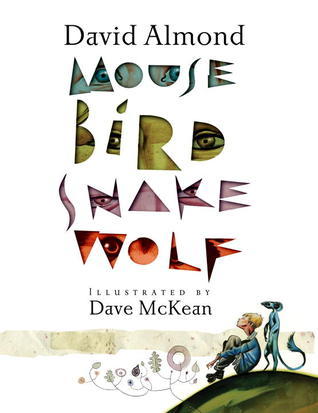
This is a lovely book written by a very accomplished children's writer, who I greatly admire. Almond has written some fantastic books, and everything he writes is worth reading. This is no exception. My second illustrated story by this author that I read this week, and I thought this one was better than Paper Boat Paper Bird. It was better because there was a clear story arc here, and also some great subtext and use of metaphor.
The story is essentially a fable set in a world that is incomplete because the gods have become lazy. So three children set about imagining some of what is missing. The story is written for children, but it bears adult scrutiny too. There is a nice touch of humour, and some themes about imagination, and other matters too. I felt there was an undercurrent of Almond's catholic background here, but also a lovely tale that asks questions of the reader too.
This is a lovely book written by a very accomplished children's writer, who I greatly admire. Almond has written some fantastic books, and everything he writes is worth reading. This is no exception. My second illustrated story by this author that I read this week, and I thought this one was better than Paper Boat Paper Bird. It was better because there was a clear story arc here, and also some great subtext and use of metaphor.
The story is essentially a fable set in a world that is incomplete because the gods have become lazy. So three children set about imagining some of what is missing. The story is written for children, but it bears adult scrutiny too. There is a nice touch of humour, and some themes about imagination, and other matters too. I felt there was an undercurrent of Almond's catholic background here, but also a lovely tale that asks questions of the reader too.
99sirfurboy
43. Church Growth in Britain - 1980 to the present - Goodhew
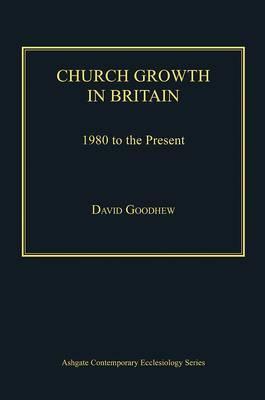
This book is a deliberately revisionist intervention in the secularisation debate, marshalling an impressive range of empirical case studies to contest the narrative of linear religious decline. As with so much in the field, it takes Callum Brown's thesis seriously, but also gives serious attention to the sociologists of British Christianity and secularisation. It does not discard them, but argues solidly that the older theories of secularisation have been demolished, but that a more nuanced understanding can be somewhat sustained (despit ethe paradox of a church that is actually neither growing nor contracting, but changing).
Contributions work carefully with diocesan statistics, congregational data and regional surveys to show that, between 1980 and 2010, stories of contraction in some long‑established denominations coexist with equally real instances of growth, particularly in newer congregations, migrant churches and urban contexts often written off as “post‑Christian”. Helpfully, the volume’s remit is genuinely British rather than merely English, with chapters on Scotland, Wales and Northern Ireland complicating any tidy national narrative.
As contemporary ecclesiology, the collection is at its strongest when it stays close to this kind of granular, location‑specific material and allows the complexity of the evidence to trouble both triumphalist “revival” rhetoric and fatalistic declensionism alike. The explicitly theological framing and the polemical edge of the anti‑secularisation stance will not convince every reader, and at times the argument against “the” secularisation thesis risks becoming as complicated and arguable as the positions it seeks to dislodge. Nevertheless, the essays are uniformly readable and methodologically serious. Once again an excellent work I will refer to again.
This book is a deliberately revisionist intervention in the secularisation debate, marshalling an impressive range of empirical case studies to contest the narrative of linear religious decline. As with so much in the field, it takes Callum Brown's thesis seriously, but also gives serious attention to the sociologists of British Christianity and secularisation. It does not discard them, but argues solidly that the older theories of secularisation have been demolished, but that a more nuanced understanding can be somewhat sustained (despit ethe paradox of a church that is actually neither growing nor contracting, but changing).
Contributions work carefully with diocesan statistics, congregational data and regional surveys to show that, between 1980 and 2010, stories of contraction in some long‑established denominations coexist with equally real instances of growth, particularly in newer congregations, migrant churches and urban contexts often written off as “post‑Christian”. Helpfully, the volume’s remit is genuinely British rather than merely English, with chapters on Scotland, Wales and Northern Ireland complicating any tidy national narrative.
As contemporary ecclesiology, the collection is at its strongest when it stays close to this kind of granular, location‑specific material and allows the complexity of the evidence to trouble both triumphalist “revival” rhetoric and fatalistic declensionism alike. The explicitly theological framing and the polemical edge of the anti‑secularisation stance will not convince every reader, and at times the argument against “the” secularisation thesis risks becoming as complicated and arguable as the positions it seeks to dislodge. Nevertheless, the essays are uniformly readable and methodologically serious. Once again an excellent work I will refer to again.
100sirfurboy
44. Christianity in the Twentieth Century: A World History - Brian Stanley

The author's central thesis in this book is that the twentieth century can't be neatly labelled either "the secular century" or "the Christian century," but must instead be seen as an era of rapid, uneven, and often fragile Christian expansion and contraction, in which patterns of believing and belonging (following Grace Davie's work) shifted kaleidoscopically across the globe. Using a thematic structure built around fifteen key issues and paired case studies, he argues that Christianity became genuinely polycentric and multicultural, yet remained deeply entangled with local nationalisms, ideologies, and cultural forms. There is a wonderful question arising out of this as to who converted whom.
To make his case, Stanley positions his work self-consciously between triumphalist narratives of "world Christianity" and declensionist accounts of secularisation, insisting that both overlook the complex ways churches negotiated war, decolonisation, persecution, attacks on human rights and migration. His aim is less to offer a single grand theory than to show, through well chosen examples, how theological ideas were translated into specific contexts. He goes on to show how those translations collectively reshaped Christianity from a largely European-American religion into a dispersed, contested, and adaptive global faith.
This is a good work that engages with the scholarship, and presents a more nuanced understanding of the situation that - true to its title - encompasses a world view and is not locked into just one regional context.

The author's central thesis in this book is that the twentieth century can't be neatly labelled either "the secular century" or "the Christian century," but must instead be seen as an era of rapid, uneven, and often fragile Christian expansion and contraction, in which patterns of believing and belonging (following Grace Davie's work) shifted kaleidoscopically across the globe. Using a thematic structure built around fifteen key issues and paired case studies, he argues that Christianity became genuinely polycentric and multicultural, yet remained deeply entangled with local nationalisms, ideologies, and cultural forms. There is a wonderful question arising out of this as to who converted whom.
To make his case, Stanley positions his work self-consciously between triumphalist narratives of "world Christianity" and declensionist accounts of secularisation, insisting that both overlook the complex ways churches negotiated war, decolonisation, persecution, attacks on human rights and migration. His aim is less to offer a single grand theory than to show, through well chosen examples, how theological ideas were translated into specific contexts. He goes on to show how those translations collectively reshaped Christianity from a largely European-American religion into a dispersed, contested, and adaptive global faith.
This is a good work that engages with the scholarship, and presents a more nuanced understanding of the situation that - true to its title - encompasses a world view and is not locked into just one regional context.
101sirfurboy
45. Religion in Modern Britain - Steve Bruce
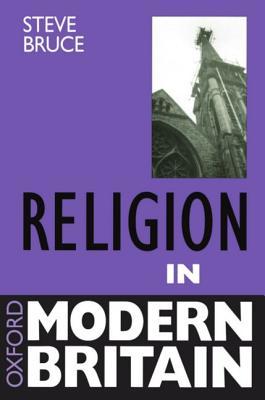
Steve Bruce is a leading voice among sociologists of religion in modern Britain, who has written much on the secularisation debate, and is a defender of the secularisation thesis. At the same time, he is very well aware (and has collaborated with) revisionist historians such as Callum Brown, so this book is, not unexpectedly, a rigorous and data-rich account of religious decline in twentieth-century Britain, presenting the secularisation thesis in its most systematic sociological form.
Bruce draws on survey data, denominational statistics, and comparative analysis. He argues persuasively that the erosion of religious practice and belief in Britain is not merely a surface-level cultural shift but reflects deep structural changes in modern society. The book is a must read for anyone seeking a foundational understanding of how industrialisation, individualism, and social fragmentation have, in this thesis, steadily marginalised institutional Christianity from public and private life alike.
The book is thought-provoking, but certainly not uncontested. Bruce treats new religious movements, as well as evangelicalism, and Pentecostalism. He argues these are incapable of reversing the overall secularising trend, and I thought he was particularly astute in his remarks concerning new age beliefs. Scholars disagree, however. Bruce's thesis is here, but attempts at refutation are elsewhere. E.g. the essays in "Redefining Christian Britain: Post 1945 Perspectives" (edited by Jane Garnett et al.) Readers interested in the more complex interplay between religious renewal and cultural modernity may wish Bruce had engaged more deeply with charismatic and ethnic minority Christianity, as has been discussed in "Church Growth in Britain - 1980 to the present" by Goodhew or especially "Christianity in the Twentieth Century: A World History" by Brian Stanley, which volume arrives at a nuanced view that the twentieth century was neither "the secular century" nor "the Christian century," but must instead it should be viewed as a era of rapid, uneven, and often fragile Christian expansion and contraction.
Nevertheless, as a concise and clearly argued introduction to the sociology of religion in a British context, the book remains a benchmark work. Don't skip this one. Essential reading for students and researchers who need to understand the intellectual framework against which debates about religious vitality in contemporary Britain are still conducted.
Steve Bruce is a leading voice among sociologists of religion in modern Britain, who has written much on the secularisation debate, and is a defender of the secularisation thesis. At the same time, he is very well aware (and has collaborated with) revisionist historians such as Callum Brown, so this book is, not unexpectedly, a rigorous and data-rich account of religious decline in twentieth-century Britain, presenting the secularisation thesis in its most systematic sociological form.
Bruce draws on survey data, denominational statistics, and comparative analysis. He argues persuasively that the erosion of religious practice and belief in Britain is not merely a surface-level cultural shift but reflects deep structural changes in modern society. The book is a must read for anyone seeking a foundational understanding of how industrialisation, individualism, and social fragmentation have, in this thesis, steadily marginalised institutional Christianity from public and private life alike.
The book is thought-provoking, but certainly not uncontested. Bruce treats new religious movements, as well as evangelicalism, and Pentecostalism. He argues these are incapable of reversing the overall secularising trend, and I thought he was particularly astute in his remarks concerning new age beliefs. Scholars disagree, however. Bruce's thesis is here, but attempts at refutation are elsewhere. E.g. the essays in "Redefining Christian Britain: Post 1945 Perspectives" (edited by Jane Garnett et al.) Readers interested in the more complex interplay between religious renewal and cultural modernity may wish Bruce had engaged more deeply with charismatic and ethnic minority Christianity, as has been discussed in "Church Growth in Britain - 1980 to the present" by Goodhew or especially "Christianity in the Twentieth Century: A World History" by Brian Stanley, which volume arrives at a nuanced view that the twentieth century was neither "the secular century" nor "the Christian century," but must instead it should be viewed as a era of rapid, uneven, and often fragile Christian expansion and contraction.
Nevertheless, as a concise and clearly argued introduction to the sociology of religion in a British context, the book remains a benchmark work. Don't skip this one. Essential reading for students and researchers who need to understand the intellectual framework against which debates about religious vitality in contemporary Britain are still conducted.
102m.belljackson
Curious. Do any of the RELIGION books account for why the three Abrahamic religions would each choose
Abraham as their founder - a man who gave his wife to another man as his "sister,"
a man willing to stab his son to death instead of himself,
a man who sent his mistress and their son into the wilderness with nothing for survival...?
Why not Noah - or Moses - or Buddha?
Abraham as their founder - a man who gave his wife to another man as his "sister,"
a man willing to stab his son to death instead of himself,
a man who sent his mistress and their son into the wilderness with nothing for survival...?
Why not Noah - or Moses - or Buddha?
103sirfurboy
>102 m.belljackson: These are histories of 20th century Christianity, and none of them are theological works, so they won't be addressing that question, no.
I suppose, however, that if the Abrahamic religions didn't look back to Abraham, they probably wouldn't be Abrahamic religions. :)
There's a theological answer, of course. But you'll find that in a theology book. See, for instance, Systematic Theology - Wayne Grudem - the section on "The Covenants Between God and Man". But I'm interested in the historiography here, not the theology (except inasmuch as it drives the historiography).
I suppose, however, that if the Abrahamic religions didn't look back to Abraham, they probably wouldn't be Abrahamic religions. :)
There's a theological answer, of course. But you'll find that in a theology book. See, for instance, Systematic Theology - Wayne Grudem - the section on "The Covenants Between God and Man". But I'm interested in the historiography here, not the theology (except inasmuch as it drives the historiography).
104sirfurboy
46. The Church in the Modern Age - Jeremy Morris

This book is a concise, well structured survey of twentieth-century Christianity, and it succeeds particularly well as a global history rather than a narrowly European one. Its three-part periodisation shapes the book, and Morris deftly links ecclesiastical developments to war, decolonisation, and the shift of Christianity’s centre of gravity toward the Global South. The book rehearses themes in other histories, but provides fresh insight too.
What makes the book especially valuable, I think, is the balance it strikes between breadth and clarity: it covers Catholicism, Orthodoxy (neglected by some others), and Protestantism, yet it still makes room for thematic chapters. These cover mission, ecumenism, independency, and Pentecostalism across the century. The chapter on Pentecostalism is a particular strength for me, because it treats the movement not as a marginal curiosity but as one of the century’s defining Christian transformations, with attention to its roots, its growth in the Global South, and its charismatic reshaping of Christian life.
Whether that should be tempered by a reading of Steve Bruce is an open question, but it is refreshing to see that depth of insight, rather than treating the pentecostal movement as an also ran.

This book is a concise, well structured survey of twentieth-century Christianity, and it succeeds particularly well as a global history rather than a narrowly European one. Its three-part periodisation shapes the book, and Morris deftly links ecclesiastical developments to war, decolonisation, and the shift of Christianity’s centre of gravity toward the Global South. The book rehearses themes in other histories, but provides fresh insight too.
What makes the book especially valuable, I think, is the balance it strikes between breadth and clarity: it covers Catholicism, Orthodoxy (neglected by some others), and Protestantism, yet it still makes room for thematic chapters. These cover mission, ecumenism, independency, and Pentecostalism across the century. The chapter on Pentecostalism is a particular strength for me, because it treats the movement not as a marginal curiosity but as one of the century’s defining Christian transformations, with attention to its roots, its growth in the Global South, and its charismatic reshaping of Christian life.
Whether that should be tempered by a reading of Steve Bruce is an open question, but it is refreshing to see that depth of insight, rather than treating the pentecostal movement as an also ran.
105PaulCranswick
Well Stephen your reading is very specific this year and on a subject that I suppose is deserving of so heavy a coverage. It must have been lovely light relief though to read the book by David Almond!
106sirfurboy
>105 PaulCranswick: Yep, it's nice to slot in some of my more normal reading. But doing a history PhD certainly requires a lot of reading! Perhaps more reading than any other subject. This is for the first of two literature reviews I am doing, because in history you need to become an expert on the context before you can touch the primary sourcing. And there's a lot of primary sources to read when I get there.
108sirfurboy
>107 PaulCranswick: Thanks. Yep.
109sirfurboy
47. Stealing Hollywood: Story Structure Secrets for Writing Your Best Book - Alexandra Sokoloff
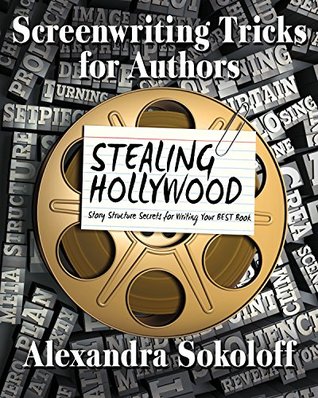
Alexandra Sokoloff is the impeccably credentialled author of this work. A screenwriter and best selling novelist, both traditionally published and also self published, she knows what she is talking about, and writes an engaging book filled with advice for writers. Much of it rehearses advice in other books, but that's only because good advice is good advice. This is a book I'll refer to again.
The practical craft text repurposes screenwriting tools for novelists and scriptwriters, with a particular focus on the three‑act, eight‑sequence structure, high‑concept premises, and visual “storyboard” plotting. Drawing on her background with workshops, Sokoloff walks the reader through techniques like the index‑card method, set‑piece construction, and film‑style pacing and suspense, repeatedly grounding abstract structural ideas in detailed breakdowns of popular movies.
There is an emphasis on premise, query hooks, and marketable structure, too, that should appeal to writers aiming at traditional or commercial publication, though those looking for more literary or experimental approaches may find its Hollywood‑centric models somewhat prescriptive. It's right there in the title, but this is one of those books that looks a lot at movies for structure, and that is fine - but perhaps not the be-all-and-end-all of the matter. Nonetheless, even for more structurally adventurous writers, Stealing Hollywood surely offers a lot. After all, if you want to break the rules, you'll need a thoroughly good grasp of what the rules are.
So all in all, this is an excellent resource that I'll be coming back to.
Alexandra Sokoloff is the impeccably credentialled author of this work. A screenwriter and best selling novelist, both traditionally published and also self published, she knows what she is talking about, and writes an engaging book filled with advice for writers. Much of it rehearses advice in other books, but that's only because good advice is good advice. This is a book I'll refer to again.
The practical craft text repurposes screenwriting tools for novelists and scriptwriters, with a particular focus on the three‑act, eight‑sequence structure, high‑concept premises, and visual “storyboard” plotting. Drawing on her background with workshops, Sokoloff walks the reader through techniques like the index‑card method, set‑piece construction, and film‑style pacing and suspense, repeatedly grounding abstract structural ideas in detailed breakdowns of popular movies.
There is an emphasis on premise, query hooks, and marketable structure, too, that should appeal to writers aiming at traditional or commercial publication, though those looking for more literary or experimental approaches may find its Hollywood‑centric models somewhat prescriptive. It's right there in the title, but this is one of those books that looks a lot at movies for structure, and that is fine - but perhaps not the be-all-and-end-all of the matter. Nonetheless, even for more structurally adventurous writers, Stealing Hollywood surely offers a lot. After all, if you want to break the rules, you'll need a thoroughly good grasp of what the rules are.
So all in all, this is an excellent resource that I'll be coming back to.
110sirfurboy
And with that read, I can report a new first for my TBR: no book on my TBR has been there longer than 13 months! This has not happened since childhood!
111PaulCranswick
Wow! I have some books already 31 years on the TBR (not that many but still)
112richardderus
>110 sirfurboy:, >111 PaulCranswick: I'm older than PC, so my TBR is too. If mine was down to 13 months I'd be catatonic from the shock. If we're going by year I added it to my TBR there are SF novels on there from 1972.
I suspect I will not live long enough to get to them.
I suspect I will not live long enough to get to them.
113sirfurboy
48. Moondance - S. P. Somtow

I haven't read much Somtow and I haven't read much Werewolf fiction. I have decided I have not missed anything.
This book was a slog. Pulp psychology recycled into an atttempt to make an interesting character but it was all flat and boring. Tried to make itself not boring by being horrific. Nope. Pass this one by.
I had two other Somtow books on my TBR, from Kindle unlimited. I am removing them both.

I haven't read much Somtow and I haven't read much Werewolf fiction. I have decided I have not missed anything.
This book was a slog. Pulp psychology recycled into an atttempt to make an interesting character but it was all flat and boring. Tried to make itself not boring by being horrific. Nope. Pass this one by.
I had two other Somtow books on my TBR, from Kindle unlimited. I am removing them both.
114sirfurboy
>112 richardderus: I did, some 15 years ago, make a determined effort I was going to do something about my TBR and the books I had bought and not read in years, and such like. So it was a determined effort to actually read stuff on the list (or, in some cases, decide I really didn't want to read some stuff after all), and even so, that was 15 years ago!
115sirfurboy
49. Christianity in Britain Since 1914 - David Goodhew, Mark Smith (editors).
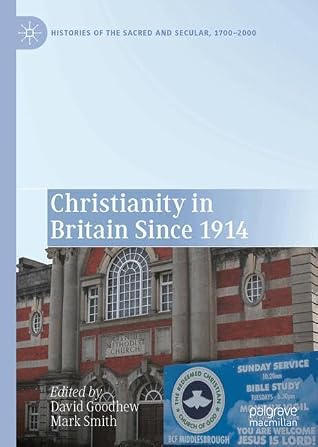
This book is a collection of fine‑grained case studies that trace the transformations of British Christianity over the last century, with particular attention to ethnic diversification and new patterns of church growth. For me, I valued the way it complicates any simple narrative of linear religious decline. By juxtaposing different regions and traditions, it shows that secularisation proceeds at different speeds and along distinct trajectories in different parts of the country, and also identifies zones of partial "desecularisation" where Christian practice has revived or reconfigured rather than simply ebbed away. In doing so, the book does not so much reject the secularisation thesis as force it to grapple with uneven geographies, migrant churches, and the persistence of intensive religious subcultures, making it harder to sustain a monocausal or inevitabilist account of religion’s public marginalisation in Britain.
Within that wider pattern, the chapter by Richard Burgess on the Redeemed Christian Church of God (RCCG) stands out for me as an exploration of how transnational Pentecostalism disrupts older stories of British religious decline. Burgess' analysis of RCCG congregations and networks focuses on the Nigerian mission/re-mission, showing how African Pentecostal churches have carved out a new and thriving urban presence, and with institutional ambition in Britain.
This embodies an example of "desecularising", and the RCCG is specifically focused on becoming a cosmopolitan Pentecostal denomination. But it is also born as a migrant and minority church, its success being exactly because of its work in that community. Despite its ambition, it is not attracting membership outside of that community, and that recognition will no doubt serve as important data for sociologists to ponder.
Additional excellent chapters were the chapter on the Welsh situation, which particularly captures the Welsh evangelical culture, which is quite distinct from the culture in England, and looks at how that culture is declining as churches try different things. There was plenty more to chew on in this volume too.
This book is a collection of fine‑grained case studies that trace the transformations of British Christianity over the last century, with particular attention to ethnic diversification and new patterns of church growth. For me, I valued the way it complicates any simple narrative of linear religious decline. By juxtaposing different regions and traditions, it shows that secularisation proceeds at different speeds and along distinct trajectories in different parts of the country, and also identifies zones of partial "desecularisation" where Christian practice has revived or reconfigured rather than simply ebbed away. In doing so, the book does not so much reject the secularisation thesis as force it to grapple with uneven geographies, migrant churches, and the persistence of intensive religious subcultures, making it harder to sustain a monocausal or inevitabilist account of religion’s public marginalisation in Britain.
Within that wider pattern, the chapter by Richard Burgess on the Redeemed Christian Church of God (RCCG) stands out for me as an exploration of how transnational Pentecostalism disrupts older stories of British religious decline. Burgess' analysis of RCCG congregations and networks focuses on the Nigerian mission/re-mission, showing how African Pentecostal churches have carved out a new and thriving urban presence, and with institutional ambition in Britain.
This embodies an example of "desecularising", and the RCCG is specifically focused on becoming a cosmopolitan Pentecostal denomination. But it is also born as a migrant and minority church, its success being exactly because of its work in that community. Despite its ambition, it is not attracting membership outside of that community, and that recognition will no doubt serve as important data for sociologists to ponder.
Additional excellent chapters were the chapter on the Welsh situation, which particularly captures the Welsh evangelical culture, which is quite distinct from the culture in England, and looks at how that culture is declining as churches try different things. There was plenty more to chew on in this volume too.
116richardderus
>114 sirfurboy: It's a renewable commitment, and one I need to renew...I'm thinking annually, on my birthday along with my eye and physical exams, I'll review one year of Kindle files ten or more years in the past.
Will keep me busy for seventeen years *if* I don't add any new books starting now. *cue hysterical laughter and side-clutching finger-pointing mirth and jollity*
Will keep me busy for seventeen years *if* I don't add any new books starting now. *cue hysterical laughter and side-clutching finger-pointing mirth and jollity*
117sirfurboy
>116 richardderus: Yep. Not adding more books than you are reading is always important... and borderline impossible :)
118sirfurboy
50. Pentecostalism: A Very Short Introduction - William K. Kay.
This is indeed a very short introduction that nevertheless captures what Pentecostalism is, where it came from, and where it is heading. As an overview it is very good. Kay locates Pentecostalism’s classical theological consolidation in the United States, but recognises that this is not really the origin of the movement. He avoids collapsing the movement’s origins into a purely American story, but shows how early American writers and historians treated Azusa Street as the definitive birthplace of Pentecostalism. Nevertheless, he then carefully unpacks this by juxtaposing Azusa with other near-contemporary (sometimes earlier) revivals in Wales, India, and Korea, stressing the multi-polar origins. He describes a unifying factor in the American theological concept of the fourfold gospel. Christ is Saviour, Baptiser in the Spirit, Healer, and Coming King. It's unifying in a consolidated theology, not in origin of the movement itself.
This theological frame, forged in the US holiness milieu and disseminated through American revivalism and media, becomes for Kay the framework that allows a fundamentally experiential, multi‑origin movement to recognise itself as a coherent tradition.
He then threads this account into a necessary discussion of race: Azusa’s deliberately interracial leadership and early insistence that "the colour line is washed away in the blood of Jesus" ought to stand as a kind of normative Pentecostal ecclesiology, but he is frank about how this was not, in practice, what happened. In the US and South Africa denominational segregation became the norm
Kay shows that Pentecostals have sometimes colluded with racist regimes, most notably in the Apostolic Faith Mission’s accommodation to apartheid, separate baptisms for whites and blacks, and political alignment with Afrikaner nationalism, which he explicitly judges as a betrayal of Pentecostal spiritual values. At the same time, he notes counter-currents: black Pentecostal participation in the US civil rights struggle, for instance.
From this base Kay turns to Pentecostalism’s global diffusion, framing it as both an heir to earlier Anglo‑American revivalism and a genuinely transnational religio‑social phenomenon. Britain appears in his narrative as a crucial incubator and conduit rather than the movement’s doctrinal heartland: Wesleyan Methodism, the Welsh revival, Keswick holiness teaching, Irvingite and Albury‑Darby eschatology, and British missionary and imperial structures created the channels through which Pentecostal forms travelled.
Aimee Semple McPherson is an emblematic case of Pentecostal media‑savvy and gendered charisma: a glamorous, scandal‑surviving evangelist whose founding of the Foursquare denomination institutionalised the fourfold gospel and whose radio work, temple‑building, and relief ministries normalised Pentecostalism within American evangelicalism and became a model of celebrity ministry that subsequent leaders, in the US and beyond, will emulate.
The treatment of women ministers more generally follows from this, tracing a tension between a theology of universal Spirit outpouring, seen in female leadership at Welsh, Mukti, and Azusa revivals, and the later patriarchal restrictions of many Pentecostal polities, and he reads McPherson as a vivid demonstration that Pentecostal practice often outruns its own conservative gender theory.
Kay’s treatment of the prosperity gospel presents it as a distinct Pentecostal development that inverts traditional Christian asceticism by teaching that God positively wills material wealth and bodily health as signs of blessing. He roots its emergence in certain texts and in the biography of American Pentecostal preachers shaped by Dust Bowl and Depression‑era deprivation, who came to see poverty as a curse from which Christ’s atoning "poverty" delivers believers, drawing heavily on passages such as 2 Corinthians 8:9 and 3 John 2. Kay then tracks how this theology is amplified and popularised by figures like Oral Roberts, whose emphasis on "abundant life" and use of radio/television create a platform for seed‑faith fundraising based on Luke 6:38, and he shows that by the 1980s prosperity preaching becomes the core message for some American, African, Asian, and Latin American televangelists and megachurch pastors, who lock themselves in a vicious cycle of asking for money to pay for expensive broadcasting, that then requires they ask for money again. Nevertheless he shows that the same preaching, perhaps for the same reasons, has found read listeners in West African churches where rich leaders and media ministries dramatise success for upwardly mobile and impoverished followers alike.
For a short work, this covered a lot of ground, and had some perceptive observations. But it is just an introduction. There is more to be said on all of these themes.
This is indeed a very short introduction that nevertheless captures what Pentecostalism is, where it came from, and where it is heading. As an overview it is very good. Kay locates Pentecostalism’s classical theological consolidation in the United States, but recognises that this is not really the origin of the movement. He avoids collapsing the movement’s origins into a purely American story, but shows how early American writers and historians treated Azusa Street as the definitive birthplace of Pentecostalism. Nevertheless, he then carefully unpacks this by juxtaposing Azusa with other near-contemporary (sometimes earlier) revivals in Wales, India, and Korea, stressing the multi-polar origins. He describes a unifying factor in the American theological concept of the fourfold gospel. Christ is Saviour, Baptiser in the Spirit, Healer, and Coming King. It's unifying in a consolidated theology, not in origin of the movement itself.
This theological frame, forged in the US holiness milieu and disseminated through American revivalism and media, becomes for Kay the framework that allows a fundamentally experiential, multi‑origin movement to recognise itself as a coherent tradition.
He then threads this account into a necessary discussion of race: Azusa’s deliberately interracial leadership and early insistence that "the colour line is washed away in the blood of Jesus" ought to stand as a kind of normative Pentecostal ecclesiology, but he is frank about how this was not, in practice, what happened. In the US and South Africa denominational segregation became the norm
Kay shows that Pentecostals have sometimes colluded with racist regimes, most notably in the Apostolic Faith Mission’s accommodation to apartheid, separate baptisms for whites and blacks, and political alignment with Afrikaner nationalism, which he explicitly judges as a betrayal of Pentecostal spiritual values. At the same time, he notes counter-currents: black Pentecostal participation in the US civil rights struggle, for instance.
From this base Kay turns to Pentecostalism’s global diffusion, framing it as both an heir to earlier Anglo‑American revivalism and a genuinely transnational religio‑social phenomenon. Britain appears in his narrative as a crucial incubator and conduit rather than the movement’s doctrinal heartland: Wesleyan Methodism, the Welsh revival, Keswick holiness teaching, Irvingite and Albury‑Darby eschatology, and British missionary and imperial structures created the channels through which Pentecostal forms travelled.
Aimee Semple McPherson is an emblematic case of Pentecostal media‑savvy and gendered charisma: a glamorous, scandal‑surviving evangelist whose founding of the Foursquare denomination institutionalised the fourfold gospel and whose radio work, temple‑building, and relief ministries normalised Pentecostalism within American evangelicalism and became a model of celebrity ministry that subsequent leaders, in the US and beyond, will emulate.
The treatment of women ministers more generally follows from this, tracing a tension between a theology of universal Spirit outpouring, seen in female leadership at Welsh, Mukti, and Azusa revivals, and the later patriarchal restrictions of many Pentecostal polities, and he reads McPherson as a vivid demonstration that Pentecostal practice often outruns its own conservative gender theory.
Kay’s treatment of the prosperity gospel presents it as a distinct Pentecostal development that inverts traditional Christian asceticism by teaching that God positively wills material wealth and bodily health as signs of blessing. He roots its emergence in certain texts and in the biography of American Pentecostal preachers shaped by Dust Bowl and Depression‑era deprivation, who came to see poverty as a curse from which Christ’s atoning "poverty" delivers believers, drawing heavily on passages such as 2 Corinthians 8:9 and 3 John 2. Kay then tracks how this theology is amplified and popularised by figures like Oral Roberts, whose emphasis on "abundant life" and use of radio/television create a platform for seed‑faith fundraising based on Luke 6:38, and he shows that by the 1980s prosperity preaching becomes the core message for some American, African, Asian, and Latin American televangelists and megachurch pastors, who lock themselves in a vicious cycle of asking for money to pay for expensive broadcasting, that then requires they ask for money again. Nevertheless he shows that the same preaching, perhaps for the same reasons, has found read listeners in West African churches where rich leaders and media ministries dramatise success for upwardly mobile and impoverished followers alike.
For a short work, this covered a lot of ground, and had some perceptive observations. But it is just an introduction. There is more to be said on all of these themes.
119sirfurboy
51. Foundations and Principles of Pentecostal Theology : Perspective on the Role of the Holy Spirit: Speaking in Tongues, Prophecy, Healing, Worship, End Times, and Everything In-Between - Gabriel Hayes
Kindle unlimited warning, and definitely don't spend money on this one. I would have thought that an author calling themselves Gabriel Hayes PhD would have written academically on the subject, but that is not what we have here. I did a search, and the only Gabriel Hayes I turned up is a biologist, but there's no saying that is this author. It is clear, however, that they are not a theologian nor historian. The book is devoid of footnotes, and even almost devoid of scriptural references, which is odd.
The history, such as it is, its very much insider friendly and American centric. The author talks about Seymour and Azusa street as the inter-racial work it was, but forgets to mention how that fell apart. Worse, he then talks about Parham but forgets to mention his rather racist views (and his speaking to the KKK). So definitely glossing over the cracks while stressing the positives.
But the book is purportedly about Pentecostal theology. But on that score it fails too. It does kind of find the broad themes of pentecostal theology, but it appears to be just from what the author knows. There is no referencing, as I say, and there are some huge lacunae. For instance, Oneness Pentecostalism gets very little coverage at all. The book asserts Pentecostals see tongues as the initial evidence of the baptism with the Spirit, in apparent ignorance of the Pentecostals who do not. And there is also no coverage of African or Latin American pentecostalism, nor of the prosperity theology.
I mean, you could say this is a basic primer of some mainstream American pentecostalism, but even there there will be better works. Avoid this one. The use of postnominals by the author is deceptive.
Kindle unlimited warning, and definitely don't spend money on this one. I would have thought that an author calling themselves Gabriel Hayes PhD would have written academically on the subject, but that is not what we have here. I did a search, and the only Gabriel Hayes I turned up is a biologist, but there's no saying that is this author. It is clear, however, that they are not a theologian nor historian. The book is devoid of footnotes, and even almost devoid of scriptural references, which is odd.
The history, such as it is, its very much insider friendly and American centric. The author talks about Seymour and Azusa street as the inter-racial work it was, but forgets to mention how that fell apart. Worse, he then talks about Parham but forgets to mention his rather racist views (and his speaking to the KKK). So definitely glossing over the cracks while stressing the positives.
But the book is purportedly about Pentecostal theology. But on that score it fails too. It does kind of find the broad themes of pentecostal theology, but it appears to be just from what the author knows. There is no referencing, as I say, and there are some huge lacunae. For instance, Oneness Pentecostalism gets very little coverage at all. The book asserts Pentecostals see tongues as the initial evidence of the baptism with the Spirit, in apparent ignorance of the Pentecostals who do not. And there is also no coverage of African or Latin American pentecostalism, nor of the prosperity theology.
I mean, you could say this is a basic primer of some mainstream American pentecostalism, but even there there will be better works. Avoid this one. The use of postnominals by the author is deceptive.
120sirfurboy
52. Archibald Lox and the Bridge Between Worlds - Darren Shan

Earlier this year I took a fantasy fiction writing course and Darren Shan was recommended. I added this to my list then, but only got to it now. Darren Shan is an accomplished and well reputed writer, so I was a little surprised with the start of this, which seemed to lack for some technical qualities. Yet I was quickly sucked in to a good story by Shan's easy storytelling style. I this liked it, although it felt quite young and simplistic.
However, this story broke the golden rule of stories for me. It stopped in the middle. This is a favourite trick of kindle unlimited writers, but even for accomplished writers like Shan, the result will always be the same with me. I will not continue with this series. It is also hard to say I really liked this story, as nothing has been resolved, and all it has done is set up the sequel. I was going to give it 3 stars because I liked it for the first half and thought the second half was reasonable. But the overall impression is, sadly, I think this is one to miss.

Earlier this year I took a fantasy fiction writing course and Darren Shan was recommended. I added this to my list then, but only got to it now. Darren Shan is an accomplished and well reputed writer, so I was a little surprised with the start of this, which seemed to lack for some technical qualities. Yet I was quickly sucked in to a good story by Shan's easy storytelling style. I this liked it, although it felt quite young and simplistic.
However, this story broke the golden rule of stories for me. It stopped in the middle. This is a favourite trick of kindle unlimited writers, but even for accomplished writers like Shan, the result will always be the same with me. I will not continue with this series. It is also hard to say I really liked this story, as nothing has been resolved, and all it has done is set up the sequel. I was going to give it 3 stars because I liked it for the first half and thought the second half was reasonable. But the overall impression is, sadly, I think this is one to miss.
121sirfurboy
53. American Apocalypse: A History of Modern Evangelicalism - Matthew Avery Sutton

This book traces the history of American evangelicalism, with a strong emphasis on fundamentalism, and shows how a loose network of radical, largely white premillennial Protestants moved from the margins of U.S. Protestantism in the late nineteenth century to the heart of American religious and political life by the end of the twentieth century.
The author draws on letters, sermons, prophetic charts, radio scripts, and other archival materials, arguing that the defining issue of “fundamentalism” was not primarily anti-evolution polemic but a militant apocalypticism: the conviction that Christ’s return was imminent, that history was divided into dispensations (thus dispensationalism), and that contemporary events, of which there were some pretty major ones in the 20th century, were signs of the approaching Tribulation and Antichrist.
The author correctly shows the influence of John Nelson Darby and C. I. Scofield in bringing about this theological shift. Their role in the emergence of dispensationalism is well known. But he also looks carefully atBilly Sunday, Charles Fuller, Billy Graham, Jerry Falwell, Hal Lindsey, and Tim LaHaye to show how dispensational premillennialism shaped evangelical responses to the New Deal, communism, civil rights, gender and sexuality, and U.S. foreign policy, especially toward Israel.
Sutton demonstrates that this eschatological framework gave evangelicals a sense of embattlement, moral absolutism, and urgency that propelled them into mass media, institution-building, and ultimately the corridors of power under presidents from Roosevelt’s antagonists to Reagan and the Bushes. He shows, also, how they coalesced around the right wing, and were disappointed with Carter's alternative very Christian theological view that did not allow them to take control of the agenda. That, to me, tells us a lot about why there is a "religious right" in America at all.
Sutton shows how the same premillennial imagination still animates a major bloc in contemporary American politics (which might seem obvious to look at - but the point is it didn't come from nowhere). He shows that apocalyptic theology has long framed politics as a cosmic struggle between good and evil. Sutton describes the uncompromising style, conspiratorial fears, and intense policy activism that mark today’s right-wing evangelical politics. In this sense, American Apocalypse is not just a history of theology but a window onto the eschatological narratives that continue to structure American partisanship, culture-war conflicts, and debates over the nation’s divine destiny.
He could always have said more. Kenneth Hagee on Israel, for instance, could have been explored more - showing how Hagee has moved beyond, say, Reagan's belief that the apocalypse is coming, but he would not be the one to hasten it. It seems to me that a current that could be explored more is those American teachers who want to do just that and whose political involvement must be seen through that lens. But this book provides the description of the lens. Perhaps it is for political scientists, and not historians, to look through it.

This book traces the history of American evangelicalism, with a strong emphasis on fundamentalism, and shows how a loose network of radical, largely white premillennial Protestants moved from the margins of U.S. Protestantism in the late nineteenth century to the heart of American religious and political life by the end of the twentieth century.
The author draws on letters, sermons, prophetic charts, radio scripts, and other archival materials, arguing that the defining issue of “fundamentalism” was not primarily anti-evolution polemic but a militant apocalypticism: the conviction that Christ’s return was imminent, that history was divided into dispensations (thus dispensationalism), and that contemporary events, of which there were some pretty major ones in the 20th century, were signs of the approaching Tribulation and Antichrist.
The author correctly shows the influence of John Nelson Darby and C. I. Scofield in bringing about this theological shift. Their role in the emergence of dispensationalism is well known. But he also looks carefully atBilly Sunday, Charles Fuller, Billy Graham, Jerry Falwell, Hal Lindsey, and Tim LaHaye to show how dispensational premillennialism shaped evangelical responses to the New Deal, communism, civil rights, gender and sexuality, and U.S. foreign policy, especially toward Israel.
Sutton demonstrates that this eschatological framework gave evangelicals a sense of embattlement, moral absolutism, and urgency that propelled them into mass media, institution-building, and ultimately the corridors of power under presidents from Roosevelt’s antagonists to Reagan and the Bushes. He shows, also, how they coalesced around the right wing, and were disappointed with Carter's alternative very Christian theological view that did not allow them to take control of the agenda. That, to me, tells us a lot about why there is a "religious right" in America at all.
Sutton shows how the same premillennial imagination still animates a major bloc in contemporary American politics (which might seem obvious to look at - but the point is it didn't come from nowhere). He shows that apocalyptic theology has long framed politics as a cosmic struggle between good and evil. Sutton describes the uncompromising style, conspiratorial fears, and intense policy activism that mark today’s right-wing evangelical politics. In this sense, American Apocalypse is not just a history of theology but a window onto the eschatological narratives that continue to structure American partisanship, culture-war conflicts, and debates over the nation’s divine destiny.
He could always have said more. Kenneth Hagee on Israel, for instance, could have been explored more - showing how Hagee has moved beyond, say, Reagan's belief that the apocalypse is coming, but he would not be the one to hasten it. It seems to me that a current that could be explored more is those American teachers who want to do just that and whose political involvement must be seen through that lens. But this book provides the description of the lens. Perhaps it is for political scientists, and not historians, to look through it.
122sirfurboy
54. The First Year - Matt Goodfellow

The sequel to "The Final Year", this is another excellent story, written by a writer who understands the children he's writing about, and has developed a format that makes this an easy read while still carrying a first person story which is engaging and with an emotional load. It's innovative in style, has some great characters and great moments, and leaves a lasting impression.
The author was a primary school teacher, and this shows. He writes for mid-graders in a way they will enjoy, about things they will care about, but he also adds a layer of challenging ambiguity that will get them thinking too. It is all very cleverly done.
This review was for the adults. But for the mid-graders: This book's mint!

The sequel to "The Final Year", this is another excellent story, written by a writer who understands the children he's writing about, and has developed a format that makes this an easy read while still carrying a first person story which is engaging and with an emotional load. It's innovative in style, has some great characters and great moments, and leaves a lasting impression.
The author was a primary school teacher, and this shows. He writes for mid-graders in a way they will enjoy, about things they will care about, but he also adds a layer of challenging ambiguity that will get them thinking too. It is all very cleverly done.
This review was for the adults. But for the mid-graders: This book's mint!
123sirfurboy
55. An Introduction to Pentecostalism: Global Charismatic Christianity - Allan Anderson
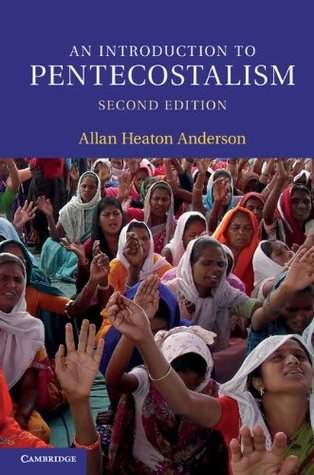
This is probably the best overview of Pentecostalism currently available. The author has written a comprehensive introduction. Covering much of the same ground as William Kay's very short introduction, Andesron gives considerably more depth in each case, but also casts the net wider.
Concentrating on history and theology, Anderson traces how the movement has developed and diversified around the world, taking seriously the contributions of the Majority World rather than treating Pentecostalism as an essentially North American export. In doing so he explores key themes such as spirituality, theological distinctives, relations with other churches, and the movement’s entanglement with modernisation and globalisation.
A central historiographical claim in the book is that Pentecostalism’s origins are multi-polar, with significant centres of early revival and innovation arising independently in different locations, even when Azusa Street remains symbolically important.
William Seymour and the Azusa Street revival are still presented at length, but there is no shying away from the contribution of Charles Fox Parham. Azusa street's inter-racial character is contextualised with Parham's contributions and later events. Anderson shows how early moments of interracial fellowship and theologies of Spirit-inspired equality were constrained by persistent white racism and the later drift of Pentecostal institutions toward segregation. The result is a nuanced portrayal of American Pentecostalism as both a space of racial challenge and a movement marked by the limits of that challenge.
The book’s treatment of British Pentecostalism is similarly framed within this multi-centred global story. Anderson highlights the Welsh Revival of 1904–5 as a crucial catalyst, sowing the spiritual and liturgical seeds for later British Pentecostal churches and shaping a local culture of Spirit-centred worship that predated Azusa Street. He also draws attention to figures such as Alexander Boddy, often regarded as the father of British Pentecostalism, whose ministry at Sunderland helped disseminate Pentecostalism Britain. Anderson shows how British Pentecostalism was rooted in Britain, be it in Welsh mining communities or Anglican parishes. Meanwhile the larger perspective included interracial missions in Los Angeles, and diverse Majority World congregations.
The book succeeds as a sympathetic yet critical introduction that not only maps the growth of Pentecostal and Charismatic Christianity but also foregrounds questions of race, culture, and power as integral to understanding the movement’s history and theology. It asks questions as to why it has grown and bucked the trend worldwide, growing so fast. It looks at Korea and South America and elsewhere, and it provides a wealth of information about this global phenomenon.
This is probably the best overview of Pentecostalism currently available. The author has written a comprehensive introduction. Covering much of the same ground as William Kay's very short introduction, Andesron gives considerably more depth in each case, but also casts the net wider.
Concentrating on history and theology, Anderson traces how the movement has developed and diversified around the world, taking seriously the contributions of the Majority World rather than treating Pentecostalism as an essentially North American export. In doing so he explores key themes such as spirituality, theological distinctives, relations with other churches, and the movement’s entanglement with modernisation and globalisation.
A central historiographical claim in the book is that Pentecostalism’s origins are multi-polar, with significant centres of early revival and innovation arising independently in different locations, even when Azusa Street remains symbolically important.
William Seymour and the Azusa Street revival are still presented at length, but there is no shying away from the contribution of Charles Fox Parham. Azusa street's inter-racial character is contextualised with Parham's contributions and later events. Anderson shows how early moments of interracial fellowship and theologies of Spirit-inspired equality were constrained by persistent white racism and the later drift of Pentecostal institutions toward segregation. The result is a nuanced portrayal of American Pentecostalism as both a space of racial challenge and a movement marked by the limits of that challenge.
The book’s treatment of British Pentecostalism is similarly framed within this multi-centred global story. Anderson highlights the Welsh Revival of 1904–5 as a crucial catalyst, sowing the spiritual and liturgical seeds for later British Pentecostal churches and shaping a local culture of Spirit-centred worship that predated Azusa Street. He also draws attention to figures such as Alexander Boddy, often regarded as the father of British Pentecostalism, whose ministry at Sunderland helped disseminate Pentecostalism Britain. Anderson shows how British Pentecostalism was rooted in Britain, be it in Welsh mining communities or Anglican parishes. Meanwhile the larger perspective included interracial missions in Los Angeles, and diverse Majority World congregations.
The book succeeds as a sympathetic yet critical introduction that not only maps the growth of Pentecostal and Charismatic Christianity but also foregrounds questions of race, culture, and power as integral to understanding the movement’s history and theology. It asks questions as to why it has grown and bucked the trend worldwide, growing so fast. It looks at Korea and South America and elsewhere, and it provides a wealth of information about this global phenomenon.
124sirfurboy
56. To Meet and Satisfy a Very Hungry People: The Origins and Fortunes of English Pentecostalism (Studies in Evangelical History and Thought) - Timothy B. Walsh
Walsh’s stated aim is to explain how the Pentecostal message reached England between 1907 and 1925, why it appealed to a relatively small and often socially marginal constituency, and how it consolidated into recognisably English forms. He is clear that there is a distinct British Pentecostalism that has not been sufficiently studied.
This book is from Walsh’s PhD thesis, and the thesis revolves around the synthesis of the emergent Pentecostalism with indigenous currents in British evangelicalism to engender something that was distinctly British. He pursues this by focusing on certain localities. Most of his research on Alexander Boddy’s Anglican centered ministry in Sunderland – which is quite right, and already well understood, I think, as flavouring British Pentecostalism as something that was, in its inception much more like what the Charismatic movement would become. He also looks in depth at Smith Wigglesworth and the Bowland Street Mission in Bradford, and the Holiness Mission in Croydon under Pastor Inchcombe.
Wigglesworth is another well-known figure in British Pentecostalism, but this academic treatment brings out aspects that the insider accounts often omit, and so gets closer to Wigglesworth the man, as well as a driving force in the movement. It perhaps gets to the heart of why Wigglesworth was not, in the end, the one who formed the British movement in his image.
Wigglesworth, the man, is important (as is Cecil Polehill, for different reasons) but Walsh doesn’t let any one character dominate the narrative uncritically. He reconstructs Wigglesworth’s journey from Yorkshire plumber to faith healer, but he subjects the familiar insider accounts to close scrutiny, explicitly investigating reports of spectacular ministry success written by devotees too close to their subject. Chapters on “revivalist as showman and shaman” and on Wigglesworth’s negotiation with Pentecostal officialdom probe the theatrical as well as the institutional dimensions of his work, while comparison with the Jeffreys brothers situates him within a wider “heritage of planned revivalism.”
The Croydon material, however, is crucial to the book’s synthetic argument, and it is in Walsh’s handling of this that he really can defend his thesis. By tracing how a Holiness mission absorbed and stabilised Pentecostal influences, Walsh demonstrates that early English Pentecostalism was not only carried by charismatic itinerants but also consolidated through quieter, structured congregational forms. That is an astute observation that challenges the hagiographic accounts.
Overall, this thesis combines local detail, sceptical source handling, and attention to personality and institution. Making it a significant contribution to the historiography of British Pentecostalism.
Walsh’s stated aim is to explain how the Pentecostal message reached England between 1907 and 1925, why it appealed to a relatively small and often socially marginal constituency, and how it consolidated into recognisably English forms. He is clear that there is a distinct British Pentecostalism that has not been sufficiently studied.
This book is from Walsh’s PhD thesis, and the thesis revolves around the synthesis of the emergent Pentecostalism with indigenous currents in British evangelicalism to engender something that was distinctly British. He pursues this by focusing on certain localities. Most of his research on Alexander Boddy’s Anglican centered ministry in Sunderland – which is quite right, and already well understood, I think, as flavouring British Pentecostalism as something that was, in its inception much more like what the Charismatic movement would become. He also looks in depth at Smith Wigglesworth and the Bowland Street Mission in Bradford, and the Holiness Mission in Croydon under Pastor Inchcombe.
Wigglesworth is another well-known figure in British Pentecostalism, but this academic treatment brings out aspects that the insider accounts often omit, and so gets closer to Wigglesworth the man, as well as a driving force in the movement. It perhaps gets to the heart of why Wigglesworth was not, in the end, the one who formed the British movement in his image.
Wigglesworth, the man, is important (as is Cecil Polehill, for different reasons) but Walsh doesn’t let any one character dominate the narrative uncritically. He reconstructs Wigglesworth’s journey from Yorkshire plumber to faith healer, but he subjects the familiar insider accounts to close scrutiny, explicitly investigating reports of spectacular ministry success written by devotees too close to their subject. Chapters on “revivalist as showman and shaman” and on Wigglesworth’s negotiation with Pentecostal officialdom probe the theatrical as well as the institutional dimensions of his work, while comparison with the Jeffreys brothers situates him within a wider “heritage of planned revivalism.”
The Croydon material, however, is crucial to the book’s synthetic argument, and it is in Walsh’s handling of this that he really can defend his thesis. By tracing how a Holiness mission absorbed and stabilised Pentecostal influences, Walsh demonstrates that early English Pentecostalism was not only carried by charismatic itinerants but also consolidated through quieter, structured congregational forms. That is an astute observation that challenges the hagiographic accounts.
Overall, this thesis combines local detail, sceptical source handling, and attention to personality and institution. Making it a significant contribution to the historiography of British Pentecostalism.
125sirfurboy
57. Waiting for Antichrist: Charisma and Apocalypse in a Pentecostal Church - Damian Thompson
This book is an ethnographic study of Kensington Temple (or KT), a large, multi-ethnic Pentecostal congregation in London with a strong apocalyptic tradition. It is a member of the Elim Pentecostal Church. The study is based on sustained participant observation and interviews. Thompson explores how believers integrate expectations of the imminent eschaton (end times), which focus on premillennial views of the Antichrist and the millenniun, into ordinary church life, work, and family relationships.
Methodologically, the book combines classic sociological ethnography with close attention to theological discourse and popular eschatology within the congregation. Thompson situates Kensington Temple within wider trends of contemporary charismatic Christianity, such as consumer choice, media-saturated preaching, and the management of spiritual gifts. He grounds the analysis in detailed case studies.
The book is especially useful because it is one of the first serious ethnographic investigations of Christian apocalyptic belief in a mainstream, non-sectarian Pentecostal context, rather than in marginal or extremist groups. For scholars of British religious history, evangelicalism, and secularisation, it offers a finely grained account of how apocalyptic belief persists and adapts within a modern, urban environment. It also provides a nuanced corrective to reductionist accounts that treat apocalypticism as either pure escapism or simple pathology.
Key findings include that apocalyptic belief at Kensington Temple is highly diverse and internally contested, ranging from literalist timelines to more symbolic readings. Further, that members' eschatology is closely entangled with personal crises, migration stories, and moral anxieties about contemporary society. Church leaders attempt a rational management of charisma, channeling prophetic and apocalyptic enthusiasm into structured programs. There is some quite honest appraisement, both by the author and some of the interviewees.
Thompson shows that waiting for Antichrist is less about passive expectation and more about an active, emotionally charged way of making sense of modern life under the sign of impending judgment. he also shows how there are levels of cognitive dissonance on the point, and how, for most (but not all), this is not a particularly salient issue, even among those who profess strong views on the subject.
All in all, there is a lot to be learned here. I expect I'll need to think about it and dip into it again, to really appreciate everything this book has to offer.
This book is an ethnographic study of Kensington Temple (or KT), a large, multi-ethnic Pentecostal congregation in London with a strong apocalyptic tradition. It is a member of the Elim Pentecostal Church. The study is based on sustained participant observation and interviews. Thompson explores how believers integrate expectations of the imminent eschaton (end times), which focus on premillennial views of the Antichrist and the millenniun, into ordinary church life, work, and family relationships.
Methodologically, the book combines classic sociological ethnography with close attention to theological discourse and popular eschatology within the congregation. Thompson situates Kensington Temple within wider trends of contemporary charismatic Christianity, such as consumer choice, media-saturated preaching, and the management of spiritual gifts. He grounds the analysis in detailed case studies.
The book is especially useful because it is one of the first serious ethnographic investigations of Christian apocalyptic belief in a mainstream, non-sectarian Pentecostal context, rather than in marginal or extremist groups. For scholars of British religious history, evangelicalism, and secularisation, it offers a finely grained account of how apocalyptic belief persists and adapts within a modern, urban environment. It also provides a nuanced corrective to reductionist accounts that treat apocalypticism as either pure escapism or simple pathology.
Key findings include that apocalyptic belief at Kensington Temple is highly diverse and internally contested, ranging from literalist timelines to more symbolic readings. Further, that members' eschatology is closely entangled with personal crises, migration stories, and moral anxieties about contemporary society. Church leaders attempt a rational management of charisma, channeling prophetic and apocalyptic enthusiasm into structured programs. There is some quite honest appraisement, both by the author and some of the interviewees.
Thompson shows that waiting for Antichrist is less about passive expectation and more about an active, emotionally charged way of making sense of modern life under the sign of impending judgment. he also shows how there are levels of cognitive dissonance on the point, and how, for most (but not all), this is not a particularly salient issue, even among those who profess strong views on the subject.
All in all, there is a lot to be learned here. I expect I'll need to think about it and dip into it again, to really appreciate everything this book has to offer.
126sirfurboy
58. Pentecostals and Charismatics in Britain: An Anthology - Joe Aldred (Ed.)

This history might be read as a corrective anthology: it presents British Pentecostalism not as a single phenomenon, imported from the USA. Rather, there are layers and threads that link to British and global movements, as well as the well established Asuza inspired links. British Pentecostalism is ethnically diverse, and theologically broad. It has re-shaped modern British Christianity, both in itself and in the associated Charismatic movement.
Aldred states that the volume aims to demythologise Pentecostalism and Charismatic Christianity in Britain. Modern Pentecostalism is driven to a large extent through immigration, but he challenges the idea that they are primarily a post-Windrush African and Caribbean import. Instead, the book traces roots back to the early twentieth century and presents the movement as comprising classical Pentecostal denominations, black-majority migrant churches, charismatic renewal within historic denominations, and newer apostolic or networked forms. This framing gives the volume a clear interpretive purpose: to show that Pentecostal and Charismatic Christianity in Britain is both older and more internally varied than is often assumed.
The historical chapters provide the book’s strongest narrative. Andrew Davies outlines the rise of British Pentecostalism from early revival contexts, while also stressing the distinction between white-majority classical denominations and black-majority churches that emerged through migration from the Caribbean and later Africa. Roger Forster’s insider account of the charismatic movement adds a more experiential perspective, showing how the renewal of the 1960s and 1970s spread beyond Pentecostal denominations into Anglican, Catholic, Free Church, and evangelical settings. Taken together, these chapters present British Pentecostal history as a story of revival, migration, institutional formation, and continual adaptation.
Chapters on British Pentecostal identity, Pentecostal diversity in England and the wider UK, and women in ministry show that the movement cannot be reduced to one worship style, one polity, or one theology. The collection is particularly effective in highlighting the contribution of African and Caribbean churches, whose practices of healing, prophecy, exorcism, and community-building have become central to the contemporary British scene. It also notes the tensions created by leadership structures, questions of accountability, and the uneven status of women, suggesting that the movement’s growth has not eliminated internal conflict.
The sections on ecumenism and mainstream Christianity are significant because they place Pentecostals and Charismatics inside the wider story of British church life rather than outside it. The chapters by Anne Dyer and David Hilborn show growing dialogue between Pentecostals and Anglicans, and more broadly between Pentecostal churches and ecumenical institutions. Aldred’s introduction and the foreword by Justin Welby both reinforce this point by presenting Pentecostal and Charismatic Christianity as a legitimate and important partner in Christian witness in Britain. The book therefore portrays ecumenism not as a marginal issue but as one of the movement’s defining contemporary concerns.
The final section widens the lens to theological education, prosperity theology, and political engagement. The chapter asks what kind of public Christianity Pentecostals and Charismatics should embody. The emphasis on training, social responsibility, and public credibility reflects the editor’s concern that the movement develop intellectual resources and ethical seriousness alongside spiritual vitality. At the same time, the inclusion of prosperity theology signals an awareness of controversies that complicate any celebratory account of Pentecostal growth. This is a good look at prosperity theology, however. It examines why the teaching is popular, and why leaders have adopted it.
Overall the anthology is rich in perspectives, but the form can produce unevenness in style and analytical rigour. Even so, it succeeds in establishing British Pentecostal and Charismatic Christianity as a serious object of historical study, while also showing its practical importance for ecumenism, migration, and public life.

This history might be read as a corrective anthology: it presents British Pentecostalism not as a single phenomenon, imported from the USA. Rather, there are layers and threads that link to British and global movements, as well as the well established Asuza inspired links. British Pentecostalism is ethnically diverse, and theologically broad. It has re-shaped modern British Christianity, both in itself and in the associated Charismatic movement.
Aldred states that the volume aims to demythologise Pentecostalism and Charismatic Christianity in Britain. Modern Pentecostalism is driven to a large extent through immigration, but he challenges the idea that they are primarily a post-Windrush African and Caribbean import. Instead, the book traces roots back to the early twentieth century and presents the movement as comprising classical Pentecostal denominations, black-majority migrant churches, charismatic renewal within historic denominations, and newer apostolic or networked forms. This framing gives the volume a clear interpretive purpose: to show that Pentecostal and Charismatic Christianity in Britain is both older and more internally varied than is often assumed.
The historical chapters provide the book’s strongest narrative. Andrew Davies outlines the rise of British Pentecostalism from early revival contexts, while also stressing the distinction between white-majority classical denominations and black-majority churches that emerged through migration from the Caribbean and later Africa. Roger Forster’s insider account of the charismatic movement adds a more experiential perspective, showing how the renewal of the 1960s and 1970s spread beyond Pentecostal denominations into Anglican, Catholic, Free Church, and evangelical settings. Taken together, these chapters present British Pentecostal history as a story of revival, migration, institutional formation, and continual adaptation.
Chapters on British Pentecostal identity, Pentecostal diversity in England and the wider UK, and women in ministry show that the movement cannot be reduced to one worship style, one polity, or one theology. The collection is particularly effective in highlighting the contribution of African and Caribbean churches, whose practices of healing, prophecy, exorcism, and community-building have become central to the contemporary British scene. It also notes the tensions created by leadership structures, questions of accountability, and the uneven status of women, suggesting that the movement’s growth has not eliminated internal conflict.
The sections on ecumenism and mainstream Christianity are significant because they place Pentecostals and Charismatics inside the wider story of British church life rather than outside it. The chapters by Anne Dyer and David Hilborn show growing dialogue between Pentecostals and Anglicans, and more broadly between Pentecostal churches and ecumenical institutions. Aldred’s introduction and the foreword by Justin Welby both reinforce this point by presenting Pentecostal and Charismatic Christianity as a legitimate and important partner in Christian witness in Britain. The book therefore portrays ecumenism not as a marginal issue but as one of the movement’s defining contemporary concerns.
The final section widens the lens to theological education, prosperity theology, and political engagement. The chapter asks what kind of public Christianity Pentecostals and Charismatics should embody. The emphasis on training, social responsibility, and public credibility reflects the editor’s concern that the movement develop intellectual resources and ethical seriousness alongside spiritual vitality. At the same time, the inclusion of prosperity theology signals an awareness of controversies that complicate any celebratory account of Pentecostal growth. This is a good look at prosperity theology, however. It examines why the teaching is popular, and why leaders have adopted it.
Overall the anthology is rich in perspectives, but the form can produce unevenness in style and analytical rigour. Even so, it succeeds in establishing British Pentecostal and Charismatic Christianity as a serious object of historical study, while also showing its practical importance for ecumenism, migration, and public life.
127sirfurboy
59. The Revivalist - Desmond Cartwright
A well researched and well presented biography of Stephen Jeffreys, whose impact on British Pentecostalism was immense, and who was somewhat eclipsed by his younger brother, George, but whose preaching was every bit as powerful, and perhaps even moreso than George's.
The book looks carefully at the reasons for the split between the brothers that saw Stephen work instead through the Assemblies of God (rather than the Elim movement that his brother began). The text also looks critically at some of the claims form miracles made, so although this is very much an insider account, it is not an uncritical one.
Desmond Cartwright was a fine historian, who, elsewhere, published on Wigglesworth, making use of primary sources others had overlooked. His attention to detail and method shows through here too. The book was sadly not published in his own lifetime, but completed by his son. It is good that it has been published now.
Despite that, there are perhaps some aspects here that have not been explored as fully as Maldwyn Jones has done in his "And They Came to Elim". Jones, I think, had access to the draft of this work, along with other material, and he synthesises it all into his own work. That work is broader, so anyone wanting to simply understand Stephen Jeffreys should start here, but for a broader understanding of his place within the broader Elim story, Jones is currently the definitive account. Jones also provides more notes about his sources than Cartwright does here - but this is written as a popular account, and there is no doubt that Cartwright, as Elim's first official historian, had researched this work thoroughly.
Recommended for anyone interest in early British Pentecostalism - or, indeed, Christianity in the twentieth century.
A well researched and well presented biography of Stephen Jeffreys, whose impact on British Pentecostalism was immense, and who was somewhat eclipsed by his younger brother, George, but whose preaching was every bit as powerful, and perhaps even moreso than George's.
The book looks carefully at the reasons for the split between the brothers that saw Stephen work instead through the Assemblies of God (rather than the Elim movement that his brother began). The text also looks critically at some of the claims form miracles made, so although this is very much an insider account, it is not an uncritical one.
Desmond Cartwright was a fine historian, who, elsewhere, published on Wigglesworth, making use of primary sources others had overlooked. His attention to detail and method shows through here too. The book was sadly not published in his own lifetime, but completed by his son. It is good that it has been published now.
Despite that, there are perhaps some aspects here that have not been explored as fully as Maldwyn Jones has done in his "And They Came to Elim". Jones, I think, had access to the draft of this work, along with other material, and he synthesises it all into his own work. That work is broader, so anyone wanting to simply understand Stephen Jeffreys should start here, but for a broader understanding of his place within the broader Elim story, Jones is currently the definitive account. Jones also provides more notes about his sources than Cartwright does here - but this is written as a popular account, and there is no doubt that Cartwright, as Elim's first official historian, had researched this work thoroughly.
Recommended for anyone interest in early British Pentecostalism - or, indeed, Christianity in the twentieth century.
