RTT Quarterly October-December 2025 Napoleonic Era
Talk Reading Through Time
Join LibraryThing to post.
1Tess_W

pic from branch collective-open access publication https://branchcollective.org/?ps_articles=mary-favret-the-napoleonic-wars
Technically, the Napoleonic Era spans from 1799 to 1815. However, Napoleon's involvement in major historical events begins earlier. He rose to prominence during the French Revolution, receiving command of the French army in Italy in 1796. He returned to France in 1797 as a celebrated hero, before embarking on his ill-fated Egyptian campaign in 1798, which ended in defeat.
In 1799, Napoleon returned to France and overthrew the Directory, marking the official start of the Napoleonic Era. That said, if you're interested in exploring his earlier exploits—like the Egyptian campaign—go for it. The boundaries aren't strictly enforced here. Similarly, reading about his life after 1815, including his exiles and death in 1821, is absolutely permissible!
Both fiction and non-fiction are acceptable.
Books read previously by LT members or mentioned by them:
Grimms Morde – Tanja Kinkel
An Infamous Army by Georgette Heyer
Joseph Fouché – Stefan Zweig
Les proies de l'officier – Armand Cabasson
The Second Empress - Michelle Moran -
The secret history of the Pink Carnation - Lauren Willig
The Trumpet Major – Thomas Hardy
War and Peace by Leo Tolstoy
The Sharpe Series
The Horatio Hornblower Series
Aubrey-Maturin Series
His Majesty’s Dragon-Naomi Novik
Jane Austen's Works: Novels such as Pride and Prejudice, Mansfield Park, and Persuasion feature officers of the British army and navy, providing social commentary during the era.
The Charterhouse of Parma by Stendhal
Les Miserables by Victor Hugo
Adieu by Honore Balzac
Vanity Fair by Thackeray
Sylvia’s Lovers by Elizabeth Gaskell
1815: The Return of Napoleon by Paul Austin
Killing Napoleon: The Plot to Blow up Bonaparte by Jonathan North
Caesar of Paris by Susan Jacques
Napoleon's Commentaries on the Wars of Julius Caesar: A New English Translation by Napoleon Bonaparte
The Twelfth Physician by Willa Gibbs
Josephine: Napoleon's Incomparable Empress by Eleanor DeLorme
Ambition and Desire: The Dangerous Life of Josephine Bonaparte by Kate Williams
Napoleon's Other Wife by Deborah Jay
Napoleon and St Helena On the Island of Exile by Johannes Williams
Napoleon and Doctor Verling on St Helena by J. David Markham
What can you suggest? What will you be reading?
Wiki: https://wiki.librarything.com/index.php/Reading_Through_Time_Quarterly_Theme_Rea...
2cmbohn
I'm going to read The Secret History of the Pink Carnation. Also I read The Battle: A New History of Waterloo by Alessandro Barbero last year. I really enjoyed reading a new perspective on the war.
3cfk
Am I correct in understanding the list of books listed means we must fit the time frame of the Napoleonic Era, but our choice doesn't have to be about Napoleon?
4Tess_W
>3 cfk: About Napoleon or the Napoleonic Era, is my understanding. For example, Napoleon's actions affected the entire world--England, Jamaica, the U.S., Russia, etc. Those countries felt the effects of Napoleon's policies, so they would be included in the Napoleonic Era, although the actual story may not be about Napoleon. Example: The U.S bought the Louisiana Territory from Napoleon during this time. Lewis & Clark explored this territory in 1804-1806--so either a fiction or non-fiction about Lewis & Clark would fit. But you are correct, the book does not have to be about Napoleon.
5Tess_W
I can highly recommend The Twelfth Physician by Willa Gibbs.
Think I will try the Gaskell, Sylvia's Lovers. The blurb says its set in 1790-1802 in the backdrop of the French Revolution and the Napoleonic Wars. Also will squeeze in a short one of 42 pages, A Passion in the Desert by Honore Balzac, part of the Human Comedy.
Think I will try the Gaskell, Sylvia's Lovers. The blurb says its set in 1790-1802 in the backdrop of the French Revolution and the Napoleonic Wars. Also will squeeze in a short one of 42 pages, A Passion in the Desert by Honore Balzac, part of the Human Comedy.
6CurrerBell
>5 Tess_W: Highly recommend Sylvia's Lovers. Not generally considered one of Gaskell's best, but I really like it. The premise is a bit strained, but it has some great local color, especially a scene of naval impressment.
7CurrerBell
I've always thought The Count of Monte Cristo was post-Napoleonic. Am I right? Would it better qualify for next year? If I can do it for this upcoming quarter, though, I'd really like to.
8kac522
>6 CurrerBell: I can second Sylvia's Lovers and agree with everything Mike said about it.
9kac522
Right now my plan is to read Memoirs of Jane Austen, a biography by James Edward Austen-Leigh (her nephew), written in the 19th century.
10Tess_W
>7 CurrerBell: You are correct! I just take names from previous lists and lists from Goodreads........I've even read The Count and didn't even question it! I have removed it!
11CurrerBell
>10 Tess_W: Thanks, Tess! I'll do The Charterhouse of Parma instead.
12Tess_W
>11 CurrerBell: I'll await your review. That is on my WL.
13WelshBookworm
I may read the next book in the Bloody Jack series: Curse of the Blue Tattoo. It isn't Napoleonic per se, but it is set around 1802.
14Tanya-dogearedcopy
I’ve stacked three books in the Aubrey-Maturin series (by Patrick O'Brien) for this quarter:
1813 - The Surgeon's Mate (#7)
1813 - The Ionian Mission (#8)
1813 - Treason's Harbor (#9)
This series is set during the Napoleonic Wars and I think there’s also some crossover involving the War of 1812 as well.
1813 - The Surgeon's Mate (#7)
1813 - The Ionian Mission (#8)
1813 - Treason's Harbor (#9)
This series is set during the Napoleonic Wars and I think there’s also some crossover involving the War of 1812 as well.
15Tess_W
Since I received Sylvia's Lovers by Elizabeth Gaskell from the library in just 2 days, I decided to read it early. I really loved this book! The book blurb says its takes place during the 18th century, but since it spans years, I think it fits into this time period just fine. I think the book was slow going in the first half, but from midpoint on it was spellbinding. It's the story of three people: Sylvia, a woman torn between two men, the romantic sailor Charlie Kincaid, and her quiet, mannerly cousin Philip. The story centers around the impressment of Charlie and moral dilemmas that arise from that. Gaskell gives the characters such passion. I listened to this on audio and also followed along with a pdf occasionally, provided by a link. Good stuff! 528 pages 4.5 stars
16kac522
>15 Tess_W: I read Sylvia's Lovers last year and really enjoyed it, particularly the historical elements about the press-gangs. She weaves her story so well within the historical events and some real characters of the time. But it is a very sad story.
17CurrerBell
If you're up for a very long read.... Thomas Hardy's The Dynasts. You can call it a "verse drama" if you like, but I see it more as an epic poem in dramatic form. It obviously calls War and Peace to mind, but the general consensus seems to be that Hardy had not read Tolstoy's novel before writing The Dynasts.
I very much like The Dynasts, but maybe I'm just weird. One caution. Do not try to cram it into a weekend. It consists of 19 multi-scene acts plus a prologue and an epilogue. Read it an act at a time; one-a-day and you'll finish it in about three weeks, or if you do one-in-the-am and one-in-the-pm (or something like that) you can finish in a week and a half. Each act is to a significant part self-contained.
There's one scene, "The Road to Waterloo" (obviously in one of the very late acts) that's one of the great anti-war poems.
Here's my LT review from back in 2014, and I gave it 5*****.
I very much like The Dynasts, but maybe I'm just weird. One caution. Do not try to cram it into a weekend. It consists of 19 multi-scene acts plus a prologue and an epilogue. Read it an act at a time; one-a-day and you'll finish it in about three weeks, or if you do one-in-the-am and one-in-the-pm (or something like that) you can finish in a week and a half. Each act is to a significant part self-contained.
There's one scene, "The Road to Waterloo" (obviously in one of the very late acts) that's one of the great anti-war poems.
Here's my LT review from back in 2014, and I gave it 5*****.
18Tess_W
>17 CurrerBell: I am a Hardy fan, but don't know if I'm up to this! Definitely a good plan for tackling it.
19MissWatson
I just remembered that I have Sharpe’s Command on the TBR...
20atozgrl
>7 CurrerBell: >10 Tess_W: Having just reread The Count of Monte Cristo in January, I can tell you that the beginning of the story takes place during the Napoleonic era (during his 100 days return to power), and that is the source of the accusations against Edmund Dantes. The vast majority of the novel does take place after that time, but the beginning is during Napoleon's time. So maybe it's borderline, but there is some relation to Napoleon there.
21CurrerBell
>20 atozgrl: Thanks! Think I will do it, then. Don't have much otherwise to do for this last quarter other than The Charterhouse of Parma, which I'm also planning on doing. Might save Monte Cristo for second after Charterhouse, but I really do have a lot to do in the first quarter of next year, especially catching up on the Zola Group Read as well as making a bit more progress through my own personal Balzac read.
22Tess_W
>20 atozgrl: Makes sense now..........! I had it tagged in my Library as the Napoleonic Era (but sometimes my tags are wrong, especially if I take from somebody else) and 4 years ago there were some who read it for that era. Also shelved a few times in Goodreads as Napoleonic Era. Doesn't really matter then, could fit in either!
23atozgrl
I have several Hornblower books that I inherited from my father, so I plan to read at least one of those. I may also do a reread of one of Austen's books. Ideally I would also like to read a biography of Napoleon, but the one my library has is very long, and I don't think I'm going to have time for that.
24alco261
Two more to add:
1812 Napoleon's Fatal March on Moscow and The Diary of a Napoleonic Foot Soldier...and, if you would like an excellent graphical summary of Napoleon's march on Moscow and the retreat you can check out Minard's graph in either The Visual Display of Quantitative Information or The Minard System
1812 Napoleon's Fatal March on Moscow and The Diary of a Napoleonic Foot Soldier...and, if you would like an excellent graphical summary of Napoleon's march on Moscow and the retreat you can check out Minard's graph in either The Visual Display of Quantitative Information or The Minard System
25Tess_W
I read A Passion in the Desert by Honore de Balzac This was a short story that took place during the Egyptian campaign of Napoleon. A man is captured by Arab forces and escapes to end up in a cave with a panther, which poses both a threat and a surreal relationship. This was from the Comedy Humaine and I will be reading more in that series. 42 pages 4 stars
26Tess_W
Completed Through Russian Snows: A Story Of Napoleon's Retreat From Moscow by G.A. Henty. This was billed as juvenile fiction, I would classify it as YA. The novel is set in 1812 during Napoleon's invasion of Russia and its subsequent disastrous retreat. The protagonists are two English brothers, Julian and Frank Wyatt, being raised by their aunt. Through a series of very long and tedious events, Julian is imprisoned in France for smuggling and Frank joins the British Army. Julian is released on the condition he serve in the Grand Armee. Long story short: they both meet up in Moscow, on different sides. Lots of boring detail about the battles of Smolensk and Borodino (especially for juvenile readers). The plot threads are predictable and are usually the nature of a moral dilemma. Meh 242 pages 3 stars (hard to rate a book aimed at 10-14 year old boys!)
27Tess_W
Be sure to sign up to host the monthly reads in 2026:
https://www.librarything.com/topic/374586#n8974012
https://www.librarything.com/topic/374586#n8974012
28Tess_W
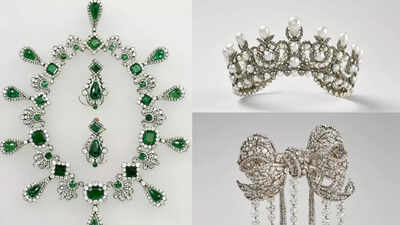
Some of Marie Louise's jewels were stole in the Louvre heist (Oct 19 2025), including her emerald wedding gift set from Napoleon:
29Tess_W
Be sure to sign up to host the monthly reads in 2026:
https://www.librarything.com/topic/374586#n8974012
https://www.librarything.com/topic/374586#n8974012
30MissWatson
I was pleasantly surprised to see that The thousand autumns of Jacob de Zoet works also for the quarterly challenge. It starts in 1799, Bonaparte has just taken power as First Consul, and more or less ends in 1811. Though we are in Japan, the European wars play an important role when a British frigate arrives in the waters off Nagasaki.
32Tanya-dogearedcopy
>30 MissWatson: I have such a happy memory of reading that book when it first came out: I sat in our living room's reading chair and read the hardback in one day! Afterwards, I had such a "book afterglow" that I didn't pick up another book for maybe a week. I had tried listening to the audio at first, but I had difficulty keeping track of the characters after only a little bit of the way into the story and; I realized I needed to look at the text when a gate was described as being in the shape of "pie"?! (It turned out to be the Greek symbol for "pi"!) 🤦🏻♀️
33MissWatson
>32 Tanya-dogearedcopy: Yes, that pi-shaped gate stopped me in the print book, too,for a moment, as I tried to picture it. And such a great book it is.
34atozgrl
I have just finished reading two of the books in the Horatio Hornblower series. I inherited a set of Hornblower books from my father and I'm glad to have this opportunity to dive into them. The ones I read are Beat to Quarters and Ship of the Line, both part of an omnibus Captain Horatio Hornblower.
In Beat to Quarters, Hornblower is captain of HMS Lydia, a thirty-six-gun frigate. He has been sent to the Pacific side of central America to make an alliance with a group of rebels to the ruling Spaniards and and 'to take, sink, burn or destroy' the fifty-gun Spanish ship of the line Natividad. Unfortunately, after capturing that ship and turning it over to the rebels, he encounters the Spanish at Panama, only to discover that everything has changed, and the Spanish in Europe have revolted against Bonaparte's rule and have now allied themselves with the English. Hornblower must now fight the Natividad again, as well as take on an unwanted female passenger, Lady Barbara Wellesley. There is plenty of naval action in this story, as well as a bit of romance.
In Ship of the Line, we see Hornblower taking part directly in the war with the French. This time he is commanding a ship of the line, the seventy-four-gun HMS Sutherland. The book opens with Hornblower's struggle to get the ship stocked and to find enough men to staff her. In this story, he faces many different situations, from serving as part of a convoy to protect commercial ships to fighting a variety of battles against the French and their Italian allies along the Mediterranean coast of Spain and France. I enjoyed this story more than the first one. There's lots of adventure and a variety of battles to fight. The story ends on a cliffhanger, so I hope I'll be able to find the time before the end of the year to read the final book in the Hornblower omnibus, Flying Colours.
In Beat to Quarters, Hornblower is captain of HMS Lydia, a thirty-six-gun frigate. He has been sent to the Pacific side of central America to make an alliance with a group of rebels to the ruling Spaniards and and 'to take, sink, burn or destroy' the fifty-gun Spanish ship of the line Natividad. Unfortunately, after capturing that ship and turning it over to the rebels, he encounters the Spanish at Panama, only to discover that everything has changed, and the Spanish in Europe have revolted against Bonaparte's rule and have now allied themselves with the English. Hornblower must now fight the Natividad again, as well as take on an unwanted female passenger, Lady Barbara Wellesley. There is plenty of naval action in this story, as well as a bit of romance.
In Ship of the Line, we see Hornblower taking part directly in the war with the French. This time he is commanding a ship of the line, the seventy-four-gun HMS Sutherland. The book opens with Hornblower's struggle to get the ship stocked and to find enough men to staff her. In this story, he faces many different situations, from serving as part of a convoy to protect commercial ships to fighting a variety of battles against the French and their Italian allies along the Mediterranean coast of Spain and France. I enjoyed this story more than the first one. There's lots of adventure and a variety of battles to fight. The story ends on a cliffhanger, so I hope I'll be able to find the time before the end of the year to read the final book in the Hornblower omnibus, Flying Colours.
35WelshBookworm
I've decided I want to read the Josephine Bonaparte trilogy starting with The Many Lives and Secret Sorrows of Josephine B.
36Tess_W
>35 WelshBookworm: Sounds good. I'll look for your review!
37atozgrl
I finished the Captain Horatio Hornblower omnibus today. The last book included in the omnibus is Flying Colours. This story continues where Ship of the Line left off. Captain Hornblower is now a prisoner of the French. He, his injured First Lieutenant, and his Coxswain are sent off to Paris, with the two officers set to face trial for piracy and probable execution. They manage to escape en route, and the book follows their adventures after the escape. This story takes place mostly on land, and there is less adventure than in Ship of the Line. Nevertheless, I enjoyed it. I do wish that Forester had made Hornblower less melancholic, but he is still a heroic character.
38Cardboard_killer
>37 atozgrl: I love the whole series, but would say that the prequels Lieutenant Hornblower, Hornblower and the Hotspur, and Hornblower and the Atropos; as well as the sequel Commodore Hornblower are well worth reading. The remaining books and short stories are less good, IMO, although Lord Hornblower does cap things off for the Napoleonic wars.
39atozgrl
>38 Cardboard_killer: Thanks for that feedback. I also inherited the Commodore Hornblower and Lord Hornblower books, but unfortunately not the Lieutenant Hornblower prequels. I'll have to try to find copies of them somewhere. I'm glad to know that those are worth looking for.
40atozgrl
I have finished another book that falls in this time period, although it is not about Napoleon or the wars. I read The map that changed the world : William Smith and the birth of modern geology by Simon Winchester, and the vast majority of the book takes place during the Napoleonic era. It tells the life story of William Smith, and the impact that he had on the beginnings of genealogy as a science. The heart of the book is about the geological map he made of England and Wales, which had a profound impact on science and industry to come. It was a fascinating tale.
The only real reference to Napoleon and the wars was how the ending of the wars had a big negative impact on the economy in England, since they had to pay for the cost of the wars. This in turn had an impact on Smith's personal fortunes, and he eventually ended up in a debtor's prison for a short time. So while the book is not about Napoleon or the wars, it does take place at the time, and it might be one to consider for reading during this period.
I will also add that I read Persuasion by Jane Austen back in October, and completely forgot to count it for this challenge.
The only real reference to Napoleon and the wars was how the ending of the wars had a big negative impact on the economy in England, since they had to pay for the cost of the wars. This in turn had an impact on Smith's personal fortunes, and he eventually ended up in a debtor's prison for a short time. So while the book is not about Napoleon or the wars, it does take place at the time, and it might be one to consider for reading during this period.
I will also add that I read Persuasion by Jane Austen back in October, and completely forgot to count it for this challenge.
41MissWatson
The Napoleonic Era arguably ends with his defeat at Waterloo, and I re-read The longest afternoon, a non-fiction account of the action around La Haye Sainte during the battle.
42kac522
I finished The Trumpet-Major by Thomas Hardy (1880). Set in a small seaside town near Weymouth during the Napoleonic Wars, the novel tells the story of a local young woman with 3 suitors: two brothers (one a soldier and the other a sailor) and a local rogue. Their town is on watch for a possible invasion of Napoleon and his men on the town's shores.
The romance plot is rather lame, particularly because the heroine, otherwise intelligent and practical, is frustratingly blind to recognize the man who truly loves her. On the other hand, the historical context and details were well done and Hardy shows some rare bits of humor while still portraying the very real feelings by the locals of the fear of invasion. Hardy apparently did extensive research to get the details of the era and events correct, including interviews with elderly veteran sailors and soldiers who had witnessed the events. There's even a very short scene where King George III visits the town and chats with locals, which apparently was something the king was known to have done on occasion.
I also completed The Annotated Sense and Sensibility by Jane Austen (1811), edited and annotated by David M. Shapard. This edition has a full page of annotations for every page of text. I actually listened to the novel's text on audio and read the annotations out of the book after each listening session. The annotations were quite detailed and that was fine for me as a many times re-reader, but I would imagine would be overwhelming for anyone reading the novel for the first time, since it makes the reading twice as long.
The romance plot is rather lame, particularly because the heroine, otherwise intelligent and practical, is frustratingly blind to recognize the man who truly loves her. On the other hand, the historical context and details were well done and Hardy shows some rare bits of humor while still portraying the very real feelings by the locals of the fear of invasion. Hardy apparently did extensive research to get the details of the era and events correct, including interviews with elderly veteran sailors and soldiers who had witnessed the events. There's even a very short scene where King George III visits the town and chats with locals, which apparently was something the king was known to have done on occasion.
I also completed The Annotated Sense and Sensibility by Jane Austen (1811), edited and annotated by David M. Shapard. This edition has a full page of annotations for every page of text. I actually listened to the novel's text on audio and read the annotations out of the book after each listening session. The annotations were quite detailed and that was fine for me as a many times re-reader, but I would imagine would be overwhelming for anyone reading the novel for the first time, since it makes the reading twice as long.
43CurrerBell
Finished Stendhal's The Charterhouse of Parma 3*** just before year's end. Mainly post-Napoleonic, but the early part includes satiric/comic portrayals of Waterloo. Marginally better than The Red and the Black and I plan on completing the rest of Standhal's work as well as a biography I've got on TBR, but only because of his seeming importance in 19th century French literature. Definitly not a Balzac or Zola in my opinion.
44WelshBookworm
I have finally finished The Many Lives and Secret Sorrows of Josephine B. Admittedly, it is the first of a trilogy, and it mostly follows her life up to her marriage to Napoleon. I will be continuing with the trilogy. Here is my review:
4.5 blue stars, rounded up.
I probably will have more to say about this book after I have finished the trilogy. Everyone knows about Napoleon Bonaparte, but I knew next to nothing about Josephine. This begins in Martinique when Rose (who would later be called Josephine by Napoleon) receives a diary book, and we follow her life from there through her own eyes. It is interesting how fate had a strong hand in her fortunes. She is sent to France to be married, although she was not the originally intended bride. This is primarily the story of that marriage through the dangerous and tempestuous Reign of Terror leading to the French Revolution. I found much of this history to be extremely unsettling, given the current political climate in the US at this time, and the siege of Minneapolis under the ICE occupation. Her husband, although not a royalist, is sent to the guillotine, and Rose (who was also imprisoned during this time) and her children were left impoverished. But through a wealthy benefactor she was able to recover some of her husband's wealth, and she is introduced to the much younger Napoleon Bonaparte. She is more or less bribed to marry him, although she does not love him and that is where this book ends. It is well written and impeccably researched.
Description: In this first of three books inspired by the life of Josephine Bonaparte, Sandra Gulland has created a novel of immense and magical proportions. We meet Josephine in the exotic and lush Martinico, where an old island woman predicts that one day she will be queen. The journey from the remote village of her birth to the height of European elegance is long, but Josephine's fortune proves to be true. By way of fictionalized diary entries, we traverse her early years as she marries her one true love, bears his children, and is left betrayed, widowed, and penniless. It is Josephine's extraordinary charm, cunning, and will to survive that catapults her to the heart of society, where she meets Napoleon, whose destiny will prove to be irrevocably intertwined with hers.
4.5 blue stars, rounded up.
I probably will have more to say about this book after I have finished the trilogy. Everyone knows about Napoleon Bonaparte, but I knew next to nothing about Josephine. This begins in Martinique when Rose (who would later be called Josephine by Napoleon) receives a diary book, and we follow her life from there through her own eyes. It is interesting how fate had a strong hand in her fortunes. She is sent to France to be married, although she was not the originally intended bride. This is primarily the story of that marriage through the dangerous and tempestuous Reign of Terror leading to the French Revolution. I found much of this history to be extremely unsettling, given the current political climate in the US at this time, and the siege of Minneapolis under the ICE occupation. Her husband, although not a royalist, is sent to the guillotine, and Rose (who was also imprisoned during this time) and her children were left impoverished. But through a wealthy benefactor she was able to recover some of her husband's wealth, and she is introduced to the much younger Napoleon Bonaparte. She is more or less bribed to marry him, although she does not love him and that is where this book ends. It is well written and impeccably researched.
Description: In this first of three books inspired by the life of Josephine Bonaparte, Sandra Gulland has created a novel of immense and magical proportions. We meet Josephine in the exotic and lush Martinico, where an old island woman predicts that one day she will be queen. The journey from the remote village of her birth to the height of European elegance is long, but Josephine's fortune proves to be true. By way of fictionalized diary entries, we traverse her early years as she marries her one true love, bears his children, and is left betrayed, widowed, and penniless. It is Josephine's extraordinary charm, cunning, and will to survive that catapults her to the heart of society, where she meets Napoleon, whose destiny will prove to be irrevocably intertwined with hers.

