1scvlad
Hi everyone.
I'm Steve, a 50-odd year old physician in the Boston area reminding you all to save frequently because LT is kind of an old site and does not automatically save your work.
So to start again, I first joined this group in 2011 and was reasonably active until 2017 when I pooped out for a bunch of reasons (elder care, politics, Twitter use). I rejoined last year in an effort to read more, doomscroll less, and keep tabs on what was being read in the world.
I didn't even get close to reading 50 books - let alone 75 - last year, as my reading habits have changed quite a bit over 15 years. I still read novels (mostly SF, fantasy, historical fiction) and non-fiction (history, music (I'm a recovering musician), language), and I'm a comics nerd (they are great for when you don't want to think too much), but I read more current events than I used to and I hang around on BlueSky (@stevenvlad.com) more than I did in 2011. I also tend to have little projects/hobbies going on at any given time which means I 'read a book' less often than I used to.
For instance, last year I dove into Bach's B minor mass and spent several month looking at each movement, it's structure, it's history, the relationship to the text, etc. It took some time but was a lot of fun.
Before that (going back well into 2023 I think) I took on the complete works of Claudio Monteverdi, looking at all his madrigals and religious works, evaluating structure, looking at the relationship to the text, etc. I went through all the texts both in translation and in the original Italian and learned quite a bit about Italian poetry (very different from English!) and 15th and 16th century Italian poets.
Currently I'm learning Ancient Greek. Why, you may ask? Well I don't have a great reason. The spirit simply moved me and I dove in. Unless I peter out at some point (not impossible) I'll be doing this throughout 2026. I've set myself a goal to one day read Aristophanes and Herodotus, and maybe a bit of Thucydides, in the original language.
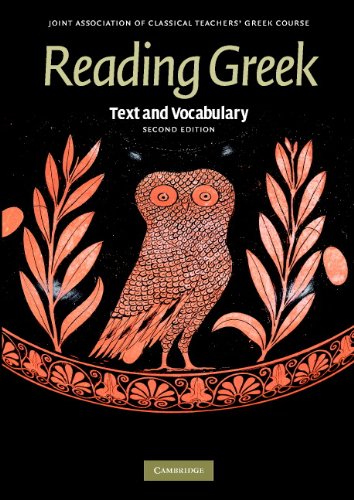
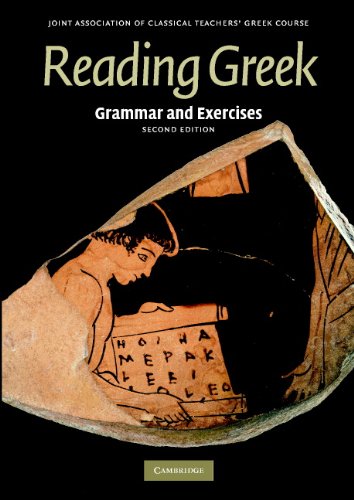
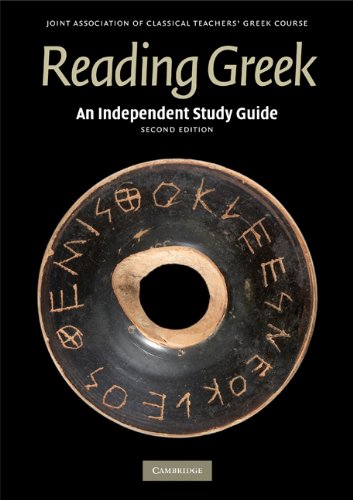
I'm using the Joint Association of Classical Teachers course Reading Greek which consists of three interlocking books: Text and Vocabulary, Grammar and Exercises, and An Independent Study Guide. It's very good.
I'll be posting the novels and nonfiction that I read here. I used to post comics too but I go through them too quickly and it's not worth trying to keep track. If I finish my Greek course (which is unlikely) I'm declaring each book equivalent to 30 "normal" books! I also will post some of the operas that I've seen/heard. (This is a legacy of my father. He turned into an opera nerd in his 80s and 90s and when he came to live here he dragged us to all of the Metropolitan Opera's Live in HD concerts (about 10 a year) for almost 10 years. This left both me and the wife with a love of opera and we go/listen frequently.)
My old threads:
2025
2017
2016
2015
2014
2013
2012
2011
My grading scale:
 - Just say no
 - Some might like it, but it's not my thing
 - I don't regret reading it, but once was probably enough
 - A good solid book, well worth the time; might read again
 - Great book; I'm almost certain to read it again
NP. Nancy Pearl. Did not finish. Don’t intend to.
Finally, I lurk. I don't post on other people's threads very often though I do peruse them. And when I post here I mostly stick to books. My "reviews" tend to be quite short now, but maybe I'll try to change that.
Thanks for coming.
I'm Steve, a 50-odd year old physician in the Boston area reminding you all to save frequently because LT is kind of an old site and does not automatically save your work.
So to start again, I first joined this group in 2011 and was reasonably active until 2017 when I pooped out for a bunch of reasons (elder care, politics, Twitter use). I rejoined last year in an effort to read more, doomscroll less, and keep tabs on what was being read in the world.
I didn't even get close to reading 50 books - let alone 75 - last year, as my reading habits have changed quite a bit over 15 years. I still read novels (mostly SF, fantasy, historical fiction) and non-fiction (history, music (I'm a recovering musician), language), and I'm a comics nerd (they are great for when you don't want to think too much), but I read more current events than I used to and I hang around on BlueSky (@stevenvlad.com) more than I did in 2011. I also tend to have little projects/hobbies going on at any given time which means I 'read a book' less often than I used to.
For instance, last year I dove into Bach's B minor mass and spent several month looking at each movement, it's structure, it's history, the relationship to the text, etc. It took some time but was a lot of fun.
Before that (going back well into 2023 I think) I took on the complete works of Claudio Monteverdi, looking at all his madrigals and religious works, evaluating structure, looking at the relationship to the text, etc. I went through all the texts both in translation and in the original Italian and learned quite a bit about Italian poetry (very different from English!) and 15th and 16th century Italian poets.
Currently I'm learning Ancient Greek. Why, you may ask? Well I don't have a great reason. The spirit simply moved me and I dove in. Unless I peter out at some point (not impossible) I'll be doing this throughout 2026. I've set myself a goal to one day read Aristophanes and Herodotus, and maybe a bit of Thucydides, in the original language.
I'm using the Joint Association of Classical Teachers course Reading Greek which consists of three interlocking books: Text and Vocabulary, Grammar and Exercises, and An Independent Study Guide. It's very good.
I'll be posting the novels and nonfiction that I read here. I used to post comics too but I go through them too quickly and it's not worth trying to keep track. If I finish my Greek course (which is unlikely) I'm declaring each book equivalent to 30 "normal" books! I also will post some of the operas that I've seen/heard. (This is a legacy of my father. He turned into an opera nerd in his 80s and 90s and when he came to live here he dragged us to all of the Metropolitan Opera's Live in HD concerts (about 10 a year) for almost 10 years. This left both me and the wife with a love of opera and we go/listen frequently.)
My old threads:
2025
2017
2016
2015
2014
2013
2012
2011
My grading scale:
 - Just say no
 - Some might like it, but it's not my thing
 - I don't regret reading it, but once was probably enough
 - A good solid book, well worth the time; might read again
 - Great book; I'm almost certain to read it again
NP. Nancy Pearl. Did not finish. Don’t intend to.
Finally, I lurk. I don't post on other people's threads very often though I do peruse them. And when I post here I mostly stick to books. My "reviews" tend to be quite short now, but maybe I'll try to change that.
Thanks for coming.
2scvlad
BOOKS READ IN 2026
1. Greece in the Making 1200-479 BC by Robin Osborne
2. The Iliad by Homer translated by Robert Fitzgerald
3. The Odyssey by Homer translated by Robert Fitzgerald
4. The Trojan Epic: Posthomerica by Quintus of Smyrna translated by Alan James
5. An Arcane Inheritance by Kamilah Cole
6. The Argonautika by Appolonius of Rhodes translated by Peter Green
7. The Golden Age, Book 1 by Roxanne Moreil
8. Japanese Woodblock Prints by Andreas Marks
9-10. The Ancient Near East: c.3000–330 BC by Amélie Kuhrt
11. Platform Decay by Martha Wells
12. The Complete Pompeii by Joanne Berry
13. The Space Cat by Nnedi Okorafor and Tana Ford
14. Absolute Wonder Woman Vol. 1: The Last Amazon by Kelly Thompson and Hayden Sherman
15. The Power Fantasy Volume 1: The Superpowers by Kieron Gillen and Caspar Wijngaard
16. A Wizard of Earthsea by Ursula K. Le Guin and Fred Fordham
17. The Light Fantastic by Terry Pratchet
18. Supergirl: Woman of Tomorrow by Tom King and Bilquis Evely
19-28. Reading Greek: Text and Vocabulary
29-38. Reading Greek: Grammar and Exercises
39-48. An Independent Study Guide to Reading Greek
49. Sargassa by Sophie Burnham
50. The Greek histories: The sweeping history of Ancient Greece as told by its first chroniclers edited by Mary R. Lefkowitz and James S. Romm
51. The Intellectual Revolution
52. The Greek Plays: Sixteen Plays by Aeschylus, Sophocles, and Euripides edited by Mary R. Lefkowitz and James S. Romm
53. Japanese Woodblock Prints edited by Andreas Marks
54. The Oxford History of Ancient Egypt edited by Ian Shaw
55. Hokusai: Inspiration and Influence edited by Sarah E Thompson
56. Everybody's Perfect by Jo Walton
1. Greece in the Making 1200-479 BC by Robin Osborne

2. The Iliad by Homer translated by Robert Fitzgerald

3. The Odyssey by Homer translated by Robert Fitzgerald
4. The Trojan Epic: Posthomerica by Quintus of Smyrna translated by Alan James

5. An Arcane Inheritance by Kamilah Cole
6. The Argonautika by Appolonius of Rhodes translated by Peter Green
7. The Golden Age, Book 1 by Roxanne Moreil

8. Japanese Woodblock Prints by Andreas Marks
9-10. The Ancient Near East: c.3000–330 BC by Amélie Kuhrt
11. Platform Decay by Martha Wells

12. The Complete Pompeii by Joanne Berry
13. The Space Cat by Nnedi Okorafor and Tana Ford
14. Absolute Wonder Woman Vol. 1: The Last Amazon by Kelly Thompson and Hayden Sherman
15. The Power Fantasy Volume 1: The Superpowers by Kieron Gillen and Caspar Wijngaard
16. A Wizard of Earthsea by Ursula K. Le Guin and Fred Fordham
17. The Light Fantastic by Terry Pratchet
18. Supergirl: Woman of Tomorrow by Tom King and Bilquis Evely
19-28. Reading Greek: Text and Vocabulary
29-38. Reading Greek: Grammar and Exercises
39-48. An Independent Study Guide to Reading Greek
49. Sargassa by Sophie Burnham
50. The Greek histories: The sweeping history of Ancient Greece as told by its first chroniclers edited by Mary R. Lefkowitz and James S. Romm
51. The Intellectual Revolution
52. The Greek Plays: Sixteen Plays by Aeschylus, Sophocles, and Euripides edited by Mary R. Lefkowitz and James S. Romm
53. Japanese Woodblock Prints edited by Andreas Marks
54. The Oxford History of Ancient Egypt edited by Ian Shaw
55. Hokusai: Inspiration and Influence edited by Sarah E Thompson
56. Everybody's Perfect by Jo Walton
3scvlad
2026 Fiction, Plays, Poetry
1. The Iliad by Homer translated by Robert Fitzgerald
2. The Odyssey by Homer translated by Robert Fitzgerald
3. The Trojan Epic: Posthomerica by Quintus of Smyrna translated by Alan James
4. An Arcane Inheritance by Kamilah Cole
5. The Argonautika by Appolonius of Rhodes translated by Peter Green
6. The Golden Age, Book 1 by Roxanne Moreil
7. Platform Decay by Martha Wells
8. The Space Cat by Nnedi Okorafor and Tana Ford
9. Absolute Wonder Woman Vol. 1: The Last Amazon by Kelly Thompson and Hayden Sherman
10. The Power Fantasy Volume 1: The Superpowers by Kieron Gillen and Caspar Wijngaard
11. A Wizard of Earthsea by Ursula K. Le Guin and Fred Fordham
12. The Light Fantastic by Terry Pratchet
13. Supergirl: Woman of Tomorrow by Tom King and Bilquis Evely
14. Sargassa by Sophie Burnham
15. The Intellectual Revolution
16. The Greek Plays: Sixteen Plays by Aeschylus, Sophocles, and Euripides edited by Mary R. Lefkowitz and James S. Romm
17. Everybody's Perfect by Jo Walton
1. The Iliad by Homer translated by Robert Fitzgerald
2. The Odyssey by Homer translated by Robert Fitzgerald
3. The Trojan Epic: Posthomerica by Quintus of Smyrna translated by Alan James
4. An Arcane Inheritance by Kamilah Cole
5. The Argonautika by Appolonius of Rhodes translated by Peter Green
6. The Golden Age, Book 1 by Roxanne Moreil
7. Platform Decay by Martha Wells
8. The Space Cat by Nnedi Okorafor and Tana Ford
9. Absolute Wonder Woman Vol. 1: The Last Amazon by Kelly Thompson and Hayden Sherman
10. The Power Fantasy Volume 1: The Superpowers by Kieron Gillen and Caspar Wijngaard
11. A Wizard of Earthsea by Ursula K. Le Guin and Fred Fordham
12. The Light Fantastic by Terry Pratchet
13. Supergirl: Woman of Tomorrow by Tom King and Bilquis Evely
14. Sargassa by Sophie Burnham
15. The Intellectual Revolution
16. The Greek Plays: Sixteen Plays by Aeschylus, Sophocles, and Euripides edited by Mary R. Lefkowitz and James S. Romm
17. Everybody's Perfect by Jo Walton
4scvlad
2026 Nonfiction
1. Greece in the Making 1200-479 BC by Robin Osborne
2. Japanese Woodblock Prints by Andreas Marks
3-4. The Ancient Near East: c.3000–330 BC by Amélie Kuhrt
5. The Complete Pompeii by Joanne Berry
6-15. Reading Greek: Text and Vocabulary
16-25. Reading Greek: Grammar and Exercises
26-35. An Independent Study Guide to Reading Greek
36. The Greek histories: The sweeping history of Ancient Greece as told by its first chroniclers edited by Mary R. Lefkowitz and James S. Romm
37. Japanese Woodblock Prints edited by Andreas Marks
38. The Oxford History of Ancient Egypt edited by Ian Shaw
39. Hokusai: Inspiration and Influence edited by Sarah E Thompson
1. Greece in the Making 1200-479 BC by Robin Osborne
2. Japanese Woodblock Prints by Andreas Marks
3-4. The Ancient Near East: c.3000–330 BC by Amélie Kuhrt
5. The Complete Pompeii by Joanne Berry
6-15. Reading Greek: Text and Vocabulary
16-25. Reading Greek: Grammar and Exercises
26-35. An Independent Study Guide to Reading Greek
36. The Greek histories: The sweeping history of Ancient Greece as told by its first chroniclers edited by Mary R. Lefkowitz and James S. Romm
37. Japanese Woodblock Prints edited by Andreas Marks
38. The Oxford History of Ancient Egypt edited by Ian Shaw
39. Hokusai: Inspiration and Influence edited by Sarah E Thompson
5ArlieS
Hi Steve.
I've dropped a return star.
I'm very interested in your experience learning ancient Greek. I almost took a course on it, 45+ years ago, and have since learnt a bit of German (which I retain) and Old Norse (which I've mostly lost). My housemate is a serious polyglot - if it's Indo-European, and written in our alphabet, she can manage it with a dictionary - as well as being able to communicate orally in some that use their own alphabet (e.g. Russian).
I've dropped a return star.
I'm very interested in your experience learning ancient Greek. I almost took a course on it, 45+ years ago, and have since learnt a bit of German (which I retain) and Old Norse (which I've mostly lost). My housemate is a serious polyglot - if it's Indo-European, and written in our alphabet, she can manage it with a dictionary - as well as being able to communicate orally in some that use their own alphabet (e.g. Russian).
6drneutron
Welcome back, Steve! I’m interested in languages too - Old English is going to be my first retirement project. 😀
7PaulCranswick
Welcome back to you Steve and much kudos on the learning of Ancient Greek. Of course I would have thought that of all the older languages that would be the one that a Physician would gravitate to.
8SandDune
>1 scvlad: As I have been learning Welsh in a structured way for the past four and a half years I can appreciate wanting to learn a language that some people think is not particularly useful or strange or just odd! (I've had all of those reactions!)
9scvlad
>6 drneutron: Old English is fascinating. Definitely a different language.
>7 PaulCranswick: Yeah, Greek or Latin right? And yet that really had nothing to do with it. I was just looking for something different.
>8 SandDune: My wife thinks I’m nuts. She would much prefer me to learn modern Greek or some other language that would be 'useful'. But sometimes it's the journey, not the outcome, right?
>7 PaulCranswick: Yeah, Greek or Latin right? And yet that really had nothing to do with it. I was just looking for something different.
>8 SandDune: My wife thinks I’m nuts. She would much prefer me to learn modern Greek or some other language that would be 'useful'. But sometimes it's the journey, not the outcome, right?
10scvlad
>5 ArlieS: I’ll be sure to drop some notes about it here and there. I envy people who speak multiple tongues. Speaking another language is a first step into understanding other cultures. And it’s fascinating to see the commonalities and differences.
11thornton37814
I studied Koine Greek in undergraduate, mainly for Bible study purposes. When I got to graduate school, the semester I took advanced Greek, it was the classical Greek so I got to read all sorts of the Greek classics and learn some words that didn't appear in the Bible that semester. I can still do fairly well at reading Greek and Spanish, which I studied in high school. I can't speak or hear the Spanish now as I could back then, but I read it well enough to index a couple of Spanish titles for a periodical index.
12PaulCranswick

New Year greetings from Kuala Lumpur. My project is at least physically completed and an addition to the city scape.
Look forward to keeping up with you in 2026
14scvlad
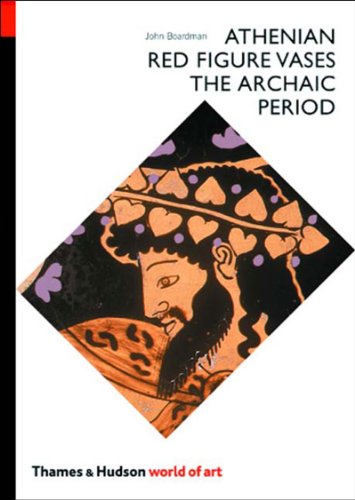
I went to the Boston Museum of Fine Art today. I went for a couple of hours two days ago too (I've go the week off). I forgot how good a museum it is. I spent a few hours looking at Egyptian and Greek relics. Great stuff. The MFA has a great collection of Greek pottery.
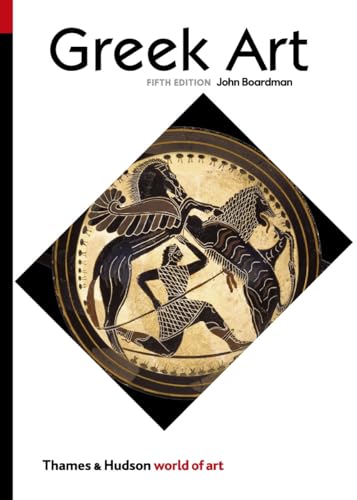
Anyway, I bought some books:

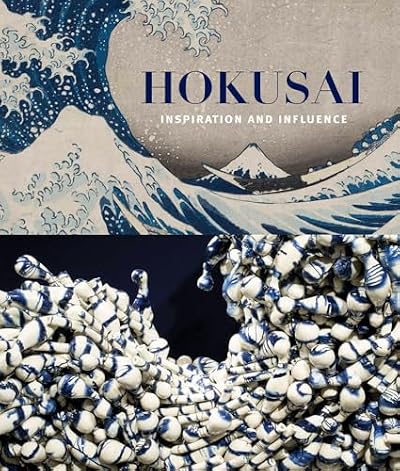
And then I cannot resist Hokusai. And the FMA did a nice exhibit on him some time ago (I missed it).
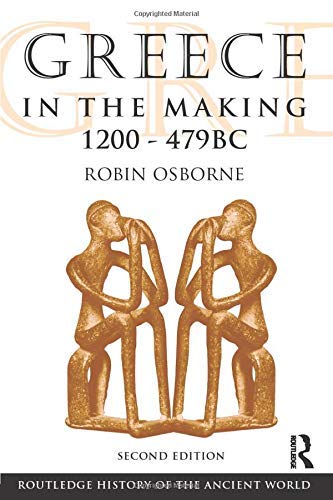
And then finally, I decided to continue my education of Greek history and prehistory so this is what I'm reading:
Good start to the New Year so far!
Anyway, I bought some books:

And then I cannot resist Hokusai. And the FMA did a nice exhibit on him some time ago (I missed it).
And then finally, I decided to continue my education of Greek history and prehistory so this is what I'm reading:
Good start to the New Year so far!
15scvlad
>11 thornton37814: Impressive! I'm nowhere near reading anything like those, but maybe one day ...
16ursula
Ancient Greek sounds like an interesting project. I learned some Russian a number of years back when we came back from Italy. There was no purpose to that either - I just wanted to keep that language-learning part of my brain working but wanted something totally different from Italian.
17scvlad
>16 ursula: yup. You get it. Speaking of which, I’m going to Italy in a couple of months. First time in 6 years. Gotta brush off my own Italian …
18scvlad
And just stopping by to comment that 2026 is only one week old.
If the rest of the year is like the last seven days I’m not gonna make it …

If the rest of the year is like the last seven days I’m not gonna make it …

20ursula
>17 scvlad: I'm going back to Italy in May for the first time since we moved away, almost 10 years ago. I still understand it quite well but my ability to remember words and form sentences has taken a hit with the intervening years requiring Turkish and German.
Where are you headed?
>18 scvlad: I feel that.
Where are you headed?
>18 scvlad: I feel that.
21PaulCranswick
>18 scvlad: Sorry that the start of the year has been tough for you, Steve. Onwards and upwards from here, I hope.
22scvlad
I finally finished a book!
1. Greece in the Making 1200-479 BC by Robin Osborne
This was a big, BIG book that covered a lot of material. It gets into the nitty gritty of where the whole idea of 'Greece' came from, culturally. Osborne uses both archaeology and what there is of literary sources to tell this story and he gets into the weeds. That’s both good and bad. It’s good because he looks at the evidence for what was happening in archaic and pre-archaic Greece, and he goes through it and tells you what it is. It’s not so good because sometimes, to me at least, it got a little dry. If I was reading when a little tired I could be prone to drop off.
But overall, worth reading if you want to understand where classical Greece came from.
1. Greece in the Making 1200-479 BC by Robin Osborne
This was a big, BIG book that covered a lot of material. It gets into the nitty gritty of where the whole idea of 'Greece' came from, culturally. Osborne uses both archaeology and what there is of literary sources to tell this story and he gets into the weeds. That’s both good and bad. It’s good because he looks at the evidence for what was happening in archaic and pre-archaic Greece, and he goes through it and tells you what it is. It’s not so good because sometimes, to me at least, it got a little dry. If I was reading when a little tired I could be prone to drop off.
But overall, worth reading if you want to understand where classical Greece came from.
23scvlad
While I’m here, I'll say that the Greek goes slowly. I’ve taken two weeks off in the last month and that has included taking off learning time. But I'm starting to get back into the swing of things, if slowly.
I'm currently reading excerpts from Apollodoros's prosecution (persecution) of Neaira, an unfortunate woman born to slavery, accused of passing herself off as a married Athenian woman. That’s just not done in Classical Athens.
Of course it’s her husband (or is he?) who's really being prosecuted, but she’s the one being shamed. Kind of nasty. And kind of tough reading. Identifying the aorist mediopassive participle in the plural masculine genitive case can sometimes be challenging. And I’m finding the vocabulary to be tough; in fact tougher than the grammar in some ways. But I’m hanging in. I need to find out what happens to poor Neaira though I suspect it will be nothing good.
I'm currently reading excerpts from Apollodoros's prosecution (persecution) of Neaira, an unfortunate woman born to slavery, accused of passing herself off as a married Athenian woman. That’s just not done in Classical Athens.
Of course it’s her husband (or is he?) who's really being prosecuted, but she’s the one being shamed. Kind of nasty. And kind of tough reading. Identifying the aorist mediopassive participle in the plural masculine genitive case can sometimes be challenging. And I’m finding the vocabulary to be tough; in fact tougher than the grammar in some ways. But I’m hanging in. I need to find out what happens to poor Neaira though I suspect it will be nothing good.
24PaulCranswick
>23 scvlad: Good luck Steve. It is Herculean, I think to be doing such learning and the pun was only slightly intended.
25scvlad
I am reading very slowly this year. I've only just finished up my second book. One a month is, I think, the slowest I've ever gone. Well anyway here it is:
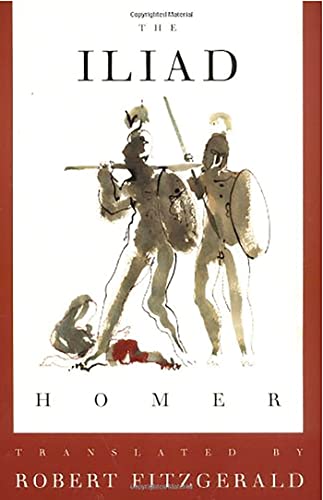
2. The Iliad by Homer translated by Robert Fitzgerald
I mean, what do you say about the Iliad. It's great. I read it once many years ago, but this time I really felt like I got into it. I didn't find the Greek gods to be extraneous to the story this time, and there were no periods of relative boredom. It was pretty gripping the whole way through.
I like Fitzgerald's translation a lot. I really like that he does not Romanize/Anglicize the Greek names (much). I started reading Fagel's translation of the Odyssey the other day and it's just irritating to me that he uses the Anglicized names for Greek people and places. He cites English tradition, but i don't find find that convincing. These are Greek stories, originally told in Greek. I want to hear - as much as possible - how the Greeks pronounced these names and places and I want them to fit.
I also like that Fitzgerald sticks to iambic pentameter. I'm not sure what Fagel was doing but it's definitely not that. For English, iambic pentameter works. So his combination of an English meter with Greek names/places just works for me. And he writes well.
I'm on to the Odyssey, probably starting today. I've read this on a couple of occasions and am pretty sure I've read his translation before, but it was so long ago that I've forgotten most of it. I'm looking forward to it.
2. The Iliad by Homer translated by Robert Fitzgerald
I mean, what do you say about the Iliad. It's great. I read it once many years ago, but this time I really felt like I got into it. I didn't find the Greek gods to be extraneous to the story this time, and there were no periods of relative boredom. It was pretty gripping the whole way through.
I like Fitzgerald's translation a lot. I really like that he does not Romanize/Anglicize the Greek names (much). I started reading Fagel's translation of the Odyssey the other day and it's just irritating to me that he uses the Anglicized names for Greek people and places. He cites English tradition, but i don't find find that convincing. These are Greek stories, originally told in Greek. I want to hear - as much as possible - how the Greeks pronounced these names and places and I want them to fit.
I also like that Fitzgerald sticks to iambic pentameter. I'm not sure what Fagel was doing but it's definitely not that. For English, iambic pentameter works. So his combination of an English meter with Greek names/places just works for me. And he writes well.
I'm on to the Odyssey, probably starting today. I've read this on a couple of occasions and am pretty sure I've read his translation before, but it was so long ago that I've forgotten most of it. I'm looking forward to it.
26scvlad

3. The Odyssey by Homer translated by Robert Fitzgerald
I mean, who doesn't love the Odyssey? What I forgot about, however, was that the sea voyage of Odysseus is a small part of the whole; only about 4 books or so out of 24. The whole last part is about his return to Ithaka, and another good chunk is about Telemakhos. But it's still a great story. So different from the Iliad.
And the fact that his voyages are all in the first person? How often does that happen in other literature of this time? Is it common? Something new? I have no idea ...
I continue to read really slowly. Three whole books in 2 months. What happened to the days when I read more than one a week? (I actually know the answer to that question: a much shorter commute, in addition to more social media and time spent working on Greek. Yes I'm still doing that though I've slowed down a lot. It's fun but also bloody hard. Especially when you're not willing to do all the homework ....)
27scvlad

4. The Trojan Epic: Posthomerica by Quintus of Smyrna translated by Alan James
This is a strange little work. Written by Quintus in the early 4th century it's a retelling of the events of the Trojan war starting after the Iliad and ending at the sack of the city. It's unclear whether he based his writing directly on the missing 4 books of the Trojan Epic Cycle, which were lost at around this time, or whether he was recalling the events from them. It's written in Greek, in a language and style that apparently deliberately parodies Homer, in dactylic hexameter and everything. So even for its time it's odd. It's always hard to tell from a translation of course, but it was not spectacular. The many Homeric similes got old very quickly, and the characters are never as alive and rounded as "Homer" makes them.
But it is interesting to see what happened after Hector's death and to bring the war to a close. I note that several episodes directly contradict what is found in the Odyssey and other sources; and we don't know why. (For instance Achilles is killed not by an arrow from Paris, but from Apollo himself.) Is it Quintus? Is it the Epic Cycle? Is it different versions of the same events in various sources? We'll never know.
This may be for you if you're interested in the story of the Trojan war and how this early 4th century writer interpreted them, but honestly it's not required reading for anyone else.
28scvlad

5. An Arcane Inheritance by Kamilah Cole
I've done a lot of heavy reading lately. It's nice to know that i can still do light reading fairly quickly. This was a recommendation from Reactor Magazine for something romancy yet mysterious. I'm not usually a romance guy and still am not, but luckily this had quite a bit more going for it.
Our heroine, Ellory, gets a surprise acceptance a scholarship to an elite school. But it's clear early on that something is not what it seems. And then there's the dreamy guy who she can't stand. It starts pretty much like a typical hate to love story with a little ghost story thrown in, but it's nicely written and the twist at the end is pretty good and makes the novel. Glad I read it, unlikely to read again, but a much needed break.
29scvlad

6. The Argonautika by Appolonius of Rhodes translated by Peter Green
So this was an interesting read. It's where most of the "Jason and the Argonaut" movies come from. Appolonius, writing in the 3rd century BCE (I think I have that right), basically took the legend and made a new Homeric Epic-style poem about it even though epic poetry was old hat even when he was writing.
It's entertaining, but at least in this English translation I didn't find it to be amazing. Appolonius makes some weird narrative choices from a modern perspective - parts of the story are very detailed, others are pretty scant. The most impressive and rounded character actually seems to be Medeia who Appolonius paints as a torn but strong woman who is sharp and crafty. I kind of like her. The rest of the characters feel a little wooden.
Any way, if you're interested in Greek Epic read it by all means! If you're not, you might prefer to watch the movie.
30scvlad
Hi all. Still here. Grinding through some very long books.
I stopped by to catch up on other peoples' threads while listening to Doctor Atomic. I got a couple of good recommendations for if I ever stop reading huge, long nonfiction books. Thanks. But I’m closing in on finishing the Greek course. Now reading unadapted Greek (but looking up every second word, so …). Anyway I should have something to post fairly soon.
I stopped by to catch up on other peoples' threads while listening to Doctor Atomic. I got a couple of good recommendations for if I ever stop reading huge, long nonfiction books. Thanks. But I’m closing in on finishing the Greek course. Now reading unadapted Greek (but looking up every second word, so …). Anyway I should have something to post fairly soon.
31scvlad

7. The Golden Age, Book 1 by Roxanne Moreil
I read this lovely graphic novel over the weekend. Very engaging art work, almost abstract painting, and great for this story. The plot of the story is fine. It looks like it will be a tale of a young woman's empowerment and bringing equality to all the people of a medieval-like realm, but who knows; it's only the first volume. I've ordered the second from the library. But read it for the art work which really is lovely.
In the meantime I'm still cranking away at a big history of the ancient near east, and continuing to work on ancient Greek. But I'm almost at the end of my beginner's course! Just a little Herodotus and Homer and I'll be done! And then I'm claiming 10 books for each book in the course (3)!
32scvlad

8. Japanese Woodblock Prints by Andreas Marks
I was in Chicago last week and stopped by the Art Institute. Good museum. And in the bookshop I saw this very cool extralarge edition of Japanese Woodblock prints from Taschen. I’ve loved these ever since I first went to Japan 36 years (!) ago. Alas it was big, weighty, and $200. Too much money and too much for an air trip that I packed light for. So I bought this instead. It’s good. Informative, great art. But now I want the extralarge volume with more prints even more …
Sigh.
33quondame
>32 scvlad: My own passion being costume, I do have the extra large Taschen Fashion from Kyoto Costume Institute. I have it in several other editions as well as it did develope over the years. The woodblock print book looks amazing.
34scvlad
>33 quondame: it really does. And there is only one edition. ;-) My wife won’t be too mad.
Traditional Japanese dress really is an amazing art of its own isn’t it, and it extends back centuries. Though it’s not my passion I would love to see that book. I’ll keep an eye out. Maybe the library …
Taschen does a great job with these books.
Traditional Japanese dress really is an amazing art of its own isn’t it, and it extends back centuries. Though it’s not my passion I would love to see that book. I’ll keep an eye out. Maybe the library …
Taschen does a great job with these books.
35scvlad

9-10. The Ancient Near East: c.3000–330 BC by Amélie Kuhrt
Technically this was a two volume work so I’m taking credit for each of them.
This is a BIG scholarly review of the area and time period. It’s incredibly well researched and referenced. It’s a great reminder that there was more going on at this time than just ancient Egypt (though Egypt is covered here too).
It’s also a great reminder of how much we’ve lost. These civilizations existed for hundreds if not thousands of years and yet what’s left in some cases is minuscule. There are cultures that existed that we literally know nothing about, not even their names, that are just one archaeological dig away from being brought into the light. Others, we essentially just know some names. And yet others we know quite a bit about (e.g. Egypt again, though not uniformly). Its amazing.
Anyway, this is not a light, easy read. It’s technical, detailed (when possible), and about as comprehensive as can be (though it’s probably about 35 years out of date). Highly recommended if you’re curious and have the need to learn about this period of history.
36scvlad

11. Platform Decay by Martha Wells
I can still burn through a book when I want to. The eighth installment of The Murderbot Diaries is another good page turner. I love this character, as so many others do. The series is highly recommended.
37scvlad

12. The Complete Pompeii by Joanne Berry
I was in Pompeii a couple of months ago. Incredible place. I bought this shortly afterwards as it seemed like the best combination of a scholarly history with great pictures. It is. Berry clearly knows her stuff and covers pretty much everything you’d want to know about the place, including the history of the excavations which is its own tale. I pooped put a little bit in the last two sections (economic life) but otherwise it was very informative and well written. Highly recommended before you visit, but still great after.
38scvlad
I have generally not been including graphic novels and comics on my list this year though I’ve been reading them. Mostly that’s because there are a) too many of them and b) it’s too heard for me to figure out what a 'book' is. An issue? A volume of six issues? A compendium of 12 or more issues? Not worth the trouble.
However I’m going to make an exception for the next few books. These are all Hugo nominees this year and I am reading them, systematically, in anticipation of voting. So here they are:
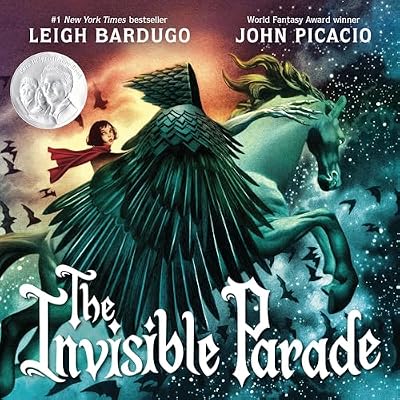
NP. The Invisible Parade by Leigh Bardugo and, John Picacio
NP. A Girl and Her Fed by KB Spangler and Lae Presser
These two just did not do it for me. The first was fine with lovely art work but it reminded me too much of the movie Coco. The second just didn’t interest me. It didn’t help that it begins in the middle of a longer story.
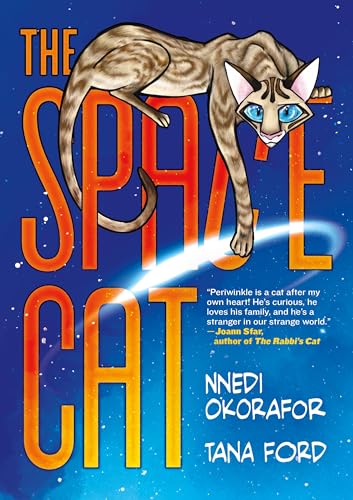
13. The Space Cat by Nnedi Okorafor and Tana Ford
Now this was fun. Okorafor 'documents' the life of her house cat. It turns out he gets up to quite a bit more than you’d expect, even from a cat. It’s all there in the 'space' of the title. Well worth a read.
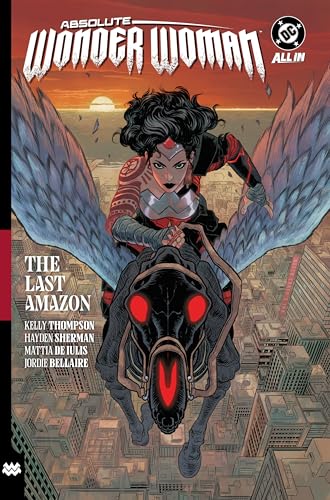
14. Absolute Wonder Woman Vol. 1: The Last Amazon by Kelly Thompson and Hayden Sherman
This was excellent. This is a complete reimagining of the Wonder Woman story. She’s still a hero, but she's not your mother's Amazon any more. Torn from her mother and raised by Circe in Hell, Diana is a great magician as well as a great warrior. Accompanied by her faithful, mostly dead, steed Pegasus she is destined to save the world. Really great writing here and the art is also very compelling and rich. So far this is my favorite for the Hugo.
But I’ve got a couple of more books to read and will report back later …
However I’m going to make an exception for the next few books. These are all Hugo nominees this year and I am reading them, systematically, in anticipation of voting. So here they are:
NP. The Invisible Parade by Leigh Bardugo and, John Picacio
NP. A Girl and Her Fed by KB Spangler and Lae Presser
These two just did not do it for me. The first was fine with lovely art work but it reminded me too much of the movie Coco. The second just didn’t interest me. It didn’t help that it begins in the middle of a longer story.
13. The Space Cat by Nnedi Okorafor and Tana Ford
Now this was fun. Okorafor 'documents' the life of her house cat. It turns out he gets up to quite a bit more than you’d expect, even from a cat. It’s all there in the 'space' of the title. Well worth a read.
14. Absolute Wonder Woman Vol. 1: The Last Amazon by Kelly Thompson and Hayden Sherman
This was excellent. This is a complete reimagining of the Wonder Woman story. She’s still a hero, but she's not your mother's Amazon any more. Torn from her mother and raised by Circe in Hell, Diana is a great magician as well as a great warrior. Accompanied by her faithful, mostly dead, steed Pegasus she is destined to save the world. Really great writing here and the art is also very compelling and rich. So far this is my favorite for the Hugo.
But I’ve got a couple of more books to read and will report back later …
39scvlad

15. The Power Fantasy Volume 1: The Superpowers by Kieron Gillen and Caspar Wijngaard
Another Hugo nominee. It’s good. The idea is that there are six 'superheroes' with the power to destroy the world. What does that look like? What if they're not all 'good' like a traditional superhero? What happens if they’re get into conflict with the world or with each other?
Good characters here. Interesting plot. I'm already planning on following the coming volumes.
But I admit I liked Absolute Wonder Woman just a bit more …
40scvlad

16. A Wizard of Earthsea by Ursula K. Le Guin and Fred Fordham
This is the last of the 2026 Hugo contenders for graphic novel. It’s a graphic novelization of, obviously, the Le Guin classic. I did not think I would like it. I was wrong. It’s a lovely work, true to the story (as much as I remember it) with really lovely art work, full of muted colors. It covers the entire novel so it actually took me a couple of days to read it. But I’m glad I did. I can see why so many people nominated it.
But my vote will likely go to Absolute Wonder Woman. I really liked Thompson's restructuring of the WW story, and for all that the Le Guin is lovely it is, after all, a version of an already award winning book.
So, I’m glad I read them. I may try to read some of the other Hugo nominees but I’m not sure. There are a lot of them and the novels, anyway, may be more than I want to commit to. We'll see.
41quondame
>40 scvlad: I do want to get to that one. Also Absolute Wonder Woman.
43scvlad

17. The Light Fantastic by Terry Pratchet
Ugh. Lost the prior text here but that’s ok. Didn’t have much to say anyway.
44scvlad

18. Supergirl: Woman of Tomorrow by Tom King and Bilquis Evely
I have not been posting the graphic novels and comics I’ve been reading but I’m going to make an exception here. I cannot say enough good things about this Supergirl story. This is the third time I’ve read it and every time I’m impressed.
It’s good for a few reasons: it has good, solid characters with personalities and growth; it’s not about superpowers and battles, but about psychology and, when all is said and done, PTSD; the art is great, leaning into purples, pinks, reds, and greens to create a feeling of alien-ness; the prose is fun with the main character shifting from stylized lit-speak to country slang at appropriate times while supergirl just swears a lot. I don’t know what else to tell you; it’s just a really good story.
It’s the basis of the upcoming Supergirl movie. That both excites and terrifies me. James Gunn has been making some great movies the last few years so I’m very hopeful that this will be one of them. But I’m terrified he will nonetheless make it a shallow superhero movie and fail to bring out what makes the story so good. But I guess we’ll see; I’ll be in the theater for it.
Highly recommended.
45scvlad
Major Ability Unlocked!
It's been almost exactly ten months that I've been trying to learn some ancient Greek. I've done it with the three books below, and because they've been with me for over long, I'm counting each book as 10 books each, one for each month!
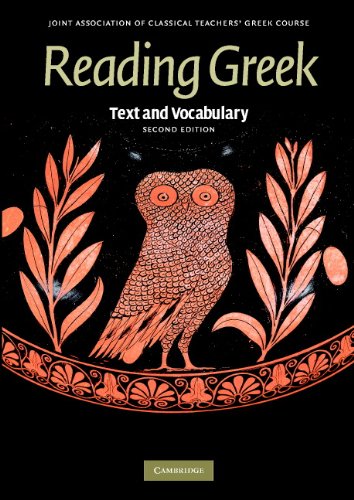
19-28. Reading Greek: Text and Vocabulary
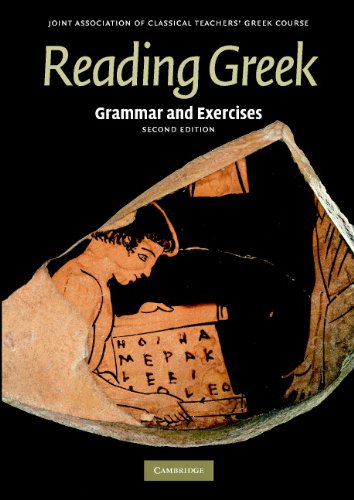
29-38. Reading Greek: Grammar and Exercises
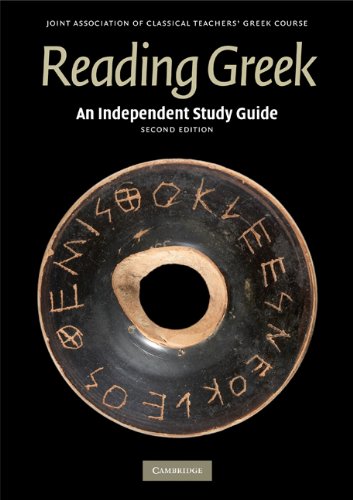
39-48. An Independent Study Guide to Reading Greek
They were all developed by the Joint Association of Classical Teachers
This series is excellent. The idea is that the first book gives you text with accompanying vocabulary to work through. The second book then talks about various aspects of grammar using the text as an example and gives appropriate exercises. If you are using these books in the classroom, that's sufficient. But if like me you are an 'independent learner' the last book gives answers to the exercises and expounds on other relevant aspects of grammar and vocabulary that a teacher would normally do in class. It works very well. You start reading right away which for me was really important; I would not have stuck with a series of rote exercises without actual texts.
The texts used here are adapted from Ancient Greek literature. They especially use Aristophanes along with some Plato and other writers. As you go you learn a little about classical Athenian society and thought. They finish with fairly long, unadapted, excerpts from Demosthenes (The prosecution of Neaira), Plato (Protagoras, where Prometheus gives the concept of justice to mankind), Herodotus (The story of Adrastos from Histories I), and finally Book VI of The Odyssey where Odysseus meets Nausikaa. The last two parts are especially challenging but gratifying.
I am now by no means fluent in ancient Greek. My vocabulary is awful because I refused to sit and try to memorize words, and I didn't do many of the exercises and drills. So I still have a lot of work to do. My plan is review grammar again using a different source (Wilfred E. Major and Michael Laughy have a free, online grammar course, Ancient Greek for Everyone) while I dig into more readings using The Intellectual Revolution, another JACT book that has extended excerpts from Euripides, Thucydides, and Plato, with a little guidance.
It's been almost exactly ten months that I've been trying to learn some ancient Greek. I've done it with the three books below, and because they've been with me for over long, I'm counting each book as 10 books each, one for each month!
19-28. Reading Greek: Text and Vocabulary
29-38. Reading Greek: Grammar and Exercises
39-48. An Independent Study Guide to Reading Greek
They were all developed by the Joint Association of Classical Teachers
This series is excellent. The idea is that the first book gives you text with accompanying vocabulary to work through. The second book then talks about various aspects of grammar using the text as an example and gives appropriate exercises. If you are using these books in the classroom, that's sufficient. But if like me you are an 'independent learner' the last book gives answers to the exercises and expounds on other relevant aspects of grammar and vocabulary that a teacher would normally do in class. It works very well. You start reading right away which for me was really important; I would not have stuck with a series of rote exercises without actual texts.
The texts used here are adapted from Ancient Greek literature. They especially use Aristophanes along with some Plato and other writers. As you go you learn a little about classical Athenian society and thought. They finish with fairly long, unadapted, excerpts from Demosthenes (The prosecution of Neaira), Plato (Protagoras, where Prometheus gives the concept of justice to mankind), Herodotus (The story of Adrastos from Histories I), and finally Book VI of The Odyssey where Odysseus meets Nausikaa. The last two parts are especially challenging but gratifying.
I am now by no means fluent in ancient Greek. My vocabulary is awful because I refused to sit and try to memorize words, and I didn't do many of the exercises and drills. So I still have a lot of work to do. My plan is review grammar again using a different source (Wilfred E. Major and Michael Laughy have a free, online grammar course, Ancient Greek for Everyone) while I dig into more readings using The Intellectual Revolution, another JACT book that has extended excerpts from Euripides, Thucydides, and Plato, with a little guidance.
46scvlad

49. Sargassa by Sophie Burnham
First of the Ex Romana series.
I took a break from all the heavy reading I’ve been doing to burn through this one. It was good. In what appears to be an alternative world where the Roman Empire survived, the Historian is murdered. And then we get a good look at just what kind of society this is as our heroes and heroines learn that it’s not such a great place. And maybe it’s not an alternative world after all …
The series is nominated for a Hugo this year. It’s fun and I’ll likely continue to read; I don’t know if it will win or not though …
47ReneeMarie
>45 scvlad: Thanks for the mention of the free online course. I found it and many more good things as a result of looking for it. (I'm trying to learn a bit of modern Greek at Duolingo. But I also just love the history & the plays.)
48scvlad
>47 ReneeMarie: Great! Happy to hear it!
49scvlad

50. The Greek histories: The sweeping history of Ancient Greece as told by its first chroniclers edited by Mary R. Lefkowitz and James S. Romm
This is an excellent anthology of writings by some of the first Greek historians, especially Herodotos and Thucydides, but also with a little Xenophon and Plutarch. These are great stories and they are surprisingly accessible, at least in these translations. Herodotos, for all his faults as a historian, was a great story teller. And Thucydides … don’t get me started on him. He was a man so far ahead of his time. How did he go from third hand stories - the norm - to a carefully verified chronicle of events he saw first-hand, but also didn’t? For all his difficult prose his History of the Peloponnesian War was a landmark in human history.
Xenophon and Plutarch revert to the norm unfortunately, but they are also pretty good story tellers.
The volume gives a nice window into some of the most important events of Ancient Greek and especially Athenian history. Well worth the purchase.
50scvlad


I'm claiming two books-worth from these two books, even though I have read neither completely. I’m allowed: I’ve now read Euripides' Medeia about three times in English, and have parsed large chunks of it in Ancient Greek over the last month or so.
So:
51. The Intellectual Revolution
and
52. The Greek Plays: Sixteen Plays by Aeschylus, Sophocles, and Euripides edited by Mary R. Lefkowitz and James S. Romm
They are both excellent.
Medeia is an amazing play. Greek plays are so weird by our modern standards: they are more a series of speeches than dialogue. But what speeches! And Medeia is such a great character: she saves Jason from death multiple times over, betrays her family to run away with him, kills her father and brother to do it, and then has a couple of kids with him; all so he can then betray her by marrying the daughter of the king of Corinth. I mean, what an asshole; no wonder she’s pissed! And you do not want to piss off a woman like Medeia: she's a fucking witch and she'll fucking do you to get revenge. And she does. She both poisons Jason's new wife (by poisoning her clothes so that she burns/melts!) and her father (dumb ass shouldn’t have touched his kid while she was all melted on the floor!), AND she kills her own two kids! Just to get revenge on Jason and make sure that no one laughs at her! And somehow you still come out a little bit on her side!
What a story!
And reading it in Greek is, of course, a challenge. I’m coming along slowly. Vocab is very slowly getting better and I’m slowly understanding the sentence structures a bit better, but it’s a slog. A fun slog, but still a slog.
Next up are selections from Thucydides. Looking forward to it.
51scvlad

53. Japanese Woodblock Prints edited by Andreas Marks
This is one of those lovely art books published by Taschen. It's about 2 feet tall (I exaggerate but not by much) and is actually two volumes wrapped in a fancy hardcover box with the above print on it. The paper is thick and luxurious, often double-leaved and there are quite a few pull outs for larger prints. It was definitely a vanity purchase (see >32 scvlad:) and worth every penny.
I travelled to Japan about 30 years ago and got interested in its history and culture then. It was also the first time I saw traditional woodblock prints (in reproduction of course) and I've had a soft spot ever since, especially for always the popular Hokusai and Hiroshige. Yes, the great wave is cool but there are also lots of other great landscapes.
What this book adds for me is the other genres of prints: the actor portraits, the warrior prints, the sumo portraits, the so-called 'beauty' prints, etc. (Not to mention the very explicit pornography...) I have to admit that I love them less (I mean the portraits, etc, not the porn). Some are quite lovely but they are less my thing. None-the-less they are very important to this art form.
The book is essentially laid out in chronological order with a brief introduction to each relevant period and a description of each work along with its known history. So you can trace the development of the form from black-and-white printing to the rather incredible gradations in color that you see in more recent eras. My only small nit is that some of the works are laid out across the central fold and the way that the book is designed (traditional Japanese binding: quite lovely) means you can't see what's in the crease - you'd have to unbind the book completely to get in there. It's not a big problem for most of the works but on a couple of occasions it's inconvenient.
But anyway, as vanity purchases go, this was a great one. So much so that I bought the extra large editions of the Thirty-six Views of Mount Fuji and The Sixty-Nine Stations along the Kisokaido. They look great. Can't wait to dig in.
52quondame
>51 scvlad: I love the Tascen books I have and I love Japanese prints. The print love dates back to a book my parents had with a page each of one color of a print with the cumulative of the preceding separations on the facing page. So the whole book was a breakdown of one print, but fascinating. We had a couple of other books with some prints in them, including a volume of Asian erotica.
53scvlad
>52 quondame: That book sounds quite fascinating. I still need to dig into how woodblock printing works and how they make it work so precisely.
The woodblock erotica I’ve seen I have always thought to be kind of funny. Everything is just so … exaggerated … if you know what I mean. At least from this era of Japan. It’s both incredibly realistic and not at all realistic at the same time.
The woodblock erotica I’ve seen I have always thought to be kind of funny. Everything is just so … exaggerated … if you know what I mean. At least from this era of Japan. It’s both incredibly realistic and not at all realistic at the same time.
54quondame
>53 scvlad: Exaggerated, yes! I figured they were representing how it felt rather than being visually precise. Figurative does not mean the visual equivalent of literal, though shouldn't it?
55scvlad

54. The Oxford History of Ancient Egypt edited by Ian Shaw
I’m getting through some of my big reads, finally. Here’s another one. It’s very good but let’s not pretend this is light reading. This is a summary for serious scholars, or a history for people who really want to get into the nitty gritty. Meaning me.
I enjoyed it well enough. I have a better sense the eras of Egyptian history, what kind of happened, who worshipped what, etc. but it’s unlikely I’ll ever read it again. It’s not one of those books, unless you’re writing a history paper or something.
The illustrations and figures are, in the other, quite good. Much better than your average text book.
For those with serious interest.
56scvlad

55. Hokusai: Inspiration and Influence edited by Sarah E Thompson
This continues my delve into Japanese woodblock printing and other art works of the time. This book was written to go along with an exhibition at the Boson Museum of Fine Arts which, unfortunately, I missed. But the book is good. It's what it says: a look at Hokusai with commentary/works about/by the artists who influenced him and who he in turn influenced. There's some great works of art in it and they are nicely presented. I like that those works are not limited to woodblock prints; I was unaware of Hokusai's paintings and book illustrations. They will be worth exploring further.
57scvlad

56. Everybody's Perfect by Jo Walton
Jo Walton is a very unique writer; I don’t know of another like her. All her books are just … different. In a very good way. Here’s another.
I won’t say much about it, just that the title is the theme. All the characters are odd-people-out in one way or another. They are not 'normal' per their society’s norms. They are outcasts, misfits. But they’re all perfect in their own way, as is everyone. In the end there is no 'imperfect'; just different ways of being perfect.
It’s gentle and lovely and unique and worth reading. I’ll read it again one day.
58ArlieS
>45 scvlad: Oh! Congrats on the Greek! Languages take a lot of work.
59scvlad

56. Thirty-six Views of Mount Fuji by Hokusai Katsushika edited by Andreas Marks
I mean what can I say. Gorgeous. The image above gives it no justice whatsoever.
61quondame
>57 scvlad: This is one of my library holds. It's at the 2 week stage...
