1rocketjk

OK! I'm back once more to share all the books I take down off my shelves and read instead of going out to buy more instead! A recent "off the shelf" history: Six years ago, given my second full year of retirement and first year of Covid, I hit an amazing 82 books read, 31 of which I counted as "Off the shelf." Over the next 3 years, my "off-the-shelf" reading was off somewhat for one reason and another. Anyway, my 2021 totals were 67 books read, with only 22 off-the-shelfers, well short of my 30-book OTS goal. 2022 brought me 53 books read, and 24 OTS, just short of my 25-book goal. In 2023 I bumped the goal back up to 30 and read 27 OTS, so better but still a little short. Last year, feeling optimistic, I left my goal at 30 books, but hit a couple of major speed bumps. The major one was the fact that my wife and I moved mid-year from Northern California to New York City. There was a cross-country drive from New York to California, a couple of months' packing project, a flight back to New York, and then about a month's worth of unpacking and settling in. All that negatively affected my reading totals. C'est la vie! Anyway, in 2024 I read 41 books, with only 18 of them counting in my system as "off the shelf." So I throttled down down the goal to 25 OTS in 2025. I did a little better, reading 46 books with 22 being off the shelfers. I'm going to hang tight at 25's my goal for this year and see if I can sneak over the goal line.
In addition to the books I read straight through, I like to read anthologies, collections and other books of short entries one story/chapter at a time instead of plowing through them all at once. I have a couple of stacks of such books from which I read in this manner between the books I read from cover to cover (novels and histories, mostly). So I call these my "between books." When I finish an "Off the Shelf between book," I add it to my yearly list. Cheers, all!
Book 1: The Penitent by Isaac B. Singer
Book 2: The Emperor of Gladness by Ocean Vuong
Book 3: Life Magazine November, 7, 1955 edited by Edward K. Thompson
Book 4: Chronicles of the Canongate by Sir Walter Scott
Book 5: The Heike Story by Eiji Yoshakiwa
Book 6: Spy Catcher: the Candid Autobiography of a Senior Intelligence Officer by Peter Wright
Book 7: A Fool's Errand by One of the Fools (a.k.a. Albion W. Tourgee)
Book 8: The End of the Tether by Joseph Conrad
Book 9: The Story Continued: The New York Times Magazine, January 13, 1974 by J. Anthony Lukas
Book 10: No-one Loves a Policeman by Guillermo Orsi
2connie53
Welcome back, Jerry. I hope you reach your goal now that things have settled down. Happy ROOTing.
3rabbitprincess
Welcome back and have a great reading year!
4MissWatson
Great to see you here again, Jerry. Good luck with your goal!
6rocketjk
Book 1: The Penitent by Isaac B. Singer

I read The Penitent as part of my ongoing project of reading all of Isaac B. Singer's novels in chronological order of their being published in English. I read two per year, the first book I start in January and the first book I start in July. The Penitent is the 9th in that order of Singer's 14 published novels, and I'm sorry to say that it is the first I've read that I found unsatisfying. In the book's opening section, a fictional Singer speaks of visiting the Wailing Wall in Jerusalem, where he is approached by an obviously religious Jewish man, one Joseph Shapiro, who tells Singer how much he has admired his writing over the years. The rest of the relatively short book is Shapiro's monologue about his reasons for turning from secular Judaism to ultra-orthodox Judaism. It's a long refutation of the sins of modern secular society, the temptations of the flesh and of liberal society. We get very little of Singer's usual impressive and gratifying powers of description or delvings into human nature. Instead, we get a rather repetitive and unsubtle testimony. Some of the more approving reviews here on LT express the view that Singer here has presented an interesting portrait of the thinking and motivation of the dedicated religious mind, so your mileage may vary, but I didn't find anything that revealing in this novel. C'est la vie. I can only say that if anyone is thinking of exploring Singer's writing, I beg you not to start the The Penitent.

I read The Penitent as part of my ongoing project of reading all of Isaac B. Singer's novels in chronological order of their being published in English. I read two per year, the first book I start in January and the first book I start in July. The Penitent is the 9th in that order of Singer's 14 published novels, and I'm sorry to say that it is the first I've read that I found unsatisfying. In the book's opening section, a fictional Singer speaks of visiting the Wailing Wall in Jerusalem, where he is approached by an obviously religious Jewish man, one Joseph Shapiro, who tells Singer how much he has admired his writing over the years. The rest of the relatively short book is Shapiro's monologue about his reasons for turning from secular Judaism to ultra-orthodox Judaism. It's a long refutation of the sins of modern secular society, the temptations of the flesh and of liberal society. We get very little of Singer's usual impressive and gratifying powers of description or delvings into human nature. Instead, we get a rather repetitive and unsubtle testimony. Some of the more approving reviews here on LT express the view that Singer here has presented an interesting portrait of the thinking and motivation of the dedicated religious mind, so your mileage may vary, but I didn't find anything that revealing in this novel. C'est la vie. I can only say that if anyone is thinking of exploring Singer's writing, I beg you not to start the The Penitent.
7connie53
>6 rocketjk: You sound really disappointed in this book, Jerry. That's too bad.
8rocketjk
>7 connie53: Yes, I was disappointed. The eight previous Singer novels I'd read were various degrees of wonderful, so this was a letdown for me. However, I've got several more of his novels to go for my project, and I'm expecting more excellence in those books. Perhaps not as wonderful as his prime-years early works, but rewarding nevertheless. The next Singer novel I will read, as my first book begun in July, will be The King of the Fields, published in English in 1988. The short LT description is:
Singer's late novel, a magical and resonant fable, recreates the birth of the Polish nation. Through the compelling figure of Cybula, defeated leader of a tribe of hunter-gatherers, it explores the moment when prehistory dissolved into history, superstitions became tinged with skepticism, and men began to turn from many gods towards one god.
The subject matter is certainly intriguing.
Singer's late novel, a magical and resonant fable, recreates the birth of the Polish nation. Through the compelling figure of Cybula, defeated leader of a tribe of hunter-gatherers, it explores the moment when prehistory dissolved into history, superstitions became tinged with skepticism, and men began to turn from many gods towards one god.
The subject matter is certainly intriguing.
10rocketjk
Book 2: The Emperor of Gladness by Ocean Vuong

Just so no one is even momentarily mislead by what I'm going to write next, I found The Emperor of Gladness to be an absolutely marvelous novel.
You know that sort of novel full of quirky, misfit characters who band together somehow, in a music group, say, or at a workplace, or in a bar. They are poor, probably, and/or otherwise outsiders. Their lives are hard, and they probably have some stronger outside force arrayed against them: an evil landlord or building developer, or a relative with power of attorney who just doesn't understand, or maybe the medical industry, but none of that matters in the end, because they have each other and their quirky humor and positive outlooks on life. There might be some good writing, but overall the novel provides a feel good cartoon of a story, even if the ending's not all that happy. Over the years, my patience for such novels has been worn down to a stubble.
The Emperor of Gladness could have been that, because what I've just described is the basic framework. But Ocean Vuong is such a good writer, his ability to infuse this archetype with depth and breadth so acute, that this novel instead becomes a moving and memorable testimony of friendship and continued struggle against the headwinds of poverty, diminished expectations and disappointment with one's own choices. In the first few pages, 19-year-old Hai, the son of Vietnamese immigrants, addicted to pharmaceuticals, stands on a bridge over a freezing river and prepares to jump. He has already dropped out of college in New York City and returned in abject embarrassment to his mother in East Gladness, Connecticut, a gray, shrinking industrial town several miles outside of Hartford. Now his mother thinks he is in Boston studying in a medical program, though in truth he has never left East Gladness, so although he misses her, he can only speak with her on the phone, pretending to be in another city. But while he is looking down at the water, he is hailed from the window of a house on the far shore by an old woman who somehow convinces not to jump but instead to finish crossing the bridge so that she can warm him up with a blanket and give him a meal. She is Drazina, an immigrant from Lithuania who ran from Stalin's army at the end of World War 2 with her husband, now dead, and who now lives alone in the family house at the end of what is now mostly an abandoned and crumbling block of houses that dead ends at the riverbank. She offers him a room and he essentially becomes her caretaker. Soon, he prevails upon his cousin, Sony, to help him get a job at a nearby HomeMarket, a chain restaurant that specializes in rotisserie chicken and mac and cheese. The staff of this restaurant, a band of misfits in one way or another, will become his surrogate family. Again, this is all within the first several pages, so no real spoilers.
Well, you can see, perhaps, the potential for preciousness here. But Vuong's extreme talent in accurately depicting the claustrophobic humiliations of poverty and restrictions of class, and the strength of human aspiration and hope in the face of these factors, renders his character portrayals intensely human and their setting entirely recognizable. Also, since we feel we're in the real world rather than a feel good comedy, we are never sure of happy or longterm outcomes. Here's an overlong (sorry 'bout that!) quote to give you an idea of Vuong's writing:
This is a novel built much more strongly on character and setting than on plot. And yet, as we're pulled along by the writing, we relatively quickly come to care about these people, and to want to know what will become of them. And, to be clear, it is definitely not all as bleak as the excerpt I've provided above might suggest. There is, in fact, quite a bit of humor. This novel gets a rare five stars from me.
Book note: I read The Emperor of Gladness due to a tradition my wife and I share. At the beginning of each calendar year, we give each other to read whatever book from our previous year's reading that we enjoyed the most and which think the other would enjoy as well. My wife gave me this book to read. Not coincidentally, a couple of years back she also gave me Vuong's first novel, On Earth We're Briefly Gorgeous, which I similarly admired. (For the curious, the book I gave her this year was The Little World of Don Camillo by Italian author and journalist Giovannino Guareschi. Written in the 1950s, the book is a collection of stories about the village priest Don Camillo and his enemy/friend Peppone, the town's Communist mayor. Happily, she quite enjoyed it.)

Just so no one is even momentarily mislead by what I'm going to write next, I found The Emperor of Gladness to be an absolutely marvelous novel.
You know that sort of novel full of quirky, misfit characters who band together somehow, in a music group, say, or at a workplace, or in a bar. They are poor, probably, and/or otherwise outsiders. Their lives are hard, and they probably have some stronger outside force arrayed against them: an evil landlord or building developer, or a relative with power of attorney who just doesn't understand, or maybe the medical industry, but none of that matters in the end, because they have each other and their quirky humor and positive outlooks on life. There might be some good writing, but overall the novel provides a feel good cartoon of a story, even if the ending's not all that happy. Over the years, my patience for such novels has been worn down to a stubble.
The Emperor of Gladness could have been that, because what I've just described is the basic framework. But Ocean Vuong is such a good writer, his ability to infuse this archetype with depth and breadth so acute, that this novel instead becomes a moving and memorable testimony of friendship and continued struggle against the headwinds of poverty, diminished expectations and disappointment with one's own choices. In the first few pages, 19-year-old Hai, the son of Vietnamese immigrants, addicted to pharmaceuticals, stands on a bridge over a freezing river and prepares to jump. He has already dropped out of college in New York City and returned in abject embarrassment to his mother in East Gladness, Connecticut, a gray, shrinking industrial town several miles outside of Hartford. Now his mother thinks he is in Boston studying in a medical program, though in truth he has never left East Gladness, so although he misses her, he can only speak with her on the phone, pretending to be in another city. But while he is looking down at the water, he is hailed from the window of a house on the far shore by an old woman who somehow convinces not to jump but instead to finish crossing the bridge so that she can warm him up with a blanket and give him a meal. She is Drazina, an immigrant from Lithuania who ran from Stalin's army at the end of World War 2 with her husband, now dead, and who now lives alone in the family house at the end of what is now mostly an abandoned and crumbling block of houses that dead ends at the riverbank. She offers him a room and he essentially becomes her caretaker. Soon, he prevails upon his cousin, Sony, to help him get a job at a nearby HomeMarket, a chain restaurant that specializes in rotisserie chicken and mac and cheese. The staff of this restaurant, a band of misfits in one way or another, will become his surrogate family. Again, this is all within the first several pages, so no real spoilers.
Well, you can see, perhaps, the potential for preciousness here. But Vuong's extreme talent in accurately depicting the claustrophobic humiliations of poverty and restrictions of class, and the strength of human aspiration and hope in the face of these factors, renders his character portrayals intensely human and their setting entirely recognizable. Also, since we feel we're in the real world rather than a feel good comedy, we are never sure of happy or longterm outcomes. Here's an overlong (sorry 'bout that!) quote to give you an idea of Vuong's writing:
There's a way an old Connecticut town feels when you pass through it at night. Hollowed out, blasted yet styled into a potent aftermath, all of it touched by an inexplicable beauty, like the outside has suddenly become one huge living room. And you feel you can sit down underneath the sincere light of a streetlamp and no one would bother you, no one would tell you to leave, because they know you're staying for a reason. That you're bound by your debts, by blood or sweat and the cars sprayed silver with hoarfrost along streets named after white millionaires no one remembers. How boring, he thought, to be yet another boy wanting to rid himself of the hometown dust clinging to his clothes, setting out like a spark flung from his mother's cigarette. He floated through the empty streets, eyes watering from the icy wind. He passed houses filled with warm light and imagined the people inside, his head growing blurry with the thought of them huddled in their tiny parlors full of furniture and voices breaking through the raiment light of TV commercials, the news, its endless reel of abjection, their bodies kept, for now, from the intolerance of daylight and its procession of work and misgivings. He imagined all the boys he wanted to know lying sleepless in their cramped and cluttered rooms, the curling posters and chipped trophies, the endless cords to defunct video game consoles, all of it once the feeble altar of teenage triumphs, now the detritus of adolescence.
This is a novel built much more strongly on character and setting than on plot. And yet, as we're pulled along by the writing, we relatively quickly come to care about these people, and to want to know what will become of them. And, to be clear, it is definitely not all as bleak as the excerpt I've provided above might suggest. There is, in fact, quite a bit of humor. This novel gets a rare five stars from me.
Book note: I read The Emperor of Gladness due to a tradition my wife and I share. At the beginning of each calendar year, we give each other to read whatever book from our previous year's reading that we enjoyed the most and which think the other would enjoy as well. My wife gave me this book to read. Not coincidentally, a couple of years back she also gave me Vuong's first novel, On Earth We're Briefly Gorgeous, which I similarly admired. (For the curious, the book I gave her this year was The Little World of Don Camillo by Italian author and journalist Giovannino Guareschi. Written in the 1950s, the book is a collection of stories about the village priest Don Camillo and his enemy/friend Peppone, the town's Communist mayor. Happily, she quite enjoyed it.)
11rocketjk
Book 3: Life Magazine November, 7, 1955 edited by Edward K. Thompson
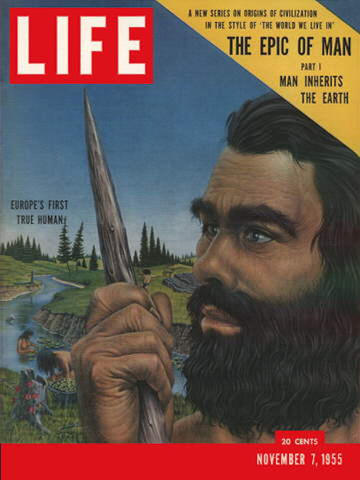
(This should have been Book 2 but I forgot to come here and post it. I know . . . who cares, right?) Read as a "between book" (see first post). I have a large stack of old magazines sitting in my home closet which, over the past several years, I've been gradually reading one article at a time. Generally, when I finish them they go on the recycle stack, unless I find them of significant enough interest to hold on to them. This edition of Life will not make that cut. The issue is of historic interest to me because it came out four months and three days after my birthday. Americans of a certain age may recall Life as a weekly publication that was largely full of short snippets of human interest or historical note, accompanied by one or more photographs. And then each issue would have three or four longer articles. The two lengthy pieces in this edition included:
* The cover article, clearly the first of a series, called "The Epic of Man, Part 1: Man Inherits the Earth," by Lincoln Barnett. This piece provided a pretty interesting account of the appearance and development of modern humans, at least to the extent that research on the topic had developed in 1955. It was well written, but I don't know how much of it would be considered accurate 70 years later.
* The most interesting item in this edition of Life by far for me was "The 'Doomed Daredevils' of the I.R.A. Warm Up Their 40 Years' War" by Irish writer Sean O'Faolain, who we learn was "in his early twenties . . . the director of propaganda for the I.R.A. during the civil war in Ireland." O'Faolain provides a fairly in-depth history of the I.R.A. and an examination of the state of the organization and their activities at the time of the writing. By 1955, he basically finds them to be a tragic anachronism whose tactics have long since lost any possibility of securing their goals.
I'll go closet diving this afternoon to find out what the next magazine off the stack will be.
(This should have been Book 2 but I forgot to come here and post it. I know . . . who cares, right?) Read as a "between book" (see first post). I have a large stack of old magazines sitting in my home closet which, over the past several years, I've been gradually reading one article at a time. Generally, when I finish them they go on the recycle stack, unless I find them of significant enough interest to hold on to them. This edition of Life will not make that cut. The issue is of historic interest to me because it came out four months and three days after my birthday. Americans of a certain age may recall Life as a weekly publication that was largely full of short snippets of human interest or historical note, accompanied by one or more photographs. And then each issue would have three or four longer articles. The two lengthy pieces in this edition included:
* The cover article, clearly the first of a series, called "The Epic of Man, Part 1: Man Inherits the Earth," by Lincoln Barnett. This piece provided a pretty interesting account of the appearance and development of modern humans, at least to the extent that research on the topic had developed in 1955. It was well written, but I don't know how much of it would be considered accurate 70 years later.
* The most interesting item in this edition of Life by far for me was "The 'Doomed Daredevils' of the I.R.A. Warm Up Their 40 Years' War" by Irish writer Sean O'Faolain, who we learn was "in his early twenties . . . the director of propaganda for the I.R.A. during the civil war in Ireland." O'Faolain provides a fairly in-depth history of the I.R.A. and an examination of the state of the organization and their activities at the time of the writing. By 1955, he basically finds them to be a tragic anachronism whose tactics have long since lost any possibility of securing their goals.
I'll go closet diving this afternoon to find out what the next magazine off the stack will be.
12Henrik_Madsen
>10 rocketjk: That's another great review praising Ocean Vuong's new novel. Time to put it on the wish list even though, as you say, the very short resumé sounds kind of annoying.
13rocketjk
>12 Henrik_Madsen: " . . . even though, as you say, the very short resumé sounds kind of annoying."
I'm not sure what you mean. Which comment of mine are you referring to? At any rate, yes, I hope you read the book soon. Would love to know how you like it. Cheers!
I'm not sure what you mean. Which comment of mine are you referring to? At any rate, yes, I hope you read the book soon. Would love to know how you like it. Cheers!
14Henrik_Madsen
>13 rocketjk: Sorry about that. I referered to your initial comment about the theme of the book, where you conclude that “Over the years, my patience for such novels has been worn down to a stubble.”
15rocketjk
Book 4: Chronicles of the Canongate by Sir Walter Scott
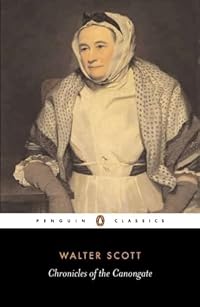
Read as a "between book" (see first post). Chronicles of the Canongate is a collection of three long short stories, or perhaps two long stories and one novella, published by Scott in 1827 (200 years ago!). The volume also includes a long introductory narrative by Scott's fictional author Chrystal Croftangry, explaining a humorous "how and why" of the writing of the tales, plus shorter introductions before the second and third tales. The stories are all historic tales (taking place around 75 years before Scott wrote them) recounting legends of the Scottish Highlands. I found the three tales to be of varying enjoyment.
"The Highland Widow" relays the history of a reclusive old women, the widow of a notorious outlaw who, who resides alone in the Scottish Highlands and is by now the subject of much superstition and suspicion. Here, she tells her story to the woman who, years later, relayed it to Croftangry. She is mourning, not the death of her husband, but of her son, and the part she herself played in his downfall. The writing is certainly entertaining, but I couldn't work up a sympathy for this tragic heroine.
"The Two Drovers" tells the story of the falling out of two friends over a minor disagreement, and the tragic consequences. Pride and a faulty sense of honor are the villains, here. I only found this story moderately enjoyable, I'm afraid.
"The Surgeon's Daughter" is the longest story, the one I referred to as a novella, and it is, thankfully, the best of the three. The titular character is not the main one of the tale, though she plays a prominent role in the action. It is the two young men who both serve as apprentices to the kindly country surgeon of the title whose differing degrees of character strength and capacity for folly moves the narrative, as the scene moves from a small Scottish village to India in the days of the Raj and the heyday of the British East India Company. Who will prevail, and how will the heroine, buffeted by events mostly out of her control, fare in these stormy events. This one, as I said, was the most fun.
All in all, this is not the best of the Scott "Waverly" tales I have read, but there was enjoyment to be derived all in all from the set.
Read as a "between book" (see first post). Chronicles of the Canongate is a collection of three long short stories, or perhaps two long stories and one novella, published by Scott in 1827 (200 years ago!). The volume also includes a long introductory narrative by Scott's fictional author Chrystal Croftangry, explaining a humorous "how and why" of the writing of the tales, plus shorter introductions before the second and third tales. The stories are all historic tales (taking place around 75 years before Scott wrote them) recounting legends of the Scottish Highlands. I found the three tales to be of varying enjoyment.
"The Highland Widow" relays the history of a reclusive old women, the widow of a notorious outlaw who, who resides alone in the Scottish Highlands and is by now the subject of much superstition and suspicion. Here, she tells her story to the woman who, years later, relayed it to Croftangry. She is mourning, not the death of her husband, but of her son, and the part she herself played in his downfall. The writing is certainly entertaining, but I couldn't work up a sympathy for this tragic heroine.
"The Two Drovers" tells the story of the falling out of two friends over a minor disagreement, and the tragic consequences. Pride and a faulty sense of honor are the villains, here. I only found this story moderately enjoyable, I'm afraid.
"The Surgeon's Daughter" is the longest story, the one I referred to as a novella, and it is, thankfully, the best of the three. The titular character is not the main one of the tale, though she plays a prominent role in the action. It is the two young men who both serve as apprentices to the kindly country surgeon of the title whose differing degrees of character strength and capacity for folly moves the narrative, as the scene moves from a small Scottish village to India in the days of the Raj and the heyday of the British East India Company. Who will prevail, and how will the heroine, buffeted by events mostly out of her control, fare in these stormy events. This one, as I said, was the most fun.
All in all, this is not the best of the Scott "Waverly" tales I have read, but there was enjoyment to be derived all in all from the set.
17rocketjk
Book 5: The Heiké Story by Eiji Yoshikawa (1892-1962)

The Heiké Story is a modern (1956) retelling of the The Heiké Monogatari, a Japanese epic from the thirteenth century that related the feudal wars that had raged throughout Japan during the previous centuries between the powerful, Heiké, Fujiwara and Genji clans. The action of Yoshikawa's modernization takes place during the 12th century, and centers around the maturation, education, rise to power and reign of Heita Kiyomori of the Heiké. (Reminiscent somewhat of watching Prince Hal grow to become Henry V.) The original epic, as we're told in the helpful translator's afterward, is essentially a chronicle of "the deeds of warriors and princes." Yoshikawa brings the story to a personal level, following the lives of several characters in both the dueling Heiké and Genji clans, also portraying the subservient lives that the culture's women were forced to endure. There are some battle scenes, to be sure, and these are pretty well done, without much graphic gore. But the dominant themes of Yoshikawa's narrative are clearly the burdens of power, the tragedy and futility of war, and the folly of human (particularly male) pride, as personified by the warrior class, whose members refuse to foreswear vengeance and bloodshed even when they know that the resulting wars will lead to suffering, starvation, disease and death for thousands of innocent people. Still, we spend time with characters working to mute these cultural imperatives, and the power of both family and romantic love is a theme that runs through the narrative, as well. According to the historical translator's afterward, the influence of the clans and the warrior culture in Japan endured right through the events of World War II, and those events clearly influenced Yoshikawa's work.
A note that the volume contains many lovely illustrations by Kenkichi Sugimoto
(https://www.tokyoartbeat.com/en/events/-/Collection-Exhibition-20-Years-Following-His-Passing-Kenkichi-Sugimoto/80569861/2024-07-26)


The Heiké Story is a modern (1956) retelling of the The Heiké Monogatari, a Japanese epic from the thirteenth century that related the feudal wars that had raged throughout Japan during the previous centuries between the powerful, Heiké, Fujiwara and Genji clans. The action of Yoshikawa's modernization takes place during the 12th century, and centers around the maturation, education, rise to power and reign of Heita Kiyomori of the Heiké. (Reminiscent somewhat of watching Prince Hal grow to become Henry V.) The original epic, as we're told in the helpful translator's afterward, is essentially a chronicle of "the deeds of warriors and princes." Yoshikawa brings the story to a personal level, following the lives of several characters in both the dueling Heiké and Genji clans, also portraying the subservient lives that the culture's women were forced to endure. There are some battle scenes, to be sure, and these are pretty well done, without much graphic gore. But the dominant themes of Yoshikawa's narrative are clearly the burdens of power, the tragedy and futility of war, and the folly of human (particularly male) pride, as personified by the warrior class, whose members refuse to foreswear vengeance and bloodshed even when they know that the resulting wars will lead to suffering, starvation, disease and death for thousands of innocent people. Still, we spend time with characters working to mute these cultural imperatives, and the power of both family and romantic love is a theme that runs through the narrative, as well. According to the historical translator's afterward, the influence of the clans and the warrior culture in Japan endured right through the events of World War II, and those events clearly influenced Yoshikawa's work.
A note that the volume contains many lovely illustrations by Kenkichi Sugimoto
(https://www.tokyoartbeat.com/en/events/-/Collection-Exhibition-20-Years-Following-His-Passing-Kenkichi-Sugimoto/80569861/2024-07-26)

19rocketjk
Book 6: Spy Catcher: the Candid Autobiography of a Senior Intelligence Officer by Peter Wright

I would really call this much more of a memoir than an autobiography, despite the subtitle, as Wright here deals almost entirely with his professional life as a member, and eventually assistant director, of MI5, the British counterespionage agency, from World War 2 through the late 1970s. For the non-British citizens (like me) in the room, Wright explains MI5 as being roughly the British equivalent of the FBI and MI6 as being the equivalent of the CIA. Wright was a true believer that the struggle against the significant espionage efforts of the Soviet Union was a crucial mission. And he is also adamant in this memoir that MI5 in many very important ways were doing this job very badly. For one thing, both MI5 and MI6 were run as clubby old boys' clubs, with upper class "gentlemen" bringing their chums on board without any proper vetting at all, despite the fact it was well known that there had been a significant disenchantment with the British class system and capitalism in general among these very upperclass clubmen in the 1930s. The result was a series of postwar defections and also a cadre of British spies working for the Soviet Union within the British intelligence agencies. The subsequent refusal of those in charge to, in many cases, prosecute their old club pals and/or risk further public scandal causes Wright no end of teeth gnashing. Wright speaks with scorn of what he calls the continued British "delusions of Empire" within government and intelligence circles that caused them to refuse to accept the fact that postwar Britain was no longer a first level world power and and had in fact become a junior partner to the United States. Wright came to his intelligence work through his scientific background, hired to help develop new technologies in spying microphones and radio interception techniques for counterintelligence. He spent his career in trying to root out Soviet spies within the British government, both the traitorous British moles and the Russian spies in place within and without the Russian diplomatic corps. He describes effectively and in great detail his frustrations over his inability to convince his colleagues that a mole remained inside MI5 even into the 70s. In fact, Wright thought he could prove that it was his boss, Sir Roger Hollis, the director of MI5, who had been passing information to the Soviets for decades, allowing the Soviets to thwart all sorts of British espionage efforts over the years. Wright reports that the British dug what they thought was a secret tunnel under the Berlin Wall, only to find upon the tunnel's completion that the Soviets had been tipped off from within the British government about the project from its inception.
Wright's writing is clear and easy to read, though the book may suffer from an overabundance of details. I found it interesting to read about all the spies and counterspies, the inter- and intra-agency jealousies and feuds that created additional impediments and disfunction, the casual willingness to spy on everyone and everything, including allies (MI5 had every embassy in England bugged, and many on the continent as well, and Wright is both matter of fact and unapologetic about it all), but also the technological successes and brainpower that occasionally allowed them to crack Soviet and Eastern Bloc encrypted communications to their operatives in England and sometimes even catch spies. Looked at from the perspective of hindsight, however (Spy Catcher was published in 1987 when memories of the era were still fresh), one has to wonder what it was all for, and whether anything of substance, on either side, was really accomplished. I recall reading a comment several years ago made by a former CIA official (I have no memory of the name of this person) that the whole Cold War espionage campaign was simply, in the end, a colossal waste of time. Who knows?
Reading Spy Catcher was fun, though, as I mentioned above, you do have to wade through a lot of detail. I've had this book on my shelves since before my LT Big Bang in 2008. When I lived in San Francisco, I had a neighbor (I never found out who it was) who would occasionally put out stacks of a dozen or so books on the sidewalk across the street from my apartment and I would sometimes help myself to a book or two. Given that there's just a slight touch of water damage throughout my copy of Spy Catcher, I have a conjecture that this was the source of my ownership of the book.

I would really call this much more of a memoir than an autobiography, despite the subtitle, as Wright here deals almost entirely with his professional life as a member, and eventually assistant director, of MI5, the British counterespionage agency, from World War 2 through the late 1970s. For the non-British citizens (like me) in the room, Wright explains MI5 as being roughly the British equivalent of the FBI and MI6 as being the equivalent of the CIA. Wright was a true believer that the struggle against the significant espionage efforts of the Soviet Union was a crucial mission. And he is also adamant in this memoir that MI5 in many very important ways were doing this job very badly. For one thing, both MI5 and MI6 were run as clubby old boys' clubs, with upper class "gentlemen" bringing their chums on board without any proper vetting at all, despite the fact it was well known that there had been a significant disenchantment with the British class system and capitalism in general among these very upperclass clubmen in the 1930s. The result was a series of postwar defections and also a cadre of British spies working for the Soviet Union within the British intelligence agencies. The subsequent refusal of those in charge to, in many cases, prosecute their old club pals and/or risk further public scandal causes Wright no end of teeth gnashing. Wright speaks with scorn of what he calls the continued British "delusions of Empire" within government and intelligence circles that caused them to refuse to accept the fact that postwar Britain was no longer a first level world power and and had in fact become a junior partner to the United States. Wright came to his intelligence work through his scientific background, hired to help develop new technologies in spying microphones and radio interception techniques for counterintelligence. He spent his career in trying to root out Soviet spies within the British government, both the traitorous British moles and the Russian spies in place within and without the Russian diplomatic corps. He describes effectively and in great detail his frustrations over his inability to convince his colleagues that a mole remained inside MI5 even into the 70s. In fact, Wright thought he could prove that it was his boss, Sir Roger Hollis, the director of MI5, who had been passing information to the Soviets for decades, allowing the Soviets to thwart all sorts of British espionage efforts over the years. Wright reports that the British dug what they thought was a secret tunnel under the Berlin Wall, only to find upon the tunnel's completion that the Soviets had been tipped off from within the British government about the project from its inception.
Wright's writing is clear and easy to read, though the book may suffer from an overabundance of details. I found it interesting to read about all the spies and counterspies, the inter- and intra-agency jealousies and feuds that created additional impediments and disfunction, the casual willingness to spy on everyone and everything, including allies (MI5 had every embassy in England bugged, and many on the continent as well, and Wright is both matter of fact and unapologetic about it all), but also the technological successes and brainpower that occasionally allowed them to crack Soviet and Eastern Bloc encrypted communications to their operatives in England and sometimes even catch spies. Looked at from the perspective of hindsight, however (Spy Catcher was published in 1987 when memories of the era were still fresh), one has to wonder what it was all for, and whether anything of substance, on either side, was really accomplished. I recall reading a comment several years ago made by a former CIA official (I have no memory of the name of this person) that the whole Cold War espionage campaign was simply, in the end, a colossal waste of time. Who knows?
Reading Spy Catcher was fun, though, as I mentioned above, you do have to wade through a lot of detail. I've had this book on my shelves since before my LT Big Bang in 2008. When I lived in San Francisco, I had a neighbor (I never found out who it was) who would occasionally put out stacks of a dozen or so books on the sidewalk across the street from my apartment and I would sometimes help myself to a book or two. Given that there's just a slight touch of water damage throughout my copy of Spy Catcher, I have a conjecture that this was the source of my ownership of the book.
20rocketjk
Book 7: A Fool's Errand by One of the Fools (a.k.a. Albion W. Tourgee)

A fascinating timepiece, A Fool's Errand is a novel about the Reconstruction era in the post-Civil War American South written and first published very soon after the events portrayed, in 1879. As hinted at by the humorous author designation, the book was originally published anonymously, though evidently Tourgee's authorship was soon discovered or revealed. At any rate, Tourgee had an interesting and important life. Born in Ohio, he served in the Union Army during the Civil War and soon thereafter moved with his family to North Carolina in order to help with the fraught work of Reconstruction, and in particular aid with the education of the recently freed ex-slave population, and in general with ensuring that the freedmen and women population received the new rights that Emancipation and the new constitutional amendments had promised them. He got involved in politics and served as a Superior Court judge from 1868 to 1874. During this time, he ran into the venomous headwinds of a southern population, and especially a southern leadership class, determined to keep African Americans subjugated and increasingly willing to commit violence to ensure these aims are met.
I've spent all this time with biographical material of the author because A Fool's Errand is really an only lightly disguised fictionalized accounting of these years of his life. Our fictional hero is Comfort Servosse, a former Union Army Colonel who had fought and been wounded during the war and then put in charge of administering a section of a never named southern state (but which I assume was meant to be North Carolina, since that was where Tourgee actually lived). Upon leaving the military, Servosse, referred to by Tourgee most frequently as the Fool, brings his wife and child back to that same area, buys a large former plantation and begins breaking much of it up into parcels to sell to ex-slaves to build homesteads on, and befriends the young northern women who have come south to teach in the new freedmen schools. This, unsurprisingly, soon puts him into conflict with his neighbors. Eventually, for this and other transgressions, threats against the Fool's life become depressingly common. He is, of course, labeled a carpetbagger and a Radical.
The narrative is extremely uneven in the telling. Much of the book is written as, more or less, a romance or adventure yarn, with nefarious plots and feats of derring-do. But Tourgee frequently leaves off this mode of storytelling to serve up long digressions regarding the political and social state of affairs as he experienced them, as a citizen, a politician and a judge. These sections are slower reading, but they are extremely interesting in their own right. Tourgee had nothing but scorn for the northern politicians, dubbed in his telling the Wise Men, who in order to maintain political power within the Federal government, withdrew northern administrative forces from the south after only a few short years, passed the constitutional amendments that gave blacks for voting and citizenship rights on paper, and left the administration of these changes to the southern state governments. I found it interesting in the extreme to read Tourgee's clearly written accounts of these developments, his clear-eyed denouncement of them, and his extremely accurate predictions on how poorly, and bloodily, events were going to devolve into a reign of terror. His view was that southern whites had spent generations rationalizing slavery via pronouncements from both state houses and pulpits that blacks made up a subordinate race, certainly not fit to run their own affairs, let alone civic affairs in general. Therefore, a willingness to extend full rights, or any rights, for blacks was not going to be attained in the south simply by fiat by a hostile government of invaders whose only goal, as the southerners saw it, was to humiliate and subjugate the people they'd so recently conquered. He thought that the Federal government should have seen to supporting these major social changes much more directly, even if it meant keeping federal forces in the southern states for 20 years or more.
Tourgee, here in the guise of the Fool, was in the south during the rise of the Klan, a development written of forcefully in A Fool's Errand. While much of the information contained in the novel lines up with historical reading I've already done, especially via historian Leon Litwak's two important books, Been in the Storm So Long: The Aftermath of Slavery and Trouble in Mind: Black Southerners in the Age of Jim Crow, I found it extremely interesting, as I've said here several times already I guess, to read these accounts of someone who was there. His expository digressions do get long and sometimes repetitive, but I realized halfway through that Tourgee wasn't talking to me, although I'm sure he would liked to have known that his accounts were being read 147 years after he'd written them. He was talking to, and desperately trying to convince, the people of his own time in describing how poorly things were going, and why they'd taken such a violent and depressing turn. At any rate, while those expository sections are fascinating (I know, that word again), the fictional narrative sections are intriguing and fun, told with rewarding amount of sly humor.
Tourgee had a fascinating and admirable life, as outlined, I'll hopefully assume reasonably accurately, on the Wikipedia page dedicated to him:
https://en.wikipedia.org/wiki/Albion_W._Tourgée
Perhaps more reliable is this entry on the North Carolina State online encyclopedia about A Fool's Errand, which includes this quote:
"He served as a delegate to the state constitutional convention in 1868, and a year later he was elected a superior court judge. In both capacities, Tourgée personified what most white North Carolinians found to be the worst in carpetbaggery. Former governor Jonathan Worth once called him "the meanest Yankee who ever settled among us." His bold attempts to prosecute members of the Ku Klux Klan (KKK) made him a frequent target of their harassment.
https://www.ncpedia.org/fools-errand

A fascinating timepiece, A Fool's Errand is a novel about the Reconstruction era in the post-Civil War American South written and first published very soon after the events portrayed, in 1879. As hinted at by the humorous author designation, the book was originally published anonymously, though evidently Tourgee's authorship was soon discovered or revealed. At any rate, Tourgee had an interesting and important life. Born in Ohio, he served in the Union Army during the Civil War and soon thereafter moved with his family to North Carolina in order to help with the fraught work of Reconstruction, and in particular aid with the education of the recently freed ex-slave population, and in general with ensuring that the freedmen and women population received the new rights that Emancipation and the new constitutional amendments had promised them. He got involved in politics and served as a Superior Court judge from 1868 to 1874. During this time, he ran into the venomous headwinds of a southern population, and especially a southern leadership class, determined to keep African Americans subjugated and increasingly willing to commit violence to ensure these aims are met.
I've spent all this time with biographical material of the author because A Fool's Errand is really an only lightly disguised fictionalized accounting of these years of his life. Our fictional hero is Comfort Servosse, a former Union Army Colonel who had fought and been wounded during the war and then put in charge of administering a section of a never named southern state (but which I assume was meant to be North Carolina, since that was where Tourgee actually lived). Upon leaving the military, Servosse, referred to by Tourgee most frequently as the Fool, brings his wife and child back to that same area, buys a large former plantation and begins breaking much of it up into parcels to sell to ex-slaves to build homesteads on, and befriends the young northern women who have come south to teach in the new freedmen schools. This, unsurprisingly, soon puts him into conflict with his neighbors. Eventually, for this and other transgressions, threats against the Fool's life become depressingly common. He is, of course, labeled a carpetbagger and a Radical.
The narrative is extremely uneven in the telling. Much of the book is written as, more or less, a romance or adventure yarn, with nefarious plots and feats of derring-do. But Tourgee frequently leaves off this mode of storytelling to serve up long digressions regarding the political and social state of affairs as he experienced them, as a citizen, a politician and a judge. These sections are slower reading, but they are extremely interesting in their own right. Tourgee had nothing but scorn for the northern politicians, dubbed in his telling the Wise Men, who in order to maintain political power within the Federal government, withdrew northern administrative forces from the south after only a few short years, passed the constitutional amendments that gave blacks for voting and citizenship rights on paper, and left the administration of these changes to the southern state governments. I found it interesting in the extreme to read Tourgee's clearly written accounts of these developments, his clear-eyed denouncement of them, and his extremely accurate predictions on how poorly, and bloodily, events were going to devolve into a reign of terror. His view was that southern whites had spent generations rationalizing slavery via pronouncements from both state houses and pulpits that blacks made up a subordinate race, certainly not fit to run their own affairs, let alone civic affairs in general. Therefore, a willingness to extend full rights, or any rights, for blacks was not going to be attained in the south simply by fiat by a hostile government of invaders whose only goal, as the southerners saw it, was to humiliate and subjugate the people they'd so recently conquered. He thought that the Federal government should have seen to supporting these major social changes much more directly, even if it meant keeping federal forces in the southern states for 20 years or more.
Tourgee, here in the guise of the Fool, was in the south during the rise of the Klan, a development written of forcefully in A Fool's Errand. While much of the information contained in the novel lines up with historical reading I've already done, especially via historian Leon Litwak's two important books, Been in the Storm So Long: The Aftermath of Slavery and Trouble in Mind: Black Southerners in the Age of Jim Crow, I found it extremely interesting, as I've said here several times already I guess, to read these accounts of someone who was there. His expository digressions do get long and sometimes repetitive, but I realized halfway through that Tourgee wasn't talking to me, although I'm sure he would liked to have known that his accounts were being read 147 years after he'd written them. He was talking to, and desperately trying to convince, the people of his own time in describing how poorly things were going, and why they'd taken such a violent and depressing turn. At any rate, while those expository sections are fascinating (I know, that word again), the fictional narrative sections are intriguing and fun, told with rewarding amount of sly humor.
Tourgee had a fascinating and admirable life, as outlined, I'll hopefully assume reasonably accurately, on the Wikipedia page dedicated to him:
https://en.wikipedia.org/wiki/Albion_W._Tourgée
Perhaps more reliable is this entry on the North Carolina State online encyclopedia about A Fool's Errand, which includes this quote:
"He served as a delegate to the state constitutional convention in 1868, and a year later he was elected a superior court judge. In both capacities, Tourgée personified what most white North Carolinians found to be the worst in carpetbaggery. Former governor Jonathan Worth once called him "the meanest Yankee who ever settled among us." His bold attempts to prosecute members of the Ku Klux Klan (KKK) made him a frequent target of their harassment.
https://www.ncpedia.org/fools-errand
21rocketjk
Book 8: The End of the Tether by Joseph Conrad

The End of the Tether is one of the few Conrad works that I hadn't read yet. Originally published in 1902, this short novel was republished during Conrad's lifetime in a single-volume collection also including Youth and Heart of Darkness. It's one of Conrad's lesser known and lesser read works, and I'd concur that it doesn't match up to his best works. Still, it's Conrad, which for me has almost always meant, at the very least, enjoyable reading. Captain Whalley has been at sea for decades. He's seen, with regret, the closing of the age of the sailing ship and the onset of the steamship era. Places in the Eastern seas that Whalley was among the first Europeans to enter, and passages he was among the first Europeans to chart, have now become commonplace shipping lanes and established colonial ports. Yet he is still a man of vigor and strength. He is a widower who still sharply mourns his wife, who had shared his enthusiasm for exploration and for the sea. And he has one grown daughter living in Europe who has made an unfortunate marriage to a man of ill luck in business, and now of health too poor for working. So she is entirely dependent on her father financially. So he must keep working, though at his age commands are harder and harder to come by. He buys into a partnership in, and a command of, a that steamship that plies a boring and barely remunerative trade among the islands. But his partner, who is also the ship's chief engineer, is a vane and grasping man, and the first mate is a conniver, endlessly scheming for a way to get ahead. Whalley is enduring it all for the sake of his daughter until fate pulls one more fast one on him.
At 174 pages, this is a relatively quick read. For me it was a pleasure, as I love having Conrad's voice in my head. And indeed I do find as I read him that I feel like he's talking to me and telling me a story one-on-one. I've always enjoyed his insights into human nature, his sometimes slightly off-kilter way with words, and his descriptions of nature. Here's The End of the Tether's opening paragraph:
And here's a short passage that struck me particularly, especially the short second paragraph. During a flashback describing Whalley's life and career, we come to the death of his wife at sea, their young daughter on board with them as well.
So I enjoyed The End of the Tether and would recommend it to anyone without a previously minted antipathy for Conrad and/or his writing style. He's not for everyone. This short novel won't get you too deeply into the Conrad weeds: it's relatively straightforwardly written and it includes some of Conrad's frequent themes, including the ability or inability, as the case may be from story to story, of an upright, moral person to endure in the face of scoundrels and the cruel turns that life itself can dish out. But a reader wishing to discover why Conrad devotees consider him to be such a great writer should start elsewhere, as this is not one of Conrad's classics.

The End of the Tether is one of the few Conrad works that I hadn't read yet. Originally published in 1902, this short novel was republished during Conrad's lifetime in a single-volume collection also including Youth and Heart of Darkness. It's one of Conrad's lesser known and lesser read works, and I'd concur that it doesn't match up to his best works. Still, it's Conrad, which for me has almost always meant, at the very least, enjoyable reading. Captain Whalley has been at sea for decades. He's seen, with regret, the closing of the age of the sailing ship and the onset of the steamship era. Places in the Eastern seas that Whalley was among the first Europeans to enter, and passages he was among the first Europeans to chart, have now become commonplace shipping lanes and established colonial ports. Yet he is still a man of vigor and strength. He is a widower who still sharply mourns his wife, who had shared his enthusiasm for exploration and for the sea. And he has one grown daughter living in Europe who has made an unfortunate marriage to a man of ill luck in business, and now of health too poor for working. So she is entirely dependent on her father financially. So he must keep working, though at his age commands are harder and harder to come by. He buys into a partnership in, and a command of, a that steamship that plies a boring and barely remunerative trade among the islands. But his partner, who is also the ship's chief engineer, is a vane and grasping man, and the first mate is a conniver, endlessly scheming for a way to get ahead. Whalley is enduring it all for the sake of his daughter until fate pulls one more fast one on him.
At 174 pages, this is a relatively quick read. For me it was a pleasure, as I love having Conrad's voice in my head. And indeed I do find as I read him that I feel like he's talking to me and telling me a story one-on-one. I've always enjoyed his insights into human nature, his sometimes slightly off-kilter way with words, and his descriptions of nature. Here's The End of the Tether's opening paragraph:
For a long time after the course of the steamer Sofala had been altered for the land, the low swampy coast had retained its appearance of a mere smudge of darkness beyond a belt of glitter. The sun rays fell violently upon the palm tree--seemed to shatter themselves upon an adamantine surface into sparkling dust, into a dazzling vapor of light that blinded the eye and wearied the brain with its unsteady brightness.
And here's a short passage that struck me particularly, especially the short second paragraph. During a flashback describing Whalley's life and career, we come to the death of his wife at sea, their young daughter on board with them as well.
But Captain Whalley could in a half-hour of solitude live again all his life, with its romance, its idyl, and its sorrow. He had to close her eyes himself. She went away from under the ensign like a sailor's wife, a sailor herself at heart. He had read the service over her, out of her own prayer-book, without a break in his voice. When he raised his eyes he could see old Swinburne facing him with his cap pressed to his breast, and his rugged, weather-beaten, impassive face streaming with drops of water like a lump of chipped red granite in a shower. It was all very well for that old sea-dog to cry. He had to read on to the end; but after the splash he did not remember much of what happened for the next few days. An elderly sailor of the crew, deft at needlework, put together a mourning frock for the child out of one of her black skirts.
He was not likely to forget; but you cannot dam up life like a sluggish stream. It will break out and flow over a man's troubles, it will close upon a sorrow like the sea upon a dead body, no matter how much love has gone to the bottom.
So I enjoyed The End of the Tether and would recommend it to anyone without a previously minted antipathy for Conrad and/or his writing style. He's not for everyone. This short novel won't get you too deeply into the Conrad weeds: it's relatively straightforwardly written and it includes some of Conrad's frequent themes, including the ability or inability, as the case may be from story to story, of an upright, moral person to endure in the face of scoundrels and the cruel turns that life itself can dish out. But a reader wishing to discover why Conrad devotees consider him to be such a great writer should start elsewhere, as this is not one of Conrad's classics.
22rocketjk
Book 9: The Story Continued: The New York Times Magazine, January 13, 1974 by J. Anthony Lukas

Read as a "Between Book" (see first post). As I've mentioned often before, I have a stack of old magazines in my hallway closet that I've been going through gradually, an article at a time, with an aim towards recycling them as I finish them. I always have one going in my "Between Book" stacks. At least a quarter of the time, though, I end up finding these historical artifacts too interesting to toss. C'est la vie!
"The Story Continued" was the second Special Edition of the NY Times Sunday Magazine dedicated solely to the ongoing story of Watergate. The first such edition, titled "The Story So Far," had come out in July 22, 1973. At that point, reporters were still piecing together who had done what when, at whose orders, and with money that had come from where, exactly. As this edition's brief introduction puts it, "No longer merely Watergate, the story has become to tale of a Presidency." All of the articles were written by journalist J. Anthony Lukas, winner of the Pulitzer Prize in 1968.
The story here begins with the revelation by Alexander Butterfield, former Deputy Assistant to the President, while being questioned in front of the Ervin Committee (The Senate Watergate Committee, known officially as the Select Committee on Presidential Campaign Activities, chaired by Sam Ervin), in response to a question from committee investigator Scott Armstrong, answered truthfully that, yes, the president was in the habit of recording all of his phone calls and meetings, and that these tapes were still on hand. The existence of the Watergate Tapes, as they came to be known, for the first time made people think that the famous question that got turned into a slogan, "What did he know, and when did he know it?" might get answered. Additional articles in the magazine include
* a description of Nixon's mindset and determination to last out the storm in any way he could; a story about some of Nixon's questionable financial deals, or at least deals that seemed questionable on their surface;
* a piece about Spiro Agnew's crimes (evidently, he'd spent his career as a strong-arming thug, more or less);
* a profile of Special Prosecutor Archibald Cox and his battles to get information out of the Nixon Administration and get his hands on those tapes, which the White House was trying to avoid turning over;
* a second article on the tapes issue and the growing public frustration with the Administration's stonewalling, and
* a final article titled "I Am Not a Crook" describing the increasingly embattled president and the growing clamor for impeachment or resignation.
The issue came out in January, 1974, and Nixon resigned later that year, in August. Lukas, who'd been covering these events all along, was an excellent writer of clear, uncluttered prose who provides here extremely valuable detail and insight into the proceedings. I was 19 in 1974, and I remember, in a very general way, these events. The names are all still familiar to me, but the chronology and the individual roles of all the participants had begun quite hazy over the years. It was very interesting indeed to get this refresher on what at the time seemed like quite momentous events. And of course they were momentous, although now it all seems quite tame in comparison to the rackateers and thugs we have running the country these days. Still, reading this "on the spot" report, a look through the time portal of what things looked like to the people living through it all, made for compelling reading for me.

Read as a "Between Book" (see first post). As I've mentioned often before, I have a stack of old magazines in my hallway closet that I've been going through gradually, an article at a time, with an aim towards recycling them as I finish them. I always have one going in my "Between Book" stacks. At least a quarter of the time, though, I end up finding these historical artifacts too interesting to toss. C'est la vie!
"The Story Continued" was the second Special Edition of the NY Times Sunday Magazine dedicated solely to the ongoing story of Watergate. The first such edition, titled "The Story So Far," had come out in July 22, 1973. At that point, reporters were still piecing together who had done what when, at whose orders, and with money that had come from where, exactly. As this edition's brief introduction puts it, "No longer merely Watergate, the story has become to tale of a Presidency." All of the articles were written by journalist J. Anthony Lukas, winner of the Pulitzer Prize in 1968.
The story here begins with the revelation by Alexander Butterfield, former Deputy Assistant to the President, while being questioned in front of the Ervin Committee (The Senate Watergate Committee, known officially as the Select Committee on Presidential Campaign Activities, chaired by Sam Ervin), in response to a question from committee investigator Scott Armstrong, answered truthfully that, yes, the president was in the habit of recording all of his phone calls and meetings, and that these tapes were still on hand. The existence of the Watergate Tapes, as they came to be known, for the first time made people think that the famous question that got turned into a slogan, "What did he know, and when did he know it?" might get answered. Additional articles in the magazine include
* a description of Nixon's mindset and determination to last out the storm in any way he could; a story about some of Nixon's questionable financial deals, or at least deals that seemed questionable on their surface;
* a piece about Spiro Agnew's crimes (evidently, he'd spent his career as a strong-arming thug, more or less);
* a profile of Special Prosecutor Archibald Cox and his battles to get information out of the Nixon Administration and get his hands on those tapes, which the White House was trying to avoid turning over;
* a second article on the tapes issue and the growing public frustration with the Administration's stonewalling, and
* a final article titled "I Am Not a Crook" describing the increasingly embattled president and the growing clamor for impeachment or resignation.
The issue came out in January, 1974, and Nixon resigned later that year, in August. Lukas, who'd been covering these events all along, was an excellent writer of clear, uncluttered prose who provides here extremely valuable detail and insight into the proceedings. I was 19 in 1974, and I remember, in a very general way, these events. The names are all still familiar to me, but the chronology and the individual roles of all the participants had begun quite hazy over the years. It was very interesting indeed to get this refresher on what at the time seemed like quite momentous events. And of course they were momentous, although now it all seems quite tame in comparison to the rackateers and thugs we have running the country these days. Still, reading this "on the spot" report, a look through the time portal of what things looked like to the people living through it all, made for compelling reading for me.
23connie53
Hi Jerry, finally reaching your thread to see what you have been reading. I really like the way you review your books. That's something I would love to be able to do that.
24rocketjk
Book 10: No-one Loves a Policeman by Guillermo Orsi
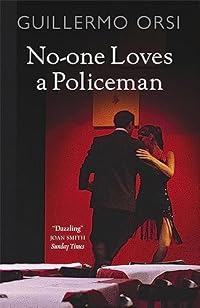
No-one Loves a Policeman is a Argentinian noir thriller. The novel was first published in 2007 in Spanish and published in English translation in 2010. The action begins in December 2001, at a time when Argentina, having relatively recently thrown off its dictatorship, is going through a dizzying parade of short-lived governments, obstensibly democratic but subject to toppling by the army, or by monied interests of all sorts, and/or by elements of organized crime, at least according to the testimony of our narrator. That would be Pablo Martelli, also known as Notan, a bathroom appliance salesman who many years ago had been ejected from the federal police force known to Argentinians simply as the National Disgrace. As the book opens, Martelli is awakened in the dead of night by a call from an old friend pleading with Martelli to drive hundreds of miles to come to his assistance for reasons he can't go into over the phone. When Martelli finally arrives, his friend has been shot in the head. And so begins our tale. Soon, of course, the assassins, whomever they might be, are also after our hero. Martelli doesn't even know who they are or why they killed his friend. Over the course of the story, alliances come and go, information is gradually accumulated, a lost love is achingly mourned, and details about Martelli's past are gradually doled out. There's no small amount of violence, though the nice atmosphere of suspense Orsi establishes is really the dominant paradigm in this tale. Things do get a little chaotic, and I'm not sure it all really holds up, plot-wise, as we race to our finale, but I didn't think that factor really mattered in the end. Orsi's real theme, I felt, was the lawlessness and violence with which governments were being toppled and the degree to which the average Argentinian was being dealt out of any decision-making roles in a society that was being advertised as a democracy.
As a U.S. native with only a passing knowledge of Argentinian history, I was frequently in the dark regarding incidents in the country's recent past that Orsi clearly assumed his readership would be fully knowledgeable about. That was all fine with me, of course, and in fact I found it all quite interesting. It was instructive to read a novel in which the action begins in December 2001 and in which 9/11 is never mentioned, even in passing, though the battles for the Malvina Islands are frequently referred to.
So I enjoyed No-one Loves a Policeman all in all, and though I would guess that there would be many alternative interpretations of the history Orsi relates, I would also not be surprised to learn that, even given more knowledge of these events, his take would turn out to be relatively accurate. The characterization of Martelli, I thought, was nicely done, and with enough depth to keep him an interesting voice to have in my head for a while.
Just a note that that lower-case "o" in the midst of "No-one" in the title bugs me every time I write it, but maybe that most closely approximates how the word would be written in Spanish. The copy editor in me continually want to change it to "No One."
No-one Loves a Policeman is a Argentinian noir thriller. The novel was first published in 2007 in Spanish and published in English translation in 2010. The action begins in December 2001, at a time when Argentina, having relatively recently thrown off its dictatorship, is going through a dizzying parade of short-lived governments, obstensibly democratic but subject to toppling by the army, or by monied interests of all sorts, and/or by elements of organized crime, at least according to the testimony of our narrator. That would be Pablo Martelli, also known as Notan, a bathroom appliance salesman who many years ago had been ejected from the federal police force known to Argentinians simply as the National Disgrace. As the book opens, Martelli is awakened in the dead of night by a call from an old friend pleading with Martelli to drive hundreds of miles to come to his assistance for reasons he can't go into over the phone. When Martelli finally arrives, his friend has been shot in the head. And so begins our tale. Soon, of course, the assassins, whomever they might be, are also after our hero. Martelli doesn't even know who they are or why they killed his friend. Over the course of the story, alliances come and go, information is gradually accumulated, a lost love is achingly mourned, and details about Martelli's past are gradually doled out. There's no small amount of violence, though the nice atmosphere of suspense Orsi establishes is really the dominant paradigm in this tale. Things do get a little chaotic, and I'm not sure it all really holds up, plot-wise, as we race to our finale, but I didn't think that factor really mattered in the end. Orsi's real theme, I felt, was the lawlessness and violence with which governments were being toppled and the degree to which the average Argentinian was being dealt out of any decision-making roles in a society that was being advertised as a democracy.
As a U.S. native with only a passing knowledge of Argentinian history, I was frequently in the dark regarding incidents in the country's recent past that Orsi clearly assumed his readership would be fully knowledgeable about. That was all fine with me, of course, and in fact I found it all quite interesting. It was instructive to read a novel in which the action begins in December 2001 and in which 9/11 is never mentioned, even in passing, though the battles for the Malvina Islands are frequently referred to.
So I enjoyed No-one Loves a Policeman all in all, and though I would guess that there would be many alternative interpretations of the history Orsi relates, I would also not be surprised to learn that, even given more knowledge of these events, his take would turn out to be relatively accurate. The characterization of Martelli, I thought, was nicely done, and with enough depth to keep him an interesting voice to have in my head for a while.
Just a note that that lower-case "o" in the midst of "No-one" in the title bugs me every time I write it, but maybe that most closely approximates how the word would be written in Spanish. The copy editor in me continually want to change it to "No One."
25kaida46
Hi! I really enjoyed reading your reviews. The quote from The End of the Tether when Captain Whalley is saying goodbye to his wife is really something. I've yet to read any Conrad but I hope to get there sometime soon.
I was barely a teen when Watergate happened and don't really remember much about it except that it was a scandal, but I think having an account of someone who was there would be fascinating. It seems that affair was a pittance compared to what is going on in politics today.
I was barely a teen when Watergate happened and don't really remember much about it except that it was a scandal, but I think having an account of someone who was there would be fascinating. It seems that affair was a pittance compared to what is going on in politics today.
26rocketjk
>25 kaida46: Thanks for visiting and for your kind words about my thread.
Conrad is one of my favorite authors. I highly recommend starting with Typhoon or The Secret Agent. Heart of Darkness, though, as problematic as aspects of it are, is his most powerful work, in my opinion. Cheers!
Conrad is one of my favorite authors. I highly recommend starting with Typhoon or The Secret Agent. Heart of Darkness, though, as problematic as aspects of it are, is his most powerful work, in my opinion. Cheers!

