1mabith
2026 Reads
Is a River Alive? – Robert Macfarlane
Lemons Never Lie – Richard Stark
A Fatal Thing Happened on the Way to the Forum – Emma Southon
After Graduation, I Became the Dragon King – Lin Zhiluo
Eyes like the Sea – Mor Jokai
The Peepshow – Kate Summerscale
The Gales of November – John U. Bacon
Between Two Rivers – Moudhy Al-Rashid
Elena Knows – Claudia Pineiro
Eyeliner – Zahra Hankir
The Echoes – Evie Wyld
White Heat – Dominic Sandbrook
The Encyclopedia of Ugly Fashion – Karolina Zebrowska
Slayground – Richard Stark
Industrial Cultivation – Lin Zhiluo
Persuasion – Jane Austen
Romaine Wasn't Built in a Day – Judith Tschann
The Artsy Smartsy Club – Daniel Pinkwater
Index, a History of the – Dennis Duncan
The Rise and Reign of the Mammals – Steve Brusatte
Rosaline Palmer Takes the Cake – Alexis Hall
The Great River – Boyce Upholt
The Poisoned Chocolates Case – Anthony Berkeley
Seascraper – Benjamin Wood
All That She Carried – Tiya Miles
Fifth Sun – Camilla Townsend
The Seven Moons of Maali Almeida – Shehan Karunatilaka
Plunder Squad – Richard Stark
The Library of Ancient Wisdom – Selena Wisnom
Audrey Lane Stirs the Pot – Alexis Hall
The Road to Ruin – Donald E. Westlake
Apparently, Sir Cameron Needs to Die – Greer Stothers
Ponzi's Scheme – Mitchell Zuckoff
Replaceable You – Mary Roach
Every Day I Read – Hwang Bo-Reum
Two Princesses of Bamarre – Gail Carson Levine
A Brief History of Motion – Tom Standage
There are More Beautiful Things Than Beyonce – Morgan Parker
Enter a Murderer – Ngaio Marsh
Butcher's Moon – Richard Stark
Comeback – Richard Stark
After Facing a Tribulation, My Dead Daoist Partner Came Back – Jimo Yao
Revolusi – David van Reybrouck
Our Missing Hearts – Celeste Ng
The Buried City – Gabriel Zuchtriegel
This Alpha Is Determined Despite Physical Disability – San Wanguo Gang
If They Come For Us – Fatimah Asghar
The Loneliness of Sonia and Sunny – Kiran Desai
Operation Valuable Fiend – Albert Lulushi
His Marriage Partner is Scheming – Wen Quan Ben Dan
Backflash – Richard Stark
After Crossing Through Ten Worlds I Failed to Run Away – Jiu Mi Jiu Mi Tu
Fighting For Our Friendships – Danielle Bayard Jackson
Made for Love – Alissa Nutting
Salt, Sweat & Steam – Brigid Washington
Villain's Strategy – Luobo Hua Tuzi
Harlots, Whores, & Hackabouts – Kate Lister
After Marrying an Enemy General – Gongzi Rou
The Hunter – Richard Stark
The Labyrinth House Murders – Yukito Ayatsuji
Make Believe – Mac Barnett
2mabith
Looking back at my loose goals from the beginning of 2025 I definitely didn't meet all of them. Though, I also found out in early April that I'd be moving soon so went into sorting, donation, and packing mode, and got into my new apartment full time in early May. I wouldn't say it hugely changed what I read, and I didn't totally lapse into comfort re-reads, but it definitely made it hard to think about managing anything other than my own energy levels.
I did read a decent amount of poetry, I got to authors from more countries than I did in the really homogeneous years even if not quite to my goal, (technically less than last year but a good heap last year came from a fairly short anthology), I did read two more books each from Wilkie Collins, Edith Wharton, and John Steinbeck.
This year I want to always have a new-to-me print book on the go (due to my chronic pain it's easier to read via audiobook), continue adding more poetry, and continue getting to a wider variety of countries (for author nationality).There are some specific things I'd like to read but I'm not going to curse myself by naming them. Okay no, I'll name one, I'm hoping to finally read a couple of Anthony Trollope novels.
I did read a decent amount of poetry, I got to authors from more countries than I did in the really homogeneous years even if not quite to my goal, (technically less than last year but a good heap last year came from a fairly short anthology), I did read two more books each from Wilkie Collins, Edith Wharton, and John Steinbeck.
This year I want to always have a new-to-me print book on the go (due to my chronic pain it's easier to read via audiobook), continue adding more poetry, and continue getting to a wider variety of countries (for author nationality).There are some specific things I'd like to read but I'm not going to curse myself by naming them. Okay no, I'll name one, I'm hoping to finally read a couple of Anthony Trollope novels.
3mabith
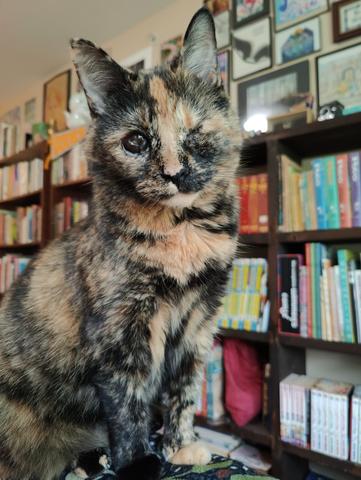
And here is the force of nature overseeing me at home, the beauty and (some of) the bookcases, Ixnay.
4mabith
Favorite reads of 2025:
Fiction
The Age of Innocence – Edith Wharton
Girl Meets Boy – Ali Smith
The Death of Vivek Oji – Akwaeke Emezi
Fathers and Sons – Ivan Turgenev
A Lady for a Duke – Alexis Hall
She of the Mountains – Vivek Shraya
French Exit – Patrick Dewitt
Howards End – EM Forster
Flesh – David Szalay
The Winter of Our Discontent – John Steinbeck
The Black Ice Score – Richard Stark
The Impossible Fortune – Richard Osman
The Night of the Hunter – Davis Grubb
Frederica – Georgette Heyer
The Husbands – Holly Gramazio
No Name – Wilkie Collins
Moby Dick – Herman Melville
Non-Fiction
Never Had it So Good – Dominic Sandbrook
Looking for Lorraine – Imani Perry
Byzantium – Judith Herrin
An African History of Africa – Zeinab Badawi
The World Remade – GJ Meyer
Dancing on Ropes – Anna Aslanyan
Red Sauce – Ian MacAllen
The Burgundians – Bart Van Loo
Postwar – Tony Judt
I'll Be Here in the Morning – Brian T. Atkinson
Oranges – John McPhee
One Day – Gene Weingarten
A Travel Guide to the Middle Ages – Anthony Bale
Unseen Universe – Caroline Harper
Voice of Glory – Thomas E. Douglass
Alexandria – Islam Issa
Fasting and Feasting – Adam Federman
Jane Austen’s Bookshelf – Rebecca Romney
The Devil in the Shape of a Woman – Carol F. Karlsen
Everything is Tuberculosis – John Green
A History of the World in Six Plagues – Edna Bonhomme
The Garden Against Time – Olivia Laing
Children's Books
Jules, Penny & the Rooster – Daniel Pinkwater
Scarlet Morning – ND Stevenson
Graphic Novels
In. – Will McPhail
The Book Tour – Andi Watson
Poetry
The January Children – Safia Elhillo
Fiction
The Age of Innocence – Edith Wharton
Girl Meets Boy – Ali Smith
The Death of Vivek Oji – Akwaeke Emezi
Fathers and Sons – Ivan Turgenev
A Lady for a Duke – Alexis Hall
She of the Mountains – Vivek Shraya
French Exit – Patrick Dewitt
Howards End – EM Forster
Flesh – David Szalay
The Winter of Our Discontent – John Steinbeck
The Black Ice Score – Richard Stark
The Impossible Fortune – Richard Osman
The Night of the Hunter – Davis Grubb
Frederica – Georgette Heyer
The Husbands – Holly Gramazio
No Name – Wilkie Collins
Moby Dick – Herman Melville
Non-Fiction
Never Had it So Good – Dominic Sandbrook
Looking for Lorraine – Imani Perry
Byzantium – Judith Herrin
An African History of Africa – Zeinab Badawi
The World Remade – GJ Meyer
Dancing on Ropes – Anna Aslanyan
Red Sauce – Ian MacAllen
The Burgundians – Bart Van Loo
Postwar – Tony Judt
I'll Be Here in the Morning – Brian T. Atkinson
Oranges – John McPhee
One Day – Gene Weingarten
A Travel Guide to the Middle Ages – Anthony Bale
Unseen Universe – Caroline Harper
Voice of Glory – Thomas E. Douglass
Alexandria – Islam Issa
Fasting and Feasting – Adam Federman
Jane Austen’s Bookshelf – Rebecca Romney
The Devil in the Shape of a Woman – Carol F. Karlsen
Everything is Tuberculosis – John Green
A History of the World in Six Plagues – Edna Bonhomme
The Garden Against Time – Olivia Laing
Children's Books
Jules, Penny & the Rooster – Daniel Pinkwater
Scarlet Morning – ND Stevenson
Graphic Novels
In. – Will McPhail
The Book Tour – Andi Watson
Poetry
The January Children – Safia Elhillo
6mabith
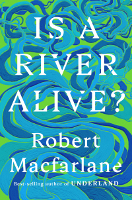
Is a River Alive? by Robert Macfarlane
Years ago now I gave my dad one of Macfarlane's books, The Old Ways, which he loved and I always felt I should give it a read. I have not, but I saw this new one on my library site and figured I'd give it a go. I'm a river person myself and have been missing my particular river (never mind I've been living along two other rivers for over half my life now).
I found Macfarlane a little hard to get along with, which I suspect is my issue. He wants everyone to be a total Character (or only writes about Characters) but also sometimes leans into people's skills automatically being nearly mystical with little mention of the years of work and learning it takes before you hit the point where it seems magic to strangers. If The Old Ways is similar I can see how the aspects which bothered me would have been just what he liked.
There's some good and interesting information here, but Macfarlane got in the way for me. I was also surprised, especially given this is a brand new book, that he doesn't bring up successful river cleanup projects, of which there are many! Younger readers might be left thinking it's an impossible task so why care about putting in work on an already polluted river.
I wasn't constantly experiencing high levels of annoyance through the whole read or I'd have dropped the book (though Macfarlane's idea of how long grieving lasts would have had me throwing a book across a room), but it was extremely mixed. I don't think I'd pick up another by him.
7mabith
Gary (@valkyrdeath) and I have a little Sunday movie club, watching 'together' from our respective sides of the Atlantic. I thought I might post about those films as well.
Today I definitely needed a dose of Katherine Hepburn and Cary Grant and I realized we'd neglected Holiday! Plus, Edward Everett Horton is also in it and I adore him. This was such a fun comedy with some universal themes about control and freedom. Wikipedia incorrectly, in my opinion, calls it a screwball comedy. It does not reach the heights of screwball that you find in say, Bringing Up Baby or Arsenic and Old Lace.
Today I definitely needed a dose of Katherine Hepburn and Cary Grant and I realized we'd neglected Holiday! Plus, Edward Everett Horton is also in it and I adore him. This was such a fun comedy with some universal themes about control and freedom. Wikipedia incorrectly, in my opinion, calls it a screwball comedy. It does not reach the heights of screwball that you find in say, Bringing Up Baby or Arsenic and Old Lace.
8mabith
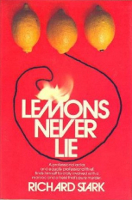
Lemons Never Lie by Richard Stark (pseudonym of Donald E. Westlake)
I'm trying to keep more up to date on my reviews this year, so we'll see how long that lasts!
This is the final book in Westlake's Alan Grofield series. Grofield is a sometimes confederate of Parker, appearing in The Score and The Handle before getting his first solo book which carries on directly from the events of The Handle. He's a really fun character in those books, being an actor who finances his theater shows (the only REAL acting, according to him) by a yearly robbery job. What Westlake really uses the solo Grofield books for are stories that Parker just won't work for, but which he wanted the Stark paycheck for (as they sold best among his real name and pseudonyms). This means Grofield isn't quite so consistent as Parker and the books vary a lot (one is partly a 'country house' type mystery, another is clearly playing on James Bond and other spy novel tropes).
This is the bloodiest of the Grofield books but also the book where we get the most of his non-crime life. After being called to Las Vegas to discuss a potential job, it's clear the man planning it is not sensible. After keeping another walk-out from the job company in the casino, he's met at his hotel by two men who thinks he has the other pro's gambling winnings and give his head a crack before they leave. He realizes it's the rejected job's planner, and is even happier to leave that guy behind, not realizing he'll keep following like a bad penny.
It was a good read, as ever with Westlake. Plus like with the Parker novels he's always happy to show just how many ways things can go wrong (and the vital importance of good plans and trust). Grofield gets another appearance as a Parker string member in Butcher's Moon, but I'll miss him.
9Eyejaybee
Best wishes for another year of great reading.
I was interested in your views on Is A River Alive?. I bought it soon after publication, but haven't got around to starting it. I loved his The Old Ways (perhaps helped because I was familiar with a lot of the locations and routes that he discussed), but have never quite managed the same level of enthusiasm about his other books.
I see that you recently read Moby Dick, too. That is another book that I am planning to read this year.
I was interested in your views on Is A River Alive?. I bought it soon after publication, but haven't got around to starting it. I loved his The Old Ways (perhaps helped because I was familiar with a lot of the locations and routes that he discussed), but have never quite managed the same level of enthusiasm about his other books.
I see that you recently read Moby Dick, too. That is another book that I am planning to read this year.
10mabith
Thanks, James! I was going through my old reads and to my shock found I had read The Old Ways as well (and quite liked it apparently, though it clearly hasn't stuck with me). It was back in 2014 and there's been a lot of reading since. A lot of people on my Club Read thread also mentioned struggling with his other books, so I don't think I'll seek out more.
I really liked Melville's writing style, and if you're willing to just drift along with Moby Dick I think it's a great read.
I really liked Melville's writing style, and if you're willing to just drift along with Moby Dick I think it's a great read.
11mabith
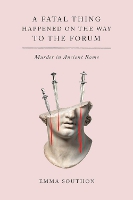
A Fatal Thing Happened on the Way to the Forum: Murder in Ancient Rome by Emma Southon
This was a really fun book. I've long been a reader of books about ancient Rome, and had kind of decided I didn't need to read any more. Then I kept hearing about Southon's books and my love for the subject took over.
Southon's tone is very casual. She's happy to say X Exhaustive Thing is Boring So Don't Worry About It (I didn't always agree, but we all have different nerd points). She swears, she uses slang, she clearly thinks a lot about the actual lives of people in the past. She understands that there are reasons it's so easy to turn some of these historical events into soap opera. The book is of course about some specific murders in Rome, but it's also about what 'counts' as murder (today and then) and what aspects of her examples are usual or unusual in the period, and what we do and don't know about views in the period.
My one complaint is that the audiobook reader was very poorly chosen and read the book in the uninterested posh tones that books about ancient Rome usually get. It's distinctly at odds with the text (and the reader also didn't bother learning how to pronounce a current famous person's name properly, which is also very annoying). It's really a shame Southon didn't read it herself.
12mabith
After Graduation, I Became the Dragon King by Lin Zhiluo
Another book by my favorite webnovel author! This one was more in line with my favorite work of theirs (New Times, New Hell), as we're back deep diving in Daoist spells and various traditional spirits and ghosts. Also like the previously mentioned book, this one has episodic monster hunting with a wider background plot. Kind of like The X-Files if it were actually well-balanced.
Xue Chen is a young dragon who has been doing closed door cultivation for much of his life. He's finally completed his Daoist body (meaning he can shift between his human and dragon forms) when he's attacked by an unknown person and wakes up in the body of a college boy who had just drowned. He almost immediately ends up helping with a spirit making trouble at a construction site (he's interning there) and swiftly builds a reputation with the local Daoist temple. One aspect of the overall plot is easily guessable but Lin shifts and complicates it enough that you still feel surprised at the resolution.
Lin's books are always funny and this one is no different. It's not quite as hysterical as New Times, New Hell, but the main characters in that are different types. A dragon must have more dignity, one thinks. One of the other features when Lin is on this subject is the intersection between Chinese socialism and the impact on the spirit world. There's lots of stuff about spirits needing to cease being so feudal and catch up to the modern world in this book.
One of my favorite things was learning that a Chinese word for mirage, 蜃景 shèn jǐng, which I know from a song title, refers to a very specific legend. It was written at some point that giant clam spirits could spit out a gas that caused people to get trapped in illusions, so if you separate the two characters you could translate it as giant clam scenery. In my head I've already replaced the word bullshit with clam scenery.
Another book by my favorite webnovel author! This one was more in line with my favorite work of theirs (New Times, New Hell), as we're back deep diving in Daoist spells and various traditional spirits and ghosts. Also like the previously mentioned book, this one has episodic monster hunting with a wider background plot. Kind of like The X-Files if it were actually well-balanced.
Xue Chen is a young dragon who has been doing closed door cultivation for much of his life. He's finally completed his Daoist body (meaning he can shift between his human and dragon forms) when he's attacked by an unknown person and wakes up in the body of a college boy who had just drowned. He almost immediately ends up helping with a spirit making trouble at a construction site (he's interning there) and swiftly builds a reputation with the local Daoist temple. One aspect of the overall plot is easily guessable but Lin shifts and complicates it enough that you still feel surprised at the resolution.
Lin's books are always funny and this one is no different. It's not quite as hysterical as New Times, New Hell, but the main characters in that are different types. A dragon must have more dignity, one thinks. One of the other features when Lin is on this subject is the intersection between Chinese socialism and the impact on the spirit world. There's lots of stuff about spirits needing to cease being so feudal and catch up to the modern world in this book.
One of my favorite things was learning that a Chinese word for mirage, 蜃景 shèn jǐng, which I know from a song title, refers to a very specific legend. It was written at some point that giant clam spirits could spit out a gas that caused people to get trapped in illusions, so if you separate the two characters you could translate it as giant clam scenery. In my head I've already replaced the word bullshit with clam scenery.
13mabith
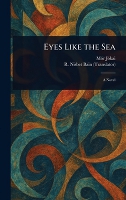
Eyes Like the Sea by Mór Jókai (1825-1904)
I have a lot of non-fiction library holds coming in, so I wanted to get a quick fiction read done. Initially I was set to start Persuasion, but I remembered someone in my book club suggested that so it's now a February read.
Jókai was a Hungarian writer of the 19th century, and a leader of the Hungarian Revolution of 1848. He was quite a prolific writer, maybe partly due to being passionate about the Hungarian language.
This book has a number of autobiographical elements, the main character was sent to train to be a lawyer, was more interested in writing and painting and politics, was a leader in the revolution, was imprisoned, etc etc... He is in love with Bessy who has 'eyes like the sea.' She is of a higher social class and has spent at least part of their early acquaintance laughing at him with her same-class peers (everyone knows he's in love with her). In most ways she's the point of the novel.
Thus Bessy was under a threefold inspection, the natural consequence of which was that she could do just as she liked, for every one of her guardians privately argued, "Why should I take the trouble of looking after this little girl when the other two are doing the same thing?" and so all three were always occupied with their own affairs.
We go through the novel with our Jókai stand-in, with Bessy coming in and out of his life with new travails and new husbands and new husband problems, always assuming our narrator can help. She does not lean on his affections in a way that gives him hope they'll be requited, but counts on his generous and genuine feelings to keep him from taking advantage of her.
I feel like I'm missing a lot in this novel, in the context and in being unsure what Jókai's main point was. Is it Bessy's selfishness in relying on him over and over, presuming his affection has continued to last when the narrator is already disillusioned? Is the point her difficulties and how her husbands and other men have treated her, without regard to her particular actions but on sexist assumptions? Is the point the narrator's inability to see how he himself treats women under the facade of nobility of purpose? Perhaps it's all of the above.
It was certainly an interesting read, and at times quite humorous. Jókai was apparently much beloved of the upper class Britons of the period, including Queen Victoria (which makes me feel like maybe I'm imagining some of the deeper points of this novel). I leave you with another fun quote:
"No! no! En akarom magyarul beszélni"—and at the same time he made as though he were ducking the head of a refractory urchin in a basin of soapsuds.
"Akarok," I good-humouredly corrected him.
"No! no! Akarok is the indefinite mood, akarom the definite mood; and I want to speak Hungarian definitely."
I was forced to acknowledge to myself that his logic was stronger than his grammar.
14mabith
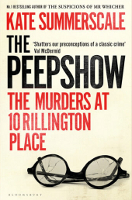
The Peepshow: The Murders at 10 Rillington Place by Kate Summerscale
I've read most of Summerscale's books and enjoyed all of them. She covers what can often become overly sensational stories in less careful hands and is skilled at balancing all the nuance. As the subtitle says, this one is about the murders by John Christie at that address (part of the Notting Hill area of London).
Summerscale also brings in the stories of two writers of the time who were covering the case and the trial. One, Harry Procter, essentially of the tabloid press and known for his array of tricks to get the story first, and Fryn Tennyson Jesse, a more serious journalist, novelist, and something of a criminologist. Their interests in this case and views on the conviction and execution of one of Christie's neighbors, Tim Evans, for the deaths of Evans' wife and infant daughter, as inherently suspect in the light of Christie's killings form a really important thread in the book.
A good, thoughtful treatment that does not pretend to have all the answers and which does not ignore the lives of the women Christie murdered.
16mabith
>15 Tess_W: I'd be particularly curious how you find the Jokai (or any book by him). He seems like an interesting author to explore a little.
17mabith
I'm behind on movie posting already. Last Sunday we watched Nina Wu, a Taiwanese film released in 2019. It's a surreal one, about an aspiring actress, Nina Wu, who has finally gotten a main role. However, it comes with a very difficult director, nudity, and sex scenes. She begins the crack psychologically and become paranoid, imagining attacks by an unknown woman.
The film didn't quite achieve its lofty goals, and the ending felt less impactful, but great cinematography and particularly good sound work which amplified the atmosphere really well. I was super impressed by that aspect throughout. Someone else described it as "a Taiwanese Black Swan meets the Me Too movement," which is a little unfair perhaps but not completely unfair.
I also watched Animation Outlaws, a documentary about Spike and Mike who pioneered an important animation festival in the US during the late 1970s and worked hard on getting the animators (in the US and elsewhere) personal recognition and showings so they could be submitted for the Oscars. It was not a well done documentary, and there were sections of people talking in various languages which did not include subtitles at all (either in English or the spoken language). I feel like a good essay on them would be more worthwhile, perhaps, because there was a lot of interesting information.
Both films were on Kanopy.
The film didn't quite achieve its lofty goals, and the ending felt less impactful, but great cinematography and particularly good sound work which amplified the atmosphere really well. I was super impressed by that aspect throughout. Someone else described it as "a Taiwanese Black Swan meets the Me Too movement," which is a little unfair perhaps but not completely unfair.
I also watched Animation Outlaws, a documentary about Spike and Mike who pioneered an important animation festival in the US during the late 1970s and worked hard on getting the animators (in the US and elsewhere) personal recognition and showings so they could be submitted for the Oscars. It was not a well done documentary, and there were sections of people talking in various languages which did not include subtitles at all (either in English or the spoken language). I feel like a good essay on them would be more worthwhile, perhaps, because there was a lot of interesting information.
Both films were on Kanopy.
18mabith

The Gales of November: The Untold Story of the Edmund Fitzgerald by John U. Bacon
For the past few years I've been a great fan of youtube video essays on maritime disasters, particularly from a few particular channels, and the Great Lakes stories are some of the most interesting. The Fitzgerald sank in 1975 and it was somewhat of a turning point for safety and weather precautions on the lakes. Though, I do wonder if Bacon has overstated new corporate concerns about safety (obviously it makes more business sense to play it safe when transporting valuable cargo on valuable ships but that was the case long before the Fitzgerald sank). Certainly for ocean going ships recent sinkings haven't seemed to make much difference (don't talk to ME about the El Faro).
However, there have been no cargo ship sinkings on the lakes after the Fitzgerald, and I'm sure the sheer regard for her (and her captain) did make for a stronger impact among the other captains especially than if it had been another ship.
Regardless! I think Bacon did a great job with this, and keeping the story firmly grounded in the facts, the culture of Great Lakes boat workers and their families, and in the human stories of those aboard and the people left behind. I don't know how it will read to people not already decently versed in Great Lakes shipping (the Carl D. Bradley and Daniel J. Morrell sinkings were already well known to me). Though for that matter, if you're not already interested in the subject will you be likely to pick up this book vs check out a Wikipedia article?
Good read for those interested in the subject.
19mabith
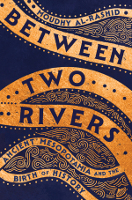
Between Two Rivers: Ancient Mesopotamia and the Birth of History by Moudhy Al-Rashid
Another good non-fiction read! Al-Rashid takes us through aspects of ancient culture and life springing from specific archaeological discoveries and specific cuneiform tablets or caches of tablets.
For folks who get a lot of bite-size bits of ancient history news, a lot of the individual tablets or jumping off points will be familiar (history nerds on Tumblr love cuneiform tablets). However, Al-Rashid always builds on what I knew in interesting ways. She's also not trying to do too much or be definite about areas where there are many potential explanations. You can also really feel her passion for and interest in the subject.
Definitely recommended.
20Tess_W
>18 mabith: Wow, the BB's are coming you fast & furious this year, thus far! I live about 3 hours from Lake Erie and have always been interested in the Great Lakes area. Also loved the song by Gordon Lightfoot!
21mabith
>20 Tess_W: Lightfoot comes off very well in the book! He even changed lyrics for performances to better reflect what happened and in response to learning more about the ship, etc...
22mabith
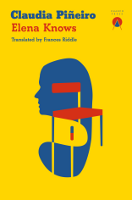
Elena Knows by Claudia Piñeiro
I saw positive reviews for this on a couple threads last year and happily it lived up to expectations! I kept considering suggesting it for my book club, but eventually decided against that due to physical disability being the house I live in. Well meaning but shallow/incorrect thoughts on that representation can sometimes hit sore spots and I don't want to feel I HAVE to play Cheerful Disabled Person Educates Healthy People.
That aspect, the description of feeling trapped by the body, feeling separate from it, was done SO well in the book. I had to take a few breaks in the reading despite loving it because it really hit so close to home and especially how I remember feeling in the first years of being sick.
Elena has Parkinson's, that "fucking whore illness" in her words. The narration switches between the events of a single day and incidents from the past covering her and her daughter, Rita's, somewhat difficult relationship, and how Elena's escalating care needs impacts it. When Rita is found hanged in the church she attended, Elena is insistent it was murder but the police have given up the case. The single day we spent with her covers her traveling to get help from someone who owed her daughter a favor.
The whole book was done so well, in my opinion.
23mabith
My Sunday movie was The Wolf House, a 2018 animated film for adults by Chileans Cristobal León & Joaquín Cociña. It was inspired by Colonia Dignidad, an isolated cult run and populated by emigrant Germans which became complicit in the torture and murder of dissidents during the Pinochet dictatorship (and was rife with child sexual abuse, along with other typical working-the-land cult abuses).
The film is presented as a propaganda fable about a girl who runs away from the group. The mix of drawn and stop motion animation was really impressive, and the entire style of it was captivating the whole way through. The film was full of surreal horror and creeping dread but it was the animation that really makes it.
Highly recommended for animation lovers.
The film is presented as a propaganda fable about a girl who runs away from the group. The mix of drawn and stop motion animation was really impressive, and the entire style of it was captivating the whole way through. The film was full of surreal horror and creeping dread but it was the animation that really makes it.
Highly recommended for animation lovers.
24mabith
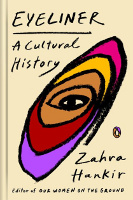
Eyeliner: A Cultural History by Zahra Hankir
I previously read a book Hankir edited, Our Women on the Ground: Essays by Arab Women Reporting from the Arab World, which I highly recommend. After starting and ditching two non-fiction books, one for issues in the content/views and one because it turned out to be really a list-filled coffee table book, I wanted an author I had more trust in.
It's easy to think this is a thin topic, but Hankir handles it really well, focusing on current and historical eyeliner use and the many meanings behind it for different groups, traditional and modern, and how it makes the wearer feel. Plus a lot about traditional kohl making and application and uses of course. Even as someone who has never regularly worn makeup (and neither did my mom during my life), there is something about eyeliner and how dramatically it can change a look.
Very interesting read all in all and a good little microhistory.
25mabith

The Echoes by Evie Wyld
Wyld is one of my favorite 21st century novelists. I really enjoy the style of her writing and I think she has a real gift for portraits of very realistically struggling people. Some books I've found more wholly successful than others, and the previous one, The Bass Rock felt the weakest in some ways, made of up of very different parts which weren't connected enough to feel like they should be together.
This most recent novel feels like both a correction of that one's too-loose approach and takes on some of the non-linear construction in her book All the Birds, Singing. We're in different times, with some different points of view, but much more closely related. Hannah came to England from Australia on the strength of a photograph of her maternal grandmother (and a creative writing program), who she never knew, but who was born in England and immigrated as a child. Her boyfriend has died, we don't initially know how and nor does he, but he's there as a ghost in the house. We get Hannah's life in England from her point of view in the Before sections and from Max's point of view watching her in the After sections (the designations referring to his death). Third person sections, Then, cover her childhood in Australia and interspersed throughout we get chapters named by character, focused on her parents, sister, uncle, uncle's girlfriend, and grandmother.
We gradually put together what has happened in Hannah's family, though not in an absolutely 100% complete way. It all worked really well for me, though the missing Wrap Up Every Last Detail aspects might bother some readers. There are also some difficult themes which don't make for lighthearted reading.
26mabith
Movie catchup!
This Magnificent Cake! - Gorgeous felted wool animation but really a series of short pieces that didn't particularly hang together and are mistakenly described as a commentary on Belgian colonialism (one part is but most are not in any remotely direct way)
Ninotchka - A Greta Garbo film that's aged badly. It's a slippery slope from enjoying slapstick to buying a poorly made silly hat and deciding capitalism is great. I'm sure I watched this in my original teenage Greta Garbo obsession, but remembered nothing about it.
Secret Mall Apartment - Documentary about a group of artists in Rhode Island who discover a void space in a big mall they hate and slowly turn it into a secret apartment mainly as an art project. Really good and interesting all the way through.
Popeye - Rewatch from early childhood which shows why it didn't become a family favorite recurring watch. I'd completely forgotten it was a full on musical and the style of music really doesn't match the vibe of either cartoon or comic book Popeye and constantly takes you out of the film (though there are some great gags).
Song Lang - A Vietnamese movie about a debt collector who is reminded of his parents and his previous love for Cải lương (a modern folk opera tradition) when he has to collect from a troop and gets to know their new star. Can be viewed through a queer lens and seems to often be listed as a queer film but it's all optional subtext. I really liked this, but it's a sad one.
This Magnificent Cake! - Gorgeous felted wool animation but really a series of short pieces that didn't particularly hang together and are mistakenly described as a commentary on Belgian colonialism (one part is but most are not in any remotely direct way)
Ninotchka - A Greta Garbo film that's aged badly. It's a slippery slope from enjoying slapstick to buying a poorly made silly hat and deciding capitalism is great. I'm sure I watched this in my original teenage Greta Garbo obsession, but remembered nothing about it.
Secret Mall Apartment - Documentary about a group of artists in Rhode Island who discover a void space in a big mall they hate and slowly turn it into a secret apartment mainly as an art project. Really good and interesting all the way through.
Popeye - Rewatch from early childhood which shows why it didn't become a family favorite recurring watch. I'd completely forgotten it was a full on musical and the style of music really doesn't match the vibe of either cartoon or comic book Popeye and constantly takes you out of the film (though there are some great gags).
Song Lang - A Vietnamese movie about a debt collector who is reminded of his parents and his previous love for Cải lương (a modern folk opera tradition) when he has to collect from a troop and gets to know their new star. Can be viewed through a queer lens and seems to often be listed as a queer film but it's all optional subtext. I really liked this, but it's a sad one.
27mabith
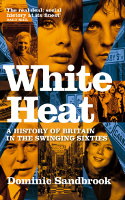
White Heat: A History of Britain in the Swinging Sixties by Dominic Sandbrook
With this read I've now completed Sandbrooks very long five-book series about UK history from 1956-1982. I've found it a really informative, interesting (and horrifying), well done series and I'd happily read a few more covering early or later periods. I think the way he handles the back and forth of politics, art, fashion, entertainment, etc... and how they intersect makes them very readable.
A key important part of this series is actually reminding us how easy it is to generalize a period into very specific ideas or trends that are actually inaccurate for all but a minority. The "permissive society" of the 1960s was a political slogan much more than a reality and the "swinging sixties" only existed for a very small set of people. That reminder is important for how we approach current and recent events as well, and all the generalizations we want to lazily slip into.
28mabith
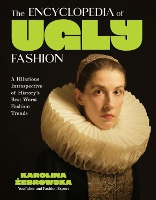
The Encyclopedia of Ugly Fashion by Karolina Żebrowska
Żebrowska is a Polish youtuber I follow, making often humorous videos about historical fashion often combining them with modern meme culture, sewing projects, commenting on costuming in period films and TV shows, a podcast looking into a different historical text each episode, and a very personally envy-inducing series of videos renovating and decorating her 1930s apartment where she is living out all my dreams.
This is a fun volume though I think forcing it into an alphabetical encyclopedia format is a bit silly and pointless. It uses a mix of historic images of the fashions and Zebrowska's photos with either handmade versions or vintage pieces and a page or two of text putting the item in historical context (plus some jokes). One is bound to disagree with her on some points but it's a fun ride (I personally love those 1920s wrap coats with the giant fur collars, and I love medieval/early modern scissors-glasses).
29mabith
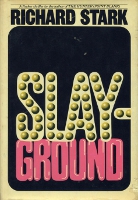
Slayground by Richard Stark (pseudonym of Donald E. Westlake)
The 14th book in the Parker series, which means I only have two to read before the 23 year gap in the series. I'm sort of unreasonably excited to compare 1960s/70s Parker with 1990s Parker, but still trying to only read one per month.
The opening events in this book are shared with the Grofield book The Blackbird, a car accident in the getaway from a robbery which leaves Grofield and the driver injured while Parker gets away on foot with his money. Unfortunately, where the crash happened there are few places to go and four witnesses - two men in suits and two cops. Parker makes a split second decision to enter a closed-for-winter amusement park, only to find he's trapped, with the front gate being the only exit. He works out that the people out front must have been handing over money to bribe the cops and then the fun begins.
This was a great one, with Westlake clearly enjoying coming up his own local amusement park, perhaps informed by a few over-long trips to one with his children. It's a great setting for this kind of thing, and as usual many, many things go wrong. He just loves to give Parker (and most of his characters) a hard time. This one would work well as a stand-alone read, I think.
30mabith

Industrial Cultivation by Lin Zhiluo
The last fully translated novel by one of my favorite authors, which I probably should have saved but instead just read more slowly than I normally would.
In this one a science and technology livestreamer accidentally gets sent to a virtual cultivation world (xianxia for those familiar with the term). Or that's what the viewers are told. Actually he's transmigrated to a real cultivation world, so is largely just trying to survive as a regular person without spiritual roots/family/etc... Luckily he has great scientific knowledge and the livestreaming system is still intact which can eventually give some spiritual power. So he's traveling about with another broke guy and just introducing various bits of tech and using Newton's laws of motion as his bedrock of faith to make spells work among other bits of fun.
It's fun, and as usual with this author, there's a lot of unexpected plot that's gradually exposed. Lin Zhiluo generally gives you some plot aspects you can predict and a lot more you can't. Her strongest books (to my mind) have an episodic, Monster-of-the-Week feel, with different challenges which gradually expand the characters' abilities and knowledge (and sometimes give hints of the bigger plot to come). This one is a little weaker than my favorite novel of hers or the one I read in January, but xianxia is not my favorite genre and many works hit a lot of the same themes so certain aspects are a given.
31mabith
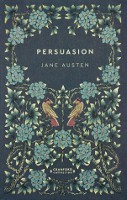
Persuasion by Jane Austen
An excellent pick for my book club! I'm not the biggest Austen person, but have been considering revisiting the novels I read many years ago when I probably didn't give them the chance I should have (and was just much younger). Book
This is certainly my favorite of the Austen I've already read (most of them), and I fully enjoyed it. Such a relief since it's a friend's favorite Austen, and I'm sure is the Austen I'm most likely to Feel very deeply due to sibling dynamics in my family, and a much regretted past love that I felt I had to give up. Anne Elliot and I are kindred spirits and I kind of want to immediately re-read the book even though I feel wrecked by it.
It's also reaffirmed my feeling that I should re-read some Austen, but I think I'll read Mansfield Park first, which I haven't read before. Maybe the less popular Austens are the ones for me.
32mabith
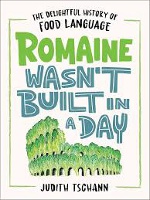
Romaine Wasn't Built in a Day: The Delightful History of Food Language by Judith Tschann
This was a quite mediocre little non-fiction read. I wouldn't have stuck with it, except it's very short and I didn't want to have to start picking a new read again that day. It wasn't absolutely dreadful, but it's poorly balanced.
The length and skipping around to different subjects so frequently makes it read a bit like a children's history book, but it's not one. It's a little more than a list of facts but not much more (and there were a few areas where I have more knowledge that didn't seem quite right or where the wording was poorly chosen). I love food related histories, I love books about language, but this just wasn't for me. Maybe it would be ideal if you were stuck in an airport and needed something with very short sections but could also provide random facts to amuse the rest of your traveling group.
33mabith
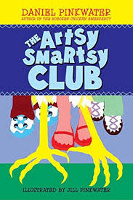
The Artsy Smartsy Club by Daniel Pinkwater RE-READ
Pinkwater is a children's author who I very literally grew up with, and I've largely continued to keep up with his novels. This one came out in 2005, when I was working in a bookstore, and I remember loving it so much, and feeling so impressed with how it talked to kids about art. Pinkwater himself studied art in college (and illustrated many of his earlier books before his wife Jill took over that job).
Three children in Hoboken, New Jersey, are beginning to struggle for things to do in their summer vacation when they come across a chalk sidewalk painting that they're super impressed with. This inspires them each individually to want to draw or paint and they eventually meet the sidewalk artist and some other adults who teach them a little.
This is part of a loose trilogy, so we also get Henrietta the giant chicken in this book. This is very pleasing to me, as the first book, The Hoboken Chicken Emergency, is one of my favorite Pinkwaters, so I'm attached to Henrietta. It might seem a bit too strange if one hasn't read that first book though (a little strange and philosophical are what you usually get with Pinkwater).
My memories probably made my expectations a little higher than they should be for a short children's novel, but I do think it's a great one for kids with any interest in art. I include two quotes:
I had noticed that Lucy Casserole never directly asked us to do anything, and she never asked questions that could be answered with a yes or a no. She would just say we could do this or that, if we wanted to. Then we would have to decide if we wanted to do whatever it was and tell her. I sort of liked Lucy Casserole's way of talking to us–it suggested that she thought we had minds of our own.
"You're on the right track, kiddies," he said. "You're using your eyes. People talk about sudden inspiration, and talent, and genius–but art is mostly about hard mental work. It's more about looking than doing. You have to look at things scientifically, take them apart and put them back together. You have to learn to feel things with your eyes. And then you try–try, mind you–to put it all together in some new way. And you have to know when you succeed, and when you fail–and why. You have to use your loaf." Hilangully Ryder smacked his head with the heel of his hand. "In other words, you have to think."
34mabith
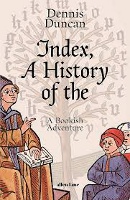
Index, A History of the: A Bookish Adventure from Medieval Manuscripts to the Digital Age by Dennis Duncan
This was a great read for me! The subtitle really says it all, and I think anyone who reads a good bit of non-fiction would enjoy it. Likewise if you're just particularly interested in book history.
All the details were really fascinating, and I'd never really thought about how these common aspects of books developed or when. Duncan also delves into fiction works which use the index as the way to tell the story (or as part of it). I loved all the stories of malicious indexing, as ways to pass judgement on the author or book.
Fantastic book.
35Tess_W
>34 mabith: A BB for me!
36mabith
>35 Tess_W: Hope you like it as much as I did!
37mabith
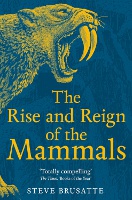
The Rise and Reign of the Mammals: A New History, from the Shadow of the Dinosaurs to Us by Steve Brusatte
I was looking for a science read, and liked Brusatte's dinosaur book so picked this up as well. Ironically, the earliest periods felt harder to follow/less familiar than in the dinosaur book, which proves Brusatte's point about those creatures and early mammal development being overlooked.
It was a pretty interesting read, though I found Brusatte's imagined scenarios for how various fossilized creatures died fairly annoying. Some of them aren't too bad, but creating a story of a prehistoric horse type having pregnancy cravings and going to eat some specific thing away from her herd felt overly anthropomorphic and largely irrelevant (information about the location and probable deaths could be given without the scenario).
38mabith
Movie time!
Timestalker 2024 - A woman falls in love with an asshole and gets reincarnated over and over trying to make the relationship happen. There are some others getting reincarnated with her as well. It's silly, it's weird, it's a dark comedy, it has a great soundscape. It's not something I'll feel the need to rewatch necessarily but it was pretty fun and had enjoyable visuals.
A Matter of Life and Death 1946 - One of the big classic Powell and Pressburger films. It's WWII, a pilot (David Niven of course) is going down and reporting in via radio. He has a brief emotional connection with the woman answering his call and then bails out without a parachute. He expects to die but survives and quickly falls in love with the woman. Only he was supposed to die and the Other World has made a mistake. He insists it's their fault and there will be a court case to decide. The movie is set up so that you can either see the Other World as his own hallucination or a real thing, and the writing is careful to keep it open. It's really skillfully done.
There are many interesting details as well, like the Other World being in black and white and the real world in color (opposite to what you typically see), or the fact that the Other World sets are extremely modernist in design. I really enjoyed this, but I generally find the Powell and Pressburger films interesting. There was a great documentary on Kanopy which was just Martin Scorcese talking about certain of their films that had a big impact on him (Made in England: The Films of Powell and Pressburger) and emphasizes how unique they were in the period. It made me want to watch some of the ones I hadn't seen before.
Maurice 1987 - After watching Song Lang I thought I might try a project of watching LGBT films from different countries and I have been meaning to watch this for ages. It's been a long time since I read the book, so I wasn't making direct comparisons. In many ways it's a typical period piece of the 1980s, but it's fairly well done. I watched a cut of it with all the deleted scenes restored. Glad I finally got to it even though many aspects make me sad.
Jiang Ziya/Legend of Deification 2020 - This has been on my list for a while after really enjoying the 2019 Ne Zha movie. Unlike that one, this isn't a comedy (though has some humor). It's loosely based on the 16th century novel Investiture of the Gods. A fox spirit causes the downfall of the Shang dynasty (that's right, we're in Daji territory) and Jiang Ziya (also a real historical figure) is supposed to execute her, but sees another, innocent, soul inside the fox spirit and tries to save them but fails, thinking he has killed the fox spirit. After basically being in exile for ten years he sees a girl who resembles the trapped spirit. She is trying to get to a lost mountain to find her father and Jiang Ziya follows her.
I really enjoyed it, and this one particularly highlighted some differences I've found in Chinese 3D animation vs Disney/Pixar. Particularly the focus on character animation in terms of 'every strand of hair should move independently!' for Disney/Pixar or having one tricky animation feature that's then done very well (the water in Moana for example), meanwhile the human character designs and art styles are incredibly same-y across decades of films and the backgrounds or cinematography aren't particularly compelling. If you've ever looked at Pixar concept art you'll likely find yourself wishing it was a 2D film in that inventive, unusual style instead of what we got. The Chinese 3D animation I've watched (which is limited and on the higher end/more time and money side) is less worried about the characters and the hair than the backgrounds and other details. It feels like the time saved in the animation process is actually put to use enhancing other aspects of the movie. This one and Chang'an felt particularly cinematic in ways that Disney/Pixar do not. This one is available to watch for free on Viki with subtitles in English and eight other languages, though you do have to make an account. There is also an English dubbed version available on Hoopla, but I can't speak to the dub quality.
Timestalker 2024 - A woman falls in love with an asshole and gets reincarnated over and over trying to make the relationship happen. There are some others getting reincarnated with her as well. It's silly, it's weird, it's a dark comedy, it has a great soundscape. It's not something I'll feel the need to rewatch necessarily but it was pretty fun and had enjoyable visuals.
A Matter of Life and Death 1946 - One of the big classic Powell and Pressburger films. It's WWII, a pilot (David Niven of course) is going down and reporting in via radio. He has a brief emotional connection with the woman answering his call and then bails out without a parachute. He expects to die but survives and quickly falls in love with the woman. Only he was supposed to die and the Other World has made a mistake. He insists it's their fault and there will be a court case to decide. The movie is set up so that you can either see the Other World as his own hallucination or a real thing, and the writing is careful to keep it open. It's really skillfully done.
There are many interesting details as well, like the Other World being in black and white and the real world in color (opposite to what you typically see), or the fact that the Other World sets are extremely modernist in design. I really enjoyed this, but I generally find the Powell and Pressburger films interesting. There was a great documentary on Kanopy which was just Martin Scorcese talking about certain of their films that had a big impact on him (Made in England: The Films of Powell and Pressburger) and emphasizes how unique they were in the period. It made me want to watch some of the ones I hadn't seen before.
Maurice 1987 - After watching Song Lang I thought I might try a project of watching LGBT films from different countries and I have been meaning to watch this for ages. It's been a long time since I read the book, so I wasn't making direct comparisons. In many ways it's a typical period piece of the 1980s, but it's fairly well done. I watched a cut of it with all the deleted scenes restored. Glad I finally got to it even though many aspects make me sad.
Jiang Ziya/Legend of Deification 2020 - This has been on my list for a while after really enjoying the 2019 Ne Zha movie. Unlike that one, this isn't a comedy (though has some humor). It's loosely based on the 16th century novel Investiture of the Gods. A fox spirit causes the downfall of the Shang dynasty (that's right, we're in Daji territory) and Jiang Ziya (also a real historical figure) is supposed to execute her, but sees another, innocent, soul inside the fox spirit and tries to save them but fails, thinking he has killed the fox spirit. After basically being in exile for ten years he sees a girl who resembles the trapped spirit. She is trying to get to a lost mountain to find her father and Jiang Ziya follows her.
I really enjoyed it, and this one particularly highlighted some differences I've found in Chinese 3D animation vs Disney/Pixar. Particularly the focus on character animation in terms of 'every strand of hair should move independently!' for Disney/Pixar or having one tricky animation feature that's then done very well (the water in Moana for example), meanwhile the human character designs and art styles are incredibly same-y across decades of films and the backgrounds or cinematography aren't particularly compelling. If you've ever looked at Pixar concept art you'll likely find yourself wishing it was a 2D film in that inventive, unusual style instead of what we got. The Chinese 3D animation I've watched (which is limited and on the higher end/more time and money side) is less worried about the characters and the hair than the backgrounds and other details. It feels like the time saved in the animation process is actually put to use enhancing other aspects of the movie. This one and Chang'an felt particularly cinematic in ways that Disney/Pixar do not. This one is available to watch for free on Viki with subtitles in English and eight other languages, though you do have to make an account. There is also an English dubbed version available on Hoopla, but I can't speak to the dub quality.
39Eyejaybee
>34 mabith:. I bought that on impulse just after it was published, prompted by a very positive review in one of the newspapers. For some reason I had never got around to reading it, but after your review I will definitely move on to it very soon.
40mabith
>39 Eyejaybee: Hopefully one you'll enjoy as much as I (and that reviewer) did!
41pamelad
>38 mabith: A Matter of Life and Death is an excellent film. For many years I've kept an eye out for screenings of Powell and Pressburger films so have managed to see a lot of them on the big screen. They're interesting and strange and so different from one another.
42mabith
>41 pamelad: Fantastic to be able to see them on a big screen! I remember being incredibly struck by Life and Death of Colonel Blimp when I was a teenager, so after my friend and I rewatched it last year we also watched that documentary and I realized I'd seen Black Narcissus as well, though remembered little other than the striking visuals. It will be nice to gradually get to more of their work.
43mabith
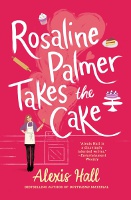
Rosaline Palmer Takes the Cake by Alexis Hall
This is the first of Hall's trilogy that takes place in a Great British Bake Off stand-in show, Bake Expectations, and you can certainly tell Hall watched a lot of it and understand the assignment. Though what's also nice is the reminder that even Sweet Cozy shows are designed and edited to maintain a certain atmosphere and that doesn't necessarily happen in a Sweet Cozy way but also the crew really must have to remind the bakers CONSTANTLY to repeat what they've just said without making it seem like they're answering a question. The producer of the show in the books is very grumpy with creative swearing and is one of the main characters in the third and final book of the set (which are different 'seasons' of the show).
Rosaline made a decision when she got pregnant at university to keep her baby, and to not stay enrolled and just let her awful, but wealthy, parents take care of it until she finished. She struggles with money, but while she adores her daughter she also struggles with the expectations and judgements of everyone and is very insecure. She was also raised in a very specific (awful) way, so is judging her own decisions and feeling 'less than' constantly because she didn't become the doctor her parents wanted. Cue getting stuck overnight with a fellow contestant before the first filming session, and Rosaline lying about her life to avoid all the judgement. The lie is quickly exposed and the guy gets over it fairly quickly while Rosaline is very aware this is the only type of partner her parents would approve of.
I've slightly avoided this one, because I knew one of the main gal's issues were going to be experiencing biphobia and I've had quite enough of that in my life thanks. Plus I knew there's an asshole love interest, which didn't appeal (having two love interests generally doesn't appeal much to be honest though to be fair the other prospective love interest is never trying to 'win' the situation). The third book recently came out, and I've enjoyed all Hall's work, so I did want to feel I could complete the trilogy.
It's well done as ever, there are many great details, and the characters are believable, but probably not one I'll reread. I frequently wanted to shake Rosaline, even when I could fully understand why she made the decisions she did in the light of her life.
44mabith
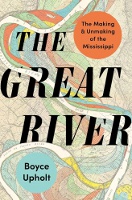
The Great River: The Making and Unmaking of the Mississippi by Boyce Upholt
I really enjoyed this. It encompasses a lot of different areas that I'm interested in - engineering, history, environmentalism. Upholt doesn't neglect any of the problematic history involved and weaves all sides of the story together well. In some ways it was really a perfect book for me, though some might find it meandering.
Recommended if it sounds interesting to you, but expect a wide history, not a narrow tale of the engineering of the river. Maybe particularly recommended if the Mississippi is your river (the Ohio is mine, and she does get a little space of course).
45mabith
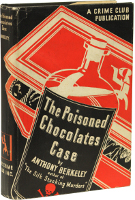
The Poisoned Chocolates Case by Anthony Berkeley
A recent movie watch put me in the mood for a proper golden age mystery, and Gary reminded me of this one he read a while back. I must have put it on my to-read list then but had utterly forgotten it.
This is an atypical mystery, Berkeley already annoyed with some of the tropes and how unbelievable the detectives (including his own) were even in 1929 apparently. This book is structured as a detection club trying to solve a crime, and they each report and justify a different culprit over a series of nights after their own investigations or perusal of the police report.
I really loved it, Berkeley makes the most of the good setup and his writing is very funny and enjoyable. I kept meaning to write down some of the amusing quotes, but failed to do so. Starting this book, the frequent reader/watcher of mysteries will likely have a solution in mind already, or at least an initial "ho ho this old canard" in their head and it feels clear that Berkeley knew and planned for that as well.
This book is very low, maybe totally lacking, in the usual racism of this period (quite possibly just because there was no one to direct it towards), but they've replaced it with the idea that "well obviously men will cheat on their wives, this is just normal, and good sensible women aren't upset by it of course." However I would say in certain aspects it's less sexist than other books of the period. Swings and roundabouts.
A warning for anyone going with the audiobook (which is well done), there are a couple additional endings added after Berkeley's death, not written by him, which are added on (seems an insane thing for a publisher to do, in my opinion). They are not properly signposted in the audio edition. It's mentioned in the introduction but I had skipped that since they often contain spoilers.
46mabith
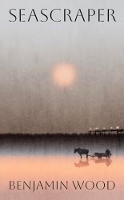
Seascraper by Benjamin Wood
A seeing a number of good reviews for this last year, I thought I'd give it a go and now I have no idea how to review it!
Thomas Flett is 20 and has been working as a small-scale shrimper with a horsedrawn cart since he was a young teenager. We get his life history slowly over the course of the book, but we know he's deeply exhausted by this life and it's taken a huge physical toll on him. That aspect was done very well, I'd say, as someone who was also physically in a very different space at 20 even compared to my parents, let alone my peers.
The 'action' of the book comes when a stranger drops in wanting Thomas to take him out on his wagon and show him the beach and the work as he's trying to adapt a book featuring that job into a film (and will pay handsomely for the privilege). In some ways it's a quiet book, but maybe not in the way I usually mean when I say that. The writing felt very well judged for the plot and characters.
I kind of think the musical element (Thomas has pawned a watch to buy a guitar and is teaching himself to play) got a little distracting towards the end, or the song lyrics took up too much space maybe. In the audiobook the author is playing guitar and singing the songs (and reading the book, which he does very well), which I think makes that feeling more prominent for me than it would be in print. For me this read is in the awkward place of having really liked it but not quite LOVED it. This might slightly be a timing issue.
47mabith
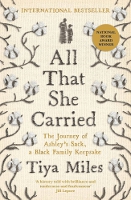
All That She Carried: The Journey of Ashley's Sack, a Black Family Keepsake by Tiya Miles
This book is about a piece of embroidered cloth that was found at a flea market stall and ended up in the collection of a plantation museum. Here is a picture of the piece, with the text copied below:
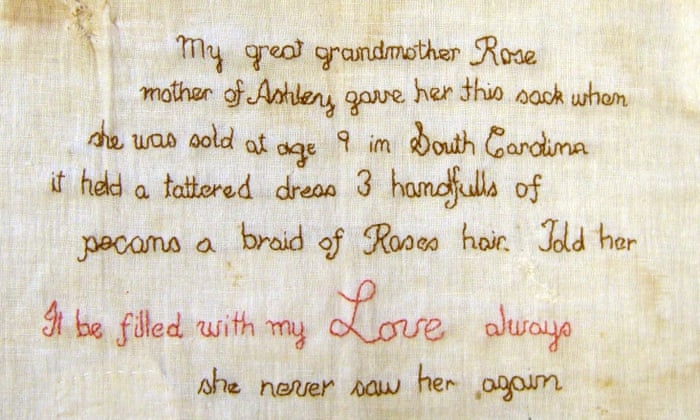
My great grandmother Rose
mother of Ashley gave her this sack when
she was sold at age 9 in South Carolina
it held a tattered dress, three handfuls of
pecans a braid of Rose’s hair. Told her
It be filled with my love always
she never saw her again
Ashley is my grandmother
Ruth Middleton
1921
Miles researches as much as she's able and along the way gives us a full picture of what life might have been like those mentioned in the work. She uses a lot of sources and particularly first person testimony. It's done really well and I'd highly recommend the book.
It really hit me hard emotionally. I am someone who feels very attached to objects generally, both older family pieces and newer things already imbued with memories of where I got them or why. I think about what might happen to the potent objects in my life when I die and the people who could take them don't have the attachments I do. How many things will seem like pointless clutter to someone who doesn't know the story. I decided to start drawing little pictures of certain things I own which I'll put into a journal where I write their history.
48mabith
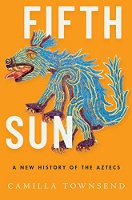
Fifth Sun: A New History of the Aztecs by Camilla Townsend
I've been meaning to get to this book for a while. Townsend gives us this history based on indigenous sources, rather than Spanish ones. She also examines why and how the various bits of misinformation were used and provides evidence that this or that myth wasn't believed at the time the events were happening.
It's very well done and was a great read for me.
49mabith
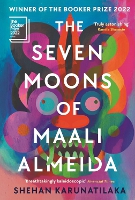
The Seven Moons of Maali Almeida by Shehan Karunatilaka
Maali Almeida has been killed and doesn't remember how or why. The afterlife bureaucracy is confusing and does not provide any answers. He goes back to the world to try to figure things out, but only has seven days to do so. We follow him as he floats towards people the using his name and watch his friend, lover, and mother try to figure out what happened to him.
This is Colombo, Sri Lanka in 1990, and there's much thought that Almeida's career as a photographer is why he's been killed. Particularly his pictures from the 1983 killings that kicked off the Sri Lankan civil war. Almeida is a flawed person, and not particularly likeable, but the story is compelling and the premise is great.
I'm going to be mulling this one over for a while. Interesting story to carry with me as I look for a good non-fiction book about Sri Lanka.
50Tess_W
>45 mabith: I just acquired this in audiobook form. Glad you posted the warning!
>47 mabith: We are reading the antebellum south in the Reading Thru Time Group and this book appears to fit the bill. I'm off to secure!
>47 mabith: We are reading the antebellum south in the Reading Thru Time Group and this book appears to fit the bill. I'm off to secure!
51rcpinnegar
Hello, I'm new. I enjoyed the reviews of what you've read so far! I'm adding a few of your books to my TBR. : ) I have some questions though.... what is BB? And! Where do you find translated xianxia?! I've stumbled accross (and enjoyed) Beware of Chicken in Kindle, but would like to read more. Last question: how do you make the book covers appear in your posts? Thank you!
52mabith
>50 Tess_W: Hope you enjoy both! All That She Carried was also great for how that kind of research is done, the limitations, etc... Just a very well organized book in general.
>51 rcpinnegar: Welcome! BB stands for 'book bullet' which we use when someone review immediately puts the book high on our to-read list (whether mental or literal). People use different methods to add book covers. This part of of the Help wiki gives instruction for all the HTML formatting you can do in posts. Personally I save images, resize them on my computer, and then upload them to PostImages. Others upload covers to a private gallery on their LibraryThing profile. I'll send you a message about the xianxia books.
>51 rcpinnegar: Welcome! BB stands for 'book bullet' which we use when someone review immediately puts the book high on our to-read list (whether mental or literal). People use different methods to add book covers. This part of of the Help wiki gives instruction for all the HTML formatting you can do in posts. Personally I save images, resize them on my computer, and then upload them to PostImages. Others upload covers to a private gallery on their LibraryThing profile. I'll send you a message about the xianxia books.
53mabith
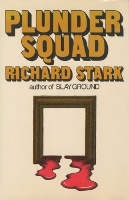
Plunder Squad by Richard Stark (pseudonym of Donald E. Westlake)
I've been having a bit of a reading slump, so reached for the guaranteed enjoyment of a Parker book. This one wasn't among my favorites, but Westlake's writing is always a joy.
This one is an art heist, a collector is essentially hiring a group to steal an exhibit's worth of paintings. First however, the book opens with Parker attempting to find a job that seems likely to work with a professional crew. Anyone who imagines that Westlake might be glamorizing a life of crime his books, given our main characters are generally criminals, hasn't read them. They are truly jobbing criminals, and things go wrong constantly. In some ways his books are really a study of every single thing that could go wrong.
A decent read for me, but not his finest work.
54mabith
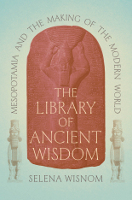
The Library of Ancient Wisdom: Mesopotamia and the Making of the Modern World by Selena Wisnom
We're back in the library of Ashurbanipal to get more Mesopotamian history. Earlier this year I read Between Two Rivers: Ancient Mesopotamia and the Birth of History, which focused on a specific set of cuneiform texts and spun off from those to give us a taste of this world. This new read covers a little of the same ground but goes into much more details about the history of the region, changes in culture, and the potted version of various myths from these cultures.
I found it a really wonderful read. Grounded in the texts and archeology but with a good sense of story as well. I'll probably read a few more books on this topic this year, so if you have any favorites do let me know. Retaining knowledge from my non-fiction reads is often a process of multiple books over time until a good framework of the information gets established in my brain.
55mabith
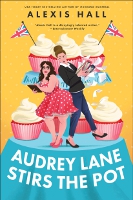
Audrey Lane Stirs the Pot by Alexis Hall
I'd say this was also chosen to relieve my reading slump but it's partly that the hold came in. This is the last in Hall's series that's essentially set in the Great British Bake Off (with a few tweaks obviously), called Bake Expectations in this universe. If you want the show you will recognize the Types Hall uses in these books.
Audrey Lane applied to the show while drunk in an attempt to feel she was doing something more than just working for a small regional newspaper. She and her longterm girlfriend, Natalie, have recently parted ways, and Audrey fled London and her Fleet Street job to return to Shropshire where she grew up. Natalie's judgements and opinions (largely negative) still loom in Audrey's head even as she realizes that their relationship was never on an equal footing.
Due to her work experience, she's acutely aware of the stories reality TV, even cozy shows, are in the business of telling. She quickly befriends Doris, who is in her 90s and was a wartime evacuee at the country house where the show is filmed, and who then returned to the house as a maid after the war. Audrey becomes passionate about writing up Doris' story (which includes a tendre with a daughter of the house), though it involves fighting with the show's perpetually grumpy and foul-mouthed producer, Jennifer Hallet, to do it. These encounters with Hallet quickly become a habit.
I really loved this one! We're mostly in Audrey's world but we get sections of Doris' story (also written as first person narration) along the way. This one has less of the typical romance genre framing/timeline which I sometimes find annoying (specifically breakup then makeup in the final quarter of the book). I really enjoyed the havoc Audrey throws the contestants into with her 'well all reality TV is at least slightly rigged to benefit the making of good TV' viewpoint. It's a fitting end to this little trio of books.
56mabith
I've been having a lot of extra brain fog and tiredness past my normal chronic illness levels, which I was partly blaming on going back on the full dose of a medication I was off for a while, perimenopause, and new year Blahs. However, it turns out my iron level is really low (as is vitamin D). I appreciate that my doctor still wanted to test those levels even though my personal feeling was that it's all pretty explainable by other factors. I go to a teaching hospital for my primary care, which means a new resident every three years or so and this guy has been one of my favorites. I hope he'll stay in primary care.
My first iron infusion is tomorrow, so hopefully that helps a bit! And hopefully my troublesome veins cooperate. Getting the IV in was always a bit of a nightmare when I was having ketamine infusions.
My first iron infusion is tomorrow, so hopefully that helps a bit! And hopefully my troublesome veins cooperate. Getting the IV in was always a bit of a nightmare when I was having ketamine infusions.
57pamelad
>55 mabith: I've added this one to the wish list because I am a big fan of the Great British Bake Off. The competitors are all so supportive of one another. The Great British Sewing Bee is another favourite for much the same reason.
>56 mabith: All the best for the iron infusion and for a big improvement in your health.
>56 mabith: All the best for the iron infusion and for a big improvement in your health.
58mabith
>57 pamelad: It's a fun little book series in part because it is sooo recognizable to Bake Off watchers. Sewing Bee and Great Pottery Throw Down are actually my favorites of that run of shows. Plus I knew someone (online acquaintance but I still recognized her) in the fourth season of Sewing Bee, which was extremely exciting/surprising.
And thanks! The first infusion went as well as could be expected.
And thanks! The first infusion went as well as could be expected.
59mabith
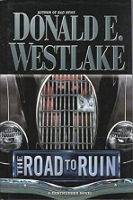
The Road to Ruin by Donald E. Westlake RE-READ
This is technically a re-read, but unlike the first nine of Westlake's Dortmunder novels which I have been perpetually re-reading for decades (30 years in some cases!), I have only read this once, back in 2006. This is because when I discovered newer Dortmunder books I was at first excited and then deeply disappointed. The magic had gone, something had changed, I suspect Westlake's heart wasn't in them and instead he just needed a guaranteed sell to the publisher or to help with a grandchild's college costs perhaps. There's also the trouble with keeping Dortmunder in the current moment (though un-aging), because it was hard for a jobbing thief even in the 1970s, with everyone paying by check, let alone in 2004.
I am not planning to re-read all those later books, but I remembered liking some aspects of this one more than the three that followed it and perhaps I can be more generous now than when I was a wee 20 year old. It's fairly different from my memory so I might also be conflating it with a short story.
One thing about Westlake is his very clear-eyed view of the world, and his view of corporate America is far better than 20/20. We have the multinational bent on world domination covered in Good Behavior, the scammer of bankruptcy courts and general shady businessman in What's the Worst that Could Happen, and now we've got one inspired by Enron with the disgraced CEO living essentially under house arrest while various people plot how to get at him to try to extract some of their lost money. But that's not Dortmunder's business. Dortmunder is trying to get in to steal a group of extremely valuable antique cars, preferably also stuffed with smaller valuables.
The thing is, this isn't a bad book, but it's a bad Dortmunder book. The pacing and structure is all off (for a Dortmunder book), and the sideplots are too numerous and complicated. If this were a non-series Westlake novel it has the makings of a very good one, but trying to bend it to fit Dortmunder means there's far too little of him in it to please fans and that he's taking away from what might be the better story. There are some great bits in this, but it's Westlake so this is to be expected even in a subpar book.
60mabith
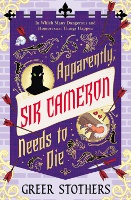
Apparently, Sir Cameron Needs to Die by Greer Stothers
This is a humorous SFF book (with a bit of romance) that's been making the rounds of my corner of Tumblr, as the author is a prominent user of the site.
Sir Cameron is a knight who is not beloved by his compatriots and who does his best to avoid battle. When his elf companion leads him away and lets slip he has to be killed due to a prophecy, he whacks her over the head and runs off to attempt to seek shelter with the local mad sorcerer, Merulo (and maybe to enjoy a little consensual menacing). Merulo isn't best pleased about the situation but Cameron's spirits are difficult to dampen.
It's a fun farce with some interesting plot twists later on. I do feel like I wanted a little more from it, but it's hard to pinpoint exactly what (better skill in the dialogue is part of it perhaps). It's a very decent first novel in this genre though.
61mabith
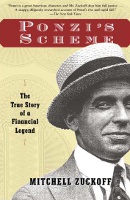
Ponzi's Scheme: The True Story of a Financial Legend by Mitchell Zuckoff
This was not the best book for me, and I might well have given up on it due to it being very narrative in a way I've come to dislike. I much prefer discussion of the sources and potential limitations of them within the text. While the author says all quotes come from sources, as do the descriptive elements, Ponzi's autobiography and newspapers of the time have various veracity issues which are never discussed in the text. The newspaper reporter saying someone blushed is both unimportant and just as likely to be made up.
The reason I did not give up on it was that I was on the audiobook and the reader was Grover Gardner. He particularly suited the book's style as well as making me feel very nostalgic, as a long-time audiobook listener.
While there are limitations, I'm not sure how many books there are about Ponzi himself and his full history and the now well-known scheme. It was generally informative and if you like a more uninterrupted narrative non-fiction this might suit you.
I've been watching a series of anti-multi level marketing scheme videos on Youtube and I will say at least Ponzi had more style than the current lot.
62mabith
I've got very behind on movie posting and now I own reviews for six books as well somehow. I shall tackle the movies first.
The Kennel Murder Case - William Powell movie based on a mystery novel. We enjoyed Powell so much in The Thin Man that I made note of some other of his films. This was fun and had some interesting aspects to the cinematography.
I Saw the TV Glow - really great film! You can view it as a creeping horror-light film but it's also a brilliantly done allegory for LGBT folks being unable to leave the closet and the impact that has.
Felidae - Very strange German adult animation with a cat crime investigation. Every decade apparently needs a creepy cat film and this is the 1990s version. One film society described it as what you might imagine an R-rated Don Bluth film to be, which feels accurate.
Green for Danger - Great 1946 mystery film! Very enjoyably done and you can't go wrong with Trevor Howard and Alistair Sim.
Raiders! - Documentary about some boys in the 1980s who spent years working on a shot for shot remake of Raiders of the Lost Ark (started basically immediately after seeing it in the cinema). It also documents them trying to complete a scene they couldn't as children - the fight around the airplane. For some reason they make that last scene extremely big budget, which is against what people loved about the original work. Baffling decision, interesting story.
I Used to be Funny - 2023 film written and directed by Ally Pankiw. Sam Cowell is a stand-up comedian also working as a nanny. She's had some traumatic experience in that work which is gradually illuminated as she struggles with whether to help look for the teenage girl she was nannying who has run away from home. We go back and forth with the present day and the past nannying work. I found this extremely well done (particularly the dialogue between Sam and her fellow comedian roommates). It's very timely and balances sadness with the humor and sarcasm of the main characters.
Libeled Lady - It's another William Powell. A newspaper is being sued for libel, the editor hires Powell's character to get married and then be caught with the woman suing the paper to make the libel story actually true, everyone falls in love with Powell. This was sort of fascinating, and it was very hard to tell how it would end for ages, which is not common in 1930s films. The ending was the weak point of the film, but it was still largely fun. Powell is so fantastic.
Breaking and Entering - Documentary about people trying to break and/or keep Guinness world records. There's a bit of a thread of "these people were denied the attention/positive reinforcement they needed as children" but also some of the people are just incredibly obnoxious. I very much understand challenging yourself, I don't so much understand needing it to be certified.
The Kennel Murder Case - William Powell movie based on a mystery novel. We enjoyed Powell so much in The Thin Man that I made note of some other of his films. This was fun and had some interesting aspects to the cinematography.
I Saw the TV Glow - really great film! You can view it as a creeping horror-light film but it's also a brilliantly done allegory for LGBT folks being unable to leave the closet and the impact that has.
Felidae - Very strange German adult animation with a cat crime investigation. Every decade apparently needs a creepy cat film and this is the 1990s version. One film society described it as what you might imagine an R-rated Don Bluth film to be, which feels accurate.
Green for Danger - Great 1946 mystery film! Very enjoyably done and you can't go wrong with Trevor Howard and Alistair Sim.
Raiders! - Documentary about some boys in the 1980s who spent years working on a shot for shot remake of Raiders of the Lost Ark (started basically immediately after seeing it in the cinema). It also documents them trying to complete a scene they couldn't as children - the fight around the airplane. For some reason they make that last scene extremely big budget, which is against what people loved about the original work. Baffling decision, interesting story.
I Used to be Funny - 2023 film written and directed by Ally Pankiw. Sam Cowell is a stand-up comedian also working as a nanny. She's had some traumatic experience in that work which is gradually illuminated as she struggles with whether to help look for the teenage girl she was nannying who has run away from home. We go back and forth with the present day and the past nannying work. I found this extremely well done (particularly the dialogue between Sam and her fellow comedian roommates). It's very timely and balances sadness with the humor and sarcasm of the main characters.
Libeled Lady - It's another William Powell. A newspaper is being sued for libel, the editor hires Powell's character to get married and then be caught with the woman suing the paper to make the libel story actually true, everyone falls in love with Powell. This was sort of fascinating, and it was very hard to tell how it would end for ages, which is not common in 1930s films. The ending was the weak point of the film, but it was still largely fun. Powell is so fantastic.
Breaking and Entering - Documentary about people trying to break and/or keep Guinness world records. There's a bit of a thread of "these people were denied the attention/positive reinforcement they needed as children" but also some of the people are just incredibly obnoxious. I very much understand challenging yourself, I don't so much understand needing it to be certified.
63mabith
Replaceable You: Adventures in Human Anatomy by Mary Roach
As ever, Roach can always be relied upon to provide an excellent book. The way she manages to structure her books makes them so readable and interesting, and they never feel like random topic jumps even when they almost are.
In this one we're not in the far future dreams of cybernetic enhancements, we're very much in the real work of the real world, which is slow and expensive and the achievements are not linear. This book also involved a lot of callbacks and further looking into topics she landed on in previous books, which I really enjoyed. I think this is my second favorite Roach of the ones I've read (I've not read Spook or Grunt yet).
As ever, Roach's curiosity and good humor is infectious, making this a particularly good read for the current moment.
64pamelad
>62 mabith: Must look for the two William Powell films. I was going to say that he seems such an unlikely leading man but I'd confused him with Dick Powell, who is a different kettle of fish.
Green for Danger, is probably worth another viewing. Good book.
Green for Danger, is probably worth another viewing. Good book.
65mabith
>64 pamelad: There are always too many actors to keep track of!
66mabith
Every Day I Read: 53 Ways to Get Closer to Books by Hwang Bo-Reum
Picked this up as a short read, partly because I'm feeling in a bit of a slump with my reading and a bit because the cover is pretty.
Some aspects were interesting if not super compelling. However, nothing stuck with me except some criticisms, perhaps because I don't really need help getting closer to books. This book is likely more geared to young people, or those just leaving some intensive schooling or job that required a lot of reading.
One of the last chapters is "if books disappeared from the world" and seemed to think that people would stop talking about books immediately if they weren't around? And it didn't bring up the many situations where people didn't have access to books and spent time retelling favorite or classic books to each other, as if the oral traditions mean nothing. Not to mention eras where it was more common for books to be read aloud as a communal activity in the evening, rather than a solo activity.
67mabith
The Two Princesses of Bamarre by Gail Carson Levine
A lot of my younger friends were big fans of Levine's writing, but she came on the scene too late for me. I think the quick summary of her plots also didn't necessarily appeal when I was trying to read some later children's books to sort of keep up. I generally feel that children's novels and middle grade fiction are incredibly important areas, because those are the books that often build passionate, lifelong readers.
My friend and I were complaining about the awful new digital cartoon covers for older children's books and she brought up this book which was an absolute favorite when she was a kid. She was afraid to reread it, worried it wouldn't hold up to the adult eye so I said I'd read it for her and give her my report. I'd meant to read something by Levine (best known for Ella Enchanted), and it seemed perfect for my iron infusion appointment.
This is a fantasy novel set in a world afflicted by a random illness, the gray death, that can only be cured when a prophesy is fulfilled. One princess, Meryl, is bold and can't wait to go adventuring and the other, Addie, is anxious and more interested in her needlework. Their father is useless and removed, their mother died early. Meryl has promised to wait to have her adventures until after Addie is happily married. When Meryl gets the Gray Death and their father is doing nothing, Addie knows she must go out to seek a cure. It includes some classic fantasy objects, like seven league boots.
About halfway through I felt it was a nice book and my friend should reread it but expect something simpler than she remembered. Then we got to a dragon character who I loved immensely and the whole book really picked up. I can see why my friend loved it and I'd happily give it to a kid.
68Tess_W
>63 mabith: Have this one cued up to read this month!
69pamelad
>55 mabith: I wondered how any sane person could be attracted to someone as grumpy and impatient as Jennifer Hallett but then I read a couple of interviews with the mysterious Alexis Hall, who seemed both irritable and patronising, so perhaps that explained it.
70mabith
>68 Tess_W: Hope you enjoy it! Roach's curiosity about most subjects always gives me a nice mental boost.
>69 pamelad: I think what I like about Hall's love interests is that almost none of them appeal to me, but I'm always convinced by the end that they appeal to each other.
And goodness, I wonder if some of Hall's tone is lost in a print interview? I've listened to a few interviews (sometimes focused on a specific book sometimes on writing in general) and been in a few intensive online book clubs with Hall and didn't find them either irritable or patronizing (or certainly a lot less irritable than I am!). Hall comes across as deeply nerdy, especially about English literature, in a way that sometimes makes me a little insecure since it demonstrates such a wide breadth of knowledge that I lack, but that's definitely my problem.
>69 pamelad: I think what I like about Hall's love interests is that almost none of them appeal to me, but I'm always convinced by the end that they appeal to each other.
And goodness, I wonder if some of Hall's tone is lost in a print interview? I've listened to a few interviews (sometimes focused on a specific book sometimes on writing in general) and been in a few intensive online book clubs with Hall and didn't find them either irritable or patronizing (or certainly a lot less irritable than I am!). Hall comes across as deeply nerdy, especially about English literature, in a way that sometimes makes me a little insecure since it demonstrates such a wide breadth of knowledge that I lack, but that's definitely my problem.
71mabith
A Brief History of Motion: From the Wheel, to the Car, to What Comes Next by Tom Standage
This was a weaker Standage effort for me, for a couple of reasons. One reason is perhaps that my base of knowledge is now wide enough that in a generalist's book covering a variety of subjects, there are inevitably areas where I know something is inaccurate. Of course that makes me wonder what else is inaccurate.
The other issue with this was a severe lack of focus on public transportation, issues funding it, political motivations around it, and why it's a much better solution for congestion, pollution etc... There are glancing mentions, but it's almost ludicrously avoided which felt bizarre.
I wouldn't particularly recommend this.
72mabith
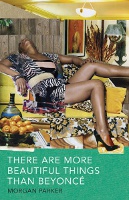
There are More Beautiful Things Than Beyonce by Morgan Parker
Picked this up in my effort to always have a poetry book on the go (which fell by the wayside after the fantastic volume from December). My MO is to go into the library stacks, look for the slimmer volumes, and pluck one or two at random. If I don't love the style, it's not a big commitment, and I'm add to checkout numbers in a likely under-loved section.
This volume didn't hugely speak to me. I didn't dislike it precisely, but the style was too stylistic or distant in a way that just isn't what I love in poetry. That's kind of what I expect at least 60% of the time though, and it's still worth exploring and being exposed to a variety of styles. I do think I'll look for Parker's essay collection now though.
The Book of Revelation
Kiss the years, their filth: it's my turn
To dress up forlorn in gold, fib
Through rotting teeth
I'm looking regal, constantly exploding
Do you think I could be a witch
Can shine be caught like a fever
My therapist says something
In my core is dark and the surface of my planet too
She says Many creative people
& I can't see a beautiful day if I tried
She says peace is something
people tell themselves
73mabith
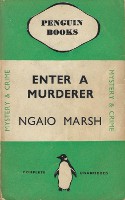
Enter a Murderer by Ngaio Marsh
I was reminded recently that when I first read a few Marsh mysteries, what I could access was very limited so I didn't get to as much of her earlier work as I'd have liked to. Now I'll go back and read one every month or two until I get bored.
This was Marsh's second book featuring detective Roderick Alleyn and he still seems a bit Under Construction, but still jovial enough. One of my favorite murder mystery tropes is when an actor is killed on stage and this is a fun example of it.
Plenty of plausible suspects, red herrings, scandal, drug use, etc... There was a slightly annoying bit where a reporter (Alleyn's brother-in-law) and his sergeant are much more stupid than one feels they ought to be, but it's her second novel ever, and I forgave it.
74mabith
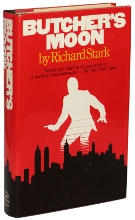
Butcher's Moon by Richard Stark (pseudonym of Donald E. Westlake
This is the final book of the original run of sixteen Parker novels, before a 23-year break in the series. It's about twice as long as a standard Parker novel and doesn't have the typical four-part structure.
Parker and Grofield are on runs of bad luck. The book starts in the middle of a failing job for Parker and with a very amusing IRS meeting for Grofield (he's involved in heists only to finance his summer theater). Parker decides to go after an old score he had to hide in Slayground, half of which is Grofield's, since he was also on that job. However, it's not where he hid it and he knows the people who would have grabbed it.
So again it's Parker vs the local mob, who are really not happy about the timing. There's a mystery element in amongst it, with the mob involved in an internal power struggle, and callbacks to many previous Parker books. It's a good book and does feel it would have been a fine natural end to the series. Westlake always claimed he wasn't planning to end it here, but it's such a departure from the usual Parker form that's hard to believe.
75mabith
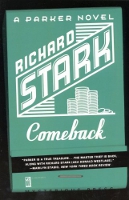
Comeback by Richard Stark (pseudonym of Donald E. Westlake)
I usually limit myself to one Stark novel per month, but I wanted to immediately move to the later Parkers so I could compare the style.
Westlake has dragged a same-age (late 30s) Parker into the late 1990s, to battle with new technologies and detection methods. This time he's called into a job to steal the all-cash takings of a corrupt evangelist (think Jim Bakker or Jimmy Swaggart). They've got an inside man, but he suddenly gets cold feet and they learn he's told someone about the job, but don't know if that will cause trouble for them (shocker, it does!).
It's a very good comeback, with the usual bad luck for Parker and Co, and some great setups and classic on the spot thinking. It definitely doesn't feel markedly different from the earlier books, though I sometimes found it jarring to have him living in MY time period.
76mabith
After Facing a Tribulation, My Dead Daoist Partner Came Back by Jimo Yao
I've been in a funk so have got well behind on LT tasks and I've picked up more Chinese webnovels again. This is a transmigration to a cultivation world novel, so our main character knows a lot of one-sided plot points. A theme with the better transmigration novels is the fact that a novel is by definition a very limited account of what is an entire world when the person is inside it, often with a very particular slant towards the events.
Song Yan transmigrates into a very minor character (a playboy sort who fell in love at first sight), right before he's married to Gu Wei, the maligned son of a noteworthy family. However, Song Yan the transmigrator knows that in five months the war will break out and his goal is to prepare and to hopefully save his character's parents. Knowing Gu Wei has just been forced to marry him, Song Yan intends to treat the relationship as a friendship while Gu Wei slowly falls in love with him. Unfortunately Gu Wei is actually a temporary incarnation of the demon lord who is going to wage war on the continent. When the Gu Wei body is killed so Ji Wugui can wake up, he's intent on making sure Song Yan falls for him first this time.
This was a really well balanced and well plotted read. The characters were fun, the world building was good, and there was just enough nuance.
77mabith
Revolusi: Indonesia and the Birth of the Modern World by David van Reybrouck
This is a really excellent book about how Indonesia was colonized, how they gained independence, the history in between, and some aftermath. Reybrouck is known for using personal interviews/oral testimony as a key part of his books, and his balance of those sections and traditional history writing really worked for me.
Reybrouck is Belgian and got a lot of pushback when he started telling Dutch friends and acquaintances about the project, but as he'd already written a book about the Congo (their main comment being to write about that instead), they lost steam quickly. According to polls from near when this book was published (2024), Dutch people have a more positive view of their colonial history than anyone else in Europe. I was in a minor rage for a lot of the book, especially after knowing those poll numbers.
I had very little pre-loaded knowledge of Indonesia, most of it being volcano based, so this was great for filling in some holes. Plus, as ever with any WWII history, there's always something new to be learned. It's definitely going to be one of my best reads of the year.
Highly recommended! I'm excited to get to his other books.
78mabith
Our Missing Hearts by Celeste Ng
This was my book club read in April, and since I'd read an earlier book by Ng I was at least fairly certain I wouldn't hate it.
It takes place in an alternative US near-future dystopia where economic collapse has led to a large anti-Asian movement and there are laws allowing the widespread seizing of children partly as an intimidation tactic to prevent protest.
Bird Gardener lives with his father, a librarian, barely eking out a life after Bird's mother, a Chinese-American poet, leaves the family. Her books are banned and a mysterious letter sent to Bird has him trying to find her (and to find out more about her). Later we get his mother's full story.
It's a pretty well done book, though I'd slightly describe it as Baby's First Dystopian Novel. Part of the ending felt incredibly stupid to me, just characters being idiots for no reason except to add Drama, but I think the human struggles of living in this system and how nativist views develop, plus how innocuous things are blown out of all proportion, was done well. Most of the women in my book club have children and they felt the writing on motherhood was particularly good.
79mabith
Movie time!
Potiche - This is a 2010 French comedy starring Catherine Deneuve and Gérard Depardieu. I have a great love for Deneuve, and she is wonderful as always. Set in the 1970s, she plays a housewife who must step up to negotiate with the workers and run her husband's umbrella factory after he's taken hostage due to his harsh management (and then has a heart attack and can't work for a while). Due to the strike she turns to a former connection, Depardieu, to help. It was a good watch, if not an absolute standout favorite.
Paper Moon - 1973 film set in the 1930s where a scamming traveling salesman has accidentally picked up a child he's supposed to deliver to relatives. When she proves useful to the business they form a partnership. This is marked by the leads being Ryan O'Neal and his real-life daughter Tatum. It was a great watch and really wonderful performances from everyone.
Eight Postcards from Utopia - Bit of a weird one now! As per the Kanopy description, this is "a found-footage documentary assembled exclusively out of post-socialist Romanian advertisements. Drawing from the debris of Romania's long transition period, the film speaks about love and death, the human body and its frailty, the natural and the supernatural and of course, socialism and capitalism." Not sure I buy all that, but it was fascinating and amusing in turns.
Tiger Stripes - 2023 Malaysian body horror film, where the horror is puberty. Very relatable, not always in a good way (shunned by former friends hits a real sore spot for me), and I found it well done. I do wish I could have just turned into a tiger during that time.
Dead Talents Society - 2024 Taiwanese comedy film where ghosts will disappear into reincarnation if they can't make some impact on the living world as a ghost sighting or legend (or through family's continued remembrance and offerings). In the ghost world there's an entire entertainment industry around this. The previous top ghost star has been overtaken by her apprentice, who is harnessing social media rather than in-person scares. She takes on a new seemingly hopeless apprentice. Really fun film, very well acted and shot, with just the right percentage of more serious moments around death and grief. Asian ghost films and TV shows always work really well for me, in part due to the cultural framework around death and the afterlife (shrines, offerings, Qingming, etc...).
Young Einstein - 1988 Australian film, a rewatch for me. This was an absolute staple in our house when I was growing up, and I still love it. It's very silly, it cares not a bit for actual history, and it has a great soundtrack. Einstein is growing up on an apple farm in Tasmania when he hits upon E=mc2 while trying to put bubbles into beer. Thus he must head to the mainland to patent it and on the way meets Marie Curie. He's also inventing electric violins and guitars as well as rock and roll, just on the side. I watch this again every few years and never cease to be delighted.
Potiche - This is a 2010 French comedy starring Catherine Deneuve and Gérard Depardieu. I have a great love for Deneuve, and she is wonderful as always. Set in the 1970s, she plays a housewife who must step up to negotiate with the workers and run her husband's umbrella factory after he's taken hostage due to his harsh management (and then has a heart attack and can't work for a while). Due to the strike she turns to a former connection, Depardieu, to help. It was a good watch, if not an absolute standout favorite.
Paper Moon - 1973 film set in the 1930s where a scamming traveling salesman has accidentally picked up a child he's supposed to deliver to relatives. When she proves useful to the business they form a partnership. This is marked by the leads being Ryan O'Neal and his real-life daughter Tatum. It was a great watch and really wonderful performances from everyone.
Eight Postcards from Utopia - Bit of a weird one now! As per the Kanopy description, this is "a found-footage documentary assembled exclusively out of post-socialist Romanian advertisements. Drawing from the debris of Romania's long transition period, the film speaks about love and death, the human body and its frailty, the natural and the supernatural and of course, socialism and capitalism." Not sure I buy all that, but it was fascinating and amusing in turns.
Tiger Stripes - 2023 Malaysian body horror film, where the horror is puberty. Very relatable, not always in a good way (shunned by former friends hits a real sore spot for me), and I found it well done. I do wish I could have just turned into a tiger during that time.
Dead Talents Society - 2024 Taiwanese comedy film where ghosts will disappear into reincarnation if they can't make some impact on the living world as a ghost sighting or legend (or through family's continued remembrance and offerings). In the ghost world there's an entire entertainment industry around this. The previous top ghost star has been overtaken by her apprentice, who is harnessing social media rather than in-person scares. She takes on a new seemingly hopeless apprentice. Really fun film, very well acted and shot, with just the right percentage of more serious moments around death and grief. Asian ghost films and TV shows always work really well for me, in part due to the cultural framework around death and the afterlife (shrines, offerings, Qingming, etc...).
Young Einstein - 1988 Australian film, a rewatch for me. This was an absolute staple in our house when I was growing up, and I still love it. It's very silly, it cares not a bit for actual history, and it has a great soundtrack. Einstein is growing up on an apple farm in Tasmania when he hits upon E=mc2 while trying to put bubbles into beer. Thus he must head to the mainland to patent it and on the way meets Marie Curie. He's also inventing electric violins and guitars as well as rock and roll, just on the side. I watch this again every few years and never cease to be delighted.
80mabith
The Buried City: Unearthing the Real Pompeii by Gabriel Zuchtriegel
The nice thing with books about Pompeii is you can't read too many. As long as they're published some years apart, there will always be interesting new stuff. I think some of this book was also in a documentary that came out in 2024, but my brain always needs a refresher in case it comes up on a quiz or I need to look knowledgeable in front of a niece or nephew.
Zuchtriegel was appointed Director of the Archaeological Park of Pompeii in 2021 and in this he also talks about the challenges of continuing to develop and innovate the visitor side of things and what he learned from other sites he worked at. I really enjoyed that side of it in addition to things like how to interact with the media in a way that's good for the site, etc...
A short, enjoyable visit to Pompeii!
81mabith
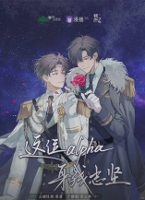
This Alpha is Determined Despite Physical Disability by San Wanguo Gang
Sometimes there are webnovels I read of a specific genre and I think, this is an embarrassing genre convention and I don't need to post about it (even though I think the books I'm picking are interesting uses of it, I find I'm not yet totally free of book shame). This novel though, was so incredibly deft and intelligent on a particular personality type which I unfortunately share, that I have no choice but to post. I picked it up expecting a fun bit of nonsense (and it was fun, there was a lot of humor) and got so much more.
This is an omegaverse world, and it's my impression this was invented by fanfiction writers for both smut writing reasons and also so same sex pairings could have biological children (god forbid we normalize adoption even in fiction). In addition to men and women, there are three subgenders alphas, omegas, and betas. The former have high fertility (regardless of whether they're men or women) and pheromones which can cause heats/ruts whatever. I don't read fanfiction so perhaps it has evolved. In the better Chinese webnovels it's often used to explore additional levels of social prejudice, power, and abuse.
It's another transmigration book, this time to the interstellar (which almost always means mechas and sometimes means zergs). The main character, Bai Li, has ended up in a book where he's a cannonfodder villain, just there to contrast the protagonist (technically his brother) who is supposed to build his harem and become a hero of the empire. Bai Li is aims to prevent this, and while he delays a devastating mecha battle injury his character has, it still finds him in the end forcing his retirement from the military. The world of the book seems to insist on course correcting and this is a major theme in the book, the plot armor of the protagonist and the twisting of the plot to attempt to bring it back in line when Bai Li is thwarting it.
In this world when people reach a certain age if they're unmarried they're forced to be system matched at random with a partner. Lu Zhao is a leading light of the military despite being an omega and has reached the required age. He matches with Bai Li and wants to arrange a quick marriage in part to hide that an injury has rendered him infertile. It's a contract marriage, and Bai Li hopes to prevent the book events from happening which led to Lu Zhao being in the protagonist's harem.
It's hard to express how well written this book was, and how emotionally deep with a razor sharp grip on psychology. This happens pretty regularly with webnovels I pick up, but this one was exceptional. The relationship between Bai Li and Lu Zhao grows so naturally and so thoughtfully and unravels all of Bai Li's defense mechanisms in a believable timeline (while also maintaining a great plot around what the book world wants and military matters etc). Then this bit hit me like a ton of bricks:
You're not pretending to be strong, you're pretending not to need a response.
All effort seeks equal respect--that's a mindset most humans have. I need recognition, I need praise, I need kindness, I need to be given the same love in return.
The section this was from took over an entire therapy appointment for me, because that's exactly it. If I emphasize to someone that I need more contact, need more support, etc... and they don't respond it's such a horrible blow that it's better to pretend to be someone who needs nothing. A perfect Pollyanna who can bring them little bits of fun and ask nothing in return, which of course leads to shallow relationships that become unsatisfying.
(I will say this applies mostly to in person relationships, or people I know in 'real life' even if I don't see them in person often. It's somewhat easier to be open and myself online.)
What a great, surprising read. OH, and the description of chronic physical injury and disability (which, unlike in many books, doesn't get healed) was really well done.
82mabith
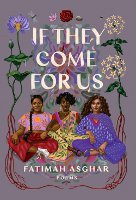
If They Come For Us by Fatimah Asghar
Another poetry collection picked up at random. This one was right up my street, and I really loved Asghar's voice. It also had some interesting plays on order and visuals which largely added to the poems rather than seeming like style over substance.
Here is part of what is a central Long poem in the book.
Oil
I'm young & no one around
knows where my parents are from.
A map on our wall & I circle all
the places I want to be. My Auntie A,
not-blood but could be,
runs oil through my scalp.
Her fingers play the strands of my hair.
The house smells like badam.
My Uncle Fuzzy, not-blood but could be,
soaks them in a bowl of water.
My Auntie A says my people might
be Afghani. I draw a ship on the map.
I write Afghani under its hull. I count
all the oceans, blood & not-blood,
all the people I could be,
the whole map, my mirror.
We got sent home early
& no one knew why. I think we
are at war! I yelled to my sister
knapsacks ringing
against our backs. I copy-
catted from Frances
who whispered it when the teachers
got silent. Can't blame
me for taking a good idea.
I collect words where I find them.
Two hours after the towers fell I crossed the ship
out on the map. I buried it under a casket of scribbles.
All the people I could be are dangerous.
The blood clotting, oil in my veins.
83mabith
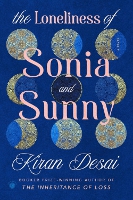
The Loneliness of Sonia and Sunny by Kiran Desai
Years back now I read and loved Desai's first novel, Hullabaloo in the Guava Orchard, so I had high expectations for this new book which Desai easily met and exceeded. I love her style of writing SO much, just her way with language is really glorious and just to my taste.
In many ways, Sonia felt as if she had returned to being a child. A more playful child than she had ever been. She thought that this was what people spoke of, when they spoke about love. You were outwardly more adult and treated with greater consideration, but secretly you were more childlike, more free, more full of laughter.It is hard to sum up the plot, as it is rambling (in the best way). Sonia, an aspiring writer, is studying in Vermont, and since she cannot return home to India for breaks she is lonely and cold and unhappy. A chance meeting with an older local artist brings her under his sway and they start a dysfunctional relationship. When she returns to India instead of doing everything possible to stay in the US her family is puzzled.
At the most, they mildly remarked that it was a strange matter indeed to be married to a person who did not enjoy a potato. But that was, to them, the difference between being a human being and not being a human being. If you were a person, you would like a potato. If you were a hollowed out masquerade, it would be thus revealed.Sunny, an aspiring journalist, is living in NYC with his girlfriend, working a night desk at the AP, and endlessly struggling. Previously his parents had sent Sonia's information to him as a possible romantic match, but he had discarded the possibility of meeting her.
They were, in surprising ways, utterly modern, or was it lack of caring. Or was it the same thing.These are only tiny elements of the plot, which includes Sunny and Sonia's families as well. It perhaps shouldn't have been possible to balance it all and yet it worked perfectly for me. It will definitely be one of my top reads for this year, and it's hard to imagine any recent fiction matching it.
Highly recommended! It's a longer book, but for me the length was justified.
84mabith
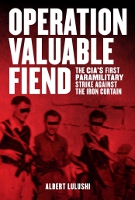
Operation Valuable Fiend: The CIA's First Paramilitary Strike Against the Iron Curtain by Albert Lulushi
This was a random pickup which has some interesting information (for me mainly about how incompetent the CIA was/is). One has to sometimes look past Lulushi's These are Positive Actions views, but I knew that going in. It's one of those topics where there's probably not another book on these specific actions (vs the wider subject), so if you're very interested it's worth picking up. Otherwise definitely one you can miss.
85mabith
 ..
..
His Marriage Partner is Scheming by Wen Quan Ben Dan
More transmigration into a novel (this genre often has interesting commentary on plot and reader POV, so I enjoy it). The transmigrator, He Qiao, is on a blind date with someone who becomes a villain and has his life, and his family's lives, ruined. He explains to the date, Chi Xueyan, about the book's plot, which Xueyan dismisses until he runs into the key figure and had felt himself unusually attracted by him. At which point he runs back to He Qiao and immediately start a contract marriage to protect himself from the plot (and obviously end up in a real relationship). Very fun novel, good plotting and pacing as well. Chi Xueyan was such a fun character.
After Crossing Through Ten Worlds I Failed to Run Away – Jiu Mi Jiu Mi Tu
Classic quick transmigration scenario, protagonist Ji Ning is completing novel plots due to being near death in the hospital with the hope to wake up when he's completed enough worlds. Unfortunately, in his eleventh world, the love interest from an earlier world suddenly shows up. Cue all the previous worlds colliding and ten previous love interests coming to find him and ask just how many other partners he's had. This had some really nice twists on the genre with good justification for the events and world hopping. Though it also felt like a cheat way to write a quick transmigration novel, with a lot less time/effort spent on those individual worlds than in a traditional work in that genre.
86mabith
Backflash by Richard Stark (pseudonym of Donald E. Westlake)
The second of the post-comeback Parker novels, and it was a really enjoyable one. Parker is told about a gambling boat running through an area of New York state as a bit of a test for wider legalized gambling, and the main thing is there they have a cash only policy on buying the chips. Parker feels the man who brought him this job, a vehement anti-gambling advocate, is hiding part of his motivation or plans, but decides he can deal with that later.
The planning for this one was really interesting and I liked all the things Westlake was putting in Parker's way. This one also had some incidental commentary on ableism and how wheelchair users especially are treated, which I appreciated.
Gambling is also a slight theme for Westlake, or clearly something he had opinions on, at least as far as state laws and capitalist endeavor is concerned (rather than a moral or ethical opinion).
89mabith
Fighting for our Friendships: The Science and Art of Conflict and Connection in Women's Relationships by Danielle Bayard Jackson
Balanced and authentic friendships are something I think about a lot and struggle with in various ways. My therapist had mentioned a relevant part of this book, so I thought I'd read it. Plus it can go with The Girls from Ames and Big Friendship in a themed grouping.
A lot of this one wasn't particularly relevant to me (thankfully), but it's all good reminders. Plus the niece I'm closest to is 15 now and it's good to be reminded of how weird toxic friendships can develop or how lack of communication can spoil a good friendship.
I do think Big Friendship was the better book for me, but this one is more like a checklist and perhaps easier to only read relevant sections.
90mabith
Made for Love by Alissa Nutting
This is an absurdist pre-dystopian farce of a novel. Hazel has run away from her extremely wealthy husband and back to her father who is living in a seniors only trailer park. The husband is a tech billionaire who is drawing from Elon Musk, Mark Zuckerberg, and a general idea of these creeps (the book was first published in 2017 though). Having chafed under his constant monitoring and surveillance for years already, she flees when he wants to put a chip in her brain so they can be even more connected (and he can test the product). Oh, and her father has just sold his car to buy a highly lifelike sex doll, Diane.
Then we have Jasper, a small-time love scam operator, who gets attacked by a dolphin while swimming and afterwards can only get turned on by dolphins. This storyline takes a very long time to meet up with Hazel's, but they eventually do.
As long as you keep the absurdist marker in mind and don't take anything too seriously, it's a fun read. Deeply weird, but fun. Hazel is a mess throughout, somewhat understandably, and it's also good to keep in mind she got married around age 20, was immediately completely isolated, and so is nothing like a 'normal' 30 year old. Strange to think there's a TV adaptation of this.
I enjoyed this quote from Hazel's dad when he's trying to get to go back to her husband and the rich life (before he quite realizes why she left, he just wants her out of his trailer):
Have you even considered lowering your standards in terms of general happiness?
91mabith
Salt, Sweat, and Steam: The Fiery Education of an Accidental Chef by Brigid Washington
Memoir of the author's time at the Culinary Institute of America. Washington is a Trinidadian chef who was in college in the US getting some sort of worthy serious degree the details of which now escape me (some sort of science maybe?). She's doing some job or internship she hates, in a relationship that isn't going how she feels it should, and suddenly decides she wants to cook so much she goes into a bistro she's never eaten at and begs them to hire her even saying she'll work for free. She does start working there (or interning, this is also vague in my mind now) and after breaking up with her boyfriend feels like she can't possibly stay in that area so decides to go to culinary school.
Anyone who reads US-based culinary memoirs, knows a lot of professional cooks, or even just watches a lot of cooking based stuff will know that the Culinary Institute of America is a mixed bag at best. Culinary schools are often battling accusations of encouraging really problematic student loans (or used to be) as well as issues of normalized bullying, misogyny, and racism. One does feel that if you have to scream at people to ensure they can properly brunoise a carrot, perhaps the teaching method is at fault. On the other hand learning a range (how wide the range is rather dubious at times) of cooking techniques and base recipes that you can execute in trying circumstances is handy.
Washington has a lot of interesting information to impart but the 30-40% around her relationships can be a little exhausting (after arriving at culinary school she immediately falls for the worst sort of rich pretty boy asshole). Obviously for a lot of people in their 20s this is a main part of their life and her relationships are relevant to why she went to the CIA to begin with and with some initial struggles after starting there (plus some much needed growing up) but I did want to shake her.
She graduated from the CIA in 2012 and the book came out this year. I wanted to look it up particularly because even looking back on that period the current writing about it seems very young and maybe a little focused on And Here's This Neat Little Lesson. It's not one of the great memoirs for most people, in my opinion (not awful, not great, worth reading if you're very interested in this specific experience during this specific time).
92mabith
Villain's Strategy – Luobo Hua Tuzi
A quite sweet transmigration into villain of a school novel book. The main character has to do villainous things to the protagonist in order to eke out payments from the system that took him there, but because he's shy and fearful (and generally admires the other character's skills and intelligence), he's seen to be flirting. Good funny one, if not overly complex.
After Marrying an Enemy General – Gongzi Rou
Back to the interstellar. One empire has lost a war against the other, and the defeated general noticed the other had symptoms of an eventually fatal food poisoning. Knowing that if the other dies the whole galaxy will fall into chaos (and knowing his own government has been corrupted), the defeated general sneaks over to save him. Very mixed bag novel. A lot of promise that wasn't quite carried through and a trope that particularly annoys me ("oh the two love interests actually met as children in a traumatic circumstance" blech, boring).
A quite sweet transmigration into villain of a school novel book. The main character has to do villainous things to the protagonist in order to eke out payments from the system that took him there, but because he's shy and fearful (and generally admires the other character's skills and intelligence), he's seen to be flirting. Good funny one, if not overly complex.
After Marrying an Enemy General – Gongzi Rou
Back to the interstellar. One empire has lost a war against the other, and the defeated general noticed the other had symptoms of an eventually fatal food poisoning. Knowing that if the other dies the whole galaxy will fall into chaos (and knowing his own government has been corrupted), the defeated general sneaks over to save him. Very mixed bag novel. A lot of promise that wasn't quite carried through and a trope that particularly annoys me ("oh the two love interests actually met as children in a traumatic circumstance" blech, boring).
93mabith
Harlots, Whores, & Hackabouts: A History of Sex for Sale by Kate Lister
As the subtitle says, this is a very brief history of sex work through various records, moving chronologically. It is not trying to be exhaustive but is giving the reader things to think about or interesting aspects of the history that we don't expect. The gentle thrust is mainly that there will always be sex work and decriminalization is the thing which most prevents abuses and increases safety.
However, the book is not a political or sociological treatise on that topic, it's kind of just an impossible to avoid fact when you look at sex work and how governments and societies have tried to wrangle it through the centuries.
94mabith
The Labyrinth House Murders by Yukito Ayatsuji
This is a classic Japanese locked room mystery novel. An older well-established author,
Miyagaki Yōtarō, calls a group to his strange underground labyrinth house, including four of his literary heirs, his editor, and a critic. When they arrive they find that Yōtarō has committed suicide due to approaching death from illness and urges the group to agree to stay in the house for six days while the authors write a 50 page story, the best of which will inherit his fortune.
It's a book for puzzle lovers and while I enjoyed aspects of it the thing fell flat for me. Parts of the murders that any mystery reader (let alone author) would have brought up immediately are never mentioned by the characters and this really brought me out of the book. Perhaps this is just to allow the reader to be the main solver with fewer hints but it's just not my style of mystery. If I just want to solve a puzzle then a setup of a few pages is great vs a novel where I expect more from the characterization.
95mabith
The Hunter by Richard Stark (pseudonym of Donald E. Westlake) RE-READ
Now that I'm nearly done with the Parker series (and have moved into the second stage of books) I wanted to reread the first one. Parker has escaped from the prison farm and is ought for revenge against those who betrayed him, and more importantly he's there to get his money.
It's an outlier from the rest of the series, in terms of sheer levels of awful misogyny. Westlake had been planning to kill Parker, but the editor said, make it a series! The violent misogyny particularly is hugely reduced starting from the second book. There are still misogynistic characters, there's still plenty of sexism happening (it was 1962), but it's more the standard level for the time and Parker himself has calmed down significantly (he doesn't care enough about other people to bother being misogynistic). Reading Westlake's work in this series I never feel like it's author views bleeding through (and Westlake often strikes me as progressive).
Despite the shock of Parker's hardboiled horribleness, as on the first read Westlake's skill in writing and plotting really come through. This series has been so compulsively readable and I'm always impressed with how contemporary Westlake writes. He always has such a clear view of the current zeitgeist and he's always writing in the Now. That aspect makes the original set of books really interesting as well, they're time capsules but don't alienate the modern reader because his characters are fully realized people.
Westlake always gets his little jabs in (bolding is mine):
With the end of Prohibition in 1933, the hotel embarked on its new career as a location for business conferences, as the liquor syndicates merged and disbanded and remerged again in a frantic reshuffling of influence and interest, converting from suddenly legal liquor to still profitably illegal items like gambling, unionizing, prostitution and narcotics.
Of course these books improve over time, but Westlake was really starting at such a high mark.
96mabith
Make Believe: On Telling Stories to Children by Mac Barnett
I think about children's literature perhaps more than is normal for a childless adult, but my parents were really passionate about what made a great children's book (novel or picture or in between), and did not keep any book in the house that they disliked reading to us. My dad was a sometimes children's librarian as well. They didn't stop reading to us just because we could read and they understood that some of the best picture books are for nine year olds, not five year olds. In our house I never stopped looking at the old pictures books, sometimes reading them for comfort, sometimes for pictures, sometimes to try to figure out what made them special. I had so many conversations with my parents over the years about specific children's books and what they particularly liked about them. It's just always been such an interest to me.
Barnett is current the children's laureate in the US (it goes by another title here which I forget), and this is a very short book of a few essays. For me it's preaching to the choir, but was a nice little read. It's so ridiculous to me that people will assume those writing for children should want to write for adults or that those books are inherently more important.
It also made me think of this Ursula K. Le Guin quote about writing for children:
“It must be relaxing to write simple things for a change”
Sure, it’s simple, writing for kids. Just as simple as bringing them up. All you do is take the sex out, and use short little words, and little dumb ideas, and don’t be scary, and be sure there’s a happy ending. Right? Nothing to it. Write down. Right on.
If you do all that, you might even write Jonathan Livingston Seagull and make twenty billion dollars and have every adult in America reading your book!
But you won’t have every kid in America reading your book. They will look at it, and they will see straight through it, with their clear, cold, beady little eyes, and they will put it down, and they will go away. Kids will devour vast amounts of garbage (and it is good for them) but they are not like adults: they have not yet learned to eat plastic.
97mabith
The Cloisters: Medieval Art and Architecture, Peter Barnet, Nancy Wu
Picked this up through random library browsing. My dad was always telling us about the first time he went to the Cloisters museum when he was 19 or 20 and how absolutely amazing and atmospheric it was and on and on. So when my sister and I took the train there in 2003, of course we visited the Cloisters and of course I loved it too.
It's essentially a coffee table book giving you potted histories of specific objects and architectural elements. I enjoyed paying attention to the acquisition dates to contemplate if it was something my dad would have seen. I started reading it around his birthday, so it was a bittersweet communion (he died in 2022).
Nice one to pick up if you're interested, some of the pictures of the architectural elements in barns etc... were especially interesting to me.
98mabith
Window Left Open by Jennifer Grotz
I was supposed to finish this in May, and really should have, but I think it's a sign I need to move my 'read poem' task to the morning rather than bedtime. I kept settling down in bed to read and going "No poetry! Time for re-reading goofy comedies."
I largely liked Grotz style and the poems, though the collection didn't blow me away. It's a quiet, mature book and perhaps I prefer the explosive.
Self-Portrait on the Street of an Unnamed Foreign City
The lettering on the shop window in which
you catch a glimpse of yourself is in Polish.
Behind you a man quickly walks by, nearly shouting
into his cell phone. Then a woman
at a dreamier pace, carrying a just-bought bouquet
upside-down. All on a street where pickpockets abound
along with the ubiquitous smell of something baking.
It is delicious to be anonymous on a foreign city street.
Who knew this could be a life, having languages
instead of relationships, struggling even then,
finding out what it means to be a woman
by watching the faces of men passing by.
I went to distant cities, it almost didn’t matter
which, so primed was I to be reverent.
All of them have the beautiful bridge
crossing a grey, near-sighted river,
one that massages the eyes, focuses
the swooping birds that skim the water’s surface.
The usual things I didn’t pine for earlier
because I didn’t know I wouldn’t have them.
I spent so much time alone, when I actually turned lonely
it was vertigo.
Myself estranged is how I understood the world.
My ignorance had saved me, my vices fueled me,
and then I turned forty. I who love to look and look
couldn’t see what others did.
Now I think about currencies, linguistic equivalents, how lop-sided they are, while
my reflection blurs in the shop windows.
Wanting to be as far away as possible exactly as much as still with you.
Shamelessly entering a Starbucks (free wifi) to write this.
---
I also particularly like the final stanza of the last poem in the book (Scorpion):
What amount of fear is the right amount of fear?
I want to find the correct proportion but
my only measure is analogy, to ponder
how this is like that. Sometimes I can see
there is no answer because
I am not asking the question right but
God, I am doing the best I know how.
99Tanya-dogearedcopy
>97 mabith: Ah! The Cloisters is one of my favorite places! There is the art and the architecture which is catnip for Medieval fans like myself — but also that center courtyard. ❤️
My last visit there, my daughter was 5-yo and we spent an afternoon in the courtyard while she doodled on a sketchpad and I gave my legs a rest (that climb up the hill is arduous!)
My last visit there, my daughter was 5-yo and we spent an afternoon in the courtyard while she doodled on a sketchpad and I gave my legs a rest (that climb up the hill is arduous!)
100mabith
It really is such a wonderful spot, Tanya! I could have stayed there all day. Very glad we did that trip then anyway, two years later I wouldn't have physically been able to do any part of it.
101Tess_W
>97 mabith: Wow! My sister and I will be going here when we are in NYC next month! But now I'm a little worried about the "strenuous" part. I'm in my 70's and have had both knees replaced (and they don't work as well as the originals!). I can walk 2-3 miles on fairly level surfaces. The incline?
102mabith
>101 Tess_W: There seems to be a new more accessible entrance folks can access now (still steps inside the place, but it sounds like you can bypass most of the hill at least). I'd definitely call about it ahead of time though. I no longer remember if the hill parts are all slopes or steps (for me a slope is easier than steps, and going down steps is particularly hard for my knees).
103mabith
O Human Star by Blue Delliquanti
This is originally a webcomic and the volumes are self-published but still available to read online. It was serialized over quite a long period but the art and writing are very stable all the way through (and the people reminded me a lot of Alison Bechdel's style).
An engineer/inventor, Al, working on robots hires a helper, Brendan, and they quickly form a bond that leads to a romantic relationship. Brendan is very open and sociable, and a good salesman, while Al is reserved and keeps his emotions fairly locked down. They get to a point of fighting over both work and the relationship apparently to the extent of breaking up, and just as Al is having an unforeseen fatal health failure. Then he wakes up in the future, as a synthetic being, brought back by mysterious forces who leave him at Brendan's house. Cue fallout and trying to solve mysteries/not fight, and that's it for the plot without spoilers.
It's not the most complicated story, but it's done fairly well. It's also far more consistent and planned out than most webcomics these days (don't get me started comparing the current culture to that of the early 2000s).
104mabith
The Man with the Getaway Face by Richard Stark (pseudonym of Donald E. Westlake RE-READ
Okay, one last Parker reread. This is the second book and I got in my head over "Is the change in Parker and in the tone of the books as immediate as I remembered it?" The answer is profoundly yes. I just got a little nervous I was misremembering (also the books are very short).
Parker starts this book getting plastic surgery since the in-universe mob know his old face and aren't happy with it. Then he moves on to a job which he needs enough to be willing to counterplan for the two participants who are planning to double cross him and Handy McKay. This is messed up by someone having killed the plastic surgeon to protect their new face and the doctor's henchman trying to figure out who did it, with Parker trying to manage the situation which seems destined to further louse up his life. It's very hard to not immediately move on to the next book in these first four or five Parkers, but there are too many new-to-me things to read.
105mabith
A History of Delusions: The Glass King, a Substitute Husband and a Walking Corpse by Victoria Shepherd
The subtitle for this book makes it sounds like it will be a sort of Ripley's Believe It or Not just reporting on various people's strange beliefs. Luckily it's not! Shepherd is focusing on a fairly small number of people and partly looking at common delusions and the potential causes and themes.
Shepherd also looks into the treatments of the time and the views of doctors treating these people, as well as some modern views. I found it all really well done and interesting, and not sensationalized.
Recommended if you're interested in the subject.
