1DebiCates
Introducing a new topic in The Poetry Collective group for dolts like me who should have but didn't absorb much about poetics in school.
Directory
January 13, 2026, #1 "The Sonnet" also explored: iambic pentameter and ekphrastic
Directory
January 13, 2026, #1 "The Sonnet" also explored: iambic pentameter and ekphrastic
2DebiCates
#1, January 13, 2026
"The Sonnet" (gathered from around the web)
1609, “Shall I compare thee to a summer's day?” by William Shakespeare
1633, “Death, be not proud” by John Donne
1784, "Sonnet I" by Charlotte Smith
1850, “How Do I Love Thee?” by Elizabeth Barrett Browning
1913, “Mowing” by Robert Frost
1923, "I, being born a woman and distressed" by Edna St. Vincent Millay
1949, "the sonnet-ballad" by Gwendolyn Brooks
1970, "Last Sonnet" by John Hall Wheelock
*See also this pleasant informative Youtube video less than 5 min long on iambic pentameter https://www.youtube.com/watch?v=d1WsNE0ec6U
Do you have a favorite sonnet? What is it in particular that you like about them? Do know of a sonnet written in the 21st century?
Would you like to volunteer to post an installment of Learning Poetic Nuts and Bolts? If so, reply here or DM DebiCates.
"The Sonnet" (gathered from around the web)
- The word sonnet comes from the Italian word sonneto, meaning “little song.”
- It became popular in 16th century England and most famously is associated with Shakespeare.
- Traditionally it is written in 14 lines of iambic pentameter*
- Traditional subjects are strong human emotions associated with love and beauty, life and death.
- Sonnets are alive and well today, although perhaps somewhat modified.
1609, “Shall I compare thee to a summer's day?” by William Shakespeare
1633, “Death, be not proud” by John Donne
1784, "Sonnet I" by Charlotte Smith
1850, “How Do I Love Thee?” by Elizabeth Barrett Browning
1913, “Mowing” by Robert Frost
1923, "I, being born a woman and distressed" by Edna St. Vincent Millay
1949, "the sonnet-ballad" by Gwendolyn Brooks
1970, "Last Sonnet" by John Hall Wheelock
*See also this pleasant informative Youtube video less than 5 min long on iambic pentameter https://www.youtube.com/watch?v=d1WsNE0ec6U
Do you have a favorite sonnet? What is it in particular that you like about them? Do know of a sonnet written in the 21st century?
Would you like to volunteer to post an installment of Learning Poetic Nuts and Bolts? If so, reply here or DM DebiCates.
3elenchus
Goodness, @DebiCates, you're doing the heavy lifting for me. I also feel I know little of the nuts and bolts, and despite some great resources pointed out to me I've not yet found the determination to do something about it. Maybe this will be the proverbial nudge!
I'll hold off for now on volunteering for an installment, but that could be part of the nudge for me. Certainly for me it's true that preparation for teaching is one of the best ways of learning.
I'll hold off for now on volunteering for an installment, but that could be part of the nudge for me. Certainly for me it's true that preparation for teaching is one of the best ways of learning.
4DAGray08
>2 DebiCates: "Do you have a favorite sonnet? What is it in particular that you like about them?" A lot of favorites, especially Ms. Brooks and Mr. Frost.
One of my favorite 21st Century sonnets comes from Natasha Trethewey's ekphrastic poem, "Kitchen Maid with Supper at Emmaus, or The Mulata" based on the Diego Velazquez painting from the 17th century.
https://poets.org/poem/kitchen-maid-supper-emmaus-or-mulata
It's an unrhymed/slant rhymed sonnet that resists the dominant framing of history the way Velazquez's painting resisted the traditional story by focusing on the maid whose labor was unseen and unspoken in the story. Trethewey is writing not only about the painting but about American culture and those left out of the story, even though their labor was critical for it. The repetition of "She is" that identifies her not only with the figure of the woman, but all the cookware, dishes, cloth, ending as the echo of Jesus in the background -- expands on her importance.
One of my favorite 21st Century sonnets comes from Natasha Trethewey's ekphrastic poem, "Kitchen Maid with Supper at Emmaus, or The Mulata" based on the Diego Velazquez painting from the 17th century.
https://poets.org/poem/kitchen-maid-supper-emmaus-or-mulata
It's an unrhymed/slant rhymed sonnet that resists the dominant framing of history the way Velazquez's painting resisted the traditional story by focusing on the maid whose labor was unseen and unspoken in the story. Trethewey is writing not only about the painting but about American culture and those left out of the story, even though their labor was critical for it. The repetition of "She is" that identifies her not only with the figure of the woman, but all the cookware, dishes, cloth, ending as the echo of Jesus in the background -- expands on her importance.
5DebiCates
>3 elenchus: That's me too. I had to do this to get cracking on something I kept "meaning" to do for myself. It's like cleaning house. If I can't motivate myself, I invite someone over for later that week. ha
I would love it if you volunteered. Next time you are pondering some nut or a bolt, remember this thread, please. And invite us over. :)
I would love it if you volunteered. Next time you are pondering some nut or a bolt, remember this thread, please. And invite us over. :)
6DebiCates
>4 DAGray08: How cool that you included an ekphrastic poem, another learning moment. It's a word I learned only a few months ago from a friend I follow and it was in the context of Thetheway's work as well! The friend recommended Thrall but at the time was reading Bellocq's Ophelia which I believe also employs ekphratic poems, but on old brothel photographs.
Sorry, I digressed a bit. (It was exciting to see this poet mentioned again.)
Thank you so much for sharing a contemporary sonnet, that sonnet especially. You've described the meaning of it so well that it gave me chills when I saw the painting. She is! And, was.
I wonder what particular meaning Velázquez had for her and that look she has. I had to look up "Emmaus" from the title. Could she be listening to the two disciples' hubbub at their moment of discovery that they just dined with the resurrected Jesus who broke bread, then disappeared? If so, that could give further meaning to Trethewey's first line, that she too was filled at that moment
D.A., really a splendid poem and example. I'll be pondering this for a while, including the magnified significance by Trethewey choosing the sonnet form.
If it's not bad manners, I'd like to post a picture of it here. But maybe the intention of an ekphrastic poem is to be read without the original image?
Sorry, I digressed a bit. (It was exciting to see this poet mentioned again.)
Thank you so much for sharing a contemporary sonnet, that sonnet especially. You've described the meaning of it so well that it gave me chills when I saw the painting. She is! And, was.
I wonder what particular meaning Velázquez had for her and that look she has. I had to look up "Emmaus" from the title. Could she be listening to the two disciples' hubbub at their moment of discovery that they just dined with the resurrected Jesus who broke bread, then disappeared? If so, that could give further meaning to Trethewey's first line, that she too was filled at that moment
She is the vessels on the table before her
D.A., really a splendid poem and example. I'll be pondering this for a while, including the magnified significance by Trethewey choosing the sonnet form.
If it's not bad manners, I'd like to post a picture of it here. But maybe the intention of an ekphrastic poem is to be read without the original image?
7DebiCates
For those interested in a brief history of the sonnet, here's a quick read
https://www.webexhibits.org/poetry/explore_famous_sonnet_background.html
https://www.webexhibits.org/poetry/explore_famous_sonnet_background.html
8DAGray08
>6 DebiCates: 'Could she be listening to the two disciples' hubbub at their moment of discovery that they just dined with the resurrected Jesus who broke bread, then disappeared?' I thought this too. The idea she was as aware of the moment as the disciples, but ignored. Maybe she 'got it' first but was not written into the story. It would have been fitting for the time when artists were centering the working class more prominently. (Breughel's Landscape with the Fall of Icarus, with the farmers going about their day barely hearing the splash, was about 50 years prior.)
I don't know how to do an image but here is the link.
https://www.nationalgallery.ie/art-and-artists/highlights-collection/kitchen-mai...
I don't know how to do an image but here is the link.
https://www.nationalgallery.ie/art-and-artists/highlights-collection/kitchen-mai...
9DebiCates
>8 DAGray08: It's a lovely interpretation, isn't it? So fitting with the ministry of Jesus, his including of women, including the invisible, including the poor.
Perhaps she stopped wiping, was about to carry in the wine, and is moved to utter wonderment, "To think, I just served him bread. I saw his face."
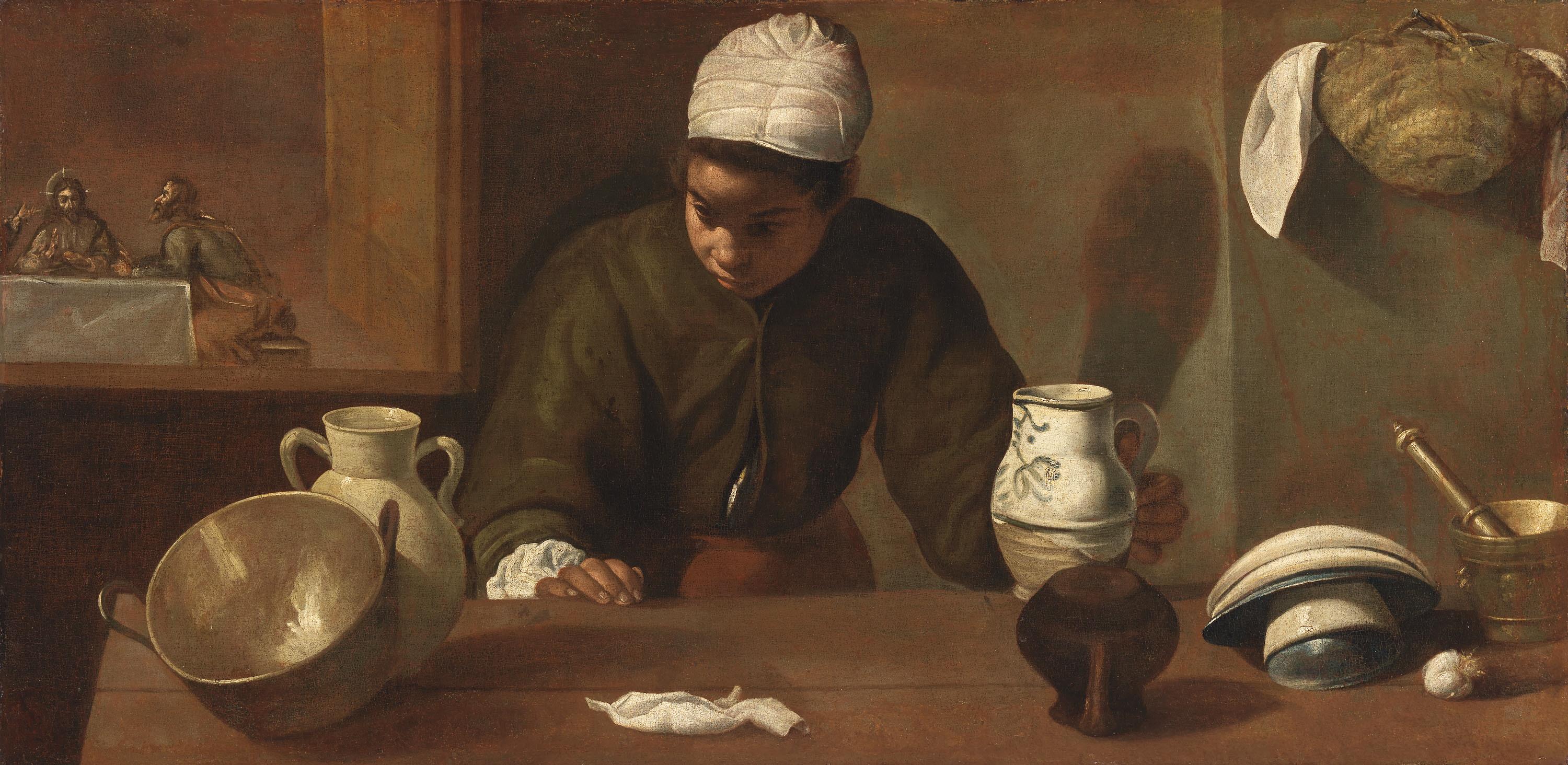
If you want an even closer view, you can (on Windows & Chrome anyway) right click and select "Open image in new tab". Her expression is clearer when enlarged.
Perhaps she stopped wiping, was about to carry in the wine, and is moved to utter wonderment, "To think, I just served him bread. I saw his face."
If you want an even closer view, you can (on Windows & Chrome anyway) right click and select "Open image in new tab". Her expression is clearer when enlarged.
10AnishaInkspill
>1 DebiCates: you're not alone here, and >2 DebiCates: interesting, a bit of a rush and will come back to this.
11DebiCates
>10 AnishaInkspill: Come back any time. I always enjoy your company :)
I'm thinking the next nut or bolt should be the ballad. (Having just read one today! ha)
I'm thinking the next nut or bolt should be the ballad. (Having just read one today! ha)
12DebiCates
#2, February 21, 2026
"The Ballad" (gathered from around the web)
1400, “Judas" by Unknown
1666, “Barbara Allen" by Unknown
1798, "We Are Seven" by William Wordsworth
1834, "The Rime of the Ancient Mariner" by Samuel Taylor Coleridge
1849, "Annabel Lee" by Edgar Allan Poe
1964, "Ballad of Hollis Brown" by Bob Dylan
1991, "Saturday’s Child" by Countee Cullen
1993, "Camp Fire in the Dark" by The Fureys
2021, "The Nightingale's Song" by a nightingale and folk singer Sam Lee
Do you have a favorite ballad (poem or song)?
Would you like to volunteer to post an installment of Learning Poetic Nuts and Bolts? If so, reply here or DM DebiCates.
"The Ballad" (gathered from around the web)
- The ballad is a poetic form passed down through popular song well as the oral tradition, beginning around 1300s Europe.
- Older folk ballads are often anonymous and recount tragic, comic, or heroic stories.
- While ballads have no prescribed structure and may vary in their number of lines and stanzas, many ballads employ quatrains with ABCB or ABAB rhyme schemes.
- Ballads usually are heavily influenced by the regions in which they originate and use the common dialect of the people.
- Like many traditional poetic forms, ballads have expanded in region, from Europe to Australia, America and beyond. Within those locations there have developed specialized ballads, like the Australian Bush ballads and the American Blues ballads.
1400, “Judas" by Unknown
1666, “Barbara Allen" by Unknown
1798, "We Are Seven" by William Wordsworth
1834, "The Rime of the Ancient Mariner" by Samuel Taylor Coleridge
1849, "Annabel Lee" by Edgar Allan Poe
1964, "Ballad of Hollis Brown" by Bob Dylan
1991, "Saturday’s Child" by Countee Cullen
1993, "Camp Fire in the Dark" by The Fureys
2021, "The Nightingale's Song" by a nightingale and folk singer Sam Lee
Do you have a favorite ballad (poem or song)?
Would you like to volunteer to post an installment of Learning Poetic Nuts and Bolts? If so, reply here or DM DebiCates.

