A Scandal in Bohemia by Arthur Conan Doyle - NO REPLY PRESS LE 2021
Talk Fine Press Forum
Join LibraryThing to post.
1wcarter
A Scandal in Bohemia by Arthur Conan Doyle - NO REPLY PRESS ROMAN NUMERAL LIMITED EDITION 2021
A PICTORIAL REVIEW
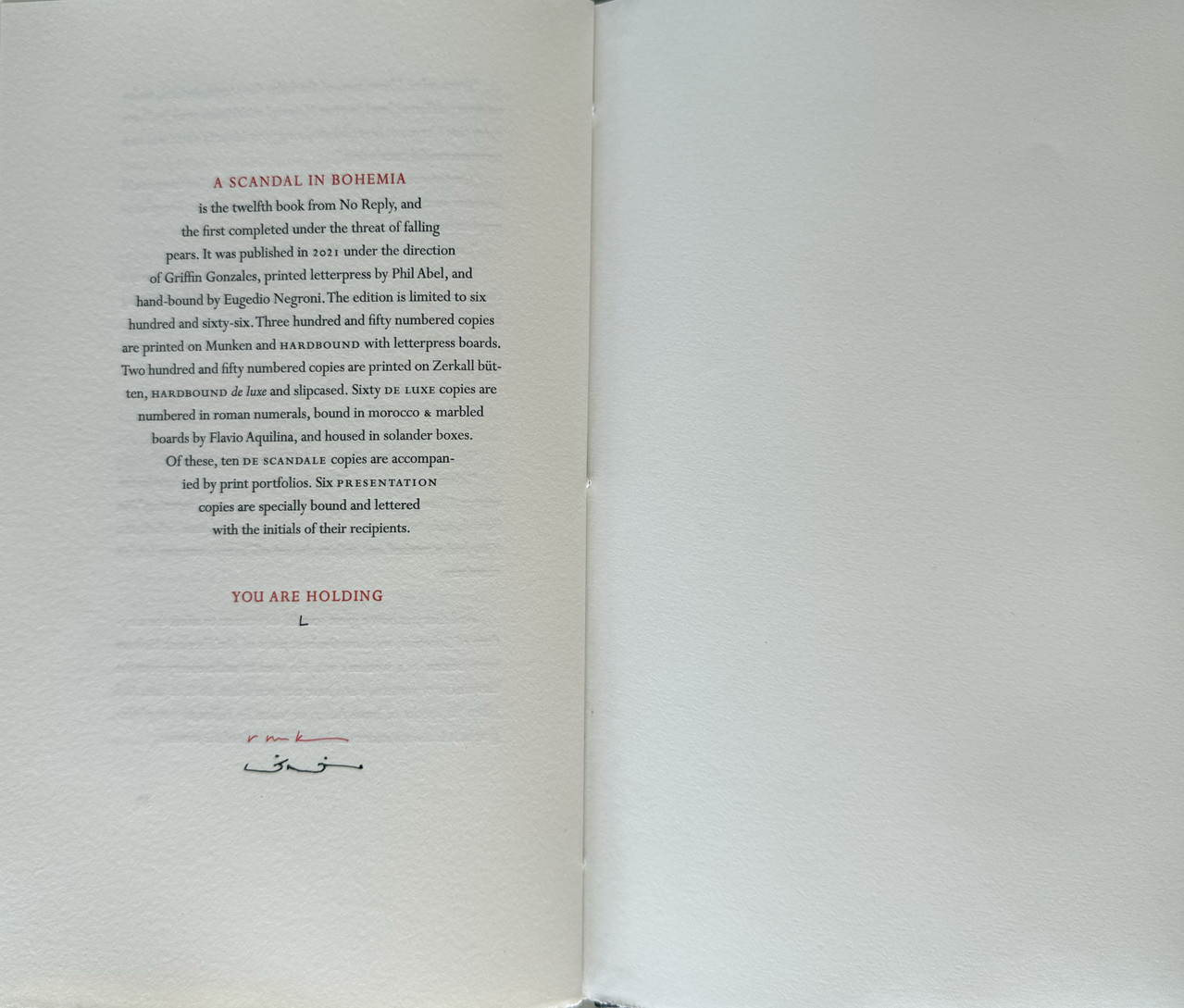
No. L of 60 Roman numeral copies
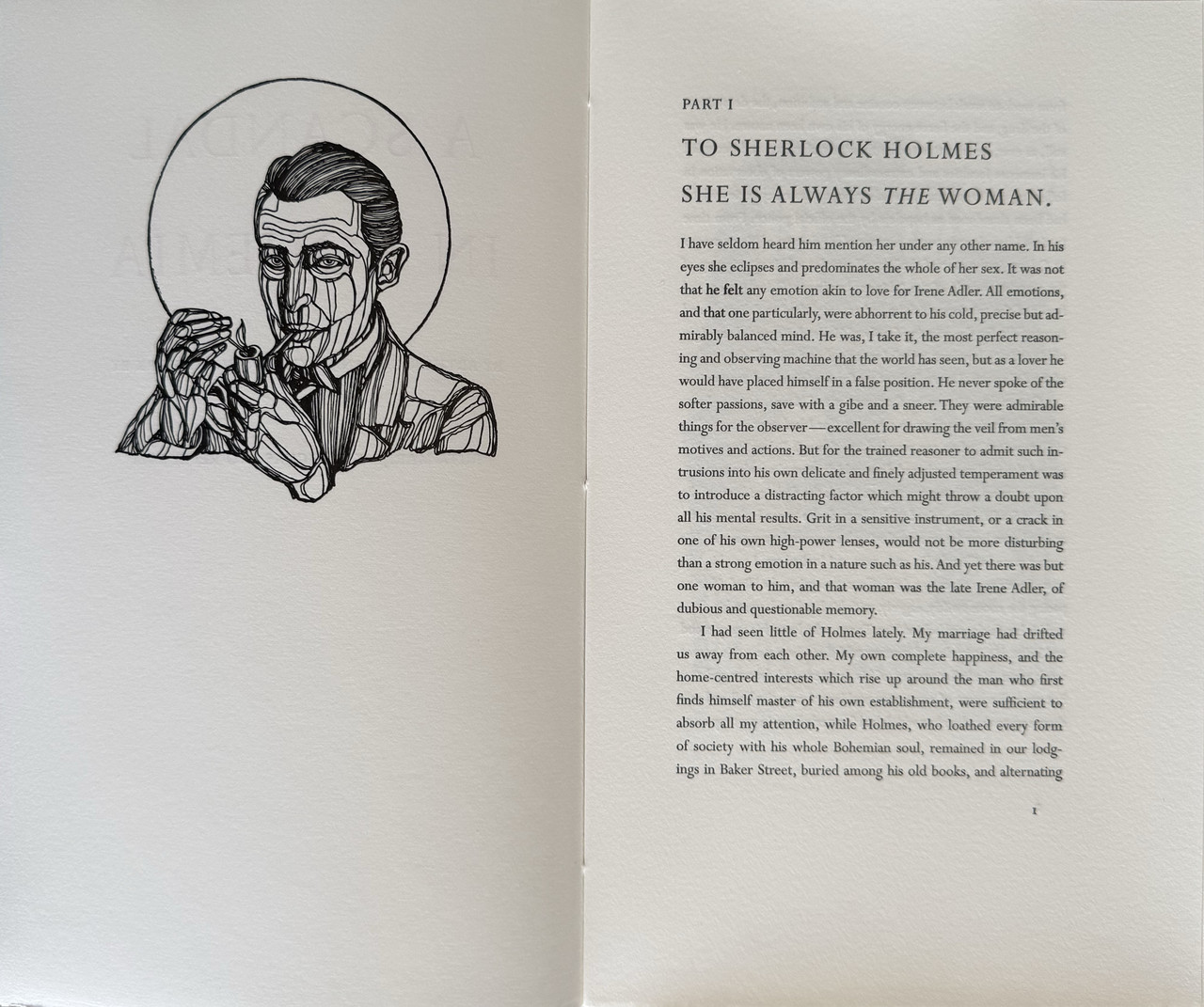
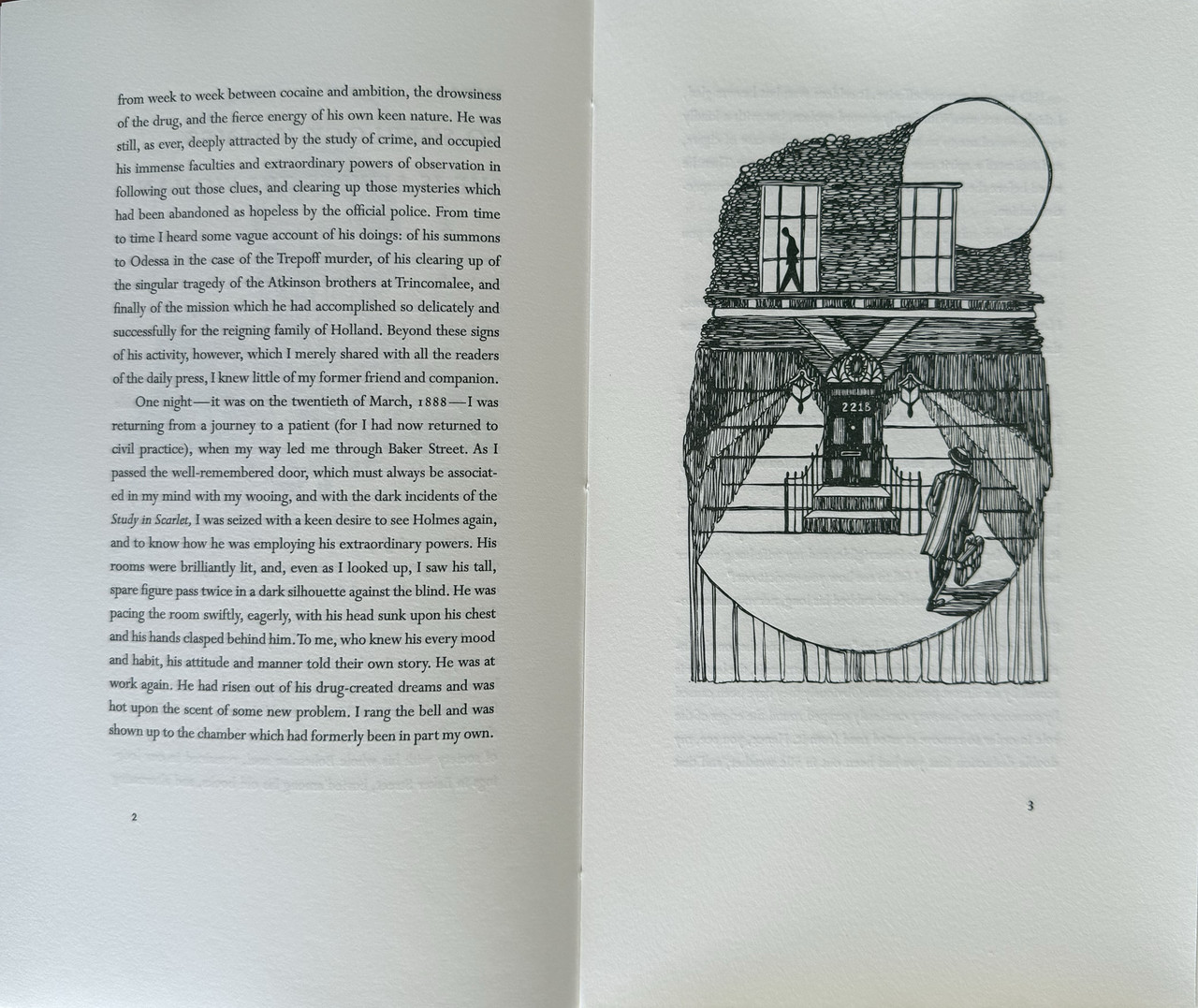
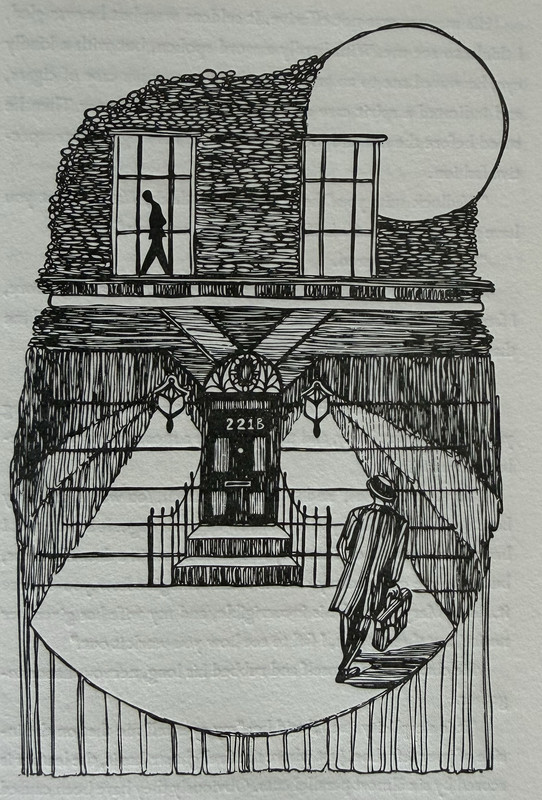
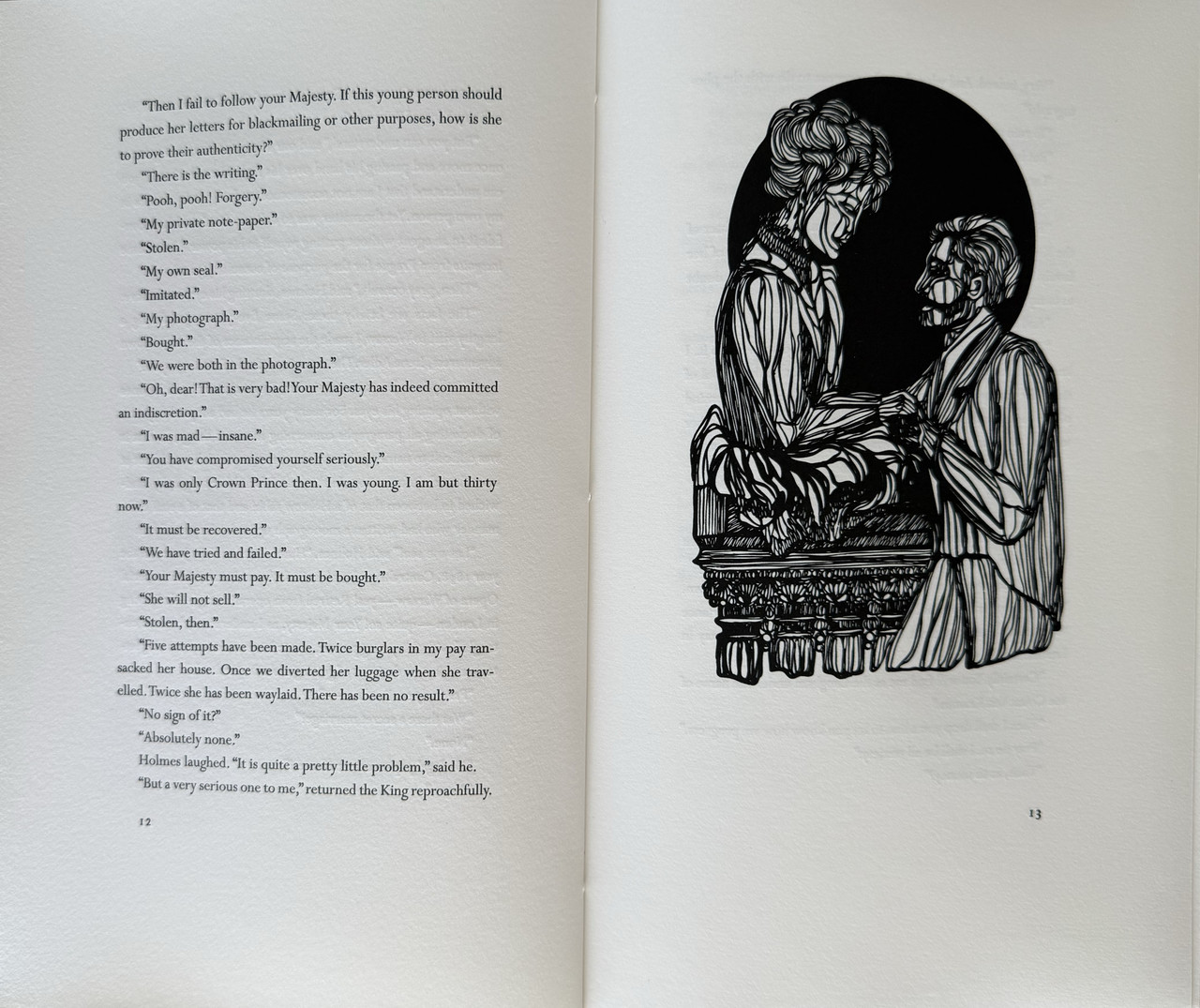
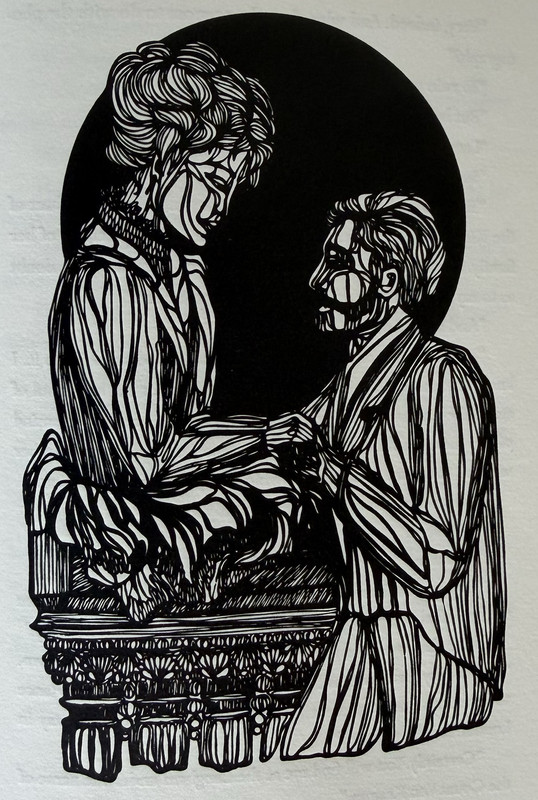
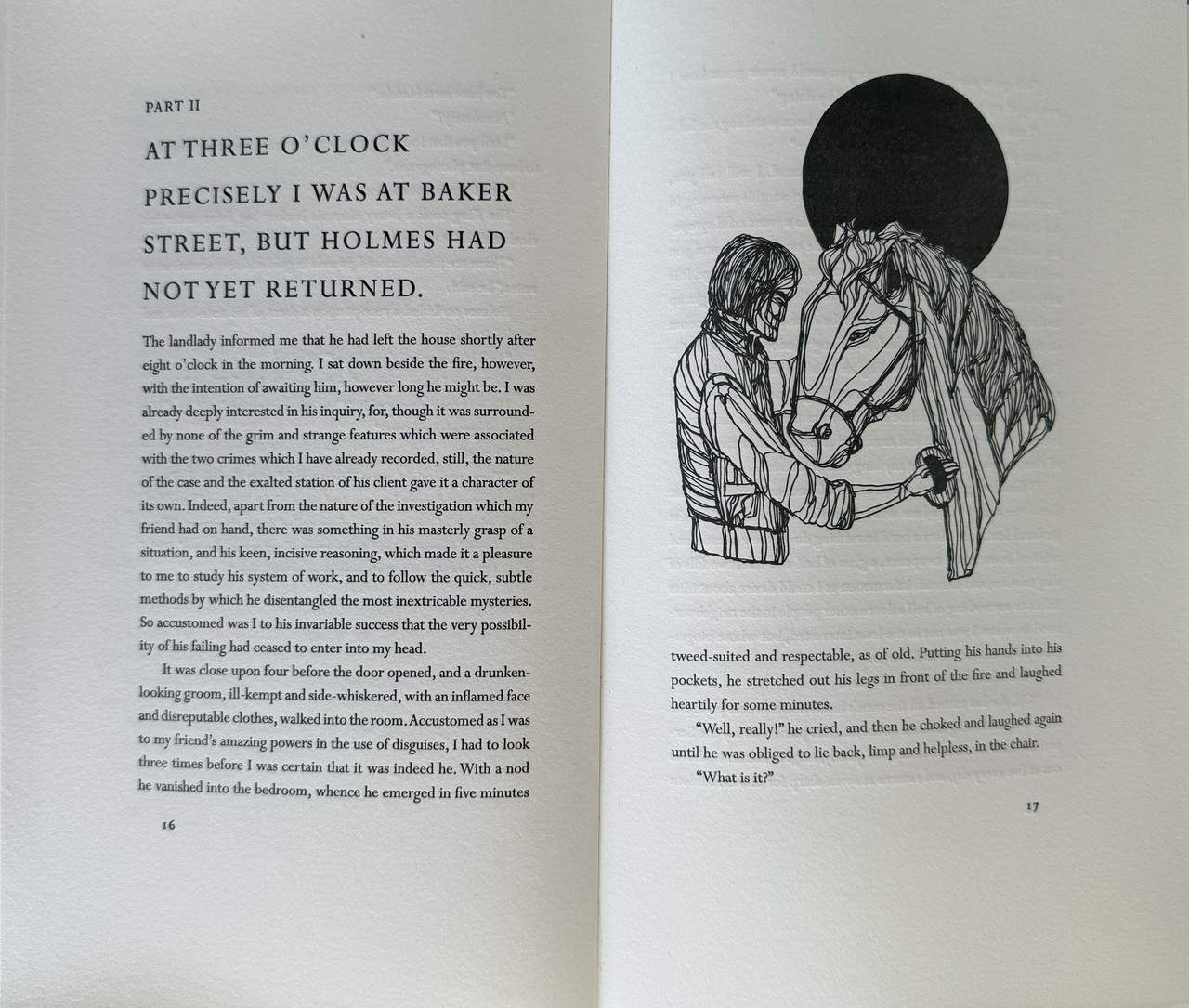
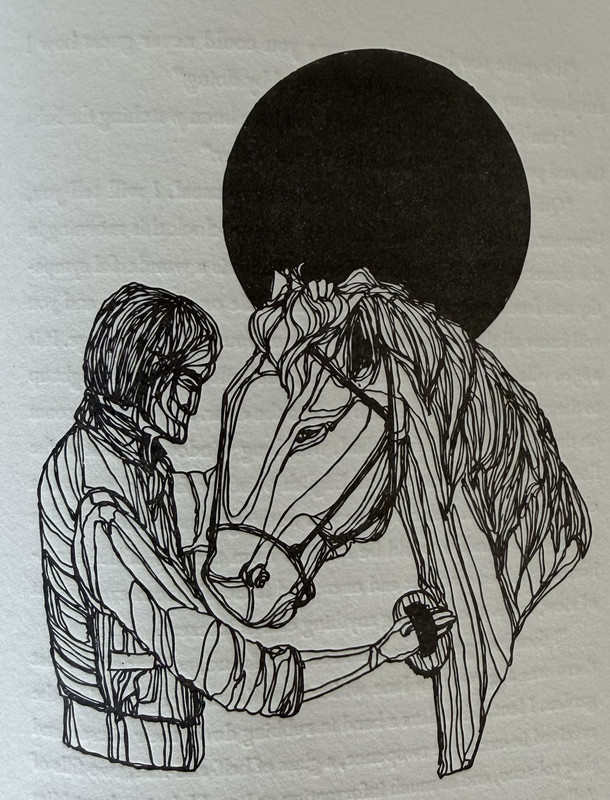
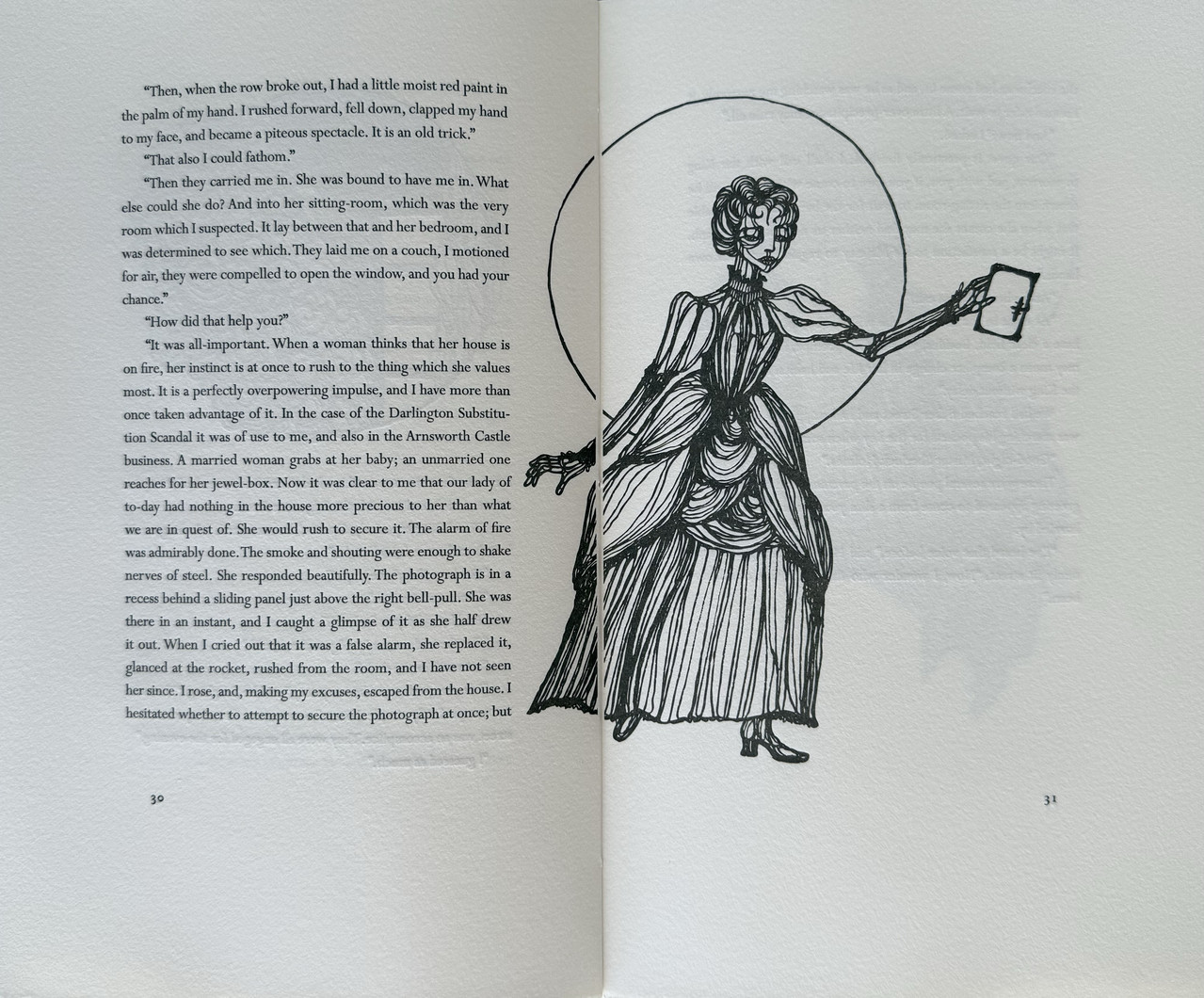
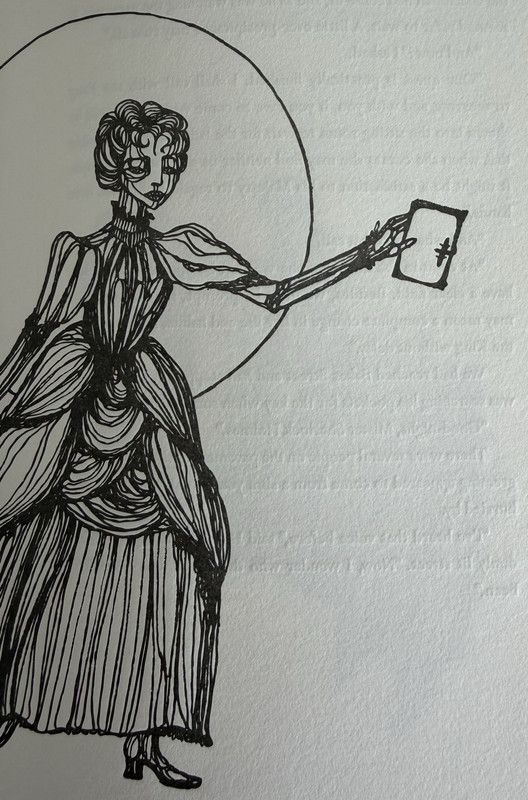
13 pen-and-ink illustrations by Rūta Kuzmickas.
One of only ten editions with ”De Scandale” separate portfolio of prints enclosed in black blind blocked folder.
“How Watson Learned the Trick” pamphlet enclosed.
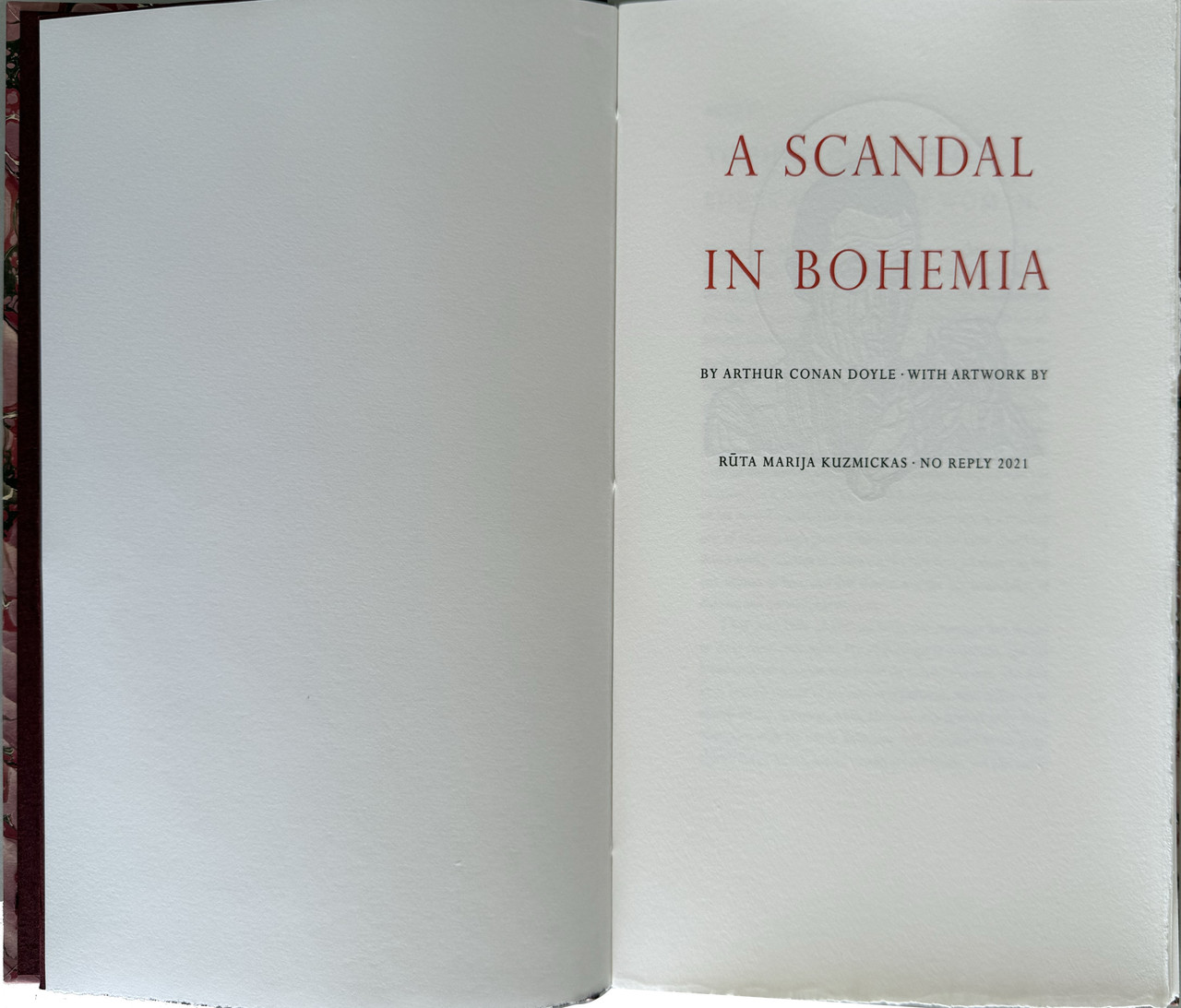
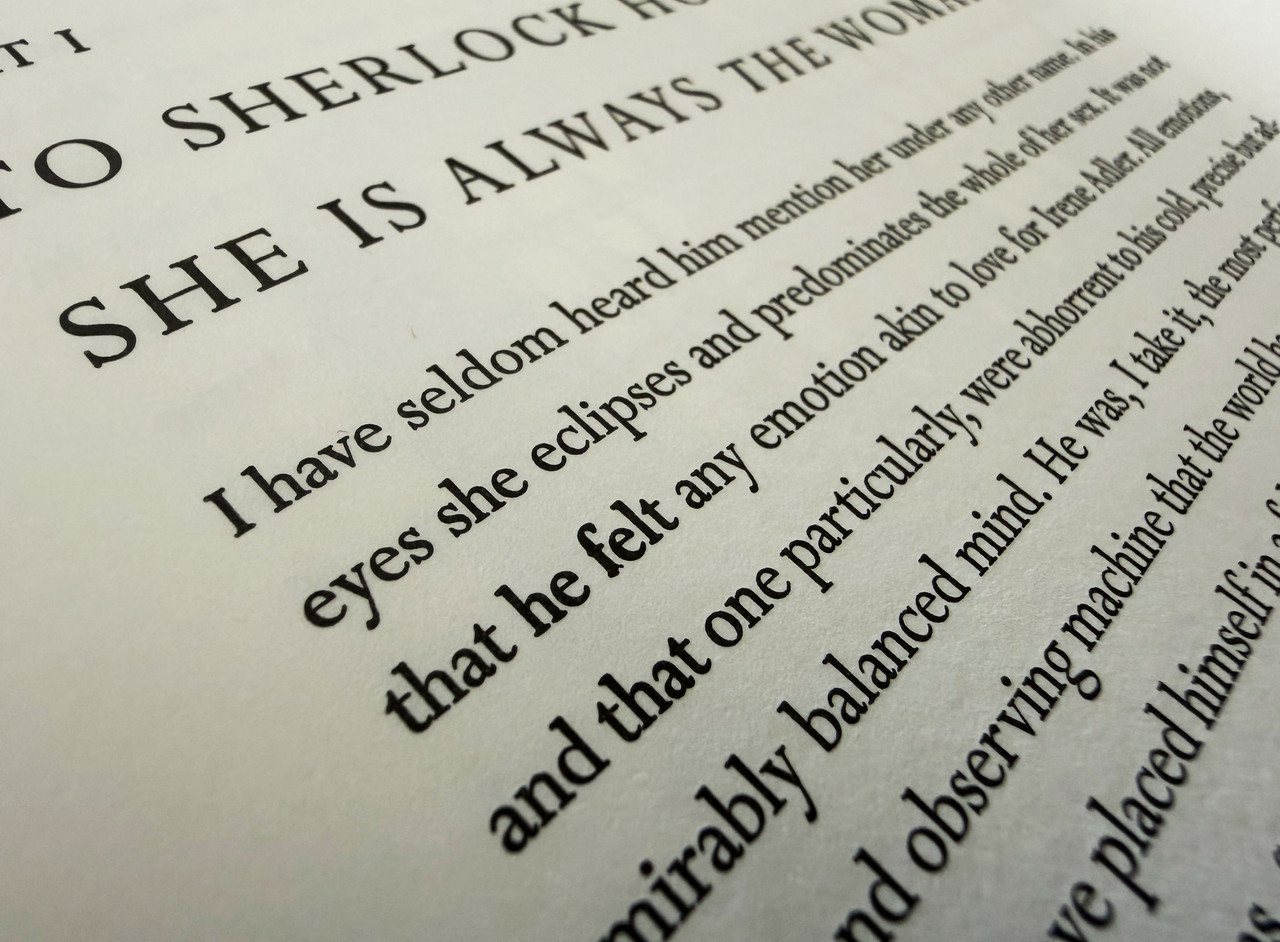
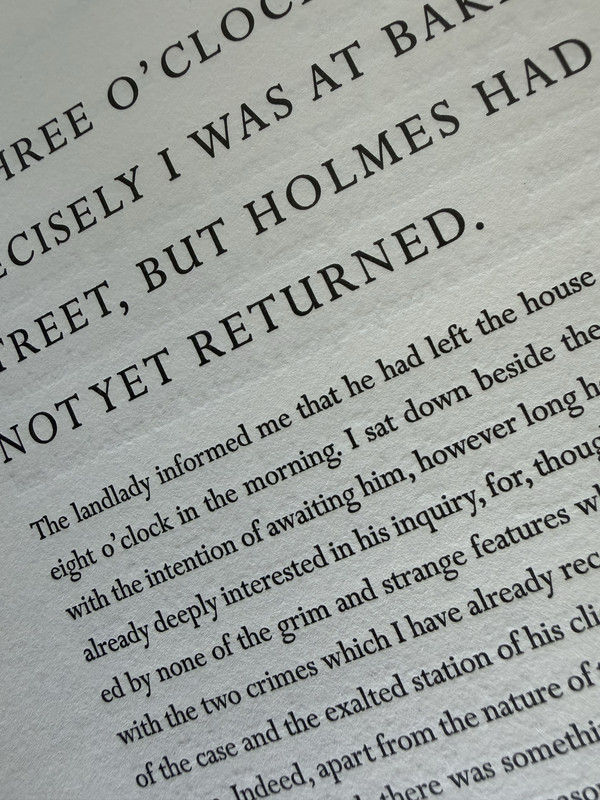
Printed by hand using on Zerkall-bütten mouldmade paper from Germany.
Deckled fore and lower page edges.
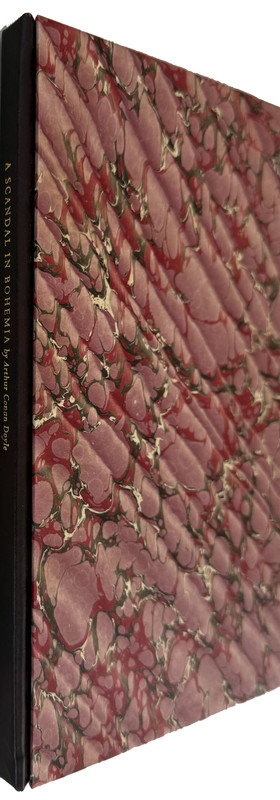
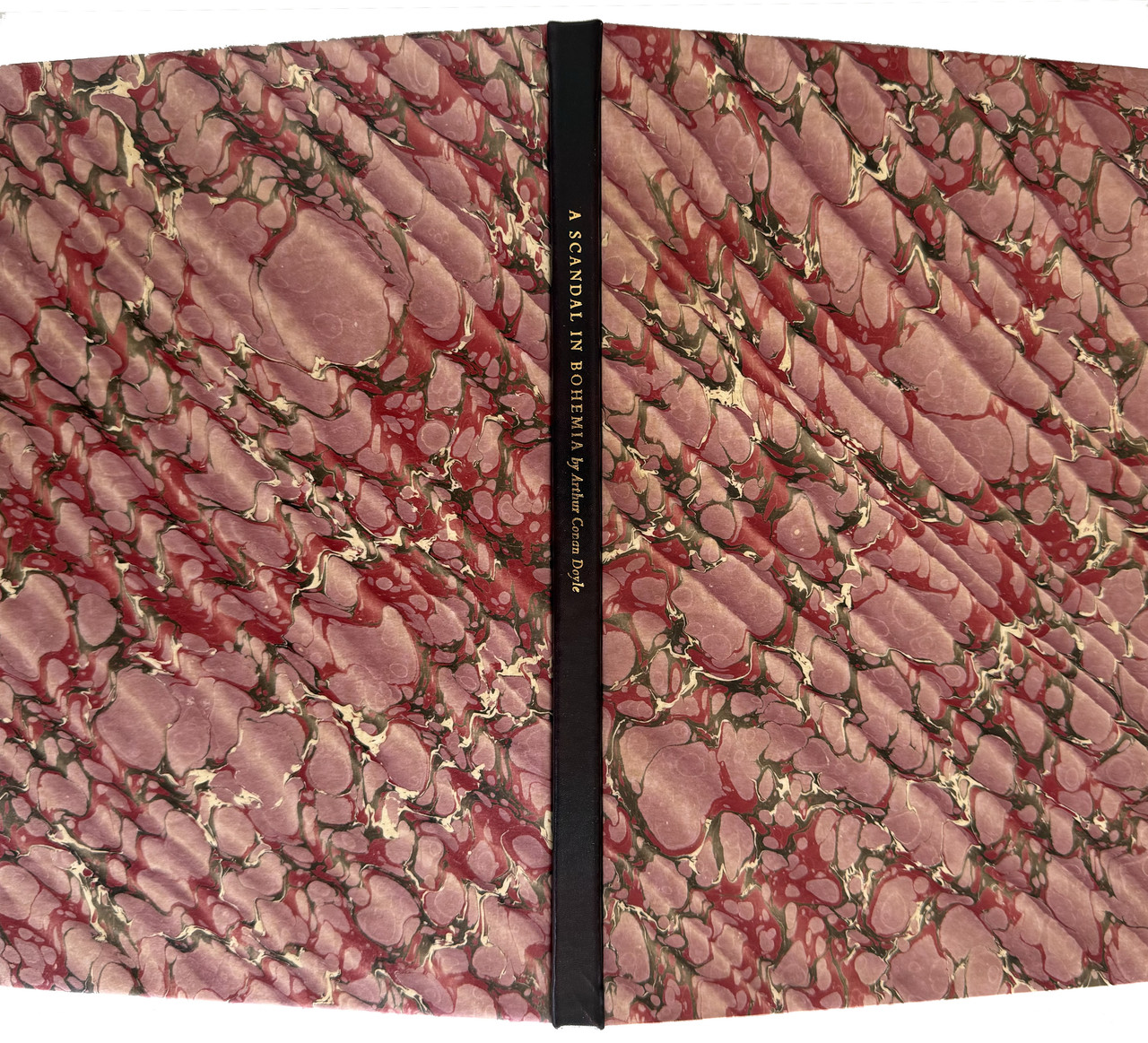
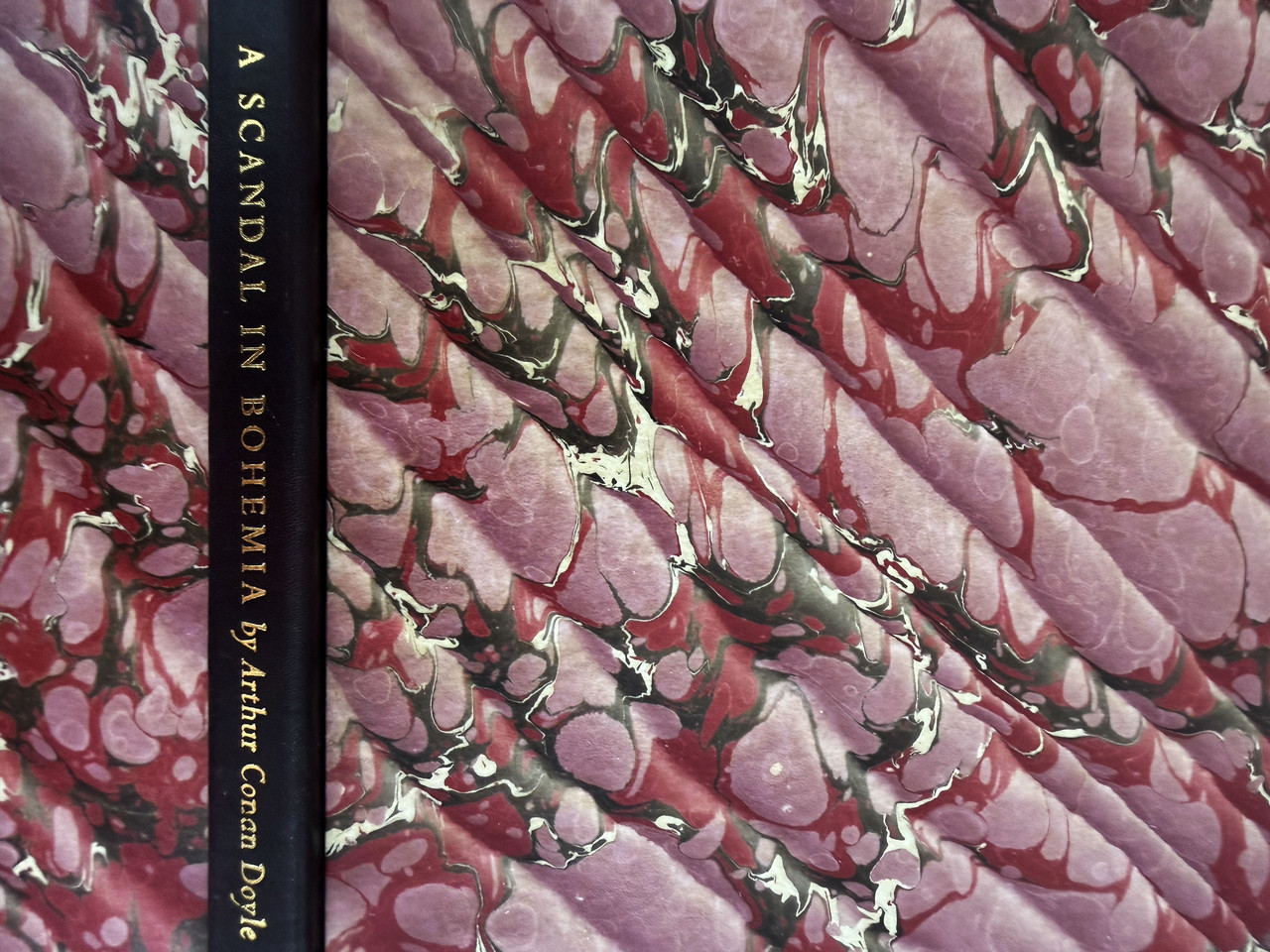
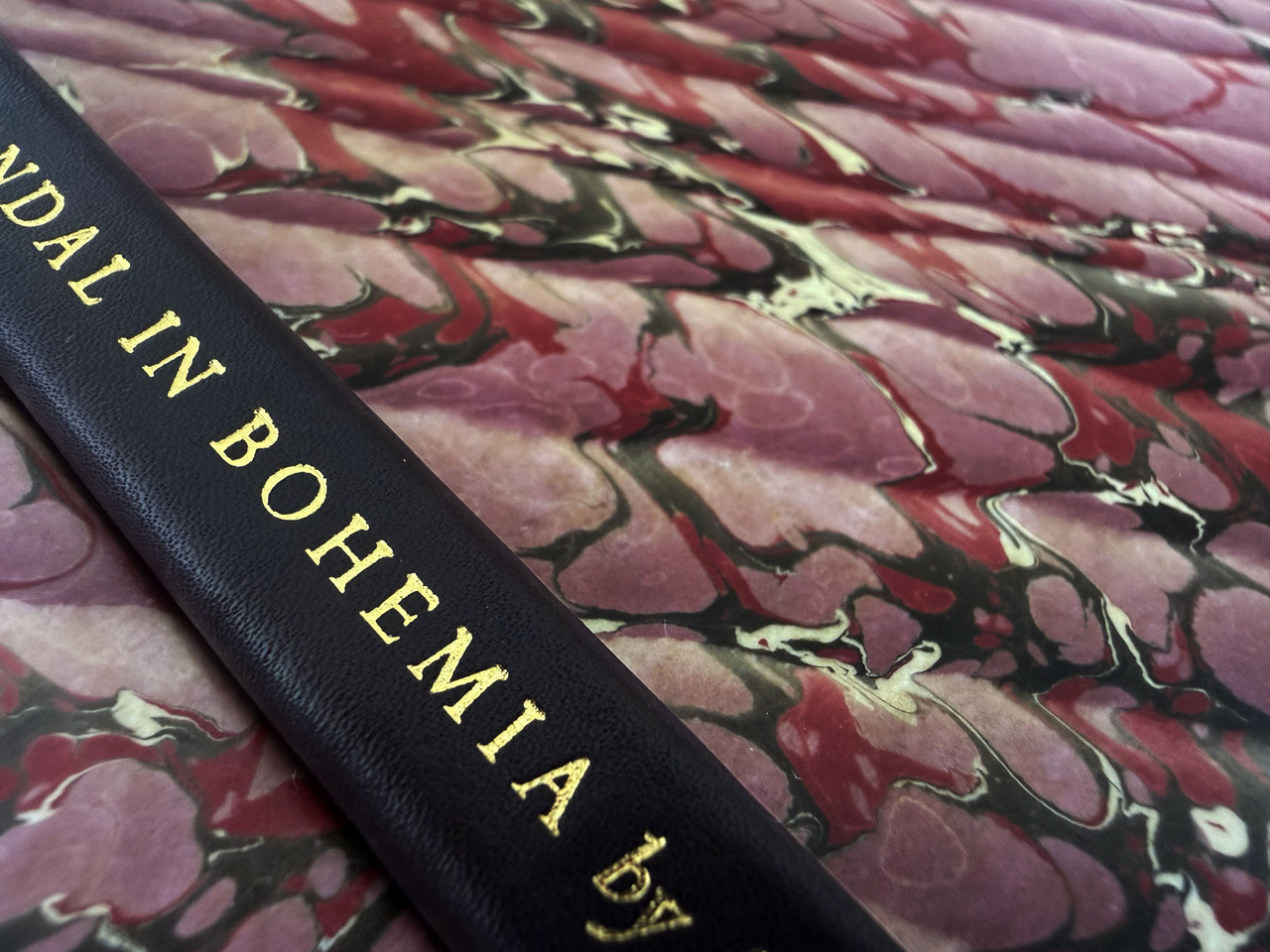
Quarter flatback bound in black Morocco leather with marbled paper boards and gilt spine title.
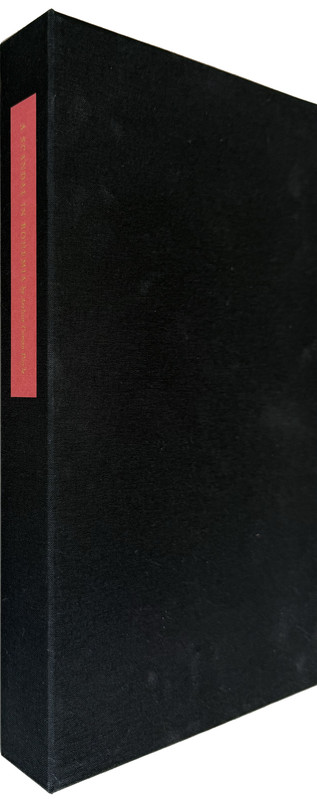
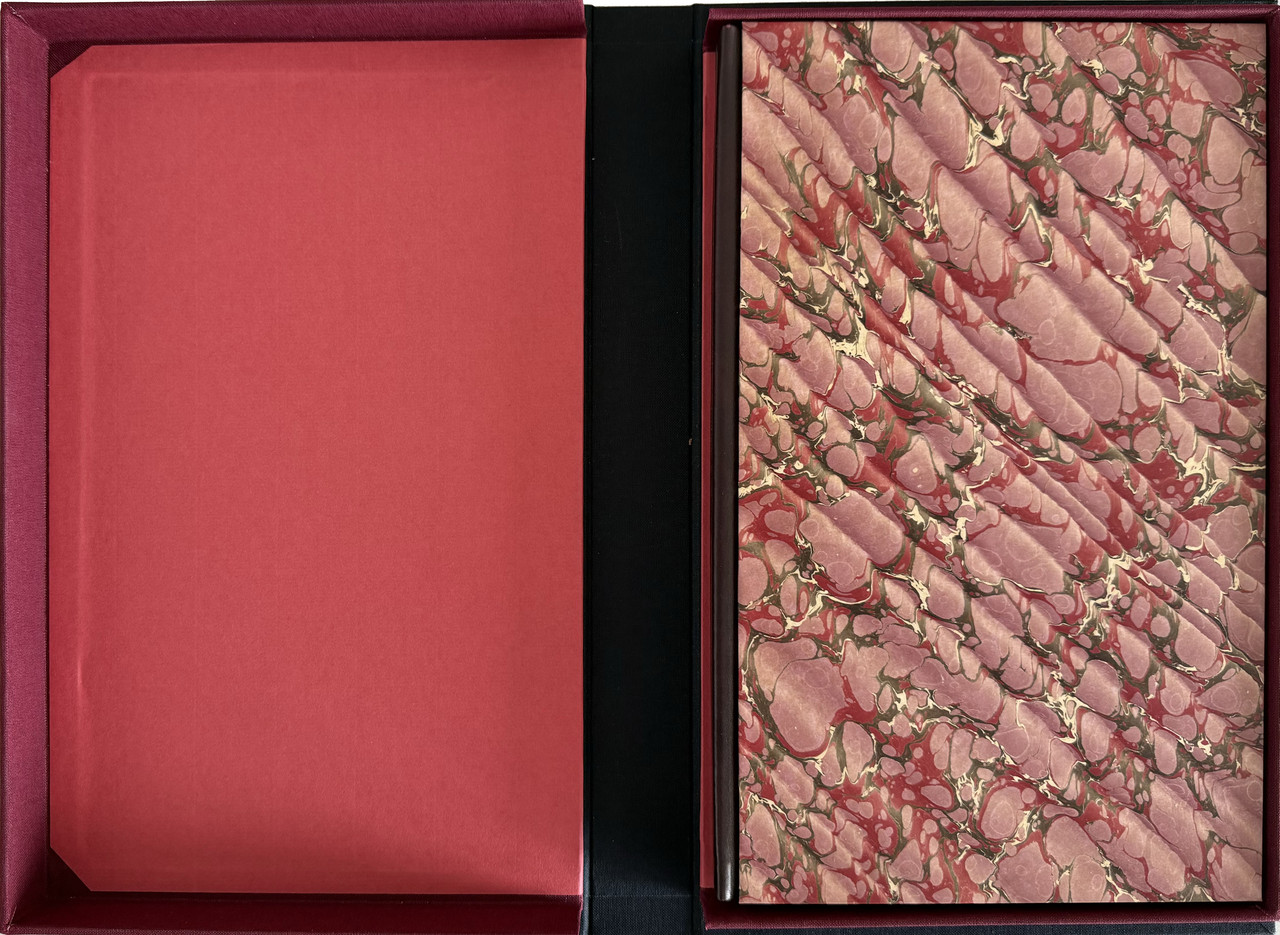
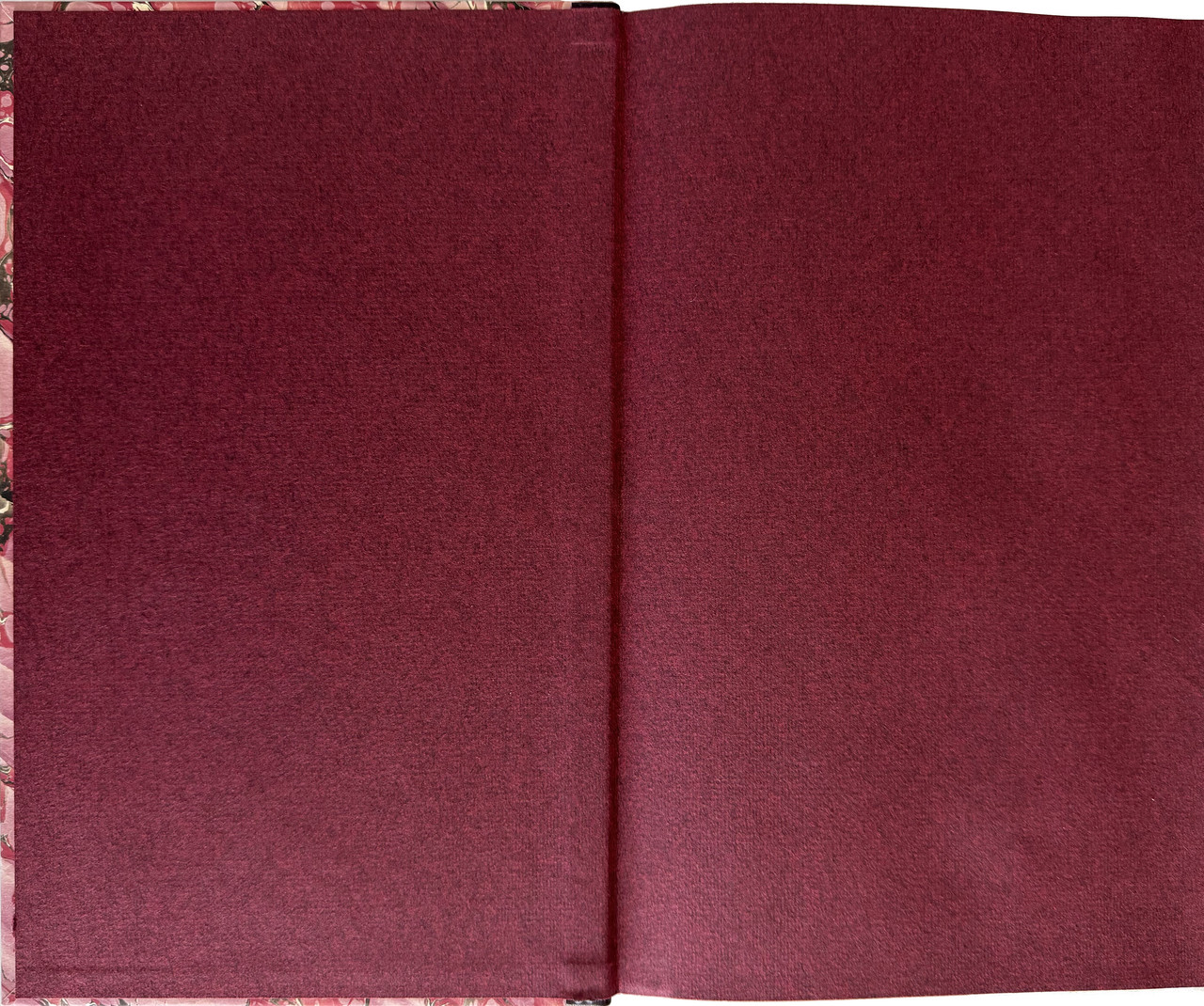
Black handmade solander case with maroon edges and spine title label, lined with red paper.
Signed by Rūta Kuzmickas and binder.
38 pages
30.4x19.5cm.
US$385


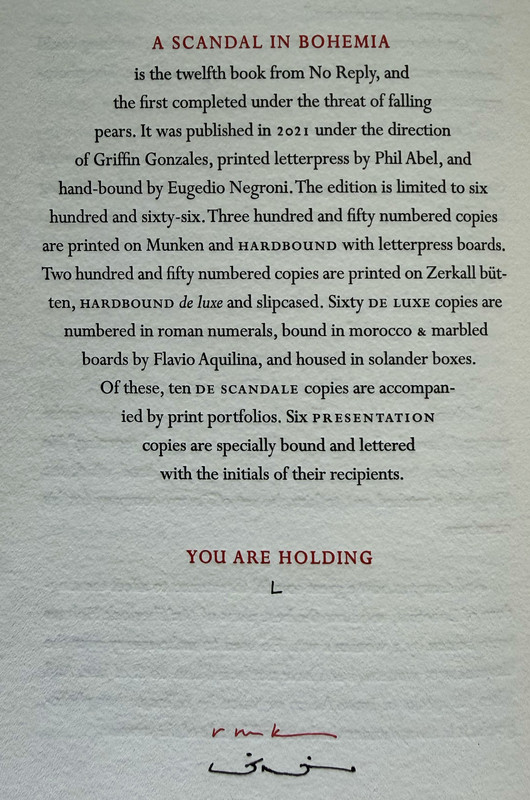

Laid in “How Watson Learned the Trick” leaf.
No. 4 of 500 copies.
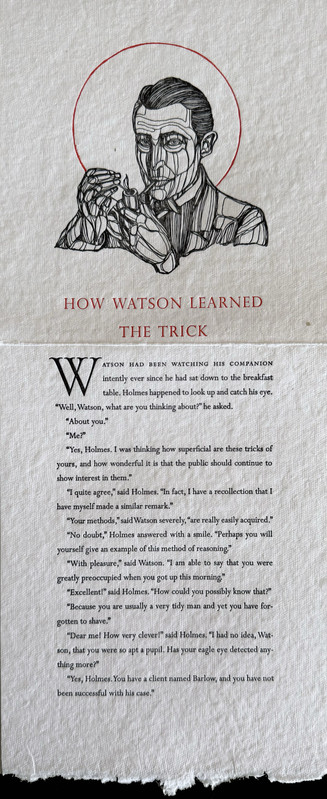
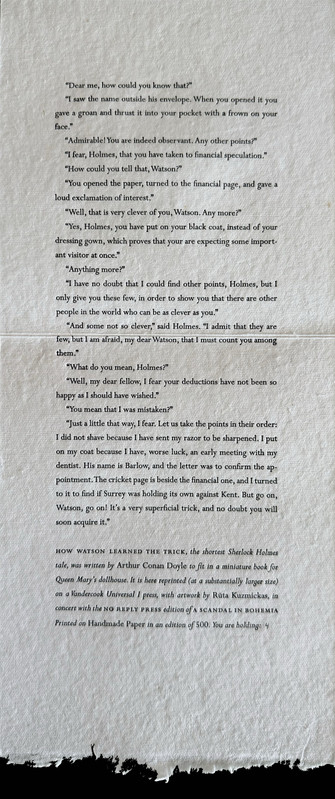
Portfolio of prints enclosed in black blind blocked folder.
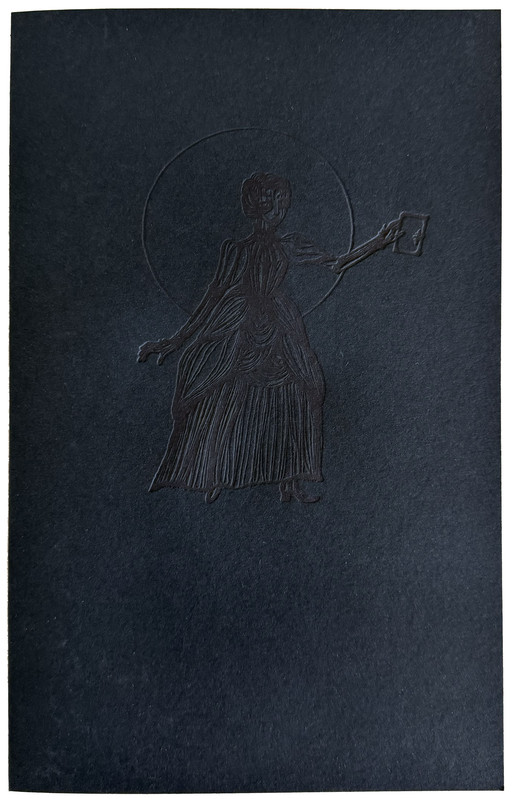
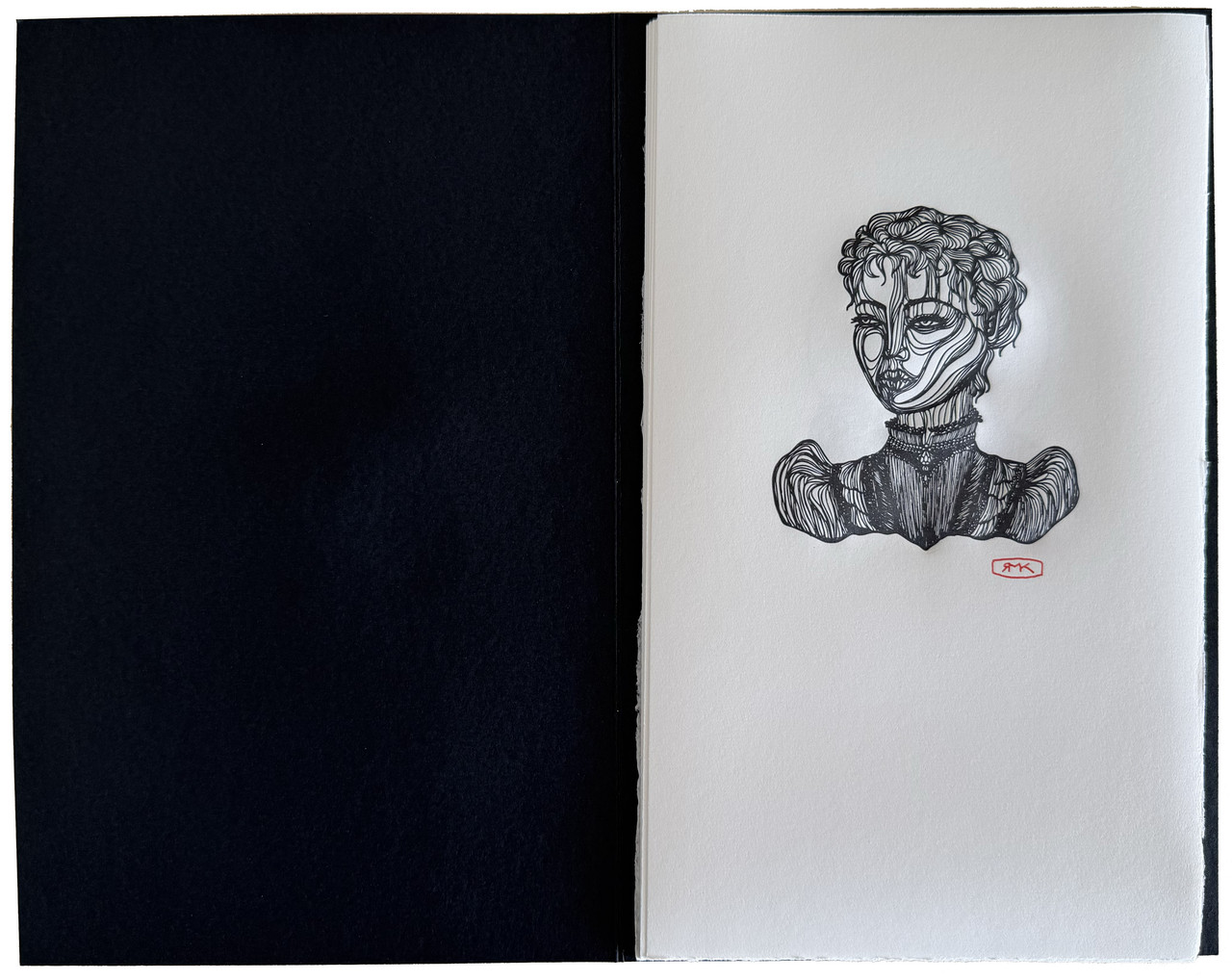
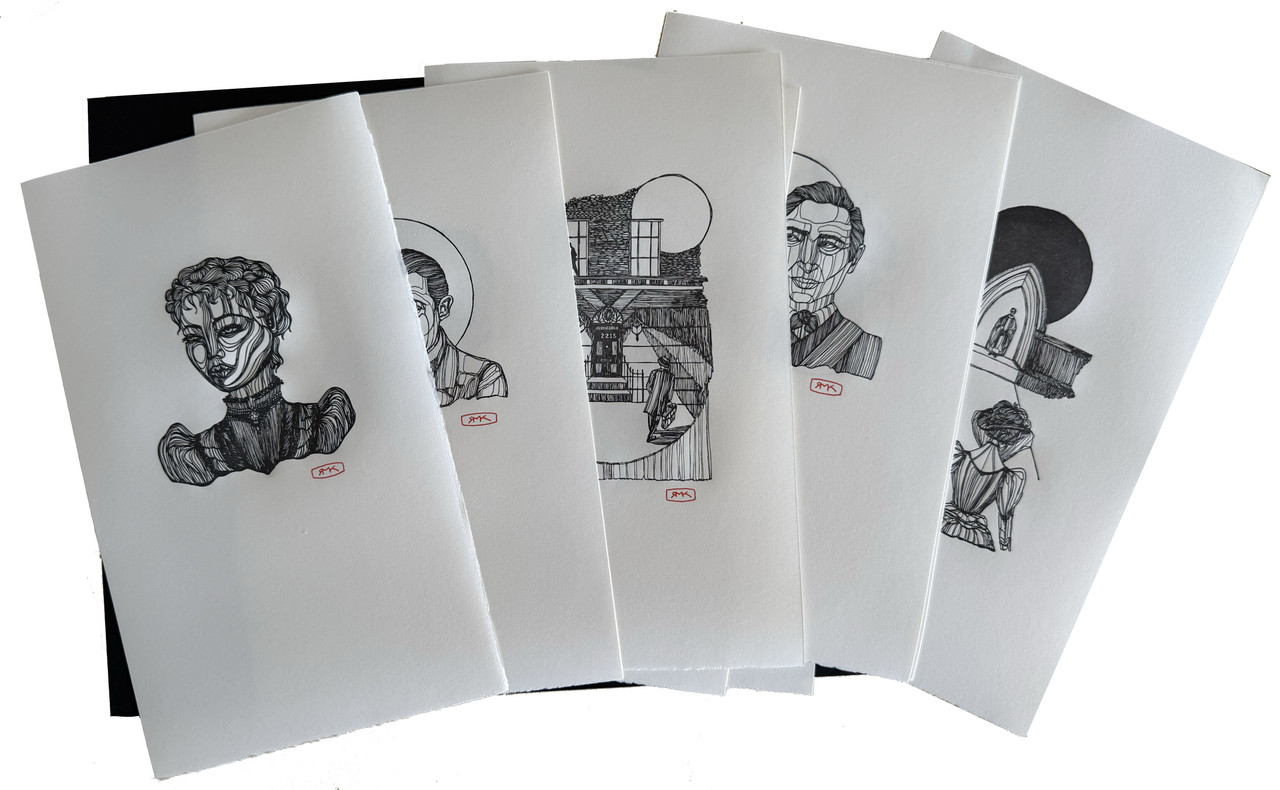
An index of the other illustrated reviews in the this series can be viewed here.
A PICTORIAL REVIEW
No. L of 60 Roman numeral copies
13 pen-and-ink illustrations by Rūta Kuzmickas.
One of only ten editions with ”De Scandale” separate portfolio of prints enclosed in black blind blocked folder.
“How Watson Learned the Trick” pamphlet enclosed.
Printed by hand using on Zerkall-bütten mouldmade paper from Germany.
Deckled fore and lower page edges.
Quarter flatback bound in black Morocco leather with marbled paper boards and gilt spine title.
Black handmade solander case with maroon edges and spine title label, lined with red paper.
Signed by Rūta Kuzmickas and binder.
38 pages
30.4x19.5cm.
US$385
Laid in “How Watson Learned the Trick” leaf.
No. 4 of 500 copies.
Portfolio of prints enclosed in black blind blocked folder.
An index of the other illustrated reviews in the this series can be viewed here.
2Lukas1990
Ah, wcarter - always holding his hand on the pulse of Fine press forum! Nice to see a fellow Lithuanian Rūta Kuzmickas here.
3LT79-1
>2 Lukas1990:
"always holding his hand on the pulse of Fine press forum"
Beautiful quote, and very true!
"always holding his hand on the pulse of Fine press forum"
Beautiful quote, and very true!
4AstulTheShepherd
To all the bookmakers out there - what differs when creating a "flatback" spine? As I understand it the shoulders naturally flare out in a rounded shape, how is this flatness achieved? Or is it synonymous with a bradel binding? And therefore, due to not being attached to the spine of the pages, it can be any shape one chooses.
5Glacierman
>4 AstulTheShepherd: Signatures naturally bulge a little at the spine due to the thread, but not enough to actually round the book. That has to be done manually and then the spine is backed to form the joint. This is usually not done on thin books. If a flat back is desired, that swell is hammered and pressed out. Any case style can be made with a flat back, not just a bradel, which is one method of constructing the case. It is also known as a German case. There are also, among others, the English case, the French or supported groove, etc.
6grifgon
>4 AstulTheShepherd: Glacierman gets it right (as usual). A flatback or rounded spine is not necessitated by any particular construction – most can work with either (though not all). There are structural considerations for each – and for the degrees between them – but it's also a matter of preference of the bookmaker. I generally prefer flat spines for aesthetic reasons, but I also have a strong hunch that they age better. The flat spines on my shelves look exactly as intended, and a lot of rounded spines have become warped in one way or another. In fact, many of the flat spines I have where the binding is loose or coming apart WERE rounded spines, where the rounding just broke down over time. (We're talking 100 year old books in these cases.) Books expand and contract seasonally, which I think overtime will shift or soften the artificial rounding. The big reason to round a spine is because it can prevent a book from "wedging" – the block is thicker on the spine side than the fore-edge size because of the folding and sewing. However, I find that with fine papers that is often counteracted by deckles on the fore-edge.
7AstulTheShepherd
>5 Glacierman: Thank you!
>6 grifgon: Would you mind ever so kindly expanding on "often counteracted by deckles on the fore-edge", I have zero idea what this means lol.
>6 grifgon: Would you mind ever so kindly expanding on "often counteracted by deckles on the fore-edge", I have zero idea what this means lol.
8grifgon
>7 AstulTheShepherd: Sure! Deckles (the inconsistent edge of a paper made on a mould) don't want to lay flat. So, in a book with deckled edges, the fore edge (opposite of the spine) counteracts the folded and sewn side, which also doesn't want to lay flat.
9grifgon
>7 AstulTheShepherd: This might not be any help, but I'm excited about my new Wacom tablet hahahahahaha:


11grifgon
>10 AstulTheShepherd: I'm gonna start illustrating my own books I think. As you can see, I have a natural talent ; - D

