📗 Share the interesting things you discover as you read
Talk GoodThings I've Read
Join LibraryThing to post.
1AnishaInkspill
One of my favourite things about reading is to find out about things I didn’t know. So, I thought it would be fun to share the things we discover as we read our books. Here’s one I discovered last year:
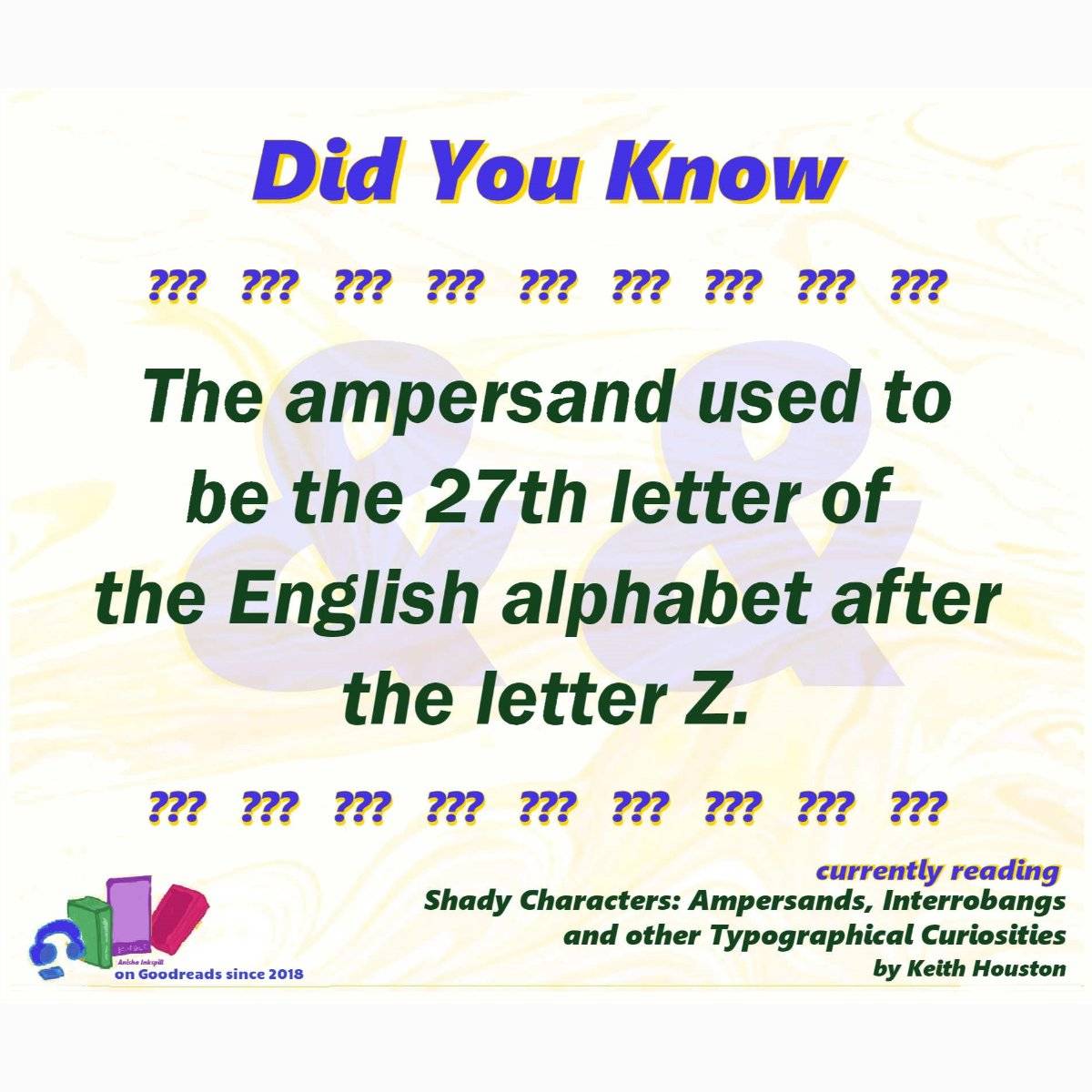
Shady Characters: The Secret Life of Punctuation, Symbols, and Other Typographical Marks such a surprising read, this was just one fun fact I discovered from this book, and afterwards I did not look at punctuation in the same way.
It’s also fun for me when a character discovers something new, like Bridget Jones does here:
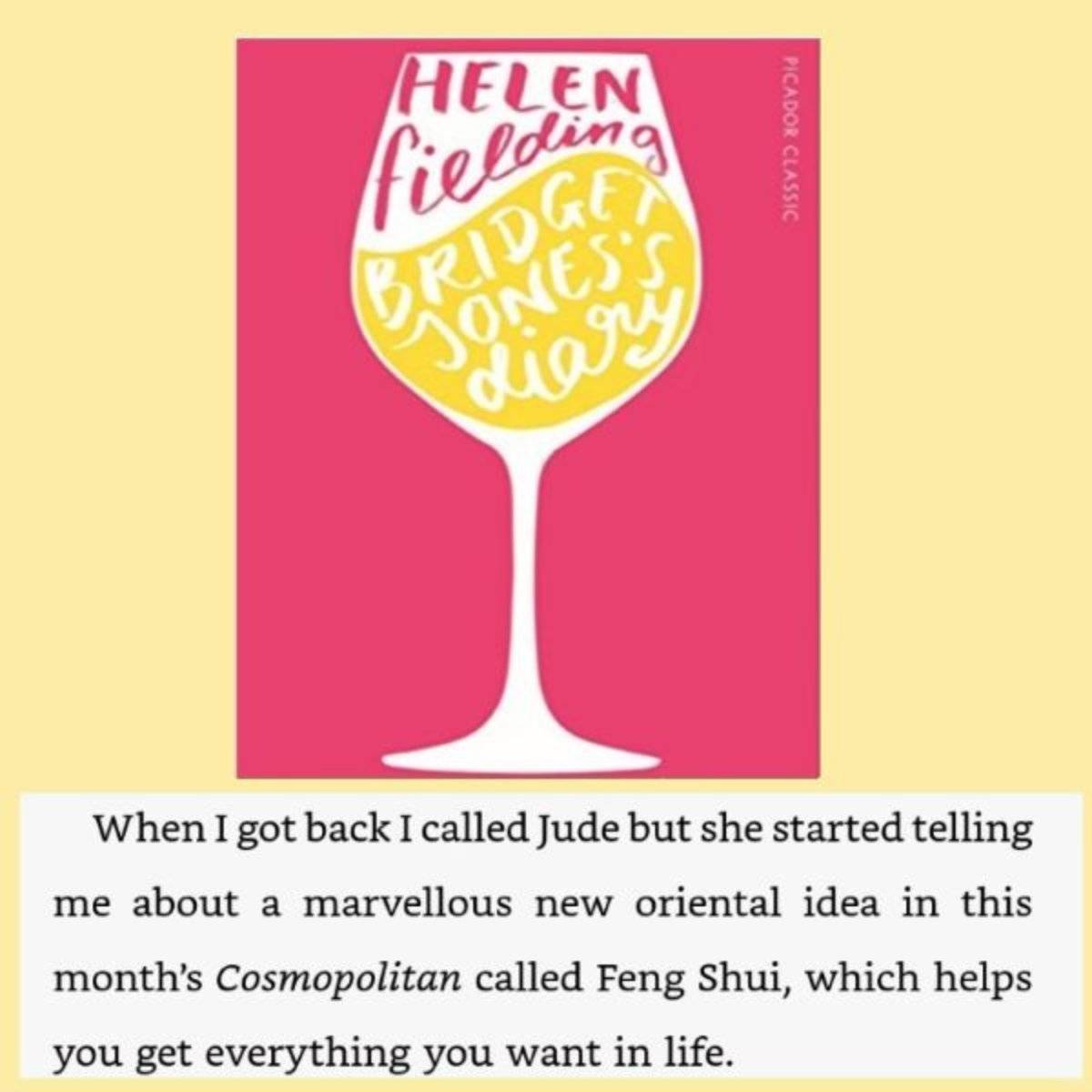
This excerpt from Bridget Jones's Diary: A Novel made me laugh, the book is a little dated, and I enjoyed it the most for its moments of comedy that are always welcomed breaks for me between tougher reads.
What have you discovered lately in your reads?
Shady Characters: The Secret Life of Punctuation, Symbols, and Other Typographical Marks such a surprising read, this was just one fun fact I discovered from this book, and afterwards I did not look at punctuation in the same way.
It’s also fun for me when a character discovers something new, like Bridget Jones does here:
This excerpt from Bridget Jones's Diary: A Novel made me laugh, the book is a little dated, and I enjoyed it the most for its moments of comedy that are always welcomed breaks for me between tougher reads.
What have you discovered lately in your reads?
2DebiCates
I've got a pretty weird one.
I learned something I thought I already knew.
I was wrong. Lots of us are wrong.
In school I remember learning that our first U.S. president George Washington had wooden false teeth. A few weeks ago, on the Goodreads Short Story Club group, we read The Secret Lives of the Nine Negro Teeth of George Washington by P. Djèlí Clark. So, of course, it got all our curiosity up and someone kindly sent us factual links.
No, he did not have wooden teeth.
Here's a small image you can right click if you want to see larger. (I tried to put behind a spoiler tag but that didn't work.) Not every one wants a picture of bad dentures staring them in the face here.

Turns out GW had five sets of dentures (he was buried with one set). Each of the four known dentures is constructed differently and of different materials, as though the dentist(s) who made them were continually experimenting. There is one complete set on display at Mount Vernon museum.
Collectively, these four dentures include: hippopotamus, walrus, and probably elephant ivory; cow, horse, and human teeth; lead, brass, silver, gold, and tiny wood pegs. Only two of the dentures (including the set at Mount Vernon) contain human teeth, for the incisors on the lower jaw.
Who did the human teeth in Washington’s dentures come from in the Mount Vernon set? It's unknown. The teeth were likely supplied by the dentist who made the dentures and it is possible they could be from enslaved people!
Want to read more?
https://www.mountvernon.org/george-washington/health/washingtons-teeth/teeth
I learned something I thought I already knew.
I was wrong. Lots of us are wrong.
In school I remember learning that our first U.S. president George Washington had wooden false teeth. A few weeks ago, on the Goodreads Short Story Club group, we read The Secret Lives of the Nine Negro Teeth of George Washington by P. Djèlí Clark. So, of course, it got all our curiosity up and someone kindly sent us factual links.
No, he did not have wooden teeth.
Here's a small image you can right click if you want to see larger. (I tried to put behind a spoiler tag but that didn't work.) Not every one wants a picture of bad dentures staring them in the face here.

Turns out GW had five sets of dentures (he was buried with one set). Each of the four known dentures is constructed differently and of different materials, as though the dentist(s) who made them were continually experimenting. There is one complete set on display at Mount Vernon museum.
Collectively, these four dentures include: hippopotamus, walrus, and probably elephant ivory; cow, horse, and human teeth; lead, brass, silver, gold, and tiny wood pegs. Only two of the dentures (including the set at Mount Vernon) contain human teeth, for the incisors on the lower jaw.
Who did the human teeth in Washington’s dentures come from in the Mount Vernon set? It's unknown. The teeth were likely supplied by the dentist who made the dentures and it is possible they could be from enslaved people!
Want to read more?
https://www.mountvernon.org/george-washington/health/washingtons-teeth/teeth
3keristars
A reference to Mary Sherwood in Eyebright led me to learning about the first novel written specifically for children - The Governess, or, the Little Female Academy.
https://en.wikipedia.org/wiki/The_Governess;_or,_The_Little_Female_Academy
I hadn't known of it before, so it was interesting to read, especially since I'm doing my deepread project of girls' fiction since the 1860s.
Later on, as I was thinking about Eyebright and trying to get to sleep, I realized Susan Coolidge had a direct allusion to The Governess, with Eyebright leading a storytelling session with her friends and then distributing apples to them. 🤯
It got me thinking about other things in the book, and I feel a bit premature in my review, that I didn't talk about how literary it is with allusions and motifs and foreshadowing. Like, why did Coolidge describe a visit to the (unnamed) Shaker village? but i realized it's a parallel to Eyebright's later trip from an unnamed village to her new home.
And I'm not sure I would have got to thinking about it or noticing if I hadn't looked up Miss Sherwood's "The Nun"!
https://en.wikipedia.org/wiki/The_Governess;_or,_The_Little_Female_Academy
I hadn't known of it before, so it was interesting to read, especially since I'm doing my deepread project of girls' fiction since the 1860s.
Later on, as I was thinking about Eyebright and trying to get to sleep, I realized Susan Coolidge had a direct allusion to The Governess, with Eyebright leading a storytelling session with her friends and then distributing apples to them. 🤯
It got me thinking about other things in the book, and I feel a bit premature in my review, that I didn't talk about how literary it is with allusions and motifs and foreshadowing. Like, why did Coolidge describe a visit to the (unnamed) Shaker village? but i realized it's a parallel to Eyebright's later trip from an unnamed village to her new home.
And I'm not sure I would have got to thinking about it or noticing if I hadn't looked up Miss Sherwood's "The Nun"!
4DebiCates
>3 keristars: Keri, you lead such an interesting reading life--by your own direction it seems. What a wonderful thing to do, to follow your interests, to give yourself hefty challenges.
I know nothing about this novel, but I loved learning a bit picked up in your comments. I adore learning about a woman who is the first to do something historic and significant.
A while back when @AnishaInkSpill started the 2026 Short Story group, one of the prompts was a short story "written before 1700s"-- the pickings were slim. There were, though, these formulaic stories about angelic children who had some terrible illness befall them and then would die with some selfless praise for God and goodness on their lips. Super manipulative tear jerkers! I suppose that is one way of approaching high mortality rates in children during those times. But I decided not to read any of it. (I can't even remember the author's name that was most associated with them, a male school teacher maybe.)
Then, by chance, in a GR short story club, we read two Mark Twain stories that were satires of those exact kinds of works! They were
The Story Of The Bad Little Boy (1865) where a bullying, bad behaving boy never got a single just dessert, instead things kept going his way. And the story was humorous, of course.
The Story of the Good Little Boy (1870) where an obnoxious do-gooder boy intends to nothing but good, which made him disliked by his contemporaries and adults alike. Of course, at every turn something awful happened. The end was spectacularly bad for him.
I really don't know where I'm going with this, ha.
Suddenly I wonder if in the LT Legacy Library for Twain if any of those "Sunday School" works were on his shelves. https://www.librarything.com/catalog/marktwainlib What a stinkin' cool feature that is. If I could only live 50 more years, I'd pick a legacy library and try to read through it. A small library.
I know nothing about this novel, but I loved learning a bit picked up in your comments. I adore learning about a woman who is the first to do something historic and significant.
A while back when @AnishaInkSpill started the 2026 Short Story group, one of the prompts was a short story "written before 1700s"-- the pickings were slim. There were, though, these formulaic stories about angelic children who had some terrible illness befall them and then would die with some selfless praise for God and goodness on their lips. Super manipulative tear jerkers! I suppose that is one way of approaching high mortality rates in children during those times. But I decided not to read any of it. (I can't even remember the author's name that was most associated with them, a male school teacher maybe.)
Then, by chance, in a GR short story club, we read two Mark Twain stories that were satires of those exact kinds of works! They were
The Story Of The Bad Little Boy (1865) where a bullying, bad behaving boy never got a single just dessert, instead things kept going his way. And the story was humorous, of course.
The Story of the Good Little Boy (1870) where an obnoxious do-gooder boy intends to nothing but good, which made him disliked by his contemporaries and adults alike. Of course, at every turn something awful happened. The end was spectacularly bad for him.
I really don't know where I'm going with this, ha.
Suddenly I wonder if in the LT Legacy Library for Twain if any of those "Sunday School" works were on his shelves. https://www.librarything.com/catalog/marktwainlib What a stinkin' cool feature that is. If I could only live 50 more years, I'd pick a legacy library and try to read through it. A small library.
5DebiCates
>3 keristars: ha! More love to LT developers. By searching topics, I found my post in 26 Short Stories for 2026 group where I considered that "before 1700s" author https://www.librarything.com/topic/376183#9038458
The writer was James Janeway (1636-1674)
A Token for Children: Being an Exact Account of the Conversion, Holy and Exemplary Lives, and Joyful Deaths of Several Young Children
The writer was James Janeway (1636-1674)
A Token for Children: Being an Exact Account of the Conversion, Holy and Exemplary Lives, and Joyful Deaths of Several Young Children
6keristars
>5 DebiCates: Oh gosh I think I'm going to have to look up "A Token for Children"! If only because it's so early.
But yes, re >4 DebiCates: my reading project is something I started myself, mostly idle curiosity because I like children's fiction and there are a lot available on Project Gutenberg... but then it turned into something more intentional as I read Turning the Pages of American Girlhood and argued with the author (one-sided, to be sure)... then decided to read or reread the books myself to make sure my arguments were sound 🤣 and then I wanted to understand more of the context around writing them...
It's just all so interesting and I'm constantly learning new things or finding new angles to things I thought I knew.
Little Women was remarkable because it was so realistic, not at all like those formulaic "and here is a moral" story you describe - or even like The Governess or the many books by Mary Martha Sherwood. So LW seems to be where a lot of the academics interested in modern children's fiction begin. I'm fighting to not expand my own start-date beyond 1865 after yesterday's wikipedia dive - I've already got enough trouble sticking to US-based authors, ha.
btw I love Bessie at the Sea-side very much. It's in the LW realistic fiction vein but still with the morality elements. The writing of little 5 year old Bessie is just perfect, along with Susan Coolidge's novels the best, most realistic 19th century depiction I've encountered. But also that first book is neat as a historical artefact because of how it engages with knowledge of the natural world and science in 1870ish, when so much was yet unknown.
So I'm having fun even when I'm reading preachy books because of the project, but I'm also finding genuinely good gems that have been forgotten.
Eyebright is very good, very literary, and I recommend it. The chapter describing the Shaker village, and another with gorgeous descriptions of tidepools, are especially of interest, if you don't want to read the sad bits.
But yes, re >4 DebiCates: my reading project is something I started myself, mostly idle curiosity because I like children's fiction and there are a lot available on Project Gutenberg... but then it turned into something more intentional as I read Turning the Pages of American Girlhood and argued with the author (one-sided, to be sure)... then decided to read or reread the books myself to make sure my arguments were sound 🤣 and then I wanted to understand more of the context around writing them...
It's just all so interesting and I'm constantly learning new things or finding new angles to things I thought I knew.
Little Women was remarkable because it was so realistic, not at all like those formulaic "and here is a moral" story you describe - or even like The Governess or the many books by Mary Martha Sherwood. So LW seems to be where a lot of the academics interested in modern children's fiction begin. I'm fighting to not expand my own start-date beyond 1865 after yesterday's wikipedia dive - I've already got enough trouble sticking to US-based authors, ha.
btw I love Bessie at the Sea-side very much. It's in the LW realistic fiction vein but still with the morality elements. The writing of little 5 year old Bessie is just perfect, along with Susan Coolidge's novels the best, most realistic 19th century depiction I've encountered. But also that first book is neat as a historical artefact because of how it engages with knowledge of the natural world and science in 1870ish, when so much was yet unknown.
So I'm having fun even when I'm reading preachy books because of the project, but I'm also finding genuinely good gems that have been forgotten.
Eyebright is very good, very literary, and I recommend it. The chapter describing the Shaker village, and another with gorgeous descriptions of tidepools, are especially of interest, if you don't want to read the sad bits.
7AnishaInkspill
>3 keristars: it is fantastic when we read and start connecting dots, this is one of my favourite things about reading, and I've not heard of these, thanks, I'm going to look them up now.
8DebiCates
>6 keristars: I hope, as you continue your journey, you'll continue to tell us about what you find. You've convinced me that Eyebright is something I need to read. (Here and in your review of it!) Not only for its literary merits, which is plenty, but because it holds that historic significance.
9DebiCates
>7 AnishaInkspill: I agree about all the connecting dots that happen in reading, the best of all Rabbit Holes. Thank you for this topic, Anisha.
10keristars
>8 DebiCates: Oh, I hope you love it as much as I do! Eyebright is a heroine who does things, which I suppose is also significant. Events don't simply happen around her.
The more thought I give to the book, the more it strikes me as unusual for children's fiction of the period - at least, among the dozen I've read so far. Am I quite sure I haven't been tricked by someone from the 1940s?? 😂
>7 AnishaInkspill: Oh, yes, absolutely! Reading broadly and deeply, both, have been very rewarding for those connect-the-dots and discovering delightful new paths to investigate.
The more thought I give to the book, the more it strikes me as unusual for children's fiction of the period - at least, among the dozen I've read so far. Am I quite sure I haven't been tricked by someone from the 1940s?? 😂
>7 AnishaInkspill: Oh, yes, absolutely! Reading broadly and deeply, both, have been very rewarding for those connect-the-dots and discovering delightful new paths to investigate.
11DebiCates
To everyone and especially >7 AnishaInkspill: >10 keristars: today is International Children's Book Day. @AbigailAdams26 has asked a great question in Book Talk, here https://www.librarything.com/topic/383336#9168200
I'd love to see your answers 😍
I'd love to see your answers 😍
12DebiCates
I've only read two chapters (each is really its own short story) of Italo Calvino's Cosmicomics (1965) and am utterly delighted on the wild trip through the history of the cosmos it is taking me.
At the end of each chapter I have to google the scientific theories each chapter is based on.
So far, I have learned that the moon used to be perhaps only two earth radii distance from us, a mere 8,000 miles. Imagine what the moon in the sky would have looked like then--mind blowing. It is now 238,000 miles from us and drifting farther away 1.5 inches per year.
After the end of the second chapter, I learned how solar systems formed from gaseous nebulae. The theory explains why planets are typically on the same plane, orbit in the same direction, and why the heavier planets are nearer the sun, while the gaseous ones have been pushed out into the farthest orbits due to solar winds. Winds! But of course, ha.
At the end of each chapter I have to google the scientific theories each chapter is based on.
So far, I have learned that the moon used to be perhaps only two earth radii distance from us, a mere 8,000 miles. Imagine what the moon in the sky would have looked like then--mind blowing. It is now 238,000 miles from us and drifting farther away 1.5 inches per year.
After the end of the second chapter, I learned how solar systems formed from gaseous nebulae. The theory explains why planets are typically on the same plane, orbit in the same direction, and why the heavier planets are nearer the sun, while the gaseous ones have been pushed out into the farthest orbits due to solar winds. Winds! But of course, ha.
13keristars
>12 DebiCates: Very cool! I'm disappointed I couldn't get a copy yet, but maybe soon. It sounds fun. :)
Also, if you want to explore more about the cosmos, BBC and PBS do a miniseries every year. This year was "Humans" (and honestly not exactly great) but in previous years it's been Ancient Earth or different iterations of planets. Available on the PBS app or Kanopy or Prime. I loved the one from 2022ish that started with the Milky Way and discussed bigger things each episode, ending with black holes.
Also, if you want to explore more about the cosmos, BBC and PBS do a miniseries every year. This year was "Humans" (and honestly not exactly great) but in previous years it's been Ancient Earth or different iterations of planets. Available on the PBS app or Kanopy or Prime. I loved the one from 2022ish that started with the Milky Way and discussed bigger things each episode, ending with black holes.
14DebiCates
>13 keristars: It is terrifically fun. I'm enjoying it so much I'm already (!) dreading when it will end.
It doesn't take much to nudge me into watching something by BBC or PBS, especially their science/nature/history stuff. I'll check it out.
I believe archive.org (openlibrary.org) has a copy of Cosmicomics. Actually it might be a copy of The Complete Cosmicomics which is a later updated version with more stories included. Ha, that might be my answer for when I do get to the end, just keep going via archive.org
It doesn't take much to nudge me into watching something by BBC or PBS, especially their science/nature/history stuff. I'll check it out.
I believe archive.org (openlibrary.org) has a copy of Cosmicomics. Actually it might be a copy of The Complete Cosmicomics which is a later updated version with more stories included. Ha, that might be my answer for when I do get to the end, just keep going via archive.org
15keristars
Today I'm learning about Hiawatha - https://en.wikipedia.org/wiki/Hiawatha
I'm not sure why the Longfellow poem was skipped in my schools in the 90s, though I guess it was omnipresent for at least a century.
I really need to sit down with an annotated Longfellow collection, I think.
But the chapter I'm reading in Margarita, a Legend of the Fight for the Great River is titled "Weenonah", and I was trying to remember the origin of the name as popular for fictional characters, and oh yes, Winona is Hiawatha's mother in Longfellow's poem.
I looked up Winona stories a few years ago but didn't follow through with Hiawatha at the time. My understanding is that after Ramona became popular, there was an uptick in romantic Native characters, and Winona was a popular name for them because everyone knew Longfellow. But maybe I'm assuming wrong!
I'm not sure why the Longfellow poem was skipped in my schools in the 90s, though I guess it was omnipresent for at least a century.
I really need to sit down with an annotated Longfellow collection, I think.
But the chapter I'm reading in Margarita, a Legend of the Fight for the Great River is titled "Weenonah", and I was trying to remember the origin of the name as popular for fictional characters, and oh yes, Winona is Hiawatha's mother in Longfellow's poem.
I looked up Winona stories a few years ago but didn't follow through with Hiawatha at the time. My understanding is that after Ramona became popular, there was an uptick in romantic Native characters, and Winona was a popular name for them because everyone knew Longfellow. But maybe I'm assuming wrong!
16DebiCates
>15 keristars: I remember having the poem read to us in school, but I'm older than you.
Hey, Keri, remember how you mentioned the Katherine Hepburn and Spencer Tracy film, Desk Set? I had never seen it, so I rented it. I'm so glad you mentioned Longfellow because I've been meaning to mention how the first phone call that Katherine Hepburn takes--we don't hear the caller's side of the conversation--she recites the opening of the poem, without a breath, from memory. When the caller (we assume) suggests that he/she was looking for something further along in the poem, she immediately answers that as well. She could have gone on, but that is all the caller wanted. Apparently she had the whole poem memorized!
Have you seen @TonjaE topic Through the Year with Longfellow?
https://www.librarything.com/topic/377627
She has been posting daily a snippet of Longfellow from a 1906 bound in brown suede edition that she came across while book hunting. It's been interesting, giving a much fuller sense of the man and his work. He was a pretty darn good poet.
Hey, Keri, remember how you mentioned the Katherine Hepburn and Spencer Tracy film, Desk Set? I had never seen it, so I rented it. I'm so glad you mentioned Longfellow because I've been meaning to mention how the first phone call that Katherine Hepburn takes--we don't hear the caller's side of the conversation--she recites the opening of the poem, without a breath, from memory. When the caller (we assume) suggests that he/she was looking for something further along in the poem, she immediately answers that as well. She could have gone on, but that is all the caller wanted. Apparently she had the whole poem memorized!
Have you seen @TonjaE topic Through the Year with Longfellow?
https://www.librarything.com/topic/377627
She has been posting daily a snippet of Longfellow from a 1906 bound in brown suede edition that she came across while book hunting. It's been interesting, giving a much fuller sense of the man and his work. He was a pretty darn good poet.
17keristars
>16 DebiCates: That's the "by the shores of Gitchee Gumee" one, right? It's funny how I *do* know a lot of Longfellow, just without having studied him.
Of course there's Paul Revere's ride, too. He had great skill at making poems that are easy to remember! "Listen children, and you shall hear / of the midnight ride of Paul Revere..."
Thank you for pointing me to Tonja's thread! That's exactly the kind of book I was thinking I need to send someone to the used bookstore for, if not an annotated one. 😄
Of course there's Paul Revere's ride, too. He had great skill at making poems that are easy to remember! "Listen children, and you shall hear / of the midnight ride of Paul Revere..."
Thank you for pointing me to Tonja's thread! That's exactly the kind of book I was thinking I need to send someone to the used bookstore for, if not an annotated one. 😄
18DebiCates
>17 keristars: Yes, "by the shores", ha! So unforgettable, but certainly would be a huge challenge to memorize. It's VERY long.
I'm glad you enjoyed the trip to @TonjaE 's thread. It even made a mention in the State of the Thing newsletter a few months back.
Not everyone has to love poetry (or crime novels or sci fi or...) but I think with so many writers and so many books in all the genres out there, there is probably an exception awaiting us, something outside our wheelhouse we would enjoy quite a lot. I hope you find that true if you nab a good used Longfellow.
I'm glad you enjoyed the trip to @TonjaE 's thread. It even made a mention in the State of the Thing newsletter a few months back.
Not everyone has to love poetry (or crime novels or sci fi or...) but I think with so many writers and so many books in all the genres out there, there is probably an exception awaiting us, something outside our wheelhouse we would enjoy quite a lot. I hope you find that true if you nab a good used Longfellow.
19DebiCates
>17 keristars: You might know some Edgar Allen Poe, too. Another ubiquitous poet typically introduced to American kids in school.
20AnishaInkspill
Urfaust, Goethe's earlier darfy of Faust. I discovered this as I was looking for which translation to read, Faust is the book I'm reading next.
21DebiCates
I wrote daily something "about poetry" for National Poetry Month on The Poetry Collective group, here are a few things I didn't know before I started:
There is something called Sound Poetry. It's not language-based. It's grunts, screams, whines, laughs, roars...just about any noise that can be made by a human! A lot of those kinds of poets also invent their own symbols and syntax so they can recreate their poems on stage. Truly, I didn't enjoy most of it, but it was fascinating. https://www.librarything.com/topic/383866
Better yet, though, I discovered what they are calling Science Poetry https://www.librarything.com/topic/383848 which is just what it sounds like: poetry that focuses on some aspect of science. I really dug the numerous poems I discovered, the best being Marginalian writer Maria Popova's website, OnBeing https://onbeing.org/universe-in-verse/ where there are 9 science poems in video format with an audio reading of the poem and an animated visual.
This was just a visual pleasure: I found and posted images of all 31 posters that the Academy of American Poets created each year since its inception of NPM, free for the asking if one has a public space to display it. https://www.librarything.com/topic/383275
The Science Poetry? That was my favorite new thing I learned for NPM.
There is something called Sound Poetry. It's not language-based. It's grunts, screams, whines, laughs, roars...just about any noise that can be made by a human! A lot of those kinds of poets also invent their own symbols and syntax so they can recreate their poems on stage. Truly, I didn't enjoy most of it, but it was fascinating. https://www.librarything.com/topic/383866
Better yet, though, I discovered what they are calling Science Poetry https://www.librarything.com/topic/383848 which is just what it sounds like: poetry that focuses on some aspect of science. I really dug the numerous poems I discovered, the best being Marginalian writer Maria Popova's website, OnBeing https://onbeing.org/universe-in-verse/ where there are 9 science poems in video format with an audio reading of the poem and an animated visual.
This was just a visual pleasure: I found and posted images of all 31 posters that the Academy of American Poets created each year since its inception of NPM, free for the asking if one has a public space to display it. https://www.librarything.com/topic/383275
The Science Poetry? That was my favorite new thing I learned for NPM.
22AnishaInkspill
Franz Kafka's The Trial is inspired by his relationship with Felice Bauer, I am going to be reading this this week and I know very little about this novel so I'm intrigued what I will find.

