This topic is currently marked as "dormant"—the last message is more than 90 days old. You can revive it by posting a reply.
1Porua
Hi! I joined LibraryThing some 4-5 days ago and already I'm hooked! Even though I love to read, these days I don't get much time. 2009 has been a slow year. Have re-read some old books from my collection. Have read some new books. Anyway, I hope I get more time to read as the year progresses.
2Porua
Read Life with Father by Clarence Day some time ago. I had really high hopes from this book, having read good reviews about it. But I didn't like it as much as I thought I would. Published in 1935, it is an autobiographical book about the author growing up with a rather strict and sometimes strange father. A humorous look at upper middle class life during the 1890's. Some of the chapters were really amusing, especially the ones about the author going to work with his father as a boy and his father getting a new horse. But the book kind of loses its charm as the author grows up. The good thing about this book is it’s not really that long so it didn't begin to annoy me like some other books do. Overall, I have mixed feelings about this book. I don't hate it but I don't love it either.
3Porua
The Big Four by Agatha Christie was written during a time of great difficulty in the authors' life. Christie was going through a family crisis and had a pressing need for money. As a result The Big Four, which was actually a collection of short stories, was hurriedly made into one full-length novel featuring Hercule Poirot, ready for immediate publication. Unfortunately it shows. The story itself reads more like a spy thriller (or even a Sherlock Holmes story) than the traditional Agatha Christie stories we are use to. Full of twists and turns (some of which is rather outlandish) and finally complete with a homage to Sherlock Holmes and his brother Mycroft, this book really did manage to surprise me and that too not in a good way. The Big Four is definitely not one of my favorite Christie books.
4Porua
The Murder of Roger Ackroyd. A mere mention of the name of this book is enough to evoke many conflicting emotions among mystery enthusiasts. Some think it is blasphemous what Christie did. They feel it was unfair and they have somehow been cheated. Others wax lyrical about this book. The debate is endless. Whether it was fair or not, the impact this book has had on the genre of murder mystery is enormous to say the least. For me unfortunately that meant I have known who the killer is for quite some time. I mean, come on, every mystery aficionado worth his/her salt knows about this book! So, at last when I finally got to read this book, I wasn't really reading it for the thrill of finding out who actually did 'murder Roger Ackroyd'. I read it for my own satisfaction. The satisfaction of reading a book that I've heard so much about. Even though I can't really be objective (knowing who the culprit is in a murder mystery does that to you, you know!) about this book, I think that it was and still is a revolutionary book. It was extraordinary what Christie did, turning the whole concept of the narrator upside down. We learnt never to take anything in a murder mystery for granted. And also that in the world of Christie things are never what they seem.
5spacepotatoes
Hi Porua, welcome to LT and the group! It looks like you're quite an Agatha Christie fan. I used to read a lot of her books years ago and then drifted away from them, but I've been wanting to get back to it for a while now. I recently picked up one of her Miss Marple books, I think it's 4.50 from Paddington, should be interesting since I've only stuck with Poirot in the past. Have you read any of the Marple series?
7Porua
My Agatha Christie marathon earlier this year continued with Death on the Nile. I've always wanted to read this book. And I must say that I wasn't disappointed. I think Christie wrote some of her best mysteries during this period. From the mid 30's to the early 60's some her most fascinating works emerged from her pen. The plot of Death on the Nile in itself was good. But what made it better was the location, Egypt. That boat, the S.S. Karnak, in the river Nile, with its ominous atmosphere, where there is nowhere to hide, made for the perfect crime scene. Even though personally I have never been that fond of any kind of romance in murder mysteries, in this particular book the romance did not irritate me that much. One thing I didn't care for that much was Colonel Race's espionage track. As it is the super spy Race is not one of my favorite inhabitants of the Christie world. The book could have done without that part of the story. But on the whole I would have to say that Death on the Nile is an interesting read.
8Porua
Murder on the Orient Express was published in 1934 and 2009 celebrates its 75th anniversary. For years I've avoided reading this book. The reason for that was the end of the book was ruined for me years ago when my Agatha Christie enthusiast mom blurted it out! With a book like Murder on the Orient Express the end is everything. So, with the end ruined, I just couldn't make myself read it. Then recently I suddenly decided to take the plunge as the 75th anniversary of its publication approached. The book is sort of a test for Poirot. He is forever bragging about those 'little grey cells' of his. This time he really has to put his money where his mouth is. Snowed in, with no police and no hope of getting any help Poirot could do nothing but lay back and think in order to solve this rather tricky mystery. As I've already mentioned the ending was not a surprise for me so I couldn't really judge the book impartially. But this much I could say that the plot was exceptionally innovative for its time and it still is. On the whole, Murder on the Orient Express is a fairly entertaining book.
10Porua
And so ends my Agatha Christie marathon. The point is that there are not many Agatha Christie books (that I've always wanted to read) left for me to read anymore. There is just one or two Agatha Christie books still left that I want to read (if you are interested, you could check out my wish list for the names of those books). But nothing much after that. I've read all of the Marple books. I've read most of the Poirot books and those I haven't read yet I probably don't want to read that much anyway. Sure there are the Tommy and Tuppence books and the non-series books. But it’s not like I'm really anxious to read them. If I do get the inclination maybe someday I will read them.
11Porua
A few months ago I became really sick. I had a high fever. I felt exhausted and my mouth felt like sand paper. That is when I started to read Catch-22. For some reason being sick made me appreciate the story. The lack of physical wellbeing (not being able to get up, not being able to eat) left me with a sort of an understanding of Yossarian's world. Watching helplessly and going slowly insane (or becoming more and more sane) as Colonel Cathcart keeps raising the number of missions while his friends die one after another, Yossarian's world falls apart all around him. The hopelessness of the rule of catch-22, the self -contradictory logic that keeps going round and round, a rule that no one can break and the impossibility of ever escaping it, made my mind boggle. The humour in it is so dark that after a while I forgot to laugh anymore. Joseph Heller creates a world that is stark and real and at the same time incredible and unreal. It's a paradoxical world. I don't know if I'll ever read it again but Catch-22 definitely left a distinct impression on me.
12Porua
I've never been a Ken Follett fan. I do read thrillers but I'm not addicted to them as I'm to murder mysteries. I read his Eye of the Needle and didn’t really care for it that much. It was just about okay for me. But when I heard good things about his epic novel The Pillars of the Earth from others I was intrigued. I thought I'd give it a try.
The idea of the story is quite imaginative. One thing I did enjoy about the book was Prior Philip and Jack's opposing point of views. Both wanted the same thing but for completely different reasons, something that I've often come across in real life. My favorite character was Prior Philip. He came across as a strong character, both as a man of God and as a man. This book could have been so much more if written by another hand. But Ken Follett is essentially a thriller writer. Consequently, this book reads like a thriller. Twists and turns keep coming one after another. Also, Follett's descriptions of endless scenes of love making and rape become repetitive after a while. Another thing that bothered me was the desire of almost every man to see almost every woman naked! I could understand all of the men feeling that way some of the time (or someone like William Hamleigh feeling like that all the time!) but every man feeling that way all the time! It starts to sound a bit ridiculous after a while. By and large, this book left me feeling a little disappointed.
The idea of the story is quite imaginative. One thing I did enjoy about the book was Prior Philip and Jack's opposing point of views. Both wanted the same thing but for completely different reasons, something that I've often come across in real life. My favorite character was Prior Philip. He came across as a strong character, both as a man of God and as a man. This book could have been so much more if written by another hand. But Ken Follett is essentially a thriller writer. Consequently, this book reads like a thriller. Twists and turns keep coming one after another. Also, Follett's descriptions of endless scenes of love making and rape become repetitive after a while. Another thing that bothered me was the desire of almost every man to see almost every woman naked! I could understand all of the men feeling that way some of the time (or someone like William Hamleigh feeling like that all the time!) but every man feeling that way all the time! It starts to sound a bit ridiculous after a while. By and large, this book left me feeling a little disappointed.
13Porua
Of late I have been thinking of reading some books written by contemporary authors. Anything that has been written in this millennium would do. But before I could do that I saw the book A House to Let. Charles Dickens is one of my favorite authors. How could I pass up the chance of reading this book which is edited and (at least partially) written by him? Besides, another author whose work I've enjoyed, Wilkie Collins has also written some parts of this book. A House to Let was originally published in 1858 in the Christmas edition of Dickens' Household Words magazine. Written by not one but four different authors, Elizabeth Gaskell and Adelaide Anne Procter besides Dickens and Collins, this book was innovative for its time to say the least. Each author wrote one chapter each, with Dickens and Collins writing the introduction and conclusion. The book overall felt like a Dickens book. That is probably because it was his idea to begin with and that he was the editor of the story. It has a definite Oliver Twist feel to it with elements of The Woman in White thrown in. I enjoyed the book in parts. I enjoyed the beginning and the ending chapters and Collins' chapter called 'Trottle's Report' the most. The Gaskell chapter was o.k. But I didn't like Dickens' or Procter's chapters that much. The writings of the four authors are so distinct that you could tell that it has been written by four different persons instead of one. The writing is not seamless. That is a drawback of this book. But what I really enjoyed was the atmosphere of the story. In the end, A House to Let did bring a smile to my face and that for me is enough.
14Porua
These are the books I've read so far this year. I know its not that much, only eight so far. I know I'm never going to finish reading fifty books this year. So, I'll just go on my own pace and try to read as many books as I can, without hampering my work or family obligations. Wish me luck!
17Porua
Err, sorry about all the deleted posts. I was trying to post something and it didn't work out. Will try to post it later.
18Porua
I am rather old fashioned in taste. I mostly read classic books. The few newer books I've read I haven't enjoyed that much. But after joining LT and reading about what everyone else is reading and seeing their wishlists, I've decided to read at least a few new books (books that were published in this millennium). I've started with The Book Thief by Markus Zusak; seeing how it was the top wishlisted book (I was curious about why so many people wanted to read this book).
Just finished the book about five hours ago. Somehow the book left me strangely untouched. The pain, the suffering, the loss, nothing seemed to move me. I felt detached and withdrawn. I think it is the style of narration that made me feel that way. It was a very strange way of telling a story. A coming of age story is supposed to be filled with more emotions and to quote the book colors. But it just left me feeling numb.
But maybe the problem is that the narrator is death. Maybe death is supposed to be like that, cold and comfortless. While reading the book the distant personality of the narrator made me distant as well. The only place that moved me was when Liesel finds her dead parents and Rudy. The loss of her father and her untold love for Rudy were the only things that made my heart wring. Those lines, with their sincerity, really stirred me.
Overall, I would say The Book Thief is an interesting read but ultimately a rather tame experience for me.
Just finished the book about five hours ago. Somehow the book left me strangely untouched. The pain, the suffering, the loss, nothing seemed to move me. I felt detached and withdrawn. I think it is the style of narration that made me feel that way. It was a very strange way of telling a story. A coming of age story is supposed to be filled with more emotions and to quote the book colors. But it just left me feeling numb.
But maybe the problem is that the narrator is death. Maybe death is supposed to be like that, cold and comfortless. While reading the book the distant personality of the narrator made me distant as well. The only place that moved me was when Liesel finds her dead parents and Rudy. The loss of her father and her untold love for Rudy were the only things that made my heart wring. Those lines, with their sincerity, really stirred me.
Overall, I would say The Book Thief is an interesting read but ultimately a rather tame experience for me.
19bonniebooks
>13 Porua:: Porua, arubabookwoman (in the 75-book challenge) adores/loves Charles Dickens too. You'll have to go over and talk to her! Welcome to both LT and this group. I like the way you just jumped into a group; it's a great way to meet other readers and find out which recommended books you're going to like/not like--much better than looking at those lists on your "home" page. Another way that you can get better recs is by following the threads of people with similar libraries (on your profile page). Have fun! Being on LT is addictive and, ironically, can greatly interfere with your reading!
20Porua
The Time Traveler's Wife by Audrey Niffenegger is the second book I read as a part of my resolve to read books written in this millennium. I finished it last night.
Now I’ll start my rant.
Will someone please tell me that I’ve just finished reading the wrong book? That this is not the best selling novel and the recently released movie that everyone seems to want to read and watch? Please tell me that the book I just read is not The Time Traveler’s Wife!
If I could time travel and stop my three days younger self from reading this book, I would. The plot summaries on various web sites (which is one of the things that got me interested in this book in the first place) are actually better than the real narrative.
As a first-time novelist the writer had trouble finding a literary agent. 25 different literary agents rejected the script, I believe. And no wonder. The writing is dreadful. It’s highly amateurish. It improves very slightly during the time in which the lead protagonists are trying to have a child. But after that it’s all downhill again.
It is like some hormone addled teenager, who equates physically wanting someone with true love, wrote it. And I am afraid that this is a growing trend in today’s literature
It makes me angry and sad. Angry because I cannot believe so many people have actually enjoyed this. If this is what the average reader likes then it shows how poor our taste in literature has gotten. And it makes me sad because I actually wasted 3 days of my life reading this when I could have done something constructive with my time.
The narrative is terrible. What’s with the scene where they play pool for some reason? And also the one with the references to various punk musicians? Why the need to describe EVERY little detail about what food they are eating, what clothes they are wearing? Just because the writer enjoys these things doesn’t mean she can insert them helter skelter in to the narrative. I suppose those are the sort of things that can help make your book over 600 pages long. I wonder, did anybody even edit this thing?
All of the central characters are selfish. I felt no sympathy whatsoever for the lead characters. For example, why is Gomez even friends with Henry? What kind of a friend waits for his friend to die so that the minute he’s dead he could start poking his wife. And Clare in her own loneliness, conveniently forgets about her best friend and doesn’t even think of her even for a second before betraying her. Not once, but twice! The only person I feel slightly sorry for is Charisse.
And the sex scenes! Oh the dreadful sex scenes and the use of appalling words to describe them! Words that actually made me cringe!
Words like thin film of saliva and licking like a mama cat are strewn all over. It’s like a nightmare, a carnival of bad metaphors! And the way some of the characters speak! Characters like Nell the cook and Celia. They come off as mere caricatures. Who, may I ask, speaks like that in real life?
The characterization is all wrong. Why would Clare’s mother react that way about Mark’s marriage to Sharon? It’s Clare’s father, the social climber and the snob, who should have reacted that way. And Mark who is all hostile and angry one moment suddenly changes and is seen joking around with Henry (who he only met about a day before) and marrying the (so called) white trash just because he knocked her up. The characters keep changing their behavior. I kept hoping all of these anomalies would be explained somehow in the end but I was wrong.
I’ve read that the writer has said that she was frustrated in love and wrote the story as a metaphor for her failed relationships. I think it is a magnified, fantasy filled version of what the writer would have liked her love life to be. All of us have fantasies. It’s a good thing that not all of us have the audacity to put them on paper regardless of our writing abilities. Thank God for small mercies!
In the end it was all I could do to keep myself from flinging this book out of the window (the reason I couldn’t do that was because the book belongs to a friend of mine and unlike the people in this story I actually care about my friends!). If I could describe the book in one word? Awful!. No, one word isn’t enough. In two words? Never Again!
End of rant!
Now I’ll start my rant.
Will someone please tell me that I’ve just finished reading the wrong book? That this is not the best selling novel and the recently released movie that everyone seems to want to read and watch? Please tell me that the book I just read is not The Time Traveler’s Wife!
If I could time travel and stop my three days younger self from reading this book, I would. The plot summaries on various web sites (which is one of the things that got me interested in this book in the first place) are actually better than the real narrative.
As a first-time novelist the writer had trouble finding a literary agent. 25 different literary agents rejected the script, I believe. And no wonder. The writing is dreadful. It’s highly amateurish. It improves very slightly during the time in which the lead protagonists are trying to have a child. But after that it’s all downhill again.
It is like some hormone addled teenager, who equates physically wanting someone with true love, wrote it. And I am afraid that this is a growing trend in today’s literature
It makes me angry and sad. Angry because I cannot believe so many people have actually enjoyed this. If this is what the average reader likes then it shows how poor our taste in literature has gotten. And it makes me sad because I actually wasted 3 days of my life reading this when I could have done something constructive with my time.
The narrative is terrible. What’s with the scene where they play pool for some reason? And also the one with the references to various punk musicians? Why the need to describe EVERY little detail about what food they are eating, what clothes they are wearing? Just because the writer enjoys these things doesn’t mean she can insert them helter skelter in to the narrative. I suppose those are the sort of things that can help make your book over 600 pages long. I wonder, did anybody even edit this thing?
All of the central characters are selfish. I felt no sympathy whatsoever for the lead characters. For example, why is Gomez even friends with Henry? What kind of a friend waits for his friend to die so that the minute he’s dead he could start poking his wife. And Clare in her own loneliness, conveniently forgets about her best friend and doesn’t even think of her even for a second before betraying her. Not once, but twice! The only person I feel slightly sorry for is Charisse.
And the sex scenes! Oh the dreadful sex scenes and the use of appalling words to describe them! Words that actually made me cringe!
Words like thin film of saliva and licking like a mama cat are strewn all over. It’s like a nightmare, a carnival of bad metaphors! And the way some of the characters speak! Characters like Nell the cook and Celia. They come off as mere caricatures. Who, may I ask, speaks like that in real life?
The characterization is all wrong. Why would Clare’s mother react that way about Mark’s marriage to Sharon? It’s Clare’s father, the social climber and the snob, who should have reacted that way. And Mark who is all hostile and angry one moment suddenly changes and is seen joking around with Henry (who he only met about a day before) and marrying the (so called) white trash just because he knocked her up. The characters keep changing their behavior. I kept hoping all of these anomalies would be explained somehow in the end but I was wrong.
I’ve read that the writer has said that she was frustrated in love and wrote the story as a metaphor for her failed relationships. I think it is a magnified, fantasy filled version of what the writer would have liked her love life to be. All of us have fantasies. It’s a good thing that not all of us have the audacity to put them on paper regardless of our writing abilities. Thank God for small mercies!
In the end it was all I could do to keep myself from flinging this book out of the window (the reason I couldn’t do that was because the book belongs to a friend of mine and unlike the people in this story I actually care about my friends!). If I could describe the book in one word? Awful!. No, one word isn’t enough. In two words? Never Again!
End of rant!
21bonniebooks
Uh oh! All those things you say are true, but I still will admit to being one of those people who liked The Time Traveler's Wife. Love your rant! Hmmm. I wonder what you think of Outlander--the one by Diana Gabaldon, not Gil Adamson?
22spacepotatoes
Wow...well, I also loved The Time Traveller's Wife. It's been a couple of years, though, and I am planning a reread of it next year so I guess we'll see how it holds up. Sorry you didn't enjoy it, Porua!
23whitewavedarling
Porua--As much as I'm sorry to see that you wasted three days, I enjoyed your rant on The Time Traveller's Wife; I felt the same way in pretty much all respects, and gave my own rant in a long raging review. I'm still trying to figure out why it's so popular. I love contemporary lit., so I don't have to force myself to read things written recently, but I found that one a disaster, and was just as disturbed that everyone loves it so. If you want a recent read that's Also popular and well-written, I'd suggest The Kite Runner.
24Donna828
>20 Porua: and 23: Oh yes, I so agree. TTW is one of the most overhyped books I've read. Imo, Henry was a pedophile who ruined any chance Claire had for happiness. If he truly loved her, he would have just traveled on and left her alone. I looked up my review and was suprised that I was so kind about it as the book left such a bad taste in my mouth.
There are very few books where I am left out of the adoring crowd of admirers, and I'm sorry to report, Porua, that The Historian is another one that didn't work for me. I'll be eager to see how you like it.
There are very few books where I am left out of the adoring crowd of admirers, and I'm sorry to report, Porua, that The Historian is another one that didn't work for me. I'll be eager to see how you like it.
25kiwiflowa
Love your rant. Good for you for finishing it I never did. I got to the part where she was a librarian then stopped... It simply wasn't holding my interest. I understand that you are now going to read The Historian as part of your quest to read books from this millenium? Now I know that popular opinion isn't always right (for example The Time Travellors Wife is so popular but I've read lots of rants about The Historian so I fear that it may be the proveribial last straw!
26atimco
The Time-Traveller's Wife is on my shortlist to read soon. I'm really curious; it seems to provoke either strong love or strong hate among LTers! Thanks for your thoughts, Porua and everyone.
I adored The Historian when I read it, though I agree with those who say the ending was a bit anti-climatic. Still, the writing was so lovely and I was just swept along with the story. Mmm.
I adored The Historian when I read it, though I agree with those who say the ending was a bit anti-climatic. Still, the writing was so lovely and I was just swept along with the story. Mmm.
27Porua
Managed to finish The Historian at long last. Last week was terribly busy for me. I’ve had absolutely no time to read. So yesterday as soon as I found some time I sat myself down and kept on reading until I finished the book.
First of all, before reading The Historian one (in my opinion) must read Bram Stoker’s Dracula. Granted that The Historian is not a sequel or a prequel to that book. But without reading Dracula first, I believe that one could not fully experience The Historian. For example, The Historian is told through letters and journal entries just like Dracula. Although I felt the atmosphere of fear more keenly in that book, the tone of the writing reminds me of the narrative style of it.
The Historian has several good points. The language seemed wonderful to me after the harrowing experience of the last book. It‘s sophisticated. The introduction is written in the style of an authentic thesis/research paper, which was nice.
Although I’m no fan of love stories, the love stories in The Historian were good. Here lust and love and all of the matters of the heart are discussed with such grace that it washed out some of the bad taste The Time Traveler’s Wife had left me with (Not all of it though ‘cause that was a whole lot of bad taste!).
It was good to see that Helen is not described as ravishingly beautiful as is the custom of most writers to describe the female protagonist as. It’s her personality (although a little unpleasant to begin with), that is described at length. Her keen intellect and her courage, her anger and her love, all of it is shown in an elegant way. It’s wonderful to see that as the story progresses and the more Paul gets to know her the more he thinks of her as beautiful. No love at first sight, couldn’t take his eyes off of her, knew that he couldn’t live without her nonsense! This is how mature love stories should be.
Among the characters the bit players were much more interesting than the protagonists. I especially liked the characters of Professor Bora, his wife and his associate Selim Aksoy.
Now for the weaker points of the story. The father-daughter relationship in the first part seemed a little unreal to me. No father daughter I know share a relationship like that. It seems more like a father-son relationship. The son is in awe of the father and respects him, but at the same time he secretly wants to rebel and speak his mind. It’s only in the second part of the book; when the daughter travels and reads the father’s letters did it feel like a father-daughter relationship to me.
The narrative is kind of heavy. It is chock-full of descriptions of scenery and of historical events. Some people might find it cumbersome. But I suppose if one can patiently read through all of it might turn out to be a rewarding experience after all.
Also, for a long time nothing really happens in the story. They travel, they read various texts, of course all of this is a part of their journey but the narrative does become rather dreary. It just goes on and on and on! While reading this book I got distracted on several occasions. My mind began to wander from time to time. Even in the final 100 or so pages nothing happens. The pace of the narrative picks up a bit with the merging of the two narratives (the father’s reminiscences and the daughter’s own journey) and then again after Professor Rossi’s final narrative.
In addition, it does get kind of hard to keep track of all the stories. All that going back and forth between the past, the past (!) and the present does make one a little confused.
That is perhaps because the narrative is so even toned. There is really no difference between the voices of Rossi, Paul, Helen and the Narrator. For example, at the beginning of the book the daughter doesn’t sound like a little girl at all. She sounds and acts like a grown up.
The second part the story is so full of the father’s letters that we hardly get a glimpse of the daughter’s personality and her growth as she continues on her journey. As a result I really didn’t feel any sense of urgency as she tried to find her father. I would have liked more descriptions of the daughter’s journey.
Bram Stoker created such a terrifying tale, that its notoriety outstrips the original folk tale/history. The atmosphere of urgency and fear was the life line of Dracula. That atmosphere is present in the earlier points of this book but it quickly disappears.
As for the climax it is in keeping with the lazy pace of the book. Let’s face it, the writer didn’t actually promise us a spectacular finale. With a narrative that is (although nicely written) a bit of a drag why would anyone expect a big finish? Yes, the epilogue did cause me a pang of sadness. The book could have done without that twist. But that I suppose leaves room for sequels.
In the end all I can say is that while Elizabeth Kostova is no Bram Stoker, she does do a satisfactory job of re-telling a tale that has been rehashed so many times. But it's no classic. This is one of those books that I would read once, enjoy but soon forget about. Enjoyable but not memorable.
First of all, before reading The Historian one (in my opinion) must read Bram Stoker’s Dracula. Granted that The Historian is not a sequel or a prequel to that book. But without reading Dracula first, I believe that one could not fully experience The Historian. For example, The Historian is told through letters and journal entries just like Dracula. Although I felt the atmosphere of fear more keenly in that book, the tone of the writing reminds me of the narrative style of it.
The Historian has several good points. The language seemed wonderful to me after the harrowing experience of the last book. It‘s sophisticated. The introduction is written in the style of an authentic thesis/research paper, which was nice.
Although I’m no fan of love stories, the love stories in The Historian were good. Here lust and love and all of the matters of the heart are discussed with such grace that it washed out some of the bad taste The Time Traveler’s Wife had left me with (Not all of it though ‘cause that was a whole lot of bad taste!).
It was good to see that Helen is not described as ravishingly beautiful as is the custom of most writers to describe the female protagonist as. It’s her personality (although a little unpleasant to begin with), that is described at length. Her keen intellect and her courage, her anger and her love, all of it is shown in an elegant way. It’s wonderful to see that as the story progresses and the more Paul gets to know her the more he thinks of her as beautiful. No love at first sight, couldn’t take his eyes off of her, knew that he couldn’t live without her nonsense! This is how mature love stories should be.
Among the characters the bit players were much more interesting than the protagonists. I especially liked the characters of Professor Bora, his wife and his associate Selim Aksoy.
Now for the weaker points of the story. The father-daughter relationship in the first part seemed a little unreal to me. No father daughter I know share a relationship like that. It seems more like a father-son relationship. The son is in awe of the father and respects him, but at the same time he secretly wants to rebel and speak his mind. It’s only in the second part of the book; when the daughter travels and reads the father’s letters did it feel like a father-daughter relationship to me.
The narrative is kind of heavy. It is chock-full of descriptions of scenery and of historical events. Some people might find it cumbersome. But I suppose if one can patiently read through all of it might turn out to be a rewarding experience after all.
Also, for a long time nothing really happens in the story. They travel, they read various texts, of course all of this is a part of their journey but the narrative does become rather dreary. It just goes on and on and on! While reading this book I got distracted on several occasions. My mind began to wander from time to time. Even in the final 100 or so pages nothing happens. The pace of the narrative picks up a bit with the merging of the two narratives (the father’s reminiscences and the daughter’s own journey) and then again after Professor Rossi’s final narrative.
In addition, it does get kind of hard to keep track of all the stories. All that going back and forth between the past, the past (!) and the present does make one a little confused.
That is perhaps because the narrative is so even toned. There is really no difference between the voices of Rossi, Paul, Helen and the Narrator. For example, at the beginning of the book the daughter doesn’t sound like a little girl at all. She sounds and acts like a grown up.
The second part the story is so full of the father’s letters that we hardly get a glimpse of the daughter’s personality and her growth as she continues on her journey. As a result I really didn’t feel any sense of urgency as she tried to find her father. I would have liked more descriptions of the daughter’s journey.
Bram Stoker created such a terrifying tale, that its notoriety outstrips the original folk tale/history. The atmosphere of urgency and fear was the life line of Dracula. That atmosphere is present in the earlier points of this book but it quickly disappears.
As for the climax it is in keeping with the lazy pace of the book. Let’s face it, the writer didn’t actually promise us a spectacular finale. With a narrative that is (although nicely written) a bit of a drag why would anyone expect a big finish? Yes, the epilogue did cause me a pang of sadness. The book could have done without that twist. But that I suppose leaves room for sequels.
In the end all I can say is that while Elizabeth Kostova is no Bram Stoker, she does do a satisfactory job of re-telling a tale that has been rehashed so many times. But it's no classic. This is one of those books that I would read once, enjoy but soon forget about. Enjoyable but not memorable.
28AnneH
I too had a problem with the narrative in The Historian. It felt like Kostova stopped the story for a while to fill in backround information. When I realized that she had spent ten years researching the book, I felt this was a way to justify those ten years! I'm afraid it spoiled the book for me because when we did get back to the story I had pretty much lost interest.
29Porua
The Mystery of the Yellow Room (or Le mystère de la chambre jaune in French) by Gaston Leroux was first published in France in the periodical L'Illustration from September 1907 to November 1907 and as a book in 1908. It has been universally praised for its originality and is generally lauded for being a pioneer of the locked room mystery genre. As a major mystery buff (especially of those that are NOT written in modern times), I’ve always wanted to read this particular book.
My expectations were high after reading so much about it but alas! The book is barely an okay book for me.
First of all, I felt that The Mystery of the Yellow Room needed a lot of sprucing up. It feels like a first draft.
The translation is not a very good one. The language is extremely clunky and uncomfortable. I had difficulty reading it and had to stop to re-read certain passages to understand their meaning. That is why a book that should have taken me just one day to read took me three whole days. The maps are not that helpful either.
Detective Rouletabille is a weird little man (or is he a boy? It’s said in the book that he is scarcely 20 years old). He doesn’t seem all that clever. He seems over enthusiastic. He is rude and I at times found him to be quite insufferable. The way he speaks is juvenile to say the least. But than perhaps it is the translator’s fault.
I don’t understand why this book is so famous. But maybe that’s because the story was written a 100 years ago. I’m so used to watching shows like C.S.I, Bones; etc. that I’ve lost the sense of wonder that the readers of that time might have felt about this book. Maybe the book was clever for it’s time period.
One thing I found interesting was that a whole chapter of the book is narrated not by the faithful friend (or his Watson or Hastings, if you like) of Rouletabille, but by Monsieur Maleine, the Registrar. He is definitely no admirer of Rouletabille’s intelligence. His point of view is different and makes the chapter In Which Frederic Larsan Explains How the Murderer Was Able to Get Out of The Yellow Room one of the more interesting parts of the book.
Another thing I found interesting was that when Rouletabille says that detective Larsan is trying to "twist logic to the necessities of their preconceived ideas" and that it is "dangerous, very dangerous…to go from a preconceived idea to find the proofs to fit it. That method may lead you far astray…" I was vaguely reminded of someone saying the very same thing on some other book. Then I remembered. It was what Poirot often said to Hastings in many of their adventures! That little discovery and the chapter narrated the registrar made this rather tedious tale a little more interesting.
Towards the climax the book becomes unbearably melodramatic. The sensational proclamations in the newspaper about Rouletabille’s departure and the letter he left behind, the people’s reaction to all of this, Rouletabille’s dramatic entrance in the final courtroom scene and finally the big secret that the lady had been keeping, it is all soooo over-the-top that I don’t know what to make of it all.
In the end it is more of a sentimental romance novel (with a little mystery thrown in) than anything else. I am truly disappointed.
My expectations were high after reading so much about it but alas! The book is barely an okay book for me.
First of all, I felt that The Mystery of the Yellow Room needed a lot of sprucing up. It feels like a first draft.
The translation is not a very good one. The language is extremely clunky and uncomfortable. I had difficulty reading it and had to stop to re-read certain passages to understand their meaning. That is why a book that should have taken me just one day to read took me three whole days. The maps are not that helpful either.
Detective Rouletabille is a weird little man (or is he a boy? It’s said in the book that he is scarcely 20 years old). He doesn’t seem all that clever. He seems over enthusiastic. He is rude and I at times found him to be quite insufferable. The way he speaks is juvenile to say the least. But than perhaps it is the translator’s fault.
I don’t understand why this book is so famous. But maybe that’s because the story was written a 100 years ago. I’m so used to watching shows like C.S.I, Bones; etc. that I’ve lost the sense of wonder that the readers of that time might have felt about this book. Maybe the book was clever for it’s time period.
One thing I found interesting was that a whole chapter of the book is narrated not by the faithful friend (or his Watson or Hastings, if you like) of Rouletabille, but by Monsieur Maleine, the Registrar. He is definitely no admirer of Rouletabille’s intelligence. His point of view is different and makes the chapter In Which Frederic Larsan Explains How the Murderer Was Able to Get Out of The Yellow Room one of the more interesting parts of the book.
Another thing I found interesting was that when Rouletabille says that detective Larsan is trying to "twist logic to the necessities of their preconceived ideas" and that it is "dangerous, very dangerous…to go from a preconceived idea to find the proofs to fit it. That method may lead you far astray…" I was vaguely reminded of someone saying the very same thing on some other book. Then I remembered. It was what Poirot often said to Hastings in many of their adventures! That little discovery and the chapter narrated the registrar made this rather tedious tale a little more interesting.
Towards the climax the book becomes unbearably melodramatic. The sensational proclamations in the newspaper about Rouletabille’s departure and the letter he left behind, the people’s reaction to all of this, Rouletabille’s dramatic entrance in the final courtroom scene and finally the big secret that the lady had been keeping, it is all soooo over-the-top that I don’t know what to make of it all.
In the end it is more of a sentimental romance novel (with a little mystery thrown in) than anything else. I am truly disappointed.
30rocketjk
"The Time Traveler's Wife by Audrey Niffenegger . . . If I could time travel and stop my three days younger self from reading this book, I would."
Thank you. That is one of the funniest lines I've read on LT in a while. I haven't read the book and I'm not likely to. I've seen the trailer for the movie and the plot seems completely absurd to me, but to each his/her own. However, thanks for the laugh.
Thank you. That is one of the funniest lines I've read on LT in a while. I haven't read the book and I'm not likely to. I've seen the trailer for the movie and the plot seems completely absurd to me, but to each his/her own. However, thanks for the laugh.
31atimco
Aww, I'm sorry The Historian was so-so for you. I absolutely loved it; all the background history and description made it rich to me. I was a little disappointed in the ending but you make a fair point about it.
I think I liked The Mystery of the Yellow Room better than you did too. Maybe it was a bit more fun on audiobook.
I think I liked The Mystery of the Yellow Room better than you did too. Maybe it was a bit more fun on audiobook.
32Porua
I've always loved supernatural stories or stories that had an element of suspense (like the ones in Alfred Hitchcock Presents or The Twilight Zone). I guess I get it from my mom who use to watch re-runs of such shows when I was a child and I inevitably ended up watching them along with her. I’m always intrigued by such stories and read them with great interest.
I thought of reading Daphne Du Maurier’s Don’t Look Now and Other Stories when I saw it at a fellow LT member’s library. I had listened to her novel Rebecca being read at the BBC radio show Off the Shelf and had loved it.
The book is a collection of five short stories, most of which have a touch of suspense or the supernatural in them.
Don’t Look Now is quite chilling. It’s the best story of the book. The climax was completely surprising. One of the best supernatural/suspense tales I’ve ever read.
Not after Midnight is long drawn out and rather uninteresting. The climax is dull too. Yes, there are the occasional thrills but overall it is not as good as I had expected.
A Border-line Case is probably as nauseating as The Time Traveler’s Wife. It aspires to be a romance, a mystery, a political thriller but ends up being nothing but cheap. Its female protagonist is just plain silly. Her imaginary picture of Ireland is laughable to say the least. My point is, I don’t enjoy reading about women who behave like absolute nitwits (Lord knows I meet enough of them in real life!). The ending left me feeling repulsed.
The Way of the Cross is more of a morality tale than anything else. A group of people who have ordinary problems and instead of solving their problems try to find easy fixes for them (like by committing adultery) find redemption (at least for the time being) in the holy city of Jerusalem. The only one who is left untouched is the child, who is yet innocent of any crime. This story, though not keeping with the rest of the book, is quite nice.
The Breakthrough is a science fiction-style story. I have read stories like this before. It is nothing unique. But it is fairly enjoyable.
Overall, the best story in Don’t Look Now and Other Stories is the eponymous Don’t Look Now. The Way of the Cross and The Breakthrough are above average and enjoyable. Not after Midnight is just about okay while A Border-line Case is utterly unpleasant (well, for me at least). The book is above average for me.
I thought of reading Daphne Du Maurier’s Don’t Look Now and Other Stories when I saw it at a fellow LT member’s library. I had listened to her novel Rebecca being read at the BBC radio show Off the Shelf and had loved it.
The book is a collection of five short stories, most of which have a touch of suspense or the supernatural in them.
Don’t Look Now is quite chilling. It’s the best story of the book. The climax was completely surprising. One of the best supernatural/suspense tales I’ve ever read.
Not after Midnight is long drawn out and rather uninteresting. The climax is dull too. Yes, there are the occasional thrills but overall it is not as good as I had expected.
A Border-line Case is probably as nauseating as The Time Traveler’s Wife. It aspires to be a romance, a mystery, a political thriller but ends up being nothing but cheap. Its female protagonist is just plain silly. Her imaginary picture of Ireland is laughable to say the least. My point is, I don’t enjoy reading about women who behave like absolute nitwits (Lord knows I meet enough of them in real life!). The ending left me feeling repulsed.
The Way of the Cross is more of a morality tale than anything else. A group of people who have ordinary problems and instead of solving their problems try to find easy fixes for them (like by committing adultery) find redemption (at least for the time being) in the holy city of Jerusalem. The only one who is left untouched is the child, who is yet innocent of any crime. This story, though not keeping with the rest of the book, is quite nice.
The Breakthrough is a science fiction-style story. I have read stories like this before. It is nothing unique. But it is fairly enjoyable.
Overall, the best story in Don’t Look Now and Other Stories is the eponymous Don’t Look Now. The Way of the Cross and The Breakthrough are above average and enjoyable. Not after Midnight is just about okay while A Border-line Case is utterly unpleasant (well, for me at least). The book is above average for me.
33Porua

The Hollow Man is probably the most famous locked room mystery ever written. Published in 1935, it is also possibly John Dickson Carr’s most influential work. In the USA, it is known as The Three Coffins.
A fellow mystery buff praised this book so much that I had to read it just to see what is so special about it.
The narrative, though interesting in places, is rather dull. I found it to be monotonous after a while. It seems to just go on and on.
Some of the characters are interesting. But most of them are rather predictable. Hadley is the gruff, no nonsense police man who doesn’t believe in all that supernatural mambo jumbo. Dr. Fell is the old all knowing gentleman (with a bad cough).
But what exactly is the purpose of the character Rampole? He sees this, he hears that. Couldn’t the writer have just written about these things instead of having him around? His wife is another unnecessary character. I found the scenes in which these two discuss the case totally pointless.
This book’s most celebrated aspect is the "locked room lecture" given by Dr. Fell. He describes the wide-ranging ways to commit a murder in a locked-room or an impossible-crime situation. I really enjoyed this part of the book. Especially when he gives examples of several famous murder mysteries I had fun identifying all of the stories I’ve read among them. (Let’s see, The Idol House of Astarte, The Oracle of the Dog, The Problem of Thor Bridge…)
One little problem I had with the book (which may seem quite silly) is that even though the language is satisfyingly good, words that describe noises of laughter or annoyance or any other emotion (words such as 'Harrumph!' and 'Heh - heh – heh.') are used too frequently. It takes away from the seriousness of the plot.
The end was very clever. But it is rather complicated. Perhaps it’s too clever.
I enjoyed The Hollow Man but only in parts. Not one of the best mysteries I’ve ever read. But definitely not terrible either.
34Porua
I saw this link on ChocolateMuse's 50 Book Challenge thread and thought I'd take the quiz. Here is my result!
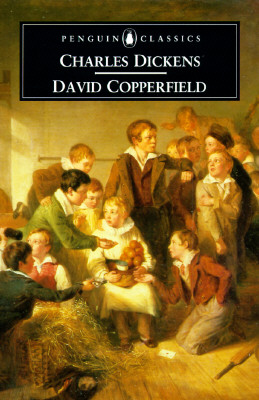
You're David Copperfield!
by Charles Dickens
Coming up from a childhood that felt abusive, you have risen through
hard work to gain a place of stature in your life. You've spent altogether too much time
in factories and end up misspelling a fair number of words. But in general you are seen
as a beacon of hope for others who might not be as fortunate. Lots of people keep
mistaking you for a magician and are waiting for you to disappear.
Take the Book Quiz
at the Blue Pyramid.
35atimco
Thanks for your thoughts on Don't Look Now and Other Stories, Porua. I'm a fan of du Maurier for the most part; most of her work that I've read I've loved (Rebecca; Jamaica Inn; My Cousin Rachel) though there was one I strongly disliked (The Flight of the Falcon) and didn't finish. I have this collection, I think, and it sounds like I would mostly enjoy it.
"The Border-Line Case" sounds like one of Christie's failed political thrillers (like Passenger to Frankfurt).
And I'm wanting to read The Hollow Man now too, despite its flaws. Locked room mysteries are always so fun :)
"The Border-Line Case" sounds like one of Christie's failed political thrillers (like Passenger to Frankfurt).
And I'm wanting to read The Hollow Man now too, despite its flaws. Locked room mysteries are always so fun :)
36Donna828
>34 Porua:: How the heck do "they" come up with these quizzes? At least this one is short. And, I liked the results. I am To Kill A Mockingbird, which is my all-time favorite book.
37Porua
# 35 You are welcome, wisewoman (yeah, I'm finally writing my thank you(s) and replies on my thread instead of writing private messages! You see I wasn't sure if anyone would care enough to come back to my thread to see my replies. But since you are nice enough to come back more than once I'm posting my reply to you here)!
I haven't read any other book by Daphne Du Maurier, except for listening to Rebecca on BBC. But I've enjoyed reading both of her books. As for locked room mysteries I do enjoy them but the endings always manage to disappoint me.
I haven't read any other book by Daphne Du Maurier, except for listening to Rebecca on BBC. But I've enjoyed reading both of her books. As for locked room mysteries I do enjoy them but the endings always manage to disappoint me.
38Porua
#36 Hey that's cool! One of my friends took the quiz and she was Stranger in a Strange Land by Robert A. Heinlein! I don't think she was too happy with the result because she says she is nothing like that book.
39spacepotatoes
I was The Guns of August and I'm still not entirely convinced about the accuracy of that one.
40Porua

The Girl With The Dragon Tattoo (or Män som hatar kvinnor in Swedish) is the posthumous best-seller by Stieg Larsson. It (along with its two sequels) seems to be one of the most talked about books here at LT.
The translation is of an exceptionally high quality. It doesn’t seem like it was originally written in a foreign language at all.
Larsson certainly knew how to tell a story. He created a fast pacing, action pact narrative that gave the reader no time to think. It goes from being a thriller (I enjoyed that part) to a murder (?) mystery (just about o.k.) to a hunt for a serial killer (disturbing to say the least) and back to a thriller (really enjoyed this part). In between some glimpses of Salander’s life are shown (very, very disturbing and I couldn’t really say I enjoyed reading those parts).
The central mystery is essentially a very unsettling and brutal tale. I wasn’t at all comfortable while reading it. I don’t like reading graphic descriptions about any kind of sexual assault/ torture on anyone. I agree that some of it is an integral part of the story and just had to be described but some things which are not a part of the main mystery could have been left out. I really hated it and felt very depressed by the explicit sexual violence.
I didn’t really feel interested in any of that investment, interest, fraudulence etc; talk. I felt a great urge to skim through Wennerström and Minos and all that. There are descriptions of various gadgets Blomkvist and Salander use along with the foods they eat and drink. There was really no need to describe those things so extensively.
As I’ve said before I don’t really like any kind of romance (especially in books written in modern times where it’s more about lust than love) in books. I didn’t really care for the relationship between Blomkvist and Berger or between him and Salander. The relationship between Blomkvist and Cecilia serves no other purpose than to describe some rather lame sex scenes. Blomkvist seems to sleep around with every woman present in the story! On the whole, there was really no need for so many sex scenes.
The last 100 or so pages were really entertaining. That is the part of the book that I truly enjoyed.
I rather enjoyed the thriller-like parts of the book. I don’t think I’ll want to re-read the book, though.
41atimco
I'm not a fan of explicit sex scenes either, Porua. Being constantly bombarded by them almost feels like an assault in itself. And I couldn't agree more about your distinction between lust and love in a lot of modern fiction.
42Porua
# 39 LOL that is what my friend said too!
# 41 I agree with you. It does feel like an "assault in itself". That is exactly the reason I'm not comfortable with scenes containing explicit sexual material, violent or otherwise.
# 41 I agree with you. It does feel like an "assault in itself". That is exactly the reason I'm not comfortable with scenes containing explicit sexual material, violent or otherwise.
43rocketjk
I'm about a third of the way through The Girl With The Dragon Tattoo right now and very much enjoying it.
As for sex scenes, I remember about 20 years ago the girlfriend of a good friend of mine had recently sold her mystery novel to a relatively high-profile publisher. One thing, though . . . they asked her to go back and put in a sex scene or two. I'd guess that's not such an unusual scenario.
It's like anything else, for me: I like good sex scenes and dislike bad ones.
As for sex scenes, I remember about 20 years ago the girlfriend of a good friend of mine had recently sold her mystery novel to a relatively high-profile publisher. One thing, though . . . they asked her to go back and put in a sex scene or two. I'd guess that's not such an unusual scenario.
It's like anything else, for me: I like good sex scenes and dislike bad ones.
44Porua

The Girl who Played with Fire (or Flickan som lekte med elden in Swedish) is the second book in Stieg Larsson’s Millennium Trilogy.
As far as the story is concerned it is actually better than The Girl with the Dragon Tattoo. I found this one even more gripping than the first one (story wise). But other than that The Girl who Played with Fire is in many respects the same as the first book of the trilogy.
The book does do a good job of describing an attacker’s mentality. Some of them do actually believe that their victims had asked for what they got and it is not their but the victim’s fault that the attack happened! This book shows even more examples of men who hate women than the first book.
I found Niedermann’s inner thoughts interesting to read. He is unlike any other bad guy that I’ve ever read.
With all the details about sex trade and corruption and a few good men (and one or two women) fighting against it reading this book is actually like watching an episode of Law and Order: SVU.
The editing leaves a lot to be desired. But that is probably because Stieg Larsson passed away before the books were published. Still, it does get irritating at times.
For example, what’s with the excruciatingly detailed description of what they eat and drink? Salander/ Blomkvist drank straight from the cartons. Salander ate two Billy’s pan pizza. Salander bought Lipton’s tea bags, and a jar of pickles and eggs and cheese and bread…
And then when Salander goes to Ikea and buys new furniture the book turns in to a sort of Ikea catalogue.
At the beginning of the book there is too much description of mathematical equations and various theories and problems. I had to skim through most of it.
I have the same complaint with The Girl who Played with Fire as I did with The Girl with the Dragon Tattoo. Too many sex scenes. In Larsson’s books almost every time a man/woman meets another man/woman they end up having sex together. So much so that when in one scene in this book a female colleague reaches out and touches her male colleague’s hand Larsson actually has to explain that “there was no other reason than companionship. He smiled sadly and patted her hand in an equally friendly way.”
These things are not even parts of the central story. How about a little more plot development and a little less frolicking around?
But these complaints aside, The Girl who Played with Fire is a gripping and fast paced book. It is worth one read at least.
45Porua

After reading some rather fast paced, modern stuff I decided to take a break and go back to my true love, an old fashioned, cozy murder mystery with minimum violence and no sex.
Murder Is Easy is a quintessential Agatha Christie story containing the usual ingredients. A picturesque little village with a cast of characters that any Christie fan will be familiar with, the old spinsters, the retired colonel, the local doctor etc. A handful of suspects and a handful of murders. A dash of romance. A detective with a mission to find out the truth. Suspicion falling on all of the suspects one after another. And finally in the end the murderer is revealed to be either the one person who is the most likely or the person who is the most unlikely to commit the murder.
This book has what I love most about Christie mysteries, the psychology angle. It’s not just blood and gore and a whole lot of nonsense. The murderer’s motive is a pure joy (if one can use that expression in relation to something like murder that is)!
As I’ve mentioned earlier all the characters are stock Christie characters. There is no real surprise in it. But I personally do not mind that.
The end is kind of surprising and quite satisfying.
Reading an Agatha Christie book after all the other stuff I’ve read in between is like going back home. It’s familiar but never boring. It’s comfortable and relaxing, which is exactly the reason why I picked up this book and it took me a whole week to finish it. And I savored every moment of it.
46atimco
Nice, Porua! I also love a good cozy mystery, and I agree about Christie's take on psychology. I don't want to disparage Sherlock, but I do like mysteries that are more based on psychological deduction rather than arcane knowledge of the fourteen different types of cigar ash :-P
47bonniebooks
>44 Porua:: Because of all the hype/enthusiasm for this author, I read a few pages of The Girl Who Played With Fire at the bookstore the other day. I wasn't impressed by the writing--it seemed really trite--and since I'm not that fond of this genre, it will be easy for me to skip these books.
48Porua
# 46 Glad you liked my take on Murder Is Easy, wisewoman! Yeah, among the Sherlock mysteries (and yes I've read every last one of them!) I don't really enjoy the ones filled with the technical details of cigar ash and different types of soil samples!
# 47 I succumbed to the pressure of LT's what the members are reading list (again!) and read the first two parts of the Millennium trilogy. I knew I wouldn’t really like them but read them anyway. I guess I'm a weak and a highly suggestible person when it comes to books! Just cannot resist the temptation! :-)
# 47 I succumbed to the pressure of LT's what the members are reading list (again!) and read the first two parts of the Millennium trilogy. I knew I wouldn’t really like them but read them anyway. I guess I'm a weak and a highly suggestible person when it comes to books! Just cannot resist the temptation! :-)
49Porua

Read The Enchanted April by Elizabeth von Arnim for my Monthly Author Reads group.
The book is a fluffy, easy read. I managed to finish it in a day.
It is pretty well written. The flow of the story is good. You never get bored while reading it. I liked the character of Mrs. Wilkins or Lotty as she’s sometimes called in the book. She is quite a remarkable personality.
The Enchanted April is the story of four women. Each unhappy with their own lives, decide to spend a month in Italy living in a charming castle.
According to von Arnim the solution to all of their problems is simple, a dose of good old family life with husband and children.
Now, don’t get me wrong. I do believe in marriage and children. I just happen to think that if you are discontent with yourself or your life you can never be happy and you lose the power to make anyone else happy for that matter.
Great personal unhappiness and a general dissatisfaction with life will not be solved as if by magic. Elizabeth von Arnim would have us believe that romantic love and marriage is the solution to all of our problems. Well, it isn’t.
In the end everything is beautifully tucked away in their own little corners. The married ladies realize that they are passionately still in love with their husbands and go back to them, the unmarried one finds a boyfriend/husband and the old, childless widow finds a whole bunch of surrogate children. Now, if only real life was that simple!
The premise of the story was good. It certainly had possibilities and von Arnim does indeed have a delightful way of writing. If only the characters developed in a different way, if only the women found something deep within themselves instead of looking for it within the men in their lives, the book could have been something more.
On the whole I’d say, if you are fond of chick lit you’ll probably love this. Otherwise, don’t bother.
50atimco
I enjoyed that review!
Great personal unhappiness and a general dissatisfaction with life will not be solved as if by magic.
Couldn't agree more! I like happy endings as much as the next person, but fake ones, built on impossible hopes, are so facile. Real life doesn't always work that way... your parents don't get back together after the divorce, family rifts aren't healed, etc.
Great personal unhappiness and a general dissatisfaction with life will not be solved as if by magic.
Couldn't agree more! I like happy endings as much as the next person, but fake ones, built on impossible hopes, are so facile. Real life doesn't always work that way... your parents don't get back together after the divorce, family rifts aren't healed, etc.
51Porua
#50 I’m glad that you’ve enjoyed my review, Amy!
I too love happy endings. But I also love assertive, strong female characters who find happiness in their own terms. You may love a man to death but that necessarily does not mean that you will be happy with him. I guess what I’m trying to say is that romantic love and happiness does not necessarily go hand in hand.
I had never read anything by Elizabeth von Arnim before my Monthly Author Reads group decided to read her books for the month of November. I had two more von Arnim books lined up, Elizabeth and Her German Garden and The Solitary Summer. But now I’m not so sure I want to read them anymore.
I too love happy endings. But I also love assertive, strong female characters who find happiness in their own terms. You may love a man to death but that necessarily does not mean that you will be happy with him. I guess what I’m trying to say is that romantic love and happiness does not necessarily go hand in hand.
I had never read anything by Elizabeth von Arnim before my Monthly Author Reads group decided to read her books for the month of November. I had two more von Arnim books lined up, Elizabeth and Her German Garden and The Solitary Summer. But now I’m not so sure I want to read them anymore.
52atimco
I guess what I’m trying to say is that romantic love and happiness does not necessarily go hand in hand.
No kidding! Just ask Heathcliff and Cathy :-P
No kidding! Just ask Heathcliff and Cathy :-P
54rft
My God, Porua, it's very unusual to find someone who disliked both Time Traveler's Wife and The Girl with the Dragon tatoo.
In the case of the letter, the multiple scenes with the main character and various women got on my nerves, to. It felt awfully like wishful thinking - or writing, given that the author and his character shared a lot of common points. "So, let's say I'm a journalist and every women, even the most emotionnally instable and cold and traumatised one, feel the urge to rip her cloth and jump on me". Yeah, sure.
Plus the Salander character was really cliche know-it-all hacker, the kind that can be found in any cyberpunk novel worth its salt (Neuromancer, for instance). My mother, who wouldn't touch a SF book to save her life (much less a cyberpunk one), raved about this character so much it made me smile.
Concerning the Time Traveller's Wife, well, you said it all. What made me laugh was the pain that the author took to sell us Henry as "hip". I think that's why she spend so much time writing about running (god forbid he could be fat or unfit), punk, stealing wallets, etc ... Whoooo, what a rebel.
Regarding your review, I may give The Historian a shot, though.
In the case of the letter, the multiple scenes with the main character and various women got on my nerves, to. It felt awfully like wishful thinking - or writing, given that the author and his character shared a lot of common points. "So, let's say I'm a journalist and every women, even the most emotionnally instable and cold and traumatised one, feel the urge to rip her cloth and jump on me". Yeah, sure.
Plus the Salander character was really cliche know-it-all hacker, the kind that can be found in any cyberpunk novel worth its salt (Neuromancer, for instance). My mother, who wouldn't touch a SF book to save her life (much less a cyberpunk one), raved about this character so much it made me smile.
Concerning the Time Traveller's Wife, well, you said it all. What made me laugh was the pain that the author took to sell us Henry as "hip". I think that's why she spend so much time writing about running (god forbid he could be fat or unfit), punk, stealing wallets, etc ... Whoooo, what a rebel.
Regarding your review, I may give The Historian a shot, though.
55Porua
#54 No, I didn't dislike The Time Traveler's Wife. I loathed it! It is probably the single most disgusting thing I've ever read!
In The Girl with the Dragon Tattoo, the sexual life of the main characters really got on my nerves too and it only gets worse in the second book of the trilogy, The Girl who Played with Fire. But I disliked The Girl with the Dragon Tattoo mainly because of the excessive sexual violence in it. It was way too graphic for my taste.
In The Girl with the Dragon Tattoo, the sexual life of the main characters really got on my nerves too and it only gets worse in the second book of the trilogy, The Girl who Played with Fire. But I disliked The Girl with the Dragon Tattoo mainly because of the excessive sexual violence in it. It was way too graphic for my taste.
56rocketjk
It's funny how people's standards are different regarding elements of fiction. I recently read The Girl with the Dragon Tattoo and, partly from reading the comments on this thread, kept expecting the graphic sex scenes you mentioned (I'm not offended by them, or particularly put off by them, but often find they slow down the story too much), but I didn't find any I considered graphic. Agreed that the protagonist gets to hop in the sack more than your average single, middle-aged fellow, but basically, the scenes were along the lines of, "And then they went to bed" or "And then they had sex." To me, graphic sex is when you get a real blow-by-blow, if you will, of the action. Anyway, my only real point is that I find it interesting when people have different standards and interpretations of such things.
57Porua
#56 I didn't say the sex scenes were graphic. I said that there were too many of them. I said the sexual violence was graphic. There is a difference between those two.
Edited because of spelling errors
Edited because of spelling errors
58rocketjk
Yeah, I guess I was referring to your comment in your review that "On the whole, there was really no need for so many sex scenes" and then wisewoman's comment about "explicit sex scenes." I personally didn't feel there were very many sex scenes at all, as most of the mentions of sex were, for me, basically that. We're told two characters have sex without really being shown it. But, anyway, my point is absolutely not that one view is correct and the other is not. It's all good. I was only commenting on the fact that different readers can have different takes and standards on these things. And, as I said, I agree that the character does a lot better than he should in this regard. :)
59Porua
#58 Yes, wisewoman and I were talking about the excess of sex scenes in this particular book and that is when she mentioned the explicit part. While I, in my review and elsewhere was referring to the sexual violence/horrific torture inflicted upon one of the main characters.
60Porua

The Playboy of the Western World written by Irish playwright John Millington Synge is a play that I’ve been meaning to read for a long, long time. Incidentally, the reason I first picked up this book is because of the last line of the play. I read the last line, was intrigued by it and ended up wanting to read the whole thing.
The Playboy of the Western World is a three-act play, set in a public house on the west coast of Ireland during the early 1900s.
This in essence is a dark comedy. It shows how bizarre human nature is and how quickly people can change their position regarding what is deemed moral and what is immoral.
The book is incredibly short. It took me only a few hours to finish.
Synge’s impeccable writing makes the weird and wonderful situations of the play seem utterly normal. Not for a moment did I think that “Well, I can’t believe this just happened!”
All the characters are very human (albeit in a dramatic way!). I found them very refreshing having read a few books with rather contrived characters of late.
The Playboy of the Western World is undeniably a masterpiece! One of the few books that I’ve read this year that didn’t disappoint me. It is definitely every bit as good as I thought it would be. Highly recommended for anyone who likes to read plays or wishes to read some serious literature but doesn’t have the courage to pick up a lengthy book yet.
61DirtPriest
Greetings and Salutations! I finally got around to doing a write-up of By the Pricking of my Thumbs and I thought you might like to read it. Stop on by for cake and ice cream, with Scotch and cigars for the grown-ups!
62Porua

The past two weeks have been awfully busy for me. Just couldn’t get any reading done at all. Now, at long last I have some time to write my review of The Way of the World.
The Way of the World is generally thought to be one of the best Restoration comedies ever written. Written by British playwright William Congreve, it premiered in the year 1700 in London.
The play is the story of Mirabell and Millamant who wish to get married to each other. But Millamant's aunt, Lady Wishfort detests Mirabell. It is also the story of Fainall who is secretly having an affair with Mrs. Marwood. Mirabell's servant Waitwell is married to Foible, Lady Wishfort's servant. On Mirabell’s instructions, Waitwell pretends to be Sir Rowland and woos Lady Wishfort.
When I started to read this play I thought it would be a comedy about the difficulties of love and marriage, sprinkled with misunderstandings, mistaken identities and so forth. But as I read the play I found it to be kind of unusual for a comedy.
The play is filled with talk about various legal and monetary issues. Marriage and love seem more about material gain than anything else. A woman’s right to property, the husband’s rights to the wife’s property, the laws regarding to divorce, etc. occupies a large portion of the play’s narrative.
The tone of the play seemed kind of serious to me. For instance, the scene where Mirabell proposes to Millamant, although comic in nature, is a discussion about pre-nuptial agreements.
I thought this was going to be a light read. But in the end, it turned out to be a little heavier than I had anticipated. It is humorous but something is definitely amiss.
63Porua

The Emperor’s Snuff-Box, published in 1942, is my second John Dickson Carr mystery this year. It's not a locked room mystery or an impossible crime. Just a plain, old murder mystery with suspects and motives. The detective is a psychologist named Dr. Dermot Kinross.
Sir Maurice is found dead in his own home with his skull smashed in. Now the question is ‘whodunit’?
The central mystery of The Emperor’s Snuff-Box is pretty good. It is quite clever but not as clever as The Hollow Man also known as The Three Coffins. The writing is first-rate but some of the characters do come across as rather artificial.
Another good thing is that the book is fairly short. I managed to finish it in a day.
My main problem with the story was that I felt absolutely no sympathy for the heroine of this story, Eve Neil.
The ever misunderstood and beautiful Eve gets caught up in every little trap that is set up for her and then in all her efforts to get out of it, muddles the situation even more! And then she usually seeks help from some man or other, all the while moping about how misfortune will not leave her alone. “You are a darned fool, Eve!” That’s all I could say!
Another thing that troubled me was the way the relationship between Eve and Ned Atwood, her ex-husband is portrayed in the book. Ned is known to have been physically and mentally cruel to her. He had once burnt her hand with a cigarette. At one point he even talks about wanting to give her a good smacking (even though at that point they are no longer married)! Still he is shown to possess such sex appeal that for one moment our heroine considers flinging herself into his arms. He keeps calling her a poor angel, wench, old girl, sugar - candy witch (!), etc. the whole time they interact. This talking down attitude is hardly sexy! Now maybe it was o.k. back then (and a lot of women do love (!) their abusers and stay in abusive relationships for various reasons) but it made me angry all the same.
There is line in the book that says that Eve has “more sex appeal than is good for her”! Now what is that supposed to mean? How do we know how much sex appeal is good or bad for a woman?
But these grievances aside it is overall a good, satisfying and mercifully short mystery. It’s a pity that I hate the character of Eve Neil so much!
65atimco
Wow, it's too bad about Eve Neil. Sounds like it's something that would ruin the entire book for me. There's so many good mysteries out there, I'll probably avoid this one.
Great review, Porua!
Great review, Porua!
67Porua

Recently I’ve read quite some plays, mysteries, etc. Basically things that seemed safe. This time I decided to step outside my box and read something that I would normally never read, just to see what it would be like. That’s where Under the Red Robe came in.
Under the Red Robe is a historical fiction/swashbuckler/romance written in late 19th century.
Published in 1894, it was written by Stanley J. Weyman. Weyman was an English novelist who wrote mostly historical romances set in 16th and 17th century France. Apparently his books were fairly popular in those days. Robert Louis Stevenson and Oscar Wilde were said to have been admires of his work. But it doesn’t seem like he is well known today and if it hadn’t been for an article I read some years ago, I don’t think I would have ever heard of him.
Under the Red Robe is the tale of a gentleman rogue, M. de Berault. It is set in France around the time of Cardinal Richelieu, who appears as a character in the book. In fact the book’s last scene is set amidst the turmoil of the Day of Dupes, which turned out to be the most crucial day of the Cardinal’s life and the ultimate test of his power.
I feel silly but even though the book is so light and frothy I cannot help but enjoy it! The book is full of intrigue, adventure, treachery, spying and of course sword fights! Not once did I feel bored. It kind of reminded me of The Three Musketeers, which I read years ago and have mostly forgotten.
What I really liked about this book was that all the characters seemed human. For a historical fiction/ romance that is a big thing. Most of them are so unreal that it just gets nauseating. But in this book even the heroes are shown to have human weaknesses. What makes them wonderful is their ability to rise above such weaknesses and do the right thing.
The female protagonist, Mademoiselle de Cocheforet, is a fine example of a strong independent woman. Her valor matches up with that of the men in the story. Not for once does she come across as a weepy, whiny woman who needs to be saved all the time! But that doesn’t reduce her femininity even one bit! The tenderness she shows for her brother and the love and courage she shows at the final scene are a proof of that.
I mostly feel annoyed with the way romance is portrayed in books but in Under the Red Robe the romance is so undemonstrative and yet passionate that I really enjoyed it. It reminded me of A Tale of Two Cities, another wonderful historical fiction with an amazing romantic story to tell.
I admired Stanley J. Weyman’s writing immensely. The plot of the story is strong and the narrative is lucid and crisp.
This book proves that even with a light, entertaining plot and without any heavy duty high brow, intellectual views, a good book is a good book. It is well edited with no unnecessary vulgarity and with equally strong male and female characters. I’d read this book over some cheap, over written, over publicized modern one any day. Thank God for the classics!
68Porua

L'Avare or The Miser is a satire written in 1668 by French playwright Jean Baptiste Molière. It is a comedy of manners.
It was first performed in 1668, in which Molière played the central role of the miser himself.
The Miser is the story of Harpagon, who is maniacally possessive about his own wealth. Always afraid that someone will steal it, he suspects everyone including his own children of wanting to rob him. His children, especially his spirited son, in turn despise him and want to get way from him.
After thoroughly enjoying Under the Red Robe, I was afraid that my next read may turn out to be a disappointment. Besides the last comedy of manners I read, The Way of the World, wasn’t as enjoyable as I thought it would be.
But all my doubts were put to rest by The Miser. Intending to read only a few pages, I ended up reading the whole thing in just two hours. The play is simply hilarious!
The situations in the play are all funny but some of the scenes are so funny that I would remember them for a long time to come. For example the scene in which the servant, Master Jacques, gives a statement to the police officer wishing to implicate Valère for the theft. Or the scene in which Harpagon and Valère have a very odd conversation about the theft and Harpagon’s daughter Élise.
Certain theatrical conventions are mocked in the play to a humorous effect. We often see that characters use asides to reveal their inner most thoughts to the audience, which the other characters in the play seem to ignore. But in The Miser, anytime a character uses an aside to reveal their inner thoughts, some other character demands to know what is it that they are saying! I found this to be extremely funny.
Even the play’s end is farcical, in which almost half a dozen of the plays characters turn out to be related to each other. This, I presume, mocks the mandatory happy ending that we all seem to crave.
None of the characters stand out on their own, which is not a bad thing as they are all equally well written and important.
What can one say about Molière’s writing except that it is brilliant. The dialogues are very, very witty.
I loved reading The Miser. My only wish is to see a live performance of this play some day, if it is possible.
After a rather disappointing year, two good books back to back! I seem to be on a roll here!
69atimco
Thank God for the classics!
Amen!
Great review on Stanley Weyman's book. Do you know, I've never even heard of him? But his books sound like they are just what I would enjoy! And your thoughts on this book in particular make me want to read it, badly! I've gone through and wishlisted everything I could find by Weyman on my BookMooch wishlist.
Have you ever read anything by Wilkie Collins? I bet you would like him. He was a friend of Charles Dickens and the best description of his style is probably Victorian sensationalism. Let me know if you'd like a recommendation. I haven't read all his books yet, but I plan to!
I'm not usually a reader of plays, but you're making me want to read The Miser, too. Darn you, Porua! :-P
Amen!
Great review on Stanley Weyman's book. Do you know, I've never even heard of him? But his books sound like they are just what I would enjoy! And your thoughts on this book in particular make me want to read it, badly! I've gone through and wishlisted everything I could find by Weyman on my BookMooch wishlist.
Have you ever read anything by Wilkie Collins? I bet you would like him. He was a friend of Charles Dickens and the best description of his style is probably Victorian sensationalism. Let me know if you'd like a recommendation. I haven't read all his books yet, but I plan to!
I'm not usually a reader of plays, but you're making me want to read The Miser, too. Darn you, Porua! :-P
70Porua
# 69 Thank you very, very much! You are the only one who actually reads my reviews and I'm glad that I'm helping to add to your wishlist.
I got Stanley Weyman's Under the Red Robe from Guttenberg. I love Guttenberg and not just because it's free! Where else could I get my hands on an out of print late 19th century swashbuckler written by a now forgotten author? Now I'm looking for more of his books.
Yes, I love Wilkie Collins. Don't you remember chiding me for giving The Moonstone two stars?;-)
I've read his The Woman in White too and have a hard time saying which one of these two I actually love the most!
I love reading plays. It all started with Shaw's Plays Pleasant. But my mom doesn't like plays. She finds all the dialogues going back and forth very distracting. I guess I get my love of plays from my dear late grandma. Go on, Amy! Try The Miser. Maybe you'll like it. :-)
I got Stanley Weyman's Under the Red Robe from Guttenberg. I love Guttenberg and not just because it's free! Where else could I get my hands on an out of print late 19th century swashbuckler written by a now forgotten author? Now I'm looking for more of his books.
Yes, I love Wilkie Collins. Don't you remember chiding me for giving The Moonstone two stars?;-)
I've read his The Woman in White too and have a hard time saying which one of these two I actually love the most!
I love reading plays. It all started with Shaw's Plays Pleasant. But my mom doesn't like plays. She finds all the dialogues going back and forth very distracting. I guess I get my love of plays from my dear late grandma. Go on, Amy! Try The Miser. Maybe you'll like it. :-)
71atimco
Oh yes, how could I forget! I need to straighten out all my LT buddies in my head :)
I don't know why I'm the only one reading your thread. I think your reviews are great.
*caves and goes to see if BM has The Miser*
I don't know why I'm the only one reading your thread. I think your reviews are great.
*caves and goes to see if BM has The Miser*
72bonniebooks
I'm always here, Porua! I just don't comment unless I'm going to add a book to my wish list or I've read the book and have something I just have to say. Your reviews have been interesting enough to keep me coming back for more even though we don't appear to like the same genres. You probably have other lurkers too! Come out of the shadows, you guys! :-)
73Medellia
I've been following your thread since the beginning, too, but I don't always feel I have much to say. But I'm here! I'm reading!
75Porua
#71 Thank you! I’m not that good with expressing my thoughts. All my life I’ve been mostly awkward and inarticulate. It feels good to know that you enjoy my reviews. I for one always keep track of your reviews and read if any new comments pop up on your thread.
#72 I lurk on your thread too. Even though you and I do not read the same things I enjoy your reviews. Besides your thread always has some pretty lively discussions going on.
#73 & 74 Thank you for lurking guys! But it feels good to know that you are there. Give me a sign now and then. Otherwise it just feels like I’m talking to myself! :-)
#72 I lurk on your thread too. Even though you and I do not read the same things I enjoy your reviews. Besides your thread always has some pretty lively discussions going on.
#73 & 74 Thank you for lurking guys! But it feels good to know that you are there. Give me a sign now and then. Otherwise it just feels like I’m talking to myself! :-)
76Porua

The Circular Staircase, published in 1908, is perhaps the best known work of the American mystery writer Mary Roberts Rinehart. It was chosen as one of the 100 best mysteries of the last century.
The narration is cozy and comfortable. The writing is easy to read.
The main problem with the story is that it is a prime example of the "Had-I-But-Known" school of mystery novels.
The way everyone keeps information and evidence from the investigators (and from each other as if all of them are each other’s enemies!) is atrocious to say the least. It all seems so unreasonable!
Everyone just keeps wondering and going round and round. Ladies go on fainting spells, people are tied up, detectives swarm the house and all the time I kept thinking, “If only they would all tell each other everything they know, these so called mysteries could be solved within minutes!”
A lot happens during the course of the book. The book is full of chases, people in disguise, mysterious ladies in black, secret passages and at least half a dozen deaths! And yet I felt bored at times. All of this action serves no other purpose than just to lengthen the novel.
None of the book’s characters are really likeable. Most of them are stubborn and short sighted. After a while I wanted to grab them by their shoulders and shake them.
Another problem I had was that the book contains some rather racist remarks. It may have been acceptable in those days but it still made me feel uncomfortable.
The book certainly does have its moments. Some of the situations in the book were quite spine tingling. But it could have been much shorter. The same things seem to happen again and again and again…
By the time the story ended I no longer cared who did what. Not a good sign for a mystery.
77atimco
With all the faults you noticed, it was still picked as one of the top 100 mysteries of the last century? Hmm. I wonder who made up that list!
“If only they would all tell each other everything they know, these so called mysteries could be solved within minutes!”
Heehee. A lot of romantic comedies rely on this unreasonable reserve as well. I always think, "If I were her, I'd let him HAVE it, all the truth, all at once!" But then where would the story be?
“If only they would all tell each other everything they know, these so called mysteries could be solved within minutes!”
Heehee. A lot of romantic comedies rely on this unreasonable reserve as well. I always think, "If I were her, I'd let him HAVE it, all the truth, all at once!" But then where would the story be?
78Porua
Yeah, I know that a lot of stories are like that and I’m usually very tolerant about it. But you should read The Circular Staircase to see what I mean. It is one thing to try and stretch the story a bit. But when the same things keep happening over and over again for 200 something pages, it just begins to grate on the nerves.
Like I said in my review this is a prime example of a “Had-I-But-Known mystery novel”. It is where the characters do a lot of unreasonable things which simply serves to prolong the action of the novel.
Ogden Nash wrote a poem called “Don't Guess Let Me Tell You” parodying this kind of novels.
"Sometimes the Had I But Known then what I know now I could have saved at least three lives by revealing to the Inspector the conversation I heard through that fortuitous hole in the floor." (Source: Wikipedia)
For example, the characters of Halsey and Gertrude knew so many important things from the very beginning. And yet they stubbornly keep refusing to divulge any of it to the police and even to their own aunt. Even after two or three people die because of their silence and one of them is left for dead by the baddies they keep their mouth shut till the very end. And no one even blames them for all of these deaths. I mean they are at least partially to blame for all this devastation!
And the way the narrator keeps hiding evidence from the police is just ridiculous.
*SPOILER*
The Narrator, Miss Innes, for starters finds a cuff-button and says nothing to the police. Later she loses it and says so to the police, who act as if it’s totally o.k. Later she finds a gun on one of the tulip beds. She picks it up and hides it. For all she knows the gun could be the murder weapon. But again that doesn’t seem to bother anyone.
All of the mysteries which have been built up through out the book is solved in a hurry in the end and it turns out a lot of it had nothing to do with each other.
And like I said the same things happen again and again. There are footsteps on the circular staircase, there are people in the house and someone faints or shoots someone or someone screams. By the last 50 or so pages I was like, “Come on! Just tell everything you know and end it already! I cannot take it anymore!”
Mind you, the whole book isn’t that bad. It is just that the book’s actions are so very, very repetitive.
Like I said in my review this is a prime example of a “Had-I-But-Known mystery novel”. It is where the characters do a lot of unreasonable things which simply serves to prolong the action of the novel.
Ogden Nash wrote a poem called “Don't Guess Let Me Tell You” parodying this kind of novels.
"Sometimes the Had I But Known then what I know now I could have saved at least three lives by revealing to the Inspector the conversation I heard through that fortuitous hole in the floor." (Source: Wikipedia)
For example, the characters of Halsey and Gertrude knew so many important things from the very beginning. And yet they stubbornly keep refusing to divulge any of it to the police and even to their own aunt. Even after two or three people die because of their silence and one of them is left for dead by the baddies they keep their mouth shut till the very end. And no one even blames them for all of these deaths. I mean they are at least partially to blame for all this devastation!
And the way the narrator keeps hiding evidence from the police is just ridiculous.
*SPOILER*
The Narrator, Miss Innes, for starters finds a cuff-button and says nothing to the police. Later she loses it and says so to the police, who act as if it’s totally o.k. Later she finds a gun on one of the tulip beds. She picks it up and hides it. For all she knows the gun could be the murder weapon. But again that doesn’t seem to bother anyone.
All of the mysteries which have been built up through out the book is solved in a hurry in the end and it turns out a lot of it had nothing to do with each other.
And like I said the same things happen again and again. There are footsteps on the circular staircase, there are people in the house and someone faints or shoots someone or someone screams. By the last 50 or so pages I was like, “Come on! Just tell everything you know and end it already! I cannot take it anymore!”
Mind you, the whole book isn’t that bad. It is just that the book’s actions are so very, very repetitive.
79spacepotatoes
Another lurker here coming out to say hello :) I haven't read most of the books you've reviewed so I don't have much to comment on there, but I am following and checking for possible TBR additions.
80atimco
"Sometimes the Had I But Known then what I know now I could have saved at least three lives by revealing to the Inspector the conversation I heard through that fortuitous hole in the floor." (Source: Wikipedia)
*laughs aloud* I need to look up more of that man's work!
*laughs aloud* I need to look up more of that man's work!
81Porua
#79 Hello spacepotatoes! Thank you for lurking. Do tell me if you ever add anything to your TBR list based on my review. I'd be interested to know.
#80 Oh you must look up more of his poems! I love Ogden Nash. He was so witty! Here's another one that I like. It is called "The Fly",
"The Lord in His wisdom made the fly / And then forgot to tell us why." (Source: Wikipedia)
#80 Oh you must look up more of his poems! I love Ogden Nash. He was so witty! Here's another one that I like. It is called "The Fly",
"The Lord in His wisdom made the fly / And then forgot to tell us why." (Source: Wikipedia)
82Porua

A Passage to India, published in 1924 is one of the best known works of E. M. Forster. It was published at a time when the Indian independence movement was at its height.
I watched the 1984 David Lean film a few years ago and quite liked it. I’ve wanted to read the book ever since then, as I wanted to see how alike (or not) the book and the movie are. Also, it was included in the "TIME 100 Best English-language Novels from 1923 to 2005", which increased my wish to read the book even more.
The story of A Passage to India is set in the fictional Indian town of Chandrapore. Two women, Mrs. Moore, the mother of Ronny Heaslop, the British city magistrate of Chandrapore and Adela Quested come to visit India. Adela is supposed to marry Ronny but has some rather ambiguous feelings about him, settling in India and marriage in general. Adela at the same time has some vague intentions of learning about the real India and its people. In the course of her quest to find the real India Adela meets Mr. Fielding, the British headmaster of the small government-run college and Dr. Aziz, a young Muslim Indian Physician. An untoward incident during a trip to the Marabar Caves sours their newly found friendship, an incident which brings out the worst in both the British rulers and their local subjects.
After I started to read this book I realized I had to be very careful. I had to read each and every sentence with great care lest I should miss some of the deeper meanings embedded in them.
Most would say that this is a story of the racial tension that exists between the ruler and the subjects. It is about British colonization of India and the blatant and latent hatred and mistrust they had of their Indian subjects and vice versa.
But I believe there is more to it than that. Sure, the setting of the story is India during the Colonial times but the story is more about isolation and the lack of understanding. Isolation that results from people refusing to understand that someone else may view the world in a different way. When people, afraid of learning new things, take refuge within feelings of distrust and hatred. This is the story of utter disconnection, not only between the British and the Indians, but between men and women and the older and the younger generation.
One of the most interesting points of the story is the characters of Mrs. Moore and Adela. They are fascinatingly complex. Mrs. Moore is idolized by Dr. Aziz. But she never really does any real good to him. Adela never intends to hurt anyone. And yet she sets in motion events that will eventually change everyone’s lives forever.
The friendship between Mr. Fielding and Dr. Aziz and its gradual disintegration is another important point of the story. They try and ultimately fail to cross the chasm between them that have been created by race and the ruler-subject relations.
E. M. Forster’s writing is very good but definitely complex. He seems captivated by the Indian culture and landscape. He certainly describes it in great detail.
As for comparison between the book and the movie, the movie followed the book quite faithfully. But for the first time in my life I’d say I slightly prefer the movie to the book.
E. M. Forster ultimately does not give us an answer to the question of what really happened in those caves. Did something really happen to Adela? Or was she just overwhelmed by the caves and hallucinated the whole thing? Why did the caves have such a curious effect on both Mrs. Moore and Adela? Was it merely culture shock and the unbearable heat or was it something more tangible? I’m still pondering.
A Passage to India certainly deserves its status as a classic. It is a well written book and I definitely recommend it.
83spacepotatoes
Well, that didn't take long - A Passage to India is going on my TBR. I love stories that are set in India and this one sounds very good. Thanks!
84Porua
That's good to know, spacepotatoes. I hope you enjoy A Passage to India.
85atimco
Your reviews just keep getting better and better, Porua. I read a couple of Forster books several years ago and was not overly impressed with him. He seemed to be Saying Important Things and Making Philosophical Points... at the expense of his plot and characters. But a lot of people love him, so I'll probably give him another try one of these days.
86Porua
That's so nice of you, Amy! Thank you so much for your kind words! It means a lot to me. I hope I can live up to your praise.
As far as Forster is concerned I read A Passage to India just because I liked the movie version of it (the first time I've ever done so). I don't think I'll be reading any more of his novels. Maybe his short stories (as I am very fond of short stories) but none of the other novels.
As far as Forster is concerned I read A Passage to India just because I liked the movie version of it (the first time I've ever done so). I don't think I'll be reading any more of his novels. Maybe his short stories (as I am very fond of short stories) but none of the other novels.
87Porua

The Celestial Omnibus and Other Stories is a collection of short stories by E. M. Forster. The stories were written over a period of some ten years before the book’s original publication in the year 1911.
I read this as a part of my Monthly Author Reads group. I read the title story, The Celestial Omnibus, as a part of another short story collection called Short Stories of To-day. I was 10-12 years old (I was always reading stuff meant for grown ups) and this is one of the stories that stuck with me. When I found the original book, I became eager to explore it and learn about all the other stories.
This is a collection of fantasy short stories. One may even call them modern fables.
The Celestial Omnibus and Other Stories contains six short stories: The Story of a Panic, The Other Side of the Hedge, The Celestial Omnibus, Other Kingdom, The Curate's Friend, and The Road from Colonus.
In the first story The Story of a Panic, a rather spoiled boy called Eustace goes on a trip to Italy with his aunts and there his life takes a strange turn when he encounters something unearthly in the woods. The narrator of this story is one of his traveling companions, a disapproving, strict (and not to mention racist) older gentleman. This pattern of letting fairly unpleasant persons narrate the stories reoccurs throughout the book.
I am not smart enough to get all the finer nuances of the second story, The Other Side of the Hedge, (or any of the other stories for that matter) but from what I understand, it is a highly symbolic tale about the long journey along the path of life. It asks the question, ‘Do you want to join the rat race or do you want to live the quiet life?’
In the The Celestial Omnibus a little boy, who is constantly belittled by his family and others, buys a ticket to an otherworldly omnibus that takes him ‘To Heaven’. This heaven is the world of imagination where the soul is set free.
In Other Kingdom a somewhat pompous rich man buys a plot of wooded land for his fiancée. It sets off a chain of events that leaves everyone dazed. This is another story with an unpleasant narrator.
A clergyman is befriended by a faun in The Curate's Friend.
And finally in The Road from Colonus, an elderly gentleman visits Greece and wants to stay behind in an isolated place to recapture the freedom of his youth. This story contains some very racist remarks made by some of the characters. But that is probably intentional as they are shown to be unpleasant and materialistic people.
What can I say about this book? This is a weird, astonishing assortment of stories. I don’t know how to describe these strange tales. They are all very complex, surreal and somewhat difficult to fathom.
The best story of The Celestial Omnibus and Other Stories, is the eponymous The Celestial Omnibus. The heaven described in the story will seem especially wonderful to any book lover. The Story of a Panic is also good.
E. M. Forster makes liberal use of pagan mythology in this collection. His writing is as usual good but complex.
This is a strange book that is definitely hard to understand. Despite being a short book it is a long read (if that makes any sense!). Still there is something about these stories. I can’t quite put my finger to it but it is something beautiful.
A strange but beautiful book. Definitely a cut above the rest.
88atimco
Great thoughts. This is going to sound completely random, but have you ever read the Narnia books? I ask because I noticed some similarities. In The Voyage of the Dawn Treader, there is an annoying, spoiled boy named Eustace, whose life is changed by a trip to Narnia (and an encounter with Aslan). It's fascinating that Forster's story is narrated by an unpleasant character; Lewis gives Eustace himself the narrative voice in many sections, as excerpts from his diary. The result is hilarious, but also a bit sad to see someone so selfish and deluded.
Lewis uses fauns and other characters from pagan mythology heavily in his Narnia stories.
And Forster describes heaven in the title story? I wonder if it is like the heaven Lewis writes about in the last Narnia book, The Last Battle.
So this was published in 1911... I wonder if Lewis had read it. The Narnia books weren't published until the 1950s. Interesting.
Lewis uses fauns and other characters from pagan mythology heavily in his Narnia stories.
And Forster describes heaven in the title story? I wonder if it is like the heaven Lewis writes about in the last Narnia book, The Last Battle.
So this was published in 1911... I wonder if Lewis had read it. The Narnia books weren't published until the 1950s. Interesting.
89Porua
#88 No, I haven't read any of the Narnia books. But I saw the TV series when I was a child. I watched the whole thing but I'm afraid that I have forgotten most of it. From what I actually do remember I loved the first part of it (you know when they first go through the wardrobe).
90Donna828
>87 Porua:: This collection doesn't sound like the E.M. Forster I know...but maybe I don't know him that well! I picked up A Passage to India from the library last week. It will probably be my transition book from the old year to the new. I enjoyed your comments on it.
91Medellia
Interesting thoughts on the Forster stories, Porua. I have a collection of the 12 stories of his that were published in his lifetime--the 6 you read make up the first half of them. I haven't read "The Road from Colonus" yet, nor one of the stories ("The Eternal Moment") in the second set of six. I kind of skimmed your Passage to India review, since it's the only novel of his I have left to read, and I'd like to go in with not too much knowledge, but I enjoyed what I skimmed. :)
Amy- Forster describes, to my recollection, at least four different heavens in his short stories. (He was an agnostic.)
Donna- Many of his short stories had some element of fantasy, in contrast to his more realistic novels. There's also a collection of short stories that was published after his death, The Life to Come. I haven't read this collection yet but know that most (all?) of the stories in that collection deal with homosexuality.
Amy- Forster describes, to my recollection, at least four different heavens in his short stories. (He was an agnostic.)
Donna- Many of his short stories had some element of fantasy, in contrast to his more realistic novels. There's also a collection of short stories that was published after his death, The Life to Come. I haven't read this collection yet but know that most (all?) of the stories in that collection deal with homosexuality.
92atimco
Mm, I adore the old BBC movies of the Chronicles. Yes, they were made for TV on a very tight budget, yes, the special effects are extremely special ;), but they have the heart of the books and that's way more important than a flashy script and visuals. And they are very faithful to the books! Critics say too faithful, but purists know such a thing is not possible.
I recommend the books unreservedly. The salon is reading them in July, I think. Just sayin' :)
*muses for a moment on the randomness of Forster sparking conversation about Lewis* I just love crazy unexpected literary intersections like that... even if they are just in my imagination!
I recommend the books unreservedly. The salon is reading them in July, I think. Just sayin' :)
*muses for a moment on the randomness of Forster sparking conversation about Lewis* I just love crazy unexpected literary intersections like that... even if they are just in my imagination!
93Porua
# 90 I’m glad you enjoyed my comments on A Passage to India. Hope you enjoy reading the book.
# 91 I think I’d like to read the second set of six stories someday, seeing how I’ve quite liked the first six stories. And I’m glad you enjoyed skimming through my review.
# 92 “…they have the heart of the books and that's way more important than a flashy script and visuals. And they are very faithful to the books! Critics say too faithful, but purists know such a thing is not possible.”
You’ve said it, Amy! I totally agree with you! These are the things that matter to me while I’m watching an adaptation of any literary work. Most adaptations change and add twists and turns to the original works. They get mangled beyond recognition. I hate that! That is why I rarely watch TV or movie adaptations of books.
I know the Salon is reading the Narnia books next year.Who knows, maybe I’ll see you there!;-)
# 91 I think I’d like to read the second set of six stories someday, seeing how I’ve quite liked the first six stories. And I’m glad you enjoyed skimming through my review.
# 92 “…they have the heart of the books and that's way more important than a flashy script and visuals. And they are very faithful to the books! Critics say too faithful, but purists know such a thing is not possible.”
You’ve said it, Amy! I totally agree with you! These are the things that matter to me while I’m watching an adaptation of any literary work. Most adaptations change and add twists and turns to the original works. They get mangled beyond recognition. I hate that! That is why I rarely watch TV or movie adaptations of books.
I know the Salon is reading the Narnia books next year.Who knows, maybe I’ll see you there!;-)
94Porua

Took a break from The Innocence of Father Brown and read The Man in Black by Stanley J. Weyman. Will not be writing a full review of it as I don’t have the time or the energy to do so right now. I’ll only write a short summary of it.
The Man in Black was published in 1894. It is a rather short book. The story is kind of like Oliver Twist (the story of a lost little boy who is really the heir to a great fortune). But this book is nothing to write home (or anywhere else) about. None of the characters are fully developed. There are some rather gruesome instances of child abuse. I loath the cruel, crafty-eyed showman with all my heart. Here is a brute if there ever was one. Probably one of my most hated fictional characters ever. In all, not a good read, but definitely a quick read.
This will probably be my last book for the year 2009. Hopefully will join all of you once again next year on the 50 Book Challenge. If and when I join the challenge, I'll post the link to my new thread here.
Till then have a wonderful holiday everyone! :-)
95atimco
*reads*
Do you think it is perhaps a sign of accomplishment on Weyman's part that he was able to make you hate the showman so much? Or is it more your dislike of the entire work leaching over into your feelings about the characters? Whichever it is, I probably won't be checking this one out, given your comments.
I still have not finished the Father Brown stories. Somehow it is so easy to get Father-Browned out.
Do you think it is perhaps a sign of accomplishment on Weyman's part that he was able to make you hate the showman so much? Or is it more your dislike of the entire work leaching over into your feelings about the characters? Whichever it is, I probably won't be checking this one out, given your comments.
I still have not finished the Father Brown stories. Somehow it is so easy to get Father-Browned out.
96spacepotatoes
Hi Porua, thanks for the Christmas wishes in my thread, I hope you had a lovely holiday as well!
97Porua
# 95 No, I think my hate of the showman has more to do with Weyman's writing ability than with my dislike of the entire work. Weyman was (at least from what I’ve read) overall quite an entertaining and competent writer. But in The Man in Black all of the characters appear kind of half baked and the narrative seems rushed. I suspect that this is a result of some hasty writing. You know Weyman being a best selling author he must have been under a lot of pressure to churn out book after book to satisfy the publishers. Thus the dip in the quality of his work. I’m giving him the benefit of the doubt and will try to read some of his other works in the near future.
Oh yes! You are so right when you say it is easy to get “Father-Browned out”. It’s not that I didn’t enjoy reading The Innocence of father Brown. But I had to take breaks in between as it does tend to get monotonous.
# 96 You are welcome, spacepotatoes. :-)
Oh yes! You are so right when you say it is easy to get “Father-Browned out”. It’s not that I didn’t enjoy reading The Innocence of father Brown. But I had to take breaks in between as it does tend to get monotonous.
# 96 You are welcome, spacepotatoes. :-)
98Porua
O. K. Now that 2009 has ended I’d like to post my top 10 reads for the year 2009.
2009 definitely wasn’t one of the best years of my life, reading or otherwise. But on the up side I made quite a dent on my TBR pile. Read some books that had been on my TBR pile for a long, long time. And the best thing about 2009 was my joining LT. Here I’ve met so many wonderful people and I’m glad that I was able to share my reading experiences with so many people. Hopefully I will continue to do so in this new year!
So, here are my top 10 reads for the year 2009,
TOP 10 READS OF ‘09
1. The Playboy of the Western World. J. M. Synge.
2. The Miser. Jean-Baptiste Molière.
3. A Passage to India. E.M. Forster.
4. A House to Let. Charles Dickens (ed.).
5. Under the Red Robe. Stanley J. Weyman.
6. Death on the Nile. Agatha Christie.
7. Life with Father. Clarence Day.
8. Murder Is Easy. Agatha Christie.
9. The Book Thief. Markus Zusak.
10. Don't Look Now and Other Stories. Daphne Du Maurier.
My new 50 Book Challenge thread for 2010 is here, http://www.librarything.com/topic/80925
Hope to see you there! :-)
2009 definitely wasn’t one of the best years of my life, reading or otherwise. But on the up side I made quite a dent on my TBR pile. Read some books that had been on my TBR pile for a long, long time. And the best thing about 2009 was my joining LT. Here I’ve met so many wonderful people and I’m glad that I was able to share my reading experiences with so many people. Hopefully I will continue to do so in this new year!
So, here are my top 10 reads for the year 2009,
TOP 10 READS OF ‘09
1. The Playboy of the Western World. J. M. Synge.
2. The Miser. Jean-Baptiste Molière.
3. A Passage to India. E.M. Forster.
4. A House to Let. Charles Dickens (ed.).
5. Under the Red Robe. Stanley J. Weyman.
6. Death on the Nile. Agatha Christie.
7. Life with Father. Clarence Day.
8. Murder Is Easy. Agatha Christie.
9. The Book Thief. Markus Zusak.
10. Don't Look Now and Other Stories. Daphne Du Maurier.
My new 50 Book Challenge thread for 2010 is here, http://www.librarything.com/topic/80925
Hope to see you there! :-)
99theaelizabet
Porua, I've been meaning to touch bases with you! Couldn't agree more about Playboy. It's been awhile since I've read it. Maybe I'll revisit it this year. I'm off to star your new thread.
Teresa
Teresa
100Porua
Oh I am so glad to finally find someone who has actually read The Playboy of the Western World! I was just fascinated by this one! It had been on my TBR pile for God knows how long. And when I finally managed to read it I just loved it!
If you do revisit it this year, I'd love to hear your thoughts on it.
And thank you for starring my new thread! :-)
Trying to fix touchstone.
If you do revisit it this year, I'd love to hear your thoughts on it.
And thank you for starring my new thread! :-)
Trying to fix touchstone.

