The Master & Margarita: What Page Are You On?
Talk Le Salon Littéraire du Peuple pour le Peuple
Join LibraryThing to post.
This topic is currently marked as "dormant"—the last message is more than 90 days old. You can revive it by posting a reply.
2theaelizabet
Ready for chapter 14, but stopped to wait for the group. Excited to pick it up again.
3DavidX
I'm excited to read M&M again too. I was reading chapter one in a bar after work earlier and, get this, someone asked me if I was reading the Bible and then promptly walked away before I had a chance to say anything.
I finished my beer and rushed home, careful to avoid any slippery puddles of sunflower oil.
Tonight I'm going to read A.K. Tolstoy's short story Upyr(The Vampire). It's a full moon tonight. I have an ominous sense of foreboding.
I finished my beer and rushed home, careful to avoid any slippery puddles of sunflower oil.
Tonight I'm going to read A.K. Tolstoy's short story Upyr(The Vampire). It's a full moon tonight. I have an ominous sense of foreboding.
4absurdeist
Oh good gracious David I'm scared for you! You do have garlic and/or a cross at your place right, should the undead come calling? Be careful. Maybe you should read something else?
5DavidX
Not to worry. The Upyrs immediately recognised me as one of their american cousins.
Meet me at Patriarchs Pond after midnight. ;)
Meet me at Patriarchs Pond after midnight. ;)
6absurdeist
Right here right?
http://cr.middlebury.edu/public/russian/bulgakov/public_html/PPondsview.html
Are we going to be conjuring up anything? Mephisto maybe? Er, wait, that's a different book isn't it?
http://cr.middlebury.edu/public/russian/bulgakov/public_html/PPondsview.html
Are we going to be conjuring up anything? Mephisto maybe? Er, wait, that's a different book isn't it?
7Macumbeira
As Saturday the fifth has reached us with the sun risin over Taiwan and then rushing to Europe and America, We now declare the Official M&M reading open.
Following site is crammed with information about M&M. But be aware that it could spoil your first reading :
http://www.masterandmargarita.eu
Following site is crammed with information about M&M. But be aware that it could spoil your first reading :
http://www.masterandmargarita.eu
8DavidX

The bench at Patriarch's Ponds from the Middlebury site.
I'm sitting here reading the scene in Faust's study in which Faust first meets Mephistopheles at the beginning of Goethe's Faust Part 1. There are allusions to this scene in the first chapter of M&M.
In Goethe's Faust, Mephistopheles first appears as a black poodle and then changes into a man dressed as a medieval traveling scholar.
Professor Woland carries a cane with a black handle in the shape of a poodles head and is a traveling scholar, an expert in Black Magic.
Mikhail Alexandrovich's namesake Hector composed The Damnation of Faust.
And what of Ponto the black poodle, that transparent dude with the jockey cap, and the reopening of the investigation of Brian Jones death?
The moon is full and I'm on vacation for a week! Woo Who Who!
9absurdeist
great pic David! great info! great way to get us going!
10Macumbeira
in the name of all poodles, I object to the scandalous association between our esteemed race and the forces of evil !
It is clear that this salon is controlled by a vast conspiracy of right wing feline forces
It is clear that this salon is controlled by a vast conspiracy of right wing feline forces
11DavidX

This is Charlie Stone's illustration for the first chapter of M&M from the Middlebury site.
And here's a very interesting lecture on Gerbert d'Aurillac by Lynn Harry Nelson, Emeritus Professor of Medieval History at The University of Kansas.
http://www.vlib.us/medieval/lectures/gerbert.html
Here are some highlights from the lecture concerning the legend of Gerbert d'Aurillac:
"Gerbert had travelled to Spain, where he became the apprentice of a Muslim magician of wondrous powers. Gerbert came to realize that all of the magician's powers came from the spells that were contained in a book that he kept under lock and key. At the same time, the magician began to suspect that Gerbert wanted to steal his secrets and take them away with him, and so began to watch him very closely and to hide the key to the chest in which he kept his book. The magician had a beautiful daughter, and Gerbert seduced her with the promise of taking her away with him and marrying her. The duped girl helped Gerbert put a drug in her father's evening wine and, when he had fallen into a stupor, got the key from where he had hidden it, opened the chest, and gave Gerbert the book.
Gerbert immediately fled, leaving the girl behind. When the magician awoke and saw what had happened, he got his horse, which could run faster than the wind, and his dog, which could track anything or anyone over or under both ground and water. As he came to the bridge at Martorell, Gerbert heard the magician riding after him and knew that he had to escape the magician's dog. He quickly climbed over the side of the bridge and hung by his hands beneath it. Since he was neither above or below either the earth or water, the dog lost his scent, and the baffled magician finally returned home, leaving Gerbert with the book of spells.
Some say that he prayed to Satan to save him from the magician, and that Satan wafted him away beyond the sea. In order to get home, Gerbert agreed to give his soul to Satan, and Satan, in turn, promised to give him powers even greater than those contained in the book of spells. The proof that this story is the correct one is found in the fact that Gerbert kept a human head with him and would put the head on his desk and converse with it through the night, learning many secrets and about the future from it."
And:
"The legend says that Gerbert had built a mechanical head that would answer any questions that could be answered with either "yes" or "no." It had said "yes" when he asked it if he would become pope, so he asked it if he would die before he had said mass in Jerusalem. The head said "no," and Gerbert decided that he would never go to Jerusalem. In the course of his duties, he said mass in one of the smaller churches in Rome and afterwards discovered that it was the church of St. Mary of Jerusalem, commonly called by the people simply "Jerusalem." He became sick shortly after, and called for his followers. In his final delirium, he asked the cardinals to cut his body into pieces and throw them into the cesspools and garbage dumps of the city, saying that, while his body might belong to Satan, he had never consented in his mind to the oath that the devil had made him swear."
Gerbert d'Aurillac was appointed Pope(Sylvester II) by Emperor Otto III in 999. He died in 1003.
12anna_in_pdx
Finished chapter 1. Thanks for all these websites and illustrations, fearless leaders! It's exciting to finally get started. The buildup has been pretty intense!
13absurdeist
I also finished chapter 1 this morning. So much better than I imagined. Should've read this a long time ago. I don't mean to beat a dead horse into the ground, but great aids David! Thanks again.
14Macumbeira
How many of you are following the group read ? I am not sure everybody has arrived.
Could you please raise your hand so we can count ?
Could you please raise your hand so we can count ?
15PimPhilipse
Page 38 (halfway chapter 2) in Russian, Page 60 in Dutch (start of chapter 5).
16QuentinTom
Guilty, your honour.
(p.274, chapter 18. Can't put it down.)
And I'm loving this thread! Davushka, can you explain to this stupid cat the connection between Pope Sylvester II and M&M. I have obviously missed something.
This book is giving me very strange dreams. Is anyone else feeling a bit chilly?
(p.274, chapter 18. Can't put it down.)
And I'm loving this thread! Davushka, can you explain to this stupid cat the connection between Pope Sylvester II and M&M. I have obviously missed something.
This book is giving me very strange dreams. Is anyone else feeling a bit chilly?
17QuentinTom
p.s: Anyone seen Wilf?
18DavidX
From chapter one(Pevear/Volokohnksy translation), towards the end:
'And what is your field?' Berloiz inquired.
'I am a specialist in black magic.'
'There he goes!...'struck in Mikhail Alexandrovich's head.
'And you've been invited here in that capacity?' he asked, stammering.
'Yes in that capacity,' the professor confirmed, and explained: 'In a state library here some original manuscripts of the tenth century necromancer Gerbert of Aurillac have been found. So it is necessary for me to sort them out. I am the only specialist in the world.'
Pevear/Volokohnsky's footnote:
Gerbert of Aurillac: (938-1003), theologian and mathematician, popularly believed to be a magician and alchemist. He became Pope in 999 under the name of Sylvester II.
I'm starting to get worried about Wilf too. Has anyone heard from him?
I'm a little bit disappointed more people haven't shown up so far. Of course vodka never goes to waste around here, but what am I supposed to do with all this herring, it's beginning to smell.
'And what is your field?' Berloiz inquired.
'I am a specialist in black magic.'
'There he goes!...'struck in Mikhail Alexandrovich's head.
'And you've been invited here in that capacity?' he asked, stammering.
'Yes in that capacity,' the professor confirmed, and explained: 'In a state library here some original manuscripts of the tenth century necromancer Gerbert of Aurillac have been found. So it is necessary for me to sort them out. I am the only specialist in the world.'
Pevear/Volokohnsky's footnote:
Gerbert of Aurillac: (938-1003), theologian and mathematician, popularly believed to be a magician and alchemist. He became Pope in 999 under the name of Sylvester II.
I'm starting to get worried about Wilf too. Has anyone heard from him?
I'm a little bit disappointed more people haven't shown up so far. Of course vodka never goes to waste around here, but what am I supposed to do with all this herring, it's beginning to smell.
19Macumbeira
hola ! The Salon's name has changed !
What is happening ?
What is happening ?
20Macumbeira
The Quinque viae, Five Ways, or Five Proofs are five arguments for the existence of God summarized by the 13th century Roman Catholic theologian St. Thomas Aquinas in his book, Summa Theologica. The five ways are; the argument of the unmoved mover, the argument of the first cause, the argument from contingency, the argument from degree and the teleological argument. Aquinas left out from his list several arguments that were already in existence at the time, such as the ontological argument of Saint Anselm, because he did not believe that they worked.
The Argument of the Unmoved Mover
The argument of the unmoved mover, or ex motu, tries to explain that God must be the cause of motion in the universe. It is therefore a form of the cosmological argument. It goes thus:
Some things are moved.
Everything that is moving is moved by a mover.
An infinite regress of movers is impossible.
Therefore, there is an unmoved mover from whom all motion proceeds.
This mover is what we call God.
The Argument of the First Cause
The argument of the first cause (ex causa), tries, unlike the argument of the Unmoved Mover, to prove that God must have been the cause, or the creator of the universe. It is therefore a form of the cosmological argument. It goes thus :
Some things are caused.
Everything that is caused is caused by something else.
An infinite regress of causation is impossible.
Therefore, there must be an uncaused cause of all that is caused.
This causer is what we call God.
The Argument from Contingency
The argument from contingency (ex contingentia):
Many things in the universe may either exist or not exist. Such things are called contingent beings.
It is impossible for everything in the universe to be contingent, for then there would be a time when nothing existed, and so nothing would exist now, since there would be nothing to bring anything into existence, which is clearly false.
Therefore, there must be a necessary being whose existence is not contingent on any other being or beings.
This being is whom we call God.
The Argument from Degree
The argument from degree or gradation (ex gradu). It is heavily based upon the teachings of the ancient Greek philosopher Plato. It goes thus :
Varying perfections of varying degrees may be found throughout the universe.
These degrees assume the existence of an ultimate standard of perfection.
Therefore perfection must have a pinnacle.
This pinnacle is whom we call God.
The Teleological Argument
The teleological argument or argument of "design" (ex fine), which claims that everything in the Universe has a purpose, which must have been caused by God :
All natural bodies in the world act towards ends.
These objects are in themselves unintelligent.
Acting towards an end is characteristic of intelligence.
Therefore, there exists an intelligent being that guides all natural bodies towards their ends. This being is whom we call God
The Argument of the Unmoved Mover
The argument of the unmoved mover, or ex motu, tries to explain that God must be the cause of motion in the universe. It is therefore a form of the cosmological argument. It goes thus:
Some things are moved.
Everything that is moving is moved by a mover.
An infinite regress of movers is impossible.
Therefore, there is an unmoved mover from whom all motion proceeds.
This mover is what we call God.
The Argument of the First Cause
The argument of the first cause (ex causa), tries, unlike the argument of the Unmoved Mover, to prove that God must have been the cause, or the creator of the universe. It is therefore a form of the cosmological argument. It goes thus :
Some things are caused.
Everything that is caused is caused by something else.
An infinite regress of causation is impossible.
Therefore, there must be an uncaused cause of all that is caused.
This causer is what we call God.
The Argument from Contingency
The argument from contingency (ex contingentia):
Many things in the universe may either exist or not exist. Such things are called contingent beings.
It is impossible for everything in the universe to be contingent, for then there would be a time when nothing existed, and so nothing would exist now, since there would be nothing to bring anything into existence, which is clearly false.
Therefore, there must be a necessary being whose existence is not contingent on any other being or beings.
This being is whom we call God.
The Argument from Degree
The argument from degree or gradation (ex gradu). It is heavily based upon the teachings of the ancient Greek philosopher Plato. It goes thus :
Varying perfections of varying degrees may be found throughout the universe.
These degrees assume the existence of an ultimate standard of perfection.
Therefore perfection must have a pinnacle.
This pinnacle is whom we call God.
The Teleological Argument
The teleological argument or argument of "design" (ex fine), which claims that everything in the Universe has a purpose, which must have been caused by God :
All natural bodies in the world act towards ends.
These objects are in themselves unintelligent.
Acting towards an end is characteristic of intelligence.
Therefore, there exists an intelligent being that guides all natural bodies towards their ends. This being is whom we call God
22DavidX
The reference to the five proofs of god's existence from chapter one of the Pevear/Volokhonsky translation:
'But allow me to ask you,' the foreign visitor spoke after some anxious reflection, 'what, then, about the proofs of God's existence, of which, as is known, there are exactly five?'
'Alas!' Berloiz said with regret. 'Not one of these proofs is worth anything, and mankind shelved them long ago. You must agree that it in the realm of reason there can be no proof of God's existence.'
'Bravo!' cried the foreigner. 'Bravo! You have perfectly repeated restless old Immanuel's thought in this regard. But here's the hitch: he roundly demolished all five proofs, and then, as if mocking himself, constructed a sixth of his own.'
'Kant's proof,' the learned editor objected with a subtle smile, 'is equally unconvincing. Not for nothing did Schiller say that the Kantian reasoning on this question can satisfy only slaves, and Strauss simply laughed at this proof.'
Berloiz spoke, thinking all the while, 'But, anyhow, who is he? And why does he speak Russian so well?'
They ought to take this Kant and give him a three year stretch in Solovki for such proofs!' Ivan Nikolaevich plumped quite unexpectedly.
'Ivan!' Berloiz whispered, embarrassed.
But the suggestion of sending Kant to Solovki not only did not shock the foreigner, but even sent him into raptures.
'Precisely, precisely,' he cried, and his green left eye turned to Berloiz, flashed. 'Just the place for him! Didn't I tell him that time at breakfast: "As you will, Professor, but what you've thought up doesn't hang together. It's clever maybe, but mighty unclear. You'll be laughed at."'
Berlioz goggled his eyes. 'At breakfast...to Kant?...What is this drivel?' he thought.
Pevear/Volokhonsky's footnote regarding restless old Immanuel.
Immanuel Kant (1724-1804), German idealist philosopher, thought that the moral law innate in man implied freedom, immortality and the existance of God.
'But allow me to ask you,' the foreign visitor spoke after some anxious reflection, 'what, then, about the proofs of God's existence, of which, as is known, there are exactly five?'
'Alas!' Berloiz said with regret. 'Not one of these proofs is worth anything, and mankind shelved them long ago. You must agree that it in the realm of reason there can be no proof of God's existence.'
'Bravo!' cried the foreigner. 'Bravo! You have perfectly repeated restless old Immanuel's thought in this regard. But here's the hitch: he roundly demolished all five proofs, and then, as if mocking himself, constructed a sixth of his own.'
'Kant's proof,' the learned editor objected with a subtle smile, 'is equally unconvincing. Not for nothing did Schiller say that the Kantian reasoning on this question can satisfy only slaves, and Strauss simply laughed at this proof.'
Berloiz spoke, thinking all the while, 'But, anyhow, who is he? And why does he speak Russian so well?'
They ought to take this Kant and give him a three year stretch in Solovki for such proofs!' Ivan Nikolaevich plumped quite unexpectedly.
'Ivan!' Berloiz whispered, embarrassed.
But the suggestion of sending Kant to Solovki not only did not shock the foreigner, but even sent him into raptures.
'Precisely, precisely,' he cried, and his green left eye turned to Berloiz, flashed. 'Just the place for him! Didn't I tell him that time at breakfast: "As you will, Professor, but what you've thought up doesn't hang together. It's clever maybe, but mighty unclear. You'll be laughed at."'
Berlioz goggled his eyes. 'At breakfast...to Kant?...What is this drivel?' he thought.
Pevear/Volokhonsky's footnote regarding restless old Immanuel.
Immanuel Kant (1724-1804), German idealist philosopher, thought that the moral law innate in man implied freedom, immortality and the existance of God.
23QuentinTom
oh excellent! thank you. I knew I was missing something by getting an edition with no damn footnotes.
So are we still a Salon? What's going on with the name change?
Don't worry about the herring, David, I'll eat them!!!!!!!!!!!
So are we still a Salon? What's going on with the name change?
Don't worry about the herring, David, I'll eat them!!!!!!!!!!!
24urania1
On July 29, I was on page 40 of M&M and laughing my head off, but then I had a life threatening concussion, lost my clothes somewhere in air between Maryville and Knoxville. Since then, I have been unable to concentrate on wicked social satire or anything that counts for intelligent reading unless it is quite short. Instead I have been hanging out on the dark side: YA fiction. However, my journey into this cesspool of the reading world has sent me back to the pre-Socratics. Who would have thought YA fiction capable of managing such a stunt? Today, I did manage to read Notes from the Underground. It isn't M&M, but it is Russian. Does that count?
P.S. Murrushka, I was wondering about the Salon business myself. Today, I discovered I had become a member of a forum hitherto unknown to me.
P.P.S. I have also been reading a book about corsets, but none of those are Russian, so I guess that doesn't count. *sigh* And I do so love corsets.
P.S. Murrushka, I was wondering about the Salon business myself. Today, I discovered I had become a member of a forum hitherto unknown to me.
P.P.S. I have also been reading a book about corsets, but none of those are Russian, so I guess that doesn't count. *sigh* And I do so love corsets.
25Macumbeira
For those of you who have reached the confusion at Griboedov, I have added my own exercise in interpretation of the Moscow chapters. It is ofcourse done "tongue in cheek" but i would appreciate any comment !
http://macumbeira-macumbeira.blogspot.com/2009/06/master-and-margarita-exercise-...
http://macumbeira-macumbeira.blogspot.com/2009/06/master-and-margarita-exercise-...
26QuentinTom
Brilliant Mac!!!!!!
27bokai
The discussion here has added to the value of my own reading tenfold already. I was away when the read started up, so picked up M&M on transit (at the great Powell's bookstore no less) and have already gotten to halfway through the third section (long train ride). I will probably finish the book today and re-read it alongside the many excellent annotation and observations provided here.
Thumbs up to everyone contributing here for your tuition free education!
Thumbs up to everyone contributing here for your tuition free education!
28Macumbeira
27 : I consider this site as the "Free Open University"
30DavidX
25. Bravo Mac! Your analysis is brilliant and very thought provoking. It's given me a lot to think about. More later.
31PekoeTheCat
I am on chapter 3. The first head has been lost. At first it seemed like a funny encounter between good and evil - or pomposity and evil- then there was the chapter about Pontius Pilate and Ha-Notsri who believes that everyone is good.
32absurdeist
I think the blasphemous book is horrible. I wish Bulgakov had burned it for good or it were still banned.
33QuentinTom
Stone him! Blasphemous heathen!
34absurdeist
I don't think I'd mind being stoned right about now.
36absurdeist
oh thank you thank you for that! Now I must go read what you wrote about David Foster Wallace....
38anna_in_pdx
I finished up to Chapter 6. I am trying to read slowly - I'm normally a speed reader but there seems to be a lot that I will miss if I read at my normal breakneck speed. It's really a wonderful book so far. I'm only allowing myself a couple of chapters a day and made myself re-read the first three chapters as well.
Pekoe: Glad you are enjoying it! Meow!
Pekoe: Glad you are enjoying it! Meow!
39Macumbeira
Anna, it will get better and better...
40slickdpdx
I am late to the read as was finishing Infinite Jest. Just read chapter 1 of MnM and I am bowled over!
41DavidX

Charlie Stone's illustration for Chapter 2 from the Middlebury site.
I've been reading bits of the critical companion that Mac posted at his blog. It's very interesting. I may have to break down and pick up a real copy.
Bulgakov made many revisions to the first part of the book. He apparently never completed his revisions of the second part. It is said by some that there is no definitive edition of the book. It is even considered an "unfinished" novel by many scholars.
There has been much disagreement and debate by the critics about how M&M should be interpreted.
It will be interesting to hear everyone's different perspectives and interpretations of the text as we go along. It's certainly going to be interesting to hear what those reading the russian text have to say. I very curious to know what I'm missing in translation.
I'm still thinking about the similarities between Homeless and John the Baptist that Mac spoke about in his awesome analysis experiment.
There are so many allusions and allegories in M&M. What does it all mean?
There is some kind of inversion of good and evil going on, I think.
If Professor Woland is part of that force which eternally does good, while eternally willing evil, then are the "good guys" (i.e. the authorities) part of that force which eternally does evil, while eternally willing good?
Did Berloiz deserve what he got? Was Pontius Pilate such a bad fellow? Who are the good guys and who are the bad guys here?
What is truth?
There are also many are similarites to The Life and Opinions of Tomcat Murr in M&M:
Chapter 2 begins a second narrative.
Koroviev is a retired choirmaster (like Kappellmeister Kreisler).
Black poodles.
Both have musical themes.
Professor Woland and Meister Abraham are both magicians.
Both novels are considered "unfinished".
42DavidX
Something about linden trees.
The Bible , i.e. The Book , from the Greek "ta biblia," the books. The word is derived from a root designating the inner bark of the linden tree, on which the ancients wrote their books.
The Bible , i.e. The Book , from the Greek "ta biblia," the books. The word is derived from a root designating the inner bark of the linden tree, on which the ancients wrote their books.
43unlucky
I'm on page 80 and out of curiosity I have to ask what the hell is a pince-nez. Is it a type of nose?
44AnnieMod
The type of glasses that do not have ears pieces but get pinched on the bridge of the nose.
45WilfGehlen
Huzzah! DavidX! Good guys, bad guys, the truth. Spot on! What is the truth in all this? Are all men good? Who is Woland and why has he come to Moscow? The Moscow story begins long before the episode at the Patriarch's Pond, with the goings-on at Apartment 50 and, in Book 2, the turn of luck for the Master. Woland's advance team is on the ball.
Can't wait for the screen shots from Book 2 when Margarita takes off, so to speak, on her travels through Moscow.
Just discovered Between Two Worlds: A Critical Introduction to the Master and Margarita, which provides some amazing insights into the M&M and Bulgakov. Will report in from time to time from that perspective.
Also just finished the Ginsburg translation which offers a fresh (to me) telling of the tale. The missing, censored sections don't detract significantly.
Glad to see such frenetic activity in Le Salon. I was not due to emerge from my ice cave until September 13, International Chocolate Day, but it's time to get active.
Can't wait for the screen shots from Book 2 when Margarita takes off, so to speak, on her travels through Moscow.
Just discovered Between Two Worlds: A Critical Introduction to the Master and Margarita, which provides some amazing insights into the M&M and Bulgakov. Will report in from time to time from that perspective.
Also just finished the Ginsburg translation which offers a fresh (to me) telling of the tale. The missing, censored sections don't detract significantly.
Glad to see such frenetic activity in Le Salon. I was not due to emerge from my ice cave until September 13, International Chocolate Day, but it's time to get active.
46WilfGehlen
Urania1, have you read The Winter Queen by Boris Akunin? Very light reading and the corset is an essential plot element.
47PekoeTheCat
#41 Hey, don't forget the cats.
48DavidX
The cats, of course! Thanks for reminding me Pekoe. Tomcat Murr and Behemoth are cousins, both being descendants of the famous Puss in Boots.
Hi Wilf! I've been thinking of your quest and how all this fits in. Are people essentially good?
Hi Wilf! I've been thinking of your quest and how all this fits in. Are people essentially good?
49PimPhilipse
"Take him away for a minute and show him the proper way to address me. But do not mutilate him."
"Stwike him, centuwion, vewwy woughly"
"Stwike him, centuwion, vewwy woughly"
50QuentinTom
Lol
What an awesome book!
Like you, Anna, I've had to force myself to slow down, otherwise I would already have finished. In fact, I may read the Glenny translation as well, which I have seen in a book shop here.
I have a question for our Russian language experts. In my translation (Pevear and Volokhonsky), the word 'citizen' keeps appearing. This word to me is redolent of the French Revolution not the Russian. Wouldn't 'Comrade' be better? What is the Russian word used, and what do other translations have?
Thanks to our wonderful leaders (or readers as they say here) for all your insights.
What an awesome book!
Like you, Anna, I've had to force myself to slow down, otherwise I would already have finished. In fact, I may read the Glenny translation as well, which I have seen in a book shop here.
I have a question for our Russian language experts. In my translation (Pevear and Volokhonsky), the word 'citizen' keeps appearing. This word to me is redolent of the French Revolution not the Russian. Wouldn't 'Comrade' be better? What is the Russian word used, and what do other translations have?
Thanks to our wonderful leaders (or readers as they say here) for all your insights.
51PimPhilipse
50: The russian word is граждан (grazhdan), comrade would be товарищ (tovarish).
In the novel, граждан is used almost everywhere.
Nine times people are addressed or identified as товарищ.
My impression is, that граждан is a more polite form. Friends can have товарищи, and the members of committees can call each other товарищ.
In the novel, граждан is used almost everywhere.
Nine times people are addressed or identified as товарищ.
My impression is, that граждан is a more polite form. Friends can have товарищи, and the members of committees can call each other товарищ.
52theaelizabet
Wow! Thanks PimPhillipse!
53DavidX
'Thank you P...' Here terror flashed in David's eyes, because he had nearly made a slip. 'Thank you Hegemon. Very interesting.'
54DavidX
Kevin Moss on the "five proofs".
Five proofs? In fact, Kant rejected three proofs of the existence of God, coming up with a fourth himself: that God must exist because we all have an inborn sense of moral right and wrong, which must have been put there by someone. Perhaps Bulgakov simply preferred the number 5? Or wanted to make sure Woland's proof was the more magical "seventh"?
Five proofs? In fact, Kant rejected three proofs of the existence of God, coming up with a fourth himself: that God must exist because we all have an inborn sense of moral right and wrong, which must have been put there by someone. Perhaps Bulgakov simply preferred the number 5? Or wanted to make sure Woland's proof was the more magical "seventh"?
55DavidX
Mr. Moss on the dual narratives:
Always keep in mind the possible relations between the Jerusalem chapters, or the Gospel according to Woland, and the Moscow chapters of the novel. How many parallels are there between Chapters 1 and 2, for example?
I'm looking for parallels, but I haven't found any so far. I'm feeling dense. Does anyone else see the parallels between chapters 1 and 2?
Always keep in mind the possible relations between the Jerusalem chapters, or the Gospel according to Woland, and the Moscow chapters of the novel. How many parallels are there between Chapters 1 and 2, for example?
I'm looking for parallels, but I haven't found any so far. I'm feeling dense. Does anyone else see the parallels between chapters 1 and 2?
56Macumbeira
See post 20
there are 5 official proofs of Gods existence according to Thomas of Aquinas.
Kant offers the sixth
And 7 is ofcourse the "proof by proving the opposite" If the Devil does exist than his counterpart God exists too
I think that that was the meaning of Bulgi
there are 5 official proofs of Gods existence according to Thomas of Aquinas.
Kant offers the sixth
And 7 is ofcourse the "proof by proving the opposite" If the Devil does exist than his counterpart God exists too
I think that that was the meaning of Bulgi
57Macumbeira
There is a clear parallel between the interrogation of jezus in the palace of Pilate and the interogation of Homeless in the asylum. Both look like fools in front of their interrogators. As readers we understand the reactions of remarks of both sides.
Jesus sounds like a complete fool in front of this old soldier. Man is good ?
58WilfGehlen
For those reading translations without notes, the Pevear and Volokhonsky translation is available online here and here and perhaps elsewhere. These aren't a replacement for hard copy, but you can search through the notes. I find it useful also for searching the text.
ETA corrections to the pesky html.
ETA corrections to the pesky html.
59WilfGehlen
The answer to the question "are all men good" will come at the end, not at the beginning. I haven't reached the end myself.
Chapter 1 musings. Many oddities, noted above. Has anyone noticed the hiccups? If Berlioz and Bezdomny were keyed in to old wives tales, they would have known who they were dealing with.
And the guy in the checkered jacket. Barratt makes a reference to a devil figure similarly decked out in The Brothers Karamazov. I am stuck at about page 142 and haven't come across the reference myself. Any Dostoevsky fans with the answer? I am looking forward to the new movie version which seems a match for my capacities (see announcement).
ETA resolution to more pesky html issues.
ETA Also note the professed profession of the professor: historian. We will encounter other historians along the way. As for parallels between the two stories--best observed with 20-20 hindsight and from 50,000 feet to mix a couple of metaphors.
Chapter 1 musings. Many oddities, noted above. Has anyone noticed the hiccups? If Berlioz and Bezdomny were keyed in to old wives tales, they would have known who they were dealing with.
And the guy in the checkered jacket. Barratt makes a reference to a devil figure similarly decked out in The Brothers Karamazov. I am stuck at about page 142 and haven't come across the reference myself. Any Dostoevsky fans with the answer? I am looking forward to the new movie version which seems a match for my capacities (see announcement).
ETA resolution to more pesky html issues.
ETA Also note the professed profession of the professor: historian. We will encounter other historians along the way. As for parallels between the two stories--best observed with 20-20 hindsight and from 50,000 feet to mix a couple of metaphors.
60amaranthic
My first impulse was to think that the Karamazov devil figure you mention is the gentleman who talks with Ivan near the end of the book. He does not have a checkered jacket, but my Constance Garnett renders him as having "check trousers {...} of excellent cut." If you are interested, you can find him in chapter IX, book eleven, at least in my edition.
I have mislaid my newly-bought copy of Master & Margarita, so am on page... zero, but I'm loving all this thought and discussion going on here! I can't wait to dig into the book now. I think I may even go and purchase another copy.
I have mislaid my newly-bought copy of Master & Margarita, so am on page... zero, but I'm loving all this thought and discussion going on here! I can't wait to dig into the book now. I think I may even go and purchase another copy.
62WilfGehlen
Who knows what evil lurks in the hearts of men? The Shadow knows!
I feel I've been missing out. My translation of Faust by Martin Greenberg reads, "And pray tell what you mean by that." More prosaic, less poetic, but that is what Greenberg is after and it works over the course of the two parts.
Barratt makes the point that Woland as Mephistopheles is too easy a reach. Any thoughts? Aside from A man's reach should exceed his grasp . . .
ETA Barratt also refers to an observation made by Terence Cave that the reader finds in Master and Margarita "a progressive unfolding" of truth. Even when you discover the truth, don't hold on to it dogmatically. There may be truths within truths for those with an open mind.
I feel I've been missing out. My translation of Faust by Martin Greenberg reads, "And pray tell what you mean by that." More prosaic, less poetic, but that is what Greenberg is after and it works over the course of the two parts.
Barratt makes the point that Woland as Mephistopheles is too easy a reach. Any thoughts? Aside from A man's reach should exceed his grasp . . .
ETA Barratt also refers to an observation made by Terence Cave that the reader finds in Master and Margarita "a progressive unfolding" of truth. Even when you discover the truth, don't hold on to it dogmatically. There may be truths within truths for those with an open mind.
63WilfGehlen
Thanks for the tip, amaranthic.
4.11.9 Part-Book-Chapter of The Brothers Karamazov. "The Devil." p 666ff. Actually, p 634ff in the North Point Press edition. The gentleman in the checked trousers is indeed the devil, but not the canonical devil. He goes beyond Mephistopheles to say, let [Mephistopheles] do as he likes, it's quite the opposite with me. I am perhaps the only man in all of nature who loves the truth and sincerely desires good. Like Woland, he is a bit off in his habiliment: His linen . . . was a bit dirty and the wide scarf was was quite threadbare. Compare Bulgakov's, a long nightshirt, dirty and patched on the left shoulder.
This chapter is also the link to Camus' absurd man in The Myth of Sisyphus, to whom "everything is permitted," à la Ivan Karamazov. "anyone who already knows the truth is permitted to settle things for himself, absolutely as he wishes, on the new principles. In this sense, 'everything is permitted' to him." For the absurd man, this is more a responsibility than a freedom. Camus describes the realization of absurdity as a satori moment for the absurd man. Does the Master have such a satori moment?
4.11.9 Part-Book-Chapter of The Brothers Karamazov. "The Devil." p 666ff. Actually, p 634ff in the North Point Press edition. The gentleman in the checked trousers is indeed the devil, but not the canonical devil. He goes beyond Mephistopheles to say, let [Mephistopheles] do as he likes, it's quite the opposite with me. I am perhaps the only man in all of nature who loves the truth and sincerely desires good. Like Woland, he is a bit off in his habiliment: His linen . . . was a bit dirty and the wide scarf was was quite threadbare. Compare Bulgakov's, a long nightshirt, dirty and patched on the left shoulder.
This chapter is also the link to Camus' absurd man in The Myth of Sisyphus, to whom "everything is permitted," à la Ivan Karamazov. "anyone who already knows the truth is permitted to settle things for himself, absolutely as he wishes, on the new principles. In this sense, 'everything is permitted' to him." For the absurd man, this is more a responsibility than a freedom. Camus describes the realization of absurdity as a satori moment for the absurd man. Does the Master have such a satori moment?
64Macumbeira
thanks Wilf
I was wondering why the devil looked so careless with his clothing.
it will come back several times in the book that he is smudgy
I was wondering why the devil looked so careless with his clothing.
it will come back several times in the book that he is smudgy
65Macumbeira
apart of all the interpretations of what Bulgi is saying about the Devil and Jesus and about Stalin and Gorky ( who was the official MASTER during that time ) there are some private matters too. It is clear that the writer is ventilating his anger and frustration through the pages of the book. If you have reached part 2 you might read my view on it. ( Spoilerwarning ! )
http://macumbeira-macumbeira.blogspot.com/2009/07/this-painting-by-ilja-yefimovi...
http://macumbeira-macumbeira.blogspot.com/2009/07/this-painting-by-ilja-yefimovi...
66bokai
>> If Berlioz and Bezdomny were keyed in to old wives tales, they would have known who they were dealing with.
If I remember correctly Satan makes reference to the fact that Berlioz at least should have recognized him, but Bezdomny wasn't learned enough to see the clues. Ah, if only hard copies had a search function... I may have read this book too fast.
Also, an interesting tidbit of trivia for those who collect: This book is mentioned on the application quiz for The Strand Bookstore. I applied today, saw it there, and then realized that Bulgakov's name was not there for the title to be matched with on the test. They are using M&M to fool unsuspecting applicants into attributing titles to the wrong authors!
If I remember correctly Satan makes reference to the fact that Berlioz at least should have recognized him, but Bezdomny wasn't learned enough to see the clues. Ah, if only hard copies had a search function... I may have read this book too fast.
Also, an interesting tidbit of trivia for those who collect: This book is mentioned on the application quiz for The Strand Bookstore. I applied today, saw it there, and then realized that Bulgakov's name was not there for the title to be matched with on the test. They are using M&M to fool unsuspecting applicants into attributing titles to the wrong authors!
67Macumbeira
In the London review ( LRB ) there is this week an article about a book by Vladislav zubok : Zhivago's children : the last russian intelligentsia.
Sheila Fitzpatrick comment on it ( Cultivating their Dachas ) explains the different moods and doings of the post war intellectuals in Russia. If read carefully, you understand the logic behind the story of the book M&M. Why it was written in secret, why it suddenly could surface and why it had to go underground immediately after that.
One sentence especially caught my attention : The post war intelligentsia were (quote ) regularly falling back in the bad habits of conformism, cowardice, mutual denunciations, cynicism and hypocrisy ( unquote )
of all these vices, we know by now which was the worst
Mac
Sheila Fitzpatrick comment on it ( Cultivating their Dachas ) explains the different moods and doings of the post war intellectuals in Russia. If read carefully, you understand the logic behind the story of the book M&M. Why it was written in secret, why it suddenly could surface and why it had to go underground immediately after that.
One sentence especially caught my attention : The post war intelligentsia were (quote ) regularly falling back in the bad habits of conformism, cowardice, mutual denunciations, cynicism and hypocrisy ( unquote )
of all these vices, we know by now which was the worst
Mac
68QuentinTom
I am dizzy with excitement over this thread. Can you please all slow down and take a deep breath.
Bloody strewth!
More thoughts on B and Dostoevsky on the way. Thanks for those links Wilf, really useful for my (useless) edition. For those using those notes, they start half way down on page 91 on Wilf's first link.
Bloody strewth!
More thoughts on B and Dostoevsky on the way. Thanks for those links Wilf, really useful for my (useless) edition. For those using those notes, they start half way down on page 91 on Wilf's first link.
69PimPhilipse
Yesterday I received Путеводитель по роману Михаила Булгакова "Мастер и Маргарита" which turned out to be an M&M encyclopedia, which I will be leafing through in search for interesting stuff. There's an article about Hoffman, which first goes into Die Elixiere des Teufels, but also mentions Murr and Kreisler, I don't know yet in which context, but I hope to find that out tonight.
71DavidX
My head exploded last night. Sensory overload. I'm still attempting to organize my thoughts.
Tom, I'm looking forward to your take on Bulgakov and Dodo.
Pim, I had never heard of The Devil's Elixir by E.T.A. Hoffman. I must read that very soon!
Some links:
Part 4, Book 11, Chapter 9 of The Brothers Karamazov(discussed in posts 60 and 63).
I read this chapter last night. Wow! Now I can see how much I missed by not finishing this book in high school. I must read BK soon. But why does it have to be soooo long.
http://www.online-literature.com/dostoevsky/brothers_karamazov/78/
A very interesting article by Kevin Moss about similarities between the first 3 chapters of M&M and Euripidies' The Bacchae.
http://cr.middlebury.edu/public/russian/Bulgakov/public_html/Elementa.pdf
Some Bulgakov sources:
The Life of Jesus by Ernest Renan
The chapters dealing with the last week of Jesus' life.
http://cr.middlebury.edu/public/russian/Bulgakov/public_html/Renan.html
The complete text.
http://www.infidels.org/library/historical/ernest_renan/life_of_jesus.html
The Gospel of Nicodemus or Acts of Pilate.
http://cr.middlebury.edu/public/russian/Bulgakov/public_html/Nicodemus.html
Tom, I'm looking forward to your take on Bulgakov and Dodo.
Pim, I had never heard of The Devil's Elixir by E.T.A. Hoffman. I must read that very soon!
Some links:
Part 4, Book 11, Chapter 9 of The Brothers Karamazov(discussed in posts 60 and 63).
I read this chapter last night. Wow! Now I can see how much I missed by not finishing this book in high school. I must read BK soon. But why does it have to be soooo long.
http://www.online-literature.com/dostoevsky/brothers_karamazov/78/
A very interesting article by Kevin Moss about similarities between the first 3 chapters of M&M and Euripidies' The Bacchae.
http://cr.middlebury.edu/public/russian/Bulgakov/public_html/Elementa.pdf
Some Bulgakov sources:
The Life of Jesus by Ernest Renan
The chapters dealing with the last week of Jesus' life.
http://cr.middlebury.edu/public/russian/Bulgakov/public_html/Renan.html
The complete text.
http://www.infidels.org/library/historical/ernest_renan/life_of_jesus.html
The Gospel of Nicodemus or Acts of Pilate.
http://cr.middlebury.edu/public/russian/Bulgakov/public_html/Nicodemus.html
72WilfGehlen
Thanks for the Renan links, DX. Barratt mentions that Bulgakov relied on Renan as a source for the Jerusalem thread and that the quality of the reconstructed events show his (Bulgakov's) historical astuteness. That is, Bulgakov's story seems as if it were true, truer in fact than the gospels themselves (in that it is a single, coherent, detailed version of plausible events).
The willing reader is lead along the path of rejecting the atheistic view of the State (it never happened), then to reject the gospels' version (it didn't happen like that), and finally to accept Woland's first-hand account (Jeshua as a vulnerable human, misunderstood by his single disciple, who muddied the religious waters for two millenia). The first step is easy, but we get to the last step only because Bulgakov can create a myth that feels right to our collective unconscious.
This development makes Woland a powerful figure in the Moscow narrative and not just a mischievous trickster.
The willing reader is lead along the path of rejecting the atheistic view of the State (it never happened), then to reject the gospels' version (it didn't happen like that), and finally to accept Woland's first-hand account (Jeshua as a vulnerable human, misunderstood by his single disciple, who muddied the religious waters for two millenia). The first step is easy, but we get to the last step only because Bulgakov can create a myth that feels right to our collective unconscious.
This development makes Woland a powerful figure in the Moscow narrative and not just a mischievous trickster.
73DavidX
Well said Wilf,
'These good people,' the prisoner spoke and, hastily adding 'Hegemon', went on: '...haven't any learning and have confused everything I told them. Generally, I'm beginning to be afraid this confusion may go on for a long time. And all because he writes down the things I say incorrectly.'
'These good people,' the prisoner spoke and, hastily adding 'Hegemon', went on: '...haven't any learning and have confused everything I told them. Generally, I'm beginning to be afraid this confusion may go on for a long time. And all because he writes down the things I say incorrectly.'
74DavidX

Kind mit Pudeln by Katharina Fritsch 1995
The modest truth I speak to thee.
Though folly`s microcosm, man, it seems,
Himself to be a perfect whole esteems:
Part of the part am I, which at the first was all,
A part of darkness, which gave birth to light,
Proud light, who now his mother would enthrall,
Contesting space and ancient rank with night.
Yet he succeedeth not, for struggle as he will,
To forms material he adhereth still;
From them he streameth, them he maketh fair,
And still the progress of his beams they check;
And so, I trust, when comes the final wreck,
Light will, ere long, the doom of matter share.
- Mephistopheles
75WilfGehlen
Some miscellaneous items found cleaning out the attic.
Is Berlioz's fate deserved? In biblical times he and all his people might have been destroyed for denying g-d. He loses his head, but the head serves a useful purpose later in the story and I'm sure Berlioz was fine with that after finding wisdom posthumously. The method of decapitation is a fine touch, echoing the thoughts of the Master as evidenced later on.
Translating verse is problematical, even with doggerel. At the end of the Variety episode, the band spontaneously erupts with a march and we hear, in three translations:
His very excellent excellency
Loved domestic chicks.
He always had under his wing
Four, or five, or six.
- Ginsburg
His Excellency reached the stage
Of liking barnyard fowl.
He took under his patronage
Three young girls and an owl!!!
- Pevear and Volokhonsky
His Excellency
Had a taste for domestic fowl
And was always on the prowl
For good-looking chicks!!!
- Burgin and O'Connor
Ginsburg's translation seems to fit the scene best, parodying the infidelity exposed by Woland's troop, but perhaps P&V are closer to Bulgakov's words? Perhaps the Russian speakers can chime in.
Is Berlioz's fate deserved? In biblical times he and all his people might have been destroyed for denying g-d. He loses his head, but the head serves a useful purpose later in the story and I'm sure Berlioz was fine with that after finding wisdom posthumously. The method of decapitation is a fine touch, echoing the thoughts of the Master as evidenced later on.
Translating verse is problematical, even with doggerel. At the end of the Variety episode, the band spontaneously erupts with a march and we hear, in three translations:
His very excellent excellency
Loved domestic chicks.
He always had under his wing
Four, or five, or six.
- Ginsburg
His Excellency reached the stage
Of liking barnyard fowl.
He took under his patronage
Three young girls and an owl!!!
- Pevear and Volokhonsky
His Excellency
Had a taste for domestic fowl
And was always on the prowl
For good-looking chicks!!!
- Burgin and O'Connor
Ginsburg's translation seems to fit the scene best, parodying the infidelity exposed by Woland's troop, but perhaps P&V are closer to Bulgakov's words? Perhaps the Russian speakers can chime in.
76anna_in_pdx
While reading chapter 18 on the light rail (streetcar) I had the following conversation with a guy who noticed it:
Guy: You've already gotten a lot farther in that book than I was able to.
Me: So you didn't like it?
G: I was not able to get into it.
Me: ....
(after a pause in which I am trying to get started on the chapter)
Guy: (meaningfully) At the beginning of that book there is a streetcar accident.
Me: Well, yeah, but it was outside of the streetcar, so I figure it is OK to read the book while inside it.
I had to have a skin infection doctored and was on Vicodin last week, and I fell asleep while reading the chapter about the foreign currency inquisition and dreamed that I was being quizzed about having jewelry or foreign currency or something and being totally mystified....
In sum: M&M is going quite well. I think it's perfect to be taking strong pain medication while reading it! :)
Guy: You've already gotten a lot farther in that book than I was able to.
Me: So you didn't like it?
G: I was not able to get into it.
Me: ....
(after a pause in which I am trying to get started on the chapter)
Guy: (meaningfully) At the beginning of that book there is a streetcar accident.
Me: Well, yeah, but it was outside of the streetcar, so I figure it is OK to read the book while inside it.
I had to have a skin infection doctored and was on Vicodin last week, and I fell asleep while reading the chapter about the foreign currency inquisition and dreamed that I was being quizzed about having jewelry or foreign currency or something and being totally mystified....
In sum: M&M is going quite well. I think it's perfect to be taking strong pain medication while reading it! :)
77Macumbeira
Anna, have you spoken your doctor about it ?
78QuentinTom
Anna, I have also been having strange dreams while reading this book.
You should not talk to strangers!
I hope your skin infection clears up quickly.
You should not talk to strangers!
I hope your skin infection clears up quickly.
79DavidX
Anna, I hope the stranger didn't have one black eye and..for some reason...one green eye.
M&M on painkillers sounds fun. Get well soon!
M&M on painkillers sounds fun. Get well soon!
80PimPhilipse
>75 WilfGehlen:
Его превосходительство
Любил домашних птиц
И брал под покровительство
Хорошеньких девиц!!!
My literal non-metric and a-poetic translation:
His Excellency
Loved domestic fowl.
And took under his patronage
Pretty girls
Judge for yourself.
Его превосходительство
Любил домашних птиц
И брал под покровительство
Хорошеньких девиц!!!
My literal non-metric and a-poetic translation:
His Excellency
Loved domestic fowl.
And took under his patronage
Pretty girls
Judge for yourself.
81Macumbeira
His Excellency
who liked domestic girls.
covered under his wings
those lovely pretty things
who liked domestic girls.
covered under his wings
those lovely pretty things
82Macumbeira
Can all of you who have reached the second part of M&M raise their hand ?
83WilfGehlen
Mac, perhaps we can start a new thread for the second part?
More attic cleaning. bokai at 66 remembered a passage that Berlioz should have recognized the professor as Satan. This occurs when the Master first talks with Bezdomny:
I'm surprised at Berlioz! Now you, of course, are a virginal person,' here the guest apologized again, `but that one, from what I've heard about him, had after all read at least something! The very first things this professor said dispelled all my doubts. One can't fail to recognize him, my friend!
This was easy to find in the online html text (which I downloaded a while back as a single file).
Someone, maybe Murr, expressed annoyance at seeing Bezdomny translated as Homeless throughout the text. For any with similar feelings about Mark Ratslayer, or Ratkiller, the soldier who instructed Jeshua on court etiquette, Barratt refers to him as Mark Krysoboy.
More attic cleaning. bokai at 66 remembered a passage that Berlioz should have recognized the professor as Satan. This occurs when the Master first talks with Bezdomny:
I'm surprised at Berlioz! Now you, of course, are a virginal person,' here the guest apologized again, `but that one, from what I've heard about him, had after all read at least something! The very first things this professor said dispelled all my doubts. One can't fail to recognize him, my friend!
This was easy to find in the online html text (which I downloaded a while back as a single file).
Someone, maybe Murr, expressed annoyance at seeing Bezdomny translated as Homeless throughout the text. For any with similar feelings about Mark Ratslayer, or Ratkiller, the soldier who instructed Jeshua on court etiquette, Barratt refers to him as Mark Krysoboy.
84Macumbeira
But Bezdomny does really mean "without home" : bez : without, domny : home ( like latin domus )
woda bez gaz = water without gas
pivo bez alcohol = beer without taste.. euh... alcohol
woda bez gaz = water without gas
pivo bez alcohol = beer without taste.. euh... alcohol
86DavidX
Thanks Mac! One of my all time favorites and very apropos. I can just imagine him performing at the big soirée later in the book.
I must congratulate you on discovering something Kevin Moss evidently missed in his extensive researches. Bulgakov obviously refers to the five proofs of Aquinas, as you stated. I am very impressed. Great job Mac!
The discussion of the differences in translation is fascinating and illuminating. Thank you all and please continue.
One more article by Kevin Moss.
Bulgakov's Master and Margarita: Masking the Supernatural and the Secret Police.
http://cr.middlebury.edu/public/russian/Bulgakov/public_html/MaskingRLJ.pdf
Moss discusses ways in which Bulgakov used subtleties of the russian language to mask references to the secret police. He says this is something often lost in the translations. It a very helpful article to those who, like me, can only read the english translations.
Starting a second thread for part 2 sounds like a good idea to me. Discussion of part one could continue here and those who are reading part 2 could discuss it on the new thread.
I must congratulate you on discovering something Kevin Moss evidently missed in his extensive researches. Bulgakov obviously refers to the five proofs of Aquinas, as you stated. I am very impressed. Great job Mac!
The discussion of the differences in translation is fascinating and illuminating. Thank you all and please continue.
One more article by Kevin Moss.
Bulgakov's Master and Margarita: Masking the Supernatural and the Secret Police.
http://cr.middlebury.edu/public/russian/Bulgakov/public_html/MaskingRLJ.pdf
Moss discusses ways in which Bulgakov used subtleties of the russian language to mask references to the secret police. He says this is something often lost in the translations. It a very helpful article to those who, like me, can only read the english translations.
Starting a second thread for part 2 sounds like a good idea to me. Discussion of part one could continue here and those who are reading part 2 could discuss it on the new thread.
87slickdpdx
I've just reached The Hero Enters or something like that after the black magic show. There is a lot of material regarding the fallibility of people and institutions that is widely applicable outside the former Soviet Union, all delivered in the most amusing manner. Great book. What I would like is a redlined version where you can see which sections were cut by the censors without interrupting the story.
Thanks for the side by side Wilf and for the literal translation Pim. It does make it easier to see how difficult a translator's job is. Which version is best depends on so many factors; they each have strengths.
I think Pevear & Volokhonsky might have rendered "Faggot" (the checkered demon) as "Punk." Similar in many respects, fits better and less jarring as its not become the same kind of pejorative. How do the other transaltors refer to the checkered demon?
Thanks for the side by side Wilf and for the literal translation Pim. It does make it easier to see how difficult a translator's job is. Which version is best depends on so many factors; they each have strengths.
I think Pevear & Volokhonsky might have rendered "Faggot" (the checkered demon) as "Punk." Similar in many respects, fits better and less jarring as its not become the same kind of pejorative. How do the other transaltors refer to the checkered demon?
88bokai
Thank you for the paper David, a very interesting read. It's so easy to go through M&M without realizing any of the subtle elements because it's so fun to read, but now that I'm going back and looking at the criticism here and elsewhere I realize how much more there is to it that I didn't notice at all the first time through. Bulgakov was pretty sly.
89QuentinTom
I am mired in work, with a book to finish by the end of this month. Reading has slowed down to a crawl and has currently stalled at chapter 25. Needless to say I am not happy about this, as I feel I am not reading carefully enough or making enough of a contribution. :(
I will have more time in October. I am bookmarking all the links on this thread for later reference. I'm going to finish it as soon as I can, then I am going to read it all over again in the Glenny translation along with all the notes and all the links.
I'm really enjoying all the comments, discussion and the amazing scholarship from everyone on this thread. You are all amazing. I wish I could contribute more. Forgive me Comrades. And Bulgakov is amazing too. The two chapters describing the preparations for the ball, and the ball itself were some of the most incredible writing I have read for ages. (oooops is that a spoiler?)
Bulgakov was dashingly handsome, no?
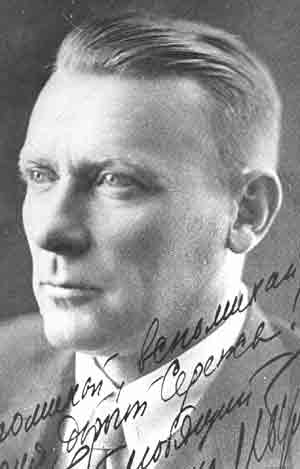
I will have more time in October. I am bookmarking all the links on this thread for later reference. I'm going to finish it as soon as I can, then I am going to read it all over again in the Glenny translation along with all the notes and all the links.
I'm really enjoying all the comments, discussion and the amazing scholarship from everyone on this thread. You are all amazing. I wish I could contribute more. Forgive me Comrades. And Bulgakov is amazing too. The two chapters describing the preparations for the ball, and the ball itself were some of the most incredible writing I have read for ages. (oooops is that a spoiler?)
Bulgakov was dashingly handsome, no?
90QuentinTom
ps: I noticed in Pevear's intro this Hoffmann quote:
'irony and buffoonery are expressions of the deepest contemplation of life in all its conditionality.'
Does everything go back to Hoffmann?
I'm fascinated to learn of the influence of Swift on Bulgakov, and Russian literature generally. Swift was also a huge influence on Hoffmann, and the early Dostoevsky.
Any (potential group read) Swift readers here?
'irony and buffoonery are expressions of the deepest contemplation of life in all its conditionality.'
Does everything go back to Hoffmann?
I'm fascinated to learn of the influence of Swift on Bulgakov, and Russian literature generally. Swift was also a huge influence on Hoffmann, and the early Dostoevsky.
Any (potential group read) Swift readers here?
91Porius
SWIFT'S EPITAPH
Swift has sailed into his rest;
Savage indignation there
Cannot lacerate his breast.
Imitate him if you dare,
World-besotted traveller; he
Served human liberty.
1931
WBY
Swift has sailed into his rest;
Savage indignation there
Cannot lacerate his breast.
Imitate him if you dare,
World-besotted traveller; he
Served human liberty.
1931
WBY
92LolaWalser
#75
I like the Burgin/O'Connor version the best.
#87
I think Pevear & Volokhonsky might have rendered "Faggot" (the checkered demon) as "Punk."
His alias is Fagot, nothing to do with faggot.
ETA: I always thought it was a pun on his thin and tall appearance and "musical" profession.
A fagot:

I like the Burgin/O'Connor version the best.
#87
I think Pevear & Volokhonsky might have rendered "Faggot" (the checkered demon) as "Punk."
His alias is Fagot, nothing to do with faggot.
ETA: I always thought it was a pun on his thin and tall appearance and "musical" profession.
A fagot:

93Porius
Some out of the way uses of fagot, or faggot:
- a bundle or bunch of anything
- a person hired to take the place of another at the muster of a company; a dummy.
-an old shriveled woman.
- a spice ball
some definitions, not necessarily applicable here.
- a bundle or bunch of anything
- a person hired to take the place of another at the muster of a company; a dummy.
-an old shriveled woman.
- a spice ball
some definitions, not necessarily applicable here.
94LolaWalser
In English. In Russian it doesn't have the same connotations, it's just a foreign-derived word for a bassoon.
95LolaWalser
Фаго́т
ETA: Er, in case it's still not clear, "Fagot" (Фагот) is Bulgakov's name (one of the names) for Korovyov, in the original, the translators just kept it.
ETA: Er, in case it's still not clear, "Fagot" (Фагот) is Bulgakov's name (one of the names) for Korovyov, in the original, the translators just kept it.
96DavidX
89. Mikhail Bulgakov was the handsomest author ever, not to mention his talent. It's not at all difficult to imagine someone going to hell and back for him.
90. I think EVERYTHING really does go back to Hoffman.
90. & 91. Swiftian! I hadn't thought of it. Definitely!
92. Thanks Lola. I hadn't noticed before that tall and skinny Hoffman and tall and skinny Koroviev both resemble a bassoon. What a hoot!
90. I think EVERYTHING really does go back to Hoffman.
90. & 91. Swiftian! I hadn't thought of it. Definitely!
92. Thanks Lola. I hadn't noticed before that tall and skinny Hoffman and tall and skinny Koroviev both resemble a bassoon. What a hoot!
98Macumbeira
Spoilerwarning !
If you reached the after - party where Woland indulges some of Margarita's wishes, then you are invited to read this :
http://macumbeira-macumbeira.blogspot.com/2009/08/master-and-margarita-exercise-...
If you reached the after - party where Woland indulges some of Margarita's wishes, then you are invited to read this :
http://macumbeira-macumbeira.blogspot.com/2009/08/master-and-margarita-exercise-...
99WilfGehlen
I continue to be amazed at Barratt's analysis which brings out Bulgakov's skill as a writer. An example: Barratt points out that Woland is at Griboedov's when Bezdomny arrives. There are many voices heard from the crowd, but one seems distinct from the rest. From the Penguin Classics version, p 63:
. . . a crowd gathered around Ivan's flame.
'Excuse men, excuse me, be more precise,' a soft and polite voice said over Ivan Nikolaevich's ear, 'tell me, what do you mean "killed"? Who killed?'
'A foreign consultant, a professor, and a spy,' Ivan said, looking around.
'And what is his name?' came softly to Ivan's ear.
It is Woland, who Bezdomny does not see when he looks around, who wants the details of his character announced. A voice which is soft and polite while all others are loud and agitated.This seems to be confirmed on the next page when Ivan continues, 'And meanwhile I'll search Griboedov's, I sense that he is here!'
Things are not always as they first appear, there are layers upon layers in Bulgakov's narrative. Read it for enjoyment the first time, naively reap the benefits of Bulgakov's consummate craftsmanship. But then revisit, question everything, and learn why everything fits together so well. (Or mostly everything. Bulgakov did leave it unfinished when he died.)
. . . a crowd gathered around Ivan's flame.
'Excuse men, excuse me, be more precise,' a soft and polite voice said over Ivan Nikolaevich's ear, 'tell me, what do you mean "killed"? Who killed?'
'A foreign consultant, a professor, and a spy,' Ivan said, looking around.
'And what is his name?' came softly to Ivan's ear.
It is Woland, who Bezdomny does not see when he looks around, who wants the details of his character announced. A voice which is soft and polite while all others are loud and agitated.This seems to be confirmed on the next page when Ivan continues, 'And meanwhile I'll search Griboedov's, I sense that he is here!'
Things are not always as they first appear, there are layers upon layers in Bulgakov's narrative. Read it for enjoyment the first time, naively reap the benefits of Bulgakov's consummate craftsmanship. But then revisit, question everything, and learn why everything fits together so well. (Or mostly everything. Bulgakov did leave it unfinished when he died.)
100Macumbeira
99 Unfinished Novel.
It is true that there are some loose ends from time to time. Thanks for pointing Woland at Gribodoev. I missed that. I was too much pondering over the fact that the " Maitre d'hotel" is described as a pirate, a bucaneer. Is this important ?
It is true that there are some loose ends from time to time. Thanks for pointing Woland at Gribodoev. I missed that. I was too much pondering over the fact that the " Maitre d'hotel" is described as a pirate, a bucaneer. Is this important ?
101WilfGehlen
Mac, I missed it too, over several readings. The key is a close reading, per Nabokov, and to stop and question. Bezdomny says, I'll search...I sense, but he has no chance to find. So was he right? Go back a page to find the answer. I will try this approach for my next read. Someone said you have to read The Master and Margarita at least once every ten years.
The pirate motif is perhaps just a foreshadowing of events that occur in Part 2, where Archibald Archibaldovitch shows his true colors. Some name, huh?
The character of Griboedov itself may be a motif for what comes at the end, depends on how much you want to reach.
ETA Of course, I didn't make the pirate connection until you asked the question. Also, a curious detail: mostly Woland is addressed as Messire by his cohorts, but prior to their last ride together (not a spoiler) Behemoth addresses him as maître.
The pirate motif is perhaps just a foreshadowing of events that occur in Part 2, where Archibald Archibaldovitch shows his true colors. Some name, huh?
The character of Griboedov itself may be a motif for what comes at the end, depends on how much you want to reach.
ETA Of course, I didn't make the pirate connection until you asked the question. Also, a curious detail: mostly Woland is addressed as Messire by his cohorts, but prior to their last ride together (not a spoiler) Behemoth addresses him as maître.
102Macumbeira
I wrote down the names not to get lost. The vitch at the end means, I think " son of ". Archibald Archibaldovitch means thus Archibald, son of Archibald.
This naming after the first name is not uncommon in the Scandinavian countries. Karllson, Polson, sigurdson etc. Don't forget that Rusland means "land of the vikings". In Iceland for example family names still change every generation. The other countries have "frozen" the family names to simplify matters : )
Can someone confirm this or is this a wrong assumption.
This naming after the first name is not uncommon in the Scandinavian countries. Karllson, Polson, sigurdson etc. Don't forget that Rusland means "land of the vikings". In Iceland for example family names still change every generation. The other countries have "frozen" the family names to simplify matters : )
Can someone confirm this or is this a wrong assumption.
103slickdpdx
Bulgakov must have been a big music fan. Not only does he name his characters after composers, he names the checkered demon "Bassoon" and describes most people's voices (bass, baritone, soprano whatever.) I can't tell you how relieved I am that the demon's name is bassoon.
104Macumbeira
why is that ?
105Macumbeira
In Peter and the Wolf by prokoview the grandfather is the bassoon
108DavidX

Charles Stone's illustration for chapter 7 from the Middlebury site.
I am moving slowly and picking up on so many things I missed the first time I read M&M. A lifetime could be devoted to studying this amazing book. It has many layers of hidden meaning, riddles within riddles, allusion and allegory abound in every detail. All rendered in subtle code so as to escape the notice of the secret police.
Each character is an enigma with multiple answers. Is there a key to M&M? Or is it an insoluble riddle?
Woland puts me in mind of Meister Abraham at times. It has been theorized the he might represent Stalin himself or Lenin.
The biblical monster Behemoth was Leviathan's hairy land dwelling counterpart. Both are to be cooked and served at an apocalyptic banquet after the day of judgement.
Koroviev has connections to Kappelmeister Kreisler in TLOTM, the devil from Ivan's dream in BK, and a vampire in A.K. Tolstoy's Upyr.
I think Koroviev is the most enigmatic of the characters. More about him when we get to the end of the book.
Soon we will meet another of Woland's henchmen, Azazello.
Information about the demon Azazel:
http://www.jewishencyclopedia.com/view.jsp?letter=A&artid=2203
http://www.deliriumsrealm.com/delirium/articleview.asp?Post=100
109QuentinTom
Azazel:
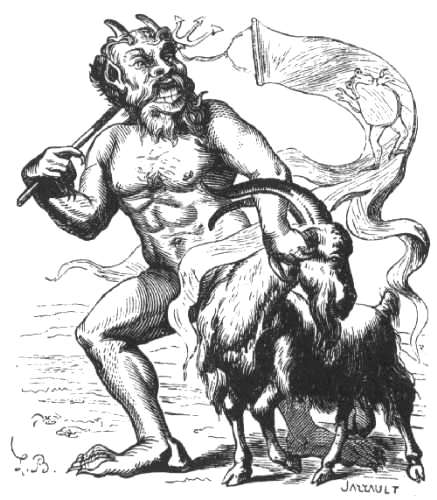
110DavidX
From The Book of Enoch the Prophet (tr. R.H. Charles)
VIII.1-2
And Azazel taught men to make swords, and knives, and shields, and breastplates, and made known to them the metals of the earth and the art of working them, and bracelets, and ornaments, and the use of antimony, and the beautifying of the eyelids, and all kinds of costly stones, and all coloring tinctures.
And there arose much godlessness, and they committed fornication, and they were led astray, and became corrupt in all their ways.
X.4-6
And again the Lord sayeth to Rapheal:'Bind Azazel hand and foot, and cast him into the darkness: and make an opening in the desert, which is in Dudael, and cast him therein.
And place upon him rough and jagged rocks, and cover him with darkness, and let him abide there for ever, and cover his face that he may not see the light. And on the day of the great judgement he shall be cast into the fire.'
*Please note that Azazel taught humans how to make weapons, jewelry, and cosmetics.
Azazel is guardian of goats. On the tenth of September, the Feast of the Expiation, it was Jewish custom to draw lots for two goats: one for the Lord Yehovah and the other for Azazel. The goat for the Lord was then sacrificed and its blood served as atonement. With the goat for Azazel, the high priest would place both of his hands on the goat's head and confess both his sins and the sins of the people. The "scapegoat" was then led into the desert and set free(see Leviticus 16).
Great illustration of Azazel Tom. What huge testicles that scapegoat has!
VIII.1-2
And Azazel taught men to make swords, and knives, and shields, and breastplates, and made known to them the metals of the earth and the art of working them, and bracelets, and ornaments, and the use of antimony, and the beautifying of the eyelids, and all kinds of costly stones, and all coloring tinctures.
And there arose much godlessness, and they committed fornication, and they were led astray, and became corrupt in all their ways.
X.4-6
And again the Lord sayeth to Rapheal:'Bind Azazel hand and foot, and cast him into the darkness: and make an opening in the desert, which is in Dudael, and cast him therein.
And place upon him rough and jagged rocks, and cover him with darkness, and let him abide there for ever, and cover his face that he may not see the light. And on the day of the great judgement he shall be cast into the fire.'
*Please note that Azazel taught humans how to make weapons, jewelry, and cosmetics.
Azazel is guardian of goats. On the tenth of September, the Feast of the Expiation, it was Jewish custom to draw lots for two goats: one for the Lord Yehovah and the other for Azazel. The goat for the Lord was then sacrificed and its blood served as atonement. With the goat for Azazel, the high priest would place both of his hands on the goat's head and confess both his sins and the sins of the people. The "scapegoat" was then led into the desert and set free(see Leviticus 16).
Great illustration of Azazel Tom. What huge testicles that scapegoat has!
111QuentinTom
yes!!! Where is Errol Flynn when you need him?
112absurdeist
LOL!!! I didn't even notice that goat's gargantuan gonads until you pointed them out. Thanks Mr. X!
113slickdpdx
Okay, "niura" carved on to the back of the bench where Azazello approaches Margarita. Will that be significant later or is that just a reference I don't understand and isn't footnoted? (Or both!)
114DavidX
Every detail in M&M is significant.
The names "Niura" and "Annushka" are informal diminutives of the name Anna. Perhaps these names are allusions to Anna Karenina, who was unfaithful to her husband like Margarita and was killed by a train like Berloiz.
It makes sense. Azazel fits in as the inventor of cosmetics and jewelry and as he who encourages sins like fornication and adultery.
Margarita and especially Natasha achieve a liberation that both Faust's Marguerite and Anna Karenina could only dream of.
The names "Niura" and "Annushka" are informal diminutives of the name Anna. Perhaps these names are allusions to Anna Karenina, who was unfaithful to her husband like Margarita and was killed by a train like Berloiz.
It makes sense. Azazel fits in as the inventor of cosmetics and jewelry and as he who encourages sins like fornication and adultery.
Margarita and especially Natasha achieve a liberation that both Faust's Marguerite and Anna Karenina could only dream of.
115absurdeist
Pretty astute connection there. I bet it's right on the money.
116anna_in_pdx
Maybe I should change my name to Margarita. Or maybe just Margo. I like it! :)
118Macumbeira
wow, amazed really !
119Macumbeira
or....
I cannot quote exactly because I lost my copy of M&M somewhere in the house...
If I remember well in chapter three Woland says to Berlioz that he is going to die and he adds that it is inevitable because "Anoeshka ( Anna ) has already spilled the oil". Berlioz fate is sealed ,no turning back, he is going to die.
Now with margarita and Azzazelo on the bench the name Niura (Anna) is carved in the wood. It is not there by accident. Bulgi wants to hint at something rather than show his erudition. Maybe he wants to echo the chapter three incident and announce by this that Margarita's fate is sealed too...
I know it sounds farfetched but some russian reader's think this is the explanation.
I cannot quote exactly because I lost my copy of M&M somewhere in the house...
If I remember well in chapter three Woland says to Berlioz that he is going to die and he adds that it is inevitable because "Anoeshka ( Anna ) has already spilled the oil". Berlioz fate is sealed ,no turning back, he is going to die.
Now with margarita and Azzazelo on the bench the name Niura (Anna) is carved in the wood. It is not there by accident. Bulgi wants to hint at something rather than show his erudition. Maybe he wants to echo the chapter three incident and announce by this that Margarita's fate is sealed too...
I know it sounds farfetched but some russian reader's think this is the explanation.
120QuentinTom
Davushka, are you channeling Bulgakov as well as Swedenborg now?
Mac, I'm lost. Explain more please.
Every detail in M&M is significant. Very true.
Mac, I'm lost. Explain more please.
Every detail in M&M is significant. Very true.
121Macumbeira
I tried explaining myself again see 119 : )
122anna_in_pdx
I am limiting my M&M reading to my bus commute and trying to draw it out as much as I can. I read fast and it is a real page turner. I tend to miss details, so I am trying like heck to slow myself down. I'm so grateful for the people in this thread and their comments.
I think it's eerie how similar this book seems to Tomcat Murr - poodles and all... Not to mention Koroviev being sort of like Kreisler and Woland being sort of like Master Abraham. How fortuitous that we read one right after the other.
Whoever posted the picture of the circle of poodles - thanks belatedly. (Davidx?)
I think it's eerie how similar this book seems to Tomcat Murr - poodles and all... Not to mention Koroviev being sort of like Kreisler and Woland being sort of like Master Abraham. How fortuitous that we read one right after the other.
Whoever posted the picture of the circle of poodles - thanks belatedly. (Davidx?)
123DavidX
I'm just thinking out loud. Playing free association.
Berloiz, like Anna Karenina's husband, is a high government official type, a total jerk, and has been left by his wife.
Berloiz dies as a result of Annushka spilling the sunflower oil. He is killed by a train being driven by a woman driver.
Anna Karenina thou art avenged?
Margarita is named for Faust's Marguerite who in turn is named for Queen Margot, Catherine de Medici's daughter, whose lover was beheaded. According to legend, she had his head preserved and kept it as a souvenir.
120. Shhh. Emmanuel will hear you. Varvara says hello. She loves The Master and Margarita by the way.
122. It is fortuitous indeed that we read Tomcat Murr before M&M. Also, our read started on a full moon. Both the Moscow and Yershalaim narratives begin during a full moon. And our very own Annushka is reading this on public transportation! ;)
Berloiz, like Anna Karenina's husband, is a high government official type, a total jerk, and has been left by his wife.
Berloiz dies as a result of Annushka spilling the sunflower oil. He is killed by a train being driven by a woman driver.
Anna Karenina thou art avenged?
Margarita is named for Faust's Marguerite who in turn is named for Queen Margot, Catherine de Medici's daughter, whose lover was beheaded. According to legend, she had his head preserved and kept it as a souvenir.
120. Shhh. Emmanuel will hear you. Varvara says hello. She loves The Master and Margarita by the way.
122. It is fortuitous indeed that we read Tomcat Murr before M&M. Also, our read started on a full moon. Both the Moscow and Yershalaim narratives begin during a full moon. And our very own Annushka is reading this on public transportation! ;)
124Porius
J. deM. GM of KT was avenged with a similar shout when the Fr. Monarchs went kaput.
Ja: deM: thou art avenged. Maybe?
Ja: deM: thou art avenged. Maybe?
125QuentinTom
119
Gotcha. Sounds totally plausible to me.
Gotcha. Sounds totally plausible to me.
126DavidX
I was wondering about the sunflower oil. I searched a bit and found out that sunflower oil is very popular in Russia, where the sunflower was first cultivated as a food crop by Peter the Great, because it is not prohibited during Lent by the Russian Orthodox Church as many other cooking oils are.
Both the Moscow and Yershalaim narratives begin on the Wednesday before Easter. Like Faust, M&M is an Easter book. Annushka bought sunflower oil at the grocery store because it is Lent.
124. Yes, It is said that when Louis XVI was beheaded, an unknown man jumped onto the platform, dipped his hands in the Monarch's blood and flung it over the crowd crying "Jacques de Molay thou art avenged!".
Both the Moscow and Yershalaim narratives begin on the Wednesday before Easter. Like Faust, M&M is an Easter book. Annushka bought sunflower oil at the grocery store because it is Lent.
124. Yes, It is said that when Louis XVI was beheaded, an unknown man jumped onto the platform, dipped his hands in the Monarch's blood and flung it over the crowd crying "Jacques de Molay thou art avenged!".
127anna_in_pdx
I tried to make this last but I did finish it tonight. And this is only reading it on the bus!
Where are others? Are we going to try for a Bulgakov "Hot Review Takeover" like we did for Hoffman?
I would like to get in line to write a review, but need some time to recuperate. I just finished another book, The Guns of August, which left me kind of emotionally overwrought.
Where are others? Are we going to try for a Bulgakov "Hot Review Takeover" like we did for Hoffman?
I would like to get in line to write a review, but need some time to recuperate. I just finished another book, The Guns of August, which left me kind of emotionally overwrought.
128absurdeist
HRT, eh? You lassies all do what ye will. I be afear'd to advise regardin' HRT, as it myght be a violatin' tee-oh-sss were I ta advise ye so. They might make me walk the plank, is what I fear. But ye decide fer yerselves if HRT is up yer alley. I won't protest, even a iffa I don't a partaketh.
129Macumbeira
Freaky, the fearless fury of the Farrabian !
130WilfGehlen
>119 Macumbeira: Verrry interesting, Mac, about Niura. (Channeling Henry Gibson). Azazello and Margarita in Alexandrovsky Garden at the beginning of Part 2 reprise Woland and Berlioz/Bezdomny at Patriarch's Ponds at the beginning of Part 1. So much for structure.
My take on 'Niura' is based on Azazello's next comment, Difficult folks, these women! Azazello is good at soldiering, shooting a Russian spy through the heart or the pip on a playing card hidden under a pillow, but he is no 'charmer'. But he is tasked to charm Margarita into playing her role and he may have been tasked to charm Annushka into playing her role. Why else would he have said, these women? It seems necessary for these devils to persuade, initially, otherwise why would Azazello spend half an hour 'wangling' Margarita into saying, I will?
With this we leave behind the Moscow carnival and begin to see the real reason for Woland's visit, which is revealed in Margarita's thread. Fortunately, Margarita is more receptive to believing in the devil than Berlioz, being willing to go to hell and back.
Note that it is in this episode that Margarita says, I'd pawn my soul to the devil just to find out whether he's alive or not. . . She is willing to make the Faustian bargain but it seems that it doesn't work out quite that way. Woland is not Goethe's Mephistopheles. But Margarita does play the role of Gretchen, at least in one aspect, to be seen at the end.
My take on 'Niura' is based on Azazello's next comment, Difficult folks, these women! Azazello is good at soldiering, shooting a Russian spy through the heart or the pip on a playing card hidden under a pillow, but he is no 'charmer'. But he is tasked to charm Margarita into playing her role and he may have been tasked to charm Annushka into playing her role. Why else would he have said, these women? It seems necessary for these devils to persuade, initially, otherwise why would Azazello spend half an hour 'wangling' Margarita into saying, I will?
With this we leave behind the Moscow carnival and begin to see the real reason for Woland's visit, which is revealed in Margarita's thread. Fortunately, Margarita is more receptive to believing in the devil than Berlioz, being willing to go to hell and back.
Note that it is in this episode that Margarita says, I'd pawn my soul to the devil just to find out whether he's alive or not. . . She is willing to make the Faustian bargain but it seems that it doesn't work out quite that way. Woland is not Goethe's Mephistopheles. But Margarita does play the role of Gretchen, at least in one aspect, to be seen at the end.
131WilfGehlen
In looking back at Part 1, you might want to consider the similarity of the paper money motif in the Variety episode and after with the episode in Faust, Part 2 where Mephistopheles issues paper currency at the Emperor's court. Interesting, but not substantive.
Some critics have made the connection between Pilate's interrogation of Jeshua and the Grand Inquisitor chapter in The Brothers Karamazov. I'm still trying to wrap my head around that. Dostoevsky's paragraphs are so long!
Some thoughts on our first encounter with the Master.'I am a master.' He grew stern and took from the pocket of his dressing-gown a completely greasy black cap with the letter 'M' embroidered on it in yellow silk. He put this cap on and showed himself to Ivan both in profile and full face, to prove that he was a master. Bulgakov must be trying to make him look ridiculous at this point.
A bit later, recalling events the previous January, the Master says, outside his apartment, I had nowhere to go, and the simplest thing, of course, would have been to throw myself under a tram-car on the street where my lane came out. Of course, this is what happens to Berlioz, so his end is fitting, whether or not deserved, in answer to an earlier question. The Master's apartment is not particularly near Patriarch's Ponds, but perhaps it is near to the circumferential tram line, route A, nicknamed Annushka, so perhaps it is the same line where Berlioz fell (allowing for literary license, in that no tram line actually went by Patriarch's Ponds as described).
Some critics have made the connection between Pilate's interrogation of Jeshua and the Grand Inquisitor chapter in The Brothers Karamazov. I'm still trying to wrap my head around that. Dostoevsky's paragraphs are so long!
Some thoughts on our first encounter with the Master.'I am a master.' He grew stern and took from the pocket of his dressing-gown a completely greasy black cap with the letter 'M' embroidered on it in yellow silk. He put this cap on and showed himself to Ivan both in profile and full face, to prove that he was a master. Bulgakov must be trying to make him look ridiculous at this point.
A bit later, recalling events the previous January, the Master says, outside his apartment, I had nowhere to go, and the simplest thing, of course, would have been to throw myself under a tram-car on the street where my lane came out. Of course, this is what happens to Berlioz, so his end is fitting, whether or not deserved, in answer to an earlier question. The Master's apartment is not particularly near Patriarch's Ponds, but perhaps it is near to the circumferential tram line, route A, nicknamed Annushka, so perhaps it is the same line where Berlioz fell (allowing for literary license, in that no tram line actually went by Patriarch's Ponds as described).
132absurdeist
Good intro encapsulation for newcomers to the book, and newcomers to the salon just beginning M&M (though hardly the high-intensive analytical exposition we've practically taken for granted ((taken for granted? oh may it never be!)) from the highly esteemed Messrs: Mr. X, Mac, & Wilf).
http://us.penguingroup.com/static/rguides/us/master_and_margarita.html
http://us.penguingroup.com/static/rguides/us/master_and_margarita.html
133Macumbeira
Thanks Henry for this link.
The questions are interesting.
But it becomes clear that this salon has discovered a major ( previous unknwon link ) between Hoffman and Bulgi.
And I think Gogol stories are better compared to M&M instead of Death souls
The questions are interesting.
But it becomes clear that this salon has discovered a major ( previous unknwon link ) between Hoffman and Bulgi.
And I think Gogol stories are better compared to M&M instead of Death souls
134QuentinTom
Yes, I agree, with both the Hoffmann and the Gogol connections, Mac.
At the risk of total redundancy, I'm going to make some quick links to a few Gogol stories here for those Salonistas who are not acquainted with Gogol. He is the major presence in Russian prose fiction; and any writer subsequent to Gogol paid their debts to him. Dostoevsky said: "We all come out from Gogol's overcoat" a reference G's tale: 'The Overcoat'.
The two stories which are the biggest influence on M&M are: 'Christmas Eve' and 'Vy'. All the magical elements in M&M are especially drawn from those two stories: Margarita and Natsha's flights (complete with flying upside down) are from Christmas Eve; the devil's visit to a village/Moscow; while the ball scene and the creeping evil of the Woland scenes are hugely reminiscent of 'Vy'. Another tale which is a big influence is 'The Terrible Vengeance', especially with the horses, and the intensity of the writing and vision at the end.
I'm sure Our Triumvirate of Leaders can expand more on this, as I know they are considerable Gogol experts.
For Salonistas hitherto unacquainted with Gogol, I cannot recommend him highly enough. I have written about him on my blog, if I might humbly refer to it.
http://thelectern.blogspot.com/2008/12/dead-souls-nikolai-gogol.html
I have finished the book and am thinking about M&M's religious themes, and their connection to Russian Orthodoxy. I hope to have something to post about this soon. I am still inundated with work, sadly.
At the risk of total redundancy, I'm going to make some quick links to a few Gogol stories here for those Salonistas who are not acquainted with Gogol. He is the major presence in Russian prose fiction; and any writer subsequent to Gogol paid their debts to him. Dostoevsky said: "We all come out from Gogol's overcoat" a reference G's tale: 'The Overcoat'.
The two stories which are the biggest influence on M&M are: 'Christmas Eve' and 'Vy'. All the magical elements in M&M are especially drawn from those two stories: Margarita and Natsha's flights (complete with flying upside down) are from Christmas Eve; the devil's visit to a village/Moscow; while the ball scene and the creeping evil of the Woland scenes are hugely reminiscent of 'Vy'. Another tale which is a big influence is 'The Terrible Vengeance', especially with the horses, and the intensity of the writing and vision at the end.
I'm sure Our Triumvirate of Leaders can expand more on this, as I know they are considerable Gogol experts.
For Salonistas hitherto unacquainted with Gogol, I cannot recommend him highly enough. I have written about him on my blog, if I might humbly refer to it.
http://thelectern.blogspot.com/2008/12/dead-souls-nikolai-gogol.html
I have finished the book and am thinking about M&M's religious themes, and their connection to Russian Orthodoxy. I hope to have something to post about this soon. I am still inundated with work, sadly.
135Macumbeira
Thanks TC ! I always feel better when you confirm my suspicions !
In M&M, a stranger is called a "German" just like in a "Christmas Eve"
In M&M, a stranger is called a "German" just like in a "Christmas Eve"
136WilfGehlen
>132 absurdeist: Thanks, K (alias Enrique, Henry, . . . quite a troupe) for the link. I recommend it to all salonistas. The questions are intriguing and right on the mark. Even more, the act of questioning is central to a reading of Master and Margarita.
Which influences affected the author I find irrelevant, although a related question, which literature enhances our reading of the book, I find most relevant. Both questions likely share common answers, but we can be definite about the latter while the former can only remain murky. Of course, the specific answer will vary with the reader and his/her/its interpretation.
The distribution of paper currency, which later disappears, in the Variety episode owes a debt to Faust Part 2, but this particular linkage provides no deeper treasure.
In contrast, at our second visit to Griboedov's, in Part 2 of M&M, Kovoviev mentions Don Quixote. Koroviev, who is most certainly not Dostoevsky("'You're not Dostoevsky,' said the citizeness"), is described later, after he 'has paid up and closed his account', as a dark-violet knight with a most gloomy and never-smiling face. It puts me in mind of the knight of the woeful countenance.
He may not be Don Quixote either, despite Sancho's characterization, but, whether or no, the common themes of truth and madness are enough to pull me into Don Quixote.
Which influences affected the author I find irrelevant, although a related question, which literature enhances our reading of the book, I find most relevant. Both questions likely share common answers, but we can be definite about the latter while the former can only remain murky. Of course, the specific answer will vary with the reader and his/her/its interpretation.
The distribution of paper currency, which later disappears, in the Variety episode owes a debt to Faust Part 2, but this particular linkage provides no deeper treasure.
In contrast, at our second visit to Griboedov's, in Part 2 of M&M, Kovoviev mentions Don Quixote. Koroviev, who is most certainly not Dostoevsky("'You're not Dostoevsky,' said the citizeness"), is described later, after he 'has paid up and closed his account', as a dark-violet knight with a most gloomy and never-smiling face. It puts me in mind of the knight of the woeful countenance.
He may not be Don Quixote either, despite Sancho's characterization, but, whether or no, the common themes of truth and madness are enough to pull me into Don Quixote.
137QuentinTom
Golly. A group read of Don Quixote, anyone? I still haven't read it.
142Macumbeira
Wilf, if we follow your reasoning then we end up with as many different interpretations as there are readers. Fair enough, but IMHO it is better to come to a certain consensus about a work of art. Even if there are several options it is better than an infinite number ways of understanding a book.
If readers can at least agree who had a major influence on the artist, it narrows the possible understandings of a book. Had Melville not met Hawthorne, it is possible that Moby Dick would not have been the book it is recognized today with its deeper meanings of good and evil.
If readers can at least agree who had a major influence on the artist, it narrows the possible understandings of a book. Had Melville not met Hawthorne, it is possible that Moby Dick would not have been the book it is recognized today with its deeper meanings of good and evil.
143Macumbeira
137 ( in panic ) Don Q is 750 pages in the unabridged version !! We still have the miserables, infinite jest etc on the program....
145WilfGehlen
>142 Macumbeira: You're right about Hawthorne, Mac. There's no question about the motivation involved. It's not that I don't recognize the importance of influences, it's that care about them only in an historical sense, not in a literary sense.
To me, there is more literary value in the Camus-Melville connection than in the Hawthorne-Melville connection even though Melville never met Camus or read his works. They were a century and an ocean apart, but both tapped into the same source, sharing a common Muse.
Moby-Dick stands on its own without my knowing of Hawthorne. Once a book is published it has a life of its own beyond its author. An author may not even understand what it means to all its readers, living a hundred or a thousand years after him.
BTW, I'm not recommending a group read of Don Quixote. It's just that I personally want to follow up the possible connection with The Master and Margarita.
To me, there is more literary value in the Camus-Melville connection than in the Hawthorne-Melville connection even though Melville never met Camus or read his works. They were a century and an ocean apart, but both tapped into the same source, sharing a common Muse.
Moby-Dick stands on its own without my knowing of Hawthorne. Once a book is published it has a life of its own beyond its author. An author may not even understand what it means to all its readers, living a hundred or a thousand years after him.
BTW, I'm not recommending a group read of Don Quixote. It's just that I personally want to follow up the possible connection with The Master and Margarita.
146Macumbeira
I guess you are a formalist or a new criticist and I am the contrary or is it vice versa ?
147absurdeist
This message has been deleted by its author.
149DavidX
Kevin Moss on Koroviev's transformation:
As they leave Moscow each of the members of Woland's suite turns back into his original form. Koroviev turns out to be a knight in dark-purple who once made a bad pun about darkness and light. The inspiration for this character seems to come from Cervantes' novel Don Quixote which Bulgakov adapted for stage in 1938. In the novel the knight Sanson, in order to force his friend Don Quixote to return home and give up being a knight, disguises himself as the Knight of the White Moon and challenges him to a duel. He beats Don Quixote, who when forced to return home cannot bear the collapse of his fantasies and dies. In this way Sanson becomes the unwilling cause of Don Quixote's death. Bulgakov alters Cervantes' name from Samson to Sanson or Sun-son, the son of the sun. Here Bulgakov plays on the themes of light and dark since the knight connected with the sun commits a dark deed while Don Quixote who had gone mad, and in that way is connected with darkness, actually comes across as a figure of light. The knight's unsuccessful joke is connected with the theme of light and dark. This theme again plays in with the epigraph of the novel itself about willing evil but actually accomplishing good. The dark violet of Korovyev's armor symbolizes the mourning and death of the lovers and their passage to a different world. This color was used in this way in the poetry and prose of the Russian Symbolists, and in particular Andrei Bely's poem The Last Meeting. (Sokolov)
Mr. Moss has also pointed out the connection to Kappelmeister Kreisler in TLOTM and to the vampire Telyaev, who turns into the knight Amvrossi, in A.K. Tolstoy's story Upyr.
Another theory I read about on an esoteric forum suggests a connection between Koroviev and the prophet Isaiah. More about that later.
I would love to read DQ again too. But, I don't have time currently. There are far many neglected treasures in my tbr pile.
As they leave Moscow each of the members of Woland's suite turns back into his original form. Koroviev turns out to be a knight in dark-purple who once made a bad pun about darkness and light. The inspiration for this character seems to come from Cervantes' novel Don Quixote which Bulgakov adapted for stage in 1938. In the novel the knight Sanson, in order to force his friend Don Quixote to return home and give up being a knight, disguises himself as the Knight of the White Moon and challenges him to a duel. He beats Don Quixote, who when forced to return home cannot bear the collapse of his fantasies and dies. In this way Sanson becomes the unwilling cause of Don Quixote's death. Bulgakov alters Cervantes' name from Samson to Sanson or Sun-son, the son of the sun. Here Bulgakov plays on the themes of light and dark since the knight connected with the sun commits a dark deed while Don Quixote who had gone mad, and in that way is connected with darkness, actually comes across as a figure of light. The knight's unsuccessful joke is connected with the theme of light and dark. This theme again plays in with the epigraph of the novel itself about willing evil but actually accomplishing good. The dark violet of Korovyev's armor symbolizes the mourning and death of the lovers and their passage to a different world. This color was used in this way in the poetry and prose of the Russian Symbolists, and in particular Andrei Bely's poem The Last Meeting. (Sokolov)
Mr. Moss has also pointed out the connection to Kappelmeister Kreisler in TLOTM and to the vampire Telyaev, who turns into the knight Amvrossi, in A.K. Tolstoy's story Upyr.
Another theory I read about on an esoteric forum suggests a connection between Koroviev and the prophet Isaiah. More about that later.
I would love to read DQ again too. But, I don't have time currently. There are far many neglected treasures in my tbr pile.
150WilfGehlen
>149 DavidX: Thanks, DX. I still don't see the pun, but this is a good lead.
Pevear also references Hoffman in his Introduction, Bulgakov always loved clowning and agreed with E. T. A. Hoffmann that irony and buffoonery are expressions of 'the deepest contemplation of life in all its conditionality'.
DX earlier asked about parallels between the Moscow and Yershalaim threads, and later made a comment that put me in mind of a timeline. Here is the briefest outline of a timeline:
***POSSIBLE SPOILER ALERT***
Wednesday, 12 Nisan
* Yeshua leaves an ill Matthew Levi at Bethphage to rush to Yershalaim on urgent business, which turns out to be a sting operation hosted by Judas of Kiriath. Yeshua is arrested and locked up in prison.
* Woland arrives in Moscow, releases Bezdomny from the clutches of Berlioz, leads him on a chase to Griboedov's, where Bezdomny is taken away, to be locked up in a mental hospital.
Thursday, 13 Nisan
* Yeshua accustoms himself to his new accommodations, gets beaten by Ratslayer.
* Woland accustoms himself to his new accommodations, Berlioz's apartment. Entertains that evening at The Variety.
Friday, 14 Nisan
* Pilate interrogates Yeshua starting early in the morning, sentences him when the sun is overhead. Hung out to dry, Yeshua is dispatched on Pilate's orders just before sunset. Matthew Levi witnesses, but can do nothing. Pilate that night sends the secret police to kill Judas, who is lured out of the city by Niza. Knifed in the heart.
* Margarita wakes around noon, meets Azazello at Alexandrovsky Garden just before Berlioz's funeral (3:00 pm). Bewitched at 9:30, at 10:00 she is en route to Apt. 50 via the reduced scope Walpurgisnacht, only a few frogs in attendance. Hostess to Satan's Ball, midnight Friday to midnight Friday. Baron Meigel provides the entertainment, shot through the heart. Secret police investigate Thursday's activities through the night.
Saturday, 15 Nisan
* Pilate debriefs the secret police chief in the predawn hours of Saturday morning. Interviews Matthew Levi, releases him an hour before dawn.
* Secret police on the case all morning. At 4:00 pm, they raid Apt 50. Koroviev and Behemoth escape, visit a currency store on the Smolensky marketplace, then Griboedov's, then rendezvous with Woland and Azazello at sunset. Margarita wakes at sunset in the Master's basement apartment. Azazello arrives and, after a few preliminaries, escorts them to meet Woland. All leave Moscow to the west, just ahead of the setting sun.
Pevear also references Hoffman in his Introduction, Bulgakov always loved clowning and agreed with E. T. A. Hoffmann that irony and buffoonery are expressions of 'the deepest contemplation of life in all its conditionality'.
DX earlier asked about parallels between the Moscow and Yershalaim threads, and later made a comment that put me in mind of a timeline. Here is the briefest outline of a timeline:
***POSSIBLE SPOILER ALERT***
Wednesday, 12 Nisan
* Yeshua leaves an ill Matthew Levi at Bethphage to rush to Yershalaim on urgent business, which turns out to be a sting operation hosted by Judas of Kiriath. Yeshua is arrested and locked up in prison.
* Woland arrives in Moscow, releases Bezdomny from the clutches of Berlioz, leads him on a chase to Griboedov's, where Bezdomny is taken away, to be locked up in a mental hospital.
Thursday, 13 Nisan
* Yeshua accustoms himself to his new accommodations, gets beaten by Ratslayer.
* Woland accustoms himself to his new accommodations, Berlioz's apartment. Entertains that evening at The Variety.
Friday, 14 Nisan
* Pilate interrogates Yeshua starting early in the morning, sentences him when the sun is overhead. Hung out to dry, Yeshua is dispatched on Pilate's orders just before sunset. Matthew Levi witnesses, but can do nothing. Pilate that night sends the secret police to kill Judas, who is lured out of the city by Niza. Knifed in the heart.
* Margarita wakes around noon, meets Azazello at Alexandrovsky Garden just before Berlioz's funeral (3:00 pm). Bewitched at 9:30, at 10:00 she is en route to Apt. 50 via the reduced scope Walpurgisnacht, only a few frogs in attendance. Hostess to Satan's Ball, midnight Friday to midnight Friday. Baron Meigel provides the entertainment, shot through the heart. Secret police investigate Thursday's activities through the night.
Saturday, 15 Nisan
* Pilate debriefs the secret police chief in the predawn hours of Saturday morning. Interviews Matthew Levi, releases him an hour before dawn.
* Secret police on the case all morning. At 4:00 pm, they raid Apt 50. Koroviev and Behemoth escape, visit a currency store on the Smolensky marketplace, then Griboedov's, then rendezvous with Woland and Azazello at sunset. Margarita wakes at sunset in the Master's basement apartment. Azazello arrives and, after a few preliminaries, escorts them to meet Woland. All leave Moscow to the west, just ahead of the setting sun.
151WilfGehlen
What's in a name? I don't know myself and I certainly can't speak for Mikhail, but here are some free associations, derived from a search of baby names:
Goethe->Gerta->Gretchen->Greta->Margarita (Greek, pearl)
Niura->Nura (Aramaic, light)
Niza->Nitsa (Greek, peace)
Goethe->Gerta->Gretchen->Greta->Margarita (Greek, pearl)
Niura->Nura (Aramaic, light)
Niza->Nitsa (Greek, peace)
152QuentinTom
Very useful timeline Wilf! thanks.
153DavidX
Yes, thankyou Wilf, very helpful. Your timeline has set the rusty wheels in my brain in motion.
154Macumbeira
I guess everybody is finishing his M&M read by now. Time for a little celebration ?
What about Anna 's proposal ? ( 127 ) any enthoesiast takers ?
What about Anna 's proposal ? ( 127 ) any enthoesiast takers ?
156DavidX
I'm celebrating the arrival the M&M Russian TV miniseries that I ordered.
A satanic celebration:
http://www.youtube.com/watch?v=qyXV9oeBIjc
I also received the classic Russian film adaptation of VIY(1967).
http://www.youtube.com/watch?v=eI38OrAOiY8
There is a much anticipated remake of VIY scheduled for release on 10/29/09, just in time for Halloween.
I'm going to try to rewrite my old M&M review. But don't anyone wait for me. If you are feeling inspired. Go for it.
A satanic celebration:
http://www.youtube.com/watch?v=qyXV9oeBIjc
I also received the classic Russian film adaptation of VIY(1967).
http://www.youtube.com/watch?v=eI38OrAOiY8
There is a much anticipated remake of VIY scheduled for release on 10/29/09, just in time for Halloween.
I'm going to try to rewrite my old M&M review. But don't anyone wait for me. If you are feeling inspired. Go for it.
157PimPhilipse
>156 DavidX:: What a party!
In an earlier redaction of the book, Goethe and Gounod are also among the guests. They get an honorary treatment.
In an earlier redaction of the book, Goethe and Gounod are also among the guests. They get an honorary treatment.
158QuentinTom
O.M.F.G.
Now how am I supposed to get any work done!?
Now how am I supposed to get any work done!?
159Macumbeira
awfully quiet in the salon...
Is it something I said ?
Is it something I said ?
160QuentinTom
We are all watching M&M on Youtube. Shut up and pull up a chair. Here. Herring. Vodka. Catnip.
161Macumbeira
yummi !!!
162QuentinTom
it's so gripping!
163DavidX
FYI. If you have the DVD set of M&M, you must first press play and then press the subtitle button on your dvd remote to enable the english subtitles. It took me an entire evening to figure that out.
Indeed, I have been completely absorbed in the minseries in the evenings after work and haven't been getting much reading done.
There is so much left to discuss. The evil apartment, Satan's Ball, the transformation, etc. I have the weekend off. I'll be posting some things tommorrow.
Indeed, I have been completely absorbed in the minseries in the evenings after work and haven't been getting much reading done.
There is so much left to discuss. The evil apartment, Satan's Ball, the transformation, etc. I have the weekend off. I'll be posting some things tommorrow.
164WilfGehlen
> 162. I assume you're referring to M's midnight ride astride the broom, Murr?
> 163. DX, I just watched the last bit of the Yershalaim story, and noted what Aphranius did with Pilate's ring. It isn't in the book (unless in a redacted version) but it rings true in pointing out that there is more to the head of the secret service than meets the eye.
Aphranius is 15 years in country, serves Caesar, not Pilate, knows everything that goes on and has a very good idea of what comes next. He carries out Pilate's directives, stated or unstated, with exceptional skill, but likely knows that Pilate will soon leave, leaving him to deal with the mess left behind.
> 132 One of the questions in EF's link concerns the Master's reward: why not light, but rather peace. The video sheds some light on this at the end, and turns the question end over end. Something I also picked up in my last read (but not earlier), and clearly illuminated in the video's last scene.
> 163. DX, I just watched the last bit of the Yershalaim story, and noted what Aphranius did with Pilate's ring. It isn't in the book (unless in a redacted version) but it rings true in pointing out that there is more to the head of the secret service than meets the eye.
Aphranius is 15 years in country, serves Caesar, not Pilate, knows everything that goes on and has a very good idea of what comes next. He carries out Pilate's directives, stated or unstated, with exceptional skill, but likely knows that Pilate will soon leave, leaving him to deal with the mess left behind.
> 132 One of the questions in EF's link concerns the Master's reward: why not light, but rather peace. The video sheds some light on this at the end, and turns the question end over end. Something I also picked up in my last read (but not earlier), and clearly illuminated in the video's last scene.
165QuentinTom
regarding gripping', one thing that has always worried me about broomstick flight is the possibility of splinters. Anyone else worry about this?
166Macumbeira
I agree, especially if you are sitting with your bare bum on it.
167absurdeist
bare bum on a broomstick? splinters penetrating the subdermal tissues of the buttocks?
might just be me, but some people (granted, a minority among societal norms), might enjoy that!
woohoo!
might just be me, but some people (granted, a minority among societal norms), might enjoy that!
woohoo!
168Macumbeira
jack-ass stuff !
169absurdeist
Why, I adore JackAss stuff! Thanks for the association Mac!
http://www.jackassworld.com/videos
o so sad to see a group read deteriorate to this....
**hangs head in shame, eyes downcast, forlorn appearance**
http://www.jackassworld.com/videos
o so sad to see a group read deteriorate to this....
**hangs head in shame, eyes downcast, forlorn appearance**
170Macumbeira
Do you remember those exciting days when we were scanning the world from the ice cave en route to the top of the himalaya of litterature ?
171absurdeist
I do Mac. I believe Archie Bunker said it best.
http://www.youtube.com/watch?v=0d8FTPv955I
And, Mac, if you'll please abstain from posting any more questionnable, objectionable, distasteful and crude material regarding "jackass stuff," I will be most pleased. Not everyone here has such a bawdy, ribald sense of humour as you, and I'm quite worried, actually, that your post 168 may have already driven some people away.
http://www.youtube.com/watch?v=0d8FTPv955I
And, Mac, if you'll please abstain from posting any more questionnable, objectionable, distasteful and crude material regarding "jackass stuff," I will be most pleased. Not everyone here has such a bawdy, ribald sense of humour as you, and I'm quite worried, actually, that your post 168 may have already driven some people away.
172QuentinTom
HAHAHA
Wow, this catnip is hit shot stuff!
Wow, this catnip is hit shot stuff!
173Macumbeira
It was not post 168 that chased away the good people of this salon, it was the one soixante - neuf post !! that did it.
Allow me to object your sense -less remark ! Jackass is culture compared to the sordid things all these writers do in private !! Flaubert catching lice from his oriental odalisque, Gide with his Congo-lian catamites und worst of all Proust with his filthy butchered rats!!
I am disgusted by the modernists !
Allow me to object your sense -less remark ! Jackass is culture compared to the sordid things all these writers do in private !! Flaubert catching lice from his oriental odalisque, Gide with his Congo-lian catamites und worst of all Proust with his filthy butchered rats!!
I am disgusted by the modernists !
174QuentinTom
not to mention Forster with his Alexandrian tram conductor, Conrad with his cabin boys and VW with her aristocrat!
disgusting indeed!
disgusting indeed!
175absurdeist
or Hemingway w/his absinthe!
176solla
Someone earlier was talking about Satan's Grand Ball as the center of the book. I have to agree with that. My feeling is that there is a lot in that chapter and that I am not fully grasping it. Why Margarite was chosen, how she is told that she is doing so well, although throughout Satan's cohorts seem to be doing a lot of prompting as well, the heavy necklace, her compassion for Frieda, and although it is Satan's ball, he does not necessarily seem to enjoy it.
And then, I only just, on my second read of the novel, really took note of the sentence that cowardice is the worst vice - Ha-Nostri was reported to have said this in a Pontius Pilate chapter, and then it is repeated near the end. Yet it is really not elaborated on, and it is only mentioned in relation to Pilate in not going out on a limb for Ha-Nostri.
To me the novel separates into three threads. One is the romp - that is descending into Moscow and wreaking havoc, particularly on the pretentious. I suspect there is quite a lot I am not getting in this thread, more specific political commentary.
The second is the story of Ha-Nostri and Pontius Pilate.
The third is the story of the master and margarite.
Within the latter two stories is a theme of the roles of what we call good and evil, but which may also be light and shadow, necessary to each other. Why is it, for instance, that the master deserves peace but not light? Is it his brokenness in reaction to criticism of his novel? His abandonment of Margarite when he goes to the hospital? Is such a loss of confidence a kind of cowardice as well?
I have the feeling that I'm going to be rereading this book many times more in the future.
And then, I only just, on my second read of the novel, really took note of the sentence that cowardice is the worst vice - Ha-Nostri was reported to have said this in a Pontius Pilate chapter, and then it is repeated near the end. Yet it is really not elaborated on, and it is only mentioned in relation to Pilate in not going out on a limb for Ha-Nostri.
To me the novel separates into three threads. One is the romp - that is descending into Moscow and wreaking havoc, particularly on the pretentious. I suspect there is quite a lot I am not getting in this thread, more specific political commentary.
The second is the story of Ha-Nostri and Pontius Pilate.
The third is the story of the master and margarite.
Within the latter two stories is a theme of the roles of what we call good and evil, but which may also be light and shadow, necessary to each other. Why is it, for instance, that the master deserves peace but not light? Is it his brokenness in reaction to criticism of his novel? His abandonment of Margarite when he goes to the hospital? Is such a loss of confidence a kind of cowardice as well?
I have the feeling that I'm going to be rereading this book many times more in the future.
177Macumbeira
Thank you solla for bringing the salon back to the subject of this thread.
I think that M&M is what it is, an unfinished Masterpiece, leaving the reader with much ( too much ) questions about what was the writers intention. It has been manipulated,altered and changed too much by censors, wives, translators and not always according Bulgakov plans.
So, for me, the book looks like an unedited film. Some superb scenes like the ball, the flight over Moscow, the interogation of jezus and the opening chapters hint at the masterwork it probably is or it certainly would become but it still needed to be worked on ......by Bulgakov.
I think that M&M is what it is, an unfinished Masterpiece, leaving the reader with much ( too much ) questions about what was the writers intention. It has been manipulated,altered and changed too much by censors, wives, translators and not always according Bulgakov plans.
So, for me, the book looks like an unedited film. Some superb scenes like the ball, the flight over Moscow, the interogation of jezus and the opening chapters hint at the masterwork it probably is or it certainly would become but it still needed to be worked on ......by Bulgakov.
180DavidX
After the ball, when Professor Woland asks Margarita what reward she would like, she asks that Frieda be released from her punishment, the reappearance of the handkerchief that she used to smother her baby.
Kevin Moss on Frieda:
"Frieda combines the biographies of several women. Two were case studies in Swiss psychologist August Forel's book Sexual Questions (1908). Bulgakov's notes have an excerpt from this book: 'Frieda Keller--killed her boy. Koniecko--suffocated her baby with a handkerchief'
Frieda Keller (b. 1879) worked as a seamstress and waitress in St. Gallen. She was raped by the owner of the cafe and gave her baby up to an orphanage. But when the boy was returned to her at age 5 she strangled him with a string and buried him in a shallow grave. She was sentenced to life in prison. Because of her modesty and good behavior, public opinion in Switzerland turned in her favor, and Forel himself wrote that he hoped "poor Frieda Keller" would soon be released.
He also wrote of the 19 year old Silesian worker Koniecko, who gave birth to a child and suffocated it by stuffing a handkerchief in its mouth in 1908. Like Margarita, Forel suggests that the real murderer is not the mother, but the father who abandoned the pregnant woman. But the date and the name suggest Keller as the prime prototype (she gave birth in 1899, 30 years before the time of the novel)."
Frieda also resembles Gretchen/Marguerite in Faust who has also killed her child and has been sentenced for the murder.
This is significant. Margarita absolves Gretchen. Faust, like the Master bears more guilt as the seducer and abandoner.
After contemplating suicide, like Anna Karenina, She asks for the Master to be returned to her. In a sense, Margarita also absolves Anna, who has abandoned her child and has been abandoned by her lover. Unlike Anna Karenina, Margarita is reunited with her lover and does not commit suicide. The Master and Margarita receive PEACE and...LOVE.
I think in their case, the manuscript is the abandoned child.
The manuscript is also TRUTH, which is why the story shows up in Ivan's dream. As Woland says, "the truth is the most stubborn thing in the world".
Kevin Moss on Frieda:
"Frieda combines the biographies of several women. Two were case studies in Swiss psychologist August Forel's book Sexual Questions (1908). Bulgakov's notes have an excerpt from this book: 'Frieda Keller--killed her boy. Koniecko--suffocated her baby with a handkerchief'
Frieda Keller (b. 1879) worked as a seamstress and waitress in St. Gallen. She was raped by the owner of the cafe and gave her baby up to an orphanage. But when the boy was returned to her at age 5 she strangled him with a string and buried him in a shallow grave. She was sentenced to life in prison. Because of her modesty and good behavior, public opinion in Switzerland turned in her favor, and Forel himself wrote that he hoped "poor Frieda Keller" would soon be released.
He also wrote of the 19 year old Silesian worker Koniecko, who gave birth to a child and suffocated it by stuffing a handkerchief in its mouth in 1908. Like Margarita, Forel suggests that the real murderer is not the mother, but the father who abandoned the pregnant woman. But the date and the name suggest Keller as the prime prototype (she gave birth in 1899, 30 years before the time of the novel)."
Frieda also resembles Gretchen/Marguerite in Faust who has also killed her child and has been sentenced for the murder.
This is significant. Margarita absolves Gretchen. Faust, like the Master bears more guilt as the seducer and abandoner.
After contemplating suicide, like Anna Karenina, She asks for the Master to be returned to her. In a sense, Margarita also absolves Anna, who has abandoned her child and has been abandoned by her lover. Unlike Anna Karenina, Margarita is reunited with her lover and does not commit suicide. The Master and Margarita receive PEACE and...LOVE.
I think in their case, the manuscript is the abandoned child.
The manuscript is also TRUTH, which is why the story shows up in Ivan's dream. As Woland says, "the truth is the most stubborn thing in the world".
181QuentinTom
Thank you Sola and David for two great posts!
I found this the other day:

Made by Nikolai Nikolaevich Ge in 1890, called "What is Truth?" showing Pilate and Christ.
Ge was a friend and follower of Tolstoy, and had much of his work banned by the Academy and by the Church. I can't help feeling that Bulgakov knew this painting, but maybe some of the Bulgakov experts can tell us more.
I found this the other day:

Made by Nikolai Nikolaevich Ge in 1890, called "What is Truth?" showing Pilate and Christ.
Ge was a friend and follower of Tolstoy, and had much of his work banned by the Academy and by the Church. I can't help feeling that Bulgakov knew this painting, but maybe some of the Bulgakov experts can tell us more.
182Porius
An interesting book that might help here: THE SEARCH FOR TRUTH by Eric Temple Bell, 1934.
Epigraph from 'TSFT': "Pilate saith unto him, 'What is Truth?"
- John 18:38
Epigraph from 'TSFT': "Pilate saith unto him, 'What is Truth?"
- John 18:38
183absurdeist
Is it just me, or is that painting a painting of the angriest looking Christ ever painted? Of course, I'd probably be a bit peeved too facing imminent crucifixion (torture) while some nobody middle-man hoping to avoid negative public opinion goes all sarcastic existential on me.
184Macumbeira
If you look well, there is shadow or a profile agiainst the wall eavesdropping on the conversation: Woland ?
What is lying at Jezus feet ? A whip ?
What is lying at Jezus feet ? A whip ?
185DavidX
Jesus does look uncharacteristically pissed off. I do believe that is a whip on the ground at Jesus' feet and the shadow on the wall cannot be Pilate's shadow, as his shadow is going the other direction, suggesting the presence of a stranger. Very interesting.
After Margarita requests the release of Frieda from her torment, Professor Woland says 'You are, by all tokens, a person of exceptional kindness? A highly moral person?'
'No,' Margarita replied emphatically, 'I know that one can only speak franky with you, and so I will tell you frankly: I am a light minded person. I asked you for Frieda only because I was careless enough to give her firm hope. She's waiting, Messire, she believes in my power. And if she's left disappointed, I'll be in a terrible position. I'll have no peace in my life. There's no help for it, it just happened.'
'Ah,' said Woland, 'that's understandable.'
This echoes Kant's proof. Although from Margarita's lips it is more 'understandable', as Woland says, than in restless old Immanuel's treatise.
This, along with Woland's suggestion that they stuff rags in the walls of the room to keep mercy from getting in through the cracks, is a strong hint that Kant may have been on the right track and that Yeshua may not have been so foolish after all when he said that all men are essentially good.
Notably, Our heroine Margarita is a GOOD woman. She is an adulteress who has made a pact with the devil, she is a sinner, but she is essentially good and is thus redeemed.
After Margarita requests the release of Frieda from her torment, Professor Woland says 'You are, by all tokens, a person of exceptional kindness? A highly moral person?'
'No,' Margarita replied emphatically, 'I know that one can only speak franky with you, and so I will tell you frankly: I am a light minded person. I asked you for Frieda only because I was careless enough to give her firm hope. She's waiting, Messire, she believes in my power. And if she's left disappointed, I'll be in a terrible position. I'll have no peace in my life. There's no help for it, it just happened.'
'Ah,' said Woland, 'that's understandable.'
This echoes Kant's proof. Although from Margarita's lips it is more 'understandable', as Woland says, than in restless old Immanuel's treatise.
This, along with Woland's suggestion that they stuff rags in the walls of the room to keep mercy from getting in through the cracks, is a strong hint that Kant may have been on the right track and that Yeshua may not have been so foolish after all when he said that all men are essentially good.
Notably, Our heroine Margarita is a GOOD woman. She is an adulteress who has made a pact with the devil, she is a sinner, but she is essentially good and is thus redeemed.
186QuentinTom
Interesting. Can you say more about how Margarita's reply is related to Kant's proof? you lost me there.
187Macumbeira
Pilate haircut looks stupid.
188absurdeist
you're right, Mac, that's a bowl cut! What a loser. Hottie would've noticed that right off the bat.
189Macumbeira
miss her
190DavidX
Margarita has an innate sense of morality. She is not trying to be good just to be good. In order to live at peace with herself she must act according to her conscience.
Taking that as "proof" of the existence of god is still a big leap. But it does make a plausible argument for the existence of an innate sense of morality(i.e good) within each individual.
I had that same stupid haircut in elementary school.
Taking that as "proof" of the existence of god is still a big leap. But it does make a plausible argument for the existence of an innate sense of morality(i.e good) within each individual.
I had that same stupid haircut in elementary school.
191absurdeist
me too, Mac. Even though we knew her as naughty, she was, in fact, a good girl.
192absurdeist
I always thought hottie had an innate sense of morality too.
I'm so sorry, David, about your stupid haircut. If it's any consolation, I had a stupid mullet in the late 80s, and when I had it, I thought I was very cool because of it.
I'm so sorry, David, about your stupid haircut. If it's any consolation, I had a stupid mullet in the late 80s, and when I had it, I thought I was very cool because of it.
193Macumbeira
stupid haircut is done on purpose by the painter to insult Pilate !
194Macumbeira
what's a mullet ?
195Macumbeira
What is the time at your place ?
5.39 AM here
5.39 AM here
197absurdeist
I wish I had a picture of a mullet! I could probably go find one, but maybe somebody else will. A mullet really isn't all that different from a bowl cut, except the hair in back dangles at least down to the shoulders. Billy Ray Cyrus popularized the look with his scintillating single, "Achy Breaky Heart". Perhaps I can find a youtube of it and show you.
198absurdeist
8:41pm
200Macumbeira
Got it EF. Must have been a smashing look !
201absurdeist
I hope that "Got it EF" doesn't mean you no longer want to see the Billy Ray Cyrus video. I mean, after I've gone to the trouble of copying it I feel it's only right - with apologies to David for temporarily lowbrowing the thread - to paste it here.
As of May 27, 2007, Billy Ray still had a mullet! In fact, if you look closely in his audience, you'll see several variations of the mullet!
http://www.youtube.com/watch?v=3EebObs-vC0
As of May 27, 2007, Billy Ray still had a mullet! In fact, if you look closely in his audience, you'll see several variations of the mullet!
http://www.youtube.com/watch?v=3EebObs-vC0
202Macumbeira
it seems to work with the girls...
I want a mullet too !
I want a mullet too !
203DavidX
Unfortunately, that song and hairstyle are still very popular where I live.
Oh by the way, there is a popular expression that goes with the haircut.
"Business in the front. Party in the back."
Oh by the way, there is a popular expression that goes with the haircut.
"Business in the front. Party in the back."
204Macumbeira
What a salon this is ?
5 minutes ago it was Bulgakov and Kant and Nikolai Nikolaevich
and now we are discussing haircuts ( LOL )
5 minutes ago it was Bulgakov and Kant and Nikolai Nikolaevich
and now we are discussing haircuts ( LOL )
205absurdeist
Dissociative Identity Disorder (formerly Mulitple Personality Disorder) Salon. And that sans sock puppets!
206QuentinTom
I'm exhausted. I need a herring.
207Macumbeira
two herrings and a zubrowka for table 3 !!!
208WilfGehlen
>176 solla: solla, thanks for an inspiring post! I'm sure you would enjoy the commentary provided by Barratt, if you have access to it.
Barratt characterizes the Ball as a test of Margarita. Woland, in fact, says this directly, We've been testing you. The test is to see if she measures up to her queenly ancestor, Margot (Marguerite of Valois), who displayed courage and compassion at St. Bartholomew's Day massacre (of the Huguenots) where she saved her husband, Henry IV of France. Will Margarita measure up to saving the Master?
As you say, she is prompted, specifically by Koroviev not to show favoritism to the guests. But she goes directly against this advice to show compassion to Frieda. And is so strong in this as to give up to Frieda her wish for 'one thing' from Woland. As to courage, she was courageous enough to go to hell and back, to consort with the devil, going so far, at one point, to tweak Behemoth's ear, physically impressing on him that he should butt out! She had no fear of his primus.
Peace and light, Niza and Nura. This is a major motif in M&M, much remarked upon. 'He does not deserve the light, he deserves peace'. Who says this? Matthew Levi, the one who misinterprets everything Yeshua says. Yes, the Master does go to his peace, for he is a wrecked man. But is that his final destination? Read on. Perhaps Dante has the answer.
Woland comes to Moscow to clear up a few odds and ends, and Margarita is an instrument in that task. She provides the compassion (which is not Woland's department) for Frieda, the Master, for Pilate. That is the narrative arc and Satan's Ball is at the center. What of the philosophy?
Thus we arrive at 'manuscripts don't burn', which I think is the philosophical center of the novel. The truth is out there, and that truth is revealed through literature. The physical medium is ephemeral, 'but at the length truth will out'. The Master touched on the truth and did what he could. Now it falls on Bezdomny to continue. And what is the truth that is revealed? Yeshua's philosophy is that all people are good. That you have to have faith in people. And that the kingdom of truth and justice will come. Pilate had lost all faith in people, was 'too locked up inside himself', and declared that this kingdom will never come.
That debate continues as they walk in the light. It is enough to say that this kingdom has not yet arrived. Dostoevsky had Yeshua check in during the Spanish Inquisition. Bulgakov had Woland check in after the Russian revolution. Who's next?
Barratt characterizes the Ball as a test of Margarita. Woland, in fact, says this directly, We've been testing you. The test is to see if she measures up to her queenly ancestor, Margot (Marguerite of Valois), who displayed courage and compassion at St. Bartholomew's Day massacre (of the Huguenots) where she saved her husband, Henry IV of France. Will Margarita measure up to saving the Master?
As you say, she is prompted, specifically by Koroviev not to show favoritism to the guests. But she goes directly against this advice to show compassion to Frieda. And is so strong in this as to give up to Frieda her wish for 'one thing' from Woland. As to courage, she was courageous enough to go to hell and back, to consort with the devil, going so far, at one point, to tweak Behemoth's ear, physically impressing on him that he should butt out! She had no fear of his primus.
Peace and light, Niza and Nura. This is a major motif in M&M, much remarked upon. 'He does not deserve the light, he deserves peace'. Who says this? Matthew Levi, the one who misinterprets everything Yeshua says. Yes, the Master does go to his peace, for he is a wrecked man. But is that his final destination? Read on. Perhaps Dante has the answer.
Woland comes to Moscow to clear up a few odds and ends, and Margarita is an instrument in that task. She provides the compassion (which is not Woland's department) for Frieda, the Master, for Pilate. That is the narrative arc and Satan's Ball is at the center. What of the philosophy?
Thus we arrive at 'manuscripts don't burn', which I think is the philosophical center of the novel. The truth is out there, and that truth is revealed through literature. The physical medium is ephemeral, 'but at the length truth will out'. The Master touched on the truth and did what he could. Now it falls on Bezdomny to continue. And what is the truth that is revealed? Yeshua's philosophy is that all people are good. That you have to have faith in people. And that the kingdom of truth and justice will come. Pilate had lost all faith in people, was 'too locked up inside himself', and declared that this kingdom will never come.
That debate continues as they walk in the light. It is enough to say that this kingdom has not yet arrived. Dostoevsky had Yeshua check in during the Spanish Inquisition. Bulgakov had Woland check in after the Russian revolution. Who's next?
209Macumbeira
Well said Wilf !
210solla
I really believe in the manuscripts don't burn, or, at least I console myself that we are all jointly creating a reality, internal and external, and that any act of creation, recognized or not, extends and enriches that reality.
211absurdeist
Well said indeed the both of you!
the truth is out there, and that truth is revealed through literature.
Profound statement, Wilf! I want to think on this some, and I want to look for examples in literature which corroborate this assertion: truth being revealed through literature. This might make a great thread too: The Truth Revealed in Literature.
I believe our next read, Les Miserables will shed some more light on this concept. Thank you Wilf for your analysis! I think you've hit on why a lot of us read this stuff in the first place, right, we're searching for truth, and the Master and Margarita has certainly been a treasure trove of truth. This idea excites me a lot. Pardon the blabbering, if I've blabbered.
the truth is out there, and that truth is revealed through literature.
Profound statement, Wilf! I want to think on this some, and I want to look for examples in literature which corroborate this assertion: truth being revealed through literature. This might make a great thread too: The Truth Revealed in Literature.
I believe our next read, Les Miserables will shed some more light on this concept. Thank you Wilf for your analysis! I think you've hit on why a lot of us read this stuff in the first place, right, we're searching for truth, and the Master and Margarita has certainly been a treasure trove of truth. This idea excites me a lot. Pardon the blabbering, if I've blabbered.
212urania1
It sounds as if everyone is pretty much through with M&M (or am I mistaken?). If so, are you guys going to collapse and take a short break or move on to something else for October? Sorry Enrique, I know you're the dictator around here, but I am lobbying for the position of sub-dictator. I want to get my lobbying in early. Should I just move on to LM (December is two months away)? November is me sainted birthday month. Could I pick a quick (as in novella-length read) for November?
213Macumbeira
the truth is out there, and that truth is revealed through literature
Wilf replace literature with the word Art and you have your opening sentence for your review of Proust's "remembrance of things past"
Wilf replace literature with the word Art and you have your opening sentence for your review of Proust's "remembrance of things past"
214QuentinTom
Hurrah for Wilf! Excellent stuff.
215WilfGehlen
Looking forward to Proust, Mac. I understand we'll be reading it in French, which I have yet to learn. I have my phrase book in hand, though, and will visit Schoenhof's soon.
216QuentinTom
HAHAH!
And for the Karamazov in Russian?
And for the Karamazov in Russian?
217WilfGehlen
I am learning Russian by playing the M&M dvd over and over.
218anna_in_pdx
217: As a kid I learned several Japanese phrases through watching Shogun...
219bokai
Speaking of Japanese, the greats of the orient have been sorely under-represented in this salon. Would anyone be interested in putting up something like Soseki's Kokoro up in the queue? I'd love to read that one again. Or, in keeping with the feline theme, there is I am a Cat.
220anna_in_pdx
I am a cat? Sounds pretty good just from the title. Where's Pekoe these days?
221slickdpdx
What a book! I have deeper thoughts (for me) which I may motivate to write up. I have these somewhat frivolous concerns: why didn't Bulgakov put the Mauser in the hands of Behemoth? How much significance is there to the choice of a Browning? To what extent did Bulgakov identify w/Master?
222WilfGehlen
>221 slickdpdx: slick, interesting points, got me thinking too. Please do write these up.
223geneg
Browning is American, Mauser is German? Is there some interplay here with the Rooskie relationship to those two countries?
224WilfGehlen
I thought the connection that slick was getting at was that a Mauser was appropriate for Behemoth, a 'mouser' who was responsible for exterminating the 'rats' of Moscow.
225WilfGehlen
I've posted a review of a criticism of M&M by Lesley Milne, but here is a tidbit that didn't fit, about the peace that the Master was awarded.
Quoting Milne,
It is the peace for which E.T.A. Hoffman's tormented romantic, the musician Kreisler, longs, in a passage that Bulgakov outlined:
Kreisler was guided by a completely illusory task: he, evidently, was seeking in vain a harbour where he might at last find the calm and clarity without which an artist is not in a condition to create.
Quoting Milne,
It is the peace for which E.T.A. Hoffman's tormented romantic, the musician Kreisler, longs, in a passage that Bulgakov outlined:
Kreisler was guided by a completely illusory task: he, evidently, was seeking in vain a harbour where he might at last find the calm and clarity without which an artist is not in a condition to create.
226QuentinTom
I have been thinking about this all day, Wilf, after reading your review.
I think I would also choose peace rather than light, were I in the Master's position. Even were I not, I still would prefer peace rather than light, which latter would only reveal more clearly the horrors of the world, while peace might at least enable us to deal with them, even if at the same time we are left in the dark.
I agree that this is a very philosophical book. I'm wondering now whether the Master's choice of peace over light might be related to Bakunin's materialism over idealism argument. However, I'm on very shaky ground here as I really don't know much about Bulgakov's relationship with Bakunin's thought. I even see Herzen as an influence, but that might be pushing the boat out a bit far (Mackie! Help us here, you drunken sailor!!!)
I also think this is a very religious book. an Idea that I'm floating around at the moment in my head is how the absolutely dry prosaic quotidian (boring?) realism of the Pilate sections is deliberately religious, especially when viewed in the light of Berlioz's comments to Homeless at the very beginning.
I hope to write up these thoughts later a bit more coherently. I'm just blathering here. Rainy night. Too much vodka.
I think I would also choose peace rather than light, were I in the Master's position. Even were I not, I still would prefer peace rather than light, which latter would only reveal more clearly the horrors of the world, while peace might at least enable us to deal with them, even if at the same time we are left in the dark.
I agree that this is a very philosophical book. I'm wondering now whether the Master's choice of peace over light might be related to Bakunin's materialism over idealism argument. However, I'm on very shaky ground here as I really don't know much about Bulgakov's relationship with Bakunin's thought. I even see Herzen as an influence, but that might be pushing the boat out a bit far (Mackie! Help us here, you drunken sailor!!!)
I also think this is a very religious book. an Idea that I'm floating around at the moment in my head is how the absolutely dry prosaic quotidian (boring?) realism of the Pilate sections is deliberately religious, especially when viewed in the light of Berlioz's comments to Homeless at the very beginning.
I hope to write up these thoughts later a bit more coherently. I'm just blathering here. Rainy night. Too much vodka.
227Macumbeira
there is no such thing as "too much wodka"
228DavidX
Very interesting points Wilf, Slick, and Tom.
The Pilate sections are meant to be historically realistic by comparison with the gospels. As Woland said, nothing written in the gospels ever really happened'. One of the main themes in M&M is an examination of the difference between religious myth and historical fact. Woland says, 'Yes, I am a historian'. The Pilate story is Woland's first hand account of the 'real' event's described incorrectly in the gospels.
Slick, I'm don't know what the significance of the choice of guns is. But it must mean something.
Mac, as with every other work in Russian literature, the influence of vodka is undeniable and pervasive in M&M.
Bulgakov was working on a stage adaptation of Gogol's Dead Souls while he was writing M&M. Is there a bit of Tchitchikov in Woland?
The Pilate sections are meant to be historically realistic by comparison with the gospels. As Woland said, nothing written in the gospels ever really happened'. One of the main themes in M&M is an examination of the difference between religious myth and historical fact. Woland says, 'Yes, I am a historian'. The Pilate story is Woland's first hand account of the 'real' event's described incorrectly in the gospels.
Slick, I'm don't know what the significance of the choice of guns is. But it must mean something.
Mac, as with every other work in Russian literature, the influence of vodka is undeniable and pervasive in M&M.
Bulgakov was working on a stage adaptation of Gogol's Dead Souls while he was writing M&M. Is there a bit of Tchitchikov in Woland?
229Macumbeira
Freedom and peace comes from a short poem by Pouchkine from 1834: “ Pora, Moj drug, pora” ( it is time my friend, it is time ).
In the fifth line of the poem is a sentence : “Down here is no happiness, only freedom, peace”
Goethe' last words ".... more light"
In the fifth line of the poem is a sentence : “Down here is no happiness, only freedom, peace”
Goethe' last words ".... more light"
230Macumbeira
Browning and Mauser were made at the FN Factory in Herstal Belgium at the moment Bulgi wrote his book. Probably Woland and his gang stopped in that cosy little village well known for its high quality fire arms when travelling towards Russia. It shows they had good taste and were looking for quality.
231anna_in_pdx
229 and 230: I am soooooo fortunate to have read this book with you! Do you have the full Pushkin poem?
232WilfGehlen
>227 Macumbeira: I am off vodka. Only 180 proof from now on. Or is that only for the ladies?
233Macumbeira
Pora, moj drug, pora! pokoja serdce prosit --
Letjat za dnjami dni, i kazhdyj den'1 unosit
Chastichku bytija, a my s toboj vdvojom
Predpologajem zhit', i gljad' -- kak raz umrjom.
Na svete schast'ja net, no jest' pokoj i volja.
Davno zavidnaja mechtajetsja mne dolja --
Davno, ustalyj rab, zamyslil ja pobeg
V obitel' dal'nuju trudov i chistykh neg
Letjat za dnjami dni, i kazhdyj den'1 unosit
Chastichku bytija, a my s toboj vdvojom
Predpologajem zhit', i gljad' -- kak raz umrjom.
Na svete schast'ja net, no jest' pokoj i volja.
Davno zavidnaja mechtajetsja mne dolja --
Davno, ustalyj rab, zamyslil ja pobeg
V obitel' dal'nuju trudov i chistykh neg
234anna_in_pdx
Another language to learn! I have been meaning to get a book of Pushkin poetry (but in English as unfortunately I am not a Russian speaker)
I think the language sounds beautiful...
I think the language sounds beautiful...
235Macumbeira
sorry Anna, couldn't find an English version on the net. Maybe someone can help.
236anna_in_pdx
I just sent it to my boyfriend who took Russian in high school. He will probably tell me that he has absolutely no idea. :)
237slickdpdx
Those were my two questions re the Mauser/Browning question (missing wordplay and american connotation). The book portrays art as a destructive force too. How to reconcile value of art with choice of peace? Was there any overtone to the many characters who, ruined by Woland, requested bullet proof cells?
238QuentinTom
It's time my friend, it's time. The heart is craving peace-
Days after days are flying,
and every hour bears off a fragment of our life, while we
Prepare to live... and suddenly we die.
There is no happiness on earth, but there is peace
And Freedom. Long have I, a weary slave,
Dreamt for myself a distant sanctuary
of uncorrupted pleasures and of labour.
Translated by D.M.Thomas.
Days after days are flying,
and every hour bears off a fragment of our life, while we
Prepare to live... and suddenly we die.
There is no happiness on earth, but there is peace
And Freedom. Long have I, a weary slave,
Dreamt for myself a distant sanctuary
of uncorrupted pleasures and of labour.
Translated by D.M.Thomas.
239WilfGehlen
>237 slickdpdx: Ideas indeed are dangerous. Three major areas where M&M was censored come to mind: Kaifa's characterization of Yeshua as more dangerous than Bar-Rabban because of his potential to bring down the entrenched religious elite, the dream of Nikanor Ivanovitch which represented, in the politest of terms, what awaits those who run afoul of the entrenched political powers, and the episode at the currency store, Torgsin's, where the politically connected had all the luxury they could stand, to the envy of the masses. People who believe strongly in ideas have no use for authority and, unopposed, will bring the anarchy that Yeshua espouses--a kingdom where truth and justice prevail.
Milne makes the point that the peace that awaits the Master, a pastoral setting that one thinks would be commonplace among the English poets, is unattainable by him in life and is awarded only after death. This brings to mind the scene at Griboedov's, where all the writers are envious of the few who are awarded their time at the dacha. Those few are the hack writers who write what is politically correct and believe not what they write. Griboedov's itself was off limits to the Master and his cottage could be considered the shade of Griboedov's.
Milne makes the point that the peace that awaits the Master, a pastoral setting that one thinks would be commonplace among the English poets, is unattainable by him in life and is awarded only after death. This brings to mind the scene at Griboedov's, where all the writers are envious of the few who are awarded their time at the dacha. Those few are the hack writers who write what is politically correct and believe not what they write. Griboedov's itself was off limits to the Master and his cottage could be considered the shade of Griboedov's.
240WilfGehlen
>237 slickdpdx: Just took a peek at Bulgakov's White Guard, thinking that might provide a clue, but regarding the two Turbin brothers, Aleksei had a Browning and Nikolka had a Mauser. Doesn't mean anything to me, but a deep analysis by Dr. Froid might yield something.
ETA interesting quasi-factoid. Archduke Ferdinand was killed by a Browning, which provided the excuse for the Great War, the War to End All Wars.
ETA interesting quasi-factoid. Archduke Ferdinand was killed by a Browning, which provided the excuse for the Great War, the War to End All Wars.
241slickdpdx
i think Azazello fired a mauser during the shootout with Behemoth.
that IS an interesting factoid!
that IS an interesting factoid!
242richard_carpenter
>212 urania1: Lots of interesting questions and thought-provoking ideas here. I've just read through the Glenny translation and I'm waiting for Amazon to deliver the Pevear version, to see if it holds more delights. So I'm not finished with it by a long way.
>228 DavidX: I didn't know Bulgakov was dramatising Dead Souls - did it get finished? Several things about the book reminded me of Gogol, especially the nightmarish transformation of ordinary life. There could be a parallel between Chichikov and Woland, in the havoc they wreak on society, and their exposure of greed and gullibility, but in the end Chichikov is all too human.
Another connection - Gogol famously attempted to burn his manuscript of Dead Souls.
>228 DavidX: I didn't know Bulgakov was dramatising Dead Souls - did it get finished? Several things about the book reminded me of Gogol, especially the nightmarish transformation of ordinary life. There could be a parallel between Chichikov and Woland, in the havoc they wreak on society, and their exposure of greed and gullibility, but in the end Chichikov is all too human.
Another connection - Gogol famously attempted to burn his manuscript of Dead Souls.
243DavidX
Fortunately, manuscripts don't burn.
Bulgakov finished the stage adaptation of Dead Souls. Both Dead Souls and M&M paint a accurate picture of the conditions endured in their respective times. They both speak of the moral failings of the people as well. Woland is collecting souls like Tchitchikov, only in a more literal sense.
An investigation of Woland and his gang leads one into a fascinating study of the concept of Satan in folklore, religion, and literature.
Manichean cosmogony is prevalant throughout M&M.
Manicheanism in brief:
In the beginning there was only light. Then darkness came into being creating a duality. Darkness then invaded the realm of light and imprisoned light in matter. In the end darkness and matter will return to light. The goal of Manicheanism is to escape the bonds of matter and return to the light.
Something else that's on my mind. The secret police.
Annushka is a trouble maker, a gossip, and probably an informant for the secret police. Under Stalin, gossip could cause people to disappear. It is no mistake that she is a tenant in the building where the evil apartment is located.
It is relevant that Yeshua is condemned for criticizing Caesar, much as Bulgakov himself was persecuted by Stalin's regime.
Even though The Day of the Turbins was Stalin's favorite play, it was shut down by the censors and Bulgakov's novelization The White Guard was later censored as well.
I have ordered The White Guard. I hope it will shed more light on the many unanswered questions in M&M.
Bulgakov finished the stage adaptation of Dead Souls. Both Dead Souls and M&M paint a accurate picture of the conditions endured in their respective times. They both speak of the moral failings of the people as well. Woland is collecting souls like Tchitchikov, only in a more literal sense.
An investigation of Woland and his gang leads one into a fascinating study of the concept of Satan in folklore, religion, and literature.
Manichean cosmogony is prevalant throughout M&M.
Manicheanism in brief:
In the beginning there was only light. Then darkness came into being creating a duality. Darkness then invaded the realm of light and imprisoned light in matter. In the end darkness and matter will return to light. The goal of Manicheanism is to escape the bonds of matter and return to the light.
Something else that's on my mind. The secret police.
Annushka is a trouble maker, a gossip, and probably an informant for the secret police. Under Stalin, gossip could cause people to disappear. It is no mistake that she is a tenant in the building where the evil apartment is located.
It is relevant that Yeshua is condemned for criticizing Caesar, much as Bulgakov himself was persecuted by Stalin's regime.
Even though The Day of the Turbins was Stalin's favorite play, it was shut down by the censors and Bulgakov's novelization The White Guard was later censored as well.
I have ordered The White Guard. I hope it will shed more light on the many unanswered questions in M&M.
244theaelizabet
I'm back to reading M&M, and in fact have reread some chapters after looking in here. Reading it was pleasurable before, but an extraordinary experience now. Do we get college credit for this? Thanks to all for the effort!
245WilfGehlen
>243 DavidX: DX, of course Einstein has helped in returning matter to light with his equivalence of E=mc2 (sorry, LT doesn't support superscripts). And on the occasion of the release of matter into energy at the Trinity Site near Alamogordo, New Mexico, J. Robert Oppenheimer quoted the Hindu Triune, I (Vishna) am become Death(Shiva), destroyer of worlds, also translated as Time am I, time being the ultimate agent of destruction. Bringing to mind Goethe's motto my field is time, Tolkien's time riddle (sorry, Murr, for this gratuitous reference), Abbadon's actions viewed in Woland's crystal (ah, finally a direct M&M reference) and the resurrection of Margarita and the Master (It's Time! It's Time!).
Of course, there is an apocalyptic element to M&M, the flight from Sparrow Hills by Woland and his entourage is evocative of the four horsemen (less Hella, who would have made it five--but it wasn't her time). More to the point, this was a time when accounts were closed, a judgment day if not the Last Judgment. Berlioz got his, Baron Meigel got his, Margarita got hers, the Master got his, Pilate got his, Behemoth got his, Koroviev got his. Even Banga. And a whole host of Moscow rats got theirs as well.
Of course, there is an apocalyptic element to M&M, the flight from Sparrow Hills by Woland and his entourage is evocative of the four horsemen (less Hella, who would have made it five--but it wasn't her time). More to the point, this was a time when accounts were closed, a judgment day if not the Last Judgment. Berlioz got his, Baron Meigel got his, Margarita got hers, the Master got his, Pilate got his, Behemoth got his, Koroviev got his. Even Banga. And a whole host of Moscow rats got theirs as well.
246WilfGehlen
A writer must teach himself that the basest of all things is to be afraid.
- William Faulkner
- William Faulkner
247polutropos
Please have mercy on me, a sinner.
I have not started M and M yet, even though I had really hoped to. I probably won't get to it this month. I will catch up with all your erudition later.
But I have just come across an article which may be interesting to some of you. And because I am intentionally not reading the previous 246 posts on M and M so that my reading does not get flavored even before I get started, it may be that you already know about this, and if so, I apologize.
NYRB Classics has just republished Platonov's The Foundation Pit and the article to which I link here, draws some interesting comparisons to M and M. The Platonov certainly seems worth reading.
http://quarterlyconversation.com/the-foundation-pit-by-andrey-platonov-review
I have not started M and M yet, even though I had really hoped to. I probably won't get to it this month. I will catch up with all your erudition later.
But I have just come across an article which may be interesting to some of you. And because I am intentionally not reading the previous 246 posts on M and M so that my reading does not get flavored even before I get started, it may be that you already know about this, and if so, I apologize.
NYRB Classics has just republished Platonov's The Foundation Pit and the article to which I link here, draws some interesting comparisons to M and M. The Platonov certainly seems worth reading.
http://quarterlyconversation.com/the-foundation-pit-by-andrey-platonov-review
248WilfGehlen
Zen, though ineffable, is partially expressed in koans, or parables. Here are two from the writings of D.T. Suzuki that may promote an understanding of The Master and Margarita. Joshu was a Chinese Zen master of the T'ang dynasty.
Monk: What is the ultimate principle of Buddhism?
Joshu: The cypress tree in the courtyard.
M: You are talking of an objective symbol.
J: No, I am not talking of an objective symbol
M: Then, what is the ultimate principle of Buddhism?
J: The cypress tree in the courtyard.
After Joshu's death, a disciple of his, Kaku-tetsu-shi, was asked if Joshu had made the response of the cypress tree.
Tetsu: My master never made that statement.
Questioner: But this is asserted by everybody, and how can you deny it?
Tetsu: My master never said it; and you will do well if you do not thus disparage him.
[T]hose that know Zen know that this flat denial is the irrevocable proof that Tetsu thoroughly understood the spirit of his master. . . . But from our common-sense point of view no amount of intellectual resourcefulness can be brought upon his flat denial so that it can somehow be reconciled with the plain fact itself.
The cypress tree is real, an objective symbol of the cypress tree is not real. The cypress tree is real, a comment about the cypress tree is not real. The cypress tree is real, a conversation about the comment about the cypress tree is not real. Writing about the conversation is not real. Repeating the written story about the conversation is not real. The finger points at the moon. Do not mistake the finger for the moon.
Compare this with M&M, where Joshua tells Pilate, it never happened. Is this the same concept of reality? The reality is that Jeshua is present, Pilate is present, they continue their conversation, they have achieved a status quo ante. Ergo, it never happened. Jeshua smiles as he realizes this, that it is true, that he can swear to it. It is a satori moment.
Monk: What is the ultimate principle of Buddhism?
Joshu: The cypress tree in the courtyard.
M: You are talking of an objective symbol.
J: No, I am not talking of an objective symbol
M: Then, what is the ultimate principle of Buddhism?
J: The cypress tree in the courtyard.
After Joshu's death, a disciple of his, Kaku-tetsu-shi, was asked if Joshu had made the response of the cypress tree.
Tetsu: My master never made that statement.
Questioner: But this is asserted by everybody, and how can you deny it?
Tetsu: My master never said it; and you will do well if you do not thus disparage him.
[T]hose that know Zen know that this flat denial is the irrevocable proof that Tetsu thoroughly understood the spirit of his master. . . . But from our common-sense point of view no amount of intellectual resourcefulness can be brought upon his flat denial so that it can somehow be reconciled with the plain fact itself.
The cypress tree is real, an objective symbol of the cypress tree is not real. The cypress tree is real, a comment about the cypress tree is not real. The cypress tree is real, a conversation about the comment about the cypress tree is not real. Writing about the conversation is not real. Repeating the written story about the conversation is not real. The finger points at the moon. Do not mistake the finger for the moon.
Compare this with M&M, where Joshua tells Pilate, it never happened. Is this the same concept of reality? The reality is that Jeshua is present, Pilate is present, they continue their conversation, they have achieved a status quo ante. Ergo, it never happened. Jeshua smiles as he realizes this, that it is true, that he can swear to it. It is a satori moment.
249richard_carpenter
Wilf, that's a really interesting angle on M&M which raises all sorts of further ideas. Maybe the whole story is something that never happened. I don't know a lot about Zen, but I think there may be further parallels with the samsara / nirvana relationship in Indian and Tibetan Buddhism. Your comment also reminds me of the famous Magritte painting of a pipe, with the caption "this is not a pipe" - roughly contemporary with Bulgakov
I have now read the book through twice, once in the Glenny translation which I've had for years, and then in the more recent Pevear translation, which I bought for this group read. Without doing a line-by-line comparison, I couldn't see any major differences - perhaps someone who has studied it could point to some examples? On the whole I think the Glenny translation reads better in English, the Pevear occasionally reads too much like a translation, with some clunky phrases - which surprised me, since I really enjoyed their Dostoevsky translations.
I have now read the book through twice, once in the Glenny translation which I've had for years, and then in the more recent Pevear translation, which I bought for this group read. Without doing a line-by-line comparison, I couldn't see any major differences - perhaps someone who has studied it could point to some examples? On the whole I think the Glenny translation reads better in English, the Pevear occasionally reads too much like a translation, with some clunky phrases - which surprised me, since I really enjoyed their Dostoevsky translations.
253Macumbeira
What is a yahoo ? a yankee ?

