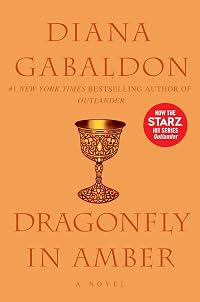
On This Page
Description
For twenty years Claire Randall has kept her secrets. But now she is returning with her grown daughter to Scotland's majestic mist-shrouded hills. Here Claire plans to reveal a truth as stunning as the events that gave it birth: about the mystery of an ancient circle of standing stones ... about a love that transcends the boundaries of time ... and about James Fraser, a Scottish warrior whose gallantry once drew a young Claire from the security of her century to the dangers of his. Now a show more legacy of blood and desire will test her beautiful copper-haired daughter, Brianna, as Claire's spellbinding journey of self-discovery continues in the intrigue-ridden Paris court of Charles Stuart ... in a race to thwart a doomed Highlands uprising ... and in a desperate fight to save both the child and the man she loves. show lessTags
Recommendations



Member Recommendations
Member Reviews
This book was that oddest of things: a boring page-turner. The pace was sort of hypnotic, in that it kept me going, but I didn't really care what happened to anyone. Certainly not the heroine, who has evolved from being a colorless cypher in the first book to being a colorless cypher who is an irritatingly obvious placeholder for the author/reader. If I wanted to believe that a hot Scotsman was obsessed with me, I would google-image Gerard Butler and use the power of my brain; when I read a book, I tend to be in search of, y'know, characters. And our heroine is nothing of the kind.
Almost a thousand pages of first-person narrative and all we learn about our narrator is: a) she gives off a major whiff of self-righteousness and show more self-satisfaction; b) every man she meets lusts after her; and c) the hero periodically needs to monologue for pages about how much he loves and desires and worships her, to which she tends to respond complacently with a bland, "I love you too," or some such. On no occasion, even when she has just almost gotten him killed, does she consider herself less than deserving of this worship, or even seem particularly grateful for it: she unthinkingly accepts it as the way things should be. We also never get any evidence of this amazingness our seven-foot-tall*-shoulders-wider-than-a-longbow-blindingly-handsome Scotsman sees in her. She just deserves his adoration! You'll have to take Gabaldon's word for it.
And it is still true in this book, as in its prequel, that if you meet a gay man you know he is all kinds of evil. The one flash of developed personality we see in our heroine is when she starts talking about "perverts". Thanks, Diana, for providing your readers with the perfect way to insert ourselves into a kilt-related fantasy, as long as we don't mind being a smug homophobe in said fantasy. Uh... I mind.
(And yet, believe it or not, I have already started the third book. Partially it's because I own it and the Because It Is There principle is strong with me, but partially because, well, sometimes I will eat an entire bag of Starbursts, and this is sort of the same idea.)
*Okay, fine, he's only six four. show less
Almost a thousand pages of first-person narrative and all we learn about our narrator is: a) she gives off a major whiff of self-righteousness and show more self-satisfaction; b) every man she meets lusts after her; and c) the hero periodically needs to monologue for pages about how much he loves and desires and worships her, to which she tends to respond complacently with a bland, "I love you too," or some such. On no occasion, even when she has just almost gotten him killed, does she consider herself less than deserving of this worship, or even seem particularly grateful for it: she unthinkingly accepts it as the way things should be. We also never get any evidence of this amazingness our seven-foot-tall*-shoulders-wider-than-a-longbow-blindingly-handsome Scotsman sees in her. She just deserves his adoration! You'll have to take Gabaldon's word for it.
And it is still true in this book, as in its prequel, that if you meet a gay man you know he is all kinds of evil. The one flash of developed personality we see in our heroine is when she starts talking about "perverts". Thanks, Diana, for providing your readers with the perfect way to insert ourselves into a kilt-related fantasy, as long as we don't mind being a smug homophobe in said fantasy. Uh... I mind.
(And yet, believe it or not, I have already started the third book. Partially it's because I own it and the Because It Is There principle is strong with me, but partially because, well, sometimes I will eat an entire bag of Starbursts, and this is sort of the same idea.)
*Okay, fine, he's only six four. show less
The second Outlander book. This is a compelling series - combining an interesting period of history (the Jacobite rising in Scotland in the mid 1700s) with good storytelling and a dash of time-travel fantasy.
The second book is structurally better than the first - a great first hundred pages sets the scene, and provides some teasers about what may, or may not, transpire later in the book.
I find the Scottish stuff well done - a good level of detail making it believable, and the modern stuff also works well. I wasn't so much of a fan of the interlude in the French court, but wasn't deterred from the rest of the book.
I keep thinking that I only need to read one more volume to scratch my Outlander itch, and had thought this would be my last show more volume, but I now think I need to read volume 3, just to satisfy my curiosity about how things pan out. I'm being sucked in!! show less
The second book is structurally better than the first - a great first hundred pages sets the scene, and provides some teasers about what may, or may not, transpire later in the book.
I find the Scottish stuff well done - a good level of detail making it believable, and the modern stuff also works well. I wasn't so much of a fan of the interlude in the French court, but wasn't deterred from the rest of the book.
I keep thinking that I only need to read one more volume to scratch my Outlander itch, and had thought this would be my last show more volume, but I now think I need to read volume 3, just to satisfy my curiosity about how things pan out. I'm being sucked in!! show less
As I said, I am profoundly enthralled with this story, especially with Claire and Jamie's time in France - French bourgeoisie, dinners and balls, shady politics and endless conspiracies? What's not to love?
At first I thought that the predictability of the story will diminish the wonderful reading experience, since the reader already knows what will happen in 20 years, but I could not have been further from wrong. The story is all about intricate details of daily lives of the 18th century people - thus, knowing the direction the story will take only makes the getting there more exciting!
At first I thought that the predictability of the story will diminish the wonderful reading experience, since the reader already knows what will happen in 20 years, but I could not have been further from wrong. The story is all about intricate details of daily lives of the 18th century people - thus, knowing the direction the story will take only makes the getting there more exciting!
I didn't enjoy it as much as 'Cross Stitch', the first in the series; if I hadn't read that first it would have been extremely confusing. However I wanted to know what happened to Jamie and Clare so I persevered! It's a bit of a strange book... mostly historical, during the Jacobite rebellion. Yet far more interesting than most army-type books - Gabaldon really is an excellent writer. Mostly she manages to describe the conditions without being boring, and the unpleasantness and violence without getting gruesome. Mostly... but not always. I couldn't read the description of hanging, drawing and quartering after the first paragraph. It was apparently an exercise in maximum excrutiating pain for the longest possible time, and only done by show more 'master' executioners. How can society have been so evil?
Anyway... it stops being a straight historical novel by the unlikely twist that Clare was born in the 20th century and went back 200 years in time to the midst of war-torn Scotland. At least, that's what happens in 'Cross Stitch'. In 'Dragonfly in Amber' she starts off back in the 20th century with a grown-up daughter who knows nothing of her mother's strange time-travelling past, and eventually tells her the story... which is the bulk of the novel, continuing where the previous one left off.
Confused? All I can say is: if it appeals, try 'Cross Stitch' first. That's excellent. But don't expect quite so much of this one. Still, there was enough of a draw at the end to make me rush over to play.com to order 'Voyager', the third in the series! show less
Anyway... it stops being a straight historical novel by the unlikely twist that Clare was born in the 20th century and went back 200 years in time to the midst of war-torn Scotland. At least, that's what happens in 'Cross Stitch'. In 'Dragonfly in Amber' she starts off back in the 20th century with a grown-up daughter who knows nothing of her mother's strange time-travelling past, and eventually tells her the story... which is the bulk of the novel, continuing where the previous one left off.
Confused? All I can say is: if it appeals, try 'Cross Stitch' first. That's excellent. But don't expect quite so much of this one. Still, there was enough of a draw at the end to make me rush over to play.com to order 'Voyager', the third in the series! show less
Once again I am blown away by Gabaldon's abilities as an author to take an unlikely premise with two strong characters and weave a story that is both believable and engaging. From France and the court of Louis XIV to the battlefields of Bonnie Prince Charlie, the depths of characterization and history are told with an eye to the telescope.
An aspect I liked is that Claire is realizing her need to not venture an opinion or act on her own behalf at all times. It's not just that Jamie will come looking for her as he does in Bk. 1, it's that speaking the word "plague" in the mid 1700's is a really, really bad idea. She is learning wisdom and how to make her point in a way that will gain her respect and admiration at the time in which she show more finds herself, not easy to do for a strong-willed woman from the field hospitals of WWII. Jamie, too, has had to learn to back down a bit, that his wife has a good mind and an opinion he needs to respect and he is doing so well.
And the life they are living! The times of the absolute monarchy, the absolute clan hierarchy, are told with great detail. The lead-up to events, where we join Claire in 1960's Scotland bring the life she has lived without Jamie to the forefront, and make the return to the 1740's almost a relief. These two lovers are a couple whom we want to see stay together and it is a relief to read most of the book as their time together.
There is a cliffhanger at the end - make sure you have Bk. 3 ready to start when you finish this one! show less
An aspect I liked is that Claire is realizing her need to not venture an opinion or act on her own behalf at all times. It's not just that Jamie will come looking for her as he does in Bk. 1, it's that speaking the word "plague" in the mid 1700's is a really, really bad idea. She is learning wisdom and how to make her point in a way that will gain her respect and admiration at the time in which she show more finds herself, not easy to do for a strong-willed woman from the field hospitals of WWII. Jamie, too, has had to learn to back down a bit, that his wife has a good mind and an opinion he needs to respect and he is doing so well.
And the life they are living! The times of the absolute monarchy, the absolute clan hierarchy, are told with great detail. The lead-up to events, where we join Claire in 1960's Scotland bring the life she has lived without Jamie to the forefront, and make the return to the 1740's almost a relief. These two lovers are a couple whom we want to see stay together and it is a relief to read most of the book as their time together.
There is a cliffhanger at the end - make sure you have Bk. 3 ready to start when you finish this one! show less
Note: Dragonfly in Amber is the second novel in the "Outlander Series." There will necessarily be spoilers for the first book in the series, Outlander.
In Outlander, Claire, a young married English nurse on vacation in Scotland after World War II, accidentally traveled back in time 200 years to 1743. There she took up with Highland Hottie Jamie, and developed her skills as a healer. As Outlander ended, Claire was pregnant, and Jamie insisted she go back to the future to save herself and her unborn child, since he thinks he is about to die in battle.
As Dragonfly in Amber begins, we meet Claire again, but now it is 1968. Claire has brought her 20-year-old daughter, Brianna - the spitting image of Jamie - with her to Scotland. They traveled show more from Boston, where Claire is a doctor, and they have come to see Roger Wakefield in Inverness, who is an historian. Claire’s husband Frank Randall has died, and so she plans to tell Brianna that her real father is Jamie. But first she wants to discover, if she can, what happened to Jamie after she left twenty years earlier. She knows that Roger's late father collected a great deal of materials from that time period.
For most of the book, Claire, in the process of telling Roger and Brianna the truth about who she is, takes us back to the 1700s to fill us in on what happened since the end of Outlander. As the book ends (some 743 pages later), Roger has discovered a clue to Jamie’s fate that changes everything Claire thought she knew.
Discussion: The author provides a more lucid account of the political issues behind the Jacobin rising in this book. She also has a bit of a “meta” reverie (played out between Claire and Roger) on the ways in which the historical record is mutable, depending on a complex web comprised of ideology, values, and political agendas. In the case of Scotland in the 1700's, Claire was there and knows things were not as they were later depicted. Claire explains to Roger that her bitterness is not against historians themselves:
"Not the historians… For the most part, they think what they were made to think, and it’s a rare one that sees what really happened, behind the smokescreen of artifacts and paper. … No, the fault lies with the artists…. The writers, the singers, the tellers of tales. It’s them that take the past and re-create it to their liking. Them that could take a fool and give you back a hero, take a sot and make him a king.”
This is only one of the instances in which Gabaldon takes a critical look at herself through the voice of her characters: about writing historical fiction, about writing very long books, about writing romance novels. It’s a nice touch.
One troubling aspect of the story is the fact that Claire waited all that time to check on whether Jamie was really dead. That seems hard to swallow, given Claire's character, and given her abiding love for Jamie.
Evaluation: You can’t help but get caught up with these characters, and want to know what happens to them. And indeed, you get a blow-by-blow account in these books of almost every minute in almost every day. But it’s not a bad vicarious life to be living. Claire may be over-confident for a woman of her generation, but one must grudgingly like her or at least admire her adaptability. Jamie is handsome and heroic and smitten with his woman - not bad traits about which to fantasize. And Jamie’s friends and family are all you could wish for in a loyal, loving, bonded group. Play on, Gabaldon! show less
In Outlander, Claire, a young married English nurse on vacation in Scotland after World War II, accidentally traveled back in time 200 years to 1743. There she took up with Highland Hottie Jamie, and developed her skills as a healer. As Outlander ended, Claire was pregnant, and Jamie insisted she go back to the future to save herself and her unborn child, since he thinks he is about to die in battle.
As Dragonfly in Amber begins, we meet Claire again, but now it is 1968. Claire has brought her 20-year-old daughter, Brianna - the spitting image of Jamie - with her to Scotland. They traveled show more from Boston, where Claire is a doctor, and they have come to see Roger Wakefield in Inverness, who is an historian. Claire’s husband Frank Randall has died, and so she plans to tell Brianna that her real father is Jamie. But first she wants to discover, if she can, what happened to Jamie after she left twenty years earlier. She knows that Roger's late father collected a great deal of materials from that time period.
For most of the book, Claire, in the process of telling Roger and Brianna the truth about who she is, takes us back to the 1700s to fill us in on what happened since the end of Outlander. As the book ends (some 743 pages later), Roger has discovered a clue to Jamie’s fate that changes everything Claire thought she knew.
Discussion: The author provides a more lucid account of the political issues behind the Jacobin rising in this book. She also has a bit of a “meta” reverie (played out between Claire and Roger) on the ways in which the historical record is mutable, depending on a complex web comprised of ideology, values, and political agendas. In the case of Scotland in the 1700's, Claire was there and knows things were not as they were later depicted. Claire explains to Roger that her bitterness is not against historians themselves:
"Not the historians… For the most part, they think what they were made to think, and it’s a rare one that sees what really happened, behind the smokescreen of artifacts and paper. … No, the fault lies with the artists…. The writers, the singers, the tellers of tales. It’s them that take the past and re-create it to their liking. Them that could take a fool and give you back a hero, take a sot and make him a king.”
This is only one of the instances in which Gabaldon takes a critical look at herself through the voice of her characters: about writing historical fiction, about writing very long books, about writing romance novels. It’s a nice touch.
One troubling aspect of the story is the fact that Claire waited all that time to check on whether Jamie was really dead. That seems hard to swallow, given Claire's character, and given her abiding love for Jamie.
Evaluation: You can’t help but get caught up with these characters, and want to know what happens to them. And indeed, you get a blow-by-blow account in these books of almost every minute in almost every day. But it’s not a bad vicarious life to be living. Claire may be over-confident for a woman of her generation, but one must grudgingly like her or at least admire her adaptability. Jamie is handsome and heroic and smitten with his woman - not bad traits about which to fantasize. And Jamie’s friends and family are all you could wish for in a loyal, loving, bonded group. Play on, Gabaldon! show less
Fantastic second book in the series. It starts with Claire back in the future, telling her daughter about what happened to her and the truth about her parentage. She has also come to Scotland to see if she can find out what happened to the people she knew, if they survived the Rising and its aftermath. In the process, Claire tells of what happened to her and Jamie after they left Scotland up until the beginning of the Battle of Culloden.
Jamie and Claire have settled into their marriage, with their love as strong as ever. Each of them has strengths and vulnerabilities that become part of their stories. Jamie has an honorable streak a mile wide that makes him want to save his family and countrymen from the looming disaster. It's hard for show more him to walk the fine line between honor and treason and it wears on him. Claire is deeply in love with Jamie, but still suffers from the guilt of feeling like she is betraying Frank. Trying to reconcile her love for Jamie with protecting Jack Randall so that it doesn't screw up her future with Frank is not easy.
With Claire's knowledge of the future, they go to France to try to stop Bonnie Prince Charlie from trying to take back the throne. The details of the political intrigue are fascinating and made me feel as if I was there. Claire also uses her healer abilities to work in a local charity hospital, giving more insight into the realities of life in the mid 1700s. I loved seeing Claire's strength of will and determination to make as much difference as she can. As they feel they are making progress and take a trip back to Scotland, fate intervenes and they end up on the wrong side after all. With Jamie's certainty that he won't survive Culloden, in order to protect Claire, he sends her back to Frank.
I love the rich historical details that are shown throughout the book. There are also some fun things that get worked into the story, such as Claire's explanation of what a "commando" is and what Jamie does with that knowledge. There is also a hilarious description of Jamie's venture into a brothel, a sausage, and a young French lad who becomes a big part of the story.
The depth of emotion throughout the book is amazing. Jamie's love for his family and his country is deep and his desire to save them influences everything he does. There is a feeling of fear throughout as he and Claire worry that they won't be able to stop the Rising. Claire's unhappiness and depression after the loss of her baby are deep, and the effect on her marriage was heartbreaking. But the deepest, most emotional event was as Jamie accepts what he sees as his fate, and begs Claire to return to the future so that he can be sure that she is safe.
I loved the sections in the present, as Claire tells her story. Her determination to discover the fates of her friends is intense. I loved Roger's fascination with her quest, and the lengths he goes to find out the answers. There is an intense twist to the story at the end that leads into the next book. show less
Jamie and Claire have settled into their marriage, with their love as strong as ever. Each of them has strengths and vulnerabilities that become part of their stories. Jamie has an honorable streak a mile wide that makes him want to save his family and countrymen from the looming disaster. It's hard for show more him to walk the fine line between honor and treason and it wears on him. Claire is deeply in love with Jamie, but still suffers from the guilt of feeling like she is betraying Frank. Trying to reconcile her love for Jamie with protecting Jack Randall so that it doesn't screw up her future with Frank is not easy.
With Claire's knowledge of the future, they go to France to try to stop Bonnie Prince Charlie from trying to take back the throne. The details of the political intrigue are fascinating and made me feel as if I was there. Claire also uses her healer abilities to work in a local charity hospital, giving more insight into the realities of life in the mid 1700s. I loved seeing Claire's strength of will and determination to make as much difference as she can. As they feel they are making progress and take a trip back to Scotland, fate intervenes and they end up on the wrong side after all. With Jamie's certainty that he won't survive Culloden, in order to protect Claire, he sends her back to Frank.
I love the rich historical details that are shown throughout the book. There are also some fun things that get worked into the story, such as Claire's explanation of what a "commando" is and what Jamie does with that knowledge. There is also a hilarious description of Jamie's venture into a brothel, a sausage, and a young French lad who becomes a big part of the story.
The depth of emotion throughout the book is amazing. Jamie's love for his family and his country is deep and his desire to save them influences everything he does. There is a feeling of fear throughout as he and Claire worry that they won't be able to stop the Rising. Claire's unhappiness and depression after the loss of her baby are deep, and the effect on her marriage was heartbreaking. But the deepest, most emotional event was as Jamie accepts what he sees as his fate, and begs Claire to return to the future so that he can be sure that she is safe.
I loved the sections in the present, as Claire tells her story. Her determination to discover the fates of her friends is intense. I loved Roger's fascination with her quest, and the lengths he goes to find out the answers. There is an intense twist to the story at the end that leads into the next book. show less
Members
- Recently Added By
Lists

Best Time Travel Novels
165 works; 125 members

Historical Fiction
889 works; 91 members

NPRs your picks: top 100 Sci-Fi/Fantasy books
297 works; 80 members

Books That Made Me Cry
199 works; 105 members

Female Author
1,234 works; 67 members
Female Protagonist
1,056 works; 57 members

Top Five Books of 2016
795 works; 229 members

Summer Reads 2014
207 works; 70 members

Speculative Fiction to Read
706 works; 32 members

Huxley's Reading Log 2018
37 works; 1 member

Read in 2014
334 works; 11 members

Books Read in 2016
4,666 works; 199 members

Most Popular Books Tagged Scotland
35 works; 2 members

A Rainbow of Books: Colors in the Title
570 works; 24 members

Books Read in 2017
4,249 works; 130 members

Books Read in 2020
4,379 works; 124 members

Five star books
1,767 works; 110 members

Books Read in 2013
1,630 works; 51 members

Books - Gabaldon, Diana: Outlander
22 works; 1 member
Author Information

Diana Gabaldon was born in Flagstaff, Arizona on January 11, 1952. She has a B.S. in zoology, a M.S. in marine biology, and a Ph.D. in quantitative behavioral ecology. She has worked as a university professor and has written freelance for various magazines and companies such as Walt Disney. She writes the Outlander series, which was adapted into a show more television series. (Bowker Author Biography) show less

Diana Gabaldon is a LibraryThing Author, an author who lists their personal library on LibraryThing.
Some Editions
Awards and Honors
Notable Lists
Series

Work Relationships
Is contained in
Has as a reference guide/companion
Common Knowledge
- Canonical title
- Dragonfly in Amber
- Original title
- Dragonfly in Amber
- Alternate titles
- Dragonfly in Amber: A Novel (cover title) (cover title)
- Original publication date
- 1992-07-01
- People/Characters
- Claire Beauchamp Randall Fraser; James "Jamie" Alexander Malcolm MacKenzie Fraser; Brianna Randall MacKenzie; Frank Randall; Roger MacKenzie Wakefield; Fiona Graham (show all 54); Fergus Claudel Fraser; Jonathan "Jack" Wolverton Randall; Murtagh Fraser; Alexander Randall; Mary Hawkins; Duke of Sandringham; Colum MacKenzie; Dougal MacKenzie; Alexander Fraser; Alexander Kincaid; Angus Mhor; Annalise de Marillac; Archie Cameron; Arthur Duncan; Brian Fraser; Johannes Gerstmann; Charles Edward Stuart, "Bonnie Prince Charlie"; Francis Townsend; Geillis Duncan; George Murray; Ian Murray; Jenny Cameron; Katherine Mary; Simon Fraser; Maggie Brown; Mary MacNab; Master Raymond; Monsieur Duverney; Monsieur Forez; Hildegarde de Gascogne; Reginald Wakefield; Quentin Labert Beauchamp; Ronald MacNab; Ross; Rupert MacKenzie; Sorley McClure; Thomas Sheridan; Walter O'Bannion Reilly; William Ransom, Earl of Ellesmere; Lord Melton; Louis XV, King of France; Jared Fraser; Paul Rakoczy, Comte St. Germain; Marie Louise de La Tour d'Auvergne; Madame de Ramage; Silas Hawkins; Sister Angelique; Rabbie MacNab
- Important places
- Inverness, Highland, Scotland, UK; Paris, Île-de-France, France; Lallybroch, Highland, Scotland, UK (fictional place); Château de Versailles, Versailles, Yvelines, Île-de-France, France; L'Hôpital des Anges, Paris, France (fictional place); Versailles, Yvelines, Île-de-France, France (show all 7); Scotland, UK
- Important events
- Battle of Culloden; Jacobite Rising of 1745
- Related movies
- Outlander (2016 | IMDb)
- Epigraph*
- Er verdwijnen altijd wel ergens mensen. De meeste vermisten worden uiteindelijk teruggevonden, dood of levend. Voor verdwijningen bestaan nu eenmaal verklaringen. Meestal.
- Dedication
- For my husband, Doug Watkins—
In thanks for the Raw Material - First words
- I woke three times in the dark predawn. (prologue)
- Last words
- (Click to show. Warning: May contain spoilers.)"He meant to die on Culloden Field," Roger whispered. "But he didn't."
- Publisher's editor
- Cantor, Jackie
- Blurbers
- Roberts, Nora
- Original language*
- English
*Some information comes from Common Knowledge in other languages. Click "Edit" for more information.
Classifications
- Genres
- Romance, Fiction and Literature, Science Fiction, Historical Fiction, Fantasy
- DDC/MDS
- 813.54 — Literature & rhetoric American literature in English American fiction in English 1900-1999 1945-1999
- LCC
- PS3557 .A22 .D7 — Language and Literature American literature American literature Individual authors 1961-
- BISAC
Statistics
- Members
- 15,500
- Popularity
- 449
- Reviews
- 317
- Rating
- (4.20)
- Languages
- 16 — Czech, Danish, Dutch, English, Finnish, French, German, Greek, Hungarian, Norwegian (Bokmål), Polish, Serbian, Spanish, Swedish, Turkish, Portuguese (Portugal)
- Media
- Paper, Audiobook, Ebook
- ISBNs
- 118
- UPCs
- 2
- ASINs
- 65