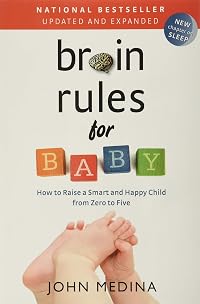
Brain Rules for Baby: How to Raise a Smart and Happy Child from Zero to Five
by John Medina
On This Page
Description
What's the single most important thing you can do during pregnancy? What does watching TV do to a child's brain? What's the best way to handle temper tantrums? Scientists know. In his New York Times bestseller Brain Rules, Dr. John Medina showed us how our brains really work, and why we ought to redesign our workplaces and schools. Now, in Brain Rules for Baby, he shares what the latest science says about how to raise smart and happy children from zero to five. This book is destined to show more revolutionize parenting. Just one of the surprises: The best way to get your children into the college of their choice? Teach them impulse control. Brain Rules for Baby bridges the gap between what scientists know and what parents practice. Through fascinating and funny stories, Medina, a developmental molecular biologist and dad, unravels how a child's brain develops and what you can do to optimize it. You will view your children, and how to raise them, in a whole new light. You'll learn: Where nature ends and nurture begins. Why men should do more household chores. What you do when emotions run hot affects how your baby turns out, because babies need to feel safe above all. TV is harmful for children under 2Your child's ability to relate to others predicts her future math performance. Smart and happy are inseparable. Pursuing your child's intellectual success at the expense of his happiness achieves neither. Praising effort is better than praising intelligence. The best predictor of academic performance is not IQ. It's self-control. What you do right now--before pregnancy, during pregnancy, and through the first five years--will affect your children for the rest of their lives. Brain Rules for Baby is an indispensable guide. show lessTags
Recommendations



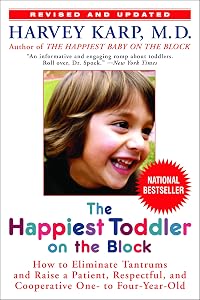
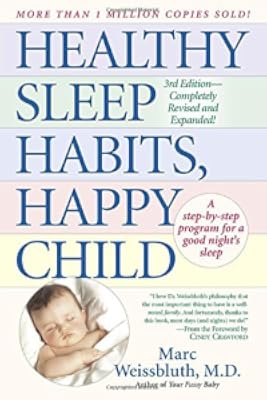
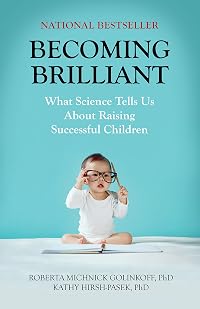
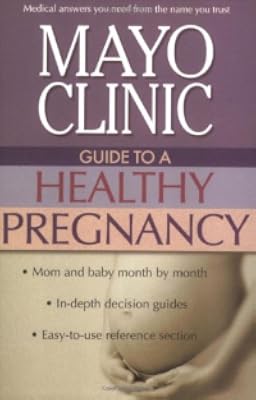
Member Reviews
What do the best supported scientific studies have to tell us about how to raise a smart, moral, happy child? Not as much as the shelves upon shelves of parenting books would imply.
Brain Rules for Baby focuses only on the parenting advice that can be backed up by research. As Medina points out in his conclusion, whether you're concerned about baby's intelligence, morality, or happiness, or your relationship with your spouse, much of this research comes back to two key principles: the importance of empathy (both having it as a parent and developing it in your child) and the importance of responding to your child's emotional world.
The book has lots of specific tips, but the summary version is that most gimmicky parenting techniques are show more just that -- gimmicks. Interact with your child person-to-person and it doesn't matter what you're listening to. Let them have open ended, creative play where they lead the way and don't stress if they aren't learning another language.
There are a lot of specific tips which are valuable, but the key thing to remember is that you can't make your baby smart (or happy or good). You can just make your baby feel loved and safe, and in that environment their natural curiosity will take over and lead to the rest. show less
Brain Rules for Baby focuses only on the parenting advice that can be backed up by research. As Medina points out in his conclusion, whether you're concerned about baby's intelligence, morality, or happiness, or your relationship with your spouse, much of this research comes back to two key principles: the importance of empathy (both having it as a parent and developing it in your child) and the importance of responding to your child's emotional world.
The book has lots of specific tips, but the summary version is that most gimmicky parenting techniques are show more just that -- gimmicks. Interact with your child person-to-person and it doesn't matter what you're listening to. Let them have open ended, creative play where they lead the way and don't stress if they aren't learning another language.
There are a lot of specific tips which are valuable, but the key thing to remember is that you can't make your baby smart (or happy or good). You can just make your baby feel loved and safe, and in that environment their natural curiosity will take over and lead to the rest. show less
Wonderful, straightforward, & engagingly written for parents-to-be, parents, or grandparents like me who want to encourage my amazing grandbabies!!! Written with current cultural references, excellent real life anecodotes, and yes the latest brain research findings, BUT not so scientific that we mere mortals can grasp the concepts. Best of all, written with humor and insight into the incredible challenges facing all parents to raise a child well. Author is a UW professor developmental molecular biologist, and yes a parent himself. Arranged to help readers take away key concepts & practical tips for putting such ideas to immediate use with the little darlins' .... bought one for my son & his wife when they were expecting; bought one for show more myself; bought one for my daughter, mother of two, and a doula. Is there a youngster in your life? Go buy this book now... seriously. show less
Great book! Gives valid evidence from peer-reviewed research on what works and what doesn't. The emphasis is on developing empathy, emotional regulation, and executive function skills. I learned a lot. Would go as far as to say it's the best book on child-rearing I have ever read. I could do without the multiple (I think more than 10, maybe even 20) references to our "evolutionary roots" in an attempt to explain human brain. Seriously, if you don't know, just say you don't know :(
this is one of the better parenting books i've read. everything he talks about he gives the science and research behind, and explains it in an accessible way that makes this easy to read even if you don't have a science background. he's only giving information based on studies and science that have been proven, and he breaks it down nicely. it's also very readable and he uses lots of easy metaphors and examples to tie it all together (some of these could be a little more obvious, but the stories are good). and a lot of the information is really quite interesting. it almost makes me want to read his book for adults, because he gets to what i always found fascinating about science.
on the downside, i don't like the implication on the back show more of the book that if you will ruin your children if you don't read and learn from this book, but it's not alone in parenting books that do that. (it's almost why i can't give a parenting book 5 stars right now - by definition they're too enamored with themselves.) it's also super heteronormative, but to his credit he warns upfront that it's going to be.
"By the time my second child was born, I understood that it is possible to split up love ad infinitum and not decrease any single portion of it. With parenting, it is truly possible to multiply by dividing." show less
on the downside, i don't like the implication on the back show more of the book that if you will ruin your children if you don't read and learn from this book, but it's not alone in parenting books that do that. (it's almost why i can't give a parenting book 5 stars right now - by definition they're too enamored with themselves.) it's also super heteronormative, but to his credit he warns upfront that it's going to be.
"By the time my second child was born, I understood that it is possible to split up love ad infinitum and not decrease any single portion of it. With parenting, it is truly possible to multiply by dividing." show less
This book was very informative and fun to read. There were many laugh out loud moments. The author presents current neuroscience research in very readable and applicable ways. Amber and I feel that we will be better parents after having read this. A lot of the advice seems easy to apply with some practice.
Key points I want to remember:
-Be empathetic
-Acknowledge and respond to emotions in your children and your partner
-Communicate with your partner and your baby – Talk a lot
-Rules must be consistently enforced between both parents. Punishment must be swift and its rationale must be explained.
-Incorporate music and learning into all aspects of your child’s life if possible
Recommended for (this was too long for the slot below): show more
-Parents
-Expecting parents
-People planning to be parents one day
-Anyone looking for a potential life partner to raise children with
Special note: For most of the book, I read this out loud to Sebastian and Amber while Sebastian was in the NICU. show less
Key points I want to remember:
-Be empathetic
-Acknowledge and respond to emotions in your children and your partner
-Communicate with your partner and your baby – Talk a lot
-Rules must be consistently enforced between both parents. Punishment must be swift and its rationale must be explained.
-Incorporate music and learning into all aspects of your child’s life if possible
Recommended for (this was too long for the slot below): show more
-Parents
-Expecting parents
-People planning to be parents one day
-Anyone looking for a potential life partner to raise children with
Special note: For most of the book, I read this out loud to Sebastian and Amber while Sebastian was in the NICU. show less
I've just finished reading the book and I think that Dr. John Medina provides a very solid account of early child development which is based on brain science. I can say without a moment's hesitation that I'm more than happy to have found such a highly readable book from a developmental molecular biologist focused on the genes involved in human brain development and the genetics of psychiatric disorder.
Not only does Medina know his field very well but he is also the father of two boys and he doesn't hesitate to blend his personal memories with well-established as well as up-to-date research without becoming academically dry and dull or boringly personal. As soon-to-be father with a cognitive science background I can only appreciate such show more a powerful combination of these qualities.
Almost every question that the book exposes and tries to answer is either a central question in my life or it'll be within a few years: "What's the single most important thing you can do during pregnancy? What does watching TV do to a child's brain? What's the best way to handle temper tantrums?" and others such as the relationship of empathy and consistency to the developing brain structures which shape our kids' future lives.
The summary section at the end of each chapter as well as an overall summary at the end of the book turns the book into a great source as a quick reference for mothers and fathers `working in the field' (I beg your pardon for the analogy, I just couldn't resist it ;-) . And for those skeptics out there with an academic / scientific background, the book itself does not include a single reference to another book or article; all of the references are moved to the online document at the accompanying web site. 63 pages of references to the scientific literature for your discovery pleasure and further reading.
I would heartily recommend this wonderful book to any parent who wants to learn more about their child's development and do so by relying on well-established scientific results. show less
Not only does Medina know his field very well but he is also the father of two boys and he doesn't hesitate to blend his personal memories with well-established as well as up-to-date research without becoming academically dry and dull or boringly personal. As soon-to-be father with a cognitive science background I can only appreciate such show more a powerful combination of these qualities.
Almost every question that the book exposes and tries to answer is either a central question in my life or it'll be within a few years: "What's the single most important thing you can do during pregnancy? What does watching TV do to a child's brain? What's the best way to handle temper tantrums?" and others such as the relationship of empathy and consistency to the developing brain structures which shape our kids' future lives.
The summary section at the end of each chapter as well as an overall summary at the end of the book turns the book into a great source as a quick reference for mothers and fathers `working in the field' (I beg your pardon for the analogy, I just couldn't resist it ;-) . And for those skeptics out there with an academic / scientific background, the book itself does not include a single reference to another book or article; all of the references are moved to the online document at the accompanying web site. 63 pages of references to the scientific literature for your discovery pleasure and further reading.
I would heartily recommend this wonderful book to any parent who wants to learn more about their child's development and do so by relying on well-established scientific results. show less
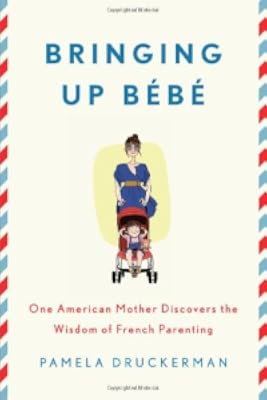
In this book, Medina offers up a scientific perspective on raising children and nurturing the minds of newborns and infants. His book follows and instructs parents on the best care for their babies, aged zero to five. Have gone through a number of lackluster parenting books both as a new parent and as a librarian, I can readily say that this is one of the better books out there. Medina’s points boil down to a couple major elements. His points, all scientifically backed by studies, are not all that much different from Pamela Druckerman’s Bringing Up Bebe. My inner Francophone feels justified.
Read more at: http://thenovelworld.com/2013/11/04/brain-rules-for-baby-john-medina/
Read more at: http://thenovelworld.com/2013/11/04/brain-rules-for-baby-john-medina/
Members
- Recently Added By
Author Information

28 Works 3,443 Members
Common Knowledge
- Original publication date
- 2010-10-12
Classifications
- Genres
- Nonfiction, General Nonfiction, Science & Nature
- DDC/MDS
- 649.1 — Applied science & technology Home economics & family management Child rearing; home care of people with illnesses and disabilities by family and friends Parenting
- LCC
- HQ755.8 — Social sciences The family. Marriage, Women and Sexuality The Family. Marriage. Women The family. Marriage. Home Parents. Parenthood
- BISAC
Statistics
- Members
- 493
- Popularity
- 61,669
- Reviews
- 9
- Rating
- (4.15)
- Languages
- 8 — Chinese, Dutch, English, French, German, Polish, Portuguese, Spanish
- Media
- Paper, Audiobook, Ebook
- ISBNs
- 20
- ASINs
- 7