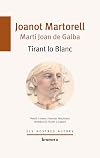
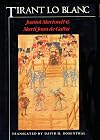
Tirant Lo Blanc
by Joanot Martorell, Marti Joan de Galba
On This Page
Description
First published in the Catalan language in Valencia in 1490, Tirant lo Blanc ("The White Tyrant") is a sweeping epic of chivalry and high adventure. With great precision and verve, Martorell narrates land and sea battles, duels, hunts, banquets, political maneuverings, and romantic conquests. Reviewing the first modern Spanish translation in 1969 (Franco had ruthlessly suppressed the Catalan language and literature), Mario Vargas Llosa hailed the epic's author as "the first of that lineage show more of God-supplanters--Fielding, Balzac, Dickens, Flaubert, Tolstoy, Joyce, Faulkner--who try to create in their novels an all-encompassing reality." show lessTags
Recommendations




















Member Recommendations
by anonymous user
Member Reviews
Tirant lo Blanc is a 15th century novel about a knight from Brittany who travels across Europe fighting the Moors. Because he is the best, most chivalrous, most pious knight in the world, the Emperor of the Byzantine Empire asks him to help defeat the Ottoman Turks as they invade Constantinople. Tirant, of course, not only defeats the invaders, but he convinces the majority of them to convert to Christianity. He also finds the time and energy to fall in love with and court the emperor’s daughter.
Apparently this book is considered important because of its influence on Cervantes. He may have loved it, but I had a hard time getting through it. I don’t know if I had a bad translation or what, but the story was disjointed. The worst show more part, however, was the characters’ (Tirant’s in particular) attitudes towards others. Most of the book consisted of Christians killing all of the Muslims they encountered. When he wasn’t ridding the earth of heathens, Tirant was trying to rape the emperor’s daughter with the help and approval of her closest friends. If he’s the most chivalrous and pious knight ever, I don’t want to know what the other knights got up to. show less
Apparently this book is considered important because of its influence on Cervantes. He may have loved it, but I had a hard time getting through it. I don’t know if I had a bad translation or what, but the story was disjointed. The worst show more part, however, was the characters’ (Tirant’s in particular) attitudes towards others. Most of the book consisted of Christians killing all of the Muslims they encountered. When he wasn’t ridding the earth of heathens, Tirant was trying to rape the emperor’s daughter with the help and approval of her closest friends. If he’s the most chivalrous and pious knight ever, I don’t want to know what the other knights got up to. show less
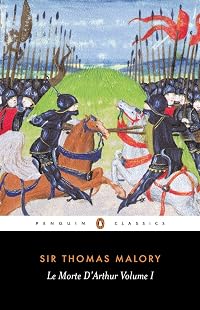
This is a very fun book. It's one of the few medieval romances to deal with masturbation, for instance. The translation produced a great reading experience, and justified the review by Cervantes in "Don Quixote". A knight has a great many adventures, and wins his true love. A great book to read while devouring the Penguin, two volume edition of "the Morte d' Arthur". As far as I know the triumph of Catalan medieval literature.
Very long (and winding) story about the ideals of knighthood. The story itself could be told in less pages, but then the writer always feels the need to write about the dress code of knights, kings and so on. The use of quote from ancient texts is also something that is done quite often in the book. And off course the book glorifies Catholicism... Not a book I will want to revisit in the near future.
Not bad but rather long. Seems based very loosely on the late medieval Mediterranean. Does not involve the fantasy elements of some romances; more or less straight military adventures.
A pillar on the way to the modern novel. Chronic literary freaks should lean on.
Originally written in Catalan. The text is in English. the format provides a window into a
very different style of writing.
very different style of writing.
Me han gustado varias cosas de este enorme librote. Más que nada, que aquí apenas hay fantasía, en el sentido de que no aparecen gigantes, ni dragones, ni situaciones sobrenaturales, ni siquiera una bruja. Solo hay un par de escenas de este jaez, evidentemente incrustadas en la acción sin que vengan a cuento, solo porque, imagino yo, Martorell consideraba que eran necesarias. Pero, por lo demás, todos los personajes, las acciones y los escenarios son perfectamente naturales y reconocibles. Tirante es un gran guerrero y un gran caballero, pero es un ser humano, y lo mismo sus enemigos y sus compañeros. Y se dedican a lo que hacen los humanos: pelearse y enamorarse a partes iguales. Eso sí, no se andan con medias tintas. Cuando hay show more que despachar mandobles la sangre corre que da gusto, cuando hay que meterse mano no se corta nadie ni un pelo, si se trata de soltar parlamentos parecen todos castelares, y cuando toca juerga aquello parece una boda gitana.
Por otro lado, Martorell hace todo lo posible para que el lector esté entretenido. Tras una introducción con la historia de Guillén de Varoic a modo de aperitivo, coloca a su héroe primero como caballero de justas en Bretaña. Después lo envía nada menos que a reconquistar el imperio bizantino, enamorando de paso a la mismísima princesa Carmesina (los escarceos entre estos dos, con la doncella Flordemivida de por medio, son de lo más divertido), para luego conquistar todo el norte de África y acabar casi emperador. Eso sí, el final resulta un tanto abrupto y hasta poco propio de tan gran héroe. No lo destriparé, pero es de lo más vulgar y corriente. El autor utiliza varias tramas paralelas y secundarias que va retomando cada cierto tiempo, y no duda en contar de vez en cuando algún cuento de clavo, como luego hará Cervantes. Por cierto, que la influencia de este libro en el Quijote es más que evidente y ha sido señalada varias veces, desde muchos nombres hasta algunos destellos técnicos. En fin, que esta es una gran novela medieval, caballeresca pero lejos del ciclo artúrico. show less
Por otro lado, Martorell hace todo lo posible para que el lector esté entretenido. Tras una introducción con la historia de Guillén de Varoic a modo de aperitivo, coloca a su héroe primero como caballero de justas en Bretaña. Después lo envía nada menos que a reconquistar el imperio bizantino, enamorando de paso a la mismísima princesa Carmesina (los escarceos entre estos dos, con la doncella Flordemivida de por medio, son de lo más divertido), para luego conquistar todo el norte de África y acabar casi emperador. Eso sí, el final resulta un tanto abrupto y hasta poco propio de tan gran héroe. No lo destriparé, pero es de lo más vulgar y corriente. El autor utiliza varias tramas paralelas y secundarias que va retomando cada cierto tiempo, y no duda en contar de vez en cuando algún cuento de clavo, como luego hará Cervantes. Por cierto, que la influencia de este libro en el Quijote es más que evidente y ha sido señalada varias veces, desde muchos nombres hasta algunos destellos técnicos. En fin, que esta es una gran novela medieval, caballeresca pero lejos del ciclo artúrico. show less
Jun 29, 2021 (Edited)Spanish
Members
- Recently Added By
Lists

Millors obres literatura valencià-català
3 works; 1 member
Author Information

72+ Works 1,469 Members
3+ Works 871 Members
Some Editions
Awards and Honors
Series
Belongs to Publisher Series
Les Eines (45)
Gouden Reeks (4)
Els Nostres Clàssics, Col·lecció A (2, 4-5, 11-12, 15-16, 25-26)
A tot vent (734)
Work Relationships
Is retold in
Has the adaptation
Is abridged in
Is parodied in
Common Knowledge
- Canonical title
- Tirant Lo Blanc
- Original title
- Tirant lo Blanc
- Alternate titles
- Tirant Lo Blanc: Tales Of The White Knight
- Original publication date
- 1490
- People/Characters
- Tirant lo Blanc; Plaerdemavida; Carmesina; Count William of Warwick; Countess of Warwick; Duke of Gloucester (show all 10); Duke of Bedford; Count of Salisbury; Count of Stratford; King of Canary
- Important places
- Warwickshire, England, UK
- First words
- The knightly estate excels in such degree that it would be highly revered, if knights pursued the ends for which it was created.
- Original language
- Catalan
Classifications
- Genres
- Fiction and Literature, General Fiction
- DDC/MDS
- 849.933 — Literature & rhetoric French Literature Occitan, Catalan, Franco-Provençal literatures Catalan literature Fiction Age of perfection 1450–; Joanet Martorel –1400
- LCC
- PC3937 .M4 .A27 — Language and Literature Romanic languages Romance Catalan
- BISAC
Statistics
- Members
- 862
- Popularity
- 31,699
- Reviews
- 21
- Rating
- (3.44)
- Languages
- 11 — Catalan, Danish, Dutch, English, French, German, Japanese, Portuguese, Russian, Spanish, Swedish
- Media
- Paper, Audiobook, Ebook
- ISBNs
- 123
- ASINs
- 10