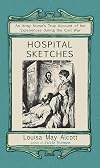
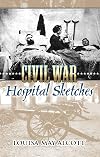
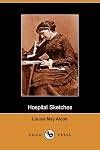
Hospital Sketches
by Louisa May Alcott
On This Page
Description
Although best known as a writer of fiction who produced such classics as Little Women, Louisa May Alcott lived a fascinating life that included a stint as a Civil War nurse. This collection includes several essays, letters, and other pieces that outline Alcott's experiences serving to the needs of the war wounded. It's a fascinating account that will enthrall Civil War buffs or those with an interest in the history of medical practice..
Tags
Recommendations









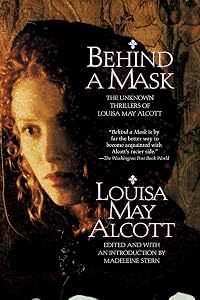
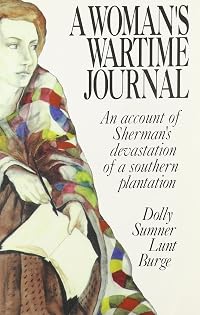

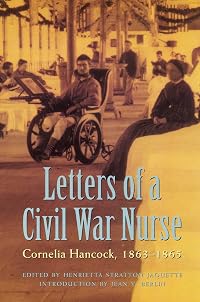

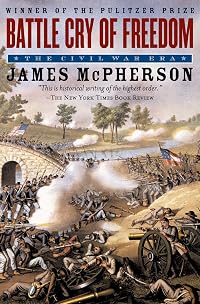














Member Recommendations
Bjace War nursing, different war. Alcott was a briefly a nurse, Brittain's life was consumed by the War and its tragedy. Alcott infuses tragedy with heart-warming pluck; Brittain allows you to experience the full weight of devastation.
Member Reviews
This is unlike any Alcott book I've read (and I think I've read them all at one time or another). I loved her style in this one. She wrote with biting honesty about the conditions of the hospital while seamlessly weaving in touching stories of the patients she encountered (yes, I cried). My only complaint about this book that it wasn't longer!
Get a sense of the life of an American Civil War nurse in Louisa May Alcott's Hospital Sketches, which lightly fictionalizes her experiences in Washington, DC for six weeks before she became terribly sick and had to go home.
Based on letters Alcott wrote home and told from the perspective of the nurse "Tribulation Periwinkle", the "sketches" detail her experiences from caring for the wounded, cheering the soldiers, or sitting at a man's death bed. By turns poignant and funny, it's a departure from her more well-known stories but also gives some insight into them (in particular, the story of Jo going to get her sick father is a flip-flopped one of his coming to get her). Interesting reading for anyone interested in Alcott or the Civil show more War era. show less
Based on letters Alcott wrote home and told from the perspective of the nurse "Tribulation Periwinkle", the "sketches" detail her experiences from caring for the wounded, cheering the soldiers, or sitting at a man's death bed. By turns poignant and funny, it's a departure from her more well-known stories but also gives some insight into them (in particular, the story of Jo going to get her sick father is a flip-flopped one of his coming to get her). Interesting reading for anyone interested in Alcott or the Civil show more War era. show less
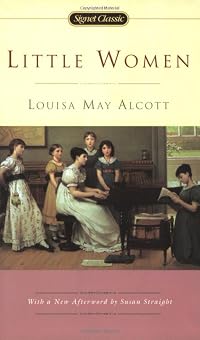
Louisa May Alcott wrote many fictionalized books and stories about her life and family, the most famous of which is [Little Women]. An abolitionist and feminist, the adventurous Alcott eagerly joined other young women in offering to be a nurse for the Union Army during the Civil War. In late 1862, Alcott was sent to the Union Hospital in Georgetown, D.C. for a three month assignment. True to her nature, she wrote long, witty letters home to her family, in which she describes her duties as an untrained nurse, the soldiers she meets, and the nature of the treatment available to the wounded. Unfortunately, Alcott caught typhoid fever and became very ill. Despite her protests, she was taken home after only six weeks of service. Her letters show more were collected and published later that year, then republished with additions in 1869.
Since the letters were written to family and never intended to be published, Alcott received some initial criticism for her sometimes comic tone. She responded beautifully with this remark in 1869:
To those who have objected to a "tone of levity" in some portions of the sketches, I desire to say that the wish to make the best of every thing, and send home cheerful reports even from the saddest of scenes, an army hospital, probably produced the impression of levity upon those who have never know the sharp contrasts of the tragic and the comic in such a life.
This ability to see these "sharp contrasts of the tragic and the comic" during times of duress elevates the letters from simple documentation to a nuanced view of the precariousness of life and the spirit of defiance required to repeatedly face death. The letters also reflect a caring yet direct young woman, who despite her enlightened education, was a product of her times. show less
Since the letters were written to family and never intended to be published, Alcott received some initial criticism for her sometimes comic tone. She responded beautifully with this remark in 1869:
To those who have objected to a "tone of levity" in some portions of the sketches, I desire to say that the wish to make the best of every thing, and send home cheerful reports even from the saddest of scenes, an army hospital, probably produced the impression of levity upon those who have never know the sharp contrasts of the tragic and the comic in such a life.
This ability to see these "sharp contrasts of the tragic and the comic" during times of duress elevates the letters from simple documentation to a nuanced view of the precariousness of life and the spirit of defiance required to repeatedly face death. The letters also reflect a caring yet direct young woman, who despite her enlightened education, was a product of her times. show less
Ignore the execrable Little Women, this is the book Louisa May Alcott should be known for. She beautifully describes her short time spent as a nurse in one of the many hospitals in Washington DC devoted to caring for the Civil War wounded. Calling herself Nurse Periwinkle she describes her duties and the brave wounded and often dying men she cared for. She describes everything from amputations to muddy coffee to the insects inhabiting her small shared room to the brave, beautiful John. The respect given to doctors is contrasted with the rather shabby accommodations given to nurses but she also shows their great camaraderie. I'd recommend this book to anyone interested in history in general or the history of nursing in particular or to show more anyone just wanting to read about a woman's place in the world. show less
Tribulation Periwinkle (the fictitious Louisa May Alcott) dons her rose-colored glasses and embarks on a mission to aid the injured Civil War soldiers at Hurly-Burly House in Washington. When she wasn't washing men, changing bandages, serving food and drink, or providing comfort and cheer, Nurse Periwinkle rebounded by walking the muddy streets of Washington taking in the sights of this bustling hub of energy in the early days of the war.
I learned from the excellent 30-page introduction to this novella that it wasn't uncommon for untrained women to work in the primitive army hospitals that appropriated whatever space that could be spared for disabled soldiers. Although this is a work of fiction, it rings with the truth of one who show more witnessed the pendulum of fear and courage of the mangled soldiers who were grateful for a woman's compassion. Miss Alcott's real-life service in the Civil War mirrored the care that Nurse Periwinkle administered to those men wounded at Frederickburg, right down to the malady that prematurely ended her nursing service. Highly recommended. show less
I learned from the excellent 30-page introduction to this novella that it wasn't uncommon for untrained women to work in the primitive army hospitals that appropriated whatever space that could be spared for disabled soldiers. Although this is a work of fiction, it rings with the truth of one who show more witnessed the pendulum of fear and courage of the mangled soldiers who were grateful for a woman's compassion. Miss Alcott's real-life service in the Civil War mirrored the care that Nurse Periwinkle administered to those men wounded at Frederickburg, right down to the malady that prematurely ended her nursing service. Highly recommended. show less
Tribulation Periwinkle has gone from her home in the North to Washington D.C. to be a nurse for the wounded soldiers of the Army of the Potomac. She describes, in what reads like a diary of recollections, her trip from home to D.C., her arrival at the understaffed hospital, where she is thrown into the care of dying men, and her own subsequent illness that takes her back to her home again.
Several of the vignettes are quite poignant, recounting the suffering and dying around her. She also tackles the attitudes and treatment of the black servants that work in and around the hospital, and who receive as harsh a rejection from these Northerners as they might have expected from the South, which gives Alcott a forum to advocate for more than show more Abolition, but also for fair treatment of these newly freed men.
This is a quick read and an important one. Louisa May Alcott writes fiction, but it is informed by personal experience, and her own nursing of soldiers during the Civil War makes this a very realistic depiction. An early advocate for rights for both women and blacks, Alcott is a voice of the future and a glimpse into the past. show less
Several of the vignettes are quite poignant, recounting the suffering and dying around her. She also tackles the attitudes and treatment of the black servants that work in and around the hospital, and who receive as harsh a rejection from these Northerners as they might have expected from the South, which gives Alcott a forum to advocate for more than show more Abolition, but also for fair treatment of these newly freed men.
This is a quick read and an important one. Louisa May Alcott writes fiction, but it is informed by personal experience, and her own nursing of soldiers during the Civil War makes this a very realistic depiction. An early advocate for rights for both women and blacks, Alcott is a voice of the future and a glimpse into the past. show less
“Hospital Sketches” essentially reads as a tragic comedy. Here we have Louisa May Alcott’s semi-autobiographical account of her times as a nurse and the events leading up to her securing her position at the hospital.
I’d been in two minds whether to read this text for some time, thinking it would be too morbid and depressing, but before finishing the first page I knew I’d misjudged the book by its title. Of course there are upsetting scenes where soldiers are so severely wounded that they have a short period of agony before death releases them, yet despite this, the senses of hope and bravery prevent the mood from becoming depressing, while the upbeat narration eliminates any feelings of morbidity.
The author – or technically show more speaking, the “narrator”, who’s really Ms Alcott in disguise – sums up my above feelings in this quote:
“Certainly, nothing was set down in malice, and to the serious-minded party who objected to a tone of levity in some portions of the Sketches, I can only say that it is a part of my religion to look well after the cheerfulnesses of life, and let the dismals shift for themselves.”
The light tone is most apparent in the scenes before the want-to-be nurse starts work at the hospital. The nonsense she has to endure to get from A to B and back again is a classic case of the left hand not knowing what the right is doing. I don’t know how much of this really happened to Ms Alcott, though I suspect most if not all are true recollections. Either way, the frustration she goes through is retold in a humorous way, causing me to laugh aloud more than once.
A particular funny part is when the nurse-to-be is about to sleep whilst sailing and she’s concerned about the vessel going down during the night. What finally alleviates her troubled mind is the sight of an overweight lady, because bearing in mind that “fat girls float best”, she (the future nurse) would make a beeline for the lady and hold onto her if the boat went down.
An insightful and amusing read. show less
I’d been in two minds whether to read this text for some time, thinking it would be too morbid and depressing, but before finishing the first page I knew I’d misjudged the book by its title. Of course there are upsetting scenes where soldiers are so severely wounded that they have a short period of agony before death releases them, yet despite this, the senses of hope and bravery prevent the mood from becoming depressing, while the upbeat narration eliminates any feelings of morbidity.
The author – or technically show more speaking, the “narrator”, who’s really Ms Alcott in disguise – sums up my above feelings in this quote:
“Certainly, nothing was set down in malice, and to the serious-minded party who objected to a tone of levity in some portions of the Sketches, I can only say that it is a part of my religion to look well after the cheerfulnesses of life, and let the dismals shift for themselves.”
The light tone is most apparent in the scenes before the want-to-be nurse starts work at the hospital. The nonsense she has to endure to get from A to B and back again is a classic case of the left hand not knowing what the right is doing. I don’t know how much of this really happened to Ms Alcott, though I suspect most if not all are true recollections. Either way, the frustration she goes through is retold in a humorous way, causing me to laugh aloud more than once.
A particular funny part is when the nurse-to-be is about to sleep whilst sailing and she’s concerned about the vessel going down during the night. What finally alleviates her troubled mind is the sight of an overweight lady, because bearing in mind that “fat girls float best”, she (the future nurse) would make a beeline for the lady and hold onto her if the boat went down.
An insightful and amusing read. show less
Members
- Recently Added By
Lists

THE WAR ROOM
813 works; 24 members
Author Information

473+ Works 109,077 Members
Louisa May Alcott was born in Germantown, Pennsylvania, in 1832. Two years later, she moved with her family to Boston and in 1840 to Concord, which was to remain her family home for the rest of her life. Her father, Bronson Alcott, was a transcendentalist and friend of Ralph Waldo Emerson and Henry David Thoreau. Alcott early realized that her show more father could not be counted on as sole support of his family, and so she sacrificed much of her own pleasure to earn money by sewing, teaching, and churning out potboilers. Her reputation was established with Hospital Sketches (1863), which was an account of her work as a volunteer nurse in Washington, D.C. Alcott's first works were written for children, including her best-known Little Women (1868--69) and Little Men: Life at Plumfield with Jo's Boys (1871). Moods (1864), a "passionate conflict," was written for adults. Alcott's writing eventually became the family's main source of income. Throughout her life, Alcott continued to produce highly popular and idealistic literature for children. An Old-Fashioned Girl (1870), Eight Cousins (1875), Rose in Bloom (1876), Under the Lilacs (1878), and Jack and Jill (1881) enjoyed wide popularity. At the same time, her adult fiction, such as the autobiographical novel Work: A Story of Experience (1873) and A Modern Mephistopheles (1877), a story based on the Faust legend, shows her deeper concern with such social issues as education, prison reform, and women's suffrage. She realistically depicts the problems of adolescents and working women, the difficulties of relationships between men and women, and the values of the single woman's life. (Bowker Author Biography) show less
Series
Belongs to Publisher Series
Work Relationships
Contains
Common Knowledge
- Original title
- Hospital Sketches
- Alternate titles
- Civil War Hospital Sketches
- Original publication date
- 1863
- Important events
- American Civil War
- First words
- "I want something to do."
- Last words
- (Click to show. Warning: May contain spoilers.)The next hospital I enter will, I hope, be one for the colored
regiments, as they seem to be proving their right to the
admiration and kind offices of their white relations, who owe
them so large a debt, a little part of which I shall be so proud
to pay. - Original language
- English
- Canonical LCC
- PS 1018 .A42
Classifications
- Genre
- Biography & Memoir
- DDC/MDS
- 973.776 — History & geography History of North America United States Civil War Era (1857-1865) Prisons, hospitals, charities, etc. Hospitals, hospital sketches
- LCC
- PS1018 .A42 — Language and Literature American literature American literature Individual authors 19th century
- BISAC
Statistics
- Members
- 669
- Popularity
- 42,987
- Reviews
- 29
- Rating
- (3.84)
- Languages
- English, French
- Media
- Paper, Audiobook, Ebook
- ISBNs
- 62
- ASINs
- 22