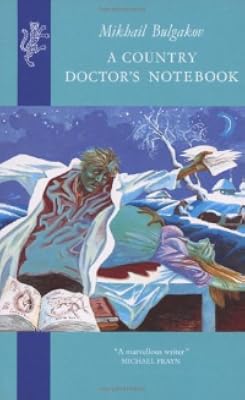
A Country Doctor's Notebook
by Mikhail Bulgakov
On This Page
Description
From the author of The Master and Margarita, these semiautobiographical stories chronicle the darkly comic adventures of a physician in rural 1917 Russia. Fresh from medical school in the winter of 1917, the young Dr. Bomgard assumes the role of the only doctor in a provincial Russian hospital. Dealing with a cases ranging from the horrific to the hilarious to the surreal, Bomgard recounts his solitary time practicing medicine among the superstitious, uneducated, and deeply suspicious show more populace of his new town. He exhibits relentless patience and determination while fighting the daily uphill battle against the challenges of an inexperienced country doctor, including scouring ten textbooks at once hours before a complicated surgery; dealing with patients who either refuse to take their medicine or take it all at once; and handling a colleague with a dangerous morphine addiction. Somehow, despite the near-constant chaos, Bomgard continues to focus on the life-affirming moments that make his efforts worth the uncertainty, isolation, and lost sleep. A semiautobiographical collection of short stories by author, playwright, and erstwhile physician Mikhail Bulgakov, A Young Doctor's Notebook chronicles the author's experiences practicing in a small village hospital in Smolensk Governorate in revolutionary Russia between 1916 and 1918, originally published in installments in Russian medical journals, and later adapted into the British TV series starring Daniel Radcliffe and Jon Hamm. show lessTags
Recommendations
















Member Recommendations

Member Reviews
This early realist work of Bulgakov brought so strongly to my mind the stories of James Herriot that I quickly began "hearing" these stories in Herriot's voice as I read them. Newly qualified as a doctor, Bulgakov's alter ego here is sent off to be the sole physician in a rural part of the country in the early part of the twentieth century. There he finds the local peasantry often resistant to the modern medicine he practices and he struggles with a large culture gap. He also struggles with his inexperience and the anxiety this causes, obsessing about possible strangulated hernias in particular. As a man of good nature and talent, however, he rises to the occasion.
For instance, if this section isn't the Russian physician equivalent of show more James Herriot, then I'm a babushka:
It should be noted that these stories were published separately in two journals between 1925 and 1927 and while Bulgakov is said to have intended at some point to collect and edit them as a single published volume, he never did and so we cannot know what decisions might have made if this volume had been put together by the author. show less
For instance, if this section isn't the Russian physician equivalent of show more James Herriot, then I'm a babushka:
'Well now,' I said, 'you see... er... it seems... in fact it's quite certain... you see, you have a rather unpleasant disease - you have syphilis...'Anyway, the first seven stories of this collection are generally in this vein, and are quite enjoyable and lightly humorous. The last two stories, Morphine and The Murderer, take a radical turn however as Bulgakov writes not about 'himself' but about two other doctors, one who becomes addicted to morphine and another who gets caught up in the Russian Revolution. Nothing humorous in the least about these two stories, which makes for a somewhat jarring tone shift at the finish.
As soon as I had said this I felt awkward. I thought he might be frightened out of his wits. But not at all. He gave me a sidelong glance, rather as a hen looks up with her round eye when she hears a voice calling her. I was astonished to see mistrust in his round eye.
'You've got syphilis,' I repeated softly.
'What's that, then?' asked the man with the speckled rash...
'You can get dressed again,' I said. 'You've got syphilis! It is an extremely serious illness which affects the whole body. It will take a long time to cure.'
Here I faltered because - I swear it - I detected in that hen-like gaze astonishment clearly mixed with derision.
'But I'm only a bit hoarse in the throat,' said the patient.
'Yes, I know. That's why it's gone hoarse, and that's why you've got a rash on your chest. Have a look at your chest.'
He squinted at his chest. The ironic glint in his eyes did not fade.
'Couldn't you just give me something for my throat?' he asked...
'Look here,' I continued aloud, 'your throat is a minor matter. We'll make your throat better too, but the most important thing is to get rid of the general disease. And the treatment's going to take a long time - two years.'
At this the patient stared at me. I saw the verdict in his eyes: You've gone off your head, doctor!
'Why so long?' he asked. 'How can it take two years? All I need is something to gargle for my throat.'
I saw red...
A few minutes later the yellow back of his sheepskin jerkin was disappearing through the door and a woman in a headscarf was elbowing past him. A few minutes later, as I ran along the half-dark passage from my out-patient surgery to get some cigarettes from the pharmacist, I happened to overhear a hoarse whisper:
'He's no good. Young fellow. I've just got a sore throat, see, but he looks me all over... chest, belly... Lord, here am I with nothing but a sore throat and he gives me ointment for my legs.'
'Careless, careless,' a quavering peasant woman's voice agreed...
I pulled my head into my shoulders and furtively tried to hunch myself up as if I were guilty, and disappeared with a burning sense of resentment. I was in a terrible state. Had I been completely wasting my time?
It should be noted that these stories were published separately in two journals between 1925 and 1927 and while Bulgakov is said to have intended at some point to collect and edit them as a single published volume, he never did and so we cannot know what decisions might have made if this volume had been put together by the author. show less
In the winter of 1916, the author Mikhail Bulgakov was a newly minted general practitioner, sent to a remote, rural medical clinic to be the region's sole doctor. This sink or swim method of internship was common in Russia at the time, due in part to the exigency of the ongoing Civil War and the desperate need for medical care in rural areas. Bulgakov spent eighteen months there, then specialized in venereology and moved to Kiev. Another eighteen months later, the Civil War forced him into the Caucasus where he left medicine in favor of writing; his most famous novel being [The Master and Margarita]. This book is a fictionalized account of his time as a young doctor in the rural hinterlands. Each chapter could exist on its own as a show more short story, yet they read chronologically as a novel.
The opening chapter, The Embroidered Towel, recounts young Dr. Bomgard's arrival at his post after a grueling twenty-four hour sleigh trip from the nearest town.
If you have never driven over country roads it is useless for me to tell you about it; you wouldn't understand anyway. But if you have, I would rather not remind you of it.
He is met by his staff: a minimally trained assistant called a feldsher and two midwives. Feeling completely isolated and unprepared for his life here, the doctor finally falls asleep in his new quarters.
I don't remember him arriving. I only remember the bolt grating in the door, a shriek from Aksinya and a cart creaking out in the yard.
He was hatless, his sheepskin coat unbuttoned, his beard was dishevelled and there was a mad look in his eyes.
He crossed himself, fell on his knees and banged his forehead against the floor. This to me!
'I'm a lost man,' I thought wretchedly.
It is a difficult case. The man's daughter has fallen into the flax brake, a machine for separating the woody stem from the fibrous part of the flax. If she is to live, she needs an amputation. But if she were to die during the procedure, a likely outcome, her body would be cut for naught. What to do?
This initial story sets the tone for most of the book. Ironic and funny, yet graphic in the descriptions of contemporaneous medicine and the Russian peasant's life: a life filled with superstition, fatalism, and stoicism. The doctor, straight from Moscow, is appalled at the ignorance and compares it to darkness in the third chapter, Black as Egypt's Night. The chapter ends with the thoughts of the doctor as he falls asleep.
'No, I will fight it... I will... I...' After a hard night, sweet sleep overtook me. Darkness, black as Egypt's night, descended and in it I was standing alone, armed with something that might have been a sword or might have been a stethoscope. I was moving forward and fighting... somewhere at the back of beyond. But I was not alone. With me was my warrior band: Demyan Lukich, Anna Nikolaevna, Pelagea Ivanova, all dressed in white overalls, all pressing forward.
Sleep... what a boon...
I enjoyed this book in all its moods: humorous, insightful, tragic. I loved the transition of the bumbling, inexperienced young doctor to a man more at home within himself and having a more nuanced understanding of his profession and human nature. My one caution is that Bulgakov does write with the biases of a man of his time and station. However, if you don't mind reading about medical procedures, I would highly recommend this book. show less
The opening chapter, The Embroidered Towel, recounts young Dr. Bomgard's arrival at his post after a grueling twenty-four hour sleigh trip from the nearest town.
If you have never driven over country roads it is useless for me to tell you about it; you wouldn't understand anyway. But if you have, I would rather not remind you of it.
He is met by his staff: a minimally trained assistant called a feldsher and two midwives. Feeling completely isolated and unprepared for his life here, the doctor finally falls asleep in his new quarters.
I don't remember him arriving. I only remember the bolt grating in the door, a shriek from Aksinya and a cart creaking out in the yard.
He was hatless, his sheepskin coat unbuttoned, his beard was dishevelled and there was a mad look in his eyes.
He crossed himself, fell on his knees and banged his forehead against the floor. This to me!
'I'm a lost man,' I thought wretchedly.
It is a difficult case. The man's daughter has fallen into the flax brake, a machine for separating the woody stem from the fibrous part of the flax. If she is to live, she needs an amputation. But if she were to die during the procedure, a likely outcome, her body would be cut for naught. What to do?
This initial story sets the tone for most of the book. Ironic and funny, yet graphic in the descriptions of contemporaneous medicine and the Russian peasant's life: a life filled with superstition, fatalism, and stoicism. The doctor, straight from Moscow, is appalled at the ignorance and compares it to darkness in the third chapter, Black as Egypt's Night. The chapter ends with the thoughts of the doctor as he falls asleep.
'No, I will fight it... I will... I...' After a hard night, sweet sleep overtook me. Darkness, black as Egypt's night, descended and in it I was standing alone, armed with something that might have been a sword or might have been a stethoscope. I was moving forward and fighting... somewhere at the back of beyond. But I was not alone. With me was my warrior band: Demyan Lukich, Anna Nikolaevna, Pelagea Ivanova, all dressed in white overalls, all pressing forward.
Sleep... what a boon...
I enjoyed this book in all its moods: humorous, insightful, tragic. I loved the transition of the bumbling, inexperienced young doctor to a man more at home within himself and having a more nuanced understanding of his profession and human nature. My one caution is that Bulgakov does write with the biases of a man of his time and station. However, if you don't mind reading about medical procedures, I would highly recommend this book. show less
In 1916, as Russia was suffering the effects of two years of civil war, medical graduates were assigned to rural areas without the usual hospital internship. As a newly qualified doctor, the twenty-five-year-old Bulgakov found himself the solitary doctor at a remote hospital with erratic mail service, no electricity, transport by sleigh or cart on roads unreliable even in good conditions. He was tortured by his lack of experience and dreaded the possibility of certain conditions such as a strangulated hernia. Despite his worry, he successfully treated most patients, in the worst possible circumstances. His stories, part fiction, part autobiographical, are realistic, humorous, and enthralling. Bulgakov gave up medicine in 1920 to become show more a journalist. show less
Was expecting to read a monotone and cold description of different cases that Bulgakov encountered during his doctor years, but it turned out, quite in the contrary, to be a fully emotional semi-autobiography and memoir. The TV adaptation drama series is not even half as intriguing as the book. Absolutely LOVE the monologue in Morphine and the courageous fight with syphilis in The Starry Rash. Egyptian Darkness is satiric and hilarious, but also feels a bit like poking fun at the peasantry. The theme of inside struggling goes through the entire book and is fascinating. Absolutely worths a read.
I was deeply moved by this story of a young doctor fresh out of medical school who is tossed into the remotest Russian countryside to practice medicine. No surprise that it reads more like real life than fiction, as Bulgakov himself was a young doctor in similar circumstances once. The year is 1917, the "unforgettable year" according to the author, but the politics of the Revolution are yet to reach this provincial area... Within one year, the protagonist metamorphoses from an unsure, hesitant fledgling doctor willing to flee the godforsaken place, into a hands-on, confident professional determined to overcome the backwardness of his rural patients and make a difference in their lives. His sentiments are described by Bulgakov with show more profound clarity and frankness, so typical of his writing. Also, I couldn't help but draw a line of comparison with doctors of today - who daily rely on multitude of tests just to make a diagnosis, while our hero, under the pressure of necessity, successfully dealt with an enormous diversity of conditions and treatments... show less
ადრე "ოსტატი და მარგარიტა" მაქვს წაკითხული, უკვე "დიდობაში" მარტო მორფი (ისიც გადარბენით) და ფაქტიურად ესაა პირველი რაც წავიკითხე ბულგაკოვის ასე ვთქვათ გააზრებულად. ხოდა პირველივე გვერდებიდან ისე მომეწონა - ხმამაღლა გამოვხატავდი აღფრთოვანებას! თანაც არა მარტო ჩემი სამედიცინო show more ბექგრაუნდის გამო (თუმცა, ამიტომაც) - ძალიან მომწერონა ახარგაზრდა ბულგაკოვის წერის სტილი - რაღაცნაირი თავისუფალი, მოურიდებელი, გემრიელი იუმორით, თან დასტოინიც და სერიოზულიც.
ძალიან მაგარი იქნებოდა ყველა მოთხრობა უმაღლესი დონის რომ იყოს, მაგრამ არ არის. show less
ძალიან მაგარი იქნებოდა ყველა მოთხრობა უმაღლესი დონის რომ იყოს, მაგრამ არ არის. show less
Bulgakov was a doctor before he was a writer, having graduated with a degree in medicine from Kiev University in 1916. He spent the next eighteen months in the remote countryside, assigned to the post of chief doctor to the peasants near the village of Nikolskoye. The stories here recount those times, and are brutally honest about the doubts he felt as a young doctor, the fear that cases would come his way that he wouldn’t be able to handle, and the need to sneak off and look up information in reference books when they did. Bulgakov was in a primitive environment – 32 miles from the nearest electric light, without all of the right tools, and sorely understaffed. His log showed he attended to 15,613 patients in the first year, and show more aside from his nurses and assistants, he was largely isolated, with the inherent slowness of travel and lack of a telephone delaying any type of outside communication. Add to all this the brutality of a Russian winter; “The Blizzard” describes almost freezing to death while getting lost in one on the way back home at night.
There was an enormous gap between rich and poor in Russia at the time, which as Glenny says in the introduction, had Bulgakov “at the point of contact between two cultures which are about five hundred years apart in time.” The peasants had no end to their superstitions, and much has been made of Bulgkov bringing ‘light’ to the darkness of ignorance. On the other hand, I found it interesting that we look back about a hundred years and see how in the dark Bulgakov himself was. He occasionally describes outdated medical practice (e.g. mercury ointments) and his own chain smoking, mentioning his 50th cigarette of the day at one point, in addition to often not knowing how to handle cases and just having to make best efforts and learn as he went. Overall, though, he’s heroic, and it’s a very interesting glimpse into life right before the Russian revolution.
After Bulgakov moves on to another post, he comes to learn of another doctor’s sad descent into heroin addiction, and publishes his diary and notes in “Morphine”. I’m not sure if it was fiction or reality, but regardless it’s an excellent description of addiction. The book ends in Kiev and the story “The Murderer”, about the moral ambiguity of being a doctor to an enemy’s wounds, as Kiev began to come under conflict in the revolution. It’s interesting to think of this as a seque into his classic book “The White Guard”.
Quotes:
On being a young doctor:
“And there was I, all on my own, with a woman in agony on my hands and I was responsible for her. I had no idea, however, what I was supposed to do to help her, because I had seen childbirth at close quarters only twice in my life in a hospital, and both occasions were completely normal. The fact that I was conducting an examination was of no value to me or to the woman; I understood absolutely nothing and could feel nothing of what was inside her.
…
The pages of Doderlein flickered before my eyes. Internal method…Combined method…External method…Page after page, covered in illustrations. A pelvis; twisted, crunched babies with enormous heads…a little dangling arm with a loop in it.
Indeed I had read it not long ago and had underlined it, soaking up every word, mentally picturing the interrelationship of every part of the whole and every method. And as I read it I imagined that the entire text was being imprinted on my brain forever. Yet now only one sentence of it floated back into my memory: ‘A transverse lie is a wholly unfavourable position.’”
On Kiev:
“Ah, what stars there are in the Ukraine. I’ve been living in Moscow almost seven years, but I still feel drawn to my homeland. My heart aches, I get a terrible urge to board a train and be off. To see the cliffs covered in snow, the Dnieper…there’s no more beautiful city in the world than Kiev.” show less
There was an enormous gap between rich and poor in Russia at the time, which as Glenny says in the introduction, had Bulgakov “at the point of contact between two cultures which are about five hundred years apart in time.” The peasants had no end to their superstitions, and much has been made of Bulgkov bringing ‘light’ to the darkness of ignorance. On the other hand, I found it interesting that we look back about a hundred years and see how in the dark Bulgakov himself was. He occasionally describes outdated medical practice (e.g. mercury ointments) and his own chain smoking, mentioning his 50th cigarette of the day at one point, in addition to often not knowing how to handle cases and just having to make best efforts and learn as he went. Overall, though, he’s heroic, and it’s a very interesting glimpse into life right before the Russian revolution.
After Bulgakov moves on to another post, he comes to learn of another doctor’s sad descent into heroin addiction, and publishes his diary and notes in “Morphine”. I’m not sure if it was fiction or reality, but regardless it’s an excellent description of addiction. The book ends in Kiev and the story “The Murderer”, about the moral ambiguity of being a doctor to an enemy’s wounds, as Kiev began to come under conflict in the revolution. It’s interesting to think of this as a seque into his classic book “The White Guard”.
Quotes:
On being a young doctor:
“And there was I, all on my own, with a woman in agony on my hands and I was responsible for her. I had no idea, however, what I was supposed to do to help her, because I had seen childbirth at close quarters only twice in my life in a hospital, and both occasions were completely normal. The fact that I was conducting an examination was of no value to me or to the woman; I understood absolutely nothing and could feel nothing of what was inside her.
…
The pages of Doderlein flickered before my eyes. Internal method…Combined method…External method…Page after page, covered in illustrations. A pelvis; twisted, crunched babies with enormous heads…a little dangling arm with a loop in it.
Indeed I had read it not long ago and had underlined it, soaking up every word, mentally picturing the interrelationship of every part of the whole and every method. And as I read it I imagined that the entire text was being imprinted on my brain forever. Yet now only one sentence of it floated back into my memory: ‘A transverse lie is a wholly unfavourable position.’”
On Kiev:
“Ah, what stars there are in the Ukraine. I’ve been living in Moscow almost seven years, but I still feel drawn to my homeland. My heart aches, I get a terrible urge to board a train and be off. To see the cliffs covered in snow, the Dnieper…there’s no more beautiful city in the world than Kiev.” show less
Members
- Recently Added By
Lists

A Ukraine Reading List
121 works; 90 members

stories at work
43 works; 7 members

1920s
141 works; 6 members

Books Read in 2015
3,299 works; 129 members

Russian Literature
184 works; 35 members

The r/AskScience Reading List
159 works; 3 members

Books We Couldn't Put Down
443 works; 197 members
Author Information

361+ Works 35,100 Members
Mikhail Afanasevich Bulgakov was a Russian playwright, novelist, and short-story writer best known for his use of humor and satire. He was born in Kiev, Ukraine, on May 15, 1891, and graduated from the Medical School of Kiev University in 1916. He served as a field doctor during World War I. Bulgakov's association with the Moscow Art Theater began show more in 1926 with the production of his play The Days of the Turbins, which was based on his novel The White Guard. His work was popular, but since it ridiculed the Soviet establishment, was frequently censored. His satiric novel The Heart of a Dog was not published openly in the U.S.S.R. until 1987. Bulgakov's plays including Pushkin and Moliere dealt with artistic freedom. His last novel, The Master and Margarita, was not published until 1966-67 and in censored form. Bulgakov died in Moscow on March 10, 1940. (Bowker Author Biography) A practicing physician like Anton Chekhov, Mikhail Afanasevich Bulgakov became a popular writer and playwright in the comparatively easier political climate of the Soviet Union during the 1920s. The civil war and its internecine horrors became one of his major themes as did the new Soviet society. His early prose is often satiric, with strong elements of the fantastic and grotesque, but it also contains the themes of guilt and personal responsibility that become so crucial in his later work. Bulgakov wrote a number of important plays that provoked bitter attacks in the press, and he was shut out of the theater and literature in 1929. Only a direct appeal to Stalin allowed Bulgakov to resume a professional career. Even then, however, some publishing houses and theaters rejected some of his important works, such as the novel Life of Monsieur de Moliere (1933). Bulgakov's masterpiece written over a number of years and only published decades after his death is the novel Master and Margarita (1966-67). Combining two principal plot lines-Satan's visit to contemporary Moscow and the trial and execution of Jesus in biblical Judaea-the work may be read on many levels, from the purely satiric to the allegorical. It has been acclaimed as one of the most important achievements of twentieth-century Russian fiction. Today, Bulgakov is celebrated for both his plays and his novels. Several of his plays are public favorites and standard fare in Russian theaters. Bulgakov died in Moscow on March 10, 1940. (Bowker Author Biography) show less
Some Editions
Awards and Honors
Distinctions
Notable Lists
Series
Belongs to Publisher Series
Work Relationships
Is contained in
Common Knowledge
- Canonical title
- A Country Doctor's Notebook
- Original title
- Записки юного врача
- Alternate titles
- A Young Doctor's Notebook
- Original publication date
- 1925-1927; 1975 (English) (English)
- People/Characters
- Dr. Vladimir Mikhailovich Bomgard
- Important places
- Grachyovka, Russia; Muryovo, Russia
- Important events
- Russian Civil War
- Related movies
- A Young Doctor's Notebook & Other Stories (2012 | IMDb)
- First words
- If you have never driven over country roads it is useless for me to tell you about it; you wouldn't understand anyway. But if you have, I would rather not remind you of it.
- Quotations
- I don't remember him arriving. I only remember the bolt grating in the door, a shriek from Aksinya and a cart creaking out in the yard.
He was hatless, his sheepskin coat unbuttoned, his beard was dishevelled and ther... (show all)e was a mad look in his eyes.
He crossed himself, fell on his knees and banged his forehead against the floor. This to me!
'I'm a lost man,' I thought wretchedly.
'No, I will fight it... I will... I...' After a hard night, sweet sleep overtook me. Darkness, black as Egypt's night, descended and in it I was standing alone, armed with something that might have been a sword or might have ... (show all)been a stethoscope. I was moving forward and fighting... somewhere at the back of beyond. But I was not alone. With me was my warrior band: Demyan Lukich, Anna Nikolaevna, Pelagea Ivanova, all dressed in white overalls, all pressing forward.
Sleep... what a boon... - Last words
- (Click to show. Warning: May contain spoilers.)'Oh, don't worry - I killed him all right. Trust my experience as a surgeon.'
- Blurbers
- Pritchett, V.S.; Frayn, Michael
- Original language
- Russian
- Disambiguation notice
- ISBN 0002621037 is for A Country Doctor's Notebook by Mikhail Bulgakov
Classifications
- Genres
- General Fiction, Fiction and Literature
- DDC/MDS
- 891.7 — Literature & rhetoric Literatures of other languages East Indo-European and Celtic literatures Russian and East Slavic languages
- LCC
- PG3476 .B78 — Language and Literature Slavic languages and literatures. Baltic languages. Albanian language Slavic. Baltic. Albanian Russian literature Individual authors and works 1917-1960
- BISAC
Statistics
- Members
- 1,060
- Popularity
- 24,267
- Reviews
- 24
- Rating
- (4.14)
- Languages
- 12 — Danish, Dutch, English, French, German, Hebrew, Italian, Norwegian (Bokmål), Russian, Spanish, Swedish, Turkish
- Media
- Paper, Ebook
- ISBNs
- 53
- ASINs
- 23