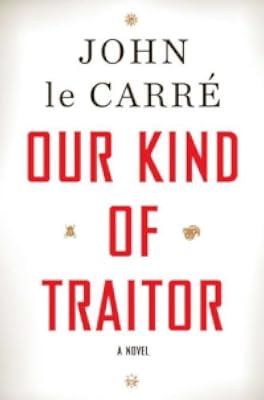
Our Kind of Traitor
by John le Carré
On This Page
Description
In the wake of the collapse of Lehman Brothers and with Britain on the brink of economic ruin, a young English couple takes a tennis vacation in Antigua. There they meet Dima, a Russian who styles himself the world's number one money launderer, who wants, among other things, a game of tennis. Back in London, the couple is subjected to an all-night interrogation by the British Secret Service, which also needs their help. Their acquiescence will lead them on a precarious journey through Paris show more to a safe house in Switzerland, helpless pawns in a game of nations that reveals the unholy alliances between the Russian mafia, the City of London, the government and the competing factions of the British Secret Service. show lessTags
Recommendations

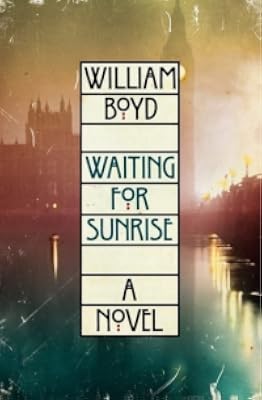


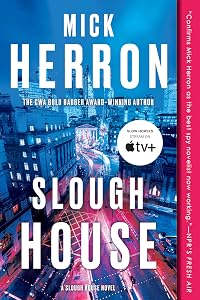
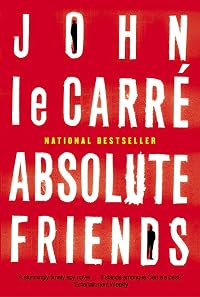
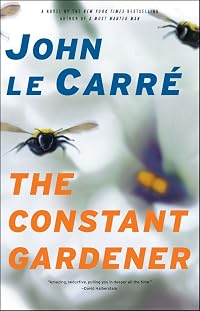
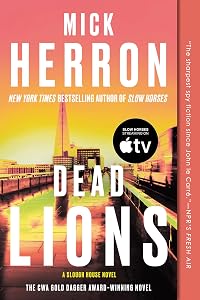


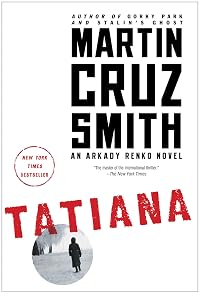

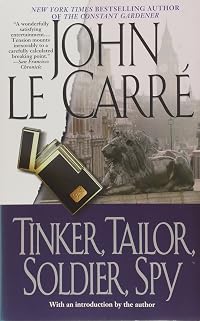




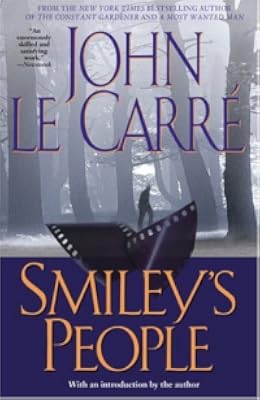
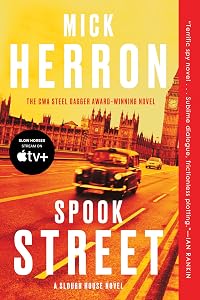


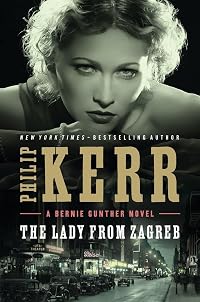
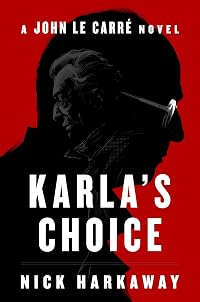

Member Recommendations
Member Reviews
In this novel, Le Carre continues to plumb the depths of modern global capitalism to forge a compelling if profoundly pessimistic view of the world. You follow the unfolding operation (the worlds leading money launderer has agreed to testify against the Russian mafia and must be escorted to safety through a maze of intrigue and deception) with growing dread as corrupt political forces beyond the control of the novel's heroes conspire against them. While the book is tautly suspenseful, I don't think it is a spoiler to warn that there is no happy ending. That seems to have become inevitable in Le Carre's work. His perspective on why the world is tragic is what makes him worth reading.
John le Carré, ein Name der für spannende Agenten- und Spionagethriller steht - mit dieser Erwartungshaltung machte ich mich an sein neuestes Werk. Ich las und las, amüsierte mich prächtig und ertappte mich dennoch dabei, immer oberflächlicher über den Text hinwegzugehen, bis ich bei Seite 202 (ca. der Hälfte) das Buch resigniert zuschlug. Denn von Spannung - keine Spur. Welch eine Enttäuschung!
Doch ich hatte mich selbst in die Irre geführt, denn bei genauem Hinschauen ist (außer bei der Einordung bei diversen Buchläden) nirgendwo die Rede von Krimi oder Thriller. 'Verräter wie wir' ist eine Lektüre, die zwar im Agentenmilieu spielt und gegen Ende einen eindrucksvollen Spannungsbogen aufweist, aber dennoch nicht mehr oder show more weniger als ein Roman. Also schickte ich meine Erwartungen in die Wüste und begann nochmal von vorn. Und siehe da....
Perry und Gail, ein wohl recht typisch britisches, linksliberales Pärchen mit einer eher skeptischen Haltung gegenüber den staatlichen Institutionen, lernen in einem Urlaub einen russischen Oligarchen kennen, der sie unversehens zu seinen Vertrauten kürt. Plötzlich finden die Beiden sich wieder in der Rolle als Mittler zwischen dem britischen Geheimdienst und einem potentiellen russischen Überläufer.
LeCarré verwendet viele Seiten auf die genaue Darstellung der einzelnen Personen, inbesondere auf die seiner beiden Protagonisten Gail und Perry. Es gelingt ihm bravourös, nicht nur sehr detailliert sondern auch voller Witz die Eigenheiten und Widersprüchlichkeiten der Handelnden darzustellen. Wie Perry beispielsweise, der ewige Kritiker und Verächter der britischen Politik, der sich plötzlich als inoffizieller Geheimdienstmitarbeiter wiederfindet - und es wider Erwarten geniesst. Oder Dima, der russische Oligarch, der England liebt und bewundert und alle britischen Literaturklassiker besitzt, ohne vermutlich einen einzigen davon gelesen zu haben. Dies alles ist zudem in einer wunderbaren Sprache verfasst, über die man sich auf jeder Seite auf's Neue freut.
Weshalb dann trotzdem nicht die volle Punktzahl? Weil bis zur ca. der Hälfte des Buches die Menge der Perspektivenwechsel etwas überhand nimmt. In einem Gespräch mit dem Geheimdienst, das bis dorthin die Rahmenhandlung darstellt, berichten Gail und Perry über ihre Begegnung mit Dima. Hierbei werden Rück- und Einblicke auf und in die Lebensläufe der Beteiligten eingeschoben, wobei der Großteil dieser einzelnen Abschnitte meist nicht mehr als 4-6 Seiten umfasst, sodass zumindest der Beginn etwas unübersichtlich wirkt .
Aber abgesehen von dieser kleinen Mäkelei: grandiose Unterhaltung mit (wahrscheinlich) durchaus realistischen Einblicken in das schmutzige Geldwäschergeschäft. show less
Doch ich hatte mich selbst in die Irre geführt, denn bei genauem Hinschauen ist (außer bei der Einordung bei diversen Buchläden) nirgendwo die Rede von Krimi oder Thriller. 'Verräter wie wir' ist eine Lektüre, die zwar im Agentenmilieu spielt und gegen Ende einen eindrucksvollen Spannungsbogen aufweist, aber dennoch nicht mehr oder show more weniger als ein Roman. Also schickte ich meine Erwartungen in die Wüste und begann nochmal von vorn. Und siehe da....
Perry und Gail, ein wohl recht typisch britisches, linksliberales Pärchen mit einer eher skeptischen Haltung gegenüber den staatlichen Institutionen, lernen in einem Urlaub einen russischen Oligarchen kennen, der sie unversehens zu seinen Vertrauten kürt. Plötzlich finden die Beiden sich wieder in der Rolle als Mittler zwischen dem britischen Geheimdienst und einem potentiellen russischen Überläufer.
LeCarré verwendet viele Seiten auf die genaue Darstellung der einzelnen Personen, inbesondere auf die seiner beiden Protagonisten Gail und Perry. Es gelingt ihm bravourös, nicht nur sehr detailliert sondern auch voller Witz die Eigenheiten und Widersprüchlichkeiten der Handelnden darzustellen. Wie Perry beispielsweise, der ewige Kritiker und Verächter der britischen Politik, der sich plötzlich als inoffizieller Geheimdienstmitarbeiter wiederfindet - und es wider Erwarten geniesst. Oder Dima, der russische Oligarch, der England liebt und bewundert und alle britischen Literaturklassiker besitzt, ohne vermutlich einen einzigen davon gelesen zu haben. Dies alles ist zudem in einer wunderbaren Sprache verfasst, über die man sich auf jeder Seite auf's Neue freut.
Weshalb dann trotzdem nicht die volle Punktzahl? Weil bis zur ca. der Hälfte des Buches die Menge der Perspektivenwechsel etwas überhand nimmt. In einem Gespräch mit dem Geheimdienst, das bis dorthin die Rahmenhandlung darstellt, berichten Gail und Perry über ihre Begegnung mit Dima. Hierbei werden Rück- und Einblicke auf und in die Lebensläufe der Beteiligten eingeschoben, wobei der Großteil dieser einzelnen Abschnitte meist nicht mehr als 4-6 Seiten umfasst, sodass zumindest der Beginn etwas unübersichtlich wirkt .
Aber abgesehen von dieser kleinen Mäkelei: grandiose Unterhaltung mit (wahrscheinlich) durchaus realistischen Einblicken in das schmutzige Geldwäschergeschäft. show less
(original review, 2010)
About a third of the way through “Our Kind of Traitor”, I sat back and reflected on the elegance of the prose and the grace and ease with which the narrative moved back and forth through time, and two words came inescapably to mind: Joseph Conrad. I can't believe, after all the le Carré novels I had already read at that point, that this was the first time the comparison ever occurred to me, but there it is.
In a way, though, it's fitting that the realization came with that book: "Our Kind of Traitor" is an elegant novel, certainly an accomplished bit of storytelling, but I don't think anyone will ever rank it alongside “Tinker Taylor Soldier Spy” or “The Constant Gardener”. Yet I savored the book for show more the skill and grace with which it was written. This is what distinguishes Le Carré from somebody like Michael Crichton: he can be read with pleasure simply for the quality of his writing. Crichton is a wonderfully efficient storyteller, and as long as he's got a good tale to tell, he can be great fun to read. What he does is not easy, and at his best he does it very, very well. But I could never imagine sitting back, after reading a page of any one of his books, and simply savoring the language for its own sake. With John le Carré I find myself doing this all the time -- as I do with Raymond Chandler, another truly great writer who happened to work in "genre fiction".
Conrad was probably the originator of the literary thriller in which a compromised, emotionally tormented male protagonist, an anti-hero no less in the true sense, is placed centre-stage, in a morally ambiguous setting with all sorts of dark shades. And that is very much Le Carre’s model too.
It’s so very sharp and proficient (as, of course, is the plotting and structure). Some Le Carré detractors grumble about clichés and typical thriller language, but as far as I’m concerned (and I am, admittedly, a very big fan) they are only demonstrating their own philistinism in doing so. He does use the kind of colloquialisms and set phrases that you could dismiss as clichés elsewhere, but half of them he’s invented himself, and the other half he is using knowingly, with perfect confidence. There is nothing wrong with clichés if the writer is good enough to shepherd them around the page exactly as he wants, to be their master. They are only a problem if the writer isn’t good enough, and they come blundering in unbidden and out of control, often in the midst of pretentiously considered sentences. Le Carré, obviously, is plenty good enough. The pacing, the tone: it's all just brilliant, and as a literary device, the way the protagonist retreats deeper into his own repressed psychology as his own physical horizons are narrowed down and down is ever so clever. Love it; absolutely love it.
I think le Carré is seen as transcending the genre because he creates a world which is very believable even though I am sure that the Circus bears no resemblance to Britain's SIS. For a certain type of high minded reader who frets about such things, books that feature stuff that manifestly don't exist (dragons, amateur detectives, starships) are bothersome. They smell of flippancy and a departure from seriousness and worthiness which is not really acceptable to a reader who views reading as a stern and proper undertaking like a Calvinist at prayer. And I love SF...
SF = Speculative Fiction. show less
About a third of the way through “Our Kind of Traitor”, I sat back and reflected on the elegance of the prose and the grace and ease with which the narrative moved back and forth through time, and two words came inescapably to mind: Joseph Conrad. I can't believe, after all the le Carré novels I had already read at that point, that this was the first time the comparison ever occurred to me, but there it is.
In a way, though, it's fitting that the realization came with that book: "Our Kind of Traitor" is an elegant novel, certainly an accomplished bit of storytelling, but I don't think anyone will ever rank it alongside “Tinker Taylor Soldier Spy” or “The Constant Gardener”. Yet I savored the book for show more the skill and grace with which it was written. This is what distinguishes Le Carré from somebody like Michael Crichton: he can be read with pleasure simply for the quality of his writing. Crichton is a wonderfully efficient storyteller, and as long as he's got a good tale to tell, he can be great fun to read. What he does is not easy, and at his best he does it very, very well. But I could never imagine sitting back, after reading a page of any one of his books, and simply savoring the language for its own sake. With John le Carré I find myself doing this all the time -- as I do with Raymond Chandler, another truly great writer who happened to work in "genre fiction".
Conrad was probably the originator of the literary thriller in which a compromised, emotionally tormented male protagonist, an anti-hero no less in the true sense, is placed centre-stage, in a morally ambiguous setting with all sorts of dark shades. And that is very much Le Carre’s model too.
It’s so very sharp and proficient (as, of course, is the plotting and structure). Some Le Carré detractors grumble about clichés and typical thriller language, but as far as I’m concerned (and I am, admittedly, a very big fan) they are only demonstrating their own philistinism in doing so. He does use the kind of colloquialisms and set phrases that you could dismiss as clichés elsewhere, but half of them he’s invented himself, and the other half he is using knowingly, with perfect confidence. There is nothing wrong with clichés if the writer is good enough to shepherd them around the page exactly as he wants, to be their master. They are only a problem if the writer isn’t good enough, and they come blundering in unbidden and out of control, often in the midst of pretentiously considered sentences. Le Carré, obviously, is plenty good enough. The pacing, the tone: it's all just brilliant, and as a literary device, the way the protagonist retreats deeper into his own repressed psychology as his own physical horizons are narrowed down and down is ever so clever. Love it; absolutely love it.
I think le Carré is seen as transcending the genre because he creates a world which is very believable even though I am sure that the Circus bears no resemblance to Britain's SIS. For a certain type of high minded reader who frets about such things, books that feature stuff that manifestly don't exist (dragons, amateur detectives, starships) are bothersome. They smell of flippancy and a departure from seriousness and worthiness which is not really acceptable to a reader who views reading as a stern and proper undertaking like a Calvinist at prayer. And I love SF...
SF = Speculative Fiction. show less
I was going to say this was one of Le Carre's better novels in recent years until the terribly disappointing ending. As with Le Carre's books, you know that the ending will be different from the one you expect but not this! He created so much suspense only for Dima and Luke to die in a plane explosion (sorry for the spoiler). What is going to happen to the others like Natasha, Perry, and Gail?
Classic LeCarre but I felt the suspense lagged in this one. Admirable writing and developed main characters but the story did not pull me in as much as, say, The Constant Gardener.
Entertaining and enlightening, albeit in a dark way. Very sharp, smart writing - you don't want to miss a line, even inadvertently. Wry British wit. The ending was disappointing, in a way. Expected anything but that...
University lecturer Perry Makepiece and his girlfriend Gail Perkins, a lawyer, are on a tennis vacation in Antigua where they meet Dmitri (Dima) Vladimirovich Krasnov, a self-confessed money launderer. Dima wants to get out of the control of the Russian mob and believes Perry and Gail can help by passing information to MI6 in exchange for protection. John le Carré's writing is elegant and sophisticated, and captures the reader's attention from the first page although I could have done with less dialogue from the brash Dima. It's a captivating story as expected, but I will always miss George Smiley.
Members
- Recently Added By
Published Reviews
ThingScore 85
Le Carré describes a shifting world where mobsters can be of use to the government, where the Secret Service doesn't care whom it sacrifices—British citizens or parts of itself—to reel in their quarry, and where the rule of law, or even what is considered to be legal, won't always apply.
added by lophuels
added by lophuels
Our Kind of Traitor is on an uplifting and pleasingly-familiar course, though it is one that confirms the depths of the author’s discomfort and anger at the world.
added by lophuels
Lists

Books Read in 2017
4,249 works; 130 members

Best Spy Fiction
153 works; 102 members
Author Information

216+ Works 99,083 Members
David John Moore Cornwell was born in Poole, Dorsetshire, England in 1931. He attended Bern University in Switzerland from 1948-49 and later completed a B.A. at Lincoln College, Oxford. He taught at Eton from 1956-58 and was a member of the British Foreign Service from 1959 to 1964. He writes espionage thrillers under the pseudonym John le Carré. show more The pseudonym was necessary when he began writing, in the early 1960s because, at that time, he held a diplomatic position with the British Foreign Office and was not allowed to publish under his own name. When his third book, The Spy Who Came in from the Cold, became a worldwide bestseller in 1964, he left the foreign service to write full time. His other works include Call for the Dead; A Murder of Quality; Tinker, Tailor, Soldier, Spy; The Honourable Schoolboy; and Smiley's People. He has received numerous awards for his writing, including the Grand Master Award from the Mystery Writers of America in 1986 and the Diamond Dagger from the Crime Writers Association in 1988. In 2011 he accepted the Goethe Medal. And in 2020, he accepted the Olof Palme Prize. Ten of his books have been adapted for television and motion pictures including The Spy Who Came in from the Cold, The Russia House, The Constant Gardener, A Most Wanted Man, and Our Kind of Traitor. Le Carré's memoir, The Pigeon Tunnel: Stories from my Life, became a New York Times bestseller in 2016. In 2019, he published a spy thriller, Agent Running in the Field. John Le Carré died on December 12, 2020 from pneumonia at the age of 89. (Bowker Author Biography) John le Carre was born in 1931. After attending the univesities of Berne and Oxford, he spent five years in the British Foreign Service. He's the author of eighteen novels, translated into twenty-five languages. He lives in England. (Publisher Provided) show less
Some Editions
Awards and Honors
Awards
Series
Belongs to Publisher Series
Ullstein (28391)
Work Relationships
Has the adaptation
Common Knowledge
- Canonical title
- Our Kind of Traitor
- Original title
- Our Kind of Traitor
- Original publication date
- 2010
- Important places*
- Antigua; Londen, Engeland, Verenigd Koninkrijk; Parijs, Île-de-France, Frankrijk; Bern, Bern, Zwitserland
- Related movies
- Our Kind of Traitor (2016 | IMDb)
- Epigraph
- Princes in this case
Do hate the traitor, though they love the treason.
Samuel Daniel - Dedication
- In memory of
Simon Channing Williams
film-maker, magician,
honorourable man. - First words
- At seven o'clock of a Caribbean morning, on the island of Antigua, one Peregrine Makepiece, otherwise known as Perry, an all-round amateur athlete of distinction and until recently tutor in English literature at a distinguish... (show all)ed Oxford college, played three sets of tennis against a muscular, stiff-backed, bald, brown-eyed Russian man of dignified bearing in his middle fifties called Dima.
- Quotations
- Federer is a bit perplexed about what to say - they clearly haven't met before - but he preserves his on-court nice manners, although he looks a tad irritated in a grouchy, Swiss sort of way that reminds us that his celebrate... (show all)d armour has its chinks.
- Last words
- (Click to show. Warning: May contain spoilers.)No group has claimed responsibility.
- Original language*
- Engels
*Some information comes from Common Knowledge in other languages. Click "Edit" for more information.
Classifications
Statistics
- Members
- 2,675
- Popularity
- 6,950
- Reviews
- 86
- Rating
- (3.36)
- Languages
- 20 — Catalan, Chinese, Danish, Dutch, English, Estonian, Finnish, French, German, Greek, Hebrew, Hungarian, Italian, Marathi, Norwegian (Bokmål), Polish, Portuguese, Russian, Spanish, Swedish
- Media
- Paper, Audiobook, Ebook
- ISBNs
- 85
- ASINs
- 31