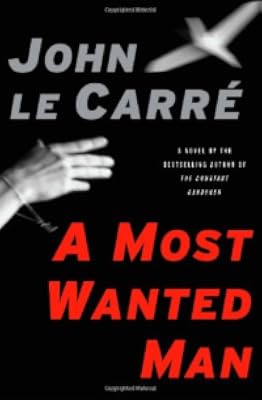
A Most Wanted Man
by John le Carré
On This Page
Description
A half-starved young Russian man claiming to be a devout Muslim, an idealistic young German civil rights lawyer, and a sixty-year-old scion of a failing British bank based in Hamburg form an unlikely alliance as the rival spies of Germany, England and America scent a sure kill in the "War on Terror," and converge upon the innocents.Tags
Recommendations













Member Recommendations


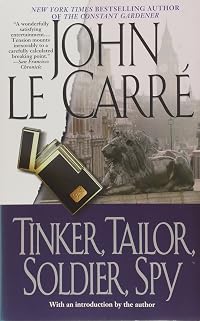
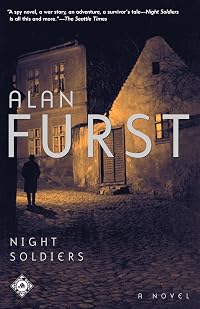
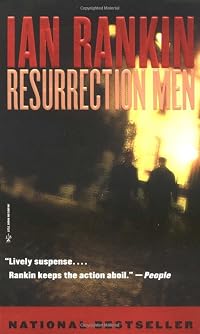
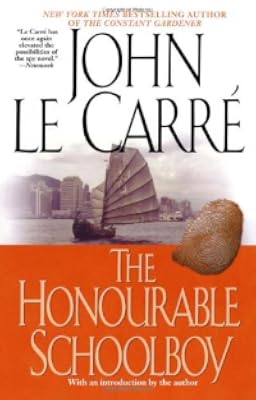
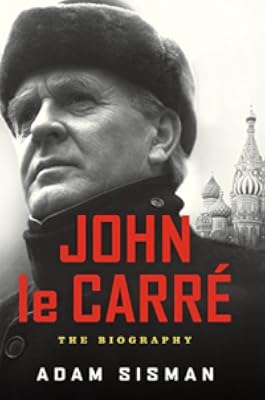
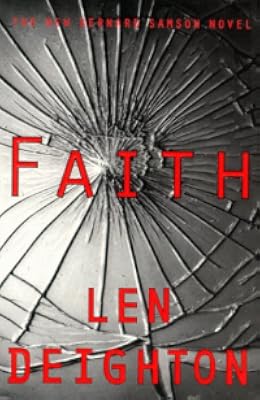
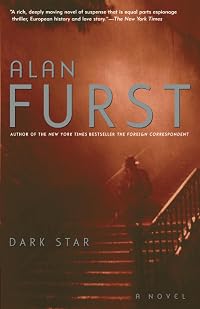
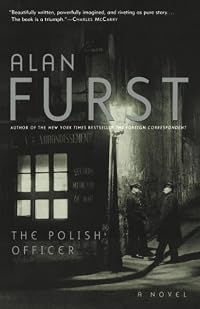
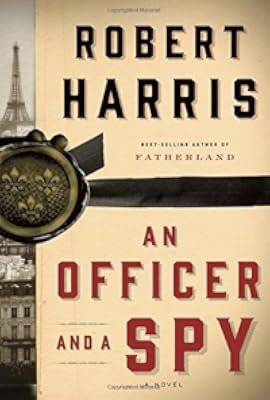
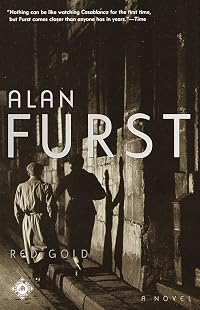
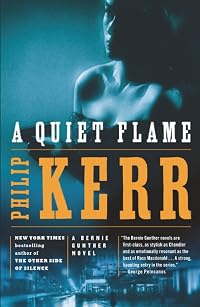
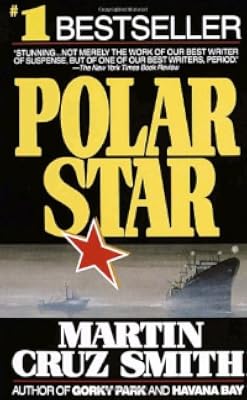
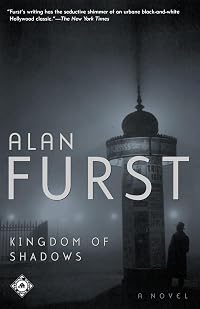
davidpwhelan Both books share plots that deal with mistaken identity, circumstantial evidence, war on terror, ascribing hostility to others based on race or religious background, and are well-written thrillers.

Member Reviews
Masterfully constructed! It's the pacing, just unfolding the story, not too slow, not too fast. The usual le Carre elements... all the divorces and affairs! But not just that. Seeing all the agents as people with their various interests etc.
Gotta say, the Americans come off looking like thugs in this!
Gotta say, the Americans come off looking like thugs in this!
A battered young refugee arrives in Hamburg having escaped from immigration detention in Sweden. He has been jailed and tortured in Russia and Turkey and presents as a Chechen Muslim, but he only speaks Russian and seems to be the heir to the corrupt millions a Red Army colonel has stashed away in a private bank account.
The “intelligence community” in Hamburg is in a twitchy state after having failed to spot the 9/11 conspirators in time, and they quickly go into full alert, whilst a couple of honourable citizens in the classic Le Carré mode, a young human rights lawyer and an elderly banker, get caught up in the action against their will.
An interesting exploration of the classic dilemma between the policeman’s imperative to show more arrest wrongdoers and prevent further crime and the spy’s inclination to follow networks back to their sources and pervert them to new uses. It is perhaps slightly undermined by the way the tell-tale thinning of the pages warns us that the big closing scene isn’t going to end the way we may be hoping. But that probably goes with the territory in this kind of thriller. show less
The “intelligence community” in Hamburg is in a twitchy state after having failed to spot the 9/11 conspirators in time, and they quickly go into full alert, whilst a couple of honourable citizens in the classic Le Carré mode, a young human rights lawyer and an elderly banker, get caught up in the action against their will.
An interesting exploration of the classic dilemma between the policeman’s imperative to show more arrest wrongdoers and prevent further crime and the spy’s inclination to follow networks back to their sources and pervert them to new uses. It is perhaps slightly undermined by the way the tell-tale thinning of the pages warns us that the big closing scene isn’t going to end the way we may be hoping. But that probably goes with the territory in this kind of thriller. show less
A Most Wanted Man by John Le Carré
While A Most Wanted Man was a well written page turner it lacked the complexity I have come to love in Le Carré’s novels. Published in 2009 it was topical and I suspect it was the author’s way of bringing the practice of extraordinary rendition carried out by governments that keep quite about what they are doing and, when their actions are exposed, justify everything under the banner, “The War on Terrorism”.
Le Carré gives the reader a glimpse of the shady world of international counter espionage and the pervasive nature of modern surveillance.
A somewhat linear tale told by a master whose stories are not normally so straightforward.
While A Most Wanted Man was a well written page turner it lacked the complexity I have come to love in Le Carré’s novels. Published in 2009 it was topical and I suspect it was the author’s way of bringing the practice of extraordinary rendition carried out by governments that keep quite about what they are doing and, when their actions are exposed, justify everything under the banner, “The War on Terrorism”.
Le Carré gives the reader a glimpse of the shady world of international counter espionage and the pervasive nature of modern surveillance.
A somewhat linear tale told by a master whose stories are not normally so straightforward.
Spoiler alert. I loved this book and highly recommend it. However to really review it I’m going to give away a plot twist which occurs at the very end. If you want to experience the surprise as a real surprise, do NOT read this review, read the book first.
John LeCarre’s career is tied to the spies in the post war world. But the Cold War is over. The spies have not disappeared. This book is tied to the post 9/11 world. The bad guys are now terrorists and religion has replaced ideology as the dividing line. State lines are no longer central features. And coordination is the new central tenet. There are those who mourn for the old days and the mutual respect that prevented certain lines from being crossed. Others are in the mold that show more the old conventions need to be put aside and focus should be on prevention at any cost. Tension is everywhere, even among friends. Stay tuned.
Part of the reason this book works so well is the way it makes you question who is the man referred to in the title. At first we think it’s the banker, Tommy Brue, who has inherited a small Hamburg bank from his bigger than life father, Edward Brue OBE. The bank has definitely seen better days and the son is not the man the father was. But part of what the father left behind are the “Lipizzaner” accounts which the son knows only that they are tainted in some way tied directly to his father. Could they be vehicles for money laundering for the Russian mafia? Our man knows that the rise of the bank is based somewhat on Russian money and learned to speak Russian to serve the clients.
Then our focus is shifted to a person stalking the banker. He appears to be a penniless Muslim beggar but things change quickly when he claims to be the heir to one of those Lipizzaner accounts. He’s a Russian speaking Chechnyan, named Issa Karpov, who's been imprisoned and obviously tortured in Russia and Turkey. The banker has almost no way of verifying his claim to be the son of the Russian Colonel who defiled and killed Issa’s mother after his birth. Issa wants nothing of the money as he considers it tainted. He wants all of it contributed to Chechnyan charities with the exception of paying for him to become a Doctor.
Annabelle Richter is a beautiful young lawyer who represents immigrants. Her father was a diplomat which is why she speaks Russian and her mother is a judge. She is attracted to Issa and attempts to gain his confidence but needs to deal with getting him healthy enough to deal with his many problems. The easy solution, going to the police, is not open to them as the German police will quickly turn him over to the Swedes to begin dealing with his numerous immigration offenses.
We begin to see the people who want this man. There’s British Intelligence who let the banker know they had asked his father to deal with the Russians and claimed they were behind his father receiving the OBE. Then the lens widens to what they refer to as Joint. These are the days when coordination is king. The Germans and several others are involved. Gunther Bachmann, a chain smoking hard drinker is old school. He is inclined to develop a plan to compromise a target and convert them to be their undercover agent. That’s how he and his team operate. They are not police, they are spies and their game is not putting people in jail but back on the street where they can be a source. They can go places the spies can’t. Gunther approach sounds reasonable and perhaps a solution. Their first targets are the banker and the lawyer. They show them how cooperating will be the best for them and their client.
The stumbling block is where will the money go if Issa will not take it. To fill in that piece we learn that there is a distinguished Imam that Issa respects, Dr Abdullah. But do the charities that Dr Abdullah supports hide his supplying funds for terrorists? Could he be the man who is really wanted rather than the others? The amount of funds is large enough to impress Dr Abdullah but he is leery that this is all a set up. Who is fooling who? He decides to put aside his reservation and supplies Issa with a list of Charities that will help Chechnya. The stage is set.
It would seem Dr Abdullah is the real target. The old school spies see this all as a way to compromise Dr Abdullah and convert him into a spy for them. Their man will be in the taxi to whisk away Dr Abdullah, once he has accepted the money which Issa receives from the bank, and unsuspectingly puts the screws on. The banker places the call for the taxi once the money has been passed. That’s when the plot twists. As the taxi arrives a van swoops in ramming the cab and both Issa and Dr Abdullah are grabbed into it violating the plan all seemed to have agreed to. Turns out it’s the Americans who have their way of dealing with this - extraordinary rendition. It sounds familiar.
That’s how this all ends. We never learn what happens. Torture? We are left guessing.
I was about to wrap up this review when I checked IMDB to see whether this had been made into a movie. To my surprise it was. Even more surprising was the star, Philip Seymour Hoffman. This was probably the last film he made before his untimely death in 2014; the film was released that year. Hoffman, along with Rachel McAdams, Willem DaFoe and Robin Wright clearly gave the film star power. However I had never heard of it and according to IMDB it did not seem to be well received. That made me wonder, how is it different from the book? I’ve only watched the opening so far but a major difference jumps out. The book feels British, the author was British, the banker is British, money laundering is associated with London, and British Intelligence seems to be working out of the British embassy in Berlin. Yes the action takes place in Hamburg but that seems only useful to advancing the immigration issue. But the film is backed by a German company. The film begins with a statement setting it in the post 9/11 world with Hamburg playing a central role without anyone having uncovered what was happening in their city. They will never let it happen again; fighting terrorists is the thing. The book does go there as well but the book does it much more subtly than the movie.
Now I’ve watched the entire movie and have much more to say. While they’ve kept most of the events of the book it has a very different feel. I had wondered how they would handle the fact that Issa only speaks Russian and the fact that the banker and the lawyer do as well creating a bond which is totally weakened since Issa no longer has a language problem. In the book Issa is a devout Muslim and can barely be in the same room with the woman lawyer who must wear a headscarf in his presence. The movie has no headscarf and the religious based tension between Issa and the lawyer is minimal. Those differences I had somewhat expected as I could see where they would pose problems for a movie. Beyond those there were several other differences. Normally when a book is made into a movie some subplots are removed to shorten it. There were at least four of these omissions - the role of British intelligence is gone, the fact that the bank was failing and this claim would be large enough to drive it out of business, the relationship with the banker’s wife is headed for divorce with hints of sexual inadequacy. We see the wife for just a quick scene in a beautiful, very expensive looking, house. The film editor probably couldn’t remove what they must have spent a lot for but what remains adds almost nothing to the story. And the Muslim woman and her son who Issa turned to originally never get to Turkey for the wedding of their daughter/sister.
Then there’s a set of differences which change the entire feel. In the book the banker is central to the story. But in the movie it’s Gunther, the old school spy who is central, appearing throughout the movie. It’s almost as if the script was rewritten to attract Philip Seymour Hoffman to sign on for the role. Similarly in the book the American is surreptitiously in the background. In the movie she appears in several discussions with Gunther. Again it’s almost as if the role was rewritten to attract Robin Wright. Having her in the background would never work. In the book there is minimal use of technology, a microphone hidden in a pen. But in the movie technology is everywhere. They find Issa when he’s just walking through the streets. They are always watching screens and make a point of putting cameras everywhere Issa is hiding, not that there seems to be any point to the exercise. It no longer feels like LeCarre.
The most important difference is how Dr Abdullah is treated. In the book he is spoken about toward the middle and appears only toward the end. But in the movie he appears at the very start and Gunther is fixated on him examining a shady transport company the Dr uses. This changes everything. There is no longer the mystery of who is the most wanted man. Dr Abdullah is the target, Issa and the banker are reduced to bit players. Yikes. The movie has lost the LeCarre finesse. It’s no longer a mystery, it's more like a spy story.
There’s also the problem of IMDB. In IMDB DaFoe is misrepresented. IMDB does not consider DaFoe a star nor even a major cast member. The trailer and the credits portray his as a starring role. How they could miss that is not at all clear to me. Nor do they cite this as Hoffman's last movie even though the movie credits end remembering him.
Read the book. Then scratch your head if you follow it with the movie. show less
John LeCarre’s career is tied to the spies in the post war world. But the Cold War is over. The spies have not disappeared. This book is tied to the post 9/11 world. The bad guys are now terrorists and religion has replaced ideology as the dividing line. State lines are no longer central features. And coordination is the new central tenet. There are those who mourn for the old days and the mutual respect that prevented certain lines from being crossed. Others are in the mold that show more the old conventions need to be put aside and focus should be on prevention at any cost. Tension is everywhere, even among friends. Stay tuned.
Part of the reason this book works so well is the way it makes you question who is the man referred to in the title. At first we think it’s the banker, Tommy Brue, who has inherited a small Hamburg bank from his bigger than life father, Edward Brue OBE. The bank has definitely seen better days and the son is not the man the father was. But part of what the father left behind are the “Lipizzaner” accounts which the son knows only that they are tainted in some way tied directly to his father. Could they be vehicles for money laundering for the Russian mafia? Our man knows that the rise of the bank is based somewhat on Russian money and learned to speak Russian to serve the clients.
Then our focus is shifted to a person stalking the banker. He appears to be a penniless Muslim beggar but things change quickly when he claims to be the heir to one of those Lipizzaner accounts. He’s a Russian speaking Chechnyan, named Issa Karpov, who's been imprisoned and obviously tortured in Russia and Turkey. The banker has almost no way of verifying his claim to be the son of the Russian Colonel who defiled and killed Issa’s mother after his birth. Issa wants nothing of the money as he considers it tainted. He wants all of it contributed to Chechnyan charities with the exception of paying for him to become a Doctor.
Annabelle Richter is a beautiful young lawyer who represents immigrants. Her father was a diplomat which is why she speaks Russian and her mother is a judge. She is attracted to Issa and attempts to gain his confidence but needs to deal with getting him healthy enough to deal with his many problems. The easy solution, going to the police, is not open to them as the German police will quickly turn him over to the Swedes to begin dealing with his numerous immigration offenses.
We begin to see the people who want this man. There’s British Intelligence who let the banker know they had asked his father to deal with the Russians and claimed they were behind his father receiving the OBE. Then the lens widens to what they refer to as Joint. These are the days when coordination is king. The Germans and several others are involved. Gunther Bachmann, a chain smoking hard drinker is old school. He is inclined to develop a plan to compromise a target and convert them to be their undercover agent. That’s how he and his team operate. They are not police, they are spies and their game is not putting people in jail but back on the street where they can be a source. They can go places the spies can’t. Gunther approach sounds reasonable and perhaps a solution. Their first targets are the banker and the lawyer. They show them how cooperating will be the best for them and their client.
The stumbling block is where will the money go if Issa will not take it. To fill in that piece we learn that there is a distinguished Imam that Issa respects, Dr Abdullah. But do the charities that Dr Abdullah supports hide his supplying funds for terrorists? Could he be the man who is really wanted rather than the others? The amount of funds is large enough to impress Dr Abdullah but he is leery that this is all a set up. Who is fooling who? He decides to put aside his reservation and supplies Issa with a list of Charities that will help Chechnya. The stage is set.
It would seem Dr Abdullah is the real target. The old school spies see this all as a way to compromise Dr Abdullah and convert him into a spy for them. Their man will be in the taxi to whisk away Dr Abdullah, once he has accepted the money which Issa receives from the bank, and unsuspectingly puts the screws on. The banker places the call for the taxi once the money has been passed. That’s when the plot twists. As the taxi arrives a van swoops in ramming the cab and both Issa and Dr Abdullah are grabbed into it violating the plan all seemed to have agreed to. Turns out it’s the Americans who have their way of dealing with this - extraordinary rendition. It sounds familiar.
That’s how this all ends. We never learn what happens. Torture? We are left guessing.
I was about to wrap up this review when I checked IMDB to see whether this had been made into a movie. To my surprise it was. Even more surprising was the star, Philip Seymour Hoffman. This was probably the last film he made before his untimely death in 2014; the film was released that year. Hoffman, along with Rachel McAdams, Willem DaFoe and Robin Wright clearly gave the film star power. However I had never heard of it and according to IMDB it did not seem to be well received. That made me wonder, how is it different from the book? I’ve only watched the opening so far but a major difference jumps out. The book feels British, the author was British, the banker is British, money laundering is associated with London, and British Intelligence seems to be working out of the British embassy in Berlin. Yes the action takes place in Hamburg but that seems only useful to advancing the immigration issue. But the film is backed by a German company. The film begins with a statement setting it in the post 9/11 world with Hamburg playing a central role without anyone having uncovered what was happening in their city. They will never let it happen again; fighting terrorists is the thing. The book does go there as well but the book does it much more subtly than the movie.
Now I’ve watched the entire movie and have much more to say. While they’ve kept most of the events of the book it has a very different feel. I had wondered how they would handle the fact that Issa only speaks Russian and the fact that the banker and the lawyer do as well creating a bond which is totally weakened since Issa no longer has a language problem. In the book Issa is a devout Muslim and can barely be in the same room with the woman lawyer who must wear a headscarf in his presence. The movie has no headscarf and the religious based tension between Issa and the lawyer is minimal. Those differences I had somewhat expected as I could see where they would pose problems for a movie. Beyond those there were several other differences. Normally when a book is made into a movie some subplots are removed to shorten it. There were at least four of these omissions - the role of British intelligence is gone, the fact that the bank was failing and this claim would be large enough to drive it out of business, the relationship with the banker’s wife is headed for divorce with hints of sexual inadequacy. We see the wife for just a quick scene in a beautiful, very expensive looking, house. The film editor probably couldn’t remove what they must have spent a lot for but what remains adds almost nothing to the story. And the Muslim woman and her son who Issa turned to originally never get to Turkey for the wedding of their daughter/sister.
Then there’s a set of differences which change the entire feel. In the book the banker is central to the story. But in the movie it’s Gunther, the old school spy who is central, appearing throughout the movie. It’s almost as if the script was rewritten to attract Philip Seymour Hoffman to sign on for the role. Similarly in the book the American is surreptitiously in the background. In the movie she appears in several discussions with Gunther. Again it’s almost as if the role was rewritten to attract Robin Wright. Having her in the background would never work. In the book there is minimal use of technology, a microphone hidden in a pen. But in the movie technology is everywhere. They find Issa when he’s just walking through the streets. They are always watching screens and make a point of putting cameras everywhere Issa is hiding, not that there seems to be any point to the exercise. It no longer feels like LeCarre.
The most important difference is how Dr Abdullah is treated. In the book he is spoken about toward the middle and appears only toward the end. But in the movie he appears at the very start and Gunther is fixated on him examining a shady transport company the Dr uses. This changes everything. There is no longer the mystery of who is the most wanted man. Dr Abdullah is the target, Issa and the banker are reduced to bit players. Yikes. The movie has lost the LeCarre finesse. It’s no longer a mystery, it's more like a spy story.
There’s also the problem of IMDB. In IMDB DaFoe is misrepresented. IMDB does not consider DaFoe a star nor even a major cast member. The trailer and the credits portray his as a starring role. How they could miss that is not at all clear to me. Nor do they cite this as Hoffman's last movie even though the movie credits end remembering him.
Read the book. Then scratch your head if you follow it with the movie. show less
The outcome in real life (to the extent that it really has been resolved) should be unsatisfying to everyone regardless of viewpoint; and the
For instance: A moderate Islamic leader comes under attack by bigoted, paranoid, unlikable characters; but he does, in fact, turn out to be a financier of terrorism. He's called "5% bad," and, in a rather ugly moment, one of our sympathetic characters asks himself, "Who among us isn't 5% bad?" Well, I, for one, have never helped anyone blow up a public market.
Meanwhile the title character comes under attack by the same paranoid bigots, but we're meant to know that in his case, he's truly innocent and the case against him is all just vicious paranoia. Yet a lot of significant questions and inconsistencies are raised about the title character, and those never get resolved.
The Americans are shown as vicious, hateful, and violent; yet by the close of the story, they did, in fact, take a terrorist financier out of circulation. It's left unclear whether the Americans' sin was being vicious, hateful, and violent; or destroying a 95%-good terrorism supporter (whatever that means); or just messing up a German spymaster's plan to gain an asset and infiltrate a network.
The whole thing left me wondering, just what exactly am I meant to take away from this? A week's reflection has left me with no answer. Le Carré was clearly angry about irrationality perpetrated in the name of the war on terror, as everyone ought to be; but he wrote a book that fails to diagnose the problem, and he did not make himself part of any kind of solution.
John Le Carré's 2008 novel is based in Germany and tells a story about a fractured secret service, which attempts to recruit a possible master spy nicknamed Signpost who they think could provide vital information on future Islamic Jihad movements. Signpost (Dr Abdullah) is a bit of a television personality for Islamic affairs and noted for his moderate views. Issa Karpov: is the bait that falls into the lap of one of the branches of the secret service; he could have access to millions of euros locked in a private bank account managed by Tommy Brue, however Issa has been tortured in Russia and Turkey and is now a wrecked man and a devout Muslim who does not want to touch unclean money. He is represented by an attractive female lawyer show more who is still smarting from her failed attempt to stop the extradition of her previous client. Gunther Bachman is the secret service chief who plots this complicated recruitment attempt, but other branches of the secret service are not convinced and British and American interests present in Germany muddy the waters further. The story develops into a "what could possibly go wrong"? scenario.
This is a well plotted and well written spy drama that in my opinion is one of Le Carrés better novels. The characters are well developed and Le Carre gets the story moving fairly quickly. I have found that some of his previous novels spend so long establishing his characters and setting up a back story which then detracts from the story that he actually telling. I think this novel gets the equation more in balance: the characters are well developed and quickly become part of a story that is quite believable. Much of the cynicism that pervades Le Carrés later novels is not so evident here and it is a story where nearly all the characters could walk away from the machinations and end up in a better place. A good read that I rate at 4 stars. show less
This is a well plotted and well written spy drama that in my opinion is one of Le Carrés better novels. The characters are well developed and Le Carre gets the story moving fairly quickly. I have found that some of his previous novels spend so long establishing his characters and setting up a back story which then detracts from the story that he actually telling. I think this novel gets the equation more in balance: the characters are well developed and quickly become part of a story that is quite believable. Much of the cynicism that pervades Le Carrés later novels is not so evident here and it is a story where nearly all the characters could walk away from the machinations and end up in a better place. A good read that I rate at 4 stars. show less
Le Carre takes us into the squalid realms of the anti-terrorism intelligence in the 21st century. Issa, a Chechneyan refugee from Turkish and Russian prisons, has made his way into Germany. His late father was a notorious corrupt Russian military officer who looted Soviet finances at the waning days of the USSR and deposited millions in a Hamburg-based British private bank led by Tommy Brue. Issa is heir to this illicit fortune but wants to avoid claiming it because of its nefarious origins. He is being aided with his immigrant status by Annabel Richter, a public interest lawyer, who wants him to file a claim as she thinks this will aid his asylum seeking. Issa appears to be naive and somewhat ethereal and genuinely devoted to Islam. He show more says that all he wants is support for medical training so he can return to Chechnya to aid his people. Annabel falls in love with Issa and he with her, but a romance doesn't ensue due to his Islam beliefs.
The German, British and American intelligence agencies have been following this young man and seek his capture as he is alleged to be a violent Muslim terrorist. Whether he really is a jihadist is murky but the intelligence crowd is anxious to nab him. There is a rift in intentions among his pursuers. One faction headed by Gunther Bachmann wants to use him for counter-intelligence, particularly to co-opt a prominent Muslim leader in Hamburg who purports to be a moderate but whom they suspect is funneling money to terrorist groups. The other authorities want to make showy arrests that will advance the public's attention to their competence in combating the War on Terror.
Our British banker has been troubled by the dirty Russian money accepted by his late father. His marriage is failing and he becomes infatuated with the much younger lawyer. Both he and the lawyer are "turned" by the intelligence agents as they think by cooperating they can protect Issa from deportation back to Russia or Turkey where he will be tortured again. They agree to arrange a meeting between Issa and Dr. Abdullah, the imam who is a money launderer for the terrorists, where Issa will turn over funds to Abdullah for charities that are really a front for terrorists groups. Bachmann's intent for the meeting is to confront Abdullah in his crimes and use him to dig deeper into the finances of terrorists.
In Le Carre's sly style the German, British and American operatives are working at deceiving each other as well as Brue and Annabel. The dramatic ending reveals a heavy-handed snatch by the Americans, Brits and some Germans that betrays Bachmann, Brue, Annabel and Issa.
Manipulation, falsity and treachery are themes that Le Carre extracts from the real world of intelligence work. show less
The German, British and American intelligence agencies have been following this young man and seek his capture as he is alleged to be a violent Muslim terrorist. Whether he really is a jihadist is murky but the intelligence crowd is anxious to nab him. There is a rift in intentions among his pursuers. One faction headed by Gunther Bachmann wants to use him for counter-intelligence, particularly to co-opt a prominent Muslim leader in Hamburg who purports to be a moderate but whom they suspect is funneling money to terrorist groups. The other authorities want to make showy arrests that will advance the public's attention to their competence in combating the War on Terror.
Our British banker has been troubled by the dirty Russian money accepted by his late father. His marriage is failing and he becomes infatuated with the much younger lawyer. Both he and the lawyer are "turned" by the intelligence agents as they think by cooperating they can protect Issa from deportation back to Russia or Turkey where he will be tortured again. They agree to arrange a meeting between Issa and Dr. Abdullah, the imam who is a money launderer for the terrorists, where Issa will turn over funds to Abdullah for charities that are really a front for terrorists groups. Bachmann's intent for the meeting is to confront Abdullah in his crimes and use him to dig deeper into the finances of terrorists.
In Le Carre's sly style the German, British and American operatives are working at deceiving each other as well as Brue and Annabel. The dramatic ending reveals a heavy-handed snatch by the Americans, Brits and some Germans that betrays Bachmann, Brue, Annabel and Issa.
Manipulation, falsity and treachery are themes that Le Carre extracts from the real world of intelligence work. show less
Members
- Recently Added By
Published Reviews
added by laruebk
Lists

Top Five Books of 2013
1,562 works; 721 members

Books Read in 2014
2,343 works; 86 members

Books Set in Germany
74 works; 12 members

Global Reads: Books Set in Western Europe
186 works; 10 members

Europe
205 works; 6 members

MysteryCAT 2014
19 works; 1 member

Classics
31 works; 1 member
Author Information

215+ Works 98,996 Members
David John Moore Cornwell was born in Poole, Dorsetshire, England in 1931. He attended Bern University in Switzerland from 1948-49 and later completed a B.A. at Lincoln College, Oxford. He taught at Eton from 1956-58 and was a member of the British Foreign Service from 1959 to 1964. He writes espionage thrillers under the pseudonym John le Carré. show more The pseudonym was necessary when he began writing, in the early 1960s because, at that time, he held a diplomatic position with the British Foreign Office and was not allowed to publish under his own name. When his third book, The Spy Who Came in from the Cold, became a worldwide bestseller in 1964, he left the foreign service to write full time. His other works include Call for the Dead; A Murder of Quality; Tinker, Tailor, Soldier, Spy; The Honourable Schoolboy; and Smiley's People. He has received numerous awards for his writing, including the Grand Master Award from the Mystery Writers of America in 1986 and the Diamond Dagger from the Crime Writers Association in 1988. In 2011 he accepted the Goethe Medal. And in 2020, he accepted the Olof Palme Prize. Ten of his books have been adapted for television and motion pictures including The Spy Who Came in from the Cold, The Russia House, The Constant Gardener, A Most Wanted Man, and Our Kind of Traitor. Le Carré's memoir, The Pigeon Tunnel: Stories from my Life, became a New York Times bestseller in 2016. In 2019, he published a spy thriller, Agent Running in the Field. John Le Carré died on December 12, 2020 from pneumonia at the age of 89. (Bowker Author Biography) John le Carre was born in 1931. After attending the univesities of Berne and Oxford, he spent five years in the British Foreign Service. He's the author of eighteen novels, translated into twenty-five languages. He lives in England. (Publisher Provided) show less
Some Editions
Awards and Honors
Work Relationships
Has the adaptation
Common Knowledge
- Canonical title
- A Most Wanted Man
- Original title
- A Most Wanted Man
- Original publication date
- 2008
- People/Characters
- Ivan Grigorevich Karpov 'Issa'; Grigori Karpov; Melik Oktay; Tommy Brue; Leyla Oktay; Annabel Richter (show all 11); Günther Bachmann; Erna Frey; Maximilian; Dr. Abdullah; Ian Lantern
- Important places
- Hamburg, Germany
- Important events
- War on Terrorism (2001-)
- Related movies
- A Most Wanted Man (2014 | IMDb)
- Epigraph
- The golden rule is, to help those we love to escape from us.
~ Friedrich von Hügel - Dedication
- For my grandchildren,
born and unborn - First words
- A Turkish heavyweight boxing champion sauntering down a Hamburg street with his mother on his arm can scarcely be blamed for failing to notice that he is being shadowed by a skinny boy in a black coat.
- Quotations
- The staple of your private banker's life, Brue liked to pontificate after a scotch or two in amiable company, was not, as one might reasonably expect, cash. It wasn't bull markets, bear markets, hedge funds or derivatives. It... (show all) was cock-up. It was the persistent, he would go so far as to say the permanent sound, not to put too fine an edge on it, of excrement hitting your proverbial fan. So if you didn't happen to like living in a state of unremitting siege, the odds were that private banking wasn't for you.
The driver was holding open the rear door. He was young and blond, a boy in his prime.
I am a Muslim medical student. I am tired and I wish to stay at your house.
He had the assurance of wealth but none of its arrogance. His facial features, when not battened down for professional inscrutability, were affable and, despite a lifetime in banking or because of it, refreshingly unlined.
If there are people in the world for whom espionage was ever the only possible calling, Bachmann was such a person.
Like an actor, he could blandish, charm or intimidate. He could be sweet-tongued and foul-mouthed in the same sentence.
The running feud between those determined to defend civil rights at all costs, and those determined to curtail them in the name of greater national security, was approaching critical mass.
...the fact that you can only do a little is no excuse for doing nothing...
...each was searching for a solace that was not available, which was a kind of solace of its own.
Realistically yet intuitively, she believed she had come to understand who he was: a lonely rich man in the last part of his life, looking for the dignity of love.
...all the rest is fodder for the truth benders, ideologues and politopaths who ruin the earth.
Love was whatever you could put up with and still do the job.
Information is not knowledge, mind you. Information is dead meat. Only God can turn information into knowledge.
American justice, asshole. Whose do you think? Justice from the fucking hip, man. No-crap justice, that kind of justice! Justice with no fucking lawyers around to pervert the course.
To ignore history is to ignore the wolf at the door. - Last words
- (Click to show. Warning: May contain spoilers.)Brue put his arm around her shoulders where he had always wanted to put it, but he doubted whether she knew it was there.
- Original language*
- Englisch
- Disambiguation notice
- This is the book; do not combine with the movie that is an adaption of this book.
*Some information comes from Common Knowledge in other languages. Click "Edit" for more information.
Classifications
Statistics
- Members
- 3,324
- Popularity
- 5,103
- Reviews
- 97
- Rating
- (3.46)
- Languages
- 20 — Catalan, Czech, Danish, Dutch, English, Estonian, Finnish, French, German, Greek, Hungarian, Italian, Norwegian (Bokmål), Polish, Portuguese, Romanian, Russian, Slovenian, Spanish, Swedish
- Media
- Paper, Audiobook, Ebook
- ISBNs
- 114
- ASINs
- 23