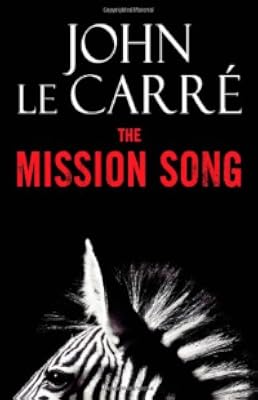
The Mission Song
by John le Carré
On This Page
Description
Full of politics, heart, and the sort of suspense that nobody in the world does better, The Mission Song turns John Le Carre's laser eye for the complexity of the modern world on turmoil and conspiracy in Africa. Abandoned by both his Irish father and Congolese mother, Bruno Salvador has long looked for someone to guide his life. He has found it in Mr. Anderson of British Intelligence. Bruno's African upbringing, and fluency in numerous African languages, has made him a top interpreter in show more London, useful to businesses, hospitals, diplomats--and spies. Working for Anderson in a clandestine facility known as the "Chat Room," Salvo (as he's known) translates intercepted phone calls, bugged recordings, and snatched voice mail messages. When Anderson sends him to a mysterious island to interpret during a secret conference between Central African warlords, Bruno thinks he is helping Britain bring peace to a bloody corner of the world. But then he hears something he should not By turns thriller, love story, and comic allegory of our times, The Mission Song is a crowning achievement, recounting an interpreter's heroically naive journey out of the dark of Western hypocrisy and into the heart of lightness. show lessTags
Recommendations










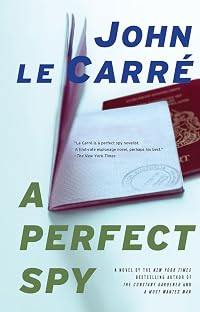






Member Recommendations
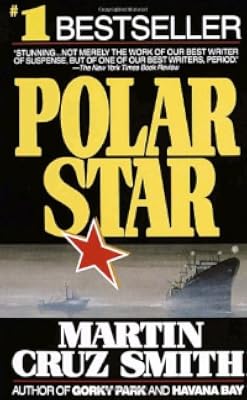
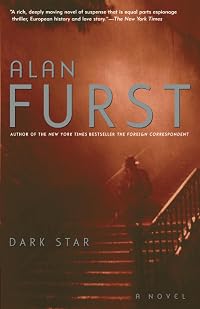
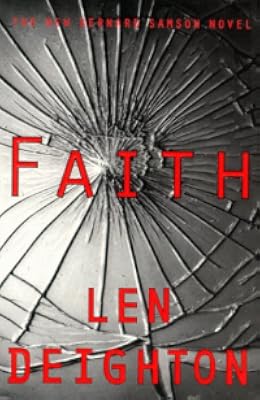
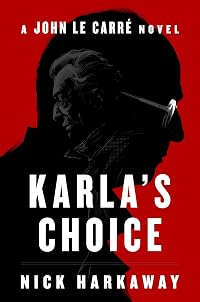
John_Vaughan The two books reflect the supposedly 'catholic' viewpoint so often attributed to Greene. The Mission Song is from a catholic African's view.
Member Reviews
John Le Carre kept his edge right through the cold war spy period and into the 2000s, because he understood that there were hot spots and corrupt governments aplenty that could still use his particular brand of unmasking. If anything, and rightfully so, he found the post Cold War world even more cynical and heartless.
Bruno Salvador, affectionately known as Salvo, is a zebra from the Congo. His father was a Catholic priest who ran a mission there, and his mother was a native girl whom he never knew. Born with a special talent for languages, he is sent back to England to study, where he ultimately becomes a top-level interpreter. When he is selected to serve as an interpreter for a high-level and very secret meeting between several show more Congolese leaders and a “syndicate” of British businessmen and government operatives, he is excited and proud. But, this is Le Carre, so all is not what it seems, and Salvo will be faced with the most difficult decisions of his life in one frightening weekend.
I am sadly ignorant of most of the politics of Africa, only having a smattering here and there of whatever tidbits the West deems newsworthy. It did not surprise me, however, to know that the corruption at the top feeds the violence at the bottom, or that the top is likely kept in place by the Western governments who pretend to abhor it. What is undeniably true is that the ordinary people of the Congo have been exploited more than they have been championed. I think little there has changed since this book was written in 2006.
I could really visualize these greedy bastards saying this:
”And has it never occurred to you that it might be God’s will that the world’s resources, which are dwindling even as we speak, do better in the hands of civilised Christian souls with a cultured way of life than some of the most backward heathens on the planet?”
Really pisses me when they use God as their excuse, and I’m betting it doesn’t sit well with Him either.
I am on my own mission to read all the Le Carre’s that I have missed. I am glad I made time for this one, which shortens my list by one. show less
Bruno Salvador, affectionately known as Salvo, is a zebra from the Congo. His father was a Catholic priest who ran a mission there, and his mother was a native girl whom he never knew. Born with a special talent for languages, he is sent back to England to study, where he ultimately becomes a top-level interpreter. When he is selected to serve as an interpreter for a high-level and very secret meeting between several show more Congolese leaders and a “syndicate” of British businessmen and government operatives, he is excited and proud. But, this is Le Carre, so all is not what it seems, and Salvo will be faced with the most difficult decisions of his life in one frightening weekend.
I am sadly ignorant of most of the politics of Africa, only having a smattering here and there of whatever tidbits the West deems newsworthy. It did not surprise me, however, to know that the corruption at the top feeds the violence at the bottom, or that the top is likely kept in place by the Western governments who pretend to abhor it. What is undeniably true is that the ordinary people of the Congo have been exploited more than they have been championed. I think little there has changed since this book was written in 2006.
I could really visualize these greedy bastards saying this:
”And has it never occurred to you that it might be God’s will that the world’s resources, which are dwindling even as we speak, do better in the hands of civilised Christian souls with a cultured way of life than some of the most backward heathens on the planet?”
Really pisses me when they use God as their excuse, and I’m betting it doesn’t sit well with Him either.
I am on my own mission to read all the Le Carre’s that I have missed. I am glad I made time for this one, which shortens my list by one. show less
When John le Carre is not writing the best spy novels of all time, he finds a place and an outrage in the world of which most of us are blissfully unaware, and tosses into it an idealistic and imperfect soul or two just trying to be good people. In this case, the place and the outrage are the Congo and the forces of world Capitalism; and the innocents a pair of lovers who are trying to influence the struggle between them. And in the tradition of le Carre and Graham Greene and the great British spy novelists, guess who wins.
This is my first foray into le Carré and I have to say that I was vastly underwhelmed. Some day, I'll try either The Spy Who Came in from the Cold or Tinker, Tailor, Soldier, Spy to see if this was just a clunker in an otherwise good author, or whether he is just not for me.
The first issue I have with the novel is the pacing. I listened to this as an audio book. It was 9 CDs long. Though the blurb billed this is a combination of a number of novel types (more on this in a moment), one of which was a thriller...absolutely nothing in the thriller department happened until the last minute or two of the fifth CD. We were about 55% of the way through the book before we got out of setting up the story. Now, I like a good build-up as much as show more anyone, but this was just absurd. Essentially, half the book is devoted to our protagonist...a man whom I cannot like as he is so puffed up with his own self-importance as a "top translator" (this phrase is omnipresent in the book)...making sure the reader admires how clever he is, and flying to a conference where he assures the other characters that he is really quite competent.
Which brings me to the second problem I have with the book. There's barely a character to like in it. The main character is a pompous ass who is as thick as a stump. You know those horror movies where the audience is yelling, "Don't go down into the cellar alone, you idiot!" Well, those moments abound in this book. You would think that Bruno would realize by...oh...say the third time he decides that this person involved in the conspiracy must be honorable and so he'll confess that he eavesdropped, only to get burned, that maybe he's a total incompetent when it comes to judging people? The majority of the remaining characters being the bad guys, about the only character I would want to associate with would be Hannah, a bit player.
Beyond this, the book doesn't seem to be able to figure out what it wants to be. As I noted, the blurb calls it a novel of someone discovering his beliefs mixed with a thriller with a little romance.
Calling it a thriller is a large overstatement. Once we get to it, we have a few minutes of thriller material, then we have a long wind down with absolutely no tension whatsoever. The bad guys don't even threaten our hero, for goodness sakes! The reader sees every situation coming from pages away.
Saying there's a romance in it also overstates the case. Basically, the romance can be summed up thusly: (married) protagonist tells us he met a nurse at the hospital last night and then spent the night having sex, protagonist has almost-hallucinatory dreams about her for a couple days, couple meets again and each declares undying love to the other. There's not a whole lot of depth beyond that.
Finally, the part about Bruno turning from the West and discovering his African sensibilities—the problem is that the author has never made us see any conflict between these two viewpoints. Bruno isn't presented as a jingoistic fellow—my country right or wrong—who, upon learning about the conspiracy to rape the Congo suddenly discovers another side of himself. No, he's presented as a rather ordinary man who is anxious to serve his adopted Great Britain but, upon learning that non-governmental forces in Great Britain are the bad guys, decides to oppose them. Where's the conflict? It's pretty much what one would expect of any person.
It was the only audio book on a long drive, so I didn't stop listening. If I had, this wouldn't even have rated 2 stars. I've never managed to pick up a le Carré in the past but I always assumed that I would be pleased once I got around to it.
I was quite wrong. show less
The first issue I have with the novel is the pacing. I listened to this as an audio book. It was 9 CDs long. Though the blurb billed this is a combination of a number of novel types (more on this in a moment), one of which was a thriller...absolutely nothing in the thriller department happened until the last minute or two of the fifth CD. We were about 55% of the way through the book before we got out of setting up the story. Now, I like a good build-up as much as show more anyone, but this was just absurd. Essentially, half the book is devoted to our protagonist...a man whom I cannot like as he is so puffed up with his own self-importance as a "top translator" (this phrase is omnipresent in the book)...making sure the reader admires how clever he is, and flying to a conference where he assures the other characters that he is really quite competent.
Which brings me to the second problem I have with the book. There's barely a character to like in it. The main character is a pompous ass who is as thick as a stump. You know those horror movies where the audience is yelling, "Don't go down into the cellar alone, you idiot!" Well, those moments abound in this book. You would think that Bruno would realize by...oh...say the third time he decides that this person involved in the conspiracy must be honorable and so he'll confess that he eavesdropped, only to get burned, that maybe he's a total incompetent when it comes to judging people? The majority of the remaining characters being the bad guys, about the only character I would want to associate with would be Hannah, a bit player.
Beyond this, the book doesn't seem to be able to figure out what it wants to be. As I noted, the blurb calls it a novel of someone discovering his beliefs mixed with a thriller with a little romance.
Calling it a thriller is a large overstatement. Once we get to it, we have a few minutes of thriller material, then we have a long wind down with absolutely no tension whatsoever. The bad guys don't even threaten our hero, for goodness sakes! The reader sees every situation coming from pages away.
Saying there's a romance in it also overstates the case. Basically, the romance can be summed up thusly: (married) protagonist tells us he met a nurse at the hospital last night and then spent the night having sex, protagonist has almost-hallucinatory dreams about her for a couple days, couple meets again and each declares undying love to the other. There's not a whole lot of depth beyond that.
Finally, the part about Bruno turning from the West and discovering his African sensibilities—the problem is that the author has never made us see any conflict between these two viewpoints. Bruno isn't presented as a jingoistic fellow—my country right or wrong—who, upon learning about the conspiracy to rape the Congo suddenly discovers another side of himself. No, he's presented as a rather ordinary man who is anxious to serve his adopted Great Britain but, upon learning that non-governmental forces in Great Britain are the bad guys, decides to oppose them. Where's the conflict? It's pretty much what one would expect of any person.
It was the only audio book on a long drive, so I didn't stop listening. If I had, this wouldn't even have rated 2 stars. I've never managed to pick up a le Carré in the past but I always assumed that I would be pleased once I got around to it.
I was quite wrong. show less
The novel's dramatic plot is so-so but it more than makes up for it in its assured depiction of the perfect storm of: the sloppy criminal indifference of the British government; the venality and corruption within the Republic of the Congo's government; the warring parties in Kivu Providence; the abundance of precious minerals; the remorseless greed of gigantic nameless U.S. Corporations; the Rwandans; that lead to to the horrific suffering and the destabilizing of the lives of ordinary people in the Eastern Congo. There is included a love story, a mostly tragic one, that helps bring all of the above into understandable human proportions. LeCarre's bringing this otherwise chaotic mix into focus and clarity is masterfully done.
Quotes: show more (pages 84-85) “And I will say at once that my impression of Lord Binkley in the flesh amply confirmed my high regard for him as seen on television and heard on my preferred medium, radio. The clean-cut features with firm jaw and flying mane mirrored precisely the sense of high purpose I had always associated with him. How often had I not cheered him to the echo when he was berating the Western world for its want of an African conscience? If Maxie and Lord Binkley were linking arms in a hush-hush pro-Congolese endeavour --- and they were linking them now, literally, as they came towards me --- then I was honoured indeed to be a part of it!”
(pages 184-185) “What has Kinshasa ever achieved for Kivu? He demands to know. Answer, nothing. Where is the peace they preach, the prosperity, the harmony? Where is their inclusive love of country, neighbourhood, community? He has traveled all Kivu, north and south, and failed to find the smallest evidence of it. He has listened to the People's tales of woes: Yes, we want the Middle Path, Mwangaza! We pray for it! We sing for it! We dance for it! But how, oh how, will we attain it? He mimics their pitiful cry. I mimic the Mwangaza: 'Who will defend us when our enemies send their troups against us, Mwangaza? You are a man of peace, Mwangaza! You are no longer a great warrior you used to be. Who will organize us and fight with us and teach us to be strong together?'”
(page 185) “'No name, my friends?' the Mwangaza is yelling at us indignantly. 'This strange Syndicate that has dragged us here today has no name? Oh, this is very bad! Where can they have put it? This is all very fishy and mysterious! Maybe we should put on our spectacles and help them look for it! Why on earth should honest folk conceal their names? What have they to hide? Why don't they come out with it straight and say who they are and what they want?'”
(pages 326-327) “When Haj pleads for mercy, her expression is stoical. When he pours scorn on Tabizi and the Mwangaza for cutting their dirty deal with Kinshasha, it barely falters. When Anton and Benny wash him under the shower she emits a muted exclamation of disgust, but this in no way transmit itself to her face. When Philip appears on the scene and starts to talk Haj around to sweet reason, I realize she has been sharing every living second of Haj's agony, just as she were ministering to him at his bedside. And when Haj demands three million dollars for selling out his country, I expect her to be at the very least indignant, but she merely lowers her eyes and shakes her head in sympathy,
'That poor show-off boy,' she murmurs.
'They killed his spirit.'” show less
Quotes: show more (pages 84-85) “And I will say at once that my impression of Lord Binkley in the flesh amply confirmed my high regard for him as seen on television and heard on my preferred medium, radio. The clean-cut features with firm jaw and flying mane mirrored precisely the sense of high purpose I had always associated with him. How often had I not cheered him to the echo when he was berating the Western world for its want of an African conscience? If Maxie and Lord Binkley were linking arms in a hush-hush pro-Congolese endeavour --- and they were linking them now, literally, as they came towards me --- then I was honoured indeed to be a part of it!”
(pages 184-185) “What has Kinshasa ever achieved for Kivu? He demands to know. Answer, nothing. Where is the peace they preach, the prosperity, the harmony? Where is their inclusive love of country, neighbourhood, community? He has traveled all Kivu, north and south, and failed to find the smallest evidence of it. He has listened to the People's tales of woes: Yes, we want the Middle Path, Mwangaza! We pray for it! We sing for it! We dance for it! But how, oh how, will we attain it? He mimics their pitiful cry. I mimic the Mwangaza: 'Who will defend us when our enemies send their troups against us, Mwangaza? You are a man of peace, Mwangaza! You are no longer a great warrior you used to be. Who will organize us and fight with us and teach us to be strong together?'”
(page 185) “'No name, my friends?' the Mwangaza is yelling at us indignantly. 'This strange Syndicate that has dragged us here today has no name? Oh, this is very bad! Where can they have put it? This is all very fishy and mysterious! Maybe we should put on our spectacles and help them look for it! Why on earth should honest folk conceal their names? What have they to hide? Why don't they come out with it straight and say who they are and what they want?'”
(pages 326-327) “When Haj pleads for mercy, her expression is stoical. When he pours scorn on Tabizi and the Mwangaza for cutting their dirty deal with Kinshasha, it barely falters. When Anton and Benny wash him under the shower she emits a muted exclamation of disgust, but this in no way transmit itself to her face. When Philip appears on the scene and starts to talk Haj around to sweet reason, I realize she has been sharing every living second of Haj's agony, just as she were ministering to him at his bedside. And when Haj demands three million dollars for selling out his country, I expect her to be at the very least indignant, but she merely lowers her eyes and shakes her head in sympathy,
'That poor show-off boy,' she murmurs.
'They killed his spirit.'” show less
Bruno Salvador, son of a daughter of a Congolese chief and an Irish priest considers himself to be thoroughly British. His flair with languages make him a skilled translator and ripe for British Secret Service picking. He's a gentle, loyal man, an innocent who is unprepared for the lethal mix of power brokers he is facing, from Old Etonians to indigenous Africans, wreaking havoc in the Congo.
As expected, Le Carré's writing is extraordinary. The story is told in first person, a perspective perfect for audio presentation, in this case with an outstanding narration by David Oweloyo who raised my enjoyment of the novel with his voice alone.
As expected, Le Carré's writing is extraordinary. The story is told in first person, a perspective perfect for audio presentation, in this case with an outstanding narration by David Oweloyo who raised my enjoyment of the novel with his voice alone.
Disappointing novel with an interesting premise diminished by its implausible plot. The protagonist was engaging and interesting but his circumstances were not credible. Worse than that, the whole thing was unmemorable: I was lent a second copy by an enthusiastic friend and, although I recognised the plot as it unfolded, it took me some time to recall the plot and I felt no sense of loss as I abandoned the rereading.
This 2006 novel finds John LeCarré setting his story on an Island somewhere off the coast of Denmark and London. The novel is about arrangements for an attempted coup in Kivu formally in East Congo, which sits uncomfortably west of Rwanda. British intelligence appear to be heavily involved in the arrangements having summoned various African leaders to meet and come to an agreement on this remote island. They need an interpreter because although the main languages spoken are French, English and Swahili people at the conference will inevitably use more local dialects especially if they want to confuse or obfuscate. Bruno Salvador hails from East Congo the son of an Irish missionary and an African woman, he has married well in England and show more with his photographic memory and love of African languages he is an ideal recruit. He works as a freelance interpreter for people in the city of London.
I have found that many of leCarré's later novels have become a bit formulaic: An interesting and somewhat eccentric character is recruited by the Intelligence service to carry out various operations or in this case provide an essential service. The reader gets a full history of the life and times of the reluctant hero or antihero before the story gets into its stride. Unfortunately however much background knowledge we have about Bruno nothing quite explains how he has managed to find his way in the world with such levels of stupidity. For a supposedly intelligent person he is both naive and unperceptive in the extreme.
I didn't enjoy this story because I couldn't quite believe that Bruno was not able to see the obvious pitfalls his actions had created. Would the intelligence services recruit a person like him, perhaps they would, but the story became a little too farfetched, a little too unbelievable. I don't think it works either as a pastiche. This novel was not for me and so three stars. show less
I have found that many of leCarré's later novels have become a bit formulaic: An interesting and somewhat eccentric character is recruited by the Intelligence service to carry out various operations or in this case provide an essential service. The reader gets a full history of the life and times of the reluctant hero or antihero before the story gets into its stride. Unfortunately however much background knowledge we have about Bruno nothing quite explains how he has managed to find his way in the world with such levels of stupidity. For a supposedly intelligent person he is both naive and unperceptive in the extreme.
I didn't enjoy this story because I couldn't quite believe that Bruno was not able to see the obvious pitfalls his actions had created. Would the intelligence services recruit a person like him, perhaps they would, but the story became a little too farfetched, a little too unbelievable. I don't think it works either as a pastiche. This novel was not for me and so three stars. show less
Members
- Recently Added By
Published Reviews
ThingScore 50
“The Mission Song” illuminates with animated personifications a portion of the globe’s daily misery that tends to be, in American news, at least, murky and abstract.
added by MikeBriggs
Lists

Novels featuring language professionals
98 works; 12 members

Classics
31 works; 1 member
Author Information

215+ Works 99,007 Members
David John Moore Cornwell was born in Poole, Dorsetshire, England in 1931. He attended Bern University in Switzerland from 1948-49 and later completed a B.A. at Lincoln College, Oxford. He taught at Eton from 1956-58 and was a member of the British Foreign Service from 1959 to 1964. He writes espionage thrillers under the pseudonym John le Carré. show more The pseudonym was necessary when he began writing, in the early 1960s because, at that time, he held a diplomatic position with the British Foreign Office and was not allowed to publish under his own name. When his third book, The Spy Who Came in from the Cold, became a worldwide bestseller in 1964, he left the foreign service to write full time. His other works include Call for the Dead; A Murder of Quality; Tinker, Tailor, Soldier, Spy; The Honourable Schoolboy; and Smiley's People. He has received numerous awards for his writing, including the Grand Master Award from the Mystery Writers of America in 1986 and the Diamond Dagger from the Crime Writers Association in 1988. In 2011 he accepted the Goethe Medal. And in 2020, he accepted the Olof Palme Prize. Ten of his books have been adapted for television and motion pictures including The Spy Who Came in from the Cold, The Russia House, The Constant Gardener, A Most Wanted Man, and Our Kind of Traitor. Le Carré's memoir, The Pigeon Tunnel: Stories from my Life, became a New York Times bestseller in 2016. In 2019, he published a spy thriller, Agent Running in the Field. John Le Carré died on December 12, 2020 from pneumonia at the age of 89. (Bowker Author Biography) John le Carre was born in 1931. After attending the univesities of Berne and Oxford, he spent five years in the British Foreign Service. He's the author of eighteen novels, translated into twenty-five languages. He lives in England. (Publisher Provided) show less
Some Editions
Awards and Honors
Distinctions
Series
Belongs to Publisher Series
El balancí [Edicions 62] (554)
Common Knowledge
- Canonical title*
- Pakanalaulu
- Original title
- The Mission Song
- Original publication date
- 2006
- People/Characters
- Bruno Salvador
- Epigraph
- 'The conquest of the earth, which mostly means the taking it away from those who have a different complexion or slightly flatter noses than ourselves, is not a pretty thing when you look into it too much.' – Marlow.
Jos... (show all)eph Conrad, Heart of Darkness - First words
- My name is Bruno Salvador.
- Last words
- (Click to show. Warning: May contain spoilers.)And that's where their England ends and my Africa begins.
- Original language*
- englanti
*Some information comes from Common Knowledge in other languages. Click "Edit" for more information.
Classifications
Statistics
- Members
- 2,782
- Popularity
- 6,575
- Reviews
- 59
- Rating
- (3.36)
- Languages
- 19 — Arabic, Catalan, Danish, Dutch, English, Finnish, French, German, Greek, Hungarian, Italian, Norwegian (Bokmål), Polish, Portuguese, Romanian, Russian, Slovenian, Spanish, Swedish
- Media
- Paper, Audiobook, Ebook
- ISBNs
- 94
- UPCs
- 1
- ASINs
- 25