On This Page
Description
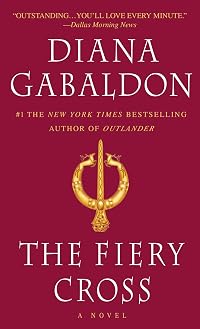
Fantasy. Fiction. Romance. Historical Fiction. The year is 1771. Claire Randall is still an outlander, out of place and out of time. But now she is linked by love to her only anchor—Jamie Fraser. They have crossed oceans and centuries to build a life together in North Carolina. But tensions, both ancient and recent, threaten members of their clan. Knowing that his wife has the gift of prophecy, James must believe Claire, though he would prefer not to. Claire has shared a dreadful show more truth—there will, without a doubt, be a war. Her knowledge of the oncoming revolution is a flickering torch that may light his way through perilous years ahead—or ignite a conflagration that will leave their lives in ashes. show lessTags
Recommendations




Member Reviews
Okay, so it's not like the first four books in this series are any good. But they have a hypnotic momentum, like the sound of a train, which made the 1200+ pages of each go by quickly. And, like that train, the likelihood that at any moment the plot or the prose could go completely off the rails kept a sense of interest intact. This book, however, is bloated, repetitive, and dull.
Nothing happens. 150 pages will go by and you'll realize that nothing happened in those 150 pages except that, not for the first time, our heroine put on a low-cut dress and every man within fifty miles lost his mind. And then her husband had to engage in fisticuffs to defend her honor, and by "her honor" he means "his honor", because she is his possession, show more and this turns her on. And we've already read about this many, many times.
Speaking of her magnetic bosom: I have no problem with a love story featuring an older couple. However, if you're going to make your heroine fifty-five, how about making her act, or look, or feel fifty-five? The sole evidence that time has affected her at all consists of "a few lines" around her eyes. No gray hair, no weight gain, no sagging, no aches or pains, no decrease in energy or (unfortunately, given Gabaldon's purple prose) sex drive. And no man alive is immune to her incredible sex appeal. Also, she continues to be infallible and smug to a degree that makes you want to punch her in her lush, pink, full-lipped mouth.
The less said about the transformation of the heroine's son-in-law from a nice nerdy modern guy to a wanker who gets way too thrilled by 18th-century gender roles (there's a LOT of the phrase "my woman"); the pro-life / every-woman-naturally-has-maternal-instincts subtext; and the absolute obsession with lactating breasts, the better. Egad. show less
Nothing happens. 150 pages will go by and you'll realize that nothing happened in those 150 pages except that, not for the first time, our heroine put on a low-cut dress and every man within fifty miles lost his mind. And then her husband had to engage in fisticuffs to defend her honor, and by "her honor" he means "his honor", because she is his possession, show more and this turns her on. And we've already read about this many, many times.
Speaking of her magnetic bosom: I have no problem with a love story featuring an older couple. However, if you're going to make your heroine fifty-five, how about making her act, or look, or feel fifty-five? The sole evidence that time has affected her at all consists of "a few lines" around her eyes. No gray hair, no weight gain, no sagging, no aches or pains, no decrease in energy or (unfortunately, given Gabaldon's purple prose) sex drive. And no man alive is immune to her incredible sex appeal. Also, she continues to be infallible and smug to a degree that makes you want to punch her in her lush, pink, full-lipped mouth.
The less said about the transformation of the heroine's son-in-law from a nice nerdy modern guy to a wanker who gets way too thrilled by 18th-century gender roles (there's a LOT of the phrase "my woman"); the pro-life / every-woman-naturally-has-maternal-instincts subtext; and the absolute obsession with lactating breasts, the better. Egad. show less
Originally posted here
It is with a very heavy heart that I award the excessively enormous fifth instalment of the Outlander series 3 stars. If I were to rate the books I have read so far in this series, The Fiery Cross would be last.
The book spans the years 1770-1772 and I honestly felt that I lived every day of those two years as I was reading this book. The level of meandering, profuse and exquisite detail is truly astounding. I couldn't imagine Brianna without these huge, hard, leaking breasts the entire length of the book. I also felt intimately acquainted with the smell and regularity of Jemmy's bowel movements. Now, I love detail but the recurrence of Brianna's breasts and Jemmy's nappies was too much even for me.
Reading very show more quickly past those bits though, lies some breathtakingly beautiful descriptions of everyday colonial life, settling in the 'backcountry' of North Carolina. There are huge chunks of book dedicated to our beloved main characters just living their everyday lives on Fraser's Ridge - and initially, I loved this. Reading The Fiery Cross after a break felt like coming home, but by the end of this whopper I was getting impatient with the slow pace and just wanted the story to hurry up and get to the point.
There are a handful of really amazing situations interspersed within this book that it really is worth reading the hundreds of thousands of words it takes to get to them. I'm serious. As expected, a good few heart-stopping incidences, random creepy discoveries, mysteries involving gold, and a reappearance of an old friend. It's worth it, I promise.
Looking back at my reading journey with The Fiery Cross, I can see myself enjoying rereading this book in future quite leisurely, soaking up the details. Although not a lot happens, it's a very special time for Claire and Jamie's family. They spend a lot of time together, living in relative peace, and it feels like the calm before the storm. Unable to appreciate it at first but look back upon it with strong nostalgia. show less
(This review was originally posted on my blog in 2004. I am posting it her in honor of Gabaldon's recent FANFIC FREAKOUT. Let it never be said that I don't do my part...)
I adored her first two romance novels when I read them, and the third and fourth (Voyager and Drums of Autumn) were entertaining, though I'll probably never pick them up again. But this book - ugh.
For one thing, it needs to be about fifty percent shorter than its current length--979 pages, and nothing happens for a good 450 of them. I do not care about how Brianna's breasts leak circles of milk onto her shift/shirt/smock/vest, nor do I care what her baby's shit looks like. I do not care how husbands Jamie and Roger's nipples/chest hair/arm hair puckers and goosepimples show more when their respective wives run their fingers/breasts/hair over it. I do not care how Character A's hair looks when the sun strikes it if I've already read said description fifteen other times. I don't care what Jamie/Claire/Brianna/Roger thinks when s/he looks at her mate for the tenth time in any given chapter. But Gabaldon's narrative voices sure seem to think I do. This isn't to say that I don't like slice-of-life stories, or accurate descriptions of daily life in period fiction - I do. But descriptions of the various Narrative Sue/Stu's physical characteristics, repeated ad nauseum is completely unnecessary.
At "over six feet, with curly flaming red hair" (a description Gabaldon reiterates every freakin' time someone looks at Brianna) the girl is dangerously close to a Sue even before her personality (such as it is) confirms readers' worst suspicions. It's annoying, and not anything I can't read about in online fanfic. And it serves no purpose but to bog down the narrative in excess verbiage.
More excess verbiage is devoted to painfully in-depth descriptions of the various medical calamities that befell American Colonists. Now, I enjoyed these at first because Gabaldon's narrative didn't shy away from the unpleasantness of it. Then she had Brianna's minstrel husband hanged in a case of dastardly mistaken identity. "Damn," I thought. "She's taking no prisoners." Because Roger, the hanged man, was the only major character who didn't fit the Sue/Stu bill in this book (although he makes up for it with Teh AngstOMG!!1!, something I could also get my fill of in fanfic, but I digress...) Anyway, I was very shaken up when she killed him off, and a bit in awe at her ruthlessness toward what is undoubtedly a popular character.
Except Roger survives. Yes, he had a tracheotomy. Yes, it heals slowly and his 'songbird' voice is lost. Yes, this results in Teh Angst. But being suspended by one's neck and deprived of oxygen for over an hour will result in more serious consequences, like, perhaps, BRAIN DAMAGE. And yet the character in question makes a full recovery, because nothing Truly Bad will ever occur to the main characters. To exacerbate the issue, main Sue character #2, Claire, 20th century physician that she is, never even contemplates the possibility of brain damage, most likely because Gabaldon's hoping her readers won't notice what a happy implausibility it is that Roger will make a full recovery. And this is where Gabaldon's celebrated head-on approach to graphic descriptions of injury and illness loses all credibility whatsoever.
The names are also cloyingly clever. We have, for instance, Lillywhite, the corrupt colonial magistrate cum extortionist/smuggler/murderer, and Wolff, the naval Lieutenant who plots murder, rape and forced marriage to gain control of a large plantation. 'Lilly white' and 'Wolf' - get it??? Hah hah.
Now let's move on to the humor, which is for the most part not that humorous. One of the things I really liked about Outlander was the riposte between characters, the one-liners and puns, and the insightful description. This cleverness has all but vanished from the text of TFC. Tertiary characters are turned into cliched and obnoxious racial, national, and gender stereotypes (the hen-picked husband and heavyset, hysterical pussywhipping wife abound, as do the beer & sauerkraut swilling, scatological Germans, and the whorish, boorish Russians, and the corrupt, effete Englishmen, and the fanatic, insane American Indian Movement members), the dialogue is littered with anachronisms ('Something smells fishy about this situation,' says a soon-to-be-ambushed Lillywhite. 'And it isn't just the marsh' (At that point I was just waiting for the Scooby Gang to appear)) which are even more obvious given Gabaldon's tendency to write everything in dialect.
And then there's the Gaelic. Now, I still need a dictionary to read even intermediate Gaelic prose, but Gabaldon's Gaelic is all over the place, which is sad, as she credits people for help and corrections in the Acknowledgments. Lack of standardised spellings and misspellings abound, and she makes mistakes with the possessive and vocative cases, which are among the first things any student of the language learns, as well as being among the easiest errors to avoid. And finally, she uses bits of Gaelic in the text, with 'v', a letter that does not exist in written Gaelic. It's like fangirl Japanese, although more annoying, because Gabaldon apparently attempted to research her usage.
And there's the blatant bias of the narrative. You see Roger's not sure that Main Mary Sue Offender Brianna's child is really his. Characters gasp and sob and agonise over this for 900+ pages, only to have it resolved in the most ridiculous manner possible at the end of the book. Yet it's the treatment of the issue that bothers me. Roger's held up as a paragon of virtue for raising the child (a highly annoying character in his own right, who appears to exist solely to provide a Deus ex Machina/plot device/'humorous' situation whenever Gabaldon deems it necessary) even though he can't be sure the child is his. What Selflessness! What Honor! What Love for his Wife! And yet Claire's original husband, Frank, did just that in the earlier volumes of the series, and he is held up in this volume as Main Villain Past, for being jealous of Claire and standing in the way of her OTP with Jaime. Please.
Finally, Gabaldon submits us to chapterlets I like to refer to as 'In Case You Missed 4th Grade Science, Dear Reader,' in which readers are subjected to pages of explanation on how human fertilization, blood types (complete with semi-accurate chart!), and genetic inheritance work, to name a few. Can it, woman, I have much better biology texts on my shelf I could go and read if I was in the mood for science.
So, again. Ugh. Gabaldon was a very good writer, fun, inventive, and exciting. Well, the excitement's gone from this volume, as has the inventiveness, and with it the fun. It's as if she's trying too hard. I hope she chills out for the next volume. My final thoughts? There's a good book in there somewhere, if only the characters had taken off their Sue costumes and Gabaldon had had the courage to strike more unneeded text. I'm heartily glad I didn't pay money for this installment. show less
I adored her first two romance novels when I read them, and the third and fourth (Voyager and Drums of Autumn) were entertaining, though I'll probably never pick them up again. But this book - ugh.
For one thing, it needs to be about fifty percent shorter than its current length--979 pages, and nothing happens for a good 450 of them. I do not care about how Brianna's breasts leak circles of milk onto her shift/shirt/smock/vest, nor do I care what her baby's shit looks like. I do not care how husbands Jamie and Roger's nipples/chest hair/arm hair puckers and goosepimples show more when their respective wives run their fingers/breasts/hair over it. I do not care how Character A's hair looks when the sun strikes it if I've already read said description fifteen other times. I don't care what Jamie/Claire/Brianna/Roger thinks when s/he looks at her mate for the tenth time in any given chapter. But Gabaldon's narrative voices sure seem to think I do. This isn't to say that I don't like slice-of-life stories, or accurate descriptions of daily life in period fiction - I do. But descriptions of the various Narrative Sue/Stu's physical characteristics, repeated ad nauseum is completely unnecessary.
At "over six feet, with curly flaming red hair" (a description Gabaldon reiterates every freakin' time someone looks at Brianna) the girl is dangerously close to a Sue even before her personality (such as it is) confirms readers' worst suspicions. It's annoying, and not anything I can't read about in online fanfic. And it serves no purpose but to bog down the narrative in excess verbiage.
More excess verbiage is devoted to painfully in-depth descriptions of the various medical calamities that befell American Colonists. Now, I enjoyed these at first because Gabaldon's narrative didn't shy away from the unpleasantness of it. Then she had Brianna's minstrel husband hanged in a case of dastardly mistaken identity. "Damn," I thought. "She's taking no prisoners." Because Roger, the hanged man, was the only major character who didn't fit the Sue/Stu bill in this book (although he makes up for it with Teh AngstOMG!!1!, something I could also get my fill of in fanfic, but I digress...) Anyway, I was very shaken up when she killed him off, and a bit in awe at her ruthlessness toward what is undoubtedly a popular character.
Except Roger survives. Yes, he had a tracheotomy. Yes, it heals slowly and his 'songbird' voice is lost. Yes, this results in Teh Angst. But being suspended by one's neck and deprived of oxygen for over an hour will result in more serious consequences, like, perhaps, BRAIN DAMAGE. And yet the character in question makes a full recovery, because nothing Truly Bad will ever occur to the main characters. To exacerbate the issue, main Sue character #2, Claire, 20th century physician that she is, never even contemplates the possibility of brain damage, most likely because Gabaldon's hoping her readers won't notice what a happy implausibility it is that Roger will make a full recovery. And this is where Gabaldon's celebrated head-on approach to graphic descriptions of injury and illness loses all credibility whatsoever.
The names are also cloyingly clever. We have, for instance, Lillywhite, the corrupt colonial magistrate cum extortionist/smuggler/murderer, and Wolff, the naval Lieutenant who plots murder, rape and forced marriage to gain control of a large plantation. 'Lilly white' and 'Wolf' - get it??? Hah hah.
Now let's move on to the humor, which is for the most part not that humorous. One of the things I really liked about Outlander was the riposte between characters, the one-liners and puns, and the insightful description. This cleverness has all but vanished from the text of TFC. Tertiary characters are turned into cliched and obnoxious racial, national, and gender stereotypes (the hen-picked husband and heavyset, hysterical pussywhipping wife abound, as do the beer & sauerkraut swilling, scatological Germans, and the whorish, boorish Russians, and the corrupt, effete Englishmen, and the fanatic, insane American Indian Movement members), the dialogue is littered with anachronisms ('Something smells fishy about this situation,' says a soon-to-be-ambushed Lillywhite. 'And it isn't just the marsh' (At that point I was just waiting for the Scooby Gang to appear)) which are even more obvious given Gabaldon's tendency to write everything in dialect.
And then there's the Gaelic. Now, I still need a dictionary to read even intermediate Gaelic prose, but Gabaldon's Gaelic is all over the place, which is sad, as she credits people for help and corrections in the Acknowledgments. Lack of standardised spellings and misspellings abound, and she makes mistakes with the possessive and vocative cases, which are among the first things any student of the language learns, as well as being among the easiest errors to avoid. And finally, she uses bits of Gaelic in the text, with 'v', a letter that does not exist in written Gaelic. It's like fangirl Japanese, although more annoying, because Gabaldon apparently attempted to research her usage.
And there's the blatant bias of the narrative. You see Roger's not sure that Main Mary Sue Offender Brianna's child is really his. Characters gasp and sob and agonise over this for 900+ pages, only to have it resolved in the most ridiculous manner possible at the end of the book. Yet it's the treatment of the issue that bothers me. Roger's held up as a paragon of virtue for raising the child (a highly annoying character in his own right, who appears to exist solely to provide a Deus ex Machina/plot device/'humorous' situation whenever Gabaldon deems it necessary) even though he can't be sure the child is his. What Selflessness! What Honor! What Love for his Wife! And yet Claire's original husband, Frank, did just that in the earlier volumes of the series, and he is held up in this volume as Main Villain Past, for being jealous of Claire and standing in the way of her OTP with Jaime. Please.
Finally, Gabaldon submits us to chapterlets I like to refer to as 'In Case You Missed 4th Grade Science, Dear Reader,' in which readers are subjected to pages of explanation on how human fertilization, blood types (complete with semi-accurate chart!), and genetic inheritance work, to name a few. Can it, woman, I have much better biology texts on my shelf I could go and read if I was in the mood for science.
So, again. Ugh. Gabaldon was a very good writer, fun, inventive, and exciting. Well, the excitement's gone from this volume, as has the inventiveness, and with it the fun. It's as if she's trying too hard. I hope she chills out for the next volume. My final thoughts? There's a good book in there somewhere, if only the characters had taken off their Sue costumes and Gabaldon had had the courage to strike more unneeded text. I'm heartily glad I didn't pay money for this installment. show less
Claire and Jamie Fraser have been through wars, hurricanes, political and slave uprisings; they’ve dined with kings and fended for themselves in the harshest of environments. They have more than earned a respite from danger on their homestead on Fraser’s Ridge in the backcountry of North Carolina in 1771. As the country begins to prepare for war, however, the Frasers once more find themselves making choices regarding political sides while eking out a life in the wilderness. Such is the premise of THE FIERY CROSS, the fifth novel in Diana Gabaldon’s Outlander series.
There is a tremendous focus on body parts that became quite repetitive and almost funny by the end of the novel. Breasts and buttocks are mentioned all the time. show more Brianna’s breastfeeding is described in great detail in almost every scene she is in, and if there is not a discussion about the fullness of her breasts, then it is her nipples. If it is not Brianna’s breasts or nipples, then someone else is breastfeeding and exposing her breasts or else Claire is evaluating her own breasts or feeling her nipples harden. This is in addition to the overt appreciation of the human posterior, as seen by the multiple times Claire and Jamie place their hands on the other’s derriere. The entire novel is highly sexualized in a way that the first four novels were not.
One of the things that make OUTLANDER such a strong novel is that the sex is not gratuitous. There is a purpose to each sex scene that drives forward the story. That is not so with THE FIERY CROSS. If anything, they became the main story if only because the rest of the novel was nothing more than a series of vignettes without an overarching crisis. The sex scenes became filler or at least an oft-used way to end the narrative. It is as if Ms. Gabaldon sacrificed plot to increase the sexual connection between the main characters, when it is not necessary to do so. Any fan of the series understands how deep Claire and Jamie’s, as well as Brianna’s and Roger’s, love is for each other. Showing their physical intimacy as often as she does is redundant and frankly quite disappointing.
Brianna Ellen Randall Fraser MacKenzie is my least favorite character of the series. I don’t know if it is Ms. Porter’s vocalization of her or if it is her character as she is written, but I find her relatively spoiled, selfish, and whiny. There is also a smug, know-it-all aspect to her character that drives me batty. The scenes narrated from her point of view are the most tedious, and I drew a deep sigh of relief every time the narrator shifted. Considering fully half of the novel is from her point of view, this had a definite impact on my overall enjoyment of the novel.
Speaking of narrators, Davina Porter is absolute gold, as always. Her ability to differentiate between men, women, black, white, Indian, Scot - Highlander, Lowlander, and Glaswegian - Irish, Caribbean, Russian, German, French, American, old, young, and everything in between is an absolute marvel and yet so essential to the overall story given the large cast of characters. Her performance makes these audiobook behemoths so enjoyable and well worth the time spent listening.
THE FIERY CROSS in general is just weak. Jamie and Claire are always enjoyable, and their scenes remain the strongest in the novel. However, it is apparent that Ms. Gabaldon hopes to shift the romantic focus to the younger generation, namely Roger and Brianna, by utilizing their third-person narratives to tell portions of the story. This means not enough Jamie and Claire and too much of everyone else. The shifts in narrator, from first to third and back again, are confusing as well as jarring, and surprisingly, there are plot elements that are mentioned but never discussed again but somehow mysteriously resolved. It is almost as if Ms. Gabaldon forgot they were there in the first place. There were certain aspects of the story that contained the same intensity that made the first few novels so thrilling, but the scenes were interspersed among the more mundane storylines. One can only hope that future novels have more of that same magic/action/intensity and less of the filler storylines. show less
There is a tremendous focus on body parts that became quite repetitive and almost funny by the end of the novel. Breasts and buttocks are mentioned all the time. show more Brianna’s breastfeeding is described in great detail in almost every scene she is in, and if there is not a discussion about the fullness of her breasts, then it is her nipples. If it is not Brianna’s breasts or nipples, then someone else is breastfeeding and exposing her breasts or else Claire is evaluating her own breasts or feeling her nipples harden. This is in addition to the overt appreciation of the human posterior, as seen by the multiple times Claire and Jamie place their hands on the other’s derriere. The entire novel is highly sexualized in a way that the first four novels were not.
One of the things that make OUTLANDER such a strong novel is that the sex is not gratuitous. There is a purpose to each sex scene that drives forward the story. That is not so with THE FIERY CROSS. If anything, they became the main story if only because the rest of the novel was nothing more than a series of vignettes without an overarching crisis. The sex scenes became filler or at least an oft-used way to end the narrative. It is as if Ms. Gabaldon sacrificed plot to increase the sexual connection between the main characters, when it is not necessary to do so. Any fan of the series understands how deep Claire and Jamie’s, as well as Brianna’s and Roger’s, love is for each other. Showing their physical intimacy as often as she does is redundant and frankly quite disappointing.
Brianna Ellen Randall Fraser MacKenzie is my least favorite character of the series. I don’t know if it is Ms. Porter’s vocalization of her or if it is her character as she is written, but I find her relatively spoiled, selfish, and whiny. There is also a smug, know-it-all aspect to her character that drives me batty. The scenes narrated from her point of view are the most tedious, and I drew a deep sigh of relief every time the narrator shifted. Considering fully half of the novel is from her point of view, this had a definite impact on my overall enjoyment of the novel.
Speaking of narrators, Davina Porter is absolute gold, as always. Her ability to differentiate between men, women, black, white, Indian, Scot - Highlander, Lowlander, and Glaswegian - Irish, Caribbean, Russian, German, French, American, old, young, and everything in between is an absolute marvel and yet so essential to the overall story given the large cast of characters. Her performance makes these audiobook behemoths so enjoyable and well worth the time spent listening.
THE FIERY CROSS in general is just weak. Jamie and Claire are always enjoyable, and their scenes remain the strongest in the novel. However, it is apparent that Ms. Gabaldon hopes to shift the romantic focus to the younger generation, namely Roger and Brianna, by utilizing their third-person narratives to tell portions of the story. This means not enough Jamie and Claire and too much of everyone else. The shifts in narrator, from first to third and back again, are confusing as well as jarring, and surprisingly, there are plot elements that are mentioned but never discussed again but somehow mysteriously resolved. It is almost as if Ms. Gabaldon forgot they were there in the first place. There were certain aspects of the story that contained the same intensity that made the first few novels so thrilling, but the scenes were interspersed among the more mundane storylines. One can only hope that future novels have more of that same magic/action/intensity and less of the filler storylines. show less
I read the first four Outlander books eighteen years ago. That's all there were then, and it's probably a good thing since I completely devoured them in the space of three solid days of reading. (Yes, I really do mean three days, not three weeks.) I ignored my infant son and my husband to utterly lose myself in the eighteenth century world that Diana Gabaldon had created. I bought myself a copy of the Outlandish Companion. I was obsessed. And when new books in the series started being released, I bought them too. But I never read them, afraid to have them tarnish the magic of the first four. (And in the interest of full disclosure, the first book is still my favorite--thanks in no small part to the fact that it was my introduction to show more this world.) But now with Outlander finally making it to the small screen, I decided I should not only revisit the first books again but also pick up where I left off and read the fifth book (and maybe even the sixth, seventh, and eighth eventually too). So I have spent the past week immersed in the world of Jamie and Claire once again and while it was generally enjoyable, The Fiery Cross, did not quite grab me and consume me like the previous four did.
This fifth installment opens with Jamie and Claire and all of the folks from Fraser's Ridge, including Brianna, Roger, and baby Jem, at the largest Gathering of Scots in North Carolina. Brianna and Roger are finally to marry but the cold, foggy, and wet weather on the day of the wedding presages the uncomfortable events that will drive the narrative of the novel forward. First, a regiment of British soldiers arrives with the unwelcome news that a militia will have to be raised to put the agitating Regulators in their place. Jamie, a land holder by grant of the governor, is required to raise men to commit to this cause. As if this wasn't enough to dampen the day, the Catholic priest who was to perform Brianna and Roger's wedding and the wedding of Jamie's aunt Jocasta is arrested for practicing his faith, illegal as it is in North Carolina, and not allowed to perform the ceremonies. Both of these seemingly small incidents, combined with Jamie's continued search for Stephen Bonnet so that he may exact justice for Bonnet's treachery, are the driving forces behind the plot. But they are often overshadowed by the recitation of daily life in the back country of the North Carolina mountains.
Gabaldon has done a prodigious amount of research into anything and everything pre-Revolutionary North Carolina and it shows in the attention to detail in every scene. There's accurate information on everything from primitive eighteenth century medicine, the politics of the time, how daily tasks were accomplished without modern inventions, the clothing worn, animal husbandry, native ceremonies and life, to the local flora and fauna not only in the mountains but along the coast as well. And as Jamie and Claire, and Roger and Brianna go about their daily life, they are also caught up in the stirring currents that will lead to the war that they know must come. They will face the common dangers that faced all settlers of the time but they will face extraordinary dangers as well. This is nothing different from previous books but unlike in the previous books in the series, this one drags a bit with the main plot threads disappearing for long stretches of pages. The shifting narrative, from Claire's first person narration to a third person limited narration centered mostly on Roger, is disconcerting and often times abrupt. There is a sameness to the story that makes the reader wonder if so much of the monotony of everyday life needed to be recorded when it was no longer novel or curious to the time travelling characters or to the reader either. The book presents a much more settled relationship between Jamie and Claire, one no longer fraught with the constant fear of loss but substitutes for this tension with the shifting uncertainty and unanswered and unanswerable questions between Roger and Brianna. And perhaps that's a part of the difference in this book. Roger and Brianna are not the compelling characters, burning together, that Jamie and Claire have always been so to make their story carry equal weight with Jamie and Claire, makes the novel less engaging over all. Despite the slow moving story and the sometimes over long repetition, this is still a ticket back to Jamie and Claire's world so diehard fans will not want to skip it even as the hope is that the following books will recapture the addictive and completely enthralling feel of the first books. show less
This fifth installment opens with Jamie and Claire and all of the folks from Fraser's Ridge, including Brianna, Roger, and baby Jem, at the largest Gathering of Scots in North Carolina. Brianna and Roger are finally to marry but the cold, foggy, and wet weather on the day of the wedding presages the uncomfortable events that will drive the narrative of the novel forward. First, a regiment of British soldiers arrives with the unwelcome news that a militia will have to be raised to put the agitating Regulators in their place. Jamie, a land holder by grant of the governor, is required to raise men to commit to this cause. As if this wasn't enough to dampen the day, the Catholic priest who was to perform Brianna and Roger's wedding and the wedding of Jamie's aunt Jocasta is arrested for practicing his faith, illegal as it is in North Carolina, and not allowed to perform the ceremonies. Both of these seemingly small incidents, combined with Jamie's continued search for Stephen Bonnet so that he may exact justice for Bonnet's treachery, are the driving forces behind the plot. But they are often overshadowed by the recitation of daily life in the back country of the North Carolina mountains.
Gabaldon has done a prodigious amount of research into anything and everything pre-Revolutionary North Carolina and it shows in the attention to detail in every scene. There's accurate information on everything from primitive eighteenth century medicine, the politics of the time, how daily tasks were accomplished without modern inventions, the clothing worn, animal husbandry, native ceremonies and life, to the local flora and fauna not only in the mountains but along the coast as well. And as Jamie and Claire, and Roger and Brianna go about their daily life, they are also caught up in the stirring currents that will lead to the war that they know must come. They will face the common dangers that faced all settlers of the time but they will face extraordinary dangers as well. This is nothing different from previous books but unlike in the previous books in the series, this one drags a bit with the main plot threads disappearing for long stretches of pages. The shifting narrative, from Claire's first person narration to a third person limited narration centered mostly on Roger, is disconcerting and often times abrupt. There is a sameness to the story that makes the reader wonder if so much of the monotony of everyday life needed to be recorded when it was no longer novel or curious to the time travelling characters or to the reader either. The book presents a much more settled relationship between Jamie and Claire, one no longer fraught with the constant fear of loss but substitutes for this tension with the shifting uncertainty and unanswered and unanswerable questions between Roger and Brianna. And perhaps that's a part of the difference in this book. Roger and Brianna are not the compelling characters, burning together, that Jamie and Claire have always been so to make their story carry equal weight with Jamie and Claire, makes the novel less engaging over all. Despite the slow moving story and the sometimes over long repetition, this is still a ticket back to Jamie and Claire's world so diehard fans will not want to skip it even as the hope is that the following books will recapture the addictive and completely enthralling feel of the first books. show less
It's now been over two decades since I discovered and read Outlander (the first book of the series) for the first time, and in all that time, no other pair have been able to supplant Jamie and Claire as my all-time favorite romantic couple. I love them and their relationship so much, I would literally read anything that their creator deigns to write about them, and I'm never disappointed with their stories. That said, though, the narrative of The Fiery Cross tends to ebb and flow between more exciting action and mystery and the quieter moments of their lives. For this reason, there were times I wasn't quite as anxious to get back to reading it as I was with some of the earlier books of the series. I wasn't bored, just not as engrossed show more as I might have been. Throughout reading it, I went back and forth between a 4.5 and a 5 star rating, and eventually settled on 5 stars simply because, even though it took me three weeks to read it (I'm a very slow reader), I was still sorry to see it end. I closed the book on another chapter of Jamie and Claire's lives, but I still want more. That, to me, is one of the main hallmarks of a perfect read, even if the story did have some slower parts.
In this installment of the series, we see Jamie and Claire comfortably settled in their big house on Fraser's Ridge, surrounded by their loved ones and friends. I really enjoy stories about the Colonial period of American history, but don't find ones set in this time all that often. As with all her books, Ms. Gabaldon goes into great detail regarding what life was like in that time, and it isn't always a pretty picture. She doesn't shy away from the harsh, sometimes brutal, realities of living in that era, but it's also balanced out with the beauty of the unspoiled wilderness and wildlife, as well as day-to-day living. There are also some events that are precursors to the rapidly approaching War for Independence, which Jamie and Claire are trying to avoid, but sometimes can't help being dragged into. Wherever they are though, the setting comes alive and basically becomes a character unto itself. In addition to their life on the Ridge, Jamie and Claire experience lots of adventures away from home, some good, some bad, some humorous, and some life-threatening. But no matter what they're doing, they support one another and take joy in each other's company and in their growing family. Almost from the beginning some mysteries start to develop too, which aren't fully untangled until the final chapters of the book, and even then, we're left with additional intrigue that I'm sure will carry over into the next book.
Jamie never ceases to amaze me with his sheer perfection. If he has any flaws, I'd be hard-pressed to say what they are. Claire would probably say it's his stubbornness, but even that can be endearing and has served him well on many occasions. IMHO, he's everything a man (and a romantic hero) should be and more: strong, protective, loyal, determined, responsible, honorable, intelligent, open-minded, a good father and husband, a tender lover. Need I go on?:-) I honestly can't imagine anyone reading these book and not falling in love with him. He's also a born leader who inspires loyalty, and while he holds no official title, he's in essence become the laird of Fraser's Ridge. Jamie bears a heavy weight of responsibility for his tenants and grieves deeply if anything happens to any of them on his watch. He's a strong warrior and skilled fighter, who isn't afraid of battle, but is diplomatic enough to try to avoid it whenever possible. He's also a man of the land, skilled in farming and animal husbandry. I love how intelligent Jamie is and how even though it's sometimes difficult for an 18th century man to wrap his head around many of the things Claire tells and shows him, he's still fascinated by them and enjoys learning about them. I also adore Jamie's sense of humor. He has a boyishly mischievous side that's utterly charming, and he often make me laugh at his jokes and his reactions to certain things. Jamie's family is everything to him. He adores his children and grandchildren, even the ones who don't share his blood and the ones who can't be with him, and he welcomes his new son-in-law into the fold, even if he does test him a bit in the process. Best of all, Jamie's love for Claire is breathtaking in its intensity and the kind of love I think everyone wishes for at least once in their lives. It's also very heartwarming to see that he's not only still madly in love with her after nearly thirty years, but still desires her more than his next breath. It's no wonder that in all this time, no other romantic hero has been able to knock him out of that top spot on my list of favorites.
I've always admired Claire for her strength, determination, and tenacity. She's a woman who knows who she is and isn't afraid to be who she was born to be. She also knows what she wants and goes after it with single-minded intent. She's a born healer, who instinctively understands the human body, including all its frailties. While we've seen Claire in this role throughout the series, I think it's perhaps even more pronounced in this book. She's able to bring to bear her twentieth-century knowledge of medicine, but is often frustrated by her eighteenth-century limitations. It doesn't stop her, though, from doing everything she possibly can to heal or cure every person who steps into her surgery, and much like Jamie, she deeply feels the weight of responsibility for every death, even when she knows there was nothing she could do to prevent it. As she herself muses, she has that “odd mixture of empathy and ruthlessness needed to be a great doctor.” She has a dry wit and a wry sense of humor that makes me smile. Also like Jamie, family comes first in her world, and she would do anything to keep those she loves safe. Although she often worries for Jamie's safety, she is strong enough to recognize when he needs to do something and support his endeavors even if she doesn't like it. She's always been Jamie's rock and sometimes even his lifeline, both physically and emotionally. She loves him with the same all-consuming passion that he loves her and can't bear to think of a time when they might not be together.
At this point in the Outlander series, the books are no longer just about Jamie and Claire, but also their daughter, Brianna, and the love of her life, Roger Mackenzie. Roger probably gets nearly as many scenes from his third-person POV as Claire does from her first-person POV, with a smattering of Jamie's and Brianna's perspectives thrown in here and there for good measure. Roger is a keen observer of human nature, and he often watches Jamie and Claire, wishing to emulate the love and deep connection they share in his own marriage. While Roger's and Brianna's romance isn't quite the grand affair that her parents' is, it's still obvious that they love one another deeply and IMHO are well-matched. Both of them have an artistic side, Roger's leans toward music, while Brianna has a talent for drawing and painting. Much like her parents, they are both highly intelligent. Bree nearly became an engineer, and Roger is a historian, like Bree's adoptive father, Frank. Having grown up in the relative safety of the twentieth century, both of them face difficulties in adjusting to life in the past. Bree is more independent and adaptable like her mother, while also being strong and stubborn like her father. She's a crack shot and has little trouble facing the realities of the past head on. Roger, however, is a bookish sort and a musician, who is much more at home singing than fighting or shooting things. He struggles with a sense of inadequacy, feeling like he can't quite measure up to the almost legendary Jamie Fraser. Throughout the story Roger grows and changes as he admirably faces life-altering challenges of his own, the type that can make or break a man. Both of them, to some degree, must also face what was done to Bree by the villainous Stephen Bonnet in the previous book. I greatly admire them both for their handling of the situation, Roger for his protectiveness of his wife and Bree for standing up for herself. I also enjoyed watching them be parents to their baby boy, Jemmy, who is a real cutie-pie. He behaves exactly like I would expect a miniature red-headed Fraser descendant to – intrepid, mischievous, and full of curiosity.
Like I said before, I just can't get enough of Jamie and Claire. Their love is the kind that I aspire to have. No matter how long they're together, they still have an easy rapport that melts my heart. It's like they're the missing piece of the other, always knowing and sensing things about one another that no one else would notice. Even though they're now middle-aged, they're still madly in love and desire each other to the depth of their being. It's nice to see Roger and Brianna at least trying to follow in her parents' footsteps, even if they have some very big shoes to fill. I truly can't wait to see what else might be in store for all of them in future books of the series. show less
In this installment of the series, we see Jamie and Claire comfortably settled in their big house on Fraser's Ridge, surrounded by their loved ones and friends. I really enjoy stories about the Colonial period of American history, but don't find ones set in this time all that often. As with all her books, Ms. Gabaldon goes into great detail regarding what life was like in that time, and it isn't always a pretty picture. She doesn't shy away from the harsh, sometimes brutal, realities of living in that era, but it's also balanced out with the beauty of the unspoiled wilderness and wildlife, as well as day-to-day living. There are also some events that are precursors to the rapidly approaching War for Independence, which Jamie and Claire are trying to avoid, but sometimes can't help being dragged into. Wherever they are though, the setting comes alive and basically becomes a character unto itself. In addition to their life on the Ridge, Jamie and Claire experience lots of adventures away from home, some good, some bad, some humorous, and some life-threatening. But no matter what they're doing, they support one another and take joy in each other's company and in their growing family. Almost from the beginning some mysteries start to develop too, which aren't fully untangled until the final chapters of the book, and even then, we're left with additional intrigue that I'm sure will carry over into the next book.
Jamie never ceases to amaze me with his sheer perfection. If he has any flaws, I'd be hard-pressed to say what they are. Claire would probably say it's his stubbornness, but even that can be endearing and has served him well on many occasions. IMHO, he's everything a man (and a romantic hero) should be and more: strong, protective, loyal, determined, responsible, honorable, intelligent, open-minded, a good father and husband, a tender lover. Need I go on?:-) I honestly can't imagine anyone reading these book and not falling in love with him. He's also a born leader who inspires loyalty, and while he holds no official title, he's in essence become the laird of Fraser's Ridge. Jamie bears a heavy weight of responsibility for his tenants and grieves deeply if anything happens to any of them on his watch. He's a strong warrior and skilled fighter, who isn't afraid of battle, but is diplomatic enough to try to avoid it whenever possible. He's also a man of the land, skilled in farming and animal husbandry. I love how intelligent Jamie is and how even though it's sometimes difficult for an 18th century man to wrap his head around many of the things Claire tells and shows him, he's still fascinated by them and enjoys learning about them. I also adore Jamie's sense of humor. He has a boyishly mischievous side that's utterly charming, and he often make me laugh at his jokes and his reactions to certain things. Jamie's family is everything to him. He adores his children and grandchildren, even the ones who don't share his blood and the ones who can't be with him, and he welcomes his new son-in-law into the fold, even if he does test him a bit in the process. Best of all, Jamie's love for Claire is breathtaking in its intensity and the kind of love I think everyone wishes for at least once in their lives. It's also very heartwarming to see that he's not only still madly in love with her after nearly thirty years, but still desires her more than his next breath. It's no wonder that in all this time, no other romantic hero has been able to knock him out of that top spot on my list of favorites.
I've always admired Claire for her strength, determination, and tenacity. She's a woman who knows who she is and isn't afraid to be who she was born to be. She also knows what she wants and goes after it with single-minded intent. She's a born healer, who instinctively understands the human body, including all its frailties. While we've seen Claire in this role throughout the series, I think it's perhaps even more pronounced in this book. She's able to bring to bear her twentieth-century knowledge of medicine, but is often frustrated by her eighteenth-century limitations. It doesn't stop her, though, from doing everything she possibly can to heal or cure every person who steps into her surgery, and much like Jamie, she deeply feels the weight of responsibility for every death, even when she knows there was nothing she could do to prevent it. As she herself muses, she has that “odd mixture of empathy and ruthlessness needed to be a great doctor.” She has a dry wit and a wry sense of humor that makes me smile. Also like Jamie, family comes first in her world, and she would do anything to keep those she loves safe. Although she often worries for Jamie's safety, she is strong enough to recognize when he needs to do something and support his endeavors even if she doesn't like it. She's always been Jamie's rock and sometimes even his lifeline, both physically and emotionally. She loves him with the same all-consuming passion that he loves her and can't bear to think of a time when they might not be together.
At this point in the Outlander series, the books are no longer just about Jamie and Claire, but also their daughter, Brianna, and the love of her life, Roger Mackenzie. Roger probably gets nearly as many scenes from his third-person POV as Claire does from her first-person POV, with a smattering of Jamie's and Brianna's perspectives thrown in here and there for good measure. Roger is a keen observer of human nature, and he often watches Jamie and Claire, wishing to emulate the love and deep connection they share in his own marriage. While Roger's and Brianna's romance isn't quite the grand affair that her parents' is, it's still obvious that they love one another deeply and IMHO are well-matched. Both of them have an artistic side, Roger's leans toward music, while Brianna has a talent for drawing and painting. Much like her parents, they are both highly intelligent. Bree nearly became an engineer, and Roger is a historian, like Bree's adoptive father, Frank. Having grown up in the relative safety of the twentieth century, both of them face difficulties in adjusting to life in the past. Bree is more independent and adaptable like her mother, while also being strong and stubborn like her father. She's a crack shot and has little trouble facing the realities of the past head on. Roger, however, is a bookish sort and a musician, who is much more at home singing than fighting or shooting things. He struggles with a sense of inadequacy, feeling like he can't quite measure up to the almost legendary Jamie Fraser. Throughout the story Roger grows and changes as he admirably faces life-altering challenges of his own, the type that can make or break a man. Both of them, to some degree, must also face what was done to Bree by the villainous Stephen Bonnet in the previous book. I greatly admire them both for their handling of the situation, Roger for his protectiveness of his wife and Bree for standing up for herself. I also enjoyed watching them be parents to their baby boy, Jemmy, who is a real cutie-pie. He behaves exactly like I would expect a miniature red-headed Fraser descendant to – intrepid, mischievous, and full of curiosity.
Like I said before, I just can't get enough of Jamie and Claire. Their love is the kind that I aspire to have. No matter how long they're together, they still have an easy rapport that melts my heart. It's like they're the missing piece of the other, always knowing and sensing things about one another that no one else would notice. Even though they're now middle-aged, they're still madly in love and desire each other to the depth of their being. It's nice to see Roger and Brianna at least trying to follow in her parents' footsteps, even if they have some very big shoes to fill. I truly can't wait to see what else might be in store for all of them in future books of the series. show less
Maybe it is a factor of the time in which this book is set, but these people really take a beating at times. I feel particularly bad for Roger who always seems to get the worst of it and, as a modern man, is uniquely unprepared for it in many ways. There are more characters to keep track of, but Ms. Gabaldon does a good job of keeping them all real and interesting.
Members
- Recently Added By
Lists

Best Time Travel Novels
165 works; 125 members

NPRs your picks: top 100 Sci-Fi/Fantasy books
297 works; 80 members

Top Five Books of 2013
1,562 works; 721 members

Female Author
1,234 works; 66 members

Best 21st Century Books (So Far)
679 works; 86 members

Top Five Books of 2016
795 works; 229 members

Books Read in 2012
816 works; 34 members

Fiction Set During a Revolution
55 works; 24 members

Most Popular Books Tagged Scotland
35 works; 2 members

Read in 2014
334 works; 11 members

The Re-Reads
12 works; 1 member

Books We Couldn't Put Down
443 works; 197 members

Books - Gabaldon, Diana: Outlander
22 works; 1 member
Author Information

95+ Works 126,331 Members
Diana Gabaldon was born in Flagstaff, Arizona on January 11, 1952. She has a B.S. in zoology, a M.S. in marine biology, and a Ph.D. in quantitative behavioral ecology. She has worked as a university professor and has written freelance for various magazines and companies such as Walt Disney. She writes the Outlander series, which was adapted into a show more television series. (Bowker Author Biography) show less

Diana Gabaldon is a LibraryThing Author, an author who lists their personal library on LibraryThing.
Some Editions
Awards and Honors
Awards
Series

Work Relationships
Is contained in
Common Knowledge
- Canonical title
- The Fiery Cross
- Original title
- The fiery cross
- Original publication date
- 2001-11-06
- People/Characters
- James "Jamie" Alexander Malcolm MacKenzie Fraser; Claire Beauchamp Randall Fraser; Brianna Randall MacKenzie; Roger MacKenzie Wakefield; Jocasta MacKenzie Cameron; Fergus Claudel Fraser (show all 7); Ian Murray "Young Ian"
- Important places
- Fraser's Ridge, North Carolina, USA; North Carolina, USA
- Epigraph*
- Ik heb oorlog meegemaakt, en veel verloren. Ik weet wat het waard is om voor te vechten, en wat niet.
Eer en moed zijn essentiële zaken, en voor datgene waarvoor een man bereid is te doden, zal hij soms ook willen sterve... (show all)n.
En dat, o verwanten, is waarom een vrouw brede heupen heeft: dat benige bekken is zowel het toevluchtsoord van een man als zijn kind. Het leven van een man ontspringt aan het lichaam van zijn vrouw, en in haar bloed vindt zijn eer zijn oorsprong.
Voor de liefde alleen, zal ik mij wederom door het vuur begeven. - Dedication
- This book is for my Sister, Theresa Gabaldon, with whom I told the first Stories.
- First words
- I woke to the patter of rain on canvas, with the feel of my first husband's kiss on my lips.
- Last words
- (Click to show. Warning: May contain spoilers.)"When the day shall come, that we do part," he said softly, and turned to look at me, "if my last words are not 'I love you' -- ye'll ken it was because I didna have time."
- Blurbers*
- Roberts, Nora
- Original language*
- Amerikanisch
- Disambiguation notice
- The French translations of the Outlander series have been split in different ways by different publishers. Also, the same titles have been used for different splits. You can find information about the splits here: ... (show all)tp://fr.wikipedia.org/wiki/Le_Chardon_et_le_Tartan." rel="nofollow" target="_new">http://fr.wikipedia.org/wiki/Le_Chard... Please do not combine French translations with each other or with other language versions without checking that the content is the same. Thank you.
*Some information comes from Common Knowledge in other languages. Click "Edit" for more information.
Classifications
Statistics
- Members
- 11,147
- Popularity
- 830
- Reviews
- 172
- Rating
- (4.11)
- Languages
- 11 — Czech, Dutch, English, Finnish, French, German, Polish, Spanish, Swedish, Turkish, Portuguese (Portugal)
- Media
- Paper, Audiobook, Ebook
- ISBNs
- 83
- ASINs
- 41