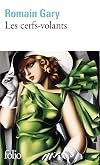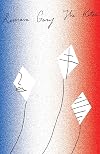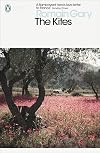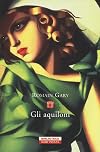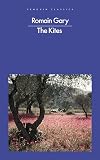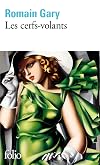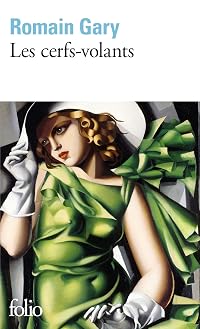
The Kites
by Romain Gary
On This Page
Description
A small farm in Normandy, as Hitler rises to power in Germany. Ludo lives with his uncle, kite maker Ambrose Fleury, in the small town of Clery in the French countryside. Everyone in the Fleury family has an impressive "historical memory" that earns Ludo the ire of his teachers and arguments with Lila, the naive daughter of Polish aristocrats living next door. After Germany invades Poland, Lila and her family disappear. Ludo's journey to save her from the Nazis becomes a journey to save his show more loved ones, his country, and ultimately himself. show lessTags
Recommendations








Member Reviews
It seems to me that only a few writers still write this way. That is, this book is a masterpiece of ideas that are woven precisely to the right extent and places.
The book tells about the Second World War, about what it did to its creators and especially those to whom the violence directed. This time the Holocaust is only in the background while occupied France is at the center of the story. The true heroes are the spirit of the man who seeks freedom. Love and loyalty to good and dreams are the burning engines of this book — the love of a woman and the love of the homeland mix. The love of man as such is the source of power for living. In Gary's book, there is no clear distinction between good and evil. Man is a complex creature and show more what separates good from evil is what he does at a given time. There is something to learn from Gary (and if not to learn then refresh what we once knew and maybe lost or eroded). There is also quite a bit of humor that makes reading very enjoyable. show less
The book tells about the Second World War, about what it did to its creators and especially those to whom the violence directed. This time the Holocaust is only in the background while occupied France is at the center of the story. The true heroes are the spirit of the man who seeks freedom. Love and loyalty to good and dreams are the burning engines of this book — the love of a woman and the love of the homeland mix. The love of man as such is the source of power for living. In Gary's book, there is no clear distinction between good and evil. Man is a complex creature and show more what separates good from evil is what he does at a given time. There is something to learn from Gary (and if not to learn then refresh what we once knew and maybe lost or eroded). There is also quite a bit of humor that makes reading very enjoyable. show less
The Kites is set in Normandy during the German Occupation of 1941-‘44. It’s a beautiful novel about what people do to survive the worst thing that can befall them; it’s about the importance of tradition, memory, and imagination and their links to hope. It’s about doing what it takes to endure with courage and grace in a bleak environment of despair. This was Gary’s last novel, said to be his masterpiece. I’ve read nothing else of his, but can easily believe that assessment is valid.
The novel focusses on three men. Ludo, the young narrator, lives with his uncle and guardian, Ambrose Fleury, on a small farm near Clery. Ambrose farms and makes beautiful kites that are museum-quality works of art. Ludo, narrator and protagonist, show more is a teenager when the story begins; he has inherited the family gift/curse of a perfect memory. Unable to serve in the army because of an accelerated heartbeat, he is soon involved in the Resistance. He also remains faithful to his “eternal and forever” love, Lila, daughter of an aristocratic Polish family who spend their summers in Clery. The third major character, and my personal favorite, is Marcellin Duprat, fine chef and third-generation owner of Clos Joli, a world famous restaurant in Clery. Each character’s conflict is his personal struggle to maintain his integrity in a world where everything valued seems lost. The Duprat family motto is “I will stand firm,” and that is what these three eccentric characters do in The Kites, each in his own way. Ambrose expresses a similar sentiment in lines often repeated throughout the novel: “Hold tightly to the end of the line, so your kite doesn’t fly away and get lost in the pursuit of the blue yonder.”
A while after the Occupation begins, Marcellin and Ambrose have a conversation about the townspeople’s condemnation of the continuing standard of excellence at Clos Joli, whose main customers are now high-ranking German officers. The two old friends and Ludo are discussing the famous chef’s predicament and sharing a bottle of brandy at Ambrose’s home:
“Come on, Marcellin,” my uncle said gently. “Look, I know these words have often smacked of defeat, but…we’ll get them!”
Duprat pulled himself together. His eye recovered its famous steely gleam and you could even see a glint of some cruel irony. “Apparently in America, in England, they’re saying France is unrecognizable. Well, tell them to come to the Clos Joli: they’ll recognize it, all right!”
“There. That’s better,” said my uncle, filling his glass…
“Because,” Duprat went on, “I’m not one of those people whimpering, ‘Who knows what the future has in store for us!’ You ask me. I know: there will always be a France in the Michelin Guide!”
The Nazis will not extinguish the spirit of France.
A lush style that makes good use of imagery and symbolism; sympathetic main characters who are fully developed; an absorbing plot; and a theme of continuing significance make The Kites an unforgettable novel and one that I can recommend without reservation. show less
The novel focusses on three men. Ludo, the young narrator, lives with his uncle and guardian, Ambrose Fleury, on a small farm near Clery. Ambrose farms and makes beautiful kites that are museum-quality works of art. Ludo, narrator and protagonist, show more is a teenager when the story begins; he has inherited the family gift/curse of a perfect memory. Unable to serve in the army because of an accelerated heartbeat, he is soon involved in the Resistance. He also remains faithful to his “eternal and forever” love, Lila, daughter of an aristocratic Polish family who spend their summers in Clery. The third major character, and my personal favorite, is Marcellin Duprat, fine chef and third-generation owner of Clos Joli, a world famous restaurant in Clery. Each character’s conflict is his personal struggle to maintain his integrity in a world where everything valued seems lost. The Duprat family motto is “I will stand firm,” and that is what these three eccentric characters do in The Kites, each in his own way. Ambrose expresses a similar sentiment in lines often repeated throughout the novel: “Hold tightly to the end of the line, so your kite doesn’t fly away and get lost in the pursuit of the blue yonder.”
A while after the Occupation begins, Marcellin and Ambrose have a conversation about the townspeople’s condemnation of the continuing standard of excellence at Clos Joli, whose main customers are now high-ranking German officers. The two old friends and Ludo are discussing the famous chef’s predicament and sharing a bottle of brandy at Ambrose’s home:
“Come on, Marcellin,” my uncle said gently. “Look, I know these words have often smacked of defeat, but…we’ll get them!”
Duprat pulled himself together. His eye recovered its famous steely gleam and you could even see a glint of some cruel irony. “Apparently in America, in England, they’re saying France is unrecognizable. Well, tell them to come to the Clos Joli: they’ll recognize it, all right!”
“There. That’s better,” said my uncle, filling his glass…
“Because,” Duprat went on, “I’m not one of those people whimpering, ‘Who knows what the future has in store for us!’ You ask me. I know: there will always be a France in the Michelin Guide!”
The Nazis will not extinguish the spirit of France.
A lush style that makes good use of imagery and symbolism; sympathetic main characters who are fully developed; an absorbing plot; and a theme of continuing significance make The Kites an unforgettable novel and one that I can recommend without reservation. show less
War touches us all in different ways. One man resists by creating beautiful kites and persistent joy. Another by dedicating himself to the finest cuisine of his country. And another through undying love. This is a beautifully written and carefully translated story of a small town in Normandy and the way its people struggled through World War II. It calls into question what is patriotism, who are the enemies, what is the nature of memory, what is the nature of love.
In THE KITES, Romain Gary gives us a coming-of-age tale set in France during the Second World War. His protagonist is Ludo Fleury, an orphan living with an eccentric uncle in the Normandy village of Cléry. Ludo travels a narrative arc from naïve youthful innocence to a more nuanced adulthood having been tempered by the hardships of war and occupation, heroism saving downed pilots with the French resistance, and an unfulfilled childhood romance with his aristocratic Polish neighbor, Lila de Bronicki. Ludo is blessed with perfect recall, which he refuses to exploit as a carnival trick, but instead uses as a way to hold onto his memories of Lila after she and her family disappear during the Nazi occupation of Poland. Unfortunately, when show more the two are reunited after the war, Ludo comes to realize that his perfect memory of Lila does not comport with her current persona or behavior during the war. Lila has evolved from a naïve and illusive coquette to becoming the consort of Nazi officers. She contends that this was a necessary accommodation to preserving her family during the Nazi occupation of Poland.
Gary fills his novel with colorful characters, but most are not developed much beyond their idiosyncrasies and what seems to be nationalistic iconography. Uncle Ambrose, a loving but eccentric mailman, makes fanciful kites and disappears from the novel into a Nazi death camp. Lila’s brother, Tad, is a Marxist intellectual with some wonderful dialogue, but also seems to fade from the novel. Hans, her cousin and Ludo’s romantic rival, exhibits multiple traits that seem to reflect anti-German biases. He predictably becomes a Nazi officer. Bruno is Lila’s stepbrother. He is a dour musical prodigy who becomes a heroic RAF pilot. In a surprising plot twist, Ludo rescues him following the downing of his plane. Gary also peppers his plot with a couple of flamboyant local “collaborators”: a chef who keeps his restaurant open during the occupation serving Nazis, and a Jewish madam who reinvents herself to avoid the Holocaust. These two characters seem to demonstrate the multiple motivations of Nazi collaboration.
Gary’s first-hand knowledge of life in occupied France notwithstanding, he appears to have a clear agenda to glorify the resistance. He succeeds in exploring a theme of how crises tend to reveal the best and worst traits of people with his characters and plot, but much of the novel seems to lack nuance. The promising kite symbolism feels unfinished. With the exception of Ludo and Lila, who evince some complexity, the rest of the novel unfolds predictably. show less
Gary fills his novel with colorful characters, but most are not developed much beyond their idiosyncrasies and what seems to be nationalistic iconography. Uncle Ambrose, a loving but eccentric mailman, makes fanciful kites and disappears from the novel into a Nazi death camp. Lila’s brother, Tad, is a Marxist intellectual with some wonderful dialogue, but also seems to fade from the novel. Hans, her cousin and Ludo’s romantic rival, exhibits multiple traits that seem to reflect anti-German biases. He predictably becomes a Nazi officer. Bruno is Lila’s stepbrother. He is a dour musical prodigy who becomes a heroic RAF pilot. In a surprising plot twist, Ludo rescues him following the downing of his plane. Gary also peppers his plot with a couple of flamboyant local “collaborators”: a chef who keeps his restaurant open during the occupation serving Nazis, and a Jewish madam who reinvents herself to avoid the Holocaust. These two characters seem to demonstrate the multiple motivations of Nazi collaboration.
Gary’s first-hand knowledge of life in occupied France notwithstanding, he appears to have a clear agenda to glorify the resistance. He succeeds in exploring a theme of how crises tend to reveal the best and worst traits of people with his characters and plot, but much of the novel seems to lack nuance. The promising kite symbolism feels unfinished. With the exception of Ludo and Lila, who evince some complexity, the rest of the novel unfolds predictably. show less
The Kites was the last book by Romain Gary (1914-1980), an author much loved in France. The Kites (Les Cerfs-volants) was his attempt to reconcile ideas about the banality of evil and the paradox that inhumanity is part of being human. The story takes place in rural Normandy just before and during the German Occupation, and the kites symbolise freedom of thought that the occupiers could not repress.
It takes a while to set the scene for the most interesting part of the plot. The first third of the book introduces Ludo Fleury as the young orphaned nephew of an eccentric uncle who makes kites. Ludo, despite his lowly status as the nephew of a mere postman, makes friends with an aristocratic family from Poland, falls in love with the show more daughter Lila, and because of his astonishing memory and ability with mental arithmetic, gains an entrée to the estate when he does the books for the Count (who is always on the verge of bankruptcy because of risky investments and gambling). In the immediate pre-war period Ludo follows them back to Poland, where their estate borders Germany and a cousin in the German military becomes a rival for Lila’s affections. All of this becomes relevant once the war starts and Ludo joins the Resistance, but for me, the portrayal of the quixotic Lila in this period became very tiresome. Perhaps she represents France in its pre-war delusions of invincibility and perhaps the way her egotistical adolescent ambitions are crushed symbolises the crude reality of the French defeat, but as a character in a story, she is irritating and it’s hard to understand why Ludo is so smitten.
The kites become significant during the war. In the pre-war period, decorations on these kites represented the intellectual and cultural history of France and under the Occupation the Germans recognise that they could be used not only for sending signals but also for inspiring resistance. But even when they are not allowed to fly – and one with the face of de Gaulle, for example, has to be hidden – these kites remain a potent symbol of hope. Similarly, French cuisine, which continues under the baton of Marcellin Duprat and his sommelier Monsieur Jean in the Restaurant Clos Juli, is a symbol of what is fine and desirable about the ancient traditions of French life. The author is at pains to explain why what looks like collaboration (since the Germans are Duprat’s best customers and facilitate the acquisition of supplies despite rationing) is in fact a courageous assertion of French identity.
To read the rest of my review please visit https://anzlitlovers.com/2018/04/29/the-kites-by-romain-gary-translated-by-miran... show less
It takes a while to set the scene for the most interesting part of the plot. The first third of the book introduces Ludo Fleury as the young orphaned nephew of an eccentric uncle who makes kites. Ludo, despite his lowly status as the nephew of a mere postman, makes friends with an aristocratic family from Poland, falls in love with the show more daughter Lila, and because of his astonishing memory and ability with mental arithmetic, gains an entrée to the estate when he does the books for the Count (who is always on the verge of bankruptcy because of risky investments and gambling). In the immediate pre-war period Ludo follows them back to Poland, where their estate borders Germany and a cousin in the German military becomes a rival for Lila’s affections. All of this becomes relevant once the war starts and Ludo joins the Resistance, but for me, the portrayal of the quixotic Lila in this period became very tiresome. Perhaps she represents France in its pre-war delusions of invincibility and perhaps the way her egotistical adolescent ambitions are crushed symbolises the crude reality of the French defeat, but as a character in a story, she is irritating and it’s hard to understand why Ludo is so smitten.
The kites become significant during the war. In the pre-war period, decorations on these kites represented the intellectual and cultural history of France and under the Occupation the Germans recognise that they could be used not only for sending signals but also for inspiring resistance. But even when they are not allowed to fly – and one with the face of de Gaulle, for example, has to be hidden – these kites remain a potent symbol of hope. Similarly, French cuisine, which continues under the baton of Marcellin Duprat and his sommelier Monsieur Jean in the Restaurant Clos Juli, is a symbol of what is fine and desirable about the ancient traditions of French life. The author is at pains to explain why what looks like collaboration (since the Germans are Duprat’s best customers and facilitate the acquisition of supplies despite rationing) is in fact a courageous assertion of French identity.
To read the rest of my review please visit https://anzlitlovers.com/2018/04/29/the-kites-by-romain-gary-translated-by-miran... show less
it took me a while to finish this book try at the same time I continued to want to see how it would end, so didn't give up. Reflecting on some of the ideas I found it very interesting. I truly enjoy books about WWII that fine from a different perspective than what I'm used to. this was a love story, a story about resistance, fortitude, hope... as well as the essence of being human.
"What if Nazism isn't an inhuman monstrosity? What if it's human? What if it's a confession, a hidden truth, suppressed, camouflaged, denied, crouching deep within us, but always ready to reappear in the end?"
"What if Nazism isn't an inhuman monstrosity? What if it's human? What if it's a confession, a hidden truth, suppressed, camouflaged, denied, crouching deep within us, but always ready to reappear in the end?"
Niets is zwart/wit, ook niet in een oorlogssituatie met winnaars en verliezers. Dit gegeven wordt door Gary mooi verpakt in een onderhoudende roman waarin ook plaats is voor wat humor en verrassing.
Jun 18, 2026Dutch
Members
- Recently Added By
Lists

Best 21st Century Books (So Far)
670 works; 86 members

Western & Northern Europe
60 works; 1 member

Kirkus Starred Fiction Reviews of Books Published in 2017
412 works; 7 members

Reading LIst
648 works; 1 member
Author Information

Some Editions
Awards and Honors
Distinctions
Series
Belongs to Publisher Series
Work Relationships
Is contained in
Common Knowledge
- Canonical title
- The Kites
- Original title
- Les cerfs-volants
- Original publication date
- 1980 (original French) (original French)
- People/Characters
- Ludovick "Ludo"; Lila Bronicki; Tad Bronicki; Hans von Shwede; Bruno; Stanislas Bronicki and Genia - Lila's parents (show all 9); M. Herbier; Ambroise Fleury; Mr. Jones
- Important places
- Normandy, France
- Related movies
- Les cerfs-volants (2007 | TV | IMDb)
- Epigraph*
- /
- Dedication*
- A la mémoire.
- First words*
- I
Le petit musée consacré aux œuvres d'Ambroise Fleury, à Cléry, n'est plus aujourd'hui qu'une attraction touristique mineure. La plupart des visiteurs s'y rendent après un déjeuner au Clos Joli, que tous les gu... (show all)ides de France sont unanimes à célébrer comme un des hauts lieux du pays. [...] - Original language*
- Français
*Some information comes from Common Knowledge in other languages. Click "Edit" for more information.
Classifications
Statistics
- Members
- 386
- Popularity
- 80,926
- Reviews
- 10
- Rating
- (3.91)
- Languages
- 11 — Dutch, English, French, German, Hebrew, Italian, Latvian, Lithuanian, Russian, Spanish, Swedish
- Media
- Paper, Audiobook, Ebook
- ISBNs
- 29
- ASINs
- 8