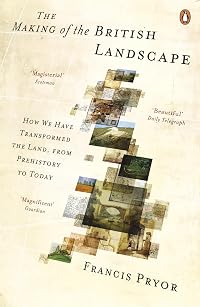
The Making of the British Landscape: How We Have Transformed the Land, from Prehistory to Today
by Francis Pryor
On This Page
Description
This is the changing story of Britain as it has been preserved in our fields, roads, buildings, towns and villages, mountains, forests and islands. From our suburban streets that still trace out the boundaries of long vanished farms to the Norfolk Broads, formed when medieval peat pits flooded, from the ceremonial landscapes of Stonehenge to the spread of the railways - evidence of how man's effect on Britain is everywhere. In The Making of the British Landscape, eminent historian, show more archaeologist and farmer, Francis Pryor explains how to read these clues to understand the fascinating history of our land and of how people have lived on it throughout time. Covering both the urban and rural and packed with pictures, maps and drawings showing everything from how we can still pick out Bronze Age fields on Bodmin Moor to how the Industrial Revolution really changed our landscape, this book makes us look afresh at our surroundings and really see them for the first time. show lessTags
Recommendations









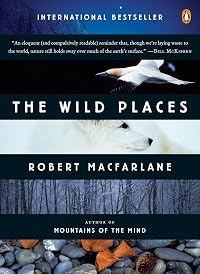
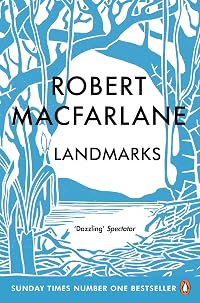
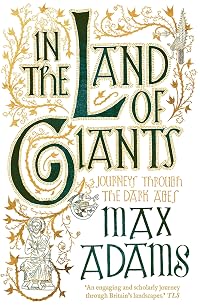
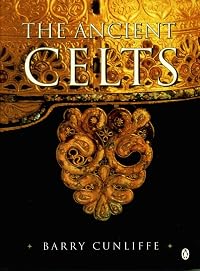

Member Recommendations

Nickelini The 1955 classic
Member Reviews
One of the things I got addicted to during Covid was watching Time Team on YouTube. One of the experts and secondary diggers was Mr. Pryor and was excited some of the books he wrote was available at my local library. Was I impressed, somewhat. His writing style is easy enough, his topic; the History of the Landscape in Great Britain interesting enough. He's entertaining companion and presents his ideas well.
First spotted when I was unpacking books at the Library, this was an excellent, weighty read that I really savoured. Taking heed of previous works on the subject and starting in prehistoric times, the author takes us right up to the present day effects on the landscape of modern farming and conservation. Just enough personal information and opinion (e.g. as a sheep farmer, planter of heritage tree species and critic of programmes like “Coast” that skate over the landscape, just looking for the pretty bits) and with a theme of connecting (or re-connecting) people to landscape, but this does not get in the way of a scholarly and dense but immensely readable work on the way our landscape – natural-looking countryside, suburbs and show more cities alike – has been shape by geology and humankind. show less
Francis Pryor has written several books of popular archaeology and this book about the British Landscape starts very much in archaeological mode, as there is so little evidence of Neolithic landscapes when the evidence is “light” and so much overlays that evidence in most locations.
I am torn over how to rate this. Overall, the first half to two thirds of the book is a good book, but it would have benefited substantially from more critical editing to clearly bring out the major developments as time passed. Instead, there are hundreds of interesting facts, derivations of words and explanations of landscape features, but they are higgledy piggledy within the chapters which denote time periods.
The author can also be lecturing, and show more opinionated. At times, I welcomed this challenging of the reader into thinking about the author’s views. As an example of opinion:
Britain has made at least two major contributions to world art. The first was the insular development of Celtic Art in the last two centuries of the Iron Age and the second was the country house with its landscaped parks and gardens.
However as the book approaches the contemporary, the challenges became more tiresome.
As I got towards the end of the book, I wanted the author to hurry up and finish! The book becomes even more higgledy piggledy, with seemingly every landscape feature being mentioned with little critical guidance on what value to place on developments. This might be the point,but it just feels as if the kitchen sink is being added for completeness. There is also repeated repetition of the same examples, with repeated explanations, which bloated the last chapters.
The final couple of chapters also read much more like personal opinion than considered analysis, and I ended up skimming the paragraphs.
There are plentiful illustrations and plans that complement the text. show less
I am torn over how to rate this. Overall, the first half to two thirds of the book is a good book, but it would have benefited substantially from more critical editing to clearly bring out the major developments as time passed. Instead, there are hundreds of interesting facts, derivations of words and explanations of landscape features, but they are higgledy piggledy within the chapters which denote time periods.
The author can also be lecturing, and show more opinionated. At times, I welcomed this challenging of the reader into thinking about the author’s views. As an example of opinion:
Britain has made at least two major contributions to world art. The first was the insular development of Celtic Art in the last two centuries of the Iron Age and the second was the country house with its landscaped parks and gardens.
However as the book approaches the contemporary, the challenges became more tiresome.
As I got towards the end of the book, I wanted the author to hurry up and finish! The book becomes even more higgledy piggledy, with seemingly every landscape feature being mentioned with little critical guidance on what value to place on developments. This might be the point,but it just feels as if the kitchen sink is being added for completeness. There is also repeated repetition of the same examples, with repeated explanations, which bloated the last chapters.
The final couple of chapters also read much more like personal opinion than considered analysis, and I ended up skimming the paragraphs.
There are plentiful illustrations and plans that complement the text. show less
A history of Britain told through its landscape. It’s chronological rather than by type of change.
Most useful was having prehistory in order. My knowledge of this mainly comes from various Time Team episodes and if something’s 2500 BC or 1000 BC the numbers are just to big to really mean anything outside a chronological framework. Most interesting was his discussion of soil types. I know that sounds rather uninteresting, but I’d never really thought of soil types as a factor affecting history. I suppose that’s the benefit of having a historian who is also a farmer.
This is an exceptionally long book. It’s a long story, but it is a major undertaking and if you’re on a subject that doesn’t much interest you… However, Pryor show more writes like his speaks, in an idiosyncratic way, assertive and engaging, and that should carry you through. Will read some of his other books, but perhaps something more targeted in time period, and shorter please. I’m in my forties and keep looking at the clock. show less
Most useful was having prehistory in order. My knowledge of this mainly comes from various Time Team episodes and if something’s 2500 BC or 1000 BC the numbers are just to big to really mean anything outside a chronological framework. Most interesting was his discussion of soil types. I know that sounds rather uninteresting, but I’d never really thought of soil types as a factor affecting history. I suppose that’s the benefit of having a historian who is also a farmer.
This is an exceptionally long book. It’s a long story, but it is a major undertaking and if you’re on a subject that doesn’t much interest you… However, Pryor show more writes like his speaks, in an idiosyncratic way, assertive and engaging, and that should carry you through. Will read some of his other books, but perhaps something more targeted in time period, and shorter please. I’m in my forties and keep looking at the clock. show less
At over 800 pages this is one for someone who is really interested in the subject. Pryor's background is in archaeology; he also has taken part in archaeological reconstruction; television programmes; rare breed sheep farming and reintroducing native trees. He obviously cares about his subject and presents his information in a way that is accessible to the non-expert. The subtitle of this book is "How We Have Transformed the Land from Prehistory to Today" and Pryor succeeds in what he states he is going to do. I could say that it might have been tightened up in places but it is an interesting and informative read. The text includes maps, illustrations, photographs and colour plates. There are lots of end notes; suggestions for further show more reading and a glossary that all add to the information he provides in the main text. show less
Not to be confused with many other books also called The Making of the British Landscape.
Ratings
Members
- Recently Added By
Author Information

28+ Works 1,896 Members
Awards and Honors
Awards
Common Knowledge
- Important places
- Great Britain
- Dedication
- For Maisie Taylor and Charles French with affection and gratitude.
- First words
- Landscapes are an expression of the here and now.
- Last words
- (Click to show. Warning: May contain spoilers.)That surely is why we must love and cherish it.
Classifications
- Genres
- Anthropology, Nonfiction, History, General Nonfiction, Travel, Science & Nature
- DDC/MDS
- 911.41 — History & geography Geography & travel Atlases & Maps Europe British Isles -- Ireland, Scotland
- LCC
- DA600 .P79 — History of Europe, Asia, Africa and Oceania Great Britain History of Great Britain England Description and travel. Guidebooks
- BISAC
Statistics
- Members
- 174
- Popularity
- 188,115
- Reviews
- 6
- Rating
- (4.05)
- Languages
- English
- Media
- Paper, Ebook
- ISBNs
- 3
- ASINs
- 2