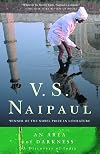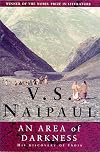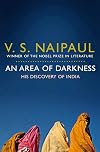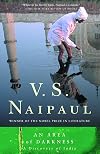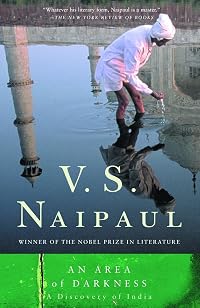
An Area of Darkness
by V. S. Naipaul
On This Page
Description
Biography & Autobiography. Travel. Nonfiction. HTML:A classic of modern travel writing, An Area of Darkness is Nobel laureate V. S. Naipaul’s profound reckoning with his ancestral homeland and an extraordinarily perceptive chronicle of his first encounter with India.Traveling from the bureaucratic morass of Bombay to the ethereal beauty of Kashmir, from a sacred ice cave in the Himalayas to an abandoned temple near Madras, Naipaul encounters a dizzying cross-section of humanity: show more browbeaten government workers and imperious servants, a suavely self-serving holy man and a deluded American religious seeker. An Area of Darkness also abounds with Naipaul’s strikingly original responses to India’s paralyzing caste system, its apparently serene acceptance of poverty and squalor, and the conflict between its desire for self-determination and its nostalgia for the British raj. The result may be the most elegant and passionate book ever written about the subcontinent. show less
Tags
Recommendations



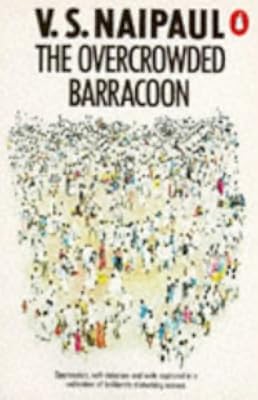


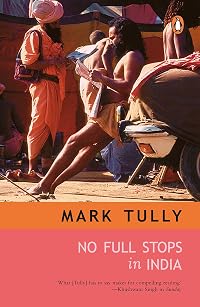
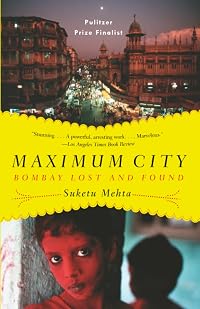
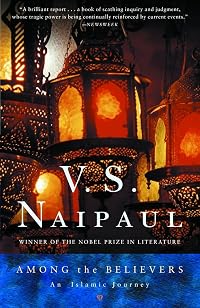



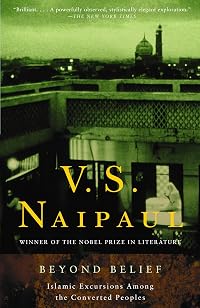




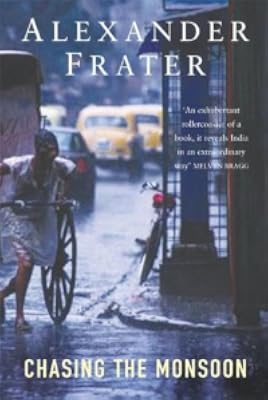
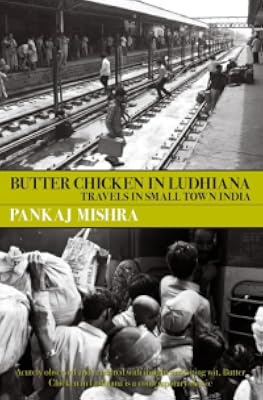
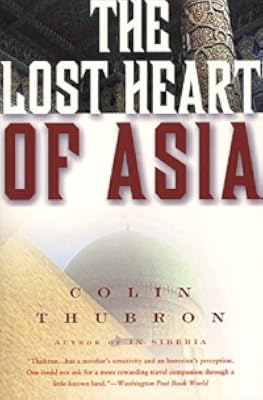






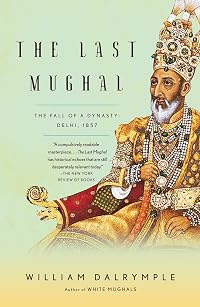
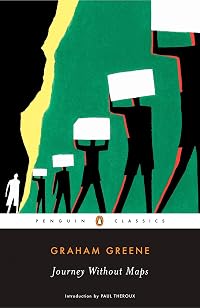
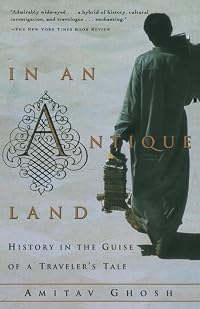
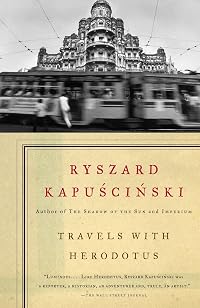


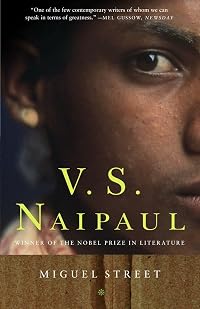
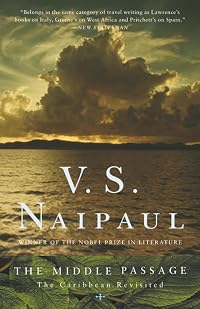
Member Recommendations
Member Reviews
I found this one of the more enjoyable Naipaul books with his searing description of India and the Indians, and the poetic writing. There were many memorable phrases eg. 'sensationally unwashed people'. This phrase alone is indicative of Naipaul's brutal description of India, some of which seem funny and comical but is in reality, a harsh indictment of the country. He explains how the caste system leads to India's lack of progress. Enlightening for a foreigner like me, but understandably distasteful for a citizen of the country. There were some difficult chapters. In the end, India remains an area of darkness to him, and to us.
Having never been to India, I feel bad criticizing a travel writer about their perceptions of the country. Unfortunately, I found V.S. Naipaul's An Area of Darkness: A Discovery of India to be disparaging, hypercritical, and persnickety.
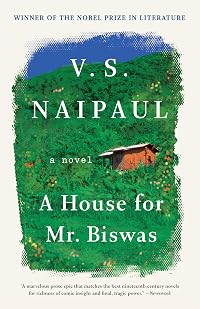
I had previously read Naipaul's A House for Mr. Biswas and Miguel Street, two books I enjoyed despite having some of the same criticisms. I had also read several criticisms that point out Naipaul's pro-British, pro-colonialist attitudes. Those attitudes were on full display in this treatment of India. Every person he meets is portrayed as a one-dimensional beggar who is stuck in their misguided, antiquated ways.
In the book, Naipaul acts like a man staring out a window, casting judgments on the world show more around him. Reading his negative quibbles was quite a chore. Naipaul is a gifted writer and his prose can be lovely, but this wasn't enough to save the book from his constant grumbling about the uneducated people around him.
In this book, it is easy to see why many critics have found disfavor with Naipaul. The racism he shows here is less apparent than in A Bend in the River or in some of his essays, but his colonialist attitudes are on full display. show less
I had previously read Naipaul's A House for Mr. Biswas and Miguel Street, two books I enjoyed despite having some of the same criticisms. I had also read several criticisms that point out Naipaul's pro-British, pro-colonialist attitudes. Those attitudes were on full display in this treatment of India. Every person he meets is portrayed as a one-dimensional beggar who is stuck in their misguided, antiquated ways.
In the book, Naipaul acts like a man staring out a window, casting judgments on the world show more around him. Reading his negative quibbles was quite a chore. Naipaul is a gifted writer and his prose can be lovely, but this wasn't enough to save the book from his constant grumbling about the uneducated people around him.
In this book, it is easy to see why many critics have found disfavor with Naipaul. The racism he shows here is less apparent than in A Bend in the River or in some of his essays, but his colonialist attitudes are on full display. show less
This book (first published in 1964) has become somewhat notorious for its narrator’s rather negative attitude towards the country he is writing about. In the preface to the edition I read (from 2010) he lets his readers know that his bad mood during at least the first part of the book was due to a creative crisis he was going through at the time – this might be true, or it might be not; but in any case, it reminds us that, even though An Area of Darkness is a book of non-fiction, its narrator might still be somewhat less than completely reliable.
Also, the Grumpy Traveller is a figure with a long tradition in British travel literature, going back to at least Tobias Smollett’s Travels Through France and Italy, famously poked fun at show more as “Smelfungus” by Lawrence Sterne in his Sentimental Journey Through France and Italy – indeed, I’d go so far as to say that the Cranky and the Enthusiastic Traveller are the basic archetypes of British travel writing (maybe even of all travel writing). What they both have in common, however, is that for both modes the person of the traveller is at least as important as the countries through which he travels; and this takes us back to Naipaul and his An Area of Darkness – His Discovery of India (do take note of the subtitle here).
I doubt anyone would disagree that Naipaul is very firmly on the grumpy side of things – he does not like India much at all, complains about its shabbiness, the dirt, the lack of manners in its inhabitants, and is particularly offended by the public defecation he seem to encounter everywhere (to a degree that one can’t help but wonder whether there is not some obsession at work there). All in all, there seems to be more than enough reason for the often fierce dislike this book and its author have inspired in many readers. And yet – while I tend to agree that Mr. Naipaul is probably a deeply unlikable person, a closer look at An Area of Darkness shows that there is more going on than just a cranky author venting his petty spleen. A lot more, in fact.
First of all, the reason why Naipaul in An Area of Darkness is an unreliable narrator is paradoxically his scrupulous honesty. He has a very fine and well-tuned sensitivity not just for his surroundings but also for himself, and follows the smallest nuances of his prejudices and motivations. And like no man is a hero to his valet, no narrator remains likeable who is seen from this close – there is no attempt at all from Naipaul to make himself appear more heroic, to smooth his crankiness or to gloss over his petty meanness. Naipaul holds nothing back and throughout remains committed to absolute honesty, reminiscent of Rousseau in his Confessions (but, one assumes, staying somewhat closer to actual facts); which in turn makes it possible for the reader to see just how much this account of India is coloured by the person narrating it.
Second, there is a reason why Naipaul’s attitude towards India is so fraught with tension, and he gives it to the reader at the start of the book (well,a after the prologue, anyway) – even before the narrator sets foot on Indian soil, Naipaul tells us over thirty pages of his childhood in Trinidad where his grandfather had moved from India. Like many emigrants, Naipaul’s family held on to as many things from their homeland as they could, and young Naipaul grew up among a clutter of half or not at all comprehended memorabilia and rituals from which he pieced together his own fantasy of India. And it is this fantasy which at some – intellectually denigrated, but none the less deeply felt – emotional level Naipaul is looking for in the real India only to be deeply disappointed when – rather unsurprisingly – he fails to find it. This is where things begin to move beyond the sphere of mere individual experience, as it’s quite obvious to see how Naipaul’s indeed is just a slightly displaced version of what most Europeans – and that, of course, means mainly British – relate towards India, carrying a pre-conceived image of the country when visiting it. Few, however, are as ruthlessly honest in their reactions when India fails to conform to their fantasy.
And this brings us to a third thread running through An Area of Darkness – namely that Naipaul may have been objectively justified in his reaction, for the simple reason that India in 1963 was in a deplorable state. Among the anecdotes and the descriptions, large parts of the book are given to analysis of India’s past, present and future as well as on a host of related subjects, from how Hinduism has become a repository for symbols that have lost their religious significance, over how India seems to construct its self-image by way of mimicry to other cultures, to novels about and from India – all of those subjects treated with equal intellectual brilliance and a certain cool detachment, made possible precisely thanks to Naipaul’s continuous self-scrutiny that enables him to purge his subjectivity from the more strictly analytic parts of this books.
At the same time, Naipaul never lets the reader forget that everything he writes about is ultimately grounded in personal experience – the long, analytic passages are always counterbalanced by a wealth of anecdotes – often quite funny ones, and more than once the joke is actually on Naipaul, more proof that he is after verity rather than self-aggrandizement – or descriptions. And the descriptions alone, whether of scenery, architecture or the people he encounters, would make reading An Area of Darkness worthwhile because – something I think even his most determined detractors have never denied – Naipaul writes beautifully, capturing sensual impressions in a measured, rhythmic prose, along whose shining surface images move and glitter like sunlight on the moving ocean. show less
Also, the Grumpy Traveller is a figure with a long tradition in British travel literature, going back to at least Tobias Smollett’s Travels Through France and Italy, famously poked fun at show more as “Smelfungus” by Lawrence Sterne in his Sentimental Journey Through France and Italy – indeed, I’d go so far as to say that the Cranky and the Enthusiastic Traveller are the basic archetypes of British travel writing (maybe even of all travel writing). What they both have in common, however, is that for both modes the person of the traveller is at least as important as the countries through which he travels; and this takes us back to Naipaul and his An Area of Darkness – His Discovery of India (do take note of the subtitle here).
I doubt anyone would disagree that Naipaul is very firmly on the grumpy side of things – he does not like India much at all, complains about its shabbiness, the dirt, the lack of manners in its inhabitants, and is particularly offended by the public defecation he seem to encounter everywhere (to a degree that one can’t help but wonder whether there is not some obsession at work there). All in all, there seems to be more than enough reason for the often fierce dislike this book and its author have inspired in many readers. And yet – while I tend to agree that Mr. Naipaul is probably a deeply unlikable person, a closer look at An Area of Darkness shows that there is more going on than just a cranky author venting his petty spleen. A lot more, in fact.
First of all, the reason why Naipaul in An Area of Darkness is an unreliable narrator is paradoxically his scrupulous honesty. He has a very fine and well-tuned sensitivity not just for his surroundings but also for himself, and follows the smallest nuances of his prejudices and motivations. And like no man is a hero to his valet, no narrator remains likeable who is seen from this close – there is no attempt at all from Naipaul to make himself appear more heroic, to smooth his crankiness or to gloss over his petty meanness. Naipaul holds nothing back and throughout remains committed to absolute honesty, reminiscent of Rousseau in his Confessions (but, one assumes, staying somewhat closer to actual facts); which in turn makes it possible for the reader to see just how much this account of India is coloured by the person narrating it.
Second, there is a reason why Naipaul’s attitude towards India is so fraught with tension, and he gives it to the reader at the start of the book (well,a after the prologue, anyway) – even before the narrator sets foot on Indian soil, Naipaul tells us over thirty pages of his childhood in Trinidad where his grandfather had moved from India. Like many emigrants, Naipaul’s family held on to as many things from their homeland as they could, and young Naipaul grew up among a clutter of half or not at all comprehended memorabilia and rituals from which he pieced together his own fantasy of India. And it is this fantasy which at some – intellectually denigrated, but none the less deeply felt – emotional level Naipaul is looking for in the real India only to be deeply disappointed when – rather unsurprisingly – he fails to find it. This is where things begin to move beyond the sphere of mere individual experience, as it’s quite obvious to see how Naipaul’s indeed is just a slightly displaced version of what most Europeans – and that, of course, means mainly British – relate towards India, carrying a pre-conceived image of the country when visiting it. Few, however, are as ruthlessly honest in their reactions when India fails to conform to their fantasy.
And this brings us to a third thread running through An Area of Darkness – namely that Naipaul may have been objectively justified in his reaction, for the simple reason that India in 1963 was in a deplorable state. Among the anecdotes and the descriptions, large parts of the book are given to analysis of India’s past, present and future as well as on a host of related subjects, from how Hinduism has become a repository for symbols that have lost their religious significance, over how India seems to construct its self-image by way of mimicry to other cultures, to novels about and from India – all of those subjects treated with equal intellectual brilliance and a certain cool detachment, made possible precisely thanks to Naipaul’s continuous self-scrutiny that enables him to purge his subjectivity from the more strictly analytic parts of this books.
At the same time, Naipaul never lets the reader forget that everything he writes about is ultimately grounded in personal experience – the long, analytic passages are always counterbalanced by a wealth of anecdotes – often quite funny ones, and more than once the joke is actually on Naipaul, more proof that he is after verity rather than self-aggrandizement – or descriptions. And the descriptions alone, whether of scenery, architecture or the people he encounters, would make reading An Area of Darkness worthwhile because – something I think even his most determined detractors have never denied – Naipaul writes beautifully, capturing sensual impressions in a measured, rhythmic prose, along whose shining surface images move and glitter like sunlight on the moving ocean. show less
My eyes don't let me read this in bed (light not bright enough), so I poike into it now and again. But the man sure can write ... and observe. Very intelligent coming-to-terms with his Indianness, and with growing up in Trinidad. I actually purchased this tiny-print paperback during my McGill years for use on my honours essay on the literature of travel. I never did read far into it--not since 1983! I wonder at getting that degree and the "honours" at all.
V.S. Naipaul has a genius for crafting the most beautiful stories. Part of his genius I think lies in his acute observatory skills. In this book, he travels to India, Kashmir and the Himalayas and his observations of the land are described with poetic beauty. You feel the dust and noise of Bombay, the breathtaking secrets of the Himalayas and the fragility of Kashmir. He certainly entices you to start looking into plane fares to India and dusting off your hiking boots.
The caste system of India seems to govern everything from the kind of jobs one can hold, to whom a person can marry. His description of the caste system was fascinating. His anecdotes of people he met or observed ranged from disquieting to hilarious. At times I found his show more manner a little condescending in his descriptions of the corporate officers or box-wallahs who adopted mannerisms of the British after India's independence. His descriptions of the emaciated children living in the slums were heart-wrenching although through it all, he manages to capture the quiet dignity with which they carry themselves.
Things have changed a little in India since the days of the British Raj, but not by much. show less
The caste system of India seems to govern everything from the kind of jobs one can hold, to whom a person can marry. His description of the caste system was fascinating. His anecdotes of people he met or observed ranged from disquieting to hilarious. At times I found his show more manner a little condescending in his descriptions of the corporate officers or box-wallahs who adopted mannerisms of the British after India's independence. His descriptions of the emaciated children living in the slums were heart-wrenching although through it all, he manages to capture the quiet dignity with which they carry themselves.
Things have changed a little in India since the days of the British Raj, but not by much. show less
If one can imagine the difficulties Naipaul suffers now in a period in which the principle of 'free speech' is being eroded by nice white people to 'you can say what you like as long as we agree with it', it speaks buckets for this book that he experienced the 'censorship of the offended' the very moment it appeared. Banned in India and still banned over fifty years later.
This sits badly with me, not only because of the issue of free speech, but also because he didn't look at all at the side of India which is truly dark. He could so easily have talked of the violence and exploitation, but he left it unsaid. He spoke only of what he saw and how he felt. A travelogue filled with angst, not only towards the India which so upset him, but show more also towards himself. No doubt one learns a lot about one's own inadequacies in such a situation and Naipaul doesn't shrink from them one bit. I don't really understand why people who see this as only a personal critique of India, don't understand this. Neither writer nor subject come off well in this encounter. There are only losers, but why should it be any other way?
For the rest, please go here: https://alittleteaalittlechat.wordpress.com/2016/04/05/an-area-of-darkness-by-vs... show less
This sits badly with me, not only because of the issue of free speech, but also because he didn't look at all at the side of India which is truly dark. He could so easily have talked of the violence and exploitation, but he left it unsaid. He spoke only of what he saw and how he felt. A travelogue filled with angst, not only towards the India which so upset him, but show more also towards himself. No doubt one learns a lot about one's own inadequacies in such a situation and Naipaul doesn't shrink from them one bit. I don't really understand why people who see this as only a personal critique of India, don't understand this. Neither writer nor subject come off well in this encounter. There are only losers, but why should it be any other way?
For the rest, please go here: https://alittleteaalittlechat.wordpress.com/2016/04/05/an-area-of-darkness-by-vs... show less
If one can imagine the difficulties Naipaul suffers now in a period in which the principle of 'free speech' is being eroded by nice white people to 'you can say what you like as long as we agree with it', it speaks buckets for this book that he experienced the 'censorship of the offended' the very moment it appeared. Banned in India and still banned over fifty years later.
This sits badly with me, not only because of the issue of free speech, but also because he didn't look at all at the side of India which is truly dark. He could so easily have talked of the violence and exploitation, but he left it unsaid. He spoke only of what he saw and how he felt. A travelogue filled with angst, not only towards the India which so upset him, but show more also towards himself. No doubt one learns a lot about one's own inadequacies in such a situation and Naipaul doesn't shrink from them one bit. I don't really understand why people who see this as only a personal critique of India, don't understand this. Neither writer nor subject come off well in this encounter. There are only losers, but why should it be any other way?
For the rest, please go here: https://alittleteaalittlechat.wordpress.com/2016/04/05/an-area-of-darkness-by-vs... show less
This sits badly with me, not only because of the issue of free speech, but also because he didn't look at all at the side of India which is truly dark. He could so easily have talked of the violence and exploitation, but he left it unsaid. He spoke only of what he saw and how he felt. A travelogue filled with angst, not only towards the India which so upset him, but show more also towards himself. No doubt one learns a lot about one's own inadequacies in such a situation and Naipaul doesn't shrink from them one bit. I don't really understand why people who see this as only a personal critique of India, don't understand this. Neither writer nor subject come off well in this encounter. There are only losers, but why should it be any other way?
For the rest, please go here: https://alittleteaalittlechat.wordpress.com/2016/04/05/an-area-of-darkness-by-vs... show less
Members
- Recently Added By
Published Reviews
Author Information

99+ Works 25,830 Members
Vidiadhar Surajprasad Naipaul was born of Indian ancestry in Chaguanas, Trinidad on August 17, 1932. He was educated at University College, Oxford and lived in Great Britain since 1950. From 1954 to 1956, he edited a radio program on literature for the British Broadcasting Corporation's Caribbean Service. His first novel, The Mystic Masseur, was show more published in 1957. His other novels included A House for Mr. Biswas, A Bend in the River, Guerrillas, and Half a Life. In a Free State won the Booker Prize in 1971. He started writing nonfiction in the 1960s. His first nonfiction book, The Middle Passage, was published in 1962. His other nonfiction works included An Area of Darkness, Among the Believers, Beyond Belief, and A Turn in the South. He was knighted in 1990 and received the Nobel Prize in Literature in 2001. He died on August 11, 2018 at the age of 85. (Bowker Author Biography) show less
Some Editions
Awards and Honors
Awards
Notable Lists
Torchlight List (#192a)
Series
Belongs to Publisher Series
Common Knowledge
- Canonical title*
- インド・闇の領域
- Original title
- An Area of Darkness
- Original publication date
- 1964
- People/Characters
- Aziz; Mr Butt; Ali Mohammed; Laraine
- Important places
- India
- Dedication
- To Francis Wyndham
- First words
- As soon as our quarantine flag came down and the last of the barefooted, blue-uniformed policemen of the Bombay Port Health Authority had left the ship, Coelho the Goan came aboard and, luring me with a long beckoning finger ... (show all)into the saloon, whispered, 'You have any cheej?'
- Quotations
- For me the East had begun weeks before. Even in Greece I had felt Europe falling away. There was the East in the food, the emphasis on sweets, some of which I knew from my childhood; in the posters for Indian films with the a... (show all)ctress Nargis, a favourite, I was told, of Greek audiences; in the instantaneous friendships, the invitations to meals and homes.
And it was clear that here [Egypt], and not in Greece, the East began: in this chaos of uneconomical movement, the self-stimulated din, the sudden feeling of insecurity, the conviction that all men were not brothers and that ... (show all)luggage was in danger.
Here [Egypt] was to be learned the importance of the guide, the man who knew local customs, the fixer to whom badly printed illiterate forms held no mysteries.
The Pyramids, whose function as a public latrine no guide book mentions, were made impossible by guides, 'watchmen', camel-drivers and by boys whose donkeys were all called Whisky-and-soda.
Then came the tedium of the African ports. Little clearings, one felt them, at the edge of a vast continent; and here one knew that Egypt, for all its Negroes, was not Africa, and for all its minarets and jibbahs, not the Eas... (show all)t: it was the last of Europe.
I did not understand the language of our religious ceremonies- it was as if our elders expected that our understanding would be instinctive - and no one explained the prayers and rituals.
In Trinidad, to be Indian was to be distinctive. To be anything there was distinctive; difference was each man's attribute.
It is the special mimicry of an old country that has been without a native aristocracy for a thousand years and has learned to make room for outsiders, but only at the top.
Then I discovered that in the few short weeks of the tourist season, of tourist transistors tuned to Radio Ceylon, his taste had changed. He liked the commercial jingles, he liked the film songs. They were modern, an accessib... (show all)le part of the world beyond the mountains from which the advanced, money-laden Indian tourists came. Kashmiri music belonged to the lake and the valley, it was rude. So fragile are our fairylands.
They walked idly up and down the road, between the admiring crowds, jostling those who tomorrow might once again be their betters.
But to the intelligent illiterate in a simpler world might not literacy be an irrelevance, a dissipation of sensibility, the mercenary skill of a scribe? - Last words
- (Click to show. Warning: May contain spoilers.)I felt it as something true which I could never adequately express and never seize again.
- Blurbers
- Wain, John; Mosley, Nicholas; Buruma, Ian
- Original language
- English
*Some information comes from Common Knowledge in other languages. Click "Edit" for more information.
Classifications
- Genres
- Travel, Nonfiction, Biography & Memoir
- DDC/MDS
- 915.4044 — History & geography Geography & travel Geography of and travel in Asia India and neighboring south Asian countries Travel; guidebooks 1947–1971
- LCC
- DS414 .N23 — History of Europe, Asia, Africa and Oceania Asia History of Asia India (Bharat)
- BISAC
Statistics
- Members
- 950
- Popularity
- 28,022
- Reviews
- 18
- Rating
- (3.67)
- Languages
- 9 — Chinese, Dutch, English, French, German, Italian, Japanese, Spanish, Swedish
- Media
- Paper, Audiobook, Ebook
- ISBNs
- 31
- ASINs
- 17