
Ancient Evenings
by Norman Mailer 
On This Page
Description
Menehetet I rises from peasant stock to become a harem overlord between the reigns of Ramses II and Ramses IX of Egypt.Tags
Recommendations




























Member Reviews
A startling work of creative imagination.
Norman Mailer - love him or hate him - had a mastery of the language that very few could rival. It is apparent in all his works, including "Ancient Evenings", which takes place at a variety of Egyptian locales, from royal dinners to family barge rides, from distant mining camps to tombs. Much of the story is told in flashback, much of it recited by a ponderous old man. The highlights of the book are:
a) Mailer's immense knowledge of the age. I adored Ancient Egypt as a study topic when a student, and still I'm not sure how much of this is verified/historically theorised truth, and how much is Mailer's imagination. Either way, he creates a world in which every cultural nuance and spoken show more idiosyncracy feels foreign and yet genuine;
b) That sense of magic - speculative fiction, I guess we'd call it now - that allows us never to be sure what is real, without ever succumbing to the dreaded "fantasy"; and
c) yes, it is true: Mailer's ability to tell those lecherous tales while rarely coming across as just a perv.
As others have said, this book will beguile or disgust: sodomy and incest (sometimes both!) are high on the agenda, and Mailer is as unapologetic as his characters.
I would never call this book my favourite, not by a long shot: like many works, I appreciate it as much intellectually as I do viscerally. For instance, Menenhetet speaks using a lot of similes and analogies, often quite ponderously. It makes reading this book a tougher experience than one would like, but this is a genuine part of the character and his culture, not a flaw in Mailer's writing.
In the end, this is a work that won't speak to anyone. It's highly idiosyncratic, explores many abstract or challenging themes, and takes no pains to explain itself until it feels the time is right. However, by the same token, the novel refuses to pander to cliche or the simple answers, and is one of those amazing books where - by the time you're reading the final chapters - you realise how strange and incomprehensible they would be to the uninitiated, yet they make perfect sense to you. "Ancient Evenings" makes you work for your reward, and in this case the reward is a fantastic and unsettling portrayal of life in Egypt under the Pharaohs, and of a world so far removed from our own. The final chapter is startlingly beautiful, and puts my previous favourite literary ending - that of "The Great Gatsby" - to shame. Lovely. show less
Norman Mailer - love him or hate him - had a mastery of the language that very few could rival. It is apparent in all his works, including "Ancient Evenings", which takes place at a variety of Egyptian locales, from royal dinners to family barge rides, from distant mining camps to tombs. Much of the story is told in flashback, much of it recited by a ponderous old man. The highlights of the book are:
a) Mailer's immense knowledge of the age. I adored Ancient Egypt as a study topic when a student, and still I'm not sure how much of this is verified/historically theorised truth, and how much is Mailer's imagination. Either way, he creates a world in which every cultural nuance and spoken show more idiosyncracy feels foreign and yet genuine;
b) That sense of magic - speculative fiction, I guess we'd call it now - that allows us never to be sure what is real, without ever succumbing to the dreaded "fantasy"; and
c) yes, it is true: Mailer's ability to tell those lecherous tales while rarely coming across as just a perv.
As others have said, this book will beguile or disgust: sodomy and incest (sometimes both!) are high on the agenda, and Mailer is as unapologetic as his characters.
I would never call this book my favourite, not by a long shot: like many works, I appreciate it as much intellectually as I do viscerally. For instance, Menenhetet speaks using a lot of similes and analogies, often quite ponderously. It makes reading this book a tougher experience than one would like, but this is a genuine part of the character and his culture, not a flaw in Mailer's writing.
In the end, this is a work that won't speak to anyone. It's highly idiosyncratic, explores many abstract or challenging themes, and takes no pains to explain itself until it feels the time is right. However, by the same token, the novel refuses to pander to cliche or the simple answers, and is one of those amazing books where - by the time you're reading the final chapters - you realise how strange and incomprehensible they would be to the uninitiated, yet they make perfect sense to you. "Ancient Evenings" makes you work for your reward, and in this case the reward is a fantastic and unsettling portrayal of life in Egypt under the Pharaohs, and of a world so far removed from our own. The final chapter is startlingly beautiful, and puts my previous favourite literary ending - that of "The Great Gatsby" - to shame. Lovely. show less
One of my favorite late great Norman Mailer novels. Mailer visited Egypt and became fascinated with the pharaoh's court and mythology, and he writes about imagined sexual intrigue of the young Rameses and other fun stuff. I have been to Egypt and have studied Egyptian history, and Mailer's perspective in this novel is very real.
I can only tell you my experience of the book.
It was knocking on the door of greatness. The beginning was staggering, and I was floored by the musicality of its sentences, its startling imagery, and the depth of thought that made these ancient Egyptians remind me, as others before me, of aliens in a science fiction novel – that is, the past is an alien world. I was having an encounter with this novel, like you have with extraterrestials or great beasts. This reached its pitch with the Battle of Kadesh, whose inspirations were the Old Testament and the Iliad, and where Mailer, in the whole chapter devoted to the battle, gives his sentences the rush and rhythm of chariot wheels. Awesome battle scene.
So far, with me, he hadn’t put a show more foot wrong. Thomas Mann went wrong in Egypt with the ornate style, for me: I loved his first Joseph books but in Egypt I sank into the sands of his Biblical loquacity. But Mailer, as Old Testamenty as he, hadn’t spent a word too much, he was music to my ears. Then I hit the Book of Queens. It was atrocious, and the novel never clawed up from that low – until perhaps the last five pages.
As for the sex content. In the parts I admired, I didn’t feel it was gratuitous or ill-done. I’ll thank him for his lessons in unhealthy psychology. Once I read a book – which I won’t even link to, because I hated the book and thought it bad history – that told me how common in the ancient world was war rape, man to man: as a further vanquishment of a defeated enemy. So, there’s much oneupmanship in here, where they use such methods to humiliate and see who’s ahead of who. It’s effing unhealthy, like I say; nevertheless, when I read that aforementioned nonfiction I was disturbed and disgusted, whereas Mailer doesn’t set out to disturb and disgust me and he didn’t. When he has a humiliate-the-captive scene entirely from the point of view of the unapologetic perpetrator, I felt I was given insight, in the way fiction can.
None of what I’ve just said goes for the latter part of the book, where sex is stupid, gratuitous and features women. I had already noticed that he never has women raped. Is that pushing it, even for him? I had to wonder. But in these stretches you soon notice every single woman is a sex addict, and... spare me. It’s worse than I can say. The music is lost too, since he’s thrown discipline to the winds; and the Egyptians aren’t aliens now, they live in your closest daytime soap.
He took ten years to write this, as he lets us know at the end. Maybe he had a brain explosion along the way. show less
It was knocking on the door of greatness. The beginning was staggering, and I was floored by the musicality of its sentences, its startling imagery, and the depth of thought that made these ancient Egyptians remind me, as others before me, of aliens in a science fiction novel – that is, the past is an alien world. I was having an encounter with this novel, like you have with extraterrestials or great beasts. This reached its pitch with the Battle of Kadesh, whose inspirations were the Old Testament and the Iliad, and where Mailer, in the whole chapter devoted to the battle, gives his sentences the rush and rhythm of chariot wheels. Awesome battle scene.
So far, with me, he hadn’t put a show more foot wrong. Thomas Mann went wrong in Egypt with the ornate style, for me: I loved his first Joseph books but in Egypt I sank into the sands of his Biblical loquacity. But Mailer, as Old Testamenty as he, hadn’t spent a word too much, he was music to my ears. Then I hit the Book of Queens. It was atrocious, and the novel never clawed up from that low – until perhaps the last five pages.
As for the sex content. In the parts I admired, I didn’t feel it was gratuitous or ill-done. I’ll thank him for his lessons in unhealthy psychology. Once I read a book – which I won’t even link to, because I hated the book and thought it bad history – that told me how common in the ancient world was war rape, man to man: as a further vanquishment of a defeated enemy. So, there’s much oneupmanship in here, where they use such methods to humiliate and see who’s ahead of who. It’s effing unhealthy, like I say; nevertheless, when I read that aforementioned nonfiction I was disturbed and disgusted, whereas Mailer doesn’t set out to disturb and disgust me and he didn’t. When he has a humiliate-the-captive scene entirely from the point of view of the unapologetic perpetrator, I felt I was given insight, in the way fiction can.
None of what I’ve just said goes for the latter part of the book, where sex is stupid, gratuitous and features women. I had already noticed that he never has women raped. Is that pushing it, even for him? I had to wonder. But in these stretches you soon notice every single woman is a sex addict, and... spare me. It’s worse than I can say. The music is lost too, since he’s thrown discipline to the winds; and the Egyptians aren’t aliens now, they live in your closest daytime soap.
He took ten years to write this, as he lets us know at the end. Maybe he had a brain explosion along the way. show less
The ka of Menenhetet Two, a young Egyptian nobleman, is born into the afterlife, where he meets his great-grandfather, Menenhetet One. Menenhetet One helps Menenhetet Two to remember a day when he went with his parents and Menenhetet One to visit the Pharaoh Rameses IX. During that visit, Menenhetet One was persuaded to tell of his previous lives, for he had learnt to reincarnate himself by magic and was now on his fourth life.
The core of the book is Menenhetet One's story of his first life as a royal charioteer under Ramses the Great in the build up to the battle of Kadesh and then as a guard for Ramses's concubines and Queens. Menenhetet One is not an attractive character but we do come to care about him and his audience as he ttells show more he story.
Mailer has managed to create a cast of characters with a truly different outlook on life rather than 20th century characters in fancy dress.He gives us a rich sensory experience of sights, sounds, smells, and tastes. Together with the complex narrative structure, all this means the book needs to be long, but it could be trimmed by cutting down on at least some of the sex scenes, which manage to be many and varied without being particularly interesting for the most part. show less
The core of the book is Menenhetet One's story of his first life as a royal charioteer under Ramses the Great in the build up to the battle of Kadesh and then as a guard for Ramses's concubines and Queens. Menenhetet One is not an attractive character but we do come to care about him and his audience as he ttells show more he story.
Mailer has managed to create a cast of characters with a truly different outlook on life rather than 20th century characters in fancy dress.He gives us a rich sensory experience of sights, sounds, smells, and tastes. Together with the complex narrative structure, all this means the book needs to be long, but it could be trimmed by cutting down on at least some of the sex scenes, which manage to be many and varied without being particularly interesting for the most part. show less
This novel is a heady re-imagining of the magical perspective of the Pharaohs, full of intense, smaller narratives ranging from the quotidian to the mythic. I recently noticed that Wilbur Smith had written more volumes in his ancient Egyptian series, but I'd rather spend the time re-reading Mailer's monumental book.
Oh, what the fuck, Norman. You've completely lost it.
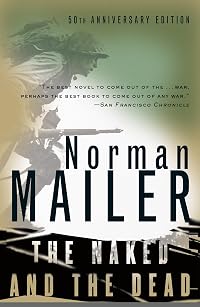
I respected The Naked and the Dead very much. A true epic of the Pacific War, no question. This is something by a different person entirely. Now, in his later career, he just seems to be fascinated with shit - literally. The historical novel about Hitler seemed to have too much rambling rants about piss in it. I refuse to read too much into his personal life, but this almost seems fetishistic.
Aside from that, I've always had a fascination for the mythology and history of Ancient Egypt, and it takes special effort to make this seem boring. What a waste.
I respected The Naked and the Dead very much. A true epic of the Pacific War, no question. This is something by a different person entirely. Now, in his later career, he just seems to be fascinated with shit - literally. The historical novel about Hitler seemed to have too much rambling rants about piss in it. I refuse to read too much into his personal life, but this almost seems fetishistic.
Aside from that, I've always had a fascination for the mythology and history of Ancient Egypt, and it takes special effort to make this seem boring. What a waste.
OK, it's a stinker in some ways, but because it evoked a strong feeling of the time and place and of the mysterious, magical religion so effectively for me, appealing to all the senses, I'm not ashamed to be fond of this book.
Members
- Recently Added By
Published Reviews
ThingScore 100
We learn, in these 709 large pages, a great number of things. Most of all we learn how much Egyptology Mailer has learned in the last ten years... And the secret of power, which the book is chiefly about? This lies in magic, and magic is essentially control of the lower human functions. In a word, magic is anal... In Ancient Evenings, you sodomize the enemy to probe the caves of his strength. show more Rameses IX sees Egypt as looking like the crack between the globes of the buttocks. Egypt is fertile because of Nile mud, and mud is a form of faeces. Old Menenhetet has, to the shock of the court, eaten bat droppings in order to learn about magic...
If I can achieve a second, or third, reading of Ancient Evenings, I may be prepared to name it as the best reconstruction of an ancient world since Flaubert's Salammbo, but Mailer does not want that kind of praise... In America this novel - which, whatever its intermittent unread-ability, makes the fictional products of our own islands seem all too readably bland - has had a bad press. I don't think it has been well understood. Give it a few years and, like the equally misunderstood Gravity's Rainbow, it may well appear as one of the great works of contemporary mythopoesis. It certainly gives us a new look up the anus. show less
If I can achieve a second, or third, reading of Ancient Evenings, I may be prepared to name it as the best reconstruction of an ancient world since Flaubert's Salammbo, but Mailer does not want that kind of praise... In America this novel - which, whatever its intermittent unread-ability, makes the fictional products of our own islands seem all too readably bland - has had a bad press. I don't think it has been well understood. Give it a few years and, like the equally misunderstood Gravity's Rainbow, it may well appear as one of the great works of contemporary mythopoesis. It certainly gives us a new look up the anus. show less
added by SnootyBaronet
Lists

1001 Books You Must Read Before You Die
1,448 works; 1,137 members

Anthony Burgess 99 Post War Novels
99 works; 7 members

Blue Pyramid 1,276 Best Books of All Time
1,248 works; 32 members

Harold Bloom - The Western Canon: D. The Chaotic Age
833 works; 24 members
Author Information

160+ Works 24,828 Members
Norman Kingsley Mailer was born on January 31, 1923 in Long Branch, N. J. and then moved with his family to Brooklyn, N. Y. Mailer later attended Harvard University and graduated with a degree in aeronautical engineering. Mailer served in the Army during World War II, and later wrote, directed, and acted in motion pictures. He was also a show more co-founder of the Village Voice and edited Disssent for nine years. Mailer has written several books including: The Armies of the Night, which won the National Book Award, the Pulitzer Prize, and a Polk Award; and The Executioner's Song, which won the Pulitzer Prize. In 2005, he won the Medal for Distinguished Contribution to American Letters from the National Book Foundation. He published his last novel, The Castle in the Forest, in 2007. He died of acute renal failure on November 10, 2007. (Bowker Author Biography) show less
Norman Mailer has a Legacy Library. Legacy libraries are the personal libraries of famous readers, entered by LibraryThing members from the Legacy Libraries group.
Some Editions
Awards and Honors
Distinctions
Common Knowledge
- Canonical title
- Ancient Evenings
- Original title
- Ancient Evenings
- Original publication date
- 1983
- Important places
- Egypt
- Dedication
- To my daughters, to my sons, and to Norris.
- First words
- Crude thoughts and fierce forces are my state.
- Last words
- (Click to show. Warning: May contain spoilers.)Past and future come together on thunderheads and our dead hearts live with lightning in the wounds of the Gods.
Classifications
- Genres
- Fiction and Literature, General Fiction, Historical Fiction
- DDC/MDS
- 813.54 — Literature & rhetoric American literature in English American fiction in English 1900-1999 1945-1999
- LCC
- PS3525 .A4152 .A79 — Language and Literature American literature American literature Individual authors 1900-1960
- BISAC
Statistics
- Members
- 1,397
- Popularity
- 17,029
- Reviews
- 19
- Rating
- (3.39)
- Languages
- 12 — Czech, Dutch, English, Finnish, French, German, Greek, Italian, Polish, Portuguese, Spanish, Swedish
- Media
- Paper, Audiobook, Ebook
- ISBNs
- 33
- ASINs
- 25