On This Page
Description
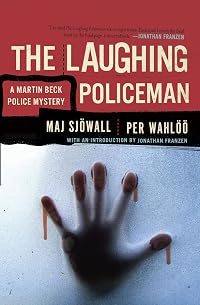
Fiction. Mystery. Thriller. HTML:The incredible fourth novel in the Martin Beck mystery series by the internationally renowned crime writing duo Maj Sjöwall and Per Wahlöö, finds Martin Beck heading a major manhunt in pursuit of a mass-murderer. With a new introduction by Jonathan Franzen: "I've read The Laughing Policeman six or eight times. Each time I reach the final twist on the final page, I shiver afresh."On a cold and rainy Stockholm night, nine bus riders are gunned down by a show more mysterious assassin. The press portrays it as a freak attack and dubs the killer a madman. But Superintendent Martin Beck thinks otherwise—one of his most ambitious young detectives was among those killed—and he suspects it was more than coincidence. Working on a hunch, Beck seeks out the girlfriend of the murdered detective, and with her help Beck reconstructs the steps that led to his murder. The police comb the country for the killer, only to find that this attack may be connected to a case that has been unsolved for years. show less
Tags
Recommendations













Member Reviews
The Laughing Policeman is the fourth in the Martin Beck series, and so far it is my favorite from this writing duo.
While the police in Stockholm are busy at the American Embassy where a protest against the Vietnam War has turned very ugly, patrolmen Kvant and Kristiansson, the Keystone Cop-ish police officers who just so happened to have inadvertently solved the case in The Man on the Balcony, are just biding their time until their shift is over. Crossing from the municipality of Solna into Stockholm, they're flagged down by a man walking a dog who reports an accident. The two drive on over and discover a doubledecker bus with lights on and doors open off the road. Inside the bus are several dead bodies, all gunned down in their seats, show more and the scene looks like a massacre. The homicide squad headed by Martin Beck arrives and discovers that one of their own is dead on the bus -- a young police inspector named Ake Stenstrom. There are very little clues on the scene, thanks to Kvant and Kristiansson, and as far as motive, until Beck and his men can go through the list of victims, it is not readily apparent. To bring the gunman to justice and close the case Beck and his team will have to put in long hours and examine the lives of all of the dead. To discover why this happened, the most important fact they need to discern is the identity of the intended target, not a simple task in the least.
Sjöwall and Perlöö's plotting and storyline are not the only reasons this book and the series work so well. The authors also continue to develop their characters' personalities so that the people in the Stockholm homicide squad become more and more familiar to the reader as time progresses. Those two factors, along with their ability to evoke what they consider the social ills and the events of the time period make these short novels so compelling. In the space of only 211 pages the authors manage to set up the plot, detail the often-frustrating investigation, catch up on what's going on with Beck, Kollberg and the other main players, and wrap things up in a more than satisfying conclusion. They keep the superfluous prose away, giving the reader only what's needed to keep the story going. There are no torrid love affairs, no in-depth soul searching or major subplots to sidetrack the reader -- Sjöwall and Perlöö are probably among the best crime writers in terms of their focus on the crime at hand, while still managing to continue the growth of their beloved characters. The time frame is well established through their use of current events like the Vietnam War protests and American serial killers of the time (especially Charles Whitman and the U of Texas shootings). They also have this ability to make the reader laugh in the midst of terrible crimes; here they go on about psychologists and profiling of serial killers in a discussion that was priceless.
I'd definitely recommend this book and the entire series to anyone who wants to read something intelligent in the realm of crime fiction, and to readers of Scandinavian crime fiction in particular. You can't read just the current popular authors and feel like you have experienced the best that the Nordic countries have to offer -- this series is a no miss, for sure. show less
While the police in Stockholm are busy at the American Embassy where a protest against the Vietnam War has turned very ugly, patrolmen Kvant and Kristiansson, the Keystone Cop-ish police officers who just so happened to have inadvertently solved the case in The Man on the Balcony, are just biding their time until their shift is over. Crossing from the municipality of Solna into Stockholm, they're flagged down by a man walking a dog who reports an accident. The two drive on over and discover a doubledecker bus with lights on and doors open off the road. Inside the bus are several dead bodies, all gunned down in their seats, show more and the scene looks like a massacre. The homicide squad headed by Martin Beck arrives and discovers that one of their own is dead on the bus -- a young police inspector named Ake Stenstrom. There are very little clues on the scene, thanks to Kvant and Kristiansson, and as far as motive, until Beck and his men can go through the list of victims, it is not readily apparent. To bring the gunman to justice and close the case Beck and his team will have to put in long hours and examine the lives of all of the dead. To discover why this happened, the most important fact they need to discern is the identity of the intended target, not a simple task in the least.
Sjöwall and Perlöö's plotting and storyline are not the only reasons this book and the series work so well. The authors also continue to develop their characters' personalities so that the people in the Stockholm homicide squad become more and more familiar to the reader as time progresses. Those two factors, along with their ability to evoke what they consider the social ills and the events of the time period make these short novels so compelling. In the space of only 211 pages the authors manage to set up the plot, detail the often-frustrating investigation, catch up on what's going on with Beck, Kollberg and the other main players, and wrap things up in a more than satisfying conclusion. They keep the superfluous prose away, giving the reader only what's needed to keep the story going. There are no torrid love affairs, no in-depth soul searching or major subplots to sidetrack the reader -- Sjöwall and Perlöö are probably among the best crime writers in terms of their focus on the crime at hand, while still managing to continue the growth of their beloved characters. The time frame is well established through their use of current events like the Vietnam War protests and American serial killers of the time (especially Charles Whitman and the U of Texas shootings). They also have this ability to make the reader laugh in the midst of terrible crimes; here they go on about psychologists and profiling of serial killers in a discussion that was priceless.
I'd definitely recommend this book and the entire series to anyone who wants to read something intelligent in the realm of crime fiction, and to readers of Scandinavian crime fiction in particular. You can't read just the current popular authors and feel like you have experienced the best that the Nordic countries have to offer -- this series is a no miss, for sure. show less
A very high level police procedural novel from Stockholm, Sweden. The names of all the streets and the districts will drive you crazy to some degree (all of them seem to have 20 letters in the name), but the solving of the mass murder that happens on a double decker bus is exceptionally good. The 7 homocide detectives from Stockholm and the 3 rural detectives assigned to the case are a pretty depressed, cantankerous bunch even before 9 people are shot to death on a bus. The lack of clues and suspects adds to the strain that the oncoming winter and constant rain have already done to their collective mood. But slowly they began to check every thing they can possible think of to pursue only to find that there may be a link with a 16 year show more old unsolved murder case that one of the people on the bus may have been looking into. All the detectives have different personalities and special abilities that are brought to bear on both the mass murder and then the 16 year old unsolved murder of a prostitute.
The pacing is exceptionally good as is the plot. There is an ebb and flow to the pacing that helps the reader feel the frustration and then the excitement every time things slow down for the detectives and then speed up again for them. The plot juggles the two cases, the stories of the 9 dead riders on the bus and the personal stories of the 10 detectives without ever becoming confusing. It is a very entertaining mystery. show less
The pacing is exceptionally good as is the plot. There is an ebb and flow to the pacing that helps the reader feel the frustration and then the excitement every time things slow down for the detectives and then speed up again for them. The plot juggles the two cases, the stories of the 9 dead riders on the bus and the personal stories of the 10 detectives without ever becoming confusing. It is a very entertaining mystery. show less
Setting the tone for some of the later Martin Beck novels, the opening of this book sees the Swedish police force distracted from its normal tasks by the much more entertaining pastime of beating up peaceful anti-Vietnam demonstrators outside the US embassy. But then Beck and his team are called in to investigate Sweden's first mass shooting incident: nine people have been shot on a Stockholm bus, one of them a detective from Beck's own squad. The absence of the shooter seems to rule out an American-style episode of random killing, whilst political terrorism doesn't figure either as a serious possibility (probably the most obvious thing that dates the book!), so the police are faced with a painstaking investigation into all the show more passengers and why they were there. It's maybe a bit of a detective story cliché that the mystery turns out to revolve around an old, unsolved case, but it's a typical Sjöwall & Wahlöö touch that there's a clue to this back-story that the investigators have missed the first time around by sheer bad luck... show less
It really is amazing that such enlightened countries as those comprising Scandinavia produce so many excellent crime and mystery writers. The husband and wife team of Maj Sjowall and Per Wahloo can be added to the list that includes Stieg Larsson, Henning Mankell and others. In fact, Sjowall and Wahloo could be said to head the list since many modern writers credit them with inventing Nordic noir.
Late on a rainy and cold November night in Stockholm a man walking his dog discovers a horrific scene. A double decker bus has gone off the road and crashed through a fence. Everyone inside is dead but not from the crash; they were all murdered with a machine gun. One of the people on the bus is a police detective. Detective Ake Stenstrom had show more pulled his gun but had not had a chance to use it. The police pull out all the stops to find the killer but the investigation languishes. No-one, not Stenstrom's superior, not his girlfriend, not his co-workers know what Stenstrom was doing on the bus. If they could just find that out they might be closer to finding the killer.
This book was written in 1968 (and it won the Edgar in 1971) but it really doesn't seem dated if you ignore the fact that no-one uses mobile telephones and nothing is on computer. Instead there are detectives who ferret out information by interviewing people and following clues and using their memory about previous crimes. Great stuff. show less
Late on a rainy and cold November night in Stockholm a man walking his dog discovers a horrific scene. A double decker bus has gone off the road and crashed through a fence. Everyone inside is dead but not from the crash; they were all murdered with a machine gun. One of the people on the bus is a police detective. Detective Ake Stenstrom had show more pulled his gun but had not had a chance to use it. The police pull out all the stops to find the killer but the investigation languishes. No-one, not Stenstrom's superior, not his girlfriend, not his co-workers know what Stenstrom was doing on the bus. If they could just find that out they might be closer to finding the killer.
This book was written in 1968 (and it won the Edgar in 1971) but it really doesn't seem dated if you ignore the fact that no-one uses mobile telephones and nothing is on computer. Instead there are detectives who ferret out information by interviewing people and following clues and using their memory about previous crimes. Great stuff. show less
Before Stieg Larsson, before Jo Nesbø or Henning Mankell, Scandinavian crime fiction was dominated by Maj Sjöwall and Per Wahlöö, journalists and common-law married writing partners from Sweden. In the 1960s, the couple set about to write 10 books in 10 years, each 30 chapters long, which they plotted and researched together, then wrote alternate chapters. Because they intended the books as a critique of capitalist society, all the books in their original editions were given the subtitle "Report of a Crime" as a politically double-entendre phrase.
According to Wahlöö, their intention was to "use the crime novel as a scalpel cutting open the belly of the ideological pauperized and morally debatable so-called welfare state of the show more bourgeois type." The books (all of which have been adapted for film or TV), follow the exploits of detectives from the special homicide commission of the national police, centered around the character of Superintendent Martin Beck of the Homicide Squad. About their main policeman, Ms. Sjöwall said, "We wanted a credible, trustworthy Swedish civil servant with empathy and real concern." The books really should be read in sequential order because the characters of Beck, his family, and Beck's police colleagues change throughout the series.
THE LAUGHING POLICEMAN was the only one in the series to win an Edgar award from the Mystery Writers of America for Best Novel, an honor bestowed in 1971. At the beginning of the book, police are off fighting peaceful Vietnam demonstrators and casually molest a girl demonstrator on her thirteenth birthday. Soon afterward, nine bus riders are gunned down by an unknown assassin on a cold and rainy Stockholm night. Unfortunately for Beck, the two inept patrolmen who stumbled upon the crime scene destroyed much of any useful evidence. The frenzied press, fishing for an explanation for the seemingly random crime, quickly dubs the killer a madman.
With his usual dogged determination, Beck suspects the culprit isn't a madman, after all, upon discovering the apparently motiveless killer has managed to target one of Beck′s best detectives, Ake Stenstrom. But far too many questions remain: why was Stenstrom on that particular bus that night? Why was he sitting next to a young, female nurse? After Beck works with the murdered detective's girlfriend, he's able to piece together his activites right before his murder. Soon enough it becomes clear that Stenstrom was working off the books, and that the attack may be connected to an unsolved cold case.
The Beck novels are filled with brooding, multi-dimensional characters and the settings are equally gritty and dour, pointing out the dark underbelly of Swedish culture and clearly foreshadowing Larsson. There are also other parallels: Sjöwall/Wahlöö and Larsson wrote against the sub-class treatment of women in society, as well as the failings of the capitalistic system to protect its most vulnerable citizens. show less
According to Wahlöö, their intention was to "use the crime novel as a scalpel cutting open the belly of the ideological pauperized and morally debatable so-called welfare state of the show more bourgeois type." The books (all of which have been adapted for film or TV), follow the exploits of detectives from the special homicide commission of the national police, centered around the character of Superintendent Martin Beck of the Homicide Squad. About their main policeman, Ms. Sjöwall said, "We wanted a credible, trustworthy Swedish civil servant with empathy and real concern." The books really should be read in sequential order because the characters of Beck, his family, and Beck's police colleagues change throughout the series.
THE LAUGHING POLICEMAN was the only one in the series to win an Edgar award from the Mystery Writers of America for Best Novel, an honor bestowed in 1971. At the beginning of the book, police are off fighting peaceful Vietnam demonstrators and casually molest a girl demonstrator on her thirteenth birthday. Soon afterward, nine bus riders are gunned down by an unknown assassin on a cold and rainy Stockholm night. Unfortunately for Beck, the two inept patrolmen who stumbled upon the crime scene destroyed much of any useful evidence. The frenzied press, fishing for an explanation for the seemingly random crime, quickly dubs the killer a madman.
With his usual dogged determination, Beck suspects the culprit isn't a madman, after all, upon discovering the apparently motiveless killer has managed to target one of Beck′s best detectives, Ake Stenstrom. But far too many questions remain: why was Stenstrom on that particular bus that night? Why was he sitting next to a young, female nurse? After Beck works with the murdered detective's girlfriend, he's able to piece together his activites right before his murder. Soon enough it becomes clear that Stenstrom was working off the books, and that the attack may be connected to an unsolved cold case.
The Beck novels are filled with brooding, multi-dimensional characters and the settings are equally gritty and dour, pointing out the dark underbelly of Swedish culture and clearly foreshadowing Larsson. There are also other parallels: Sjöwall/Wahlöö and Larsson wrote against the sub-class treatment of women in society, as well as the failings of the capitalistic system to protect its most vulnerable citizens. show less
This was only the second of the Edgar Best Novel winners so far that I knew for certain I had read before. But, I decided it would be worthwhile to reread it, and how right I was. Martin Beck, the protagonist of this series, is the spiritual ancestor of Henning Mankell's Kurt Wallander. He pretty much bears out any stereotype you may have about gloomy Swedes. But he's a heck of a policeman.
One thing I don't recall noticing when I first read this book back in the 1970s was how it is set in a definite time -- 1967, with protest demonstrations worldwide about America's involvement in Vietnam. The book opens with such a demonstration in Stockholm, with most police detailed to keep order. Shortly, however, Beck is called to a crime scene -- show more someone has shot all the passengers and the driver of a city bus. And one of the victims is one of his own homicide detectives.
The solution of the case leads to the solution of a "cold case" from the early 50s, and owes more to good, solid, routine police investigation than to any stunning intuitions on the part of Beck or his colleagues. (As is my wont, I had forgotten "whodunnit" long ago so that I enjoyed not only the writing, but the mystery.) I very seldom reread mysteries, but the Sjowall and Wahloo series is well worth a reread, or a first read if you haven't encountered them yet. show less
One thing I don't recall noticing when I first read this book back in the 1970s was how it is set in a definite time -- 1967, with protest demonstrations worldwide about America's involvement in Vietnam. The book opens with such a demonstration in Stockholm, with most police detailed to keep order. Shortly, however, Beck is called to a crime scene -- show more someone has shot all the passengers and the driver of a city bus. And one of the victims is one of his own homicide detectives.
The solution of the case leads to the solution of a "cold case" from the early 50s, and owes more to good, solid, routine police investigation than to any stunning intuitions on the part of Beck or his colleagues. (As is my wont, I had forgotten "whodunnit" long ago so that I enjoyed not only the writing, but the mystery.) I very seldom reread mysteries, but the Sjowall and Wahloo series is well worth a reread, or a first read if you haven't encountered them yet. show less
The Laughing Policeman by Maj Sjowall and Per Wahloo is considered a classic of detective fiction, a prime example of the police procedural. The book's reputation is well deserved. Sjowall and Wahloo populate their novel with characters that run the gamut of Stockholm society circa 1970. A multiple murder, the worst on in Stockholm's history, with random victims allows the authors to send their detectives into many levels of society. It's surprising who one will find on a bus late at night. Everyone has a story.
Of course, the investigation eventually takes the reader into Stockholm's underworld. If you think Scandinavia is a land of clean, well-ordered people, that's not what you'll find in The Laughing Policeman. The dead detective was show more using his free time to investigate the murder of a sixteen-year-old Portuguese prostitute. He hoped to solve this decade old case thereby making is reputation. Now, his work is the only possible lead Beck has into his own murder.
The Laughing Policeman satisfies on several levels. It is expertly plotted. A crime without any clues is a tough place to start from, but the authors create a plot that remains entirely believable as it becomes more complicated. The characters are all those one expects to find in a detective novel, but while familiar they are fully fleshed and likable--well, enjoyable if not always likable. The prose, translated from the Swedish by Alan Blair is as terse as it should be--to the point, no nonsense, full of dialogue that illustrates the procedure used to solve the crime. There are no quirky characters in The Laughing Policeman. If you want a mystery with recipes or funny next door neighbors, look elsewhere.
The Laughing Policeman gives the reader a glimpse into life in Sweden. Not the life one will find in a guidebook. Scandinavia looks like it may soon become the next big thing in literature, detective literature at least. The other day I saw a counter display of Swedish mysteries at my local bookstore. I've not read enough of them to say how important The Laughing Policeman is in the world of Scandinavian mystery novels. I can say that it is an excellent book and a very entertaining read. show less
Of course, the investigation eventually takes the reader into Stockholm's underworld. If you think Scandinavia is a land of clean, well-ordered people, that's not what you'll find in The Laughing Policeman. The dead detective was show more using his free time to investigate the murder of a sixteen-year-old Portuguese prostitute. He hoped to solve this decade old case thereby making is reputation. Now, his work is the only possible lead Beck has into his own murder.
The Laughing Policeman satisfies on several levels. It is expertly plotted. A crime without any clues is a tough place to start from, but the authors create a plot that remains entirely believable as it becomes more complicated. The characters are all those one expects to find in a detective novel, but while familiar they are fully fleshed and likable--well, enjoyable if not always likable. The prose, translated from the Swedish by Alan Blair is as terse as it should be--to the point, no nonsense, full of dialogue that illustrates the procedure used to solve the crime. There are no quirky characters in The Laughing Policeman. If you want a mystery with recipes or funny next door neighbors, look elsewhere.
The Laughing Policeman gives the reader a glimpse into life in Sweden. Not the life one will find in a guidebook. Scandinavia looks like it may soon become the next big thing in literature, detective literature at least. The other day I saw a counter display of Swedish mysteries at my local bookstore. I've not read enough of them to say how important The Laughing Policeman is in the world of Scandinavian mystery novels. I can say that it is an excellent book and a very entertaining read. show less
Members
- Recently Added By
Lists

The Guardian's 1000 Novels Everyone Must Read
1,005 works; 548 members

Scandinavian Crime Fiction
224 works; 37 members

Best Crime Fiction
262 works; 39 members

Noirvember: The Best Noir
113 works; 56 members

501 Must-Read Books
529 works; 72 members

Crime and Mysteries to Read
746 works; 31 members

Top 100 Mystery Novels of All Time
98 works; 9 members
EU Fiction: 1950-2022
223 works; 70 members

Survey of Mysteries and Crime Fiction
96 works; 17 members

Arresting Police Procedurals
29 works; 4 members
Swedish Crime Fiction
32 works; 6 members
Scandinavian Crime
90 works; 3 members

Best public-transport fiction
72 works; 17 members

Books mentioned in Julian Symons’ Bloody Murder
438 works; 6 members

Reading List - Scandinavian Fiction
134 works; 3 members

Edgar Award
418 works; 15 members
Detective Stories
343 works; 5 members

Best Sellers / Popular 1968
237 works; 5 members

Books Read in 2021
5,361 works; 114 members

Books Read in 2016
4,666 works; 199 members

Books Read in 2008
335 works; 8 members

Literature in Translation
113 works; 5 members

Books Read in 2012
816 works; 34 members
1960s, Best books published therein
254 works; 22 members

Tozai Mystery Best 100 | The Top 100 Mystery Novels
111 works; 3 members
Author Information

72+ Works 14,648 Members
Writer and journalist Maj Sjöwall was born in Sweden in 1935. She was a reporter and art director at several newspapers and magazines. From 1959 to 1961, she was an editor with the publishing house Wahlström and Widstrad. She met Per Wahlöö in 1961 and they married the following year. Together they wrote all ten novels in the Martin Beck show more Police Mystery series from 1965 to 1975. In 1971, The Laughing Policeman (a translation of Den Skrattande Polisen) won an Edgar Award for Best Novel. (Bowker Author Biography) show less

Writer and journalist Per Wahlöö was born in Sweden on August 5, 1926. He graduated from the University of Lund in 1946 and found work covering criminal and social issues for numerous newspapers and magazines. He also wrote a number of television and radio plays and was managing editor for several magazines. His first book, Himmelsgeten, was show more published in 1956 and numerous novels followed. He also wrote all ten novels in the Martin Beck Police Mystery series with his wife Maj Sjöwall. In 1971, The Laughing Policeman (a translation of Den Skrattande Polisen) won an Edgar Award for Best Novel. He died from cancer on June 22, 1975. (Bowker Author Biography) show less
Some Editions
Awards and Honors
Awards
Notable Lists
Series

Belongs to Publisher Series
Work Relationships
Is contained in
Common Knowledge
- Canonical title
- The Laughing Policeman
- Original title
- Den Skrattande Polisen; Den skrattande polisen
- Alternate titles*
- Der lachende Polizist
- Original publication date
- 1968; 1970 (English translation) (English translation)
- People/Characters
- Martin Beck; Sten Lennart Kollberg; Gunvald Larsson; Einar Rönn; Frederik Melander; Evald Hammar (show all 10); Karl Kristiansson; Kurt Kvant; Per Månsson; Åsa Torell
- Important places
- Stockholm, Sweden; Sweden
- Related movies
- The Laughing Policeman (1973 | IMDb)
- First words
- On the evening of the thirteenth of November it was pouring in Stockholm.
- Last words
- (Click to show. Warning: May contain spoilers.)Then he began to laugh.
- Original language
- Swedish
- Canonical DDC/MDS
- 839.7374
- Canonical LCC
- PT9876.29.J63
*Some information comes from Common Knowledge in other languages. Click "Edit" for more information.
Classifications
- Genres
- Fiction and Literature, Mystery
- DDC/MDS
- 839.7374 — Literature & rhetoric German & related literatures Other Germanic literatures Swedish literature Swedish fiction 1900-1999 1945-1999
- LCC
- PT9876.29 .J63 — Language and Literature German, Dutch and Scandinavian literatures Swedish literature Individual authors or works 1961-2000
- BISAC
Statistics
- Members
- 2,003
- Popularity
- 10,481
- Reviews
- 66
- Rating
- (3.87)
- Languages
- 19 — Catalan, Czech, Danish, Dutch, English, Finnish, French, German, Italian, Japanese, Norwegian (Bokmål), Norwegian, Polish, Portuguese, Russian, Spanish, Swedish, Turkish, Chinese, traditional
- Media
- Paper, Audiobook, Ebook
- ISBNs
- 93
- ASINs
- 28