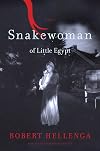
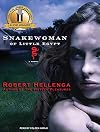
Snakewoman of Little Egypt
by Robert Hellenga
On This Page
Description
On the morning of his fortieth birthday, anthropology professor Jackson Jones contemplates his future: Should he go back to Africa, where he did his fieldwork, and live with the Mbuti, or should he marry and settle down in the Midwest, where he now teaches?On the morning of her release from prison, Sunny, who grew up in a snake-handling church in the Little Egypt region of Southern Illinois, rents a garage apartment from Jackson. She's been serving a five-year sentence for shooting, but not show more killing, her husband, the pastor of the Church of the Burning Bush with Signs Following after he forced her at gunpoint to put her arm in a box of rattlesnakes.Sunny and Jackson become lovers, but they're pulled in different directions. Sunny, drawn to science and eager to put her snake-handling past behind her, enrolls at the university. Jackson, however, takes a professional interest in the religious ecstasy exhibited by the snake handlers. Push comes to shove in a novel packed with wit, substance, and emotional depth. Snakewoman of Little Egypt delivers Robert Hellenga at the top of his form. show lessTags
Recommendations















Member Recommendations
NatalieSW Hellenga has a unique narrative voice as well as an uncanny ability to depict female characters with real feeling and persuasiveness.
Member Reviews
Right off-hand, I can't think of anything else I've read that's even remotely similar to Robert Hellenga's novel, SNAKEWOMAN OF LITTLE EGYPT. It's that unique. And it grabs you from page one and doesn't let go until, until ... Well, actually it hasn't let go yet, and I finished reading it a couple days ago.
Two main characters: Jackson Jones, an anthropologist at a fictional midwest university who has been to the heart of darkness and studied the little people of The Forest up close and personal; and Sunny (aka Willa Fern) Cochrane, just released after serving six years in a women's prison for shooting (but not killing) her husband, Earl, a controlling, chauvinistic, snake-handling charismatic Pentecostal-type preacher. Sunny too, in show more many ways, has visited that 'heart of darkness' right in her home country of 'Little Egypt' in southern Illinois. After a dozen or so years of marriage (at age sixteen) to Earl, she finds it stifling and not very much to her liking. Prison gives her a chance to reflect, as well as earning her GED. She lost her faith there too, "from reading the Bible."
"But it wasn't so bad, losing my faith. It was a relief, in fact, not having to worry about salvation all the time, not having to worry about every little thing you do because God was watching over your shoulder every second of every day ... I may have been in prison, but I felt like I was finally free."
So, at age 35, she renames herself Sunny, to reflect her new, free, positive attitude, and, thanks to the generosity and kindness of a late uncle, she enrolls at Thomas Ford U, and, soon, comes to live with professor Jackson Jones. So you've got this rather unorthodox professor and this snake-handling ex-con. Mismatch? You'd think so, but nope. Hellenga makes it all so believable and real that you just keep on turning the pages and wondering what in the hell is gonna happen next. And he packs his narrative full of absolutely fascinating esoteric stuff about pygmies in Africa, rattlesnakes in the rural south and midwest, and the Pentecostal characters of Earl's Church of the Burning Bush with Signs Following, who handle serpents, speak in toungues and play some of the best - and maybe LOUDest - gospel blues music ever heard in southern Illinois. (This interest in blues was dominant in Hellenga's wonderful third novel, BLUES LESSONS.)
The story starts in 1999, so there's a lot of stuff here too about the new millenium and all the fears and panic associated with that time. And there are is lots of Bible-thumping and quoting, as well as plenty of equal time given to the opposite views - Darwinism, evolution and anthropology. Handling snakes - and guns - can lead to bad things, of course, and bad things do indeed happen in SNAKEWOMAN. There is a murder trial too, maybe one of the best fictional trials I've read in some time. And there is a gentle denouement in the final two chapters, "Paris" and "Joie de Vivre," which are immensely satisfying, wise and, I think, appropriate.
Jackson and Sunny are great characters I didn't want to let go. (In fact, I'm kinda half hoping there will be a sequel some day.) I read the book in just a few sittings over a few days. I didn't want it to end, but, as I said, a great 'denouement.' I mean, this guy Hellenga can write with a capital W! Fortunately, there are three more Hellenga novels I have not yet read. But soon, I hope. I will recommend this book highly to all my serious reader friends. show less
Two main characters: Jackson Jones, an anthropologist at a fictional midwest university who has been to the heart of darkness and studied the little people of The Forest up close and personal; and Sunny (aka Willa Fern) Cochrane, just released after serving six years in a women's prison for shooting (but not killing) her husband, Earl, a controlling, chauvinistic, snake-handling charismatic Pentecostal-type preacher. Sunny too, in show more many ways, has visited that 'heart of darkness' right in her home country of 'Little Egypt' in southern Illinois. After a dozen or so years of marriage (at age sixteen) to Earl, she finds it stifling and not very much to her liking. Prison gives her a chance to reflect, as well as earning her GED. She lost her faith there too, "from reading the Bible."
"But it wasn't so bad, losing my faith. It was a relief, in fact, not having to worry about salvation all the time, not having to worry about every little thing you do because God was watching over your shoulder every second of every day ... I may have been in prison, but I felt like I was finally free."
So, at age 35, she renames herself Sunny, to reflect her new, free, positive attitude, and, thanks to the generosity and kindness of a late uncle, she enrolls at Thomas Ford U, and, soon, comes to live with professor Jackson Jones. So you've got this rather unorthodox professor and this snake-handling ex-con. Mismatch? You'd think so, but nope. Hellenga makes it all so believable and real that you just keep on turning the pages and wondering what in the hell is gonna happen next. And he packs his narrative full of absolutely fascinating esoteric stuff about pygmies in Africa, rattlesnakes in the rural south and midwest, and the Pentecostal characters of Earl's Church of the Burning Bush with Signs Following, who handle serpents, speak in toungues and play some of the best - and maybe LOUDest - gospel blues music ever heard in southern Illinois. (This interest in blues was dominant in Hellenga's wonderful third novel, BLUES LESSONS.)
The story starts in 1999, so there's a lot of stuff here too about the new millenium and all the fears and panic associated with that time. And there are is lots of Bible-thumping and quoting, as well as plenty of equal time given to the opposite views - Darwinism, evolution and anthropology. Handling snakes - and guns - can lead to bad things, of course, and bad things do indeed happen in SNAKEWOMAN. There is a murder trial too, maybe one of the best fictional trials I've read in some time. And there is a gentle denouement in the final two chapters, "Paris" and "Joie de Vivre," which are immensely satisfying, wise and, I think, appropriate.
Jackson and Sunny are great characters I didn't want to let go. (In fact, I'm kinda half hoping there will be a sequel some day.) I read the book in just a few sittings over a few days. I didn't want it to end, but, as I said, a great 'denouement.' I mean, this guy Hellenga can write with a capital W! Fortunately, there are three more Hellenga novels I have not yet read. But soon, I hope. I will recommend this book highly to all my serious reader friends. show less
Jackson is an anthropologist living on the fringes of society while rehashing the exploits of his past. When his oldest friend and mentor, Warren, dies, his dying request is for Jackson to keep an eye on his niece Willa Fern, who is about to be released from a correctional facility after the attempted murder of her husband. Willa Fern's motive for shooting her husband is far from simple. As the leader of the Church of the Burning Bush with Signs Following, Willa Fern's husband is not only a charismatic preacher but a snakehandler. While drunk, he forces her at gunpoint to put her hand into a box full of rattlesnakes. Once Willa Fern escapes, she shoots him. Now Willa Fern is getting out of prison and is headed to enact the legacy that show more her uncle Warren had planned for her. Headed to college to study herpetology, Willa is now calling herself Sunny and is living with Jackson in his remote cabin. As she rebuilds her life, Sunny is rediscovering herself and learning to trust again. When Jackson begins to develop more than platonic feelings for Sunny, he's surprised to find she's open to him, but within Sunny lives a willful resistance and an unconscious desire to destroy what she has built for herself. When Jackson successfully petitions Sunny's husband for divorce, the two men become unlikely allies. Jackson is interested in the church for anthropological reasons, and despite Sunny's warnings, he agrees to participate in some of the church's strange rituals. But Jackson never realizes that Sunny's husband has a plan of his own, and after a cataclysmic accident, Sunny must defend both Jackson and herself from the crazed preacher, wiping all her accomplishments and accolades down the drain with one split-second decision. Filled with intrigue and mystery, Snakewoman of Little Egypt is at once a look into two very different kinds of relationships, one dangerous and one sublime.
This was a very different kind of read for me. When I read the premise and back cover summary, I thought I knew what I had in store for me, but as I began to read, I realized that Hellenga was doing a lot more than just telling a simple story here. What I ultimately ended up with were a few stories all wrapped tightly like a rose bud, that when unfurled displayed a complex picture of differing people from differing worlds, and in most aspects, I think he succeeded. There were a few area though, where I felt the story lacked cohesion and direction.
First off, I have to say I had very mixed feelings about Sunny née Willa Fern. While I found her to be an interesting character, I didn't feel she embodied a thirty-five year old woman, for she was a little too wild and lacked a certian maturity that you would expect to see in a woman of that age. It perplexed me that she wanted to go to college. Not because I didn't understand her desire to learn, but that she seemed to want to live the co-ed life and didn't seem to care how her age set her apart from the other people she met at the school. Another thing I both liked and disliked about Sunny was her directness. At first it was refreshing and quirky for her to be saying the things that everyone was thinking but no one would say, but after awhile she became abrasive and confrontational; that was something that made me dislike her and feel a lot less attachment to her. It's funny to say, but after awhile, I came to understand that Sunny shared a lot of the traits of the snakes she was learning about in the herpetology lab. She could be cold and calculating at times, and also an opportunist with little regard for those around her.
One of the things I found weird about this book was the way Hellenga would go off on anthropological or scientific non sequiturs in the middle of his narrative. These sections did hold interest to me but they felt sort of shoehorned in at inopportune times. The story would be pressing forward and gradually gathering steam and all of a sudden there would be long passages about snakes and their multi-penises. It was very odd and somewhat disconcerting because it felt like Hellenga wasn't able to meld these separate parts of the story together very well. Imagine having a conversation that veers off into unexpected territory just when things get rolling along nicely. That's what it felt like while reading this book. The tangents that Hellenga seemed to be fond of did fit the story's mood but they made the narrative feel a little forced and less cohesive than it should have. This strangeness happened throughout the story and really detracted from the subtle moodiness and inventiveness of the plot. It felt like certian sections were lifted right from a textbook and as such there was a starched and inflexible feel to the tale because of them.
One section that really got my attention was the look at charismatic religion and worship services. I'm a very spiritual person but even I had no idea what being part of one of these churches might be like. Along with the snakehandleing, the parishioners also drank strychnine and eschewed medical help when these stunts went wrong. It was a frightening thing to read about because I know a lot of this was based on fact. It seems crazy to expect God to voice his favor or displeasure with someone by forcing their hand into a cage with rattlesnakes in it and seeing if they attack you. This kind of thought process is almost primitive to me, and as such it was interesting to see how alien it is from most of today's religions. It bordered on lunacy, really, and though Jackson found it interesting enough to want to study it in depth, the people he came in contact with were more than a little unbalanced in my opinion. The services were described as hypnotic and filled with hysteria, which is not something I've ever experienced as a Christian. I think I will probably keep it that way.
Though the book had a lot of interesting aspects, I think it was less successful than it could have been for me. All of its individual parts were good but the melding of these parts felt shoddily executed and less refined than I would have liked. Aside from the problems I had with the protagonist, the informational segments really chafed me in a way that I didn't expect. For these reasons, the book was a rather unsatisfying read for me. I think the one part that stood out was the exploration of a very unusual sect of Christianity and I would have liked to see more focus on that aspect of the plot. A very unusual read for sure, but certainly not what I had been expecting. show less
This was a very different kind of read for me. When I read the premise and back cover summary, I thought I knew what I had in store for me, but as I began to read, I realized that Hellenga was doing a lot more than just telling a simple story here. What I ultimately ended up with were a few stories all wrapped tightly like a rose bud, that when unfurled displayed a complex picture of differing people from differing worlds, and in most aspects, I think he succeeded. There were a few area though, where I felt the story lacked cohesion and direction.
First off, I have to say I had very mixed feelings about Sunny née Willa Fern. While I found her to be an interesting character, I didn't feel she embodied a thirty-five year old woman, for she was a little too wild and lacked a certian maturity that you would expect to see in a woman of that age. It perplexed me that she wanted to go to college. Not because I didn't understand her desire to learn, but that she seemed to want to live the co-ed life and didn't seem to care how her age set her apart from the other people she met at the school. Another thing I both liked and disliked about Sunny was her directness. At first it was refreshing and quirky for her to be saying the things that everyone was thinking but no one would say, but after awhile she became abrasive and confrontational; that was something that made me dislike her and feel a lot less attachment to her. It's funny to say, but after awhile, I came to understand that Sunny shared a lot of the traits of the snakes she was learning about in the herpetology lab. She could be cold and calculating at times, and also an opportunist with little regard for those around her.
One of the things I found weird about this book was the way Hellenga would go off on anthropological or scientific non sequiturs in the middle of his narrative. These sections did hold interest to me but they felt sort of shoehorned in at inopportune times. The story would be pressing forward and gradually gathering steam and all of a sudden there would be long passages about snakes and their multi-penises. It was very odd and somewhat disconcerting because it felt like Hellenga wasn't able to meld these separate parts of the story together very well. Imagine having a conversation that veers off into unexpected territory just when things get rolling along nicely. That's what it felt like while reading this book. The tangents that Hellenga seemed to be fond of did fit the story's mood but they made the narrative feel a little forced and less cohesive than it should have. This strangeness happened throughout the story and really detracted from the subtle moodiness and inventiveness of the plot. It felt like certian sections were lifted right from a textbook and as such there was a starched and inflexible feel to the tale because of them.
One section that really got my attention was the look at charismatic religion and worship services. I'm a very spiritual person but even I had no idea what being part of one of these churches might be like. Along with the snakehandleing, the parishioners also drank strychnine and eschewed medical help when these stunts went wrong. It was a frightening thing to read about because I know a lot of this was based on fact. It seems crazy to expect God to voice his favor or displeasure with someone by forcing their hand into a cage with rattlesnakes in it and seeing if they attack you. This kind of thought process is almost primitive to me, and as such it was interesting to see how alien it is from most of today's religions. It bordered on lunacy, really, and though Jackson found it interesting enough to want to study it in depth, the people he came in contact with were more than a little unbalanced in my opinion. The services were described as hypnotic and filled with hysteria, which is not something I've ever experienced as a Christian. I think I will probably keep it that way.
Though the book had a lot of interesting aspects, I think it was less successful than it could have been for me. All of its individual parts were good but the melding of these parts felt shoddily executed and less refined than I would have liked. Aside from the problems I had with the protagonist, the informational segments really chafed me in a way that I didn't expect. For these reasons, the book was a rather unsatisfying read for me. I think the one part that stood out was the exploration of a very unusual sect of Christianity and I would have liked to see more focus on that aspect of the plot. A very unusual read for sure, but certainly not what I had been expecting. show less
 This review was written for LibraryThing Early Reviewers.
This book was definitely better than average and held my interest start to finish. The characters were interesting, believable and mostly likable. It was a little difficult to understand Claire, who should have been jealous but ended up being a real friend to Sunny. Sunny herself was certainly a case of arrested developement, as she pretty much missed being a young adult having married so young to a very controling, abusive person. This is the first book I've read by this author; I may well look for more.
This review was written for LibraryThing Early Reviewers.Jackson Jones is an anthropologist, caught in the past and looking for a new direction in life. Sunny is a recently-released convicted felon, self-actualized and looking to start anew. When their lives connect, they begin to realize a comfortable, albeit unusual, connection and embark on a life together. As Jackson finds inspiration in Sunny's past life, Sunny embraces the academic rhythms of life as a college student, choices that continue to bring them together and move them apart. In their new lives, Jackson and Sunny ultimately discover their own personal truths.
The novel is split between the perspectives of Jackson and Sunny, but Sunny's voice is what drew me in and I could have read an entire novel from her perspective. As she show more emerges from prison, she is already a confident and opinionated woman with goals and a strong idea of who she is. However, through her anecdotes of an early teenage marriage and living within a rattlesnake worshiping church, we can see that she wasn't always this way. Jackson struggles with his own demons, and his tendency to push the limits with his fieldwork is a reoccurring problem.
Snakewoman of Little Egypt is full of delicious little nuggets of information and I was continually intrigued with facts about adaptive squirrel behavior, timpani playing, Mbuti social interactions and more. But the story of Sunny and Jackson, and their journeys, both together and personal, can stand on its own. I liked this book. show less
The novel is split between the perspectives of Jackson and Sunny, but Sunny's voice is what drew me in and I could have read an entire novel from her perspective. As she show more emerges from prison, she is already a confident and opinionated woman with goals and a strong idea of who she is. However, through her anecdotes of an early teenage marriage and living within a rattlesnake worshiping church, we can see that she wasn't always this way. Jackson struggles with his own demons, and his tendency to push the limits with his fieldwork is a reoccurring problem.
Snakewoman of Little Egypt is full of delicious little nuggets of information and I was continually intrigued with facts about adaptive squirrel behavior, timpani playing, Mbuti social interactions and more. But the story of Sunny and Jackson, and their journeys, both together and personal, can stand on its own. I liked this book. show less
This review was written for LibraryThing Early Reviewers.Robert Hellenga in his acknowledgments at the end of "Snakewoman of Little Egypt" points to real-life examples as told by Colin Turnbull and Dennis Covington as inspirations. He's the author and should know. Still, after finishing Hellenga's absorbing story, I kept returning to Melville's "Moby-Dick." The parallels and counterpoints are numerous.
Melville used incidents that occurred to the real-life whaleship Essex as part of his inspiration. Both Melville's and Hellenga's embark on journeys, quests. All of Hellenga's characters get to where their journeys go although the journeys vary--as did those of the sailors of the Pequod.
Melville's story-telling runs to much greater lengths than Hellenga's brief book. Still, substituting snakes show more and squirrels for whales and squids, the sciences (biology, herpetology, anthropology) play major roles and extended texts in Hellenga's book. The sea of knowledge replaces the literal ocean. Illinois stands in for New England.
Melville's Ahab is obsessive, driving the Pequod and all aboard. Hellenga's characters are at times obsessive and at other times as laid back as only faculty at small Midwestern colleges can be. Themes of simultaneous obsessiveness and (almost) passiveness, discovery of new knowledge and new experience versus reclaiming previous paradises, inhabit the characters. These previous paradises are often strange to us the reader: pygmy's in the eastern Congo, bucolic snakecharmers in southern Illinois (the Little Egypt of the title), even the Thoreau-esque cabin-in-the-woods charm of the characters residence in their small rural liberal arts college.
Melville's characters were rich and multi-faceted, as are Hellenga's. Life has its rewards, and we help make them. Joie de vivre matters. Going forward outweighs looking back. As the heroine (if that's the right word) hears on her mental radio:
I could have loved you better, I didn't mean to be unkind,
You know that was the last thing on my mind.
Despite the borrowing from Tom Paxton, Robert Hellenga remains a master of words, mood, characterization. show less
Melville used incidents that occurred to the real-life whaleship Essex as part of his inspiration. Both Melville's and Hellenga's embark on journeys, quests. All of Hellenga's characters get to where their journeys go although the journeys vary--as did those of the sailors of the Pequod.
Melville's story-telling runs to much greater lengths than Hellenga's brief book. Still, substituting snakes show more and squirrels for whales and squids, the sciences (biology, herpetology, anthropology) play major roles and extended texts in Hellenga's book. The sea of knowledge replaces the literal ocean. Illinois stands in for New England.
Melville's Ahab is obsessive, driving the Pequod and all aboard. Hellenga's characters are at times obsessive and at other times as laid back as only faculty at small Midwestern colleges can be. Themes of simultaneous obsessiveness and (almost) passiveness, discovery of new knowledge and new experience versus reclaiming previous paradises, inhabit the characters. These previous paradises are often strange to us the reader: pygmy's in the eastern Congo, bucolic snakecharmers in southern Illinois (the Little Egypt of the title), even the Thoreau-esque cabin-in-the-woods charm of the characters residence in their small rural liberal arts college.
Melville's characters were rich and multi-faceted, as are Hellenga's. Life has its rewards, and we help make them. Joie de vivre matters. Going forward outweighs looking back. As the heroine (if that's the right word) hears on her mental radio:
I could have loved you better, I didn't mean to be unkind,
You know that was the last thing on my mind.
Despite the borrowing from Tom Paxton, Robert Hellenga remains a master of words, mood, characterization. show less
This review was written for LibraryThing Early Reviewers.Hellenga has a unique narrative voice as well as an uncanny ability to depict female characters with real feeling and persuasiveness. Having read "Sixteen Pleasures" I expected engaging writing with depth from the author and I was not disappointed. I was fortunate to hear the author read from this book at a small public event. He chose two of the first-person "Sunny" chapters to read; it was transfixing. I went right out and got the book.
"Snakewoman of Little Egypt," is an intelligent, witty, engaging and oddly twisted tale of love, adventure, education and life's defining moments. It's a book written with no apologies for use of vocabulary and substance, and I love it for that alone, if nothing else!
Let me depart for a moment just to comment that so much of today's popular literature is "dumbed down" and lacking the intellectual element we need to reach for in our continuing walk toward self-improvement. So often authors tell a great tale, but either lack sophistication themselves, or think they need to leave out intellectual "meat" to keep their fan base. I not only enjoyed this story and the substance of "Snakewoman...," but I actually learned something in the show more bargain. All that being a great value to me! I treasure the book, the experience and the education.
Flawless in its writing and character development, this book brings us immediately into the singular lives of its main characters: Jackson, an anthropologist with Lyme Disease; and Willa Fern/Sunny, a convict who shot her snakehandling husband. There are anthropologists, pentacostals, professors, killers, students and spritualists, African tribes and adventures, all in this fantastic mix of fun and amazing story!
I'm not saying I've finished it, because I'm just pacing myself slowing through the last 50 pages. Does it really have to end?? This is one of those books that you wish would go on and on. All I can say is that if you've ever wondered about what happens inside those deep country churches with "signs following," you better run fast and find this book! I loved it.
Highly recommend to everyone!! There's something here for all of you....
PS: I have finished the book, and it ended just as it should have, naturally. Hopefully, we'll hear more from Professor Hellenga in the near future. show less
Let me depart for a moment just to comment that so much of today's popular literature is "dumbed down" and lacking the intellectual element we need to reach for in our continuing walk toward self-improvement. So often authors tell a great tale, but either lack sophistication themselves, or think they need to leave out intellectual "meat" to keep their fan base. I not only enjoyed this story and the substance of "Snakewoman...," but I actually learned something in the show more bargain. All that being a great value to me! I treasure the book, the experience and the education.
Flawless in its writing and character development, this book brings us immediately into the singular lives of its main characters: Jackson, an anthropologist with Lyme Disease; and Willa Fern/Sunny, a convict who shot her snakehandling husband. There are anthropologists, pentacostals, professors, killers, students and spritualists, African tribes and adventures, all in this fantastic mix of fun and amazing story!
I'm not saying I've finished it, because I'm just pacing myself slowing through the last 50 pages. Does it really have to end?? This is one of those books that you wish would go on and on. All I can say is that if you've ever wondered about what happens inside those deep country churches with "signs following," you better run fast and find this book! I loved it.
Highly recommend to everyone!! There's something here for all of you....
PS: I have finished the book, and it ended just as it should have, naturally. Hopefully, we'll hear more from Professor Hellenga in the near future. show less
This review was written for LibraryThing Early Reviewers.Members
- Recently Added By
Author Information

9+ Works 2,544 Members
Robert Hellenga received a Bachelor's degree in English from the University of Michigan in 1963 and a Ph.D. in English from Princeton University in 1969. After graduation, he taught English literature at Knox College. He has written several novels including The Sixteen Pleasures, The Fall of a Sparrow, Philosophy Made Simple, and Snakewoman of show more Little Egypt. Hellenga was one of 12 writers selected to participate in the first Illinois Arts Council Statewide Reading Series in 1991. Some of his other awards include the 1988 PEN Syndicated Fiction award, the National Endowment for the Arts Artists Fellowship in 1989, the Illinois Arts Council Artist's grant in 1990, and the Society of Midland Authors 1995 Award for Fiction. (Bowker Author Biography) show less
Some Editions
Awards and Honors
Common Knowledge
- Canonical title
- Snakewoman of Little Egypt
- Original publication date
- 2010
- People/Characters
- Jackson Carter Jones; Claude Michaut; Sibaku; Mbuti (pygmies); Claire Reynolds; Willa Fern "Sunny" Cochrane (show all 7); Earl Cochrane
- Important places
- Thomas Ford University, Illinois, USA; Little Egypt (area), Illinois, USA (area); Ituri Rainforest, Democratic Republic of the Congo; Naqada, Illinois, USA; Church of the Burning Bush with Signs Following
- Dedication
- I dedicate this book to Virginia, Rachel, Heather, Caitrine, and Maya.
- First words
- On his fortieth birthday—August 6, 1999—Jackson Carter Jones, associate professor of anthropology at Thomas Ford University in west central Illinois, ate a poached egg for breakfast and then sat outside on the deck.
- Quotations
- It wasn't the first time I'd been called a whore, but it was the first time I'd been called a herpetologist. (p. 178)
Classifications
Statistics
- Members
- 191
- Popularity
- 171,313
- Reviews
- 57
- Rating
- (3.37)
- Languages
- English
- Media
- Paper, Audiobook, Ebook
- ISBNs
- 10
- ASINs
- 5