On This Page
Description
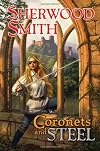
California girl Kim Murray is unsatisfied with grad school and restless in life, studying ballet and fencing because they remind her of older, more romantic times. Her secretive, aristocratic grandmother, who speaks only French and refuses to share stories about their mysterious family, inspires Kim to seek her roots in Europe, where she is swept up in an adventure of fantastic deceptions and passionate intrigue.Tags
Recommendations















Member Recommendations

Member Reviews
Aurelia Kim Murray hunts for her grandmother's past, hoping to find some clue to breaking her grandmother's depression. While searching Europe for clues, she feels like she's being watched. A strange encounter at the ballet proves to her that in fact, she is. And thus Kim gets swept up into an adventure of mistaken identity, supernatural happenings, and all the balls and swashbuckling her romantic heart could desire.
Although I liked the twists on the Ruritania tale, this story didn't do it for me. First off, it was hard to shake the feeling that Kim was constantly missing or forgetting to follow up on obvious clues.She took an absurdly long time to investigate the monk who married her grandmother, even though many of plots hinge on her show more mother's legitimacy. She continued to trust her Aunt Sisi long after I would have (from their very first meeting Sisi proves herself a snake), and long after everyone very obviously tries to warn her about her aunt's motives. She casually asks questions about ghosts and vampires, but never digs any deeper, even though everyone is afraid of vampires and ghosts are constantly giving her clues. In the end, it requires two chapters of Nat and Alex infodumping every single thing to Kim before she gets what's been going on. Secondly, Kim's romantic life frustrated me. I have no idea why Alex OR Tony is attractive to her, since neither of them tell her anything personal about themselves, and they kidnap, threaten, withhold information, etc. I particularly hated the scene where Tony is in the midst of kidnapping Kim (AGAIN) and Kim is like, oooh, his rock hard body and his kisses are so sexy! No. Plus, I really disliked Kim deciding to take Alex's choice out of his hands and fleeing Dobrenica. If she actually cared about and respected him, she would have talked it out. I am sick to death of characters making high-handed decisions for their love interest and calling it an honorable sacrifice. She is otherwise a fairly sensible girl, so in addition to being annoyingly silly her stubborn attraction to these two secretive men just seemed weird. And third of all, Dobrenica seems like a weirdly unproblematized version of Ruritania. The lower classes worship and respect the worthies in the upper classes, have all sorts of superstitions, basic technology doesn't work there, etc. I expected more from an author who usually deconstructs so many fantasy tropes. show less
Although I liked the twists on the Ruritania tale, this story didn't do it for me. First off, it was hard to shake the feeling that Kim was constantly missing or forgetting to follow up on obvious clues.
This may be my favorite book of the year so far. It's basically a moderate-feminist update of "Prisoner of Zenda." If you like "Princess Bride" (or the aforementioned "Zenda" of course) then this is something you need to read. Imagine if "Princess Bride" had been narrated by Wesley, if Wesley happened to be a woman named Kim. Kim is just as improbable as Wesley — she's a grad student, a near-Olympic level fencer, ballet dancer, speaks three languages and picks up a fourth on the run, and can see ghosts. She is technically a Mary Sue, but I didn't give a damn since the book was so much fun. She's not perfect though. She makes a lot of snap judgments, trusts people she shouldn't, and doesn't ask some important questions when she should. show more The book is feminist in the sense that most of the female characters are not passive in the slightest (with one notable exception that I think was intended to underline the point). There are some issues with the way the MALE characters behave toward them, however, and the way Kim just accepted it mostly. Anyway I had so much fun reading this that it's an unqualified RECOMMEND. show less
Coronets and Steel has a great hook—a 21st century genderswapped remix of The Prisoner of Zenda, with Kim Murray as the young American student who, while spending the summer in Europe, discovers that she bears an eerie resemblance to an aristocrat from a small eastern European country. A new, feminist spin on a Ruritanian fantasy is something that I'm primed to enjoy, but I found this book very disappointing. I'm not sure that Smith knew what genre she was writing in—romance, fantasy, action-adventure, what—and so the pacing and the focus wobble all over the place. The prose is in need of a ruthless editor, as it's full of exposition dumps in lieu of plot progress, implausible dialogue and phrases such as "liminal border", surely show more commissioned by the Department of Redundancy Department.
The main character, Kim, is also the victim of a lot of telling-not-showing. We're told a lot about how amazing she is—she's a ballet dancer and a fencer who was good enough to make the Olympics with thigh length blonde hair; she can not only switch back and forth between English, idiomatic German and French with a perfect Parisian accent, but she can pick up an obscure Balkan language in a matter of days because her grandmother 'must have' spoken it to her when she was an infant and it's all coming back to her now. Her inner monologue often reads like a Wikipedia entry, full of knowledgeable asides and quotes about architecture, literature and history which were implausible for me and I'm a grad student in history—I didn't know whether to roll my eyes or snicker when, involved in a duel with a thug who's trying to at least seriously maim her, Kim pauses to quote from Cyrano de Bergerac. Despite all these supposed gifts, Kim is phenomenally stupid when the plot demands it—so for instance, part of the plot centres on whether or not a secret royal marriage took place several decades before, and Kim spends a lot of time trying to get into the national archives to verify if that happened. Yes. Because if I were a member of a royal family trying to hide the evidence of a marriage which would disrupt the succession, I know where I'd put it.
Despite the story being set in the present day, most of the people in this fictional Balkans country don't have electricity, many of them barely even have running water, and most still go around dressed in their traditional costume and are highly religious (either Christian or Jewish). The 'good' people we meet are mostly deferential monarchists, and none of this is ever problematised or explained beyond a vague 'well, there are ghosts and vampires and protective ecumenical saints and such, oh and also you have the Second Sight, something something, liminal.' I couldn't figure out any reason for much of the novel's insistence on electricity, phones and so on not working beyond it accommodating some of the plot—why not just email someone, or call them, in order to figure out several things? Can't, magic! But when the royal family throws a costume ball, then the electricity seems to work just fine. I honestly didn't get why Smith didn't just set the whole book in the 50s or 60s—pushing all the action back a couple of decades would have removed some of the plot holes.
All this without mentioning either the super weird and problematic "romance" subplots, or the fact that Kim also—apparently in a completely non-ironic manner—makes the finger-gun gesture at people when talking to them? I didn't think she was a used car salesman from Topeka.
Disappointing and frustrating. show less
The main character, Kim, is also the victim of a lot of telling-not-showing. We're told a lot about how amazing she is—she's a ballet dancer and a fencer who was good enough to make the Olympics with thigh length blonde hair; she can not only switch back and forth between English, idiomatic German and French with a perfect Parisian accent, but she can pick up an obscure Balkan language in a matter of days because her grandmother 'must have' spoken it to her when she was an infant and it's all coming back to her now. Her inner monologue often reads like a Wikipedia entry, full of knowledgeable asides and quotes about architecture, literature and history which were implausible for me and I'm a grad student in history—I didn't know whether to roll my eyes or snicker when, involved in a duel with a thug who's trying to at least seriously maim her, Kim pauses to quote from Cyrano de Bergerac. Despite all these supposed gifts, Kim is phenomenally stupid when the plot demands it—so for instance, part of the plot centres on whether or not a secret royal marriage took place several decades before, and Kim spends a lot of time trying to get into the national archives to verify if that happened. Yes. Because if I were a member of a royal family trying to hide the evidence of a marriage which would disrupt the succession, I know where I'd put it.
Despite the story being set in the present day, most of the people in this fictional Balkans country don't have electricity, many of them barely even have running water, and most still go around dressed in their traditional costume and are highly religious (either Christian or Jewish). The 'good' people we meet are mostly deferential monarchists, and none of this is ever problematised or explained beyond a vague 'well, there are ghosts and vampires and protective ecumenical saints and such, oh and also you have the Second Sight, something something, liminal.' I couldn't figure out any reason for much of the novel's insistence on electricity, phones and so on not working beyond it accommodating some of the plot—why not just email someone, or call them, in order to figure out several things? Can't, magic! But when the royal family throws a costume ball, then the electricity seems to work just fine. I honestly didn't get why Smith didn't just set the whole book in the 50s or 60s—pushing all the action back a couple of decades would have removed some of the plot holes.
All this without mentioning either the super weird and problematic "romance" subplots, or the fact that Kim also—apparently in a completely non-ironic manner—makes the finger-gun gesture at people when talking to them? I didn't think she was a used car salesman from Topeka.
Disappointing and frustrating. show less
{first in Dobrenica trilogy; fantasy, Zenda, Ruritanian romance, adventure}(2010)
I like Smith’s Sartorias-deles series (starting with the Inda tetralogy) and was recommended this series. I recently re-read Prisoner of Zenda 💔and I really enjoyed Smith’s Crown & Court. I was in the mood for a fantasy with a (clean) romance so this is my first pick for the year.
Aurelia (named after her grandmother) Kim Murray - known as Kim - from Los Angeles has made a trip to Europe on a tight budget to try to solve the family mystery of where her mum and grandmother originally came from. While there she is kidnapped, having been mistaken for a missing duchess (also named Aurelia, though she prefers to be called Ruli) and consequently finds show more answers to her questions - which just lead to more questions. So she travels to the tiny, oft-overlooked kingdom of Dobrenica (where the missing Ruli hails from) to look for more answers and inadvertently becomes embroiled in their politics which leads to more adventures.
This is a modern day Ruritanian romance, but with a touch of fantasy, very much based on Prisoner of Zenda which book Smith mentions several times in her story, down to the nickname of the missing royalty: Ruli instead of Rudy. There were a couple of spots where I thought Kim jumped to a conclusion too fast, or maybe we just weren’t on the same wavelength, but that was a passing niggle.
While it may not be quite as rollicking as Prisoner of Zenda it still has plenty of swash and buckle, especially for a contemporary novel; Kim is an accomplished dancer and fencer (she has had to abandon her university team's fencing competition for her trip). The ending felt a bit abrupt but it is the first in trilogy and - because I had read the synopsises of the next two books - I was anticipating the twist.
So, if you haven’t read the synopses for the other books yet, then don’t.
I am looking forward to reading the sequels. (I just hope there's no Rupert of Hentzau plot waiting for me, though Tony (the character based on Rupert) is still lurking in the wings.)
(January 2024)
4.5 stars show less
I like Smith’s Sartorias-deles series (starting with the Inda tetralogy) and was recommended this series. I recently re-read Prisoner of Zenda 💔and I really enjoyed Smith’s Crown & Court. I was in the mood for a fantasy with a (clean) romance so this is my first pick for the year.
Aurelia (named after her grandmother) Kim Murray - known as Kim - from Los Angeles has made a trip to Europe on a tight budget to try to solve the family mystery of where her mum and grandmother originally came from. While there she is kidnapped, having been mistaken for a missing duchess (also named Aurelia, though she prefers to be called Ruli) and consequently finds show more answers to her questions - which just lead to more questions. So she travels to the tiny, oft-overlooked kingdom of Dobrenica (where the missing Ruli hails from) to look for more answers and inadvertently becomes embroiled in their politics which leads to more adventures.
This is a modern day Ruritanian romance, but with a touch of fantasy, very much based on Prisoner of Zenda which book Smith mentions several times in her story, down to the nickname of the missing royalty: Ruli instead of Rudy. There were a couple of spots where I thought Kim jumped to a conclusion too fast, or maybe we just weren’t on the same wavelength, but that was a passing niggle.
While it may not be quite as rollicking as Prisoner of Zenda it still has plenty of swash and buckle, especially for a contemporary novel; Kim is an accomplished dancer and fencer (she has had to abandon her university team's fencing competition for her trip). The ending felt a bit abrupt but it is the first in trilogy and - because I had read the synopsises of the next two books - I was anticipating the twist.
So, if you haven’t read the synopses for the other books yet, then don’t.
I am looking forward to reading the sequels. (I just hope there's no Rupert of Hentzau plot waiting for me, though Tony (the character based on Rupert) is still lurking in the wings.)
(January 2024)
4.5 stars show less
Coronets and Steel was a tremendous pleasure. It’s a book to be read in one nail-biting gulp—which makes it even more remarkable that it was able to have me and hold me even though I couldn’t give it concentrated reading time. It’s a story that asks to be read in one or two sittings, and yet it can withstand the sort of reading I had to give it—going away for long periods of time and then returning.
It’s a Ruritanian romance set largely in a fictional Eastern European country. American Kim Murray, in Europe searching for answers about her grandmother’s mysterious past, discovers that she’s a dead ringer for the fiancée of a prince of a small Eastern European country—discovers it when the prince himself appears and show more kidnaps her. (Why? Well, you’ll have to read the story and find out!)
Adventure and romance ensue, and the romance is lovely, and the adventure is adventuresome, but what I liked especially were the details about the fictional country of Dobrenica and its history: the “jellygraph” (printing using gelatin as the reproductive medium) that children used to print comic-book versions of stories about beloved characters from folktales during the years of Soviet sway), the relationship of the people to those folktales (or are they? Ghosts and magical creatures hover around the edges of the story), the complicated dynastic politics—all of these make the story heart-racingly real.
The end of the story doesn’t resolve the romantic dilemma, but a sequel is coming. I can’t wait. show less
It’s a Ruritanian romance set largely in a fictional Eastern European country. American Kim Murray, in Europe searching for answers about her grandmother’s mysterious past, discovers that she’s a dead ringer for the fiancée of a prince of a small Eastern European country—discovers it when the prince himself appears and show more kidnaps her. (Why? Well, you’ll have to read the story and find out!)
Adventure and romance ensue, and the romance is lovely, and the adventure is adventuresome, but what I liked especially were the details about the fictional country of Dobrenica and its history: the “jellygraph” (printing using gelatin as the reproductive medium) that children used to print comic-book versions of stories about beloved characters from folktales during the years of Soviet sway), the relationship of the people to those folktales (or are they? Ghosts and magical creatures hover around the edges of the story), the complicated dynastic politics—all of these make the story heart-racingly real.
The end of the story doesn’t resolve the romantic dilemma, but a sequel is coming. I can’t wait. show less
Coronets and Steel was a tremendous pleasure. It’s a book to be read in one nail-biting gulp—which makes it even more remarkable that it was able to have me and hold me even though I couldn’t give it concentrated reading time. It’s a story that asks to be read in one or two sittings, and yet it can withstand the sort of reading I had to give it—going away for long periods of time and then returning.
It’s a Ruritanian romance set largely in a fictional Eastern European country. American Kim Murray, in Europe searching for answers about her grandmother’s mysterious past, discovers that she’s a dead ringer for the fiancée of a prince of a small Eastern European country—discovers it when the prince himself appears and show more kidnaps her. (Why? Well, you’ll have to read the story and find out!)
Adventure and romance ensue, and the romance is lovely, and the adventure is adventuresome, but what I liked especially were the details about the fictional country of Dobrenica and its history: the “jellygraph” (printing using gelatin as the reproductive medium) that children used to print comic-book versions of stories about beloved characters from folktales during the years of Soviet sway), the relationship of the people to those folktales (or are they? Ghosts and magical creatures hover around the edges of the story), the complicated dynastic politics—all of these make the story heart-racingly real.
The end of the story doesn’t resolve the romantic dilemma, but a sequel is coming. I can’t wait. show less
It’s a Ruritanian romance set largely in a fictional Eastern European country. American Kim Murray, in Europe searching for answers about her grandmother’s mysterious past, discovers that she’s a dead ringer for the fiancée of a prince of a small Eastern European country—discovers it when the prince himself appears and show more kidnaps her. (Why? Well, you’ll have to read the story and find out!)
Adventure and romance ensue, and the romance is lovely, and the adventure is adventuresome, but what I liked especially were the details about the fictional country of Dobrenica and its history: the “jellygraph” (printing using gelatin as the reproductive medium) that children used to print comic-book versions of stories about beloved characters from folktales during the years of Soviet sway), the relationship of the people to those folktales (or are they? Ghosts and magical creatures hover around the edges of the story), the complicated dynastic politics—all of these make the story heart-racingly real.
The end of the story doesn’t resolve the romantic dilemma, but a sequel is coming. I can’t wait. show less
When Kim travels to Vienna to research her family history, she doesn't expect to be drugged and kidnapped by a good-looking, mysterious man she met at the ballet and who acts like he knows her. After escaping her captors, Kim finds out that her grandmother was once the Crown Princess of Dobrenica, a tiny country in Eastern Europe, before she abandoned her duties to marry the man she loved.
Kim travels to Dobrenica and meets her long-lost relatives, including her haughty Aunt Sisi, the duchess, and her rakish cousin Tony, the count. Kim agrees to impersonate her lookalike cousin Ruli, who has been missing for several months. However, she finds herself falling in love with Alec, Ruli's fiance and the man who abducted Kim, while searching show more for Ruli and untangling the political intrigues her relatives have set in motion to seize control of the country.
This is a Ruritanian romance, similar to The Prisoner of Zenda, but with magic and ghosts. Kim, however, is no damsel in distress, and she rescues herself instead of waiting around for a man to save her. show less
Kim travels to Dobrenica and meets her long-lost relatives, including her haughty Aunt Sisi, the duchess, and her rakish cousin Tony, the count. Kim agrees to impersonate her lookalike cousin Ruli, who has been missing for several months. However, she finds herself falling in love with Alec, Ruli's fiance and the man who abducted Kim, while searching show more for Ruli and untangling the political intrigues her relatives have set in motion to seize control of the country.
This is a Ruritanian romance, similar to The Prisoner of Zenda, but with magic and ghosts. Kim, however, is no damsel in distress, and she rescues herself instead of waiting around for a man to save her. show less
Members
- Recently Added By
Author Information

113+ Works 10,651 Members
Sherwood Smith writes fantasy and science fiction for young adult and adults. She received a master's degree in history and worked for twenty years as a teacher. Her first book was Wren to the Rescue and she has written more than thirty books since then including the Exordium series with Dave Trowbridge and two of the books in the Solar Queen show more series with Andre Norton. (Bowker Author Biography) show less
All Editions
Series

Belongs to Publisher Series
DAW Book Collectors (1521)
Work Relationships
Was inspired by
Common Knowledge
- Original publication date
- 2010
- People/Characters
- Aurelia Kim Murray; Marius Alexander Ysvorod
Classifications
Statistics
- Members
- 276
- Popularity
- 116,936
- Reviews
- 17
- Rating
- (3.63)
- Languages
- English
- Media
- Paper, Ebook
- ISBNs
- 5
- ASINs
- 3