On This Page
Description
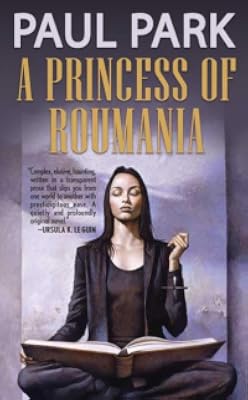
This is a truly magical tale, full of strangeness, terrors and wonders. Many girls daydream that they are really a princess adopted by commoners. In the case of teenager Miranda Popescu, this is literally true. Because she is at the fulcrum of a deadly political battle between conjurers in an alternate world where "Roumania" is a leading European power, Miranda was hidden by her aunt in our world, where she was adopted and raised in a quiet Massachusetts college town. The narrative is split show more between our world and the people in Roumania working to protect or to capture Miranda: her Aunt Aegypta Schenck versus the mad Baroness Ceaucescu in Bucharest, and the sinister alchemist, the Elector of Ratisbon, who holds her true mother prisoner in Germany. This is the story of how Miranda -- with her two best friends, Peter and Andromeda -- is brought back to her home reality. Each of them is changed in the process and all will have much to learn about their true identities and the strange world they find themselves in. This story is a triumph of contemporary fantasy. show lessTags
Recommendations


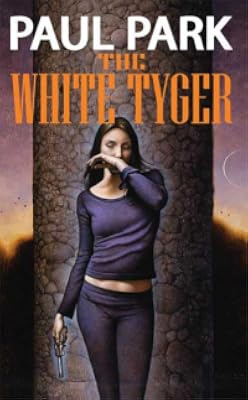
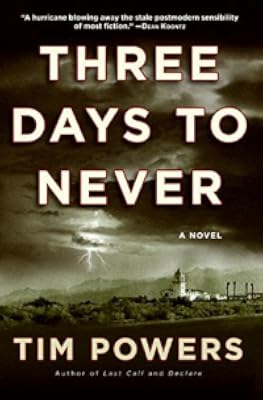

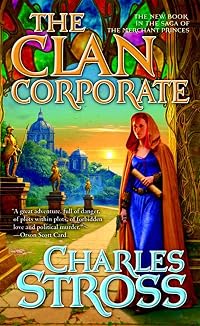
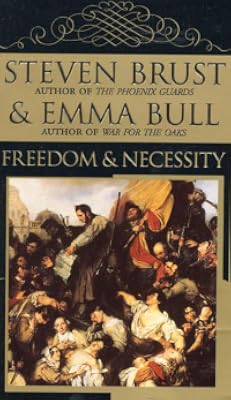



Member Recommendations

Member Reviews
A Princess of Roumania is the opening of a multi-volume fantasy work by Paul Park. It is an ambitious portal fantasy, with a protagonist who is a teenage girl--in our world, anyway. It postulates a reality of which ours is a disposable alternative. It's an interesting match for my recent viewing of the (commendable) first two seasons of the Amazon television series based on PKD's Man in the High Castle. In the world where Roumania and Germany struggle for supremacy in Europe, sorcery is possible (though illicit) and mastodons roam a barely-settled North America. The means of transition from one world to the other is a book, with considerable metafictional implication (again, compare The Man in the High Castle).
The heroine Miranda is show more named after the author's daughter, and the New England town where the story starts is a match for one in which the author has lived. I was alerted to these para-autobiographical elements by John Crowley's essay on Park's fantasy (included in the book Totalitopia), and it was this essay that led me to read the book in the first place. Miranda is reasonably sympathetic, but the strongest characterization in the book is for the villain (?) Baroness Ceaucescu. The omniscient narrator jumps around quite a lot, and the two main viewpoint threads are those for Miranda and the Baroness.
I liked this book very much, and while it would probably satisfy the YA fantasy market these days, it seemed like mature fare to me. It is, as I mentioned at the outset, only a beginning. Despite its considerable length, there is little resolution of the plot, although there are some deaths of principal characters and other crucial events. I expect to continue reading this work, borrowing the subsequent volumes from the public library in due course, while I hope to pass on my copy of the first one to a sympathetic reader. show less
The heroine Miranda is show more named after the author's daughter, and the New England town where the story starts is a match for one in which the author has lived. I was alerted to these para-autobiographical elements by John Crowley's essay on Park's fantasy (included in the book Totalitopia), and it was this essay that led me to read the book in the first place. Miranda is reasonably sympathetic, but the strongest characterization in the book is for the villain (?) Baroness Ceaucescu. The omniscient narrator jumps around quite a lot, and the two main viewpoint threads are those for Miranda and the Baroness.
I liked this book very much, and while it would probably satisfy the YA fantasy market these days, it seemed like mature fare to me. It is, as I mentioned at the outset, only a beginning. Despite its considerable length, there is little resolution of the plot, although there are some deaths of principal characters and other crucial events. I expect to continue reading this work, borrowing the subsequent volumes from the public library in due course, while I hope to pass on my copy of the first one to a sympathetic reader. show less
I found quite a bit to like about this book. Park handles the alternating universes very well. He doesn't tell us all about how each bit of magic works; rather, he lets us figure it out along with the characters. Miranda, the fifteen-year-old adoptee living in Massachusetts, discovers nthat she is really a princess of Roumania in an alternate universe. Her aunt, also a princess and also a sorceress, has stashed her in our world for safekeeping, but events drive her toward reclaiming her birthright.
Park does a nice job of blending traditional mythological elements with real-world teenage concerns. Miranda's views of friendship grow, and motivate a crucial choice she makes. She is a well drawn character, as are several others. We spend show more more time in the Baroness's point of view than I would prefer; Park seems to want to depict her as a sympathetic sociopath. It will be interesting to see how he develops her character, or if she is basically static. Secondary bad guys are appropriately creepy, while Miranda's friends, transformed by their move into an alternate world, are nicely conflicted and three-dimensional.
There are stretches in the midddle of the book, especially in the "real" (not our) world, that drag a bit. Other than that, Park's style is excellent and well suited to the characters and the story. show less
Park does a nice job of blending traditional mythological elements with real-world teenage concerns. Miranda's views of friendship grow, and motivate a crucial choice she makes. She is a well drawn character, as are several others. We spend show more more time in the Baroness's point of view than I would prefer; Park seems to want to depict her as a sympathetic sociopath. It will be interesting to see how he develops her character, or if she is basically static. Secondary bad guys are appropriately creepy, while Miranda's friends, transformed by their move into an alternate world, are nicely conflicted and three-dimensional.
There are stretches in the midddle of the book, especially in the "real" (not our) world, that drag a bit. Other than that, Park's style is excellent and well suited to the characters and the story. show less
Paul Park has written an intriguing and very singular YA novel with A Princess of Roumania. In a lot of respects, it's quite difficult to say what even makes it Young Adult; Park has a gift of approaching genre tropes from an oblique angle that makes them feel, if not fresh, entirely unfamiliar.
Fifteen year old Miranda was adopted from Romania as a child, little does she know, however, of a secret connection to a different world - Roumania - with a radically different history, and one in which she may play a pivotal role.
This all sounds like very standard stuff, but in Park's hands, it's most definitely not. Roumania itself is a alluring parallel world with hints of steampunk, but it's so much more mature and ambiguous than these show more usual neo-Victorian secret histories.
His prose is clean, almost curt at times, but with an immediacy and facility that I felt belied the ostensible simplicity. Park doesn't bathe the reader in streams of description, but incorporating the former deftly into the regular narrative works just as effectively. I found it interesting how much flavour he was able to inject without resorting to a caravanserai of unusual adjectives.
But the over-riding pleasure of A Princess of Roumania is its characterisation. Park resists the omnipresent temptation of YA literature to over-emote and lay bare his character's thoughts. He recognises that teens - and adults - don't always know why the feel the way they do, let alone possess the ability to explain it. Miranda herself accurately captures the mixture of poise and anxiety that can characterise late-teenage girls, and one of the ostensible "villains" of the novel - the Baroness Ceaucescu - is actually one of the most sympathetic and intriguing. But all of the characters are three-dimensional, believable and very, very interesting. Their continued development is something to look forward to with the rest of the series.
And don't be mistaken: A Princess of Roumania is very much part of a series. The novel's conclusion is unlikely to satisfy anyone looking to stop there, and this could lead to frustration for some; it is, after all, about 450 pages long as it stands.
But I'm unsure what kind of curmudgeon wouldn't welcome more of Park's fascinating world - which I feel we're only getting the first glimpse of in A Princess of Roumania. Such mature, unique, and interesting writing is more than worthy of sustained attention - both in and out of the YA field. show less
Fifteen year old Miranda was adopted from Romania as a child, little does she know, however, of a secret connection to a different world - Roumania - with a radically different history, and one in which she may play a pivotal role.
This all sounds like very standard stuff, but in Park's hands, it's most definitely not. Roumania itself is a alluring parallel world with hints of steampunk, but it's so much more mature and ambiguous than these show more usual neo-Victorian secret histories.
His prose is clean, almost curt at times, but with an immediacy and facility that I felt belied the ostensible simplicity. Park doesn't bathe the reader in streams of description, but incorporating the former deftly into the regular narrative works just as effectively. I found it interesting how much flavour he was able to inject without resorting to a caravanserai of unusual adjectives.
But the over-riding pleasure of A Princess of Roumania is its characterisation. Park resists the omnipresent temptation of YA literature to over-emote and lay bare his character's thoughts. He recognises that teens - and adults - don't always know why the feel the way they do, let alone possess the ability to explain it. Miranda herself accurately captures the mixture of poise and anxiety that can characterise late-teenage girls, and one of the ostensible "villains" of the novel - the Baroness Ceaucescu - is actually one of the most sympathetic and intriguing. But all of the characters are three-dimensional, believable and very, very interesting. Their continued development is something to look forward to with the rest of the series.
And don't be mistaken: A Princess of Roumania is very much part of a series. The novel's conclusion is unlikely to satisfy anyone looking to stop there, and this could lead to frustration for some; it is, after all, about 450 pages long as it stands.
But I'm unsure what kind of curmudgeon wouldn't welcome more of Park's fascinating world - which I feel we're only getting the first glimpse of in A Princess of Roumania. Such mature, unique, and interesting writing is more than worthy of sustained attention - both in and out of the YA field. show less
Don't be fooled by the title. This isn't about vampires, and it isn't about princesses, at least not in the fairy tale sense.[b:A Princess of Roumania|511612|A Princess of Roumania|Paul Park|http://photo.goodreads.com/books/1175396782s/511612.jpg|1524141] was a fascinating, wonderful read. It reminds me a bit of [a:Diana Wynne Jones|4260|Diana Wynne Jones|http://photo.goodreads.com/authors/1193516584p2/4260.jpg], but it doesn't have the same sense of rushing towards an ending where everything will almost-but-not-quite make sense, that you have to reread three or four times. (DWJ fans will know what I'm talking about.) It starts off seeming to be a standard cross-world fantasy, but the world that Miranda (the protagonist) crosses into show more slowly reveals itself, becomes more shocking, more wondrous, more different.One thing that took me by surprise was realizing that this very adult-feeling book was about a young girl who menstruates for the first time during the course of the book - on-camera, even. I really appreciate that. The way Miranda is described rings a lot truer to me than most descriptions of teenagers, perhaps because she takes herself just as seriously as I take myself. This isn't about an adult looking back at teenagerhood and moralizing, it's about a teenager living her (strange, fantastical) life.And the writing's lovely too.The only thing that stops me from giving this book five stars is that it's so much the beginning of a series. I don't think I can properly rate it five until I know what the denouement will be, and we haven't gotten there yet. I feel as though there are lots of little theme-tendrils just poking their heads out of the ground, and pretty soon I'll see them grow, but later, not yet. show less
Don't be fooled by the title. This isn't about vampires, and it isn't about princesses, at least not in the fairy tale sense.[b:A Princess of Roumania|511612|A Princess of Roumania|Paul Park|http://photo.goodreads.com/books/1175396782s/511612.jpg|1524141] was a fascinating, wonderful read. It reminds me a bit of [a:Diana Wynne Jones|4260|Diana Wynne Jones|http://photo.goodreads.com/authors/1193516584p2/4260.jpg], but it doesn't have the same sense of rushing towards an ending where everything will almost-but-not-quite make sense, that you have to reread three or four times. (DWJ fans will know what I'm talking about.) It starts off seeming to be a standard cross-world fantasy, but the world that Miranda (the protagonist) crosses into show more slowly reveals itself, becomes more shocking, more wondrous, more different.One thing that took me by surprise was realizing that this very adult-feeling book was about a young girl who menstruates for the first time during the course of the book - on-camera, even. I really appreciate that. The way Miranda is described rings a lot truer to me than most descriptions of teenagers, perhaps because she takes herself just as seriously as I take myself. This isn't about an adult looking back at teenagerhood and moralizing, it's about a teenager living her (strange, fantastical) life.And the writing's lovely too.The only thing that stops me from giving this book five stars is that it's so much the beginning of a series. I don't think I can properly rate it five until I know what the denouement will be, and we haven't gotten there yet. I feel as though there are lots of little theme-tendrils just poking their heads out of the ground, and pretty soon I'll see them grow, but later, not yet. show less
Miranda Popescu is adopted. She was originally from Romania, but now she lives in Eastern Massachusetts with her parents and her best friend, Andromeda. Odd things have been happening, though. Strange teens, seemingly with sinister intentions, show up at her school. They stick together and speak with accents. Are they Romanian? Are they somehow connected to the past Miranda can't remember?
I really wanted to like this book. In fact, the first half of it was pretty fast-paced and I felt driven to keep going. After an understanding of what was going on came, however, I felt that the pace just dropped. I became frustrated as, instead of characters making decisions, I felt like Miranda and her friends were moved along like pawns on some show more pointless journey. By the time I decided I didn't really care anymore, I didn't have much left to read of the book so I finished it anyways. I didn't hate it, but didn't love it either. show less
I really wanted to like this book. In fact, the first half of it was pretty fast-paced and I felt driven to keep going. After an understanding of what was going on came, however, I felt that the pace just dropped. I became frustrated as, instead of characters making decisions, I felt like Miranda and her friends were moved along like pawns on some show more pointless journey. By the time I decided I didn't really care anymore, I didn't have much left to read of the book so I finished it anyways. I didn't hate it, but didn't love it either. show less
For the first time in absolute ages, this is a book I couldn't finish - the author's writing style didn't work, as I found that the narrative style was overly obscure in its form and the storyline was needlessly complicated in many places. Characters, as teenagers go, were not credible in their decisions and thoughts, and the absence of time markers made it so that I didn't realise at first when there were shifts in places or characters placed in our current/alternate world. There are passages that I had to read a few times to realise what was meant by the author. If English is not my first language originally, I can still spot when a book tries to achieve some sort of literary recognition by pretenting to be more complicated than it show more really is - science fiction shouldn't have to pretend to be high literature, this book shouldn't either, especially if it includes a complicated narrative. In the end, I won't give the series a go, I am giving my copy away. show less
Members
- Recently Added By
Lists

Princess Tales
130 works; 4 members
Author Information

33+ Works 2,373 Members
Some Editions
Awards and Honors
Awards
Distinctions
Series

Common Knowledge
- Original publication date
- 2005
- People/Characters
- Miranda Popescu; Peter Gross/Pieter de Graz; Andromeda Bailey/Sasha Prochenko; Kevin Markasev; Nicola Ceausescu; Aegypta Schenck (show all 7); The Elector of Ratisbon
- Important places
- Romania
- Epigraph
- Comment
Oh life is a glorious cycle of song,
A medley of extemporanea;
And love is a thing that can never go wrong,
And I am Marie of Roumania.
... (show all); Dorothy Parker - First words
- In early August, after her best friend, Andromeda, had gone to Europe, Miranda met a boy in the woods.
- Last words
- (Click to show. Warning: May contain spoilers.)She was gone.
- Blurbers
- Crowley, John; Robinson, Kim Stanley; Fowler, Karen Joy; Hand, Elizabeth; Swanwick, Michael; Lethem, Jonathan
Classifications
Statistics
- Members
- 749
- Popularity
- 37,608
- Reviews
- 24
- Rating
- (2.98)
- Languages
- English, Spanish
- Media
- Paper, Ebook
- ISBNs
- 7
- ASINs
- 5