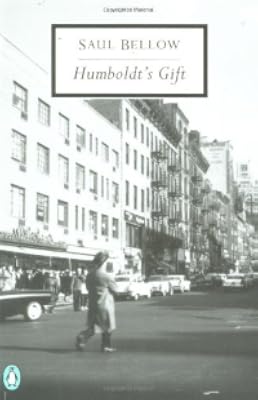
Humboldt's Gift
by Saul Bellow
On This Page
Description
Charlie Citrine, suffering from steadily worsening troubles with women, career, and life in general, receives unexpected aid and comfort in the form of a belated bequest from his onetime friend and mentor, the poet Von Humboldt Fleisher.Tags
Recommendations







Member Recommendations
Member Reviews
“I had a talent for absurdity, and you don’t throw away any of your talents.” No, you don’t throw away your talents; they’re your only protection against the violence of greed and realism. Absurd Charlie Citrine, playwright and biographer, is being dunned by lawyers, duped by friends, and hounded by scoundrels. He needs all the protection he can get. Amid the shambles of his life he receives a gift from an old friend now dead. The gift, which prompts Charlie’s book-length revery of times past, is a token of belief in his basic decency, the quality he clings to even when it gets him into absurdities. Because there are few things more absurd, realistically considered, than being a mensch. There’s no ROI from being kind and show more mild or giving people the benefit of the doubt. But Bellow hints that these qualities might just save us. show less
“He was meddling, just meddling. Still, I took this to heart. For there was a lot of agony in Demmie. Some women wept as softly as a watering can in the garden. Demmie cried passionately, as only a woman who believes in sin can cry. When she cried you not only pitied her, you respected her strength of soul.”
There is an astonishingly short page on Wikipedia to this book that had won the Pulitzer Prize for Fiction in 1976 and is cited on that website as having “contributed to Bellow's winning the Nobel Prize in Literature the same year”. Then follow two minor paragraphs devoted to plot and two sentences to its reception. This book is four-hundred and ninety-four pages and probably had me consulting the computer for references as show more many times. It’s dense. It’s funny. The two main characters suffer from honesty every bit as painful as their introspection is myopic. Or maybe not. Maybe somewhere in that anthroposophical ether that clouds Charlie Citrine like bad weather, despite his flight toward whatever exotic locale he secretes himself, whatever room or hotel or Russian bathhouse stall, stretched on a couch or crushed between dubious characters on a Thunderbird’s bench seat, Seraphim and Cherubim and Exousiai and Archai fist-fighting in the jet streams of his skull, there’s an acceptance of the limitations of the material world and yet a clear-eyed glimpse of a realm beyond. Even Humboldt’s posthumous “gift” is maybe more trouble than it’s worth. As, maybe, is all life. And that’s at least the fourth time I’ve waffled with that adverb.
Chicago may be the bedrock to this sprawling work, and it is populated with some of the tropes synonymous with that city: gangsters, architecture, restaurants, the old country in the New World. But the world of the mind is the real domain here; wedded to the basest of our human natures. And so we have poets in rural New Jersey trying to mow down their wives with Buicks, low-level thugs horning in on copyright lawyers, Chicagoan entrepreneurs hunting for beryllium in Nairobi, huckster journalists making a buck off their own abduction in South America; and none of these events seem grand enough to fill the space left from the conversations with his departed mentor and friend.
Maybe the gift is more than an object, an heirloom, a sealed letter from the past. It could be nothing more than that moment when he learned to live in the middle of the material and spiritual worlds. How fleeting that moment. And yet, the recollection can seem to last forever when stretched out on the couch, away from the clamor and clangor of Chicago, removed from the clash of new toys in old worlds, some far country yet unclaimed since it hasn’t even been marked on a map.
Or Charlie Citrine could just be a selfish prick. But at least he knows it. And he’s got the perfect escape. Like another Appleton native, Harry Houdini, who’d travelled to the biggest cities to break free from handcuffs, straightjackets and milk cans—all self-imposed. Except Citrine didn’t share the magician’s obsession for debunking spiritualists, preferring instead a peaceful absorption.
And, to be fair, I’ve not totally gotten my head around “anthroposophy”. Certainly, enough for the context of the novel. But, just like that hovering hierarchy of angels, it may demand more research and a second read.
“In the enchanting days we had had such marvelous talks, only touched a little by manic depression and paranoia. But now the light became dark and the dark turned darker.” show less
There is an astonishingly short page on Wikipedia to this book that had won the Pulitzer Prize for Fiction in 1976 and is cited on that website as having “contributed to Bellow's winning the Nobel Prize in Literature the same year”. Then follow two minor paragraphs devoted to plot and two sentences to its reception. This book is four-hundred and ninety-four pages and probably had me consulting the computer for references as show more many times. It’s dense. It’s funny. The two main characters suffer from honesty every bit as painful as their introspection is myopic. Or maybe not. Maybe somewhere in that anthroposophical ether that clouds Charlie Citrine like bad weather, despite his flight toward whatever exotic locale he secretes himself, whatever room or hotel or Russian bathhouse stall, stretched on a couch or crushed between dubious characters on a Thunderbird’s bench seat, Seraphim and Cherubim and Exousiai and Archai fist-fighting in the jet streams of his skull, there’s an acceptance of the limitations of the material world and yet a clear-eyed glimpse of a realm beyond. Even Humboldt’s posthumous “gift” is maybe more trouble than it’s worth. As, maybe, is all life. And that’s at least the fourth time I’ve waffled with that adverb.
Chicago may be the bedrock to this sprawling work, and it is populated with some of the tropes synonymous with that city: gangsters, architecture, restaurants, the old country in the New World. But the world of the mind is the real domain here; wedded to the basest of our human natures. And so we have poets in rural New Jersey trying to mow down their wives with Buicks, low-level thugs horning in on copyright lawyers, Chicagoan entrepreneurs hunting for beryllium in Nairobi, huckster journalists making a buck off their own abduction in South America; and none of these events seem grand enough to fill the space left from the conversations with his departed mentor and friend.
Maybe the gift is more than an object, an heirloom, a sealed letter from the past. It could be nothing more than that moment when he learned to live in the middle of the material and spiritual worlds. How fleeting that moment. And yet, the recollection can seem to last forever when stretched out on the couch, away from the clamor and clangor of Chicago, removed from the clash of new toys in old worlds, some far country yet unclaimed since it hasn’t even been marked on a map.
Or Charlie Citrine could just be a selfish prick. But at least he knows it. And he’s got the perfect escape. Like another Appleton native, Harry Houdini, who’d travelled to the biggest cities to break free from handcuffs, straightjackets and milk cans—all self-imposed. Except Citrine didn’t share the magician’s obsession for debunking spiritualists, preferring instead a peaceful absorption.
And, to be fair, I’ve not totally gotten my head around “anthroposophy”. Certainly, enough for the context of the novel. But, just like that hovering hierarchy of angels, it may demand more research and a second read.
“In the enchanting days we had had such marvelous talks, only touched a little by manic depression and paranoia. But now the light became dark and the dark turned darker.” show less
I'm going to rave a little here. Do forgive me in advance. This is my second reading of this masterpiece. It was shortly after publication of Humboldt's Gift that Bellow won the Nobel Prize. That in itself usually doesn't mean much, mostly the literature awards are given out for political reasons these days, but I think in the case of Bellow Oslo got it right. From the start the storytelling is brilliant and it never flags. Charlie Citrine, a young man filled with a love of literature, writes to his hero poet Von Humboldt Fleisher from his home in Appleton, Wisconsin, and is invited to visit the great man in Greenwich Village. Citrine comes to New York just as Humboldt is hitting his sole crest of popularity because of his book of show more ballads. Humboldt, however, soon loses it all; drinking and medicating himself in a manner that can only be called suicidal. No wonder he's perpetually blocked now. In the meantime, Charlie Citrine, his protege, writes a hit Broadway play which is made into a hit Hollywood movie. Citrine is swimming in money. And Citrine's success can only be viewed by Humboldt in his madness as a betrayal. Humboldt comes to loathe Citrine whom he accuses of using his life as the basis for the main character of his play Von Trenck. When Citrine wins the Chevalier de Légion d'honneur from the French government, Humboldt hits the ceiling. "Shoveleer!," he writes, "Your name is lesion."
Charlie Citrine is one of the most fascinating characters to emerge from late 20th century American literature. What I admire so much about this book is its unflagging narrative thrust. Line by line it satisfies the reader on an almost physical level. The humor is laugh out loud. The erudition makes me giddy. Just how is it possible for Bellow to incorporate so much knowledge about literature into the book and not end up with some deadly boring piece of tripe? It's miraculous. Citrine is always talking about his reading (Rudolf Steiner, Santayana, Gide, Aristotle, and so on) which is deftly incorporated so as to reflect upon his own tribulations and those of the other characters. This is quite a rogue's gallery, too, consisting of both the high and the low: mobsters; crooked judges; writers; literary chislers, harridan exes; lawyers; Rubenesque golddiggers, old Russian bath house guys; blue collar guys; virtually all ethnicities and predilections as only a great American city like Chicago can produce. I've read all of Bellow's novels and this I think is his best one. I even prefer it to Augie March, which is saying something. This is also a great novel for those who want to know how to write a great novel. With this text in hand and one's own considerable talent on tap, why, you can't miss. It's all right here in black and white. Read it, please, and let me know what you think. show less
Charlie Citrine is one of the most fascinating characters to emerge from late 20th century American literature. What I admire so much about this book is its unflagging narrative thrust. Line by line it satisfies the reader on an almost physical level. The humor is laugh out loud. The erudition makes me giddy. Just how is it possible for Bellow to incorporate so much knowledge about literature into the book and not end up with some deadly boring piece of tripe? It's miraculous. Citrine is always talking about his reading (Rudolf Steiner, Santayana, Gide, Aristotle, and so on) which is deftly incorporated so as to reflect upon his own tribulations and those of the other characters. This is quite a rogue's gallery, too, consisting of both the high and the low: mobsters; crooked judges; writers; literary chislers, harridan exes; lawyers; Rubenesque golddiggers, old Russian bath house guys; blue collar guys; virtually all ethnicities and predilections as only a great American city like Chicago can produce. I've read all of Bellow's novels and this I think is his best one. I even prefer it to Augie March, which is saying something. This is also a great novel for those who want to know how to write a great novel. With this text in hand and one's own considerable talent on tap, why, you can't miss. It's all right here in black and white. Read it, please, and let me know what you think. show less
What a wonderful, great, big, shaggy dog of a novel! While litigating with his ex-wife, being bullied by a B-team mobster, and fending off the marriage plans of his young "palooka" girlfriend, narrator Charlie Citrine contemplates the life of his recently deceased best friend and meditates on big questions such as the nature of death, man's role in the cosmos, and theories of boredom. With dozens of remarkable supporting characters and side stories, this long book is entertaining throughout. It is not a quick read, but it is worth the time.
As a Canadian and huge fan of our dearly departed Mordecai Richler--clever, urbane, witty, acerbic--I had often heard of and been curious about his apparent American counterparts, Philip Roth and Saul Bellow. I don't think I mean to lump them together only because they were Jewish, but because they seem to write such witty, complex plots that are largely urban in setting and deal with the desire for acceptance by 'the gentry' and material and apparent success. Well, to be honest, having until now never read Roth or Bellow, this was my assumption--that they were of an ilk, sort of. This book is one for those looking for 'a bit more' (than mere plot or character) to chew into ... it's got plenty of philosophy, art, pathos, desire, comedy show more and tragedy. The idle conversation of the two main characters offers a great deal to the reader, and the supporting cast is fascinating. My copy was a cast-off from the local public library that I snatched up, with the binding-boards printed upside-down, and old tape holding the jacket on turning to toxic dust, but what a pleasure! show less
Bellow is a fantastic prose stylist, but that wasn't enough for me to get past the fact that all of the lead characters are deeply unlikeable and shallow, despite their supposed intellectualism, and I frankly couldn't care at all about what happened to any of them. Perhaps the book has aged badly; it seems rooted very much in a particular time and culture. It took me weeks to get through the first 75% of the book but I did find it more compelling towards the end.
(Reprinted from the Chicago Center for Literature and Photography [cclapcenter.com]. I am the original author of this essay, as well as the owner of CCLaP; it is not being reprinted illegally.)
The CCLaP 100: In which I read for the first time a hundred so-called literary "classics," then write reports on whether or not they deserve the label
Essay #38: Humboldt's Gift (1975), by Saul Bellow
The story in a nutshell:
In good Postmodernist fashion, Saul Bellow's 1975 Humboldt's Gift is a semi-autobiography of sorts, one concerning a writer named Von Humboldt Fleischer -- modeled on Bellow's actual writer friend Delmore Schwartz, who you can also perhaps think of as a cross between e.e. cummings and Nelson Algren, an irascible but brilliant show more star of Early Modernist poetry (like cummings) but the communist-friendly product of a salty blue-collar Jewish immigrant family (like Algren) -- and the tumultuous decades-long relationship he has with his onetime protege and now award-winning millionaire Charlie Citrine -- based on Bellow himself, who you can also picture as an amalgam of John Updike, Norman Mailer, Philip Roth, and all the other academes who eventually became the superstars of post-Vietnam literature, but who actually got their starts in the Modernist '50s precisely by studying under people like Schwartz*.
Also in good Postmodernist fashion, then, the actual plot of Humboldt's Gift seems more like a hasty afterthought, with its main point being instead simply to watch the now middle-aged Citrine go through his daily '70s routine in Chicago where he lives (racquetball with politicians, bathhouse steams with fellow intellectuals, petty squabbles in his neighborhood of Hyde Park), while he reminisces about the changing fate over the decades of the recently deceased Humboldt, which quickly becomes a rumination on American history in general -- how in the 1930s, for example, the nation eagerly embraced the experimentation and radical liberalism of Humboldt's work; how they collectively then turned their backs on him in the conservative 1950s, even as Citrine himself became famous for a bitter Broadway comedy that parodied Humboldt's extremism; how by the Kennedy '60s, shiny ethnic progressives like Citrine and his pals had fallen back in favor with the American public, even while burned-out New Dealers like Humboldt were now cynical shadows of their former selves; and how by the '70s when our story takes place, all aspects of the arts were rapidly being overrun by corporate conglomeration and naked commercialism, a world that had no place for someone like Humboldt at all, as best typified by the low-level gangster Rinaldo Cantibile who Citrine accidentally forms a relationship with, and who spends the book constantly pitching various ways that Citrine could turn his recent Pulitzer and old relationship with Humboldt into a literal cash factory. Add a few hundred references to various minor writers and philosophers of the 20th century, and you have Bellow's book in a nutshell.
The argument for it being a classic:
Well, for starters, his fans say, it was the winner of the 1976 Pulitzer Prize for literature, and this in the same year that he also won the more prestigious Nobel Prize for literature (awarded to writers based on their entire career, not just for a specific book). More importantly, though, Humboldt's Gift is literally a textbook example of what the Postmodernist era was all about (which for the purposes of this essay series is being defined as the thirty years between Woodstock and 9/11), as well as what the intellectuals of that period treasured most in literature -- it is thoughtful, it is self-referential, it is slyly funny, the language is beautiful, and it concentrates much more on exploring character than on obsessively trying to come up with a potboiler storyline, like so many of the cheap genre novels that had mostly defined the industry only one generation previously. Just one of many titles by Bellow that were celebrated bestsellers in their day, his fans argue that this particular one is a perfect example of why he's considered one of the most important writers of the entire 20th century (and one of the most important Jewish writers in all of history), a poster-child for the changing of the guard that happened to literature in general during these years, into something that slowly became much smarter and more based on metaphor than what the industry had seen before.
The argument against:
Of course, as with many Postmodernist projects, the exact arguments just cited can be completely turned around into criticisms as well, which is exactly what you see among a whole lot of disgruntled readers online -- that books like Humboldt's Gift are actually the worst thing that could've ever happened to literature, an endlessly navel-gazing piece of academic circle-jerk crap in which nothing actually happens, no conclusions about the world are made, and one's opinion doesn't even count unless one is the holder of an MFA. After all, say its critics, this was the exact period of history when novels first stopped being the most dominant form of culture in our society, supplanted quickly in those years by film and television, which to this day still mostly dominate the mainstream arts in terms of influence and popularity; and a big reason for this was because of academes taking over the literary industry in those years, with their smartypants "deconstructionism" and "metafiction" and "it's not funny ha-ha, it's funny makes-you-think!" Humboldt's Gift is a perfect example of this, they argue, an overwritten mess so intensely hailed as a masterpiece by the ivory-tower crowd that most of the general public gave up on the very idea of trying to understand contemporary literature anymore; and as Postmodernism in general starts rapidly falling out of favor in our current post-9/11 "Age of Sincerity" (or whatever you want to call it), so too are we seeing Bellow quickly descend into the barely-remembered obscurity he actually deserves.
My verdict:
So let me make this clear before anything else, that as an overeducated intellectual, I personally really adored Humboldt's Gift, one of those slow-moving deep character studies that you don't just read but inhabit, particularly enjoying the now-forgotten political issues of Mid-Century Modernism that Bellow reminds us of here (for example, Humboldt's absolute certainty that the US would devolve into a fascist military state after the election of Eisenhower in 1952, a common but unrealized fear among post-war Rooseveltians that is hardly ever discussed in history texts anymore); and as a fellow Chicagoan and Hyde Park habitue I especially loved it, not just for his spot-on descriptions of various local landmarks (Division Street Bath! River North penthouses!), but also his pithy observations about the city and its citizens in general. ("Sensitivity in a mature Chicagoan, if genuine, [is] a treatable form of pathology.") But that said, this book was also a legitimate chore to get through most of the time, and I found myself with a lot of sympathy for the hundreds of traumatized online haters of this book, and their nightmarish tales of slogging their way through this for sometimes two or three months just to find themselves still only a couple of hundred pages in.
It's no secret that I'm one of the people who find a lot to complain about concerning Postmodernism, and I think it's definitely fair to point to this title in particular as a great example of everything both so right and wrong about the period; because even though it really is as intelligent and subtle and quietly charming as its fans claim, it also now serves in hindsight as a bad premonition of things to come, essentially the book that gave a million professors official permission to write whiny little screeds about their miserably boring lives in the sleepy collegetowns where they live, and the ennui-filled affairs they're having with their pretentious 19-year-old students. Humboldt's Gift is sure to be loved by his fellow academes, but many others will find it intolerable, which is why today I fall thoroughly on the 'no' side of the classics equation, and recommend it only to those who are already fans of the Postmodernist masters previously mentioned.
Is it a classic? No
(And don't forget that the first 33 essays in this series are now available in book form!)
*Oh, and an interesting piece of trivia that I couldn't find a good place for in the main essay -- turns out that one of Schwartz's most famous students besides Bellow himself was edgy musician Lou Reed, who has dedicated several songs to him over the years. show less
The CCLaP 100: In which I read for the first time a hundred so-called literary "classics," then write reports on whether or not they deserve the label
Essay #38: Humboldt's Gift (1975), by Saul Bellow
The story in a nutshell:
In good Postmodernist fashion, Saul Bellow's 1975 Humboldt's Gift is a semi-autobiography of sorts, one concerning a writer named Von Humboldt Fleischer -- modeled on Bellow's actual writer friend Delmore Schwartz, who you can also perhaps think of as a cross between e.e. cummings and Nelson Algren, an irascible but brilliant show more star of Early Modernist poetry (like cummings) but the communist-friendly product of a salty blue-collar Jewish immigrant family (like Algren) -- and the tumultuous decades-long relationship he has with his onetime protege and now award-winning millionaire Charlie Citrine -- based on Bellow himself, who you can also picture as an amalgam of John Updike, Norman Mailer, Philip Roth, and all the other academes who eventually became the superstars of post-Vietnam literature, but who actually got their starts in the Modernist '50s precisely by studying under people like Schwartz*.
Also in good Postmodernist fashion, then, the actual plot of Humboldt's Gift seems more like a hasty afterthought, with its main point being instead simply to watch the now middle-aged Citrine go through his daily '70s routine in Chicago where he lives (racquetball with politicians, bathhouse steams with fellow intellectuals, petty squabbles in his neighborhood of Hyde Park), while he reminisces about the changing fate over the decades of the recently deceased Humboldt, which quickly becomes a rumination on American history in general -- how in the 1930s, for example, the nation eagerly embraced the experimentation and radical liberalism of Humboldt's work; how they collectively then turned their backs on him in the conservative 1950s, even as Citrine himself became famous for a bitter Broadway comedy that parodied Humboldt's extremism; how by the Kennedy '60s, shiny ethnic progressives like Citrine and his pals had fallen back in favor with the American public, even while burned-out New Dealers like Humboldt were now cynical shadows of their former selves; and how by the '70s when our story takes place, all aspects of the arts were rapidly being overrun by corporate conglomeration and naked commercialism, a world that had no place for someone like Humboldt at all, as best typified by the low-level gangster Rinaldo Cantibile who Citrine accidentally forms a relationship with, and who spends the book constantly pitching various ways that Citrine could turn his recent Pulitzer and old relationship with Humboldt into a literal cash factory. Add a few hundred references to various minor writers and philosophers of the 20th century, and you have Bellow's book in a nutshell.
The argument for it being a classic:
Well, for starters, his fans say, it was the winner of the 1976 Pulitzer Prize for literature, and this in the same year that he also won the more prestigious Nobel Prize for literature (awarded to writers based on their entire career, not just for a specific book). More importantly, though, Humboldt's Gift is literally a textbook example of what the Postmodernist era was all about (which for the purposes of this essay series is being defined as the thirty years between Woodstock and 9/11), as well as what the intellectuals of that period treasured most in literature -- it is thoughtful, it is self-referential, it is slyly funny, the language is beautiful, and it concentrates much more on exploring character than on obsessively trying to come up with a potboiler storyline, like so many of the cheap genre novels that had mostly defined the industry only one generation previously. Just one of many titles by Bellow that were celebrated bestsellers in their day, his fans argue that this particular one is a perfect example of why he's considered one of the most important writers of the entire 20th century (and one of the most important Jewish writers in all of history), a poster-child for the changing of the guard that happened to literature in general during these years, into something that slowly became much smarter and more based on metaphor than what the industry had seen before.
The argument against:
Of course, as with many Postmodernist projects, the exact arguments just cited can be completely turned around into criticisms as well, which is exactly what you see among a whole lot of disgruntled readers online -- that books like Humboldt's Gift are actually the worst thing that could've ever happened to literature, an endlessly navel-gazing piece of academic circle-jerk crap in which nothing actually happens, no conclusions about the world are made, and one's opinion doesn't even count unless one is the holder of an MFA. After all, say its critics, this was the exact period of history when novels first stopped being the most dominant form of culture in our society, supplanted quickly in those years by film and television, which to this day still mostly dominate the mainstream arts in terms of influence and popularity; and a big reason for this was because of academes taking over the literary industry in those years, with their smartypants "deconstructionism" and "metafiction" and "it's not funny ha-ha, it's funny makes-you-think!" Humboldt's Gift is a perfect example of this, they argue, an overwritten mess so intensely hailed as a masterpiece by the ivory-tower crowd that most of the general public gave up on the very idea of trying to understand contemporary literature anymore; and as Postmodernism in general starts rapidly falling out of favor in our current post-9/11 "Age of Sincerity" (or whatever you want to call it), so too are we seeing Bellow quickly descend into the barely-remembered obscurity he actually deserves.
My verdict:
So let me make this clear before anything else, that as an overeducated intellectual, I personally really adored Humboldt's Gift, one of those slow-moving deep character studies that you don't just read but inhabit, particularly enjoying the now-forgotten political issues of Mid-Century Modernism that Bellow reminds us of here (for example, Humboldt's absolute certainty that the US would devolve into a fascist military state after the election of Eisenhower in 1952, a common but unrealized fear among post-war Rooseveltians that is hardly ever discussed in history texts anymore); and as a fellow Chicagoan and Hyde Park habitue I especially loved it, not just for his spot-on descriptions of various local landmarks (Division Street Bath! River North penthouses!), but also his pithy observations about the city and its citizens in general. ("Sensitivity in a mature Chicagoan, if genuine, [is] a treatable form of pathology.") But that said, this book was also a legitimate chore to get through most of the time, and I found myself with a lot of sympathy for the hundreds of traumatized online haters of this book, and their nightmarish tales of slogging their way through this for sometimes two or three months just to find themselves still only a couple of hundred pages in.
It's no secret that I'm one of the people who find a lot to complain about concerning Postmodernism, and I think it's definitely fair to point to this title in particular as a great example of everything both so right and wrong about the period; because even though it really is as intelligent and subtle and quietly charming as its fans claim, it also now serves in hindsight as a bad premonition of things to come, essentially the book that gave a million professors official permission to write whiny little screeds about their miserably boring lives in the sleepy collegetowns where they live, and the ennui-filled affairs they're having with their pretentious 19-year-old students. Humboldt's Gift is sure to be loved by his fellow academes, but many others will find it intolerable, which is why today I fall thoroughly on the 'no' side of the classics equation, and recommend it only to those who are already fans of the Postmodernist masters previously mentioned.
Is it a classic? No
(And don't forget that the first 33 essays in this series are now available in book form!)
*Oh, and an interesting piece of trivia that I couldn't find a good place for in the main essay -- turns out that one of Schwartz's most famous students besides Bellow himself was edgy musician Lou Reed, who has dedicated several songs to him over the years. show less
Members
- Recently Added By
Lists

The Guardian's 1000 Novels Everyone Must Read
1,005 works; 552 members

1001 Books You Must Read Before You Die
1,448 works; 1,137 members

Pulitzer Prize Winners for Fiction
102 works; 54 members

Great American Novels
158 works; 40 members

Novels from The Guardian's Great American Novelist Tournament
148 works; 24 members
20th Century Literature
1,161 works; 55 members

Jewish Books
367 works; 24 members

Favorite Long Books
330 works; 42 members

1970s
657 works; 23 members
Favourite Books
1,820 works; 308 members

Pulitzer Prize-Winning Books
42 works; 10 members

Nobel Price Winners
222 works; 20 members

Anthony Burgess 99 Post War Novels
99 works; 7 members
National Book Award Finalists - Fiction
377 works; 12 members

Blue Pyramid 1,276 Best Books of All Time
1,248 works; 32 members

One Book, Many Authors
441 works; 40 members
1,001 BYMRBYD Concensus
723 works; 27 members

Five star books
1,767 works; 110 members

The American novels that should have won the Booker prize
16 works; 3 members

Publisher's Weekly Bestsellers - Part II - 1940 - 1979
355 works; 6 members
American Lit for Eng 11 Research Project
368 works; 6 members

Allie's Wishlist
217 works; 2 members
My TBR
371 works; 3 members

Swinging Seventies
255 works; 18 members
New Lifetime Reading Plan by Fadiman and Major
225 works; 5 members

Lucy's Long List
69 works; 1 member

Recommended Reading : 600 Classics Reviewed, Editors of Salem Press, 2015
634 works; 6 members
Author Information

143+ Works 33,899 Members
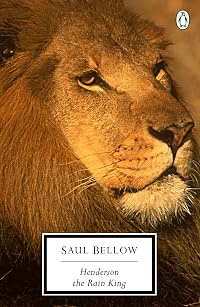
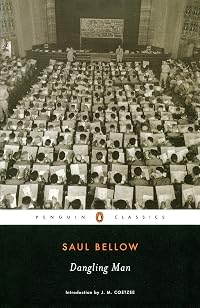
Saul Bellow was born in Lachine, Quebec, Canada on June 10, 1915. He attended the University of Chicago, received a Bachelor's degree in sociology and anthropology from Northwestern University in 1937, and did graduate work at the University of Wisconsin. He taught at several universities including the University of Minnesota, Princeton show more University, the University of Chicago, New York University, and Boston University. His first novel, Dangling Man, was published in 1944. His other works include The Victim, Seize the Day, Henderson the Rain King, Mosby's Memoirs and Other Stories, To Jerusalem and Back: A Personal Account, Him with His Foot in His Mouth and Other Stories, More Die of Heartbreak, and Something to Remember Me By. He received numerous awards including the 1975 Pulitzer Prize for Humboldt's Gift, the 1976 Nobel Prize in Literature, and three National Book Awards for fiction for The Adventures of Augie March in 1954, Herzog in 1964, and Mr. Sammler's Planet in 1970. Also a playwright, he wrote The Last Analysis and three short plays, collectively entitled Under the Weather, which were produced on Broadway in 1966. He died on April 5, 2005. (Bowker Author Biography) show less
Some Editions
Awards and Honors
Awards
Distinctions
Notable Lists
Series
Belongs to Publisher Series
Work Relationships
Is contained in
Has as a student's study guide
Common Knowledge
- Canonical title
- Humboldt's Gift
- Original title
- Humboldt's Gift
- Original publication date
- 1975
- People/Characters
- Rinaldo Cantabile; Charlie Citrine; Von Humboldt Fleisher; Kathleen; Renata
- Important places
- Chicago, Illinois, USA; New York, New York, USA
- First words
- The book of ballads published by Von Humboldt Fleisher in the Thirties was an immediate hit.
- Last words
- (Click to show. Warning: May contain spoilers.)"Search me," I said. "I'm a city boy myself. They must be crocuses."
- Publisher's editor
- Sifton, Elisabeth
- Original language
- English
Classifications
Statistics
- Members
- 3,282
- Popularity
- 5,233
- Reviews
- 43
- Rating
- (3.78)
- Languages
- 19 — Catalan, Czech, Danish, Dutch, English, Estonian, Finnish, French, German, Greek, Italian, Norwegian (Bokmål), Norwegian, Polish, Portuguese, Romanian, Russian, Spanish, Swedish
- Media
- Paper, Audiobook, Ebook
- ISBNs
- 62
- ASINs
- 48