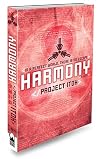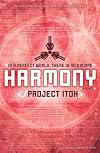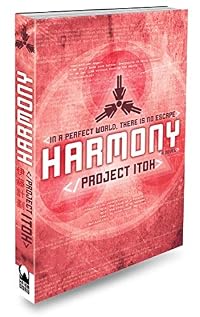
Harmony
by Project Itoh
On This Page
Description
In a perfect world, there is no escape Reads L to R (Western Style). In a perfect world, there is no escape In the future, Utopia has finally been achieved thanks to medical nanotechnology and a powerful ethic of social welfare and mutual consideration. This perfect world isn't that perfect though, and three young girls stand up to totalitarian kindness and super-medicine by attempting suicide via starvation. It doesn't work, but one of the girls--Tuan Kirie--grows up to be a member of the show more World Health Organization. As a crisis threatens the harmony of the new world, Tuan rediscovers another member of her suicide pact, and together they must help save the planet...from itself. show lessTags
Recommendations




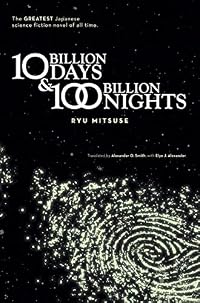
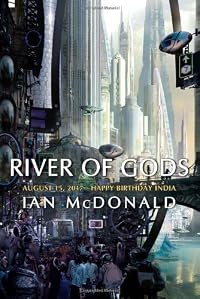
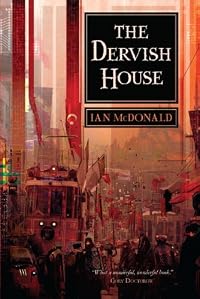
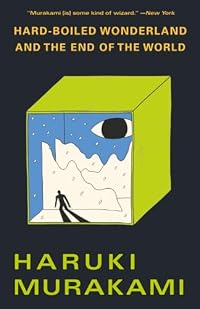


Member Recommendations
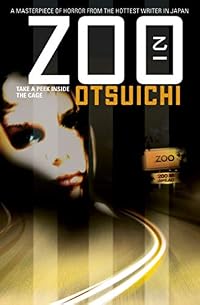
Lucy_Skywalker Some interesting thoughts on consciousness and memory, contesting egos and wishes etc. I wouldn't be surprised if Itoh Project had read it.
Member Reviews
This story is a deeply social SF, exploring the effects of hyper-advanced medical technology that makes humans essentially invulnerable to disease, and the social system that forces conformity to that technology. Three girls are so resistant to the restrictive nature of a "kind" society that they try to kill themselves, and this stuff the course of not only their futures but all of humanity.
This is a very thought provoking story, but I can see it causing some consternation in current society, with certain discussions of Naziism and politically correct ideas in lights that many people might not like. However, the base concepts of the cost of absolute safety and the choice between dangerous freedom and safe oppression is one that's always show more worth probing.
The translation by Alexander O. Smith is also excellent. It's smooth and natural, and never feels awkward. show less
This is a very thought provoking story, but I can see it causing some consternation in current society, with certain discussions of Naziism and politically correct ideas in lights that many people might not like. However, the base concepts of the cost of absolute safety and the choice between dangerous freedom and safe oppression is one that's always show more worth probing.
The translation by Alexander O. Smith is also excellent. It's smooth and natural, and never feels awkward. show less
I can see why this was nominated for this year's Phillip K. Dick award.
Dystopian fiction is one of my favourite genres, and this book really takes the top spot of some of the scariest dystopian fiction that I've ever read. And I've read plenty of it (starting with Huxley's "Brave New World" at age 13).
I'm definitely not going to give spoilers on this one, because I think that everyone should give this book a read. Much in the vein of Otsuichi's writing, Itoh's prose is short and brutal and straight to the point, with the opening of the book much like a punch to the gut. But not in a bad way - that I have to emphasize - but more in the "open your eyes and pay attention, dammit" sort of way. Even though this book takes place in the future show more (with a slightly alternate past), the echoes with current society are strong and frightening - a portent of what we may become should we continue to be so health-obsessed in global society as a whole.
It's a shame that that we'll never get another book from Itoh (unless they find something else that they haven't already posthumously published) - he had true talent. I can only hope that Viz/Haikasoru goes ahead and translates the rest of his (sadly small) bibliography.
(crossposted to goodreads and witchoftheatregoing.wordpress.com) show less
Dystopian fiction is one of my favourite genres, and this book really takes the top spot of some of the scariest dystopian fiction that I've ever read. And I've read plenty of it (starting with Huxley's "Brave New World" at age 13).
I'm definitely not going to give spoilers on this one, because I think that everyone should give this book a read. Much in the vein of Otsuichi's writing, Itoh's prose is short and brutal and straight to the point, with the opening of the book much like a punch to the gut. But not in a bad way - that I have to emphasize - but more in the "open your eyes and pay attention, dammit" sort of way. Even though this book takes place in the future show more (with a slightly alternate past), the echoes with current society are strong and frightening - a portent of what we may become should we continue to be so health-obsessed in global society as a whole.
It's a shame that that we'll never get another book from Itoh (unless they find something else that they haven't already posthumously published) - he had true talent. I can only hope that Viz/Haikasoru goes ahead and translates the rest of his (sadly small) bibliography.
(crossposted to goodreads and witchoftheatregoing.wordpress.com) show less
Harmony, by Project Itoh, was originally published in Japan in 2008, winning both the 2009 Nihon SF Taisho Award and the 2009 Seiun Award. Although I was previously unfamiliar with Itoh’s work, I was very excited when the novel was picked up by Viz Media’s Haikasoru imprint and released in 2010 with a translation by Alexander O. Smith. Happily, Harmony has been very well received in English and was recently nominated for the 2010 Philip K. Dick Award. As far as I know, this is the first book in translation and the first Japanese novel to ever be nominated for this award. (The nomination is also particularly meaningful to Haikasoru as the imprint takes its name from Philip K. Dicks award-winning novel The Man in the High Castle.) show more Harmony is currently the only work by Itoh available in English although a fairly reliable rumor has it that Haikasoru has more Itoh plans in the works. I really hope that is true.
After an unprecedented, worldwide mass suicide, admedistrations across the globe are thrown into turmoil. In a society that views the human body as a vital resource and a public good to be protected at all costs, suicide is an unthinkable crime. The Helix Inspection Agency, a part of the World Health Organization, is charged with the investigation into the incident. For Tuan Kirie, a Helix member playing an important role in the investigation, the event is very personal. She herself once attempted suicide in defiance of the admedistrative system of which she is now an integral part. She watched as one of her friends took her own life during the mass suicides. Her father was one of the original developers of the WatchMe nano- and biotechnologies that allow the admedistrations to function, but which may have also laid the groundwork that would make such a wide-spread tragedy possible.
The most unusual element of Itoh’s writing in Harmony is his use of EML, or Emotional-in-Text Markup Language (which looks very similar to other markup languages such as XML or HTML.) Even if a reader isn’t familiar with markup languages, it is soon obvious what is going on and the EML shouldn’t provide too much of a challenge. Some people might see it as a clever gimmick, but I found the use of EML to be quite effective and integral to the story. It emphasizes many aspects of admedistrative society in both subtle and direct ways: The EML is a constant reminder of the biotechnological advances that have been made; the perpetual recording and surveillance of individuals' lives, health, and minds is made obvious; emotional states and human desire are shown to have been reduced to data points for clinical observation; the barrier between one person’s experiences and another’s is broken down. I believe EML is critical to Harmony and I doubt anyone will be able to convince me otherwise.
As with any fiction successfully exploring utopia and dystopia, Harmony is extremely thought-provoking in addition to being engaging. It is easy to see the obsessions and neuroses of today’s societies, particularly those regarding health, reflected and taken to the extreme in Harmony’s world. Occasionally, Itoh can be a bit heavy handed, but overall his world-building has taken a logical if not entirely realistic path. Even a near perfect world can’t make everyone happy and the methods used to get there can be terrible no matter how they are justified. The epilogue doesn’t mesh as nicely with the rest of the novel, but it does provide important information, clarifying specific plot elements while still leaving some ambiguity to the story. I enjoyed Harmony immensely—it’s smart, thought-provoking, and has stuck with me for quite some time after finishing it. I really hope to get a chance to read more of Itoh’s work in English.
Experiments in Manga show less
After an unprecedented, worldwide mass suicide, admedistrations across the globe are thrown into turmoil. In a society that views the human body as a vital resource and a public good to be protected at all costs, suicide is an unthinkable crime. The Helix Inspection Agency, a part of the World Health Organization, is charged with the investigation into the incident. For Tuan Kirie, a Helix member playing an important role in the investigation, the event is very personal. She herself once attempted suicide in defiance of the admedistrative system of which she is now an integral part. She watched as one of her friends took her own life during the mass suicides. Her father was one of the original developers of the WatchMe nano- and biotechnologies that allow the admedistrations to function, but which may have also laid the groundwork that would make such a wide-spread tragedy possible.
The most unusual element of Itoh’s writing in Harmony is his use of EML, or Emotional-in-Text Markup Language (which looks very similar to other markup languages such as XML or HTML.) Even if a reader isn’t familiar with markup languages, it is soon obvious what is going on and the EML shouldn’t provide too much of a challenge. Some people might see it as a clever gimmick, but I found the use of EML to be quite effective and integral to the story. It emphasizes many aspects of admedistrative society in both subtle and direct ways: The EML is a constant reminder of the biotechnological advances that have been made; the perpetual recording and surveillance of individuals' lives, health, and minds is made obvious; emotional states and human desire are shown to have been reduced to data points for clinical observation; the barrier between one person’s experiences and another’s is broken down. I believe EML is critical to Harmony and I doubt anyone will be able to convince me otherwise.
As with any fiction successfully exploring utopia and dystopia, Harmony is extremely thought-provoking in addition to being engaging. It is easy to see the obsessions and neuroses of today’s societies, particularly those regarding health, reflected and taken to the extreme in Harmony’s world. Occasionally, Itoh can be a bit heavy handed, but overall his world-building has taken a logical if not entirely realistic path. Even a near perfect world can’t make everyone happy and the methods used to get there can be terrible no matter how they are justified. The epilogue doesn’t mesh as nicely with the rest of the novel, but it does provide important information, clarifying specific plot elements while still leaving some ambiguity to the story. I enjoyed Harmony immensely—it’s smart, thought-provoking, and has stuck with me for quite some time after finishing it. I really hope to get a chance to read more of Itoh’s work in English.
Experiments in Manga show less
A great book questioning if a society can be "too good". Is it possible to force people to live a balanced and healthy life?
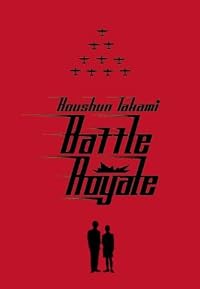
I picked this up because the back made the book sound interesting and the cover was kind of shiny (I'm easy that way). But I didn't know much about it and the blurb on the back actually has next to nothing to do with what happens in the novel. Harmony is about anything but the word in it's title. It's a fantastic dystopian novel translated from Japanese. I didn't know, when I started the book, that it was translated, but it had a similar feel (writing-style wise) to Battle Royale (and then I discovered it was originally written in Japanese). Harmony is, at it's heart, a YA novel, but it's definitely for high-level readers. The content, but more the story itself, is definitely more adult-focused, but that only enhances to novel, instead show more of taking away from it. It's a hard book to read because bad things happen, but Itoh's writing is strong and the translation seems to work well. I enjoyed it and the ending was both upsetting, but completely satisfactory, show less
Thanks to nanotechnology and medical implants, getting sick is a thing of the past. Death doesn't really happen. Overly-emotional states are detected and biofeedback is utilized to calm a person, so people stay on a relatively even keel. Miach wants Out of this system, and she makes a suicide pact with her two best friends, the three of them starving themselves in order to beat the system. Only Miach succeeds, and more than a decade later, another finally finds her way out, as part of a global suicide epidemic. Tuan is the only one left, and her work with the WHO has her investigating exactly what happened on that day when nearly three thousand people managed to take their own lives. In her research, she learns that she was not the only show more survivor after all, and that she has some deep family ties to the recent suicides. Someone is planning to take down the system, and they're going to get Tuan's help, whether she knows it or not.
Dystopian for the nanotechnology and physical surveillance (see also: Rash, Pete Hautman; Little Brother, Cory Doctorow), and for parts of the ultimate resolution that I won't get into here. The last third seems more noir-mystery than sci-fi/dystopia, but I can see elements of both. Mostly a book for young adults (by which I mean roughly 20-35 years old) but I can see this appealing to certain jaded, disaffected high school juniors and seniors. show less
Dystopian for the nanotechnology and physical surveillance (see also: Rash, Pete Hautman; Little Brother, Cory Doctorow), and for parts of the ultimate resolution that I won't get into here. The last third seems more noir-mystery than sci-fi/dystopia, but I can see elements of both. Mostly a book for young adults (by which I mean roughly 20-35 years old) but I can see this appealing to certain jaded, disaffected high school juniors and seniors. show less
The ending was very satisfying. There was a moment where I doubted whether the author would actually go through with that sort of ending. But then he did, and gained my admiration. Very philosophical, heady, psychological. A real book of ideas.
Members
- Recently Added By
Published Reviews
ThingScore 75
One of the things this novel made me think was: why hasn't the clinic featured more largely in SF and Fantasy?
added by nsblumenfeld
Lists

SF & Fantasy in Translation
95 works; 16 members
Best Science Fiction Originally Published in a Language Other Than English
449 works; 31 members
Author Information

Some Editions
Awards and Honors
Series
Belongs to Publisher Series
Common Knowledge
- Canonical title*
- ハーモニー
- Original title
- ハーモニー
- Original publication date
- 2008 (original Japanese) (original Japanese); 2010 (English: Smith) (English: Smith)
- People/Characters
- Tuan Kirie; Miach Mihie; Cian Reikado; Dr. Nuada Kirie; Os Cara Stauffenberg (Prime Inspector)
- Important places
- Tokyo, Japan; Baghdad, Iraq
*Some information comes from Common Knowledge in other languages. Click "Edit" for more information.
Classifications
- Genres
- Fiction and Literature, Science Fiction, Teen
- DDC/MDS
- 895.636 — Literature & rhetoric Asian Literature Literatures of East and Southeast Asia Japanese Japanese fiction 2000–
- LCC
- PL871.5 .T64 .H3713 — Language and Literature Languages and literatures of Eastern Asia, Africa, Oceania Languages of Eastern Asia, Africa, Oceania Japanese language and literature Japanese literature
- BISAC
Statistics
- Members
- 238
- Popularity
- 135,559
- Reviews
- 13
- Rating
- (3.68)
- Languages
- 5 — Chinese, simplified, English, Hungarian, Italian, Japanese
- Media
- Paper, Ebook
- ISBNs
- 8
- ASINs
- 2