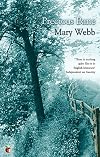
Precious Bane
by Mary Webb
On This Page
Description
'She has a style of exquisite beauty which yet has both force and restraint, simplicity and subtlety she has fancy and wit, delicious humour and pathos. She sees and knows men aright as no other novelist does. She has, In short, genius' Mr. Edwin PughTags
Recommendations















Member Recommendations




Member Reviews
Mary Webb and Precious Bane came at me utterly by surprise. I had never heard of her or of the book until a friend of mine spoke very often, in the week or so that we were going through her books, of her strong and early love for Mary Webb, and particularly for the protagonist in PB, Prue Sarn. Eventually I decided to take the book and see for myself.
Although published in 1924, the book has an older feel to me. Webb lived in Shropshire and writes of the poor farmers who lived there. She writes in a beautiful dialect, easy to read and yet filled with words that were new to me but whose meaning were clear from the context. I don’t know exactly when this is set but there are no motorcars, no planes, and life is lived according to season show more and weather and custom.
Prue is born with a harelip. The folk belief is that a hare looked at her mother when she was carrying Prue in her womb, and because of that she has her slight deformity. She is said to be a witch because of it, tho' it is mostly the unkind gossip of a few rather than the grim belief of the many. But even those who love her know that she will never marry because of her harelip. And though she wishes for her own wifely life, she has no great hopes. Not even when she meets the new Weaver.
Prue's father dies early in the story and the farm falls to her brother Gideon. He sets his eye on a grand house in town and the desire to gain that house and go to the Hunt ball with his wife and in every way command the respect of the people around him. So he works himself and his sister, Prue, nearly to death to achieve that aim. But she has agreed to the dream and to the work and although she disapproves or worries at times about her brother, she is fond of him and works as hard as he.
I’ll say no more of the plot, and here I give you very little — just the beginning. I’ll turn back, instead, to the writing.
As she moves through the days of her life Prue gives great attention to the natural world around her, and her pleasure in it is a deep pleasure to this reader. It is as if I have spent weeks in her world, that I know the countryside almost as well as she does, that I have felt the sun and the rain and seen the mist and shared her joy in everything. I have even gotten to look over her shoulder as she writes in her journal in the attic.
The unhurried unfolding of what is in the main a rich and joyful tale, despite whatever tragedy comes along, is a rare and wonderful gift. This hurried world we live in, where the pace of writing is meant to be breakneck much of the time and tense the rest, seldom permits such a gentle character to truly have her voice. But Webb does so with Prue. She is the unforward, uncritical narrator who observes so well and forgives so much, who allows herself her own quiet world and ways, and who never suspects that she is the protagonist of her own tale. show less
Although published in 1924, the book has an older feel to me. Webb lived in Shropshire and writes of the poor farmers who lived there. She writes in a beautiful dialect, easy to read and yet filled with words that were new to me but whose meaning were clear from the context. I don’t know exactly when this is set but there are no motorcars, no planes, and life is lived according to season show more and weather and custom.
Prue is born with a harelip. The folk belief is that a hare looked at her mother when she was carrying Prue in her womb, and because of that she has her slight deformity. She is said to be a witch because of it, tho' it is mostly the unkind gossip of a few rather than the grim belief of the many. But even those who love her know that she will never marry because of her harelip. And though she wishes for her own wifely life, she has no great hopes. Not even when she meets the new Weaver.
Prue's father dies early in the story and the farm falls to her brother Gideon. He sets his eye on a grand house in town and the desire to gain that house and go to the Hunt ball with his wife and in every way command the respect of the people around him. So he works himself and his sister, Prue, nearly to death to achieve that aim. But she has agreed to the dream and to the work and although she disapproves or worries at times about her brother, she is fond of him and works as hard as he.
I’ll say no more of the plot, and here I give you very little — just the beginning. I’ll turn back, instead, to the writing.
As she moves through the days of her life Prue gives great attention to the natural world around her, and her pleasure in it is a deep pleasure to this reader. It is as if I have spent weeks in her world, that I know the countryside almost as well as she does, that I have felt the sun and the rain and seen the mist and shared her joy in everything. I have even gotten to look over her shoulder as she writes in her journal in the attic.
The unhurried unfolding of what is in the main a rich and joyful tale, despite whatever tragedy comes along, is a rare and wonderful gift. This hurried world we live in, where the pace of writing is meant to be breakneck much of the time and tense the rest, seldom permits such a gentle character to truly have her voice. But Webb does so with Prue. She is the unforward, uncritical narrator who observes so well and forgives so much, who allows herself her own quiet world and ways, and who never suspects that she is the protagonist of her own tale. show less
Spoiler Alert
It’s a long time since I’ve read Thomas Hardy to whose work, Mary Webb’s Precious Bane is often compared, but the novel only feels Hardyesque insofar as it involves a nineteenth-century agrarian community steeped in superstition and in its abundant lyrical descriptions of nature. Far more than Hardy’s, Webb’s characters seem like figures from some ancient ballad, more types than fully fleshed-out people, and her plot is a simple one.
The story opens sometime in the 1820s with the sudden death of the main characters’—Prue and her elder brother Gideon Sarn’s—father. At the old man’s funeral, Gideon agrees to be his father’s sin eater (one who ritually takes on the sins of the dead) in exchange for full show more control of the farm at Sarn Mere. Handsome, hard, and singleminded, Gideon is grimly determined to work the land. His goal is to purchase, within a few years, the ageing squire’s mansion in Lullingford, a market town fifteen miles away, where he will bring the beautiful Jancis Beguildy as his wife. Prue, cursed with a harelip—thought to be caused by her mother’s encountering a hare in the woods during her pregnancy—will, of course, never marry due to her disfigurement. She pledges to help her brother on the land, and is assured by him that she, too, will one day live a life of ease in his fine Lullingford house.
At the “love-spinning” for Gideon and Jancis—a gathering at which local women spin the wool that will be woven into fabric for the young couple—Prue first sees the weaver, Kester Woodeaves. He’s a powerfully handsome figure, but her attraction, the reader is told, transcends the physical. In those first mystical moments, he becomes her “master” and his image and spirit will infuse her thoughts in the hard days ahead. In time, Prue will save his life, and he will ultimately save hers.
In the end, Webb’s story is one of fanatical greed being punished. Jancis Beguildy’s father, the local wizard who provides charms and snake-oil cures and who may be in league with the devil, is known to have held a long grudge against Old Sarn, and he has even less use for the man’s son, Gideon. Idle and amoral, Beguildy is motivated by lust for easy money. He believes he can get a better price for his beautiful daughter, Jancis, than Gideon is likely to give, and he is fully prepared to auction her off to the highest bidder. When Gideon sleeps with the girl to stake his claim to her, however, the young man cements his fate. Beguildy’s curses and revenge will deprive him of all he’s worked for.
Webb’s characters and their motivations are not complex. Neither is her plot. Her story’s strength lies in its rich and poetic telling. My copy of this book sat on the shelf for years. I tried it several times, but, until now, none seemed the right one to wrestle with the thick dialect. I wish there had been an annotated copy available, complete with a glossary of Shropshire English. The meaning of some but not all of the vocabulary can be inferred, and initially I made regular use of an online dictionary of Shropshire dialect and the Oxford English Dictionary to understand some of the more opaque words and phrases. I did not find the book easy going until I was about three-quarters of the way in.
I’m glad I finally read Precious Bane, but I wasn’t as enchanted as others are or as I thought I’d be. That’s largely due, I think, to the simple, unnuanced characters: Gideon is too greedy and driven; Beguildy, too bald-facedly bad; golden-haired Jancis, too insipidly pretty; Prue and Kester’s love story, too fanciful. I couldn’t suspend my disbelief in the latter for more than a minute or two. show less
It’s a long time since I’ve read Thomas Hardy to whose work, Mary Webb’s Precious Bane is often compared, but the novel only feels Hardyesque insofar as it involves a nineteenth-century agrarian community steeped in superstition and in its abundant lyrical descriptions of nature. Far more than Hardy’s, Webb’s characters seem like figures from some ancient ballad, more types than fully fleshed-out people, and her plot is a simple one.
The story opens sometime in the 1820s with the sudden death of the main characters’—Prue and her elder brother Gideon Sarn’s—father. At the old man’s funeral, Gideon agrees to be his father’s sin eater (one who ritually takes on the sins of the dead) in exchange for full show more control of the farm at Sarn Mere. Handsome, hard, and singleminded, Gideon is grimly determined to work the land. His goal is to purchase, within a few years, the ageing squire’s mansion in Lullingford, a market town fifteen miles away, where he will bring the beautiful Jancis Beguildy as his wife. Prue, cursed with a harelip—thought to be caused by her mother’s encountering a hare in the woods during her pregnancy—will, of course, never marry due to her disfigurement. She pledges to help her brother on the land, and is assured by him that she, too, will one day live a life of ease in his fine Lullingford house.
At the “love-spinning” for Gideon and Jancis—a gathering at which local women spin the wool that will be woven into fabric for the young couple—Prue first sees the weaver, Kester Woodeaves. He’s a powerfully handsome figure, but her attraction, the reader is told, transcends the physical. In those first mystical moments, he becomes her “master” and his image and spirit will infuse her thoughts in the hard days ahead. In time, Prue will save his life, and he will ultimately save hers.
In the end, Webb’s story is one of fanatical greed being punished. Jancis Beguildy’s father, the local wizard who provides charms and snake-oil cures and who may be in league with the devil, is known to have held a long grudge against Old Sarn, and he has even less use for the man’s son, Gideon. Idle and amoral, Beguildy is motivated by lust for easy money. He believes he can get a better price for his beautiful daughter, Jancis, than Gideon is likely to give, and he is fully prepared to auction her off to the highest bidder. When Gideon sleeps with the girl to stake his claim to her, however, the young man cements his fate. Beguildy’s curses and revenge will deprive him of all he’s worked for.
Webb’s characters and their motivations are not complex. Neither is her plot. Her story’s strength lies in its rich and poetic telling. My copy of this book sat on the shelf for years. I tried it several times, but, until now, none seemed the right one to wrestle with the thick dialect. I wish there had been an annotated copy available, complete with a glossary of Shropshire English. The meaning of some but not all of the vocabulary can be inferred, and initially I made regular use of an online dictionary of Shropshire dialect and the Oxford English Dictionary to understand some of the more opaque words and phrases. I did not find the book easy going until I was about three-quarters of the way in.
I’m glad I finally read Precious Bane, but I wasn’t as enchanted as others are or as I thought I’d be. That’s largely due, I think, to the simple, unnuanced characters: Gideon is too greedy and driven; Beguildy, too bald-facedly bad; golden-haired Jancis, too insipidly pretty; Prue and Kester’s love story, too fanciful. I couldn’t suspend my disbelief in the latter for more than a minute or two. show less
I feel like this kind of writing is a soft target in our age of irony. (I guess, what with Cold Comfort Farm, it was a soft target in its own time, too.) It's a very uncool book. It's easy to mock the kind of earnestness that Mary Webb brings to the story of Prue Sarn. Sentimental and lyrical, filled with lush descriptions of the countryside. So, I'm pretty uncool. I thought this book was beautiful. The illustrations are perfect. The mood of the book is similar to Hardy but more, ahem, woman-friendly. All in all, a pleasant way to while away what felt like a never-ending winter.
It is a long time since I have read a novel that made as big an impact on me as Precious Bane. The Virago edition describes the author Mary Webb as a "poet, mystic, and lover of nature." Mysticism as a rule is lost on me, but Webb's brand seems to grow directly out of her appreciation for the physical world, and sometimes I feel like I understand what she means. As in this description of a favorite spot: "For when the nut-hatch comes into her own tree, she dunna ask who planted it, nor what name it bears among men. For the tree is all to the nut-hatch, and this was all to me."
In the early 1800s, not long after the Battle of Waterloo, a young woman named Prue Sarn lived with her mother and brother Gideon on a farm in the Shropshire countryside. Born with a cleft lip, Prue's prospects are limited: her mother believes she is cursed, most of the townspeople think she has evil powers, and she will almost certainly never marry. Everyone she meets remarks on her condition, unable to see the beautiful person inside.
After her father's death, Gideon gets Prue to agree to long-term indentured service on the farm. Gideon is ambitious, and believes that just a few years' hard work will vault them into a new level of society, including a fine house in town. He promises Prue money to treat her lip, and riches for Jancis, a show more young woman he hopes to marry. Gideon works tirelessly and the farm prospers, but he always wants more. He puts off his marriage, afraid that a wife and children will get in the way of his pursuit of wealth. His singular focus often alienates him from others:
He was ever a strong man, which is almost the same, times, as to say a man with little time for kindness. For if you stop to be kind, you must swerve often from your path. So when folk tell me of this great man and that great man, I think to myself, Who was stinted of joy for his glory? How many old folk and children did his coach wheels go over? (p. 84)
Meanwhile Prue soldiers on, with interminably long hours of hard labor. In her time off she learns to write, keeping a journal which forms the basis of this novel. In describing day-to-day events, she offers keen observations on members of her community:
Sexton's missus was just the opposite. She always made me think of a new-painted coach, big and wide, with an open road, and the horn blowing loud and cheerful, and full speed ahead. She was gay in her dress as a seven-coloured linnet, and if she could wear another shawl or flounce or brooch, she would. ... I used to think myself, seeing her and Sexton together, that she was like a big hank of dyed wool, and he was the thin black distaff it was to be wound off on to. (p. 97)
But Prue, being a normal healthy young woman, longs for long-term companionship. She falls in love with Kester Woodseaves, an itinerant weaver. She worships him from afar, afraid her appearance will scare him off, but one day she saves his life and their relationship begins to change. The rest of the story shows both Gideon and Prue evolving on paths that are true to their characters, with both expected and unexpected consequences.
I liked Prue's character a lot; she was able to summon strength in times of great adversity, and show compassion even to those who had wronged her. Gideon was a greedy jerk, and Kester his complete antithesis. In some ways the story was too predictable, but was improved by some very dramatic segments in which the characters' lives were permanently changed. show less
After her father's death, Gideon gets Prue to agree to long-term indentured service on the farm. Gideon is ambitious, and believes that just a few years' hard work will vault them into a new level of society, including a fine house in town. He promises Prue money to treat her lip, and riches for Jancis, a show more young woman he hopes to marry. Gideon works tirelessly and the farm prospers, but he always wants more. He puts off his marriage, afraid that a wife and children will get in the way of his pursuit of wealth. His singular focus often alienates him from others:
He was ever a strong man, which is almost the same, times, as to say a man with little time for kindness. For if you stop to be kind, you must swerve often from your path. So when folk tell me of this great man and that great man, I think to myself, Who was stinted of joy for his glory? How many old folk and children did his coach wheels go over? (p. 84)
Meanwhile Prue soldiers on, with interminably long hours of hard labor. In her time off she learns to write, keeping a journal which forms the basis of this novel. In describing day-to-day events, she offers keen observations on members of her community:
Sexton's missus was just the opposite. She always made me think of a new-painted coach, big and wide, with an open road, and the horn blowing loud and cheerful, and full speed ahead. She was gay in her dress as a seven-coloured linnet, and if she could wear another shawl or flounce or brooch, she would. ... I used to think myself, seeing her and Sexton together, that she was like a big hank of dyed wool, and he was the thin black distaff it was to be wound off on to. (p. 97)
But Prue, being a normal healthy young woman, longs for long-term companionship. She falls in love with Kester Woodseaves, an itinerant weaver. She worships him from afar, afraid her appearance will scare him off, but one day she saves his life and their relationship begins to change. The rest of the story shows both Gideon and Prue evolving on paths that are true to their characters, with both expected and unexpected consequences.
I liked Prue's character a lot; she was able to summon strength in times of great adversity, and show compassion even to those who had wronged her. Gideon was a greedy jerk, and Kester his complete antithesis. In some ways the story was too predictable, but was improved by some very dramatic segments in which the characters' lives were permanently changed. show less
Being the devoted reader of British classics I am, how I've managed to miss this little gem of a book for so long I honestly don't know. But beware, my dear reader, this is not Jane Austen. This is a harsh tale, in the style of Thomas Hardy or even George Eliot, you'll see the characters you so much come to care for struggle in an unfair and prejudiced world, and you'll suffer along with them.
Prudence Sarn is a country girl who lives with her simple mother and her older brother, Gideon, "Maister of the place". Prue is gentle, goodhearted and has a fine figure along with a sharp brain. But she also has a harelip, meaning her whole existence is blighted, as it's impossible that anyone would marry a girl with a curse like that. In spite of show more her bleak future, she makes light of her woes and from very early on, she develops a special relationship with everything alive, her senses being aligned n harmony with the wild natural world; animals, trees and even the wind are her most beloved companions.
Gideon, in contrast with good natured Prue, is as ambitious and severe as he is handsome. He works hard (and slaves Prue to do the same for him) to be wealthy and prosperous and his pride prevents him from marrying the girl he loves, fair Jancis, because he wants to be well-off before he gives himself that pleasure, not caring if others suffer because of his material whims.
But Prue's peace of mind crumbles down when she meets the new weaver, Kester Woodseaves, whom she starts to worship in secret not believing herself worthy of him. It's up to this Prince Charming to perceive the real beauty of Pruedence Sarn and free her from gossip and hateful stares.
"This was the reason for the hating looks, the turnings aside, the whispers. I was a the witch of Sarn. I was the woman cursed of God with a hare-shotten lip. I was the woman who had friended Beguildy, that wicked old man, the devil's oddman, and like holds to like. And now, almost the worst crime of all, I stood alone".
What mainly got me about this novel is Webb's capacity to transmit such a crude story in which guilt, hatred and prejudice get the worst of its characters, as if it was an innocent and sweet fable. And in that sense, the brutality of the morals which are trying to be taught become more evident and disturbing. Also the evident contrast between brother and sister, between evil and goodness: Prue's silent acceptance and her brother's endless thirst to yield power; her ability to be at ease with herself in spite of her faults versus Gideon's incapacity to accept his position in the world; her humble ways, his capricious goals. As if opposed poles inevitably attracted to each other. Yin and yang. Dark and light. Life and death. One can't exist without the other.
"Why, it was only that I was your angel for a day," I said at long last. "A poor daggly angel, too".
What also had me bothered for some time is the subtle way in which Mary Webb implies that no one is naturally evil , what the characters (and ultimately what WE) become is the uncontrollable combination of fate, desire and chance altogether with their skill in taking the right decision at the right moment. This way to view life as a running river whose course we don't have the power to change produced a kind of claustrophobic feeling of impotence, with this constant foreboding, lurking behind my consciousness, that something gruesome was going to happen and that no one would be able to stop it, and I'd sink along with all the characters.
"There are misfortunes that make you spring up and rush to save yourself, but there are others that are too bad for this, for they leave nought to do."
So, imagine my joy, when out of the blue, some shinning and pure light came through and gave me hope and a new understanding, teaching me a valuable lesson: never stop believing in the magic of life, because the moment you stop believing, you will start fading away only to become an invisible spot of dust in this infinite nothingness which some call existence. show less
Prudence Sarn is a country girl who lives with her simple mother and her older brother, Gideon, "Maister of the place". Prue is gentle, goodhearted and has a fine figure along with a sharp brain. But she also has a harelip, meaning her whole existence is blighted, as it's impossible that anyone would marry a girl with a curse like that. In spite of show more her bleak future, she makes light of her woes and from very early on, she develops a special relationship with everything alive, her senses being aligned n harmony with the wild natural world; animals, trees and even the wind are her most beloved companions.
Gideon, in contrast with good natured Prue, is as ambitious and severe as he is handsome. He works hard (and slaves Prue to do the same for him) to be wealthy and prosperous and his pride prevents him from marrying the girl he loves, fair Jancis, because he wants to be well-off before he gives himself that pleasure, not caring if others suffer because of his material whims.
But Prue's peace of mind crumbles down when she meets the new weaver, Kester Woodseaves, whom she starts to worship in secret not believing herself worthy of him. It's up to this Prince Charming to perceive the real beauty of Pruedence Sarn and free her from gossip and hateful stares.
"This was the reason for the hating looks, the turnings aside, the whispers. I was a the witch of Sarn. I was the woman cursed of God with a hare-shotten lip. I was the woman who had friended Beguildy, that wicked old man, the devil's oddman, and like holds to like. And now, almost the worst crime of all, I stood alone".
What mainly got me about this novel is Webb's capacity to transmit such a crude story in which guilt, hatred and prejudice get the worst of its characters, as if it was an innocent and sweet fable. And in that sense, the brutality of the morals which are trying to be taught become more evident and disturbing. Also the evident contrast between brother and sister, between evil and goodness: Prue's silent acceptance and her brother's endless thirst to yield power; her ability to be at ease with herself in spite of her faults versus Gideon's incapacity to accept his position in the world; her humble ways, his capricious goals. As if opposed poles inevitably attracted to each other. Yin and yang. Dark and light. Life and death. One can't exist without the other.
"Why, it was only that I was your angel for a day," I said at long last. "A poor daggly angel, too".
What also had me bothered for some time is the subtle way in which Mary Webb implies that no one is naturally evil , what the characters (and ultimately what WE) become is the uncontrollable combination of fate, desire and chance altogether with their skill in taking the right decision at the right moment. This way to view life as a running river whose course we don't have the power to change produced a kind of claustrophobic feeling of impotence, with this constant foreboding, lurking behind my consciousness, that something gruesome was going to happen and that no one would be able to stop it, and I'd sink along with all the characters.
"There are misfortunes that make you spring up and rush to save yourself, but there are others that are too bad for this, for they leave nought to do."
So, imagine my joy, when out of the blue, some shinning and pure light came through and gave me hope and a new understanding, teaching me a valuable lesson: never stop believing in the magic of life, because the moment you stop believing, you will start fading away only to become an invisible spot of dust in this infinite nothingness which some call existence. show less
I love this book. I suspect many people avoid it because it was supposedly one of the books satirised in "Cold Comfort Farm" (I like that as well). It has an atmosphere and spell of its own, set in a remote farmhouse by a lake in the woods, peopled with vivid characters. I love the racy Shropshire dialect they speak in, with its almost Biblical rhythms, (reminding me of my own grandfather's "dunna", "wunna" and "shanna" in another county), and the interweaving of folk tales and beliefs that came naturally to them. It's the story of one man's avarice which leads to many tragedies before the end, and of his sister's struggle for literacy, healing, and love.
I believe the ending tells us that we can't always overcome by ourselves, and need show more to accept rescue sometimes.
And once and for all, the "precious bane" is not Prue's harelip! That wouldn't make sense. It is a quote from Milton's "Paradise Lost", prefacing the story in some editions: "Let none admire that riches grow in Hell; that soil may best deserve the precious bane". I e, it's Gideon's lust for riches that destroys the people around him.
And Kester Woodseaves is one of the best romantic heroes in fiction! show less
I believe the ending tells us that we can't always overcome by ourselves, and need show more to accept rescue sometimes.
And once and for all, the "precious bane" is not Prue's harelip! That wouldn't make sense. It is a quote from Milton's "Paradise Lost", prefacing the story in some editions: "Let none admire that riches grow in Hell; that soil may best deserve the precious bane". I e, it's Gideon's lust for riches that destroys the people around him.
And Kester Woodseaves is one of the best romantic heroes in fiction! show less
Members
- Recently Added By
Published Reviews
And yet, having said all that – I loved Precious Bane. Yes, the novel is fatalistic. Yes, there's too much "loam and lovechild" storytelling. Yes, the narrator's choice of expression is sometimes unintentionally hilarious. (Prue's biblical exclamation "The maister have come!" – this being uttered whenever Kester, the weaver, appears – had the unfortunate effect of popping into my head show more whenever my own other half emerged from his study requesting tea, etc.)
Nonetheless, Precious Bane is well worth pursuing. ... For me, this was what lifted Precious Bane above any Hardy novel I've read. The commentary on life just seemed more rounded, more able to take in joy as well as pain (and able, too, to explore the relationship between the two states).
That I liked it more got me thinking, too – for the first time since I've started reading the VMC series – about why Hardy is firmly ensconced in the "canon" and Webb isn't. Is it about gender, or is there something I'm missing? show less
Nonetheless, Precious Bane is well worth pursuing. ... For me, this was what lifted Precious Bane above any Hardy novel I've read. The commentary on life just seemed more rounded, more able to take in joy as well as pain (and able, too, to explore the relationship between the two states).
That I liked it more got me thinking, too – for the first time since I've started reading the VMC series – about why Hardy is firmly ensconced in the "canon" and Webb isn't. Is it about gender, or is there something I'm missing? show less
added by KayCliff
Lists

For Further Reading: A List of 160 Novels from 15 Literatures
160 works; 4 members

Book wishlist
78 works; 1 member

Books Read in 2024
4,623 works; 126 members
Author Information

11+ Works 1,622 Members
Some Editions
Awards and Honors
Awards
Series
Belongs to Publisher Series
Work Relationships
Is abridged in
Common Knowledge
- Canonical title
- Precious Bane
- Original title
- Precious Bane
- Original publication date
- 1924
- People/Characters
- Prue Sarn; Kester Woodseaves; Gideon Sarn; Jancis Beguildy
- Important places
- Shropshire, England, UK
- Related movies
- Precious Bane (1957 | IMDb); Precious Bane (1989 | IMDb); Sarn (1968 | IMDb)
- Dedication
- To my dear H.B.L.W.
- First words
- Foreword
To conjure, even for a moment, the wistfulness which is in the past is like trying to gather in one's arms the hyacinthine colour of the distance.
It was at a love-spinning that I saw Kester first. - Quotations
- THE TRAVELLERS' LIBRARY A series of books ... designed for the pocket ... Though the volumes measure only 7 inches by 4 3/4 inches, the page is arranged so that the margins are not unreasonably curtailed nor legibility sacrif... (show all)iced. The books are of a uniform thickness irrespective of the number of pages, and the paper, specially manufactured for the series, is remarkably opaque, even when it is thinnest.
"I dearly like pretty china," I said. "Can we get some of them new cups and saucers from Staffordshire, with little people on 'em?"
A tremendous blue day it was, with a sky like a dark bowl, Worcester china colour.
For when the nut-hatch comes into her own tree, she dunna ask who planted it, nor what name it bears among men. For the tree is all to the nut-hatch, and this was all to me.
It was a wonderful thing to see our meadows at Sarn when the cowslip was in blow. Gold-over they were, so that you would think not even an angel's feet were good enough to walk there. You could make a tossy-ball before a thru... (show all)sh had gone over his song twice, for you'd only got to sit down and gather with both hands. Every way you looked, there was nought but gold. - Last words
- (Click to show. Warning: May contain spoilers.)And when he'd said those words, he bent his comely head and kissed me full upon the mouth.
- Blurbers
- Buchan, John
- Disambiguation notice
- Some copies of this work may be incorrectly attributed to Stanley Baldwin, as he wrote an introduction to one edition.
Classifications
Statistics
- Members
- 986
- Popularity
- 26,445
- Reviews
- 34
- Rating
- (4.06)
- Languages
- 8 — Chinese, Dutch, English, Esperanto, French, German, Italian, Spanish
- Media
- Paper, Audiobook, Ebook
- ISBNs
- 55
- ASINs
- 45