
Lark Rise to Candleford
by Flora Thompson
Lark Rise to Candleford trilogy (Collections and Selections — 1-3)
On This Page
Description
An autobiography of "Laura" - as the author calls herself - which describes in detail her delightful life in a country village. Her self-sufficient world of farm labourers and craftsmen working to the rhythms of the seasons and enjoying their traditional festivities is preserved for readers in this interesting and entertaining narrative.Tags
Recommendations

















Member Recommendations
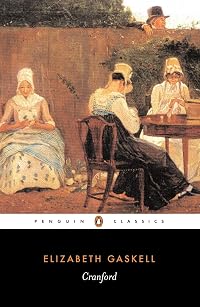
Staramber In Over To Candleford Laura reads Cranford to her Uncle. Although separated by time they both contain everyday descriptions of provincial British life by – largely – passive narrators.
50
atimco Both stories are semi-autobiographical and tell the story of a young, sensitive girl coming of age in a poor community. The heroines have similar family structures (attractive, hardworking mother, generally absent/weak father, younger brother who fits into his surroundings better than his older sister). The historical setting is very important to both works and almost acts as a character in its own right.
30
Staramber Althought the topics differ both are similarly structured and fascinating

atimco Both are narrated by a semi-outsider and share a quiet, contemplative, sometimes humorous tone. Both authors evidently desire to use their fiction to capture a disappearing (or disappeared) way of life.


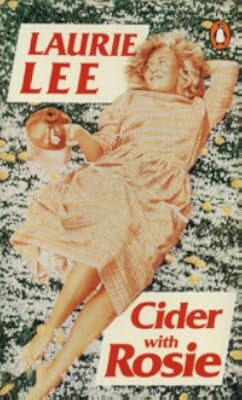
patchygirl Many lovely books come up in the recommendations for Lark Rise to Candleford, including The Country Child. For me, the latter is such a particularly good pair for Lark Rise that I just want to give it a special mention.
11
Member Reviews
What a lovely story. Through the trials of 2020, this book, along with the BBC TV adaption of it, simultaneously let my mind escape to another time and place and kept me grounded. I've never read anything like it- a sturdy but delicately carved social history of rural England in the final decades of the nineteenth century with a lacquer of fiction applied to it. One reason I picked it up was to learn about the world in which master craftsman Thomas Hardy fashioned Tess and Jude. I would recommend it equally to readers of history and historical fiction.
Exquisite is the first word that comes to mind, but a special kind of exquisite, a gentle and tactful, clear-eyed (as opposed to naive or nostalgically sentimental) remembrance of life in a hamlet about 20 miles from Oxford in the last two decades of the 19th century. I'm old enough to know that there is always "a way of life passing by" (I remember the milkman delivering our milk in glass bottles for example) but Flora, (disguised as Laura) describes everything of the habits, dress, food, celebrations, furnishings and social structure of her childhood and this truly was, in a very critical way, a rural life that was about to come crashing to an end. This is really three books in one and I generally read ten or twenty pages at night show more before going to sleep. A treasure, Thompson manages to simultaneously write both subjectively and objectively about a way of life in which she was immersed as a child. I look forward to seeking out the BBC rendering of it which I gather is quite good. ***** show less
This collection is a trilogy of memoirs, including Lark Rise, Over to Candleford, and Candleford Green. Together, the books detail the day-to-day existence of people living in Oxfordshire, England around the turn of the 19th century, largely focusing on the 1880s and 1890s. A central figure across all three books is Laura Timms, a literary personification of the author, Flora Thompson (née Timms).
These are not typical autobiographical memoirs. Although there are sections of the books that describe Laura’s life, Thompson spends more time offering a sociological picture of the places and communities that Laura lived in. Through Laura, Thompson sketches a picture of hamlet life in Lark Rise, including aspects of education, show more entertainment, birth, death, work, cooking, clothes making, festivals, politics, etc. In later volumes of the trilogy, the life and pace of Lark Rise is contrasted with Candleford Green (a village) and Candleford (a town). There are differences in size and scale but also in affluence, diversity, industrialization, mechanization, and general social velocity. Thompson spends most of her energy detailing life in Lark Rise and it is only as Laura begins to travel for family and work that readers begin to see the differences across the boundaries of place.
It is almost difficult to imagine such stark differences in the daily lives of people living in these three places. Differences in wages and spending power are to be expected, but the more interesting differences are in social mores and practices. There are notable differences in gender roles and education and professions that come to the surface through discussions about the impact of developments in technologies of telecommunications, logistics and shipping, personal and public transportation, as well as the changing technologies of the domestic sphere. There is a clear awareness of how the rate and degree of technological diffusion changed how people interacted with one another and how they created space for themselves in the modern economy.
These memoirs were submitted for publication in the 1930’s, and perhaps from that vantage point, Thompson was able to see changes coming that she couldn’t possibly have seen in the moment, for instance upon writing about the practice of people assembling to hear, read aloud, the serialized versions of Dickens’s novels, she noted:
Although only eight miles separates them, Candleford, Candleford Green, and Lark Rise represented societies moving at different speeds and seemed to represent a complex social stratification. It would be easy to read the books as pointing to an unevenness of social development, but there is also the sense that to even think about it as “development” is wrong insofar as “development” implies a kind of retrograde backwardness to places like Lark Rise. All three places are happy, functioning societies on different timelines. As a traveler between these worlds, Laura is able to observe and comment on the differences. She presents the differences without judgement, without resorting to pity or nostalgia.
I thought that three books of memoir were going to be too much for me, but the books are quite readable and each advances the project without only minimal overlap. show less
These are not typical autobiographical memoirs. Although there are sections of the books that describe Laura’s life, Thompson spends more time offering a sociological picture of the places and communities that Laura lived in. Through Laura, Thompson sketches a picture of hamlet life in Lark Rise, including aspects of education, show more entertainment, birth, death, work, cooking, clothes making, festivals, politics, etc. In later volumes of the trilogy, the life and pace of Lark Rise is contrasted with Candleford Green (a village) and Candleford (a town). There are differences in size and scale but also in affluence, diversity, industrialization, mechanization, and general social velocity. Thompson spends most of her energy detailing life in Lark Rise and it is only as Laura begins to travel for family and work that readers begin to see the differences across the boundaries of place.
It is almost difficult to imagine such stark differences in the daily lives of people living in these three places. Differences in wages and spending power are to be expected, but the more interesting differences are in social mores and practices. There are notable differences in gender roles and education and professions that come to the surface through discussions about the impact of developments in technologies of telecommunications, logistics and shipping, personal and public transportation, as well as the changing technologies of the domestic sphere. There is a clear awareness of how the rate and degree of technological diffusion changed how people interacted with one another and how they created space for themselves in the modern economy.
These memoirs were submitted for publication in the 1930’s, and perhaps from that vantage point, Thompson was able to see changes coming that she couldn’t possibly have seen in the moment, for instance upon writing about the practice of people assembling to hear, read aloud, the serialized versions of Dickens’s novels, she noted:
"They showed so much interest that one would naturally have expected them to get Dickens’s books, of which there were several in the Parish Library, to read for themselves. But, with very few exceptions, they did not, for, although they liked to listen, they were not readers. They were waiting, a public ready-made, for the wireless and the cinema" (435)
Although only eight miles separates them, Candleford, Candleford Green, and Lark Rise represented societies moving at different speeds and seemed to represent a complex social stratification. It would be easy to read the books as pointing to an unevenness of social development, but there is also the sense that to even think about it as “development” is wrong insofar as “development” implies a kind of retrograde backwardness to places like Lark Rise. All three places are happy, functioning societies on different timelines. As a traveler between these worlds, Laura is able to observe and comment on the differences. She presents the differences without judgement, without resorting to pity or nostalgia.
"They, too, or, rather, their children and grandchildren, were to come in time to the passing of the ways when the choice would have to be made between either merging themselves in the mass standardization of a new civilization or adapting the best of the new to their own needs while still retaining those qualities and customs which have given country life is distinctive character. That choice may not even now have been determined” (536)
I thought that three books of memoir were going to be too much for me, but the books are quite readable and each advances the project without only minimal overlap. show less
Flora Thompson's account of life in rural Oxfordshire in the last decades of the nineteenth century portrays an entire culture still governed by the rising and setting of the sun... perhaps the most intimate and persuasive account of the old rural order just before its transformation by modernism.
And what an informative and picturesque portrait it is. With no plot nor overarching story, almost the entire book is anecdotes and descriptions of the bygone days with interesting social commentary but Thompson evokes it all so beautifully. It makes me absolutely thankful of this luxurious-by-comparison modern world we have where we have more time for tending to our wants rather than spending all day to insufficiently tend to our needs but show more lose the connection to nature and community. Such are the trade-offs of modern life.
It was fun to wrap my head around the fact that I'm reading a book written seventy years ago, in which the author is writing about a time sixty years ago from her time. Even better is how the opinions of her characters of the people fifty years ago from their time, is similar to her opinions of those characters, and also our opinion of her times, it's surprising how relevant some sentiments (regarding the advance of technology, relationships between parents and children) still are. The stand out is that regarding the bicycles, a new mode of transport people railed against, citing them as dangerous and too fast, and that roads should be left to pedestrians. A sentiment then heaped onto automobiles, motorcycles, self-driving cars, and even back again to bicycles in areas without specific bike lanes where cyclists ride on footpaths.
Other highlights include the breakdown of social hierarchy, changing views on necessity of education, growing independence for women - Dorcas Lane is my hero, the modern day woman rebellions against authority figures, and Emily Rose my ideal olden-days lover where she sews and I knit in front of a big cosy fire, but of course we'll tell everyone we're only good spinster friends who only live together to save our pennies - , but the crème de la crème of it all is the "family pig", so beloved - that it warrants special and compulsory mentions in letters and daily conversations - and so delicious.
This autobiographical novel - although written in third person form which ironically made it more intimate and believable where the usage of "I" might have come across as too brash and obnoxious - is the book version of a mood lighting, utterly exquisite and evocative of those halcyon days without ignoring the hardships and intolerances endured. Recommended if you're interested in somewhat idyllic, rural communities or the effects of modernisation at the turn of the 20th century. show less
And what an informative and picturesque portrait it is. With no plot nor overarching story, almost the entire book is anecdotes and descriptions of the bygone days with interesting social commentary but Thompson evokes it all so beautifully. It makes me absolutely thankful of this luxurious-by-comparison modern world we have where we have more time for tending to our wants rather than spending all day to insufficiently tend to our needs but show more lose the connection to nature and community. Such are the trade-offs of modern life.
It was fun to wrap my head around the fact that I'm reading a book written seventy years ago, in which the author is writing about a time sixty years ago from her time. Even better is how the opinions of her characters of the people fifty years ago from their time, is similar to her opinions of those characters, and also our opinion of her times, it's surprising how relevant some sentiments (regarding the advance of technology, relationships between parents and children) still are. The stand out is that regarding the bicycles, a new mode of transport people railed against, citing them as dangerous and too fast, and that roads should be left to pedestrians. A sentiment then heaped onto automobiles, motorcycles, self-driving cars, and even back again to bicycles in areas without specific bike lanes where cyclists ride on footpaths.
Other highlights include the breakdown of social hierarchy, changing views on necessity of education, growing independence for women - Dorcas Lane is my hero, the modern day woman rebellions against authority figures, and Emily Rose my ideal olden-days lover where she sews and I knit in front of a big cosy fire, but of course we'll tell everyone we're only good spinster friends who only live together to save our pennies - , but the crème de la crème of it all is the "family pig", so beloved - that it warrants special and compulsory mentions in letters and daily conversations - and so delicious.
This autobiographical novel - although written in third person form which ironically made it more intimate and believable where the usage of "I" might have come across as too brash and obnoxious - is the book version of a mood lighting, utterly exquisite and evocative of those halcyon days without ignoring the hardships and intolerances endured. Recommended if you're interested in somewhat idyllic, rural communities or the effects of modernisation at the turn of the 20th century. show less
What an absolutely charming read. It's not a memoir and not a novel but a series of recollections and stories of both the hamlet of Lark Rise and the small towns of Candleford and Candleford Green with some small through lines of the life of Laura Timmins but that doesn't really do it justice. It's about a time and place that was already changing rapidly and was completely gone by the time Thompson wrote her stories but she creates it so vividly. I read it after a re-watch of the TV series and it was fun to see the sentences or phrases that were teased into narratives but it is probably best to think of them as completely different things. I dipped into this over a few months and I always enjoyed it.
Lark Rise to Candleford, originally published as three separate works in 1939–1943, is part autobiography, part historical documentary, and part social commentary. Other reviewers have described it as a novel (or rather, three novels), but I'm not sure I'd classify it as such. Flora Thompson sets out to recount rural life in England's 1880s and 1890s, and, incidentally, her own childhood. But she distances herself from the narrative by telling it in the third person and calling her character "Laura"—and anyways, Laura's story is secondary to that of Lark Rise and the surrounding areas.
And yet it isn't a story in the strict sense, which is why I don't think of it as a novel. Thompson gives her readers chapter after chapter of basic show more facts about what life was like for the agricultural laborers of the time. There is no villain, unless it be the ever-present poverty these country people faced. We follow the men to the fields and get a sense of their day-to-day lives and relationships. But the majority of the narrative is spent on the women, tracing out their struggles, describing their homes, discussing their love of fashion and gossip, and telling anecdotes of the more colorful or virtuous among them. At first I was a bit restless with the lack of plot, but as I continued to read I found myself drawn into the lives of the people Thompson describes, and I was left with an incredible amount of respect for their hardihood and endurance.
I suppose one could argue that the plot is loosely that of a coming-of-age novel, set against a backdrop that refuses to stay behind the characters. But I get the impression that it was more important to Thompson to capture her time and place with accuracy than to tell her own story. Her story comes in, of course, but usually only as a means to further elucidate her setting. This changes somewhat in the later sections, but I'm not sure I've read anything before that has quite this level of authorial detachment when the author is herself a character on the pages. The writing, by the way, is simply lovely.
Other works kept coming to mind as I read: L. M. Montgomery's Anne of Green Gables for the character sketches and small-community gossip (and foreshadowings of World War I in Montgomery's later books); James Herriot's All Creatures Great and Small (and the rest) for its reverent handling of a rustic, long-past way of life and its humor; and, most of all, Betty Smith's A Tree Grows in Brooklyn which also features a sensitive young girl living in a poor community and observing it with both eyes wide open. Both Francie and Laura have similar family structures, with a generally absent father, hardworking and attractive mother, and favored younger brother who gets on with their surroundings rather better than his older sister. Both girls snatch at whatever scraps of education and books they can get (unlike the other children), and become both a product of and an outsider to their communities.
The social commentary comes in with Thompson's lively disdain for modern psychology and all the ailments it has invented. As I happen to agree with her on this point, I found it quite refreshing to read her observations on how the principle of supply creating demand applies to physical and psychological ills. She also presents a very realistic view of the nature of humanity, demonstrating children's innate savagery (though implying that it can be cured with education). It's clear Thompson has little patience with what she sees as our absurdly over-protective approach to parenting today. She casts herself as a case study, giving several examples throughout the book of her own emotional resilience (and she was a sensitive child, too). One such instance is when she stumbles on a field where a bull was engaged in the act of "justifying his existence." Little Laura slips away before the men see her—and, as she pointedly notes, with absolutely no psychological scars engraved upon her soul.
Thompson is very reticent about her own religious beliefs, but goes into great depth concerning those of the country people. There were one or two comments about the historicity of the Bible ("that Jonah story takes a lot of swallowing") and the fact that it was only the older, less educated country people who still believed in the biblical miracles. There was also implicit praise of a preacher who never said anything that could make anyone uncomfortable. As with the rest of the subjects Thompson explores, all is viewed through a lens of forty years' experience and historical hindsight. Indeed, it is the fear of loss and the desire to preserve, in some form, a way of life that is gone forever that seems to be Thompson's primary motive in writing.
Overall, this was an excellent read and I enjoyed the immersion in the historical period very much. show less
And yet it isn't a story in the strict sense, which is why I don't think of it as a novel. Thompson gives her readers chapter after chapter of basic show more facts about what life was like for the agricultural laborers of the time. There is no villain, unless it be the ever-present poverty these country people faced. We follow the men to the fields and get a sense of their day-to-day lives and relationships. But the majority of the narrative is spent on the women, tracing out their struggles, describing their homes, discussing their love of fashion and gossip, and telling anecdotes of the more colorful or virtuous among them. At first I was a bit restless with the lack of plot, but as I continued to read I found myself drawn into the lives of the people Thompson describes, and I was left with an incredible amount of respect for their hardihood and endurance.
I suppose one could argue that the plot is loosely that of a coming-of-age novel, set against a backdrop that refuses to stay behind the characters. But I get the impression that it was more important to Thompson to capture her time and place with accuracy than to tell her own story. Her story comes in, of course, but usually only as a means to further elucidate her setting. This changes somewhat in the later sections, but I'm not sure I've read anything before that has quite this level of authorial detachment when the author is herself a character on the pages. The writing, by the way, is simply lovely.
Other works kept coming to mind as I read: L. M. Montgomery's Anne of Green Gables for the character sketches and small-community gossip (and foreshadowings of World War I in Montgomery's later books); James Herriot's All Creatures Great and Small (and the rest) for its reverent handling of a rustic, long-past way of life and its humor; and, most of all, Betty Smith's A Tree Grows in Brooklyn which also features a sensitive young girl living in a poor community and observing it with both eyes wide open. Both Francie and Laura have similar family structures, with a generally absent father, hardworking and attractive mother, and favored younger brother who gets on with their surroundings rather better than his older sister. Both girls snatch at whatever scraps of education and books they can get (unlike the other children), and become both a product of and an outsider to their communities.
The social commentary comes in with Thompson's lively disdain for modern psychology and all the ailments it has invented. As I happen to agree with her on this point, I found it quite refreshing to read her observations on how the principle of supply creating demand applies to physical and psychological ills. She also presents a very realistic view of the nature of humanity, demonstrating children's innate savagery (though implying that it can be cured with education). It's clear Thompson has little patience with what she sees as our absurdly over-protective approach to parenting today. She casts herself as a case study, giving several examples throughout the book of her own emotional resilience (and she was a sensitive child, too). One such instance is when she stumbles on a field where a bull was engaged in the act of "justifying his existence." Little Laura slips away before the men see her—and, as she pointedly notes, with absolutely no psychological scars engraved upon her soul.
Thompson is very reticent about her own religious beliefs, but goes into great depth concerning those of the country people. There were one or two comments about the historicity of the Bible ("that Jonah story takes a lot of swallowing") and the fact that it was only the older, less educated country people who still believed in the biblical miracles. There was also implicit praise of a preacher who never said anything that could make anyone uncomfortable. As with the rest of the subjects Thompson explores, all is viewed through a lens of forty years' experience and historical hindsight. Indeed, it is the fear of loss and the desire to preserve, in some form, a way of life that is gone forever that seems to be Thompson's primary motive in writing.
Overall, this was an excellent read and I enjoyed the immersion in the historical period very much. show less
Lark Rise by Flora Thompson.
Lark Rise is the first book of a trilogy, Flora Thompson's lightly fictionalized memoir of her early years in the 1880s and 1890s, growing up in a small hamlet in Oxfordshire, England. The author appears as "Laura" here and in the sequels, Over to Candleford and Candleford Green; the three books are usually collected as Lark Rise to Candleford. At the moment I only review the first book.
"Lightly fictionalized:" the book has little plot. Mostly, it recounts the pattern of daily life in Lark Rise and its surroundings, as situated in history and a changing world. Interspersed with the data are vignettes, one or two pages each, of the residents Laura knew, capturing their characters well while illuminating the show more natural and social orders and their place in them. Thompson is very good with the sensual details of the landscape, plants, animals, and everyday activities, as best shown by an example:
Commentary about the book often notes that she brings us a way of life that has vanished. In fact, she brings us several. Enclosure, by eliminating ancient rights to use of common lands, had reduced most of the villagers of Laura's parents' generation to relative poverty and dependence on limited wages for agricultural work. The landscape itself had been transformed, with crops replacing the earlier heather around Lark Rise. A younger generation was beginning to enjoy a bit of England's increasing prosperity. The books were published during the years of World War 2, and include numerous allusions to the years lying ahead of her heroine. Thompson's ability to frame the past and future in the present moment is superb; I cannot think of another book that does this so well.
This isn't the sort of book I normally read. As usual, there's an SF-connected reason why it has been on my TBR list for many years. John Crowley cites it as a source for his major fantasy novel of 1982, Little, Big, and uses a quote from it as the epigraph. I think what he took from Thompson was this sense of an apparently fixed way of life that in fact is rapidly passing.
I read this now because avaland and I have recently watched the first season of the BBC television series "Lark Rise to Candleford." The series is much more plot-driven than Thompson's book, turning her brief vignettes into hourlong episodes. As I watched, I found I was asking how this story could have supplied a source for Little, Big. I think the answer is that, while the series is a lovely evocation of rural English life, its producers needed more plot and less description than Thompson supplies, and concentrated on only a part, missing Thompson's particular sense of time passing. That's usual for media versions of books. Perhaps I will change my mind when I get to the second and third of the books, which move Laura closer to the age we see in the series.
And, without having been told in John Crowley's talks and Little, Big's epigraph, I would not have guessed that Thompson's book was relevant to his. Regardless, I'm pleased to have made Ms. Thompson's acquaintance, and look forward to reading the second and third books. show less
Lark Rise is the first book of a trilogy, Flora Thompson's lightly fictionalized memoir of her early years in the 1880s and 1890s, growing up in a small hamlet in Oxfordshire, England. The author appears as "Laura" here and in the sequels, Over to Candleford and Candleford Green; the three books are usually collected as Lark Rise to Candleford. At the moment I only review the first book.
"Lightly fictionalized:" the book has little plot. Mostly, it recounts the pattern of daily life in Lark Rise and its surroundings, as situated in history and a changing world. Interspersed with the data are vignettes, one or two pages each, of the residents Laura knew, capturing their characters well while illuminating the show more natural and social orders and their place in them. Thompson is very good with the sensual details of the landscape, plants, animals, and everyday activities, as best shown by an example:
Against the billowing gold of the fields the hedges stood dark, solid and dew-sleeked; dewdrops beaded the gossamer webs, and the children's feet left long, dark trails on the dewy turf. There were night scents of wheat-straw and flowers and moist earth on the air and the sky was fleeced with pink clouds.
For a few days or a week or a fortnight, the fields stood 'ripe unto harvest.' It was the one perfect period in the hamlet year. The human eye loves to rest upon wide expanses of pure color; the moors in the purple heyday of the heather, miles of green downland, and the sea when it lies calm and blue and boundless, all delight it; but to some none of these, lovely though they all are, can give the same satisfaction of spirit as acres upon acres of golden corn. There is both beauty and bread and the seeds of bread for future generations.
Commentary about the book often notes that she brings us a way of life that has vanished. In fact, she brings us several. Enclosure, by eliminating ancient rights to use of common lands, had reduced most of the villagers of Laura's parents' generation to relative poverty and dependence on limited wages for agricultural work. The landscape itself had been transformed, with crops replacing the earlier heather around Lark Rise. A younger generation was beginning to enjoy a bit of England's increasing prosperity. The books were published during the years of World War 2, and include numerous allusions to the years lying ahead of her heroine. Thompson's ability to frame the past and future in the present moment is superb; I cannot think of another book that does this so well.
This isn't the sort of book I normally read. As usual, there's an SF-connected reason why it has been on my TBR list for many years. John Crowley cites it as a source for his major fantasy novel of 1982, Little, Big, and uses a quote from it as the epigraph. I think what he took from Thompson was this sense of an apparently fixed way of life that in fact is rapidly passing.
I read this now because avaland and I have recently watched the first season of the BBC television series "Lark Rise to Candleford." The series is much more plot-driven than Thompson's book, turning her brief vignettes into hourlong episodes. As I watched, I found I was asking how this story could have supplied a source for Little, Big. I think the answer is that, while the series is a lovely evocation of rural English life, its producers needed more plot and less description than Thompson supplies, and concentrated on only a part, missing Thompson's particular sense of time passing. That's usual for media versions of books. Perhaps I will change my mind when I get to the second and third of the books, which move Laura closer to the age we see in the series.
And, without having been told in John Crowley's talks and Little, Big's epigraph, I would not have guessed that Thompson's book was relevant to his. Regardless, I'm pleased to have made Ms. Thompson's acquaintance, and look forward to reading the second and third books. show less
Members
- Recently Added By
Lists

The Guardian's 1000 Novels Everyone Must Read
1,005 works; 551 members

Folio Society
831 works; 53 members

Mustich's 1000 Books to Read Before You Die: A Life Changing List
1,001 works; 20 members
Author Information

17+ Works 2,753 Members
Some Editions
Awards and Honors
Series

Belongs to Publisher Series
Work Relationships
Common Knowledge
- Canonical title
- Lark Rise to Candleford
- Original title
- Lark Rise to Candleford
- Original publication date
- 1945
- People/Characters
- Laura Timmins (Flora Timms Thompson); Edmund; Queenie
- Important places
- Oxfordshire, England, UK; Lark Rise, Oxfordshire, England, UK (hamlet based on Juniper Hill); Candleford Green, Oxfordshire, England, UK (village based on Fringford); Candleford, Oxfordshire, England, UK
- Related movies
- Lark Rise to Candleford (2008 | IMDb)
- First words
- By absolute values, a true writer can never be other than what he is.
Introduction by H. J. Massingham, 1944.
The hamlet stood on a gentle rise in the flat, wheat-growing north-east corner of Oxfordshire. We will call it Lark Rise because of the great number of skylarks which made the surrounding fields their springboard and nested o... (show all)n the bare earth between the rows of green corn.
I. Poor People's Houses. - Quotations
- And she herself did not really wish to become a member; she never did wish to do what everybody else was doing, which showed she had a contrary nature, she had often been told, but it was really because her thought and tastes... (show all) ran upon different lines than those of the majority.
But have we any of us a free choice of our path in life, or are we driven on by destiny or by the demon within us into a path already marked out? Who can tell?
Her mother's judgement was usually sound, and she had often told her: 'You're not cut out for a pleasant, easy life. You think too much!' - Last words
- (Click to show. Warning: May contain spoilers.)They were spun of love and kinship and cherished memories.
- Original language
- English
Classifications
Statistics
- Members
- 2,076
- Popularity
- 9,998
- Reviews
- 30
- Rating
- (4.11)
- Languages
- 7 — English, French, German, Hungarian, Italian, Spanish, Swedish
- Media
- Paper, Audiobook, Ebook
- ISBNs
- 43
- ASINs
- 50