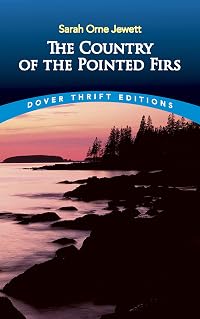
The Country of the Pointed Firs
by Sarah Orne Jewett
On This Page
Description
Regarded by some critics — including Henry James — as her masterpiece, The Country of the Pointed Firs is a short story cycle from American writer Sarah Orne Jewett. It follows the lives of several families in villages in coastal Maine as they struggle to survive amidst hardship and deprivation..
Tags
Recommendations

















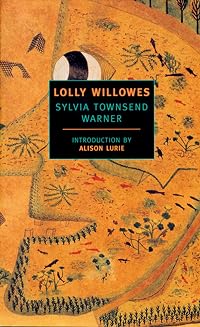





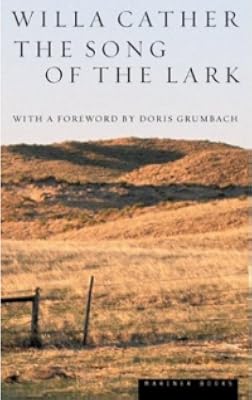

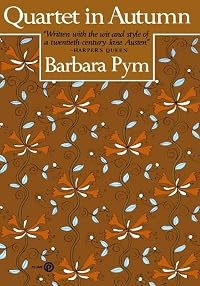

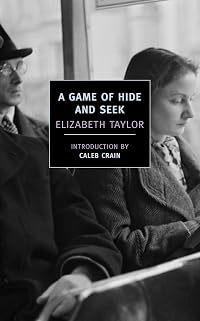
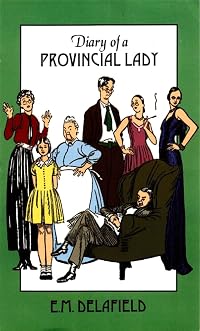
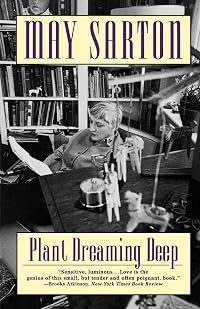


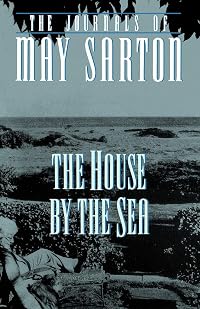




Member Recommendations
gennyt England rather than New England, inland rather than by the sea, but a similarly gentle, episodic celebration of mainly women's lives and friendships written from the point of view of a visitor who is made welcome in the community.
30

atimco Both are narrated by a semi-outsider and share a quiet, contemplative, sometimes humorous tone. Both authors evidently desire to use their fiction to capture a disappearing (or disappeared) way of life.

Bjace Both books deal with small communities in New Englad by an outside narrator.
Member Reviews
This is a lovely work which, in structure, put me slightly in mind of 'Cranford'- the narrator plays a minor role, being there mainly to describe the characters around her.
She- a writer- spends a summer in the idyllic Maine fishing village of Dunnet's Landing. Accompanying her landlady- a widowed herbalist- on frequent plant foraging expeditions; visiting the woman's elderly mother on a remote island; chatting with local seafarers...There's no plot, as such, it's just beautifully written and the reader feels a sense of loss as her sojoorn comes to an end, and the vividly drawn Maine community is left behind...
Quite lovely!
She- a writer- spends a summer in the idyllic Maine fishing village of Dunnet's Landing. Accompanying her landlady- a widowed herbalist- on frequent plant foraging expeditions; visiting the woman's elderly mother on a remote island; chatting with local seafarers...There's no plot, as such, it's just beautifully written and the reader feels a sense of loss as her sojoorn comes to an end, and the vividly drawn Maine community is left behind...
Quite lovely!
[[Sarah Orne Jewett]] was a late 19th/early 20th century American author that I had not yet read. When I saw that she was from Maine and that this novel was set there, I knew I had to read it during our vacation. I really enjoyed it. There isn't a lot of plot in this slim novel - basically a woman writer goes to Maine for the summer looking for a quiet place to write and instead finds herself enamored of both the setting and the people in the community. The nature writing is beautiful and really captures the beauty of coastal Maine - the fir trees, rocky coasts, and fresh pine and ocean smells. And she captures the lifestyle as well - the reliance on the sea, coastal farming, and close-knit though reserved communities.
I enjoyed this show more and recommend it to anyone who enjoys American writers from this era. It's slow and filled with conversation in dialect, but I liked it. show less
I enjoyed this show more and recommend it to anyone who enjoys American writers from this era. It's slow and filled with conversation in dialect, but I liked it. show less
Since there is no trip to the coast of Maine upcoming this summer, spending a few hours in the company of Mrs. Todd, Mrs. Blackett and assorted denizens of Dennett Landing and Green Island is the next best thing. The flavors, scents, sights and sounds of that most excellent of locales drift out of the pages of this slim volume like magician's smoke. The book reads like a memoir, the unnamed narrator giving us interconnected sketches of 19th century summer life in a simple time where everything is tied to the rhythm of the tides, and an herbalist's skill is respected at least as much as that of a "modern" doctor. Appropriately, there is humor of the most wicked variety, often aimed at the church and the clergy. My favorite line, however, show more was Mrs. Todd's observation about one of the hymn singers at a family gathering: "I couldn't help thinkin' if she was as far out o' town as she was out o' tune, she wouldn't get back in a day." My edition has some stunning black and white photographs of the place and time serving as preface to the story. show less
The prose is elegant and it does have one truly beautiful line near the very end of the book that touched me. The description is all very good.
I found this book extremely boring. I could almost tell no difference in my comprehension and enjoyment between when I was falling asleep while reading and when I was wide awake while reading, and I can assure you that this book will make you fall asleep. Not much happens.
There are some very deep messages, if you can sift through the overlong prose, about loneliness, disconnect, communication, gossip, and mourning. These are nice, but the book still feels bloated.
I would not recommend this to anyone. If you have to read it for a class, as I did, prepare for a long haul.
I found this book extremely boring. I could almost tell no difference in my comprehension and enjoyment between when I was falling asleep while reading and when I was wide awake while reading, and I can assure you that this book will make you fall asleep. Not much happens.
There are some very deep messages, if you can sift through the overlong prose, about loneliness, disconnect, communication, gossip, and mourning. These are nice, but the book still feels bloated.
I would not recommend this to anyone. If you have to read it for a class, as I did, prepare for a long haul.
What a sweet, lovely book. Composed of a series of vignettes that are bound together by an overstory of a young lady spending the summer in Dunnet Landing, Maine. Jewett does a spectacular job of portraying the people who populate this seafarer's town and its neighboring islands. She captures both their relationships and sense of community and their naturally reticent and independent natures.
Every occupant of this town has his own unique tale, and while there is no driving plotline, but more a kind of folklore that is being passed, reminiscent of The Canterbury Tales but even less plot-driven than that. I felt amazingly attached and involved with these people, even though they might only make an appearance in one chapter and then fade show more from view in the next.
The descriptions Jewett offers of both the land and its people are astoundingly visual:
"A long time before we landed at Green Island we could see the small white house, standing high like a beacon, where Mrs. Todd was born and where her mother lived, on a green slope above the water, with dark spruce woods still higher."
"I wondered, as I looked at him, if he had sprung from a line of ministers, he had the refinement of look and air of command which are the heritage of the old ecclesiastical families of New England. But as Darwin says in his autobiography, 'there is no such king as a sea-captain.'"
And, she sprinkles some astute observations among her flowing descriptions of the land and its people:
"Conversation's got to have some root in the past, or else you've got to explain every remark you make, an' it wears a person out." If you have a friend who has been with you since childhood, or a sibling with which you are very close, you will understand this perfectly. No new friend can fill that same purpose because with the old friend or sibling no explanation is necessary and with the new friend no amount of explanation could be enough.
"There, you never get over bein' a child long's you have a mother to go to." Again, if you have lost a mother you know the truth of this statement. While your mother lives there is always "home".
I have long wanted to read this book, having come across an excerpt from it years ago in a Victorian magazine. I was not disappointed. It roused a kind of nostalgia in me for a time and place I have never known but would love to be a part of. It suggests a kind of serenity, camaraderie, industry and love of life that is often sorely missing from our modern existence. The closest modern-era book I have found to this is [b:At Home in Mitford|71776|At Home in Mitford (Mitford Years, #1)|Jan Karon|https://d.gr-assets.com/books/1386924130s/71776.jpg|1222486]. show less
Every occupant of this town has his own unique tale, and while there is no driving plotline, but more a kind of folklore that is being passed, reminiscent of The Canterbury Tales but even less plot-driven than that. I felt amazingly attached and involved with these people, even though they might only make an appearance in one chapter and then fade show more from view in the next.
The descriptions Jewett offers of both the land and its people are astoundingly visual:
"A long time before we landed at Green Island we could see the small white house, standing high like a beacon, where Mrs. Todd was born and where her mother lived, on a green slope above the water, with dark spruce woods still higher."
"I wondered, as I looked at him, if he had sprung from a line of ministers, he had the refinement of look and air of command which are the heritage of the old ecclesiastical families of New England. But as Darwin says in his autobiography, 'there is no such king as a sea-captain.'"
And, she sprinkles some astute observations among her flowing descriptions of the land and its people:
"Conversation's got to have some root in the past, or else you've got to explain every remark you make, an' it wears a person out." If you have a friend who has been with you since childhood, or a sibling with which you are very close, you will understand this perfectly. No new friend can fill that same purpose because with the old friend or sibling no explanation is necessary and with the new friend no amount of explanation could be enough.
"There, you never get over bein' a child long's you have a mother to go to." Again, if you have lost a mother you know the truth of this statement. While your mother lives there is always "home".
I have long wanted to read this book, having come across an excerpt from it years ago in a Victorian magazine. I was not disappointed. It roused a kind of nostalgia in me for a time and place I have never known but would love to be a part of. It suggests a kind of serenity, camaraderie, industry and love of life that is often sorely missing from our modern existence. The closest modern-era book I have found to this is [b:At Home in Mitford|71776|At Home in Mitford (Mitford Years, #1)|Jan Karon|https://d.gr-assets.com/books/1386924130s/71776.jpg|1222486]. show less
A heartfelt delight!
An unnamed summer visitor boards with Mrs. Todd, an herbalist, in a remote village on the Eastern coast of Maine. The boarder comes for seclusion in order to write some project, but getting to know the villagers and their quaint ways seems to overtake her original intention and we are left assuming this story is the unexpected result. And one can't help but feel this result was surely better than anything else she had intended to do with her summer.
Nothing plot-like happens, merely a series of introductions to the personalities and histories of these resident New Englanders. A slice of life of the people and times, long gone now.
The best kind of complaint is it that it left me wishing for more.
Listened via Libribox show more recording by various readers. show less
An unnamed summer visitor boards with Mrs. Todd, an herbalist, in a remote village on the Eastern coast of Maine. The boarder comes for seclusion in order to write some project, but getting to know the villagers and their quaint ways seems to overtake her original intention and we are left assuming this story is the unexpected result. And one can't help but feel this result was surely better than anything else she had intended to do with her summer.
Nothing plot-like happens, merely a series of introductions to the personalities and histories of these resident New Englanders. A slice of life of the people and times, long gone now.
The best kind of complaint is it that it left me wishing for more.
Listened via Libribox show more recording by various readers. show less
In this slim volume originally published in 1896, Sarah Orne Jewett crystallizes a dying way of life along the Maine coast at the turn of the twentieth century. This novella is a loosely connected string of stories and observations recounted by our narrator, an outsider to the community. She is a writer who spends her summers in the peaceful seclusion of Dunnet Landing. But she has gained the trust of her landlady Mrs. Todd, and we see the many lives in Dunnet Landing just as our narrator does, unfolding slowly and without pretension.
Comparison between The Country of the Pointed Firs and the work of L. M. Montgomery is irresistible. The anecdotes, the character sketches, the sense of community, the love of beauty in nature, the show more good-natured humor scattered here and there — all are highly reminiscent of Montgomery's style. It's clear that both authors deeply loved the communities they depict in their stories, and their themes are very similar: an old sea-captain spinning a yarn, a faithful widower grieving for his wife, a disappointed lover withdrawing from her world, and others. In some places I was also reminded of Anne Morrow Lindbergh's nonfiction book Gift from the Sea; there is something akin in the tone of the two books. I would like to have known their authors.
The prose is just lovely, so spare and graceful. Consider the elegant constructions and latent poetry in these sentences:
The captain was very grave indeed, and I bade my inward spirit keep close to discretion. (10)
The poets little knew what comfort they could be to a man. (15)
I had been living in the quaint little house with as much comfort and unconsciousness as if it were a larger body, or a double shell, in whose simple convolutions Mrs. Todd and I had secreted ourselves, until some wandering hermit crab of a visitor marked the little spare room for her own. Perhaps now and then a castaway on a lonely desert island dreads the thought of being rescued. (36)
...there are paths trodden to the shrines of solitude the world over,—the world cannot forget them, try as it may; the feet of the young find them out because of curiosity and dim foreboding; while the old bring hearts full of remembrance. This plain anchorite had been one of those whom sorrow made too lonely to brave the sight of men, too timid to front the simple world she knew, yet valiant enough to live alone with her poor insistent human nature and the calms and passions of the sea and sky. (54–5)
Or the sly humor here:
I saw that Mrs. Todd's broad shoulders began to shake. "There was good singers there; yes, there was excellent singers," she agreed heartily, putting down her teacup, "but I chanced to drift alongside Mis' Peter Bowden o' Great Bay, an' I couldn't help thinkin' if she was as far out o' town as she was out o' tune, she wouldn't get back in a day." (76)
At first he seemed to be one of those evasive and uncomfortable persons who are so suspicious of you that they make you almost suspicious of yourself. (77)
I know very little about Jewett, but I have a notion that she was a woman who knew how to be alone. Yet it is apparent that she also enjoyed her fellow beings and found great pleasure in observing them. She shares this pleasure with her readers, and I will certainly be looking for more of her work. Thoughtful and quieting. show less
Comparison between The Country of the Pointed Firs and the work of L. M. Montgomery is irresistible. The anecdotes, the character sketches, the sense of community, the love of beauty in nature, the show more good-natured humor scattered here and there — all are highly reminiscent of Montgomery's style. It's clear that both authors deeply loved the communities they depict in their stories, and their themes are very similar: an old sea-captain spinning a yarn, a faithful widower grieving for his wife, a disappointed lover withdrawing from her world, and others. In some places I was also reminded of Anne Morrow Lindbergh's nonfiction book Gift from the Sea; there is something akin in the tone of the two books. I would like to have known their authors.
The prose is just lovely, so spare and graceful. Consider the elegant constructions and latent poetry in these sentences:
The captain was very grave indeed, and I bade my inward spirit keep close to discretion. (10)
The poets little knew what comfort they could be to a man. (15)
I had been living in the quaint little house with as much comfort and unconsciousness as if it were a larger body, or a double shell, in whose simple convolutions Mrs. Todd and I had secreted ourselves, until some wandering hermit crab of a visitor marked the little spare room for her own. Perhaps now and then a castaway on a lonely desert island dreads the thought of being rescued. (36)
...there are paths trodden to the shrines of solitude the world over,—the world cannot forget them, try as it may; the feet of the young find them out because of curiosity and dim foreboding; while the old bring hearts full of remembrance. This plain anchorite had been one of those whom sorrow made too lonely to brave the sight of men, too timid to front the simple world she knew, yet valiant enough to live alone with her poor insistent human nature and the calms and passions of the sea and sky. (54–5)
Or the sly humor here:
I saw that Mrs. Todd's broad shoulders began to shake. "There was good singers there; yes, there was excellent singers," she agreed heartily, putting down her teacup, "but I chanced to drift alongside Mis' Peter Bowden o' Great Bay, an' I couldn't help thinkin' if she was as far out o' town as she was out o' tune, she wouldn't get back in a day." (76)
At first he seemed to be one of those evasive and uncomfortable persons who are so suspicious of you that they make you almost suspicious of yourself. (77)
I know very little about Jewett, but I have a notion that she was a woman who knew how to be alone. Yet it is apparent that she also enjoyed her fellow beings and found great pleasure in observing them. She shares this pleasure with her readers, and I will certainly be looking for more of her work. Thoughtful and quieting. show less
Members
- Recently Added By
Lists

Must-Read Maine
146 works; 91 members

Great American Novels
158 works; 40 members

New York Public Library's Books of the Century - All
170 works; 14 members

New England Books
101 works; 10 members

500 Great Books by Women
507 works; 60 members

Newark Public Library's 1904 List of a Thousand of the Best Novels
95 works; 5 members

100 Best Books by American Women During the Past 100 Years, 1833-1933
27 works; 5 members

Victorian Period
113 works; 10 members

1890s
49 works; 6 members

A Good Read (Radio 4)
221 works; 1 member

American Lit for Eng 11 Research Project
368 works; 6 members

Tagged 19th Century
104 works; 7 members

Unmarried women
66 works; 6 members

Books Read in 2011
684 works; 20 members

AP Lit
363 works; 6 members

Recommended Reading : 600 Classics Reviewed, Editors of Salem Press, 2015
634 works; 6 members

Books We Discovered On LibraryThing
530 works; 130 members

Fiction With Familiar Settings
280 works; 93 members
Author Information

74+ Works 3,838 Members
Theodora Sarah Orne Jewett was born in South Berwick, Maine on September 3, 1849. Unable to attend school because of arthritis, she learned about coastal life in New England as she accompanied her father, a doctor, on his rounds. He encouraged both her reading and her writing. When she began submitting fiction in 1867, using the pseudonyms A. D. show more Eliot, Alice Eliot, and Sarah C. Sweet, her chosen topic was often the life and people of her native, rural Maine. Her first published story appeared in the Atlantic Monthly in 1869 and her first short story collection, Deephaven, was published in 1877. Her first novel, A Country Doctor was published in 1884. Her other works include A Marsh Island (1885), A White Heron and Other Stories (1886), A Native of Winby (1893), Tales of New England (1894) and The Country of the Pointed Firs (1896). She stopped writing in 1902, after a fall left her with severe head injuries. She died of a cerebral hemorrhage on June 24, 1909. (Bowker Author Biography) show less
Some Editions
Awards and Honors
Notable Lists
Series
Belongs to Publisher Series
Work Relationships
Is contained in
Is abridged in
Has as a student's study guide
Common Knowledge
- Canonical title
- The Country of the Pointed Firs
- Original title
- The Country of the Pointed Firs
- Original publication date
- 1896
- People/Characters
- Abby Martin; Almira Todd; Johnny Bowden; Mrs Blackett; Captain Littlepage; William Blackett
- Important places
- Dunnet, Maine, USA; Maine, USA
- First words
- (Note) Sarah Orne Jewett (1849-1909) was born and died in South Berwick, Maine.
There was something about the coast town of Dunnet which made it seem more attractive than other maritime villages of eastern Maine. - Quotations
- My heart was gone out o' my keepin' before I ever saw Nathan; but he loved me well, and he made me real happy, and he died before he ever knew what he'd had to know if we'd lived long together. 'Tis very strange about love. N... (show all)o, Nathan never found out, but my heart was troubled when I knew him first. There's more women likes to be loved than there is of those that loves. I spent some happy hours right here. I always liked Nathan, and he never knew. But this pennyr'yal always reminded me, as I'd sit and gather it and hear him talkin'—it always would remind me of—the other one."
In these days the young folks is all copy-cats, 'fraid to death they won't be all just alike; as for the old folks, they pray for the advantage o' bein' a little different."
I hoped in my heart that I might be like them as I lived on into age, and then smiled to think that I too was no longer very young. So we always keep the same hearts, though our outer framework fails and shows the touch of ti... (show all)me. - Last words
- (Click to show. Warning: May contain spoilers.)Presently the wind began to blow and we struck out seaward to double the long sheltering headland of the cape, and when I looked back again, the islands and the headland had run together and Dunnet Landing and all its coasts were lost to sight.
- Publisher's editor
- Appelbaum, Stanley
- Original language*
- Amerikanisch
*Some information comes from Common Knowledge in other languages. Click "Edit" for more information.
Classifications
Statistics
- Members
- 1,059
- Popularity
- 24,254
- Reviews
- 29
- Rating
- (3.83)
- Languages
- 5 — English, Estonian, German, Italian, Spanish
- Media
- Paper, Audiobook, Ebook
- ISBNs
- 97
- UPCs
- 1
- ASINs
- 31