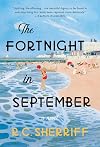
The Fortnight in September
by R. C. Sherriff
On This Page
Description
This charming, timeless classic about a family of five setting out on their annual seaside vacation is the most uplifting, life-affirming novel I can think beautiful dignity to be found in everyday living has rarely been captured more delicately. Meet the Stevens family, as they prepare to embark on their yearly holiday to the coast of England. Mr. and Mrs. Stevens first made the trip to Bognor Regis on their honeymoon, and the tradition has continued ever since. They stay in the same guest show more house and follow the same carefully honed schedule-now accompanied by their three children, twenty-year-old Mary, seventeen-year-old Dick, and little brother Ernie. Arriving in Bognor they head to Seaview, the guesthouse where they stay every year. It's a bit shabbier than it once was, the landlord has died and his wife is struggling as the number of guests dwindles every year. But the family finds bliss in booking a slightly bigger cabana, with a balcony, and in their rediscovery of the familiar places they visit every year. Mr. Stevens goes on his annual walk across the downs, reflecting on his life, his worries and disappointments, and returns refreshed. Mrs. Stevens treasures an hour spent sitting alone with her medicinal glass of port. Mary has her first small taste of romance. And Dick pulls himself out of the malaise he's sunk into since graduation, resolving to work towards a new career. The Stevenses savor every moment of their holiday, aware that things may not be the same next year. Delightfully nostalgic and soothing, "The Fortnight in September" is an extraordinary novel about ordinary people enjoying life's simple pleasures. show lessTags
Recommendations


















































Member Recommendations

nessreader Usually i don't cross-recommend same-author books but rc sherriff does so many genres that i make an exception. These 2 share a warmth and compassion for unglamorous decent people living everyday lives.
20

nessreader Both are about heroic families on the border of poverty just after the 2nd world war. Both families are mutually supportive, making the best of what they have and hopeful of the future. I'm not sure that the writers are not condescending and writing-down-to their characters -that may be my cynicism - but was interested that both books give multiple povs within the group so that shades of different agendas emerge.
10

wandering_star Like The Fortnight In September, London Belongs To Me looks closely and sympathetically at what may seem, from the outside, to be ordinary mundane lives. In my opinion, London Belongs To Me does it better...

Member Reviews
The Fortnight in September is a story about "about simple, uncomplicated people doing normal things." as the author himself described it in his autobiography. We follow the Stevens family on their annual fortnight's holiday to Bognor Regis in the 1930s. This fortnight in Bognor is an annual ritual, starting with the evening before going away, the journey to Bognor by train, their stay in the same house in Bognor every year and even including the amount of food and drink they buy which has been calculated to a nicety based on how much they required in previous years.
There are some changes this year, however. The two eldest children, Mary and Dick, now have jobs and income of their own and have contributed some of their money towards the show more cost of the holiday meaning the Stevens can rent one of the large beach huts to change in and sit on the veranda when on the beach. The lady who runs Seaview, the house they always stay in, is getting rather elderly and struggling to cope and the Stevens start to notice how run down Seaview is becoming. There's a sense that this may be the last family holiday they have all together at this house so there is a sense of impending change throughout the book and also a sense of nostalgia towards the many years they've enjoyed this holiday together. But there's also a sense of hope as Dick Stevens thinks about his future career and what he wants to do with his life, Mary Stevens falls in love for the first time and even Mr Stevens is able to come to terms with some past disappointments.
"The man on his holidays becomes the man he might have been, the man he could have been, had things worked out a little differently. All men are equal on their holidays: all are free to dream their castles without thought of expense, or skill of architect. Dreams based upon such delicate fabric must be nursed with reverence and held away from the crude light of tomorrow week."
There are some wonderful moments of quiet humour, such as Mr Stevens reaction to the holiday photos when developed, or the description of the large, soulless holiday house one of Mr Stevens' clients has had built for him and his wife which they had wanted to be a seaside house despite the fact that 'the sound of the sea got on Mrs. Montgomery's nerves'.
The story ends as the Stevens say goodbye to Bognor and Seaview at the end of their fortnight there and I was very sorry to leave them. This isn't the sort of story where much happens but it is a wonderful observation of the hopes and dreams of ordinary people. Recommended. show less
There are some changes this year, however. The two eldest children, Mary and Dick, now have jobs and income of their own and have contributed some of their money towards the show more cost of the holiday meaning the Stevens can rent one of the large beach huts to change in and sit on the veranda when on the beach. The lady who runs Seaview, the house they always stay in, is getting rather elderly and struggling to cope and the Stevens start to notice how run down Seaview is becoming. There's a sense that this may be the last family holiday they have all together at this house so there is a sense of impending change throughout the book and also a sense of nostalgia towards the many years they've enjoyed this holiday together. But there's also a sense of hope as Dick Stevens thinks about his future career and what he wants to do with his life, Mary Stevens falls in love for the first time and even Mr Stevens is able to come to terms with some past disappointments.
"The man on his holidays becomes the man he might have been, the man he could have been, had things worked out a little differently. All men are equal on their holidays: all are free to dream their castles without thought of expense, or skill of architect. Dreams based upon such delicate fabric must be nursed with reverence and held away from the crude light of tomorrow week."
There are some wonderful moments of quiet humour, such as Mr Stevens reaction to the holiday photos when developed, or the description of the large, soulless holiday house one of Mr Stevens' clients has had built for him and his wife which they had wanted to be a seaside house despite the fact that 'the sound of the sea got on Mrs. Montgomery's nerves'.
The story ends as the Stevens say goodbye to Bognor and Seaview at the end of their fortnight there and I was very sorry to leave them. This isn't the sort of story where much happens but it is a wonderful observation of the hopes and dreams of ordinary people. Recommended. show less
I am packing up to head home from my annual summer vacation and I picked up R.C. Sherriff's The Fortnight in September as a final read of the season. It turns out that this gentle look at an ordinary, middle class British family's yearly seaside vacation to the sea was the perfect accompaniment to the end of my own summer, capturing as he does, the anticipation and flurry of getting ready for vacation, the pleasure of the vacation itself, and the melancholy of leaving mixed with the rightness of being once again at home.
Centered on the Stevens family of five, Mr. and Mrs. Stevens, twenty year old Mary, seventeen year old Dick, and ten year old Ernie, this charming novel shows the small pleasures of daily holiday living in a happy, show more familiar place, bathing in the sea, walking on the boardwalk, playing cricket, flying a kite, and so on. The Stevens go to Bognor Regis every year for two weeks in September. They stay at the same guesthouse and cheerfully follow roughly the same schedule during their time there. There are, of course, small changes each year, like choosing to splurge on renting a bathing hut this year or the increasingly noticeable shabbiness of their chosen guesthouse, but their fondness for the place, loyalty, and pleasant memories of past years keep them coming back, especially this year when there was a question of whether Mary and Dick, both out of school now and working, would join the family again or if they'd go off with their friends. There are no large dramas here, only small ones easily (and for the most part happily) navigated.
The novel is almost entirely character driven with little plot to speak of but it captures the appeal of the familiar, comfortable everyday life in a place the characters love and look forward to all year. The writing is old fashioned (although likely not so when it was published in 1931) and nostalgic feeling, and the story is warm and engaging, following each of the five family members on their own and together, giving the reader more insight into each of their thoughts and hopes both on vacation and in their usual life. It's a slow, quiet novel of annual rituals and small, contained pleasures that makes for an enjoyable reading experience. show less
Centered on the Stevens family of five, Mr. and Mrs. Stevens, twenty year old Mary, seventeen year old Dick, and ten year old Ernie, this charming novel shows the small pleasures of daily holiday living in a happy, show more familiar place, bathing in the sea, walking on the boardwalk, playing cricket, flying a kite, and so on. The Stevens go to Bognor Regis every year for two weeks in September. They stay at the same guesthouse and cheerfully follow roughly the same schedule during their time there. There are, of course, small changes each year, like choosing to splurge on renting a bathing hut this year or the increasingly noticeable shabbiness of their chosen guesthouse, but their fondness for the place, loyalty, and pleasant memories of past years keep them coming back, especially this year when there was a question of whether Mary and Dick, both out of school now and working, would join the family again or if they'd go off with their friends. There are no large dramas here, only small ones easily (and for the most part happily) navigated.
The novel is almost entirely character driven with little plot to speak of but it captures the appeal of the familiar, comfortable everyday life in a place the characters love and look forward to all year. The writing is old fashioned (although likely not so when it was published in 1931) and nostalgic feeling, and the story is warm and engaging, following each of the five family members on their own and together, giving the reader more insight into each of their thoughts and hopes both on vacation and in their usual life. It's a slow, quiet novel of annual rituals and small, contained pleasures that makes for an enjoyable reading experience. show less
After being enraptured by Sherriff's The Hopkins Manuscript, this was certainly a change of pace. If nothing else, Sherriff has shown us he can write a tight, emotional, human drama (Journey's End), a big science fiction setpiece (Hopkins), and now this: a gentle, quotidian, nostalgic little celebration of life's simple pleasures. Author Kazuo Ishiguro, writer I admire greatly, describes it as a "delicate" exploration of "the beautiful dignity to be found in everyday living."
An ordinary, middle-class family of five in 1931 England: the Stevenses: father, mother, and their three children: young adults Dick and Mary, and rowdy ten-year-old Ernie, are preparing for their annual two-week trip to the seaside. They always go there and nowhere show more else. They always stay at the same boardinghouse. Even the day of packing and preparation is ritualized, scripted according to Mr. Stevens's "Marching Orders." And it is filled with a lovely anticipation pleasurable in itself, as exciting as Christmas Eve, where divergence from hallowed traditions would take some the of the heart out of it. There is a frisson of tension even over the change of train at Clapham Junction: will they make the change? Will they find seats together? Who might sit with them? Even though of course it all comes right.
These tiny dramas unspool throughout this gentle story. Mr Stevens relishes his long solo walks on the downs, savors the feel of an open collar, stout walking shoes, and a companionable pipe in the local pub. The family gathers in their bathing cabin (they splurge on one with with a balcony!) to watch the sea and the people. They play games in the arcade, listen to the band. Mary has a desultory flirtation with a young man, which (of course) goes nowhere. An elegiac tone creeps in here and there: the children are growing up. There is a hint that this could be the last of these time-honored holidays. Ernie may build the last of the Stevens sand castles; Dick may go off with some friends next year. Mrs Stevens notes with a pang that the boardinghouse is looking shabby; the ingratiating landlady has aged, looks ill and anxious. And Mrs Stevens, a shy, rather simple woman (whose husband occasionally notices her dropped h's with mild irritation) actually doesn't even like the sea. Her favorite part of every day is her quiet hour in the evening, alone while the others are out and about, with her needlework and a glass of port (for her health), the bottle carefully measured out to last the whole fortnight. Some readers criticize Sherriff's depiction of her as rather empty and inattentive, but I wonder if that was his point: that's the role women had, or at least that was her role in that family in that time - overlooked, unattended, unimportant to the people she devoted her life to. She's the one, after all, who notices the strain the landlady is under as her customers are trickling away: older, alone, and struggling.
That's pretty much it. One family, one seaside holiday, one little stream of beloved activities to be cherished, looked forward to, enjoyed, clung to and - ultimately - to be lost. It doesn't seem like much, but beautifully observed, generously respected, it should stir some memories of beloved family traditions in many readers. show less
An ordinary, middle-class family of five in 1931 England: the Stevenses: father, mother, and their three children: young adults Dick and Mary, and rowdy ten-year-old Ernie, are preparing for their annual two-week trip to the seaside. They always go there and nowhere show more else. They always stay at the same boardinghouse. Even the day of packing and preparation is ritualized, scripted according to Mr. Stevens's "Marching Orders." And it is filled with a lovely anticipation pleasurable in itself, as exciting as Christmas Eve, where divergence from hallowed traditions would take some the of the heart out of it. There is a frisson of tension even over the change of train at Clapham Junction: will they make the change? Will they find seats together? Who might sit with them? Even though of course it all comes right.
These tiny dramas unspool throughout this gentle story. Mr Stevens relishes his long solo walks on the downs, savors the feel of an open collar, stout walking shoes, and a companionable pipe in the local pub. The family gathers in their bathing cabin (they splurge on one with with a balcony!) to watch the sea and the people. They play games in the arcade, listen to the band. Mary has a desultory flirtation with a young man, which (of course) goes nowhere. An elegiac tone creeps in here and there: the children are growing up. There is a hint that this could be the last of these time-honored holidays. Ernie may build the last of the Stevens sand castles; Dick may go off with some friends next year. Mrs Stevens notes with a pang that the boardinghouse is looking shabby; the ingratiating landlady has aged, looks ill and anxious. And Mrs Stevens, a shy, rather simple woman (whose husband occasionally notices her dropped h's with mild irritation) actually doesn't even like the sea. Her favorite part of every day is her quiet hour in the evening, alone while the others are out and about, with her needlework and a glass of port (for her health), the bottle carefully measured out to last the whole fortnight. Some readers criticize Sherriff's depiction of her as rather empty and inattentive, but I wonder if that was his point: that's the role women had, or at least that was her role in that family in that time - overlooked, unattended, unimportant to the people she devoted her life to. She's the one, after all, who notices the strain the landlady is under as her customers are trickling away: older, alone, and struggling.
That's pretty much it. One family, one seaside holiday, one little stream of beloved activities to be cherished, looked forward to, enjoyed, clung to and - ultimately - to be lost. It doesn't seem like much, but beautifully observed, generously respected, it should stir some memories of beloved family traditions in many readers. show less
This is a lovely, quiet book about a lower middle class English family in the early '30s, taking their annual two weeks holiday by the sea. R.C. Sherriff does a great job at conveying both the kinds of little things that people get anxious about—how to pack; how to ensure the optimal seat on the train; which spot on the beach to select and is it worth hiring out a particular bathing hut or not—and the kinds of pleasures that come with the change of routine and place, however mundane. The Fortnight in September isn't a book in which much happens—it's a slice-of-life story with no grand life lessons to it. But throughout you have a muted sense of nostalgia, the faint sense that since the Stevens children are getting older this may show more be the last time the family makes this journey all together. A pleasurable read. show less
An enjoyable slow-placed story about a London family's annual two-week trip to the seaside.
Each character in this family of five gets their own alone time on the trip to give the reader a closer look at their lives and thoughts. The journey itself is a character, with the departure described in detail and the return home given a shorter, but tender, telling.
There are wonderful tidbits throughout the book. I loved the wonder of the youngest son, Ernie, when he tries to figure out how the ticket-taker is inserted into his small cylindrical booth, and how Ernie looks every year at the painting in their boarding house, checking whether he can see anyone in the window of the house in the painting. I liked older son Dick's examination of the show more job he has now and thoughts about what he can do to achieve his dream work life. And I enjoyed Mr. Stevens' long ramble in the countryside, pondering his life and the beauty of the land around him. And I liked how the author captures those mixed feelings one has about vacations - the excitement about the trip, the complete immersion in the precious time away, and the contentedness of coming home.
This book is going to be too slow and old-fashioned for lots of people. But it hit the spot for me.
A passage I liked: Mr. Stevens is renting for the family a bathing hut right on the beach, an extravagance that can make a modest-income person feel grand and loose with money - "that sudden pride that comes to cautious people when on rare occasions they boldly step beyond the ranks of those around them." show less
Each character in this family of five gets their own alone time on the trip to give the reader a closer look at their lives and thoughts. The journey itself is a character, with the departure described in detail and the return home given a shorter, but tender, telling.
There are wonderful tidbits throughout the book. I loved the wonder of the youngest son, Ernie, when he tries to figure out how the ticket-taker is inserted into his small cylindrical booth, and how Ernie looks every year at the painting in their boarding house, checking whether he can see anyone in the window of the house in the painting. I liked older son Dick's examination of the show more job he has now and thoughts about what he can do to achieve his dream work life. And I enjoyed Mr. Stevens' long ramble in the countryside, pondering his life and the beauty of the land around him. And I liked how the author captures those mixed feelings one has about vacations - the excitement about the trip, the complete immersion in the precious time away, and the contentedness of coming home.
This book is going to be too slow and old-fashioned for lots of people. But it hit the spot for me.
A passage I liked: Mr. Stevens is renting for the family a bathing hut right on the beach, an extravagance that can make a modest-income person feel grand and loose with money - "that sudden pride that comes to cautious people when on rare occasions they boldly step beyond the ranks of those around them." show less
A few days ago, The Guardian published an article in which authors recommended uplifting books to brighten our spirits. Kazuo Ishiguro’s choice was The Fortnight in September (1931), about a London family’s annual holiday at the seaside in Bognor Regis. I bought it there and then, and have been happily absorbed in it ever since. It’s hard to describe exactly why it’s so absorbing, because very little happens – it’s a simple little book, but simplicity is a large part of its appeal. It takes you back to a less complicated age, when you had one holiday a year, and all excitement, hope and expectation centred on those two weeks at the sea. You probably went to the same place every year, and there were boarding houses and show more sandcastles; strolls along the promenades; mornings swimming in the sea; bathing huts; arcade games; the band playing on the pier. It conjures up the golden age of the British seaside town, and the sheer pleasure of being on holiday and getting away from it all. So roll up your trouser-legs, grab your bucket and spade and join me for a heartwarming piece of escapism...
For the full review, please see my blog:
https://theidlewoman.net/2020/04/08/the-fortnight-in-september-r-c-sherriff/ show less
For the full review, please see my blog:
https://theidlewoman.net/2020/04/08/the-fortnight-in-september-r-c-sherriff/ show less
The Fortnight in September tells the story of the Stevens' family's annual summer holiday in Bognor Regis around 1930, probably the heyday of the traditional British seaside holiday. Mr and Mrs Stevens have been going to the same guesthouse in Bognor Regis for two weeks in September every year since their marriage, but what seems an unchanging ritual is on the brink of ending, as their two grown-up children talk of spending their holidays with friends. The Stevens are a very ordinary and quiet family, there are no dramas and very little happens, but the book is a satisfying read none the less.
What R.C.Sherriff does beautifully is to capture to perfection the whole idea of a holiday:
'The man on his holidays becomes the man he might have show more been, the man he could have been, had things worked out differently. All men are equal on their holidays: all are free to dream their castles without thought of expense, or skill of architect.'
And what he also captured beautifully were the worries and disappointments lurking underneath the surface of even a seemingly idyllic holiday: Mr Stevens brooding on his disappointments at work; Mrs Stevens hiding the fact that she found the sea terrifying and would actually prefer to be at home; and Dick's unhappiness in the job that his father is so proud of having found for him. Only the youngest child, Ernie, is untouched by the worries of the adult world. And even the guesthouse in which they stay, 'Seaview', has grown old along with its landlady, so that not even the rose-tinted glasses with which it is viewed by the Stevens can hide its gradual decline into dilapidation.
What is also lovely in this book is the period detail of the holidays of that era, something which particularly interests me having grown up in an old holiday resort myself. I was amazed that Mrs Stevens was expected to shop every day for the groceries that were cooked by their landlady. And I found even the little details of their journey fascinating. So overall a good read. show less
What R.C.Sherriff does beautifully is to capture to perfection the whole idea of a holiday:
'The man on his holidays becomes the man he might have show more been, the man he could have been, had things worked out differently. All men are equal on their holidays: all are free to dream their castles without thought of expense, or skill of architect.'
And what he also captured beautifully were the worries and disappointments lurking underneath the surface of even a seemingly idyllic holiday: Mr Stevens brooding on his disappointments at work; Mrs Stevens hiding the fact that she found the sea terrifying and would actually prefer to be at home; and Dick's unhappiness in the job that his father is so proud of having found for him. Only the youngest child, Ernie, is untouched by the worries of the adult world. And even the guesthouse in which they stay, 'Seaview', has grown old along with its landlady, so that not even the rose-tinted glasses with which it is viewed by the Stevens can hide its gradual decline into dilapidation.
What is also lovely in this book is the period detail of the holidays of that era, something which particularly interests me having grown up in an old holiday resort myself. I was amazed that Mrs Stevens was expected to shop every day for the groceries that were cooked by their landlady. And I found even the little details of their journey fascinating. So overall a good read. show less
Members
- Recently Added By
Lists

wilfully eccentric little england (cosy read novels, england)
45 works; 15 members

In or About the 1930s
198 works; 27 members

Boarding House and Hotel Fiction
73 works; 25 members

Favourite Books
1,820 works; 316 members

Top Five Books of 2022
736 works; 272 members

Pleasant Surprises: Books That Exceeded Our Expectations
418 works; 143 members

Comfort Reads
221 works; 41 members
Five star books
1,767 works; 110 members

Radio 4 Book at Bedtime
12 works; 1 member

Books Read in 2022
5,226 works; 112 members

A's favorite novels
100 works; 3 members

Books Read in 2015
3,299 works; 126 members

Schwob Nederland
207 works; 2 members

Best Books of 1926-1935
403 works; 10 members

Top Five Books of 2024
795 works; 264 members

Recommend the 20 best books you've read in the last five years
2,168 works; 607 members

Persephone
148 works; 3 members

Books We Couldn't Put Down
443 works; 197 members

Writers In Public Domain 2026
90 works; 1 member

The Five Books That Represent Us
391 works; 149 members
Talk Discussions
Past Discussions
Zwei Wochen am Meer in German Library Thingers (June 2024)
Author Information

33+ Works 2,160 Members
Some Editions
Awards and Honors
Series
Belongs to Publisher Series
Common Knowledge
- Canonical title*
- Twee weken weg
- Original publication date
- 1931
- People/Characters
- Mr. Ernest Stevens; Mrs. Flossie Stevens; Dick Stevens; Mary Stevens; Ernie Stevens; Mrs. Huggett (show all 9); Jessica Marshall; Mr. and Mrs. Montgomery; Pat Mackenzie
- Important places
- Bognor Regis, West Sussex, England, UK; 22 Corunna Road, London, England, UK; London, England, UK; Sussex, England, UK
- First words
- On rainy days, when the clouds drove across on a westerly wind, the signs of fine weather came from over the Railway Embankment at the bottom of the garden.
- Quotations
- Mr Stevens and his children loved the sea in all its moods: they loved it when it lay quietly at its ebb, murmuring in its sleep -- and when it awoke, and came rippling over the sands: at its full on a peaceful evening, lazil... (show all)y slapping at the shingle. But best of all they loved it as it was today -- roaring wildly round the groins, booming and sighing in the cavernous places beneath the pier, crashing against the sea wall and showering them with spray. Every one of its thousand calls had a different note -- every sound was wild with freedom. Wave after wave lashed the concrete wall, to sink back with a moan of pain as though clutched and drawn down by a great sea monster. The countless little pebbles lay motionless, petrified as each wave came crashing on them -- then they would leap to life and go madly chasing it with a sound like the far distant cheering of a mighty crowd.
The man on his holidays becomes the man he might have been, the man he could have been, had things worked out a little differently. All men are equal on their holidays: all are free to dream their castles without thought of e... (show all)xpense, or skill of architect. Dreams based upon such delicate fabric must be nursed with reverence and held away from the crude light of tomorrow week.
But they saw in front of them a woman neither fat nor thin: a faded woman with yellow hair, bright red lips and rosy cheek bones. She looked as if she had been boiled in too much water, then artificially flavoured.
His account books and ink-wells lay behind him - he had done up his pens in an elastic band and slammed them into his desk.
Mr Stevens relaxed every muscle, and was scarcely conscious of his body beyond the healthy ache of his legs. Almost always, at home, there was some trivial pain, in the forehead or eyes - a sore tendon in the throat - a touch... (show all) of tightness across the chest or a twinge of rheumatism somewhere: nothing, of course, to worry about, but just enough to remind him that he possessed a body which demanded a little thought and care.
The garden was at its best in the twilight. The harsh outlines of surrounding things were softened and more subdued. In this light the Railway Embankment beyond the lower fence might almost be the green border of a canal and ... (show all)the telegraph poles the slim poplars that would line its grassy towing-path.
The man on his holidays becomes the man he might have been, the man he could have been, had things worked out a little differently.
But soon the open country began to surge in more strongly—and once, for a little while, Dick could see as far as the horizon in unbroken waves of grass. He sat with his chin in his hand, never moving his eyes to take in det... (show all)ails. He liked the flowing country to form the background of his thoughts.
As Dick ate his sandwich he thought how strange it was that no one, in all the life of the world, would ever know the feeling of an empty, curtained house, for the very entry of a human foot dispersed it.
Bognor lay slumbering from its long, hectic day in Saturday's sun: not a window on the whole front so much as blinked a curtained eye as the fishermen passed with the soft clump of their gum boots. The pier stood black and ga... (show all)unt behind them, like the skeleton of a gigantic monster with its front legs planted in the sea. The stars were fading, and far away down the coast—half from the sea and half from the sloping arm of the downs, came a very delicate amber glow, smudged with tiny streaks of cloud.
Supposed site of Roman camp, read Mr. Steven's map, and he could place the spot exactly by the crossing of two paths. He could follow the faint ridge of it in the grass, and he thought of the same soft outlines that re... (show all)mained of Ernie's sandcastles, after the sea had covered them and gone. Just a difference between moments and years.
He passed a weather-beaten little tree—bent into the shape of a man blown along with his umbrella in front of him, inside out
"So hot," she murmured with a heavy sigh—"the sun seems to get everywhere, doesn't it?"
"It does," agreed Mr. Stevens, his eyes wandering out to the shadeless garden. He could see some small, scraggy trees, with labels r... (show all)ound their thin, parched necks. They looked as if they had been set five minutes ago, and were crying down the road in panic to the man who put them in—begging him to return and take them away with him.
She had thought of life as something that just began, before you knew, and went quietly on, until you died: she had never known that it could end—and begin again so wonderfully. - Last words
- (Click to show. Warning: May contain spoilers.)From the distance Mrs. Huggett's white lace cuff looked like a handkerchief being waved. They could not see her bad eye any longer, and she looked quite tall and dignified standing there by the gate in her black silk dress.
- Publisher's editor*
- Oorspronkelijke uitgave Victor Gollancz
- Blurbers
- Ishiguro, Kazuo; van Keulen, Mensje
- Original language
- English
- Disambiguation notice*
- Een opbeurender roman dan deze kan ik op dit moment niet bedenken.' – Kazuo Ishiguro
Een bijzonder verhaal vol herkenbaarheid en klein geluk
*Some information comes from Common Knowledge in other languages. Click "Edit" for more information.
Classifications
Statistics
- Members
- 644
- Popularity
- 45,292
- Reviews
- 25
- Rating
- (4.01)
- Languages
- Dutch, English, German, Spanish
- Media
- Paper, Audiobook, Ebook
- ISBNs
- 17
- UPCs
- 1
- ASINs
- 9