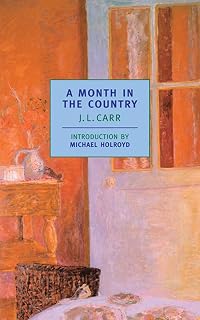
A Month in the Country
by J. L. Carr
There is 1 current discussion about this work.
On This Page
Description
A short, spellbinding novel about a WWI veteran finding a way to re-enter-and fully embrace-normal life while spending the summer in an idyllic English village. In J. L. Carr's deeply charged poetic novel, Tom Birkin, a veteran of the Great War and a broken marriage, arrives in the remote Yorkshire village of Oxgodby where he is to restore a recently discovered medieval mural in the local church. Living in the bell tower, surrounded by the resplendent countryside of high summer, and laboring show more each day to uncover an anonymous painter's depiction of the apocalypse, Birkin finds that he himself has been restored to a new, and hopeful, attachment to life. But summer ends, and with the work done, Birkin must leave. Now, long after, as he reflects on the passage of time and the power of art, he finds in his memories some consolation for all that has been lost. This audiobook is expertly read by Christopher Tester, with audio engineering by Mike Thal. It was produced and published by Echo Point Books & Media, an independent bookseller in Brattleboro, Vermont. show lessTags
Recommendations






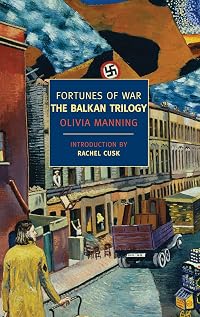

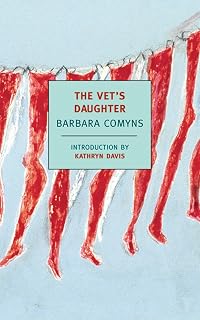
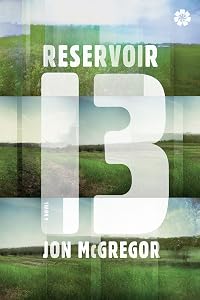


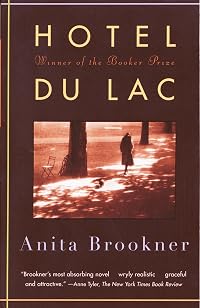










Member Recommendations

Jannes Under the Greenwood Tree was according to the Carr's own foreword one of the main inspirations for A Month in the Country
40
Widsith Two excellent, but very different, novels about damaged English soldiers returning home from the First World War with shell-shock.



Petroglyph Both of these books are gentle, mostly quiet novels about an outsider entering a small English town to see through an arts-related project. Their setting surpasses a pedestrian "look at these weird locals". Lots going on in the background if you look for it.

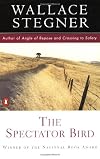


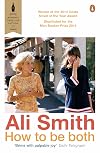
shaunie Both books focus on the restoration of a wall painting and the descriptions are pretty similar. Both lovely books!
Member Reviews
This was a quick and fulfilling read. I can't believe the detail that is packed into this little book--the edition I read had just over 100 pages, but it left me with the impression that I had read much, much more than that. The plot centers around a World War I veteran, shell-shocked and cuckolded, who takes on the job of uncovering a medieval wall-painting in a church in the North Riding. His hope is that the task will occupy him for the summer, in "a haven of calm water", and that once finished he can forget the War and his faithless wife--"...afterwards, maybe I won't be a casualty anymore." As you may imagine, he discovers much more than a formulaic medieval wallpainting, on the wall, in the village of Oxgodby, and in himself. show more Recommended. show less
The ages of history are not sharply defined. The middle ages did not end in a particular year with the populace of Europe awaking to the Renaissance the next, and so on with subsequent ages.
This thought came to mind as I read this evocative, adagio-like story. The world of the small country village of Oxgodby in the summer of 1920, where Tom Birkin is called up to a church to restore a medieval wall painting, is one that time seems to have passed by. Existing in a time that is worlds away from the civilization of urban life, it was a bit like being in a different era, perhaps one more romantic than medieval.
The task he undertakes was one deeded in the will of an eccentric and recently-deceased gentrywoman, Miss Hebron. The painting show more is barely visible, covered by seemingly indelible layers of grime, lime-wash, plaster, and stove smoke - just as the village is sheltered from the modern world and Birkin’s quarters are more rustic yet just as his heart is neglected. He arrives in Oxgodby with searing memories of World War I, a facial twitch from exposure to gas at the Battle of Passchendeale, and an ego shattered by a flighty, vindictive wife who remains in London with a lover.
The story develops at a deliberate pace and Birkin slowly begins to recover, meets villagers, completes his task. There is the task itself, dinners with the Ellerbecks, Birkin's own thoughtful meditations and dreams that slowly force the pain of the war to dissipate into the more distant past, if not to disappear. The impressive aspect to the novella is its length, which suits the subject well, and the levels of meaning - only one of which is the way memory and time mesh inside and outside of young Tom Birkin.
"We can ask and ask but we can't have again what once seemed ours forever -- the way things looked, that church alone in the fields, a bed on the belfry floor, a remembered voice, the touch of a hand, a loved face. They've gone and you can only wait for the pain to pass." (p 135)
A Month in the Country is short enough that the reader can easily take in the whole tale or stop to delve into its layers, and there behold: evocations of beauty, the subtle portrait of Birkin’s shell shock, and the sense of loss as Birkin looks across decades at a time when he was happy. It was a time that he was sheltered and surfeited with the power of a world from another age. show less
This thought came to mind as I read this evocative, adagio-like story. The world of the small country village of Oxgodby in the summer of 1920, where Tom Birkin is called up to a church to restore a medieval wall painting, is one that time seems to have passed by. Existing in a time that is worlds away from the civilization of urban life, it was a bit like being in a different era, perhaps one more romantic than medieval.
The task he undertakes was one deeded in the will of an eccentric and recently-deceased gentrywoman, Miss Hebron. The painting show more is barely visible, covered by seemingly indelible layers of grime, lime-wash, plaster, and stove smoke - just as the village is sheltered from the modern world and Birkin’s quarters are more rustic yet just as his heart is neglected. He arrives in Oxgodby with searing memories of World War I, a facial twitch from exposure to gas at the Battle of Passchendeale, and an ego shattered by a flighty, vindictive wife who remains in London with a lover.
The story develops at a deliberate pace and Birkin slowly begins to recover, meets villagers, completes his task. There is the task itself, dinners with the Ellerbecks, Birkin's own thoughtful meditations and dreams that slowly force the pain of the war to dissipate into the more distant past, if not to disappear. The impressive aspect to the novella is its length, which suits the subject well, and the levels of meaning - only one of which is the way memory and time mesh inside and outside of young Tom Birkin.
"We can ask and ask but we can't have again what once seemed ours forever -- the way things looked, that church alone in the fields, a bed on the belfry floor, a remembered voice, the touch of a hand, a loved face. They've gone and you can only wait for the pain to pass." (p 135)
A Month in the Country is short enough that the reader can easily take in the whole tale or stop to delve into its layers, and there behold: evocations of beauty, the subtle portrait of Birkin’s shell shock, and the sense of loss as Birkin looks across decades at a time when he was happy. It was a time that he was sheltered and surfeited with the power of a world from another age. show less
It was everything it should be. I closed the book and caressed its cover.
Lovely writing telling a simple, honest story. Layered in a delicate, never over-wrought way. Good people, simple food, families, friends, church-goers, travels by bike on old English roads, summer scents of old roses and sounds of buzzing insects. Two young chaps hired to unearth different aspects of the medieval history of the village, and while temporarily transplanted they quietly heal their own post WW I wounds.
Then, like everything, it's over: summer turns to autumn, mysteries are revealed, and injuries begin to scab over.
Lovely writing telling a simple, honest story. Layered in a delicate, never over-wrought way. Good people, simple food, families, friends, church-goers, travels by bike on old English roads, summer scents of old roses and sounds of buzzing insects. Two young chaps hired to unearth different aspects of the medieval history of the village, and while temporarily transplanted they quietly heal their own post WW I wounds.
Then, like everything, it's over: summer turns to autumn, mysteries are revealed, and injuries begin to scab over.
We can ask and ask but we can't have again what once seemed ours for ever -- the way things looked, that church alone in the fields, ashow more
bed on a belfry floor, a remembered voice, the touch of a hand, a loved face. They've gone and you can only wait for the pain to pass.show less
A wonderful little book that's so slight and ethereal it eluded my attempts to really get a hold of it. A Month in the Country sees an older man looking back on a period of his youth when, just back from the horrors of the Great War, he worked in a quaint Yorkshire village in the 1920s restoring a painting on the wall of the local church. He made a few friendly connections, fell for the vicar's beautiful young wife (an unrequited love) and spent time alone, focused on his restoration work while village life moved quietly around him. In short, he found some peace in his soul and, in his old age, recalls it fondly.
This is all the book is, and to be honest it's enough. As much as I would have liked there to be more structure: for the show more characters to have arcs, for themes to emerge, for the prose to dwell on the pastoral beauty of the surroundings, I knew that's not what the book was. As much as I would have liked the relationship with the vicar's wife to find resolution, I know this is how life is, as opposed to novels: a connection failing for want of the right word, a moment of timidity or things left unspoken, an anticlimactic end to your hopes and only 'what ifs' that you file away in your memories for the rest of your days.
J. L. Carr's book is lovely: a slice of pastoral warmth that's not so much a novel but more a snapshot of Eden captured by someone moments before it faded, like those wonderful dreams you have that fall out of memory shortly after you wake, no matter how hard you try to hold on to them. For those of a gentle disposition, Carr's village and the experience of his protagonist represent that feeling of mundane bliss we long for, the place and time when things relent. One finishes the book knowing there would be no greater place to rest than in a quiet English village with good people and simple meals, as you enjoy your work and a beautiful woman comes to speak with you and summer lights the fields with gold and you know it must soon end. For the book to be longer, or more dynamic or literary, would spoil that singular effect. show less
This is all the book is, and to be honest it's enough. As much as I would have liked there to be more structure: for the show more characters to have arcs, for themes to emerge, for the prose to dwell on the pastoral beauty of the surroundings, I knew that's not what the book was. As much as I would have liked the relationship with the vicar's wife to find resolution, I know this is how life is, as opposed to novels: a connection failing for want of the right word, a moment of timidity or things left unspoken, an anticlimactic end to your hopes and only 'what ifs' that you file away in your memories for the rest of your days.
J. L. Carr's book is lovely: a slice of pastoral warmth that's not so much a novel but more a snapshot of Eden captured by someone moments before it faded, like those wonderful dreams you have that fall out of memory shortly after you wake, no matter how hard you try to hold on to them. For those of a gentle disposition, Carr's village and the experience of his protagonist represent that feeling of mundane bliss we long for, the place and time when things relent. One finishes the book knowing there would be no greater place to rest than in a quiet English village with good people and simple meals, as you enjoy your work and a beautiful woman comes to speak with you and summer lights the fields with gold and you know it must soon end. For the book to be longer, or more dynamic or literary, would spoil that singular effect. show less
In the summer of 1920, Tom Birkin and Charles Moon, both veterans of the Great War, find themselves working in the North Riding village of Oxgodby. Birkin is restoring a medieval wall-painting in the church, whilst the archaeologist Moon is supposed to be looking for a tomb. Both projects have been imposed on the disapproving vicar by an eccentric bequest. But in spite of this frosty reception, we soon see the work, the tranquil atmosphere and association with the down-to-earth villagers starting to undo some of the damage they have brought back from the war with them.
Moon, as we see right from the start ("the three holes in the tunic’s shoulders where his captain’s pips had been...") is officer-class but has somehow fallen from show more grace, and has a hard time getting acceptance from the locals, but they recognise Birkin - despite his southern accent and art-training - as "one of us". He approaches his work like an artisan, and that's clearly how he's been trained, by a master-craftsman whose skills may well go right back to the generation of the anonymous master who painted the Oxgodby Doom. The villagers respond to that, and Birkin is soon being summoned to have his Sunday lunch with the stationmaster's family and integrated, despite his protests, into the life of the Wesleyan Chapel. But he's also starting to make friends with the grumpy vicar's beautiful wife...
It's a lovely, tantalising little story, in which not much appears to happen on the surface, but a great deal obviously does shift to help Birkin grow beyond the troubled state he's in at the beginning of the story. And it's interesting how in the end it seems to be his association with the very "ordinary" Ellerby family that has had a much profounder effect on him than the exotically erotic plotline we were looking forward to! The respect with which Carr treats the Ellerbys - who could so easily just have been played for laughs - is wonderful and astonishing (until we reflect that they probably have more than a slight resemblance to Carr's own family...). And they are so very real. You can easily imagine being sucked in by a family like that and signed up to look after the "dafties" in the Sunday School or sent out without any qualifications or experience to preach in the most obscure little chapel in the Circuit because no-one else is available. (In fact, I don't need to imagine it - something very similar to that happened to me in my Yorkshire days...). show less
Moon, as we see right from the start ("the three holes in the tunic’s shoulders where his captain’s pips had been...") is officer-class but has somehow fallen from show more grace, and has a hard time getting acceptance from the locals, but they recognise Birkin - despite his southern accent and art-training - as "one of us". He approaches his work like an artisan, and that's clearly how he's been trained, by a master-craftsman whose skills may well go right back to the generation of the anonymous master who painted the Oxgodby Doom. The villagers respond to that, and Birkin is soon being summoned to have his Sunday lunch with the stationmaster's family and integrated, despite his protests, into the life of the Wesleyan Chapel. But he's also starting to make friends with the grumpy vicar's beautiful wife...
It's a lovely, tantalising little story, in which not much appears to happen on the surface, but a great deal obviously does shift to help Birkin grow beyond the troubled state he's in at the beginning of the story. And it's interesting how in the end it seems to be his association with the very "ordinary" Ellerby family that has had a much profounder effect on him than the exotically erotic plotline we were looking forward to! The respect with which Carr treats the Ellerbys - who could so easily just have been played for laughs - is wonderful and astonishing (until we reflect that they probably have more than a slight resemblance to Carr's own family...). And they are so very real. You can easily imagine being sucked in by a family like that and signed up to look after the "dafties" in the Sunday School or sent out without any qualifications or experience to preach in the most obscure little chapel in the Circuit because no-one else is available. (In fact, I don't need to imagine it - something very similar to that happened to me in my Yorkshire days...). show less
I enjoyed Carr's calm, thoughtful, matter-of-fact—but often beautiful—writing style. The narration feels very honest. Some questions are obscured, but later are solved—and some problems are never resolved. There are plot lines about religion, and friends and relationships—quite a lot of thought about time on all its scales, from engrossed moments to missed moments, days, seasons, lives, and an artist from 500 years before. It is a short story, and everything is packed in tight, but never rushed. Worth reading and thinking about.
Rating: 4.75* of five
The Publisher Says: In J. L. Carr's deeply charged poetic novel, Tom Birkin, a veteran of the Great War and a broken marriage, arrives in the remote Yorkshire village of Oxgodby where he is to restore a recently discovered medieval mural in the local church. Living in the bell tower, surrounded by the resplendent countryside of high summer, and laboring each day to uncover an anonymous painter's depiction of the apocalypse, Birkin finds that he himself has been restored to a new, and hopeful, attachment to life. But summer ends, and with the work done, Birkin must leave. Now, long after, as he reflects on the passage of time and the power of art, he finds in his memories some consolation for all that has been show more lost.
My Review: A few, a precious few only, moments in life are trapped in the diamond facets of unforgettability. The moments that, in the movie we're all directing inside our heads at any given moment, define our character. In all senses of that word. Be they happy, sad, public, private, we all have them; very very few of us talk much about them; and almost no one makes art from them.
Carr made art from a crystalline moment. Cold, glittering art, fire banked in its facets, glinting at the reader from sly angles and unexpected edges. Was this akin to his own character defining moment? I certainly don't know, but I suspect so. It's the best explanation I have for small moments clearly real and recalled in fresh, bright colors and sharp, focused images.
Novelists store moments like this, personal moments, in vaults that all of us have. The difference is the vault of the artist preserves all the details and nuances. Most of us come back from the vault with tatters and shreds; Carr, and others like him, come back with precious parures that flash a dazzle upon us commoners.
The genius of this short novel, under 50,000 words, is that it doesn't tart up the glory of the images with overwrought settings. Keep it simple, make it well, and quality will out. It is a joy to find laughs and savors in the same book. It is a rare joy to find them polished to a deep flash, set at just the right moment, and not vulgarly paraded for our approval but rather simply put in their proper place and left for us to notice as we will.
I made a run at this book after reading most of a very, very unhappy and terrible book. I was weighed down, felt that page-turning was labor. After a good sleep, I picked this gem up again and began at the beginning. It was the correct decision.
How much poorer my world would be without the quiet luxury of these images in it.
This work is licensed under a Creative Commons Attribution-NonCommercial-ShareAlike 3.0 Unported License. show less
The Publisher Says: In J. L. Carr's deeply charged poetic novel, Tom Birkin, a veteran of the Great War and a broken marriage, arrives in the remote Yorkshire village of Oxgodby where he is to restore a recently discovered medieval mural in the local church. Living in the bell tower, surrounded by the resplendent countryside of high summer, and laboring each day to uncover an anonymous painter's depiction of the apocalypse, Birkin finds that he himself has been restored to a new, and hopeful, attachment to life. But summer ends, and with the work done, Birkin must leave. Now, long after, as he reflects on the passage of time and the power of art, he finds in his memories some consolation for all that has been show more lost.
My Review: A few, a precious few only, moments in life are trapped in the diamond facets of unforgettability. The moments that, in the movie we're all directing inside our heads at any given moment, define our character. In all senses of that word. Be they happy, sad, public, private, we all have them; very very few of us talk much about them; and almost no one makes art from them.
Carr made art from a crystalline moment. Cold, glittering art, fire banked in its facets, glinting at the reader from sly angles and unexpected edges. Was this akin to his own character defining moment? I certainly don't know, but I suspect so. It's the best explanation I have for small moments clearly real and recalled in fresh, bright colors and sharp, focused images.
She lived at a farmhouse gable end to the road--not a big place. Deep red hollyhocks pressed against the limestone wall and velvet butterflies flopped lazily from flower to flower. It was Tennyson weather, drowsy, warm, unnaturally still. Her father and mother made me very welcome, both declaring they'd never met a Londoner before. They gave me what, in these parts, was called a knife-and-fork "do," a ham off the hook, a deep apple pie, and scalding tea. In conversation it came out that I'd been Over There (as they called it) and this spurred them to thrust more prodigious helpings upon me.
Novelists store moments like this, personal moments, in vaults that all of us have. The difference is the vault of the artist preserves all the details and nuances. Most of us come back from the vault with tatters and shreds; Carr, and others like him, come back with precious parures that flash a dazzle upon us commoners.
The genius of this short novel, under 50,000 words, is that it doesn't tart up the glory of the images with overwrought settings. Keep it simple, make it well, and quality will out. It is a joy to find laughs and savors in the same book. It is a rare joy to find them polished to a deep flash, set at just the right moment, and not vulgarly paraded for our approval but rather simply put in their proper place and left for us to notice as we will.
I made a run at this book after reading most of a very, very unhappy and terrible book. I was weighed down, felt that page-turning was labor. After a good sleep, I picked this gem up again and began at the beginning. It was the correct decision.
We can ask and ask but we can't have again what once seemed ours for ever--the ways things looked, that church alone in the fields, a bed on a belfry floor, a remembered voice, the touch of a hand, a loved face. They've gone and you can only wait for the pain to pass.
How much poorer my world would be without the quiet luxury of these images in it.
This work is licensed under a Creative Commons Attribution-NonCommercial-ShareAlike 3.0 Unported License. show less
Members
- Recently Added By
Published Reviews
Reissued as part of the Penguin Decades series, JL Carr's slender, Booker-shortlisted and semi-autobiographical novel was published in 1980 but looks back to an earlier time. The narrator, Tom Birkin, reflects on a summer spent in the small Yorkshire village of Oxgodby in 1920. Near destitute and still visibly shaken by his experiences during the first world war and through the painful show more break-up of his marriage, he has been assigned the job of restoring a medieval mural hidden beneath whitewash on the wall of the village church.
As he painstakingly removes several centuries' worth of paint and grime he becomes gradually less closed off and begins to make friends within the community, in particular with Moon, another war veteran, who is camped in the churchyard, ostensibly looking for a lost grave. As Birkin uncovers patches of gilt and cinnabar up on his scaffold, Moon digs his pits outside the church walls; both of them are striving for some sort of, if not restoration, then freedom from their past, and for Birkin, at least, his stay at Oxgodby is a time of healing.
Slim as it is, this is a tender and elegant novel that seemingly effortlessly weaves several strands together. Carr has a knack for bringing certain scenes into sudden, sharp focus, rather as waves lift forgotten things to the surface. He writes with particular precision and admiration about the joys of skilled men going about their business. He also subtly evokes lost rural customs and ways of living that, even at the time, had begun to fade from view: cart rides and seed cake and honey-thick accents that had not yet been filed down by mass communication.
The sense of things lost to time is pronounced but not overplayed and there's a gently elegiac quality to the developing picture of a warm and hazy English countryside summer. This pleasant vision is countered by his rawer and more acute account of the deep mark left on a man when a chance of happiness is glimpsed and missed and left to settle in the memory. show less
As he painstakingly removes several centuries' worth of paint and grime he becomes gradually less closed off and begins to make friends within the community, in particular with Moon, another war veteran, who is camped in the churchyard, ostensibly looking for a lost grave. As Birkin uncovers patches of gilt and cinnabar up on his scaffold, Moon digs his pits outside the church walls; both of them are striving for some sort of, if not restoration, then freedom from their past, and for Birkin, at least, his stay at Oxgodby is a time of healing.
Slim as it is, this is a tender and elegant novel that seemingly effortlessly weaves several strands together. Carr has a knack for bringing certain scenes into sudden, sharp focus, rather as waves lift forgotten things to the surface. He writes with particular precision and admiration about the joys of skilled men going about their business. He also subtly evokes lost rural customs and ways of living that, even at the time, had begun to fade from view: cart rides and seed cake and honey-thick accents that had not yet been filed down by mass communication.
The sense of things lost to time is pronounced but not overplayed and there's a gently elegiac quality to the developing picture of a warm and hazy English countryside summer. This pleasant vision is countered by his rawer and more acute account of the deep mark left on a man when a chance of happiness is glimpsed and missed and left to settle in the memory. show less
added by VivienneR
Lists

The Guardian's 1000 Novels Everyone Must Read
1,005 works; 549 members

Top Five Books of 2013
1,562 works; 715 members

Favourite Books
1,820 works; 311 members

wilfully eccentric little england (cosy read novels, england)
45 works; 15 members
Folio Society
831 works; 48 members

Read the book and saw the movie
1,170 works; 195 members
20th Century Literature
1,161 works; 54 members

Booker Prize
491 works; 62 members

Sense of place
156 works; 13 members

...read all, pay nowt (Books set in Yorkshire)
86 works; 13 members

Backlisted
109 works; 9 members

Books Set in Great Britain
191 works; 13 members

Top Five Books of 2018
802 works; 264 members

Top Five Books of 2022
736 works; 272 members
Booker Prize Shortlist: Titles Read
103 works; 10 members

World War I Fiction
94 works; 15 members

Top Five Books of 2014
1,064 works; 397 members

Short and Sweet
246 works; 24 members

Global Reads: Books Set in the United Kingdom and Ireland
109 works; 5 members
1980s
356 works; 23 members

Five star books
1,767 works; 109 members

A Novel Cure
742 works; 23 members
Love Triangles in Literature
108 works; 15 members

Blue Pyramid 1,276 Best Books of All Time
1,248 works; 32 members

Books about World War I
80 works; 14 members

History novels (not too romancey)
37 works; 5 members

Man Booker Prize Longlist 1980
7 works; 2 members

Books Read in 2023
5,638 works; 147 members

Undiscovered Classics to Read
70 works; 15 members

Books Read in 2020
4,379 works; 123 members

Favorite Books from the 1980s
27 works; 3 members

Books Read in 2017
4,249 works; 129 members

E's Reader
30 works; 1 member

Books Read in 2022
5,226 works; 112 members
Our Favorite Comfort Reads
334 works; 200 members

Top Five Books of 2023
767 works; 317 members

Books Read in 2026
16 works; 1 member
Books We Want To Read Again For The First Time
384 works; 160 members

Tonikat reading completed on Librarything journals
329 works; 2 members

Franklit
95 works; 1 member

Mustich's 1000 Books to Read Before You Die: A Life Changing List
1,001 works; 20 members

Recommend the 20 best books you've read in the last five years
2,168 works; 603 members

Books Read in 2013
1,630 works; 51 members

Books Read in 2019
4,052 works; 108 members
Backlisted Podcast
65 works; 3 members

1980 great books
63 works; 1 member
Talk Discussions
Current Discussions
A run on A Month in the County? in Folio Society Devotees (Saturday 5:01pm)
Past Discussions
Folio Archives 316: A Month in the Country by J. L. Carr 1999 in Folio Society Devotees (April 2023)
1. A Month in the Country by J.L. Carr in Backlisted Book Club (October 2022)
Author Information

31+ Works 3,907 Members
Some Editions
Awards and Honors
Series
Belongs to Publisher Series
Work Relationships
Is contained in
Has the adaptation
Common Knowledge
- Canonical title
- A Month in the Country
- Original title
- A Month in the Country
- Original publication date
- 1980
- People/Characters
- Tom Birkin; Ted Hebron; Alice Keach; Charles Moon; Kathy Ellerbeck
- Important places
- Oxgodby, North Yorkshire, England, UK; Steeple Sinderby, North Yorkshire, England, UK; Ripon, North Yorkshire, England, UK
- Important events
- World War I; Battle of Passchendaele
- Related movies
- A Month in the Country (1987 | IMDb)
- Epigraph
- A novel - a small tale, generally of love'
- Dr Johnson's Dictionary
Now for a breath I tarry,
nor yet disperse apart -
Take my hand quick and tell me,
What have you in your heart.
- A.... (show all) E. Housman
She comes not when Noon is on the roses -
Too bright is Day.
She comes not to the Soul till it reposes
From work and play.
But when Night is on the hills, and the great Voices
Roll in from sea
By starlight and by candlelight and dreamlight
She comes to me.
- Herbert Trench - Dedication
- For Kathie (1980)
For Kathie
and for Sally . . . fare well
(1991) - First words
- When the train stopped I stumbled out, nudging and kicking the kitbag before me. Back down the platform someone was calling despairingly, 'Oxgodby . . . Oxgodby.'
- Quotations
- We can ask and ask, but we can't have again what we once thought ours forever...
Our jobs are our fantasies, our disguises, the cloak we can creep inside to hide.
It was the most extraordinary detail of medieval painting that I had ever seen ... "Is there anything anywhere else like it? In the same league?" No, I told him, there wasn't. Once, yes. But no longer. Croughton, Stoke, Orcha... (show all)rd, St Albans, Great Harrowden - they'd all been splendid in their day. But not now.
On my way home ... on the empty road ... I suddenly yelled, "Oh you bastards You awful bloody bastards! You didn't need to have started it. And you could have stopped it before you did. God? Ha! There is no God."
So there I was, knowing that I had a masterpiece on my hands but scarcely prepared to admit it ... Each day I used to avoid taking in the whole. - Last words
- (Click to show. Warning: May contain spoilers.)But this was something I knew nothing of as I closed the gate and set off across the meadow.
- Blurbers
- Waugh, Auberon; Laski, Marghanita; Holroyd, Michael; Fitzgerald, Penelope; D.J. Taylor
- Original language
- English
Classifications
Statistics
- Members
- 3,006
- Popularity
- 5,966
- Reviews
- 138
- Rating
- (4.23)
- Languages
- 10 — Catalan, Dutch, English, French, German, Italian, Japanese, Spanish, Swedish, Portuguese (Portugal)
- Media
- Paper, Audiobook, Ebook
- ISBNs
- 44
- ASINs
- 23