On This Page
Description
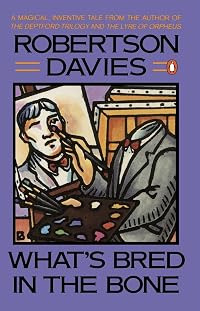
Francis Cornish was always good at keeping secrets. From the well-hidden family secret of his childhood to his mysterious encounters with a small-town embalmer, an expert art restorer, a Bavarian countess, and various masters of espionage, the events in Francis' life were not always what they seemed. This wonderfully ingenious portrait of an art expert and collector of international renown is told in stylish, elegant prose and endowed with lavish portions of Davies's wit and wisdom.Tags
Recommendations



















Member Recommendations



Member Reviews
This second part of the trilogy leaves most of the threads from the first part dangling, and instead of picking them up it jumps back in time to 1909 to look at the life of the enigmatic and surprisingly wealthy art-critic Francis Cornish. It's essentially a good old-fashioned Bildungsroman, dressed up with a bit of fancy stuff about daemons and angels (because, why not?), but really just a simple linear life-story. Superficially much easier for the reader to deal with than the more static narrative structure of the other two parts, but Davies is still making sure that our brains get a workout. He gives Cornish an (almost) impossibly complicated mix of background influences and explores the nature-versus-nurture implications of this show more combination (hence the title). In parallel, there's another story going on about the nature of creative art, playing around with our notions of where the lines can be drawn between restoration, forgery and original work, and then twisting things a bit further when we think we've got the point.
It struck me after I'd finished this that Francis Cornish would be a near contemporary of Charles Ryder, and there are a lot of parallels here to themes dealt with in Brideshead revisited. But Robertson Davies is no Evelyn Waugh: he may be prepared to indulge in the occasional joke at the expense of his characters, but he never floats off into lyrical pessimism. The world is as it is, and that's that: no use blaming poor old Hooper. show less
It struck me after I'd finished this that Francis Cornish would be a near contemporary of Charles Ryder, and there are a lot of parallels here to themes dealt with in Brideshead revisited. But Robertson Davies is no Evelyn Waugh: he may be prepared to indulge in the occasional joke at the expense of his characters, but he never floats off into lyrical pessimism. The world is as it is, and that's that: no use blaming poor old Hooper. show less
Robertson Davies uses the word “chthonic” more than once in What’s Bred in the Bone and that’s a lot to pardon. However, I’m going to pardon it because in this novel from 1985 he employs the word “trumpery,” which word, it turns out, means “worthless nonsense” according to Merriam Webster’s Collegiate Dictionary (11th edition). Well worth knowing.
Davies is a story teller of great gifts whose abundant intelligence and knowledge fill his book with humor and interest throughout. Early on I was inclined, despite a lively first chapter, to nickname the book If Read It Will Bore as a grumbling reaction to his naming of the early female characters: Maria, Marie-Louise, Mary-Jacobine (Mary-Jim), Mary-Teresa (Mary-Tes), show more Mary-Benedetta (Mary-Ben) and, mother of mercy, Mother Mary-Basil. An unjust thought that proved.
The man that’s bred, Francis Cornish, is the son of extraordinarily self-absorbed parents who seldom can be bothered to slight their own pursuits so much as to allow their son sight of them. Even Christmas time does not fetch them his way. Love, to the child, seems a thing locked away. Francis’s guardian daimon, the Daimon Maimas (“I am no guardian angel”), worries little about parental absence, or locked love, or whether the boy will become broken-hearted by it. This is, among much else, what’s being bred in the child’s bones and then in the man’s. It will present its challenges.
Art is the vital commerce of the book at many levels, with attention paid to matters of authenticity and fakery, triviality and consequence, care and craft, fortune and fealty, mastery and modernism, Catholicism and Protestantism, pity and pitilessness, what is known and what should not be unknown yet is. Ultimately, the story takes us on a mostly retrospective viewing of the streams of exploration or exploitation presented by one man’s life and visits the tributaries of influence that entered into them. Francis Cornish is a man seemingly made to be often denied—in some instances singularly so. But he isn’t, after all is done. That’s the ingenuity of both author and character. No trumpery in that. show less
Davies is a story teller of great gifts whose abundant intelligence and knowledge fill his book with humor and interest throughout. Early on I was inclined, despite a lively first chapter, to nickname the book If Read It Will Bore as a grumbling reaction to his naming of the early female characters: Maria, Marie-Louise, Mary-Jacobine (Mary-Jim), Mary-Teresa (Mary-Tes), show more Mary-Benedetta (Mary-Ben) and, mother of mercy, Mother Mary-Basil. An unjust thought that proved.
The man that’s bred, Francis Cornish, is the son of extraordinarily self-absorbed parents who seldom can be bothered to slight their own pursuits so much as to allow their son sight of them. Even Christmas time does not fetch them his way. Love, to the child, seems a thing locked away. Francis’s guardian daimon, the Daimon Maimas (“I am no guardian angel”), worries little about parental absence, or locked love, or whether the boy will become broken-hearted by it. This is, among much else, what’s being bred in the child’s bones and then in the man’s. It will present its challenges.
Art is the vital commerce of the book at many levels, with attention paid to matters of authenticity and fakery, triviality and consequence, care and craft, fortune and fealty, mastery and modernism, Catholicism and Protestantism, pity and pitilessness, what is known and what should not be unknown yet is. Ultimately, the story takes us on a mostly retrospective viewing of the streams of exploration or exploitation presented by one man’s life and visits the tributaries of influence that entered into them. Francis Cornish is a man seemingly made to be often denied—in some instances singularly so. But he isn’t, after all is done. That’s the ingenuity of both author and character. No trumpery in that. show less
Robertson Davies has been my discovery of the year. These books are unlike anything else I've ever read, but as I read them I realise they are exactly what I've been wanting to read all my life. Not merely entertaining, not just scholarly, they are in fact the very best of both, combined with exploration and discovery that hardly ever flags.
When we read Rebel Angels, book 1 in this awesome trilogy of which WBITB is no.2, Francis Cornish is to us simply a professor and art-accumulator who has died. After reading this book, though, we can never see him in the same way again. After an introductory chapter in which the three main characters from Rebel Angels are discussing their findings on Cornish's life while attempting to write his show more biography, (this chapter feels a little artificial, but who cares) we are then taken to a conversation between the lesser Zadkiel, a Recording Angel, and the Daimon Maimas, who turns out to have been Cornish's own allocated daimon - a guiding force chosen to make Cornish's life something out of the ordinary. These two characters pop up at intervals throughout the story, commenting on Cornish's life as it unfolds before us, giving us a 'top down' perspective, an objective and often funny commentary on what's going on. But the main novel is the story of Cornish's life, full of unforgettable characters, events and ideas, all carried out with Davies' usual breathtaking scholarship, faintly ironic humour, and down-to-earth style.
Among other things, this is a coming of age novel. I felt as if I came of age with Cornish, in that back-woods Canadian town of Blairlogie. Cornish does not simply grow up and discover as he does so some universal truth. Like a real person, a wealth of highly individual complexities surround his childhood, shaping him and making him the man he turns out to be (with no little unseen help from the Daimon Maimas). It's difficult to describe the individuality of this book, and of the character of Cornish. All I can say is it's all full of intricate truth and realism, but unlike genuine reality, it's never the least bit dull.
And here is the best part - Francis Cornish is an artist, and from a child, his discovery of art in different guises and individual perspectives is detailed and complicated, and has all the force and power of something real and visceral - intelligent but not the least bit 'academic'. It has what I'm learning is a signature touch of Davies' - where scholarship is presented not as something gained for reasons of glory, progress or self-improvement, but for the sheer unpretentious delight of beauty and discovery. I truly feel as though I discovered art with Francis Cornish, admittedly helped along by a serendipitous chance - I happened to begin reading Simon Schama's Rembrandt's Eyes at the same time. The two combined have been a wonderful journey.
I finished What's Bred in the Bone with a feeling that I'm not quite the same person I was when I began it. I'll let that stand for itself in my final praise of this novel, and will only add the practical details - that this is second in a trilogy, but could stand on its own pretty well. But why would you read it alone when there are two other books just as good to read with it? show less
When we read Rebel Angels, book 1 in this awesome trilogy of which WBITB is no.2, Francis Cornish is to us simply a professor and art-accumulator who has died. After reading this book, though, we can never see him in the same way again. After an introductory chapter in which the three main characters from Rebel Angels are discussing their findings on Cornish's life while attempting to write his show more biography, (this chapter feels a little artificial, but who cares) we are then taken to a conversation between the lesser Zadkiel, a Recording Angel, and the Daimon Maimas, who turns out to have been Cornish's own allocated daimon - a guiding force chosen to make Cornish's life something out of the ordinary. These two characters pop up at intervals throughout the story, commenting on Cornish's life as it unfolds before us, giving us a 'top down' perspective, an objective and often funny commentary on what's going on. But the main novel is the story of Cornish's life, full of unforgettable characters, events and ideas, all carried out with Davies' usual breathtaking scholarship, faintly ironic humour, and down-to-earth style.
Among other things, this is a coming of age novel. I felt as if I came of age with Cornish, in that back-woods Canadian town of Blairlogie. Cornish does not simply grow up and discover as he does so some universal truth. Like a real person, a wealth of highly individual complexities surround his childhood, shaping him and making him the man he turns out to be (with no little unseen help from the Daimon Maimas). It's difficult to describe the individuality of this book, and of the character of Cornish. All I can say is it's all full of intricate truth and realism, but unlike genuine reality, it's never the least bit dull.
And here is the best part - Francis Cornish is an artist, and from a child, his discovery of art in different guises and individual perspectives is detailed and complicated, and has all the force and power of something real and visceral - intelligent but not the least bit 'academic'. It has what I'm learning is a signature touch of Davies' - where scholarship is presented not as something gained for reasons of glory, progress or self-improvement, but for the sheer unpretentious delight of beauty and discovery. I truly feel as though I discovered art with Francis Cornish, admittedly helped along by a serendipitous chance - I happened to begin reading Simon Schama's Rembrandt's Eyes at the same time. The two combined have been a wonderful journey.
I finished What's Bred in the Bone with a feeling that I'm not quite the same person I was when I began it. I'll let that stand for itself in my final praise of this novel, and will only add the practical details - that this is second in a trilogy, but could stand on its own pretty well. But why would you read it alone when there are two other books just as good to read with it? show less
La primera novela de la Trilogía de Cornish, 'Ángeles rebeldes', giraba en torno a la figura de Francis Cornish, millonario y benefactor de artistas, o más bien a su legado y todas las batallas por hacerse con él. 'Lo que arraiga en el hueso', segunda novela de dicha trilogía, trata justamente de la vida y milagros de tan enigmático personaje, desde su gestación hasta su muerte, pasando por su infancia, muy significativa para él y parte importante dentro del libro (de ahí el título, ya que "Lo que arraiga en el hueso aflora en la carne"), como pasando también por toda su vida adulta, en la que fue desde falsificador hasta espía.
El libro está magníficamente escrito, como es habitual en tan gran escritor como fue Robertson show more Davies, pero no me ha gustado tanto como 'Ángeles rebeldes', he echado en falta ese humor que caracterizaba este último. Eso sí, sigue habiendo momentos de gran ironía y sutileza. Tal vez no me ha llegado tanto porque no aparecen, salvo en el primer capítulo, los personajes que me atrajeron en la primera novela. Aun así, es un libro magnífico y muy recomendable. show less
El libro está magníficamente escrito, como es habitual en tan gran escritor como fue Robertson show more Davies, pero no me ha gustado tanto como 'Ángeles rebeldes', he echado en falta ese humor que caracterizaba este último. Eso sí, sigue habiendo momentos de gran ironía y sutileza. Tal vez no me ha llegado tanto porque no aparecen, salvo en el primer capítulo, los personajes que me atrajeron en la primera novela. Aun así, es un libro magnífico y muy recomendable. show less
first reaction: a tough read for me. the beginning reunites us with some of the characters from Rebel Angels but then quickly jolts into a previous century with unknown people we don’t care about. I feel he’s spending way too much time and effort in describing their habits and peculiarities and yet not going far enough because we never get to truly see their personalities in full. i understand that he is trying to fill in the background of someone’s life to help explain them and get at their essence or core. he’s saying that people are who they are largely because of the context of their lives and the lives of their predecessors. people do not exist in a vacuum. but making that into a half-tale doesn’t work for me. this show more isn’t what i signed on for!
i’m going to stick with it, though, because i’ve read that lots of people consider this Davies’s best work. vee schall see…
later reaction: i am always astounded and humbled at the richness of detail some authors can imbue their works with. Davies work here is truly on an epic if it’s not semi-autobiographical. the amount of research he would have had to have done is immense. well done. i am drawn in just by this.
i also like the characters and seeing Francis Cornish evolve into an adult. i really had to get past the jolt of leaving the storyline from the first book. it was a derailing-- honestly, had i known this second book was going to be so very different in content and nature, i would not have cracked it. i was expecting more about life at Spook and the lives of Maria, Simon, Arthur, et al. referencing Francis Cornish, who played an important but decidedly peripheral role in the first book, in flashbacks or in brief chapters framed by Simon’s research or something would have been wonderful. as it is, this second book simply switches off the first book’s tale and switches on a historical biography that is never broken in any way by checking in with the main characters of the first book and with whom this book started. what we do get are occasional back-and-forths between a couple of celestial beings that helped shape Francis’s life. good stuff, that, but still nigh onto fraudulent looking at the outside and outset of this book. it’s akin to inserting the entire Silmarillion in the Lord of the Rings following Gandalf’s fall in Moria… if you know what i mean.
final reaction: this is the saga of one man’s life from a generation or so before his birth to his final moments. this book on Francis Cornish’s life was not overwrought with detail but it described its world poignantly and effectively. the plot, if you can call it one, took coalesced in part 4 but really took on life in part 5 and 6. by the end, i cared for the main character a great deal and it shocked me when i realized it. Davies’s build-up simmered and sneaked, yielding a bone-deep connection with Francis. he’s captured a life here. one full of secrets both contrived and hidden inside a personal perspective- all those moments that no one else knows about or can know about because your narrative is continuous; their knowledge of you, intermittent. holding the closed book after finishing the last page, feeling its weight, gave me a real sense that i was holding someone’s whole life. The finite bound pages signified to me how alone we are throughout... but remorse, pity, and ennui had no place in that emotion, oddly enough. the quiet dignity and selflessness of the man described therein laid out before me the story of a great human in a subtle poetry that emphasized the solitude we all experience without the visceral loneliness that can conquer us.
conclusion: i am glad i decided to stick with the book because i now understand why people have labeled this Davies’ best work. a masterpiece. while i’m not ready to put that high stamp on it, i do think it represents a good story. i still fault it for being branded “#2 in the Cornish series” as though it were a continuation of Rebel Angels because what i got was not at all what i was wanting or expecting at first. show less
i’m going to stick with it, though, because i’ve read that lots of people consider this Davies’s best work. vee schall see…
later reaction: i am always astounded and humbled at the richness of detail some authors can imbue their works with. Davies work here is truly on an epic if it’s not semi-autobiographical. the amount of research he would have had to have done is immense. well done. i am drawn in just by this.
i also like the characters and seeing Francis Cornish evolve into an adult. i really had to get past the jolt of leaving the storyline from the first book. it was a derailing-- honestly, had i known this second book was going to be so very different in content and nature, i would not have cracked it. i was expecting more about life at Spook and the lives of Maria, Simon, Arthur, et al. referencing Francis Cornish, who played an important but decidedly peripheral role in the first book, in flashbacks or in brief chapters framed by Simon’s research or something would have been wonderful. as it is, this second book simply switches off the first book’s tale and switches on a historical biography that is never broken in any way by checking in with the main characters of the first book and with whom this book started. what we do get are occasional back-and-forths between a couple of celestial beings that helped shape Francis’s life. good stuff, that, but still nigh onto fraudulent looking at the outside and outset of this book. it’s akin to inserting the entire Silmarillion in the Lord of the Rings following Gandalf’s fall in Moria… if you know what i mean.
final reaction: this is the saga of one man’s life from a generation or so before his birth to his final moments. this book on Francis Cornish’s life was not overwrought with detail but it described its world poignantly and effectively. the plot, if you can call it one, took coalesced in part 4 but really took on life in part 5 and 6. by the end, i cared for the main character a great deal and it shocked me when i realized it. Davies’s build-up simmered and sneaked, yielding a bone-deep connection with Francis. he’s captured a life here. one full of secrets both contrived and hidden inside a personal perspective- all those moments that no one else knows about or can know about because your narrative is continuous; their knowledge of you, intermittent. holding the closed book after finishing the last page, feeling its weight, gave me a real sense that i was holding someone’s whole life. The finite bound pages signified to me how alone we are throughout... but remorse, pity, and ennui had no place in that emotion, oddly enough. the quiet dignity and selflessness of the man described therein laid out before me the story of a great human in a subtle poetry that emphasized the solitude we all experience without the visceral loneliness that can conquer us.
conclusion: i am glad i decided to stick with the book because i now understand why people have labeled this Davies’ best work. a masterpiece. while i’m not ready to put that high stamp on it, i do think it represents a good story. i still fault it for being branded “#2 in the Cornish series” as though it were a continuation of Rebel Angels because what i got was not at all what i was wanting or expecting at first. show less
I was sure I had read this book before but, if so, I had forgotten it entirely. So it was a pleasure to be able to read it.
From Publisher Weekly:
Known to discerning readers for his beguiling Deptford Trilogy and the more recent Rebel Angels, Canadian author Davies has written another irresistible novel. His story of the secret life of Francis Cornish, full of ironic twists and surprises, has the added enticement of a look inside the rarefied world of art experts and restorers. There is even a hint of the thriller genre, since Cornish joins British Intelligence to participate in an international scheme to defraud the Nazis of Old Masters. But this is primarily a character study, built around the theme: "what's bred in the bone comes out show more in the flesh,'' with the corollary that suffering endured when one is young builds character for later achievements. Born into an eccentric, wealthy Canadian family in a backwoods town, enduring a lonely and suffocatingly pious upbringing, Cornish eventually becomes a respected art appraiser and collector, at the sacrifice of his considerable talent as a painter. In addition to the tantalizing story of how this comes about, related with elements of intrigue and mystery, Davies delivers a wickedly funny, trenchant dissection of provincial society and some witty observations about religion and art. The book is seamlessly constructed, interpolating some marvelous set pieces of comic intensity, and the reader hurtles through the taut, compelling narrative wishing it would never end.
The review from Publisher's Weekly adequately describe the bare bones of the plot but it is so much more than that. Francis Cornish is ostensibly a Protestant, Anglo-Saxon and Canadian but in his life each one of those defining characteristics is turned on its head. His Roman Catholic aunt helps to raise him when his parents abandon him to do important war work and so his religion is a mixture. His grandmother comes from a French Canadian family and she also takes part in his upbringing. Then, when Francis is a young man, he goes to England to attend college and doesn't return to Canada for decades. In fact, any one person's description of Francis could be refuted by another person and neither one would be wrong. His guardian devil, the Daimon Maimas, may be the only being that knows all there is to know about Francis. Even the Angel of Biography, the Lesser Zadkiel, has forgotten most of what he has recorded about Cornish's life. The two supernatural beings act as the narrator and interpreter throughout the book, just one of the devices Davies uses to propel the book along.
I would recommend this book to anyone who enjoys a thought-provoking but not difficult book and especially anyone who enjoys Robertson Davies. show less
From Publisher Weekly:
Known to discerning readers for his beguiling Deptford Trilogy and the more recent Rebel Angels, Canadian author Davies has written another irresistible novel. His story of the secret life of Francis Cornish, full of ironic twists and surprises, has the added enticement of a look inside the rarefied world of art experts and restorers. There is even a hint of the thriller genre, since Cornish joins British Intelligence to participate in an international scheme to defraud the Nazis of Old Masters. But this is primarily a character study, built around the theme: "what's bred in the bone comes out show more in the flesh,'' with the corollary that suffering endured when one is young builds character for later achievements. Born into an eccentric, wealthy Canadian family in a backwoods town, enduring a lonely and suffocatingly pious upbringing, Cornish eventually becomes a respected art appraiser and collector, at the sacrifice of his considerable talent as a painter. In addition to the tantalizing story of how this comes about, related with elements of intrigue and mystery, Davies delivers a wickedly funny, trenchant dissection of provincial society and some witty observations about religion and art. The book is seamlessly constructed, interpolating some marvelous set pieces of comic intensity, and the reader hurtles through the taut, compelling narrative wishing it would never end.
The review from Publisher's Weekly adequately describe the bare bones of the plot but it is so much more than that. Francis Cornish is ostensibly a Protestant, Anglo-Saxon and Canadian but in his life each one of those defining characteristics is turned on its head. His Roman Catholic aunt helps to raise him when his parents abandon him to do important war work and so his religion is a mixture. His grandmother comes from a French Canadian family and she also takes part in his upbringing. Then, when Francis is a young man, he goes to England to attend college and doesn't return to Canada for decades. In fact, any one person's description of Francis could be refuted by another person and neither one would be wrong. His guardian devil, the Daimon Maimas, may be the only being that knows all there is to know about Francis. Even the Angel of Biography, the Lesser Zadkiel, has forgotten most of what he has recorded about Cornish's life. The two supernatural beings act as the narrator and interpreter throughout the book, just one of the devices Davies uses to propel the book along.
I would recommend this book to anyone who enjoys a thought-provoking but not difficult book and especially anyone who enjoys Robertson Davies. show less
Am I the only person who has trouble with the name Maimas? Not only is it Sam-I-Am spelt backwards, but every time I type it it comes out as Miasma. It's an interesting choice to mediate third-person omniscient viewpoint through an associate of the Recording Angel, but unfortunate when an author comes up with a distracting name that appears frequently through the course of the book.
Members
- Recently Added By
Published Reviews
ThingScore 50
J'ai lu un roman fabuleux qui s'intitule un homme remarquable en 1994. C'est un ouvrage de Robertson Davies, écrivain canadien anglophone bien traduit en français. Dans ce roman d'aventures intelligent et populaire, les deux personnages narrateurs sont un ange biographe et un daïmon protecteur. L'idée de donner la parole à un daïmon qui prend en charge la biographie d'un être humain show more était déjà un petit clin d'œil servant à relier le paganisme et le christianisme et puis c'est original, amusant. show less
added by Ariane65
Le titre français du roman de Davies, Un homme remarquable, publié en 1985, ne tient aucun compte de l’original, What’s bred in the bone, c’est-àdire littéralement « ce qui a été mis dans la moelle », lui-même traduction médiévale d’un proverbe latin qui dit ceci : « Ce qui a été mis dans la moelle ne sort plus de la chair. » Cette citation tronquée propose au lecteur show more de découvrir les ressorts secrets et déterminants d’une personnalité, celle de Francis Cornish, figure fictive dont le roman retrace la biographie.
Julie Wolkenstein, « « Rosebud » : le motif du secret dans la fiction biographique chez Welles et Davies », Recherches & Travaux, 68 | 2006, [En ligne], mis en ligne le 06 novembre 2008. URL : http://recherchestravaux.revues.org/i... show less
Julie Wolkenstein, « « Rosebud » : le motif du secret dans la fiction biographique chez Welles et Davies », Recherches & Travaux, 68 | 2006, [En ligne], mis en ligne le 06 novembre 2008. URL : http://recherchestravaux.revues.org/i... show less
added by Ariane65
"The novel is certainly not a 'bad copy' of anything; its intricate conception and intelligence are impressive on their own terms. But those terms also prevent the book from being the original it might have been. "
added by GYKM
Lists

20th Century Literature
1,161 works; 54 members

Booker Prize
491 works; 62 members
Booker Prize Shortlist: Titles Read
103 works; 10 members
Man Booker Prize Longlist 1986
6 works; 2 members

Best family sagas
244 works; 34 members

Books Read in 2016
4,666 works; 197 members

Books Read in 2013
1,630 works; 51 members

Books With Body Parts in the Title
153 works; 9 members

Recommended Reading : 600 Classics Reviewed, Editors of Salem Press, 2015
634 works; 6 members

Canadian Historical Fiction 🇨🇦
157 works; 8 members
Talk Discussions
Past Discussions
Davies - The Cornish Trilogy - discussion in Literary Centennials (December 2012)
Author Information

89+ Works 24,787 Members
William Robertson Davies was born in Thamesville, Ontario in 1913. He taught English at the University of Toronto and was an actor, journalist, and newspaper editor before winning acclaim as a novelist with Tempest-Tost, the first of his Salterton trilogy. His most famous trilogy, The Deptford Trilogy--Fifth Business, The Manticore, and World of show more Wonders--develops the earlier Salterton novels. The locale is a fictitious Ontario city that prizes its English tradition, including the Anglican Church and the genealogy of the old families. Robertson's novels have been translated into approximately 20 languages. His masterful story-telling encompasses such issues as evil, love, fear, tradition, and magic as he brings his characters to life with wisdom and humor. Robertson Davies died in 1995. (Bowker Author Biography) Robertson Davies (1913-1995) had three successive careers during the time he became an internationally acclaimed author: first as an actor with the Old Vic Company in England; then as publisher of "The Peterborough Ontario Examiner"; & finally as professor & first master of Massey College at the University of Toronto. With twelve novels & several volumes of essays & plays to his credit, Davies was the first Canadian to be inducted to the American Academy & Institute of Arts & Letters. His last novel, "The Cunning Man" (Viking 1995), was a national bestseller. (Publisher Provided) show less
Some Editions
Awards and Honors
Awards
Distinctions
Notable Lists
Series

Belongs to Publisher Series
Keltainen kirjasto (211)
Work Relationships
Is contained in
Common Knowledge
- Canonical title
- What's Bred in the Bone
- Original title
- What's Bred in the Bone
- Original publication date
- 1985
- People/Characters
- Arthur Cornish; Maria Cornish; Simon Darcourt; Francis Cornish; Dunstan Ramsay
- Important places
- Canada
- Epigraph
- "What's bred in the bone will not out of the flesh." / English proverb from the Latin, 1290
- First words
- "The book must be dropped."
- Quotations
- [The PreRaphaelites] were full upand slopping over with Art, but they hadn't troubled to master Craft. Result: they couldn't carry out their ideas to their own satisfaction.
- Last words
- (Click to show. Warning: May contain spoilers.)"Blow your whistle, Arthur, and let the sport begin."
Classifications
Statistics
- Members
- 2,018
- Popularity
- 10,439
- Reviews
- 27
- Rating
- (4.06)
- Languages
- 9 — English, Estonian, Finnish, French, German, Greek, Norwegian (Bokmål), Spanish, Swedish
- Media
- Paper, Audiobook, Ebook
- ISBNs
- 36
- ASINs
- 17