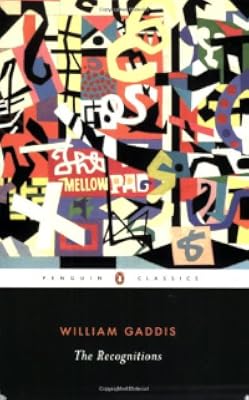
The Recognitions
by William Gaddis 
On This Page
Description
The book Jonathan Franzen dubbed the "ur-text of postwar fiction" and the "first great cultural critique, which, even if Heller and Pynchon hadn't read it while composing Catch-22 and V, managed to anticipate the spirit of both" The Recognitions is a masterwork about art and forgery, and the increasingly thin line between the counterfeit and the fake. Gaddis anticipates by almost half a century the crisis of reality that we currently face, where the real and the virtual are combining in show more alarming ways, and the sources of legitimacy and power are often obscure to us. show lessTags
Recommendations







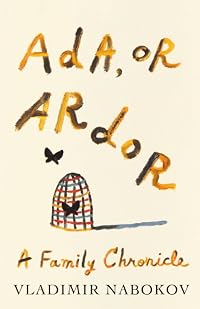
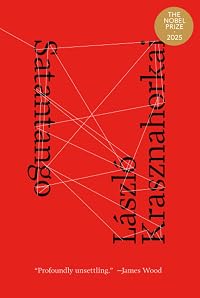

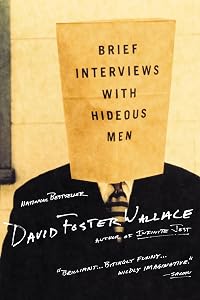
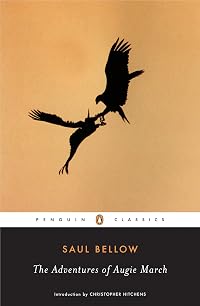



Member Recommendations
michaeljohn Both are postmodern novels centering around art forgery.
Member Reviews
There may be something to see here, but it will take you more time than it's worth to figure out what you're looking at.
The literary critic jack green is probably best known for insisting that his pseudonym be written, like adidas, without capital letters. He's arguably less well known for lambasting those critics who dismissed The Recognitions on its publication, saying that they had failed to recognise "the greatness of the book" and failed "to convey to the reader what the book is like, what its essential qualities are." Well, despite me not recognising "the greatness of the book" let me at least attempt to convey to the reader what the book is like and what its essential qualities are.
This book is like attempting a full day's work show more which, after about ten minutes, you kind of get in the rhythm of. You know you've got some way to go before you complete everything you have to do but, you feel pretty optimistic. An hour in, you take a break, putting your fatigue down to the fact that you didn't quite have enough caffeine that morning. In the struggle through to lunch, you begin to dread the afternoon's grind. Lunch is like a lying on a sun-drenched beach watching a storm approach from the horizon. The afternoon is best not described and, just before you think you've finished, the boss drops an extra stack of files on your desk which sentence you to three hours' overtime. As you open the files, you realise that the work you're now chained to is exactly the same work that you thought you'd completed before lunchtime.
That's what this book is like.
Now for its essential qualities. If I'm right, Gaddis was trying to to get across the idea that people and their products aren't always what they seem. The fact that he needed nearly a thousand pages to get that idea across seems to me to be either a lack of skill or some purposeful form of sadism on the part of the writer. Perhaps it's the very embodiment of what the novel is attempting to convey. Whatever it is, anyone beyond childhood is already aware that we're fakes and that life is, for the most part, an elaborate cover up. Tell us something we don't know Gaddis.
The characters are essentially hard to grasp. They kind of slipped through my fingers as I attempted to make sense of who they were, what they were called, why they were created and what they were supposed to be doing there. There's no plot to speak of, at least none that can be expanded by contained by more than a brief paragraph (or two if you cheat), and the structure is fragmented and literally repetitive.
All this creates, in essence, a piece of writing that is almost impossible to describe and, more importantly, hardly worth the effort you'll expend anyway. It's quintessentially post-modern in that the artist isn't going to tell you what it means and, having spent time with it, you realise that life's too short to discover what it means for yourself. Move along people. There may be something to see here, but it will take you more time than it's worth to figure out what you're looking at. I'm not sure if this is the guy who is responsible for Pynchon, but if it is, we owe him nothing. show less
The literary critic jack green is probably best known for insisting that his pseudonym be written, like adidas, without capital letters. He's arguably less well known for lambasting those critics who dismissed The Recognitions on its publication, saying that they had failed to recognise "the greatness of the book" and failed "to convey to the reader what the book is like, what its essential qualities are." Well, despite me not recognising "the greatness of the book" let me at least attempt to convey to the reader what the book is like and what its essential qualities are.
This book is like attempting a full day's work show more which, after about ten minutes, you kind of get in the rhythm of. You know you've got some way to go before you complete everything you have to do but, you feel pretty optimistic. An hour in, you take a break, putting your fatigue down to the fact that you didn't quite have enough caffeine that morning. In the struggle through to lunch, you begin to dread the afternoon's grind. Lunch is like a lying on a sun-drenched beach watching a storm approach from the horizon. The afternoon is best not described and, just before you think you've finished, the boss drops an extra stack of files on your desk which sentence you to three hours' overtime. As you open the files, you realise that the work you're now chained to is exactly the same work that you thought you'd completed before lunchtime.
That's what this book is like.
Now for its essential qualities. If I'm right, Gaddis was trying to to get across the idea that people and their products aren't always what they seem. The fact that he needed nearly a thousand pages to get that idea across seems to me to be either a lack of skill or some purposeful form of sadism on the part of the writer. Perhaps it's the very embodiment of what the novel is attempting to convey. Whatever it is, anyone beyond childhood is already aware that we're fakes and that life is, for the most part, an elaborate cover up. Tell us something we don't know Gaddis.
The characters are essentially hard to grasp. They kind of slipped through my fingers as I attempted to make sense of who they were, what they were called, why they were created and what they were supposed to be doing there. There's no plot to speak of, at least none that can be expanded by contained by more than a brief paragraph (or two if you cheat), and the structure is fragmented and literally repetitive.
All this creates, in essence, a piece of writing that is almost impossible to describe and, more importantly, hardly worth the effort you'll expend anyway. It's quintessentially post-modern in that the artist isn't going to tell you what it means and, having spent time with it, you realise that life's too short to discover what it means for yourself. Move along people. There may be something to see here, but it will take you more time than it's worth to figure out what you're looking at. I'm not sure if this is the guy who is responsible for Pynchon, but if it is, we owe him nothing. show less
The most salient fact related to my reading of this work is the all too obvious limitations of my education and erudition. How sad is it to say that the 40% of the book that I understood was genius? Aren't there criteria for determining what is genius?
However, none of this reflects badly on "The Recognitions" itself. It truly is an exceptional book packed with unbounded cynicism and humbling prose. Often the prose reads like an engaging drama with dialog that leads one to visualize a stage.
What of the 60% I failed to grasp? Much like the other part, it is suffused with arcane references to Christian persona. So much so, one begins to wonder just how much is simply gratuitous literary bravado. As the book is aptly classified as show more post-modern, I can hardly critique it for a tenuous plot. I would propose that the work has a theme that functions as a plot.
Given the aforementioned caveats related to my limitations, I would say the work would be more accessible (and likely more widely appreciated) were it separated into two novels and a play. The obstacle of strained continuity would certainly be less evident. And, without a doubt, there is ample content (not to mention talent) to populate three separate volumes.
Who then has Gaddis humbled in this work? Who is skewered and left embarrassed, cold, and naked in the end? It is us! Our only defense is an insincere posture of superiority. Our triumphant and smug embrace of the author's withering critique is our weak [and insincere] attempt to avoid the image we see in the mirror.
Gaddis has revealed to us, behind our posturing and fakery, who we truly are. show less
However, none of this reflects badly on "The Recognitions" itself. It truly is an exceptional book packed with unbounded cynicism and humbling prose. Often the prose reads like an engaging drama with dialog that leads one to visualize a stage.
What of the 60% I failed to grasp? Much like the other part, it is suffused with arcane references to Christian persona. So much so, one begins to wonder just how much is simply gratuitous literary bravado. As the book is aptly classified as show more post-modern, I can hardly critique it for a tenuous plot. I would propose that the work has a theme that functions as a plot.
Given the aforementioned caveats related to my limitations, I would say the work would be more accessible (and likely more widely appreciated) were it separated into two novels and a play. The obstacle of strained continuity would certainly be less evident. And, without a doubt, there is ample content (not to mention talent) to populate three separate volumes.
Who then has Gaddis humbled in this work? Who is skewered and left embarrassed, cold, and naked in the end? It is us! Our only defense is an insincere posture of superiority. Our triumphant and smug embrace of the author's withering critique is our weak [and insincere] attempt to avoid the image we see in the mirror.
Gaddis has revealed to us, behind our posturing and fakery, who we truly are. show less
We live in Rome, he says, turning his face to the room again,
-Caligula's Rome, with a new circus of vulgar bestialized suffering in the newspapers every morning. The masses, the fetid masses, he says, bringing all his weight to his feet.-How can they even suspect a self who can do more, when they live under absolutely no obligation. There are so few beautiful things in the world.
Such higher machinations proved beyond me. So much was required. Too often I was found wanting. The Recognitions is an uncharted continent. My cap is tipped to those unlacing the Incognito. I made my way through it but am left baffled, perhaps awaiting some Stanley whom will search for me and yield elucidation.
Color me knackered. I am weary and dehydrated and show more manipulating my favorite images from The Recognitions like some layman chancing upon talismans. It is unjust to compare, though I transgress: I liked Ulysses far more, found such poetic, whereas -- despite the marvel Gaddis engenders -- I feel dirty and bleak. There is a thread of thought which finds that conclusion one of design. show less
-Caligula's Rome, with a new circus of vulgar bestialized suffering in the newspapers every morning. The masses, the fetid masses, he says, bringing all his weight to his feet.-How can they even suspect a self who can do more, when they live under absolutely no obligation. There are so few beautiful things in the world.
Such higher machinations proved beyond me. So much was required. Too often I was found wanting. The Recognitions is an uncharted continent. My cap is tipped to those unlacing the Incognito. I made my way through it but am left baffled, perhaps awaiting some Stanley whom will search for me and yield elucidation.
Color me knackered. I am weary and dehydrated and show more manipulating my favorite images from The Recognitions like some layman chancing upon talismans. It is unjust to compare, though I transgress: I liked Ulysses far more, found such poetic, whereas -- despite the marvel Gaddis engenders -- I feel dirty and bleak. There is a thread of thought which finds that conclusion one of design. show less
My edition of William Gaddis' The Recognitions is 1,021 pages long. Dense pages of small type, often with only one break between paragraphs. And unfortunately (or perhaps appropriately) was mildly infested with book mites (which a couple days in a zip-lock bag in the freezer took care of) and the musty smell of an attic (which nothing cured) that left my eyes watering on occasion like the effect of bad allergies.
I want to hate this book but am unable to. There are incredibly well-written scenes that are almost poetic in their word choices, and in spite of its unusual writing style in which characters commit dialogue demarcated only by em dashes it is rarely difficult to determine who is speaking (what they're talking about is a show more different issue). I want to like this book but am equally unable to. It contains so many references to obscure books and songs and works of art, often in languages other than English, along with a wealth of Latin and German phrases, that a reader could spend as much time googling as it takes to read this book and probably still not appreciate what Gaddis intended by including the reference. Mainly I want to understand this book, but seriously doubt anyone is able to because The Recognitions is populated with so many certifiable characters it should have a copy of the DSM-5 appended as a bibliography.
I would love to provide a plot summary but there are too many narratives and no clear protagonist. The man my dust jacket refers to as the "central quester" disappears for the middle third (or more) of the story, and when he reappears he is either described but unnamed (as many of the characters are in various parts of the novel) or called by the name of a man on a forged passport. I would love to explain why he is called that name but it would take as long to explain as for you to read, and like me you probably still wouldn't be able to say why, exactly.
If you enjoyed Finnegans Wake, this is a book for you. If you liked Naked Lunch, this is a book for you. If you can read about a Christmas Eve party given by either the wife or ex-wife (it is never made clear) of that same central quester, a woman who has either just had an abortion directly before the party or has been pretending to be pregnant and had a pretend abortion (again, never made clear), where a child appears repeatedly, asking for and receiving sleeping pills for her mother, where one guest has left another guest's six-year-old daughter either at a movie theater or a church (again, never made clear) and Hemingway may or may not make an appearance (we are never provided clear evidence it is Hemingway, although it is clear regarding his earlier appearances in the novel) and the hostess winds up in bed with a man who may or may not be the one who may or may not have impregnated her and either has sex with him or is forced to watch him masturbate (ibid), and not worry that you didn't really understand the point of this scene, this is a book for you. If you aren't up for 1,021 pages of that don't feel bad - you aren't missing a masterpiece but rather a book that will leave you asking yourself how many people can attempt suicide in one book (particularly people who all know each other). show less
I want to hate this book but am unable to. There are incredibly well-written scenes that are almost poetic in their word choices, and in spite of its unusual writing style in which characters commit dialogue demarcated only by em dashes it is rarely difficult to determine who is speaking (what they're talking about is a show more different issue). I want to like this book but am equally unable to. It contains so many references to obscure books and songs and works of art, often in languages other than English, along with a wealth of Latin and German phrases, that a reader could spend as much time googling as it takes to read this book and probably still not appreciate what Gaddis intended by including the reference. Mainly I want to understand this book, but seriously doubt anyone is able to because The Recognitions is populated with so many certifiable characters it should have a copy of the DSM-5 appended as a bibliography.
I would love to provide a plot summary but there are too many narratives and no clear protagonist. The man my dust jacket refers to as the "central quester" disappears for the middle third (or more) of the story, and when he reappears he is either described but unnamed (as many of the characters are in various parts of the novel) or called by the name of a man on a forged passport. I would love to explain why he is called that name but it would take as long to explain as for you to read, and like me you probably still wouldn't be able to say why, exactly.
If you enjoyed Finnegans Wake, this is a book for you. If you liked Naked Lunch, this is a book for you. If you can read about a Christmas Eve party given by either the wife or ex-wife (it is never made clear) of that same central quester, a woman who has either just had an abortion directly before the party or has been pretending to be pregnant and had a pretend abortion (again, never made clear), where a child appears repeatedly, asking for and receiving sleeping pills for her mother, where one guest has left another guest's six-year-old daughter either at a movie theater or a church (again, never made clear) and Hemingway may or may not make an appearance (we are never provided clear evidence it is Hemingway, although it is clear regarding his earlier appearances in the novel) and the hostess winds up in bed with a man who may or may not be the one who may or may not have impregnated her and either has sex with him or is forced to watch him masturbate (ibid), and not worry that you didn't really understand the point of this scene, this is a book for you. If you aren't up for 1,021 pages of that don't feel bad - you aren't missing a masterpiece but rather a book that will leave you asking yourself how many people can attempt suicide in one book (particularly people who all know each other). show less
Skimming or Swimming in Gaddis
Of course, one can never know if one is reading the original of The Recognitions.
Especially as it is packaged by those noble and normally nonpareil packagers Dalkey Archive.
Here’s the entirety of the two blocks of print on back of the book:
‘“THE RECOGNITIONS is always spoken of as the most over-looked important work of the last several literary generations…Through the famous obscurity of THE RECOGNITIONS, Mr. Gaddis has become famous for not being famous enough.” --Cynthia Ozick’
‘Dubbed by Jonathan Franzen the “ur-text of postwar fiction” and the “first great cultural critique, which, even if Heller and Pynchon hadn’t read it while composing Catch-22 and V., managed to anticipate the show more spirit of both”—THE RECOGNITIONS is a masterwork about art and forgery, and the increasingly thin line between the counterfeit and the fake. Gaddis anticipates by almost half a century the crisis of reality that we currently face, where the real and the virtual are combining in alarming ways, and the sources of legitimacy and power are often obscure to us.’
Having ordered the book via mail, I read it anyway. And luckily it included an introduction by William Gass that brilliantly challenged me to give the book its due as I went along at any, I think he implied, preferred speed. What I found was neither an ur-text nor the first great anything, although it did have in it much about forgery, fakery, counterfeitery, shallowness, posturing, either as passionately assertive activities of city folk or bumblings of lost city folk, mostly blindly assertive, even as a sort of rings of hell for the tortured honest as can be (’…increasingly thin line between the counterfeit and the fake…’ ? Is that really what they meant to say? If so, it is not inaccurate, but awfully limiting.).
Known as a difficult book that requires patience, I found it a rather easy book that only required that I not think much about the next book I wanted to read. The 956 pages are not large print. Nor, and here is where I’ll stuff my one use of postmodern, does the book hook the reader, rev up and charge to a distant finish line. Nor do the stories within stories conform to neat spirals as in The Arabian Nights. But that is one of the delights, for Gaddis is as lyrical, philosophical, and funny as he is surprising, his wit ranging from Marxian one-liners (a Renault taken to be a painting), to slapstick (a great bit about a leg driven about Manhattan and how it leads to a false rumor of sexual hijinx…). One section, or chapter, is in fact a set piece as long as a novel by Dawn Powell or Nathaniel West, two writers who certainly retain their echoes in Gaddis’ novel.
Okay, so what makes the book seem difficult? Well, ‘big words’, meaning obscure ones, are scattered throughout—the average reader would probably have to run to the dictionary 15 to 20 times; there are abstruse references throughout, hopefully a number of them invented by Gaddis, but familiarity with none of which is required to follow or understand the book; and finally, conversation is not clearly demarcated, so that quite often one has to follow the meaning of the text to get who is speaking, be patient before it is revealed who is speaking, or it matters not at all who is speaking.
What does the book mean (why does Fraudzen believe it is ur)? Well, yes, the book riffs ontologically throughout on the real, the fake, the fake of the real, the expert of the fake of the originally meaningless real, creating a very intellectually inconvenient, multi-layered mélange of realities that require of the reader precisely the amount of thought the reader would like to apply to the book. Known as a book its readers return to repeatedly, one can readily see why, for there are passages strewn throughout in which Gaddis says lyrically what we all suspect to be true, and even if, over half a century on, these matters are not new, if we have not yet read Gaddis, his way of expressing it is.
Rating the book seems a silly exercise, so I thought I would argue for its place in ‘the canon’, but canon’s exist so that books like this can mean all the more, so it gets five stars, fifteen mackerels, three genius grants, whatever the top prize is. In terms of recommendation, I believe every reader of serious literature should have this book and read it as the urge arises. One LT reader mentioned two attempts, each ending before page 100. This is likely not uncommon. But if this happens to you, keep it next to Finnegan’s Wake in the shitpot room and enjoy the expressions of a great thinker and writer as you, by excreting, create in your being room for inspiration. show less
Of course, one can never know if one is reading the original of The Recognitions.
Especially as it is packaged by those noble and normally nonpareil packagers Dalkey Archive.
Here’s the entirety of the two blocks of print on back of the book:
‘“THE RECOGNITIONS is always spoken of as the most over-looked important work of the last several literary generations…Through the famous obscurity of THE RECOGNITIONS, Mr. Gaddis has become famous for not being famous enough.” --Cynthia Ozick’
‘Dubbed by Jonathan Franzen the “ur-text of postwar fiction” and the “first great cultural critique, which, even if Heller and Pynchon hadn’t read it while composing Catch-22 and V., managed to anticipate the show more spirit of both”—THE RECOGNITIONS is a masterwork about art and forgery, and the increasingly thin line between the counterfeit and the fake. Gaddis anticipates by almost half a century the crisis of reality that we currently face, where the real and the virtual are combining in alarming ways, and the sources of legitimacy and power are often obscure to us.’
Having ordered the book via mail, I read it anyway. And luckily it included an introduction by William Gass that brilliantly challenged me to give the book its due as I went along at any, I think he implied, preferred speed. What I found was neither an ur-text nor the first great anything, although it did have in it much about forgery, fakery, counterfeitery, shallowness, posturing, either as passionately assertive activities of city folk or bumblings of lost city folk, mostly blindly assertive, even as a sort of rings of hell for the tortured honest as can be (’…increasingly thin line between the counterfeit and the fake…’ ? Is that really what they meant to say? If so, it is not inaccurate, but awfully limiting.).
Known as a difficult book that requires patience, I found it a rather easy book that only required that I not think much about the next book I wanted to read. The 956 pages are not large print. Nor, and here is where I’ll stuff my one use of postmodern, does the book hook the reader, rev up and charge to a distant finish line. Nor do the stories within stories conform to neat spirals as in The Arabian Nights. But that is one of the delights, for Gaddis is as lyrical, philosophical, and funny as he is surprising, his wit ranging from Marxian one-liners (a Renault taken to be a painting), to slapstick (a great bit about a leg driven about Manhattan and how it leads to a false rumor of sexual hijinx…). One section, or chapter, is in fact a set piece as long as a novel by Dawn Powell or Nathaniel West, two writers who certainly retain their echoes in Gaddis’ novel.
Okay, so what makes the book seem difficult? Well, ‘big words’, meaning obscure ones, are scattered throughout—the average reader would probably have to run to the dictionary 15 to 20 times; there are abstruse references throughout, hopefully a number of them invented by Gaddis, but familiarity with none of which is required to follow or understand the book; and finally, conversation is not clearly demarcated, so that quite often one has to follow the meaning of the text to get who is speaking, be patient before it is revealed who is speaking, or it matters not at all who is speaking.
What does the book mean (why does Fraudzen believe it is ur)? Well, yes, the book riffs ontologically throughout on the real, the fake, the fake of the real, the expert of the fake of the originally meaningless real, creating a very intellectually inconvenient, multi-layered mélange of realities that require of the reader precisely the amount of thought the reader would like to apply to the book. Known as a book its readers return to repeatedly, one can readily see why, for there are passages strewn throughout in which Gaddis says lyrically what we all suspect to be true, and even if, over half a century on, these matters are not new, if we have not yet read Gaddis, his way of expressing it is.
Rating the book seems a silly exercise, so I thought I would argue for its place in ‘the canon’, but canon’s exist so that books like this can mean all the more, so it gets five stars, fifteen mackerels, three genius grants, whatever the top prize is. In terms of recommendation, I believe every reader of serious literature should have this book and read it as the urge arises. One LT reader mentioned two attempts, each ending before page 100. This is likely not uncommon. But if this happens to you, keep it next to Finnegan’s Wake in the shitpot room and enjoy the expressions of a great thinker and writer as you, by excreting, create in your being room for inspiration. show less
If you're on the fence about whether you should read this, read William H. Gass's introduction (in this edition the afterward). It is a book of such tremendous scope. I definitely did not get every connection, every structural reference or articulation, but getting them all is not the point. Nor is knowing the references, or following completely and mechanically the webbed mappings between characters. It will come. This is one of the best books I've read.
Also no one writes dialog like this, which is probably good for my heart and anxiety. I had to stop reading this in the mornings.
I read this mixed between this edition and the Nick Sullivan (Audible) recording, which is a triumph of the form. Sullivan does different voices, so the show more Gaddis method of the quote-dash to initiate dialog without terminating it becomes more demarcated. Getting exposed to this helped me learn to differentiate speech from description when reading, though it never fully congeals. show less
Also no one writes dialog like this, which is probably good for my heart and anxiety. I had to stop reading this in the mornings.
I read this mixed between this edition and the Nick Sullivan (Audible) recording, which is a triumph of the form. Sullivan does different voices, so the show more Gaddis method of the quote-dash to initiate dialog without terminating it becomes more demarcated. Getting exposed to this helped me learn to differentiate speech from description when reading, though it never fully congeals. show less
Gaddis brilliantly mines the central metaphor of forgery and fraud to explore the diverse worlds of capitalism, art, religion, and the ways we are in the world. Vast, exhausting, formally inventive and daring, the book yet touches the heart as it invades the brain.
Perhaps not the place to start with Gaddis (for that I'd recommend _A Frolic of His Own_) but an unmatched joy of a novel.
Perhaps not the place to start with Gaddis (for that I'd recommend _A Frolic of His Own_) but an unmatched joy of a novel.
Members
- Recently Added By
Published Reviews
ThingScore 100
added by booksaplenty1949
added by booksaplenty1949
Lists

1001 Books You Must Read Before You Die
1,448 works; 1,136 members

The Guardian's 1000 Novels Everyone Must Read
1,005 works; 552 members

Top-Rated Books on LibraryThing
272 works; 118 members

Novels from The Guardian's Great American Novelist Tournament
148 works; 24 members

Great American Novels
158 works; 40 members

Metafiction
86 works; 22 members
Larry McCaffery's 20th Century Greatest Hits: 100 English-Language Books
103 works; 12 members

Favorite Long Books
330 works; 42 members
Favourite Books
1,820 works; 308 members

1950s
340 works; 22 members

50 Tough Books for Extreme Readers
71 works; 38 members

Most difficult novels
68 works; 27 members

Significant works of postmodern fiction
86 works; 25 members
Canon de la narrativa universal del siglo XX
254 works; 6 members

Books Set in New York City
127 works; 22 members
Time's All-Time 100 Novels
100 works; 27 members

Experimental Literature
141 works; 19 members
Time Magazine's "All-Time 100"
113 works; 15 members
Best of American Literature
146 works; 9 members
1,001 BYMRBYD Concensus
723 works; 27 members

A Novel Cure
742 works; 23 members
TML 200 Best Books 1950-1999
202 works; 10 members

Books Read in 2023
5,638 works; 147 members
First Novels
373 works; 17 members

Nifty Fifties
129 works; 14 members
American Lit for Eng 11 Research Project
368 works; 6 members

My TBR
371 works; 3 members

Mustich's 1000 Books to Read Before You Die: A Life Changing List
1,001 works; 20 members

Novels without quotation marks
25 works; 1 member
Harold Bloom - The Western Canon: D. The Chaotic Age
833 works; 24 members
Canon de la narrativa universal del s. XX (cicutadry)
499 works; 3 members

The Modern Library (The Two Hundred Best Novels....
202 works; 1 member
Talk Discussions
Past Discussions
Gaddis in Le Salon Littéraire du Peuple pour le Peuple (June 2012)
Author Information

9+ Works 7,388 Members
William Gaddis was born on December 29, 1922, in Manhattan, New York City. He was an American novelist. In Recognition of William Gaddis (1984) is a collection of essays supporting the view that Gaddis is the Herman Melville of the twentieth century. The comparison may prove justified, not only because of artistic similarities, but also because show more both writers suffered from years of neglect before achieving fame. Gaddis' novel The Recognitions (1955) baffled and angered most of its initial reviewers, but it has slowly, steadily attracted a growing number of appreciative readers willing to work through its more than 900 demanding pages. Its length and encyclopedic complexity caused some critics mistakenly to hail it as the American Ulysses, but Gaddis disclaimed much knowledge of James Joyce. It was named one of TIME magazine's 100 best novels from 1923 to 2005. As if to make amends for the neglect of The Recognitions, most reviewers greeted Gaddis' second novel, JR (1975), with respectful attention. Although not a popular success, it won the National Book Award. Gaddis won a second National Book Award in 1994 for his book, A Frolic of His Own. Gaddis died at home in East Hampton, New York, of prostate cancer on December 16, 1998. show less
William Gaddis has a Legacy Library. Legacy libraries are the personal libraries of famous readers, entered by LibraryThing members from the Legacy Libraries group.
Some Editions
Awards and Honors
Distinctions
Notable Lists
Series
Belongs to Publisher Series
Common Knowledge
- Canonical title
- The Recognitions
- Original title
- The Recognitions
- Original publication date
- 1955
- Epigraph
- Nihil cavum neque sine signo apud Deum.
Irenaeus, Adversus haereses
{Nothing is empty or lacking significance to God.} - Dedication
- For Sarah
The awakened, lips parted, the hope, the new ships - First words
- Even Camilla had enjoyed masquerades, of the safe sort where the mask may be dropped at the critical moment it presumes itself as reality.
- Last words
- (Click to show. Warning: May contain spoilers.)He was the only person caught in the collapse, and afterward, most of his work was recovered too, and it is still spoken of, when it is noted, with high regard, though seldom played.
- Blurbers
- McCarthy, Mary; Moody, Rick
Classifications
Statistics
- Members
- 2,644
- Popularity
- 7,135
- Reviews
- 34
- Rating
- (4.29)
- Languages
- 5 — English, French, German, Italian, Spanish
- Media
- Paper, Audiobook, Ebook
- ISBNs
- 20
- ASINs
- 17