
On This Page
Description
The Horse's Mouth, the third and most celebrated volume of Joyce Cary's First Trilogy, is perhaps the finest novel ever written about an artist. Its painter hero, the charming and larcenous Gulley Jimson, has an insatiable genius for creation and a no less remarkable appetite for destruction. Is he a great artist? a has-been? or an exhausted, drunken ne'er-do-well? He is without doubt a visionary, and as he criss-crosses London in search of money and inspiration the world as seen though his show more eyes appears with a newly outrageous and terrible beauty. show lessTags
Recommendations






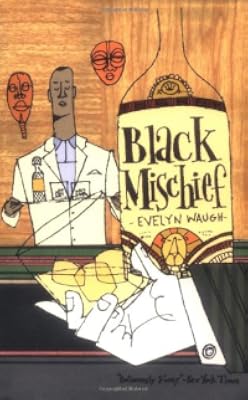
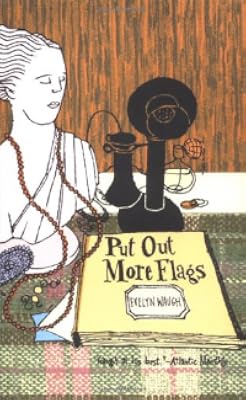


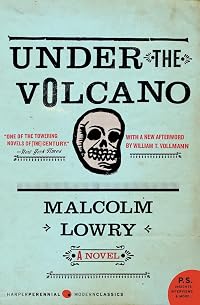

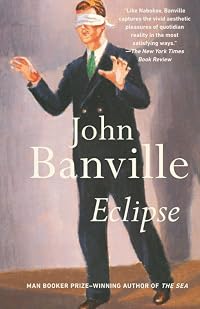


Member Recommendations
shaunie Cary and Stead's writing styles are quite similar, demanding concentration from the reader but very rewarding.
Member Reviews
That’s it,’ I said. ‘It’s the jaws of death. Look at me. One of the cleverest painters who ever lived. Nobody ever had anything like my dexterity, except Rubens on a good day. I could show you an eye—a woman’s eye, from my brush, that beats anything I’ve ever seen by Rubens. A little miracle of brushwork. And if I hadn’t been lucky I might have spent the rest of my life doing conjuring tricks to please the millionaires, and the professors. But I escaped. God knows how. I fell off the tram. I lost my ticket and my virtue. Why, your ladyship, a lot of my recent stuff is not much better, technically, than any young lady can do after six lessons at a good school. Heavy-handed, stupid looking daubery. Only difference is that show more it’s about something—it’s an experience, and all this amateur stuff is like farting Annie Laurie through a keyhole. It may be clever but is it worth the trouble? What I say is, why not do some real work, your ladyship? Use your loaf, I mean your brain. Do some thinking. Sit down and ask yourself what’s it all about.’
—The Horse’s Mouth by Joyce Cary
I’ve never read a book so true to the character of a true artist. So scathing of other’s art while damning the whole enterprise and his paltry participation in it. I thoroughly loved this book and its frank appraisal of all things faked, true or, more likely, some combination of the two.
Several pages in, the binding started to crack and I had to tape up the entire side. But tricky, unsticky, recalcitrant page eighty-seven kept popping out the book for the rest of the journey. Like a buzzing fly that’s too savvy or drunk on morning sunlight to land in a suitable place for pestered human hands to swat. And if the physical aspect of this mass market paperback seemed to match the dilapidation of Gulley Jimson’s approach to relationships, art and life, well then, that’s fine by me. This worn-out copy’s got a life all its own. show less
—The Horse’s Mouth by Joyce Cary
I’ve never read a book so true to the character of a true artist. So scathing of other’s art while damning the whole enterprise and his paltry participation in it. I thoroughly loved this book and its frank appraisal of all things faked, true or, more likely, some combination of the two.
Several pages in, the binding started to crack and I had to tape up the entire side. But tricky, unsticky, recalcitrant page eighty-seven kept popping out the book for the rest of the journey. Like a buzzing fly that’s too savvy or drunk on morning sunlight to land in a suitable place for pestered human hands to swat. And if the physical aspect of this mass market paperback seemed to match the dilapidation of Gulley Jimson’s approach to relationships, art and life, well then, that’s fine by me. This worn-out copy’s got a life all its own. show less
Gully Jimson must go down in the annals of literature of one of the most compelling first person narrators. With all the self-knowledge of a gnat, he reveals the complexity of a narcissistic, degenerate, lovable genius. Rarely have I so wanted to slap a character around the chops (and I am not violent) while simultaneously hugging him and protecting from his insane, creative, compulsive self. I bought the book when it was on my reading list as an undergrad, for a paper entitled "The Twentieth Century Novel," in 1982, but it somehow wriggled out of my commitments for the year and remained, languishing on my shelves, unread until now. Had I read in in 1982 it would have been one of my favourite books for the year and for my entire show more undergrad reading programme. The question now is whether, forty years later, and as a much slower reader, I should devour more Cary. The Horse's Mouth is sheer delight. show less
Very literary. 3rd of a trilogy but stands alone for me. Not a feel-good book. I'm glad to have read it. It's told in the first person which allowed the author to get inside the head of his character and reveal how he looks at the world in terms of shapes, colors and textures.
THis is technically an incredibly impressive book; a bravura first person picaresque narrative from the mouth of the inimitable Gully Jimson. Cary never slips from the persona, offering us an artist with a fecund imagination, creative use of language, sensual love of images and women, and an irrepressible and irresponsible engagement with life at its richest. Comedy, tragedy, love and pathos mingle, often on the same page, in a novel that's rich and fruitful.
A great story of a rascally old painter who harasses his only patron with phone calls and lives in poverty. He is an outstanding artist but socially inept in dealing with people. Cary writes so well, you practically live the story as you read it. This is the only one of the series I kept.
Cary would belong on the list of greats even if his only achievement had been to create Gully Jimson, painter, anarchist and genius, antihero of The Horse’s Mouth. But in novel after novel, Cary wrote from inside his characters, using only subtle technique — never the pyrotechnics of writers like Faulkner and Dos Passos (both of whom are favorites — don’t get me wrong). Artists, politicians, army men, children, wives and lovers all came under his pen with equal conviction, all caught out to one degree or another at the defining (and frequently the most humiliating) moments of their lives. If writers are dramatists, directors and actors, then, more than any other writer on this list, Cary mastered the “acting” part.
The picaresque novel has a noble tradition reaching back to Don Quixote. In his novel, The Horse's Mouth, Joyce Cary created a picaresque hero for the twentieth century. Gully Jimson is the epitome of a life force and his creativity in life as well as art carries him forward and wins the reader's heart. Cary's theme is one of the creative artist pitted against authority of all kinds. The novel opens with opens with Jimson, newly released from prison, reveling in his freedom admiring the clouds in the sky and the murky waters of the Thames. The adventures begin as Jimson caroms from one episode to another leading to his ultimate creation, a great mural that will be the culmination of his art. The combination of exalting prose (Cary is show more after all, Irish by birth) and a wonderful story make this book a true pleasure to read. show less
Members
- Recently Added By
Lists

The Guardian's 1000 Novels Everyone Must Read
1,005 works; 550 members

Best of British Literature
226 works; 41 members

Backlisted
109 works; 9 members

Hidden Classics
73 works; 15 members

Anthony Burgess 99 Post War Novels
99 works; 7 members
Jordan B. Peterson's Recommended Books
104 works; 5 members

a picture or a thousand words
39 works; 5 members

Eton's list - the books every bright 16 year-old should read
40 works; 6 members
501 Must-Read Books
529 works; 72 members
Backlisted Podcast
65 works; 3 members

Mustich's 1000 Books to Read Before You Die: A Life Changing List
1,001 works; 19 members

Slightly Foxed 1
21 works; 1 member
Author Information

41+ Works 3,197 Members
Joyce Cary was born as Arthur Joyce Lunel Cary in Londonderry, Northern Ireland, in 1888. Cary studied art in Edinburgh and Paris and law at Oxford, before fighting in West Africa in World War I. He took up writing when injuries and bad health forced him into an early retirement. Cary wrote several novels, among them Mister Johnson, using his show more experiences in Africa as background. Cary has been acclaimed for his skill in creating well-developed plots and credible characterizations and for his unique sense of humor, and is best known for a trilogy that includes the novels Herself Surprised, To Be a Pilgrim, and The Horse's Mouth. Cary died in 1957. (Bowker Author Biography) show less
Some Editions
Awards and Honors
Distinctions
Series

Belongs to Publisher Series
Work Relationships
Is contained in
Has the adaptation
Common Knowledge
- Canonical title
- The Horse's Mouth
- Original title
- The Horse's Mouth
- Original publication date
- 1944-08; 1957 (rev.) (rev.); 1944
- People/Characters
- Gulley Jimson; Sara Monday
- Important places
- London, England
- Related movies
- The Horse's Mouth (1958 | IMDb)
- Dedication
- To My wife in memory
- First words
- I was walking by the Thames.
- Last words
- (Click to show. Warning: May contain spoilers.)'Same thing, mother.'
Classifications
Statistics
- Members
- 1,333
- Popularity
- 17,987
- Reviews
- 20
- Rating
- (3.89)
- Languages
- 6 — English, German, Hungarian, Italian, Spanish, Swedish
- Media
- Paper, Ebook
- ISBNs
- 21
- ASINs
- 49