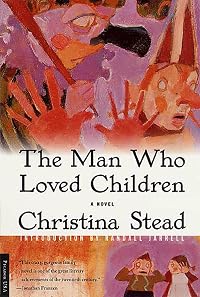
The Man Who Loved Children
by Christina Stead
On This Page
Description
Sam and Henny Pollit have too many children, too little money, and too much loathing for one another. As Sam uses the children’s adoration to feed his own voracious ego, Henny watches in bleak despair, knowing the bitter reality that lies just below his mad visions. A chilling novel of the relations between parents and children, husbands and wives, The Man Who Loved Children is acknowledged as a contemporary classic.Tags
Recommendations



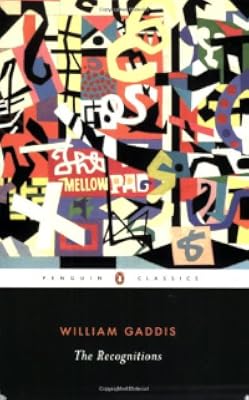


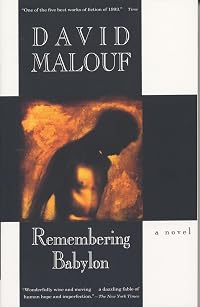
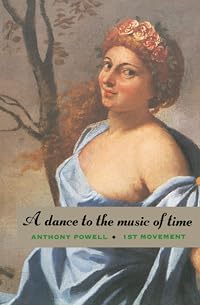
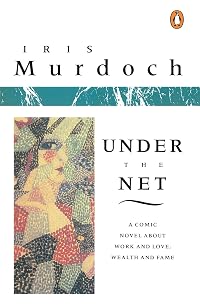











Member Recommendations
TheWasp illustrated overview of setting and history of area in which novel is based
22
JuliaMaria unkonventionelle große Familien
JuliaMaria Jonathan Franzen preist den Roman von Christina Stead im Essay "Die tollste Familie, von der je erzählt wurde".
02
Member Reviews
Two days after having read The Man Who Loved Children and I'm finally settling down. I don't think I've ever changed a 1 star review to a 5 star review before, but there it is. I've moved from feeling "this is a brilliant book, but I hate it" to feeling: "I may hate this book, but it's brilliant."
This novel made me feel dreadfully insecure about my role as a parent. I've decided that is interesting and amazing rather than something to blame it for. The parents in this novel are dreadful in all the ways I dread being, I suppose.
I was so unsettled by Stead's portrayal of a father who tries to be a friend to his children but ends up doing so in all the most damaging ways, smothering them, obliterating their individuality, so that they show more become supports for his ego and nothing more. Sam Pollitt is a dreadful father, and yet he thrives on the attention of his children, and his children adore him, even when he is his most self-centered and cruel. Only Louisa, the eldest child, begins to see through her father. Her journey and her growing insight become the redemptive arc in this otherwise bleak story.
Henrietta Pollitt is the kind of mother who not only resents her children but also freely shares with them every resentment she feels toward them; who tells them openly how they have ruined her life; who plays with the notion of suicide in their presence; who barely acknowledges her obligations toward them. I have to confess that I am -not- one of those parents who have never wondered, however much I love my children, what it might have been like to have lived a life without them--what I might have achieved or enjoyed if I didn't have the obligation to love them and to care for them. Just having ever had that skinny daydream in my head of what my life may have been without children made me vulnerable to the horror novel that this novel is at its heart.
I applaud Stead for taking my parental insecurities to the farthest darkest place in this novel. The story is extreme, but it is accurate and educative, and true in the way only a great, classic tragedy can be.
My original 1-star review, below the line.
=============================
What it does, it does extremely well.
Imagine "To Kill a Mockingbird" where every character is like Bob Ewell. "Harry Potter" where every character is like Draco Malfoy. "Picture of Dorian Grey" where every character is like Dorian Grey. That's what it felt like to read The Man Who Loved Children.
There is no doubt that this is an exquisitely written novel. Every sentence is masterful. Open any page and you'll find a sentence that amazes.
And there is also something amazing and uncanny about Christina Stead--that she could have such a pure approach, such laser-like genius of dialog and scene and setting; that she could bring to brilliant three-dimensional life these greasy, selfish, repulsive, narcissistic people.
The relentlessness of Stead's take on humanity overwhelmed me, though. If it had been a shorter book I'd probably be praising it. But eventually its meanness overcame its art for me, and my final feeling after having read the novel was one of nausea and despair. show less
This novel made me feel dreadfully insecure about my role as a parent. I've decided that is interesting and amazing rather than something to blame it for. The parents in this novel are dreadful in all the ways I dread being, I suppose.
I was so unsettled by Stead's portrayal of a father who tries to be a friend to his children but ends up doing so in all the most damaging ways, smothering them, obliterating their individuality, so that they show more become supports for his ego and nothing more. Sam Pollitt is a dreadful father, and yet he thrives on the attention of his children, and his children adore him, even when he is his most self-centered and cruel. Only Louisa, the eldest child, begins to see through her father. Her journey and her growing insight become the redemptive arc in this otherwise bleak story.
Henrietta Pollitt is the kind of mother who not only resents her children but also freely shares with them every resentment she feels toward them; who tells them openly how they have ruined her life; who plays with the notion of suicide in their presence; who barely acknowledges her obligations toward them. I have to confess that I am -not- one of those parents who have never wondered, however much I love my children, what it might have been like to have lived a life without them--what I might have achieved or enjoyed if I didn't have the obligation to love them and to care for them. Just having ever had that skinny daydream in my head of what my life may have been without children made me vulnerable to the horror novel that this novel is at its heart.
I applaud Stead for taking my parental insecurities to the farthest darkest place in this novel. The story is extreme, but it is accurate and educative, and true in the way only a great, classic tragedy can be.
My original 1-star review, below the line.
=============================
What it does, it does extremely well.
Imagine "To Kill a Mockingbird" where every character is like Bob Ewell. "Harry Potter" where every character is like Draco Malfoy. "Picture of Dorian Grey" where every character is like Dorian Grey. That's what it felt like to read The Man Who Loved Children.
There is no doubt that this is an exquisitely written novel. Every sentence is masterful. Open any page and you'll find a sentence that amazes.
And there is also something amazing and uncanny about Christina Stead--that she could have such a pure approach, such laser-like genius of dialog and scene and setting; that she could bring to brilliant three-dimensional life these greasy, selfish, repulsive, narcissistic people.
The relentlessness of Stead's take on humanity overwhelmed me, though. If it had been a shorter book I'd probably be praising it. But eventually its meanness overcame its art for me, and my final feeling after having read the novel was one of nausea and despair. show less
Oh, this book. I went through many stages of hating this book. I read it because it was a group read for the 1001 books to read before you die group. First confusion was that I thought this was on the list as an Australian class and assumed it would be set in Australia. Nope - Washington, D.C./Baltimore/Annapolis. My neck of the woods. This is in essence a family epic - a very large family scraping by in D.C. until the father loses his job and they become basically destitute. But the real problem here is the vitriolic hatred between the father, Sam, and mother, Henny. It's very disturbing to witness, especially consider the book is supposed to be semi-autobiographical.
In the end, the book kept my attention, but only because it was like show more watching a train wreck. I really wouldn't recommend it. show less
In the end, the book kept my attention, but only because it was like show more watching a train wreck. I really wouldn't recommend it. show less
Well, that's what I get for reading that Christina Stead, the author of The Man Who Loved Children, is from Australia and assuming the novel's setting followed suit, therefore qualifying as A Book Set Somewhere You’ve Always Wanted To Visit. I have never been to the land down under. I have been to DC—where the novel is set—multiple times, and could have done without this visit.
Until the last chapter, this was a thoroughly deplorable book that left me wondering why it made the 1,001 BYMRBYD list. Some of my early review notes include the observation that Ms. Stead must have been disappointed that The Idiot was already used as the title of another, much better novel, because her main character displays all the traits of one. Another show more note, in response to the title of section 5 of chapter 8, "What Will Make You Shut Up," was: apparently, nothing. The preface to my copy credits Sam's annoying patois to various works I'm either entirely unfamiliar with or have only the barest knowledge of: Artemus Ward, Hiawatha, Uncle Remus. I struggled to believe pre-adolescent children would be as enthralled with their father's blathering as portrayed, given the mundane, juvenile nature of the letters they write to him while he is away.
Sam Pollit, the government bureaucrat at that heart of this tale of family disfunction, is an insufferable buffoon of a father who babbles in baby-talk-like gibberish to his children. His wife, Henny, debutant turned wretch, spends the bulk of her days hiding in her room from her verbally abusive husband. The first four hundred pages of the story paint a grim picture of their marriage. Sam takes a ten-month government trip to Singapore. Upon his return, he loses his position (for reasons which go largely unexplained). The family moves to a run-down house in Baltimore, where the unemployed Pollit spends his days in idiotic schemes and activities rather than seeking a way to support his family. Unsurprisingly, the family becomes destitute.
Then, in an inverse deus ex machina, all sorts of awful things happen in the final chapter, leading to an unexpected but long overdue ending which I won't spoil. This last chapter might have been stretched into an interesting novella if prefaced by a brief history of the family's unhappiness which spared readers from slogging through endless pages of Sam's "conversations."
Ultimately, The Man Who Loved Children is a portrait of an unkind father inflicting emotional distress on his hapless wife and children, and the price they all pay for his so-called devotion. While the ending somewhat redeems the novel, I don't agree with the jacket blurb describing it as "one of the great literary achievements of the twentieth century." show less
Until the last chapter, this was a thoroughly deplorable book that left me wondering why it made the 1,001 BYMRBYD list. Some of my early review notes include the observation that Ms. Stead must have been disappointed that The Idiot was already used as the title of another, much better novel, because her main character displays all the traits of one. Another show more note, in response to the title of section 5 of chapter 8, "What Will Make You Shut Up," was: apparently, nothing. The preface to my copy credits Sam's annoying patois to various works I'm either entirely unfamiliar with or have only the barest knowledge of: Artemus Ward, Hiawatha, Uncle Remus. I struggled to believe pre-adolescent children would be as enthralled with their father's blathering as portrayed, given the mundane, juvenile nature of the letters they write to him while he is away.
Sam Pollit, the government bureaucrat at that heart of this tale of family disfunction, is an insufferable buffoon of a father who babbles in baby-talk-like gibberish to his children. His wife, Henny, debutant turned wretch, spends the bulk of her days hiding in her room from her verbally abusive husband. The first four hundred pages of the story paint a grim picture of their marriage. Sam takes a ten-month government trip to Singapore. Upon his return, he loses his position (for reasons which go largely unexplained). The family moves to a run-down house in Baltimore, where the unemployed Pollit spends his days in idiotic schemes and activities rather than seeking a way to support his family. Unsurprisingly, the family becomes destitute.
Then, in an inverse deus ex machina, all sorts of awful things happen in the final chapter, leading to an unexpected but long overdue ending which I won't spoil. This last chapter might have been stretched into an interesting novella if prefaced by a brief history of the family's unhappiness which spared readers from slogging through endless pages of Sam's "conversations."
Ultimately, The Man Who Loved Children is a portrait of an unkind father inflicting emotional distress on his hapless wife and children, and the price they all pay for his so-called devotion. While the ending somewhat redeems the novel, I don't agree with the jacket blurb describing it as "one of the great literary achievements of the twentieth century." show less
I thought I was in for a literary treat when I read this savagely lush description on page 7:
[E]very room was a phial of revelation to be poured out some feverish night in the secret laboratories of her decisions, full of living cancers of insult, leprosies of disillusion, abscesses of grudge, gangrene of nevermore, quintan fevers of divorce, and all the proliferating miseries, the running sores and thick scabs, for which (and not for its heavenly joys) the flesh of marriage is so heavily veiled and conventionally interned.
Disturbing imagery, yes, but it reminded me of the artfully controlled mad excesses of Look Homeward, Angel, and I thought I'd stay with it to see where it went.
I made it all the way to page 30, with considerable show more difficulty, and then just gave it up. And this is one of the very few (not so many as ten) books that I will take some satisfaction in placing in the recycle bin and not trying to palm off on anybody, not even in a box labeled "Free" at the curb.
The reason: the gaggingly awful speech mannerisms of principal character Sam. He has horrible nicknames for his children ("Loozy," "Little-Womey") and affects a phony dialect that makes him sound like a demented babbler in a madhouse of overage babies. It is so staggeringly obnoxious that I would be hoping on every page for the story to turn out to be a slasher novel with six kinds of violent mayhem in store for our Sam. Five hundred pages of this? I need peace in my life, not the vision of a character who makes a good old-fashioned evildoer look like more pleasant company for my reading hours. How could an author even bear to create a character whose dialogue is so sickeningly loathsome that a hopeful, receptive reader turns away in disgust?
Never mind, I don't want to know. show less
[E]very room was a phial of revelation to be poured out some feverish night in the secret laboratories of her decisions, full of living cancers of insult, leprosies of disillusion, abscesses of grudge, gangrene of nevermore, quintan fevers of divorce, and all the proliferating miseries, the running sores and thick scabs, for which (and not for its heavenly joys) the flesh of marriage is so heavily veiled and conventionally interned.
Disturbing imagery, yes, but it reminded me of the artfully controlled mad excesses of Look Homeward, Angel, and I thought I'd stay with it to see where it went.
I made it all the way to page 30, with considerable show more difficulty, and then just gave it up. And this is one of the very few (not so many as ten) books that I will take some satisfaction in placing in the recycle bin and not trying to palm off on anybody, not even in a box labeled "Free" at the curb.
The reason: the gaggingly awful speech mannerisms of principal character Sam. He has horrible nicknames for his children ("Loozy," "Little-Womey") and affects a phony dialect that makes him sound like a demented babbler in a madhouse of overage babies. It is so staggeringly obnoxious that I would be hoping on every page for the story to turn out to be a slasher novel with six kinds of violent mayhem in store for our Sam. Five hundred pages of this? I need peace in my life, not the vision of a character who makes a good old-fashioned evildoer look like more pleasant company for my reading hours. How could an author even bear to create a character whose dialogue is so sickeningly loathsome that a hopeful, receptive reader turns away in disgust?
Never mind, I don't want to know. show less
This is a most unusual family drama, simultaneously frightening, funny, and intense. Sam and Henny Pollit have six children. Eldest daughter Louisa was a product of Sam's first marriage; Henny has been nothing more than Sam's brood mare, spawning an assortment of children that offer endless amusement to Sam and endless stress and torment to Henny. Sam is self-centered and without a care in the world; he prides himself on being the "fun" parent, organizing all manner of escapades with his children. He speaks in a language all his own, full of cutesy nicknames and odd turns of phrase. Henny grew up in a wealthy family, and cannot accept the reduced circumstances of her life with Sam. She lives beyond their means, both materially and show more socially.
Sam and Henny neglect many of the practicalities associated with raising a family. At 13, Louisa is far too young to shoulder these responsibilities and yet there she is, fixing breakfast every day, and making sure the household runs smoothly. Henny has never accepted Louisa into the family, and verbally abuses her. Sam showers her with pet names like Looloo, but also smothers her with his prying and controlling behaviors. Louisa longs for summer holidays, when she stays with her mother's family:
For nine months of the year were trivial miseries, self-doubts, indecisions, and all those disgusts of preadolescence, when the body is dirty, the world a misfit, the moral sense qualmish, and the mind a sump of doubt: but three months of the year she lived in trust, confidence, and love. (p. 163)
Sam and Henny have such a poor relationship that all communication occurs through their children. Even Sam's impending posting to Malaya is communicated to Henny via her eldest son. And when they argue, all hell breaks loose:
When a quarrel started (Henny and Sam did speak at the height of their most violent quarrels) and elementary truths were spoken, a quiet, a lull would fall over the house. One would hear, while Henny was gasping for indignant breath and while Sam was biting his lip in stern scorn, the sparrows chipping, or the startling rattle of the kingfisher, or even an oar sedately dipping past the beach, or even the ferry's hoot. Exquisite were these moments. Then the tornado would break loose again. What a strange life it was for them, those quiet children, in this shaded house, in a bower of trees, with the sunny orchard shining, the calm sky and silky creek, with sunshine outside and shrieks of madness inside. (p. 326)
Louisa often finds herself caught in the middle of this marital drama, trying to break up the fights and protect the younger children. While Sam is away in Malaya, life settles into some semblance of order, and on his return it seems as if normalcy will continue. But a series of events dramatically change the family's place in the community. Sam and Henny are unable to work through this together, and when Sam takes charge you just know it won't end well. Louisa continues to serve as a stabilizing force, but increasingly resents Sam's intrusion and control.
By now the "frightening" and "intense" elements of this novel should be clear. It's strange and uncomfortable to admit that in the midst of all this, there are funny elements as well. Sam is larger than life. He's a complete prat and yet amusing and likable. He and Henny share equally in their family's dysfunction, and as much as she's a victim of Sam's ridiculous notions, I couldn't help liking Sam more. But Sam does some really awful things to his children, things that (if they were real people) would scar them for life. As a reader, I felt really conflicted, which I think is by design. Christina Stead is able to make the reader feel like one of Sam and Henny's many children -- fond of both parents, hurt and abused, and completely caught in the middle.
This is not an easy book to read, but not for the reasons you might think. Yes, the subject matter is difficult, and it's a bit like watching an impending train wreck. But the prose also makes its demands on the reader, particularly Sam's invented language. However, those willing to invest the time and effort in this book will be rewarded in the end. show less
Sam and Henny neglect many of the practicalities associated with raising a family. At 13, Louisa is far too young to shoulder these responsibilities and yet there she is, fixing breakfast every day, and making sure the household runs smoothly. Henny has never accepted Louisa into the family, and verbally abuses her. Sam showers her with pet names like Looloo, but also smothers her with his prying and controlling behaviors. Louisa longs for summer holidays, when she stays with her mother's family:
For nine months of the year were trivial miseries, self-doubts, indecisions, and all those disgusts of preadolescence, when the body is dirty, the world a misfit, the moral sense qualmish, and the mind a sump of doubt: but three months of the year she lived in trust, confidence, and love. (p. 163)
Sam and Henny have such a poor relationship that all communication occurs through their children. Even Sam's impending posting to Malaya is communicated to Henny via her eldest son. And when they argue, all hell breaks loose:
When a quarrel started (Henny and Sam did speak at the height of their most violent quarrels) and elementary truths were spoken, a quiet, a lull would fall over the house. One would hear, while Henny was gasping for indignant breath and while Sam was biting his lip in stern scorn, the sparrows chipping, or the startling rattle of the kingfisher, or even an oar sedately dipping past the beach, or even the ferry's hoot. Exquisite were these moments. Then the tornado would break loose again. What a strange life it was for them, those quiet children, in this shaded house, in a bower of trees, with the sunny orchard shining, the calm sky and silky creek, with sunshine outside and shrieks of madness inside. (p. 326)
Louisa often finds herself caught in the middle of this marital drama, trying to break up the fights and protect the younger children. While Sam is away in Malaya, life settles into some semblance of order, and on his return it seems as if normalcy will continue. But a series of events dramatically change the family's place in the community. Sam and Henny are unable to work through this together, and when Sam takes charge you just know it won't end well. Louisa continues to serve as a stabilizing force, but increasingly resents Sam's intrusion and control.
By now the "frightening" and "intense" elements of this novel should be clear. It's strange and uncomfortable to admit that in the midst of all this, there are funny elements as well. Sam is larger than life. He's a complete prat and yet amusing and likable. He and Henny share equally in their family's dysfunction, and as much as she's a victim of Sam's ridiculous notions, I couldn't help liking Sam more. But Sam does some really awful things to his children, things that (if they were real people) would scar them for life. As a reader, I felt really conflicted, which I think is by design. Christina Stead is able to make the reader feel like one of Sam and Henny's many children -- fond of both parents, hurt and abused, and completely caught in the middle.
This is not an easy book to read, but not for the reasons you might think. Yes, the subject matter is difficult, and it's a bit like watching an impending train wreck. But the prose also makes its demands on the reader, particularly Sam's invented language. However, those willing to invest the time and effort in this book will be rewarded in the end. show less
A masterpiece. A difficult, challenging, cruelly misanthropic, desperately hopeful (or hopefully desperate?), linguistic feat. Patrick White famously considered Christina Stead to be the greatest Australian novelist, and - although I think he was - Stead must be in the running. The dire situation of Henny and Sam's household was based in part on Stead's own childhood (the reason why she fled Australia) and you feel the needle-sharp accuracy of her characterisations. Surely neither of these people can be real. Yet they also feel so true. Yet they also feel so literary.
Stead must be read on her terms, especially in The Man Who Loved Children, but she will reward those who like their literature confronting, tangled, and inventive. (Also, show more if you're going to buy a used copy, buy the Penguin paperback from the 1960s with an introduction by Randall Jerrall! He almost single-handedly restored this forgotten 1940s novel to the public eye, and the introduction is a masterpiece of old-world criticism: even-handed, luxurious in its praise but fair in its criticisms, and masterful in its analysis of the central characters and themes.) show less
Stead must be read on her terms, especially in The Man Who Loved Children, but she will reward those who like their literature confronting, tangled, and inventive. (Also, show more if you're going to buy a used copy, buy the Penguin paperback from the 1960s with an introduction by Randall Jerrall! He almost single-handedly restored this forgotten 1940s novel to the public eye, and the introduction is a masterpiece of old-world criticism: even-handed, luxurious in its praise but fair in its criticisms, and masterful in its analysis of the central characters and themes.) show less
Why did I not know? How could it be? Stead, or at least this book, ranks with or above the other "all style, little to no story" masters/masterpieces of the century, right there with Joyce, Gass, and White. Her prose might actually be denser than theirs, her commitment to the sentence deeper.
MWLC is a flawed book in only one way: the first 100 pages are molasses slow, and to little obvious purpose. The whole thing is repetitive, but the first fifth. Oh boy. The repetition in the rest is earned; the first fifth is, I regret, dull. But much better that way than, as with Gass's 'Tunnel', White's 'Vivisector' or Joyce's everything, sticking the boring bits in the middle or end.
And Stead does much better than those esteemed gents at giving show more you some reason to keep reading, other than art for art's sake. Nobody will ever care whether Stephen and Bloom meet, but here I (at least) really wanted to know how this idiotic family would finally implode.
As with White (who blurbs this edition), Stead is perfect at dysfunctional relationships between individuals; unlike him, she can write about more than one person in any given scene. Like him, she traffics in dualities; but whereas his are abstract and philosophical, hers are rooted in history. Here, Henrietta (conservatism and aristocracy, but in the good way) faces off against Sam (progressive, but in the bad white-man-will-save-the-world way). It's a great portrait of early twentieth century American ideas.
And her rants are often better than Gass's. Consider, if nothing else, Henrietta on suicide:
"There are so many ways to kill yourself, they're just old-fashioned with their permanganate: do you think I'd take permanganate? I wouldn't want to burn my insides out and live to tell teh tale as well; itiots! It's simple. I'd drown myself. Why not put your head in a gas oven? They say it doesn't smell so bad..."
It continues for a page and a half, as she decides how she would, and wouldn't kill herself. It's glorious stuff. show less
MWLC is a flawed book in only one way: the first 100 pages are molasses slow, and to little obvious purpose. The whole thing is repetitive, but the first fifth. Oh boy. The repetition in the rest is earned; the first fifth is, I regret, dull. But much better that way than, as with Gass's 'Tunnel', White's 'Vivisector' or Joyce's everything, sticking the boring bits in the middle or end.
And Stead does much better than those esteemed gents at giving show more you some reason to keep reading, other than art for art's sake. Nobody will ever care whether Stephen and Bloom meet, but here I (at least) really wanted to know how this idiotic family would finally implode.
As with White (who blurbs this edition), Stead is perfect at dysfunctional relationships between individuals; unlike him, she can write about more than one person in any given scene. Like him, she traffics in dualities; but whereas his are abstract and philosophical, hers are rooted in history. Here, Henrietta (conservatism and aristocracy, but in the good way) faces off against Sam (progressive, but in the bad white-man-will-save-the-world way). It's a great portrait of early twentieth century American ideas.
And her rants are often better than Gass's. Consider, if nothing else, Henrietta on suicide:
"There are so many ways to kill yourself, they're just old-fashioned with their permanganate: do you think I'd take permanganate? I wouldn't want to burn my insides out and live to tell teh tale as well; itiots! It's simple. I'd drown myself. Why not put your head in a gas oven? They say it doesn't smell so bad..."
It continues for a page and a half, as she decides how she would, and wouldn't kill herself. It's glorious stuff. show less
Members
- Recently Added By
Published Reviews
ThingScore 88
This novel is not for everyone, nor for every mood. I have read it twice with great admiration. When I tried to read it a third time (when I had a young family myself), I couldn't stand it. If Hamlet runs four hours and Lear almost five, well, The Man Who Loved Children runs 14 or 15 hours, and though the plot is actually quite neat and progresses steadily, novel-readers are not used to show more 15-hour storms. The catharsis here, compared with any other tragedy, is a long time coming. Nevertheless, Stead's novel is like Ford Madox Ford's The Good Soldier in its power to astonish and compel with each reading. It is sui generis among novels, and Stead, too, never wrote anything else like it. show less
added by PGCM
"Although “The Man Who Loved Children” is probably too difficult (difficult to stomach, difficult to allow into your heart) to gain a mass following, it’s certainly less difficult than other novels common to college syllabuses, and it’s the kind of book that, if it is for you, is really for you. I’m convinced that there are tens of thousands of people in this country who would bless show more the day the book was published, if only they could be exposed to it. I might never have found my way to it myself had my wife not discovered it in the public library in Somerville, Mass., in 1983, and pronounced it the truest book she’d ever read." show less
added by carport
In a letter to Thistle Harris Stead in 1942 Christina Stead wrote:
Every work of art should give utterance, or indicate, the dreadful blind strength and the cruelty of the creative impulse, that is why they must all have what are called errors, both of taste and style: in this it is like a love-affair (a book, I mean.) A love affair is not delicate or clean: but it is an eye-opener! The show more sensuality, delicacy of literature does not exist for me; only the passion, energy and struggle, the night of which no one speaks, the creative act: some people like to see the creative act banished from the book - it should be put behind one and a neatly-groomed little boy in sailor-collar introduced. This is perhaps quite right. But for me it is not right: I like each book to have not only the little boy, not very neat, but also the preceding creative act: then it is only, that it gives me full satisfaction.1
Here is an author quite conscious of the imperfect, disunified nature of her art. In this letter, Stead shows a rather postmodern consciousness of the novel as creation and an interest in exposing the act of creation in the work of art. Without the assistance of poststructuralist critics, Stead points to the importance of 'errors' as indicators to the reader of art's place in life - art as 'struggle', as process rather than as product. show less
Every work of art should give utterance, or indicate, the dreadful blind strength and the cruelty of the creative impulse, that is why they must all have what are called errors, both of taste and style: in this it is like a love-affair (a book, I mean.) A love affair is not delicate or clean: but it is an eye-opener! The show more sensuality, delicacy of literature does not exist for me; only the passion, energy and struggle, the night of which no one speaks, the creative act: some people like to see the creative act banished from the book - it should be put behind one and a neatly-groomed little boy in sailor-collar introduced. This is perhaps quite right. But for me it is not right: I like each book to have not only the little boy, not very neat, but also the preceding creative act: then it is only, that it gives me full satisfaction.1
Here is an author quite conscious of the imperfect, disunified nature of her art. In this letter, Stead shows a rather postmodern consciousness of the novel as creation and an interest in exposing the act of creation in the work of art. Without the assistance of poststructuralist critics, Stead points to the importance of 'errors' as indicators to the reader of art's place in life - art as 'struggle', as process rather than as product. show less
added by PGCM
Lists

The Guardian's 1000 Novels Everyone Must Read
1,005 works; 547 members

1001 Books You Must Read Before You Die
1,448 works; 1,133 members
501 Must-Read Books
529 works; 72 members

Recommend the 20 best books you've read in the last five years
2,168 works; 606 members

Top Five Books of 2013
1,562 works; 721 members

Best Family Stories
241 works; 22 members
20th Century Literature
1,161 works; 55 members

Female Author
1,235 works; 67 members
Time Magazine's "All-Time 100"
113 works; 15 members

Top Five Books of 2015
811 works; 240 members
Time's All-Time 100 Novels
100 works; 27 members

Australia's Greatest Books, as chosen by Geoffrey Dutton (1985)
97 works; 6 members
Booktopia's 50 Must Read Australian Novels
50 works; 5 members

Five star books
1,755 works; 108 members

Shaking a Leg
111 works; 3 members

Books Read in 2022
5,166 works; 114 members

Read This Next
120 works; 3 members
Harold Bloom - The Western Canon: D. The Chaotic Age
833 works; 24 members

Australian Classics: Fifty Great Writers and Their Celebrated Works
43 works; 1 member

Mustich's 1000 Books to Read Before You Die: A Life Changing List
1,001 works; 19 members

The 150 Greatest Novels of All Time
150 works; 6 members
Canon de la narrativa universal del s. XX (cicutadry)
499 works; 3 members

The "A" List
67 works; 8 members
Talk Discussions
Past Discussions
Group Read, December 2018: The Man Who Loved Children in 1001 Books to read before you die (January 2019)
75 Books Challenge for 2015 : ANZAC Author Reading Challenge 2015-Christina Stead (AUS) & Katherine Mansfield (NZ) (May) in 75 Books Challenge for 2015 (August 2015)
Author Information

24+ Works 3,510 Members
Author Christina Stead was born in Rockdale, New South Wales, Australia on July 17, 1902. She left Australia in 1928 and spent time in Europe, England, and the United States before permanently returning in 1974. She wrote fifteen novels and numerous volumes of short stories. She is best known for her novel, The Man Who Loved Children, which was show more based on her childhood. Her novels were unpublished in Australia until 1965 and she was denied the Britannica-Australia award in 1967 on the grounds that she was no longer considered an Australian. In 1974, she won the Patrick White award. While living in the United States during the 1940s, she worked as a Hollywood scriptwriter and contributed to Madame Curie and They Were Expendable. She died on March 31, 1983. (Bowker Author Biography) show less
Some Editions
Awards and Honors
Notable Lists
Australia's Greatest Books (1940)
Series
Belongs to Publisher Series
Work Relationships
Has as a commentary on the text
Has as a student's study guide
Common Knowledge
- Canonical title
- The Man Who Loved Children
- Original title
- The Man Who Loved Children
- Original publication date
- 1940
- People/Characters
- Henny Pollitt; Sam Pollitt; Louie Pollitt; Ernie Pollitt; Evie Pollitt; Little Sam Pollitt
- Important places
- Virginia, USA
- First words
- All the June Saturday afternoon Sam Pollit's children were on the lookout for him as they skated round the dirt sidewalks and seamed old asphalt of R Street and Reservoir Road that bounded the deep-grassed acres of Tohoga Hou... (show all)se, their home.
- Quotations*
- En je kan alles aan, alle wereldproblemen, terwijl er de hele tijd andere vrouwen zijn, jij hypocriet, jij smerige, bloedeloze hypocriet, te goed, andere vrouwen, wetenschapsvrouwen, jonge meiden en je eigen vrouw. Ik zal al ... (show all)je wetenschappelijke verenigingen schrijven, ik zal de Dienst voor Natuurbehoud schrijven, ik zal ze eens vertellen wat voor leven ik heb gehad. Sla me maar, sla me maar neer, ik kan er niet meer tegen. Je dreigt maar je doet niks, niks om me een kans te geven om weg te komen, niet voordat je iets tegen me hebt om mijn kinderen te stelen. Maar dat zal je niet, dat zal je niet! Ik vermoord ze allemaal, ik vermoord ze allemaal vanavond, ik giet die stinkende olie brandend je strot in en en vermoord mijn kinderen, je krijgt ze niet.
- Last words*
- (Click to show. Warning: May contain spoilers.)Spa House lag aan de andere kant van de brug.
- Original language
- English
- Canonical DDC/MDS
- 823.912
- Canonical LCC
- PR9619.3.S75
*Some information comes from Common Knowledge in other languages. Click "Edit" for more information.
Classifications
Statistics
- Members
- 1,588
- Popularity
- 14,292
- Reviews
- 48
- Rating
- (3.73)
- Languages
- 7 — Dutch, English, French, German, Italian, Portuguese, Spanish
- Media
- Paper, Audiobook, Ebook
- ISBNs
- 51
- ASINs
- 19