
Lemprière's Dictionary
by Lawrence Norfolk
On This Page
Description
An international best-seller and winner of the Somerset Maugham Prize, Lempriere's Dictionary is the debut novel from Lawrence Norfolk, one of England's most innovative, internationally acclaimed young authors. In eighteenth-century London, John Lempriere works feverishly on a celebrated dictionary of classical mythology that bears his name. He discovers a conspiracy against his family dating back 150 years. Told with the narrative drive of a political thriller and a Dickensian panorama of show more place and time, this astonishing tale encompasses the Great Voyages of Discovery, multinational financial conspiracies, and a motley cast of scholars and eccentrics, drunken aristocrats, whores and assassins, and octogenarian pirates, all brilliantly depicted across three continents and the world of classical mythology. show lessTags
Recommendations









Member Recommendations
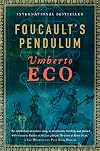
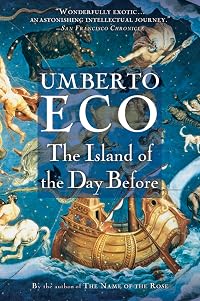
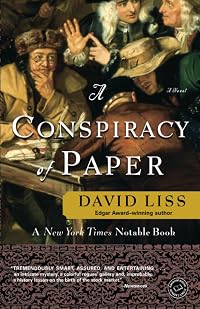
P_S_Patrick These two books have a fair bit in common. Both are dense, demanding, historical, and are thick with intrigue, conspiracy, and foul play. Thrilling stuff.
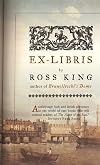
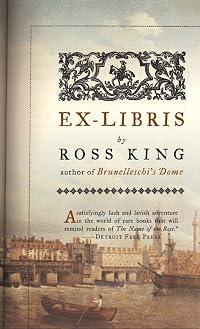
P_S_Patrick The common themes between these books include long voyages on ships, the historical disputes between England and Europe, books, intrigue, spying, and conspiracy. So, if you enjoy one, you should enjoy the other. But, what Ex Libris does, Lempriere's Dictionary does better, there is more intrigue, bigger and better conspiracies, a better plot, and overall it is better written. Ex Libris is shorter, and easier going due to its not being as dense, it also focuses more on books, and is set a bit earlier, so may appeal more to some people for these reasons, for example if you struggled with Lempriere's Dictionary.
by anonymous user

Lempriere's Classical Dictionary of Proper Names Mentioned in Ancient Authors Writ Large: With a Chronological Table by John Lemprière
KayCliff Lempriere's Dictionary by Lawrence Norfolk concerns the writing of Lempriere's Classical Dictionary of Proper Names Mentioned in Ancient Authors Writ Large by John Lempriere.

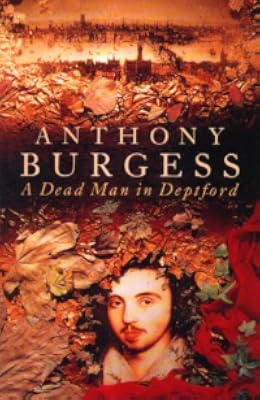
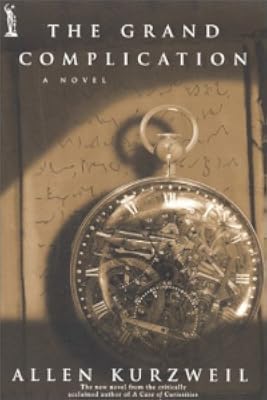
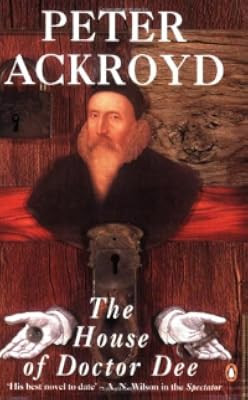
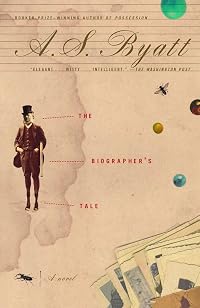
KayCliff Both books are cited by Michael Dirda as examples of antiquarian romances.
Member Reviews
An extraordinary book in every sense - this one is a challenge both to read and to review. To start, how should we categorise it? It mixes so many genres - historical fiction, fantasy, classical allusions, grand conspiracy thriller, parody and even romance - a real postmodern mash-up.
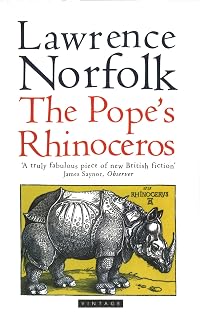
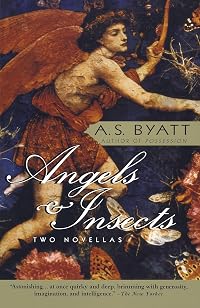
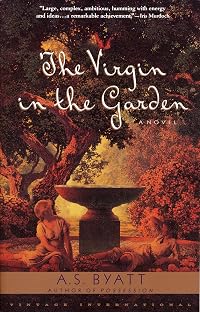
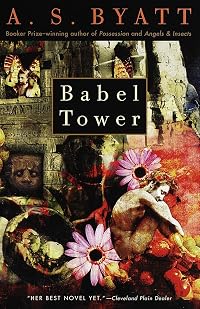
I first heard of Norfolk several years ago when I read A.S. Byatt's book of literary criticism On Histories and Stories, in which she extolled him as one of the cleverest young writers around. This is probably the book she had most in mind, though The Pope's Rhinoceros is equally complex and ambitious.
Some of the pivotal events are real enough, the story of the East India Company, the siege of La Rochelle and the build-up to the French revolution, but the show more conceit of Norfolk's story is so outrageous that it can only be seen as a sort of self-parody. The two books it reminded me most of, for very different reasons, were Gravity's Rainbow and The Count of Monte Cristo.
The hero (or at least the pivotal character) is John Lemprière, a young scholar from Jersey whose primary interest is studying Greek and Roman classics. His story is interleaved with a grand conspiracy - in Norfolk's version of history the East India Company is almost ruined when its first expedition in 1600 comes back with a cargo of pepper which is worthless in London because the Dutch have flooded the market, and its investors are rescued by a shadowy "cabbala" of traders from the Huguenot free port of La Rochelle who are unable to trade with the East directly. Most of the action takes place in the 1780s, when their descendants draw Lemprière into their intrigues by staging reenactments of scenes from the classics, the first of which involves the grisly murder of his father by fox-hounds. They also persuade him to start writing a dictionary of classical mythology (this is also something real, as are some of Lemprière's biographical details).
The plot gets more and more complex, and veers further into the realms of fantasy, but Norfolk clearly loves the classics and has a fine command of arcane language. For all that, much of the book is quite readable and the storytelling is compulsive. show less
I first heard of Norfolk several years ago when I read A.S. Byatt's book of literary criticism On Histories and Stories, in which she extolled him as one of the cleverest young writers around. This is probably the book she had most in mind, though The Pope's Rhinoceros is equally complex and ambitious.
Some of the pivotal events are real enough, the story of the East India Company, the siege of La Rochelle and the build-up to the French revolution, but the show more conceit of Norfolk's story is so outrageous that it can only be seen as a sort of self-parody. The two books it reminded me most of, for very different reasons, were Gravity's Rainbow and The Count of Monte Cristo.
The hero (or at least the pivotal character) is John Lemprière, a young scholar from Jersey whose primary interest is studying Greek and Roman classics. His story is interleaved with a grand conspiracy - in Norfolk's version of history the East India Company is almost ruined when its first expedition in 1600 comes back with a cargo of pepper which is worthless in London because the Dutch have flooded the market, and its investors are rescued by a shadowy "cabbala" of traders from the Huguenot free port of La Rochelle who are unable to trade with the East directly. Most of the action takes place in the 1780s, when their descendants draw Lemprière into their intrigues by staging reenactments of scenes from the classics, the first of which involves the grisly murder of his father by fox-hounds. They also persuade him to start writing a dictionary of classical mythology (this is also something real, as are some of Lemprière's biographical details).
The plot gets more and more complex, and veers further into the realms of fantasy, but Norfolk clearly loves the classics and has a fine command of arcane language. For all that, much of the book is quite readable and the storytelling is compulsive. show less
Nonsense and very long nonsense at that. Set in the 18th century between London and Paris, the book links the East India Company, the French Revolution and Lempriere's Classical Dictionary. However the author has developed a style which values words over meaning and erudition over storyline. Try throwing in to the mix the fact that some of the central characters are autonoma while others can fly. There are so many other books that your time would be better spent elsewhere.
At over 600 pages, reading this book is a formidable undertaking.
This is the second time I've read this book, the first time being some 25 years ago. TBH I'd forgotten most of it so it was really like reading it anew.
It requires something of you, in fact it requires a lot of you, this is not an idle read.
It is the fictional re-imagining of the creation of the dictionary by John Lempriére back in the 1700s.
Centering on a young man who is the focus of an immense conspiracy. Only, he doesn't know this. Extraordinary events are staged around him, events so bizarre, and yet they mirror some of his internal visions. A mind fuck on a vast scale.
There are no easy giveaways in the story as to where it is going, in fact, huge chunks of it are show more not revealed until the very end. And yet the end is very satisfying.
It brought back the immense satisfaction of finishing an intense, enveloping story.
Would I recommend it, absolutely.
Is it for everyone? No, you need a decent attention span to get the best of this book
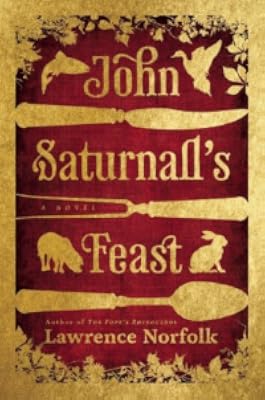
I've also read John Saturnall's Feast by this author, another very satisfying book indeed, and at only 400 odd pages it is more manageable than Lempriére's Dictionary show less
This is the second time I've read this book, the first time being some 25 years ago. TBH I'd forgotten most of it so it was really like reading it anew.
It requires something of you, in fact it requires a lot of you, this is not an idle read.
It is the fictional re-imagining of the creation of the dictionary by John Lempriére back in the 1700s.
Centering on a young man who is the focus of an immense conspiracy. Only, he doesn't know this. Extraordinary events are staged around him, events so bizarre, and yet they mirror some of his internal visions. A mind fuck on a vast scale.
There are no easy giveaways in the story as to where it is going, in fact, huge chunks of it are show more not revealed until the very end. And yet the end is very satisfying.
It brought back the immense satisfaction of finishing an intense, enveloping story.
Would I recommend it, absolutely.
Is it for everyone? No, you need a decent attention span to get the best of this book
I've also read John Saturnall's Feast by this author, another very satisfying book indeed, and at only 400 odd pages it is more manageable than Lempriére's Dictionary show less
Normally I wouldn't appreciate it when a historical novel goes all steampunk on me right in the middle, but this novel has enough else going for it that I don't mind, and Norfolk could probably make a case for narrative necessity once he'd had a couple of pints. This book has exquisite depth, breadth, and coherence, though Norfolk sometimes goes very far afield to bring some of the depth and breadth, and he doesn't always bring his references to bear. If you haven't read a few hundred other books first, in the genre and out of it, wait until you have before you read this one.
An interesting historical/fantasy-mystery. Some outlandish and anachronistic details may be a bit much for some, but it's all good to me. One weakness is the revelation at the book's end of the true identity of one of the main characters, which is so bizarre and thematically out of step with the rest of the novel that I don't quite know what to make of it.
Lawrence Norfolk's first novel, Lemprière's Dictionary (1992) caught my eye on the paperback stacks at the shop a few weeks ago, and since my fiction "to read" pile was fairly short at that point, it soon found its way to the top of the heap. It took me a while to get through; at a dense 530 pages this is not a book that lends itself well to T-rides. When I got close to the end I felt the need to devote an evening's reading to finishing it so I didn't lose any of the twists and turns.
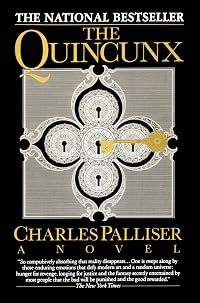
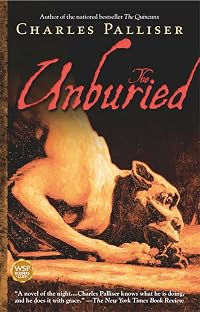
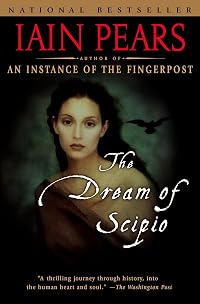
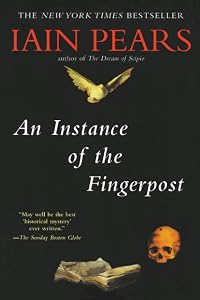
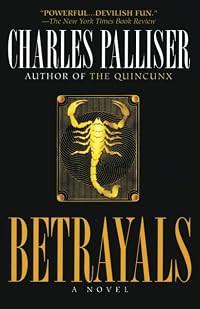
This is in some ways a bizarre novel, filled with anachronistic technologies, quickly shifting perspectives and enough allusions to classical mythology to bridge the River Styx (it had to be done). Its sprawl reminded me slightly of Palliser's The show more Quincunx, but there were also elements of Ian Pears, Umberto Eco, and even Charles Dickens at play here. Norfolk's writing is excellent at times and plodgy at others (that's plodding + stodgy), and most of his characters (even the human ones) offer little emotional connection. I finished the book without any sense of triumph or loss for any character at all.
Norfolk's got a few other books floating around since this one, and I suspect I'll eventually give another one of them a whirl. I didn't dislike this one (the suspense and plot-twists alone would have kept me reading), but I can't help but think it could have been better.
http://philobiblos.blogspot.com/2006/08/book-review-lemprires-dictionary.html show less
This is in some ways a bizarre novel, filled with anachronistic technologies, quickly shifting perspectives and enough allusions to classical mythology to bridge the River Styx (it had to be done). Its sprawl reminded me slightly of Palliser's The show more Quincunx, but there were also elements of Ian Pears, Umberto Eco, and even Charles Dickens at play here. Norfolk's writing is excellent at times and plodgy at others (that's plodding + stodgy), and most of his characters (even the human ones) offer little emotional connection. I finished the book without any sense of triumph or loss for any character at all.
Norfolk's got a few other books floating around since this one, and I suspect I'll eventually give another one of them a whirl. I didn't dislike this one (the suspense and plot-twists alone would have kept me reading), but I can't help but think it could have been better.
http://philobiblos.blogspot.com/2006/08/book-review-lemprires-dictionary.html show less
Rich, intricate, linguistically brilliant, but hard work. I would like to have been able to rate this book more highly, if only by way of acknowledgement of the difficulty of packing this much intricacy into a single novel. However, the technique of retelling the story from multiple overlapping viewpoints seriously hampered the pace and readability; I say this as someone who loved the Baroque Cycle (Neal Stephenson), so it's not like it's the density itself which is offputting.
The ending was also rather disappointing; if I had known it was going to be a ghost story, I wouldn't have started reading.
The ending was also rather disappointing; if I had known it was going to be a ghost story, I wouldn't have started reading.
Members
- Recently Added By
Published Reviews
ThingScore 69
"It's hard to deny the scope of Norfolk's intellect and his ability to marshall a huge wealth of material into one deftly crafted whole."
added by bookfitz
Early in Lempriere's Dictionary the hero's father searches for evidence of a phantom ship, and in so doing describes the defining moment of the antiquarian romance. "Somewhere in the morass of receipts, bills, bonds, affidavits and orders of acquisition which lay strewn about the room, there was a pattern. Somewhere within the pages of handwritten accounts, diaries, letters and notes ran a show more thread. But he could not find it. A single memorandum, a scrawl on a dog-eared endpaper might supply the link, the key to the pattern. It was here, buried here somewhere. Perhaps he had already seen it and missed its significance." Only the predestined hero, typically a studious sort, can find the thread, read correctly the signs and portents of these adult fairy tales.
"Myriad wonders and pleasures abound in Lempriere's Dictionary. Not too surprisingly, Zygia, the last entry in Lempriere's actual classical dictionary, provides just the right hint to the ending of Lawrence Norfolk's superbly entertaining novel." show less
"Myriad wonders and pleasures abound in Lempriere's Dictionary. Not too surprisingly, Zygia, the last entry in Lempriere's actual classical dictionary, provides just the right hint to the ending of Lawrence Norfolk's superbly entertaining novel." show less
"While his scheme misfires, he is a writer of talent who may yet write a better novel."
added by bookfitz
Author Information

Some Editions
Awards and Honors
Awards
Distinctions
Series
Belongs to Publisher Series
Goldmann (42596)
Common Knowledge
- Canonical title
- Lemprière's Dictionary
- Original title
- Lemprière's Dictionary
- Original publication date
- 1991
- People/Characters
- John Lemprière; Juliette Casterleigh
- Important places
- London, England, UK; La Rochelle, Charente-Maritime, Nouvelle-Aquitaine, France
- Important events
- Siege of La Rochelle
- Epigraph
- Barbarus hic ego sum, qui non intellegor ulli
- Dedication
- To S B-H
- First words
- The winds blew high over Jersey, clearing the sky for the stars to glimmer down on the island below.
- Quotations
- The winds blew high over Jersey, clearing the sky for the stars to glimmer down on the island below.
Somewhere in the morass of receipts, bills, bonds, affidavits and orders of acquisition which lay strewn about the room, there was a pattern. Somewhere within the pages of handwritten accounts, diaries, letters and notes ran ... (show all)a thread. But he could not find it. A single memorandum, a scrawl on a dog-eared endpaper might supply the link, the key to the pattern. It was here, buried here somewhere. Perhaps he had already seen it and missed its significance.
What began as a simple list of persons, places and events had grown strangely, with odd nodules and tendrils sprouting in all directions and linking up with each other to form loops and lattices, the whole thing wriggling und... (show all)er his nib like a mess of worms on a pin.... The dictionary had become its own beast ...Reappearances by major and minor characters folded the story back on itself, places recurred, accruing and expending significance, events paralleled one another. It was a serpentine thing, hardly a list at all.
What began as a simple list of persons, places and events had grown strangely, with odd nodules and tendrils sprouting in all directions and linking up with each other to form loops and lattices, the whole thing wriggling und... (show all)er his nib like a mess of worms on a pin. - Last words
- (Click to show. Warning: May contain spoilers.)He turned and made his way up to the road which would carry him back to the city.
- Original language
- English
Classifications
Statistics
- Members
- 1,284
- Popularity
- 19,037
- Reviews
- 19
- Rating
- (3.71)
- Languages
- 13 — Danish, Dutch, English, Estonian, Finnish, French, German, Hungarian, Italian, Russian, Spanish, Swedish, Turkish
- Media
- Paper, Audiobook, Ebook
- ISBNs
- 34
- UPCs
- 1
- ASINs
- 18