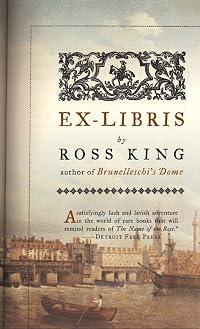
Ex-Libris
by Ross King
On This Page
Description
Responding to a cryptic summons to a remote country house, London bookseller Isaac Inchbold finds himself responsible for restoring a magnificent library pillaged during the English Civil War, and in the process slipping from the surface of 1660s London into an underworld of spies and smugglers, ciphers and forgeries. As he assembles the fragments of a complex historical mystery, Inchbold learns how Sir Ambrose Plessington, founder of the library, escaped from Bohemia on the eve of the show more Thirty Years War with plunder from the Imperial Library. Inchbold's hunt for one of these stolen volumes - a lost Hermetic text - soon casts him into an elaborate intrigue; his fortunes hang on the discovery of the missing manuscript but his search reveals that the elusive volume is not what it seems and that he has been made an unwitting player in a treacherous game. show lessTags
Recommendations

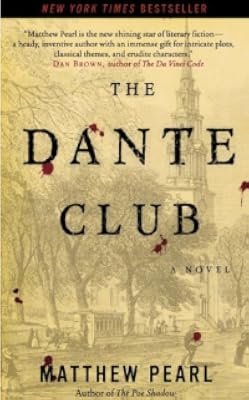
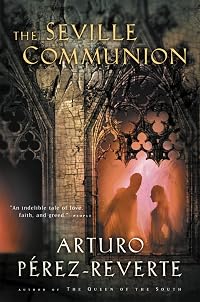
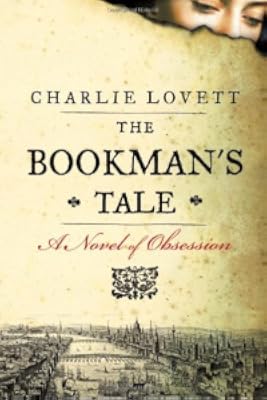
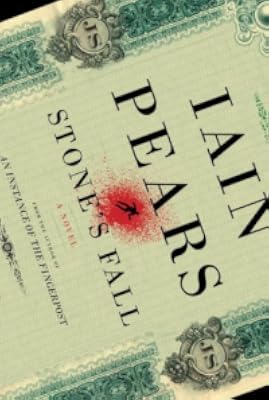


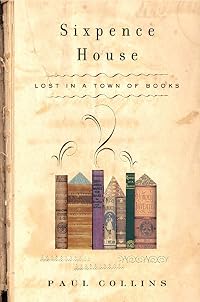
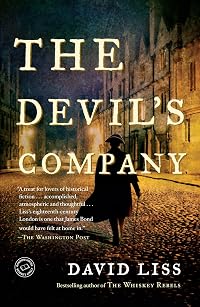
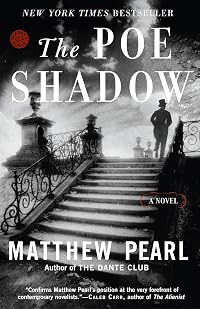
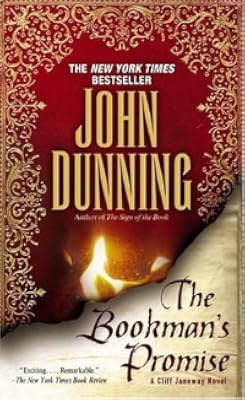
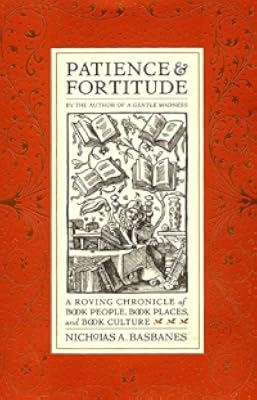
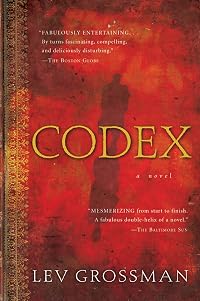
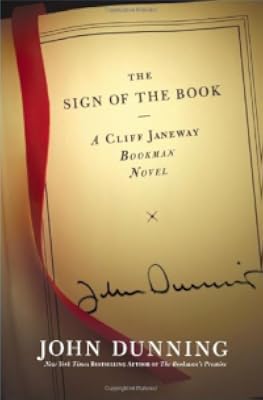
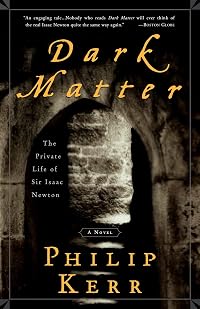

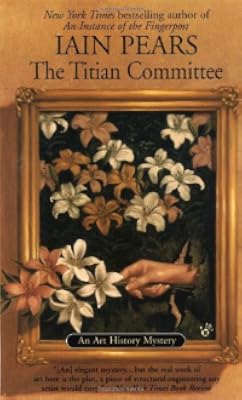
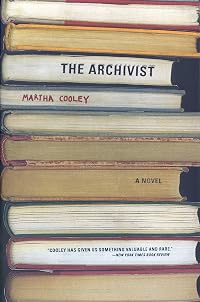
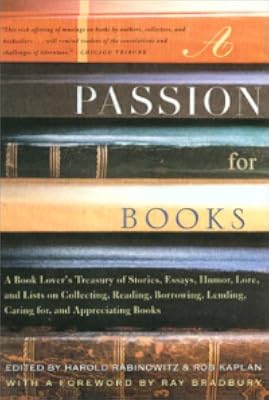
Member Recommendations

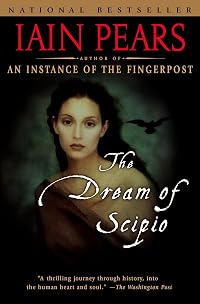
P_S_Patrick These books have some common themes, so may be enjoyed by the same people, but where Ex Libris is more of a "biblio-mystery", The Island of The Day Before is more of a general novel. Both books focus to a certain degree on the Age of Discovery, in the 17th Century, and the Longitude problem. They feature the historical conflicts, ships, and sailing, but this is perhaps where the similarities end. The Island of The Day before is better written, but whether you prefer the plot of one or the other will be due to personal preference. If you have an interest in the period, and enjoyed reading one, then I could recommend the other as a potential future read.

P_S_Patrick The common themes between these books include long voyages on ships, the historical disputes between England and Europe, books, intrigue, spying, and conspiracy, where the protagonist is wrapped up in a series of events beyond his control, which he does not understand. So, if you enjoy one, you should enjoy the other. But, what Ex Libris does, Lempriere's Dictionary does better, there is more intrigue, bigger and better conspiracies, a better plot, and overall it is better written. Ex Libris is shorter, and easier going due to its not being as dense, it also focuses more on books, and is set a bit earlier, so may appeal more to some people for these reasons, for example if you struggled with Lempriere's Dictionary.
Member Reviews
A Mr Potato Head Historical Novel: Remember that toy, Mr Potato Head? It consisted of various plastic ears, noses, and hats that you could pin onto a potato to turn it into Mr Potato Head. Children loved it, but to adults it was only a potato with plastic trimmings. Just so with Ross King's dreadful Ex Libris. Although it is crammed with recondite allusions to hermetic philosophy, the Thirty Years War, colonial malfeasance, and Restoration-era intrigue, they nothing more than gratuitous add-ons. When you see through the rather heavy-handed "historical" material, what you have here is a total potato: starchy, bland, and shapeless. Ross's work has been compared to that of Ian Pears, Lawrence Norfolk, and Charles Palliser and the show more comparisons are totally invidious. The above named are terrific authors whose works are immersed in, and engage with, history. Ross's work is less an historical fiction than a wretched pastiche of others' historical fictions. It is woodenly written; the characters are flat; and the pacing is as limp and flaccid as a week old lettuce. It was a struggle to finish. Read Instance of the Fingerpost instead . . . show less
I was rather disappointed by this book. A historic mystery involving a library, a mysterious woman, a swashbuckling adventurer, espionage, and secret books—how could you go wrong? Ross King manages to, though. An unexpectedly somber ending seemed totally inappropriate for the amusing, sometimes comic, story that precedes. The convoluted resolution, including the destinies of some key characters, was abruptly and unsatisfyingly explained to us like a history lesson in the final few pages. By the end, I was quite confused, but that was okay because I just didn't care.
I commend Ross King's rich vocabulary, dipping effortlessly into the arcane language of bookbinding, alchemy, shipbuilding and navigation; his command of Seventeenth Century history; his familiarity with the buildings and alleyways of London and Prague; his magical ability to conjure long-dead tastes, smells and sounds. But labouring through this book is like walking knee-deep in sucking mud. Every chapter swings from one plot to another metronomically, every character is a passive pawn of inexplicable circumstance, every plot thread is overburdened with pages of historical explanation. The ludicrous plot turns out to be a sham in the end, the heroine disappears from the narrative for most of the middle of the book, and the dread agents show more of evil in pursuit of the hero are swept away in the end by a deus ex machina just in the nick of time. The weak plot and unmotivated characters fail to support the dense architecture of historical fact built over them, and the entire story simply crumbles into waterlogged earth like Pontifex Hall in the final chapters. show less
The language and detail demonstrates the deep command the author holds over the relevant materials. The result is the evocation of a real world that actually exists. Plot-wise, I feel the setup is brilliant and intriguing, albeit slightly disappointing in conclusion. What would have been nice, I think, is an author's note identifying what parts are genuine historical facts, and which are invention.
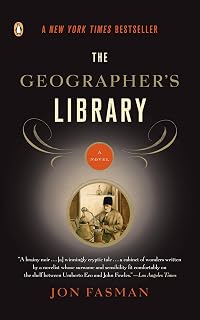
This was billed as a literary mystery and it was enjoyable in that respect but there was also alot of history and religion and my knowledge of the Thirty Year's War and Counter-Reformation were pretty severely strained. It was enjoyable to read, I just let it pull me along and didn't worry much about sorting out too much of the names and places, just did my best with it. My biggest complaint is that the grand conclusion, soon followed by the stunning loss of vital knowledge, didn't seem so stunning because we've got that all now. But fun to read and not the boring awful chore of some simliar works. (The Name of the Rose, The Rule of Four , The Geographer's Library
I really wanted to like this one. There were lots of individual details that were nice to stumble into, but somehow the end results didn't blend into a tale that captured my attention. It seemed like it would have all the right ingredients: English history, mystery, books, but it didn't work for me.
Love this book's and the author's impressive command and use of the English language, fine historian too. The plot and characterisation were of such a high standard that the denouement was, ever so slightly, below par. I still recommend it highly in the 'Increase Your Word-power' genre and I'll look forward to more.
Members
- Recently Added By
Published Reviews
ThingScore 75
Neben der Beschreibung der Stationen des 30jährigen Krieges dient der Roman vorzüglich als Einführung in das Geistesleben des 17. Jahrhunderts. Anhand damals tatsächlich existierenden Schriftguts führt Inchbold nicht nur in die Auseinandersetzung der Kirche mit Galilei und anderen vermeintlichen Ketzern ein, er liefert auch eine kleine Bibliographie zu verschiedenen Lebensbereichen. Er show more zitiert Werke der Geographie, Navigation und des Okkultismus. Eine Geheimschrift wird so unter Zuhilfenahme des "systeme Vigenere" geknackt, nachdem "Caesars Alphabet" Inchbold nicht weiterbringt.
Insgesamt ein wunderbarer Roman über die Welt des Buches. show less
Insgesamt ein wunderbarer Roman über die Welt des Buches. show less
added by Indy133
Lists

Best books about books
209 works; 106 members

Historical Fiction
889 works; 91 members

Books Read in 2015
3,299 works; 129 members

Books Read in 2020
4,379 works; 123 members

Books set in Prague
40 works; 1 member

Books Read in 2022
5,226 works; 115 members

Used books to buy next
565 works; 1 member
Author Information

16+ Works 11,122 Members
Ross King is the award-winning and bestselling author of Brunelleschi's Dome, Michelangelo and the Popes Ceiling, The Judgment of Paris, Mad Enchantment, Leonardo and the Last Supper, and Machiavelli: Philosopher of Power, among other books. He and his wife live in Woodstock, Great Britain.
Some Editions
Awards and Honors
Awards
Distinctions
Series
Belongs to Publisher Series
btb (72707)
Common Knowledge
- Canonical title*
- Das Labyrinth der Welt
- Original title
- Ex libris
- Original publication date
- 1998
- People/Characters
- Isaac Inchblood
- Important places
- London, England, UK; Prague, Austro-Hungarian Empire
- Epigraph
- Me, poor man, my library
was dukedom large enough...
Shakespeare, The Tempest - Dedication
- For Lynn
- First words
- Anyone wishing to purchase a book in London in the year 1660 had a choice of four areas.
- Last words
- (Click to show. Warning: May contain spoilers.)I thought I heard yet another scream, but I must have been mistaken: it was only the sound of tortured iron and splintering beams, the last fragments of Pontifex Hall tumbling into the voracious water.
- Original language*
- Englisch
*Some information comes from Common Knowledge in other languages. Click "Edit" for more information.
Classifications
Statistics
- Members
- 1,374
- Popularity
- 17,407
- Reviews
- 31
- Rating
- (3.32)
- Languages
- 8 — Dutch, English, German, Italian, Polish, Russian, Spanish, Turkish
- Media
- Paper, Ebook
- ISBNs
- 22
- ASINs
- 8