On This Page
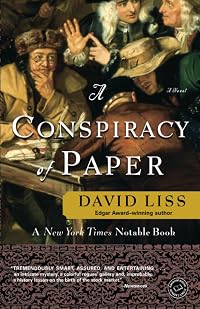
Description
Benjamin Weaver is an outsider in eighteenth-century London: a Jew among Christians; a ruffian among aristocrats; a retired pugilist who, hired by London's gentry, travels through the criminal underworld in pursuit of debtors and thieves. In A Conspiracy of Paper, Weaver investigates a crime of the most personal sort: the mysterious death of his estranged father, a notorious stockjobber. To find the answers, Weaver must contend with a desperate prostitute who knows too much about his past, show more relatives who remind him of his alienation from the Jewish faith, and a cabal of powerful men in the world of British finance who have hidden their business dealings behind an intricate web of deception and violence. Relying on brains and brawn, Weaver uncovers the beginnings of a strange new economic order based on stock speculation-a way of life that poses great risk for investors but real danger for Weaver and his family. In the tradition of The Alienist and written with scholarly attention to period detail, A Conspiracy of Paper is one of the wittiest and most suspenseful historical novels in recent memory, as well as a perceptive and beguiling depiction of the origin of today's financial markets. show lessTags
Recommendations
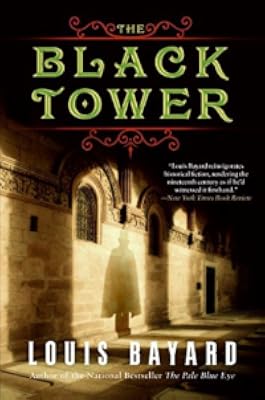
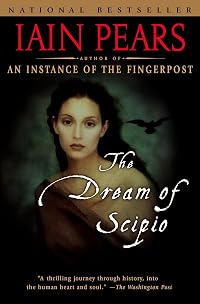
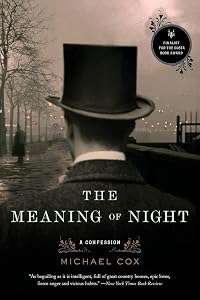
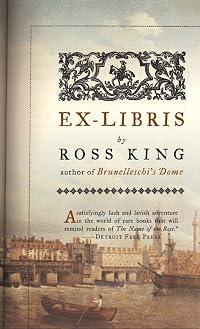



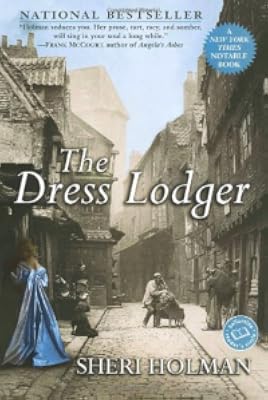
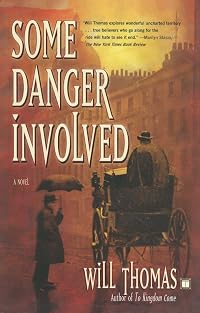
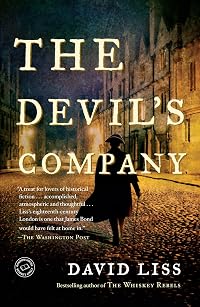

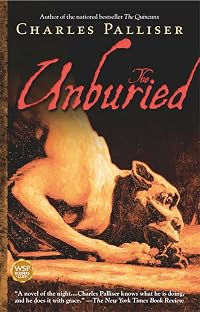





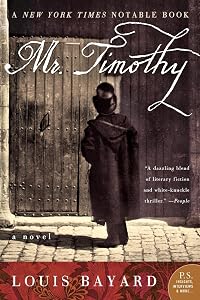
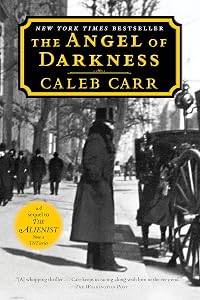
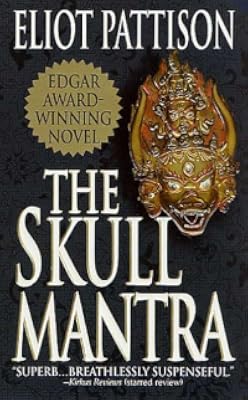
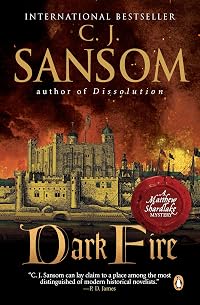

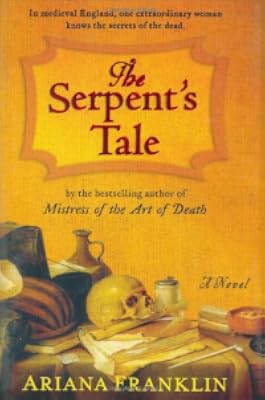
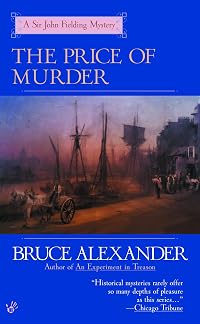
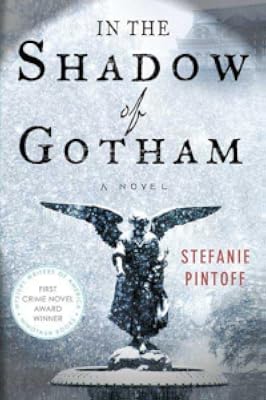
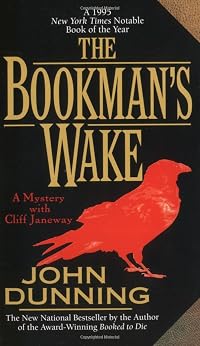

Member Recommendations
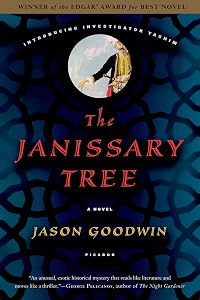
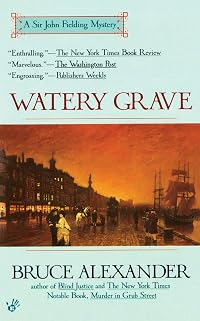
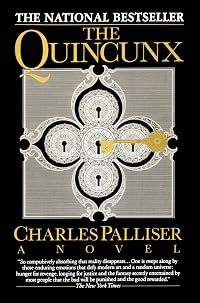
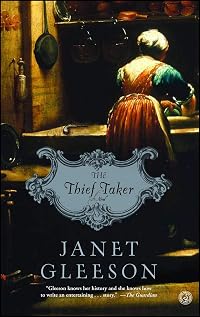
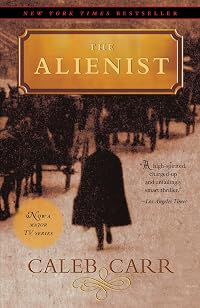
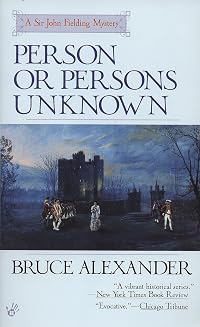
amyblue Both have rich historical settings and a smart mouth, streetwise main character.
Limelite More economic and financial devilry surrounding the East India Company and, of course, coffee. Also featuring another scion of the Lienzo family; this time set in the Low Countries. Of 3 Liss novels I've read (all good) this is the best.
Member Reviews
The positive reviews of this novel caught my eye from time to time, but because I wasn't sure I would like a book about an 18th century Jewish ex-boxer, I didn't give a lot of thought to actually reading it. I was wrong. Yes, there are some violent scenes in the book where the main character's boxing skills are put to good use, but he is more interested in developing his philosophy and reasoning skills in order to get to the root of a complex financial scheme related to his father's murder. I found it easy to identify with him since the story is told in his voice.
The book is filled with historical detail of early 18th century London and its financial markets. At the same time, its focus on the stock trade gives it a contemporary feel. show more The nature of the stock market really hasn't changed much in three centuries. Although the setting is very different, this book reminds me a lot of John Grisham's The Firm -- I suppose since both books involve complex webs of corruption in large corporations.
Benjamin Weaver is an intriguing character. Like everyone else in the book, he appears to be motivated more by self-interest rather than by any moral code, yet it sometimes troubles him when he does the right thing for the wrong reason. I'll be interested to see how his character develops in subsequent novels. show less
The book is filled with historical detail of early 18th century London and its financial markets. At the same time, its focus on the stock trade gives it a contemporary feel. show more The nature of the stock market really hasn't changed much in three centuries. Although the setting is very different, this book reminds me a lot of John Grisham's The Firm -- I suppose since both books involve complex webs of corruption in large corporations.
Benjamin Weaver is an intriguing character. Like everyone else in the book, he appears to be motivated more by self-interest rather than by any moral code, yet it sometimes troubles him when he does the right thing for the wrong reason. I'll be interested to see how his character develops in subsequent novels. show less
Rating: 3.9* of five
The Publisher Says: Benjamin Weaver is an outsider in eighteenth-century London: a Jew among Christians; a ruffian among aristocrats; a retired pugilist who, hired by London's gentry, travels through the criminal underworld in pursuit of debtors and thieves.
In A Conspiracy of Paper, Weaver investigates a crime of the most personal sort: the mysterious death of his estranged father, a notorious stockjobber. To find the answers, Weaver must contend with a desperate prostitute who knows too much about his past, relatives who remind him of his alienation from the Jewish faith, and a cabal of powerful men in the world of British finance who have hidden their business dealings behind an intricate web of deception and show more violence. Relying on brains and brawn, Weaver uncovers the beginnings of a strange new economic order based on stock speculation--a way of life that poses great risk for investors but real danger for Weaver and his family.
In the tradition of The Alienist and written with scholarly attention to period detail, A Conspiracy of Paper is one of the wittiest and most suspenseful historical novels in recent memory, as well as a perceptive and beguiling depiction of the origin of today's financial markets. In Benjamin Weaver, author David Liss has created an irresistibly appealing protagonist, one who parlays his knowledge of the emerging stock market into a new kind of detective work.
My Review: An honorable man sets out to right a wrong that he cares relatively little about. His quest leads him to wrongs he didn't know were possible, and that he cares a lot about righting. He can't fix it...nobody could then, and nobody can now...because it's all to do with human greed and viciousness.
David Liss came to my attention with this top-notch thriller. He takes the abstruse and impersonal concept put forth by (then-newly minted) economic scientists called "economist"s Hand of the Market, squeezes that bastard tight, and shakes out of it the economists' worst nightmare: The human cost of their depersonalized, accountability-free rent-reaping mills.
What makes Weaver a compelling character is his almost unbelievable level of alienation from every sector of London's social web. A Jew estranged from his family by disobedience. A Jew in the Christian London that persecutes Catholics, allegedly fellow Christians. An educated man who fought with his fists for money. An absolute outsider.
It makes for the best fictional characters, this does, and even better for a sleuth in a mystery. He has access to but not membership in many groups. He can ask questions because he's Different, and he can't be bought off by assimilation--too far outside the pale of anyone's social-group tolerance--nor can he be threatened by exclusion (from what that he isn't excluded from already?).
A successful thriller combines plausible action in service of believable stakes by a character with a definite and powerful moral compass. Delivered here in trumps. It's a pleasure to read a book that makes it clear that markets, all markets always and everywhere, must be controlled, damped down, and regulated to prevent the vile and contemptible from abusing the greedy and gullible. It is, in the end, the rest of us who pay the bill. It was ever thus. It will ever be thus, world without end.
Until we're no longer human beings, that is. show less
The Publisher Says: Benjamin Weaver is an outsider in eighteenth-century London: a Jew among Christians; a ruffian among aristocrats; a retired pugilist who, hired by London's gentry, travels through the criminal underworld in pursuit of debtors and thieves.
In A Conspiracy of Paper, Weaver investigates a crime of the most personal sort: the mysterious death of his estranged father, a notorious stockjobber. To find the answers, Weaver must contend with a desperate prostitute who knows too much about his past, relatives who remind him of his alienation from the Jewish faith, and a cabal of powerful men in the world of British finance who have hidden their business dealings behind an intricate web of deception and show more violence. Relying on brains and brawn, Weaver uncovers the beginnings of a strange new economic order based on stock speculation--a way of life that poses great risk for investors but real danger for Weaver and his family.
In the tradition of The Alienist and written with scholarly attention to period detail, A Conspiracy of Paper is one of the wittiest and most suspenseful historical novels in recent memory, as well as a perceptive and beguiling depiction of the origin of today's financial markets. In Benjamin Weaver, author David Liss has created an irresistibly appealing protagonist, one who parlays his knowledge of the emerging stock market into a new kind of detective work.
My Review: An honorable man sets out to right a wrong that he cares relatively little about. His quest leads him to wrongs he didn't know were possible, and that he cares a lot about righting. He can't fix it...nobody could then, and nobody can now...because it's all to do with human greed and viciousness.
David Liss came to my attention with this top-notch thriller. He takes the abstruse and impersonal concept put forth by (then-newly minted) economic scientists called "economist"s Hand of the Market, squeezes that bastard tight, and shakes out of it the economists' worst nightmare: The human cost of their depersonalized, accountability-free rent-reaping mills.
What makes Weaver a compelling character is his almost unbelievable level of alienation from every sector of London's social web. A Jew estranged from his family by disobedience. A Jew in the Christian London that persecutes Catholics, allegedly fellow Christians. An educated man who fought with his fists for money. An absolute outsider.
It makes for the best fictional characters, this does, and even better for a sleuth in a mystery. He has access to but not membership in many groups. He can ask questions because he's Different, and he can't be bought off by assimilation--too far outside the pale of anyone's social-group tolerance--nor can he be threatened by exclusion (from what that he isn't excluded from already?).
A successful thriller combines plausible action in service of believable stakes by a character with a definite and powerful moral compass. Delivered here in trumps. It's a pleasure to read a book that makes it clear that markets, all markets always and everywhere, must be controlled, damped down, and regulated to prevent the vile and contemptible from abusing the greedy and gullible. It is, in the end, the rest of us who pay the bill. It was ever thus. It will ever be thus, world without end.
Until we're no longer human beings, that is. show less
This big, meaty historical thriller about dodgy dealings that threaten a widespread financial crisis was a bit of a revelation. Liss manages to evoke an eighteenth-century voice and mind-set while rendering both utterly readable. Dextrous plotting, devious characters, witty lessons in philosophy and finance, and controlled bursts of violence and action power this novel along to its conclusion.
Benjamin Weaver, ex-boxer turned thief-taker, is the proto-Marlowe on these mean London streets, drawn into the new-fledged world of the proto-stock market when hired to look into an apparent suicide. What compels Weaver to reluctantly take the case is the suicide's connection to his father, run down by a carriage at around the same time. Not only show more is he drawn into the web of dealing and double-dealing at the Exchange, he also finds himself making contact with his family, members of London's close-knit Jewish community, and the web of corruption and conspiracy is wide enough to cover both.
Yes, well, entirely apart from the resonances the book will have for the modern reader, set as it is on the cusp of the South Sea Bubble, this brilliantly imagined and vividly rendered is thoroughly interesting and entertaining from start to finish. show less
Benjamin Weaver, ex-boxer turned thief-taker, is the proto-Marlowe on these mean London streets, drawn into the new-fledged world of the proto-stock market when hired to look into an apparent suicide. What compels Weaver to reluctantly take the case is the suicide's connection to his father, run down by a carriage at around the same time. Not only show more is he drawn into the web of dealing and double-dealing at the Exchange, he also finds himself making contact with his family, members of London's close-knit Jewish community, and the web of corruption and conspiracy is wide enough to cover both.
Yes, well, entirely apart from the resonances the book will have for the modern reader, set as it is on the cusp of the South Sea Bubble, this brilliantly imagined and vividly rendered is thoroughly interesting and entertaining from start to finish. show less
Benjamin Weaver, a Jew and an ex-boxer, is an outsider in eighteenth-century London, tracking down debtors and felons for aristocratic clients. The son of a wealthy stock trader, he lives estranged from his family—until he is asked to investigate his father’s sudden death. Thus Weaver descends into the deceptive world of the English stock jobbers, gliding between coffee houses and gaming houses, drawing rooms and bordellos. The more Weaver uncovers, the darker the truth becomes, until he realizes that he is following too closely in his father’s footsteps—and they just might lead him to his own grave. An enthralling historical thriller, A Conspiracy of Paper will leave readers wondering just how much has changed in the stock show more market in the last three hundred years. . . . show less
There were a few things I didn't like about this book, but I enjoyed the story very much. It's a complicated story of stock fraud and possible murder set in a time when paper money and stock exchanges were new. Things weren't regulated as they are today. In addition, there was no police force per se...people largely hired agents to regain stolen property or "enforce" other interests. The plot kept me guessing...and changing my mind...as to how it would come together. It dragged -- just a bit; the book could have been a little shorter, I think.
I didn't like the protagonist, Benjamin Weaver, as a person. But what a well -drawn character! The consummate outsider, flawed, human, trying to get by as best he can.
The book was well researched, show more and the problems of market manipulation and bubbles continue to plague investors today. There were times, however, when the author explained things through dialogue between characters that felt a bit forced.
Overall, though, the book was very well written. It was written in the style of the time period it portrays, both in terms of specific words and with asides to the reader which was common in novels written in that time. show less
I didn't like the protagonist, Benjamin Weaver, as a person. But what a well -drawn character! The consummate outsider, flawed, human, trying to get by as best he can.
The book was well researched, show more and the problems of market manipulation and bubbles continue to plague investors today. There were times, however, when the author explained things through dialogue between characters that felt a bit forced.
Overall, though, the book was very well written. It was written in the style of the time period it portrays, both in terms of specific words and with asides to the reader which was common in novels written in that time. show less
3.5 stars. The verse is pretty great. The finance angle was interesting. The mystery itself was fine, though I do dislike when puppet masters have to monologue after the climax in order to explain their nefarious doings to the poor ignorant hero as a narrative structure. Not that there was any other way out of this story, but still.
All that said, oh god the patriarchy it burns it burns make it stop. Why are the only women with voices love interests, disagreeable landladies, servants, and/or whores? Why does Ben not have a single onscreen conversation with his aunt? Slogging through the misogyny was exhausting, and god it isn't even historically accurate. 18th cen literature written by men had a more equitable gender balance among show more characters than today's fiction written by men. Gah!
Anyway. Time to read something written by a woman. show less
All that said, oh god the patriarchy it burns it burns make it stop. Why are the only women with voices love interests, disagreeable landladies, servants, and/or whores? Why does Ben not have a single onscreen conversation with his aunt? Slogging through the misogyny was exhausting, and god it isn't even historically accurate. 18th cen literature written by men had a more equitable gender balance among show more characters than today's fiction written by men. Gah!
Anyway. Time to read something written by a woman. show less
A Conspiracy of Paper was David Liss's first work of historical fiction. The book is set in London during the early 1700's and centers around the South Sea Company or more precisely, the South Sea Company's stock and its struggle against the Bank of England. In it the reader first meets Benjamin Weaver, a Jewish thief-taker and former boxer. Weaver is the central character in this book as well as The Devil's Company: A Novel, The Coffee Trader: A Novel (Ballantine Reader's Circle), and A Spectacle of Corruption: A Novel.
Liss excels in the details of time and place, which allows him to achieve a realistic and factually accurate picture of London during the early stock-jobbing days, Exchange Alley, the Jewish `quarter', Newgate prison, show more and the most famous - or I should say infamous real-life thief-taker of them all, Jonathon Wild. Thief takers caught criminals and turned them over to the State earning a handsome fee in the process. Wild's imaginative business plan had him playing both sides of the street. He employed crooks and thieves and then `peached' them when their future value fell below the government's price offer.
Liss sets Weaver to solve the murder of his estranged father and one of his father's business associates neither of whom appeared to have been murdered on the face of it (one died in an accident, the other by his own hand). Weaver soon finds himself caught between some of the most powerful forces in 18th century England: the Bank of England, the South Sea Company, and Wild.
Liss spins an engaging tale with marvelously rich historical detail. Unfortunately, he has a taste for overly complex plotting. Liss drops heavy hints first that the bank was behind all Weaver's troubles and then that the South Sea Company was his nemesis. And then the bank, the company, the bank - you get the idea. Mix in a healthy dose of Wild and clues strongly suggesting his alliance with one or the other and the reader feels that the game isn't quite a fair one. Still, Liss's works are high quality historical fiction and I highly recommend his works. show less
Liss excels in the details of time and place, which allows him to achieve a realistic and factually accurate picture of London during the early stock-jobbing days, Exchange Alley, the Jewish `quarter', Newgate prison, show more and the most famous - or I should say infamous real-life thief-taker of them all, Jonathon Wild. Thief takers caught criminals and turned them over to the State earning a handsome fee in the process. Wild's imaginative business plan had him playing both sides of the street. He employed crooks and thieves and then `peached' them when their future value fell below the government's price offer.
Liss sets Weaver to solve the murder of his estranged father and one of his father's business associates neither of whom appeared to have been murdered on the face of it (one died in an accident, the other by his own hand). Weaver soon finds himself caught between some of the most powerful forces in 18th century England: the Bank of England, the South Sea Company, and Wild.
Liss spins an engaging tale with marvelously rich historical detail. Unfortunately, he has a taste for overly complex plotting. Liss drops heavy hints first that the bank was behind all Weaver's troubles and then that the South Sea Company was his nemesis. And then the bank, the company, the bank - you get the idea. Mix in a healthy dose of Wild and clues strongly suggesting his alliance with one or the other and the reader feels that the game isn't quite a fair one. Still, Liss's works are high quality historical fiction and I highly recommend his works. show less
Members
- Recently Added By
Lists

Best Historical Fiction
620 works; 258 members

Historical Fiction
889 works; 91 members

Best 21st Century Books (So Far)
679 works; 86 members
First Novels
373 works; 17 members

Edgar Award
418 works; 15 members
Author Information

72+ Works 9,939 Members
David Liss was born in New Jersey in 1966. He received an B.A. from Syracuse University, an M.A. from Georgia State University, and an M.Phil from Columbia University. His debut novel, A Conspiracy of Paper (2000), won the 2001 Barry, MacAvity, and Edgar awards for Best First Novel. His other works include The Coffee Trader (2003), A Spectacle of show more Corruption (2004), The Ethical Assassin (2006), The Whiskey Rebels (2008), and The Devil's Company (2009). (Bowker Author Biography) show less
Some Editions
Awards and Honors
Awards
Series

Belongs to Publisher Series
Common Knowledge
- Canonical title
- A Conspiracy of Paper
- Original publication date
- 2000 (1st edition, New York, Random House) (1st edition, New York, Random House)
- People/Characters
- Benjamin Weaver; Jonathan Wild; Miriam Liones; Elias Gordon; William Balfour; Sir Owen Nettleton
- Important places
- London, England, UK
- Important events
- South Sea Bubble (1720)
- Related movies
- Conspiracy of Paper (IMDb)
- First words
- For some years now, the gentlemen of the book trade have pressed me in the most urgent fashion to commit my memoirs to paper; for, these men have argued, there are many who would gladly pay a few shillings to learn of the tru... (show all)e and surprising adventures of my life.
- Last words
- (Click to show. Warning: May contain spoilers.)As for justice and revenge, those lofty principles for which the South Sea victims clamored -- these too are but commodities to be bought and sold on the 'Change.
- Blurbers
- Golden, Arthur; Lehmann-Haupt, Christopher; Jakes, John
Classifications
- Genres
- Fiction and Literature, Historical Fiction, General Fiction, Mystery
- DDC/MDS
- 813.54 — Literature & rhetoric American literature in English American fiction in English 1900-1999 1945-1999
- LCC
- PS3562 .I7814 .C66 — Language and Literature American literature American literature Individual authors 1961-
- BISAC
Statistics
- Members
- 2,708
- Popularity
- 6,873
- Reviews
- 68
- Rating
- (3.71)
- Languages
- 11 — Danish, Dutch, English, French, German, Italian, Polish, Portuguese, Russian, Spanish, Turkish
- Media
- Paper, Audiobook, Ebook
- ISBNs
- 39
- ASINs
- 9