On This Page
Description
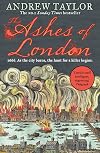
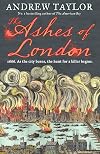
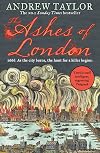
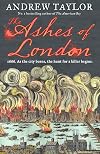
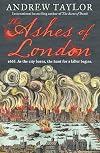
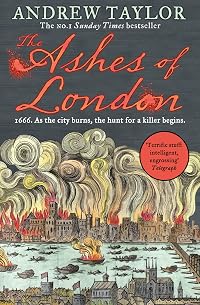
London, September 1666. The Great Fire rages through the city, consuming everything in its path. Even the impregnable cathedral of St. Paul's is engulfed in flames and reduced to ruins. Among the crowds watching its destruction is Richard Marwood, son of a disgraced printer, and reluctant government informer. In the aftermath of the fire, a semi-mummified body is discovered in the ashes of St. Paul's, in a tomb that should have been empty. The man's body has been mutilated and his thumbs show more have been tied behind his back - the sign of a Regicide, one of those who signed Charles I's death warrant. Under orders from the government, Marwood is tasked with hunting down the killer across the devastated city. But at a time of dangerous internal dissent and the threat of foreign invasion, Marwood finds his investigation leads him into treacherous waters - and across the path of a determined, beautiful and vengeful young woman. show lessTags
Recommendations
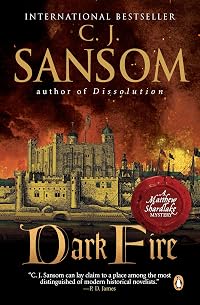

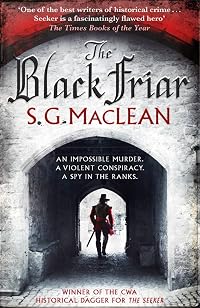


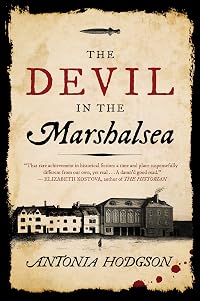
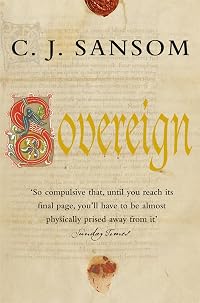





















Member Recommendations

Member Reviews
A good, fast-paced tale of post-fire London. Lots of interesting bits about the Restoration and rebuilding, plus about the printing and publishing trades (though I'd be happy to have had even more of that). Best of all, there are two more books out in the series to look forward to.
This novel proved to be one of those precious finds that offer, besides an intriguing story to follow, a peek into a historical period I know next to nothing about, so that I feel compelled to search online more details and learn something new in the process. The background for The Ashes of London is that of the Restoration, the time in which King Charles II ascended to the throne of England after the execution of his father, Charles I, and Oliver Cromwell’s rule: in September 1666 the city of London was devastated by fire, and it’s during the final days of this disastrous occurrence - and its aftermath - that the book’s events take place.
James Marwood is a civil servant trying to keep a low profile in the hope that his masters show more forget he’s the son of one of the revolutionaries whose movement brought about the demise of the previous king: saddled with the difficult task of caring for his ailing father, whose time in prison after the conspiracy’s failure left him weakened in both body and mind, Marwood is torn between his filial duties and the need to further his career so that he can tend to what’s left of his family in reasonable comfort. Catherine Lovett is the daughter of one of the conspirators as well, her father being a wanted fugitive: she’s been left in the care of an uncle who is keen on marrying her off to a very unsavory character, while all she dreams about is architectural design, an unheard-of pastime for a woman in those days. The paths of these two characters are destined to cross, in part due to various circumstances and in part because of both their fathers’ affiliations, while the city of London tries to recover from the still-smoldering fires and a series of bizarre murders reveals the dangerous undercurrents running through the political and social fabric of the realm.
I very much appreciated the intriguing mix at the roots of this book, where historical fiction blends with a crime investigation and a good dose of political plotting and conspiracies, but most of all I enjoyed the “time travel” opportunities offered by the story, thanks to the descriptions of the day-to-day life of 17th Century England and the great social turmoil lurking under the surface. What I found particularly fascinating were the details of the city of London, which the author was able to depict with a cinematic, quite evocative quality that brought to life the sounds, sights - and unfortunately smells - of a bustling city which was grievously wounded by the Great Fire. There is an intriguing parallel here between the precarious political situation, in which the new King knows he still has to deal with the remnants of the conspiracy which prompted his father’s downfall, and the daily struggles of the citizenry, whose houses have been destroyed by the fire and have to live in ramshackle hovels or in the ruins of their burned-out homes, with no certainty about the immediate future. This is the background on which the main themes of civil unrest and inequality stand, together with a look at the social mores of the times and their consequences on people, particularly the two main characters.
James Marwood was soon able to inspire my sympathy, not least because his POV is written in the first person, allowing us to be instantly privy to his thoughts and troubles: as he deals with his professional duties, which are carried on through the double difficulty of being effective while keeping a low profile, we understand he’s a decent human being gifted with a good heart, and if sometimes he struggles with the frustration of having to care for a father who tethers between dementia and the dreams of a “new order”, he does so with such a deeply ingrained affection and respect for the old man, that it’s impossible not to feel for him.
Catherine, on the other hand, is more feisty and combative (often, and with reason, very fiercely so), and she’s also very “modern”, character-wise, because of her keen interest for architecture, which leads her to dream of a more unfettered life - practically an impossibility in those times. She is no frivolous dreamer, though, and when circumstances require her to adapt to change, sometimes through harrowing events, she shows a resiliency and an inner strength that are nothing if not admirable. Both Cat and Marwood suffer for the sins of their respective fathers, offering the opportunity for a commentary on a society that visits those sins on the innocent offspring of past conspirators.
Alongside these two main characters move a number of intriguing figures which help depict quite clearly the atmosphere of the times through their greed and depravity, cunning and coarseness, without forgetting the proverbial movers and shakers - some of them real-life persons - who complete this fascinating picture of an era of turmoil and change. Among them I want to mention Mistress Alderley, Cat’s aunt, who under her unprepossessing exterior shows great skills in being the proverbial power behind the throne in more ways than one; or the ruling monarch Charles II, who in a very human moment shows his desire to know more about the father he barely knew before he was killed; and again Edward, Cat’s despicable cousin who represents the entitled attitude of the lesser nobility who believes nothing and no one can stand in their way.
The Ashes of London is a very immersive portrayal of a time and a place I know I will enjoy visiting again through the next books, and it represents one of the best bookish finds of this year so far. show less
James Marwood is a civil servant trying to keep a low profile in the hope that his masters show more forget he’s the son of one of the revolutionaries whose movement brought about the demise of the previous king: saddled with the difficult task of caring for his ailing father, whose time in prison after the conspiracy’s failure left him weakened in both body and mind, Marwood is torn between his filial duties and the need to further his career so that he can tend to what’s left of his family in reasonable comfort. Catherine Lovett is the daughter of one of the conspirators as well, her father being a wanted fugitive: she’s been left in the care of an uncle who is keen on marrying her off to a very unsavory character, while all she dreams about is architectural design, an unheard-of pastime for a woman in those days. The paths of these two characters are destined to cross, in part due to various circumstances and in part because of both their fathers’ affiliations, while the city of London tries to recover from the still-smoldering fires and a series of bizarre murders reveals the dangerous undercurrents running through the political and social fabric of the realm.
I very much appreciated the intriguing mix at the roots of this book, where historical fiction blends with a crime investigation and a good dose of political plotting and conspiracies, but most of all I enjoyed the “time travel” opportunities offered by the story, thanks to the descriptions of the day-to-day life of 17th Century England and the great social turmoil lurking under the surface. What I found particularly fascinating were the details of the city of London, which the author was able to depict with a cinematic, quite evocative quality that brought to life the sounds, sights - and unfortunately smells - of a bustling city which was grievously wounded by the Great Fire. There is an intriguing parallel here between the precarious political situation, in which the new King knows he still has to deal with the remnants of the conspiracy which prompted his father’s downfall, and the daily struggles of the citizenry, whose houses have been destroyed by the fire and have to live in ramshackle hovels or in the ruins of their burned-out homes, with no certainty about the immediate future. This is the background on which the main themes of civil unrest and inequality stand, together with a look at the social mores of the times and their consequences on people, particularly the two main characters.
James Marwood was soon able to inspire my sympathy, not least because his POV is written in the first person, allowing us to be instantly privy to his thoughts and troubles: as he deals with his professional duties, which are carried on through the double difficulty of being effective while keeping a low profile, we understand he’s a decent human being gifted with a good heart, and if sometimes he struggles with the frustration of having to care for a father who tethers between dementia and the dreams of a “new order”, he does so with such a deeply ingrained affection and respect for the old man, that it’s impossible not to feel for him.
Catherine, on the other hand, is more feisty and combative (often, and with reason, very fiercely so), and she’s also very “modern”, character-wise, because of her keen interest for architecture, which leads her to dream of a more unfettered life - practically an impossibility in those times. She is no frivolous dreamer, though, and when circumstances require her to adapt to change, sometimes through harrowing events, she shows a resiliency and an inner strength that are nothing if not admirable. Both Cat and Marwood suffer for the sins of their respective fathers, offering the opportunity for a commentary on a society that visits those sins on the innocent offspring of past conspirators.
Alongside these two main characters move a number of intriguing figures which help depict quite clearly the atmosphere of the times through their greed and depravity, cunning and coarseness, without forgetting the proverbial movers and shakers - some of them real-life persons - who complete this fascinating picture of an era of turmoil and change. Among them I want to mention Mistress Alderley, Cat’s aunt, who under her unprepossessing exterior shows great skills in being the proverbial power behind the throne in more ways than one; or the ruling monarch Charles II, who in a very human moment shows his desire to know more about the father he barely knew before he was killed; and again Edward, Cat’s despicable cousin who represents the entitled attitude of the lesser nobility who believes nothing and no one can stand in their way.
The Ashes of London is a very immersive portrayal of a time and a place I know I will enjoy visiting again through the next books, and it represents one of the best bookish finds of this year so far. show less
Taylor really is a first class writer, and here he starts big, with a vision of St Paul's Cathedral in flames at the height of the Great Fire Of London. Unwittingly brought together by chance for a few fleeting moments, a lowly clerk and a young woman in disguise have their fates intertwined. Both the children of radical religious fanatics responsible for the death of the king, now living precariously in the shadow of his restored son. Marwood, the clerk, is embroiled in the discovery of a murdered body in the ruins of St Paul's, while Lovett, the girl, is being forced into a marriage by her guardian uncle. One follows the trail of a murderer and the other struggles to be free, and a ruthless killer is at work.
A real page-turner, highly show more entertaining with a fantastic climactic confrontation in the very dome of a slightly roasted St Paul's. show less
A real page-turner, highly show more entertaining with a fantastic climactic confrontation in the very dome of a slightly roasted St Paul's. show less
1666 and a fire starts in London, soon to devastate the medieval City of London. Watching the flames, a young man notices a boy in a ragged shirt who is standing so close as to risk to his life. When he pulls the boy to safety, he finds it is not a boy but a young woman. She bites him and escapes, though he intends only to help. And so are introduced the two key characters in ‘The Ashes of London’ by Andrew Taylor. But this is not a novel about the Fire of London, rather a political mystery involving murder in the turbulent years following the execution of King Charles I, the English Civil War, the Commonwealth and subsequent Restoration of King Charles II.
In the ruins of St Paul’s a body is found, differing from other mortalities show more for its thumbs tied together behind the man’s back. This is the sign of those who committed Regicide by signing the death warrant of Charles I. Though in hiding, these traitors are still active, lurking in the shadows.
The account of London burning is written vividly, so vivid I could imagine myself there, smell the charred timber and smoke. We see it through the eyes of two people. James Marwood, clerk, son of a traitor, is required by his superiors to investigate on their behalf. Catherine Lovett, a wealthy young woman lodges with the family of her mother but secretly searches for her father, a Regicide. Her position becomes precarious when her uncle seeks to marry her to a suitable man, one she detests. She flees and, at risk of discovery, Cat hides her identity with a false name. She is a bright woman who adapts to her changing circumstances, has a great presence of mind and is not afraid to defend herself when threatened. I particularly enjoyed her interest in architecture, something which brings her into the wider circle of Master Hakesby and Dr (Christopher) Wren as the new design for St Paul’s takes shape. She has a skill of fine draughtsmanship, and helps Master Hakesby who suffers from the ague.
We learn the story as seen by Marwood and Cat; the author controls what we know and don’t know. As they are aware of other things happening outside their circle, but not of the detail – of surviving traitors helping each other, of powerful men borrowing and lending money, of the scientifically-minded Charles II and his circle of influencers – so the reader realizes more is going on behind the scenes than is written on the page. Which adds to the mystery. This was a complex political time. We watch Marwood tread a delicate path as he tries to protect his elderly weak-witted Regicide father from persecution whilst also obeying his employer, Master Williamson, editor of The London Gazette. It is a time of whispers, gossip in the coffee houses, of secret meetings and spies standing behind screens the better to eavesdrop.
The paths of Marwood and Cat almost cross a number of times and as neither knows the true identity or intentions of the other, the reader is in a privileged position. When they do meet, the outcome is unexpected.
This is not a page-turning thriller or a crime novel, more a historical mystery. Taylor takes time to develop his characters and to show his location, the Restoration context is fascinating. Though a slow-burn I read this book quickly, finishing it and wanting to read its sequel, ‘The Fire Court’. That is always a good sign.
Read more of my book reviews at http://www.sandradanby.com/book-reviews-a-z/ show less
In the ruins of St Paul’s a body is found, differing from other mortalities show more for its thumbs tied together behind the man’s back. This is the sign of those who committed Regicide by signing the death warrant of Charles I. Though in hiding, these traitors are still active, lurking in the shadows.
The account of London burning is written vividly, so vivid I could imagine myself there, smell the charred timber and smoke. We see it through the eyes of two people. James Marwood, clerk, son of a traitor, is required by his superiors to investigate on their behalf. Catherine Lovett, a wealthy young woman lodges with the family of her mother but secretly searches for her father, a Regicide. Her position becomes precarious when her uncle seeks to marry her to a suitable man, one she detests. She flees and, at risk of discovery, Cat hides her identity with a false name. She is a bright woman who adapts to her changing circumstances, has a great presence of mind and is not afraid to defend herself when threatened. I particularly enjoyed her interest in architecture, something which brings her into the wider circle of Master Hakesby and Dr (Christopher) Wren as the new design for St Paul’s takes shape. She has a skill of fine draughtsmanship, and helps Master Hakesby who suffers from the ague.
We learn the story as seen by Marwood and Cat; the author controls what we know and don’t know. As they are aware of other things happening outside their circle, but not of the detail – of surviving traitors helping each other, of powerful men borrowing and lending money, of the scientifically-minded Charles II and his circle of influencers – so the reader realizes more is going on behind the scenes than is written on the page. Which adds to the mystery. This was a complex political time. We watch Marwood tread a delicate path as he tries to protect his elderly weak-witted Regicide father from persecution whilst also obeying his employer, Master Williamson, editor of The London Gazette. It is a time of whispers, gossip in the coffee houses, of secret meetings and spies standing behind screens the better to eavesdrop.
The paths of Marwood and Cat almost cross a number of times and as neither knows the true identity or intentions of the other, the reader is in a privileged position. When they do meet, the outcome is unexpected.
This is not a page-turning thriller or a crime novel, more a historical mystery. Taylor takes time to develop his characters and to show his location, the Restoration context is fascinating. Though a slow-burn I read this book quickly, finishing it and wanting to read its sequel, ‘The Fire Court’. That is always a good sign.
Read more of my book reviews at http://www.sandradanby.com/book-reviews-a-z/ show less
The Great Fire of London has been raging for days, and on the night St Paul’s Cathedral burns, James Marwood saves the life of a young woman who repays him by assaulting him and stealing his cloak. But over the coming weeks, as it becomes obvious that a serial killer stalks the ruins and Marwood becomes embroiled in the machinations of Whitehall, Marwood’s and the unknown woman’s paths cross repeatedly, until they finally come face to face again in a dramatic showdown at the top of St Paul’s Cathedral’s ruined tower.
Andrew Taylor is known for his well-researched and atmospheric historical fiction novels. His ability to bring the past to life is again in evidence here, and the images he conjures up of the devastated London show more streets and buildings reminded me of photographs of the Blitz, nearly 300 years later. These scenes are particularly memorable, along with the above-mentioned showdown at the top of St Paul’s Cathedral, the descriptions of which managed to evoke feelings of vertigo and dizziness in me just by reading them. Taylor also excels in bringing to life the uncertainty and confusion following the execution of Charles I, the end of the Civil War and the Restoration of the Monarchy, including the religious beliefs and divisions of the time, with religious fanatics, in this case the Fifth Monarchists, able to excuse their actions, which include abduction and murder, with the belief that they’re acting in God’s name, a view which sadly hasn’t changed in the intervening years as the recent attacks in Manchester and London have shown.
I wish the author had paid equal attention to developing his characters and the murder mystery at the heart of the novel. While the aptly named Cat is fierce and independent, a very modern heroine in her views and attitudes, and not content to let others decide her fate for her, James Marwood on the other hand remains a pale shadow throughout most of the novel, buffeted by the forces around him, and only at the end of the book does he show a semblance of defiance and spirit. Similarly, the plot threads making up the events and motivations involving the multiple killings are, even now, not entirely clear to me, and a lot more could have been done to make this aspect of the novel more thrilling. A second narrative thread involving Charles II's efforts to hunt down the Regicides who had a hand in his father’s execution is subtly woven through the main plot and a lot more plausible than the tacked-on serial killings, and held one or two surprises in store. On the whole though, the plot, told partly in Marwood’s voice, rather bumbles along until the thrilling showdown already mentioned.
Though this novel could be seen as a stand-alone, the ending does make me feel as if we haven’t seen the last of James Marwood and Cat Lovett, and one of the reviews in the prelims promises that this is indeed the beginning of a new series. If that’s the case, I’ll definitely be on board for the sequel(s) despite a somewhat lacklustre start. show less
Andrew Taylor is known for his well-researched and atmospheric historical fiction novels. His ability to bring the past to life is again in evidence here, and the images he conjures up of the devastated London show more streets and buildings reminded me of photographs of the Blitz, nearly 300 years later. These scenes are particularly memorable, along with the above-mentioned showdown at the top of St Paul’s Cathedral, the descriptions of which managed to evoke feelings of vertigo and dizziness in me just by reading them. Taylor also excels in bringing to life the uncertainty and confusion following the execution of Charles I, the end of the Civil War and the Restoration of the Monarchy, including the religious beliefs and divisions of the time, with religious fanatics, in this case the Fifth Monarchists, able to excuse their actions, which include abduction and murder, with the belief that they’re acting in God’s name, a view which sadly hasn’t changed in the intervening years as the recent attacks in Manchester and London have shown.
I wish the author had paid equal attention to developing his characters and the murder mystery at the heart of the novel. While the aptly named Cat is fierce and independent, a very modern heroine in her views and attitudes, and not content to let others decide her fate for her, James Marwood on the other hand remains a pale shadow throughout most of the novel, buffeted by the forces around him, and only at the end of the book does he show a semblance of defiance and spirit. Similarly, the plot threads making up the events and motivations involving the multiple killings are, even now, not entirely clear to me, and a lot more could have been done to make this aspect of the novel more thrilling. A second narrative thread involving Charles II's efforts to hunt down the Regicides who had a hand in his father’s execution is subtly woven through the main plot and a lot more plausible than the tacked-on serial killings, and held one or two surprises in store. On the whole though, the plot, told partly in Marwood’s voice, rather bumbles along until the thrilling showdown already mentioned.
Though this novel could be seen as a stand-alone, the ending does make me feel as if we haven’t seen the last of James Marwood and Cat Lovett, and one of the reviews in the prelims promises that this is indeed the beginning of a new series. If that’s the case, I’ll definitely be on board for the sequel(s) despite a somewhat lacklustre start. show less
First in a series of historical mysteries set in Restoration London, this one begins as the city burns. James Marwood is both helping with the water brigade and overseeing the damage when he sees a young boy break through the barriers and head towards St. Paul's cathedral. He catches the hysterical boy and brings him to his rooms to calm him down. He soon notices that the boy is really a girl, and she runs off, stealing the cloak he had covered her with. Cat Lovett is the niece and ward of her uncle by marriage, Sir Henry Alderley, a wealthy goldsmith on good terms with the king. Cat is facing a marriage to a man she neither loves nor respects; what she really wants to do is draw buildings and plan cities. The situation, and the show more unwanted attentions of her cousin Edward, lead to Cat running away. She lands a servant position in a boarding house. One of the residents, Master Wakely, is working with Christopher Wren on plans to rebuild the city, and he allows Cat (now known as Jane) to assist with minor tasks. But her mind is on finding her father, a member of a religious sect that supported the execution of Charles I and now believes that his son, Charles II, must be taken down in order for King Jesus to rule the world.
Meanwhile, Marwood's employer brings him into the investigation of two murders: bodies have been found with their thumbs tied together behind their backs. In the course of his discovery, Alderley's second wife, Olivia, asks Marwood to find her niece Cat--and the king, be it known through Mrs. Alderley and the King's confident Chiffinch, want to find Cat's father. The situation is complicated by the fact that Marwood's father was a member of the King Jesus group and spent years in prison upon the restoration of the monarchy. Now, feeble and becoming senile, he is dependent on his son, and James is aware that their loyalty is being closely watched.
I am not a big fan of mysteries of any sort, so other readers might enjoy this one a lot more than I did. It was a plus that I know a good deal about this period of English history, and Taylor does a good job of recreating the customs and appearance of Restoration London and of the unpredictable nature of the king. I needed a fairly light read, and this was a farily good one, but I probably won't be pursuing the rest of the series. show less
Meanwhile, Marwood's employer brings him into the investigation of two murders: bodies have been found with their thumbs tied together behind their backs. In the course of his discovery, Alderley's second wife, Olivia, asks Marwood to find her niece Cat--and the king, be it known through Mrs. Alderley and the King's confident Chiffinch, want to find Cat's father. The situation is complicated by the fact that Marwood's father was a member of the King Jesus group and spent years in prison upon the restoration of the monarchy. Now, feeble and becoming senile, he is dependent on his son, and James is aware that their loyalty is being closely watched.
I am not a big fan of mysteries of any sort, so other readers might enjoy this one a lot more than I did. It was a plus that I know a good deal about this period of English history, and Taylor does a good job of recreating the customs and appearance of Restoration London and of the unpredictable nature of the king. I needed a fairly light read, and this was a farily good one, but I probably won't be pursuing the rest of the series. show less
In the aftermath of the Great Fire of London the body of a man is found in the ruins of St Paul's with his thumbs tied behind his back and a stab wound to the back of the neck. Then another man is found in the Fleet ditch in exactly the same circumstances. The son of Fifth Monarchist, James Marwood is trying to make his way in life, supporting his father in his dotage and working for the Government. He is tasked with finding the murderer and he finds links to a wealthy family of merchants and also their relative, Lovett, one of the named regicides still not accounted for. Meanwhile Lovett's daughter Catherine is finding betrayal and danger at every turn and she deals with that the only way she can.
Taylor is a hugely accomplished writer show more of historical mysteries and I have loved so many of his books, this is no different. Set in 1666, London is a foment of worry and paranoia. There has been the Great Fire which has destroyed huge swathes of the capital and the rebuilding is just in the planning stage. I love the way that Taylor manages to include known figures (Sir Christopher Wren and Charles II) without making them major characters, but just as adjuncts to his fictional characters. Everything is done with a light but sure hand and the knowledge that the research is impeccable. show less
Taylor is a hugely accomplished writer show more of historical mysteries and I have loved so many of his books, this is no different. Set in 1666, London is a foment of worry and paranoia. There has been the Great Fire which has destroyed huge swathes of the capital and the rebuilding is just in the planning stage. I love the way that Taylor manages to include known figures (Sir Christopher Wren and Charles II) without making them major characters, but just as adjuncts to his fictional characters. Everything is done with a light but sure hand and the knowledge that the research is impeccable. show less
Members
- Recently Added By
Lists

Best Historical Crime
44 works; 17 members

Books Read in 2017
4,249 works; 130 members

Huxley's reading log 2017
45 works; 1 member
Best Mysteries With a Historical Setting
292 works; 160 members

Books Read in 2025
4,128 works; 98 members
Author Information

54+ Works 6,098 Members
Some Editions
Awards and Honors
Distinctions
Series

Common Knowledge
- Canonical title
- The Ashes of London
- Original title
- The Ashes of London
- Original publication date
- 2017-01-26
- People/Characters
- James Marwood; Nathaniel Marwood; Catherine Lovett; Thomas Lovett; Jem Brockhurst; Mistress Noxon (show all 30); Uncle Alderley; Olivia Alderley; Edward Alderley; Master Mundy; Mistress Sneyd; Master Hakesby; Master Frewin; Dr Wren; Master Williamson; Master Chiffinch; Charles II, King of England, Scotland, and Ireland; Master Davy; Mistress Davy; Master Ralston; Mistress Ralston; Master Newcomb; Mistress Newcomb; Master Howgego; Mother Grimes; Sir Denzil Croughton; Margaret Witherdine; Samuel Witherdine; Margery; John
- Important places
- London, England, UK; Coldridge, near Champney Crucis, Suffolk, England, UK
- Important events
- Great Fire of London (1666)
- Dedication
- For Caroline, as always
- First words
- The noise was the worst.
- Last words
- (Click to show. Warning: May contain spoilers.)Her London.
- Original language
- English UK
Classifications
Statistics
- Members
- 720
- Popularity
- 39,488
- Reviews
- 34
- Rating
- (3.66)
- Languages
- English
- Media
- Paper, Audiobook, Ebook
- ISBNs
- 14
- ASINs
- 5