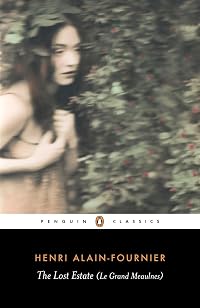
Le Grand Meaulnes
by Alain-Fournier
On This Page
Description
When Meaulnes first arrives at the local school in Sologne, everyone is captivated by his good looks, daring and charisma. But when Meaulnes disappears for several days, and returns with tales of a strange party at a mysterious house and a beautiful girl hidden within it, he has been changed forever. In his restless search for his Lost Estate and the happiness he found there, Meaulnes, observed by his loyal friend Francois, may risk losing everything he ever had. Poised between youthful show more admiration and adult resignation, Alain-Fournier's compelling narrator carries the reader through this evocative and unbearably poignant portrayal of desperate friendship and vanished adolescence. show lessTags
Recommendations






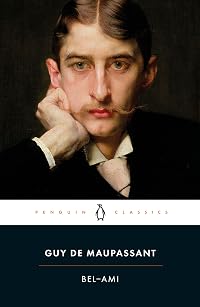
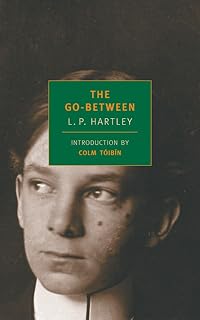
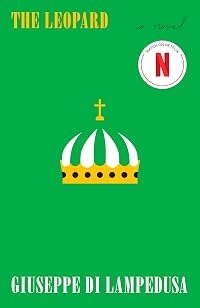

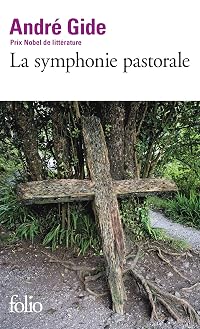
















Member Recommendations






librorumamans What these books share is a strong atmosphere of wistful regret, youthful admiration, a rural setting of great beauty, and wonderful, evocative writing.

Member Reviews
Henri-Alban Fournier, writing under the pseudonym Alain-Fournier, penned only one novel, but it was a work that would secure his place in the pantheon of French literature. "Le Grand Meaulnes," published in 1913 and often translated as "The Lost Estate," is a haunting and evocative tale of adolescence, love, and the elusive nature of memory.
François Seurel, the quiet and perceptive son of a rural French schoolmaster, tells the tale. The introduction of a new, gregarious student, Augustin Meaulnes, who is soon dubbed "Le Grand Meaulnes" (The Great Meaulnes) by his peers, permanently changes his peaceful life. Meaulnes is mysterious and daring, with a captivating personality that both captivates and terrifies the more sober show more François.
The novel's turning point is when Meaulnes, while traveling on a whim, discovers a mysterious, run-down estate where an odd and enchanted costume party is taking place. He meets the stunning and ethereal Yvonne de Galais there, amid the celebrations, and he falls madly in love with her in that brief instant. Meaulnes will spend the remainder of the book frantically attempting to rediscover the "lost estate," which, with its aura of enchantment and diminished grandeur, becomes a symbol of a perfect, almost dreamlike happiness.
The story is a gripping combination of fairy tale elements and realism; however one that is rooted in a concrete reality thanks to the realistic portrayal of the French countryside's rustic simplicity. Nonetheless, the novel is given a sense of the fantastical by the main scene at the enigmatic fête, complete with children in costume and an atmosphere of unearthly revelry. The book's timeless appeal stems from this duality, which illustrates how young imagination can elevate the commonplace to the extraordinary.
Fundamentally, "The Lost Estate" is a profound reflection on what adolescence is all about. It captures exactly the strong feelings, the passionate friendships, and the desire for adventure that characterize this developmental stage. The universal search for a lost paradise—a period of unadulterated potential that can never be fully reclaimed—is powerfully symbolized by Meaulnes's quest for the lost estate and his romanticized love for Yvonne. show less
François Seurel, the quiet and perceptive son of a rural French schoolmaster, tells the tale. The introduction of a new, gregarious student, Augustin Meaulnes, who is soon dubbed "Le Grand Meaulnes" (The Great Meaulnes) by his peers, permanently changes his peaceful life. Meaulnes is mysterious and daring, with a captivating personality that both captivates and terrifies the more sober show more François.
The novel's turning point is when Meaulnes, while traveling on a whim, discovers a mysterious, run-down estate where an odd and enchanted costume party is taking place. He meets the stunning and ethereal Yvonne de Galais there, amid the celebrations, and he falls madly in love with her in that brief instant. Meaulnes will spend the remainder of the book frantically attempting to rediscover the "lost estate," which, with its aura of enchantment and diminished grandeur, becomes a symbol of a perfect, almost dreamlike happiness.
The story is a gripping combination of fairy tale elements and realism; however one that is rooted in a concrete reality thanks to the realistic portrayal of the French countryside's rustic simplicity. Nonetheless, the novel is given a sense of the fantastical by the main scene at the enigmatic fête, complete with children in costume and an atmosphere of unearthly revelry. The book's timeless appeal stems from this duality, which illustrates how young imagination can elevate the commonplace to the extraordinary.
Fundamentally, "The Lost Estate" is a profound reflection on what adolescence is all about. It captures exactly the strong feelings, the passionate friendships, and the desire for adventure that characterize this developmental stage. The universal search for a lost paradise—a period of unadulterated potential that can never be fully reclaimed—is powerfully symbolized by Meaulnes's quest for the lost estate and his romanticized love for Yvonne. show less
Started strong, but went out with a whimper. Elegiac, romantic (decidedly not in the Harlequin / Mills & Boon way, but in the capital-R Romanticism way), Proustian (published the same year as Remembrance of Things Past) in its nostalgic descriptions of the memories, times, and landscapes of the narrator's youth. Fifteen-year-old François recalls a slightly older boy, Augustin Meaulnes (pronounced like "moan"), who disturbs the equilibrium of the local school and small community. Le grand Meaulnes, as the other boys dub him, borrows a horse and carriage, gets lost on the road, and finds himself in a strange, dreamy "domain" (a manor house) where a wedding is about to take place. There he sees an enchanting girl, and falls instantly and show more irretrievably in love, but she wanders off sighing "It's no use... we are just children." He fumbles his way back home again, but is not able to figure out where this out-of-the-way place is or how to get back, to find the girl again. He becomes gloomily, drearily obsessed with finding her, and François wants to help. But Augustin hies himself to Paris where the girl purportedly makes occasional visits, and pines. There is a muddle of classmates, townsfolk, and the thwarted groom of the wedding that never came off after all. Everyone is at cross-purposes; lovers are redirected, reunited, weep, desert one another, die, reappear... it's all very melodramatic and I won't offer any spoilers. The thing is, after all this drama, I kept expecting some kind of dark secret to finally emerge, something big and terrible - a murder, an illicit gay passion, something that would explode and explain the mess. But it never does. Even the death is not particularly tragic - more bathos than pathos.
Alain-Fournier has written this tale to wallow in (and maybe exorcise?) his own sad adolescent crush, and couches it in quite sweet and lovely memories of his schoolboy years in places he clearly loved deeply. The saddest part of this whole story is his own: killed within weeks of the outbreak of La Grande Guerre at Verdun at the age of twenty-eight. Very much a period piece, and very much subject to your own literary tastes. But kind of fun, if you like this sort of thing - I often do, but this one petered out and left a vague disappointment in its wake. show less
Alain-Fournier has written this tale to wallow in (and maybe exorcise?) his own sad adolescent crush, and couches it in quite sweet and lovely memories of his schoolboy years in places he clearly loved deeply. The saddest part of this whole story is his own: killed within weeks of the outbreak of La Grande Guerre at Verdun at the age of twenty-eight. Very much a period piece, and very much subject to your own literary tastes. But kind of fun, if you like this sort of thing - I often do, but this one petered out and left a vague disappointment in its wake. show less
I was really enjoying the feel of this book until the last twenty-or-so pages, when Alain-Fournier gathered together the strands he'd carefully laid in the preceding 180 pages and wove a cloth of infinitely finer emotional texture. Despite the revelation of "The Secret" having a certain melodramatic inevitability about it, the intensity of feeling is breathtakingly honest.
The tone of adolescent gaucheness is entirely in keeping with both the characters and the author, and what could have been an early example of a YA potboiler is raised to the level of genuine literature. The first section of Meaulnes at the wedding fête had a surrealistic air, the middle section a kind of fevered languor, the final section melancholic tragedy, all of show more it overlaid with a shimmering golden light. Instantly a favourite! show less
The tone of adolescent gaucheness is entirely in keeping with both the characters and the author, and what could have been an early example of a YA potboiler is raised to the level of genuine literature. The first section of Meaulnes at the wedding fête had a surrealistic air, the middle section a kind of fevered languor, the final section melancholic tragedy, all of show more it overlaid with a shimmering golden light. Instantly a favourite! show less
I knew nothing about Alain-Fournier when Eva van Outryve de Crommelynck strongly recommended to read this book. A feeble complaint that the book was in French was dismissed on the basis that all books should be read in their original languages. While this presents a formidable obstacle to an aspiring reader, specifically for this book she was quite right.
Finally, I braved Le Grand Meaulnes in French assisted by a fabulous reading of the novel by William Mesguich and I was not disappointed. The writing was inspired, almost transcending into poetry at times, the music of the words adding palpably to the emotions overwhelming the children in the story.
The book is a Bildungsroman of a kind but its unique attribute is the feeling of loss show more accompanying the graduation into adulthood. Some intangible property of childhood, some magical feature of life is forever lost when one regrettably grows up. The wonderous celebration, 'la fete étrange' once witnessed, can never be relived, can never be returned. One can look to substitute this wonder with love or with friendship but 'la fete étrange' of the childhood is no more.
Not all aspects of the story will be appreciated by contemporary readers. Perched on an ivory tower of our present knowledge and understanding of the world, we cannot help but look down on some trivial psychological mistakes of an aspiring writer of the age before modernism. It's fitting to not say anything else about the book and just thank once more the person who insistently recommended it.
Eva, a troubled and an almost silent adolescent in Zedelghem chapter of Cloud Atlas reappears as an unlikely mentor in Black Swan Green. It is there that she mentions Le Grand Meaulnes as an absolute must read. Everything is connected, a thin thread attaches this reader nostalgic for his own lost childhood to David Mitchell and his characters, to François and his great friend Meaulnes, to Alain-Fournier himself, who never got to write another book. He was killed in the first month of the war. show less
Finally, I braved Le Grand Meaulnes in French assisted by a fabulous reading of the novel by William Mesguich and I was not disappointed. The writing was inspired, almost transcending into poetry at times, the music of the words adding palpably to the emotions overwhelming the children in the story.
The book is a Bildungsroman of a kind but its unique attribute is the feeling of loss show more accompanying the graduation into adulthood. Some intangible property of childhood, some magical feature of life is forever lost when one regrettably grows up. The wonderous celebration, 'la fete étrange' once witnessed, can never be relived, can never be returned. One can look to substitute this wonder with love or with friendship but 'la fete étrange' of the childhood is no more.
Not all aspects of the story will be appreciated by contemporary readers. Perched on an ivory tower of our present knowledge and understanding of the world, we cannot help but look down on some trivial psychological mistakes of an aspiring writer of the age before modernism. It's fitting to not say anything else about the book and just thank once more the person who insistently recommended it.
Eva, a troubled and an almost silent adolescent in Zedelghem chapter of Cloud Atlas reappears as an unlikely mentor in Black Swan Green. It is there that she mentions Le Grand Meaulnes as an absolute must read. Everything is connected, a thin thread attaches this reader nostalgic for his own lost childhood to David Mitchell and his characters, to François and his great friend Meaulnes, to Alain-Fournier himself, who never got to write another book. He was killed in the first month of the war. show less
A bittersweet gem of a book, 'Le Grand Meaulnes' - which goes by a long list of alternative titles - is rightly regarded as a classic of French literature. The titular character forever feels the tug of adventure, and must reconcile that sense of himself with the promises he makes to those closest and dearest to him. The narrator, Francois, stands in awe of his friend, but he too must learn to navigate the treacherous paths that lead from boyhood to the adult man. A wonderful read.
Amo questo libro perché vi ho ritrovato una cosa che ho sempre sostenuto: la perfezione della finitezza dei bei momenti.In altre parole: nella vita è possibile che capitino dei momenti perfetti (o che a noi appaiono tali), delle esperienza fantastiche di cui si teme la conclusione. Eppure questa conclusione viene e l'esperienza diventa ricordo di felicità, da lasciare sullo scaffale della memoria e riprendere in mano ogni tanto con nostalgia.
Ma guai a voler ricreare quel momento davvero: il suo fascino svanirebbe perché esso è stato unicamente frutto di un "qui e ora" che mai potrà tornare. E Meaulnes e Alain-Fournier me lo hanno dimostrato ancora una volta.
Stupendo.
A Quoi bon; (whats the point) is what the woman said to Alain Fournier, when he finally plucked up the courage to speak to her, after following her around Paris for days as a very young man. She later added on another occasion "Nous sommes deux enfants, nous avons fait une folie." Alain Fournier never gave up on Yvonne de Quièvrecourt who unwittingly became the inspiration for his first novel which is a classic of French literature. This moment when the young author discovered the pangs of an unrequited love is translated into a novel that captures the wonder, the fantasy, the childlike innocence of adolescent love. The Grand Meaulnes took Fournier eight years to complete and it was first published in serial form in 1913.
Le Grand show more Meaulnes is actually the leading character in the novel: Augustine Meaulnes. He is 17 years old when he is enrolled in a school of mixed age groups in a small provincial town. He is bigger and older than the other boys and soon becomes the boy who everyone wants to know, including Francois who is the son of the head teacher and who tells the story. Meaulnes is disappointed when he is not selected to accompany the head teacher on a trip to the local station to pick up the grand parents. He finds another horse and carriage in town and embarks on a race to get to the station. He gets lost in the winter fog and eventually deep in the countryside sees a light through the trees. He stumbles across fields to find a tumble down chateau which is playing host to a wedding party. There are adults and children dressed in clothes from a previous century and Meaulnes is invited to join in. The bride never arrives but Meaulnes sees and falls in love with Yvonne the bridegrooms (Frantz) sister. Altogether he is away from school for three days and when he finally returns he seems a disturbed young man, obsessed with trying to locate the mysterious chateau in the woods. He eventually takes Francois into his confidence and together they plan to solve the mystery and find Yvonne. This completes the first of the three parts to the romance and the story continues with Meaulnes and Francois search for Yvonne with the added complication of Frantz still in love with the woman who jilted him.
Fournier based his novel very much on his own upbringing. His father was the head teacher at a small school and the sights and sounds of the life of the pupils in a small provincial town are atmospherically portrayed and then suddenly the reader is plunged headlong into Meaulnes adventure and we are in the land of mystery and fantasy and a bit like Meaulnes we do not want it to end. The wedding party seems full of young adults and children and there is magic in the air, there is also romance and there is innocence, but this must change when Meaulnes finally finds his way back to school. He is determined to chase his dreams but as he grows up and searches for love innocence is left behind and choices must be made. The final part of the book which tells the story of Meaulnes relationship with Yvonne is steeped in melancholia, the characters are searching for things lost or for what they never had and the melancholia turns to sadness and sorrow. I found it a deeply affecting book. Why this novel works so well is that even when Fournier is working through the machinations of his plot he still manages to turn the readers attention back to the magical scenes of the first part: for example there is a party thrown to bring Meaulnes, Yvonne and Frantz back together, it is held in a country estate beside the river and the woods and an atmosphere is created similar to the wedding party and Meaulnes even plunges into the woods, but this time he is angered by the actions of Yvonne and her family and the magic is dissipated: it is if his more childlike self was for a moment within reach.
The novel is by no means faultless, there are coincidences that serve to hold the plot together and people appear and disappear it seems at the whim of the author, but nothing can take away the sense of wonder that Fournier creates with his beautiful text, his character may be innocent even puerile, but they live and breathe in Fournier lovely book. A romance, but lodged in realism, an innocence that clings to the characters, a purity that negates the need for any talk about sex. That Fournier manages to pull this off and make it a pleasure for adults to read and read again is a triumph and so five stars. show less
Le Grand show more Meaulnes is actually the leading character in the novel: Augustine Meaulnes. He is 17 years old when he is enrolled in a school of mixed age groups in a small provincial town. He is bigger and older than the other boys and soon becomes the boy who everyone wants to know, including Francois who is the son of the head teacher and who tells the story. Meaulnes is disappointed when he is not selected to accompany the head teacher on a trip to the local station to pick up the grand parents. He finds another horse and carriage in town and embarks on a race to get to the station. He gets lost in the winter fog and eventually deep in the countryside sees a light through the trees. He stumbles across fields to find a tumble down chateau which is playing host to a wedding party. There are adults and children dressed in clothes from a previous century and Meaulnes is invited to join in. The bride never arrives but Meaulnes sees and falls in love with Yvonne the bridegrooms (Frantz) sister. Altogether he is away from school for three days and when he finally returns he seems a disturbed young man, obsessed with trying to locate the mysterious chateau in the woods. He eventually takes Francois into his confidence and together they plan to solve the mystery and find Yvonne. This completes the first of the three parts to the romance and the story continues with Meaulnes and Francois search for Yvonne with the added complication of Frantz still in love with the woman who jilted him.
Fournier based his novel very much on his own upbringing. His father was the head teacher at a small school and the sights and sounds of the life of the pupils in a small provincial town are atmospherically portrayed and then suddenly the reader is plunged headlong into Meaulnes adventure and we are in the land of mystery and fantasy and a bit like Meaulnes we do not want it to end. The wedding party seems full of young adults and children and there is magic in the air, there is also romance and there is innocence, but this must change when Meaulnes finally finds his way back to school. He is determined to chase his dreams but as he grows up and searches for love innocence is left behind and choices must be made. The final part of the book which tells the story of Meaulnes relationship with Yvonne is steeped in melancholia, the characters are searching for things lost or for what they never had and the melancholia turns to sadness and sorrow. I found it a deeply affecting book. Why this novel works so well is that even when Fournier is working through the machinations of his plot he still manages to turn the readers attention back to the magical scenes of the first part: for example there is a party thrown to bring Meaulnes, Yvonne and Frantz back together, it is held in a country estate beside the river and the woods and an atmosphere is created similar to the wedding party and Meaulnes even plunges into the woods, but this time he is angered by the actions of Yvonne and her family and the magic is dissipated: it is if his more childlike self was for a moment within reach.
The novel is by no means faultless, there are coincidences that serve to hold the plot together and people appear and disappear it seems at the whim of the author, but nothing can take away the sense of wonder that Fournier creates with his beautiful text, his character may be innocent even puerile, but they live and breathe in Fournier lovely book. A romance, but lodged in realism, an innocence that clings to the characters, a purity that negates the need for any talk about sex. That Fournier manages to pull this off and make it a pleasure for adults to read and read again is a triumph and so five stars. show less
Members
- Recently Added By
Published Reviews
...Good bookshops, though, will have one copy. Usually it is just the one, thin and a little bit tired at the edges. Often the sellers won't need to replace it more than once or twice a decade - I bought a copy recently; the shop hadn't sold another in 13 years - but that's not the point: the kind of bookseller who stocks Le Grand Meaulnes doesn't really do so for good business. If you're show more going to run a bookshop, you had better love books, after all, and if you love books, then Le Grand Meaulnes is the kind of novel you'll want to have around.
If you talk to people about this book, you'll notice something interesting: not only have a lot of them read it, but they're still reading it. How and where they get hold of it is a mystery - possibly they are finding it on the shelves of better-read relatives (which is what I did myself). Some books succeed by word of mouth; Le Grand Meaulnes survives by even less than that, a barely audible system of Chinese whispers.But it remains a book that writers turn to; perhaps as much as any modern novel, it has a style which has echoed through the works of others. Despite the confusion of its titles and its dog-eared thinness and its faults, this is arguably one of the most influential novels of the 20th century.
Henri Alban Fournier was born in La Chapelle d'Anguillon in the Sologne in 1886; he was killed in battle on the Meuse, aged 27, in September 1914. The son of a schoolmaster, Fournier was sketching out both a play and a second novel at the outset of war, but his reputation rests almost exclusively on his only complete work of fiction, which narrowly missed winning the Prix Goncourt... show less
If you talk to people about this book, you'll notice something interesting: not only have a lot of them read it, but they're still reading it. How and where they get hold of it is a mystery - possibly they are finding it on the shelves of better-read relatives (which is what I did myself). Some books succeed by word of mouth; Le Grand Meaulnes survives by even less than that, a barely audible system of Chinese whispers.But it remains a book that writers turn to; perhaps as much as any modern novel, it has a style which has echoed through the works of others. Despite the confusion of its titles and its dog-eared thinness and its faults, this is arguably one of the most influential novels of the 20th century.
Henri Alban Fournier was born in La Chapelle d'Anguillon in the Sologne in 1886; he was killed in battle on the Meuse, aged 27, in September 1914. The son of a schoolmaster, Fournier was sketching out both a play and a second novel at the outset of war, but his reputation rests almost exclusively on his only complete work of fiction, which narrowly missed winning the Prix Goncourt... show less
added by Cloud9
Lists

The Guardian's 1000 Novels Everyone Must Read
1,005 works; 549 members

Le Monde - Les 100 livres du siècle
121 works; 25 members

Favorite Coming of Age Novels.
164 works; 51 members

501 Must-Read Books
529 works; 72 members

Best of French Literature
138 works; 27 members
20th Century Literature
1,161 works; 54 members

1910s
90 works; 16 members

Best Friendship Stories
205 works; 16 members

Canon de la narrativa universal del siglo XX
254 works; 6 members

Books I've Read More Than Once
602 works; 49 members

French Books
102 works; 15 members

Pleasant Surprises: Books That Exceeded Our Expectations
418 works; 142 members

A High School Trip to France
57 works; 5 members
Favorite Literary Love Stories
182 works; 101 members

BBC Radio 4 Bookclub
341 works; 13 members

A Novel Cure
742 works; 23 members

Europe
205 works; 6 members

Scolaire
11 works; 1 member

Books Read in 2007
326 works; 8 members

Dishonourable Mentions of 2014
80 works; 23 members

Les Vases communicants
23 works; 1 member
Canon de la narrativa universal del s. XX (cicutadry)
499 works; 3 members

Take Four Books
130 works; 1 member

The Five Books That Represent Us
391 works; 150 members
.
396 works; 1 member
School Made Us Read It
380 works; 197 members
Books We Want To Read Again For The First Time
384 works; 160 members

Les 50 meilleurs livres de langue française de 1900 à aujourd’hui
69 works; 2 members

Books Read in 2018
4,360 works; 110 members
Favorite Romance Fiction
247 works; 115 members

Books for Fans of Stranger Things
84 works; 7 members

Trinity College Booklist (1951): Class Nine, Foreign Literatures
161 works; 3 members
Harold Bloom - The Western Canon: D. The Chaotic Age
833 works; 24 members

Books About Boys
175 works; 15 members

Books translated from Romance Languages into English
102 works; 7 members

Edward Gorey Covers
150 works; 8 members

Books Featuring Teens
25 works; 4 members

Favorite French Fiction
223 works; 107 members
Talk Discussions
Past Discussions
Q2 2022 Group Read – Le Grand Meaulnes by Alain-Fournier in Geeks who love the Classics (July 2022)
Le Grand Meaulnes in Literary Centennials (August 2013)
Author Information

28+ Works 4,024 Members
Alain-Fournier was born Henri Alban Fournier, on October 3, 1886, in La Chapelle-d'Angillon, France. His untimely death in action during World War I came just before his twenty-eighth birthday, barely one year after the publication of his first and only novel, the minor classic, Le Grand Meaulnes. Published in English translation in 1928 as The show more Wanderer, and in a new translation in 1959 as The Lost Domain, this single testament to Fournier's artistic promise influenced writers between the World Wars and still inspires admiration. Suffused with elements of symbolism and surrealism, Le Grand Meaulnes recreates with dreamlike richness the lost "land without a name" of Alain-Fournier's happy childhood in the French countryside. Alain-Fournier's novel was the result of a series of disappointments. He was haunted for years by an obsession for a beautiful blonde woman whom he barely knew. He failed to pass the entrance examination to the prestigious Ecole Normale and a licence examination in English. While in a stormy relationship with a new love in 1910, Le Grand Meaulnes began to take form. In the summer of 1913 Le Grand Meaulnes was serialized in La Nouvelle Revue Francaise, edited by Jacques Riviere, Alain-Fournier's life-long friend and brother-in-law. Le Grand Meaulnes was published in book form in October 1913, nearly winning the Goncourt Prize. Called up to serve with his former regiment at the outbreak of World War I, Alain-Fournier was killed on September 22, 1914, in battle near Vaux-les-Palameix, France. His body was not recovered. (Bowker Author Biography) show less
Some Editions
Awards and Honors
Notable Lists
Series
Belongs to Publisher Series
Baluard (3)
Club Joven Bruguera (13)
Anchor Books (14)
Stichting De Roos (91)
Bibliothek Suhrkamp (142)
Le livre de poche (1000)
Salamanderpockets (154)
Oxford World's Classics (569)
rororo (0192)
Penguin Books (2466)
Gallimard, Folio (4943)
Work Relationships
Has the adaptation
Has as a study
Has as a supplement
Has as a commentary on the text
Has as a student's study guide
Common Knowledge
- Canonical title
- Le Grand Meaulnes
- Original title
- Le Grand Meaulnes
- Alternate titles
- The Lost Estate; The Wanderer; The Lost Domain; The Magnificent Meaulnes; The Wanderer: Or, The End of Youth; Le Grand Meaulnes: The Land of the Lost Contentment (show all 7); Big Meaulnes
- Original publication date
- 1913 (French) (French); 1959 (English) (English)
- People/Characters
- Augustin Meaulnes; François Seurel; Frantz de Galais; Yvonne de Galais
- Important places
- Sologne, Centre-Val de Loire, France
- Related movies
- Le grand Meaulnes (1967 | IMDb); Kouzelné dobrodruzství (1982 | IMDb); Le grand Meaulnes (2006 | IMDb)
- Dedication
- To my sister Isabelle
- First words
- He appeared at our house on a Sunday in November 189-.
(Davison translation)
Time passed. (Epilogue: Lowell Bair translation)
Le Grand Meaulnes belongs to, and is the finest example of, a category of fiction that has no name, but exists. (Afterword) - Last words
- (Click to show. Warning: May contain spoilers.)And already I pictured him, in the night, wrapping his daughter in a cloak, to carry her off with him on some new adventure.
(Epilogue: Davison translation)
(Click to show. Warning: May contain spoilers.)He must have quickly slipped the notebook under the others, locked his battered little schoolboy trunk, and disappeared. (Lowell Bair translation)
(Click to show. Warning: May contain spoilers.)Like adolescence itself, this poignant and unique masterpiece of alchemized memory is to be lived and felt; not placed and studied. (Afterword)
(Click to show. Warning: May contain spoilers.)I could already see him wrapping his daughter in a cloak some night and setting off with her toward new adventures. (Epilogue: Lowell Bair translation) - Original language
- French
Classifications
Statistics
- Members
- 3,934
- Popularity
- 4,019
- Reviews
- 85
- Rating
- (3.77)
- Languages
- 21 — Catalan, Czech, Danish, Dutch, English, Esperanto, Estonian, Finnish, French, German, Galician, Hungarian, Italian, Norwegian (Bokmål), Polish, Portuguese, Romanian, Spanish, Swedish, Turkish, Welsh
- Media
- Paper, Audiobook, Ebook
- ISBNs
- 244
- ASINs
- 120