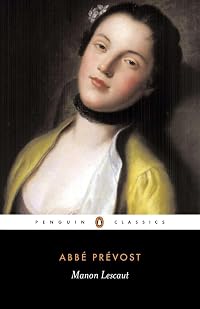
Manon Lescaut
by Abbé Prévost
Mémoires et aventures d'un homme de qualité qui s'est retiré du monde.… (Book 7)
On This Page
Description
The story of Manon Lescaut is a tale of passion and betrayal, of delinquency and misalliance, which moves from eighteenth-century Paris - with its theatres, assemblies, and gaming-houses - via prison and deportation to a tragic denouement among the treeless wastes of Louisiana. It is one of the great love stories, and also one of the most enigmatic. This new translation includes the vignette and eight illustrations that were published in the edition of 1753. - ;'The sweetness of her glance - show more or rather, my evil star already in its ascendant and drawing me to my ruin - did not allow me to hesita show lessTags
Recommendations





























Member Recommendations




Member Reviews
Is this about a capricious libertine taking advantage of the naivety of a dumb young man completely clueless when it comes to love? Yes, to a certain extent. But it would be oversimplifying to just reduce it all to that only...
Far from being a cheesy and black-and-white type of plot where everything is two dimensional, Antoine Prévost gives us to see here not only human passions in all their complexity, but also the difficulties of handling feelings and their ambiguous consequences upon our actions. Des Grieux may be of a baffling innocence, yet it takes a noble heart to be so forgiving, abandoning all in the name of love. Who are we to judge him? As for Manon, young, bratty, irresponsible, she nevertheless has ambition, and fight as show more much for her lover (whom she genuinely loves, despite everything) as for her brother. Do we know about her social origins, her past, her background? Who are we, then, here again, to blame her for thinking about comfort and the future of her couple, in a society denying her even the right to love above her condition? As circumstances will lead them both to their ruin, it's obviously easier to mock, demean, judge and condemn than actually trying to understand the deep motivations of each, overseeing thus that, behind supposed vice and quest for luxury lies, also, a certain sentimental nobility.
Strangely for an 18th century novel, the violence of the emotions involved reminds of works more associated with the Romantic era... Here's a rich and complex story, then. In any case, it's a great read! show less
Far from being a cheesy and black-and-white type of plot where everything is two dimensional, Antoine Prévost gives us to see here not only human passions in all their complexity, but also the difficulties of handling feelings and their ambiguous consequences upon our actions. Des Grieux may be of a baffling innocence, yet it takes a noble heart to be so forgiving, abandoning all in the name of love. Who are we to judge him? As for Manon, young, bratty, irresponsible, she nevertheless has ambition, and fight as show more much for her lover (whom she genuinely loves, despite everything) as for her brother. Do we know about her social origins, her past, her background? Who are we, then, here again, to blame her for thinking about comfort and the future of her couple, in a society denying her even the right to love above her condition? As circumstances will lead them both to their ruin, it's obviously easier to mock, demean, judge and condemn than actually trying to understand the deep motivations of each, overseeing thus that, behind supposed vice and quest for luxury lies, also, a certain sentimental nobility.
Strangely for an 18th century novel, the violence of the emotions involved reminds of works more associated with the Romantic era... Here's a rich and complex story, then. In any case, it's a great read! show less
Remembering how intense my last Coursera experience was, what with needing to read a novel a week and do plenty of other related work I decided to give myself a head start on the Fiction of Relationships curriculum. Manon Lescaut will be the first novel we'll be covering and I'm glad I wasn't restricted in time when I read it. No, it's not long and it doesn't place any serious demands on the reader's faculties, but it does tax one's patience. At least it did that to mine.
It took me a while to get into the story because it is told in a very old-fashioned way, it begins at the end, then jumps to the beginning and works its way to the end again; it is also the perfect example of the author telling much more than showing. I did my best to show more remember that if this book is on the curriculum of a Brown University course there must be value in it, so I read closely in an effort to not miss this value among all the exceedingly flowery phrases and moralizing debates on the subjects of love and virtue. See, I read so closely that the floweriness has seeped into my brain! But I digress. I kept thinking that if nothing else this book provides an excellent example of how literature has changed since the 1700s and how I needed to pay attention to the relationships described in the novel since that will be the focus of the course. And then something curious happened: as irritated as I was by Manon's flightiness and Grieux's lack if backbone, as well as the archaic language, I soon found that the characters weren't entirely unsympathetic and began reflecting on all the reckless and crazy things people do in the name of love. Somehow this novel broke through the frustration and touched me.
This realization alone surprised me to no end and I continued reading with a certain degree of enjoyment. Imagine my surprise when I finished the book, looked it up online, and found that Manon Lescaut isn't as obscure as I imagined. Authors of novels hailed as classics referenced it in their work, it continues to inspire composers and dramatists, it is the subject of quite a few academic papers and it's still being published with the latest edition released in 2005! (Don't you just love Wikipedia?)
In the end although I wouldn't recommend this novel to a friend in search of an engaging and fun read I'm glad I read it, if purely because it's widened my literary horizons and showed that love has always been blind and young people have always been capable of highly imprudent behavior. It's human nature, after all! show less
It took me a while to get into the story because it is told in a very old-fashioned way, it begins at the end, then jumps to the beginning and works its way to the end again; it is also the perfect example of the author telling much more than showing. I did my best to show more remember that if this book is on the curriculum of a Brown University course there must be value in it, so I read closely in an effort to not miss this value among all the exceedingly flowery phrases and moralizing debates on the subjects of love and virtue. See, I read so closely that the floweriness has seeped into my brain! But I digress. I kept thinking that if nothing else this book provides an excellent example of how literature has changed since the 1700s and how I needed to pay attention to the relationships described in the novel since that will be the focus of the course. And then something curious happened: as irritated as I was by Manon's flightiness and Grieux's lack if backbone, as well as the archaic language, I soon found that the characters weren't entirely unsympathetic and began reflecting on all the reckless and crazy things people do in the name of love. Somehow this novel broke through the frustration and touched me.
This realization alone surprised me to no end and I continued reading with a certain degree of enjoyment. Imagine my surprise when I finished the book, looked it up online, and found that Manon Lescaut isn't as obscure as I imagined. Authors of novels hailed as classics referenced it in their work, it continues to inspire composers and dramatists, it is the subject of quite a few academic papers and it's still being published with the latest edition released in 2005! (Don't you just love Wikipedia?)
In the end although I wouldn't recommend this novel to a friend in search of an engaging and fun read I'm glad I read it, if purely because it's widened my literary horizons and showed that love has always been blind and young people have always been capable of highly imprudent behavior. It's human nature, after all! show less
Manon Lescaut is a deceptive novel in multiple ways.
It could be easily labeled as a classic, picturesque short tale of a doomed love affair between a noble young man, Chevalier des Grieux, and a beautiful maiden from a lower breed, set in the Paris of The Régence, a convulsive era where class structures and ancient regime ruled the world.
Told from the male lover point of view in a fast-paced, flowing narrative, the reader is presented with the irrevocable passion, almost obsession des Grieux is consumed with when he first sets his eyes on Manon, a fatal moment which will make his inner peace crumble down and bring him to perform all sort of dubious acts, even to commit murder, to keep his beloved with him.
Des Grieux constructs his own show more story in retrospection, using a nameless narrator who crosses paths with him almost at the end of his misadventures, giving this way a foreboding tone to the story.
"Love has made me too soft, too passionate, too faithful and perhaps over-indulgent of the desires of a most charming woman; and that is the sum of my crimes" says des Grieux, talking about his beloved Manon, the temptress, and the one to blame for his forthcoming misdeeds.
The fact that we only get to hear Manon’s voice throughout des Grieux’s account leaves the reader completely blind about her character, devoid of her motivations or her true feelings. Des Grieux describes her as a fickle, capricious creature prone to take other lovers in order to live lavishly. So Manon appears as a cold, calculating character, becoming a sort of desirable object to possess, an object des Grieux rightfully believes to belong to him. But still, in the rare passages where Manon can voice her quiescent values, we can envisage a strong spirit who keeps defying des Grieux’s views with her struggles to remain her own mistress. Couldn’t it be that in challenging him to broaden his conservative views about relationships, Manon would also be challenging the imposed gender politics of the time?
In any case, the driven plot of the story takes sweet revenge separating the lovers again and again in myriad forms: family, legal authority and the gulf between social classes keep preventing them from being together until they receive the ultimate punishment in being exiled to the colonies in New Orleans, where against all odds and once set free of the French, rotten social pressures, the idea of a simple, bare existence in a new world impregnates them with a wish to live at peace with rekindled values of virtue and morality, flirting even with an improbable happy ending, which makes the final twist in the story even more brusque and cruel than expected.
As I stated at the beginning of this rambling review, this self-righteous account, this seemingly lineal plot and simple, direct style can be misleading.
My first instinctive reaction to the story was to doubt the veracity of des Grieux’s biased tale for he is a flawed hero and unreliable narrator. His constant search for self-excuse, his vain urge in blaming others for his own acts, his theatrical, almost parodic explosion of emotive outbursts and his unremorseful confession of using them to take advantage of others made it very difficult to empathize with him.
But what most struck me when trying to add perspective into the story was the shameful realization that my dislike for des Grieux came from recognition, as his futile attempts at trying to hold on to Manon revealed the universal impossibility of a mutual understanding, the hopelessness of a complete possession of the other.
No simple tale then, but a novel which oozes with the complexity of human relationships and the tragic consequences of trying to cross the barrier of subjectivity in appealing to raw emotions, as one can’t disengage from individual consciousness , however much we try.
"What fatal power had dragged me down to crime? How came it that love, an innocent passion, had turned for me into the source of all misery and vice" wonders a despairing des Grieux.
Exalted existential questions about the tragic consequences of being in love, as being infected by an incurable disease, which robs us of our former selves, blinding us with passion, making it difficult to find our place in a material world where authority and order prevail over emotions.
And in this sense, I’d say that Manon Lescaut is a disruptive novel because in giving free expression to des Grieux’s feelings, even if charged with subjectivity, Prévost is encouraging us to reach our own truths through language, although he also whispers a warning, reminding us that our own reached reality might be easily misunderstood by those we love the most and by the world we live in. show less
It could be easily labeled as a classic, picturesque short tale of a doomed love affair between a noble young man, Chevalier des Grieux, and a beautiful maiden from a lower breed, set in the Paris of The Régence, a convulsive era where class structures and ancient regime ruled the world.
Told from the male lover point of view in a fast-paced, flowing narrative, the reader is presented with the irrevocable passion, almost obsession des Grieux is consumed with when he first sets his eyes on Manon, a fatal moment which will make his inner peace crumble down and bring him to perform all sort of dubious acts, even to commit murder, to keep his beloved with him.
Des Grieux constructs his own show more story in retrospection, using a nameless narrator who crosses paths with him almost at the end of his misadventures, giving this way a foreboding tone to the story.
"Love has made me too soft, too passionate, too faithful and perhaps over-indulgent of the desires of a most charming woman; and that is the sum of my crimes" says des Grieux, talking about his beloved Manon, the temptress, and the one to blame for his forthcoming misdeeds.
The fact that we only get to hear Manon’s voice throughout des Grieux’s account leaves the reader completely blind about her character, devoid of her motivations or her true feelings. Des Grieux describes her as a fickle, capricious creature prone to take other lovers in order to live lavishly. So Manon appears as a cold, calculating character, becoming a sort of desirable object to possess, an object des Grieux rightfully believes to belong to him. But still, in the rare passages where Manon can voice her quiescent values, we can envisage a strong spirit who keeps defying des Grieux’s views with her struggles to remain her own mistress. Couldn’t it be that in challenging him to broaden his conservative views about relationships, Manon would also be challenging the imposed gender politics of the time?
In any case, the driven plot of the story takes sweet revenge separating the lovers again and again in myriad forms: family, legal authority and the gulf between social classes keep preventing them from being together until they receive the ultimate punishment in being exiled to the colonies in New Orleans, where against all odds and once set free of the French, rotten social pressures, the idea of a simple, bare existence in a new world impregnates them with a wish to live at peace with rekindled values of virtue and morality, flirting even with an improbable happy ending, which makes the final twist in the story even more brusque and cruel than expected.
As I stated at the beginning of this rambling review, this self-righteous account, this seemingly lineal plot and simple, direct style can be misleading.
My first instinctive reaction to the story was to doubt the veracity of des Grieux’s biased tale for he is a flawed hero and unreliable narrator. His constant search for self-excuse, his vain urge in blaming others for his own acts, his theatrical, almost parodic explosion of emotive outbursts and his unremorseful confession of using them to take advantage of others made it very difficult to empathize with him.
But what most struck me when trying to add perspective into the story was the shameful realization that my dislike for des Grieux came from recognition, as his futile attempts at trying to hold on to Manon revealed the universal impossibility of a mutual understanding, the hopelessness of a complete possession of the other.
No simple tale then, but a novel which oozes with the complexity of human relationships and the tragic consequences of trying to cross the barrier of subjectivity in appealing to raw emotions, as one can’t disengage from individual consciousness , however much we try.
"What fatal power had dragged me down to crime? How came it that love, an innocent passion, had turned for me into the source of all misery and vice" wonders a despairing des Grieux.
Exalted existential questions about the tragic consequences of being in love, as being infected by an incurable disease, which robs us of our former selves, blinding us with passion, making it difficult to find our place in a material world where authority and order prevail over emotions.
And in this sense, I’d say that Manon Lescaut is a disruptive novel because in giving free expression to des Grieux’s feelings, even if charged with subjectivity, Prévost is encouraging us to reach our own truths through language, although he also whispers a warning, reminding us that our own reached reality might be easily misunderstood by those we love the most and by the world we live in. show less
This is one of the few books where I wanted to strangle the main character.
Chevalier de Grieux is so madly in love with the lower-class beauty Manon Lescaut that he's willing to forsake his education, his family and friends for her. On first read, it's easy to write off de Grieux as a silly boy blinded by love since he's willing to follow Manon to the 'New World' and put up with her schemes to extort money with her beauty, which lands the lovers in jail more than once.
This books is more than just simple story of boy-meets-girl. Abbe Prevost writes a magnificent tale of lovers told from the point of view of Chevalier de Grieux. Modern readers will want to shake de Grieux for throwing away his upper-class life for a girl who appears show more indifferent to his passion. However, Prevost creates a France divided by the class characters are born into and wealth. With the two lovers being born in to different societies, readers start to pity de Grieux and Manon's relationship and question if their love is doomed because of fate or poor decisions. show less
Chevalier de Grieux is so madly in love with the lower-class beauty Manon Lescaut that he's willing to forsake his education, his family and friends for her. On first read, it's easy to write off de Grieux as a silly boy blinded by love since he's willing to follow Manon to the 'New World' and put up with her schemes to extort money with her beauty, which lands the lovers in jail more than once.
This books is more than just simple story of boy-meets-girl. Abbe Prevost writes a magnificent tale of lovers told from the point of view of Chevalier de Grieux. Modern readers will want to shake de Grieux for throwing away his upper-class life for a girl who appears show more indifferent to his passion. However, Prevost creates a France divided by the class characters are born into and wealth. With the two lovers being born in to different societies, readers start to pity de Grieux and Manon's relationship and question if their love is doomed because of fate or poor decisions. show less
...................I went into this book totally unaware as to what it was about,
the nature of the issue at hand nor the depth and sophistication of the theme. With that said, here is the short tale of Chevalier des Grieux, a young man fully prepared to become a member of the Order of Malta. As he was leaving Amien to return home he meets Manon Lescaut who has just arrived to begin her novitiate. The young Chevalier is immediately smitten with her beauty and "on the instant, deprived of my reason and self-control." Their relationship begins with a lie and before you know it they run away together and abandon all thought of their intended plans. Over and over again, Manon is torn away from Chevalier by other suitors, suitors who lure show more her away with jewels and money. Manon always makes it appear that it is her "project" to fill their coffers. They're like grifters, running from the law, devising another "project", then on the run again. It never matters to Chevalier, he will do anything to regain her love and provide for the niceties she has come to desire and expect. It is very easy to become frustrated with Chevalier, how gullible can he be? Why does he return to her? Is his love simply an obsession? Is Manon simply a prostitute or does she truly love him? And what of all the friends and relations who come to Chevaliers aid, are they enablers that allow Chevalier to continue his wayward life? What propels them to be just as gullible as Chevalier?
Lots of deep questions to address and I look forward to the lectures provided in class.
One other thing, Prevost immediately captures the reader by starting at the end and then relating Chevalier's story. In doing this, the reader is in want of answers and plows thru the novella.
Loves me, loves me not. You decide.
PS: Read this novel for Coursera class "The Fiction of Relationship" show less
the nature of the issue at hand nor the depth and sophistication of the theme. With that said, here is the short tale of Chevalier des Grieux, a young man fully prepared to become a member of the Order of Malta. As he was leaving Amien to return home he meets Manon Lescaut who has just arrived to begin her novitiate. The young Chevalier is immediately smitten with her beauty and "on the instant, deprived of my reason and self-control." Their relationship begins with a lie and before you know it they run away together and abandon all thought of their intended plans. Over and over again, Manon is torn away from Chevalier by other suitors, suitors who lure show more her away with jewels and money. Manon always makes it appear that it is her "project" to fill their coffers. They're like grifters, running from the law, devising another "project", then on the run again. It never matters to Chevalier, he will do anything to regain her love and provide for the niceties she has come to desire and expect. It is very easy to become frustrated with Chevalier, how gullible can he be? Why does he return to her? Is his love simply an obsession? Is Manon simply a prostitute or does she truly love him? And what of all the friends and relations who come to Chevaliers aid, are they enablers that allow Chevalier to continue his wayward life? What propels them to be just as gullible as Chevalier?
Lots of deep questions to address and I look forward to the lectures provided in class.
One other thing, Prevost immediately captures the reader by starting at the end and then relating Chevalier's story. In doing this, the reader is in want of answers and plows thru the novella.
Loves me, loves me not. You decide.
PS: Read this novel for Coursera class "The Fiction of Relationship" show less
I disliked this novel quite intensely at the beginning but I'd mellowed toward it somewhat by the end.
There's a lot of tell-don't-show going on with regards to the feelings of the characters, I guess because it was written at a time when the novel as a representation of a character's inner self was in its infancy. The reviews I've read complain of failing to believe in Manon's love for the Chevalier des Grieux but, to me, this seems beside the point.
Given that she is the title character, Manon has very little direct dialogue in the novel. Everything she says is paraphrased in the Chevalier's narration, and it's only in the final pages that she is given a decent sized paragraph of her own words. To me, she feels stifled, which, I guess, show more is appropriate to her character. She is in the process of being forced into a life of religious slavery when des Grieux, on the strength of a single glance, approaches and declares his undying love for her. Eloping with him being the better of two options, she attempts to make a life with her overbearing, jealous lover. She feigns relationships with wealthy men in order to rob them, which the Chevalier interprets as her being truly unfaithful. These cons are prematurely aborted when he interrupts them in pitiful jealous rage and they flee from the scene swiftly followed by guards, servants, jilted lovers etc. Poverty, prison and infamy ensue.
It's the story of a resourceful, cunning, amoral, young woman making the best of her bad circumstances pursued by the most hapless of lovers. She might be Bonnie Parker but he ain't no Clyde Barrow. show less
There's a lot of tell-don't-show going on with regards to the feelings of the characters, I guess because it was written at a time when the novel as a representation of a character's inner self was in its infancy. The reviews I've read complain of failing to believe in Manon's love for the Chevalier des Grieux but, to me, this seems beside the point.
Given that she is the title character, Manon has very little direct dialogue in the novel. Everything she says is paraphrased in the Chevalier's narration, and it's only in the final pages that she is given a decent sized paragraph of her own words. To me, she feels stifled, which, I guess, show more is appropriate to her character. She is in the process of being forced into a life of religious slavery when des Grieux, on the strength of a single glance, approaches and declares his undying love for her. Eloping with him being the better of two options, she attempts to make a life with her overbearing, jealous lover. She feigns relationships with wealthy men in order to rob them, which the Chevalier interprets as her being truly unfaithful. These cons are prematurely aborted when he interrupts them in pitiful jealous rage and they flee from the scene swiftly followed by guards, servants, jilted lovers etc. Poverty, prison and infamy ensue.
It's the story of a resourceful, cunning, amoral, young woman making the best of her bad circumstances pursued by the most hapless of lovers. She might be Bonnie Parker but he ain't no Clyde Barrow. show less
A fairly easy, short read that could also lead you to some serious thoughting if you're not careful. The introduction to this edition is great, although I find it hard to believe that the book is meant to be, as the editor suggests, "a defence of love shaped by the hands of a master."
If you're going to defend the passion of lurv*, I doubt your best option is to show how it leads to (plot spoilers) theft, fraud, kidnapping, assault, murder, jail-break, prostitution, and generally every other vice possible for an upper class Frenchman of the time.
On the other hand, a book that's about the clash between passion and reason/virtue should present the benefits of both sides, and Prevost does it well enough that, apparently--although in my show more eyes incomprehensibly--people do still read this as a story about how great lurv is.
And now for a bit of wanton literary professor wonkishness: the tale is told, frame story aside, by the male lurver, des Grieux. We hear all about his feelings (viz., pubescent mood swings). We never get any sense for how Manon Lescaut actually feels about the insanity (literally, I'd guess) she inspires in him, and never get any sense for her feelings. This reminds me of Kushner's Flamethrowers, which I read recently. I got no sense of her personality in that book, aside from a range of completely disconnected deeds. But there *she* is the narrator. I have no idea what to make of that.
* I distinguish here between love, which is what happens when two or more people willingly rely on each other for the kind of moral and personal support needed to live an even moderately painless life, and Lurv, which is what happens when teenagers (like the characters in this book) get all sexy. show less
If you're going to defend the passion of lurv*, I doubt your best option is to show how it leads to (plot spoilers) theft, fraud, kidnapping, assault, murder, jail-break, prostitution, and generally every other vice possible for an upper class Frenchman of the time.
On the other hand, a book that's about the clash between passion and reason/virtue should present the benefits of both sides, and Prevost does it well enough that, apparently--although in my show more eyes incomprehensibly--people do still read this as a story about how great lurv is.
And now for a bit of wanton literary professor wonkishness: the tale is told, frame story aside, by the male lurver, des Grieux. We hear all about his feelings (viz., pubescent mood swings). We never get any sense for how Manon Lescaut actually feels about the insanity (literally, I'd guess) she inspires in him, and never get any sense for her feelings. This reminds me of Kushner's Flamethrowers, which I read recently. I got no sense of her personality in that book, aside from a range of completely disconnected deeds. But there *she* is the narrator. I have no idea what to make of that.
* I distinguish here between love, which is what happens when two or more people willingly rely on each other for the kind of moral and personal support needed to live an even moderately painless life, and Lurv, which is what happens when teenagers (like the characters in this book) get all sexy. show less
Members
- Recently Added By
Lists

The Guardian's 1000 Novels Everyone Must Read
1,005 works; 552 members

Best of French Literature
138 works; 25 members

Female Protagonist
1,056 works; 57 members

Women's Stories
88 works; 13 members

Favourite Books
1,820 works; 316 members

Books I've Read More Than Once
602 works; 49 members

French Books
102 works; 15 members

W. S. Maugham's Reading Suggestions for Spiritual Enrichment: Continental
19 works; 3 members

Harold Bloom - The Western Canon: B. The Aristocratic Age
231 works; 13 members

Authors from France
23 works; 2 members
Love Triangles in Literature
108 works; 15 members
Lamont's Hundred Best Novels (1947)
100 works; 4 members
Paris, City of Lights
103 works; 17 members

Literature About Adultery
69 works; 10 members

DigitalDreamDoor top 300
300 works; 4 members

French Fiction of the 18th and 19th Centuries in English Translation
169 works; 3 members
Philip Ward's Lifetime Reading Plan
592 works; 22 members
150 Best Novels Selected by Brander Matthews (1883)
150 works; 7 members

Favorite French Fiction
223 works; 108 members
Author Information

52+ Works 2,591 Members
Abbé Prévost, 1697 - 1763 Novelist Antoine François Prévost d'Exiles was born in Hesdin, and he was educated there at a Jesuit school. He was ordained a priest in the Benedictine Order in 1726 and abandoned the order two years later, living several years in England and Holland. Prévost is best known for "Memoires et Aventures d'un Homme de show more Qualite" (Memoirs and Adventures of a Man of Quality, 7 vol., 1728-1731). The seventh volume is "Histoire du Chevalier des Grieux et de Manon Lescaut" (1731), which is popularly known as Manon Lescaut. The novel chronicles the tragic romance of a young aristocrat and a courtesan and was inspired by the operas Manon (1884), by Jules Massenet, and Manon Lescaut (1893), by Giacomo Puccini. His novels with English themes, as well as his translations of the British novelist Samuel Richardson, encouraged French interest in English literature. Those titles included "Pamela" (1742) and Clarissa" (1751). (Bowker Author Biography) show less
Some Editions
Awards and Honors
Notable Lists
Series

Belongs to Publisher Series
A tot vent (1)
Ullstein Urlaubs-Klassiker (2650)
Gyllene-serien (9)
Europeia (6. raamat)
Ullstein (2650)
Gallimard, Folio (25-757-3514-4664)
Sammlung Dieterich (121)
Doubleday Dolphin (C29)
detebe-Klassiker (23737)
Gallimard, Folio Classique (4664)
Prisma Klassieken (77)
Penguin Classics (L013)
Work Relationships
Is contained in
Is retold in
Has as a reference guide/companion
Common Knowledge
- Canonical title
- Manon Lescaut
- Original title
- Manon Lescaut; Histoire Du Chevalier Des Grieux Et De Manon Lescaut
- Alternate titles
- The Story of the Chevalier des Grieux and Manon Lescaut
- Original publication date
- 1731
- People/Characters
- Chevalier de Grieux; Manon Lescaut; M. Lescaut; Tiberge; Old G.M.; Young G.M. (show all 7); Monsieur de T.
- Important places
- Paris, France; Chaillot, Île-de-France, France; New Orleans, Louisiana, USA
- Related movies
- Manon Lescaut (1980 | IMDb); Manon Lescaut (1983 | IMDb); Manon Lescaut (1940 | IMDb); Manon (1986 | IMDb); Manon (1981 | IMDb); Gli amori di Manon Lescaut (1954 | IMDb) (show all 10); When a Man Loves (1927 | IMDb); Manon 70 (1968 | IMDb); Manon Lescaut (1926 | IMDb); Manon (1949 | IMDb)
- Epigraph
- Quanta laboras in Charybdi, digne puer meliore flamma.
- First words
- I am obliged to take my reader back to that time of my life when I met the Chevalier de Grieux for the first time.
- Quotations
- If it is true that the assistance of Heaven is at every moment equal in strength to the force of the passions, then explain to me by what fateful influence we find ourselves suddenly swept far away from our duty, without bein... (show all)g capable of the slightest resistance, and without feeling the slightest remorse.
It was one of those unique situations to which one can find nothing in one's experience that is even slightly similar. Such feelings cannot be explained to other people, because other people have no idea of them; and it is di... (show all)fficult enough to clarify them to oneself, since, being unique, they are unconnected to anything else in one's memory, and cannot even be compared with anything similar.
However, at the same time, as I claimed to hold the good things in life in such low esteem, I felt that I could have done with at least a small portion of them, so as to despise in even more sovereign a fashion the rest. Love... (show all) is stronger that abundance, stronger than treasure and riches, but it does need help from them; and nothing is a greater cause of despair for a lover with any delicacy of feeling than seeing himself dragged down by this necessity to the level of the coarsest and basest souls. - Last words
- (Click to show. Warning: May contain spoilers.)The wind for Calais was favorable; I immediately embarked, with the intention of lodging a few leagues away from that town, in the home of one of my relatives, where my brother has told me in writing that he will await my arrival.
- Original language
- French
Classifications
Statistics
- Members
- 2,386
- Popularity
- 8,252
- Reviews
- 59
- Rating
- (3.40)
- Languages
- 21 — Catalan, Dutch, English, Esperanto, Estonian, Finnish, French, German, Greek, Hebrew, Hungarian, Italian, Japanese, Latvian, Polish, Portuguese, Russian, Serbian, Slovak, Spanish, Swedish
- Media
- Paper, Audiobook, Ebook
- ISBNs
- 220
- UPCs
- 1
- ASINs
- 133